THE DOUBLE BIND AND THE
DOUBLE BURDEN:
IMPLICATIONS FOR THE PROFESSIONAL EDUCATION AND PRACTICE OF INDIGENOUS ENVIRONMENTAL HEALTH PRACTITIONERS
PETER MARK STEPHENSON
SEPTEMBER 2001
CERTIFICATE OF AUTHORSHIP / ORIGINALITY
I certify that this thesis has not previously been submitted for a degree, nor has it been submitted as part of requirements for a degree except as fully acknowledged within the text.
I also certify that the thesis has been written by me. Any help that I have received in my research work and the preparation of the thesis itself has been acknowledged. In addition, I certify that all information sources and literature used are indicated in the thesis.
ACKNOWLEDGEMENTS
I would like to acknowledge the efforts of many people who contributed to this work. Whilst I can not hope name them all here, there are some who deserve special mention.
Firstly I acknowledge the guidance and support given to me by my academic advisers, Griff Foley and Mike Newman at UTS, and Valerie Brown at UWS. Each brought their own strength, style and energy to the task of overseeing the project and all taught me a great deal about research, supervision and writing. I sincerely appreciate the challenges they set, the support and encouragement they provided, and the friendship they offered.
To Kathy Mitchell and my colleagues at UWS for their input and interest over the years, and to Jim Ireland for sharing his stories of the early days of the environmental health program at Hawkesbury.
I wish also to express my heartfelt appreciation to all the students who took part in this research and for whom I now regard as valued friends and colleagues. I sincerely appreciate the input of each of them and for engaging openly and honestly during our long and challenging journey together. To their workplace colleagues and supervisors who worked with me, I extend my sincere gratitude.
My respect and gratitude goes also to members of Indigenous communities and services throughout the country who made me welcome, answered my ignorant questions over and over again, and from whom I learnt so much.
TABLE OF CONTENTS
ABSTRACT...VII CHAPTER ONE - PROFESSIONAL EDUCATION FOR INDIGENOUS
PRACTITIONERS: A PROBLEM OF BEST FIT ...1
1.1 Background... 1
1.2 The First Indigenous Cohort ... 4
1.3 Issues Arising... 16
1.4 A Research Direction Emerges... 24
CHAPTER TWO – CROSS-CULTURAL AND PROFESSIONAL EDUCATION ...27
2.1 Professional Education and Workplace Learning... 27
2.2 Indigenous Professional Education... 33
2.3 Problem-Based Learning and Beyond ... 39
2.4 Problem-Based Learning and Environmental Health Professional Education52 CHAPTER THREE – RESEARCHING INDIGENOUS EDUCATION AND PROFESSIONAL PRACTICE...55
3.1 Research Method ... 55
3.2 Conducting the Inquiry ... 57
3.3 Justifying the Research Approach ... 73
3.4 Positioning the Research... 81
CHAPTER FOUR – STUDENT EXPERIENCES IN A PROFESSIONAL CURRICULUM ...85
4.1 Introduction... 85
4.2 Overview of Program Experiences ... 86
4.3 Disjuncture in the Core Curriculum... 104
4.4 Conclusion ... 119
CHAPTER FIVE – STUDENT EXPERIENCES IN THE WORKPLACE...121
5.1 Introduction... 121
5.2 Policy and Program Context ... 123
5.3 Disjuncture at Work... 128
5.4 Conclusion ... 164
CHAPTER SIX – THE DOUBLE BIND AND THE DOUBLE BURDEN ...166
6.1 Introduction... 166
6.2 Adult and Problem-Based Learning Theory... 167
6.3 Problem-Based Learning in Practice ... 175
6.4 Power Relations Theory... 188
7.1 Indigenous Practitioners and the Curriculum ... 193
7.2 Indigenous Practitioners and Professional Practice... 199
7.3 The Profession ... 203
7.4 The Next Step ... 204
APPENDIX 1: Education and Work Backgrounds of Participants ...210
APPENDIX 2: Stylised Ghant Chart ... 210
LIST OF FIGURES
Figure 1: Geographical distribution of students ...4
Figure 2: Student employment upon course entry………..4
Figure 3: Entry pathways to course………5
Figure 4: Work history of course participants………..17
Figure 5: Secondary schooling of course participants………..18
Figure 6: Post-secondary education of course participants………..18
Figure 7: Core and elective subject abandon rate in years 1 and 2………..19
Figure 8: Defining new ground for Indigenous professional education ...21
Figure 9: Defining new ground for cross-cultural professional practice...23
Figure 10: Framework of research...26
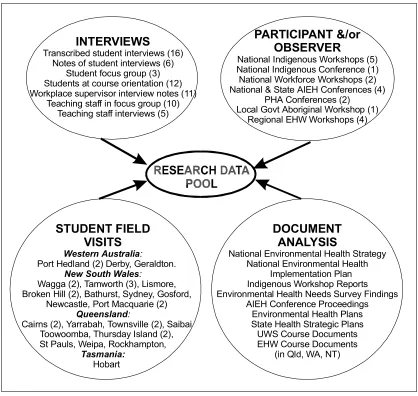
Figure 11: Data sources for the study ...70
Figure 12: The process of analytic induction...76
Figure 13: Integrative model for environmental health professional education...98
LIST OF TABLES Table 1: Lecturer types ...35
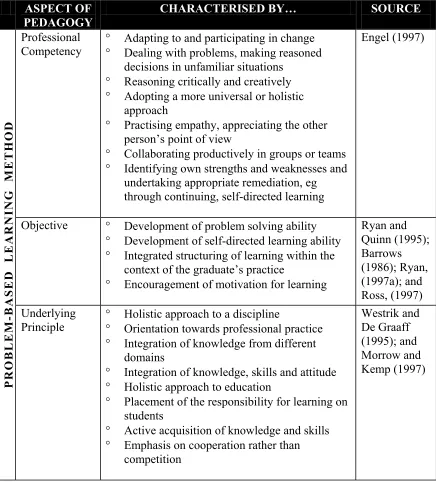
Table 2: Summary of attributes of problem-based learning. ...49
Table 3: Summary of Indigenous environmental health workforce needs ...127
Table 4: Recent workforce development programs ...128
Table 5: Three models of problem-based learning illustrated by this study...178
LIST OF ACRONYMS
AACAP Army/ATSIC Community Assistance Program AHW Aboriginal Health Worker
AIEH Australian Institute of Environmental Health ATSIC Aboriginal and Torres Strait Islander Commission
CDHFS Commonwealth Department of Health and Family Services CH&AC Commonwealth Health and Aged Care
CPE Continuing Professional Education
EHNCC Environmental Health Needs Coordinating Committee EHO Environmental Health Officers
EHW Environmental Health Worker ESL English as a Second Language GIS Geographic Information Systems HSC Higher School Certificate
ICEH Indigenous Communities Environmental Health LSP Local Sustainability Program
MPRC Murdi Paaki Regional Council
NBEET National Board of Employment, Education and Training NEHF National Environmental Health Forum
NEHS National Environmental Health Strategy
NEHSSC National Environmental Health Strategy Steering Committee NIEHF National Indigenous Environmental Health Forum
NPHP National Public Health Partnership NSW New South Wales
OATSIH Office of Aboriginal and Torres Strait Islander Health OATSIS Office of Aboriginal and Torres Strait Islander Services PBL Problem-based Learning
PHA Public Health Association PHU Public Health Unit
RHSET Rural Health Support, Education and Training Program, RIMC Regional Integrated Monitoring Centre, UWS
ROI Record of Interview
TAFE Technical and Further Education TER Tertiary Entrance Ranking TPC Tertiary Preparation Course UWS University of Western Sydney VTC Vocational Training Centre
ABSTRACT
This thesis presents the findings of four years of research into the curriculum and workplace experiences of the first Indigenous cohort to undertake a professional education program in environmental health at the University of Western Sydney. The research explores the capacity of a university program, even with a nationally accredited distance education curriculum, to meet the needs of Indigenous participants. In particular, the research examines whether core problem-based learning subjects of the program adequately prepare Indigenous students to work effectively in their complex and power-laden professional settings.
The findings have identified the ways in which a Western-based professional education and training program, even with the best of intentions, present a double bind and a double burden to its Indigenous participants. Students are asked to take part in a strong professional acculturation program without losing the very ties which would make them effective in their own cultural tradition. Thus, they are asked to accept the program for themselves, and at the same time to question and re-interpret the program for their own culture. Resolving this double bind brings with it a double burden: satisfying the curriculum demands of a mainstream degree, as they work to improve the environmental health conditions of their communities where mainstream services have failed.
The findings of this research suggest that a wider educational framework is needed for the education and training of Indigenous environmental health participants. Easing the bind and burden of participants requires a shift in thinking and in action, both within the University curriculum and among the environmental health profession.
In the University curriculum, the shift will require a reconceptualisation of problem-based learning and a change in pedagogy to incorporate critical and strategic
CHAPTER ONE - PROFESSIONAL EDUCATION FOR
INDIGENOUS PRACTITIONERS: A PROBLEM OF BEST FIT
1.1 Background
The University of Western Sydney (UWS) has delivered a professional degree program in the field of environmental health since 1979. This three-year Bachelor of Applied Science (Environmental Health) degree was developed in the late 1970's following calls from the Health and Building Inspectorate of New South Wales for a professional qualification. In an attempt to address the wide and varied technical aspects of the profession and produce multi-disciplinary problem solvers, the course designers implemented a program containing six core problem-based learning subjects (Ireland, 1978) and up to thirty specialist, technical or applied electives. Core subjects in this degree program employ relatively few formal lectures. Subject descriptions of core subjects tend not to be characterised by detailed lists of content to cover, but rather by problem-solving processes.
In the mid 1980’s, program staff developed distance learning packages so that environmental health officers with TAFE certificate and diploma level qualifications could articulate to a degree at the same time as remaining in full-time employment. By 1988 the entire degree program was available both on campus and through correspondence, and University of Western Sydney received industry recognition as the national provider of professional environmental health training by distance education. The distance learning program enabled University of Western Sydney to reach students from each of the States and Territories, giving it a market edge over other tertiary institutions throughout the country offering environmental health degrees.
Indigenous practitioners in this field was necessary to meet the special needs of a population living with a third-world health profile (Brown, 1996 unpublished field report). At the time there were no Aboriginal and Torres Strait Islander professional environmental health practitioners in the country, although there was a core of Indigenous environmental health workers. Remote communities called for a program, which allowed students to study from where they lived and worked. Academic experience at University of Western Sydney suggested that they would need the support of professional mentors and access to a research capacity which would support them in investigating substantive issues in their own communities. It was also important that any program offered provided graduates with a recognised professional qualification which ensured that they had the opportunity to concentrate their learning on the special needs of their communities and gave them the access to employment anywhere in Australia.
From the outset, the program designer felt strongly that it would be unrealistic to expect to arrive at an effective Indigenous workforce in environmental health without: (a) research into the type of professional practice required; and (b) active contributions from the learners who would be fulfilling this professional role for the first time (Brown and Stephenson, 1997). Professor Brown therefore sought Commonwealth funding to develop an Indigenous Communities’ Environmental Health research program to explore the education and practice needs of Indigenous Australian environmental health professionals. Having successfully obtained four years of joint funding from the Aboriginal and Torres Strait Islander Commission (ATSIC) and the Commonwealth Office of Aboriginal and Torres Strait Islander Health (OATSIH), an additional grant from the Rural Health Support, Education and Training Program (RHSET), and support from a number of State and Territory Departments of Health, the University was able to identify Aboriginal and Torres Strait Islander students for entry into its existing Bachelor of Applied Science (Environmental Health).
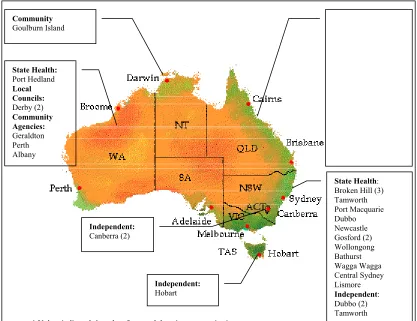
In 1997, the Indigenous Communities’ Environmental Health Research and Development Program was launched by the then Minister of Aboriginal and Torres Strait Islander Affairs, Senator Dr. John Herron. Eight Indigenous students enrolled in the first year of the program. Over the period of this research, a total of 41 Aboriginal and Torres Strait Islander students from 30 locations across four States and two Territories enrolled in the degree program (Figure 1).
Figure 1: Geographical distribution of students*
Community: Island Councils (3) Yarrabah Community
Health Districts: Weipa
Torres Strait (2)
State Health: Cairns Rockhampton Toowoomba Independent: Brisbane Townsville Rockhampton Cairns Independent: Hobart Independent: Canberra (2)
State Health: Broken Hill (3) Tamworth Port Macquarie Dubbo Newcastle Gosford (2) Wollongong Bathurst Wagga Wagga Central Sydney Lismore Independent: Dubbo (2) Tamworth Community Goulburn Island State Health: Port Hedland Local Councils: Derby (2) Community Agencies: Geraldton Perth Albany
* Unless indicated, 1 student from each location or organisation
1.2 The First Indigenous Cohort
Entry Pathway and Educational Background of Learners
A matrix of the education and work backgrounds of Indigenous participants is presented in Appendix 1. Entry pathways and educational backgrounds varied across the Indigenous cohort, as did the settings and nature of practice of individuals in the group. Figure 2 represents the pathway of entry for the 41 students involved in this research.
52%
5% 12%
12%
7% 12%
State Govt Local Govt Cmty Council Cmty Agency Other Govt Other/unemployed
More than half (21) worked in State government health agencies, two others held training positions in town councils, and a further five worked for their home community councils and with non-government community service agencies. Three of the remaining eight worked in health and environment positions in government but not immediately within environmental health departments, and five did not work in full time paid
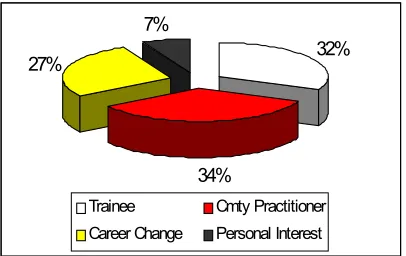
employment. Across these varied work settings, three pathways of entry into the degree program were evident and included recruitment through the following channels. As illustrated in Figure 3, course participants come to the degree as either direct recruits (trainee environmental health officers), existing practitioners (community-based environmental health workers), or as students independent of the professional field of environmental health (career change or personal interest). The majority of Indigenous students over the period of research were therefore employed in positions directly related to their field of study, with only a few students coming to the degree independent of employment or their current professional position. A brief description of these three main entry routes follows.
32%
34% 27%
7%
Trainee Cmty Practitioner Career Change Personal Interest
Figure 3: Entry pathway to course
A. Trainee Environmental Health Officers
The primary pathway for Indigenous learners into the University of Western Sydney degree was through direct recruitment into the profession as a trainee environmental health officer. Throughout the period of this research this type of recruitment was the dominant mode in New South Wales where community-based environmental health worker training courses were not available.
to meet its objective of improving the quality of environmental health for rural and remote Aboriginal communities. In parallel with the University of Western Sydney program, NSW Health Department began a recruitment campaign in 1997 to attract young trainees with connections to local Aboriginal communities. Six trainees were placed across as many public health regions in that first year and additional placements have come on stream each year to date (2001). A typical job description offers a position within the Department on a temporary basis for a period of five or six years, comprising a part-time study component of four to five years followed upon course completion by one to two years full-time employment as a qualified environmental health officer. A condition of employment explicitly requires trainees to study and complete the University of Western Sydney Bachelor of Applied Science (Environmental Health) degree.
As candidates for these positions needed both a knowledge and understanding of Aboriginal communities and an interest in, and a commitment to, improving environmental health for the general Australian population, trainees were mostly drawn from their local region. However a local position was not always guaranteed, and in some instances, students were required by their sponsoring organisations to move to other regions to take up their training opportunity, the organisation thereby failing to satisfy one of the conditions requested by the original Indigenous advisers to the program.
It was unusual for workplace supervisors of this group of students to have had significant involvement in Indigenous environmental health prior to the arrival of the trainee. As will be explored in more detail in Chapter Five, a consequence of the existing professional training model meant that students were mostly trained in the workforce through mainstream examples of environmental health practice. Accordingly, professional exposure to Aboriginal environmental health issues for the initial trainee intakes was limited.
criteria information, leaving that agency responsible for recruiting suitably prepared students. Job advertisements and position descriptions called for applicants who could ‘meet the admission requirements for the Bachelor of Applied Science (Environmental Health) at University of Western Sydney’. While not participating in the recruitment process, the University gave an assurance to State health that their nominations would be accepted into the degree course. Students generally met the minimum entry criteria, having achieved the requisite Tertiary Entrance Requirement (TER), including pass grades in Maths and a Science or the equivalent.
B. Indigenous Environmental Health Workers
A second pathway into the professional education program is through the technical practitioner route. Holders of a certificate or diploma from community-based Indigenous environmental health courses in the three northern States and Territory of Australia, enter the degree program as the next phase of their professional studies. These students are all practitioners in community environmental health and have experience working alongside other environmental health professionals in State and Territory health agencies. Like other resident health workers (see Williams and Cadet-James, 2000, p.15) community-based environmental health workers witness first hand the gravity of health-related problems and infrastructure needs in their communities. They live this experience as a group who:
…are disadvantaged relative to other Australians with respect to a number of socioeconomic factors, and these disadvantages place them at greater risk of ill health and reduced wellbeing (McLennan and Madden, 1999, p. 2).
community-based practitioners in the rural and remote regions of northern and western Australia and are recognising the important role local Indigenous partners play in progressing environmental health projects in community settings.
Positions have also been established in some State government health departments for Indigenous practitioners to coordinate regional community environmental health activities, supporting the work of their community-based colleagues. The first two of these positions were established in the Pilbara region of Western Australia and in Far North Queensland, servicing the Northern Peninsula Area and the Torres Strait Islands. Both positions required regional coordinators to cover vast areas of land (and sea in the case of the latter) in their work supporting community-based practitioners. Community-based environmental health coordinators recruited by State health departments typically work alongside mainstream environmental health professionals but their practice focuses pre-dominantly, if not entirely, on issues impacting Indigenous communities. They are encouraged by State employers to further their training and to obtain full professional qualifications despite the fact that a degree in environmental health is not a requirement for these positions at this time.
Other course participants remain in their respective communities as environmental health workers while attempting the degree. Community-based students provide key services on the ground and either visit, or live in, communities. The nature of their work as community-based practitioners varies widely from one community to another and within each State and Territory. The type of service delivery is largely dependent on the needs and capabilities of the communities in each jurisdiction, and the nature and extent of support given by State health departments and local authorities. In Western Australia for example, Aboriginal environmental health workers provide basic maintenance services and/or advice and early identification of repair or maintenance requirements of community infrastructure (EHNCC, 1998); while in Queensland, the emphasis is more on problem identification, the management of repair teams, and community education (Heggie, 1997).
managing environmental health programs in Aboriginal and Torres Strait Islander communities. The focus of the initial training of environmental health workers (Heggie, 1997) and their practice (NEHF, 1998) is almost exclusively on environmental health issues impacting Indigenous communities, such as inadequate water supplies and infrastructure, rubbish disposal, vector control and cyclone safety. Interviews with incoming students indicate this group of practitioners join the degree program because they want the same professional recognition accorded others in the profession, and they believe it will give them greater credibility within their communities.
Training levels for community-based practitioner education have also increased over recent times with the establishment of environmental health worker training courses in Western Australia, Northern Territory and Queensland, each having been reviewed and redeveloped during the period encompassed by this research. As the nature and role of the work performed by community-based practitioners differs throughout the country, the emphasis within training programs varies to reflect the differences from State to State and, in the case of Western Australia, from region to region (Stephenson, 1999a, p. 6). A brief overview of each of the programs follows.
Western Australia
course educators at least once between modules. In their home community, trainee workers are required to complete workbooks and satisfy a community-phase assessment checklist for each module of the course (Lewin and Jamrozik, 1993, p. 28).
The Office of Aboriginal Health within the Health Department of Western Australia continues to consult with community-based practitioners, trainers and training institutions, and regional public health units on possible upgrades to this Certificate program. As yet, no formalised articulation program has been put in place between the Western Australian worker course and the professional course at the University of Western Sydney. Students who come to the University with the Western Australia Aboriginal environmental health worker certificate are not offered academic credit for their certificate.
Northern Territory
The Batchelor Institute of Tertiary Indigenous Education developed its current formal training in environmental health in 1993. Clark (1999) and Standen (1998) however each trace the history of Aboriginal environmental health and hygiene work in northern Australian communities to earlier times.
…the first ‘hygiene school for natives’ commenced on 26 May 1952 at Bagot Aboriginal Reserve in Darwin. The senior health inspector, Lyle Tivendale and his colleague, Arthur Marsh, were the trainers. They appear to have followed their own program of lectures and demonstrations, which were more practically oriented than [the Chief Medical Officer's] original curriculum and probably more suited to the capabilities of the trainees themselves… The medical officers were involved too, presenting the anatomy and physiology lectures which [the Chief Medical Officer] had deemed a necessity as well as more complicated topics like the aetiology and control of leprosy, malaria and tuberculosis (Clark, 1999, p. 83).
with the enormous diversion of funds and manpower following the devastation of Cyclone Tracy (Christmas eve, 1974), interrupted environmental health work and training for Aboriginal communities for many years (Clark, 1999, p. 115). Sporadic and informal training programs began again in various forms and in different regions of the Territory in the late 1970s and early 1980s. In the eight years between 1985 and 1993, community-based hygiene workers, under supervision and support of Territory environmental health officers, conducted much of the basic environmental health duties in community, including rubbish collection, grass cutting, and the cleaning and maintenance of toilets (Standen, 1998, p. 23).
The current day certificate-level environmental health training at Batchelor extends the community practitioners’ role beyond one of focusing on the basic management of physical environment-health relationships, to one that includes elements of health promotion and community management (Brown and Stephenson, 1997). The Certificate III in Health Studies (Aboriginal Environmental Health) contains 10 modules - Foundations, Hygiene, Rubbish and Landcare, Water Management, Pests and Domestic Animals, Housing, First Aid, Health Promotion, Aboriginal Health Issues, and Basic Administration (Batchelor College, 1998). Similar to the Western Australia model, the course follows flexible delivery principles. Mixed modes, including block workshops, work in the community, community assignments and on-site visits have been adopted and components of the course may be delivered on campus, at annexes, or in a community. Also, as with the Western Australian Certificate program, no academic credit is awarded to Certificate holders upon entry into the University of Western Sydney degree.
Environmental Health strand includes units on water and waste water, pest control, legislation, solid and hazardous waste, appropriate technology, ecology/landcare and food hygiene (Batchelor College, 1999). Students also undertake a major research project or a minor research project and a work placement in the final year of their Advanced Diploma. Negotiations are currently under way between University of Western Sydney and Batchelor to finalise an articulation arrangement for Advanced Diplomates to receive the first year of the degree course in academic credit.
Queensland
Cairns TAFE in Far North Queensland first offered a Certificate program in Aboriginal and Torres Strait Islander Primary Health Care (Environmental) in mid 1996. Students from the first intake were able to continue studying as the program developed into a Diploma and then into an Advanced Diploma in Primary Health Care (Environmental). The first graduates of the Advanced Diploma emerged in 1999. TAFE students had been able to attain each level through a ‘block-release’ study arrangement where students travel from their communities to Cairns every 4-6 weeks for a fortnight of on-campus lectures. One-on-one off on-campus training is also provided to each student at their community with remote area trainers from TAFE visiting the students between blocks (Williams and Cadet-James, 2000, p.11).
non-Indigenous professionals where regulatory responses are required to resolve particular problems.
An articulation arrangement been Cairns TAFE and University of Western Sydney has been in place since 1999. It enables graduates of the North Queensland program to enter directly into the equivalent of the second year of the full-time degree. This equates to one third of the degree course being awarded as a block credit under ‘recognition of prior learning’ arrangements.
In Queensland, as with other jurisdictions, community-based practitioners enter the degree program already possessing considerable expertise and first hand experience in managing environmental health improvement for Aboriginal and Torres Strait Islander communities. Typically however, their level of attainment in secondary schooling is low. These students find it necessary to access extra tuition, both on-campus and in their local area, in order to meet the academic expectations of the university program and they rely heavily on professional mentorship from their degree-qualified non-Indigenous colleagues.
Other States
There is no evidence of accredited training programs being in place in the remaining States (see NEHF and AIEH, 1998 and enHealth Council, 2000a), however informal training does occur in communities in South Australia and New South Wales. On the Anangu Pitjantjatjara Lands of South Australia, Aboriginal people have developed strong practical skills through many years of hands-on training (Nganampa Health Council and South Australian Health Commission, 1987). Community workers carry out a wide variety of environmental health functions, with housing repairs and maintenance being the primary focus of their work.
environmental health functions (Pholeros, 1999). In parallel, NSW Health has cited as one of the priority areas for action in its Aboriginal Health Strategic Plan (1999, pp. 26) the establishment of an Aboriginal environmental health worker training and employment program for community practitioners.
C. Independent Students
The third pathway into the degree is via what might be best classified as a ‘personal interest’ route. Aboriginal and Torres Strait Islander individuals apply to do the course independent of their employer or current professional direction. These learners may already be employed in a health or Aboriginal community program, may be engaged in full-time domestic duties, or may be unemployed. Most do not expect to take up training placements in the professional field in the short term but see their long-term goal as working in the community environmental health field.
The academic backgrounds of independent students are generally stronger than the backgrounds of students coming through the practitioner route. Most have already attained tertiary qualifications and either worked previously or were working in a professional or para-professional field associated with education, health, human services or applied science. However, whilst their academic credentials and work history generally gave this group a relative advantage in undertaking degree studies, they suffered a relative disadvantage to employed trainees because of the limited opportunities for engaging with the professional field and a lack of access to supporting resources.
Overview of Program Support
and required students to attend the campus at least once a semester for intensive residential workshop.
ATSIC, OATSIH and RHSET funds were available to provide field support for the special needs of rural and remote Aboriginal and Torres Strait Islander students enrolled in the degree. These resources supported students in the following ways:-
° by providing books and resources to form a small environmental health reference library for remote community environmental health work;
° by funding travel to local communities in the region, to the University campus and to other professional development activities;
° by developing special skills training in computers, Geographic Information Systems (GIS) and other information technology; and
° by providing visits to students by teaching staff to support students studying in their own communities.
1.3 Issues Arising
My own work from 1993 to 1997 was the delivery of professional education for environmental health practitioners enrolled in the University of Western Sydney degree. I joined the Indigenous Communities’ Environmental Health Research and Development Program as a research officer mid-way through its first year and, among other things, coordinated the delivery of the environmental health degree program to that first Indigenous cohort. My research background at that time was a Masters of Environmental Studies thesis exploring potential environmental health professional curriculum changes that would bring a ‘design’ approach to issues of practice, rather than a ‘problem-solving’ approach (see Stephenson, 1994). The new position of Research Officer to the Indigenous Communities’ Environmental Health (ICEH) Program presented me with the opportunity to review how Indigenous students responded to the entire course, although I was particularly interested in their experiences with the problem-based core curriculum. My role as a researcher provided a unique circumstance from which to undertake this inquiry. Being seconded from a teaching and course management position to a fully funded research position meant that I could be close to, but still independent from, the power relations between teachers and students in the University program, and professionals and apprentices in the workplace. From this independent position I could take up a type of action-researcher relationship with the learners rather than a more restrictive participant-observer research relationship.
11
9 8
27
5 8
19
3
0 5 10 15 20 25 30
Technical
I, along with the rest of the research team and the teaching staff, assumed that this cohort would acquit themselves well in the core problem-based learning subjects simply because those subjects allowed students to focus on relevant, ‘real world’ problems encountered in their workplace. The reason for this assumption was that, with few exceptions, Indigenous participants of this study brought considerable work histories with them to the program. With half of the cohort having prior training and experience in community environmental health work, and all but three of the cohort having some post schooling work history (Figure 4), the
assumption was that this group would respond well to the subjects to do with professional practice. This first assumption was also based on the positive experience we had had with the majority of non-Indigenous students across the programs’ entire history, particularly those who came to the course as ‘mature age’ students with prior experience in environmental health.
I also shared with my colleagues in the research team the view that the biggest challenge for the Indigenous cohort in the early stages of the degree would be to perform satisfactorily in single discipline subjects such as mathematics, biology, statistics and chemistry. This second assumption stemmed from an awareness among the team that a high proportion of enrolling Indigenous students came to the degree with one or a combination of the following disadvantages:-
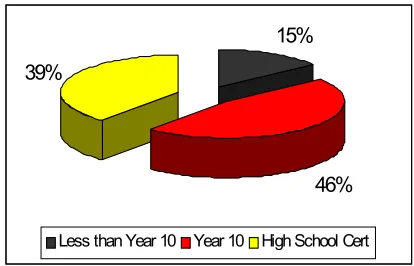
° Incomplete secondary education, some having not studied beyond Year 10 (see Figure 5)
° Unavailability of science subjects in rural secondary schools beyond Years 8 to 10
° Inaccessibility to tertiary preparation assistance before commencing University (see Figure 4)
The following two figures illustrate the academic background of Indigenous students. Consistent with other higher education programs, (see Barnes, 2000 for veterinary science and McCall, 1998 for medical science), almost two thirds (61%) of participants had not completed secondary school, entering the course through a non-standard academic route (Figure 5). The nature of their
post-secondary educational background varied considerably (Figure 6). One fifth of students had attained TAFE qualifications in community-based environmental health; a further quarter of the total cohort had attempted or completed other TAFE programs; 8 students had some formal education in Indigenous studies at TAFE or University level; and 12% (5) had been previously enrolled in, or had recently completed, a university degree.
15%
46% 39%
Less than Year 10 Year 10 High School Cert
Figure 5: Secondary schooling of course participants 8 7 10 1 8 5 0 2 4 6 8 10 12 EnvHlth Cert EnvHlth Dip Other TAFE Tertiary Prep Indig Studies Uni Degree
Figure 6: Post-secondary education of course participants
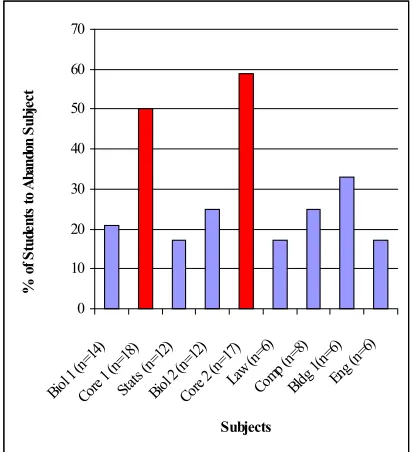
in elective subjects. Figure 7 illustrates this trend for nine of the thirteen subjects attempted by participants across the first two years of the program. It shows the percentage of students not completing core subject (in red) as consistently higher than the percentage of students to abandon elective subjects (in blue). No students abandoned studies in any of the remaining four electives of Chemistry 1, Chemistry 2, Building Construction, and Microbiology).
This outcome contrasted with over ten years successful experience with non-Indigenous students from a wide range of backgrounds. Mixed reactions from the program staff included general surprise and delight in response to the effective tuition in the disciplinary subjects. There was also concern expressed by University staff and workplace supervisors about the performance of students in the core subjects, since it was these subjects that were designed to make up the core professional practice component of the program. From the outset, program staff felt confident that students would perform well in core subjects because they allow students to derive issues and solutions from their own community and work settings. This conviction was now called into question. 0 10 20 30 40 50 60 70
Biol 1 (n=1
4)
Core 1 ( n=18)
Stats ( n=12
)
Biol 2 (n=1
2)
Core 2 (n=1
7)
Law ( n=6) Comp (n=8 ) Bldg 1 (n=6)
Eng ( n=6) Subjects % o f S tu den ts to A ba nd on S ub ject
Figure 7: Core and elective subject abandon rate in years 1 and 2
the ‘rules of the game’ – how to interpret the academic task, ways of accessing relevant information, how to read purposefully, the use of paraphrasing, and how to write academic reports which met with their assessors’ expectations. This initial response did assist the bulk of students to better understand what was expected of them in preparing their work for submission. However, this improved understanding was not automatically mirrored by a sustained improvement in student performance in core problem-based subjects. The study skills sessions did seem to address issues of academic standards and examination performance in elective offerings, but with students repeatedly not submitting some or all components of the core subjects’ assessment, there appeared to be a deeper failing in core subject praxis - a failing that could never have been addressed through traditional academic skills development tuition.
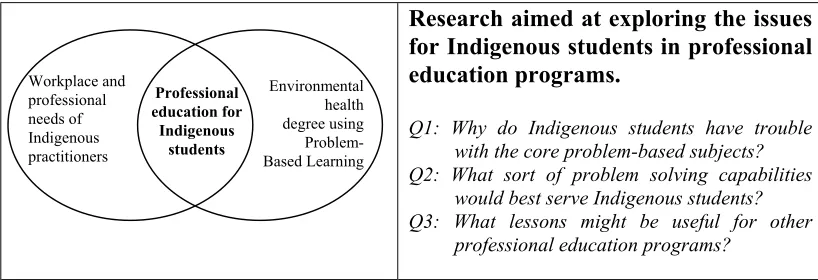
I began a search for a greater understanding of why it was that Indigenous students experienced such difficulty engaging with core problem-based subjects. As illustrated in Figure 8 below, I was also interested in identifying and implementing teaching strategies that could enable students to improve their academic performance in both core and specialist subjects. Towards the end of the first year of intake, I began a series of field visits to students in work placements. Out of these visits I developed a strong sense that the problem-based learning core of the degree program was not serving the workplace needs of Indigenous students as effectively as non-Indigenous students. I began to suspect that in spite of its assumed responsiveness to all students’ need problem-based learning for professional environmental health education was not a ‘one size fits all’ solution.
I began to question just how ‘real world’ the experience being provided in the problem-based core subjects was. And I began to question whether the teaching processes used by program staff and the type of skills developed by students in these subjects were the most appropriate for the Indigenous cohort.
Research aimed at exploring the issues for Indigenous students in professional education programs.
Q1: Why do Indigenous students have trouble with the core problem-based subjects? Q2: What sort of problem solving capabilities
would best serve Indigenous students? Q3: What lessons might be useful for other
professional education programs?
Environmental health degree using Problem- Based Learning
Professional education for Indigenous
students
Workplace and professional needs of Indigenous practitioners
Figure 8: Defining new ground for Indigenous professional education
I wondered whether the practice of Indigenous students would benefit more from the development of additional or alternative skills to those currently promoted in core environmental health subject. There was clear evidence, for example, that practice-oriented core subjects of the program were not providing Indigenous students with sufficient skills to confront the complex and multifaceted realities of the professional workplace. Perhaps the assumptions about the program’s objectives and capabilities needed to be understood from within a different social and political perspective, one that places the social and political struggle for self-determination at the heart of Indigenous professional practice and education. A major focus for this research thus became a search for a greater understanding of these difficulties in parallel with the search for practical strategies to improve the poor performance of students in the problem-based learning subjects.
Over time, more questions about the teaching and learning approach in the degree course came to the fore, including:-
° Are the teaching processes historically used by program staff, and the types of skill developed by students, the most appropriate for today’s practitioner in a fast-changing profession challenged by unpredictable pressures from local urban developments and environmental degradation?
° Would exploring the most appropriate approach in terms of the Indigenous cohort’s interests illuminate problems within the program as a whole?
° Is the professional practice of an Indigenous practitioner in a mainstream profession more complex, more contested, and therefore radically different from the work of their non-Indigenous counterparts?
In an attempt to focus the inquiry and place workable boundaries around the research direction, I found it important to draw back from these questions and remain grounded in the messages coming out clearly, month by month, from observation and discussion with students. I was guided by the desire expressed by the students that issues raised in the academic arena should have a direct connection to their workplace activities, and that the relationships with their workplaces and in their communities should be constructed in ways that supported them in their academic studies. Students were calling for a coherent link to be made between the professional education and the professional practice components of the program. At the moment they were being asked to study and to practice cross-culturally, and they could not find suitable role models in the profession for either of these activities.
Figure 9 below represents the special challenge for Indigenous practitioners to explicate the nature of their professional role and define how it should differ from that of the existing conventional practitioner role. It illustrates the cross-cultural and trans-situational point that Indigenous trainees find themselves, caught between a poorly defined Indigenous professional practice on the one hand, and a highly regulatory, conventional and mainstream practice of environmental health officers on the other hand. It asks focusing questions which, if answered well through this research, could aid students, workplace colleagues and supervisors, and academic staff in finding solutions to working cross-culturally, a challenge inherent to all professional practice.
My early work identified the professional interface for trainee Indigenous environmental health officers as ill-defined and therefore not clearly understood by the wider profession.
Research seeking to define the professional interface within which Indigenous students must work.
Q1: How do Indigenous students think and learn about environmental health issues?
Q2: What will it mean for Indigenous students to be working at this interface?
Q3: How can the interface area be defined and developed by Indigenous students?
Environmental health conditions in Indigenous communities
Indigenous Trainee Practitioners
Conventional environmental health practice in government agencies
Figure 9: Defining new ground for cross-cultural professional practice
Compounding this problem was the fact that at the time this research commenced there were no professional Aboriginal or Torres Strait Islander environmental health role models available to students. These students were therefore breaking new ground. Their challenge was to develop and define the dimensions of their professional practice in ways which maintained their standing in community and gained them the recognition and credibility considered appropriate for work by mainstream professionals and environmental health managers. It was expected that they would continually encounter situations outside the professional training manuals and textbooks of mainstream public and environmental health. It was equally likely that they would find that the models of even the best non-Indigenous environmental health officers would not necessarily provide the guidance for handling their situations. However, the more acculturated they became to the mainstream values and attitudes associated with conventional environmental health practice, the more they risked being separated from their community.
investigations into the core problem. The groups are guided to suitable learning experiences which may include searching literature in the library, via the Internet or elsewhere, contacting resource people on campus, and talking to experienced practitioners in Government or industry. Resources supplied by course staff include facilities and equipment applicable to examining the situation and a learning environment conducive to team work and discussion. Being distance students, they are also assessed on how they continue developing these professional practice skills on similar problems in their local context when they return home. The home and workplace learning circumstances of students impact on each of these educational dimensions of the core curriculum. With learners in this program coming from 41 different backgrounds, there was a need for this research to explore individual learner’s needs and responses to the curriculum and to the professional practice environment.
1.4 A Research Direction Emerges
This research, then, is about cross-cultural professional education for Indigenous environmental health practitioners, and involves an investigation into the experiences of the Indigenous cohort within both the academic and professional practice domains of learning. The research aims to explore and describe:
(a) the experiences of Indigenous environmental health students in each of the two learning domains;
(b) the relationship between these experiences and the teaching of the problem-based core learning subjects; and
(c) possible ways the professional education program can be changed so that the interests of Indigenous environmental health practitioners working in Indigenous communities can be better served.
Hypothesis: The learning difficulties Indigenous students experience in core subjects of the University of Western Sydney environmental health degree arise from larger issues related to cross-cultural learning and traditional professional practice.
Sub-hypothesis: The experiences of the Indigenous students at University
of Western Sydney, and in the professional workplace, can throw light on the nature of, and appropriate educational responses to, these larger issues.
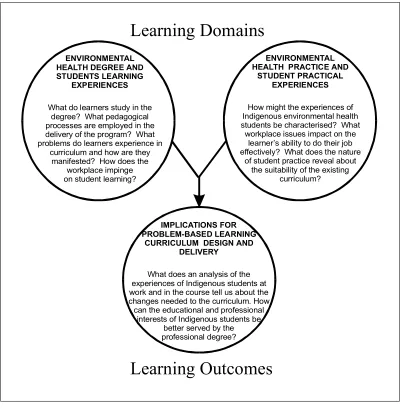
This hypothesis and sub-hypothesis represent two distinct lines of inquiry. The framework presented below (Figure 10) is designed firstly to illuminate findings from the data of each line of inquiry, and secondly, to generate evidence of links between them.
ENVIRONMENTAL HEALTH DEGREE AND STUDENTS LEARNING
EXPERIENCES
What do learners study in the degree? What pedagogical processes are employed in the delivery of the program? What problems do learners experience in
curriculum and how are they manifested? How does the
workplace impinge on student learning?
ENVIRONMENTAL HEALTH PRACTICE AND
STUDENT PRACTICAL EXPERIENCES
How might the experiences of Indigenous environmental health students be characterised? What workplace issues impact on the
learner’s ability to do their job effectively? What does the nature
of student practice reveal about the suitability of the existing
curriculum?
IMPLICATIONS FOR PROBLEM-BASED LEARNING
CURRICULUM DESIGN AND DELIVERY
What does an analysis of the experiences of Indigenous students at work and in the course tell us about the changes needed to the curriculum. How can the educational and professional
interests of Indigenous students be better served by the professional degree?
Learning Domains
Learning Outcomes
Figure 10: Framework of research
In order to structure this inquiry, the following research questions are asked:
1. How is the University of Western Sydney environmental health professional curriculum structured and delivered?
2. What are the problems faced by Indigenous students in the curriculum? 3. How do these problems manifest themselves?
prepare them to work more effectively in this poorly understood field of environmental health practice. Research questions here include:
4. What is the nature of Indigenous environmental health professional practice? 5. What do Indigenous students study in the degree that is applicable to their work? 6. How suited is the existing curriculum to the workplace and professional needs of
Indigenous practitioners?
From data generated by these questions, this study will draw conclusions for how problem-based programs might be re-designed to better serve the educational and professional practice needs of Indigenous students. These conclusions will consider how Indigenous students can engage in learning that will better equip them to operate cross-culturally, both within mainstream practice, and in their own communities. The conclusions will have direct application to teachers and students of professional education programs training Indigenous students in mainstream educational and organisational settings. Some consideration to the literature on professional education, workplace learning and culturally appropriate Aboriginal and Torres Strait Islander education will be given prior to addressing these questions.
CHAPTER TWO – CROSS-CULTURAL AND PROFESSIONAL EDUCATION
2.1 Professional Education and Workplace Learning
continuing professional education (CPE) aspects of professional development (see Forster et al. 1991; Bennett and Fox, 1993; and Jarvis, 2000).
The following literature review does not intend to cover all of this ground. For the purposes of this work it is more useful to identify some of the broad characteristics of professional education and discuss how these traits render it different from other tertiary or higher education approaches to teaching and learning. As a relatively new adaptation and amalgam of professional education and organisational learning, ‘workplace learning’ will also be discussed. This contemporary area of educational research and practice has relevance to this discussion because of the work-based and distance education elements in the Indigenous environmental health professional education program. From there I then undertake a review of a relatively small but informative collection of scholarly material discussing issues for educators and program providers involved in cross-cultural and professional Indigenous education in Australia. Problem-based learning emerges as an educational strategy that has been applied with some success in cross-cultural and ‘non-traditional’ learning situations, both in this country and overseas. From that point of entry, I explore in greater detail problem-based learning as an educational strategy for the professions before concluding the chapter with an exposition of its application to environmental health professional education.
Professional Education
final distinction Taylor makes relates to learner motivation. When compared with many other students in higher education, professional education students:
…are distinguished by their motivation to study for a very specific purpose which will have a direct influence on the rest of their working lives (Taylor, 1997, p. 4).
Distinguishing professional education from higher education in this way does in no way imply there is a universal or agreed approach to teaching and learning for all professional education programs. Indeed the evidence points to the opposite. To begin with, according to Bines (1992a, p. 12-16), there are three general classifications of professional education, within which any education and training program for the professions may broadly fit. These include:-
1. ‘Apprenticeship’ education – characterised by on-the-job training with some block or day programs in association with a training school or college and ‘cookbook’ knowledge embodied in practice manuals;
2. ‘Technocratic’ education - typically involving the systematic development of a knowledge base and interpretation and application to practice through multidisciplinary exercises in colleges and universities, with some supervised practice in the workplace; and
3. ‘Post-technocratic’ education – emphasising the acquisition of professional competency development through experience of practice and reflection on practice with coaching from work and institution-based tutors.
The educational qualifications for entry to a profession are frequently different from the full requirements for registration as a practitioner or to become a full member of a professional association (NBEET, 1996, p. 29). Universities today are primarily concerned with offering vocational courses which satisfy the basic educational requirements for entry to professions while also providing generic professional skills around communication, problem-solving and reflective practice. In attempting to do so:
[adult educators and] institutions of higher education are…presented with a complex pattern of pressures of demand, supply and quality in designing, delivering and managing professional education (Watson, 1992, p. 7).
tend to exist within, and have influence over, every one of Bines’ three professional education classifications.
In today’s higher educational context, the challenge for professional courses is to manage the tension between providing graduates with the skills and competencies demanded by the profession and providing them with those generic professional practice and core learning abilities that educational institutions strive to inculcate in learners. The potential for disagreement over graduate qualities and competencies between educators on the one hand and the professionals, individually or corporately, on the other has existed for some time. Schein’s criticisms of the professions and of professional education in the early 1970’s for example highlighted the challenge that lay ahead for adult educators and institutions of higher education interested in developing courses for emerging professions.
Professional education is almost totally geared to producing autonomous specialists and provides neither training nor experience in how to work as a member of a team, how to collaborate with clients in identifying needs and possible solutions, and how to collaborate with other professionals on complex projects.
Professional education provides no training for those graduates who wish to work as a members of, and become managers of intra- or inter-professional project teams working on complex social problems.
Professional education generally underutilises the applied behavioural sciences, especially in helping professionals to increase their self-insight, their ability to diagnose and manage client relationships and complex social problems, their ability to sort out the ethical and value issues inherent in their professional role, and their ability to continue to learn throughout their career (Schein, 1972, p. 60).
Much more recently Cavanaugh (1993, p. 107) cites numerous contemporary sources of criticism about the performance of professional education in preparing graduates for professional practice environments. Her work points to a combination of the relationship of course providers to the profession and the relationship of learners to the educational experience, as being the central causes of on-going dissatisfaction with professional education outcomes.
university-those of training providers of single discipline or professional practice courses. Conversely, the professions invariably complain about university courses that have ‘not taken the time or trouble to inculcate aspects of working practice or assumptions they believe to be core to that profession, or indeed if the university has gone out of their way to be critical of these’ (Watson, 1992, p. 4). As Burrage et al., (1990, p. 217) point out, practitioners and professors often hold divergent interests in the knowledge about
the profession, as distinct from of the profession.
[Professional organisations can] influence university courses, some with more impact than others, but they cannot fend off university influences on staff and students. Universities will seek to broaden and academicize the knowledge base, and to challenge some cherished, long established, professional practices (Eraut, 1994, p. 8).
Conversely, where the hold on the course curriculum is with the profession, it is at risk of being swamped by competency requirements and have a stronger emphasis on technical knowledge development. Aldred et al., (1997, p. 1) point out that this knowledge demand by the professions has led to the undergraduate curriculum being viewed from an increasingly instrumental perspective and has reduced the capacity for critical thought amongst graduates.
Workplace Learning
Over the past four or five years the context of employment has become a central focus for a wide range of vocational and non-vocational learning (Boud, 1998, p. 1). Emerging in the social and political context of the United Kingdom in the late 1980’s and 1990’s, work-based learning ‘was a response to criticisms of higher education as being too divorced from the world of employment and the economy’ (Boud, 1999, p. 8).
Hager (1998) attributes the theoretical foundations of workplace learning to a range of existing and overlapping educational theories and writings, each contributing to a more dynamic and effective work and learning environment for both employer and employee. The combination includes: experiential learning (Kolb, 1984; and Boud et al., 1996); Dewey’s theory of learning (1966); Argyris and Schön’s work on professional practice (1980; and Schön, 1983, 1991); Marsick and Watkins’ theory of informal and incidental learning (1990); and the generic skills and economic perspectives emphasised by Berryman (1993) and others. With such an eclectic combination of theoretical influences informing the concept, it comes as little surprise that variant meanings, connotations and perspectives on work-based learning can be found in the educational and organisational learning literature. Each takes a different view of the workplace. Candy and Matthews (1998, p. 14) suggest that workplaces may be identified as:-
1. sites for formally accredited learning
2. sites for complex technical interactions and problem-solving 3. sites for sharing and creating knowledge
4. part of the knowledge society
5. organic entities, capable of learning and adaptation in their own right
The first of these two of these five emphasise individual knowledge development while the remaining three ideas imply more sophisticated relationships between individuals amid wider groupings of people within the workplace (Matthews and Candy, 1999, p. 53). In pointing out that some ways of identifying workplaces are more complex and sophisticated than others, the authors contend that ‘each has a place in understanding the total phenomenon, and each has its particular strengths and weaknesses’ (Candy and Matthews, 1998, p. 14).
The sorts of learning relationships Indigenous environmental health students in this study have with their workplaces are best characterised as being within the first conception – the workplace being a site for formally accredited learning. The very nature of distance education transfers elements of the educational experience away from the traditional academic setting and, in this case, mostly into workplace learning sites. Yet, this relatively simple distribution of learning to the workplace does neither naturally, nor automatically bring with it any challenge to ‘the essential supremacy of abstract propositional knowledge and the credentialling role of formal education institutions’ (Candy and Matthews, 1998, p. 15). The curriculum of a distance education degree program such as the one being investigated here remains firmly in the control of the host university. Whilst the University of Western Sydney environmental health program can really only be considered ‘workplace learning’ because students study from work, the newly emerging literature in this field does help to describe student’s experiences of studying and working concurrently within a professional education and training program context.
2.2 Indigenous Professional Education
Issues Arising
…many professional fields have significantly biased enrolment profiles even at the undergraduate level, with under-representation from rural, isolated and low socio-economic status students evident…
Despite its scarcity, literature on Indigenous professional education describes a field that is thwarted by a complex array of interrelated social, political, economic and historical dilemmas as well as a delicate combination of personal, professional and institutional interests and agendas. McDaniel and Flowers (1995) and Foley and Flowers (1992) for example, argue strongly that many of the issues in Indigenous adult education are a direct result of the deep-rooted historical position of the Australian government in exercising control over Indigenous peoples. They also conclude that the majority of difficulties experienced both by Indigenous students and the program deliverers are derived from institutional agendas rather than from cultural differences (McDaniel and Flowers, 1995, p. 243). They see and explicitly state, that teaching staff have a responsibility to engage in a degree of self-examination and to exercise uncompromising honesty and fortitude when preparing, conducting and evaluating the work of Indigenous peoples in formal training programs (p. 244).
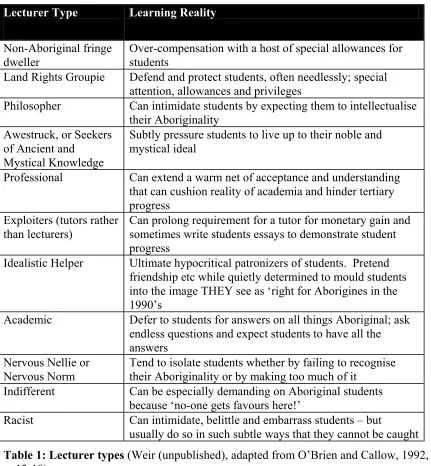
McDaniel and his colleague provide evidence of attitudes and assumptions held by program providers and deliverers who purport to be committed to the empowerment of Aboriginal and Torres Strait Islander people, that prove to be misguided and unhelpful to Indigenous students. They, along with Singh (1990, p. 17), call upon adult educators of Indigenous learners to reflect carefully and honestly upon their role as teacher, having identified educators who:
° maintain a paternalistic desire to nurture in order to be needed,
° sincerely do not wish to provide another negative experience, or
° view the success of their program through student numbers and funding which can only be maintained if unsuited students remain in the program,
Lecturer Type Learning Reality
Non-Aboriginal fringe dweller
Over-compensation with a host of special allowances for students
Land Rights Groupie Defend and protect students, often needlessly; special attention, allowances and privileges
Philosopher Can intimidate students by expecting them to intellectualise their Aboriginality
Awestruck, or Seekers of Ancient and
Mystical Knowledge
Subtly pressure students to live up to their noble and mystical ideal
Professional Can extend a warm net of acceptance and understanding that can cushion reality of academia and hinder tertiary progress
Exploiters (tutors rather than lecturers)
Can prolong requirement for a tutor for monetary gain and sometimes write students essays to demonstrate student progress
Idealistic Helper Ultimate hypocritical patronizers of students. Pretend friendship etc while quietly determined to mould students into the image THEY see as ‘right for Aborigines in the 1990’s
Academic Defer to students for answers on all things Aboriginal; ask endless questions and expect students to have all the answers
Nervous Nellie or Nervous Norm
Tend to isolate students whether by failing to recognise their Aboriginality or by making too much of it
Indifferent Can be especially demanding on Aboriginal students because ‘no-one gets favours here!’
Racist Can intimidate, belittle and embarrass students – but
usually do so in such subtle ways that they cannot be caught Table 1: Lecturer types (Weir (unpublished), adapted from O’Brien and Callow, 1992, p. 12-18)
The well-documented message coming from these writers is that programs and providers that allow Indigenous peoples to pass through award courses where they fail to meet the objectives and standards required of non-Indigenous practitioners are responsible for the on-going disempowerment of these peoples. The experience of the full challenges and difficulties of the professional program is essential for Indigenous students to fulfil the role of cultural broker or mediator between Indigenous and non-Indigenous worlds. As professional practitioners they must each acquire particular types of non-Indigenous skills and forms of knowledge.
Indigenous students more often than not come to professional education programs through mature-age entry pathways and with greater social purpose than their non-Indigenous peers (Foley and Flowers, 1992, p. 65). Aboriginal people rarely see entry into accredited courses solely as a means to a better job for themselves, but more often view it as a means to draw upon more powerful forces in the fight for a better standard of living for whole communities of people (Thurecht and Vose, 1997, p. 604; Barnes, 2000; Dennis Foley, 2000). These students are more likely then to be naturally drawn into courses or fields of investigations that require consideration of the combined social, cultural, historical and political dimensions of a problem.
The Problem-Based Learning Option
facing Aboriginal and Torres Strait Islander students in tertiary courses. These are summarised as the need to:
° bridge an often wide gap between school education and tertiary expectations;
° manage family responsibilities when ‘white-fella’ education is not always highly regarded;
° reconcile the sense of not belonging in an ethnocentric and culturally insensitive institution; and
° orient problem investigation toward collective learning and positive cultural change.
Thurecht and Vose used student interview data to explain how problem-based learning helped students to successfully meet these challenges. Among their claims is the proposition that since the focus of problem-based learning is primarily on ‘process’, rather than predominantly on ‘content’, students develop lifelong learning skills ‘through immersion and practice’ (p. 604). In regard to the second and third points, that of mismatch between family experience and university experience and the sense of not belonging, it was reported that the small group processes characteristic of problem-based learning held the key to improved communications and allowed for the development of closer, more understanding relations between Indigenous and non-Indigenous students. Finally, in response to non-Indigenous student concerns over the inappropriateness of an individualistic and competitive learning system which inadequately recognises prior knowledge and skills, problem-based learning was valued for encouraging cooperation and the sharing of the learning experience, and because it required students to draw upon their collective past knowledges and experiences in developing new ideas and skills (Thurecht and Vose 1997, p. 606).