http://www.sciencepublishinggroup.com/j/nano doi: 10.11648/j.nano.20190703.11
ISSN: 2575-3754 (Print); ISSN: 2575-3738 (Online)
A Study on the Effect of Fibre Dimensions on the Thermal
Conductivity of Pineapple Leaf Fibre Reinforced
Polypropylene Composites
Samuel Wadzani Gadzama
1, *, Olufemi Kashim Sunmonu
2, Umaru Semo Isiaku
2,
Abdullahi Danladi
21Training Department, Scientific Equipment Development Institute (SEDI), Enugu, Nigeria
2Department of Polymer & Textile Engineering, Faculty of Engineering, Ahmadu Bello University, Zaria, Nigeria
Email address:
*
Corresponding author
To cite this article:
Samuel Wadzani Gadzama, Olufemi Kashim Sunmonu, Umaru Semo Isiaku, Abdullahi Danladi. A Study on the Effect of Fibre Dimensions on the Thermal Conductivity of Pineapple Leaf Fibre Reinforced Polypropylene Composites. American Journal of Nano Research and Applications. Vol. 7, No. 6, 2019, pp. 21-26. doi: 10.11648/j.nano.20190703.11
Received: November 10, 2019; Accepted: December 2, 2019; Published: December 9, 2019
Abstract:
This research was carried out to study the thermal conductivity (TC) properties of pineapple leaf fibre (PALF) reinforced polypropylene (PP) composites. The pineapple leaf fibre dimensions were altered specifically at the macro, micro and nano dimensional states. It was considered that the thermal conductivity (TC) behavior of pineapple leaf fibre/polypropylene (PALF/PP) composites would be significantly higher when the pineapple leaf fibre which is the reinforcement agent undergoes dimensional changes. The study also considered the effect the fibre surface modification agents would have on the thermal behavior of the reinforced pineapple leaf fibre /polypropylene composites. The fibre surface modification agents used in this study are sodium hydroxide, zinc chloride, acetic anhydride and nitric acid. The guided plate steady state approach for determining thermal conductivity was used in this research. Results showed that the micro and nano fibrils of the reinforcing agent contributed to the enhanced thermal conductivity behavior of the reinforced pineapple leaf fibre/polypropylene composites. The results obtained also showed that the reinforced microfibrils pineapple leaf fibre /polypropylene composites and reinforced nanofibrils pineapple leaf fibre/polypropylene composites modified with nitric acid exhibits higher thermal conductivity than reinforced pineapple leaf fibre/polypropylene (PALF/PP) composites modified with acetic anhydride, zinc chloride, sodium hydroxide and the unmodified pineapple leaf fibre in descending order respectively.Keywords:
Micro, Nano, Fibrils, Composites, Thermal Conductivity1. Introduction
Recent studies have brought to limelight an increase in the applications of thermoplastic and thermoset materials as matrix with natural fibres as the reinforcement agents for the production of bio-composites. Products of these reinforced composites have proven to possess better strength, high resistance to fracture, high thermal conductivity and so much more other enhanced mechanical, thermal and chemical properties. It is no news that the natural fibres utilized in this area are mostly by products of agricultural activities which pose as environmentally harmful component of the existing
The TC of polymer composites are vital especially in injection or extrusion molding as reported by Patti and Acierno [1], that the greater would the TC of the processed materials, the lower would be the heating or cooling time, and the operating cost of the overall process is reduced, thereby maximizing profit and conserving energy. A similar work was done by Cheewawuttipong et al., [2] they found out that TC increased by the increased in volume of nano fillers.
2. Review of Literature
Thermal conductivity (TC) is considered an important factor in heat transfer of materials; several theoretical experimental studies have been carried out to determine concise or reasonably estimated values for this parameter. Earlier researchers such as Maxwell in 1954 studied the effective thermal conductivity of heterogeneous materials using the Laplace equation [3]. Earlier at the wake of the millennium, researchers such as Agrawal et al., studied the effect of thermal conductivity and diffusivity on oil palm fibre reinforced composites [4], also, Saxena et al., studied same parameters of thermal conductivity and diffusivity on banana fibre reinforced polyester composites, their study showed that thermal conductivity increased when compared with 100% matrix [5].
Also, Mangal et al.. Studied the effect of fibre volume fraction of PALF by adopting the transient plane source technique [6]. In 2005, Alsina et al., conducted a study of the thermal properties of natural hybrid fibres, they experimented with hybrid of jute-cotton, sisal-cotton and ramie-cotton reinforced unsaturated polymer composites, the results they obtained for thermal conductivity are 0.10-0.237W/m.K, 0-21-0.25W/m.K and 0.19-0.22W/m.K values for each hybrid composites respectively [7]. Inducula et al., also, studied the effect of thermal conductivity; specific heat and thermal diffusivity of a hybrid of banana-sisal reinforced polyester composites, other parameters they altered on the course of their research include the filler concentration as well as surface modification of the filler. The results they obtained showed that the composites with surface modified fillers have reduced thermal content resistance [8]. Sherely et al., studied the periodic method
of estimating thermal conductivity and thermal diffusivity of banana/polypropylene composites, their study showed that both thermal diffusivity and thermal conductivity decreased with fibre loading [9].
Mounika et al., studied the effect of thermal conductivity, using the guarded heat flow method, their results showed that thermal conductivity of the composites they produced decreased with fibre loading, while there was an increase in TC with increase in temperature [10].
3. Materials and Methods
3.1. Fabrication of Mold for Thermal Conductivity Test of the Composites
To achieve high level of production of composite samples, it is imperative at this level to eliminate the conventional methods of making samples in box mold where by each test sample will be later cut to standard test sizes and shapes. The set-back on the normal practice is the fact on the process of cutting into the standard shapes and sizes; the grain arrangement of the composite gets affected as a result of the applied pressure on the process of cutting. To take care of this obvious set-back, the idea of fabricating individual molds for each property test samples be produced, such that the that issue of cutting the composites will be completely eliminated.
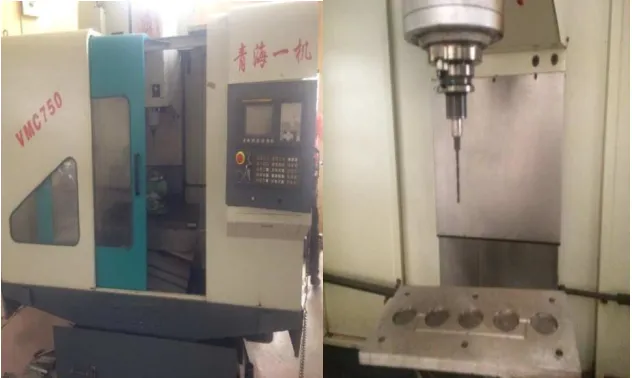
The mold was designed and fabricated at the Scientific Equipment Development Institute, Enugu, Nigeria, based on ASTM standards. To achieve high level of precision, a Computer Numerically Controlled (CNC) Machine, called vertical Milling Centre (VMC), model 750, manufactured by BAO JI, Laber Precise Industries Co. Ltd was used. Programs were written, using the CNC programming languages, which is basically G-CODES, the programs were fed into the CNC machine which served as the series of instructions with which the CNC functioned by taking each code in sequential format till parts of each mold were fabricated to the optimal level of precision. Figure 1 shows the CNC Machine used for the mold fabrication.
3.2. Composite Preparation
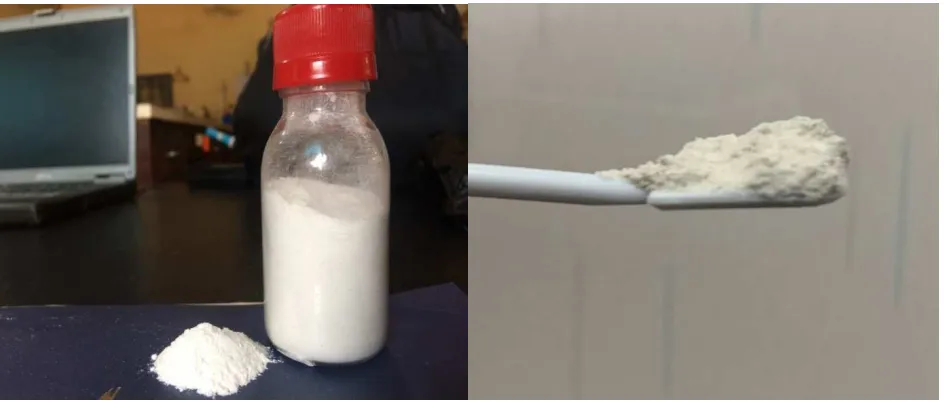
The composites were prepared using the injection molding machine shown in figure 2 shows the injection molding machine used in producing the composites. Figure 3 shows the mold used in producing the test samples for the thermal conductivity test. Table 1 shows the percentage weigh ration of each of the test samples beginning from 100% PP, PALF/PP 10: 90 weight ratio, 20: 80, 30: 70 and 40: 60 respectively. Figures 4 (a) and 4 (b) shows the micro and nanofibrils PALF produced and used in this research.
Figure 2. The injection molding machine used in this research.
Figure 3. The Thermal conductivity mold produced and used in the research.
Table 1. PALF/PP composites weight load ratio.
PALF weight % ratio (g)
Polypropylene weight ratio (g)
Total % weight composition
40 360 400
80 320 400
120 280 400
160 240 400
Figure 4. (a) The micro fibrils PALF produced and used in this research (b) the nano fibrils PALF produced and used in this research.
3.3. Experimental Set Up
The Thermal conductivity measurements were carried out under steady state condition. Based on ASTM E1530-11 test method. The disc shaped specimens with diameter of 50mm and thickness of 10mm are used in the thermal conductivity apparatus for measurements. A known constant heat is applied from one end of the specimens. When thermal equilibrium was attained and the system approached steady state conditions, the temperature at the top and bottom surfaces were measured with the aid of thermocouples installed at top and the bottom of the specimens. Knowing the values of heat supplied, temperatures, and thickness, the thermal conductivity was ascertained by employing
one-dimensional Fourier’s law for conduction. All measurements were carried out at average values of repeated experiments in the temperature range, 25-90°C.
4. Results and Discussion
4.1. Results
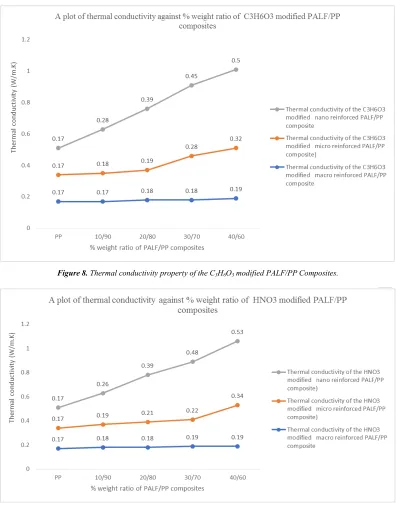
Figure 8 shows the plots of the reinforced C3H6O3 modified
PALF/PP composites and Figure 9 shows the HNO3 modified
reinforced PALF/PP composites.
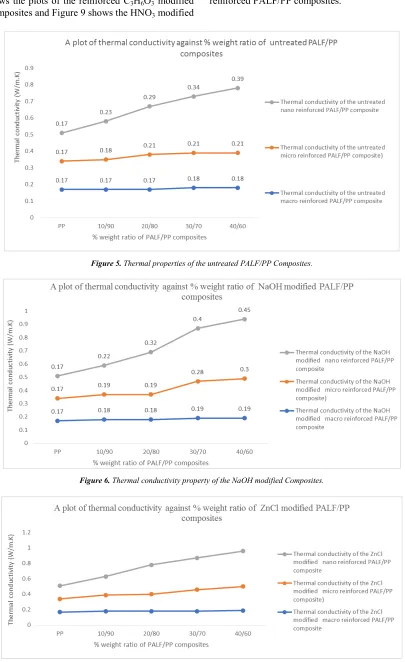
Figure 5. Thermal properties of the untreated PALF/PP Composites.
Figure 6. Thermal conductivity property of the NaOH modified Composites.
Figure 8. Thermal conductivity property of the C3H6O3 modified PALF/PP Composites.
Figure 9. Thermal conductivity property of the HNO3 modified PALF/PP Composites.
4.2. Discussions
Figures 5 to 5 show the thermal conductivity (TC) in W/mk behavior of the reinforced PALF/PP composites. The plots show a gradual increase in TC with increase in the fibre content. A noticeable steadiness in TC was observed at the maximum fibre content of 40% weight ratio. From Figure 5, the TC increased by 12%, 76% and 165%, that is by 0.19, 0.3 and 0.45W/mk with PALF at the macro, micro and nano cellulose dimensions respectively.
Figure 6 shows an increased TC by 6% (0.18W/mK), 24% (0.21W/Mk) and 129% (0.39W/mK), with PALF at the macro, micro and nano cellulose dimensions. Figure 7 shows the TC
plots of the ZnCl modified PALF/PP composites with the PALF in the macro, micro and nano dimensions, the observed TC was steady at 0.19W/mK, 0.43W/mK, and 0.52W/mK respectively, this corresponds to a TC increase by 12%, 82% and 171% in same order.
Figure 8 shows a similar pattern, for the reinforced
PALF/PP composites modified with C3H6O3 as 12%
(0.19W/mK), 88% (0.32W/mK) and 194% for PALF at the macro. Micro and nano cellulose dimensions respectively.
Figure 9 shows the plots of HNO3 modified PALF/PP
0.34W/Mk (100%) and 0.53 W/mK (212%) at the macro, micro and nano PALF dimensions.
5. Conclusion
In conclusion, the results obtained in this research following a similar pattern obtained by other researchers and are within the acceptable values obtained by other researchers. Fillers with high aspect ratios, such as nano whiskers, flagella or platelets can form continuous thermally conductive network in polymer matrix, and thus, makes it more effective in enhancing thermal transfer. This factor explains why there is over 200% increase in the TC property of the PALF nanocellulose/PP composite over and above the value obtained at the fibre macro particle levels. The above-mentioned factor combined with high intrinsic thermal conductivity of the PALF nanocellulose offered reasonable explanations for the larger increment in the TC of the PALF nanocellulose/PP composites with increasing filler content, partly. This can be attributed in part due to the Van de Waals force of attraction; a homogeneous network could be achieved under relatively high filler content. This hypothesis could be collaborated by the TEM micrographs of the PALF nanocellulose, which could lead to interconnected network which leads to the decrease in the scattering of phonon transfer and promotes the diffusion of phonons in the overall PALF nanocellulose/PP composites
References
[1] Antonella Patti and Domenico Acierno (2018). Thermal Conductivity of Polypropylene-Based Materials. DOI: http://dx.doi.org/10.5772/intechopen.84477
[2] Watthanaphon Cheewawuttipong, Daisuke Fuoka, Shuichi Tanoue, Hideyuki Uematsu, and Yoshiyuki Iemoto. Thermal
and Mechanical Properties of Polypropylene/ Boron Nitride Composites. Energy Procedia 34 (2013) 808-817.
[3] Maxwell J. C., “A Treaties on Electricity and Magnetism, ” 3rd Ed. New York: Dover, 1954.
[4] Agrawal, R., Saxeena, N. S., Sreekala, M. S., and Thomas, S., “Effect of Treatment on the Thermal Conductivity and Thermal Diffusivity of Oil Palm Fibre Reinforced Phenol Formaldehyde Composites,” Jou. Polym. Sci. B. Vol. 38, 2000, pp. 9-921.
[5] Saxena, N. S., Agarwal, R., Sharma, K. B., Thomas, S. and Pathan, L. A., “Thermal Conduction and Diffusion through Glass- Banana Fibre Polyester Composites,” Ind. J. Pure Appl. Phys., Vol. 41 (6), 2003, pp. 448-452.
[6] Mangal, R., Saxena, N. S., Sreekala, M., S., Thomas and Singh, K., “Thermal Properties of Pine Apple Leaf Fibre Reinforced Composites,” Material Sci, Eng., Vol. 339 (1), 2003, pp. 281-285.
[7] Alsina, OLS, de Carvalho, LH, Ramos Filho, FG, d Almeida. JRM, “Thermal Properties of Hybrid Lingo Cellulosic Fabric Reinforced Polyester Matrix Composites,” Journal of Polymer Testing, Vol. 24, 2005, pp. 81-85.
[8] Idicula M., Boudenne A., Umadevi L., Ibos L,. Candau Y. and Thomas S., “Thermo Physical Properties of Natural Fibre Reinforced Polyester Composites,” Composite Sci. Technology, Vol. 66, 2006, pp. 2719-2725.
[9] Sherely, A. P., Boudenn, A., Ibos, L., Candau, Y., Joseph, K. and Thomas, S., “Thermo Physical Properties of Banana Fibre/Polypropylene Commingled Composite Materials,” Composites Part A, Vol. 39, 2008, pp. 1582-1588.