EXERCISE PRESCRIPTION WHEN THERE
IS NO EXERCISE TEST: THE TALK TEST
Carl Foster, John P. Porcari, Sarah Ault, Katherine Doro, Joel Dubiel, Mallory Engen,
Danielle Kolman, and Sherry Xiong
Department of Exercise and Sport Science, University of Wisconsin-La Crosse
La Crosse, USA
Review UDC: 796.015.1:519.2
Abstract:
The Talk Test is a subjective measure of exercise intensity which, like RPE, has come to be accepted as an alternative to objective measures (%HRR, %VO2max) for exercise evaluation and prescription. This paper reviews the history and indications for using the Talk Test as a tool for both exercise evaluation and exercise prescription. The Talk Test, in one form or the other, has a long history, dating from at least 1937. It appears to be robust relative to the method of provoking speech and to the exercise mode. In the most widely used version, the subject recites a standard paragraph of 30-100 words, and responds to the question ‘Can you speak comfortably?’ With answers of ‘Yes’ (POSITIVE), ‘Yes, but…’ (EQUIVOCAL), and ‘No” (NEGATIVE), the Talk Test appears to be able to identify exercise intensities closely associated with the ventilatory (VT) and respiratory compensation (RCT) thresholds, and to bracket subjects into %HRR intensities closely associated with the accepted exercise/training intensity guidelines, without the need for performing a maximal exercise test. The Talk Test appears to work well in a range of populations from college students, healthy adults, elite athletes to patients with chronic diseases. It also seems to be a valid and reliable marker of the presence of exertional ischemia. In a variety of populations, the Talk Test appears capable of being translated into absolute exercise training intensities, on the basis of a commonsense step down sequence. The Talk Test appears to work by allowing detection of when the suppression of breathing frequency, which is necessary for speech, begins to lead to CO2 trapping, which interferes with breathing comfort. Its response to disrupting stimuli such as stochastic exercise, exercise training and blood donation follow predictable patterns. Guiding exercise intensity using the Talk Test instead of %HRR provides comparable responses during exercise training, without the need for an anchoring maximal exercise test. In summary, the Talk Test seems to offer a considerable promise as a means of exercise evaluation and prescription, in a wide variety of exercising individuals, without the need for a preliminary exercise test.
Key words: exercise prescription, breathing, ventilatory threshold
Introduction
Systematic exercise training contributes to large scale physiological adaptions, associated both with improved health (Blair, et al., 1989, Arem, et al., 2015) and enhanced exercise capacity (Foster, Daines, Hector, Snyder, & Welsh, 1996, Sylta, et al., 2016, Porcari, et al., 2018). These adaptations are based on favorable changes in gene expression (Booth Gordon, Carison, & Hamilton, 2000) lead-ing to augmentations of protein synthesis in the organ systems that contribute to the ability to per-form, and support, muscular activity. Functional capacity attributable to these changes in gene ex-pression is a useful surrogate of several markers of health (Booth & Roberts, 2008). From a historical perspective, these adaptations remind us of the
Be-cause individual exercise needs vary substantially, based on individual goals, current exercise capac-ity, health status and age, managing the compo-nents of the exercise program into a ‘prescription’
is central to achieving all goals – athletic, fitness
and clinical. There is a large body of knowledge, primarily grounded on changes in the maximal ox-ygen uptake (VO2max) in relation to increases in the frequency, intensity and time of exercise pro-grams in previously sedentary individuals (Garber, et al., 2011; Pollock, 1973; Riebe, 2107). This body of knowledge has been extended into clinical prac-tice (Ross, et al., 2016) and forms the underlying body of knowledge for the practice of clinical exer-cise physiology. More recent consensus statements, based on the known weaknesses in the gold stand-ard ‘relative percent concept’ of exercise prescrip-tion (Katch, et al., 1978, Sharhag-Rosenberger, et al., 2010), have focused on the use of threshold con-cepts as the basis for prescribing exercise (Mezzani, et al., 2012) and on the intensity distribution scheme of exercise training (Seiler, 2010; Sylta, et al. 2016). Although not as systematically organized, there is also an appreciable body of knowledge related to improved performance in athletes in relation to el-ements of the exercise training program (Billat, et al., 1999; Foster, Daines, Hector, Snyder, & Welsh, 1996; Orie, Hofman, de Koning, & Foster, 2014; Seiler, 2010; Sylta, et al., 2016; Foster, et al., 2012). Regardless of the scheme for prescribing ex-ercise, the process has been historically linked to physiological responses observed during incre-mental exercise testing. This procedure allows the
identification of one or more markers: maximal
exercise capacity (max Power Output, VO2max or maxMETs), resting (HRR) and maximal heart rate (HRmax), ventilatory (VT) and respiratory com-pensation (RCT) thresholds, and lactate thresholds (LT, MLSS), all of which are of established value within contemporary schemes of prescribing ex-ercise (Condello, et al., 2014; Foster & Thompson, 1991; Foster, Thompson, & Betes, 1991; Mezzani, et al., 2012; Reibe, 2017; Ross, et al., 2016). How-ever, incremental exercise test results are not
wide-ly available, whether in athletic, fitness or clinical
settings. Certainly less than 5% of exercisers, and maybe as few as 1%, have a well done exercise test prior to beginning of an exercise program, and still fewer have follow up tests, appropriate for modify-ing the exercise prescription. This paucity of incre-mental test results is attributable to a combination of the substantial cost of appropriate equipment and the need for trained personnel (sometimes including medical practitioners) to perform and interpret the procedures. Even in clinical exercise based rehabili-tation settings, the few exercise tests performed are designed to evaluate continuing
pathophysiologi-cal responses or to define prognosis (Myers, et al.,
2002; Ross, et al., 2016). As such, they may not have
information that is useful for prescribing exercise. Given that incremental exercise testing, which forms the backbone of exercise prescription algo-rithms (Mezzanni, et al., 2012; Riebe, 2017) is large-ly absent in non-research settings, there has been a considerable interest in the use of subjective meth-ods of prescribing and guiding exercise programs. There is evidence that the rate of increase of the Rating of Perceived Exertion (RPE) in relation to workload during submaximal incremental exercise can be used to make robust estimates of VO2max (Eston, 2012). There is also evidence that training
at intensities defined solely in terms of RPE (rath -er than the target heart rate) can provoke appropri-ate changes in VO2max and VT (Parfitt, Evans, & Eston, 2012). Further, there is a broad body of evi-dence that RPE can be a useful tool for both eval-uation and prescription (Eston, 2012). The use of RPE as an evaluative and prescriptive tool is ma-ture enough that there are summary texts avail-able (Borg, 1998) including guidelines for using multiple versions of the RPE scale (Borg & Kaijs-er, 2006). Recent evidence demonstrates that, with
slight modifications, RPE can be used to evaluate
the intensity of entire exercise sessions (Foster, et al., 1995, 2001), provide an estimate of exercise
training load sufficient to monitor the progress of
an exercise training program (Foster, et al., 1995; Foster, Rodriguez-Marroyo, & de Koning, 2017a) and suggest the broad utility of RPE as a subjective surrogate for formerly “gold standard” methods of exercise evaluation and prescription.
Talk Test
Another subjective method of exercise evalu-ation and prescription, the Talk Test (TT), has re-ceived considerable attention over the past two decades. The Talk Test is a conceptually simple process, experienced by almost every human with some frequency. Assume that you are walking, or running, or riding with a friend, and carrying on a conversation. At some point, one of you increases the pace slightly, or the land becomes slightly more
uphill, and you find that completing your sentences (e.g., speaking comfortably) becomes more difficult.
recite the paragraph, then quit part way through it, and say something to the effect “No, I can’t speak anymore”. This also tells you that the sustainability of exercise is very short at this intensity. We, and others, have used standard paragraphs. One para-graph, “the Rainbow Passage” is 101 words, and is drawn from the speech pathology literature. While
it is mostly designed to reveal difficulty with pro -nouncing certain sounds, it provides a convenient stimulus to speech. Unfortunately, it is not some-thing that most people know from memory, so it re-quires a cue card to be used. Culturally grounded sayings (e.g., the Pledge of Allegience in the U.S.) are known from memory by almost everyone, and can be used as more convenient stimuli (Shafer, Foster, Porcari, & Fater, 2000). One alternative ap-proach is to have a standard interview (e.g., “Tell us about your family structure” or “Tell us about what you had for breakfast this morning”). At the beginning, most people will comfortably answer the question. Later, at a higher intensity, they will self-identify that they cannot talk anymore. Another alternative approach is to have the exerciser, while still at rest, take a deep breath and then count, out loud (one, one thousand; two, one thousand) for as long as they can on a single breath. The higher the intensity of exercise, the shorter will be the count-ing duration. All of these strategies are designed to force someone to speak, out loud, in a repetitive way. Lastly, in the situation where it is inconvenient to speak out loud while exercising (some people just feel silly doing this) the sense of respiratory effort using RPE for respiratory effort has been linked to the stages of the TT. Mikat, Dubiel, Foster, and Por-cari (2015) demonstrated that a respiratory effort of 4 on the 0-10 Category Ratio scale (i.e., ‘somewhat hard’) approximated the LP stage of the TT. Simi-larly, a respiratory effort of 5 (‘hard’) was associated with the EQ stage of the TT, and a respiratory effort of 6.5 was associated with the NEG stage of the TT. During paired gas exchange studies, a respiratory effort RPE of 4 was associated with the VT, and 6.5 with the RCT. Thus, it is likely that most habitual exercisers will come to recognize a certain ‘feel’ for the right intensity of exercise based on breath-ing effort. However, for beginnbreath-ing exercisers and patients with chronic disease, both of whom may need active guidance regarding exercise intensity
during the first several training sessions, a device
like the Talk Test can provide useful guidance. It is also of interest to note that the respiratory effort at the LP stage of the TT (“somewhat hard”), matches
with the RPE verbal anchor that Parfit, Evans, and
Eston (2012) observed to be a “pleasant and effec-tive” intensity for training in previously sedentary
people. The responses of breathing effort, reflected
by the stages of the TT, will vary widely, and sys-tematically, with the momentary intensity of exer-cise. Nominally, they will tell something about the
sustainability of exercise at that intensity, and the likely effectiveness of that exercise intensity at pro-voking a training effect. As it turns out, they also tell quite a lot about physiology, within the ‘thresh-old based’ scheme of exercise evaluation and pre-scription recommended by Mezanni et al. (2012).
The body of evidence relative to the TT is sub-stantial. Enough so that the procedure is recognized in the 10th edition of ACSM’s Guidelines for Ex-ercise Testing and Prescription (Riebe, 2017) and in the American Council on Exercise’s Personal Trainer Guide (Foster & Porcari, 2010) as effective methods of guiding exercise training. The concept of the TT goes back at least until 1937, when Pro-fessor John Grayson advised mountaineers in Scot-land to “climb no faster than you can talk” (Goode, 2008). While clearly not designed for exercise pre-scription, and acknowledging that the concept of the VT was still decades in the future (Hollmann, 1985; Wasserman & McIlroy, 1964), Grayson’s ad-vice recognized the fundamental truth that patterns of breathing and speech can give insight into the magnitude and sustainability of exercise intensity for a given task. Later studies, by Professor Goode in Toronto (Goode, Mertens, Shariman, & Mertens, 1998; Mertens, Bell, & Goode, 2001), suggested
that the exercise intensity where people could first
“hear themselves breathe”, was associated both with heart rate (HR) guidelines and with an intensity ap-proximating the VT.
During this same period of time, there were studies of the physiological responses during speech production. These studies demonstrated that speech required a suppression of breathing frequency. Typ-ically, resting breathing frequency is ~15 times a minute, increasing up to 50-60 times a minute dur-ing a very heavy exercise. However, durdur-ing speech, breathing frequency is markedly reduced, often to <10 times per minute at rest; and proportionately re-duced during exercise. This reduction in breathing frequency leads to reductions in total ventilation, VO2 and VCO2 (Doust & Patrick, 1981; Meckel, Rotstein & Inbar, 2002; Rotstein, Meckel & Inbar, 2004). With these early studies suggesting changes in parameters that are central elements of the physi-ological response to exercise, the potential of the TT as a tool for exercise evaluation and prescrip-tion became obvious. Accordingly, there has been wide interest in the technique over the last 20 years. This review is designed to collate the literature on the TT in a systematic way, to demonstrate what we know about the practical use of the TT, and to show some very recent data that further support the use of the TT.
Observational-correlative studies
In scientific inquiry, if a new measure is thought to be important, one of the first things to do is to
if it correlates with measures of known importance. For example, if the Talk Test is revealing some-thing important about exercise intensity, then its behavior should change with changes in exercise intensity, and it should be correlated with measures like %HRR, %VO2max and ventilatory threshold (VT). Following the pioneering studies of Goode et al. (1998, 2008) and Mertens et al. (2001), con-temporary interest in the TT began with prelimi-nary reports from Henry Ford Hospital in Detroit. Brawner, Keteyian, & Czaplicki (1995) and Cza-plicki, Keteyian, Brawner, & Weingarten (1997) presented evidence that exercisers, with speech driven by a questionnaire-based method, achieved values of HR that were within ACSM guidelines, during both treadmill ambulation and arm-leg cycle ergometry, just at the point where they no longer felt comfortable speaking. Reasoning that the sup-pression of breathing frequency required for speech production and the increase in both total ventilation and breathing frequency that naturally occur at the VT were incompatible, we and others have demon-strated that, when the exercise intensity was below the VT, speech was consistently rated as comfort-able (e.g., “Yes, I can speak comfortably”). This has been labeled the Positive Stage of the TT (POS). As the exercise intensity approximated the VT, speech comfort is typically rated as equivocal (EQ) (e.g., “Yes, I can speak, but not entirely comfortably”). When exercise intensity meaningfully exceeded the
VT, speaking ability was rated as definitely
not-comfortable (NEG) (Dehart-Beverley, Foster, Por-cari, Fater, & Mikat, 2000). Further observations have shown that the NEG stage of the TT occurs very close to the intensity at the RCT (Recalde, et al., 2002; Rodriguez-Marroyo, Villa, Garcia-Lopez, & Foster, 2013).
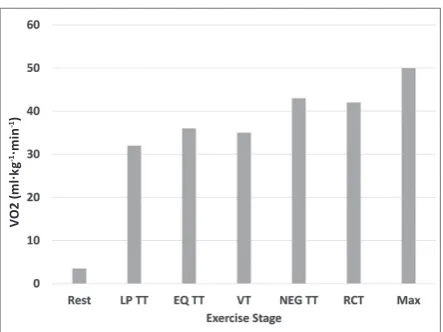
In many research settings in exercise science, the initial studies of any topic are done in young and healthy students, for both safety and conveni-ence. Subsequent studies typically are performed to try to extend the range of populations where a new technique might be useful. Thus, early obser-vations of the TT vs. VT/RCT relationship in young and healthy individuals have been extended to well-trained individuals (Foster, et al., 2012; Jeanes, Fos-ter, Porcari, Gibson, & Doberstein, 2011; Recalde, et al., 2002; Woltmann, et al., 2015), to competitive athletes (Quinn, & Coons, 2011; Rodriguez-Mar-royo, et al., 2013) and to patients with chronic dis-ease (Brawner, et al., 2006; Cannon, et al., 2004; Cowan, Ginnity, Kressler, & Nash, 2012; Lyon, et al., 2014; Nielsen, et al., 2014; Petersen, Maribo, Hjortdal, & Lausten, 2014; Reed & Pipe, 2014; Voe-lker, et al., 2002; Zanettini, et al., 2013) (Figure 1). With the exception of children, of patients with heart failure, and of patients with respiratory dis-ease (which have not been studied yet) it seems that if a person is speaking “comfortably”, then the
exer-VO
2 (
m
l.kg
-1. mi
n
-1)
Figure 1. Schematic presentation of the relationship between distinct stages of the Talk Test (Last Positive = LP, Equivocal = EQ, and First Negative = NEG) in relation to the VT and RCT. Depending on the duration of the speech provoking stimulus, the LP stage usually slightly precedes the VT. The first NEG stage is often at an intensity just in excess of the RCT. Adapted from Dehart-Beverley et al. (2000) and Recalde et al. (2002).
cise intensity is less than the VT. At about the point
where speech first becomes just less than fully com -fortable, the intensity approaches that of the VT.
And, at about the point where speech is first defi -nitely not comfortable, the intensity approximates the RCT. Since the VT and RCT are powerful pre-dictors of the sustainability of exercise (Foster & Cotter, 2005; Jones, Wilkerson, DiMenna, Fulford, & Poole, 2008), the simple measures provided by the TT may provide, in a very effective way, infor-mation that would otherwise be fairly complex to access (e.g., measured respiratory gas exchange).
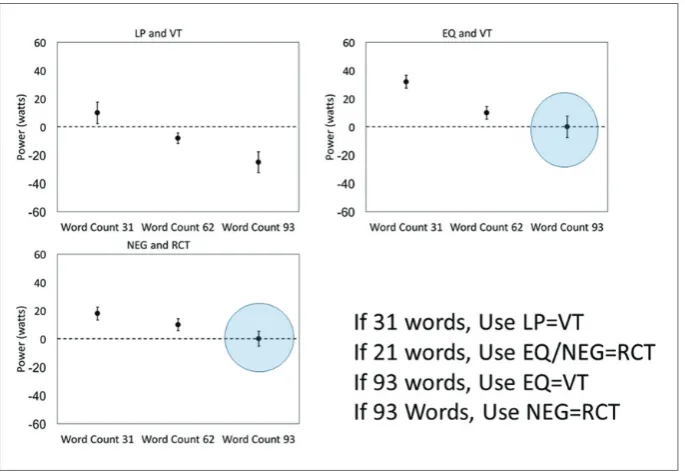
The relationship between exercise intensity rel-ative to physiological thresholds and the TT appears to be independent of the strategy for speech provo-cation. Studies using responses to a pre-recorded questionnaire (Brawner, et al., 1995, 2006; Cza-plicki, et al., 1997), to reported speech comfort after reciting a standard paragraph (Dehart-Beverley, et al., 2000; Schafer, et al., 2000), to a counting task (Loose, et al., 2012; Norman, Hopkins, & Crappo, 2008) have demonstrated the robustness of the TT relative to manner of assessment. Indeed, a direct comparison of the pre-recorded questionnaire vs. the standard paragraph methods revealed no differ-ence in the estimated VT (Brawner, et al., 2006). The TT technique is reliable in both healthy persons (Ballweg, et al., 2013) and patients with chronic dis-eases (Nielsen, et al., 2014), and appears to be ro-bust relative to the type of ergometric assessment (Persinger, Foster, Gibson, Fater, & Porcari, 2004). Power output at standard markers of the TT is
in-fluenced by speech passage duration, with longer
Porcari, & Mikat, 2017) (Figure 2). Longer exercise stages (2-3 min vs. 1 min) yield smaller prediction errors than shorter exercise stages, as it appears that there needs to be a certain amount of recovery from the speech provoking stimulus, to allow a normal breathing pattern to occur before the TT is repeated (Xiong, Foster, Porcari, & Mikat, 2015) (Figure 3).
One of the large issues with exercise prescrip-tion, particularly for middle-aged and older indi-viduals is the avoidance of exertional ischemia. Although exercise testing (Foster, 2017) and train-ing (Foster, et al., 2008a) are generally very safe, there is ample evidence demonstrating that
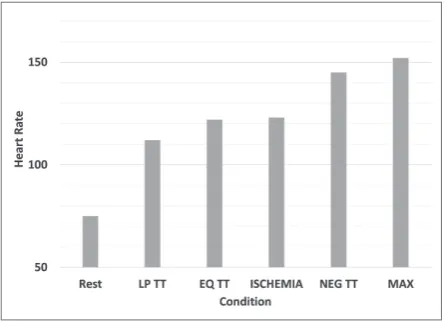
unac-customed heavy exercise in previously sedentary individuals can trigger myocardial infarction and sudden death (Albert, et al., 2000; Mittleman, et al., 1993; Willich, et al., 1993) and that exercise-related catastrophes during cardiac rehabilitation programs are associated with exercise above the electrocardi-ographic ischemic threshold (Hassock & Hartwig, 1982). In studies where the TT was measured during incremental exercise testing, in patients who devel-oped symptoms and ECG changes consistent with exertional ischemia, the last point where patients could speak comfortably (e.g., LP) was almost
al-ways (19/20 cases) prior to the first evidence of ECG
Figure 2. Errors in the estimation of the VT and the RCT based on the length of the speech provoking stimulus during the Talk Test. With longer speech passages (90-100 words), the EQ and NEG stages of the Talk Test produce very small errors relative to the VT and RCT, respectively. With short speech passages (~30 words), which are more user friendly, the VT occurs very close to the LP stage of the TT, and the RCT typically occurs between the EQ and NEG stages. Reprinted from Schroeder et al. (2017). With the use of intermediate length of speech passage duration (~60 words), the prediction errors were intermediate.
changes. Indeed, the last point where patients could speak comfortably was at a HR ~10 bpm below the
HR at the first ECG evidence of ischemia (Cannon,
et al., 2004). This 10 bpm HR ‘buffer’ is similar to that historically recommended for exercise training in patients with exertional ischemia (Riebe, 2017) (Figure 4).
Experimental studies
Provided that observational studies support the value of a new technique, the next normal step in
scientific evaluation is to see if the new technique
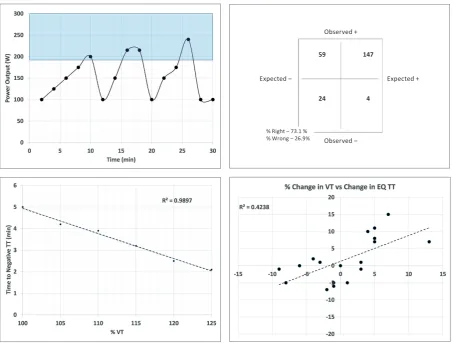
responds appropriately to experimental manipula-tion. Several experimental studies have been con-ducted for the purpose of validating the concepts and practice of the TT. Foster et al. (2008b) studied subjects performing stochastic exercise who per-formed the TT at the end of each 2-minute interval (Figure 5, upper left). Based on the power output during each interval, they predicted whether the subjects should be able to speak comfortably, based on riding at a power output that was either below or above the VT. They observed that in 73% of cases, the TT correctly predicted when the subjects were above or below VT (Figure 5, upper right). Most of the errors occurred when the power output was
above VT (usually briefly) but the subjects were still
able to speak comfortably. Follow up studies using square wave transitions from well below the VT to graduated intensities above the VT (105-120% of VT) indicated that at intensities just above the VT, it might take as much as four minutes to lose the ability to speak comfortably, but that at higher in-tensities (120-125% VT) speech became less than
comfortable in as little as two minutes (Figure 5, lower left). These data demonstrated that there is a different response of the TT during incremental ex-ercise and during transitions from easy exex-ercise to exercise above VT (e.g., interval training). Foster et al. (2008b) also measured the relationship between changes in VT and the TT in subjects in whom VO2max and VT were manipulated either by exer-cise training or by blood donation. The reciprocal changes in these markers of oxygen transport capac-ity in response to training and blood donation were well-matched by changes in the exercise intensity at the EQ stage of the TT (Figure 5, lower right). Thus, based on available evidence, it appears that the TT behaves as one would predict during experi-mental manipulations. The longer duration required to lose the ability to speak comfortably when exer-cise intensity is transitioned to just above the VT, compared to the apparently smoother transition dur-ing incremental exercise, remains to be explained. However, it seems clear that if comfortable speech is possible, that exercise intensity is, for the most part, below the intensity at VT.
Translational studies
One of the biggest problems for those guiding
new exercisers, whether in the fitness industry or in clinical populations is to give really specific in -structions about absolute exercise intensity,
par-ticularly during the first days and weeks of a train -ing program. Given the health risk of exercis-ing too hard too soon (Foster, et al., 2008a), and the compliance risk of very hard early exercise ses-sions, it is important to be able to recommend ap-propriate intensities at the very beginning of an ex-ercise program. Historically, based on exex-ercise test results, exercisers have been provided with a target HR range. However, by the time a beginning exer-ciser is able to get into an exercise bout and measure their HR, they may have already exceeded the target HR range, and be in a condition that is either un-pleasant or dangerous. In the ideal world, responses during incremental exercise testing should be able to predict the absolute training intensity required
to achieve a specified physiological response (%
HRR, TT markers, blood lactate). In other words, one should be able to ‘translate’ exercise testing
re-sponses to give highly specific advice for exercise
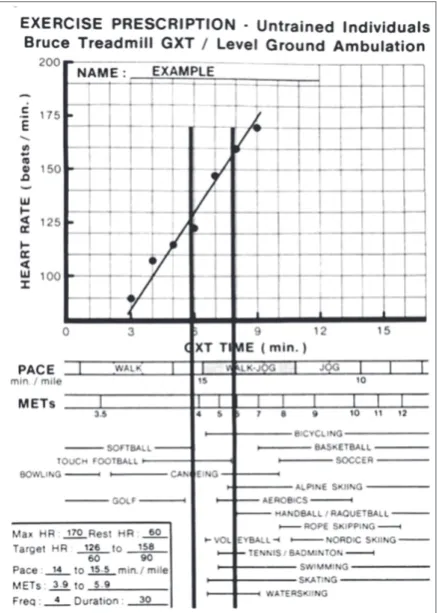
training, such as running pace or power output. Early studies (Foster, et al. 1986; Foster & Thomp-son, 1991; Foster, ThompThomp-son, & Bales, 1991) dem-onstrated that the duration during standard tread-mill or arm-leg ergometer exercise tests at which target HR values were observed could be translated into either speed of level ground ambulation, power
output, or even into defining when recreational ac -tivities were likely to produce heart rate responses within conventional guidelines (Foster & Thomp-son, 1991) (Figure 6). A similar approach has been
applied using the TT. Using the intensity at the ‘last positive’(LP) stage of the TT as a reference value, Jeanes et al. (2011), Foster et al. (2012), and Wolt-man et al. (2015) have shown that in well-trained in-dividuals, this speed/power output can be sustained comfortably, without undue drift in HR, blood lac-tate or TT responses. In sedentary adults, the prior stage of the TT, “LP-1”, seems to be an appropriate intensity for comfortable steady state exercise (Fos-ter, et al., 2009), and LP-2 appears to work best for patients in cardiac rehabilitation programs (Lyon, et al., 2014). Thus, based on a simple, submaximal exercise test, with further increments in workload
stopped at the point where speech is first less than
fully comfortable, the equivocal (EQ) stage of the TT, one can choose reasonable absolute workloads for steady state training in populations ranging from cardiac patients to athletes. Although the smallest error in predicting VT is achieved using longer (3 min) stages (Xiong, et al, 2015) and longer (~100 word) speech passages (Schroeder, et al., 2017), it
seems likely that most people are going to use short-er (~30 words) speech passages, because it is more convenient and does not require a cue card. In this case, the EQ stage achieved during an incremental test is likely to be non-sustainable during exercise training. Further, if one wants to train at intensities approximating or exceeding the maximal lactate steady state (MLSS) in athletes, reasonable candi-date workloads can be individually selected from
responses at the first negative (NEG) stage during a
submaximal exercise test with the TT (Rodriguez-Marroyo, et al., 2013; Woltmann, et al., 2015). Dur-ing sustained steady state exercise, at the intensity of the MLSS, the EQ stage of the TT is usually ob-served (Foster, Kohlman, Smith, & Porcari, 2017b). Of course, any of the translated workloads must be evaluated as the training session progresses, but given the need to pick appropriate intensities for the
first workout, responses during the TT can suggest
reasonable absolute starting intensities.
Observed +
Observed ‒
Expected ‒ Expected +
% Right ‒ 73.1 % % Wrong ‒ 26.9%
59
24 4
147
Physiological mechanisms
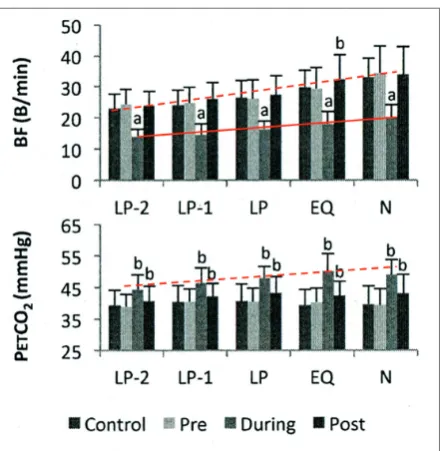
Given how well the TT works relative to identi-fying physiological threshold events and workloads for training, it is reasonable to ask how it works. Early work (Doust & Patrick, 1981; Meckel, Rot-stein, & Inbar, 2002; RotRot-stein, Meckel, & Inbar, 2004) suggested that breathing frequency was sup-pressed during speech, secondary to a need to allow for reasonable speech patterns. This led to reduc-tions in total ventilation, VO2 and VCO2, and to a slight increase in blood lactate concentration dur-ing speech. While physiological systems are well integrated to allow for continued ATP generation in the presence of brief reductions in VO2, there is no reasonable strategy for dealing with a reduction in VCO2, as even small increases in PaCO2 lead to large increases in the drive to breathe (Wasserman, et al., 2011). Creemers, Foster, Porcari, Cress, & de Koning (2017) have recently evaluated gas exchange responses during the TT at intensities where speech was comfortable (e.g., LP stage) and as speech
be-Figure 6. A schematic of plan for translating standard exercise test responses (Bruce treadmill protocol) based on HR responses during the test. The HR response is plotted and smoothed, and the time during the exercise test that target HR, based on Karvonen calculations, is defined. From this target HR time, a speed for level ground ambulation can be computed from the algorithm built into the figure. Given the strong relationship between the speed of level ground ambulation and the MET cost of activity, the likelihood that several commonly played sports activities will produce desired values for training HR can be estimated. Adapted from Foster et al. (1986, 1991a, 1991b).
Figure 7. Responses of HR (upper), RPE (middle) and blood lactate (lower) during 30 min of near steady state exercise, when the running speed was manipulated to preserve Talk Test responses in the POS, EQ, or NEG stages of the Talk Test. Steady state running at the POS stage of the Talk Test is well-tolerated, with low RPE and blood lactate. Running at the EQ stage is comparable to steady state exercise near the MLSS intensity. When running speed is in the NEG stage of the Talk Test, the intensity is higher than that of the MLSS. Adapted from Woltmann et al. (2015).
seems to be well supported, from a number of sourc-es, ranging from athletes to patients with chronic
diseases. There are a variety of new findings that add further support to this hypothesis. The first is
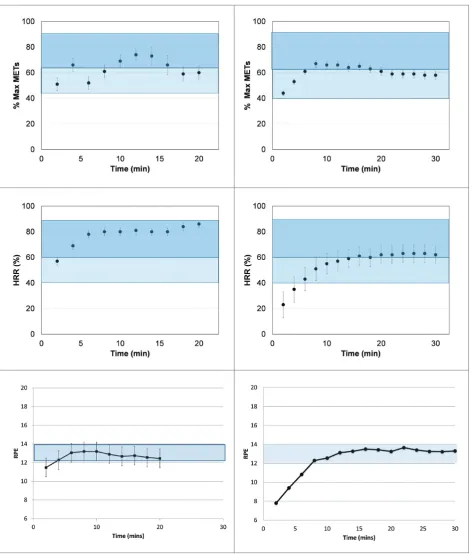
that simply by asking people to exercise at an inten-sity that “just allows comfortable speech” success-fully guides exercisers to intensities that are within ACSM guidelines for %maxMETs, % HRreserve and RPE (Porcari, et al., 2016). Further, exercise guid-ed by the simple instruction to “keep speech com-fortable” is associated with blood lactate responses consistent with physiological steady state conditions (<2.5 mmol·l-1). To demonstrate this, either healthy untrained individuals or patients enrolled in a car-diac rehabilitation program performed maximal in-cremental exercise (to establish reference values for HR and RPE for research comparison). They also performed a submaximal incremental test, stop-ping at the EQ stage of the TT. On another day, they began walking at a very comfortable pace (LP-2), while reciting a standard 101-word paragraph every 2 min. If they were comfortable speaking, the grade on the treadmill belt was increased by a small in-crement (1-2%). When speech was no longer fully comfortable (EQ stage), the grade on the treadmill belt was decreased progressively until comforta-ble speech was regained. Within 15 min, all sub-jects had achieved stable values for speech com-fort, and stable values for %HRR, RPE and blood lactate (Figure 9). These results demonstrate that even without exercise testing, which was only used as a method of reference in this study, the TT can guide exercise training intensity into reasonable zones in the individuals who most need guidance (sedentary people, patients with chronic diseases), simply by instructing them to adjust their walking intensity to the highest level compatible with com-fortable speech.
Endurance athletes are often encouraged to do much of their high intensity training either at the in-tensity of the maximal lactate steady state (Beneke & von Duvillard, 1996) or in the range between MLSS and VO2max (Billat, et al., 1999). The MLSS is widely thought to approximate the intensity of the RCT, which during incremental exercise is
associ-ated with the first NEG stage of the TT. However,
our knowledge of the need to ‘step down’ intensities from exercise testing to achieve successful trans-lation during steady state exercise suggests that a lower intensity might be necessary. To address this problem (Foster, et al., 2017b), well-trained cy-clists/triathletes performed both incremental ex-ercise testing and several 30-minute steady state
submaximal rides, to allow definition of the MLSS.
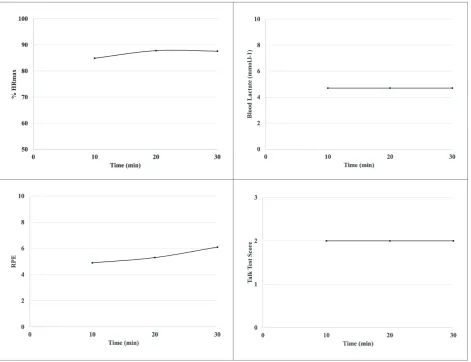
Sustained exercise, at the intensity associated with the LP stage of the TT, produced stable conditions consistent with MLSS (a stable lactate value be-tween 10 and 30 min, with a blood lactate concen-tration of 4-5 mmol.l-1, HR in the range of 70-80%
Figure 8. Changes in breathing frequency and PetCO2 (a surrogate of PaCO2) in relation to the stages of the TT. Note that the BF normally increases progressively with intensity, and that this allows, in the control (non-speaking) trial for PetCO2 to remain constant despite a progressively larger VCO2. The same results are observed during the speaking trial before the speech passage (Pre). During the execution of the speech passage, the BF decreases significantly at all workloads and during the speech passage the PetCO2 increases significantly at all workloads. After the conclusion of the speech passage (Post), the BF and PetCO2 return to normal. However, in the speaking trial, the systematic decrease in BF is associated with (indeed probably causes) progressive increases in PetCO2, even before the EQ and NEG stages of the Talk Test are achieved. The magnitude of the associated CO2 trapping with speech is large enough that the PetCO2 is still not fully recovered to control levels even 15 s after speaking has terminated.
surrogate of PaCO2) during speech with increases in exercise intensity. Given that PaCO2 and PetCO2 are normally downregulated as exercise intensity increases beyond the VT (Wasserman, et al., 2011), the progressive increase in PetCO2 during the TT is consistent with an increased drive to breathe, and likely to reductions in speech comfort. Further, these data are consistent with the decrease in power output at convenient markers of TT performance (e.g., the LP, EQ and NEG stages) as speech passag-es increase in duration (Schroeder, et al., 2017) (Fig-ure 8). Although not tested directly, it is reasonable to speculate that as the duration of reduced ventila-tion increases (e.g., due to longer speech passages), PetCO2 will increase to a larger degree. Given the striking increase in VCO2that normally occurs at both the VT and RCT, interference with CO2 elimi-nation by speaking would likely amplify the normal respiratory signaling at these intensities.
Contemporary findings
HRR, RPE in the range of 5-6, and speech respons-es equivalent to the EQ stage of the TT) (Figure 10).
These data suggest that findings of earlier studies
indicating that the EQ TT stage during incremen-tal exercise (Foster, et al., 2012; Jeans, et al., 2011;
Woltmann, et al. 2015) may have been unreasonably optimistic. Together with the observation that there may be a delay in establishing steady state speak-ing conditions at intensities just above the ventila-tory threshold (Foster, et al., 2008b) and that there
Figure 10. Responses during 30 min steady state rides in cyclists/triathletes, during workloads that matched conditions for MLSS (< 1 mmol.l-1 change in blood lactate between 10 and 30 min). Each subject performed multiple rides to establish MLSS. During the MLSS ride, the HR was stable in the range of 75-80 %HRR, RPE was nearly stable in the range of 5-6 and blood lactate was stable at 4-5 mmol·l-1. During this period of time, speech comfort was consistently rated at the EQ stage (e.g., ‘I can speak comfortably, but it’s getting harder’). Adapted from Foster et al. (2017b).
may already be increases of the PetCO2 even at in-tensities below the EQ stage of the TT (Schroeder, et al., 2017), these results suggest that conservative approaches to translating incremental Talk Test re-sponses may be preferred. This idea is particularly important when one remembers that the LP stage of the TT is probably more closely associated with the VT if short (~30 word) speech provoking stim-uli are used.
The TT, like any other method of exercise pre-scription, is grounded in its ability to guide exercise training intensity in a way that produces predictable changes in exercise capacity, particularly VO2max (Garber, et al. 2011; Pollock, 1973; Riebe 2017). Guidance of exercise intensity using %HRR goes back more than 60 years (Karvonen, Kentala, & Mustala, 1957) and the effectiveness of the method was well-established more than 40 years ago (Pol-lock, 1973). More recent data, using RPE as a direct guide to exercise training intensity, have demon-strated that simple, subjective methods may guide training in a way to produce predictable changes
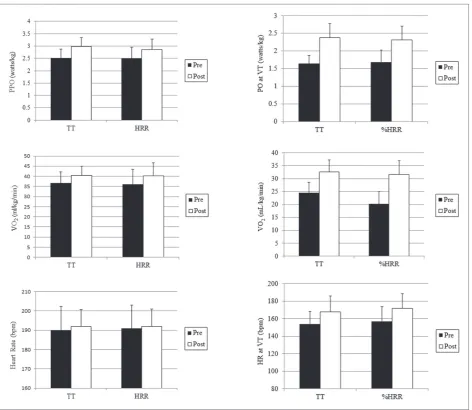
in VO2max and VT (Parfitt, Evans, & Eston, 2012). Recent data, from a randomized trial, of a direct comparison between the TT and %HRR as tools for guiding exercise training are available (Porcari, et al., 2018) (Figure 11). These data demonstrate that the observational and experimental evidence of the potential effectiveness of the TT as a guide for exercise training are correct. They, together with other data presented here (Figure 9), further dem-onstrate that the TT allows exercise training to be effectively guided even without the necessity of a preliminary exercise test.
Practical applications
Figure 11. Changes in power output (top), VO2 (middle) and HR (bottom) resulting from training in healthy, sedentary people during the maximal exercise (left) and at the VT (right) consequent to a 10-week training program that was guided using either the Talk Test (maintaining the LP stage as closely as possible) or %HRR using the ACSM guidelines and scheme of progression (Riebe, 2017). Without the need for a preliminary exercise test, the TT was able to successfully guide the subjects in the Talk Test group to equivalent improvement in the %HRR reserve group (which required a preliminary maximal exercise test). Reprinted from Porcari et al. (2018).
tinct stages of response…..POS, EQ, NEG. How-ever, other methods of speech provocation (e.g., re-sponding to standard questions or counting) are also likely to be useful, as the TT technique appears to be robust. Under these circumstances, the LP stage is most likely related to the VT, and the stage be-tween the EQ and NEG stages is most likely relat-ed to the RCT. If one wants more precision, using longer speech provoking passages (~100 words) is preferred. In this variant, the EQ and NEG stages are well related to the VT and RCT, respectively.
For prescribing exercise, as a general principle, one incremental TT stage down from where the VT is believed to be is a reasonable starting workload for most people. In particularly sedentary individ-uals or in patients with chronic disease, 2 stages down from the anticipated workload at the VT is likely to be most appropriate. As long as individuals can maintain comfortable speech during exercise, they are unlikely to have myocardial ischemia, even if they are capable of developing it during heavier exercise. Given the linkage between exertional is-chemia and catastrophic events during exercise, this feature of the TT is particularly appealing. The best current evidence is that the TT works equally well across a broad range of populations from competi-tive athletes to patients with chronic diseases and is robust across modes of exercise, although it has only been directly compared for walking/running vs. cycling. Thus, based on the available evidence, the TT appears to be a useful subjective method of exercise evaluation and prescription, essentially co-equal to RPE. As such, it may open doors to guid-ing exercise programmguid-ing that formerly were de-pendent on the availability of exercise test results.
References
Albert, C.M., Mittleman, M.A., Chae, C.U., Lee, I.M., Hennekens, C.H., & Manson, J.E. (2000). Triggering of sudden death from cardiac causes by vigorous exertion. New England Journal of Medicine, 343, 1355-1361.
Arem, H., Moore, S.C., Patel, A., Hartge, P., Berrington de Gonzalez, A., Visvanathan, K., . . . , & Matthews, C.E. (2015). Leisure time physical activity and mortality. Journal of the American Medical Association Internal Medicine, 175, 959-967.
Ballweg. J., Foster, C., Porcari, J.P., Haible, S., Aminaka, N., & Mikat, R.P. (2013). Reliability of the Talk Test as a surrogate of ventilatory and respiratory compensation thresholds. Journal of Sports Science in Medicine, 12, 610-611.
Beneke, R, & von Duvillard, S.P. (1996). Determination of maximal lactate steady state response on selected sports events. Medicine and Science in Sports and Exercise, 28, 241-246.
Billat, V.L., Flechet, B., Petit, G., Muriaux, G., & Koralsztein, J.P. (1999). Interval training at VO2max: Effects on
aerobic performance and overtraining markers. Medicine and Science in Sports and Exercise, 31, 156-163. Blair, S.N., Kohl, H.W., Paffenbarger, R.S., Clark, D.G., Cooper, K.H., & Gibbons, L.W. (1989). Physical fitness and
all-cause mortality: A prospective study of healthy men and women. Journal of the American Medical Association, 262, 2395-2241.
Booth, F.W., Gordon, S.E., Carlson, C.J., & Hamilton, M.T. (2000). Waging war on modern chronic disease: primary prevention through exercise biology. Journal of Applied Physiology, 88, 774-787.
Booth, F.W., & Roberts, C.K. (2008). Linking performance and chronic disease: Indices of physical performance are surrogates of health. British Journal of Sports Medicine, 42, 950-953.
and during the last 30 seconds of each stage, the subject should recite a standard paragraph out loud. Although longer passages, 90-100 words, are like-ly to give more precise results (Schroeder, et al. 2017), shortened (~30 words) paragraphs such as “The Pledge of Allegience”, which is widely known to most people in the U.S., are probably more user friendly and may be substituted. With longer speech
provoking passages, the first EQ stage of the TT is
likely at an intensity approximating the VT, and
the first NEG stage of the TT likely approximates
the RCT. If a shorter passage is preferred, the LP stage is probably closer to the VT, and the RCT is likely between the EQ and NEG stages. If one wants to assess maximal exercise capacity, the test may, of course, be continued until fatigue. However, from the practical standpoint of assessing conveni-ent markers of exercise capacity to allow tracking of changes in exercise capacity and to prescribe exercise, the test can be functionally completed by
the time the first EQ or NEG stage is achieved. For
most sedentary individuals, the LP-1 or LP-2 stag-es are probably useful starting points for exercise prescription. For already trained individuals, the LP or EQ stages are good candidates for steady state training.
Summary
The TT appears to represent a promising sub-jective method of both exercise testing,
particular-ly for estimating the VT and RCT, and for defining
dis-Borg, E., & Kaijser, L. (2006). A comparison between three rating scales for perceived exertion and two different work tests. Scandinavian Journal of Medicine and Science in Sports, 16, 57-69.
Borg, G. (1998). Borg’s Perceived Exertion and Pain Scales. Champaign, IL: Human Kinetics.
Brawner, C.A., Keteyian, S.J., & Czaplicki, T.E. (1995). A method of guiding exercise intensity: The Talk Test. Medicine and Science in Sports and Exercise, 27, S241.
Brawner, C.A., Vanzant, M. Ehrman, J. Foster, C., Porcari, J.P., Kelso, A.J., et al. (2006). Guiding exercise intensity using the Talk Test among patients with coronary artery disease. Journal of Cardiopulmonary Rehabilitation and Prevention, 26, 72-75.
Cannon, C., Foster, C., Porcari, J.P., Skemp-Arlt, K.M., Fater, D.C.W., & Backes, R. (2004). The Talk Test as a measure of exertional ischemia. American Journal of Medicine and Sport, 6, 52-57.
Condello, G., Reynolds, E., Foster, C., de Koning, J.J., Casolino, E., Knutson, M., & Porcari. J.P (2014). A simplified approach for estimating the ventilatory and respiratory compensation thresholds. Journal of Sports Science and Medicine, 13, 309-314.
Cowan, R.E., Ginnity, K.L, Kressler, J. & Nash, M.S. (2012). Assessment of the Talk Test and Rating of Perceived Exertion for exercise intensity prescription in persons with paraplegia. Topics in Spinal Cord Injury and Rehabilitation, 18, 212-219.
Creemers, N., Foster, C., Porcari, J.P., Cress, M.L., & de Koning, J.J. (2017). The physiological mechanism behind the Talk Test. Kinesiology, 49, 3-8.
Czaplicki, T.E., Keteyian, S.J., Brawner, C.A., & Weingarten, M.A. (1997). Guiding exercise training intensity on a treadmill and dual-action bike using the Talk Test. Medicine and Science in Sports and Exercise, 29; S70. Dehart-Beverley, J., Foster, C., Porcari, J.P., Fater, D.C., & Mikat, R.P. (2000). Relationship between the Talk Test and
ventilatory threshold. Clinical Exercise Physiology, 2, 34-38.
Doust J., & Patrick, J. (1981). The limitation of exercise ventilation during speech. Respiratory Physiology, 7(46), 137-147. Eston, R. (2012). Use of perceived exertion in sports. International Journal of Sports Physiology and Performance,
7, 175-182.
Foster, C., Lemberger, K., Thompson, N.N., Sennett, S.M., Hare, J., Pollock, M.L., Pells, A.E., & Schmidt, D.H. (1986). Functional translation of exercise responses from graded exercise testing to exercise training. American Heart Journal, 112, 1309-1316.
Foster, C., Thompson, N.N., & Bales, S. (1991). Functional translation of exercise responses using combined arm and leg ergometry. Cardiology, 78, 150-155.
Foster, C., & Thompson, N.N. (1991). Functional translation of exercise test responses to recreational activities. Journal of Cardiopulmonary Rehabilitation and Prevention, 11, 373-377.
Foster, C., Hector, L.L., Welsh, R., Schrager, M., Green, M.A., & Snyder, A.C. (1995). Effects of specific vs cross training on running performance. European Journal of Applied Physiology, 70, 367-372.
Foster, C., Daines, E., Hector, L., Snyder, A.C., & Welsh, R. (1996). Athletic performance in relation to training load. Wisconsin Medical Journal, 95, 370-374.
Foster, C., Florhaug, J.A., Franklin, J., Gottschal, L., Hrovatin, L.A., Parker, S., Doleshal, P., & Dodge, C. (2001). A new approach to monitoring exercise training. Journal of Strength and Conditioning Research, 15, 109-115. Foster, C., & Cotter, H.M. (2005). Blood lactate, respiratory and heart rate markers on the capacity for sustained exercise.
In P.J. Maud & C. Foster (Eds.), Physiological assessment of human fitness, 2nd ed. (pp 63-76). Champaign,
IL: Human Kinetics.
Foster, C., Porcari, J.P., Battista, R., Udermann, B., Wright, G.A., & Lucia, A. (2008a). The risk in exercise training. American Journal of Lifestyle Medicine, 2, 279-284.
Foster, C., Porcari, J.P., Anderson, J., Paulson, M., Smaczny, D., Webber, H., & Udermann, B. (2008b). The Talk Test as a measure of exercise training intensity. Journal of Cardiopulmonary Rehabilitation and Prevention, 28, 24-30. Foster, C., Porcari, J.P., Gibson, M., Wright, G.A., Greany, J., & Talati, N. (2009). Translation of submaximal exercise
test responses to exercise prescription using the Talk Test. Journal of Strength and Conditioning Research, 23, 2425-2429.
Foster, C., & Porcari, J.P. (2010). Cardiorespiratory training: Programming and progressions. In C.X. Bryant & D.J. Green (Eds.), ACE Personal Training Manual, 4th ed. (pp 369-409).
Foster, C., Porcari, J.P., de Koning, J.J., Bannwarth, E., Casolino,. E, Condello, G, Galamback, K., Gibson, M., Lueck, J., Rodriguez-Marroyo, J., & Walraven, L. (2012). Exercise training for performance and health. Deutsche Zeitschrift fuer Sportsmedizin, 63, 69-74.
Foster, C., Rodriguez-Marroyo, J.A., & de Koning, J.J. (2017a). Monitoring exercise training: The past, the present and the future. International Journal of Sports Physiology and Performance, 12, s2-s8.
Foster, C., Kohlman, D., Smith, S., & Porcari, J.P. (2017b). Talk Test as a marker for maximal lactate steady state in athletes. Medicine and Science in Sports and Exercise, 48, 2648s.
Garber, C.E., Blissmer, B., Deschenes, M.R., Franklin, B.A., Lamonte, M.J. Lee, I-M., Nieman, D., & Swain, D.P. (2011). Quantity and quality of exercise for developing and maintaining cardiorespiratory, musculoskeletal and neuromotor fitness in apparently healthy adults. Medicine and Science in Sports and Exercise, 43, 1334-1354. Goode, R.C., Mertens, R.W., Shariman, S., & Mertens, J. (1998). Voice, breathing and the control of exercise intensity.
Advances in Experimental Medicine and Biology, 450, 223-229.
Goode, R. (2008). A personal insight into the origin of the “Talk Test”. Health and Fitness Journal of Canada, 1, 5-8. Hassock, K., & Hartwig, R. (1982). Cardiac arrest associated with supervised cardiac rehabilitation. Journal of
Cardiopulmonary Rehabilitation and Prevention, 2, 402-408.
Hollmann, W. (1985). Historical remarks on the development of the aerobic-anaerobic threshold up to 1966. International Journal of Sports Medicine, 6, 109-116.
Jeanes, E., Foster, C., Porcari, J.P., Gibson, M., & Doberstein, S. (2011). Translation of exercise testing to exercise prescription using the Talk Test. Journal of Strength and Conditioning Research, 25, 590-596.
Jones, A.M., Wilkerson, D.P., DiMenna, F., Fulford, J., & Poole, D.C. (2008). Muscle metabolic responses to exercise above and below the “critical power” assessed using 31P-MRS. American Journal of Physiology, 294, R585-R595.
Karvonen, M., Kentala, E., & Mustala, O. (1957). The effects of training on heart rate: A longitudinal study. Annals of Medicine and Experimental Biology Journal, 35, 307-315.
Katch, V., Weltman, A., Sady, S., & Freedson, P. (1978). Validity of relative percent concept for equating training intensity. European Journal of Applied Physiology, 39, 219-227.
Loose, B.D., Christiansen, A.M., Smodczyk, J.E., Roberts, K.L., Budziszewska, A., Hollatz, C.G., & Norman, J.F. (2012) Consistency of the counting Talk Test for exercise prescription. Journal of Strength and Conditioning Research, 26, 1701-1707.
Lyon, E. Menke, M., Foster, C., Porcari, J.P. Gibson, M., & Bubbers, T. (2014). Translation of incremental Talk Test responses to steady state exercise training intensity. Journal of Cardiopulmonary Rehabilitation and Prevention, 34, 271-275.
Meckel, Y., Rotstein, A., & Inbar, O. (2002). The effects of speech production on physiological responses during submaximal exercise. Medicine and Science in Sports and Exercise, 34, 1337-1343.
Mertens, R.W., Bell, H.J., & Goode, R.C. (2001). The breath-sound check and exercise at or about the ventilatory threshold. In S. Poon & H. Kazemi (Eds.), Frontiers on modeling and control of breathing (pp. 375-382). New York: Plenum Press.
Mezzani, A., Hamm, L., Jones, A., McBride, P., Moholdt, T., Stone, J.A., Urhausen, A., & Williams, M.A (2012). Aerobic exercise intensity assessment and prescription in cardiac rehabilitation: A joint position statement of the European Association of Cardiovascular Prevention and Rehabilitation, the American Association of Cardiovascular and Pulmonary Rehabilitation, and the Canadian Association of Cardiac Rehabilitation. Journal of Cardiopulmonary Rehabilitation and Prevention, 32, 327-350.
Mikat, R.P., Dubiel, J.T., Foster, C., & Porcari, J.P. (2015). Measuring the Talk Test as a continuous rather than a categorical variable. Medicine and Science in Sports and Exercise, 6, S131.
Mittleman, M.A., Maclure, M., Tofler, G.H., Sherwood, J.B., Goldberg, R.J., & Muller, J.E. (1993). Triggering of acute myocardial infarction by heavy exercise: Protection against triggering by regular exercise. New England Journal of Medicine, 329, 1677-1683.
Myers, J., Prakash, M., Froelicher, V.F., Do, D., Partington, S., & Atwood, J.E. (2002). Exercise capacity and mortality among men referred for exercise testing. New England Journal of Medicine, 346, 793-801.
Nielsen, S.G., Buus, L.P., Hage, T., Olsen, H., Walsoe, M., & Vinther, A.P. (2014). The graded cycling test combined with the Talk Test is reliable for patients with ischemic heart disease. Journal of Cardiopulmonary Rehabilitation and Prevention, 28, 199-202.
Norman, J.S., Hopkins, E., & Crappo, E. (2008). Validity of the counting Talk Test in comparison with standard methods of estimating exercise intensity in young, healthy adults. Journal of Cardiopulmonary Rehabilitation and Prevention, 28, 199-202.
Orie, J., Hofman, N., de Koning, J.J., &, Foster, C. (2014). 38 years of training distribution in Olympic speed skaters. International Journal of Sports Physiology and Performance, 9, 93-99.
Parfitt, G., Evans, H., & Eston, R. (2012). Perceptually regulated training at RPE13 is pleasant and improves physical health. Medicine and Science in Sports and Exercise, 44, 1613-1618.
Persinger, R., Foster, C., Gibson, M., Fater, D., & Porcari, J.P. (2004). Consistency of the Talk Test for exercise prescription. Medicine and Science in Sports and Exercise, 36, 1632-1636.
Petersen, A.K., Maribo, T., Hjortdal, V.E., & Lausten, S. (2014). Intertester reliability of the Talk Test in a cardiac population. Journal of Cardiopulmonary Rehabilitation and Prevention, 34, 49-54.
Pollock, M.L. (1973). The quantification of endurance training programs. Exercise and Sport Sciences Reviews, 1, 155-188.
Porcari, J.P., Falck-Wiese, K., Suckow-Stenger, S., Turek, J., Wargowski, A., Hipp, M.L., Doberstein, S.T., Hahn, C.J., Ryskey, A.L., & Foster, C. (2018). Comparison of the Talk Test and percent heart rate reserve for exercise prescription. Kinesiology (In Press.)
Quinn, T.J., & Coons, B.A. (2011). The Talk Test and its relationship with the ventilatory and lactate thresholds. Journal of Sports Sciences, 29, 1175-1182.
Recalde, P., Foster, C., Skemp-Arlt, K., Fater, D., Neese, C., & Dodge, C. (2002). The Talk Test as a simple marker of ventilatory threshold. South African Journal of Sports Medicine, 8, 5-8.
Reed, J.L., & Pipe, A.L. (2014). The Talk Test: A useful tool for prescribing and monitoring exercise intensity. Current Opinion in Cardiology, 29, 1097-1103.
Riebe, D. (2017). ACSM’s Guidelines for Exercise Testing and Prescription, 10th ed. Philadelphia, PA: Wolters Kluwer.
Rodriguez-Marroyo, J.A., Villa, J., Garcia-Lopez, J., & Foster, C. (2013). Relationship between the Talk Test and ventilatory thresholds in well-trained cyclists. Journal of Strength and Conditioning Research, 27, 1942-1949. Ross, R., Blair, S.N., Ross, A., Church, T.S., Despres, J-P., Franklin, B.A., . . ., &Wislof, U. (2016) Importance of assessing
cardiorespiratory fitness in clinical practice: A case for fitness as a clinical vital sign. Circulation, 134, e1-e47. Rotstein, A., Meckel, Y., & Inbar, O. (2004). Perceived speech difficulty during exercise and its relation to exercise
intensity and physiological responses. European Journal of Applied Physiology, 92, 431-436.
Scharhag-Rosenberger, F., Meyer, T., Gassler, N., Faude, O., & Kindermann, W. (2010). Exercise at given percentages of VO2max: Heterogeneous metabolic response between individuals. Journal of Science and Medicine in Sport,
13, 74-79.
Schroeder, M.M., Foster, C., Porcari, J.P., & Mikat, R.P (2017). Effects of speech passage length on accuracy of predicting metabolic thresholds using the Talk Test. Kinesiology, 49, 9-14.
Seiler, S. (2010). What is the best practice for training intensity and duration distribution in endurance athletes? International Journal of Sports Physiology and Performance, 5, 276-291.
Shafer, N.N., Foster, C., Porcari, J.P., & Fater, D.C.W. (2000). Comparison of Talk Test to ventilatory threshold. Journal of Cardiopulmonary Rehabilitation and Prevention, 20, S289.
Sylta, O., Tonnessen, E., Hammarstrom, D., Danielsen, J., Skovereng, K., P, Ravn, T., Ronnestad, B.R., Sandbakk, O., & Seiler, S. (2016). The effect of different high intensity periodization models on endurance adaptations. Medicine and Science in Sports and Exercise, 48, 2165-2174.
Voelker, S., Foster, C., Porcari, J.P., Skemp-Arlt, K., Brice, G., & Backes, R. (2002). Relationship between the Talk Test and ventilatory threshold in cardiac patients. Clinical Exercise Physiology, 4, 120-123.
Wasserman, K., & McIlroy, M.B. (1964). Detecting the threshold of anaerobic metabolism in cardiac patients. American Journal of Cardiology, 14, 244-250.
Wasserman, K., Hansen, J., Sue, D., Stringer, W., Sietsema, K., Sun, X., et al. (2011). Principles of exercise testing and interpretation: Including pathophysiology and clinical applications. Philadelphia, PA: Lippincott Williams & Wilkens.
Willich, S.N., Lewis, M., Lowel, H., Arntz, H.-R., Schubert, F., & Schroder, R. (1993). Physical exertion as a trigger of acute myocardial infarction. New England Journal of Medicine, 329, 1684-1690.
Woltmann, M.L., Foster, C., Porcari, J.P. Camic, C.L., Dodge, C., Haible, S., & Mikat, R.P. (2015). Evidence that the Talk Test can be used to regulate exercise intensity. Journal of Strength and Conditioning Research, 29, 1248-1254. Xiong, S., Foster, C., Porcari, J.P., & Mikat, R.P. (2015). Effect of exercise stage duration on Talk Test responses.
Medicine and Science in Sports and Exercise, 46, S161.
Zanettini, R. Centeleghe, P., Franzelli, C., Mori, I., Benna, S., Penati, C., & Sortini, N. (2013). Validity of the Talk Test for exercise prescription after myocardial revascularization. European Journal of Preventive Cardiology, 20, 376-382.
Correspondence to: Carl Foster, Ph.D.
Department of Exercise and Sport Science 133 Mitchell Hall
University of Wisconsin-La Crosse La Crosse, WI 54601, USA E-mail: [email protected]
Acknowledgement
This manuscript was written while Carl Foster was a Distinguished Visiting Fellow at the University of Canberra Re-search Institute for Sport and Exercise (UCRISE).
We thank the following individuals who have made significant and continuing contributions to the long-term research