Original Research Article
Vitamin D study: a retrospective comparison between
two tropical countries: India and Bahrain
Rajkumar Kushawaha, Prachi Sinkar, Sandhya Iyer*, Amruta Velumani, Kallathikumar K.
INTRODUCTION
Vitamin D is a prohormone and fat-soluble nutriment, synthesized in the human body on exposure to sunlight. It has antirachitic activity and is crucial for maintenance of normal levels of calcium and phosphate in the blood apart from facilitating bone mineralization, nerve conduction, muscle contraction, etc. It is documented to be one of the oldest hormones to have been made in the earliest of the life forms for over 750 million years.1 Activation of vitamin D within the body is a two-step metabolic conversion involving the liver wherein the
24-hydroxylation occurs, as well as the kidney wherein the 1-alpha hydroxylation is facilitated.2 The major source of vitamin D involves endogenous synthesis in the skin on exposure to the ultraviolet B (UVB) rays of the sun, which can contribute up to 90% of fulfillment of the biochemical needs. The other minor dietary sources include fortified foods, supplements and fish.3 Vitamin D deficiency (VDD) has been associated with many adverse health outcomes like rickets in children, increased risk of fractures, autoimmune and infectious diseases, hypertension and cardiovascular conditions as well as osteomalacia in adults.2
ABSTRACT
Background: Hypovitaminosis D is a very common prevalence in India as well as Middle East. Studies indicate the frequency to be anywhere between 44-96% among adults in Middle east, while in India it is estimated to range in between 50 – 94%. Our report is an attempt to study vitamin D status from two tropical countries; India and Bahrain and present status of vitamin D deficiency as well as insufficiency in a comparison summary.
Methods: This retrospective study in our reference lab included data from a total of 2591 samples from Bahrain and 2596 samples from India. Serum vitamin D estimation was done by chemiluminescence immunoassay or CLIA and reported as per the classification given by the US Endocrine Society. Our reference laboratory provides diagnostic services to Bahrain and thus data from both the countries were available for analysis.
Results: Our analysis detected vitamin D deficiency to be 66.2% among samples from India in comparison to 41.4% from Bahrain, and this difference was statistically significant at p<0.0001. Further, the average vitamin D levels in the cohort were detected to be higher in Bahrain samples at 24.0±11.6 ng/ml in comparison to samples from India at 18.2±14.4 ng/ml and statistically significant at p<0.0001.
Conclusions: Many studies have documented the prevalence of hypovitaminosis D in a region-specific manner. Our report presents the picture of vitamin D status between two tropical countries to highlight the difference in vitamin D deficiency prevalence in two arid and semi-arid regions of the world.
Keywords: India, Middle East, Bahrain, Vitamin D, Deficiency, Hypovitaminosis
Biochemistry Division, Thyrocare Technologies Limited, Navi Mumbai, Maharashtra, India
Received: 01 April 2019
Revised: 15 May 2019
Accepted: 16 May 2019
*Correspondence:
Dr. Sandhya Iyer,
E-mail: [email protected]
Copyright: © the author(s), publisher and licensee Medip Academy. This is an open-access article distributed under the terms of the Creative Commons Attribution Non-Commercial License, which permits unrestricted non-commercial use, distribution, and reproduction in any medium, provided the original work is properly cited.
VDD has been attested to be a global nutritional public health issue and an estimated one billion have been projected as affected across all age-groups as well as ethnicities in the year 2007. This study also highlighted the need for treatment for all deficient affected irrespective of symptom presence or onset and management through supplementation, with oral regimens combined with calcium.4 Though sunlight is the major source for vitamin D, VDD has been recorded both in sunshine deficient as well as abundant geographies as the synthesis on skin is affected by atmospheric pollution, latitude, solar zenith angle, melanin pigmentation as well as ozone layer.3 Geographical comparison for Bahrain and India indicates that both the regions are tropical receiving sunlight all through the year with arid and semi-arid conditions. In spite of the supporting natural abundance, VDD has been reported to be high in India as well as the MENA (Middle East and North Africa) region.5
Geographically the MENA region spans latitude of 15 to 39ᵒN and receives sunlight all through the year. Yet studies from this region report very low serum vitamin D levels among healthy young individuals from as early as in the eighties.5-7 A recent hospital-based study from Bahrain involving 5000 individuals between ages 20 – 50 years detected deficiency in 92.04% of the tested, summarizing the affected to be in ratios of 1 in 10. Studies in 2013 indicate only 20% of the healthy population to harbor optimum levels of vitamin D and the drawback of toxicity associated with prescribing high-dose supplements raises a concern.8 Studies from Bahrain have also reported on the frequency of VDD among mothers in labor and newborns. One such study involving 403 mothers and their newborns detected the overall prevalence of VDD to be 88.8% in the mothers and 90.3% among the newborns. This report further associated factors like low education, delivery in public setting, use of veil and ≥4 gravida and absence in use of multivitamins and supplements to be the common cause. Inadequate dosing of supplements has also been highlighted by studies wherein 83% of the individuals on multivitamins and 79.7% on vitamin D were deficient.9 In India VDD has been documented to be an epidemic condition with prevalence records of between 70–100% across the general population.10 Geographically located in between 8.4ᵒ and 37.6ᵒ North latitude, majority of the population experience enough sunshine throughout the year. A 2009 report by the International Osteoporosis Foundation reported hypovitaminosis D among 86% of the neonates, 91% of healthy school girls, 84% among pregnant women and 78% among the healthy hospital staff from North India.11 In case of South India, the prevalence has been recorded to be around 70% among females and 44% among males.12 High prevalence has been noted and documented by many studies from different regions of the country among different population groups. One recent study from urban Hyderabad among 298 individuals of ≥60 years of age
detected the frequency to be 56.3%.13 Another study among 626 children aged between 6–18 years of age from the high altitude region of Himachal Pradesh recorded a prevalence of 93%.14
VDD to a large extent continues to be affected by cultural and social aspects which dictate lifestyle, dressing as well as dietary pattern. This study analysis was undertaken to understand the difference in the prevalence spectrum of VDD between two tropical regions of the world; India and Bahrain.
METHODS
Study design
This retrospective report involved data analysis from a total of 2596 samples from India and 2591 samples from Bahrain. Estimation of vitamin D is routinely done in our CAP accredited reference laboratory and the data for this retrospective analysis included samples processed at our end. Data from samples processed over a period of last one year from 2018 was included for analysis, and there were no specific exclusion or inclusion criteria. Since, the data was from samples processed in our reference laboratory, the need for study-specific informed consent was deviated from. No client identity has been compromised in lieu of this study as data specific for gender, age and region was only pulled from the database with the relevant test code. The entire cohort characteristics have been highlighted in Table 1.
Estimation of vitamin D
Serum estimation of vitamin D was done using the technology of chemiluminescence immunoassay or CLIA using the automated analyzer Advia Centaur® Immunoassay System (Siemens Healthcare Diagnostics, USA). Vitamin D estimation kit from Siemens, India was used for analysis involving a lite reagent, solid phase as well as the vitamin D reagent pack. The kit consists of the anti vitamin D mouse antibody labeled with acridinium ester, an anti-fluorescein coated paramagnetic particle, a vitamin D analog conjugated to fluorescein and a releasing agent. The assay was carried out as per the pre-programmed manufacturer instruction. Quality control analysis involved two level serum controls procured from Siemens Ltd. and run as per the Quality Management System (QMS) of our reference laboratory. Vitamin D estimation by CLIA is also subjected to proficiency testing by the College of American Pathologists (CAP) in our lab.
Statistical analysis
cohort of India and Bahrain, followed by analysis for significance.
RESULTS
The retrospective analysis for identifying vitamin D status from serum samples of Indians and Bahraini’s involved a total of 2596 samples (males –1221 and females –1375) from the former and a total of 2591
(males –1292 and females –1299) from the later. The average vitamin D levels detected were 24.0±11.6 ng/ml among the Bahraini’s in comparison to Indians at 18.2±14.4 ng/ml and the difference was statistically significant at p<0.0001. The difference in average levels of vitamin D between males and females of India and Bahrain was also significant at p<0.0001, but the difference in the gender within the same region was not significant.
Table 1: Study cohort.
India Bahrain
N Average age
(years)
Average vitamin D levels (ng/ml) N
Average age (years)
Average vitamin D levels (ng/ml)
Total 2596 45±16 18.2±14.4 2591 42±14 24.0±11.6
Males 1221 47±16 18.1±13.7 1292 44±14 23.7±11.8
Females 1375 44±15 18.4±14.9 1299 41±15 24.3±11.4
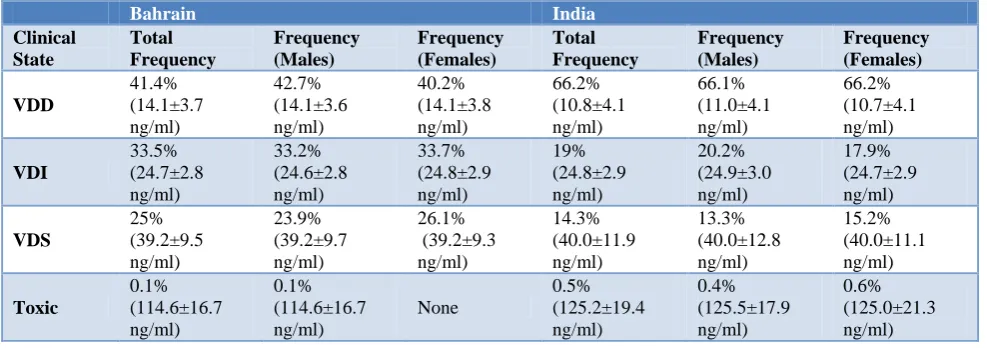
Table 2: Vitamin D analysis comparison between Indians and Bahraini.
Bahrain India
Clinical State
Total Frequency
Frequency (Males)
Frequency (Females)
Total Frequency
Frequency (Males)
Frequency (Females)
VDD
41.4% (14.1±3.7 ng/ml)
42.7% (14.1±3.6 ng/ml)
40.2% (14.1±3.8 ng/ml)
66.2% (10.8±4.1 ng/ml)
66.1% (11.0±4.1 ng/ml)
66.2% (10.7±4.1 ng/ml)
VDI
33.5% (24.7±2.8 ng/ml)
33.2% (24.6±2.8 ng/ml)
33.7% (24.8±2.9 ng/ml)
19% (24.8±2.9 ng/ml)
20.2% (24.9±3.0 ng/ml)
17.9% (24.7±2.9 ng/ml)
VDS
25% (39.2±9.5 ng/ml)
23.9% (39.2±9.7 ng/ml)
26.1% (39.2±9.3 ng/ml)
14.3% (40.0±11.9 ng/ml)
13.3% (40.0±12.8 ng/ml)
15.2% (40.0±11.1 ng/ml)
Toxic
0.1% (114.6±16.7 ng/ml)
0.1% (114.6±16.7 ng/ml)
None
0.5% (125.2±19.4 ng/ml)
0.4% (125.5±17.9 ng/ml)
0.6% (125.0±21.3 ng/ml)
Analysis for VDD detected the frequency to be 66.2% among Indians in comparison to 41.4% among the Bahraini’s. This difference was also statistically significant at p<0.0001. The difference in the average serum levels of vitamin D in the deficiency cohort i.e levels <20 ng/ml was also significant at p<0.0001 between the Bahraini’s at 14.1±3.7 ng/ml and the Indians at 10.8±4.1 ng/ml. However, no such significance was detected in the others like VDI, VDS and Toxic. The entire analysis findings have been summarized in Table 2.
Frequency analysis between Bahraini’s and Indians was found to be significant across VDD, VDI and VDS at p<0.0001. For toxic, the difference in frequency between 0.1% in Bahrain and 0.5% in India was detected to be significant at p<0.05.
DISCUSSION
The growing prevalence of VDD world over raises a serious concern on public health issues as hypovitaminosis has been linked to multiple
non-communicable ailments like diabetes, hypertension, cardiovascular conditions and cancer.1 Many studies have proven adequate levels of circulating vitamin D to reduce risk for cancers of the breast, colon, ovary, prostate, kidney, etc. Mean vitamin D levels of 40 – 60 ng/ml has been postulated to bear the ability to bring a three-fourth reduction in the number of deaths due to cancer of the breast and colon in the United States and Canada.15 Prevalence of low serum 25(OH)D levels and inadequate exposure and intake of vitamin D has been recorded in the general population by many studies exhibiting clear regional difference in the extent of concern.16,17
Indian samples at 18.2±14.4 ng/ml with the difference being significant at p<0.0001 and both covering the VDD as well as VDI clinical category.
A recent study on identifying any significant correlation between symptoms and levels of vitamin D among Saudi Arabian population identified average vitamin D3 levels to be 21.8±10.22 ng/ml which were comparable to our findings. Further this study also highlighted the frequency of VDD to be 49.19% and VDI to be 27.27% among women.18 Our study detected the frequency of VDD to be 40.2% and that for VDI to be 33.7% respectively. Another recent hospital-based study from Bahrain involving 302 patients detected the frequency of VDD to be 48% among patients <50 years of age compared to 29.8% among >50 years of age. This study also detected Bahraini females to have higher rate of VDD as compared to males.19 Though our findings for VDD showed higher prevalence among males at 42.7% compared to females at 40.2%, the difference was not statistically significant. Another published report on adult Bahrainis involved studying predictors of VDD and VDI among 500 healthy individuals. This study detected VDD prevalence to be 49.4% with the risk being high in young age, low serum calcium, hyperparathyroidism, female gender as well as warm and hot months of the year. The prevalence among females was detected to be 67.6% and conservative clothing style was also detected to increase risk (P = 0.04). In case of males, the prevalence was detected to be 31.2% with the risk increasing 1.6 folds in warm and hot months of the year.20 Another cross section study from Bahrain involving adults assessed vitamin D levels among 500 healthy Bahrainis aged between 15 – 65 years of age. This study reported higher deficiency among females at 67.6% compared to males at 31.2%, further stating the deficiency to be higher among the <30 years age group at 53% in comparison to the >30 years at 45.4%. Period analysis also detected high deficiency between months of October to March at 69.2% than April to September at 12.5%.21 The samples processed in our reference laboratory was collected in the month of June – July from Bahrain, where the temperature records show it to cross >35ᵒC.
In the Indian scenario, community-based studies on apparently healthy population have indicated the prevalence to be between 50 – 94% and high frequency has been noted throughout in the country.3 Many Indian studies on adult population exist and one such from Punjab (North India) including 150 individuals from age group 17 – 68 years detected the prevalence to be 90%.22 Another study from Delhi involving 1346 urban adults of >/= 50 years of age detected the prevalence to be 91.2%. This study also detected more than 50% with severe VDD to have normal PTH levels.23 Our pan-India study detected the frequency of VDD to be 66.2% and the average age of our analysis cohort was 45±16 years covering the adult group. Further, the average serum vitamin D levels detected in our study in VDD was 10.8±4.1 ng/ml. A recent Indian review report which
presented findings after studying over 40 publications, highlighted vitamin D levels to range from 3.15±1.4 to 52.9±33.7 ng/ml from studies done across different regions and different zones. This study also detected the effect size of vitamin D level to be high in the South zone compared to other zones.24 The average vitamin D levels detected in our study from VDD through VDS becomes comparable to the ranges presented above.
In case of global studies, though many reviews have documented the frequency and prevalence comparison, studying mean levels and significance between geographies with similar climatic factors are few. Our report is an attempt to study and present difference in prevalence of VDD across two countries; India and Bahrain both of which fall in the tropical zone. The statistically significant difference in prevalence as well as levels of vitamin D across both the ethnicities indicates a greater impact of socio-economic, cultural and dietary implications on hypovitaminosis over geography and sunlight exposure.
Vitamin D supplementation is proposed as the most effective means to treat and prevent VDD in the high-risk groups. Pharmaceutical formulations in India majorly contain vitamin D3 in the form of alfacalcidiol (25 hydroxycholecalciferol), calcitriol (1,25 dihydroxycholecalciferol) or cholecalciferol.25 Calcitriol though the most common, has not been found suitable for treatment of nutritional deficiency of vitamin D. Thus apart from identifying prevalence, the cause has to be ascertained. This will ensure in devising targeted treatment strategy crucial to prevent hypervitaminosis which is the major scare.
CONCLUSION
Deficiency of vitamin D has become a global concern and many reports point out the deficiency to be over 50% in certain tropical regions of the world. There are a number of factors beyond sunlight exposure which influences vitamin D levels like dietary intake, pigmentation in the skin and lifestyle, the need to define ethnicity-specific appropriate levels become the need. Our report is one of the first few to present a comparison picture of vitamin D levels across two tropical countries with different lifestyle and dietary pattern but affected by the common problem of VDD.
Funding: No funding sources Conflict of interest: None declared Ethical approval: Not required REFERENCES
1. Holick MF. Vitamin D: A millenium perspective. J Cell Biochem. 2003;88(2):296–307.
3. Aparna P, Muthathal S, Nongkynrih B, Gupta SK. Vitamin D deficiency in India. J Family Med Prim Care. 2018;7(2):324–30.
4. Balasubramanian S, Dhanalakshmi K, Amperayani S. Vitamin D deficiency in childhood – A review of current guidelines on diagnosis and management. Indian Pediatr. 2013;50:669–75.
5. Chakhtoura M, Rahme M, Chamoun N, El-Hajj Fuleihan G. Vitamin D in the Middle East and North Africa. Bone Reports. 2018;9:120–1.
6. Tavera-Mendoza LE and White JH. Cell defenses and the sunshine vitamin. Sci Am. 2007;297(5):68– 70.
7. Sedrani SH, Elidrissy AW, El Arabi KM. Sunlight and vitamin D status in normal Saudi subjects. Am J Clin Nutr 1983;38(1):129–32.
8. Unnikrishnan R. Vitamin D shortage sparks health alert. GDN Online. Available at: http://www. gdnonline.com/Details/333922/Vitamin-D-shortage-sparks-health-alert. Accessed on 29 November 2018.
9. Al-Mahroos FT, Al-Sahlawi HS, Al-Amer E, Mahmood NA, Sandhu AK, Sharida H, et al. Prevalence and risk factors for vitamin D deficiency among mothers in labor and their newborn. Bahrain Medical Bulletin. 2013;35(2):2.
10. Ritu G and Gupta A. Vitamin D deficiency in India. Prevalence, Causalities and Interventions. Nutrients 2014;6(2):729–75.
11. Vishwanath P, Kulkarni P, Prashant A. Vitamin D deficiency in India:Are we overconcerned? Int J Health Allied Sci. 2014;3:77–8.
12. Harinarayan CV, Ramalakshmi T, Prasad UV, Sudhakar D, Srinivasarao PV, Sarma KV, et al. High prevalence of low dietary calcium, high phytate consumption, and vitamin D deficiency in healthy south Indians. Am J Clin Nutr. 2007;85(4):1062–67.
13. Suryanarayana P, Arlappa N, Sai Santhosh V, Balakrishna N, Lakshmi Rajkumar P, Prasad U, et al. Prevalence of vitamin D deficiency and its associated factors among the urban elderly population in Hyderabad metropolitan city, South India. Ann Hum Biol. 2018;45(2):133–9.
14. Kapil U, Pandey RM, Goswami R, Sharma B, Sharma N, Ramakrishnan L, et al. Prevalence of vitamin D deficiency and associated risk factors among children residing at high altitude in Shimla district, Himachal Pradesh, India. Indian J Endocrinol Metab. 2017;21(1):178–83.
15. Garland CF, Gorham ED, Mohr SB, Garland FC. Vitamin D for cancer prevention:global perspective. Ann Epidemiol. 2009;19(7):468–83.
16. Cashman KD, Dowling KG, Skrabakova Z, Gonzalez-Gross M, Valtuena J, De Henauw S, et al. Vitamin D deficiency in Europe:pandemic? Am J Clin Nutr. 2016;103(4):1033–44.
17. Cashman KD, Sheehy T, O’Neill CM. Is vitamin D deficiency a public health concern for low middle income countries? A systematic literature review. Eur J Nutr. 2019;58(1):433-53.
18. Sadat-Ali M, Al Essa ON, Alani FM, Al Omar HK, Ebrahim WY. Correlation of symptoms to serum vitamin D levels? Clin Nutr ESPEN. 2018;24:31–4. 19. Saleh F, Naser H, Arize I, Malallah H, Saleh F, Saleh R, et al. Vitamin D status in secondary care patients. Bahrain Medical Bulletin. 2018;40(2):100– 2.
20. Golbahar J, Al-Saffar N, Diab DA, Al-Othman S, Darwish A, Al-Kafaji G. Predictors of Vitamin D deficiency and insufficiency in adult Bahrainis:a cross-sectional study. Public Health Nutr. 2014;17(4):732–8.
21. Golbahar J, Al-Saffar N, Diab DA, Al-Othman S, Darwish A. Vitamin D status in adults:A cross sectional study. Bahrain Med Bulletin. 2013;35(1):1–11.
22. Bachhel R, Singh NR, Sindhu JS. Prevalence of vitamin D deficiency in north-west Punjab population:A cross-sectional study. Int J Appl Basic Med Res. 2015;5(1):7–11.
23. Marwaha RK, Tandon N, Garg MK, Kanwar R, Narang A, Sastry A, et al. Vitamin D status in healthy Indians aged 50 years and above. J Assoc Physicians India. 2011;59:706–9.
24. Selvarajan S, Gunaseelan V, Anandabaskar N, Xavier AS, Srinivasamurthy S, Kamalanathan SK, et al. Systematic review on vitamin D level in apparently healthy Indian population and analysis of its associated factors. Indian J Endocr Metab. 2017;21:765–75.
25. Lhamo Y, Chugh PK, Tripathi CD. Vitamin D supplements in the Indian market. Indian J Pharm Sci. 2016;78(1):41–7.
.