Effect of Post Hatch Delayed Access to Feed on
Performance, GIT Physical and Histological Development
and Yolk Absorption in Young Broiler Chicks
HAMED GANJALI
1, AHMAD REZA RAJI
1and HEYDAR ZARGHI
2*
1Department of Basic Science, Faculty of Veterinary medicine, Ferdowsi University of Mashhad, Iran. 2Department of Animal Science, Faculty of Agriculture, Ferdowsi University of Mashhad, Iran.
DOI: http://dx.doi.org/10.13005/bpj/846
(Received: September 10, 2015; accepted: November 30, 2015) ABSTRACT
The effect of post hatch starvation on growth rate, feed intake, feed conversion ratio, yolk absorption, and small intestine morphological index and gastrointestinal tract (GIT) organs relative weight were evaluated in young broiler chicks. Two hundred and twenty five newly hatched male “Ross-308” broiler chicks were placed in three treatments with five replications of 15b each. The experiment was arranged in a complete random design (CRD) at 6, 12 and 18 hours delay access to feed immediately after hatching as treatments. Body weight and weight gain increased significantly in birds that had access to feed with 6h delayed compared with those at 12 and 18h delayed access to feed. The total gastro intestinal tract and small intestine relative weight and small intestine length numerically decreased with increased delayed access to feed. The highest small intestine relative weight and length were observed in birds that started to feed at 6h after hatching and the lowest weights were observed in birds that started to feed at 18h after hatching. Also, the highest villus height, villus width and apparent villus surface area were observed in birds that started to feed at 6h after hatching. The results of this study revealed that delayed access to feed has adverse effects on broiler performance. Therefore, be recommended that transportation plan have to be provided to chicks to reduce starvation time after hatching.
Key words: Post-hatch starvation, performance, digestive system, broiler chick .
INTRODUCTION
In commercial broiler farm, it has been shown that the neonatal chicks remain approximately 24- 36h without feed and water after removal from the incubator until placement in the farm (Bhuiyan et al. 2011; Willemsen et al. 2010), this gap between hatching time and neonatal chick’s access to feed due to hatchery handling and transport processing (Noy and Sklan 1999a). This delay access to feed after hatching results in a lowering of development and function of the gastrointestinal tract (GIT) (Potturi et al. 2005; Yang et al. 2009), thereby undesirable bird performance (Gonzales et al. 2003) such as reducing final body weight (Noy et al. 2001), decreasing immune response (Dibner et al. 1998), retarding growth and
to feed but those are practically difficult to achieve (ýLilburn 1998). Early access neonatal chick to feed as reduced transport time to the poultry farm with purchase chicks from local hatchery is most important applied clue to overcome the detrimental effects of such starvation. Hence, this study was designed to evaluate the effects of different delayed times access to feed on the performance, yolk absorption and physical development of the digestive system in young broiler chicks.
MATERIAL AND METHODS Birds, Housing and Care
A total of 225 neonatal commercial “Ross 308” male broiler chicks were obtained from a local hatchery and were transported to the study area within 6h after hatched. The chicks were divided into three groups; each group was further divided into five pens of 15 chicks each. The chicks were raised on conventional deep litter system, with windows less house, equipped by inlet for ventilation. Each pen was 1.5 squares meter and covered with wood shavings. The house temperature and humidity were initially maintained at 35-37ºC and 60-70% respectively and after 3 days gradually decreased (temperature 0.5ºC every day and humidity decreased 50-60%). From 1 to 42 d of age, the lighting program was constant (23 Light: 1 Dark) with 25-35 lx light intensity. The chicks in each pen were allowed to have free access to feed from a handing feeder and fresh water from a handing drinker throughout the experiment. The whole house work includes house cleaning, adding new food and fresh water did daily.
Experimental Design and Diets
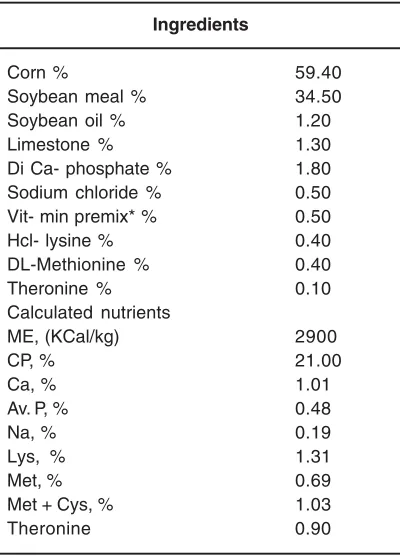
The experiment was arranged in to a completely randomized design (CRD) experiment of three groups include done starved birds for 6, 12 and 18 hours after post hatching. Each group was further divided into five replicates per treatments with 15 birds per each. Diets were formulated according to the recommended nutrients by Ross 3.8 manual for broiler chickens and were offered in mash form. The composition of the diet is presented in Table 1. The water was offered ad-libitum to the birds from 1 to 42 d of age.
Performance Measurements
Live body weight and feed weighed in and weighed back per pen were measured in a period of 0-12 days of age. Weight gain, feed intake and feed conversion were calculated. Daily chick mortality were recorded for the calculation of feed intake and feed conversion during the experimental period.
Slaughter, Sampling and Histological Measurements
At 0, 2, 4, 8 and 12 d of age, one birds/ pen, close to the average pen weight was selected, weighed and slaughtered. The digestive tract, from the pro-ventriculus to the end of the intestine, was excised. The crop, pro-ventriculus and gizzard were emptied and weighed. The small intestine was divided into three segments: duodenum (from gizzard to pancreo-biliary ducts), jejunum (from pancreo-biliary ducts to Meckel’s diverticulum), and ileum (from Meckel’s diverticulum to the ileo-caecal junction). Then, the total segments of small intestine and large intestine were emptied and weighed. After clearing the intestinal contents, a portion (about 0.5 cm in length) of the small intestine segments was taken from the midpoint of each segment, flushed with 0.9% saline to remove the contents and then were fixed in 10% neutral buffered formalin solution for histological study.
Intestinal samples were transferred from formaldehyde, after dehydration by passing tissue through a series of alcohol solutions, were cleared in xylene and were embedded in paraffin. Intestinal samples were sectioned at 5 µm thickness using an auto microton1. These samples were placed on glass slides, and were prepared and processed for staining with Hematoxylin and Eosin (H& E) and Vangieson. All chemical were purchased from sigma chemical company.
the villus) and muscular thickness (MT) from the submucosa to the external layer of the intestine (ýGeyra et al. 2001). Apparent villus surface area (AVSA) was calculated by the formula (1): Formula 1:
Where AVSA is apparent villus surface area, VW is villus width and VH is villus height (Solis et al. 2007ý26).
Statistical Analysis
The data were tested for effects of starvation for 6, 12 and 18 hours. Analysis of variance was performed using a complete randomized experimental design. All percentage data were transformed to arc-sin by the formula (2) before statistical analysis. All data were analyzed by ANOVA using the GLM procedure of the SAS 9.1 software (SAS 2003). Means were compared for significant differences using Duncan Multiple Range test (P<0.05).
Formula 2:
Where X is transformed date and x is percentage RESULTS AND DISCUSSION
Performance
The mean of initial body weight of newly hatched chicks was 37.56 ± 0.65g and chick’s pen weight were similar before they were allocated to the treatment. The average body weight (BW) at the end of 10d of age, daily body weight gain (DBWG) and daily feed intake (DFI) and feed conversion ratio (FCR) during 1-10d of age of broiler chickens are shown in Table 2. The BW and DBWG of birds fed at 6h post hatch were significantly (P<0.05) superior to those on 12 and18h fasting. The observed lower DBWG in the 12&18h fasted chicks during the first 10d of life is consistent with reports by (ýSaki 2005) in which delayed access to feed decreased broiler post-hatch performance. Lower DBWG exhibited with increasing fasted period (12&18h) could be attributed to lower feed intake and poor development of digestive tract. Early access to feed and water may improve the feed/
gain ratio and affect feed intake of broilers during the first two weeks while a short period of feed restriction (12 h) at the time of placement could impact the growth performance and feed intake of broilers during the starter phase (ýRashed 2011). Geyra et al. (2001) reported that when feed consumption starts soon after hatch, the nutrients provided by feed are complementary to the yolk nutrients and this will trigger rapid growth rate in birds. Initiation of feed consumption as close to hatch as possible is essential to support early muscle development, which may ultimately affect meat yield. That feeding of broiler in the first days of life is one of the priority factors that could affect BW, DBWG, feed efficiency, uniformity and economic benefit.
Residual yolk and gastrointestinal tract relative weight
Tale1: Composition of the experimental diet Ingredients
Corn % 59.40
Soybean meal % 34.50
Soybean oil % 1.20
Limestone % 1.30
Di Ca- phosphate % 1.80
Sodium chloride % 0.50
Vit- min premix* % 0.50
Hcl- lysine % 0.40
DL-Methionine % 0.40
Theronine % 0.10
Calculated nutrients
ME, (KCal/kg) 2900
CP, % 21.00
Ca, % 1.01
Av. P, % 0.48
Na, % 0.19
Lys, % 1.31
Met, % 0.69
Met + Cys, % 1.03
Theronine 0.90
*Supplied per kilogram of diet: vitamin A, 11000 IU; vitamin D3, 1800 IU; vitamin E, 36 mg; vitamin K3, 5 mg; vitamin B12, 1.6 mg; thiamine, 1.53 mg; riboflavin, 7.5 mg; niacin, 30 mg; pyridoxine, 1.53 mg; biotin, 0.03 mg; folic acid, 1 mg; panthotenic acid, 12.24 mg; choline chloride, 1100 mg; etoxycoin, 0.125 mg; Zn-sulfate, 84 mg; Mn-sulfate, 160 mg; Cu-Mn-sulfate, 20 mg; Se, 0.2 mg; I, 1.6 mg; Fe, 250 mg.
Table 2: Effect of delayed access to feed of post-hatch on performance index; body weight at 12d, daily body weight gain, daily feed intake and feed conversion ratio in the during 1-12d of
age of broiler chickens
Fasted Body weight Daily body weight gain Daily feed intake Feed conversion
hours (g) (g/ b/ d) (g/ b/ d) ratio(g/ g)
6 271.64a 21.28a 19.05 0.9
12 240.62b 18.47b 19.24 1.05
18 249.86b 19.29b 18.26 0.95
SEM 8.94 0.81 0.55 0.04
P-Value * * ns ns
a, b Means with no common superscripts in each column are significantly different (P < 0.05) In the immediate post-hatch period, yolk was used for maintenance and for intestinal growth (ýNoy and Sklan 1999a). This requirement possibly led birds to use their body reserves to supply the nutritional requirement for survival, which resulted in body weight reduction. Yolk is utilized for preferential early growth of the small intestine, which occurs both in the presence and in the absence of feed although in the absence of feed both absolute and relative growth is lower (ýNoy and Sklan 1999b). The importance of the residual yolk was emphasized in the study of Swennen et al. (2009) as the residual yolk appeared to be of high importance when chicks were fed diets with different macronutrient content. Chicks fed the low protein diet showed the highest utilization of the yolk during the first two days.
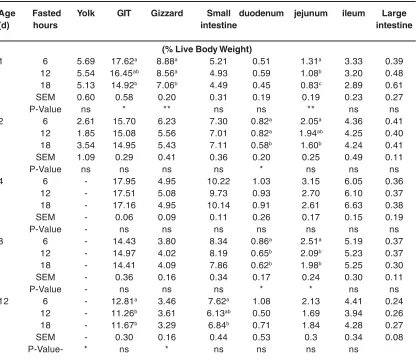
Table 3: Effect of delayed access to feed of post-hatch on relative weights of different sections of the gastrointestinal tract of broiler chickens measured at 1, 2, 4, 8 and 12d of age
Age Fasted Yolk GIT Gizzard Small duodenum jejunum ileum Large
(d) hours intestine intestine
(% Live Body Weight)
1 6 5.69 17.62a 8.88a 5.21 0.51 1.31a 3.33 0.39
12 5.54 16.45ab 8.56a 4.93 0.59 1.08b 3.20 0.48
18 5.13 14.92b 7.06b 4.49 0.45 0.83c 2.89 0.61
SEM 0.60 0.58 0.20 0.31 0.19 0.19 0.23 0.27
P-Value ns * ** ns ns ** ns ns
2 6 2.61 15.70 6.23 7.30 0.82a 2.05a 4.36 0.41
12 1.85 15.08 5.56 7.01 0.82a 1.94ab 4.25 0.40
18 3.54 14.95 5.43 7.11 0.58b 1.60b 4.24 0.41
SEM 1.09 0.29 0.41 0.36 0.20 0.25 0.49 0.11
P-Value ns ns ns ns * ns ns ns
4 6 - 17.95 4.95 10.22 1.03 3.15 6.05 0.36
12 - 17.51 5.08 9.73 0.93 2.70 6.10 0.37
18 - 17.16 4.95 10.14 0.91 2.61 6.63 0.38
SEM - 0.06 0.09 0.11 0.26 0.17 0.15 0.19
P-Value - ns ns ns ns ns ns ns
8 6 - 14.43 3.80 8.34 0.86a 2.51a 5.19 0.37
12 - 14.97 4.02 8.19 0.65b 2.09b 5.23 0.37
18 - 14.41 4.09 7.86 0.62b 1.98b 5.25 0.30
SEM - 0.36 0.16 0.34 0.17 0.24 0.30 0.11
P-Value - ns ns ns * * ns ns
12 6 - 12.81a 3.46 7.62a 1.08 2.13 4.41 0.24
12 - 11.26b 3.61 6.13ab 0.50 1.69 3.94 0.26
18 - 11.67b 3.29 6.84b 0.71 1.84 4.28 0.27
SEM - 0.30 0.16 0.44 0.53 0.3 0.34 0.08
P-Value- * ns * ns ns ns ns
a, b Means with no common superscripts in each column are significantly different (P < 0.05) Table 4: Effect of delayed access to feed of post-hatch
on small intestine length of broiler chickens measured at 1, 2, 4, 8 and 12d of age
Fasted hours Age (d)
1 2 4 8 12
6 45.25 55.28 80.86 90.86a 107.43
12 44.16 53.46 77.84 81.52b 102.76
18 43.14 47.90 75.93 88.64a 108.94
SEM 1.22 2.51 3.03 1.50 3.36
P-Valuens ns ns ** ns
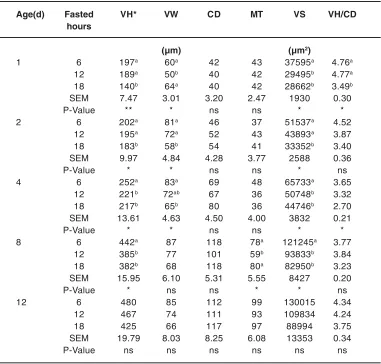
Table 5: Effect of delayed access to feed of post-hatch on small intestinal (duodenum) morphological parameters of broiler chickens measured at 1, 2, 4, 8
and 12d of age
Age(d) Fasted VH* VW CD MT VS VH/CD
hours
(µm) (µm2)
1 6 197a 60a 42 43 37595a 4.76a
12 189a 50b 40 42 29495b 4.77a
18 140b 64a 40 42 28662b 3.49b
SEM 7.47 3.01 3.20 2.47 1930 0.30
P-Value ** * ns ns * *
2 6 202a 81a 46 37 51537a 4.52
12 195a 72a 52 43 43893a 3.87
18 183b 58b 54 41 33352b 3.40
SEM 9.97 4.84 4.28 3.77 2588 0.36
P-Value * * ns ns * ns
4 6 252a 83a 69 48 65733a 3.65
12 221b 72ab 67 36 50748b 3.32
18 217b 65b 80 36 44746b 2.70
SEM 13.61 4.63 4.50 4.00 3832 0.21
P-Value * * ns ns * *
8 6 442a 87 118 78a 121245a 3.77
12 385b 77 101 59b 93833b 3.84
18 382b 68 118 80a 82950b 3.23
SEM 15.95 6.10 5.31 5.55 8427 0.20
P-Value * ns ns * * ns
12 6 480 85 112 99 130015 4.34
12 467 74 111 93 109834 4.24
18 425 66 117 97 88994 3.75
SEM 19.79 8.03 8.25 6.08 13353 0.34
P-Value ns ns ns ns ns ns
VH: Villus height (µm); VW: Villus width (µm); CD: Crypt depth (µm); MT: Muscular thickness (µm); VS: Villus surface area (µm2).a, b Means with no common superscripts in each column are significantly different (P < 0.05)
possible is essential to support early GIT development. Uni et al. (1998) reported that withholding feed from chicks for 36 h post-hatch resulted initially in retarded growth of all segments of the small intestine. Murakami et al. (1992) found that delaying access to feed and water slowed the growth of the small intestine and pro-ventriculus in broiler chicks. Noy and Sklan (1997) concluded that one effect of delayed placement on both chicks and poults was that the organs of the GIT (crop, small intestine, and large intestine) grew less by 48 h
post-hatch than did organs of chicks placed immediately on feed and water.
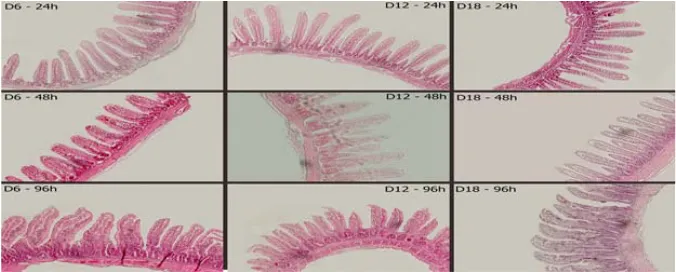
Histological Measurements
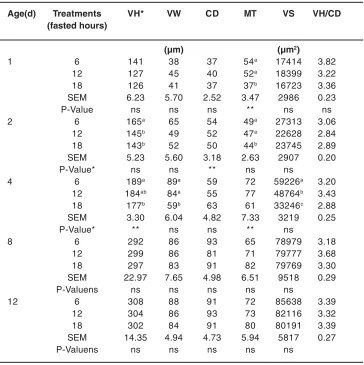
Table 6: Effect of delayed access to feed of post-hatch on small intestinal (jejunum) morphological parameters of broiler chickens measured at 1, 2, 4, 8
and 12d of age
Age(d) Treatments VH* VW CD MT VS VH/CD
(fasted hours)
(µm) (µm2)
1 6 141 38 37 54a 17414 3.82
12 127 45 40 52a 18399 3.22
18 126 41 37 37b 16723 3.36
SEM 6.23 5.70 2.52 3.47 2986 0.23
P-Value ns ns ns ** ns ns
2 6 165a 65 54 49a 27313 3.06
12 145b 49 52 47a 22628 2.84
18 143b 52 50 44b 23745 2.89
SEM 5.23 5.60 3.18 2.63 2907 0.20
P-Value* ns ns ** ns ns
4 6 189a 89a 59 72 59226a 3.20
12 184ab 84a 55 77 48764b 3.43
18 177b 59b 63 61 33246c 2.88
SEM 3.30 6.04 4.82 7.33 3219 0.25
P-Value* ** ns ns ** ns
8 6 292 86 93 65 78979 3.18
12 299 86 81 71 79777 3.68
18 297 83 91 82 79769 3.30
SEM 22.97 7.65 4.98 6.51 9518 0.29
P-Valuens ns ns ns ns ns
12 6 308 88 91 72 85638 3.39
12 304 86 93 73 82116 3.32
18 302 84 91 80 80191 3.39
SEM 14.35 4.94 4.73 5.94 5817 0.27
P-Valuens ns ns ns ns ns
VH: Villus height (µm); VW: Villus width (µm); CD: Crypt depth (µm); MT: Muscular thickness (µm); VS: Villus surface area (µm2).a, b Means with no common superscripts in each column are significantly different (P < 0.05)
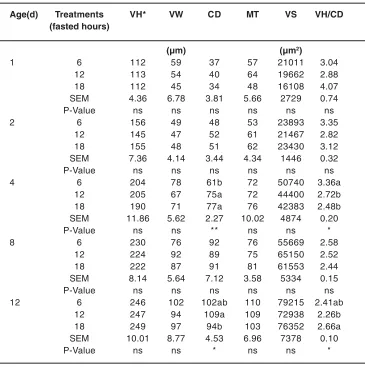
Table 7: Effect of delayed access to feed of post-hatch on small intestinal (ileum) morphological parameters of broiler chickens measured at 1, 2, 4, 8 and
12d of age
Age(d) Treatments VH* VW CD MT VS VH/CD
(fasted hours)
(µm) (µm2)
1 6 112 59 37 57 21011 3.04
12 113 54 40 64 19662 2.88
18 112 45 34 48 16108 4.07
SEM 4.36 6.78 3.81 5.66 2729 0.74
P-Value ns ns ns ns ns ns
2 6 156 49 48 53 23893 3.35
12 145 47 52 61 21467 2.82
18 155 48 51 62 23430 3.12
SEM 7.36 4.14 3.44 4.34 1446 0.32
P-Value ns ns ns ns ns ns
4 6 204 78 61b 72 50740 3.36a
12 205 67 75a 72 44400 2.72b
18 190 71 77a 76 42383 2.48b
SEM 11.86 5.62 2.27 10.02 4874 0.20
P-Value ns ns ** ns ns *
8 6 230 76 92 76 55669 2.58
12 224 92 89 75 65150 2.52
18 222 87 91 81 61553 2.44
SEM 8.14 5.64 7.12 3.58 5334 0.15
P-Value ns ns ns ns ns ns
12 6 246 102 102ab 110 79215 2.41ab
12 247 94 109a 109 72938 2.26b
18 249 97 94b 103 76352 2.66a
SEM 10.01 8.77 4.53 6.96 7378 0.10
P-Value ns ns * ns ns *
"VH: Villus height (µm); VW: Villus width (µm); CD: Crypt depth (µm); MT: Muscular thickness (µm); VS: Villus surface area (µm2).
a, b Means with no common superscripts in each column are significantly different (P < 0.05)
significantly decreased with increased fasted time over 12h of chicks measured at 2, 4 and 8d of age. The highest VH, VW and AVSA observed in birds started to feed at 6h post-hatch and lowest VH, VW and AVSA observed in birds that started to feed with 18h delayed.
Significantly higher VH, VW and AVSA of duodenum and jejunum and insignificantly higher VH, VW and AVSA of ileum in the birds that started to fed at 6h after hatch compared to birds that fed
Fig. 2: Effect of delayed access to feed of post-hatch ( : 6h, : 12h and : 18h) on duodenum villus surface area (µm2) of broiler chickens measured at 1, 2, 4, 8 and 12d of age
the rat following 4d fasting, atrophy and hyperplasia were reported in the duodenum and jejunum, but not in the ileum (Holt et al. 1986). Although the digestive capacity begins to develop a few days before hatch, most of the development occurs in the post-hatch period when the neonatal chick begins consuming feed (ýFerket and Uni 2006). Birds that have been given access to food immediately after hatch have been observed to
CONCLUSION
In conclusion, because of delays in placement chicks are often subjected to delayed access to feed and water, which may retard the development of the GIT, limiting nutrient utilization and performance of the broiler chicken. Early access to feed and water after hatch has shown to be an important factor for subsequent performance. Therefore, delayed access to feed adversely affects chicks’ performance. In this experiment we found
that holding feed time for 6h v until 18h is compensated by increasing the broiler performance. It is recommended that transportation plan be provided to chicks to reduce starvation.
ACKNOWLEDGMENT
We greatly appreciate financial support of this research from the Ferdowsi University of Mashhad, Iran.
REFERENCES 1. Bhuiyan MM, Gao F, Chee SH, Iji PA.
Minimising weight loss in new broiler hatchlings through early feeding of simple sugars. Animal Pro Sci. 51: 1002–1007 (2011).
2. Dibner J, Knight C, Kitchell M, Atwell C, Downs A, Ivey F. Early feeding and development of the immune system in neonatal poultry. J Applied Poultry Res. 7: 425–436 (1998).
3. Ferket P, Uni Z. Early Feeding – in ovo feeding enhances of early gut development and digestive capacity of poultr y. XII European Poultry Conference, Verona. Italy, 10-14 September (2006).
4. Geyra A, Uni Z, Sklan D. Enterocyte dynamics and mucosal development in the post hatch chick. Poult Sci. 80: 776–782 (2001). 5. Gonzales E, Kondo N, Saldanha SPB, Loddy
M, Careghi C. Decuypere, Performance and physiological parameters of broiler chickens subjected to fasting on the neonatal period. Poult Sci. 82: 1250–1256 (2003).
6. Holt PR, Wu S, Yeh KY. Ileal hyperplastic response to starvation in the rat. American J Physiol. 251:124-131 (1986).
7. Kidd MT, Taylor JW, Page CM, Lott BD, Chamblee TN. Hatchery feeding of starter diets to broiler chicks. J Applied Poultry Res. 16: 234–239 (2007).
8. Kuhn ER, Darras VM, Gysemans C, Decuypere E, Berghman LR, Buyse J. The use of intermittent lighting in broiler rising. Poult Sci. 75: 595-600 (1996).
9. Lilburn MS. Practical aspects of early nutrition for poultry. J Applied Poultry Res. 7:
420–424 (1998).
10. Moran ET Jr. Effects of posthatch glucose on poults fed and fasted during yolk sac depletion. Poult Sci. 68: 1141-1147 (1989). 11. Moran ET Jr. Effects of egg weight, glucose
administration at hatch, and delayed access to feed and water on the poult at 2 weeks of age. Poult Sci. 69: 1718–1723 (1990). 12. Murakami H, Akiba Y, Horiguchi M. Growth
and utilization of nutrients in newly-hatched chicks with or without removal of residual yolk. Growth Dev. Aging 56: 75-84 (1992). 13. Noy Y, Sklan D. Post hatch development in
poultry. J Applied Poultry Res. 6: 344–354 (1997).
14. Noy Y, Sklan D. Yolk utilization in the newly hatched poult. Br Poultry Sci. 39: 446-451 (1998a).
15. Noy Y, Sklan D. Metabolic response to early nutrition. J Applied Poultry Res. 7: 437-451 (1998b).
16. Noy Y, Sklan D. Different types of early feeding and performance in chicks and poults. J Applied Poultry Res. 8: 16-24 (1999a).
17. Noy Y, Sklan D. Energy utilization in newly hatched chicks. Poult Sci. 78: 1750-1756 (1999b).
18. Noy Y, Sklan D. Yolk and exogenous feed utilization in the post-hatch chick. Poult Sci. 80: 1490-1495 (2001).
19. Noy Y, Geyra A, Sklan A. The effects of early feeding on growth and small intestinal development in the post hatch poultry. Poult Sci. 80: 912-919 (2001).
utilization in the newly-hatched chick. Br Poultry Sci. 37: 987-995 (1996).
21. Pinchasov Y, Noy Y. Comparison of post-hatch holding time and subsequent early performance of broiler chicks and turkey poults. Br Poultry Sci. 34:111–120 (1993). 22. Potturi P, Patterson J, Applegate TJ. Effects
of delayed placement on intestinal characteristics in Turkey poults. Poult Sci. 84: 816–824 (2005).
23. Rashed AA. Effects of Early Feed Restriction during Delayed Placement on the Performance and Gut Health of Broilers. A thesis presented to the faculty of the graduate college at the university of Nebraska (2011).
24. Saki AA. Effect of Post-hatch Feeding on Broiler Performance. Inter J of Poultry Sci. 4(1): 4-6 (2005).
25. SAS. User’s guide: Statistics, Version 9.1. 2, S.A.S Institute Cary, NC (2003).
26. Solis de los Santos F, Donoghue AM, Farnell MB, Huff GR, Huff WE, Donoghue DJ. Gastrointestinal maturation is accelerated in turkey Poults supplemented with a mannan-oligosaccharide yeast extract (Alphamune). Poult Sci. 86: 921-930 (2007).
27. Speake BK, Noble R, Murray A. The utilization of yolk lipids by the chick embryo. World Poultry Sci J. 54: 319-334 (1998). 28. Swennen Q, Everaert N, Debonne M,
Verbaeys I, Careghi C, Tona K, Janssens GPJ, Decuypere E, Bruggeman V, Buyse J.
Effect of macronutrient ratio of the pre-starter diet on broiler performance and intermediary metabolism. J Anim Physiol and Anim Nutr. 3: 375-384 (2009).
29. Uni Z, Ferket RP. Methods for early nutrition and their potential. World Poultry Science J. 60: 101-111 (2004).
30. Uni Z, Ganot S, Sklan D. Post-hatch development of mucosal function in the broiler small intestine. Poult Sci. 77: 75–82 (1998).
31. Uni Z, Smirnov A, Sklan D. Pre- and post-hatch development of goblet cells in the broiler small intestine: Effect of delayed access to feed. Poult Sci. 82: 320–327 (2003). 32. Willemsen H, Debonne M, Swennen Q, Everaert N, Careghi C, Han H. Delay in feed access and spread of hatch: importance of early nutrition. World Poultry Science J. 66: 177–188 (2010).
33. Yamauchi K, Kamisoyama H, Isshiki Y. Effects of fasting and re-feeding on structures of the intestinal villi and epithelial cells in White Leghorn hens. Br Poultry Sci. 37: 909-921 (1996).
34. Yang H, Wang Z, Shi S, Lu J, Li W. Effects of starter feeding time on body growth and viscera development of newly hatched chicks. Italian Journal of Animal Sci. 8: 585– 593 (2009).