Portal Based Knowledge Sharing Optimization On
Agribusiness Community Development
Ahmad Zuhdi, Anna SN Dasril, Sri Yani Kusumastuti
Informatics Engineering Dept. Faculty of Industrial Technology Trisakti University, Jakarta, Indonesia; Faculty of Economics Tri-sakti University, Jakarta, Indonesia; Faculty of Economics TriTri-sakti University, Jakarta, Indonesia;
Email: [email protected], [email protected], [email protected], [email protected]
ABSTRACT: Agribusiness system requires electronic business hub, i.e. information system portal, which is able to present all the information, data and knowledge, which are needed by the stakeholders. The portal will facilitate decision, policy and action making activities optimally, in the short term, me-dium and long term. Excellent information and knowledge about products, processes and businesses to provide the best agriculture practices is very valuable to stakeholders in the agribusiness community, in order to improve national and global competitiveness. Portal development information system requires the active participation of the Community of Practices (COP) in the community, who will share the latest excellent information and knowledge to the community, and can be utilized in daily operations. In the case study, we developed information portal for oyster mushroom agribusiness. The portal contains the latest important news, weather information, price, and excellent product knowledge, production processes knowledge and business knowledge. Test of the prototipe conducted by community activists who represent the key stakeholders, which previously granted the operation and maintenance training applications. Applications built continuously by enhancing functionality and performance to increasing its usability.
Keywords :Knowledge Management System, Information System Analysis and Design, Agribusiness Management Information System, IT based Com-munity Development.
1 INTRODUCTION
Agribusiness is the business of agricultural production. The term was coined in 1957 by Goldberg and Davis. It includes agrichemicals, breeding, crop production, distribution, farm machinery, processing, and seed supply, as well as marketing and retail sales. All agents of the food and fiber value chain and those institutions that influence it are part of the agribusi-ness system. Information and communication technologies are making tremendous impact on the rural economy due to its wide application and appeal [9][10].Agribusiness system has 5 subsystems, i.e. agriculture business, provider of production facilities, production processing, marketing, and supporting. Communication and coordination between subsystems agri-business, supported by the availability of adequate infor-mation, is important in the successful development of agri-business community. The accurate information and good co-ordination between subsystems in perform vertical integration, support community development effectively and sustainably [5] [6][11].A modern agribusiness cummunity needs an infor-mation system to provide all the needs of inforinfor-mation, data and knowledge, which are required by the stakeholders. In-formation Systems is a set of components (data, devices soft-ware, hardsoft-ware, operating procedures, and user community) interacting to produce information [3]. The information support all the knowledge workers to make decision, policy actions and innovation in the optimal manner, that give more benefit to the business, either term short, medium and long term [zuhdi][mihaela][tajdar]. As Data on seeds specifications, pric-ing information and the availability of raw materials and mar-kets, information about soil structure, type of soil, water, soil and air pollution and weather forecasts are accurate. The sys-tem also provide knowledge of effective cultivation tech-niques, information about finacial management and invest-ment developinvest-ment, and other important informations.For mod-ern business organizations, information systems is a very im-portant factor to achieve competitive advantage and enhance the ability in creating profits. Whereas for organization of pub-lic services, the implementation of information systems has been a demand to improve service to the public (in particular modern business organizations), through the ability to
occupation, responsibility, etc. They have innovative features and fuction to offer its users.
2 METHODS
Knowledge and learning exist as by products of social pro-cesses such as those that take place in communities of prac-tice [3][11]. Learning theories help the designers of learning environments understand what they are fostering. Communi-ties provide fertile ground for sociocultural appropriation, by adopting expert practices through social processes, as well. Communities of practice are stable groups of people with a shared set of cultural practices.Frequently, they involve peers although they may be more hierarchical.
2.1 Community of Practices Development
Understanding and building online knowledge-building com-munities, or online communities of practice needs a framework to enhance collective knowledge. The framework gives model of how learning takes place in knowledge-building communi-ties.
Figure 1.C4P Framework [4]
We apply C4P framework is described as a way of under-standing how knowledge is created and disseminated by par-ticipants in a community of practice. The C4P framework pos-its that knowledge is generated and shared when there is pur-poseful conversation around content in context. C4P is short-hand for content, conversation, connections, (information) con-text, and purpose [4]. Content is explicit, static knowledge ob-jects, such as documents, videos (monologue). Generating quality content is one of the great challenges of nurturing a knowledge-building community, but people are often hesitant to contribute content. Conversation is face-to-face or online discussions (dialogue). It is the most effective mode of knowledge transfer and generation, because the personal connection and back-and-forth nature of conversation provide the greatest context for information. Meaningful conversation fostered by quality of the content, clear purpose and personal connections. While Connections is interpersonal contacts be-tween community members that involve some level of relation-ship. Without connections, an online space is merely a docu-ment repository (content) or chat room (conversation). Context of information is the condition, whether and how information is useful to community members.Its indicate richness of detail, that makes information are meaningful and memorable, and helps situate knowledge among people who are not physically co-located. Conversations and relationships increase context of information. Finally Purpose is reason for which members come together in the community. It is creates energy and pro-duces results [4][11]. Content shapes conversations and fos-ters connections. Conversation generates new content and adds context to existing content. Connections spark
conversa-tions and add context to content. Information context connects content to related content and to the community’s purpose. Purpose provides the metaconnection between all the other elements. All five elements are important to effective knowledge building in an online community [4].
2.2 Information Portal Development
Web portal is browser based management information system application to perform different activities, such as connected with business processes within the business and integrating applications to support it, and create an online community, that enable users yo share huge of information they need. Devel-opment of management information systems can be modeled in a cycle which includes five phases , namely the study of the concept , analysis, design , implementation and maintenance [7], as shown in Figure 2.The first stage is determining how the development of the project and approval of the management plan , while the systems analysis or requirement engineering is the second stage focuses on identifying the needs of the development of information and functional needs of the sys-tem. System design is the process of planning and develop-ment specifications technical drawing data, software, hardware and human resources and computer networks. The stages of implementation, the program includes the construction process and data bases as well as testing and the migration from the existing system to the proposed system, including training to users. While the maintenance phase of the system is monitor-ing and evaluation of the need for changes in the functional and performance improvement systems.The requirements of software are key elements that contribute to the quality and users satisfaction of the final system [1]. One of the measures of success of a software system is concerned about its ade-quacy to the purpose for which it was intended. It is usual to have conflicts and different views of the tasks by the stake-holders, because it depends on the perspectives of their tasks in the system and work environment.
3 WEB PORTAL CASE STUDY
Agribusiness community of mushrooms in District Cisarua, West Bandung Regency in Indonesia has 5 main stakehold-ers, namely Farmer (Seeds and Cultivation Mushroom), Coun-celor (Counceling Service of Agricultural, Fisheries and For-estry in District Cisarua), Expert (Center for Agricultural Train-ing Lembang), Consumers (wholesaler and SMEs of Mush-rooms Processing) and Investors. Mushroom agriculture has been developed since 1980. In the last 5 years there was a decline in production, a unit baglog in 2010 could produced more than 6 ounces in a single harvest, now only produce at most 3.5 ounces. This situation causes decreasing of the number of mushroom farmers group, from 17 groups with 700 farmers yielded 15 tons per day, currently production capacity is only 5 tons. The constraints found are lack of knowledge about how to cultivate mushroom farm effectively, the scarcity of skilled mold, there are no standard procedures (search seeds, organic fertilizer, the process of growing media, and the cultivation of farmers, as well as post-harvest handling, espe-cially if it fails), handling of pollution through air-borne, soil-borne, is increasing.Based on interactive discussion can be concluded that the agribusiness community needs[11]:.
I. Information about best quality seeds grom research and development centers and laboratories, since not all farmers can make good quality seeds, because of the limitations of knowledge , technology and capital . II. Knowledge of the process of making a planting medi-um (baglog) and taking care of the baglog to be har-vesting fresh myshroom, can be a business choice III. knowledge of choosing the best alternative , whether
as baglog maker alone or mushroom cultivation alone, or both , or as a fresh mushroom processing business unit, depending on the capabilities of each community member.
IV. Counseling and training are required to enable mem-bers understanding the correct way and always trying to provide themselves with the knowledge of leading edge technology in the field.Communities need to synergize all of these facilities, then the web-based management information system solution options that shouldl be applied.
Web portal generally has many interactive content [poznan] as follow:
i) Message Boards provides solution for facilitating con-versations around shared ideas within a department or project team, or for capturing and sharing the knowledge of the workgroup. Additionally offers recent their usage statistics, posts and users can subscribe tothreads via RSS and reply to threads by email. Message Boards are secured by granular system of authorizations which grants varying levels of control to different user.
ii) Wikis enables the community to build up and docu-ment important or interesting information within Wiki which can compete with other standalone products in the robustness of feature set.
iii) Activity Tracking - This feature keeps tabs on the most recent activity on Message Boards, article posting and other tools. The information is displayed in recent ac-tivity portlets and on a Facebook-like acac-tivity wall. iv) Instant message - A friends list automatically displays
the names of all other logged-in portal users. If the
user has something to say, just give instant message them. Also with chat features like profile pictures and customized away messages.
v) Email, if the user needs to send an email, he/she may does it directly through the portal. A webmail client with a sleek, user-friendly interface can be configured to interface with many popular email servers.
vi) Shared calendar - Community-based calendars that allow users to create, manage, search for events. Events can be shared across communities, and event reminders can be set up to alert users of upcoming events by email, IM, or SMS Announcements and Alerts
vii) Broadcast messages to different group of users whether they are simple announcements or newslet-ter-like in purpose. Each user can control how they receive alerts: via portal-based web alert, SMS, Email or any additional delivery mechanisms configured by the portal administrator.
viii) An opinion poll, sometimes simply referred to as a poll, is a survey of public opinion from a particular sample. Opinion polls are usually designed to repre-sent the opinions of a population by conducting a se-ries of questions and then extrapolating generalities in ratio or within confidence intervals.
4 RESULTS AND DISCUSSION
The mapping of user and the system requirement was used as the basis for disigning application, which is the architecture of a solution for these needs. The application presents automat-ed business processes to be facilitatautomat-ed in the system, to meet all the system needs of the user activity, both functional and non functional. Interaction system design focuses on providing facilities and display navigation to the user, so that the applica-tion easier and more convenient to use. Implementaapplica-tion of the system needs infrastructure in the form of software (such as operating systems, system manager database, web service system, etc.) and hardware (such as workstations, servers and computer networks).
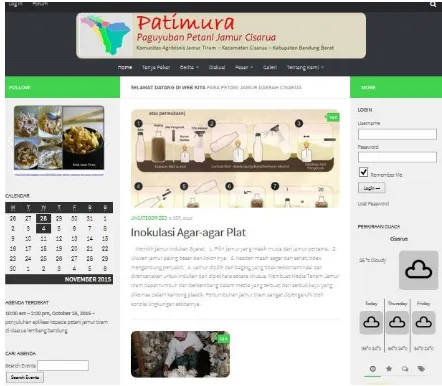
Figure 3Prototype of application, which has been published
will be changed to the standard name for the community. Visi-tors to the site are grouped in 7 categories of users , the guests and 6 members of the stakeholders (farmers, coun-celors, experts, consumers and investors). Guests can access public information which has a menu structure on the main page. Guests can access the general information on the menu structure The main page as follows:
i) Home
The page automatically appears first, contains information about the latest news and important information about com-munity or related to the comcom-munity. Common information about the current time, weather, agenda, information search-ing and login facility for community members.
ii) Product Info
The menu that collects information about the characteristics, specifications and details about the best mushroom variety, both in terms of quality and price, subdivided into a sub menu Seeds, Organic Fertilizer, Media, baglog, and fresh mush-rooms)
iii) Process Info
The menu contains information and know-how effective pro-duction process (with failure are minimal) and efficient (with resource consumption is minimal) and innovation necessary so that the product of interest by the consumers. Information related to breeding, barn house treatment, fertilization, har-vesting and post-harhar-vesting technology).
iv) Business Info
The menu contains information and knowledge about how to manage and develop the farm from upstream to downstream in a professional manner, based on best practices of farm businesses as well as other types of businesses. An example of how establish and develop partnerships, develop marketing, excellent service on consumer, business strategy, financial management and effective resources, as well as develop in-vestment.
v) Gallery
Supporting source that contains a collection of objects multi-media, whether in the form of pictures, photographs, animation and video that needs to be published, for encourage users, and provide information preformance visual or audio-visual form.Visitors who are members of the community agribusiness given account, to facilitate their in carrying out his duties. There are 6 categories user accounts, namely:
i) Administrator
Communities may appoint one of its members, to manage user accounts and traffic load information in the application operation. For example approve and cancel the account, moderate discussion and consultation, upload news and agenda community activities, answering questions from guests.
ii) Farmers
Farmers need the facility to: a. Asking questions / problems
b. Uploading / uploading data (price developments, har-vest, work plans, case studies [success/failure story])
c. Download technical data (weather, humidity, soil type map, etc.)
iii) Extension
Agricultural Extension, require
a. Uploading information dissemination, regulation, etc. b. Downloading data and community activities information
and report
iv) Experts
Experts need facilities for:
a) Read and answer the questions
b) Uploading information knowledge critical/research and development current
c) Uploading info on the agenda related to technological developments (expo, seminar, etc.)
v) Consumers
Consumers need
a. Uploading of information development price, market demand, etc.
b. Downloading data development request markets out-side the region
vi) Investors
Investors need facilities for: a. Asking questions / problems
b. Uploading / business profile data upload
c. Download business profile of an agribusiness to show to investors
5 CONCLUSION
Oyster Mushroom agribusiness system requires a portal based Management Information System, which can be empowered agribusiness community to implement operations agribusiness enable to provide some mutual benefit to the stakeholders. The system facilitates users by providing and exchanging in-formation and knowledge, which is needed in excellent agri-business operations. The knowledge related to their necessary to achieve business operations with the best performance, through maximizing utilization and sharing of knowledge about products seed, excellent process knowledge, best practice of business operations knowledge, among members community .Early prototype that has been made needs to be improved its usability, so that stakeholders feel the benefits of significant of interest, either from the aspect of improving insight and exper-tise as well as welfare increased. Effective collaboration be-tween the application developer and the users in community is needed, such that all information needs can be provided by the system.
ACKNOWLEDGMENT
research work. Her willingness to give her time so generously has been very much appreciated. We would also like to thank the community leader of the Mushroom Agribusiness Associa-tion, bapak Rial Aditya and the officers in Service of Agricul-tural, Fisheries and Forestry in District Cisarua, for good col-laborative work:
REFERENCES
[1] Arantes, Flávia Linhalis (2013), Requirement Engineering of A Web Portal using Orgaizational Semiotics Artef acts and Participatory Practices, International Journal of Computer Science & Information Technology (IJCSIT) Vol 5, No 2, April 2013 DOI : 10.5121/ijcsit.2013.5212 131
[2] Beaumaster, S., (1999), Information technology implementation issues: an analysis. Unpublished manuscript, Faculty of the Virginia Polytechnic Institute and State University
[3] European Union (2014), Agriculture Knowledge and Inno-vation Systems Toward 2020: an orientation paper on linking innovation and research, Directorate-General for Research and Innovation Directorate E – Biotech-nologies, Agriculture and Food Unit E4 – Agriculture, Forests, Fisheries, Aquaculture
[4] Hoadley, C. M., & Kilner, P. G. (2005). Using Tech-nology to Transform Communities of Practice into Knowledge-Building communities. ACM SIGGROUP Bulletin, 25(1), 31–40. ACM. Retrieved from http://tophe.net/papers/ Hoadley-Kilner-SIGGROUP05.pdf (Last accessed November, 7-th, 2015)
[5] Muntean, Mihaela I. (2009), Knowledge Management Approaches in Portal-Based Collaborative Enterpris-es, Informatica Economică vol. 13, no. 4/2009, pp 32-38
[6] Natawidjaja, Ronnie. S. 2002. Jaringan InformasiDig-ital Untuk Menunjang PengembanganPertanian
Ber-basis
Agri-bisnis,http://mirror.unpad.ac.id/orari/library/librarysw-
[7] hw/digitallibrary/gdl31/IDLN%20III%202002%20Meeti ng-
[8]
Pa-per/Ronnie%20SNJaringan%20Informasi%20Digital% 20 utk%20Agriculture.doc (Last accessed November, 4-th 2015)
[9] O’Brien, J. A., & Marakas, G. (2005). Introduction to Information Systems. New York, NY: McGraw-Hill
[10]Poznan (2011), NEXPRES: State of the Art on Web Portals and Web Technologies, Poznan Supercom-puting and Networking Center, 2011, http://www.jive.nl/nexpres/lib/exe/
fetch.php?media=nexpres:wp7_state-of-the-art_on_web _portals_and_web_technologies-final.pdf [Last accessed November, 8-th, 2015)
[11]Qaisar, Tajdar Mohammad, Ali Khan, Mohd. Motasim, and Alam, Dr. Shahid (2011) Innovative Agricultural Information Services by ICT Projects in India, Interna-tional Journal of Trade, Economics and Finance, Vol. 2, No. 4, August 2011, pp 276-279
[12]Zuhdi, Ahmad, Dasril, Anna SN, Kusumastuti, Sri Yani, (2014) Preliminary Requirement Analysis Of Mushroom Agribusiness Information System In Ban-dung , Indonesia, International Journal of Technology Enhancements and Emerging Engineering Research, Vol 2, Issue 10, pp 77 – 80.
![Figure 1. C4P Framework [4]](https://thumb-us.123doks.com/thumbv2/123dok_us/1996898.1659234/2.612.346.538.461.717/figure-c-p-framework.webp)