Newsletter • 2013 • vol.1 • 11 - 29
Assessment of Effective Clinical Pharmacy Clerkship as an Emerging
Programme on Drug Related Problems in Pediatric Ward- A Single
Centre Study from North West Part of Pakistan
Gowhar Alia,*, Saniya Hashim Khana, Shabnam Nazira,b, Abuzar Khana, Muzaffar Abbasa,c, Samiullaha,
Fazli Khudaa, Ihsanullaha, Rehmat Shaha aDepartment of Pharmacy, University of Peshawar, Peshawar, Pakistan
bInstitute of Pharmaceutical Sciences, Kohat University of Science and Technology, Kohat 26000, Pakistan
cDepartment of Pharmaceutical Sciences, South Dakota State University, College of Pharmacy, Brookings, U.S.A.
Running title: Evaluation of effective clinical pharmacy clerkship as an emerging programme
*Correspondence: Dr. Gowhar Ali, Lecturer of Pharmacology
Department of Pharmacy, University of Peshawar, Peshawar. Pakistan. Email: [email protected]
Abstract
Objective: The current study was designed to evaluate effective clinical pharmacy clerkship as an emerging programme in pediatric ward of tertiary care hospital setting to identify actual and potential drug related problems (DRPs) and provide suitable suggestions with references sources.
Methods: Already designed proforma was used to enter the collected data regarding selected typical
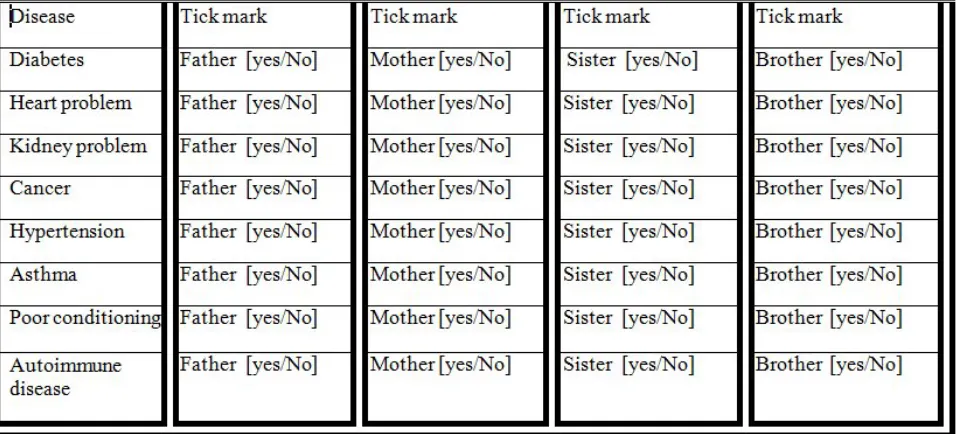
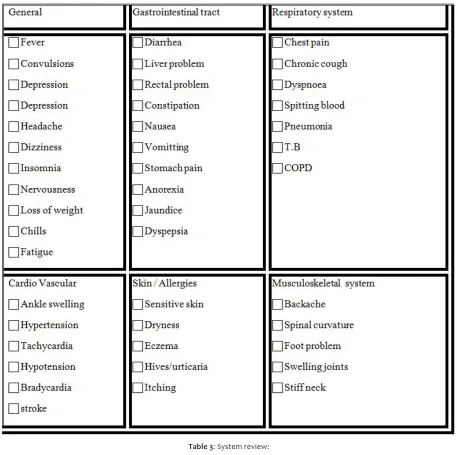
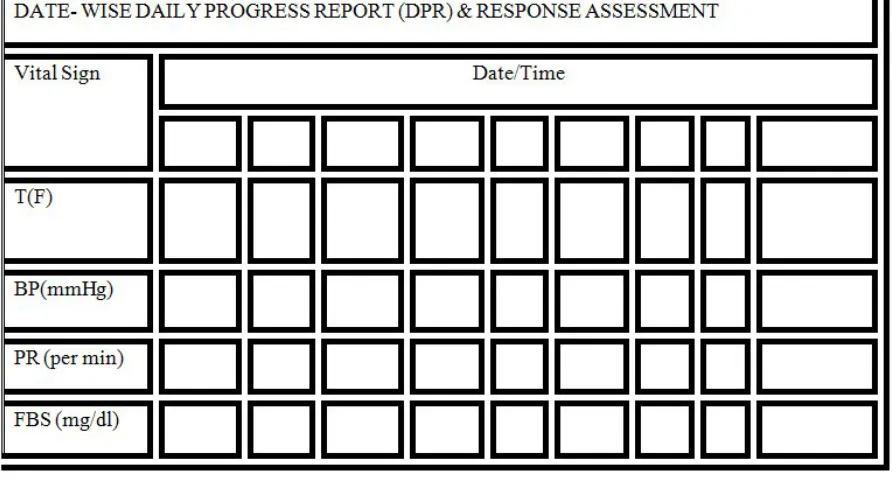
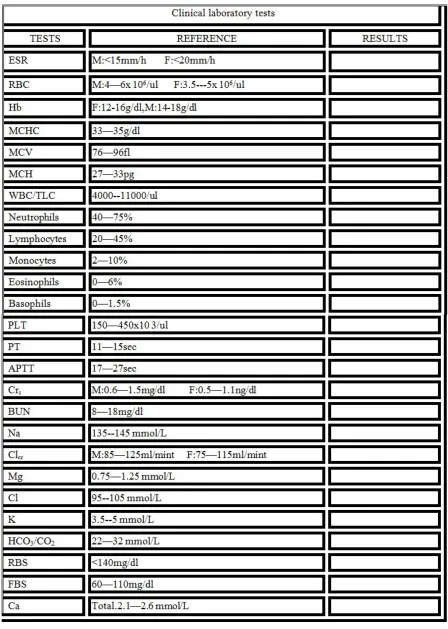
patients cases of pediatric infectious diseases including meningitis, pneumonia, acute gastroenteritis and malaria in the form as; patient’s information, chief complaints, medication history, history of present illness, past medical history, past surgical history, family history, personal history, allergies, review of systems, physical examination, clinical laboratory tests, daily progress report, treatment at hospital and discharge medications.
Results: A total of twenty typical cases, five cases per disease were observed, documented and analyzed
completely. Patients included in the study were infants 30%, children 60% and adolescent10%, including 70% male and 30% female. Findings of this study showed that in twenty typical cases, total DRPs identified were sixty two. Among total DRPs, major findings were untreated conditions (25.80%), improper drug selection (19.35%), drug interactions (9.67%), therapeutic duplication (1.61%), drugs without indication (11.29%), non-compliance (4.83%), cost related problems (20.96%) and use of narrow therapeutic index drugs without monitoring (6.45%).
Conclusions: The present study suggests that DRPs significantly impact existing national health system and
effective clinical pharmacy clerkship programme can play an important role in clinical settings by providing patient safety through identification of actual and potential DRPs and promotion of rational drug utilization concept.
Introduction
Effective clinical pharmacy clerkship (ECPC) is basically a health training programme in clinical settings where pharmacy graduates get clinical training, skills needed for rational drug utilization with particular emphasis on detection of actual and potential DRPs, after case analysis and then to suggest appropriate management of patient drug therapy in conjunction with other health care professionals. Pakistan is a developing third world country with inadequate health resources resulting in high post partum deaths of mothers and high neonatal death rate during first year of life[1]. As
more than seventy percent population of the country lives in rural areas and lack of basic health services to both mothers and babies causes high mortality and morbidity rate[1].
A number of studies have been conducted already which predict that pediatric is a risky popu-lation to be affected easily by DRPs, as dynamic and kinetic behavior of drugs in this population usually different than adults[2]. Currently pediatric
infec-tious diseases is a serious public health problem and associated with high mortality and morbidity rate including meningitis[3-5], pneumonia[6], acute
ga-stroenteritis[7-9], and malaria[10-11]. Drug induced
pediatric hospital admission is a major public health issue[12-13]. It is therefore necessary to strictly control
this issue and ECPCP is a step toward to contribute in resolution of this issue.
Medicine management is an important tool in the prevention and treatment of pediatric infectious diseases and health complaints but the increasing number of available drugs and drug users as well as more complex drug regimens leads to more DRPs and complicates follow-up[14]. Drug-related
pro-blems are prevalent and lead to substantial morbi-dity and mortality[15-16], increased health care
expen-diture, which in turn affect both patient quality of life and society[17]. Nursing homes, hospitals and
general practices have a high prevalence of such problems, therefore, systematic review of patients total drug use, in the light of clinical information, is an effective method to identify DRPs and start
interventions.
Now in Pakistan, ECPCP is an integral part of the clinical pharmacy and is also required for the partial fulfillment of the requirements for the degree of Doctor of pharmacy (Pharm-D.). It has been repor-ted that Pharm.D students positive interventions as a member of health care professional can improve proper drug utilization in health care settings[18].
Most of the work during clinical pharmacy clerkship comprised by noting patient histories with special emphasis on medication histories. It is a matter of common observation that patient medication histories are not properly documented. Discrepancies have been observed between physi-cian acquired medication histories and comprehen-sive medication histories at the time of hospital admission.
The current study was targeted to evaluate effective clinical pharmacy clerkship as an emerging programme on DRPs regarding selected clinical disorders of meningitis, pneumonia, acute gastroen-teritis and malaria in pediatric ward of tertiary care setting, Hayatabad Medical Complex (HMC), Peshawar, Pakistan, in order to recommend appro-priate suggestions in collaboration with other health care professionals, doctors and nurses and to establish the impact of ECPCP on existing national health system (NHS).
Methodology
A specially designed proforma based on standard pharmacotherapy case book[19], designated as
examina-tion, clinical laboratory tests, daily progress report, treatment at hospital and discharge medications. The study was approved by medical superintended of the teaching hospital and concern head of the ward, in order to get services of at least one Doctor (Assistant Professor or SR, or JR or Senior TMO).
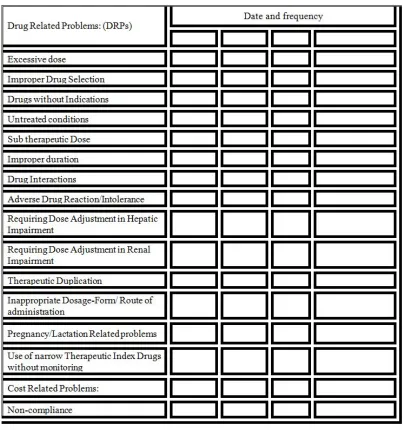
The proforma designed for current study in order to record complete patient profile as shown below.
see Table 1 - 7.
Results
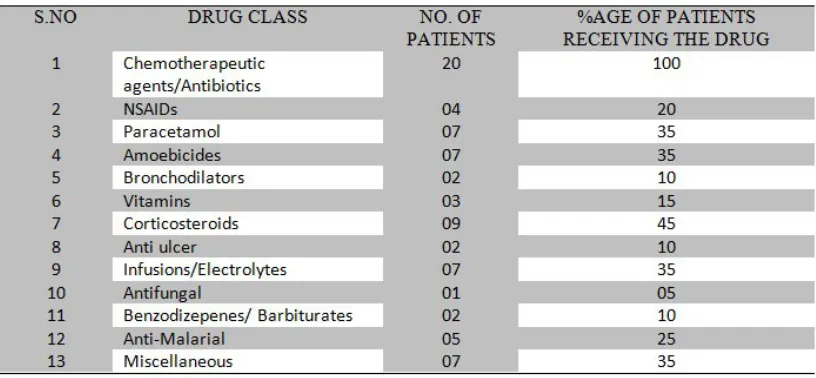
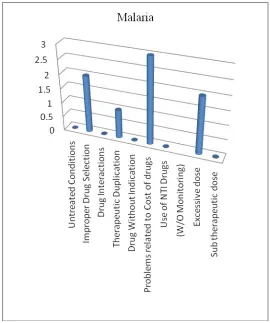
The current data was documented and analyzed by describing the case specific indications of prescri-bed medications, marking the DRPs check list, identifying the management plan for drug related problem using suitable format. Results of collected data were prepared in the tabulated form and presented as Table 8; frequency of drug related problems in individual disease (Fig. 1A; meningitis), (Fig. 1B; pneumonia), (Fig. 1C; acute gastroenteritis) and (Fig. 1D; malaria), Table 9; relative length of stay (days) of patients in hospital (Fig. 2), Table 10; gender of the patients included (Fig. 3), Table 11; age of the patients included in study (Fig. 4), Table 12; area-wise prevalence of individual diseases selected (Fig. 5 and 6), Table 13; therapeutic classes of drugs prescribed for selected diseases (Fig. 7), Table 14; list of chemotherapeutic agents prescribed for twenty patients (Fig. 8), Table 15; Summary of drug related problems detected in all 20 cases (Fig. 9).
see Table 8 - 15.
Discussion
Drug related problems whether actual or poten-tial, usually occur in health care setting especially in hospitals and can be a source of significant morbi-dity and mortality [20]. Therefore, it is important that medication errors must be monitored so that similar incidents can be prevented in the future. No useful data regarding ECPCP is available in most of
the developing countries of the world including Pakistan, to identify actual and potential DRPs. This study will be helpful for health care professionals to identify and manage relevant DRPs through effec-tive use of ECPCP in clinical settings. ECPCP provides the means by which the clinical pharmacists can extend their clinical knowledge and skills. The clinical attachment with the consultant in the ward and outpatient department presents numerous opportunities for learning. The clinical pharmacist fully uses these opportunities to gain maximum benefit from the program and to progress satisfac-torily in the field. Within ward, the clinical pharma-cist require to produce a detail evaluation of a wide range of patients; evaluate critically drug therapy and increase the effectiveness of the ECPCP input to the ward. This programme prepares graduates with the competency for managing drug therapy (pharmaceutical care) in partnership with patients, doctors and other health care professionals.
The present study was carried out in pediatric ward of tertiary care setting, Hayatabad Medical Complex (HMC), Peshawar during session of 2010-2011. Patients included in the study were infants (1month-1yr) 30%, children (1yr-12yrs) 60%, adole-scent (12yrs-18yrs) 10%, (Table 11 and Figure 4) including 70% male and 30% female (Table 10 and Figure 3) and residents of North West part of Pakistan that is Peshawar, Mardan, Charsadda, Hangu, Kohat and Nowshera city (Table 12 and Figure 5). Patients were admitted for treatment of meningitis, pneumonia, acute gastroenteritis and malaria with relative length of stay was more than three days (Table 9 and Figure 2).
approach, Harrison principles of internal medicines, Kumar and Clark clinical Medicine and Current medical diagnosis and treatment. For case analysis the standard books like BNF-56, A to Z drug facts, Drug manual and Drug interactions analysis and management were used.
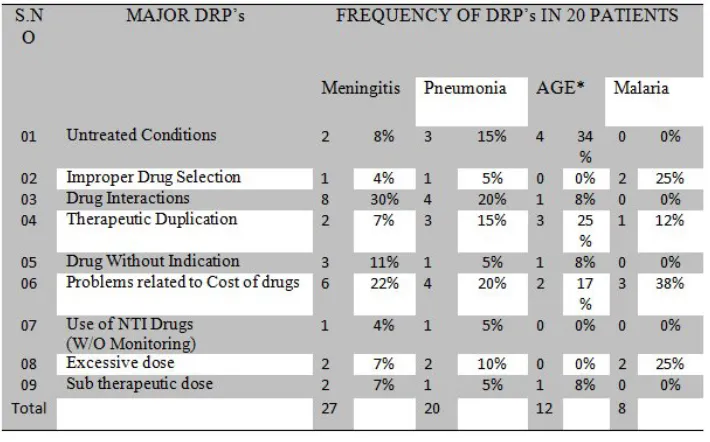
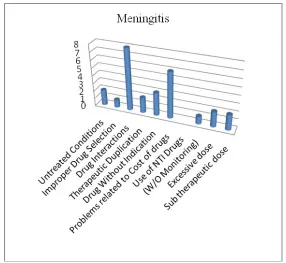
A total of 20 typical cases were observed, docu-mented and analyzed completely for DRPs. Our findings reveal that major DRPs observed relatively in meningitis, pneumonia, acute gastroenteritis and malaria were; untreated conditions [8%, 15%, 34%, 0%], improper drug selection [4%, 5%, 0%, 25%], drug interactions [30%, 20%, 8%, 0%], therapeutic duplica-tion [7%, 15%, 25%, 12%], drug without indicaduplica-tions [11%, 5%, 8%, 0%], problems related to cost of drugs [22%,20%,17%, 38%], use of narrow therapeutic index drugs without monitoring [4%, 5%, 0%, 0%], excessive dose [7%, 10%, 0%, 25%] and sub therapeutic dose [7%, 5%, 8%, 0%] (Table 8 and Figure 1A, 1B, 1C, 1D). It is depicted in (Table 8 and Figure 1A, 1B) that the total frequency of DRPs noted in meningitis, pneumonia, acute gastroenteritis and malaria were 27, 20, 12, and 8 relatively.
In case of meningitis and pneumonia major DRP observed was drug interactions (30%, 20%) while in acute gastroenteritis, untreated conditions (34%) and in malaria, problems related to cost of drugs (38%) was the major DRPs as depicted in Figure 1A, 1B, 1C and 1D. Table 13 and Figure 7, indicates that different therapeutic classes of drugs like chemo-therapeutic agents/antibiotics, NSAIDs, paraceta-mol, amoebicides, bronchodilators, vitamins, corticosteroids, anti-ulcer, infusions/electrolytes, antifungal, benzodizepenes/ barbiturates and anti-malarial were prescribed for selected diseases with maximum prescription of chemotherapeutic agents (Table 14 and Figure 8). Total sixty two drugs related problems were identified and total drug classes prescribed were thirteen. Among total drug related problems in twenty typical cases (Table 15 and Figure 9), major findings were untreated conditions (25.80%), improper drug selection (19.35%), drug interactions (9.67%), therapeutic duplication (1.61%), drug without indication (11.29%), non-compliance (4.83%), problems related to cost of
drugs (20.96%) and use of narrow therapeutic index drugs without monitoring (6.45%).
The present study suggests that drug related problems can exists to a greater extend and signifi-cantly impact existing national health system and effective clinical pharmacy clerkship programme can play an important role in clinical settings by providing patient safety through identification of DRPS and promotion of rational drug utilization concept.
Effective clinical pharmacy clerkship programme activities at the hospital were include participation in medical rounds, patient medication reviews, ensuring rational drug therapy (safe, appropriate and cost-effectives use of medicines), prescription monitoring and screening, medication history taking and recording, detecting, interpreting, correcting and properly documenting various drug-related problems, patient attendant education and counse-ling on safe, appropriate and effective use of medicines and various healthcare products, provi-sion of drug information to physicians and other healthcare professional whenever needed or requested and various other activities. Various medical terminologies used in ward, various diagno-stic tests, their interpretation and use of drugs in special population were also learnt.
high risk for drug interactions should be closely monitored. Cost related problems were more commonly observed due to unawareness of prescri-bers about the availability of cheaper and effective brands which can help to make the drug therapy cost effective.
As to prevent these DRPs, effective clinical pharmacy clerkship programme can focus on monitoring of the quality improvement program drug utilization review program that should include a system for monitoring, reviewing, and reporting medication errors to assist in identifying and elimi-nating causes of errors and preventing their recur-rence. Ensuring the proper use of both prescription and over the counter (OTC) drugs is one of the basic responsibilities of the clinical pharmacist within the health care system needs to be more fully recogni-zed through regulations. Pharmacist should monitor the DRPs on spot, to counsel the patient and check compliance and thus serious medication errors can be minimized.
In summary, the effective clinical pharmacy clerkship programme shows that drug related problems significantly impact existing National Health System. This study has shown that ECPCP in the clinical setting is well suited to identify DRPs thereby preventing harm to the patients. Suggestion is that there should be a legally qualified [Doctor of pharmacy (Pharm.D)] and professionally competent pharmacist in every ward/unit of hospi-tal that is unit based clinical pharmacist that is specialist for each unit so that the problems associa-ted with the use of drugs are resolved and preven-ted. In addition to the development of educational programs based on such study, efficient strategies and supporting instruments are needed for a more systemic, simplified and economical approach to the obvious prerequisite for overall awareness and there for improved prevention.
Statistical analysis
The data were analyzed using MS Excel and graph pad prism version 5.
Acknowledgement
We gratefully acknowledge the support of the Ministry of Health, MS, chief pharmacist and staff members of pediatric ward of HMC, KPK, Pakistan for permission to work at hospital.
Conflict of Interest
We declare that we have no conflict of interest.
References
[1] Jehan I., Harris H., Salat S., Zeb A., Mobeen N., Pasha O., et al. Neonatal mortality, risk factors and causes: a prospective population-based cohort study in urban Pakistan. Bulletin of the world Health Organization.2009;87, 130-138.
[2] Wood A.J.J., Kearns G.L., Abdel-Rahman S.M., Alander S.W., Blowey D.L., Leeder J.S., et al. Developmental
pharmacology—drug disposition, action, and therapy in infants and children. New England Journal of
Medicine.2003;349, 1157-1167.
[3] Harvey D., Holt D.E. & Bedford H. Bacterial meningitis in the newborn: a prospective study of mortality and morbidity. Seminars in perinatology. Elsevier. 1999, pp. 218-225. [4] Lee B.E., Cheung P.Y., Robinson J.L., Evanochko C. &
Robertson C.M.T. Comparative study of mortality and morbidity in premature infants (birth weight,< 1,250 g) with candidemia or candidal meningitis. Clinical infectious diseases.1998;27, 559-565.
[5] Daoud A., Al-Sheyyab M., Batchoun R., Rawashdeh M., Nussair M. & Pugh R. Bacterial meningitis: still a cause of high mortality and severe neurological morbidity in childhood. Journal of tropical pediatrics.1995;41, 308-310. [6] Bradley J.S. Management of community-acquired pediatric
pneumonia in an era of increasing antibiotic resistance and conjugate vaccines. The Pediatric infectious disease journal.2002;21, 592-598.
[7] Guarino A., Albano F., Ashkenazi S., Gendrel D., Hoekstra J.H., Shamir R., et al. European Society for Paediatric Gastroenterology, Hepatology, and Nutrition/European Society for Paediatric Infectious Diseases evidence-based guidelines for the management of acute gastroenteritis in children in Europe: executive summary. Journal of pediatric gastroenterology and nutrition.2008;46, 619-621.
[8] Giordano M.O., Ferreyra L.J., Isa M.B., Martinez L.C., Yudowsky S.I. & Nates S.V. The epidemiology of acute viral gastroenteritis in hospitalized children in Cordoba City, Argentina: an insight of disease burden. Revista do Instituto de Medicina Tropical de São Paulo.2001;43, 193-197. [9] Van Damme P., Giaquinto C., Huet F., Gothefors L., Maxwell
M. & Van der Wielen M. Multicenter prospective study of the burden of rotavirus acute gastroenteritis in Europe, 2004–2005: the REVEAL study. Journal of Infectious Diseases.2007;195, S4-S16.
[11] Menge I., Esamai F., Van Reken D. & Anabwani G. Paediatric morbidity and mortality at the Eldoret District Hospital, Kenya. East African medical journal.1995;72, 165. [12] Easton K.L., Parsons B.J., Starr M. & Brien J.E. The
incidence of drug-related problems as a cause of hospital admissions in children. The Medical Journal of
Australia.1998;169, 356.
[13] Easton K.L., Chapman C.B. & Brien J.E. Frequency and characteristics of hospital admissions associated with drug‐ '2drelated problems in paediatrics. British journal of clinical pharmacology.2004;57, 611-615.
[14] Krahenbuhl-Melcher A., Schlienger R., Lampert M., Haschke M., Drewe J. & Krahenbuhl S. Drug-related problems in hospitals: a review of the recent literature. Drug Safety.2007;30, 379-407.
[15] Roughead E.E., Gilbert A.L., Primrose J. & Sansom L.N. Drug-related hospital admissions: a review of Australian studies published 1988-1996. The Medical Journal of Australia.1998;168, 405.
[16] Buajordet I., Ebbesen J., Erikssen J., Brørs O. & Hilberg T. Fatal adverse drug events: the paradox of drug treatment. Journal of internal medicine.2001;250, 327-341.
[17] Ernst M.E., Iyer S.S. & Doucette W.R. Drug-related problems and quality of life in arthritis and low back pain sufferers. Value in Health.2003;6, 51-58.
[18] Dennehy C.E., Kroon L.A., Byrne M. & Koda-Kimble M.A. Increase in Number and Diversity of Clinical Interventions by Pliarm D Students Over a Clerkship Rotation. American Journal of Pharmaceutical Education.1998;62, 373. [19] Schwinghammer T.L. Pharmacotherapy, Casebook, A
Patient-Focused Approach. In: Terry L. Schwinghammer J.M.K., (Ed.), principles of patient focused therapy. 7th ed. McGraw-Hill, , New York, . 2008, pp. 1-7.
Table 1: Patient’s information
Chief Complaint(s): (C/C), --- History of Present Illness: (HOPI), --- Past Medical History: (PMH), --- Past Surgical History: (PSH) ---. Personal history: (PH), --- Socioeconomic History---- Allergies, ----.
Table 3: System review:
Table 5: Clinical Laboratory tests: The patient’s laboratory values and diagnostic data.
Table 6 Hospital treatment
The patient’s medication history should include the medication’s name, strength, dosage form route, and dates of administration
Table 7: Patient Medication Therapy Review in the Ward and DRPS Checklist
Table 8: Frequency of Drug Related Problems in individual diseases
AGE*: Acute Gastroenteritis; DRPs*: Drug Related Problems
Table 9: Relative length of stay (days) of patients in hospital
Table 11: Age of patients included in the study
Table 12: Area-wise prevalence of individual diseases selected
AGE*:Acutegastroentritis
Table 14: List of chemotherapeutic agents prescribed for 20 patients
Table 15: Summary of drug related problems detected in all twenty typical cases
List of figures
Fig. 1A Frequency of drug related problems in meningitis
Fig. 1C Frequency of drug related problems in acute gastroenteritis
Fig. 2 Relative length of stay of patients
Fig. 3 Gender included in the study
Fig. 6 Area-wise prevalence of individual disease
Fig. 8 Chemotherapeutic agents used by 20 patients