Kalpana R. Thakare et al., IJSRR 2019, 8(1), 100-110
IJSRR, 8(1) Jan. –March, 2019 Page 100
Research article Available online www.ijsrr.org
ISSN: 2279–0543
International Journal of Scientific Research and Reviews
Study on Passive Techniques to Reduce the Pain of Users in
Crematorium’ using Landscape and Efficient Architecture
Abhinav A.K. Sharma and Kalpana R. Thakare*
Kavikulguru Institute of Technology and Science, K.K. Nagar, Village Parsoda, Ramtek District Nagpur, M. S., India , [email protected], Mob. +919168949110,
*Department of Architecture, Kavikulguru Institute of Technology and Science, K.K.Nagar, Village Parsoda, Ramtek, District Nagpur, M. S., India,[email protected], Mob.+919405950329
ABSTRACT
Death is an eternal truth after the life. It can never be changed or reversed & is the gateway to new life or rebirth according to Hindu mythology. However this being a crucial part for the metabolism of the city has always been neglected. Day by day the naturally available resources are depleting which should be optimized to be used in the future and should be conserved for future. But during whole process of cremation large amount of wood is used which results in degradation of forest and increase in air pollution. Cremation of body even results in water pollution due to the disposal of the ash in the river. There are advancements in this sector of the society like types of crematoria and new techniques related to cremation but are not widely accepted by Indian society. The environmental effect of crematorium adds to the grief of visitors. The uniqueness of death and its spaces in the Indian scenario needs to be studied both, critically as well as naturally so as to envisage the role these spaces of cremation can play in the contemporary Indian city. This is an attempt to step on study the same.
KEYWORDS: Crematorium, Belief, Types of Cremation, Environmental Issue, Healing Landscape
*
Corresponding author
Kalpana R. Thakare
Associate Professor and Head, Department of Architecture,
Kavikulguru Institute of Technology and Science,
Kalpana R. Thakare et al., IJSRR 2019, 8(1), 100-110
IJSRR, 8(1) Jan. –March, 2019 Page 101
INTRODUCTION
As per survey of India, 7million Hindus die each year and numbers are increasing year by year. Hindus cremate the body by traditional ways which requires 500-600Kgs of wood per cremation. 50 to 60 million trees are burned for cremations every year. Burning wood for cremation represents the large source of air pollution which consists of 40% of carbon dioxide, 32% carbon monoxide, 20% of particulates, and 50% of carcinogenic poly-aromatic hydrocarbons.1.Cremation spaces can be relevant as sacred landscapes that find the connection between the varied conceptions and in a culturally constructed geography or help develop a complex symbolism exploring the poetic, narrative and ritualistic aspect of architecture. However in the contemporary scenario, these spaces have become blind spots in the urban context, lacking an identity even though the continuous loop of birth and death makes them heavily used. Perhaps, this is because the dead are cremated, and there never really has existed a tradition of explicit 'monuments' and grand architecture for that very purpose. The main objective of the research paper is to make people aware that architecture & landscape of such places can help in heeling the pains of the person visiting crematorium & to understand an inter-relation between modern society and traditional rituals.
History of crematorium
Cremation in India is first attested in the Cemetery H culture from 1900 B.C.E, considered formative stage of Vedic civilization. The Rigveda contains a reference to the emerging practice, in RV 10.15.14, where the forefathers both cremated (agnidagdhá) and uncremated (ánagnidagdha) are invoked.
Figure 1: An 1820 Historic painting showing a Hindu funeral process from South India.2
Kalpana R. Thakare et al., IJSRR 2019, 8(1), 100-110
IJSRR, 8(1) Jan. –March, 2019 Page 102
located in “Area H” at Harappa and was one of the three cultural phases developed in the localization Era of the Indus Valley Civilization.3
SHAMSHANA is the Hindi name for crematorium which has its origin from Sanskrit language:
SHMA refers to SHAAVA [corpse] while SHANA refers to SHANYA [bed]. The other Indian religions like Sikhism, Jainism and Buddhism also use SHMASHANA for the last rites of the dead.
Beliefs
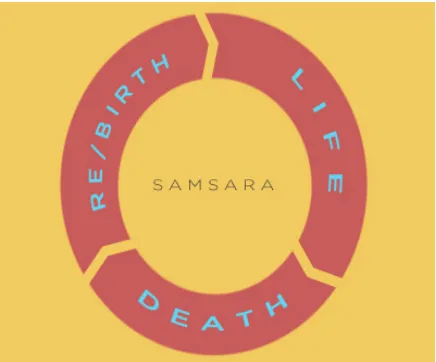
Generally, Hindus believe that life and death are part of the concept of samsara - rebirth. The ultimate goal for many Hindus is to become free from desire, thereby escaping samsara & attaining moksha, the transcendent state of salvation. Once moksha is attained, the soul will be absorbed into Brahman, the divine force and ultimate reality.
Figure 2: Cycle of Reincarnation and rebirth in Hindu context. 4
Kalpana R. Thakare et al., IJSRR 2019, 8(1), 100-110
IJSRR, 8(1) Jan. –March, 2019 Page 103
Figure 3. Hindu life cycle/Samsara showing Reincarnation and Rebirth.6
PROCESS OF CREMATION
Preparations for the funeral begin immediately. The body is washed by family members &close friends. For the ritual washing, the deceased’s head should be facing southward. A lighted oil lamp &a picture of the deceased’s favourite deity should be kept by the deceased’s head. For the
“Abhisegam” (holy bath), the body is washed in a mixture of milk, yogurt, ghee (clarified butter),
honey &purified water. While the body is being washed, those washing should recite mantras. Once the body is cleaned, the big toes should be tied together, the hands should be placed palm-to-palm in a position of prayer, and the body should be shrouded in a plain white sheet. If the person who died was a married woman who died before her husband, she should be dressed in red.
Figure 4. Hindu corpse wrapped in holy cloth &garlands by the bank of river Bagamati.7
“Vibuti” (ash) or “Chandanam” (sandalwood) should be applied to the forehead of a man,
Kalpana R. Thakare et al., IJSRR 2019, 8(1), 100-110
IJSRR, 8(1) Jan. –March, 2019 Page 104
Figure 5. Cremation of dead body by the son along the bank of river Bagamati.8
The day after the cremation, the Karta will return to the crematory and collect the ashes. Traditionally, the ashes should be immersed in the Ganges River. The cremation of the deceased marks the beginning of the mourning period, which lasts for 13 days.
Figure 6. Antim Sanskara (Asthi Visarjan) in the holy water of river Ganges.9
A photograph of the deceased will displayed, and a garland of flowers will be placed on the photograph. Throughout the mourning period, the rite of “preta-karma” will be performed, which assists the disembodied spirit of the deceased to obtain a new body for reincarnation.One year after the death, the family will observe a memorial event called “sraddha,” which pays homage to the deceased. The Karta will invite Brahmins, members of the highest caste, to the home and provide them with an elaborate meal.
Kalpana R. Thakare et al., IJSRR 2019, 8(1), 100-110
IJSRR, 8(1) Jan. –March, 2019 Page 105
ENVIRONMENTAL EFFECTS
Pollution
The contribution of pollution from the crematorium to the total emissions is mainly in the form through burning of woods &heavy metals. The major emissions from crematories are nitrogen oxides, carbon monoxide, sulphur dioxide, mercury, hydrogen fluoride (HF), hydrogen chloride (HCL), non-methane volatile organic compound (NMVOCs), other heavy metals and some POPs. Following are the listed emissions from the crematorium:-
Carbon monoxide results from the incomplete combustion of the container, human remains, fuel, and other contents. Sulphur dioxide is produced from the combustion of fossil fuels, container, and contents. Nitrogen oxides are formed by high temperature combustion processes through the reaction of the nitrogen in air with oxygen. Mercury emissions originate from the dental fillings that may contain 5 to 10 grams of Mercury depending on the numbers and types used. Hydrogen fluoride and hydrogen chloride results from the combustion of plastics contained in the container and from stomach contents. NMVOCs are produced from incomplete or inefficient combustion of hydrocarbons contained in the fuels, body, and casket. Dioxins and furans result from the combustion of wood cellulose, chlorinated plastics, and the correct temperature range. 1112
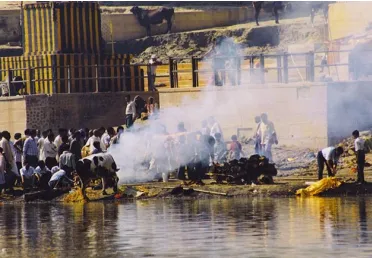
Figure 8. Image showing the air pollution caused due to burning of dead bodies along the bank of river Ganges13
TYPES OF CREMATION SYESTEM
1.
Direct cremation
Kalpana R. Thakare et al., IJSRR 2019, 8(1), 100-110
IJSRR, 8(1) Jan. –March, 2019 Page 106
Figure 9. Open-air cremation being carried out at ghat besides Pashupatinath temple. 15
Figure 10. Body is dipped in holy water before cremation. 16
2.
Electric cremation :-
Electric crematorium first came into existence in India in 1989 as a part of the Ganga action plan. Main idea behind this was to develop a river friendly cremation &to tackle pollution problem especially in the metro cities. This crematorium is built with 2 cremation chamber furnace with a strong cremation bed & secondary air holes. This is less expensive & eco-friendly.17
Kalpana R. Thakare et al., IJSRR 2019, 8(1), 100-110
IJSRR, 8(1) Jan. –March, 2019 Page 107
Figure 12. View of Electric crematory machine cremator over furnace.19
3.
Wood gasifier based cremation:-
Gasifier converts solid biomass into more convenient to use combustible gaseous form called producer gas through series of thermos-chemical reactions under reducing environment at high temperature. Gasifier based cremation system was developed to make an energy-efficient, eco-friendly, user-friendly method of cremation &the special attention was seen towards enhancing its social acceptability. Substantial decrease in the fuel wood consumption was seen. The cremation done in the wood gasifier based cremation does not produce smoke and helps in reducing the dependence on forest for wood pyre. 20
Figure 13. Cremation process going in wood based cremation.21
Passive Techniques To Reduce The Pain of Users in Crematorium
1. Landscape as healing Technique:-
Kalpana R. Thakare et al., IJSRR 2019, 8(1), 100-110
IJSRR, 8(1) Jan. –March, 2019 Page 108
Figure 14. Relation between water body and green space. 22
Physical environments include lawn areas, forest and lakes, relations between places created by such things as barriers, paths, vegetation views and qualities etc. these engaging natural surrounds are a place of comfort for the people suffering from the death of a loved one. The mix of natural and built environment helps the bereaved heal from death and grieving.
2. Efficient Architecture:-
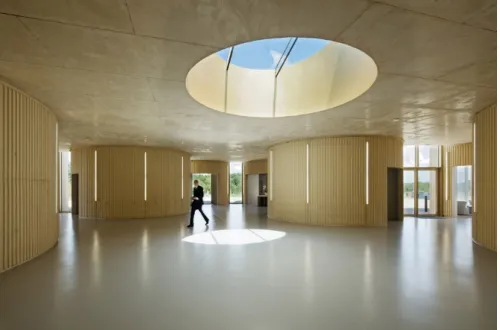
The phenomenon of death itself is a neglected and horrifying image for the common. Another reason behind improper crematoriums is the architecture of it. Being important part, but still unplanned sector have a need of interference of architecture &design in crematorium. The architecture of places like such should be calm and appealing.Each and every form, pillar, stone as well as turn towards the cremation space should indirectly help in healing bereavement. The entrance to the crematorium can be made in such a manner that to console the loved ones. When the state of the mind is in deep sorrow, the openness of the design helps in consoling the person. Proper natural shading from the south-side direction and use of metals for symbolizing pure and ethic look will help.Proper planning of the places according to the rituals will help in proper circulation throughout the site. Lightning should be proper and able to give an impression of the calm and quite atmosphere.
Kalpana R. Thakare et al., IJSRR 2019, 8(1), 100-110
IJSRR, 8(1) Jan. –March, 2019 Page 109
CONCLUSION:-
By understanding the inter-relation between modern society & traditional ritual the betterment of places like crematorium can be seen. Advancement if done in accordance withlandscape as well as architecture point of view will develop this sector in a better place and it won’t more be considered a dark part by the society.
REFERENCES:
1. Garg, Anshul, "Mokshda Souvenir" 2007: 17-20.
2. An 1820 Historic painting showing a Hindu funeral process from South India. Source:
https://www.britishmuseum.org/research/collection_online/collection_object_details.aspx?ob
jectId=3058333&partId=1.
3. Cremation. https://en.wikipedia.org/wiki/Cremation. 2017
4. Cycle of Reincarnation and rebirth in Hindu context. Source :
https://hgsrs.wordpress.com/about/immortality/reincarnation-and-rebirth/. 5. Everplans. https://www.everplans.com/articles/hindu-funeral-traditions. 2017
6. Hindu life cycle/Samsara showing Reincarnation and Rebirth. Source :
http://www.theunknownbutnothidden.com/15-experience-of-the-afterlife-from-near-death-survivors/.
7. Hindu corpse wrapped in holy cloth & garlands by the bank of river Bagamati. Source :
https://beardedvagabond.wordpress.com/2012/10/24/by-the-burning-ghats-of-the-bagmati/. 8. Cremation of dead body by the son along the bank of river Bagamati. Source :
https://blaineharrington.photoshelter.com/image/I0000zAp.P8sefg4.
9. Antim Sanskara (Asthi Visarjan) in the holy water of river Ganges.Source :
https://www.parmarth.org/sanskaras/ash-immersion/.
10.Rite of Preta-karma by the Hindu Priests. Source : https://www.alamy.com/stock-photo-one-year-after-a-death-a-hindu-priest-conducts-the-shraddha-rites-10338278.html.
11.Hogland, W.K.H. “Usefulness of Selenium for the Reduction of Mercury Emissions from Crematoria.”Journal of Environmental quality, 1994.
12.Rahill, P.F. Casket and Container Emissions Study. Orlando, Florida, United States: Cremation Association of North America (CANA). 1993
NOTE:
Kalpana R. Thakare et al., IJSRR 2019, 8(1), 100-110
IJSRR, 8(1) Jan. –March, 2019 Page 110
13.Image showing the air pollution caused due to burning of dead bodies along the bank of river Ganges. Source : https://www.indiatvnews.com/news/india/national-green-tribunal-hindus-cremation-air-water-pollution-57385.html.
14.Raymond, C. Verywell : http://www.verywell.com/what-is-direct-cremation-1131898. 7th oct. 2016.
15.Open-air cremation being carried out at ghat besides Pashupatinath temple.https://en.wikipedia.org/wiki/Pashupatinath_Temple.
16.Body is dipped in holy water before cremation. http://zingag.com/ngt-declares-fine-for-dumping-waste-in-ganga/.
17.Phukan, Rumani saikia. https://www.mapsofindia.com/my-india/society/electric-cremation-vs-the-traditional-funeral-pyre. 16th Oct. 2014
18.Layout of Electric crematorium. https://tunza.eco-generation.org/resourcesView.jsp?boardID=worldReport&viewID=14126.
19.View of Electric crematory machine cremator over furnace.https://www.diytrade.com/china/pd/12773165/crematory_incinerator_china_basic_cr ematorium_starting_furnace_oven_electrical.html.
20.Pariwartan. Project summary on Wood-Gasifier Based Crematorium installed at Sanatan Dharm Shamshan Ghat, Chalaunthi, Sanjauli, Shimla.
https://www.pssurvival.com/PS/Gasifiers/Wood-Gasifier_Based_Crematorium_2008.pdf. 21.Cremation process going in wood based
cremation. https://sports.punjabkesari.in/chandigarh/news/mohali-to-have-electric-crematorium-soon-466637.
22.Relation between water body and green space. https://www.externalworksindex.co.uk/entry/113528/Oak-View-Landscapes/Soft-landscaping-new-crematorium-Bentley/#.
23.Amiens crematorium welcomes people with soothing circular walls and natural light bcoz of the sky light provided at the entrance of the crematorium. https://inhabitat.com/amiens-