ScholarWorks
Walden Dissertations and Doctoral Studies Walden Dissertations and Doctoral Studies Collection
2019
Data-Driven Decision Making about Single-Sex
Instructional Grouping at an Elementary School
Michelle Lynnette Sorrells
Walden University
Follow this and additional works at:https://scholarworks.waldenu.edu/dissertations
Part of theCurriculum and Instruction Commons
This Dissertation is brought to you for free and open access by the Walden Dissertations and Doctoral Studies Collection at ScholarWorks. It has been accepted for inclusion in Walden Dissertations and Doctoral Studies by an authorized administrator of ScholarWorks. For more information, please [email protected].
Walden University
College of Education
This is to certify that the doctoral study by
Michelle Sorrells
has been found to be complete and satisfactory in all respects, and that any and all revisions required by
the review committee have been made.
Review Committee
Dr. Anissa Harris, Committee Chairperson, Education Faculty Dr. Katherine Hayes Fondation, Committee Member, Education Faculty
Dr. Amy White, University Reviewer, Education Faculty
Chief Academic Officer Eric Riedel, Ph.D.
Walden University 2019
Abstract
Data-Driven Decision Making about Single-Sex Instructional Grouping at an Elementary School
by
Michelle L. Sorrells
MS, Troy State University, 2008 BS, Valdosta State University, 2006
Project Study Submitted in Partial Fulfillment of the Requirements for the Degree of
Doctor of Education
Walden University February 2019
Abstract
Administrators at a Southeastern elementary school eliminated single-sex instructional grouping in 5th-grade classes without a proper analysis of all available data and later reflected upon whether this instructional model should be revived. Because data-based decisions may positively improve teaching and learning for all stakeholders, the purpose of this qualitative case study was to explore all available data leading to this decision, inform stakeholders about the decision-making processes in the local school, and provide data to inform future decisions. Conceptually framed with Mandinach’s data-driven decision making (DDDM) model, the guiding question for the study focused on perceptions of teacher, administrator, and leadership team member about the DDDM process related to single-sex instructional grouping in the local venue. The data were collected using 8 interviews with administrators, teachers, and school leadership team members involved in the instructional decision. Data from interview were transcribed, analyzed, and coded for emergent themes, types of data and decisions, decision making processes, and stakeholder perceptions. The findings showed a gap in DDDM practice and affirmed the value of data for informed decision making. The findings guided recommendations for a professional development series created to increase data literacy and DDDM best practices. Improving DDDM for teaching and learning may promote positive social change by developing educational stakeholder skill sets for all decision-making as well as providing targeted, data-driven instruction for learners whether in multi- or single-sex instructional grouping.
Data-Driven Decision Making about Single-Sex Instructional Grouping at an Elementary School
by
Michelle L. Sorrells
MS, Troy State University, 2008 BS, Valdosta State University, 2006
Project Study Submitted in Partial Fulfillment of the Requirements for the Degree of
Doctor of Education
Curriculum, Instruction, and Assessment
Walden University February 2019
Dedication
This study is dedicated to my family and friends who have endured the journey with me and supported me along the way.
Acknowledgments
I want to thank my committee Dr. Anissa Harris, Dr. Kathy Hayes-Fondation, and Dr. Amy White for the tireless hours of work that have contributed to my completion of this study. I also want to acknowledge the participants who gave their time to the study. I would also like to acknowledge the many colleagues I have met along the way. I could not have done this without the support of Jessica who read over 20 drafts of this study. I appreciate every person who has contributed to my success.
i Table of Contents
Table of Contents ... i
List of Tables ... vi
List of Figures ... vii
Section 1: The Problem ...1
Introduction ...1
Definition of the Problem ...2
Rationale ...3
Evidence of the Problem at the Local Level ... 3
Evidence of the Problem from the Professional Literature ... 5
Definitions...7
Significance...9
Guiding Question ...10
Review of the Literature ...10
DDDM Framework ...11
Connection to the Local Problem ... 13
Review of the Broader Problem ...13
DDDM in Practice ... 14
Instructional Grouping ... 17
Implications...30
Summary ...31
ii
Research Design and Approach ...33
Case Study Research ... 34
Justifying the Design... 36
Participants ...38
Criterion for Selecting Participants ... 38
Number of Participants ... 38
Gaining Access to Participants ... 39
Researcher-Participant Relationships ... 40
Measures for Protection of Participants ... 41
Data Collection ...41
Interview Style and Settings ... 42
Participant Response and Data Collection ... 43
Sufficiency of Data ... 44
Interview Process ... 44
System for Tracking Data ... 45
Role of the Researcher ... 46
Discrepancies ... 47
Assumptions, Limitations, Scope, and Delimitations ... 47
Data Analysis ...48
Transcription ... 48
Software Assisted Analysis... 49 Coding 49
iii
Participant Roles ... 51
Data Analysis Results ...51
Building the Findings from the Problem ...52
Types of Data in the Site School... 54
Examples of Decisions ... 57
Decision-Making Processes Related to Single-Sex Instructional Grouping... 61
Stakeholder Perceptions of the Influence of Single-Sex Instructional Grouping ... 65
Evidence of Quality ...68
Outcomes ...69
Types of Data ... 71
Examples of Decisions ... 72
Decision-Making Processes in the Site School ... 72
Perceptions of Single-Sex Instructional Grouping ... 73
Summary ...74
Section 3: The Project ...75
Introduction ...75
Rationale ...77
Review of the Literature ...78
Literature Related to Project Content ...83
Capturing the data ... 84
iv
Sharing Information about Data and Making Decisions... 86
Summary ...86
Project Description...87
Resources and Existing Supports ... 87
Potential Barriers and Solutions... 88
Implementation Including Timeline ... 88
Roles of Student and Others ... 90
Project Evaluation ...90
Project Implications Including Social Change ...91
Social Change ... 91
Local Community and Far-Reaching ... 92
Conclusion ...93
Section 4: Reflections and Conclusions ...94
Project Strengths ...94
Project Limitations ...95
Recommendations for Alternative Approaches ...97
Analysis of Learning ...98
Scholarship ...99
Project Development ...102
Leadership and Change ...105
Reflection on Importance of the Work ...106
v Social Change ... 107 Implications... 108 Future Recommendations ... 109 Conclusion ...110 References ...111 Appendix A: Project ...129
Appendix B: Invitation to Participate E-Mail ...307
Appendix C: Invitation to Participate, Printed Copy for Snowball Sample ...308
Appendix D: Prescreening Questions ...309
Appendix E: Interview Protocol ...310
Appendix F: Excerpt from Research Log ...312
Appendix G: Examples of Word Clouds and Initial Frequency Analysis ...313
Appendix H: Screenshots Representing a Coded Interview Transcript ...317
vi List of Tables
Table 1. Decisions in the Site School Identified by Participants ...58 Table 2. Perceptions of Influence of Single-Sex Grouping on Students in Grade 5 ...66
vii List of Figures
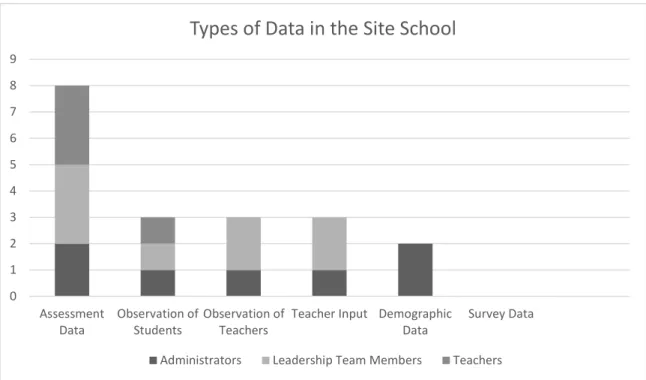
Figure 1. Visual representation of DDDM framework that guides this study ...12 Figure 2. Visual representation of data analysis coding ...52 Figure 3. Types of data in the site school mentioned by respondents during
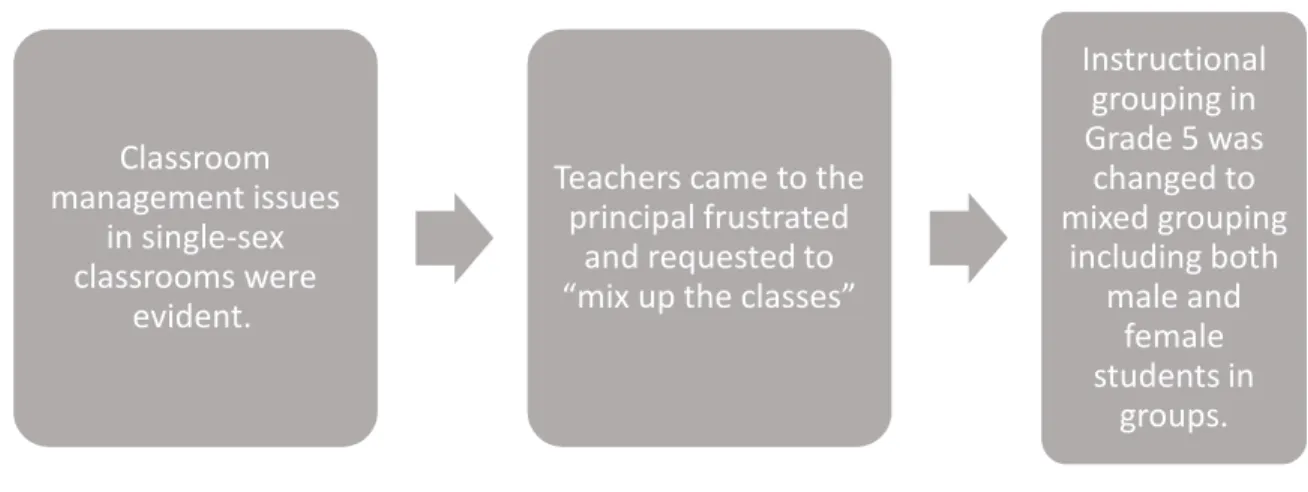
the interviews ...54 Figure 4. Visual representation of initial implementation DDDM process ...61 Figure 5. Visual representation of the discontinuation decision ...63
Section 1: The Problem
Introduction
Educational organizations are supported by data use when stakeholders strive to understand phenomena. Using data-driven (or data-based) decision-making (DDDM) may potentially alter teaching and learning (Datnow & Park, 2014). Models for DDDM include the use of all types of data, from all stakeholder populations, and from all hierarchal levels of the organization (Datnow & Park, 2014), ideally including ongoing feedback among the stakeholders in the educational community (O’Neal, 2012). These data are then used to inform all organizational decisions, administrative or instructional, including but not limited to accountability or specific reform initiatives (Datnow & Park, 2014; Mandinach, 2012). Using data to inform educational practices and decisions is essential to continued school improvement, regardless of the reform or initiative in implementation (Mandinach, 2012).
Although many educators were inattentive to data use for educational decisions or improvements before the No Child Left Behind Act of 2001 (No Child Left Behind [NCLB], 2002), it is challenging to imagine a school improvement process without data as a key pillar (Datnow & Park, 2014). Authentic DDDM is an established mindset in the educational culture that produces knowledge through questioning (Bernhardt, 2016; O’Neal, 2012). Using DDDM processes potentially encourages educators to create targeted professional development and instructional plans designed to support learners, much like a physician uses health records to provide individualized treatment plans for patients. Appropriately using data is an essential piece of the school improvement puzzle
(Datnow & Park, 2014). As all school improvement and instructional initiatives are designed to ultimately enhance student learning outcomes (Datnow & Park, 2014), DDDM must be the guiding framework for successful educational changes (Bernhardt, 2016).
Definition of the Problem
The problem at a Southeastern elementary school was that a decision to eliminate single-sex instructional grouping in the fifth-grade classes was made without analysis of all types of data, and it is unknown if this instructional model was effective and should be revived. For success, all efforts to close the achievement gap through curriculum or instruction reform must be appropriately supported by DDDM (Mandinach, 2012). Reform efforts are best when justified by existing data to produce the desired outcomes. However, educational decisions are not always based on appropriate data. Understanding the existing decision-making processes and determining the degree of disconnect to a DDDM framework may provide valuable insight for better integrating DDDM into local school processes, thereby creating more successful reform.
In this study, I focused on the stakeholders’ experiences in one local school that implemented single-sex instructional grouping for 9 years but then suddenly eliminated it in 2015 without a thorough analysis of the quantitative and qualitative data. To make informed decisions to improve achievement and reduce the gender gap, many educators have explored single-gender or single-sex classroom grouping. (The latter term, preferred for academic writing as indicated by the American Psychology Association [2015], is used in this study unless quoted literature uses the alternate term.)
This case study provided insight into the decision-making processes at the local venue, specifically those related to the grouping practices for students in Grade 5.
According to the principal at the study site, providing these data addressed the gap in best practices for DDDM as the school radically changed grouping without consideration for perceptual data from a variety of stakeholders. Results of the study provided a better understanding of (a) the value of and processes of gathering and analyzing data for informed decision-making and (b) the benefits or disadvantages of single-sex instructional grouping for the local school community. The study provided the local venue with qualitative data contributing to improved resources to potentially allow the school to make decisions that are more informed during DDDM processes relevant to grouping in the site school and serve as an example for others with similar concerns or issues.
Rationale
Growing as a reform initiative globally, DDDM is at the center of education. Data use is essential in improving schools and meeting educational outcomes (Datnow & Hubbard, 2015b). The use of DDDM spans local and professional settings and best functions when integrated into the local educational culture (Bernhardt, 2016).
Evidence of the Problem at the Local Level
In the local school, the practice of single-sex instructional grouping was initiated in 2006 for all fifth-grade students. For almost a decade, this instructional grouping model was implemented. The administrator during implementation reported this instructional grouping method had a positive impact on classroom climate, student
self-efficacy, and achievement scores (Administrator A, personal communication, July 7, 2014). For example, the school performance scores from 2012–2013 when compared to 2013–2014 indicated an overall improvement in fifth grade female literacy (x < 6.5%) and mathematics (x < 1%) proficiency; additionally, fifth grade male literacy proficiency declined almost 12%, but their mathematics proficiency improved more than 5%
(Southeastern State’s Department of Education, 2016).
Although the local school hired new administrators in 2014, the distributed fifth-grade rosters from the pre-session conference indicated that the single-sex instructional grouping model would remain in place (Local School, 2014). However, at semester, the new principal decided to integrate the Grade 5 students into mixed-sex instructional groups (Administrator B, personal communication, March 1, 2015). Teachers had to learn about new students and family members while guiding students through the mid-year transition into a new school (Grade 5 Teacher A, personal communication, May 10, 2015). One teacher shared that there was an increase in student misbehavior (Grade 5 Teacher B, personal communication, January 5, 2015). When questioned, the
administration acknowledged that instructional grouping was a curricular/instructional decision under the supervision of this administrative team; and eliminating single-sex instructional grouping was a judgment-based, personal choice without the benefit of collecting or considering data sets or stakeholder perceptions (Administrator B, email communication, December 29, 2015). Since the elimination of single-sex instructional grouping, the school’s 2016 state report card indicated a 31.25% decline in fifth-grade female student literacy proficiency rates and a 16.63% decline in mathematics
proficiency. Moreover, the fifth-grade male literacy achievement proficiency rates declined almost 25%, and the mathematics proficiency was reduced by 16.63% (Southeastern State’s Department of Education, 2016).
Because DDDM at its core involves the triangulating of data and multiple perspectives (Datnow & Park, 2014; Gullo, 2013), this sudden shift in student
instructional grouping demonstrates a gap in best practices for DDDM at the site school. To provide data for future instructional grouping decisions, a better understanding of this case and the factors surrounding it is valuable to the local venue and to stakeholders interested in exploring student instructional grouping as a strategy for school
improvement. While the administrator admittedly did not use perceptual or other types of stakeholder data to inform her decision, interviews to provide qualitative data from administrators, teachers, and leadership team members regarding their perceptions about single-sex instructional grouping in fifth grade for students at the site school are
welcomed (Administrator B, personal communication, March 1, 2015). Providing a model for best practices in difficult decision-making will assist the local and other schools in making data-based decisions for any school concern.
Evidence of the Problem from the Professional Literature
Standards-based accountability, and the subsequent need for using data to inform decisions, is a driving force for educational policy (Gullo, 2013; Hamilton, Stecher, & Yuan, 2012). Data, however, do not benefit stakeholders until they are applied in context (Mandinach, 2012). Decisions, such as reallocation of resources and programming changes, are actionable decisions and should be made using school and district data
(Gullo, 2013). Successful school improvement is born of capable educators informed by data (Mandinach, 2012; O’Neal, 2012).
Achievement scores are an often-utilized data source, but DDDM encourages the use of multiple types of data (Datnow & Park, 2014; Gill, Borden, & Hallgren, 2014; Gullo, 2013; Mandinach, 2012). Gullo (2013) suggested the use of perception, attitudinal, and classroom or school process data as valuable in the processes of decision-making, planning, and evaluation. Effective DDDM requires assorted types of data from a variety of resources (Gullo, 2013). The leader of a school plays a critical role in using data (Schildkamp & Poortman, 2015). Decisions about grouping practices that are not informed by qualitative data related to the potential impact of grouping fall short of best practice for making the most informed decision in a local school.
The purpose of this study was to understand better the decision-making process used to eliminate single-sex instructional grouping. Gathering and analyzing data from administrators, teachers, and leadership team members with a role in the site school during the time single-sex instructional grouping practices were in place may create a better understanding of this educational reform and provide insight into DDDM processes that can be assimilated into the school culture. Providing these data may address the gap in best practices for DDDM related to fifth-grade student grouping at the classroom level in the school. The study may provide the local stakeholders with qualitative data
contributing to improved resources to allow the school to make decisions that are more informed during DDDM processes relevant to decisions such as grouping in the site school and serve as an example for others with similar concerns or issues. These data
may inform future grouping decisions within the local school, district, and state or provide information for others who face similar decisions.
Definitions
Achievement gap: Disparities in the achievement data when compared with peer groups (Pahlke, Hyde, & Allison, 2014).
Co-educational: An educational setting that includes both girls and boys in the same group (Pahlke et al., 2014). In this study, a local school grouped fifth-grade students from single-gender to co-educational classrooms during the semester break.
Data-driven decision-making (DDDM): A cyclical process of actions based on the transformation of data into knowledge including ongoing reflection and gathering of additional and multiple sources of data (Datnow & Park, 2014; Mandinach, 2012; O’Neal, 2012). In this study, DDDM processes were explored as a model for all educational reform but will specifically be applied to the decision of single-sex or co-educational grouping at the local school.
Gender: Attitudes, feelings, and behaviors associated with biological sex by a culture (APA, 2010). Before the turn of the century, psychologists realized a need to define sex and gender but recognized both are essential to the vocabulary of
psychologists (Unger, 1979). Per APA (2010), gender refers to the role a person assumes in society, not biological anatomy. The term sex refers to the biological anatomy a person has at birth (APA, 2010). For example, a person could be anatomically masculine but assume a social role in the female gender. Although these terms are often used interchangeably in casual or educational conversation (Chadwell, 2010), APA (2010)
requires that a distinction is made. Since this study must comply with APA standards and definitions, the term single-gender instructional grouping is inappropriate to refer to the fifth-grade class grouping in the local school. Therefore, the term single-sex instructional grouping is used throughout this study to refer to the grouping of fifth graders in the local setting. However, where the educational literature refers to this grouping practice as single-gender instructional grouping, the original text was used. Therefore, in this study, single-gender or single-sex instructional grouping is used synonymously to indicate grouping based on biology rather than social processes. Where the narrative directly refers to the grouping process, the term single-sex instructional grouping is used to comply with APA standards. Citations from the literature were made in the original writer’s words.
Gender gap: Unequal performance of students grouped into homogenous male and female groups (Schwartz & Han, 2014).
Mixed-sex instructional group: An instructional group that includes both anatomical males and females (Garcia-Gracia & Vazquez, 2016).
Sex: The biological status of a person, typically male, female, or intersex (APA, 2010).
Single-gender instructional group: A group including all-boy students or all-girl students (Garcia-Gracia & Vazquez, 2016). Per APA, single-gender grouping would refer to grouping individuals by their preferred social role, not biological differences. In this study, single-gender and single-sex instructional grouping are used synonymously. See definition of gender.
Single-sex instructional group: A group including all-boy students or all-girl students (Garcia-Gracia & Vazquez, 2016). Per APA, single-sex instructional grouping would refer to grouping individuals by biological sex, not preferred social roles. The educational literature, however, often uses the term single-gender instructional grouping to refer to this same process. In this study, single-gender and single-sex instructional grouping are used synonymously. See definition of gender.
Significance
This study will contribute to the gap in best practices for DDDM related to the students in Grade 5 at the local school. The purpose of this research was to provide insight into the DDDM behind the practice of single-sex instructional grouping and administrator, teacher, and leadership team member perceptions regarding its impact or non-impact for fifth-grade students in the site school. Providing these data will address the need for qualitative data to inform future grouping decisions and fill the gap in the lack of best practices for decision-making related to the change from single-sex to mixed-sex grouping in Grade 5 at the local school. Administrators may use these data as a reference for future decisions or to decision-making processes in other instructional or operational arenas. Teachers may gain a better capacity for data use and may use data to inform future decisions or to reflect and change current practice. Leadership team members may use the data to reflect upon prior decisions, aid in advocating for best practices in DDDM in future decisions, and to support school reform efforts.
Guiding Question
My goal for this study was to understand better the decision-making process used to eliminate single-sex instructional grouping in the local school. Gathering and
analyzing data from administrators, teachers, and leadership team members with a role in the site school during the time single-sex instructional grouping practices were in place may create a better understanding of this educational reform and provide insight into DDDM processes that may be assimilated into the school culture. The guiding question for this study was:
What are administrator, teacher, and leadership team member perceptions
regarding how data were used in the DDDM for single-sex instructional grouping for fifth-grade students?
Exploring this question provided insight about the DDDM processes related to single-sex instructional grouping in the local venue so the school administrators may make more informed decisions about student instructional grouping. The intent was to explore stakeholder perceptions of the DDDM process related to single-sex instructional grouping on fifth-grade students in the local population and perceptions about the benefits or disadvantages for single-sex instructional grouping in the local setting. These data may be used in addition to locally archived, quantitative data sets to better inform future decisions about grouping in the local school, district, or surrounding areas.
Review of the Literature
I conducted a review of the literature related to the problem under study using the internet, EBSCOhost, ProQuest, Educational Resources Information Center (ERIC)
library databases, Google Scholar, articles, peer-reviewed journals, and books. I used numerous keywords and phrases during the search, including but not limited to data-driven decision making, data-based decision making, data use, standardized testing accountability, leadership roles in decision making, closing achievement gap, gender differences, sex,single gender,single-sex education, single-sex classroom, single-sex or single-gender or mixed-sex instructional grouping, single-sex achievement, gender, gender education, gender achievement gap, and sex differences.
DDDM Framework
The practice of measurement-driven instruction was debated as early as the 1980s (Popham, 1987). Historically, using data to inform decisions in education surfaced late in the 20th century (Marsh, Pane, & Hamilton, 2006). Data may inform decisions about student placement, instruction, and policy. In the modern era, persons who work in educational arenas are expected to use data to drive actions (Coburn & Turner, 2011, 2012; Datnow & Park, 2014; Mandinach, 2012; O’Neal, 2012). Improving instruction and learner achievement may be generalized as the goal in education, and DDDM is a framework for making decisions utilized to move toward continuous improvement (Mandinach, 2012). The ideals of the DDDM framework are long-standing in industry and business but integration of these ideals in education continues to grow.
In recent years, several researchers have described theoretical frameworks for DDDM (Hamilton et al., 2012; Mandinach, 2012; Means, Padilla, & Gallagher, 2010). Each framework is similar in nature and includes hierarchal levels of data including classroom, building, and district level data (Mandinach, 2012). In keeping with the
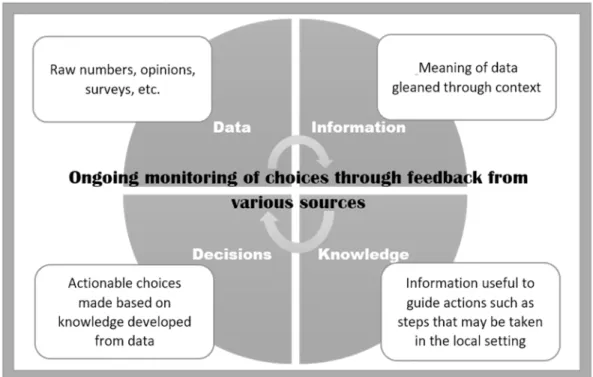
definition of DDDM as the ongoing cycle of actions determined from information and knowledge gleaned from discussions about data (O’Neal, 2012), this study is built upon concepts of the DDDM framework presented by Mandinach (2012). Figure 1 is a visual representation of these concepts.
Figure 1. Visual representation of DDDM framework that guides this study (created from ideas in Mandinach, 2012).
Through this study, I traced the four pillars of Mandinach’s (2012) model to reveal the theoretical and local school’s actual processes for gathering and assimilating data, analyzing and contextualizing those data, creating meaningful information from the context and analysis results that would be useful to guide instructional actions, and revisiting the actionable choices made from the knowledge. The literature review includes an overview of research related to each pillar relative to the local problem.
Connection to the Local Problem
The administrator in the local venue altered the grouping of students in Grade 5 midyear. This stakeholder moved students into mixed-sex groups based on one teacher’s request without gathering feedback from others or considering potential benefits of single-sex instructional grouping for students in Grade 5 at the local school (J.M.,
personal communication, March 1, 2015). The local administrator took responsibility for the decision to make this instructional change (A.S., personal communication, March 1, 2015). Although the administrator was empowered to make this decision, it was made based on only one piece of data: teacher request. Qualitative data, including important stakeholder perception data, were available about single-sex instructional grouping in this locale but were not collected or analyzed. The decision-making process to alter the
instructional grouping practice mid-year demonstrates a gap in best practices for DDDM. Gathering all the available data and assessing them through the local context into informed knowledge may provide insight to the local stakeholders about the curricular concern of single-sex instructional grouping. However, gathering and analyzing these data may also model best practices for the local stakeholders to make more informed decisions that may potentially improve the local data culture and decisional outcomes for all stakeholders.
Review of the Broader Problem
This literature review represents research and implications related to DDDM and the lack of best practices in the local venue regarding the independent decision of the administrator to alter the single-sex instructional grouping practice in place at the local
school in Grade 5. Hussein (2009) described the use of theoretical triangulation in social sciences. This practice is characterized using multiple frameworks in formulating a hypothesis or providing a more in-depth understanding of a research problem. My study is grounded in the concept that best practice is to use multiple types of data, including perceptual data, to inform decisions. Here, the district has quantitative data on student performance based on class grouping. While these were not available for this study because school and student identities could have been compromised, these quantitative data did not need to be recollected for the study to fill the gap in best practice at the site school. The literature in this review was organized according to relevance to instructional grouping, the instructional and curricular concern in the local case and DDDM best practices as represented by the four categories of Mandinach’s (2012) model are noted throughout.
DDDM in Practice
According to Mandinach’s (2012) model for DDDM, the fluid process of making decisions based on data begins with having raw numbers, opinions, or survey responses gathered from relevant individuals. As a stakeholder makes a decision, these data are analyzed in context and become useful information—more than just raw digits or
comments bulked together. Sifting and sorting through data often reveals unseen facts or relationships that become valuable information. Once data are more informed, the most relevant data sets or facts become meaningful knowledge that may guide the
stakeholder’s decision-making process. Once the stakeholder acts upon a choice
stakeholder makes a databased decision. Better understanding of how the factors related to Mandinach’s four pillars—data, information, knowledge, and decisions—connect with the literature will appropriately inform this study.
Data use. A wide variety of uses, benefits, and cautions about the DDDM process in education are explained in research. Gullo (2013) named reasons for and benefits of collecting data, specifically (a) revealing when change is needed, (b) questioning assumptions, (c) encouraging communication among stakeholders as reasons for data collection, and (d) informing reform processes. Data may also inform decisions about achievement gaps, instructional objectives, and student grouping for instruction (Gullo, 2013; Kaufman, Graham, Picciano, Popham, & Wiley, 2014; Mandinach, 2012). A focus on formal data such as that collected by required annual assessments has been promoted by NCLB (Marsh et al., 2006); however, researchers also encourage the use of multiple types of data including informal data such as perceptions to inform decisions in
educational practice ( Coburn & Turner, 2011, 2012; Gullo, 2013; Mandinach, 2012). Many modern-day educators espoused the regular use of data; however, they may infrequently use qualitative data due to their scarcity.
Multiple types of data. For proper decision making, multiple types of data should be included in the analysis. Data users are cautioned not to rely solely on one source of data to make decisions as doing so demonstrates an assumption that one size fits all without regard to biological, social, or opportunity backgrounds of students (Gullo, 2013). Mandinach (2012) noted that using data including collaborative
by others (Gullo, 2013). The combined knowledge and experiences of those with access to the data are also relevant (Marsh & Farrell, 2015).
Quality and relevant data. While data may be used in infinite ways, DDDM is complex and can be detrimental if the quality and relevance of the data are not carefully aligned to the decision being made (Gill et al., 2014; Marsh et al., 2006; Ronka, Geier, & Marciniak, 2010). Data must be analyzed so that the meaning is appropriate in context (Mandinach, 2012). Additionally, the data sets must inform practice. As the information absorbs meaning from the context, it becomes useful knowledge that may be applied as facts that guide decision-making. Quality data also relevant are useful for informing databased decisions (Bernhardt, 2016; Mandinach, 2012)
Data for decision-making. For it to be appropriate to gather data, they must relate to a purpose, in this case, decision making. Multiple researchers agreed that data should not be collected to have more data; there must be quality data for DDDM to be most effective (Gill et al., 2014; Mandinach, 2012; Marsh et al., 2006; Ronka et al., 2010). Data inform decisions about achievement gaps, instructional objectives, and student grouping for instruction (Gullo, 2013; Kaufman et al., 2014; Mandinach, 2012). Although the decision-maker’s intellect, perceptions, and even emotions may be involved in the decision-making process, the best decisions are those that align with the mission and vision statement and move the collective group toward continuous improvement (Bernhardt, 2016). In the local venue, no qualitative, stakeholder data were collected or used in the decision-making process related to a change in instructional grouping
practice. Applying DDDM best practices to the local school would improve the alignment of the decisions with the problems and intended outcomes.
Instructional Grouping
In education, students of developed societies have historically been assigned to classes with a possible underlying assumption that learning in groups, despite size, is the most productive method to assign students for instruction; however, this assumption is challenged by American research literature that examines learning styles (Dunn et al., 1990). Researchers pointed to grouping as one of the action-based decisions made in classrooms using data (Kaufman et al., 2014). When analyzing data to make action-based decisions regarding grouping, it is important to understand the existing achievement gaps, scientific and psychological research, differences in students relative to instruction, and methods to continuously improve these decision-making processes. Numerous practices for grouping students exist in education.
Scientific and psychological research. Research-based educational decisions for practices and programming are the intention of federal level officials as evident in the American Recovery and Reinvestment Act (2009). Gardner, in his Multiple Intelligences (MI) theory, and Gullo, more recently, cautioned that utilizing a uniform model for educating students may not meet the needs of all (Gardner, 2006; Gullo, 2013).
Neuroscience and biological researchers on brain structure and child development stated that some behaviors related to learning are innate and may affect student reception of knowledge necessary for reaching achievement goals (Dubinsky, Roehrig, & Varma, 2013; Fabes, Martin, Hanish, Galligan, & Pahlke, 2015; Sax, 2005). Teachers, when
presented with researched-based information about their learners instinctively reflect upon their practice in relation to those ideas (Chadwell, 2010). One such area of research presented to teachers is neurobiology.
Partnerships between neuroscience research and education present prospects for laying the fundamental groundwork for educational practice and policy (Busso & Pollack, 2015). Neuroscience concepts are appearing infused with teacher professional development (Dubinsky et al., 2013). Using data to inform practices and continue improving student achievement is the ultimate goal; teachers show enthusiasm for learning about neurological and biological factors that may contribute to building better learning environments (Hook & Farah, 2013). Some researchers suggested a need for better connections among practitioners in the educational arenas and neuroscience researchers (Hardiman, 2012). Busso and Pollack (2015) reviewed claims that neurological structure and biology are keys in educating students; however, they
cautioned that framing education only through the lens of neurobiological sciences might cause inadvertent changes to views, goals, and values. To make the most informed decisions, however, educators must know the neuroscience concepts connected to instructional decisions, so they may inform instructional decisions.
Achievement gaps. The National Staff Development Council recognized that an achievement gap identifies the differences in test performance among student groups; however, the members encouraged research consumers to know the identification of achievement gaps does not describe the legacies of “exclusivity and institutional racism” that contribute to the gaps within the United States (Wei, Darling-Hammond, &
Adamson, 2010). The gap in achievement between white and non-white students is longstanding (Pitre, 2014). Lundberg and Startz (2000) expressed that the legacy of past discrimination is perpetuated, appearing as inequalities in society, even if no
contemporary discrimination is present. The nation’s most poorly performing schools encompass disproportionate concentrations of minority groups. Poverty was cited as the root cause of the academic achievement gap between majority and minority children in the United States, and eradication of such is fundamental to successful education reform and eliminating the disparity between racial groups (Berliner, 2006; Lewis, 2007; Stevens & Wood, 1995). This poverty was exacerbated in U.S. schools by philosophies of
exclusion through which children were not exposed to challenging academic subjects offered at more affluent schools (Lewis, 2007). Academic achievement and length of time spent living in poverty are directly correlated; more time spent in poverty equals lower achievement academically (Hair, Hanson, Wolfe, & Pollak, 2015). Understanding the demographics of a student population, therefore, would be relevant to stakeholders making informed decisions to improve or alleviate achievement gaps (Bernhardt, 2016; Mandinach, 2012).
Closing the achievement gaps between student groups remained a focus of educational policy and reform both within our country and abroad (Doris, O’Neill, & Sweetman, 2012). The gender achievement gaps have narrowed since the 1970s
according to the NAEP (2012), but gaps persist (National Center for Education Statistics, 2013). According to Bowles and Gintis (2002), schools should offer experimental
territories to build a society that offers material benefits and freedoms to everyone. Unfortunately, their vision was viewed somewhat more radical than realistic.
A growing gender achievement gap has been of concern since the early 1990s. Statistics showed girls moving forward more quickly than boys. Girls perform better than boys in many countries and across many subjects (Carvalho, 2016; Stoet & Geary, 2015). Alarmingly, boys are more likely to be enrolled in special education, be diagnosed with ADHD, and least likely to complete a bachelor’s degree in college (Conlin, 2003). Boys were not just falling behind girls during the 1990s, Pollack (1998) indicated that they were doing worse than they had done before, falling behind their own functional capabilities. Across the last decade, the view of which gender is most at risk for achievement in education has shifted between the sexes. The gender achievement gap has fluctuated, but a persistent gender gap remains. Students in the United States showed an achievement deficit when compared to international learners, especially in
mathematics (Crawford-Ferre & Wiest, 2013; Dillon, 2010; Feniger, 2011). Reactive practices focused on narrowing the gender achievement gap, including single-sex instructional grouping, are based on a general consensus, noted by early psychologists and explored by theorists, that males and females differ biologically and socially (Bigler & Signorella, 2011; Doris et al., 2012; Goodkind, Schelbe, Joseph, Beers, & Pinsky, 2013; Hayes, Pahlke, & Bigler, 2011; Unger, 1979). These sex-based differences are a piece of the data set that influences instructional grouping decisions. Moreover, Gullo (2013) reminded, a variety of data are essential to DDDM.
Gender differences relative to classroom instruction. Most public schools are part of a large network of gender-defined activities. Gender stereotyping and socialization affect the educational environment through curriculum, organization, staffing, and
expectations. While theories of sex-role socialization attempted to explain gender differences in terms of learning and successfully explained the psychology behind how children come to demonstrate gender-specific behaviors, these theories do not sufficiently explain the sources of the behaviors (Stevens & Wood, 1995). However, there are those who support single-sex instructional grouping for social reasons (Goodkind et al., 2013; Weil, 2008; Younger & Warrington, 2002). While students enter kindergarten with narrow achievement gaps, the disparity becomes evident by middle childhood and early adulthood especially in spatial reasoning skills (Hayes et al., 2011; McCrea, 2010;
Robinson & Lubienski, 2011). Sax (2005) reiterated numerous times in his work that sex differences are more significant in childhood than in adulthood. Gurian, Stevens, and King (2008) identified differences in gendered brains as having structural, chemical, processing, and hemispherical differences.
Sex differences in brain-related behavior and cognition exist (Chadwell, 2010; Raznahan et al., 2010), and stakeholders faced with instructional decisions need to be informed. Fundamental to understanding the implications of single-sex or co-ed grouping in education, then, is the concept that gender differences exist that could potentially influence classroom environments, students’ ability to learn, achievement, and teacher interactions. Innate, biological differences exist between boys and girls in brain structure (Chadwell, 2010; Sax, 2005). Understanding the differences in brain structure and
responses to environmental stimuli benefits both educators and the students they teach (Bonomo, 2010; Dubinsky et al., 2013). Anecdotal data related to the differing responses by students are data that may be useful to decision makers.
Boys may have an advantage because they are active, thereby self-stimulating their spatial abilities and increasing development of the right hemisphere (Gurian, Stevens, Henley, & Trueman, 2011). However, this poses a disadvantage, as boys can be intrusive to other students. While calming boys’ impulsivity and aiding in learned control is necessary, guiding girls toward physical movement in learning environments
stimulates their space and place intelligence (Gurian et al., 2011). According to Gurian and Ballew (2003), the male sex rather than female more often relies on
logical-mathematical intelligence. Boys are more reliant on this type of intelligence than girls are. Musical stimulation is potentially a powerful influence on learning for both males and females because it is a whole-brain activity. Sousa (2011) declared that the
remarkable discoveries about growth, development, and learning processes of the human brain have allowed scientists to design extremely successful educational interventions. Brain imaging technology gives scientist much more detailed information about how different activities affect the human brain (Spielhagen, 2013). Chadwell (2010) cautioned educators to ensure best practices for data collection and evaluation to ensure equity between instructional experiences for each sex group.
Spielhagen (2013) described brain research demonstrating that the left inferior frontal gyrus lights up during male reading where the frontal lobe is engaged on both sides of the brain when females read. Girls can generally better meet the traditional
classroom goals because they learn to read earlier and find it easier to listen, pay attention, speak, and write (Gurian et al., 2011). Because navigational tasks engage different sections of the brain for each gender, boys and girls may approach these topics differently. Girls often verbally process and feel less restricted in their attempt of such tasks when boys are not present while boys are more apt to move ahead without processing the task (Gurian, Stevens, & Daniels, 2009b). The implications of male-female differences demonstrate the importance of connecting classroom environments and instruction to brain-based research. These research-based notions reveal a need to ensure that decisions are driven by the knowledge that people learn differently.
While researchers such as McFadden (1998), Sax (2005), and Gurian and colleagues (2009a) recognized that gender differences exist, many classroom educators are not aware of the findings. Schools in the United States face the overwhelming challenge to prepare students from multi-faceted lives to enter the workforce with the education and skills necessary to be successful. The student population represents the ever-changing image of modern-day America. Students represent varying cultures, ethnicities, socioeconomic statuses, and values. Educators must attempt to reach each individual child, given the increasing accountability pressures and sanctions for failure show improvement (Wei et al., 2010).
Answering the question of best meeting the individual needs of students necessitates the study of student grouping options and their impact on student
achievement. Single-sex instructional grouping is an attempt by teachers and educational institutions to meet the needs of students (Bigler & Signorella, 2011; Fabes et al., 2015;
Hayes et al., 2011). “Whether in the heartland of the United States or the heart of Africa, single-sex classes provide a compelling way to accommodate the education needs of [children]” (Spielhagen, 2013, p.41). Single-sex, or single-gender, education potentially plays a role in “improved grades and test scores, more positive attitudes about school, and increased participation” (Harjes, 2010, p.2). A closer look at the grouping practices in education, academic achievement gaps, and achievement gaps related to grouping models and gender may provide insight and or guidance for this study.
Ability grouping or tracking. Ability grouping or tracking is a grouping practice that involves placing students of similar ability levels together, most often in separate classrooms (Merrit, 2015), planted roots in the early 20th century with response to a scientific management principle. The principle “Work up the raw material into that finished product for which it is best adapted” sheds light on the foundation of
instructional grouping. “Applied to education, this means: Educate the individual according to his capabilities” (Bobbit, 1912, p. 1). The testing and measurement
movement of the 1920s exposed large differences in achievement and intelligence among the students in a typical classroom. Tracking became a scientifically measurable practice with developing IQ tests, followed by standard achievement tests (Stevens & Wood, 1995). Tracking grew rapidly and spread throughout the United States during the 1950s, peaked in the 1960s and early 1970s, and remains an influential factor in American education (Gamoran, 2001; Merrit, 2015). Ability grouping manifests in different forms: some groups are formed as separate classes in separate rooms while others are smaller groups formed from a larger group within the same classroom (Merrit, 2015). There are
different forms of ability grouping. Homogenous grouping places students with similar ability levels together. Heterogeneous grouping practices putting students into groups without regard to their ability. Achievement based grouping practices are often intentional; however, other grouping methods also can affect student learning.
Social grouping. Social grouping—the division of students based on social status or class, impacts student achievement in the United States. Decades after Brown v. Board of Education and the concentrated effort to restructure school boundaries minimizing effects of segregated residential neighborhoods on education, disparities abound.
Students are sorted into relatively homogenous ethnic and racial groups due to residential segregation. McCreary (2011) argued that narrowing the gender achievement gap is not as significant as narrowing socioeconomic and minority gaps.
Single-sex instructional grouping. Co-educational grouping is widely accepted in education. The earliest sector of single-sex schools (i.e., schools with single-sex instructional grouping) opened in urban areas, serving low-income, minority students (Bigler & Signorella, 2011). Single-sex instructional grouping began as an avenue to reach those who were most at risk (Klein, 2012). Single-sex instructional grouping was limited to schools that were federally unregulated. However, there has been expansion in single-sex instructional grouping since the amendment to Title IX regulations by the U.S. Department of Education in October 2006 lifted federal regulations (Fabes et al., 2015; Pahlke et al., 2014; Protheroe, 2009). McCreary (2011) asserted that literature discussing the increase in single-sex instructional grouping had all but ignored the real reason, which he identified as an existing achievement gap between students of different races, not
between the genders. Nationally and internationally, improving mathematics performance and closing mathematics achievement gaps are a matter of government concern (Doris et al., 2012; McCrea, 2010; Novotney, 2011; Protheroe, 2009; Robinson & Lubienski, 2011). Single-sex instructional models include class offerings school-wide, by division, or in specific grades; some models include separate facilities while others are a portion of a co-educational facility.
Academic research includes mixed reviews of the impacts and implications of single-sex instructional grouping (Fabes et al., 2015; Gurian, Stevens, & Daniels, 2009a; Mael, Alonso, Gibson, Rogers, & Smith, 2005; Pahlke et al., 2014; Prendergast &
O’Donoghue, 2014; Smithers & Robinson, 2006). Proponents for single-sex instructional grouping traditionally offer short- and long-term benefits. A non-exclusive list of benefits includes: elimination of distraction-related to hormonal changes and maturation;
elimination of stereotypical judgements; more opportunities for students of each sex to excel in content areas perceived as a weakness; the ability for teachers to address different learning styles more consistently; remedy for inequality in interventions; improved academic achievement; confidence, self-esteem increases; narrowed
achievement gaps within the group allowing teachers to have greater impacts; and fewer social pressures inhibiting learning (Goodkind et al., 2013; Hayes et al., 2011; Salomone, 2006; Younger & Warrington, 2002). Further, Salomone (2003) offered that single-sex instructional grouping supporters focus on overcoming and preventing social and
educational disadvantages faced by minority youth populations to prepare students for the roles they will assume as adults; decrease drug use, violence, and teen pregnancy; and
increase academic achievement. In contradiction, researchers argued that causal studies of single-sex instructional grouping had flaws in the design including selection bias (Bracey, 2006; Hayes et al., 2011; Palkhe, Hyde, & Allison, 2014; Park, Behrman, & Choi, 2013). Others described the financial, social, and time costs associated with single-sex instructional grouping (Bigler & Signorella, 2011; Hayes et al., 2011), and some concern was raised about the legality of sex segregation in schools (Klein, 2012; Halpern et al., 2011). Some discussed a decline in the achievement of boys (Santos, Galligan, Pahlke, & Fabes, in press). Globally, however, researchers recognized that children benefit from interaction with both members of the same gender and of the opposite gender (Fabes et al., 2015).
No matter the geographical context, sex and gender are used to identify
differences in people. Our social expectations, work and family obligations, and rights: property, political, and educational have been defined by sex and gender. Gender and education intersect in areas of social relations, school experiences, and curricular practices (Eckes & McCall, 2014). Sex or gender grouping, grouping by which students are sorted based solely on sex-identification—male or female—is a controversial practice for educational grouping (Daly & Defty, 2004; Friend, 2007; Hughes, 2007; Klein, 2012; Novotney, 2011). Single-sex instructional grouping is not the be-all, end-all solution to closing the achievement gap, but it is an option. Regardless of the instructional grouping method, it is essential for educators to use various types of data to make decisions when tasked with meeting the unique needs of each learner.
DDDM for continuous improvement. Bernhardt (2016) focused an entire text on the question “What does it take to improve schools so that all students learn every year, in every grade level, and in every subject area?” (p.1). Of Bernhardt’s eight
research-based best practices to improve student learning, the following three are relevant to the local case and this study:
o (2.) Teachers and administrators must honestly review and use their data— all their data, not just analyze a gap here or there.
o (6.) Staff must collaborate and use student, classroom, grade-level, and school-level data. Teachers need to work together to determine what they need to do to ensure learning in every student.
o (8.) Schools need to rethink their current structures as opposed to adding on to what exists. (Structures include how curriculum and instruction are delivered. Add-ons are programs and interventions added to close a gap.) (p.1-2)
When making decisions about instructional grouping or any other educational concern, it is important that actions move the institution toward a shared vision and mission that focuses on continuous improvement rather than just compliance (Bernhardt, 2016). By applying Mandinach’s (2012) 4-Step model for gathering data, creating contextual information, and using appropriate knowledge to inform actionable decisions the outcomes may prove beneficial to all stakeholders as it establishes a data culture that involves transparency, sharing, and collaboration.
To apply this framework and continuous improvement process to the local case regarding concern over single-sex instructional grouping, a first step in educational programming that creates success through instructional grouping, curriculum, or other means may be awareness of sex-specific brain or learning differences and the factors that influence achievement, a next important step is examining the impact of differences in the classroom. To make an appropriate decision, the data relative to classroom teaching and learning must be evaluated. McFadden (1998) reviewed some sex differences, commenting:
…simple intuition handles well the idea that complex behaviors and structures— higher order functions—can differ between the sexes, but it stumbles over the existence of sex differences in what are regarded to be simple, low-level functions and structures. Why this counter intuition? Perhaps because the existence of sex differences in simple, low-level abilities carries the implication that they—both the sex differences and the abilities—have, all along, been more important than has been appreciated. (p.262)
Simply moving female students into one room and schooling male students in another is not always productive (Chadwell, 2010; Protheroe, 2009; Sax, 2006). Without data to support or ascertain the benefits of an instructional approach, it is difficult to make the most appropriate decision.
Well-laid, responsive plans focused on the specific needs of the learner are
necessary. Data-driven decisions require multiple types of data to include perceptual and achievement data (Gullo, 2013). Classroom productivity comes when students benefit
from attendance and make progress towards achievement. Ultimately, one can conclude that teachers who are sensitive to the needs of individual learners in the classroom by explicitly implementing strategies geared toward the needs of each one can make a difference, and knowledge of sex difference based on brain research has the potential to impact classrooms in ways yet to be measured. Spielhagen (2013) argued that teacher preparation before being assigned to a single-sex instructionally grouped classroom is a critical factor and added that an insignificant percentage of teachers report changing classroom teaching practices based on single or mixed-sex classrooms. Dubinsky et al. (2013) have even suggested a parallel relationship between neurobiological information related to sex and learning and education. However, the data, in context, must be
available to educators so they may make informed, knowledgeable decisions (Mandinach, 2012). Without all the information, the most informed decisions evade stakeholders. DDDM cannot become the norm without ensuring the decision-making parties have access to relevant, reliable, quality data that relates to the decision that has or is to be made (Gill et al., 2014; Marsh et al., 2006; Ronka et al., 2010). Providing quality data to inform local populations may bridge the gap in available research.
Implications
Findings from the data collection include stakeholders’ perceptions (from
administrators, teachers, and leadership team members) of DDDM processes in the local setting related to the single-sex instructional grouping practice for students in Grade 5 at the local school. Analyzing these data may provide the local venue with a deeper understanding about (a) the value of and processes of gathering and analyzing data for
informed decision making and (b) the benefits or disadvantages of single-sex instructional grouping for stakeholders. Potential projects emerging from the data
collection may be a professional development with supporting materials or a white paper about the local DDDM process. This paper could include discussion on the value of qualitative data in decision-making or the implications of a student’s sex and related neurobiological factors on his or her learning, behavior, and achievement in school. The project will address the gap in best practice for decision making and share the themes revealed through data collection with stakeholders. The present administration or other stakeholders in the state may use the resource to inform future practices or decisions related to student learning groups or other curriculum and instructional concerns.
Summary
DDDM, as an essential pillar of education, cannot be achieved unless quality data are collected and subsequently used to inform decisions. Advancing neuroscience
research and classroom implications include information that educators may apply in curricular and instructional programming that best meets the learners’ needs. The sex of learners potentially influences their reception and application of knowledge; therefore, classroom grouping based on sex may potentially benefit students. Barriers for educators in using data to drive decisions include the lack of (a) quality data and (b) various types of data. The purpose of this study was to provide insight from administrators, teachers, and leadership team members about the DDDM processes surrounding decisions related to single-sex instructional grouping in Grade 5 at the local school. Analyzing multiple types of data may reveal insight about the decision-making process to eliminate
single-sex instructional grouping, subsequently providing support for decision-making teams in similar, instruction-related contexts.
Section 2 includes the setting and sample, instrumentation, materials, and research methodology. These are pertinent to gaining a deeper understanding of this practice. A deeper understanding may lead to improved data-based decisions at the site school.
Section 2: The Methodology
Case study research may be used by school administrators, teachers, or employees in other fields unrelated to education (Hancock & Algozzine, 2011). This case study was based largely on interviews. Seidman (2013) described interviewing as qualitative research with the power to explore the experiences of people, especially in social science arenas. This methodology was logical for this study as the purpose is to provide insight into the decisions regarding the practice of single-sex instructional grouping in Grade 5 at the site school. Studying this case shed light on what teachers, administrators, and
leadership team members perceived about single-sex instructional grouping for the students in Grade 5.
This section includes a description of the case study research design I used to collect data to reduce the gap in best practices for data-driven decision-making related to instructional grouping of students in Grade 5 at the local school. The problem at a Southeastern elementary school was that a decision to suddenly eliminate single-sex instructional grouping in the fifth-grade classes was made without a proper analysis of all data, and an understanding of the benefits or disadvantages of single-sex instructional grouping are unknown for the local population. I shared the research approach, participant selection, and methods for data collection and analysis.
Research Design and Approach
Merriam (2009) defined research as the systematic inquiry process by which more is known after being engaged in the process than before engaging. According to Merriam (2009), researchers engage in research to contribute knowledge, improve
practice, assess value, or address a specific, local problem. Researchers, scholars, practitioners, and evaluators in social science fields often perform research to make an impact. The purpose of this study was to explore stakeholders’ perceptions of single-sex instructional grouping for students in fifth grade at the site school.
Case Study Research
Case study research is common in social science disciplines including education (Yin, 2014). Case study research is centered upon a problem that needs to be understood and may include an event, program, process, activity, or individual (Hancock &
Algozzine, 2011). Characteristics of case studies include (a) a focus on a phenomenon, (b) descriptive research, seeking to explore, and (c) identification of themes, rather than testing hypotheses (Hancock & Algozzine, 2011). The case study design was appropriate for this study because the site is a single school, formerly utilizing the single-sex
instructional grouping model. The data needed to address the local problem were based in stakeholder perceptions regarding the decision-making process related to the local
instructional grouping model, and the goal of the study was to gain a deeper understanding of the decision-making practices related to single-sex instructional grouping in this geographical region.
Best practices for DDDM indicate a need to analyze multiple types of data and to then triangulate those data before making instructional decisions (Gill et al., 2014; Gullo, 2013). At the local venue, data were not analyzed before or after the decision to eliminate single-sex instructional grouping in the fifth-grade classrooms. Although there are
achievement and gender indicators, there were no qualitative data available. There is no evidence that the administrators used the quantitative achievement data in the decision-making process.
Through this case study, I explored administrator, teacher, and leadership team member perceptions of single-sex classroom education at this school for fifth-grade students. Adding these qualitative findings to the existing quantitative data provided a more well-rounded picture of the single-sex instructional grouping at the local school. While it is commonplace to focus on formally collected annual achievement data, such a streamlined approach does not allow regard for social background, opportunities, or biological maturation and may create a shallow picture of the learning (Datnow & Park, 2014; Marsh et al., 2006; O’Neal, 2012; Gullo, 2013). Achievement data need to be combined with stakeholder experience before action is taken related to the data (Huguet, Marsh, & Farrell, 2014). The decision to discontinue this instructional grouping resulted in classes being conjoined in January 2015 without what some viewed as any regard for what the families, teachers, administrators or other school leaders thought about the single-sex instructional grouping model for students (A.C., personal communication, February 1, 2015). One person, the building administrator, made the decision to discontinue single-sex instructional grouping; the focus of this study was on the perceptions beyond that one person.
A descriptive case study provided the opportunity to gain a deeper understanding of stakeholders’ perceptions of the potential impacts of this practice so the school will have qualitative data to inform future decisions related to student grouping. Quantitative
data, while available in-house, were not available for this project study because the population size was not large enough to ensure the protection of students.
Justifying the Design
I used the case study design to collect data that described the DDDM process related to practice of single-sex instructional grouping for fifth grade students so
administrators may have a better understanding of (a) the value of processes of gathering and analyzing data for informed decision making and (b) the benefits or disadvantages of single-sex instructional grouping for stakeholders. I considered multiple research designs for approaching the local problem in this study: program evaluation, quantitative, and qualitative. I considered, but rejected, program evaluation as a methodology because Merriam (2009) noted that program evaluation is primarily used for decision-making purposes. While decisions may be made based on the information revealed in the study, the intent of the study was not simply informing decision-making. I considered
quantitative designs for this study, but I dismissed the quantitative designs because they were not appropriate for the purpose of the research or sample. Leung (2015) noted that quantitative research primarily examines statistical comparisons objectively, I dismissed the quantitative design because my intention was to understand the perceptions of the stakeholders involved in the decision-making processes at the site school. Because the purpose of the study was to better understand the local situation, a qualitative tradition was most appropriate for the purpose of this study.
I, therefore, considered the following qualitative approaches to determine which would best align with the parameters of the study: phenomenological, grounded theory,
ethnographic, narrative, and case study. Phenomenological methodologies seek to understand how individuals make sense of their social world (Vagle, 2018). This design did not apply to the problem in my study as I was seeking to understand the DDDM practices among the groups of stakeholders within the school. Charmaz (2014) noted that the intent of grounded theory research is to build theories from the data collected in the study; I rejected this design because that was not the intent of my study. Ethnography, which also a qualitative design, did not apply to this research problem because the
purpose of an ethnographic study is to employ participant observation to study the culture of society (Creswell, 2012; Glesne, 2011). Clandinin (2016) described the narrative methodology as the telling of a continuous story from an experience; I rejected the narrative design because the population of potential participants who could tell the entire story was seemingly limited. I knew that I would have pieces of the story from different perspectives. Therefore, I chose a case study design for the study.
Yin (2014) emphasized that choosing a case study design is positively associated with the need to explain a circumstance. The goal of this study was to investigate the DDDM processes in the local venue related to single-sex instructional grouping in Grade 5 and the sudden change in the practice midyear by the school principal. A description of stakeholder perceptions of the DDDM process used regarding single-sex instructional grouping for students in Grade 5 at the local school may provide data to inform future decisions and lead to a deeper understanding of both DDDM practices and the benefits or disadvantages of single-sex instructional grouping in the local population.