EXPLORING WAYS OF ASSISTING LESOTHO EDUCATORS TO
OFFER CARE AND SUPPORT TO CHILDREN ORPHANED AND
RENDERED VULNERABLE BY HIV AND AIDS
GRACE MAKELETSO NTAOTE
EXPLORING WAYS OF ASSISTING LESOTHO EDUCATORS TO
OFFER CARE AND SUPPORT TO CHILDREN ORPHANED AND
RENDERED VULNERABLE BY HIV AND AIDS
BY
GRACE MAKELETSO NTAOTE
Thesis submitted in fulfilment of the requirements for the degree of
Doctor Philosophiae in the Faculty of Education at the Nelson
Mandela Metropolitan University
January 2011
Promoter : Professor Lesley Wood
Co-Promoter : Professor Bill Holderness
DECLARATION
I, Grace Makeletso Ntaote, student number 208090594, hereby declare that the thesis for the degree of Doctor Philosophiae (PhD) is my own work and that it has not previously been submitted for assessment to another University or for another qualification.
Signature ---
Date ---
ACKNOWLEDGEMENTS
For their unwavering support and assistance in the completion of this thesis, I wish to thank my promoter Professor Lesley Wood and my co- promoter Professor Bill Holderness, both of whom meticulously and selflessly guided me throughout the process. They went the extra mile beyond the call of their duties to assist. I thank them from the bottom of my heart.
I wish also to thank Marthie Nel, her editing of the language in this thesis made it all the more readable.
To Martie Gummow, thank you very much for assisting with the typing of my thesis. Your assistance in this regard meant I had more time to concentrate on other aspects of my studies.
Thanks are also due to Linda Nienaber for ensuring that my referencing was of the style and standard required by the department of Education at the Nelson Mandela Metropolitan University.
Lisa Smailes and Jackie Hitchcox , thank you both very much for your assistance with the formatting and arrangement of the diagrams used in this study.
Thanks are also due to ‗Matsolo Moliko and Bakae Molete for their assistance in the data gathering stages of this study. I thank them both very much.
To all the principals at whose schools data were collected, all teachers who were interviewed and those who participated in the REds programme, I thank you all.
My thanks are also due to my mother, Bertha ‗Mamotlatsi Ntaote, who sustained me with words of encouragement when unforeseen difficulties threatened the success of this study.
Finally, the almighty God with whom nothing is impossible. I thank you Lord. ii
ABSTRACT
The HIV and AIDS pandemic has resulted in 14 million children being orphaned worldwide. In Lesotho alone, where this study was carried out, there are about 180 000 of these children (UNAIDS, 2007). Teachers, especially in Lesotho‘s primary schools need to be equipped to better deal with the challenges that result from having these children in their classrooms.
At the Lesotho College of Education, where I have worked for 12 years as a teacher educator, pre-service and in-service student teachers are not trained to offer care and support to orphans and vulnerable children. They experience problems in the classroom emanating from the needs of these children.
This study followed an action research design to find ways to support teachers to better deal with the issues they face as a result of having orphans and vulnerable children in their classes. Using a qualitative approach, educators perceptions, feelings, attitudes and experiences in dealing with orphans and vulnerable children in their schools were identified, and it became apparent that educators were negatively affected on a personal and professional level.
It was concluded that the development of resilience in educators would help them to better cope with orphans and vulnerable children in their classes. The chosen intervention Resilient Educators Programme (REds) was implemented and evaluated and findings revealed that it was beneficial in increasing educator resilience. Recommendations, based on the findings of the study, were made for future teacher education in this area.
KEY WORDS: HIV and AIDS education; teacher training; educator resilience; action research
TABLE OF CONTENTS
EXPLORING WAYS OF ASSISTING LESOTHO EDUCATORS TO OFFER CARE AND SUPPORT TO CHILDREN ORPHANED AND RENDERED VULNERABLE BY
HIV AND AIDS
Page
DECLARATION (i)
ACKNOWLEDGEMENTS (ii)
ABSTRACT (iii)
OVERVIEW OF RESEARCH STUDY
page
0.1 INTRODUCTION 1
0.2 CONTEXT OF RESEARCH 1
0.3 RATIONAL FOR RESEARCH 10
0.4 PROBLEM STATEMENT 17 0.5 RESEACH QUESTIONS 18 0.6 PURPOSE OF RESEARCH 18 0.7 OBJECTIVES OF RESEARCH 18 0.8 CLARIFIATIONS OF CONCEPTS 19 0.8.1 HIV 20 0.8.2 AIDS 20
0.8.3 Care and support 21
0.8.4 Orphans 22 0.8.5 Vulnerable children 22 0.9 RESEARCH DESIGN 23 0.10 ETHICAL CONSIDERATIONS 28 0.11 OUTLINE OF RESEARCH 29 012 CONCLUSION 31 v
CHAPTER 1
LITERATURE REVIEW ON THE IMPACT OF HIV AND AIDS ON EDUCATION, LEARNERS AND EDUCATORS
Page
1.1 INTRODUCTION 32
1.2 ROLE OF EDUCATION IN HIV AND AIDS ERA 33
1.2.1 Economic benefits 35
1.2.2 Psychological benefits 35
1.2.3 Social benefits 36
1.3 IMPACT OF HIV AND AIDS ON EDUCATION SECTOR 37
1.4 IMPACT OF HIV AND AIDS ON LEARNERS 41
1.4.1 Emotional impact of HIV and AIDS on learners 44 1.4.2 Psychosocial impact of HIV and AIDS on learners 45 1.4.3 Economic impact of HIV and AIDS on learners 46 1.4.4 Physical impact of HV and AIDS on learners 47 1.4.5 Social impact of HIV and AIDS on learners 48 1.4.6 Impact of HIV and AIDS on cognitive functioning of learners 49
1.5 IMPACT OF HIV AND AIDS ON EDUCATORS 50
1.5.1 Increased mortality among educators and administrators 51
1.5.2 Educator attrition 52
1.5.3 Increased stress on educators as a result of HIV and AIDS 52 1.6 NEED FOR SUPPORT FOR TEACHERS AFFECTED AND
INFECTED BY HIV AND AIDS PANDEMIC 54
1.7 LITERATURE STUDY 58
1.8 CONCLUSION 61
CHAPTER 2
EMPIRICAL QUALITATIVE STUDY
Page
2.1 INTRODUCTION 62
2.2 STATEMENT OF PROBLEM 63
2.3 PURPOSE OF RESEARCH STUDY 63
2.4 PHILOSOPHICAL FOUNDATION OF STUDY 64
2.5 RESEARCH DESIGN 65
2.6. QUALITATIVE DESIGN 66
2.6.1 Characteristics of qualitative design 67
2.7 METHODOLOGY 72
2.7.1 Sampling of participants 72
2.7.2 Techniques and methods of data collection 73
2.7.3 Phenomenological interviews 73
2.7.4 Interviewing process 78
2.8 LITERATURE CONTROL 81
2.9 MEASURES TO ENSURE TRUSTWORTHINESS 82
2.9.1 Credibility 83 2.9.2 Transferability 84 2.9.3 Dependability 84 2.9.4 Confirmability 85 2.10 DISCUSSION OF FINDINGS 86 2.10.1 Data interpretation 86 vii
2.10.1.1 DISCUSSION OF THEME 1. WORKING WITH ORPHANS AND VULNERABLE CHILDREN HAS A STRONG IMPACT ON THE PERSONAL
AND PROFESSIONAL CONTEXT OF TEACHERS 88
Teaching orphans and vulnerable children impacts on teachers
personally 89
Teaching orphans and vulnerable children impacts on teachers
professionally 94
2.10.1.2 DISCUSSION OF THEME 2 – TEACHERS‘ RESPONSES TO ORPHANS AND VULNERABLE CHILDREN ARE
INAPPROPRIATE AND MAY AGGRAVATE THE SITUATION 100 Teachers focus primarily on material needs of orphans and
vulnerable children 102
Teachers do not focus on psychosocial and emotional needs of
orphans and vulnerable children 103
Teachers‘ negative responses aggravate the situation for orphans
and vulnerable children 105
2.11 CONCLUSION 109
CHAPTER 3
RESILIENT EDUCATORS’ INTERVENTION SUPPORT PROGRAMME FOR EDUCATORS AFFECTED AND INFECTED BY HIV AND AIDS PANDEMIC
Page
3.1 INTRODUCTION 110
3.2 ROLES OF EDUCATORS IN THE AGE OF AIDS 111
3.3 SUPPORT FOR TEACHERS AFFECTED AND INFECTED BY HIV
AND AIDS PANDEMIC 113
3.3.1 Present support for educators affected and infected by HIV and
AIDS Pandemic 113
3.3.2 Requested support for educators affected and infected by HIV and
AIDS pandemic 114
3.3.3 Recommended support for educators affected and infected by HIV
and AIDS pandemic 115
3.4 RESILIENCE THEORY 116
3.4.1 Evolution of resilience theory 116
3.4.2 Risk factors and protective resources 118 3.4.3 Strategies to encourage resilience 120 3.4.4 How can teachers be helped by resilience theory? 125
3.5 CONCLUSION 126
CHAPTER 4
PROCESS DESCRIPTION OF IMPLEMENTATION OF REds PROGRAMME
Page
4.1 INTRODUCTION 127
4.2 RESILIENT EDUCATORS‘ PROGRAMME (REds) 128
4.3 PROGRAMME DESCRIPTION 129
4.3.1 Target audience 129
4.3.2 Theoretical framework of Reds 130
4.3.3 Pedagogical approach 130
4.4 PROGRAMME OUTCOMES AND MODULE CONTENT 134
4.5 PARTICIPANTS‘ INFORMATION 135
4.6 OVERVIEW OF PROCESS OF IMPLEMENTATION OF REds:
SESSION ONE 136
4.6.1 Introduction 136
4.6.2 Overview of Session one 137
4.6.3 Session notes and participant activities 137 4.7 SESSION TWO: MODULE 1: HIV AND AIDS MANUAL FOR
EDUCATORS (PART 1) 145
4.7.1 Goals of Session Two 145
4.7.2 Overview of Session Two 145
4.7.3 Session notes and participants‘ activities 145 4.8 SESSION THREE: MODULE 2: HOW TO GAIN AND GIVE
SUPPORT 149
4.8.1 Goals of Session Three 149
4.8.2 Overview of Session Three 149
4.8.3 Session‘s notes and participants‘ activities 150 X
4.9 SESSION FOUR: CARE OF SICK AND DYING AT HOME: MODULE 3: HIV AND AIDS MANUAL FOR EDUCATORS
(PARTS 2 – 4) 155
4..9.1 Goals of Session Four 155
4.9.2 Overview of Session Four 156
4.9.3 Session‘s notes and participants‘ activities 156 4.10 SESSION FIVE: MODULE 4: HOW TO COPE WITH STIGMA 161
4.10.1 Goals of Session Five 161
4.10.2 Overview of Session Five 161
4.10.3 Session‘ notes and participants‘ activities 161 4.11 SESSION SIX: MODULE 5: WORKPLACE POLICIES ON HIV
AND AIDS: GUIDELINES FOR EDUCATORS 165
4.11.1 Goals of Session Six 165
4.11.2 Overview of Session Six 165
4.11.3 Session‘s notes and participants‘ activities 166 4.12 SESSION SEVEN: MODULE 6: HOW TO COPE WITH STRESS 169
4.12.1 The goals of Session Seven 169
4.12.2 Overview of Session Seven 169
4.12.3 Session Seven‘s notes and participants‘ activities 170 4.13 SESSION 8: MODULE 7: RESILIENCE IN THE PANDEMIC 174
4.13.1 Goals of Session Eight 174
4.13.2 Overview of Session Eight 174
4.13.3 Session‘s notes and participants‘ activities 175
4.14 SESSION NINE: CONCLUSION 178
4.14.1 Goals of Session Nine 178
4.14.2 Overview of Session Nine 178
4.15 CONCLUSION 180
CHAPTER 5
EMPIRICAL EVALUATION OF IMPACT OF INTERVENTION IN DEVELOPING RESILIENCE IN PARTICIPANT LESOTHO EDUCATORS
Page 5.1 INTRODUCTION 182 5.2 EVALUATION DESIGN 183 5.3 SAMPLING 184 5.4 DATA COLLECTION 184 5.5 DATA ANALYSIS 188
5.6 TRUSTWORTHINESS IN QUALITATIVE RESEARCH 188
5.7 PRESENTATION AND DISCUSSION OF FINDINGS 189
5.7.1 Discussion of pre- and post-test drawings 189 5.8 DISCUSSION OF THEMES EMERGING FROM PRE-TEST
NARRATIVES 196
5.8.1 The HIV and AIDS pandemic arouses negative emotions 197 5.8.2 Educators are personally affected by the HIV and AIDS pandemic 198 5.9 DISCUSSION OF THEMES EMERGING FROM THE POST-
TEST NARRATIVES 199
5.9.1 Educators have an increased sense of agency to help others 199 5.9.2 Educators have developed an ability to care for their own health
and Wellbeing 201
5.9.3 Educators had developed a positive attitude towards the HIV and
AIDS pandemic 202
5.9.4 Educators are better able to cope with the stigma attached to the HIV and AIDS pandemic and are aware of the importance of
culture in prevention and care programmes 204 5.10 THEMES THAT EMERGED FROM DELAYED POST-TEST
NARRATIVES 206
5.10.1 Educators still displayed confidence and were initiating action to
deal with affected learners and colleagues 207 5.10.2 Educators still viewed HIV infection more positively 207 5.11 DATA INTERPRETATION FOR DELAYED POST-TEST
INTERVIEWS 208
5.11.1 THEME 1: Educators still perceived themselves to be coping personally with the demands of teaching orphans and vulnerable
children 209
5.11.2 THEME 2: Educators‘ sense of agency had been sustained 211 5.11.3 Educators perceived themselves as being able to take action to
address the needs of orphans and vulnerable children 211 5.11.4 Educators responses indicated a sustained awareness of social
justice issues 212
5.11.5 Participants report that they are able to form positive relationships
and access material resources 213
5.11.6 THEME 3: Educators indicated that there was a need for more
Cultural adaptation of the programme 214
5.12 SUMMARY OF EVALUATION 215
5.13 SIGNIFICANCE OF FINDINGS FOR MY LEARNING AS A
TEACHER EDUCATOR 216
5.13.1 Methodological insights 217
5.13.2 Training insights 217
5.14 CONCLUSION 218
CHAPTER 6
SUMMARY, CONCLUSIONS, LIMITATIONS AND RECOMMENDATIONS FOR FURTHER RESEARCH
Page
6.1 INTRODUCTION 219
6.2 BACKGROUND CONTEXT OF RESEARCH 220
6.3 SYNTHESIS OF PROBLEM 221
6.4 SUMMARY OF RESEARCH PROCESS UNDERTAKEN TO
ADDRESS RESEARCH QUESTIONS 221
6.5 PERSONAL REFLECTION ON MY OWN LEARNING 228
6.6 RECOMMENDATIONS EMERGING FROM THE CONCLUSIONS 229
6.7 LIMITATIONS OF STUDY 231
6.8 POTENTIAL CONTRIBUTION OF MY STUDY 232
6.9 CONCLUSION 233
REFERENCES 233
FIGURES
Figure 0.1: Lesotho‘s HIV prevalence by district 2 Figure 0.2: Action research design 28 Figure 0.3: Overview of Action Research process as explained in each
chapter 31 Figure 1.1: Overview of Action Research Process 32 Figure 1.2: The vicious circle of Education and HIV & AIDS 39 Figure 1.3: The effects of HIV & AIDS on orphans and vulnerable
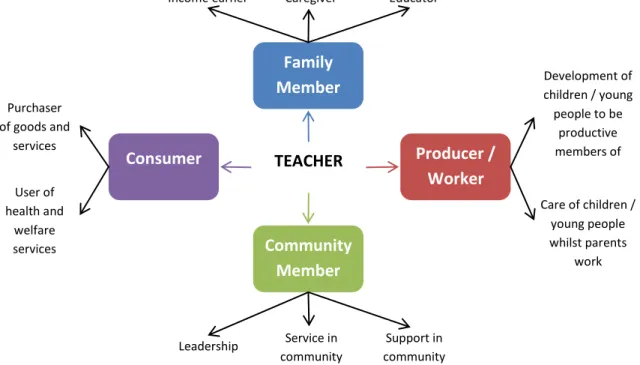
children (UNESCO: 2005) 50 Figure 1.4: The different roles an individual educator plays (adapted from
Barnett & Whiteside 2002: 184) 53 Figure 2.1: Action Research Process 62 Figure 3.1: Overview of Action Research Process 110 Figure 4.1: Overview of Action Research Process 127 Figure 4.2: Symbol which describes participant best (Saretsky, 1994:15) 139 Figure 4.3: A photo of participants moulding stress in session seven 170 Figure 4.4: A photo of participants receiving their REds certificates at the end of REds session nine 180 Figure 5.1: Overview of Action Research Process 182 Figure 5.2: Evaluation design 184 Figure 6.1: Overview of Action Research process 220 Figure 6.2: Step one: Problem identification and data gathering 222 Figure 6.3: Step two: Decision on the intervention and implementation
of REds programme 225 Figure 6.4: Step three: Evaluation of the impact of the intervention 226 Figure 6.5: Step four: Conclusions, refinements and further
Recommendations 227
TABLES
TABLE 0.1: Lesotho‘s HIV and AIDS statistics 3 TABLE 0.2: Lesotho‘s National Policy on Orphans and Vulnerable children 12 TABLE 0.3: Outline of theoretical paradigms 24 TABLE 2.1: Biographic data of research participants 74 TABLE 2.2: Themes identified from narratives of participants 87 TABLE 2.3: Issues pertaining to material levels 103 TABLE 3.1: Summary of personal and professional impacts of HIV 112
and AIDS on educators
TABLE 4.1: REds‘ nine Sessions cover the following topics 134 TABLE 4.2: Summary of REds‘ participants from Five primary schools 136
in Lesotho
TABLE 4.3: HIV and AIDS pandemics‘ impact as experienced by 140 participants
TABLE 4.4: Help to improve REds 143
TABLE 4.5: Help to improve REds 147
TABLE 4.6: Help to improve REds 153
TABLE 4.7: Help to improve REds 158
TABLE 4.8: Summary of Session Five responses 163 TABLE 4.9: Summary of participants‘ responses to Session Six 167 TABLE 4.10: Summary of participants‘ responses on Session Seven 173 TABLE 4.11: Summary of participants‘ responses on Session Eight 176 TABLE 5.1: Analysis of pre and post-test drawings 191 TABLE 5.2: Themes identified from delayed post-test interviews 209
APPENDIX Page
APPENDIX A: A N APPROVAL FORM FROM NMMU RESEACH ETHICS 271
COMMITTEE (HUMAN) TO UNDERTAKE A RESEARCH APPENDIX B APPLICATION FOR PERMISSION FROM PRINCIPALS 272
TO CONDUCT RESEARCH IN THE SCHOOL APPENDIX C: REQUEST FOR PERMISSION FROM PARTICIPANTS TO TAKE PART IN THE RESEARCH 273
APPENDIX D: A LETTER THANKING THE PRINCIPAL FOR ALLOWING ME TO INTERVIEW TEACHERS FROM HER/ HIS SCHOOL 275
APPENDIX E: POEM “ I walk down the street” 276
APPENDIX F: SAMPLE OF A NARRATIVE 277
APPENDIX G: HANDOUT 17 (Please tell us what you think) 278
APPENDIX H: SAMPLE OF INTERVIEW TRANSCRIPTS (1) 279
APPENDIX I : SAMPLE OF INTERVIEWS TRANSCRIPTS (DELAYED POST-TEST INTERVIEWS) 283
1
OVERVIEW OF RESEARCH STUDY
0.1 INTRODUCTION
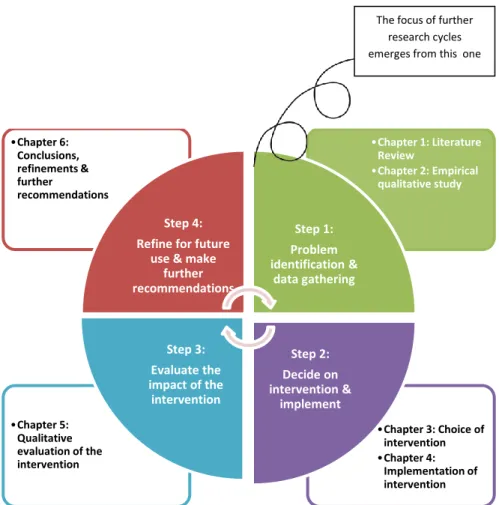
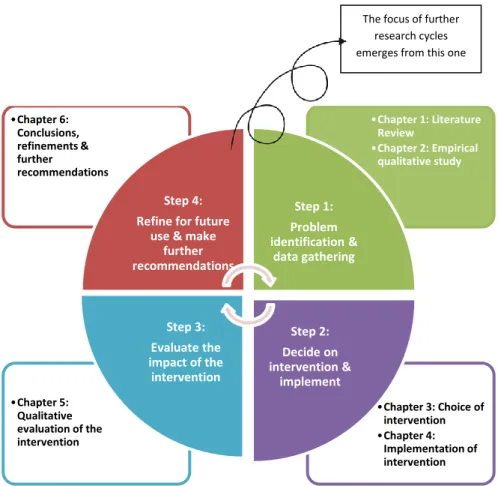
The aim of this research overview is to highlight the process that I followed in this study. Since the research design can be quite complicated to explain and describe, due to the different methodologies used at each step of the action research process, I want to provide a clear overview of the study and explain how I tried to simplify the design to make it easier to follow. The overview contains the background to, and the framework for, this study; the purpose and research questions that guided it; and the research design and methodology, and the key concepts used in the context of the study. It concludes with an outline of the research design, presented in diagram form.
0.2 CONTEXT OF RESEARCH
It is estimated that 33,2 million people globally are living with HIV and AIDS (Joint United Nations Programme on HIV/AIDS [UNAIDS] / World Health Organisation [WHO], 2007). Of this number, 22,5 million people are from Sub-Saharan Africa, and about 25% of them live in Lesotho. Since I am a teacher educator at the Lesotho College of Education (LEC), the locality of this study is Lesotho. Lesotho is a small country, completely surrounded by South Africa. The country is just over 30 000 km2 in size. All the land is over 1 500 m above sea level the only country in the world with this distinction, earning it the name of ―the kingdom in the sky‖. Its population is just over 2 million. It has a fragile environmental base and, except for water and some diamonds, it has few natural resources (Vilakati, 2001;Bureau of Statistics, 2003; Silase, Morrison and Letsoela, 2004).
Historically, Lesotho‘s main export has been labour. It provides South Africa with semi-skilled labour for the mining industry; however, the number of semi-semi-skilled labourers joining the mines from Lesotho has declined over the past 14 years. Despite the
2
country‘s relatively few natural resources, the fragile environmental base and the poverty affecting a majority of households, most citizens have access to a variety of social services, such as portable water, education infrastructure, roads and health services (Vilakati, 2001; Silase et al., 2004).
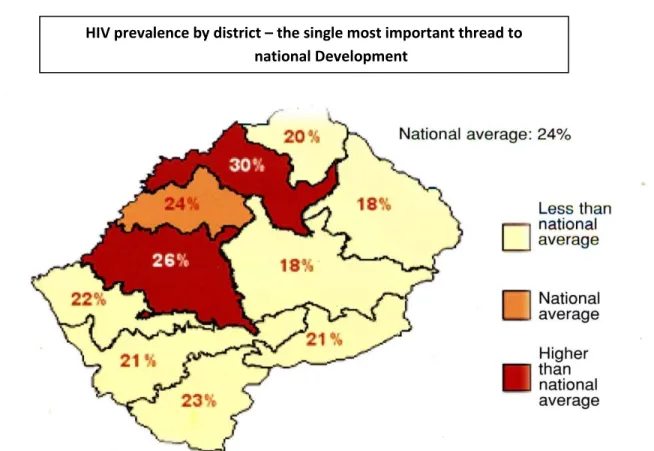
Like many other countries in Sub-Saharan Africa, Lesotho has been seriously affected by the HIV and AIDS pandemic (UNAIDS, 2008). It is one of the six countries in Southern Africa affected by the humanitarian crisis fuelled by poverty, unemployment and the HIV and AIDS pandemic.
Figure 0.1: Lesotho’s HIV prevalence by district
The HIV and AIDS pandemic is considered to be a leading cause of morbidity and mortality in Lesotho (UNAIDS, 2007). According to UNAIDS, (2008), 18 000 people have died of AIDS and more than 20% of the population is living with HIV. Currently, the
HIV prevalence by district – the single most important thread to national Development
3
incidence of HIV and AIDS remains high, estimated to be 23,2% (National AIDS Commission [NAC] and UNAIDS, 2008) among the adult population, making Lesotho the country in the world third hardest hit by the pandemic.
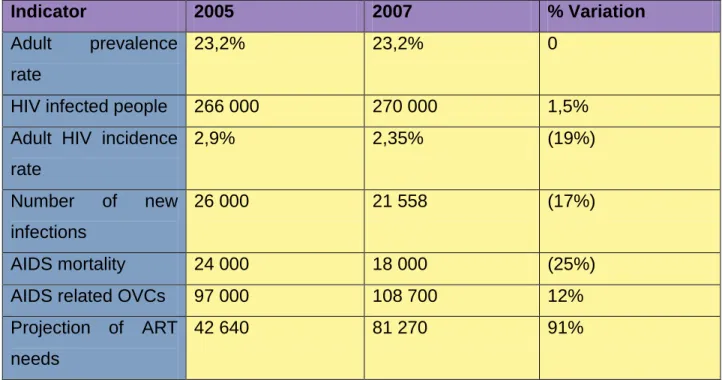
HIV and AIDS affects all sectors of the society, however there are many factors which contribute to Lesotho‘s HIV and AIDS statistics not being accurate. These include misconception about HIV and AIDS and also most people do not want to know their HIV status due to lack of education and the stigma attached to the disease. There is also lack of resources and poor infrastructure. Almost one in four (23.2% [21.9%-24.7%]) adults (15-49 years) were living with HIV in 2005 (UNAIDS, 2007), with infection levels highest in urban areas. Women account for about 57% of people living with HIV, with prevalence among antenatal clinic attendees reaching 38% in the 25-29-years age group in 2005 (Ministry of Health and Social Welfare, Lesotho, 2005 ). Table 0.1 below shows Lesotho‘s HIV and AIDS statistics.
Table 0.1: Lesotho’s HIV and AIDS statistics (UNAIDS, 2008)
Indicator 2005 2007 % Variation
Adult prevalence rate
23,2% 23,2% 0
HIV infected people 266 000 270 000 1,5%
Adult HIV incidence rate 2,9% 2,35% (19%) Number of new infections 26 000 21 558 (17%) AIDS mortality 24 000 18 000 (25%)
AIDS related OVCs 97 000 108 700 12%
Projection of ART needs
4
In 2005, the government of Lesotho realised that the AIDS pandemic was not only a health problem, but also a development issue impacting on a broad spectrum of spheres. In response, the government introduced a new AIDS programme. Through joint efforts with community-based organisations and the United Nations, support to orphans and children living with HIV was improved. Groups that are most at risk of being infected include former miners, migrant labourers, factory workers, the unemployed, female sex workers and young people, especially teenage girls (UNAIDS, 2007).
Fewer than 10% of 18 to 19 year old women are HIV positive; however, by the time they turn 22,30% will be infected, and by age 24, nearly 40% will have HIV, according to UNAIDS (2007). Children are a particularly vulnerable group, because they are infected through mother-to-child transmission, and they are also affected by the loss of a parent to AIDS. According to UNAIDS (2007), 18 000 children under the age of 14 years are infected with HIV. Approximately 97 000 children under the age 18 years have been orphaned by the epidemic. According to Ministry of Health and Social Welfare
Lesotho (2005), 34% of the children attending school have lost one or both parents to AIDS.
Moreover, several factors are driving Lesotho‘s epidemic, including high levels of casual sex, coupled with low levels of condom use. Moreover, an extremely low percentage of the population know their HIV status. Two-thirds of men and one-third of women reported having sex with someone other than their long-term partners in the last 12 months, according to UNAIDS (2007). Less than 50% used condoms. Intergenerational sex is another factor, especially among women aged 14 to 24 years (14.3%) more than two and half times higher than the prevalence rate in men of the same age. Moreover, according to the UNAIDS (2007), in 2007, only 9.2% of men and 14% of women knew their HIV status.
Major risk behaviours that contribute towards rapid and rampant HIV infection in Lesotho include low levels of knowledge, inadequate access to HIV and AIDS
5
information and services, multiple and concurrent sexual relationships, high levels of unprotected sexual practices, which expose individuals to the risk of STIs and HIV, early sexual activity, alcohol and drug abuse, coercive sex, intergenerational sex and contact with contaminated blood. Contributing socio-cultural factors include income inequality, high levels of poverty, which create situations of risk, unemployment, mobility, gender inequalities and gender based violence, cultural, and traditional beliefs, together with dramatic social, attitudinal and cultural changes (Kimaryo, Okpaku, Shongwe and Feeney, 2004; UNAIDS, 2006). Socially, life expectancy has dropped to 44 years for women and 39 for men. The estimated prevalence rate among the adult population is around 25%, although UNAIDS figures (see Table 0l) puts it at 23%. Other estimates have put it at up to 29% (Kimaryo et al., 2004; UNAIDS, 2005; Ministry of Education and Training, Lesotho, n.d.; Kaiser Family Foundation, 2007). Another problem arising from the early deaths of young adults is that elderly people are compelled to care for their grandchildren, at a time in their lives when they could reasonably have expected their children to care for them. Infant mortality has also risen, due to mother-to-child transmission (UNAIDS, 2000; Hosegood, McGrath, Herbst and Timaeus, 2004). The increasing number of HIV and AIDS cases has overburdened health services. Poverty and the unequal distribution of wealth are exacerbated in countries that are hard hit by the HIV and AIDS pandemic, such as Lesotho (Ledward, 1997; United Nations Development Programme [UNDP], 2005).
The HIV and AIDS pandemic is depleting both skilled and unskilled labour in Lesotho. It also erodes traditional coping methods by reducing the capacity of households to produce and purchase food, depleting household assets and exhausting social safety nets. One of the causes of the rapid expansion of the pandemic in Lesotho is the culture of silence around sexuality, and the stigma attached to the pandemic, which results in a broad denial of HIV and AIDS (Kimaryo et al., 2004 ; UNAIDS, 2006).
In many hard-hit countries in Sub-Saharan Africa, people are dying at their most productive ages, because of the HIV and AIDS pandemic (UNAIDS, 2006). Trained people such as educators, farmers, doctors and economists become ill and/or die,
6
leaving serious gaps in the professional workforce, which hampers future social and economic development (World Food Programme [WFP], 2002; Food and Agricultural Organisation of the United Nations [FAO] /WFP, 2004). For example, if a male or a female farmer dies at the age of 30 years, the national economy loses not only his/her labour force, but also his/her production for the next 20 to 30 years. In other words, during all these years he/she is expected to produce not only for himself/herself, but also a surplus for the market (UNDP, 2005; UNAIDS, 2006). It is estimated that the rate of infection of 10-13% among adults in hard-hit countries could result in a reduction of the national income of up to 30% ( UNDP, 2005 ;UNAIDS, 2006).
With the substantial number of adult deaths, the number of children orphaned by the HIV and AIDS pandemic is increasing dramatically. There are 14 million orphans worldwide. In Lesotho only, there are about 180 000 orphans and vulnerable children, of which 110 000 are believed to have been orphaned by the HIV and AIDS pandemic (United Nations Children‘s Fund [UNICEF], 2006). In addition to the growing number of orphans, many non orphaned and/or vulnerable children are affected by the pandemic, rendered vulnerable in terms of not having their needs met (UNAIDS IATT, 2004).
The socio-economic impact of HIV and AIDS is threatening the well-being of orphans and vulnerable children in Lesotho. According to Byrne (2002), these children are struggling to survive. They are at risk of malnutrition, illness, abuse, child labour, sexual exploitation, migration, homelessness, and reduced access to education and health care. These children also face stigma, social isolation and discrimination through association with HIV and AIDS. Psychological Problems such as depression, guilt and fear are also prevalent among these children (UNICEF/UNAIDS/WHO, 2002).
These children often experience long periods of absenteeism from school due to their difficult home circumstances and, as a result, they lose out on classroom instruction. More often than not, they may never go back to school, thereby dropping out completely before completing primary education. As many become heads of households or care for their sick parents and other siblings and, as a result, they may have to leave school and
7
find employment in order to support their families financially (World Bank,2002; Stein, 2003; Kimaryo et al., 2004; Subbarao and Coury, 2004; UNICEF, 2006).
Those who manage to go back to school after their parents‘ deaths suffer profoundly from psychosocial distress due to the impact of having had to care for their terminally ill and ultimately dying parents (Kimaryo et al., 2004). This situation, if not properly attended to, will affect their performance at school. Because of the trauma of seeing their parents die from HIV and AIDS, many lose the motivation to go back to school (Carr-Hill, Katabaro, Katahoire and Oulai, 2002; World Bank, 2002).
Common psychosocial effects of family trauma, such as parental death and the death of a guardian, are anxiety, fear, self-blame and depression in children who witnessed their parents‘ terminal illness (Mallmann, 2003). Upon parental death, loneliness and the loss of parental love and guidance often compound these emotions. If such children are not provided with quality psychosocial support from families, community members and, most of all, educators during the terminal phase of their parents‘ illness, they experience many emotions which are usually suppressed and then, later, manifest in destructive ways (Ebersöhn and Eloff, 2002; Mallmann, 2003).
Some children run away from school for fear of being stigmatised and discriminated against by peers and educators. Children whose parents have died due to an HIV and AIDS related illness are often stigmatised by the community, ignorance about the pandemic leads to a stigma being attached to HIV and AIDS. It must be pointed out that even schools and educators may stigmatise children because their parents have died of an HIV and AIDS related illness, albeit unwittingly (UNICEF, 2003; Wood and Webb, 2008). A common misconception is that these children are HIV positive themselves. They are humiliated by educators and their peers, so they may feel very uncomfortable at school and want to drop out (Hepburn, 2001; UNICEF, 2002).
Other factors also contribute to psychological distress. For example, when parents die, children may not be able to access any guidance and counseling, and special care and
8
support from the school, due in part to, the inability of school educators to provide care through quality psychosocial support (International HIV/AIDS Alliance, 2003). Educators therefore need to be empowered and capacitated in understanding children who are nursing a debilitating parent or parents. They also need to be empowered and capacitated in assisting those who have experienced parental death due to HIV and AIDS (Mallmann, 2003). Surviving relatives sometimes force these children into harmful child labour. Some children are subjected to sexual exploitation by the very same relatives (Brakash, 2005).
Economic hardship is a key factor in influencing the school attendance of orphans and vulnerable children. For example, when parents become sick with an HIV and AIDS related illness or AIDS, the household income decreases and health care expenses increase, forcing the children to drop out of school since they can no longer afford fees or uniforms (Ebersöhn and Elloff, 2002). If these children are able to attend school, they are confronted with additional finances that may be required by the school, despite the Free Primary Education (FPE) initiated by the Lesotho government. Examples of these additional expenses may include transport fares and fees for recreational activities. In many families, any savings are used for medication and treatments, traditional ceremonies and funerals (Hunter and Williamson, 2000; World Bank, 2002).
The abject poverty that these children are subjected to also leads to malnutrition. According to Hunter and Williamson (2000) and Stein (2003), children are at a higher risk of infection by opportunistic infections when they are malnourished. Lack of proper nutrition also affects their inability to concentrate in class and to learn, meaning that even though they may be attending school, little education takes place (World Bank, 2002; Stein, 2003; Human Rights Watch, 2005).
According to Kimaryo et al., (2004), property grabbing is another feature that manifests itself among communities in Lesotho. Many orphans who are forced to move from their homes to live with elder relatives, usually uncles, lose their right to inheritance. The property and other assets that were left to them by their parents are taken from them by
9
their caretakers or guardians, and never returned. These include money, homes, fields for food production, cars, furniture and clothes. It is also a common practice in Lesotho for relatives to begin to misappropriate the affected children‘s inheritance from the time when their parents fall ill, that is, even before they die and are buried. These children are then left destitute and in abject poverty (Ministry of Health and Social Welfare, Lesotho, 2001).
The situation is disturbing. In order to address the problems encountered by orphans and vulnerable children in Lesotho, the Government of Lesotho (GoL) has ratified the UN Convention on the Rights of the Child (1989). It has also committed itself to the outcomes of the UN General Assembly Special Session (UNGASS) on HIV and AIDS (May, 2002) and the UNGASS Convention on Children (2002).
Lesotho is a signatory to a number of international agreements dealing with education and the protection of the rights of children. Among these is the Convention on the Rights of the Child (United Nations, 1989); the Salamanca agreement (UNESCO, 1994); the Dakar Framework for Action (UNESCO [United Nations Educational, Scientific and Cultural Organisation]/ Ministry of Education and Science, Spain, 1994); the Dakar Framework for Action (UNESCO/EFA [Education For All Forum],2000) and Standard Rules on the Equality of Opportunities for Persons with Disabilities (UN, 1993), to mention but a few. All these agreements state that education is a fundamental human right for all children, which should be accessed without discrimination. Orphans and vulnerable children are, by definition, included in these educational commitments (UNESCO Inter Agency Task Team on Education, 2003). Specifically, the conventions relating to the pandemic and its effects on children are the U.N. General Assembly Special Session (UNGASS) on HIV and AIDS (UNGASS, 2001) and UNGASS on children (UNGASS, 2002).
Due to the HIV and AIDS pandemic in Lesotho, primary school level enrolment, and indeed at all levels of the education system, is decreasing, despite the signed commitment of the Lesotho government towards the achievement of Education For All
10
(EFA) goals by 2015 and the Millennium Development Goals (MDGs). In Lesotho, introduction of free primary education (FPE) in 2000 saw 400 000 enroll for Primary 1, but in their last year in primary education, seven years later (Primary 7) only about 50 000 candidates sat for Primary School Leaving Examination (PSLE) (Ministry of Education and Training, Lesotho, n.d.).
According to UNESCO (2008), orphans and vulnerable children in Lesotho‘s primary schools drop out because their psychosocial needs are not catered for in schools. This would imply that educators have to be trained both at pre-service and in-service levels to address the accumulative psychological, social and economic effects of HIV and AIDS. Although educators may not be able to address the economic factors that contribute to the violation of orphans and vulnerable children‘s rights, they have a key role to play in addressing their cognitive, emotional, social and psychological needs. There is a dire need for educators to be capacitated with the appropriate knowledge and skills that will facilitate and enable the desired attitudes, values and willingness to deal with, and offer, care and support to orphans and vulnerable children in ways that make them feel as accepted as their non-orphaned counterparts (De Monchy, 2000; Save the children, UK, 1991; World Bank, 2002).
0.3 RATIONAL FOR RESEARCH
The above situation poses a challenge to the government of Lesotho‘s Ministry of Education and Training (MOET) and, specifically, to the Lesotho College of Education (LCE), a teacher training institution in Lesotho. It is a well-known fact that the core role of teachers is educating children (UNESCO, 2008). However, with the advent of the HIV and AIDS pandemic in Lesotho and, indeed, in many Sub-Saharan African countries, this role has been increasingly complicated by factors, such as the need for counseling and emotional support educators have to give to, specifically, orphans and vulnerable children in their schools (Hall, 2004; Hoadley, 2007; Le Grange, 2008; UNESCO, 2008).
11
HIV and AIDS are caused by a combination of factors, so there is a need for a multidisciplinary approach to fight the disease (Commonwealth Secretariat, 2002). Educators play a key role in the development of skills and clarification of attitudes and educating children about the disease. If they are properly trained, they can help mitigate HIV infection among young people. Teachers need to be trained in recognising the behavioural problems associated with unresolved grief. A teacher‘s attitude can do much to promote the acceptance, rejection and/or stigmatisation of an orphan in a classroom (Mallmann, 2003).
The HIV and AIDS pandemic has increased the number of orphans and vulnerable children in Lesotho (Ministry of Education and Training, Lesotho, n.d.; UNICEF, 2007). There has been a corresponding increase in the number of children who may be regarded as having special educational needs, since orphans are especially vulnerable to emotional, social and behavioral problems that are barriers to learning (Ministry of Education and Training, Lesotho, n.d.).
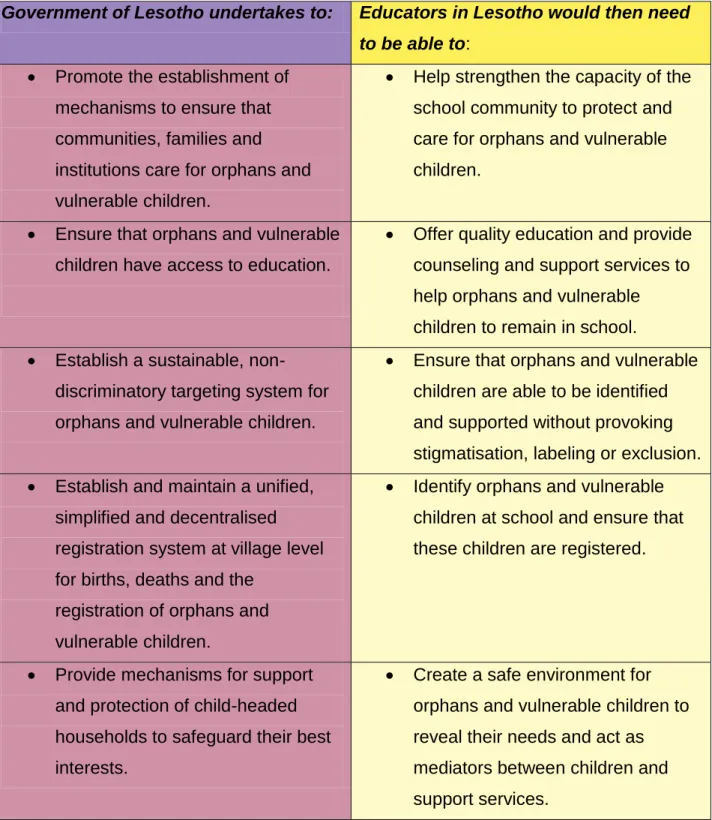
Because of the soaring number of orphans and vulnerable children in Lesotho, the government of Lesotho, through the Ministry of Health and Social Welfare and the Ministry of Education and Training, has adopted policies to ensure that orphans and vulnerable children receive care and support and access to education. However, if such policies are to be implemented, educators need to be empowered and equipped to implement same. The following table outlines the undertakings of the Government of Lesotho to provide structures for support and care to orphans and vulnerable children, and what these undertakings would require from educators.
12
Table 02: Lesotho’s National Policy on Orphans and Vulnerable Children (UNICEF, 2006)
Government of Lesotho undertakes to: Educators in Lesotho would then need to be able to:
Promote the establishment of mechanisms to ensure that communities, families and institutions care for orphans and vulnerable children.
Help strengthen the capacity of the school community to protect and care for orphans and vulnerable children.
Ensure that orphans and vulnerable children have access to education.
Offer quality education and provide counseling and support services to help orphans and vulnerable children to remain in school. Establish a sustainable,
non-discriminatory targeting system for orphans and vulnerable children.
Ensure that orphans and vulnerable children are able to be identified and supported without provoking stigmatisation, labeling or exclusion. Establish and maintain a unified,
simplified and decentralised registration system at village level for births, deaths and the
registration of orphans and vulnerable children.
Identify orphans and vulnerable children at school and ensure that these children are registered.
Provide mechanisms for support and protection of child-headed households to safeguard their best interests.
Create a safe environment for orphans and vulnerable children to reveal their needs and act as mediators between children and support services.
13
The care, support and protection of orphans and vulnerable children mandate all stakeholders to participate actively in the national response towards the achievement of Basotho1 communities that are well informed about HIV and AIDS. School educators are regarded as key persons in addressing issues affecting children affected by HIV and AIDS. This means that educators in the primary schools of Lesotho would consequently need to be equipped in the following content areas in order to be able to respond effectively to the needs of children in their classrooms and to implement the policies formulated by the Ministry of Health and Social Welfare:
Psychosocial support for attaining the needs of orphans and vulnerable children and basic counseling skills.
1
People from Lesotho
Develop guidelines and minimum standards for care of orphans and vulnerable children to ensure
protection of their inherited property until they attain the age of maturity.
Educate children about their rights to inheritance and property.
Develop guidelines and minimum standards of care that would ensure that orphans and vulnerable
children are not exploited or abused.
Protect orphans and vulnerable children against any form of exploitation and abuse.
Promote and strengthen
programmes to safeguard the food security of orphans and vulnerable children and their guardians.
Make sure that orphans and
vulnerable children have access to basic needs such as food, clothing, shelter and basic health services. Promote skills training and
livelihood opportunities for orphans and vulnerable children (Ministry of Health and Social Welfare, 2005).
Educate children about HIV and AIDS and life skills and provide access to skills training (Ministry of Education and Training, 2006/7; UNICEF, 2006).
14 Experiential learning strategies.
The rights and responsibilities of orphans and vulnerable children Effective communication with orphans and vulnerable children. Recognition of and dealing with child abuse.
Facilitation of dialogue between parents and children about illness, death, and future planning and consultation.
Children‘s response to death during different stages of development. Management of stress in bereaved children.
Managing educators‘ stress.
A holistic approach to assist children living with AIDS.
Involving communities to address the issues associated with orphans and vulnerable children (International Institute for Educational Planning, 2003; Mallmann, 2003).
The impact of the HIV and AIDS pandemic on education calls for a different approach to teaching as well as a new set of teaching competencies (Poole & Lamb, 2001; Wood, 2008). Since the training of educators at the Lesotho College of Education to date has not really addressed these new demands, it cannot be assumed that most educators in Lesotho are able to offer care and support to orphans and vulnerable children and, because they lack such skills, this makes it difficult for them to handle these children in schools (UNESCO, 2008). It also cannot simply be assumed that educators, who are primarily trained to teach subject content such as Science or Mathematics, History or Economic Sciences, will be able to offer care and support to traumatised children.
Apart from content knowledge and the acquisition of the skills needed to offer care and support, it is also important for educators to have a sound understanding and self-knowledge that will allow them to explore, understand and clarify their values, attitudes, inhibitions, prejudices, anxieties and fears around HIV and AIDS and related issues.This will allow them to better function on both intrapersonal and interpersonal levels. In
15
this way, educators will also be helped to realise their important task as role models for their learners in the context of HIV and AIDS (UNAIDS, 2002). The whole issue of helping educators to deal with issues of HIV and AIDS on a personal level, before asking them to deliver the curriculum to their learners, is increasingly seen to be critical in ensuring the success of any HIV prevention education and in providing care and support (Wood, 2008).
Educators need to be properly prepared for their role as educators in a world affected by HIV and AIDS. Educators themselves have been dramatically affected by HIV and AIDS, which have created major additional problems and challenges in the classroom for them. They require support and skills to promote participatory, gender sensitive and right-based approaches to HIV and AIDS affected and/or infected children. Educators must prepare all their learners, including orphans and vulnerable children, for a life in which they will be protected from contracting HIV and a life that will motivate them to live in a manner that will reduce their risk of infection; help them to contribute to the care, support and treatment of infected learners and play some part in mitigating the damaging effects of sickness and death as a result of HIV and AIDS (Fox, 2001). This kind of training would therefore need to ensure that both pre- service and in-service educators at the Lesotho College of Education (LCE) engage with the pandemic to the level that initiates the educators‘ transformation into committed, responsible and effective agents of positive social change (Fox, 2001).
From my experience as a teacher educator, I am aware that at the LCE, pre-service and in-service educators are not trained to offer care and support to orphans and vulnerable children. However, in line with the policy of Education For All and the Convention on the Rights of the Child (UN, 1989), educators should help these children to become productive members of society by providing them with quality education, taking care of them and providing them with a safe and healthy environment..
16
Currently, educators are equipped only with basic knowledge about the prevention of HIV and AIDS, although they are able to pass this on to their learners, prevention education alone is not enough (Coombe, 2000; Coombe, 2003; Hall, et al., 2005; Bennell, 2006; Bhana, Morrell, Epstein and Moletsane, 2006; Schulze and Steyn, 2007; Theron, 2007; Wood, 2008). Educators should be trained to be able to offer both prevention education and care and support. Educators may require guidance on dealing with issues such as confidentiality, identifying and making better use of resources outside educational institutions, including medical, psychological, social and other services. They may also require training in promoting access to counseling, care and prevention in supporting colleagues and learners and in helping schools to deliver the curriculum that the learners need.
Therefore, there is an urgent need for the LCE to expand and improve the current teacher training initiatives to enable future and current educators to not only help meet the basic needs of orphans and vulnerable children, but to also be able to offer psychosocial support and basic counseling services (UNESCO, 2008). By so doing, educators will be able to play a crucial role in improving the prospects of these children, because orphans and vulnerable children need to be assisted holistically (Vandemoortele & Delamonica, 2002; Mallmann, 2003).
Like all children, orphans and vulnerable children have the right to learn and develop in a structured and supportive school environment. Education is vitally important for them, as it is an effective way of reducing both the impact and the spread of the HIV and AIDS pandemic (Vandemoortele & Delamonica, 2002; World Bank, 2002; De Walque, 2004). A good school with a competent teacher can develop the self-esteem of orphans and vulnerable children and also facilitate better job opportunities and economic independence (Save the Children UK, 1991).
17
However, before any training initiatives or curricula can be developed, it will be necessary to first ascertain the perceptions and needs in relation to orphans and vulnerable children of educators who are currently teaching. It is important to recognise educators as key partners in the care and support of orphans and vulnerable children, because these educators experience major challenges in the classroom emanating from the needs of this specific group of children. Educators need to be part of the challenges identified and the solution thereto, since they are key role players. Only when these problems have been identified, can any effective interventions be developed.
As a teacher educator at the LCE, I chose to carry out research in this field as this will equip me with the knowledge and skills to make recommendations for practical training in order to better ensure that future and current educators can respond to the needs of orphans and vulnerable children.
0.4 PROBLEM STATEMENT
It is important for the LCE to train both in-service and pre-service educators on ways of better coping with the challenges that result from having orphans and vulnerable children in their classrooms. This would necessarily entail the creation of a physical, social and emotional climate that will enhance quality teaching and learning. Because educators experience challenges and problems in the classroom emanating from the needs of orphans and vulnerable children, it is imperative for the LCE to facilitate the development of skills, knowledge and attitudes to address these challenges facing these educators in providing quality education to learners.
However, educators graduating from the LCE do not possess sufficient and targeted training to offer adequate care and support to orphans and vulnerable children. This is despite the fact that it is stated in the College calendar that the College‘s mission is to train and produce educators who are competent for the school system of Lesotho and
18
who are also able to offer necessary services in the community (Lesotho College of Education [LCE] Calendar, 2008:6).
0.5 RESEARCH QUESTIONS
Based on the problem statement above, the following research questions have been formulated to guide the study:
What are the experiences, perceptions and needs of educators in Lesotho concerning the teaching of orphans and vulnerable children?
How can Lesotho educators be helped to better cope with the challenges that result from having orphans and vulnerable children in the classroom?
0.6 PURPOSE OF RESEARCH
This study aims at determining the lived experiences of educators who are dealing with orphans and vulnerable children in their classrooms. Through the identification of educators‘ feelings, attitudes and experiences, the needs they have in this regard can be identified and addressed by the provision of practical guidelines and/or the implementation of an intervention.
The primary purpose of this research is, therefore, to find ways of enabling educators in Lesotho to better offer care and support to orphans and vulnerable children. In order to do this, the following objectives have been formulated.
19 0.7 OBJECTIVES OF RESEARCH
The specific objectives formulated to realise the aims of this research are:
To investigate the lived experiences and needs of educators as they attempt to offer care and support to orphans and vulnerable children.
To use the findings to develop guidelines and/or interventions that will help educators to better cope with the challenges that result from having orphans and vulnerable children in their classrooms.
To pilot these guidelines/intervention with a group of educators in order to evaluate and refine them.
In summary, this research will assess Lesotho primary school educators‘ perceptions on the teaching of orphans and vulnerable children. The findings will be used to develop guidelines and/or interventions that will enable educators to better cope with the challenges that result from having the children in question. The guidelines, and/or interventions will be piloted, evaluated and refined with a group of educators in selected schools in Lesotho.
0.8 CLARIFICATION OF CONCEPTS
20 0.8.1 HIV
HIV stands for human immunodeficiency virus. This is the virus that causes acquired immunodeficiency syndrome (AIDS). HIV is different from most other viruses, because it attacks the immune system. The immune system gives one‘s body the ability to fight infections. HIV finds and destroys a type of white blood cells (T cells or CD4 cells) that the immune system must have to fight disease. People with HIV are said to have AIDS when they develop certain infections, such as cancer or when their CD 4 count is less than 200. Having HIV does not always mean that one has AIDS. It can take many years for a person with the virus to develop AIDS. HIV cannot be cured. Although people with the virus are likely to die from an AIDS-related illness, there are ways to help people stay healthy and to live longer (Du Preez, 2004; Stine, 2004; Van Dyk, 2005; Soul City: Institute for Health and Development Communication, 2005).
0.8.2 AIDS
AIDS stands for acquired immunodeficiency syndrome. Acquired means that the disease is not hereditary, but that it develops after birth from contact with a disease-causing agent (in this case, HIV). Immunodeficiency means that the disease is characterised by a weakening of the immune system. Diseases, known as opportunistic infections, then attack because the breakdown of the immune system leaves the body vulnerable. Syndrome refers to a group of symptoms that collectively indicate or characterise a disease. AIDS is the final stage of HIV infection. When the CD4 count drops to a low level, a person‘s ability to fight infection is lost, making the person susceptible to other life threatening infections. In addition, several conditions occur in people with HIV infection with this degree of immune system failure, AIDS defining illnesses. AIDS is diagnosed by a physician using specific clinical or laboratory standards (Ross & Deverell, 2004; Soul City: Institute for Health and Development Communication, 2005; Stedman‘s Medical Dictionary, 2005; Van Dyk, 2005).
21 0.8.3 Care and support
According to the Concise Oxford English Dictionary (2000), care is the provision of what is necessary for health, while support means to give assistance or some encouragement. This is a broad term referring to the steps taken to promote and sustain a person‘s wellbeing through medical, psychosocial, spiritual and other means.
In the context of HIV and AIDS, orphans and vulnerable children need care and support. They need nurturing, access to good accommodation, diet, clean water and medical treatment. These children also need love from family and community members, moral support, acceptance, respect, help from friends, families and the community, as well as supportive laws to protect them against discrimination and stigmatisation. The care that they get from their caregivers helps them develop to their full potential. Care also enables these children to develop a sense of self-worth and belonging, which is essential for them to learn and develop life skills, to participate in society and to have faith for the future (Subbarao, Mattimore and Plangemann, 2001).
Orphans and vulnerable children also need psychosocial support, which can be defined as an ongoing process of meeting their physical, emotional, social and spiritual needs. All of these needs are considered to be essential elements for meaningful and positive human development. Psychosocial support goes beyond the provision of physical or material needs (Richter, 2006). According to Mallmann (2003), such support is essential for orphans and vulnerable children, because it helps them to become resilient. It also helps orphans and vulnerable children to deal with difficult situations and the challenges they are faced with.
22 0.8.4 Orphan
The term orphan has different meanings in different contexts. According to UNICEF (2000), an orphan is a child who is under the age of eighteen, and who has lost at least one parent. UNICEF gives examples of different types of orphans, namely:
Paternal orphans: children under the age of eighteen whose fathers have died.
Double orphans: children under the age of eighteen who have lost both parents (UNAIDS/UNICEF/USAID, 2004).
On the other hand, Kimaryo, et al. (2004) state that in Lesotho, and in other parts of Africa, an orphan does not relate to age; anyone who has lost a parent is an orphan. In this research, orphan will be understood to mean a child under the age of eighteen years who has lost at least one parent (UNAIDS/UNICEF/USAID, 2004).
0.8.5 Vulnerable children
According to Sabbarao, et al. (2001) and Hepburn (2001), vulnerable children are children who belong to high-risk groups and who lack access to basic social facilities. These children‘s survival, well-being and development are threatened. Sabbarao, et al. (2001) also state that the vulnerability may be caused by specific sets of factors or circumstances in different countries. The main source is HIV and AIDS, as well as conflict. Vulnerable children include street children, children exposed to strenuous labour, children engaged in sex trafficking and commercial sex, and children affected by poverty, war, domestic violence and alcohol abuse by parents.
UNICEF/UNAIDS/USAID (2004) do not use acronyms such as ―OVC‖ for orphans and vulnerable children. The argument is that they are commonly used to identify particular children at community level and that, since children orphaned by HIV and AIDS report that they experience stigma and discrimination on many levels and in all aspects of their
23
lives, they prefer to be called just ―children‖. However, the acronym will be used in this study, because it is a commonly accepted terms (UNICEF/UNAIDS/USAID, 2004) to refer to children in school who have been rendered vulnerable as a direct or indirect consequence of HIV and AIDS.
0.9 RESEARCH DESIGN
A research design is a plan or a strategy of how a researcher intends to conduct research in order to address the research question, essentially a plan aimed at enabling answers to be obtained from research questions (Burns 2000; Babbie and Mouton, 2001). Other definitions in the literature support the notion (Creswell, 1998; Cohen, Manion and Morrison, 2000) that a research design is a procedure for collecting, analysing and reporting on research.
According to Newman (2006), three main influential paradigms underpin the research design, namely the positivist approach, the interpretive approach, and the critical approach. In each one of these theories, it is important to determine the ontological, the epistemological and the methodological bases. Ontology specifies form and nature of reality (Guba & Lincoln, 1994); epistemology refers to how the creation of knowledge is theorised; methodology specifies how the researchers go about practically studying whatever they believe can be known (Babbie and Mouton, 2001). Table 3 below outlines the basic differences between these paradigms.
24
Table 0.3: Outline of theoretical paradigms
Theoretical paradigm
Ontology Epistemology Methodology
Positivist A true reality exists, governed by cause/effect laws that can be
discovered and
generalised. People react in predictable ways.
Knowledge can be created and described using verified hypotheses that can then be taken to be laws to predict behavior. Empirical, structured designs that can be replicated. Quantitative instruments used to measure. Research is taken to be value-free; research is controlled by researcher. Interpretivist Reality is subjective,
determined by those involved in various social systems in interaction with each other. People‘s reactions depend on how they make meaning of their worlds.
Knowledge is socially constructed, therefore it is dynamic and changes according to how people make meaning of their situations; it is fluid and accurate. Qualitative methodologies to try to understand the ―insider‖ view; values are acknowledged; subjectivity of interpretation allowed for, researcher is co-creator of meaning. Critical Governed by structures
that can be questioned, reconstructed through intentional critical Knowledge is constructed by questioning existing power relationships Participatory methodologies; values are explicit; researcher is
25 Theoretical
paradigm
Ontology Epistemology Methodology
reflection. People are agents of their own change.
within social, economic, political structures in order to distribute that power more equitably.
facilitator to
encourage dialogue and raise critical consciousness.
(Guba and Lincoln, 1994; Schwandt, 1994; Newman, 1997;Henning, Van Rensburg and Smit, 2004)
Babbie and Mouton (2001) hold that a paradigm is a model or framework for observation and understanding, which shapes both what we see and how we understand it. A paradigm may be viewed as a set of basic beliefs or worldview that defines how one views the world and one‘s relationship with it (Guba and Lincoln, 1994). It follows, therefore, that in order for one to carry out research one has to place it within a paradigm, as it is the paradigm that will largely determine the research design chosen and the methodology used in gathering and analysing research data.
The paradigm that will be used to guide this study is based on critical theory. According to Babbie and Mouton (2001), critical theory focuses on a critical understanding of the situation or practice being researched in order to plan for transformative action. Since it provides enlightenment, it is said to be emancipatory or empowering. This is in line my ontological and epistemological beliefs (see Table 3), as I believe that educators have to find a way to free themselves from the currently oppressive situation in which they are teaching, created, to a large extent, by the impact of HIV and AIDS on education.
The design chosen for this study is that of action research, since its basic principles are in line with the critical paradigm. The critical research paradigm aims not only at explaining and understanding society; but also at changing it for the better. That is, it
26
focuses on a critical understanding of the situation or practice being researched, in order to plan for transformative action (Babbie and Mouton, 2001).
A participatory action research design will be followed to help the educators identify their concerns and needs in respect of the care and support of orphans and vulnerable children in order to take action to safeguard their right to a quality education. Participatory action research is a research design in which researchers and participants are equally involved in the research process and take equal responsibility for the outcome of the research (Mouton, 2001; Creswell, 2005). The focus is on the involvement of all roleplayers, including participatory involvement, action and change, encounter and dialectic dialogue (Schurink,1998; Kemmis and McTaggart, 2000; Strydom, 2005; Wadsworth, 2005). Hence, the research and the solutions to concrete problems will occur simultaneously. It is the type of research which is designed to address specific issues identified by local people and the results are directly applied to the problem at hand (Holman, 1987; Pottier, 1993; Schurink, 1998; Babbie and Mouton, 2001 ).
Research design can be either qualitative or quantitative in approach. According to Burns (2000), qualitative research is an enquiry approach useful for exploring and understanding a central phenomenon. Creswell (2003) contends that qualitative research is a field of study that cross-cuts through disciplines and subject maters. It is naturalistic, in that its goal is to understand behavior in a natural setting. Cohen et al, (2000) state that the qualitative research approach uses concepts and clarifications so as to attempt to interpret human behaviours in a way that reflects not only the analyst‘s view, but also the views of the people whose behavior is being described. The emphasis is on verbal description, as opposed to numerical description. Straus and Corbin (1990) describe qualitative research as a kind of research in which findings are not arrived at by means of statistical procedures. They add that qualitative research is characterised as a methodology that enables in-depth and detailed analysis within the context of a limited number of participants.
27
In this research, the qualitative approach will be followed, because I want to focus on an understanding of the situation or practice being researched from the perspective of those experiencing the phenomenon, I also want to understand and represent the educators‘ perceptions, experiences and needs concerning the teaching of orphans and vulnerable children, within the context of which these educators find themselves
(Denzin; and Lincoln, 2000; Hammersley, 2000; Creswell, 2005). I have decided on a qualitative approach because it has its roots in social sciences and is more concerned with understanding why people behave as they do, and with assessing their knowledge, attitudes, beliefs and behavior, which is commensurate with the first objective of my research.
Another reason why I opted for the qualitative approach is that it allows the subject being studied to give much richer answers to questions put to them by the researcher, and may also give valuable insights that may have been missed by any other methods (Cohen et al, 2000).
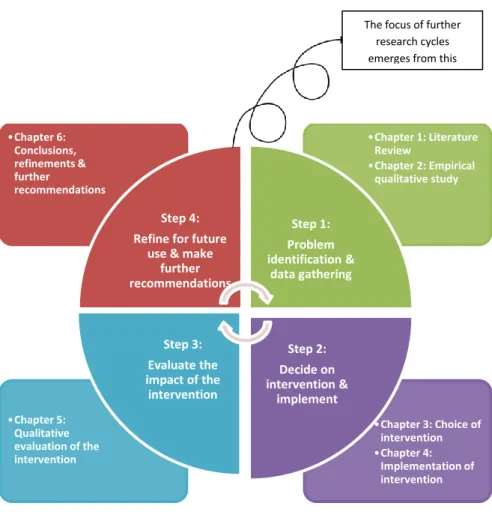
Action research is a cyclical process of reflecting, planning, acting and observing (Kemmis and McTaggart, 1988). According to Babbie and Mouton (2001), it proceeds through repeated cycles in which researchers and the participants start with the identification of the major issues, concerns and problems, initiate research, originate action, learn about this action and then proceed to a new research action cycle. The cyclical process is generally not as neat and final as other procedures, because its stages overlap and mutual plans may become obsolete in the light of lessons from experience. It is also likely to be more fluid, open and responsive than other procedures (Denzin and Lincoln, 2000). In this study, therefore, the participating educators will be involved in the problem identification in Step 2 and will actively engage in implementing and evaluating the intervention in Step 3. They will also be facilitated to suggest ways in which they could alter their practice in the future. Figure 0.2 outlines the process followed in the action research design.