L, o- W d
S ta tistica l and M achine
L earning M od els to P red ict
P rogram m in g P erform ance
by
Susan B ergin , B S c (M g m t), M .C o m p .S ci.
IP
N UI M AY N OO T H
O l l s c o i l n a h É i r e a n n M à N u a d
Dissertation submitted in partial fulfillment of the requirements for candidate for the degree of
D o c to r o f P h ilo so p h y
Department of Computer Science,
National University of Ireland, Maynooth, Ireland.
Supervisor: Professor Ronan Reilly May 2006
C on ten ts
1 In tro d u ctio n 1
1.1 B a c k g ro u n d ... 1
1.2 Goals and C o n trib u tio n s... 2
1.3 Thesis Overview... 6
1.4 M otivation... 7
1.5 P u b licatio n s... 9
2 L iteratu re R e v iew 12 2.1 Previous Academic and Computing Experience ... 12
2.1.1 Previous Academic Experience... 13
2.1.2 Prior Computing Experience... 14
2.2 Cognitive F a c to r s ... 15
2.3 Psychological F a c to rs ... 17
2.4 Miscellaneous F acto rs... 20
2.5 Self-Regulated L e a r n in g ... 25
2.6 Summary ... 28
3 M eth o d o lo g y : S u b jects, In stru m en ts, In stitu tio n s and S tu d ies 29 3.1 Pilot S t u d y ... 29
3.1.1 In stru m e n ts ... 31 3.1.2 P a rtic ip a n ts ... 31 3.1.3 Initial Analysis ... 32 3.1.4 Subsequent A n a ly s is ... 39 3.1.5 D iscussion... 41 3.2 Main s t u d y ... 43 3.2.1 P a rtic ip a n ts ... 44 3.2.2 In s tru m e n ts ... 44 3.2.3 Data Pre-Processing 48 3.3 Summary ... 51
4 M ach ine L earning T echn iqu es 53 4.1 Nearest Neighbour L e a rn in g ... 53
4.1.1 Evaluation of Nearest Neighbour L e a rn in g ... 54
4.2 Decision Tree L e a rn in g ... 56
4.2.1 Evaluation of Decision Tree L e a rn in g ... 58
4.3 Naive B a y e s ... 59
4.3.1 Evaluation of Naïve B a y e s ... 60
4.4 Logistic R eg ressio n ... 61
4.4.1 Evaluation of Logistic R e g re ssio n ... 62
4.5 Support Vector M achines... 63
4.5.1 Linear C la ssific a tio n ... 63
4.5.2 Soft Margins ... 65
4.5.3 Non-Linear Classification... 66
4.5.4 Evaluation of SVMs ... 67
4.6 Backpropagation N etw orks... 68
4.6.1 Evaluation of Backpropagation n e tw o rk s ... 70
5 R esu lts: E ffectiven ess o f th e P red icto rs 75 5.1 P ro c e d u re ... 75 5.1.1 Dimensionality R e d u c tio n ... 76 5.1.2 Measurement Techniques... 77 5.1.3 Factor S election... 78 5.2 R e su lts... 80
5.3 Improving the Results ... 81
5.3.1 Ensembles of Multiple M o d e ls ... 82 5.3.2 Model Improvement ... 83 5.4 Summary ... 84 6 D iscu ssio n 87 6.1 Predictor S e t s ... 87 6.1.1 Predictor Set 1 ... 88 6.1.2 Predictor Set 2 ... 89 6.1.3 Predictor Set 3 ... 89
6.2 Factors Not Used In Predictor S e t s ... 90
6.2.1 Background Q uestionnaire... 90
6.2.2 Cantwell-Wilson and Shrock Comfort-Level m easure... 95
6.2.3 Computer Programming Self-Efficacy S cale... 95
6.2.4 Motivated Strategies for Learning Q uestionnaire... 96
6.2.5 Summary of Factors Not In Predictor S e t s ... 96
6.3 Performance of the Machine Learning A lg o rith m s ... 97
6.4 Using Classification Probabilities ...100
6.5 E p ilo g u e...103
6.6 Summary ... 104
7 C on clu sion and F uture D irectio n s 107
7.1 C o n trib u tio n s...107
7.1.1 Longitudinal Research on Programming Predictors ... 107
7.1.2 Instrument D evelopm ent... 109
7.1.3 Initial Investigation of the role of Self-Regulated Learning . 109 7.1.4 Model Development...109
7.1.5 Recommended Algorithm ... . 110
7.2 Future D ire c tio n s... I l l 7.2.1 Further Research on Programming P r e d ic to r s ...I l l 7.2.2 Assessing Mathematical A b ility ... 112
7.2.3 Developing suitable in te rv e n tio n s ...112
7.2.4 Non-Completing S t u d e n t s ... 112
7.2.5 Targeting Secondary School S tu d e n ts ...113
7.2.6 Application of the Approach to Other Computer Science T o p ic s ... 113
7.2.7 Optimising Results of Machine Learning A lgorithm s... 113
A B ack grou n d Su rvey 115 B C an tw ell-W ilson and Shrock C om fort-L evel m ea su re 119 C Self-efficacy for C o m p u ter P ro g ra m m in g 121 D P ro g ra m m in g S elf-E steem Scale 123 E M o tiv a ted S tra teg ies for L earning Q u estion n aire 125 F Sam ple C o g n itiv e T est Q u estio n s 133 F .l Number Sequencing A b i l i t y ... 133
F.3 Arithmetic Reasoning A b i l i t y ...134 F.4 Procedural Ability ... 134
F.5 Problem Translation S k ills ... 135
G C on sen t Form 136
H S tu d en t In form ation S h eet 138
List o f F igures
4.1 Nearest N e ig h b o u r... 55
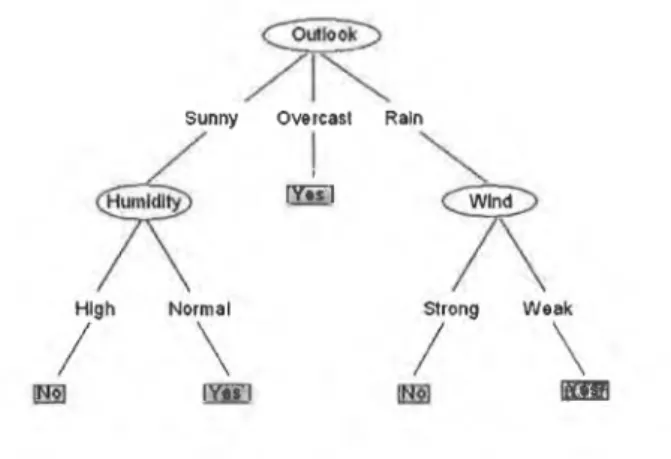
4.2 Sample Decision T r e e ... 56
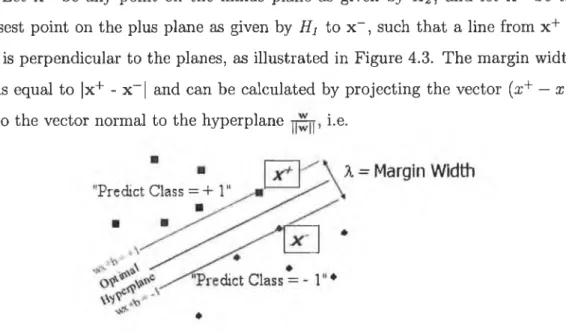
4.3 SVM: Hyperplane and Largest M a r g i n ... 64
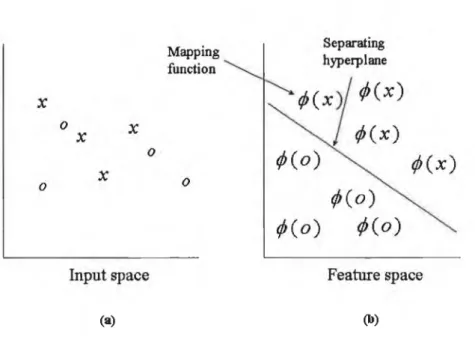
4.4 SVM: Feature S p a c e ... 67
4.5 A Backpropagation N e tw o rk ... 69
4.6 PCA e x a m p le ... 73
List o f Tables
2.1 Previous research on programming predictors ... 25
3.1 Significant fa c to rs ... 36
3.2 Dichotomous values for personal factors . ... 37
3.3 Logistic regression models based on pilot study d a t a ... 42
3.4 Participating I n s titu te s ... 44
3.5 Module o v e rv ie w ... 45
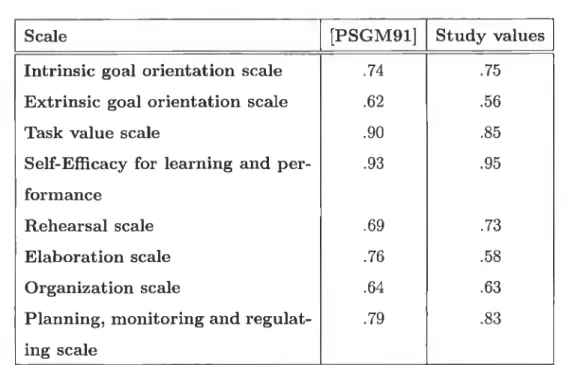
3.6 Cronhbach alpha values ... 51
5.1 Sample confusion m a t r i x ... 78
5.2 Significant models using logistic re g re s sio n ... 80
5.3 Machine learning algorithm p e rfo rm a n c e ... 81
6.1 Performance of each algorithm in the study by K o tsian tis... 100
6.2 Comparison of re su lts... 101
List o f A cronym s
ANN... ... Artifical Neural Network BP... Backpropagation FN...False Negative FP... False Positive
K-NN A-Nearest Neighbour
PBL... Problem Based Learning PCA...Principal Component Analysis RBF... Radial Basis Function SRL...Self- Regulated Learning SVM... Support Vector Machine
TN.. True Negative
Declarations
I confirm this is my own work and the use of all material from other sources has been properly cited and fully acknowledged. Part of the work in this thesis has been presented in publications listed in Section 1.5
Acknowledgements
First and foremost I would like to extend my sincere gratitude to my supervisor Professor Ronan Reilly. No m atter how busy he was, he always made time for me and was a constant source of support and encouragement. I feel privileged to have had such a great mentor and hope that we get to work together again in the future.
The research documented in this thesis was funded in part by the Higher Ed ucation Authority. Pm grateful for this financial assistance. I’d also like to thank the students who participated in this research and each of the institutions who fa cilitated this work. I’m especially grateful to Rosemary, Diarmuid, Enda, Margaret and Karel.
I would also like to thank the technical and administrative staff at the De partment of Computer Science. James, Michael, Misha and Patrick thank you for all your technical help over the years. Lilly, Ann and Louise, thanks for all your support and also for the many chats! I wish you all the very best for the future. Des Noonan warrants a very special note of thanks. I’m very grateful to him for his continuous assistance and support during my time at NUIM. Thanks Des.
It is often said th at doing a PhD is a very lonely experience, but this was not true for me as I had such a great network of friends. Laura and Phelim, thanks for the copious amount of tea and chats we’ve enjoyed over the years. Peter, thanks for making labs so much more bearable, you’re a great teacher, never forget that! All credit to Marky-Mark, his football league and his love of fine food and drink. His banter cheered up many a dull lunchtime! Des, thanks for making conference trips so much more fun, we had some good laughs! Thanks also for proofing this thesis. Johnny-John-John, thanks for all your help on SVMs, for proofing this thesis but mostly for being such a good friend. I look forward to having you as my new neighbour (mostly so you can walk Walt!). Thanks also to Jacq for the
wonderful chats and laughs we have had over the past few years. You’ve been a great friend. I look forward to visiting you and Tom in Cambridge! As for Ado, where do I begin to thank you? The list is just too long. Thanks so much for everything, you are a top class person and I hope we will always be great friends. As for my non-NUIM friends thanks for always being there for me... I’m so lucky to have all of you as friends.
I would also like to thank my family. I have, in my opinion, the best parents in the world. They afforded me so much throughout my life. I’m delighted to dedi cate this thesis to them. Thanks also to my brother and great friend Brian. His constant encouragement has gotten me to where I am today. Thank you. Finally, I’d like to thank my husband Andy. W ithout his constant unwavering support, I would never have completed this thesis. However did I ever get so lucky?
J
A b stra ct
This thesis details a longitudinal study on factors that influence intro ductory programming success and on the development of machine learn ing models to predict incoming student performance. Although numerous studies have developed models to predict programming success, the models struggled to achieve high accuracy in predicting the likely performance of incoming students. Our approach overcomes this by providing a machine learning technique, using a set of three significant factors, that can predict whether students will be ‘weak’ or ‘strong’ programmers with approximately 80% accuracy after only three weeks of programming experience.
This thesis makes three fundamental contributions. The first contribu tion is a longitudinal study identifying factors that influence introductory programming success, investigating 25 factors at four different institutions. Evidence of the importance of mathematics, comfort-level and computer game-playing as predictors of programming performance is provided. A number of new instruments were developed by the author and a program ming self-esteem measure was shown to out-perform other previous compa rable comfort-level measures in predicting programming performance.
The second contribution of the thesis is an analysis of the use of machine learning (ML) algorithms to predict performance and is a first attempt to investigate the effectiveness of a variety of ML algorithms to predict intro ductory programming performance. The ML models built as part of this research are the most effective models so far developed. The models are effective even when students have just commenced a programming module. Consequently, timely interventions can be put in place to prevent struggling students from failing.
The third contribution of the thesis is the recommendation of an al gorithm, based on detailed statistical analysis that should be used by the computer science education community to predict the likely performance of
incoming students. Optimisations were carried out to investigate if predic tion accuracy could be further increased and an ensemble algorithm, Stack- ingC, was shown to improve prediction performance.
The factors identified in this thesis and the associated machine learning models provide a means to predict accurately programming performance when students have only completed preliminary programming concepts. This has not previously been possible.
C hapter 1
In trod u ction
1.1
Background
S tu d e n t retention on third level Computer Science (CS) and Information Tech nology (IT) courses is a significant problem. Students find computer programming difficult and struggle to master the core concepts. Identifying struggling students is difficult as introductory programming modules tend to have a very high student-to- lecturer ratio (100:1 or greater) and often lecturers do not know how well students are doing until after the first assessment. This assessment may not take place until six or eight weeks after the module has commenced and, given the typically high number of students, marking the assessments can take a considerable length of time. Even if the assessment is indicative of likely overall performance on the module, it may be too late for students to withdraw from the course or for in structors to intervene to prevent struggling students from failing. This is a cause of great concern for computer science educators and has led to a body of research in the area.
Although many previous studies of programming predictors have interesting results it can be difficult to apply the results to other educational settings with
Goals and Contributions Introduction
different parameters, for example, the programming language taught and the as sessment structure used. Furthermore, previous studies have often been carried out when students have completed a considerable part of an introductory pro gramming module. The factors examined are often dependent upon the students having considerable experience with the module material and consequently it is difficult to know how predictive the same factors would be if measured earlier on the module.
A model that could predict likely programming performance in the first few weeks of a module would considerably help to alleviate this problem. To build such a model would require (1) the identification of early predictors of performance on an introductory programming module and (2) the appropriate implementation of a scientifically sound, robust modelling technique.
This thesis details a model that satisfies the above criteria [BR05c], [BR05b], [BR05a], [BR06a], [BR06c], [BR06d], [BR06b]. A study of early identifiable factors that influence performance on an introductory programming module is presented and numerous prediction models using these factors are developed. A recommen dation of the most effective algorithm for predicting future student programming performance is provided.
1.2
Goals and Contributions
The goals of this thesis are to:
1. Identify early predictors of performance on an introductory programming
module.
2. Investigate the effectiveness of different machine learning techniques for pre dicting programming performance. The models should predict whether stu dents are likely to be ‘weak’ or ‘strong’ programmers.
Goals and Contributions Introduction
3. Recommend the use of the most suitable scientifically sound technique that should be used to predict future student performance.
Moreover, there are three fundamental contributions to these objectives in this thesis, notably, (1) the identification of early predictors of programming perfor mance, (2) a first study on the use of a variety of machine learning algorithms to predict introductory programming performance and (3) the recommendation of a suitable algorithm to predict the likely performance of incoming students. Each of these contributions is discussed in the following sections.
Id en tification o f ea rly predictors o f p rogram m in g perform ance
First, the research outlined in this thesis is based on a longitudinal study identify ing factors that influence success on introductory programming modules. Although numerous studies have taken place, most studies are carried out when students have experienced a considerable part of an introductory programming module and thus it is unclear if the identified predictors would be accurate indicators if measured at an earlier stage in the course. In this thesis over 25 factors were examined at four different institutions. The study provides evidence on the importance of mathematics, programming self-esteem and computer game-playing as predictors of programming performance. The study also determined numerous factors that did not contribute further to the developed prediction models. These factors in cluded prior programming experience, number of hours a student spends working at a part time job, encouragement from others to study programming, preference to work alone or in a group when solving problems and number of hours using ap plication software, emailing or surfing the web before and during the early stages of the course. Second, a new instrument, (the Programming Self-Esteem Scale), developed by the author, was found to out-perform a measure referred to in this thesis as the Cantwell-Wilson and Shrock comfort-level measure and a shortened
Goals and Contributions Introduction
version of the Computer-Programming Self-Efficacy scale as a measure for pre dicting programming performance. Third, an investigation on the usefulness of self-regulated learning (SRL) for predicting performance was carried out. While SRL was not found to contribute further to the predictiveness of the model, ex cept for the self-efficacy measure, the importance of particular aspects of SRL in learning to program were identified and as such provides justification for future research in the area.
A n alysis o f th e u se o f m achine learn ing alg o rith m s to p red ict perfor m ance
In this thesis, six distinct machine learning (ML) algorithms are described and analysed to determine how effective each technique is at predicting programming performance. The algorithms examined are naive Bayes, support vector machines, logistic regression, k-nearest neighbour, backpropagation networks and a decision tree (C4.5). Typically, linear regression is used to predict programming perfor mance and while this is a well regarded statistical technique it is restricted by underlying assumptions, including normal distribution and linear relationship re quirements. When these assumptions are not satisfied, subsequent work-arounds, where appropriate, can lead to interpretation problems and other difficulties. ML algorithms tend to have less stringent requirements and thus may be used to solve problems where linear regression fails. Following a detailed review of the pub lished literature, it appears that this thesis is a first attem pt to utilise a variety of ML algorithms to predict introductory programming performance. While similar techniques have been investigated in other academic domains, no comprehensive study of the suitability of a range of ML techniques has taken place within this domain. This work provides the foundation for future work on the application of artificial intelligence techniques to this problem and encourages computer science
Goals and Contributions Introduction
educators to consider a broader suite of tools.
Each algorithm was implemented using 10-times 10-fold stratified cross vali dation. Although this approach is more computationally intensive than the com monly used ‘hold out’ method, all examples in the dataset are used for training and testing and thus confidence on the generalisability of the results is increased. In addition the stratification process improves the representativeness of each fold as the process seeks to represent the same proportion of each class in a fold as is in the original full dataset [WE05].
The models developed as part of this thesis are the most effective models devel oped to predict programming performance. Comparable results have never been achieved before. The models are effective even when students have just commenced a programming module. Consequently, timely interventions can be put in place to prevent struggling students from failing. The models also identifies strong students and thus additional resources or alternative streams could be provided to further develop their skills. In addition, the fact that the models are based on three years of studies and involve students from multiple institutions enhances the likely gen eralisability of the findings. Indeed just recently, Fincher and Petre [FP04], two leading researchers in the CSEd field, argued th at repetition and generalisation are the key drivers for research that can be considered valid, relevant and important.
R eco m m en d a tio n o f a su ita b le algorith m to p red ict th e lik ely perfor m an ce o f in com in g stu d en ts
Inspection of the predictions made by each of the machine learning algorithms indicated th at naïve Bayes was the most effective algorithm for predicting pro gramming performance. To confirm this, detailed statistical analysis was carried out to determine if there were any statistically significant differences between the prediction accuracy of each of the algorithms and also between the training times
Thesis Overview Introduction
of each algorithm. The analysis confirmed naive Bayes as the most successful algorithm for predicting programming performance.
Although the examination of six machine learning techniques and the subse quent statistical analysis was a significant contribution to the field, optimisations were also carried out to investigate if the results could be further improved. Al though several techniques were implemented with varying performance, one par ticular ensemble algorithm, StackingC, was shown to improve the results achieved by the naïve Bayes model. However, the improvements are not sufficient to justify the additional work required to implement StackingC. Therefore, naïve Bayes is still recommended for predicting incoming student programming performance.
1.3
Thesis Overview
Chapter two provides a review of previous research on factors th at influence pro gramming. The studies are summarised and the results are outlined. In addition, self-regulated learning, a topic th at is currently receiving considerable research attention, is introduced and its potential for predicting academic performance is discussed. In Chapter three the materials and methods used in this research are presented. First, a pilot study carried out in the academic year 2003-2004 is de scribed. The results of this study are outlined and discussed and the main study is then introduced. A detailed review of the instruments used, the participants and data pre-processing is provided. Chapter four provides an overview of the six machine learning techniques used to model the data. Each algorithm is described and an evaluation of its strengths and weaknesses in relation to our research is provided. In addition, an overview of Principal Component Analysis (PCA), a dimensionality reduction technique is outlined. Chapter five describes the results achieved by each of the techniques. Further optimisations are proposed and imple
Motivation Introduction
mented and the subsequent results are outlined. In Chapter six the overall results are discussed and analysed. An epilogue study, which was carried out to verify the findings is described and the results are discussed. Chapter seven provides conclusions and suggests possible directions for future work.
1.4
M otivation
Computer science courses have a notoriously high attrition rate worldwide and Ireland is no exception. In a study carried out in 2001 by the Higher Education Authority (HEA) in Ireland [MFK01] the field of computer studies was found to have the highest rate of non-completion. Over one-quarter (26.9%) of students who commenced in this field failed to complete with a further 14% of students gradu ating late. A considerable cause of failure is CS1, typically an introductory pro gramming module. A recent multi-institutional, multi-national study [MAD+01] found that after completing an introductory programming course students scored an average of 21% on a short lab based assessment, which the module lecturers anticipated the students would pass. At the Department of Computer Science, NUI Maynooth, on average 34% of students failed on their first attem pt of the first year programming module over the four academic years starting in 2001. In addition 21% of students who registered for the module did not complete it but typically transferred out of computer science.
Numerous studies over the past 30 years have attem pted to examine factors that influence programming performance while no computer science education con ference is complete without at least one session dedicated to issues in learning how to program. However identifying struggling students is still a difficult task. Often the first programming assessment does not take place until after the first six weeks of the module and when a large number of students take the course, correction can
Motivation Introduction
take a considerable amount of time. Even when early assessments are indicative of overall performance, it may be too late for students to withdraw from the course or for instructors to intervene to prevent struggling students from failing. An early measure of how a student is likely to perform on an introductory programming module is required. Previous studies have considered a wide range of factors that could influence performance. These factors include: previous academic and com puting experience, various cognitive and behavioural factors and level of comfort felt on an introductory programming module. However, it is difficult to know how to apply the findings of these studies or to feel confident th at the findings would hold true in a further study as typically, the studies are one-off and little if any attem pt has been made to replicate the findings.
Two important longitudinal studies (PhD theses) in the area were carried out by Cantwell-Wilson in 2000 [CW00] and Ventura in 2003 [Ven03]. Cantwell-Wilson examined 12 factors and a multiple regression model was able to account for 44% of the variance in midterm results. Similarly, Ventura’s PhD thesis (2003) developed several multiple regression models for predicting performance on an objects-first programming module. The most significant regression model developed that did not include variables directly related to the module, for example, the number of continuous assessment exams taken and the percentage of lab assignments submit ted, was able to account for 53% of the variance in course results [Ven03]. Although multiple regression analysis is a well respected technique, it makes a number of assumptions including a normal distribution of the residuals and linearity of rela tions among the variables. This can be problematic if these assumptions are not satisfied. Other techniques exist, such as Artificial Neural Networks (ANNs), that do not require normal distributions and can handle non-linearly related data, often produce results superior to those of multiple linear regression models. However, no studies to date have used machine learning techniques to predict introductory
Publications Introduction
programming performance. While predictions of reasonably accurate student re sults could be useful, in terms of retention it is of less importance than knowing whether students are likely to struggle with the material or not. As such, being able to classify students as ‘weak’ or ‘strong’ programmers would be a significant contribution to the field.
Over the past six years the author has been involved in running the intro ductory programming module within the Department of Computer Science, NUI Maynooth. During this time it was observed th at many students struggle to learn how to program and the author has been directly involved in the development of several initiatives to assist them. These initiatives have included the introduction of Problem-Based Learning (PBL) workshops, the development of an intranet ap plication to provide a centralised repository of first year information, the develop ment of an intranet-based programming assessment system, weekly programming clinics and tutorials. Although it is too early to say definitively, initial evidence suggests that these initiatives have been beneficial [OBG+04], However, such ini tiatives are limited if it is not known early on which students need extra resources or material in order to help them to learn how to program. Thus, the research addressed in this thesis is of great importance to the author in terms of both its research value and its application to her work on improving retention.
1.5
Publications
Part of the work in this thesis has been presented in the publications listed in this section.
1. Bergin. S, Reilly. R. “Using Machine Learning Techniques to Predict Intro
ductory Programming Performance” , Applied Artificial Intelligence, submit
Publications Introduction
2. Bergin. S, Reilly. R. “Predicting programming performance using machine
learning techniques” , NUIM Postgraduate Symposium, March 2006.
3. Bergin. S, Reilly. R. “A computational model to predict introductory pro
gramming performance” , NUIM Technical Report Series, January 2006.
4. Bergin. S, Reilly. R. “Predicting Introductory Programming Performance:
a multi-institutional multivariate study” , Computer Science Education, sub
mitted January 2006.
5. Traynor. D, Bergin. S, Gibson, P. “Automated Assessment in CS1” , Aus
tralian Computing Education Conference (AC E’06) 2006.
6. Bergin. S, Reilly. R. “Examining the role of Self-Regulated Learning on
Introductory Programming Performance” , Proceedings of the first Interna
tional Computer Science Education Research Workshop, ICER05, pg 81-86,
2005.
7. Bergin. S, Reilly. R. “The influence of motivation and comfort-level on
learning to program” , Proceedings of the 17th Workshop on Psychology of
Programming, PP IG ’05, 2005.
8. Bergin. S, Reilly. R. “Programming: Factors th at influence success” , Pro ceedings of the 36th SIGCSE technical symposium on computer science edu cation, SIGCSE ’05, pages 411-415, 2005.
9. Bergin. S, Reilly. R, “Assessing programming Aptitude: A web-based adap tive testing system with remedial instruction” , 16th Doctoral Workshop of
the Programming Psychology Interest Group (PPIG ’04), Carlow IT, April
10. Bergin. S, Reilly. R, “An adaptive web-based testing system to assess pro
gramming aptitude” . NUIM postgraduate symposium March 2004.
C hapter 2
L iteratu re R ev iew
.P
redictors of performance on introductory programming can broadly be clas-sified into the following categories: previous academic and computer experience, cognitive factors and psychological factors with emphasis on perceived comfort- level on the course. An overview of studies within each of these categories is provided and further supplementary information is presented in Table 2.1.
2.1
Previous Academic and Computing Experi
ence
Previous academic experience and programming experience have often been cited as predictors of programming success. Numerous studies have found that both mathematical ability and exposure to mathematics courses is related to perfor mance on introductory computer science modules. Similarly, performance in and experience of other academic subjects have been shown to be important. Fi nally, several studies have ascertained th at prior programming experience and non-programming computer experience are useful predictors of programming per formance.
Previous Academic and Computing Experience Literature Review
2.1.1
P r e v io u s A ca d em ic E x p e r ie n c e
Numerous studies have investigated the role of mathematics in learning to pro gram. Leeper and Silver [LS82] developed a regression model that included the number of high school mathematics units completed and SAT mathematics score th at could account for 26% of the variance of overall results on an introductory programming course. SAT mathematics was found to have one of the strongest correlations with performance, r = 0.37. Similarly, Byrnes and Lyon [BL01] in a recent Irish study, found a significant correlation between Leaving Certificate mathematics, r = 0.353, p < 0.01, and the overall results students achieved on a first year programming and logical methods module taught using BASIC. In a study by Evans and Simkins [ES89] the number of high school mathematics courses a student had taken prior to the course was found to be a significant predictor of homework assignment performance. However, multiple regression models devel oped using this variable and others accounted for at most 23% of the variance. In a study of 12 factors that influence performance on an introductory computer science course, Cantwell-Wilson and Shrock [CWS01] found mathematics back ground to be the second most important predictor. Hostetler [Hos83] also found a student’s mathematics background to be a significant predictor of performance. A regression model was able to classify 61 of 79 students (77.2%) into high and low aptitude groups based on the overall grade a student achieves on an ‘Introduction to Computers and Their Application to Business’ course using Fortran. Honour- Werth [HW86] found a significant correlation between the number of high school mathematics courses taken, r = 0.252, p < 0.05 and student performance on an introductory computer science course. Similarly, Konvalina [KWS83] found that students who completed a first technical computer science course had significantly more mathematical background before taking the course than students who with drew from the course. Stein [Ste02] in a study of 160 students on a programming
Previous Academic and Computing Experience Literature Review
course through Java found that students who studied calculus do at least as well as students who studied discrete mathematics. Thus, he concluded th at having some form of mathematical maturity is more important for programming than ex perience with specific mathematical topics and this conclusion appears to be well supported by the findings of the studies presented here.
Ability in and experience of academic subjects other than mathematics has also been previously investigated. Leeper and Silver [LS82] developed a regression model using units of high school English, mathematics, science, a foreign language, SAT verbal score, SAT mathematics score and high school rank that accounted for 26% of the variance of results on an introductory programming course. Byrnes and Lyon [BL01] found a significant correlation between Leaving Certificate science scores (r = 0.572, p < .01) with the overall results students achieved on a first year programming and logical methods module through BASIC. However, neither Leaving Certificate English nor performance in a foreign language were found to be good predictors of performance.
2.1.2
P rio r C o m p u tin g E x p er ien ce
Evans and Simkins [ES89] found th at prior BASIC experience was a predictor of performance in an entry level business computer class while Cantwell-Wilson and Shrock [CWS01], similarly found that a previous formal class in programming had a positive relationship with performance on a introductory computer science course using C + + . Konvalina [KWS83] in a study of 382 students found that stu dents who withdrew from an introduction to computer science course (n = 154) had significantly lower computer science experience than students who completed the course (n = 228). In a study of 75 students on an introductory programming course, Hagan [HM00] found that students with previous programming experience had a significantly higher mean score than students with no previous experience
Cognitive Factors Literature Review
on all assessments except the final examination. In addition, the study found that the more programming languages a student knows prior to taking the course, the higher their performance. Holden [HW04] found that prior experience (inde pendent of the programming language) is an advantage in the first course on an ‘Introduction to Programming’ sequence but not in later courses. It appears that while prior experience is initially an advantage, as an introductory programming course progresses it loses its importance. In Ireland, programming is not an ex amination subject on the second level curriculum and consequently few students commence introductory programming modules in third level with any formal train ing. As the studies presented in this section all took place in the United States of America, it is difficult to know how relevant their findings are to an Irish study of programming factors. Byrnes and Lyon [BL01] attem pted to examine the role of prior programming performance in an Irish study but found th at so few students in their study had previous programming experience it was not possible to draw any conclusions.
2.2
Cognitive Factors
The role of various cognitive factors in learning to program has also been re searched. Previous studies have investigated various cognitive factors, including cognitive style and abstract reasoning ability, and provide useful insights into the role of cognition in learning to program.
Hostetler [Hos83] investigated the performance of 79 students studying an ‘In troduction to Computers and Their Application to Business’ class using Fortran. The study found that diagramming (analysing a problem and ordering the solution into a logical sequence) and reasoning (translating ideas and operations from text based problems into mathematical notations) tests on the Computer Programmer
Cognitive Factors Literature Review
Aptitude Battery (CPAB) along with a students’ grade point average (GPA) were the most important predictors of success. A multiple regression model, using these three variables with mathematics background and a personality factor (a measure of how carefree an individual perceives themselves to be), correctly classified 61 of 79 students (77.2%) into high- and low-aptitude groups based on the overall grade a student achieves.
Kurtz [Kur80] designed and carried out a test on the formal reasoning abilities of 23 students on an introductory programming course using Fortran. Based on performance, students were classified at three intellectual development levels: late concrete, early formal and late formal. The levels of late concrete and late formal were found to be strong predictors of low and high performance respectively. A re gression model using the formal reasoning levels accounted for 63% of the variance in grades. Honour-Werth [HW86] used K urtz’s measure of intellectual development [Kur80] and found significant correlations between the measure and performance on an introductory programming course using Pascal, r = 0.232, p < .05. They also found a correlation between performance and cognitive style r = 0.317, p < .01. Barker and Unger [BU83] implemented a shortened version of K urtz’s test [Kur80], reducing the time required to take the test from 80 to 40 minutes and the number of questions from 15 to 11. The test was administered to 353 students. ANOVA testing indicated th at there was a significant difference between the mean score of the late concrete group and the means of the early and late formal groups. A regression model using level of intellectual development accounted for 12% of the variance in the final course grade. Gibbs [GibOO] measured the relationship between cognitive style (field dependent and field independent) and programming performance. In a study of 50 students on a first programming course using a con structivist learning environment, no significant correlations were found between cognitive style and programming achievement. Mayer [MDV86] investigated the
Psychological Factors Literature Review
relationship between learning to program and ‘learning to think’. Eight think ing skills were assessed and three measures, word-problem translation (translating word problems into equations), word-problem solution (giving the correct numeri cal answer to word problems) and following directions, were found to be significant predictors of performance accounting for 50% of the variance in results. Although this result is considerable, the study only involved a small sample (n = 50) and has not been validated through further studies. Austin [Aus87] found that quan titative and algorithmic reasoning abilities and iconic pattern recognition abilities were important indicators of programming success. The latter was found to be important for both program reading and writing while the former was only found to be important for program reading.
In summary, a wide variety of cognitive factors have been investigated including logical ability, reasoning ability, arithmetic ability, intellectual development, and cognitive style. It appears that certain cognitive factors play a role in learning to program but typically the strength of this relationship is not particularly strong and in general accounts for very little of the variance in student performance.
2.3
P sy ch o log ica l Factors
Recently researchers have examined the relationship between students’ expec tations of an introductory computing module and their actual experience of it. Cantwell-Wilson and Shrock [CWS01] in a recent longitudinal study found that the most important predictor of students’ performance on an introductory com puter science course was comfort-level measured by the degree of anxiety a student felt about the course. The measure includes level of comfort asking and answering questions in class, labs and during office hours; designing programs without help, understanding programming concepts, completing lab assignments and perceived
Psychological Factors Literature Review
understanding of material compared to classmates. A multiple regression model, F (1 2 ,92) = 6.13,p = 0.0001, with three significant variables: comfort-level, math ematics background and attribution of success or failure to luck resulted in an adjusted R square of 44%. Ventura [Ven02] examined predictors of a graphical design-centric objects-first Java course and found that student effort (as mea sured by the number of hours spent using the labs) and comfort-level were the strongest predictors of success. A stepwise regression model using these two pre dictors and SAT mathematics score accounted for 52.9% of the variance in course grade. Holden [HW04] measured the comfort-level of students using computers at the start of a programming course. No relationship between this measure and performance were found. It is important to note that the measure was specific to computer usage and not a measure of programming comfort-level. Newsted [New75] in a study of 131 introductory Fortran students found that two of the most important predictors of performance were perceived ability and time spent working on the course and working with other students. While perceived abil ity was found to be positively related to performance, the number of hours spent working on the course was negatively related to performance. This latter finding is interesting when compared to Ventura’s [Ven02] finding on the positive relationship between the number of hours the students spent using the labs and programming performance and requires further investigation. Hagan [HM00] found a significant difference between the confidence levels felt by students, with and without previ ous programming experience, that they would pass an introductory programming course, F — 4.558, p < 0.05. In addition, Rountree et al. [RRR02] in a study of 472 students found that the grade a student expected to achieve in an introductory module was the most important indicator of performance. Goold and Rimmer [GR00] identified that ‘dislike of programming’ is related to performance on an introductory programming course. A multiple regression model composed of (in
Psychological Factors Literature Review
order) dislike for programming, gender, average on other modules and a measure referred to as ‘raw secondary score’ which incorporated student performance in English and their best (other) three subjects taken for final examination in sec ondary school accounted for 43% of the variance in student results. The authors did not find expected grade or mathematics to be predictors of performance.
The relationship between students’ mental models of and self-efficacy in pro gramming (an individuals’ judgements of their capabilities to perform various programming tasks) and their performance has also been investigated [RLW04] [Wie05]. Recently Ramalingham et al. [RLW04] investigated the effects of stu dents’ self-efficacy for programming and their mental models of programming and found that self-efficacy is influenced by a students’ mental model of programming and also by previous computer and programming experience. Significant differ ences were found in the pre- and post-self-efficacy measures. A path analysis model with pre- and post-programming self-efficacy, programming mental model and previous experience as predictor variables accounted for 30% of the variance in the final course grade. Similarly, in a study by Wiedenbeck [Wie05] measures of pre- and post-self-efficacy of programming were shown to be important predictors of performance. A measure of previous computer and programming experience was found to be a strong positive predictor of efficacy. However, pre-self-efficacy was found to have a negative relationship with performance and the author suggests that perhaps some students are over confident at the start of the course. Knowledge organisation was measured using a program recall task and found to have a positive relationship with performance. A regression model composed of previous experience, pre- and post-self-efficacy and knowledge organisation was able to account for 30% of the variance in final grade.
It appears that how students feel before and during an introductory program ming course (‘comfort-level’) is a very important predictor of performance on an
Miscellaneous Factors Literature Review
introductory programming course. Research in this area has been very fruitful and further studies on this topic would be well justified.
2.4
M iscellan eou s Factors
The previous sections have outlined the main body of research on factors that influence introductory programming success. Other factors have also been consid ered, albeit often in once-off studies that do not fall into the previous categories. In particular two factors have been investigated in several studies and have been found to relate to programming performance. The factors are (1) the number of hours a student spends playing computer games and (2) the number of hours spent working at a part-time job. Cantwell-Wilson and Shrock [CWS01] found that the number of hours students played computer games was negatively related to performance on an introductory computer science course. Similarly, Evans and Simkins, [ES89] found the number of hours students spent playing electronic games (video and computer games were studied) to have a negative relationship with per formance on an introductory Basic course. They also found that the number of hours a student spent working at a part-time job negatively relates to performance. Honour-Werth [HW86] found a significant correlation between hours working at a part-time job r = 0.203, p < .1 and performance on an introductory computer science course using Pascal.
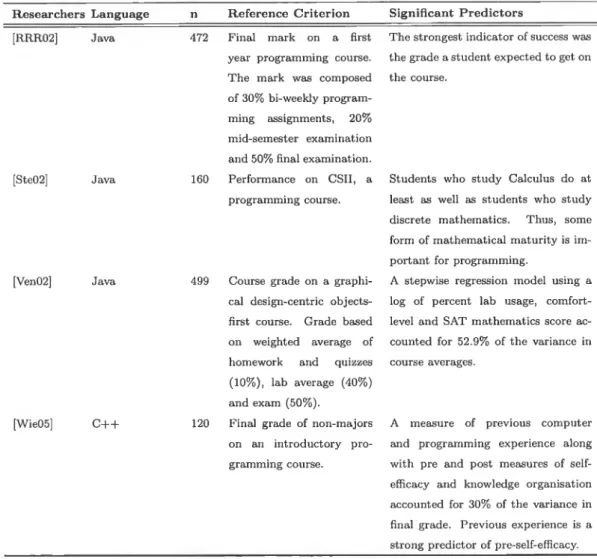
Miscellaneous Factors Literature Review R e s e a r c h e r s L a n g u a g e n R e fe r e n c e C r ite r io n S ig n ific a n t P r e d ic t o r s [Aus87] Pascal [BU83] C + + an d C [BL01] BA SIC [CWS01] C + +
76 C om posite score based on
program reading, pro g ram w ritin g a n d lab perfo r m ance.
353 F in al grade of stu d e n ts in 15 class sections learning tw o different p rogram m ing languages.
110 Overall re su lt on ‘P ro
gram m ing an d Logical
M eth o d s’ for first year H um anities stu d e n ts (70% w ritte n e x am in atio n an d 30% weekly assignm ents).
105 M idterm course grade on
‘CS202 In tro d u ctio n to
C o m p u ter Science’ for
in tro d u c to ry co m p u ter program m ing stu d en ts.
A m odel com posed of high school com posite achievem ent, q u a n titativ e and algorithm ic reasoning abilities, vocab u lary a n d general inform ation
abilities, self-assessed m ath em atics
ab ility an d m easures of an intro v e rte d /a n a ly tic style an d extroverted level was able to account for 64% of th e variance in results.
Intellectu al developm ent (ID ) test successfully p red icted advanced stu dents. A regression m odel based on ID level accounted for 12% of th e vari ance in final course grade.
Significant correlations found for: Leaving C ertificate (LC) m ath em atics result (r = 0.353, p < .01), LC science result (r = 0.572, p < .01) w ith pro gram m ing perform ance.
+’(12,92) = 6 .1 3 ,p = 0.0001, ad ju ste d R square = 44%, th ree signif icant variables: com fort-level, m ath em atics background and a ttrib u tio n of su ccess/failu re to luck. Secondary analysis ind ic ated t h a t th e n u m b er of hours playing com puter-gam es prior to th e course h a d a negative effect on grade while experience of a p rio r for m al p rogram m ing class h a d a positive effect.
Miscellaneous Factors Literature Review
continued from previous page
R e s e a r c h e r s L a n g u a g e R e fe r e n c e C r ite r io n S ig n ific a n t P r e d ic t o r s
[ES89] BASIC
[GibOO] BA SIC
[GROO]
[HMOO] Java
117 Six outcom e variables on
an e n try level business co m p u ter class (hom ew ork score, 2 BASIC exam s, 2 m id term exam s an d a final exam ination).
50 Tw o achievem ent te s ts on
a first program m ing course of com puter science s tu dents. T h e first te s t was on designing an d th e sec ond te s t was on coding.
39 R esult on an in tro d u c to ry
program m ing concepts
course for stu d e n ts enrolled in a co m p u ter-related d e
gree (60% ex am in atio n
an d 40% assignm ents).
97 Five outcom e variables on
a first program m ing course in an u n d e rg ra d u a te com p u tin g degree (2 te s ts 30%, 2 assignm ents 30% an d ex am in atio n 40%).
V arious p red icto rs d ep en d en t upon outcom e variable found (for exam ple, n u m b er of high school m ath e m atics courses, p rio r B A SIC experi ence, ho u rs playing video or co m p u ter
gam es). M ultiple linear regression
m odelling accounted for a t m ost 23% of th e variance on each outcom e vari able.
W ith in a c o n stru ctiv ist learning en v iro n m en t, cognitive style (field de p e n d e n t an d field ind ep en d en t) was n o t found to influence program m ing achievem ent (on eith er tests).
A m u ltip le regression m odel, com posed of (in order) dislike for pro gram m ing, gender, average on o th er m odules and raw secondary score ac co u n ted for 43% of th e variance in scores.
Significant difference betw een th e p er form ance of stu d e n ts w ith a n d w ith o u t p rio r program m ing experience on all assessm ents except th e final ex am in atio n . F u rth e r analysis in dicated t h a t th e m ore program m ing languages a s tu d e n t knew prior to tak in g th e course, th e higher th e perform ance. T h ey also found a significant differ ence betw een th e confidence level of stu d e n ts w ith an d w ith o u t p rio r ex perience on th e ir e x p ec ta tio n to pass th e class (F = 4.558, p < 0.05).
Miscellaneous Factors Literature Review
continued from previous page
R e s e a r c h e r s L a n g u a g e R e fe r e n c e C r ite r io n S ig n ific a n t P r e d ic t o r s [HW04] Ja v a [HW86] Pascal [Hos83] F o rtran [KWS83] Basic [Kur80] F ortran
159 T h ree in-class exam s on
th e first course of an ‘In tro du ctio n to P ro g ram m in g ’ sequence.
58 S tu d e n t grade on ‘Com
p u te r Science I ’ (F irst
class in th e ACM C ur riculum ). G rade included scores on hom ew ork assign m ents 30%, exam inations 40%, quizzes 10% and a program m ing p ro ject 20%.
79 Overall grade on an ‘In tro
du ctio n to C o m p u ters and T h eir A pplication to Busi ness’. T h e grade consists o f scores on program m ing assignm ents, tw o one-hour ex am inations and a three- h o u r final exam ination.
382 F in al e xam ination on an
‘In tro d u ctio n to C o m p u ter Science’ course based on CS1 in C urriculum ’78.
23 F in al grade on an ’In tro
d u ctio n to P ro g ram m in g ’ course for co m p u ter science m ajo rs and non-m ajors. G rade com posed of scores on program s 55%, quizzes 10%, m id term 11.7% and final ex am in atio n 23.3%.
P rio r experience (independent of lan guage) is an advantage in th e first course in th e sequence b u t not in later courses.
Significant correlations found for:
high school m ath em atics ( r =
0.252, p < .05), hours w orking at a p a rt-tim e job ( r = 0.203, p < .1) , P ia g etian intellectual developm ent ( r = 0.232, p < .05) and cognitive style (r = 0.317, p < .01) w ith per form ance.
A m ultiple-regression m odel, using di agram m ing a n d reasoning score on th e C o m p u te r P ro g ram m er A p titu d e B a tte ry (C PA B ), G PA , m a th e m a t ics background and a p ersonality fac to r (sober or happy-go-lucky tra it), correctly classified 61 of 79 stu d en ts (77.2% ) into high and low a p titu d e groups.
Found significant differences between th e m ath e m a tic s background of stu dents w ho w ithdraw from th e course
and stu d e n ts w ho com plete th e
course, in t h a t s tu d e n ts w ho com pleted th e course h ad significantly more m ath e m a tic al background be fore tak in g th e course.
Level o f form al reasoning is a strong p re d icto r of perform ance (specifically poor an d o u tstan d in g perform ance), accounted for 63% of th e variance in grades.
Miscellaneous Factors Literature Review
continued from previous page
R e s e a r c h e r s L a n g u a g e R e fe r e n c e C r ite r io n S ig n ific a n t P r e d ic t o r s [LS82] N ot specified [MDV86] Basic [New75] F o rtran [RLW04] C + + 92 57 131 75 G rade on an In tro d u c to ry P ro g ram m in g Course.
Basic ex am in atio n score.
G rade on a n In tro d u cto ry P ro g ram m in g Course.
F inal grade on an in tro d u c to ry pro g ram m in g course for CS m ajo rs an d non- m ajors.
R egression m odel accounted for 26% of th e v ariance using n u m b er of high school english, m ath e m a tics, science an d foreign language u n its com pleted, SAT verbal an d SAT m ath em atics score a n d high school ran k . Strongest correlatio n s found for SAT verbal and SAT m a th e m a tic s score.
R egression m odel accounted for 50% of th e v ariance using tw o prob lem tra n s la tio n skills: w ord problem tra n s la tio n an d w ord problem solution and a p ro ced u re com prehension skill: following directions.
R egression m odel using perceived ability, college G P A an d tim e spent w orking on th e course accounted for
41% of th e variance. T h e first two
variables were found to be positively re la te d to perform ance b u t tim e spent w orking on th e course w as found to be negatively related.
U sed p a th analysis to d eterm in e th a t m ental m odels affect success directly
and stre n g th e n self-efficacy. Self-
efficacy is influenced by previous per form ance. M ental m odel, self-efficacy an d previous p rogram m ing an d com p u te r experience accounts for 30% of th e variance in final course grade.
Self-Regulated Learning Literature Review
continued from previous page
R e s e a r c h e r s L a n g u a g e R e fe r e n c e C r ite r io n S ig n ific a n t P r e d ic t o r s
[RRR02] Jav a
[Ste02] Ja v a
[Ven02] Jav a
[Wie05] C + +
472 F inal m ark on a first
year p rogram m ing course. T h e m ark w as com posed of 30% bi-weekly pro g ram
m ing assignm ents, 20%
m id-sem ester exam ination an d 50% final exam ination.
160 P erform ance on C SII, a
program m ing course.
499 C ourse grade on a g raphi
cal design-centric objects- first course. G rade based o n w eighted average of
hom ew ork and quizzes
(10%), lab average (40%) a n d exam (50%).
120 F inal grade of non-m ajors
on an in tro d u c to ry pro gram m ing course.
T h e stro n g est in d icato r of success was th e grade a stu d e n t ex p ected to get on th e course.
S tu d e n ts who stu d y C alculus do at least as well as stu d e n ts w ho stu d y
d iscrete m ath em atic s. T hus, som e
form of m ath e m a tic al m a tu rity is im p o rta n t for program m ing.
A stepw ise regression m odel using a log of p ercen t lab usage, com fort- level an d SAT m ath e m a tic s score ac co u n ted for 52.9% of th e variance in course averages.
A m easure of previous co m p u ter an d p rogram m ing experience along w ith pre an d p o st m easures of self- efficacy an d knowledge organisation accounted for 30% of th e variance in final grade. P revious experience is a stro n g p re d ic to r of pre-self-efficacy.
Table 2.1: Previous research on factors that influence programming performance
2.5
S elf-R egu lated Learning
Although numerous studies of factors that influence programming performance have been carried out, a comprehensive understanding of the factors has yet to be realised and thus further predictors are required. Recently, self-regulated learning (SRL) has become an important topic in education and psychology.
Zimmer-Self-Regulated Learning Literature Review
man [Zim86] defines SRL as the degree to which learners are meta-cognitively (the control of cognition through planning, monitoring and regulating [Pin89]), motivationally and behaviorally active participants in their own academic learn ing. Furthermore, Pintrich and DeGroot [PD90] propose that a complete model of self-regulated learning should incorporate cognitive and meta-cognitive strategies, referred to as a skill component, and motivational components, referred to as will components.
A well recognised model of self-regulated learning was developed by Pintrich and his colleagues [PSGM91] and includes skill and will components of self-regulated learning. The skill component includes cognitive strategies, meta-cognitive strate gies and resource management strategies. The will component is composed of various motivations, including intrinsic goal orientation and task value [Pin99],
Cognitive strategies include rehearsal, elaboration and organisational strate gies. Rehearsal strategies include the recitation of information to be learned and mnemonic techniques for memory tasks. These strategies are assumed to help learners to attend to and select important information from lists or texts, but may not reflect a very deep level of processing. Elaboration strategies involve paraphras ing, summarising, creating analogies and generative note taking. These strategies help learners to integrate and connect new information with prior knowledge. Or ganisational strategies include clustering, outlining and selecting the main ideas from texts. These strategies help learners to select appropriate information and to develop connections between different pieces of information [Pin99], [PSGM91].
Meta-cognitive strategies include planning, monitoring and regulating cogni tion. Planning includes setting goals, skimming a text before reading and analysing tasks. These activities help to activate relevant aspects of prior knowledge, mak ing the comprehension of the material easier. Monitoring includes tracking one’s attention when reading or listening and self-testing using questions. Regulation
Self-Regulated Learning Literature Review
concerns the continuous modification of one’s cognitive activities. For example, a student monitors her attention while reading an article to make certain that she understands its content. When she realises through her monitoring activities that she has not comprehended a portion of the text, she will go back and reread the difficult part of the article. This rereading of text is a regulation strategy [Pin99], [PSGM91]. Finally, resource management strategies refer to strategies students use to manage their time, their effort, their environment and other people, including their interaction with other students and teachers to seek help.
A considerable number of studies [PBVOO], [PB90], [PD90], [ZMP90] have con sistently found a significant positive correlation between academic achievement and self-regulated learning among elementary, high school, and college students. In addition, numerous studies [PRP99], [PG91], [Pin89], [PB90], have found that intrinsic goal orientation and high task value in a topic (beliefs about the impor tance of, interest in and utility value of the task) are strongly positively correlated with the use of cognitive and meta-cognitive strategies and also with academic performance.
While numerous studies have been carried out to determine factors that relate to programming success the findings are largely inconclusive and suggest that perhaps more evidence of potential factors needs to be gathered. It appears that computer science education researchers have yet to examine, in detail, the role of SRL in learning to program and, more specifically, if SRL is a useful predictor for programming performance. Given the significant findings on the role of self regulated learning in other academic domains it would appear well justified to examine its role in learning to program.
Summary Literature Review
2.6
Sum m ary
Over the past 30 years numerous studies have investigated predictors of program ming success. Ability in and exposure to mathematics has been confirmed as a factor by several studies. A science background also appears to have a positive relationship with introductory programming performance, however the role of lan guages including english and foreign languages is less clear. Prior programming experience has also been found to be a predictor, however, previous studies have taken place in countries where students can study programming for examination at national level. This is not the case in Ireland and therefore it is difficult to know how to apply the findings to such a setting.
Several researchers have focused on the role of cognitive factors in learning to program. Numerous factors including arithmetic ability, logical ability and reasoning ability have been found to relate to success in programming. However, the strength of the relationship appears to be weak. Psychological factors have also been examined and research on the role of students experience on and expectations of an introductory programming course has proved very fruitful. Numerous studies have found that perceived comfort-level on the module is the best overall predictor of programming performance. It would appear that further work in this area would be well-justified.
Finally, although numerous studies on factors that influence programming per formance have been carried out the smallest set of predictors that can account for the most significant amount of variance in results has yet to be established. A con siderable number of studies have found a significant positive correlation between academic achievement and Self-Regulated Learning (SRL) among elementary, high school, and college students. Computer science educational researchers have yet to examine, in detail, the role of SRL in learning to program but such research would appear to be well justified.