Investigating learner preferences in an open learner model program: A
Malaysian case study
YongWee Sek
1, 21
School of Business IT and Logistics
RMIT University
Melbourne, Victoria, Australia
Email:
[email protected]
2
Faculty of Information and Communication Technology
Universiti Teknikal Malaysia Melaka
Melaka, Malaysia
Email:
[email protected]
Hepu Deng
School of Business IT and Logistics
RMIT University
Melbourne, Victoria, Australia
Email:
[email protected]
Elspeth McKay
School of Business IT and Logistics
RMIT University
Melbourne, Victoria, Australia
Email:
[email protected]
Abstract
Effective visualization tools are becoming complex especially for web-mediated instruction. Too often, learners are left to their own devices to muddle through their instruction materials. This study presents an investigation of the impact of learners’ learning preferences on their attitudes towards the use of open learner models based on the data collected using an online survey of information technology undergraduate students in Malaysia. A chi-square test is performed to explore the relationship between learning preferences and attitudes in a higher education setting. The result reveals that learning preferences can impact on learners’ attitudes towards the use of open learner models. The implications of this study will assist designers to develop more effective open learner models for improving the performance of technology-assisted teaching and learning.
Keywords
Open learner models, technology acceptance, learning styles, learning preferences, technology-assisted learning, web-mediated, human-computer interaction
INTRODUCTION
An open learner model (OLM) is a personalisation tool that is used for visualising a learner’s current level of specific knowledge and their misconceptions in a specific subject area (Bull and Kay, 2010). The adoption of an OLM can increase the awareness of learners’ knowledge and understanding in a specific domain (Bull and Kay, 2010). This increased awareness assists the development of meta-cognitive skills, such as self-assessment and self-regulation. It encourages learners’ autonomy through their added responsibilities for their own learning processes (Mitrovic and Martin, 2007), which in turn ignites their motivation towards their learning. Furthermore, the adoption of OLM promotes reflection learning, which is critical for improving the efficiency and effectiveness of the overall teaching and learning process (Dimitrova et al., 2000; Sridharan, Deng and Corbitt, 2010).
Despite the usefulness of an OLM for improving the effectiveness of teaching and learning in technology-assisted learning (TAL), the utilization of these models is not encouraging (Bull, 2004; Chen et al. 2007). This is
because the adoption of specific learning models is a complex process. There are many interconnected factors such as an individual’s learning preference characteristics (Lai et al. 2011) and online interface characteristics (Cho et al. 2009), which directly affect the attitude of learners towards the use of such models. The cause of the low utilization of technology in TAL environments may be partly due to the interactive effect of the various learners’ preferences (Hu et al. 2007). Since an OLM seems to provide an effective visualization TAL tool, the impact of learners’ preferences on their attitudes towards the use of such an OLM needs to be further investigated (Bull and Kay, 2010).
The main aim of this paper is to discuss an initial investigation of the impact of learners’ learning preferences on their attitudes towards using an OLM, by conducting an online survey. The data was collected from undergraduate information technology (IT) students in Malaysia. A chi-square test was performed to explore the interactive relationship between learning preferences and attitudes towards the use of an OLM. The result shows that learning preferences do impact on learners’ attitudes towards their use of an OLM. The findings of this study will assist instructional designers to develop a more effective OLM.
The remainder of this paper is organized as follows. The relevant background studies are given in the related studies section while the research design and methodologies follow next. A summary of the preliminary findings is presented before the paper concludes with the discussion on future research.
RELATED STUDIES
TAL refers to an environment in which learners’ interactions with their instructional materials, their instructors and their peers, are supported through information and communications technology (ICT) tools that usually comprise such things as the learning management systems (LMS); computers; web-mediated software applications (or their combinations)(Hewitt, 2003). It is capable of establishing effective learning environments that can facilitate personalised instruction where learners have a flexibility to control their own learning processes (Bielawski and Metcalf, 2002). With the availability of such TAL tools, learners are able to engage with their instructional materials at anytime and from anywhere (Sridharan, Deng and Corbitt, 2008).
An OLM is a web-mediated visualization tool to visualize the representation of a learner’s knowledge in a specific situation (Bull and Kay, 2005). In so doing, it captures the concepts known, knowledge levels, difficulties and misconceptions in the teaching and learning process. The main advantage of using this type of interactive TAL model is its ability to allow a learner’s direct engagement with their own pedagogical model. This openness of web-mediated instruction not only allows for the contribution from learners themselves to the development and maintenance of their own content model. It also provides immediate instructional/learning feedback. Furthermore, the openness/transparency depicted in this model affords opportunities for others to become involved in this pedagogical practice. These people include peers, instructor/teachers and the parents who may wish to inspect the learning status, thereby facilitating enhanced teaching and learning collaboration ((Bull and Kay, 2005).
There are drawbacks that are associated with an OLM (Bull and Kay, 2007). One problematic issue seems to be the interaction between an OLM and learners (Chen et al., 2007). It has been shown that learners may refuse to use the OLM if the representation of their instructional material (the learning information) is complex and difficult for them to understand. This problem results in a serious interruption to further engage learners with an OLM. This dilemma subsequently causes learner frustration and dissatisfaction (Tanimoto, 2005). Another drawback is the low engagement rate in their learning processes. Consequently, learners feel uncomfortable to share or disclose their progress with other learners and/or instructors. They feel shameful when their progress is below expectation and becomes known by their peers (Bull and Kay, 2007).
There are different aspects of research, which focus on traditional TAL enhanced classroom environments, that can be found elsewhere producing equivocal empirical results. For instance, Sitzmann et al. (2006) and Piccoli et al. (2001) claim there are no significant differences in learning performance between conventional face-to-face learning and TAL. Hu et al. (2007) and Andrewartha and Wilmot (2001), however, show that there are improvements in students’ learning effectiveness and achievement through their use of TAL. This highlights an inconsistency with the results from prior studies.
The mixed results of these existing TAL studies may be accounted for by the differences in learners’ preferences because the importance of these preferences as they relate to academic performance in a TAL program, is unique to each individual (Manochehr 2006; Hu et al. 2007). In view of the possibility of identifying a link with a learner’s attitude towards their use of an OLM in a TAL environment, learning preferences per se are taken into consideration in this research.
Learning preferences refer to receiving, processing, evaluating, understanding, and utilising new information and skills in a learning environment (Lujan and DiCarlo, 2006). Understanding these preferences holds promise to enhance cognitive performance outcomes and enrich learning experiences, particularly in the TAL pedagogy
(Hauptman and Cohen, 2011; Middleton et al., 2013). As such, learners are better motivated to learn in an adaptable TAL that accommodates their preferred learning characteristics (Akbulut and Cardak, 2012).
Learners’ perception of the usefulness of the ICT tools involved web-mediated instructional environments will vary depending on their learning preferences (Bolliger and Supanakorn, 2011). Accordingly, taking careful consideration of these individual preferences in designing suitable ICT tools promotes a learner’s motivation and engagement (Moallem 2007). Moreover, other literature also links TAL and learning preferences in different instructional media. For instance, Hsieh et al. (2011) and Shaw (2012) report that learning preferences have a significant impacts on mobile learning systems and online discussion forums respectively. Neuhauser (2002) shows insignificant effects of learning preferences in TAL programs. Halvorson et al. (2011) find that some students have not performed well when using technologies in TAL programs because the instructional approaches used in those technologies do not match learners’ preferred learning modes.
Given the mixed results from these previous studies and lack of empirical evidence for the impact of an OLM on the performance of technology-assisted teaching and learning, it remains unclear what the interactive relationship between learning preference and attitude towards the use of an OLM would transpire in a Malaysian context. It is therefore important to further examine the impact of different learning preferences on the learner’s attitude towards the use of an OLM in a TAL program.
TAL has received enormous attention from developed counties to incorporate into their education systems (Gulati 2008). As a developing country, Malaysia is not exceptional from this move. Millions of dollar has been invested into the Malaysian education system to promote the use of technology in TAL (Grapragasem, 2014). The introduction of the Malaysian education blueprint 2013 - 2025 (Ministry of education, 2012) is one of the key initiatives from the Malaysian government to encourage the utilization of TAL in the higher education sector. Despite many initiatives to encourage the utilization of technology in learners’ teaching and learning processes, the motivation to adopt technology in TAL amongst Malaysian higher education students is still not encouraging, especially in a web-mediated learning environment (Poon et al., 2004; Lim et al., 2008). With the encouragement from the Malaysian government to implement TAL in the Malaysian education system, the urgency and necessity for adequately investigating the intention towards the use of OLM become clear. Such a study not only helps the Malaysian government to understand the value for their investment in their TAL initiative, especially in OLM. It can also facilitate identifying the impact of the interactive effects of learning preferences towards the use of an OLM so that effective policies and strategies can be formulated by Malaysian educational policy makers to further improve the adoption of an OLM in their higher education sector.
RESEARCH DESIGN AND METHODOLOGY
The main purpose of this research is to improve the understanding of the learning benefits derived through an OLM. The main objective is to investigate the impact of learning preference on learners’ attitudes towards the use of an OLM. To achieve this objective, the research question is formulated as: Is there a significant difference
of attitudes among learners towards the use of an OLM with different learning preferences? A quantitative
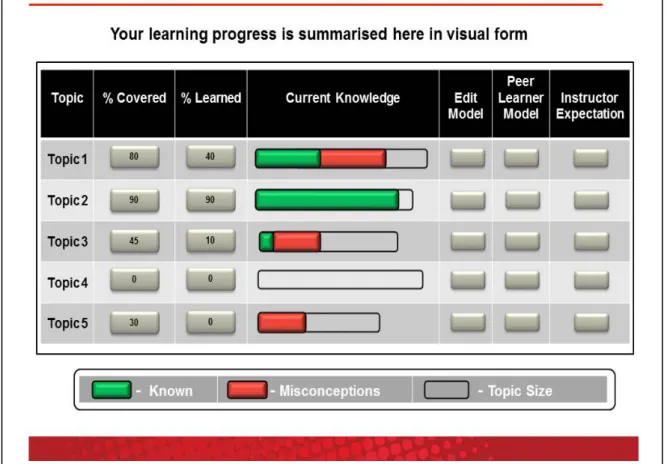
research design is used to enable the researchers to answer the research question with the scenario-based web-mediated prototyping design shown as in Figure 1 and a survey is conducted.
Scenario-based web-mediated prototyping design is a technique, which has been used in human-computer interaction (HCI) for describing the design specifications and functionality of a prototype information system (IS). It is very useful for studying the initial development of the system where the feedback from learners considered for the development of the IS (Carroll, 2000). This type of scenario-based prototyping is appropriate to be adopted in this study, because there are few OLM programs that are available for adoption in the Malaysian higher education sector. In this study, the description of the OLM pedagogical features such as presentation format, type of interactions, and interface layout are made available for each participant. This transparency affords the participants to become aware of the adaptable features that are available on the OLM.
Survey assessment tools are frequently used for gathering information directly from respondents with respect to capturing the views, attitudes and intended behaviours of individual participants towards the use of technology (Creswell, 2003; Cozby, 2004). This technique is appropriate for this study because it uses direct questioning to gather respondents’ attitudes towards their use of an OLM. The construction of the survey is based on the previously validated questions designed to reflect an OLM context. A pilot study is conducted to test and validate the reliability of the survey Questionnaire. The questionnaire consists of three parts. Part-1 involves the participant’s profile (age, education background, gender, university, courses taken, nationality, and other demographic information). Part-2 is about the individual learning preferences. Part-3 is related to OLM scenarios that are presented to each participant. The focus of these scenarios is designed to explore an individual learner’s attitude towards the adoption of an OLM.
Figure 1. OLM interface design
Convenience sampling is employed in this study because of its statistical approach to capture representative data by selecting voluntary respondents based on their ease of access and availability (Battaglia, 2008). The participants are undergraduate IT students, enrolled in the Faculty of Information and Communication Technology (FICT), Universiti Teknikal Malaysia Melaka. This respondent sample is selected because the participants have been exposed to LMS during their educational coursework. Capturing the online learning experience from these participants provides reliable data regarding their OLM attitudes. This study utilises a web-mediated survey tool called Qualtric to collect data from the participants. They are introduced to the OLM through the scenario-based OLM prototype, using Adobe Captivate 7 (De Voge et al., 2009). The online survey is distributed to 250 undergraduate IT students of FICT. A total of 212 participants or approximately 85% has responded to the survey.
The chi-square test for independence is adopted for exploring the interactive relationship between learners’ preferences and attitudes towards the use of the OLM (Pallant, 2010). The use of the chi-square test is due to its ability to determine whether there is a significant association between the learning preferences and attitudes of individual learners. With the use of this test, learners’ variations in their levels of agreement towards the use of an OLM amongst different learning preferences could be identified.
Research instruments
Learning preference data is collected based on the VARK learning style inventory (Fleming, 2008). There are four different categories of learners (Fleming, 2001), representing learner preferences for visual (V), aural (A), read/write (R), and kinesthetic (K). In terms of visual preference learners, their learning characteristics include observing, seeing, and watching. The characteristics of aural preference learners are deemed to be through discussing, listening, and talking. With respect to read/write learners, they learn best by interacting with textual or printed materials. In contrast, for kinesthetic learners, they learn well by doing.
The VARK learning style model is suitable for this research because it focuses on those aspects of learning that are particularly significant in designing user friendly interface and determining the efficacy of web-mediated learning (Drago and Wagner, 2004; Zapalska and Brozik, 2006). Furthermore, VARK also distinctly maps the type of learning materials used for different learning preferences. The performance assessment instrument
consists of 16 multiple-choice questions with the participants choosing more than one answers for each question. This inventory is classified as involving four different modalities of learners, such as a visual, aural, read/write, and a kinesthetic.
Even though the learners were not restricted to only one of the four modalities, they may show a strong preference for one specific modality. An individual can have learning preference ranging from a single modality to all four modalities (Fleming, 2001). This modality classifications including uni-modal, bi-modal, tri-modal, and quad-modal of learner’s learning preferences are shown in Table 1.
Table 1. Classification of VARK modality Modality
Uni-Modal Bi-Modal Tri-Modal Quad-Modal
Visual Visual-Aural Visual-Aural-Read/write Visual-Aural-Read/write-kinesthetic Aural Visual-Read/write Visual-Aural-Kinesthetic
Read/write Visual-Kinesthetic Visual-Read/write-Kinesthetic Kinesthetic Aural-Read/write Aural-Read/write-Kinesthetic
Aural-Kinesthetic Read/write-Kinesthetic
The scale to measure a learner’s attitude towards the use (ATT) of an OLM is adopted from Davis (1989) consisting of 1-item measured on a 5-point Likert scale. ATT relates to a potential learner's assessment of the acceptability of using that technology (Davis et al., 1989) and predicts a learner’s technology usage.
FINDINGS AND DISCUSSION
A total of 212 participants’ learning preferences are identified based on the VARK learning styles inventory. The distribution of participants’ learning preferences is shown in Table 2. The overall findings suggest that the largest percentage of respondents prefer a visual approach to take in information in their learning programs. This result indicates that the use of flow charts, graphs and diagrams will cater for these students. The second largest percentage of respondents prefers a kinesthetic mode of information presentation. These students appreciate the
hands-on approach to learning. As such, they take in their information best through a computer simulation and
putting into practice, the conceptual that they have learnt. It is proposed that this overall spread of results will have an implication for learners’ attitudes towards the use of an OLM. For example, it could be foreseen that those who have a preference for visual learning gain more from the instructional materials presented to them online with diagrams, than those who have a read/write preference.
Table 2. Descriptive statistics for frequency distribution of learning styles Learning styles
Visual (V) Aural (A) Read/Write (R) Kinesthetic (K) Total
Number of Participants 75 29 45 63 212
Percentage 35.4 13.7 21.2 29.7 100
The results of this study demonstrate a difference in learner’s preferences towards the use of an OLM. Table 3 shows the cross tabulation of the level of agreement with the statement, “It would be very desirable for me to use OLM” by different learning preferences. It can be seen that there are some variations in the level of agreement among the different learning preferences. The results of the chi-square test are found to be significant, χ2 = (12, n=212) = 55.53, p = 0.05, indicating that the variations in the level of agreement amongst the different learning preferences is significant. This means that learners’ learning preferences do impact on the attitudes of learners towards their use of OLM.
Learners with the ‘aural’ learning preference are considerably less likely to ‘strongly agree’ and ‘agree’ with the above statement. They are more likely to be ‘neutral’ compared to learners with other learning preferences. This is consistent with existing research in the online learning environment (Becker et al., 2007). This situation indicates that learners with ‘aural’ learning preferences generally value less the opportunity to engage with the OLM in their instructional/learning process. Taking into account that aural learners learn best through listening to their incoming information (Fleming, 1995), these learners prefer information to be explained to them orally rather than through visual and written modalities. Incorporating audio into the design of an OLM would promote learners to hear their screen-based information that is displayed to them. Learners feel more comfortable and confident in engaging with an OLM, when audio features are made available for them to use. In order to promote the effective utilisation of an OLM for the ‘aural’ learners, OLM designers can integrate some audio tools such as podcasts and Microsoft - Power Point slides, complete with audio (Fleming, 2001).
Learning styles
Visual Aural Read/Write Kinesthetic Total
Strongly disagree Count 6 8 8 3 25
% within learning styles 8.0 27.6 17.8 4.8 11.8
Disagree Count 8 7 5 11 31
% within learning styles 10.7 24.1 11.1 17.5 14.6
Neutral Count 10 13 6 8 37
% within learning styles 13.3 44.8 13.3 12.7 17.5
Agree Count 36 1 16 17 70
% within learning styles 48.0 3.4 35.6 27.0 33.0
Strongly agree Count 15 0 10 24 49
% within learning styles 20.0 0.0 22.2 38.1 23.1
Total Count 75 29 45 63 212
% within learning styles 100.0 100.0 100.0 100.0 100.0 More kinesthetic learners ‘strongly agree’ with the statement compared to leaners with other learning preferences. About 60 per cent of this type of learner are willing to adopt an OLM in their learning processes. Such a finding is consistent with all the previous TAL (Balamuralithara and Woods, 2012). The hands-on environment provided by an OLM can promote the interaction amongst learners and their instructors to discuss learners’ progress in a variety of ways. A kinesthetic learner has a preference for carrying out a physical activity such as mouse clicking and moving things around (Fleming and Mills, 1992). The integration of such interactive ICT tools with drag and drop features like interactive flash animations, and simulation capabilities with 3D graphics, can encourage the adoption of an OLM for the kinesthetics learners.
In this study, approximately 58 per cent of the read/write learners show a positive attitude towards the use of an OLM. This finding is consistent with the finding of Richardson et al. (2013). Read/write learners learn well through both written and spoken words. They prefer textual learning materials. The OLM interface which involves easy-to-read instructional materials becomes an attractive feature to receive positive feedback from learners. This means that designers need to design simple and easy to interpret format interfaces in order to encourage the effective adoption of an OLM in higher education.
The results of this study also show that visual learners tend to ‘agree’ or ‘strongly agree’ with the above statement compared to other types of learners. About 70 per cent of the visual learners have a positive attitude towards the use of an OLM. This result is consistent with the previous studies such as Drago and Wagner’s (2004) study of preferred learning styles in online education and Richardson et al.’s (2013) study in mobile-learning. This finding provides some support for research evidence that indicates that online learners have a preference for visual learning. The interface design of an OLM attracts the interaction of this type of learner, as all the information presented in an OLM is mostly presented in a visual screen-based form. Taking into consideration that visual learners attend to their incoming screen-based information most effectively through
seeing something (Fleming and Mills, 1992). This type of learner prefers information to be presented to them
visually. This result suggests that the design of an OLM needs to be more visually appealing, especially when introducing it for educational purposes.
As mentioned before in this paper, this is the first research that has been conducted in Malaysia on the adoption of an OLM from a human behaviour perspective. The contributions of this study to the literature are twofold. Firstly, the study provides an increased understanding of the impact of learners’ attitudes towards the use of an OLM, which has not been studied to any great extent especially in a Malaysian context. Secondly, this research provides insight towards the use of an OLM from the perspective of different learners’ preferences. This can assist practitioners to develop more effective OLM programs in future. The research outcomes derived from this finding will have practical implications for the Malaysian Ministry of Education specifically and more broadly for global educational institutions for developing efficient and effective strategies and policies that promote the OLM adoption in TAL.
CONCLUSION AND FUTURE RESEARCH
This study investigates the impact of learners’ preferences towards the use of an OLM in the Malaysian higher education sector. It is pleasing to note that learning preferences do appear to influence a learner’s level of web-mediated information preference overall on the learner’s attitudes towards their use of an OLM. All types of learners have reacted positively towards the use of an OLM, except for the aural learners. The results of this study provide OLM designers with an understanding for the awareness to design user-friendly interfaces that cater the range of differently learners.
Current research has been limited to one university’s learners in an IT course in Malaysia. However, analysis of gathered data would indicate a wider potential for this type of ICT learning tool, in other courses and in other areas such as business, science, and engineering. Future research can be conducted to further investigate for diverse learners in various institutions and knowledge-fields to get a better understanding of the adoption of an effective OLM in other higher education settings.
This study is important as it not only provides an investigation on the impact of learners’ preferences towards the use of an OLM, but also contributes to the understanding of the OLM adoption amongst the Malaysian higher education sector through the empirical data analysis. The results are valuable for both the Malaysian Ministry of Education, in the sense of policy development in promoting OLM adoption in TAL, and for the OLM designers to use as a guideline in designing user-friendly interfaces that cater for the different learners.
REFERENCES
Akbulut, Y., and Cardak, C. S. 2012. “Adaptive Educational Hypermedia Accommodating Learning Styles: A Content Analysis of Publications From 2000 to 2011,” Computers and Education (58:2), pp 835-842.
Andrewartha, G., and Wilmot, S. 2001. “Can Multimedia Meet Tertiary Educational Needs Better Than The Conventional Lecture? A Case Study,” Australian Journal of Educational Technology (17:1), pp 1-20. Balamuralithara, B., and Woods, P. C. 2012. “An Investigation On Adoption Of The Engineering Simulation
Lab Exercise: A Case Study In Multimedia University, Malaysia,” Computer Applications in engineering
education (20:2), pp 339-345.
Battaglia, M. 2008. “Convenience Sampling,” In Paul J. Lavrakas (Ed.), Encyclopedia of Survey Research
Methods. Thousand Oaks, CA: Sage Publications, Inc. pp 149-150.
Becker, K., Kehoe, J., and Tennent, B. (2007). “Impact of Personalised Learning Styles on Online Delivery and Assessment,” Campus-Wide Information Systems (24:2), pp 105-119.
Bielawski, L., and Metcalf, D. 2002. Blended e-learning. Human Resource Development Press.
Bolliger, D. U., and Supanakorn, S. 2011. “Learning Styles and Student Perceptions of The Use of Interactive Online Tutorials,” British Journal of Educational Technology (42:3), pp 470-481.
Bull, S. 2004. “Supporting Learning With Open Learner Models,” Proceedings of 4th Hellenic Conference with
International Participation: Information and Communication Technologies in Education, Athens, Greece.
Bull, S. and Kay, J. 2005. “A Framework for Designing and Analysing Open Learner Modelling,” Proceedings of Workshop on Learner Modelling for Reflection, International Conference on Artificial Intelligence in
Education, pp 81-90.
Bull, S. and Kay, J. 2007. “Student Models That Invite The Learner In: The SMILI:() Open Learner Modelling Framework,” International Journal of Artificial Intelligence in Education (17:2), pp 89-120.
Bull, S. and Kay, J. 2010. “Open Learner Models,” In Nkambou R., BordeauJ., and Miziguchi R.,(eds), Advances in Intelligent Tutoring Systems. Springer, pp 318-338.
Bull, S. and Gardner, P. 2010. “Raising Learner Awareness of Progress Towards UK-SPEC Learning Outcomes, Engineering Education,” Journal of the Higher Education Academy Engineering Subject Centre (5:1), pp 11-22.
Carroll, J. M. 2000. “Five reasons for scenario-based design,” Interacting with Computers (13), pp 43-60. Chen, Z. H., Chou, C. Y., Deng, Y. C., and Chan, T. W. 2007. “Active open learner models as animal
companions: Motivating children to learn through interacting with My-Pet and Our-Pet,” International Journal of Artificial Intelligence in Education (17:2), pp 145-167.
Cho, V., Cheng, E. T. C., and Lai, J. W. M. 2009. “The role of perceived user-interface design in continued usage intention of self-paced e-learning tools,” Computers and Education (53:2), pp 216-227.
Creswell, J.W. 2003. Research Design: Qualitative, Quantitative and Mixed Methods Approaches. 2nd Edition. CA: Sage Publications.
Cozby, P.C. 2004. Methods in Behavioral Research. New York: McGraw-Hill.
Davis, F.D., Bagozzi, R.P., and Warshaw, P.R. 1989. “User Acceptance of Computer Technology: Comparison of Two Theoretical Models,” Management Science (35:8), pp 982-1003.
Davis, F.D. 1989. “Perceived Usefulness, Perceived Ease of Use, and User Acceptance of Information Technology,” MIS Quarterly (13:3), pp 319-340.
De Voge, J. M., Bass, E. J., Atia, M., Bond, M., Waggoner-Fountain, L. A., and Borowitz, S. M. 2009. “The Development of A Web-Based Resident Sign-Out Training Program,” Systems, Man and Cybernetics IEEE International Conference, pp. 2509-2514.
Dimitrova, V., Self, J., and Brna, P. 2000. “Maintaining a Jointly Constructed Student Model,” Proceedings of 9th International Conference on Artificial Intelligence: Methodology, Systems, and Applications, Varna,
Bulgaria, pp 221-231.
Drago, W.A, and Wagner, R.J. 2004. “VARK Preferred Learning Styles and Online Education,” Management
Research News (27:7), pp 1-13.
Fleming, N.D. 1995. “I’m different; not dumb. Modes of presentation (VARK) in the tertiary classroom,” In Proceedings of the 1995 Annual Conference of the Higher Education and Research Development Society of Australasia (18), pp 308-313.
Fleming, N.D. 2001. Teaching And Learning Styles: VARK Strategies. Christchurch, New Zealand.
Fleming, N.D. 2008. “VARK. A Guide to Learning Styles. The VARK Questionnaire.” Retrieved 26 July, 2014 from: http://www.vark-learn.com/english/page.asp?p=questionnaire
Fleming, N.D., and Mills, C. 1992. “Not Another Inventory, Rather A Catalyst For Reflection,” To Improve the
Academy (11), pp 137-49.
Gulati, S. 2008. “Technology-enhanced learning in developing nations: A review,” The International Review of
Research in Open and Distance Learning (9:1).
Grapragasem, S., Krishnan, A., and Mansor, A. N. 2014. “Current Trends in Malaysian Higher Education and the Effect on Education Policy and Practice: An Overview,” International Journal of Higher Education, (3:1), pp 85-93.
Hauptman, H., and Cohen, A. 2011. “The Synergetic Effect Of Learning Styles On The Interaction Between Virtual Environments And The Enhancement Of Spatial Thinking,” Computers and Education (57:3), pp 2106-2117.
Halvorson, W., Ewing, M., and Windisch, L. 2011. “Using Second Life To Teach About Marketing In Second Life,” Journal of Marketing Education (33:2), pp 217-228.
Hewitt-Taylor, J. 2003. “Technology-assisted learning,” Journal of further and higher education (27:4), pp 457-464.
Hsieh, S.W., Jang, Y.R., Hwang, G.J., and Chen, N. S. 2011. “Effects of Teaching And Learning Styles on Students’ Reflection Levels For Ubiquitous Learning,” Computers and Education (57:1), pp 1194-1201. Johan, R., and Bull, S. 2010. “Promoting Collaboration and Discussion of Misconceptions Using Open Learner
Models,” Proceedings of Workshop on Opportunities for Intelligent and Adaptive Behavior in Collaborative
Learning Systems, Intelligent Tutoring Systems, pp 9-12.
Hu, P.J.H., Hui, W., Clark, T. H., and Tam, K. Y. 2007. “Technology-Assisted Learning and Learning Style: A Longitudinal Field Experiment,” Systems, Man and Cybernetics, Part A: Systems and Humans, IEEE
Transactions (37:6), pp 1099-1112.
Kickmeier-Rust, M.D., Bull, S., and Meissl-Egghart, G. 2014. “Collaborative Language Learning In Immersive Virtual Worlds: Competence-Based Formative Feedback and Open Learner Modeling,” International
Journal of Serious Games (1:2), pp 67-74.
Lai, H. M., and Chen, C. P. 2011. “Factors Influencing Secondary School Teachers' Adoption of Teaching Blogs,” Computers and Education (56:4), pp 948-960.
Lim, B., Hong, K.S., and Tan, K.W. 2008. “Acceptance of e-learning among distance learners: A Malaysian perspective,” In Hello! Where are you in the landscape of educational technology? Proceedings ascilite
Melbourne 2008. Retrieved 26 September, 2014
fromhttp://www.ascilite.org.au/conferences/melbourne08/procs/lim.pdf
Lujan, H.L., and DiCarlo, S. E. (2006). “First-Year Medical Students Prefer Multiple Learning Styles,” Adv Physiol Educ (30), pp 13–16.
Manochehr, N.N. 2006. “The Influence Of Learning Styles On Learners In E-Learning Environments: An Empirical Study,” Computers in Higher Education Economics Review (18:1), pp 10-14.
Middleton, K., Ricks, E., Wright, P., and Grant, S. 2013. “Examining the Relationship Between Learning Style Preferences and Attitudes Toward Mathematics Among Students in Higher Education,” Institute for Learning Styles Journal (1:1).
Mitrovic, A., and Martin, B. 2007. “Evaluating the Effects of Open Student Models on Self-Assessment,” International Journal of Artificial Intelligence in Education (17:2), pp 121-144.
Ministry of Education. 2012. Malaysian Education Blueprint 2013-2025. Ministry of Education Malaysia. Moallem, M. 2007. “Accommodating Individual Differences In The Design Of Online Learning Environment: A
Comparative Study’” Journal of Research on Technology in Education (40:2), pp 217-245.
Neuhauser, C. 2002. “Learning Style and Effectiveness of Online and Face-To-Face Instruction,” The American
Journal of Distance Education (16), pp 99-113.
Pallant, J. 2010. SPSS survival manual: A step by step guide to data analysis using SPSS. McGraw-Hill International.
Piccoli, G., Ahmad, R., and Ives, B. 2001. “Web-Based Virtual Learning Environments: A Research Framework and A Preliminary Assessment of Effectiveness In Basic IT Skills Training,” MIS Quarterly, pp 401-426. Poon, W.C., Low, L.T., and Yong, G. F. 2004. “A study of Web-based learning (WBL) environment in
Malaysia,” The International Journal of Educational Management (18:6), pp 374-385.
Richardson, P., Dellaportas, S., Perera, L., and Richardson, B. 2013. “Students’ Perceptions on Using Ipods In Accounting Education: A Mobile-Learning Experience,” Asian Review of Accounting (21:1), pp 4-26. Sitzmann, T., Kraiger, K., Stewart, D., and Wisher, R. 2006. “The Comparative Effectiveness Of Web‐Based
And Classroom Instruction: A Meta-Analysis,” Personnel Psychology (59:3), pp 623-664.
Shaw, R. S. 2012. “A Study Of The Relationships Among Learning Styles, Participation Types, and Performance In Programming Language Learning Supported By Online Forums,” Computers and Education
(58:1), pp 111-120.
Sridharan, B., Deng, H., and Corbitt, B. 2010. “Critical Success Factors in E-learning Ecosystems: A Qualitative Study,” Journal of Systems and Information Technology (12: 4), pp. 263-288
Sridharan, B., Deng, H., and Corbitt, B. 2008. “Evaluating Intertwined Critical Success Factors for Sustainable E learning,” Proceedings of the 19th Australasian Conference on Information Systems, December 3-5, Christchurch, New Zealand
Tanimoto, S. 2005. “Dimensions of Transparency In Open Learner Models,” Workshop on Learner Modelling For Reflection, To Supporter Learner Control, Metacognition and Improved Communication Between
Teachers and Learners, AIED, IOS Press, Amsterdam.
Zapalska, A., and Brozik, D. 2006. “Learning Styles and Online Education,” Campus-Wide Information Systems
(23:5), pp 325-335.
ACKNOWLEDGEMENTS
This research is supported by the Ministry of Education of Malaysia (MOE) and Universiti Teknikal Malaysia Melaka (UTeM).
COPYRIGHT
[YongWee, Hepu, Elspeth] © 2014. The authors assign to ACIS and educational and non-profit institutions a non-exclusive licence to use this document for personal use and in courses of instruction provided that the article is used in full and this copyright statement is reproduced. The authors also grant a non-exclusive licence to ACIS to publish this document in full in the Conference Papers and Proceedings. Those documents may be published on the World Wide Web, CD-ROM, in printed form, and on mirror sites on the World Wide Web. Any other usage is prohibited without the express permission of the authors.