Data protection
Anonymisation:
managing data
protection risk
Contents 3
Information Commissioner’s foreword 4
1. About this code 6
2. Anonymisation and personal data 11 3. Ensuring anonymisation is effective 18 4. Do you need consent to produce or
disclose anonymised data? 28 5. Personal data and spatial information 30 6. Withholding anonymised data 34 7. Different forms of disclosure 36
8. Governance 39
9. The Data Protection Act research
exemption 44
Appendix 1 – Glossary 48
Appendix 2 – Some key anonymisation
techniques 51 Appendix 3 – Further reading and sources
of advice 54
Annex 1 – Converting personal data into
anonymised data 57
Annex 2 – Anonymisation case-studies 66 Annex 3 – Practical examples of some
anonymisation techniques 80
4 Information Commissioner’s foreword
The UK is putting more and more data into the public domain. The government’s open data agenda allows us to find out more than ever about the performance of public bodies. We can piece together a picture that gives us a far better understanding of how our society operates and how things could be improved. However, there is also a risk that we will be able to piece together a picture of individuals’ private lives too. With ever increasing amounts of personal
information in the public domain, it is important that organisations have a structured and methodical approach to assessing the risks. This code of practice is about managing that risk. My office has seen the risks both understated and overstated.
My office has been a strong supporter of the open data agenda, and has played its part in ensuring that all sorts of valuable data has been made available through the Freedom of Information Act 2000. One thing that has become clear, however, from my office’s experience of dealing with information rights is that issues surrounding the release of information about individuals can be the hardest to deal with in practice. Finding out about the performance of a public authority, for example, inevitably involves finding out about the performance of its staff. We want openness, but we want privacy too. That is why the subject matter of this code of practice – anonymisation – is so important. If we assess the risks properly and deploy it in the right circumstances, anonymisation can allow us to make information derived from personal data available in a form that is rich and usable, whilst protecting individual data subjects. The current Data Protection Directive, dating from 1995, says that the principles of data protection shall not apply to data rendered anonymous in such a way that the data subject is no longer identifiable. It also says that a code of practice can provide guidance as to the ways in which data may be rendered anonymous and retained in a form in which identification of the data subject is no longer possible. Yet, as far as I am aware, this is the first code of practice on anonymisation to be published by any European data protection authority. Issues surrounding anonymisation techniques and the status of anonymised data are becoming a key issue as discussion of the European Commission’s proposal for a new data protection framework continues.
Information Commissioner’s foreword 5
This code of practice is not a security engineering manual, nor does it cover every anonymisation technique. The Anonymisation Network will provide greater access to more detailed expertise and advice. But it does contain clear, practical advice and a straightforward explanation of some very tricky legal concepts. This code of practice will be of use to freedom of information and data protection
practitioners, and to all those who are contributing to the creation of one of the world’s most transparent and accountable economies.
Christopher Graham
6 About this code
Key points:
• Data protection law does not apply to data rendered anonymous in such a way that the data subject is no longer identifiable. Fewer legal restrictions apply to anonymised data.
• The anonymisation of personal data is possible and can help service society’s information needs in a privacy-friendly way. • The code will help all organisations that need to anonymise
personal data, for whatever purpose.
• The code will help you to identify the issues you need to consider to ensure the anonymisation of personal data is effective.
• The code focuses on the legal tests required in the Data Protection Act.
The code explains the issues surrounding the anonymisation of personal data, and the disclosure of data once it has been
anonymised. It explains the relevant legal concepts and tests in the Data Protection Act 1998 (DPA). The code provides good practice advice that will be relevant to all organisations that need
to convert personal data into a form in which individuals are no longer identifiable. We use the term ‘anonymised data’ to refer to data that does not itself identify any individual and that is unlikely to allow any individual to be identified through its combination with other data.
The DPA does not require anonymisation to be completely risk free – you must be able to mitigate the risk of identification until it is remote. If the risk of identification is reasonably likely the information should be regarded as personal data - these tests have been confirmed in binding case law from the High Court. Clearly, 100% anonymisation is the most desirable position, and in some cases this is possible, but it is not the test the DPA requires. We use the term ‘re-identification’ to describe the process of turning anonymised data back into personal data through the use of data matching or similar techniques. The code’s annexes contain examples of various anonymisation and re-identification techniques and illustrations of how anonymised data can be used for various purposes. See Annex 1, which shows how a set of personal data can be converted into various forms of anonymised data.
About this code
About this code 7 We use the broad term ‘anonymisation’ to cover various techniques
that can be used to convert personal data into anonymised data. We draw a distinction between anonymisation techniques used to produce aggregated information, for example, and those – such as pseudonymisation – that produce anonymised data but on an individual-level basis. The latter can present a greater privacy risk, but not necessarily an insurmountable one. We also draw a distinction between publication to the world at large and the disclosure
on a more limited basis – for example to a particular research establishment with conditions attached. See case study 1: limited access to pharmaceutical data.
The code shows that the effective anonymisation of personal data is possible, desirable and can help society to make rich data resources available whilst protecting individuals’ privacy. Anonymisation is of particular relevance at the moment, given the increased amount of information being made publicly available through Open Data initiatives and through individuals posting their own personal data online.
The code supports the Information Commissioner’s view that the DPA should not prevent the anonymisation of personal data, given that anonymisation safeguards individuals’ privacy and is a practical example of the ‘privacy by design’ principles that data protection law promotes. We hope that the code shows that, in some circumstances, anonymisation need not be an onerous process. In some cases really quite simple techniques can be very effective. See case study 2, using mobile phone data to study road traffic speeds and case study 3, which demonstrates a simple technique for anonymising data about passengers’ travelling times.
Some information, particularly datasets containing sensitive personal data, will clearly present a need for caution, and the anonymisation issues may be complex for large datasets containing a wide range of personal data. It is in these complex scenarios in particular that organisations should consider whether they need specialist expertise and input.
This code was written for a general readership and only looks at the issue of anonymisation in the context of the DPA and Freedom of Information Act 2000 (FOIA). It does not go into all the other legal issues that could be relevant. We have tried to make the code as consistent as possible with other authoritative guidance. However, the Information Commissioner recognises that organisations may also need to follow their own detailed standards and procedures, tailored to the data they hold and its intended disclosure.
The code cannot describe every anonymisation technique that has been developed nor go into a great deal of technical detail. Additional information is available from the sources we have listed and will be developed through the Information Commissioner’s Anonymisation Network. The Network will also host detailed case studies and illustrations of good practice. The network will be launched at the same time as this code of practice; details will be available on the ICO website.
Many important issues concerning anonymisation have arisen in the context of the FOIA and the Freedom of Information (Scotland) Act 2002 (FOISA). We are confident that this code will help public authorities in Scotland and the rest of the UK to deal with cases where personal data must be withheld, but anonymised data can be released. References to FOIA can be read across to include FOISA as well.
Who is this code of practice for?
Any organisation that needs or wants to turn personal data into anonymised data should use this code. This could be, for example, because the organisation:
• is required by law to publish anonymised data, such as some health service bodies;
• needs to deal with a request for information that contains third party personal data made under FOIA;
• wants to make itself more transparent and accountable to the public; or
• intends to further research or statistical purposes by making its anonymised data available to researchers.
Most of the good practice advice in the code will be applicable to public, private and third sector organisations, because the issues they face when anonymising personal data effectively are much the same. The majority of the code will apply to all instances of anonymisation regardless of its scale and context.
The code is not aimed at those seeking in-depth knowledge of security engineering or statistical methodology. However, the code will help experts in the field to understand the data protection framework their activities take place within.
How can the code help you?
Adopting the good practice recommendations in this code will give you a reasonable degree of confidence that your publication of anonymised data will not lead to an inappropriate disclosure of personal data – through ‘re-identification’.
The code will help you to identify the issues you need to consider when deciding how to anonymise personal data. It will also help you to assess any risk associated with producing – and particularly publishing – anonymised data.
These risks might include:
• information about someone’s private life ending up in the public domain;
• an anonymised database being ‘cracked’ so that data about a number of individuals is compromised;
• individuals being caused loss, distress, embarrassment, or anxiety as a result of anonymised data being re-identified;
• reduced public trust if your organisation discloses anonymised data unsafely; and
• legal problems where insufficiently redacted qualitative data is disclosed, for example, under FOIA.
When the Information Commissioner investigates an issue relating to the anonymisation of personal data, he will take the good practice advice in this code into account. It will certainly stand an organisation in good stead if it can demonstrate that its approach to producing and disclosing anonymised data has taken account of the good practice recommendations set out in this code.
Specific benefits of this code include:
• minimising the risk of breaking the law and consequent enforcement action by the Information Commissioner’s Office (ICO) or other regulators;
• promoting a better understanding of a difficult area of the law, particularly the data protection – freedom of information interface; • developing a better understanding of anonymisation techniques,
of the suitability of their use in particular situations and of their relative strengths and weaknesses;
• instilling greater confidence when dealing with UK-wide ‘transparency agenda’ imperatives for the publication of information – or with legal duties to publish;
• improving decision making when handling freedom of information requests involving personal data;
• developing greater public trust through ensuring that legally required safeguards are in place and are being complied with; • reducing reputational risk caused by the inappropriate or insecure
publication or disclosure of personal data; and
• reducing questions, complaints and disputes about your publication or disclosure of information derived from personal data.
Wider benefits of this code include:
• the furtherance of statistical and other research that relies on the availability of information derived from personal data;
• transparency as a result of organisations being able to make information derived from personal data available;
• the confidence to publish anonymised data in rich, re-usable formats;
• the economic benefits that the availability of rich data resources can bring;
10 About this code
• public confidence that data is being used for the public good whilst privacy is being protected; and
• better public authority accountability through the availability of data about service outcomes and performance.
The code’s status
The Information Commissioner has issued this code under section 51 of the DPA in pursuance of his duty to promote good practice. The DPA says good practice includes, but is not limited to, compliance with the requirements of the DPA. This code was also published with Recital 26 and Article 27 of the European Data Protection Directive (95/46/EC) in mind. These provisions make it clear that the principles of data protection do not apply
to anonymised data and open the way for a code of practice on anonymisation.
This code gives advice on good practice, but compliance with our recommendations is not mandatory where they go beyond the strict requirements of the DPA. The code itself does not have the force of law, as it is the DPA that places legally enforceable obligations on organisations.
Organisations may find alternative ways of meeting the DPA’s requirements and of adopting good practice. However, if they do nothing then they risk breaking the law. The ICO cannot take enforcement action over a failure to adopt good practice or to act on the recommendations set out in this code unless this in itself constitutes a breach of the DPA.
We have tried to distinguish our good practice recommendations from the legal requirements of the DPA. However, there is inevitably an overlap because, although the DPA sets out the bare legal
requirements, it provides no guidance on the practical measures that could be taken to comply with them. This code helps to plug that gap.
Anonymisation and personal data 11
Key points:
• Understanding anonymisation means understanding what personal data is.
• To protect privacy it is better to use or disclose anonymised data than personal data.
• It is possible to disclose anonymised data without breaching the Data Protection Act.
What is personal data?
The Data Protection Act 1998 (DPA) is concerned with ‘personal data’. It says that ‘personal data’ means:
data which relate to a living individual who can be identified— (a) from those data,
or
(b) from those data and other information which is in the
possession of, or is likely to come into the possession of, the data controller, and includes any expression of opinion about the individual and any indication of the intentions of the data controller or any other person in respect of the individual. Personal data has to be about a living person, meaning that the DPA does not apply to mortality or other records about the deceased, although such data could still be protected by confidentiality or other legal rules.
What is not personal data?
From the definition above, it follows that information or a
combination of information, that does not relate to and identify an individual, is not personal data. Clearly, effective anonymisation depends on a sound understanding of what constitutes personal data. See the Information Commissioner’s Office (ICO)’s technical guidance on ’Determining what is personal data’.
Anonymisation and personal data
12 Anonymisation and personal data
Anonymisation in European data protection law
The most explicit reference to anonymisation in European data protection law is in Recital 26 of the European Data Protection Directive (95/46/EC) which:
• makes it clear that the principles of data protection shall not apply to data rendered anonymous in such a way that the data subject is no longer identifiable;
• recognises that a code of conduct, such as this one, can be a useful means of guidance as to how personal data can be rendered anonymous; and
• is particularly important because it indicates clearly that the anonymisation of personal data is to be considered possible and that it can be used to provide important privacy safeguards for individuals.
Anonymisation also supports data protection law’s general data minimisation approach. Neither the Directive nor the DPA provide any technical advice on anonymisation techniques – which is why this code of practice should be particularly useful.
Note that the UK’s DPA is framed in terms of identification or the likelihood of identification. The Data Protection Directive refers to ‘likely reasonably’. In some cases the UK courts have used the ‘likely reasonably’ test. However, the practical problems that arise are much the same whether the test is of ‘likelihood’ of identification or ‘reasonable likelihood’ of it.
What are the benefits of anonymisation?
The DPA requires all organisations that process personal data to protect it from inappropriate use or disclosure. However, the same organisations may want, or be required, to publish information derived from the personal data they hold. For example, health service organisations are required to protect the identities of individual patients but may also be required to publish statistics about patient outcomes. Anonymisation helps organisations to comply with their data protection obligations whilst enabling them to make information available to the public.
Any organisation processing personal data has to comply with the data protection principles. The principles regulate the disclosure of personal data, and in some circumstances can prevent this. This means that, in general, it is easier to disclose anonymised data than personal data as fewer legal restrictions will apply. It is also easier to use anonymised data in new and different ways because the DPA’s purpose-limitation rules do not apply to it. See case studies 8 and 9 for examples of how useful anonymised data can be.
Anonymisation and personal data 13 Is anonymisation always necessary?
The primary reason for undertaking anonymisation is to protect individuals’ privacy when making available the data resources that activities such as research and planning rely on. It is legitimate to use personal data for certain purposes, for example where the intention is to inform decisions about particular individuals, or to provide services to them. Much medical research involves access to patients’ personal data and is carried out on the basis of patient consent and involvement. However, where the use of personal data is not necessary, then the objective should generally be to use anonymised data instead.
In some cases there will be no alternative to using personal data for research and certain other purposes. This might be the case for example where there is a need to contact individuals to ask them about the treatment they have received or the service they have subscribed to. The ICO recognises the special utility of personal data and that it is not always necessary or possible to use anonymised data instead of personal data.
Is anonymisation always possible?
The Information Commissioner recognises that some collections of personal data do not lend themselves well to anonymisation – eg voluminous collections of paper records held in a variety of formats. Although the sensitivity of data will generally decrease with the passage of time, the inappropriate release of records many decades old, eg criminal records, could still have a severely detrimental effect on an individual. That is why the security of data that cannot be anonymised is paramount. It is worth noting that the DPA’s section 33 exemption – described later in this code - allows personal data held for research purposes to be retained indefinitely, provided certain conditions are met.
Disclosing anonymised data
There is clear legal authority for the view that where an organisation converts personal data into an anonymised form and discloses it, this will not amount to a disclosure of personal data. This is the case even though the organisation disclosing the data still holds the other data that would allow re-identification to take place. This means that the DPA no longer applies to the disclosed data. This means that the DPA no longer applies to the disclosed data, therefore:
• there is an obvious incentive for organisations that want to publish data to do so in an anonymised form;
• it provides an incentive for researchers and others to use
anonymised data as an alternative to personal data wherever this is possible; and
14 Anonymisation and personal data
A significant case relating to the anonymisation of personal data
R (on the application of the Department of Health) v Information Commissioner [2011] EWHC 1430 (Admin). This case concerned the disclosure of medical statistics and whether they had been anonymised effectively.
In February 2005, the ProLife Alliance made a request under the Freedom of Information Act 2000 (FOIA) to the Department of Health for detailed statistical information about abortions carried in the year 2003. The ProLife Alliance specifically sought information about abortions carried out under ‘Ground E’ of the Abortion Act 1987, providing the same level of detail as set out in statistics provided by the Office of National Statistics (ONS) up until 2002.
Between 1968 and 2002 the ONS had published detailed information about Ground E abortions, being abortions carried out as there was a substantial risk that if the child were
born it would suffer such physical or mental abnormalities as to be seriously handicapped. The ONS statistics listed a number of different foetal abnormalities and provided the total number of abortions for each one, together with a figure for terminations of over 24 weeks gestation. Responsibility for publishing abortion statistics was given to the Department of Health in 2002, which, in relation to the statistics for Ground E abortions, chose to combine certain categories of abnormality and suppress figures where the figure was between zero and nine.
The Department of Health refused the ProLife Alliance’s
request for the 2003 abortion statistics, providing the pre-2002 level of detail, relying on a number of FOIA exemptions from disclosure, including the exemption in section 40 concerning personal data. Following a complaint to the Information Commissioner and an appeal to the Information Tribunal, the matter was heard in the High Court before Mr Justice Cranston. The key consideration was whether the detailed abortion
statistics were personal data for the purposes of the DPA. The court referred to the DPA definition of personal data and Recital 26 of the European Data Protection Directive 95/46/EC which, in part, provides that “the principles of protection
should not apply to data rendered anonymous in such a way that the data subject is no longer identifiable”. Consideration was also given to the Article 29 working party Opinion
(4/2007) on the concept of personal data. The Opinion concluded that anonymous data, in the sense used when applying the Directive, could be defined as any information relating to a natural person, where the person could not be identified, whether by the data controller or by any other person,
Anonymisation and personal data 15
taking into account all means likely reasonably to be used to identify that individual.
Mr Justice Cranston, following the reasoning of Lord Hope in the case of Common Services Agency v Scottish Information Commissioner [2008] UKHL 47, held that, the fact that the data controller has access to all the information from which the statistical information is derived, does not disable it from processing the data in such a way, consistently with Recital 26 of the Directive, that it becomes data from which a living
individual can no longer be identified. If converting the underlying information into statistics can achieve this, the way will then be open for the data controller to disclose the information in statistical form because it will no longer be personal data. Mr Justice Cranston held that the disclosure by the Department of Health of the detailed abortion statistics would not amount to the disclosure of personal data. In converting the underlying information into statistics, the Department of Health had effectively anonymised the information so that, taking account of all the means likely reasonably to be used, anyone receiving the statistics would not be able to identify any of the individuals to whom the statistics related.
Disclosing personal data
The DPA does not prohibit the disclosure of personal data, but any disclosure has to be fair, lawful and in compliance with the other data protection principles. The age of the information and level of detail can be important factors, for example data showing where individuals lived or worked sixty years ago may have little sensitivity in many cases. There is no hard and fast rule here, but a good rule of thumb is to try to assess the effect – if any - that the disclosure would have on any individual concerned and what their attitude to the disclosure would be likely to be. This could be influenced by whether the data is about their private life or about more public matters, such as their working life. See the ICO’s Guide to Data Protection for more information about the disclosure of personal data and about the ‘conditions for processing’ personal data.
Anonymisation within organisations
The DPA is mainly concerned with the disclosure of personal data outside the data controller’s own boundaries. However, anonymisation can also be relevant to the safe use or sharing of data within
organisations, particularly large ones with diverse functions. For example, a retailer might use anonymised data rather than customer purchase records for its stock planning purposes.
16 Anonymisation and personal data
Personal data and identification
The definition of ‘personal data’ can be difficult to apply in practice for two main reasons:
• the concept of ‘identify’ – and therefore of ‘anonymise’ - is not straightforward because individuals can be identified in a number of different ways. This can include direct identification, where someone is explicitly identifiable from a single data source, such as a list including full names, and indirect identification, where two or more data sources need to be combined for identification to take place; and
• you may be satisfied that the data your organisation intends to release does not, in itself, identify anyone. However, in some cases you may not know whether other data is available that means that re-identification by a third party is likely to take place.
In reality it can be difficult to determine whether data has been anonymised or is still personal data. This can call for sensible judgement based on the circumstances of the case in hand. This code describes ways of assessing and mitigating the risks that may arise, particularly in terms of assessing whether other data is available that is likely to make re-identification likely. In some cases, it will be relatively easy to determine whether it is likely that a release of anonymised data will allow the identification of an individual. In other cases it will be much harder, but the decision still has to be made. See case study 4: publicly available information and anonymisation risk.
The DPA is not framed in terms of the possibility of an individual being identified. Its definition of personal data is based on the identification or likely identification of an individual. This means that, although it may not be possible to determine with absolute certainty that no individual will ever be identified as a result of the disclosure of anonymised data, this does not mean that personal data has been disclosed. The High Court in the Department of Health case above stated that the risk of identification must be greater than remote and reasonably likely for information to be classed as personal data under the DPA. See the summary of the R v Department of Health abortion statistics on page 14.
Anonymisation and personal data 17
Is personal data involved?
If it’s not clear, you should consider: • is it reasonably likely that an individual
can be identified from those data and from other data?
• what other data are available, either to the public or to researchers or other organisations?
• how and why could your data be linked to other datasets?
Establish a process for ensuring an adequate level of anonymisation. Factors to take into account include:
• the likelihood of re-identification being attempted; • the likelihood the reidentification would be successful; • the anonymisation techniques which are available to use; and • the quality of the data after anonymisation has taken place and whether this will meet the needs of the organisation using the anonymised information.
Test the data according to your level of acceptable risk. You should document this process, for example as part of a PIA.
Is the data still reasonably likely to allow an individual to be identifed?
Yes – individuals
can be identified from the data.
If the DPA prevents you from disclosing personal data, you will need to consider whether the information can be anonymised.
No –
the data does not relate to identifiable individuals.
If the disclosure does not involve personal data, the DPA is not engaged.
No - the data no longer allows individuals to be identified. You can now disclose or publish the data to the recipients proposed in your risk assessment.
If it is not possible to reduce the risk of identification to an acceptable level, do not publish unless the processing complies with the DPA and other relevant law.
Yes – there is still an unacceptable level of risk of identification. Consider making further adjustments and retesting the data.
Deciding when and how to release anonymised data
The reason for releasing data will affect how you make the disclosure, because the risk and consequences of identification will differ:
• Publication under freedom of information or the open government licence is to the wider world, and carries more risk.
• Discretionary disclosures, such as those made for research purposes or in your own commercial interests, can be easier to control and assess but are not without risks.
18 Ensuring anonymisation is effective
Key points:
• It can be impossible to assess re-identification risk with absolute certainty.
• There will be many borderline cases where careful judgement will need to be used, based on the circumstances of the case. • If you produce personal data through a re-identification process,
you will take on your own data controller responsibilities. What ‘other’ information is out there?
On the face of it, it can seem fairly easy to say whether a particular piece of information relates to and identifies an individual or not, and therefore whether it is personal data. Bank statements, for example, clearly identify individual account holders and contain information that relates to them.
However, the Data Protection Act 1998 (DPA) says that personal data means data which relate to a living individual who can be identified from those data, or from those data and other information which is in the possession of, or is likely to come into the possession of, the data controller. Determining what other information is ‘out there’, who it is available to and whether it is likely to be used in a re-identification process can clearly be extremely problematic. The ‘other information’ needed to perform re-identification could be information available to certain organisations, to certain members of the public or that is available to everyone because it has been published on the internet, for example. Clearly the risk of combining information to produce personal data increases as data linkage techniques and computing power develop, and as more potentially ‘match-able’ information becomes publicly available.
It is worth stressing that the risk of re-identification through data linkage is essentially unpredictable because it can never be assessed with certainty what data is already available or what data may be released in the future. It is also generally unfeasible to see data return (ie recalling data or removing it from a website) as a safeguard given the difficulty, or impossibility, of securing the deletion or removal of data once it has been published. That is why it is so important to take great care, and to carry out as thorough a risk analysis as is possible, at the initial stage of producing and disclosing anonymised data.
Ensuring anonymisation is effective
Ensuring anonymisation is effective 19 There are two main ways for re-identification to come about.
• An intruder takes personal data it already has and searches an anonymised dataset for a match.
• An intruder takes a record from an anonymised dataset and seeks a match in publicly available information.
Generally the latter risk scenario is of greater concern for data
custodians because of the confidentiality pledges that are often given to those appearing in an anonymised dataset. However, both risk scenarios are relevant and can carry with them different probabilities of re-identification. In either case though it can be difficult, even impossible, to assess risk with certainty.
Despite all the uncertainty, re-identification risk can certainly be mitigated by ensuring that only the anonymised data necessary for a particular purpose is released. The fact that data has been
anonymised does not mean that data minimisation techniques are not still relevant.
Freedom of information and personal data
The DPA is primarily concerned with the risks associated with the identification of individuals by data controllers. However, section 40 of the Freedom of Information Act 2000 (FOIA) introduces a broader concept of risk because its test for deciding whether personal data can be disclosed is whether disclosure to a member of the public would breach the data protection principles. This means that public authorities have to assess whether releasing apparently anonymised data to a member of the public would breach the data protection principles. This is intended to ensure that public authorities take into account the additional information that a particular member of the public might have that could allow data to be combined to produce information that relates to and identifies a particular individual - and that is therefore personal data.
The test in FOIA can be particularly difficult to apply in practice because different members of the public may have different degrees of access to the ‘other information’ needed for re-identification to take place. However, a motivated intruder test can go some way towards addressing this problem.
It is good practice to try to look at identification ‘in the round’, ie all organisations disclosing anonymised data should assess whether any organisation or member of the public could identify any individual from the data being released – either in itself or in combination with other available information. The risk involved will vary according to the local data environment and particularly who has access to information. This means that anonymised data disclosed within a secure local environment, eg when disclosed to a particular research organisation, could remain anonymous even though if published, the likelihood of re-identification would mean that the anonymised data would become personal data. See case study 5 for an example of a FOIA decision notice relating to the disclosure of anonymised data.
20 Ensuring anonymisation is effective
What should I do in a borderline case?
There will clearly be borderline cases where, in reality, it will be difficult, or even impossible, to determine whether it is likely that re-identification will take place. The test in the DPA for determining whether information relating to a living individual is ‘personal data’ is based entirely on the identification or likely identification of the individual. The risk posed to individuals by disclosure, or the public benefit of this, are not factors that the DPA allows to be taken into account when determining whether or not information is personal data. In reality though, some types of data will be more attractive to a motivated intruder than others – and more consequential for individuals. In reality these factors should also inform an organisation’s approach to disclosure.
Clearly the identification of an individual can have a range of consequences depending on the nature of the data, the context in which it is disclosed and who it is about. The Information
Commissioner would certainly be more concerned about a disclosure of personal data that is detrimental to an individual, than about an inconsequential one. The Information Commissioner will take the effect or potential effect into account should a case of
re-identification or inappropriate data disclosure come to his attention. In borderline cases where the consequences of re-identification could be significant eg because they would leave an individual open to damage, distress or financial loss, organisations should:
• seek data subject consent for the disclosure of the data, explaining its possible consequences;
• adopt a more rigorous form of risk analysis and anonymisation. In some scenarios, data should only be disclosed within a properly constituted closed community and with specific safeguards in place. In some particularly high-risk situations, it may not even be
possible to share within a closed community.
Even if a FOIA request is refused on section 40 (personal data)
grounds, a more limited or possibly restricted form of disclosure might satisfy the requester. FOIA does not rule out this approach and it may help the requester if some anonymised data is released, rather than the request being turned down entirely on section 40 grounds. It may also reduce the risk, and expense, of an appeal.
It is worth noting that even if the ‘likelihood’ test points towards identification and the information is therefore personal data, you can still consider disclosure but will need to consider the other tests in the DPA, such as fairness. The DPA only prevents the disclosure of personal data under FOIA and more generally, where this would breach the data protection principles.
Ensuring anonymisation is effective 21 What is the risk of re-identification?
In some cases the risk of anonymised data being combined with other data to result in personal data being created will be high. An obvious example is where publicly available data – such as the Electoral Roll or data easily retrievable from a web-search – can be combined with the ‘anonymised’ data, allowing an individual to be identified. Note that ‘identified’ does not necessarily mean ‘named’. It can be enough to be able to establish a reliable connection between particular data and a known individual.
However, in some circumstances it can be difficult to establish the risk of re-identification, particularly where complex statistical methods might be used to match various pieces of anonymised data. This can be a particular vulnerability where pseudonymised data sets are concerned, because even though pseudonymised data does not identify an individual, in the hands of those who do not have access to the ‘key’, the possibility of linking several anonymised datasets to the same individual can be a precursor to identification. This does not mean though, that effective anonymisation through pseudonymisation becomes impossible. The Information Commissioner recognises that some forms of research, for example longitudinal studies, can only take place where different pieces of data can be linked reliably to the same individual. The DPA does not prevent this provided that:
a) identification does not take place, or
b) if identification does take place, this does not constitute a breach of the data protection principles.
The principles would be breached if individuals were assured that only anonymised data would be published but in fact their personal data was disclosed.
Data controllers must be aware of the risk of re-identification and that this risk can change over time, eg powerful data analysis techniques that were once rare are now common-place. However, if anonymisation is carried out effectively in the present this is likely to protect personal data from future re-identification.
A realistic assessment of the risk of re-identification occurring in the future should be made, meaning that organisations should not assume that data that is anonymous now will necessarily become re-identifiable in the future. However, organisations should carry out a periodic review of their policy on the release of data and of the techniques used to anonymise it, based on current and foreseeable future threats. There are certainly examples though of where a complacent approach to anonymisation, and insufficiently rigorous risk analysis, has led to the substantial disclosure of personal data. This was the case where ‘anonymised’ internet search results were released without proper consideration of the risk of individuals identifying each other from the search terms used.
The risk of one anonymised dataset being matched with another to produce personal data can be reduced by using sampling techniques,
22 Ensuring anonymisation is effective
so that only parts of databases rather than whole ones are released – making direct linkage more difficult.
Anonymising qualitative data
Much of the anonymised data being created, used and disclosed is derived from administrative datasets that are essentially statistical in nature. However, the techniques used to anonymise quantitative data are not generally applicable when seeking to anonymise qualitative data, such as the minutes of meetings, interview
transcripts or video footage. Different techniques are needed to do this. Obvious methods include:
• redacting individuals’ names from documents; • blurring video footage to disguise faces;
• electronically disguising or re-recording audio material; and • changing the details in a report (precise place names, precise
dates etc.)
Inevitably, the anonymisation of qualitative material can be time-consuming. It does not lend itself to bulk processing and can require careful human judgement based on the data in question. The sections of this code that deal with assessing re-identification risk will be helpful here. The UK Data Archive also provides guidance on the anonymisation of qualitative data. See case study 6 for an example of anonymised qualitative data.
The ‘motivated intruder’ test
Neither the DPA nor the FOIA provide any practical assistance in terms of helping organisations to determine whether:
a) the anonymised data they release is likely to result in the re-identification of an individual; or
b) whether anyone would have the motivation to carry out re-identification.
However a useful test – and one used by the Information
Commissioner and the Tribunal that hears DPA and FOIA appeals – involves considering whether an ‘intruder’ would be able to achieve re-identification if motivated to attempt this.
The ‘motivated intruder’ is taken to be a person who starts without any prior knowledge but who wishes to identify the individual from whose personal data the anonymised data has been derived. This test is meant to assess whether the motivated intruder would be successful. The approach assumes that the ‘motivated intruder’ is reasonably competent, has access to resources such as the internet, libraries, and all public documents, and would employ investigative
Ensuring anonymisation is effective 23 additional knowledge of the identity of the data subject or advertising
for anyone with information to come forward. The ‘motivated intruder’ is not assumed to have any specialist knowledge such as computer hacking skills, or to have access to specialist equipment or to resort to criminality such as burglary, to gain access to data that is kept securely.
Clearly, some sorts of data will be more attractive to a ‘motivated intruder’ than others. Obvious sources of attraction to an intruder might include:
• finding out personal data about someone else, for nefarious personal reasons or financial gain;
• the possibility of causing mischief by embarrassing others; • revealing newsworthy information about public figures;
• political or activistic purposes, eg as part of a campaign against a particular organisation or person; or
• curiosity, eg a local person’s desire to find out who has been involved in an incident shown on a crime map.
However, this does not mean that data that is, on the face of it, ‘ordinary’, ‘innocuous’ or without value can be released without a thorough assessment of the threat of re-identification.
In some cases there may be a high level of risk to individuals should re-identification occur. One example might be health data, where, although there may be no obvious motivation for trying to identify the individual that a particular patient ’episode’ relates to, the degree of embarrassment or anxiety that re-identification could cause could be very high. Therefore, the anonymisation techniques used to protect data should reflect this. In reality though, data with the potential to have a high impact on an individual is most likely to attract a ‘motivated intruder’.
The ‘motivated intruder’ test is useful because it sets the bar for the risk of identification higher than considering whether a ‘relatively inexpert’ member of the public can achieve re-identification, but lower than considering whether someone with access to a great deal of specialist expertise, analytical power or prior knowledge could do so. It is therefore good practice to adopt a ‘motivated intruder’ test as part of a risk assessment. Carrying out a motivated intruder test in practice might include:
• carrying out a web search to discover whether a combination of date of birth and postcode data can be used to reveal a particular individual’s identity;
• searching the archives of national or local newspaper to see whether it is possible to associate a victim’s name with crime map data; • using social networking to see if it is possible to link anonymised
24 Ensuring anonymisation is effective
• using the electoral register and local library resources to try to link anonymised data to someone’s identity.
It is good practice to periodically re-assess the risk of re-identification through motivated intrusion, bearing in mind that as computing power and the public availability of data increases, so will the re-identification risk. Where re-identification results in the processing of personal
data, the organisation doing the processing will take on its own data protection responsibilities. See case study 4 for an example of how publicly available information can aid re-identification.
Motivated intruder risk: some issues to consider • What is the risk of jigsaw attack, ie piecing different bits
of information together to create a more complete picture of someone? Does the information have the characteristics needed to facilitate data linkage - eg is the same code number used to refer to the same individual in different datasets?
• What other ‘linkable’ information is available publicly or easily? • What technical measures might be used to achieve
re-identification?
• How much weight should be given to individuals’ personal knowledge?
• If a penetration test has been carried out, what re-identification vulnerabilities did it reveal?
Obvious sources of information include: • Libraries
• Local council offices • Church records
• General Registry Office • Genealogy websites
• Social media; internet searches • Local and national press archives
• Anonymised data releases by other organisations, particularly public authorities
Prior knowledge and re-identification
Re-identification problems can arise where one individual or group of individuals already knows a great deal about another individual, for example a family member, colleague, doctor, teacher or other professional. These individuals may be able to determine that
Ensuring anonymisation is effective 25 anonymised data relates to a particular individual, even though an
‘ordinary’ member of the public or an organisation would not be able to do this. Examples of this include:
• a doctor knowing that an anonymised case study in a medical journal relates to a patient she is treating;
• one family member knowing that an indicator on a crime map relates to an assault another family member was involved in; and • an employee working out that an absence statistic relates to a
colleague who he knows has been on long-term sick leave. The risk of re-identification posed by making anonymised data
available to those with particular personal knowledge cannot be ruled out, particularly where someone might learn something ‘sensitive’ about another individual – if only by having an existing suspicion confirmed. However, the privacy risk posed could, in reality, be low where one individual would already require access to so much information about the other individual for re-identification to take place. Therefore a relevant factor is whether the other individual will learn anything new. An example of this might be an individual’s genetic code. This would identify an individual uniquely, but only to someone who already has access to both the code and the identity of the individual it belongs to. The situation is similar where an individual might recognise that anonymised data relates to him or her, allowing self-identification to take place. See case study 7, which shows how prior knowledge can be a factor in re-identification.
It is important not to make assumptions about family relationships when considering prior knowledge and what individuals may already know. The most obvious example is certain medical information teenagers may not share with their parents or other family members. It is good practice when releasing anonymised data to try to assess: • the likelihood of individuals having and using the prior knowledge
necessary to facilitate re-identification. It is accepted that this will be difficult to conduct on a record by record basis for large datasets or collections of information. It will often be acceptable to make a more general assessment of the risk of prior knowledge leading to identification, for at least some individuals recorded in the
information and then make a global decision about the information; the chances that those who might be able to re-identify are likely to seek out or come across the relevant data; and
• what the consequences of re-identification are likely to be, if any, for the data subject concerned. Of course this can be difficult to assess in practice and a member of the public’s sensitivity may be different from yours. For example, the disclosure of the address of a person on a witness protection scheme could be far more consequential than would usually be the case.
It is reasonable to conclude that professionals (such as doctors) with prior knowledge are not to be likely to be motivated intruders, if it is clear their profession imposes confidentiality rules and requires ethical conduct.
26 Ensuring anonymisation is effective
Information, established fact and knowledge
When considering re-identification risk, it is useful to draw a distinction between recorded information, established fact and personal knowledge:
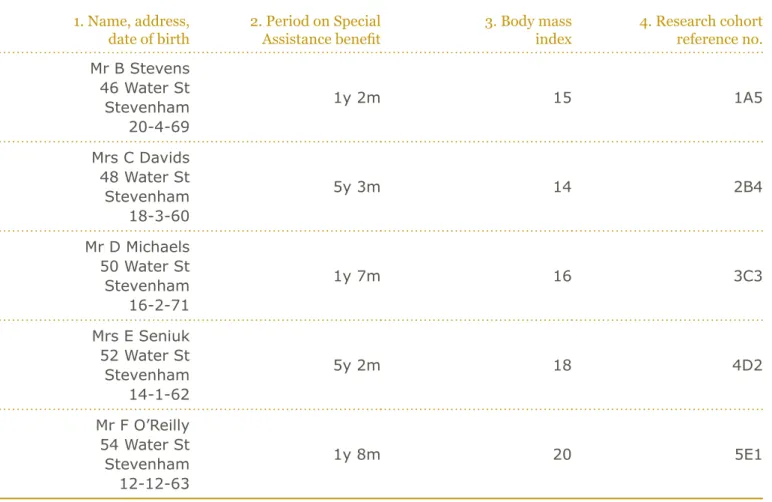
• Established fact might be that Mr B Stevens lives at 46 Sandwich Avenue, Stevenham. This could have been established by looking at an up-to-date copy of the electoral register.
• Personal knowledge might be that I know Mr B Stevens is
currently in hospital, because my neighbour – Mr Stevens’ wife – told me so.
The starting point for assessing re-identification risk should be recorded information and established fact. It is easier to establish that particular recorded information is available, than to establish that an individual – or group of individuals - has the knowledge necessary to allow re-identification. However, there is no doubt that non-recorded personal knowledge, in combination with
anonymised data, can lead to identification. It can be harder though to substantiate or argue convincingly. There must be a plausible and reasonable basis for non-recorded personal knowledge to be considered to present a significant re-identification risk.
Identification and the educated guess
Data protection law is concerned with information that identifies an individual. This implies a degree of certainty that information is about one person and not another. Identification involves more than making an educated guess that information is about someone; the guess could be wrong. The possibility of making an educated guess about an individual’s identity may present a privacy risk but not a data protection one because no personal data has been disclosed to the guesser. Even where a guess based on anonymised data turns out to be correct, this does not mean that a disclosure of personal data has taken place. However, the consequences of releasing the anonymised data may be such that a cautious approach should be adopted, even where the disclosure would not amount to a disclosure of personal data. Therefore it may be necessary to consider whether the data should be withheld for some other reason, as discussed later in this code.
This is clearly a difficult area of the law and in approaching questions of disclosure it can be helpful to look primarily at the possible impact on individuals and then to move on to the more technical issue of whether or not there is likely to be a disclosure of personal data subject to the DPA.
Information about groups of people
In some circumstances the release of anonymised data can present a privacy risk even if it does not constitute personal data and
cannot be converted back into personal data. This might be the case where the anonymised data points to a number of individuals,
Ensuring anonymisation is effective 27 eg the occupants of a group of households or those living within a
particular postcode area. Information that enables a group of people to be identified, but not any particular individual within the group is not personal data. Conversely, information that does enable particular individuals within a group – or all the members of a group – to
be identified will be personal data in respect of all the individuals who can be identified. There is no doubt that releasing information about groups of people can give rise to privacy and other risks. An obvious example would be where released information indicated that someone living in a small geographical area had committed a serious crime. Even though that individual is not identifiable, there might be a health and safety risk to all those in the area if reprisals were likely. Even if public authorities cannot rely on the ‘personal data’ exemption in FOIA to prevent the release of information like this, they may be able to rely on other exemptions, bearing in mind that the public interest may favour disclosure where an exemption is not absolute. Organisations that are not public authorities should also adopt an approach of balancing the risk that disclosure may pose to an individual or group of individuals against the benefit that might result from disclosure.
What if you create personal data from anonymised data? Initiatives such as open data, and the publication on the internet of information released under FOIA, mean that it is easier than ever to ‘harvest’ and analyse large amounts of data. This will include anonymised data derived from personal data and personal data itself. This means that the opportunity may arise for a ‘motivated intruder’ individual or organisation to combine, analyse and match publicly available data to create personal data anew or to link additional data to existing personal data, eg to find out more about a person.
If an organisation collects or creates personal data then it will take on its own data protection responsibilities in respect of the data. This could require it to inform the individuals concerned that data about them is being processed. This could clearly present reputational or legal problems, particularly where individuals would not expect your organisation to have personal data about them, or may find this objectionable.
The Information Commissioner will generally take the view that where an organisation collects personal data through a re-identification process without individuals’ knowledge or consent, it will be obtaining personal data unlawfully and could be subject to enforcement action.
The Information Commissioner is confident that adopting the techniques and procedures recommended in this code will guard against re-identification. However, in some cases re-identification may be a possibility. Where there is evidence of re-identification taking place, with a risk of harm to individuals, the Information Commissioner will be likely to take regulatory action, including the imposition of a civil monetary penalty of up to £500,000.
28 Do you need consent to produce or disclose anonymised data?
Key points
• Consent is generally not needed to legitimise an anonymisation process.
• Even if consent can be obtained it is usually ‘safer’ to use or disclose anonymised data.
• The Information Commissioner’s Office recognises that obtaining consent can be very onerous or even impossible.
Do I need consent?
The Data Protection Act 1998 (DPA) provides various ‘conditions’ for legitimising the processing of personal data, including its anonymisation. Consent is just one condition, and the DPA
usually provides alternatives. The DPA only gives the individual a right to prevent the processing of their personal data where this would be likely to cause unwarranted damage or distress. In the Information Commissioner’s Office (ICO)’s view, it follows therefore that provided there is no likelihood of anonymisation causing
unwarranted damage or distress – as will be the case if it is done effectively – then there will be no need to obtain consent as a means of legitimising the processing.
When is consent viable?
The publication of personal data based on an individual’s properly informed consent will not breach the data protection principles. Certainly, organisations that involve individuals and obtain their consent for the creation and disclosure of their personal data can stay inside the law and can build up an open and positive relationship with the individuals whose personal data they are processing. This could be the case, for example, where individuals agree to take part in a valuable but potentially quite intrusive longitudinal health study.
Obtaining consent for the anonymisation of personal data can be logistically very onerous, eg where large numbers of personal records are involved. It could even be impossible – eg where the personal data is old and there is no reliable means of contacting individual data subjects. This is often the case with historical
archives which may contain the personal data of individuals who are still living.
Do you need consent to produce or
disclose anonymised data?
Do you need consent to produce or disclose anonymised data? 29 What happens if consent is withdrawn?
However, there can be problems in an approach based on consent, particularly where this involves the publication of personal data. If an individual can give consent, the individual can withdraw it – and may want to do so because of a change in their personal circumstances, for example. Even if the withdrawal of consent stops the original data controller from further processing the personal data, in reality, it may be impossible to remove the data from the public domain. The withdrawal of consent may have little or no effect. It is therefore ‘safer’ to publish anonymised data than personal data, even where consent could be obtained for the disclosure of personal data itself. Consent and obtaining personal data
It is important to consider how the personal data you wish to anonymise was obtained originally. If, for example, the data was collected as part of a survey and individuals were told that it would be used for research purposes then clearly there will be no barrier to using the data for that purpose. In some cases individuals may have been given an assurance that personal data about them would only be used for a particular purpose, eg to despatch the goods they have ordered. Assurances of this nature should be respected, but very specific purpose limitation of this type is rare.
A more common scenario is for an organisation to have a collection of personal data obtained for a particular purpose or set of purposes, eg to administer individuals’ library services. In cases like this
individuals may never have been notified as to whether their data will or will not be anonymised for use in research purposes, for example. Organisations should address this in their privacy policies or by other means.
Anonymising personal data obtained under an enactment
In some cases it is a legal requirement that personal data is provided to an organisation. For example, employers are generally required to file tax returns about their employees with HMRC. However, even if individuals have no choice over the provision of their personal data, this does not mean that they have the right to stop the organisation anonymising it – provided the processing of their personal data in order to anonymise is not likely to cause unwarranted damage or distress. Of course the processing of personal data must also comply with the data protection principles, meaning it must be ‘fair’, for example. Note that some official bodies such as central government departments, may be subject to specific legal constraints on the use of the personal data – and other data assets - they hold.
30 Personal data and spatial information
Key points
There is no simple rule for handling spatial information – such as postcodes, GPS data or map references - under the Data Protection Act 1998 (DPA). In some circumstances this will constitute personal data, eg where information about a place or property is, in effect, also information about the individual associated with it. In other cases it will not be personal data.
The context of the related information and other variables, such as the number of households covered by a postcode, is key. It is clear, though, that the more complete a postcode - or the more precise a piece of geographical information - the more possible it becomes to analyse it or combine it with other information, resulting in personal data being disclosed. However, where spatial information is being published for a legitimate purpose, the objective should be to achieve the maximum level of detail that can be balanced with the protection of individuals’ privacy. A Privacy Impact Assessment (PIA) should be carried out to help you to do this.
The approach you should take to spatial information will also be guided by the size of the dataset you have; in some cases you may need to consider the position on a case by case basis. For example, this may be possible where a Freedom of Information Act 2000 (FOIA) request is for specific information linked to a postcode. In one decision, the Information Commissioner decided that burglary information linked to a particular postcode was not personal data – see Decision Notice FS50161581. In other cases you will have to take more global decisions about the status of different types of postcode or other spatial information.
In some cases it may be necessary to process spatial information to remove or ‘blur’ certain elements, to reduce the risk of
identification. For example, in England, when anonymising
postcodes the following average characteristics of postcodes should be considered:
• full postcode = approx 15 households (although some postcodes only relate to a single property)
• postcode minus the last digit = approx 120/200 households • postal sector = 4 outbound digits + 1 inbound gives approx
2,600 households
• postal district = 4 outbound digits approx 8,600 households
Personal data and spatial information
Personal data and spatial information 31 • postal area = 2 outbound digits approx 194,000 households
Source: Centre for Advanced Spatial Analysis: UCL
(‘Outbound’ is the first part of the postcode, ‘inbound’ the second part; for example with the postcode SV3 5AF, the outbound digits are SV3 and the inbound digits are 5AF.)
An alternative approach – and one that may result in more useful data and avoid the problems of inaccuracy and misinterpretation that the use of partial postcodes can create – is to use ‘replacement’ postcodes for real ones. This may allow researchers to retain the granularity and accuracy of data whilst minimising re-identification risk when publishing data on a postcode basis. However, this approach will not be feasible when publishing data for public use, given that individuals will want to find out information referenced according to real postcode areas.
With information relating to a particular geographical area, there can be a distinction between a “statistical comfort zone” that eliminates almost all risk of identification, and other forms of information that pose a risk of an individual being identified. Small numbers in small geographical areas present increased risk, but this does not mean that small numbers should always be removed automatically. For example, always removing numbers relating to five or 10 individuals or fewer may be a reasonable rule of thumb for minimising the risk of identification in a proactive disclosure scenario, but in the context of a specific freedom of information request a different approach may be possible, based on an application of the tests in the DPA.
It is important that organisations consider the different geographical units used in other anonymised disclosures. One organisation may disclose data linked to postcode, others by ward level. As far as they can, organisations that disclose anonymised spatial datasets regularly should work together to assess the risk of jigsaw identification
through overlapping geographical units. The Office for National Statistics website contains a useful guide to geographical units. Smart phones and GPS
Mobile devices such smart phones and GPS systems generate
significant amounts of detailed spatial information. It depends on how the systems operate as to whether the spatial information identifies and relates to an individual and is personal data. Often, many
organisations are involved in delivering the different layers of services on these devices, so identification issues become more complex. Organisations should consider how other unique identifiers (eg IP addresses) and other identifying information (eg names, addresses) are linked to the spatial information. In some circumstances
organisations who offer services related to smartphones or GPS will be processing personal data. The answer may be different, depending on what other information the organisation using the spatial