3D Microscopy Vision Using Multiple View Geometry and
Differential Evolutionary Approaches
A. Pahlavan Tafti, A. B. Kirkpatrick, H. A. Owen, Z. Yu
Biomedical Modeling and Visualization Laboratory
University of Wisconsin Milwaukee, WI, USA
Outline
•
Generic 3D Surface Reconstruction
•
Microscopic 3D Surface Reconstruction
•
Conclusion and Future Work
•
Method
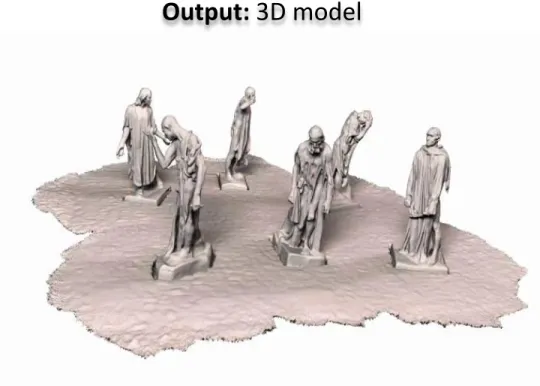
3D surface reconstruction refers to the process of creating 3D model from a set of 2D images.
Input: a set of 2D images Output: 3D model
Fig 1. Generic 3D surface reconstruction. This work was done by Computer Vision Laboratory at Stanford University in 2013. 11,230 images were captured and camera traversed over 184 meters. (http://vision.stanford.edu)
Microscopic 3D Surface Reconstruction
• To provide quantitative and visual information for microscopic samples.
• To create realistic anatomic shape from microscopic samples.
• To allow rotation and depth for further interpretation of microscopic objects.
• To effectively measure and visualize the surface properties of 2D images taken by a Scanning Electron Microscope.
Method
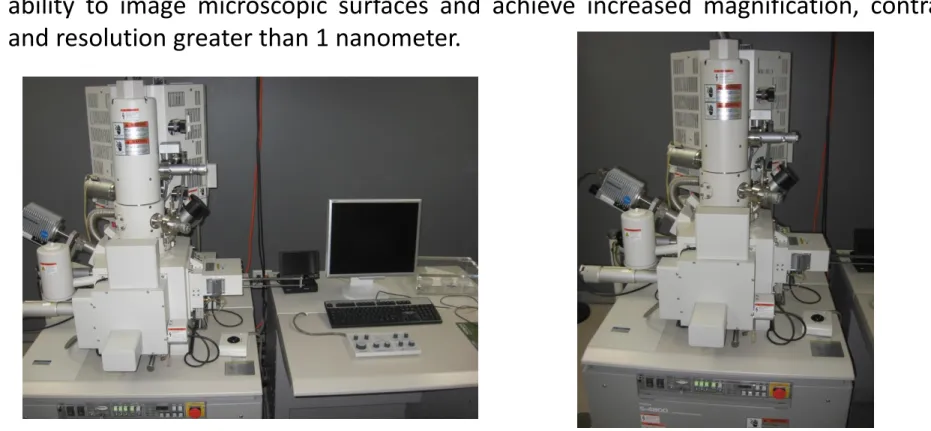
• A SEM offers an excellent capability to overcome the limitation of the human eye by its ability to image microscopic surfaces and achieve increased magnification, contrast and resolution greater than 1 nanometer.
The Scanning Electron Microscope (Contd.)
Fig 2. SEM is a type of electron microscope that produces images with a focused beam of electrons. Image courtesy
Method
The Scanning Electron Microscope (SEM)
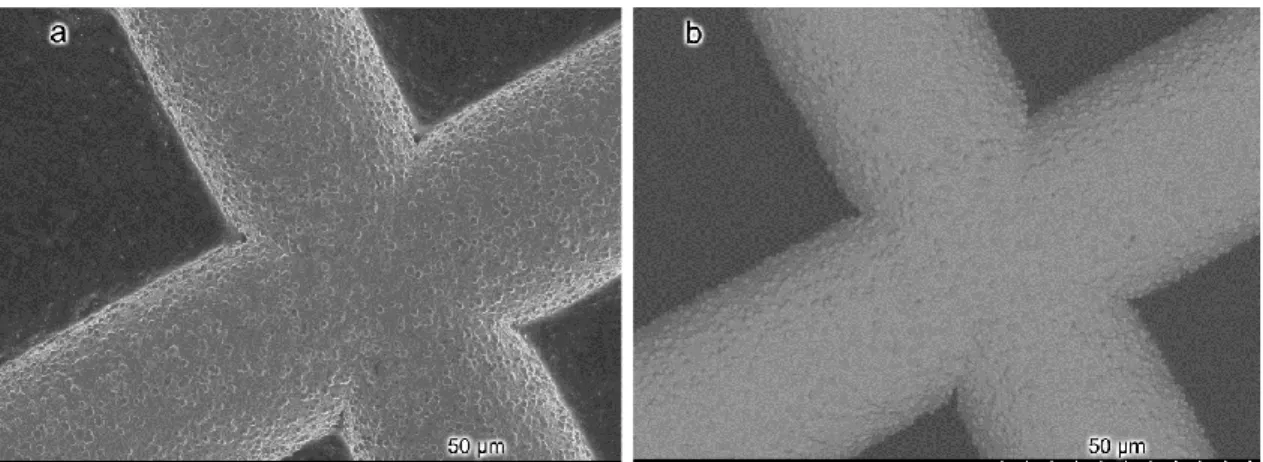
Fig 3. Secondary electron (SE) and Backscatter (BSE) micrographs of a copper TEM grid. SE micrograph (a) exhibits
greater resolution and topography on the surface of the grid as well as in background. BSE micrograph (b) exhibits
greater contrast and brightness between materials comprising the sample. Resolution compared to SE micrograph
Method
3D SEM Surface Reconstruction System (Contd.)
Fig 4. The proposed system for 3D SEM surface reconstruction. We use Projective Geometry (Multiple View Geometry) to initialize a 3D model, then perform Differential Evolutionary (DE) algorithm to refine both SEM parameters and 3D shape model.
• Using the general pipeline of multi view 3D reconstruction, we normally initialize the 3D points and extrinsic parameters with some error thresholds.
• Suppose that we are given two 2D images with N matching points, then the aim is to estimate six parameters for modeling the camera motion (R and t known as extrinsic parameters) and N*3 for the 3D points Xi by minimizing the following projection error:
• Parameterizing the space of rotation and translation is the most important portion of the problem.
• In order to have better flexibility, the quaternion parameterization is applied to 3D rotation representation.
Method
• A quaternion z = a + bi + cj + dk, where a, b, c, d are real numbers and i2 = j2 = k2 = -1,
and z is a unit quaternion if and only if:
• Then the rotation matrix representation is as follow:
• We denote the translation vector of the second position with respect to the first position as
t = (t
x; t
y; t
z)
TMethod
• By considering the previous equations for rotation parameterization and t for translation, then the parameterization of two projection matrices will be determined by a seven dimensional vector as follow:
• The final optimization is:
• We use Differential Evolution to solve the above equation.
Method
• DE is a minimization strategy using generated populations within the parameter space. This method first generates an initial population randomly, then iteratively updates them to estimate the best possible values for an optimization problem.
The parameters CR ∈[0; 1] and S ∈ [0; 2] will be obtained
by performing several experiments on the problem.
Method
Sample #1
Data (Sample) Tapetal
# 2D Images 4
Tilting 9 Degree between each
# 3D points 1129
Resource EM Laboratory, Biological Science Department, UWM
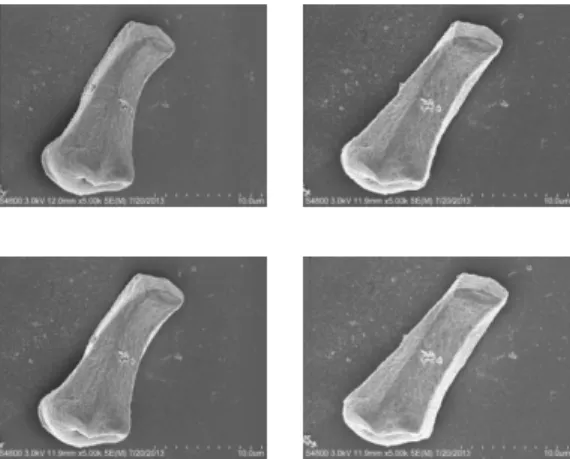
Fig 5.We took multiple 2D images from a Tapetal
cell using Scanning Electron Microscope (SEM).
Fig 6. We generated a 3D model of a Tapetal cell using only its 2D images. We solved inverse problem going from 2D to 3D.
Going from 2D to 3D
Experimental Validations
Sample #2
Data (Sample) Diatom
# 2D Images 3
Tilting 15 Degree between each
# 3D points 531
Resource EM Laboratory, Biological Science Department, UWM
Fig 7. We took multiple 2D images from a Diatom Frustule using Scanning Electron Microscope (SEM).
Fig 8. We generated a 3D model of a Diatom
Frustule using only its 2D images. We solved inverse problem going from 2D to 3D.
Going from 2D to 3D
Experimental Validations
1.
1.
Experimental Validations
1.
Experimental Validations
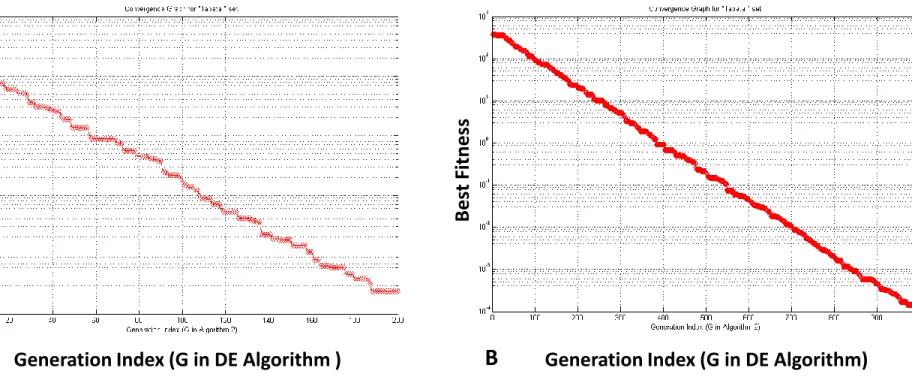
Generation Index (G in DE Algorithm ) Generation Index (G in DE Algorithm) B es t Fi tnes s B es t Fi tnes s A B
Fig 9. Convergence graph comparison for the “Tapetal” set. In this experiment we only used two images tilting by 9 degree with 509 3D points. (A) and (B) show the results on a different number of generations obtained with G=200 (A) and G=1000 (B).
Experimental Validations
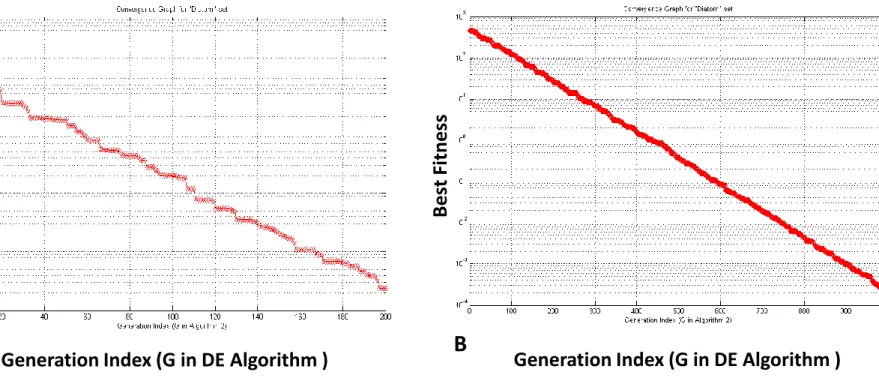
Generation Index (G in DE Algorithm ) Generation Index (G in DE Algorithm ) B es t Fi tnes s B es t Fi tnes s B es t Fi tnes s
Fig 10. Convergence graph comparison for the “Diatom” set. In this experiment we only used two images tilting by 15 degree with 317 3D points. (A) and (B) show the results on a different number of generations obtained with G=200 (A) and G=1000 (B).
A B
Experimental Validations
Fig 11. A set of seven 2D images of the synthetic "Face" model along with its 3D shape structure are shown in this figure. These images were tilted 10 degrees from one to the next in the image sequence. 4097 3D points were used in the experiment to compare the accuracy on 3D shape modeling. Comparing results are shown in Table 4.
Experimental Validations
Experimental Validations
• Our approach combines Projective Geometry with Differential Evolutionary algorithm to restore the 3D surface model of various objects from micro size to macro.
• The main focus of this research project was to increase the reliability and accuracy of SEM 3D surface reconstruction from multiple views.
• The present work is expected to bridge the gap between microscopy imaging and computer vision community, opening the doors for different interesting directions from the computer vision community to this fast-growing application area.
• Future direction would be to increase the robustness of the algorithm by better handling the matching points at the first step to get rid of the outliers, increasing the speed of the process.