ScholarWorks
Walden Dissertations and Doctoral Studies Walden Dissertations and Doctoral StudiesCollection
2019
Faculty Perceptions of Student Experiences
Regarding the Use of MyFoundationsLab
Kathy E. Clarke-Cook Walden University
Follow this and additional works at:https://scholarworks.waldenu.edu/dissertations Part of theInstructional Media Design Commons
This Dissertation is brought to you for free and open access by the Walden Dissertations and Doctoral Studies Collection at ScholarWorks. It has been accepted for inclusion in Walden Dissertations and Doctoral Studies by an authorized administrator of ScholarWorks. For more information, please [email protected].
Walden University
College of Education
This is to certify that the doctoral study by
Kathy Clarke-Cook
has been found to be complete and satisfactory in all respects, and that any and all revisions required by
the review committee have been made.
Review Committee
Dr. Earl Thomas, Committee Chairperson, Education Faculty Dr. Olga Salnikova, Committee Member, Education Faculty
Dr. Anita Dutrow, University Reviewer, Education Faculty
The Office of the Provost
Walden University 2019
Faculty Perceptions of Student Experiences Regarding the Use of MyFoundationsLab by
Kathy Clarke-Cook
MPM, Keller Graduate School of Management MA, University of Warwick
BA, University of the West Indies
Project Study Submitted in Partial Fulfillment of the Requirements for the Degree of
Doctor of Education
Walden University December 2019
MyFoundationsLab (MFL) was implemented to complement math instruction and increase student performance in developmental/transitional algebra courses. However, student learning outcomes at the college under study demonstrated that some students were still unsuccessful in passing their math course (i.e., Summer 2015:30%, Fall 2015: 27.2%, Spring 2016: 41.6%). The problem addressed in this study explored the learning experiences of students, via a faculty lens, who were unsuccessful in their math course instructionally supported by MFL. Bandura’s theory of reciprocal determinism, the technology acceptance model, and the ARCS model of motivational design were used in this qualitative case study to examine the perceptions of 4 faculty regarding student
experiences withMFL; faculty were selected through purposeful sampling. The research
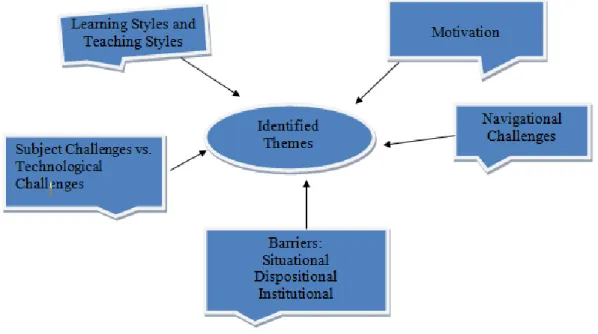
question explored faculty perceptions of students who failed math while using MFL in addition to the overall learning experiences of students in using the learning system. The major themes that resulted from data analysis through semistructured interviews were student challenges with technology, learning barriers that students experienced, and faculty teaching influences. The emerging project was a faculty professional development seminar emphasizing teaching strategies that supported MFL instruction and faculty in-class teaching. The findings of the study can positively impact social change through affording students positive learning experiences that encourage them to persist in college and ultimately contribute to the economic growth of their communities.
by
Kathy Clarke-Cook
MPM, Keller Graduate School of Management MA, University of Warwick
BS, University of the West Indies, Cavehill
Project Study Submitted in Partial Fulfillment of the Requirements for the Degree of
Doctor of Education
Walden University December 2019
This study is dedicated to my family, particularly my father who was unable to witness the achievement of this significant milestone in my life.
I would like to thank Dr. Earl Thomas and Dr. Olga Salnikova for their guidance and support as I completed this doctoral study. Thank you for sharing this academic and personal journey with me.
i
List of Tables ... vi
List of Figures ... vii
Section 1: The Problem ...1
Introduction ...1
Definition of the Problem ...3
Rationale ...11
Evidence of the Problem at the Local Level ... 11
Evidence of the Problem from the Professional Literature ... 14
Definitions...16
Significance of the Study ...18
Guiding/Research Question ...19
Review of the Literature ...19
Conceptual Framework ... 20
Motivational Theories ... 25
Intrinsic and extrinsic motivation ... 26
Relevance of the Technology Acceptance Model ... 28
Review of the Broader Problem ... 30
Purpose of Developmental Coursework ... 31
Human Resources Perspective of Developmental Education ... 32
Improving Student Success ... 33
Technology and Computer-Assisted Instruction ... 34
ii
Self-Directed Learning and Self-Efficacy ... 40
Perceptions of Technology ... 42
Mastery Learning ... 44
Implications...46
Summary ...47
Research Design and Approach ...49
Justification of the Research Design ...50
Participants ...51
Justification for the Number of Participants ... 52
Access to Participants ... 53
Researcher-Participant Working Relationship ... 54
Ethical Protection ... 56
Data Collection ...57
Semistructured Interviews ... 57
Role of the Researcher ... 59
Data Analysis ...59
Analysis of Semistructured Interviews ... 62
Validity and Reliability ... 63
Evidence of Quality and Procedures ... 64
Discrepant Cases ... 65
Limitations ... 65
iii
Narrative Discussion of Findings...69
Finding 1: Navigational Challenges... 69
Finding 2: Learning Barriers ... 76
Finding 3: Subject Challenges vs. Technological Challenges ... 81
Finding 4: Learning Styles and Teaching Styles ... 82
Finding 5: Motivation ... 86
Addressing Discrepant Cases ... 88
Evidence of Quality ... 88
Summary ...89
Section 3: The Project ...91
Introduction ...91
Description and Goals ...91
Rationale ...92
Review of the Literature ...94
Theoretical Framework ... 95 Faculty Development ... 100 Blended Learning ... 106 Differentiated Instruction ... 108 Self-Directed Learning... 109 Project Description...110
Potential Resources and Existing Supports... 111
iv
Roles of Participants and Facilitator ... 114
Project Evaluation Plan ...114
Project Implications Including Social Change ...117
Local Community ... 117
Far-Reaching ... 117
Conclusion ...118
Section 4: Reflections and Conclusions ...119
Introduction ...119
Project Strengths ...119
Recommendations for Remediation of Limitations ...120
Recommendations for Alternative Approaches ...121
Scholarship ...122
Project Development and Evaluation ...123
Leadership and Change ...124
Analysis of Self as Scholar ...125
Analysis of Self as Practitioner ...126
Analysis of Self as Project Developer ...126
Reflection on the Importance of the Work ...127
Implications, Applications, and Directions for Future Research ...128
Conclusion ...129
Appendix A: The Project ...169
v
Appendix D: Permission to Use ...209 Appendix E: Fair Use Permissions for Reference ...211 Appendix F: Evaluation ...212
vi
Table 1. Comparison of Semester Pass Rates and Failure Rates- MATH 062 ... 8 Table 2. Comparison of Semester Failure Rates and Withdrawal Rates- MATH 062 ... 12 Table 3. Braun and Clarke's Seven Stages of Thematic Analysis ... 61 Table 4. Alignment of Data Analysis Themes and Themes in Professional Development Seminar ... 112 Table A1. Seminar Schedule... 172
vii
Figure 1.Triadic interplay in reciprocal determinism ... 21 Figure 2. Summary of identified themes emerging from data analysis ... 67
Section 1: The Problem
Introduction
A lack of preparedness in students entering college has not only become a cause for concern, but it has also increasingly become a major topic for research (Moore et al., 2010; The National Center for Public Policy and Higher Education, 2011). By virtue of placement testing, students who are not adequately prepared for college-level study can be required to enroll in developmental coursework (sometimes referred to as transitional or remedial courses) before proceeding onto college-level coursework (Belfield & Crosta,
2012). Developmental coursework is offered to students enrolled at community colleges,
4-year colleges, and universities (Benken, Ramirez, Li, & Wetendorf, 2015; Biswas, 2007). While English and math emerge as areas that students are deficient in, math is regarded as the most common subject area requiring remedial coursework (Radford, Pearson, Ho, Chambers, & Ferlazzo, 2012).
Offering developmental coursework so that underprepared college and university students can meet the rigors of college-level coursework and encouraging them to complete coursework may positively impact student retention. According to Fike and Fike (2012), “Developmental mathematics outcomes have a measurable impact on overall academic outcomes, not just students’ success in mathematics courses” (p. 8). Course redesign in mathematics, specifically including technology by way of self-paced computer-assisted instruction (CAI), has become a means of better engaging students in particularly high enrollment classes and enhancing learning outcomes (Ariovich & Walker, 2014; Twigg, 2011). Zientek, Skidmore, Saxon, and Edmonson (2015)
contended that technology has aided the transformation and delivery of developmental education. Nevertheless, agreement has been divided as to whether technology has contributed to students’ understanding of math and their successful learning outcomes (De Witte, Haelermans, & Rogge, 2015; Holt, Holt, & Lumadue, 2012; Zavarella & Ignash, 2009). The concern expressed about the inclusion of technology in course redesign of mathematics may be warranted. The inclusion of technology into the math curriculum suggests that students are expected to not only master the components of the curriculum but to also acclimate themselves to the technology that they must use to achieve curriculum objectives.
As technology becomes more inclusive to academic curricula, students may be required to become self-directed, self-motivated, and independent as learners (Caravello, Jimenez, Kahl, Brachio, & Morote, 2015). The inclusion of technology into curricula can change the time, place, and pace of student learning as well as the context in which students learn (Hall & Villareal, 2015). The change in the way that learning occurs for students when technology is incorporated may have its high points and challenges. Students appreciate the flexibility and self-pacing aspect but contend that time
management in using technology may be delimiting (Kegley, Toteva, & Wolf, 2016). The aforementioned observations pointed to the facilitating and impeding factors that may be associated with technology inclusion.
Students may not possess an innate capacity to be directed or exhibit the self-discipline that e-learning or self-paced computer programs require (Jones, 2013). The integration of technology into the learning process may call for a level of learner
independence and students may prefer a more dependent instructor-led learning environment that reduces the responsibility on them for learning (Broadbent & Poon, 2015). Self-motivation may be compromised if students perceive minimal progress and success in using a self-paced computer program or do not feel comfortable with using technology (Broadbent & Poon). Students may experience math anxiety (Andrews & Brown, 2015) in using technology that accompanies course curricula.
In Section 1, I define the problem of the study along with providing a rationale for the study based on evidence of the problem at the local level and evidence from the professional literature. In addition, the section includes the guiding research question of the study and the conceptual framework, supportive themes, and theories that underpin the purpose of the study are highlighted. A summary concludes the section.
Definition of the Problem
From an organizational perspective at the college under study, there was a lack of understanding concerning how effectively or the extent to which using technology contributed to students’ understanding of math. Students faced challenges in terms of their self-directedness and self-efficacy in using MyFoundationsLab (MFL), a “complete online mastery-based resource” (Pearson Education, 2018, para. 1) that reinforced the concept of mastery learning. Mastery learning stressed that “the more time spent instructing leads to a greater percentage of mastery” (Cooperman, 2011, p. 54). As it related to the time factor in using technology, Ye and Herron (2012) reported a positive correlation between computer lab hours and final exam scores for students enrolled in intermediate and college algebra using a computer-based math program. However,
students enrolled in MATH 062, a transitional introductory algebra course instructionally supported by the use of MFL at the college study site, demonstrated a failure rate worthy of review. According to an internal report from the organization under study, the failure rate of students during the following teaching semesters was: Summer 2015: 30%, Fall 2015: 27.2%, and Spring 2016: 41.6%.
I use the terms transitional and developmental interchangeably in this study
because the institution on which the study was based, formerly used the term developmental to describe its skills development courses or courses that served to reinforce appropriate skills so that students could advance to college level courses. As of the November 2014 teaching session, the term developmental was changed to embrace the term transitional, which better expressed the status of students. However, content wise, the transitional level courses still have a skills development function that aligns with how the literature views the function of developmental courses. Additionally, although other colleges have substituted the term transitional for developmental, the literature appeared to be deficient in using the term transitional.
The use of MFL allowed for a personalized learning experience as students worked at an individual pace, and the learning platform has been lauded as a technology that “can positively impact student learning and success rates” (Speckler, 2012, p. 105). Students were expected to develop mastery of mathematical concepts as they worked in MFL. Mastery of mathematical concepts and problems was tracked and monitored through formative assessments built into the learning platform. Formative assessment
assists students in addressing their learning difficulties and mastering the desired learning outcomes (Guskey, 2010).
The inclusion of technology into math coursework assumes that students naturally possessed an equal learning disposition and will all be successful in their math course (Kohler, 2012). However, students should be permitted to master math content rather
than fall victim to the digital divide, which may hamper their learning (Boylan, 2011, p.
26). Moreover, Dawson, Macfayden, Risko, Fousham, and Kingstone (2012) argued that educational technology, if strategically designed, can engender self-directed learning skills.
MFL complemented the traditional, face-to-face classroom time for students enrolled in the onsite format of developmental math. This teaching format constituted blended learning, which is premised on a combination of face-to-face classroom time and online learning (Allen & Seaman, 2013). MFL was similarly used for students enrolled in the online format, but for the purposes of this study the focus was on students enrolled in the onsite format. In the onsite format, during class time, instructors would deliver a minilecture on a module of a specific concept within the curriculum and students would complete the related assignments, homework, and tests in MFL.
Students’ commitment level to earning a passing grade in developmental
mathematics may have been challenged by a hybrid learning format, whichcombined a
traditional classroom lecture with MFL, and students may have experienced challenges as they acclimated to directedness with learning technology that requires their self-pacing (see Kohler, 2012). In addition to self-directedness and self-self-pacing, the format of
MFL required a level of independence from students which prompted them to schedule and manage their time appropriately in order to complete task assignments. The diagnostic and adaptive design of MFL further reiterated that students should work independently (Griffiths, Chingos, & Mulhern, 2015).
Moeller and Reitzes (2011) stated that “43 percent of students feel unprepared to use technology as they look ahead to higher education or their work life” (p. 5). In addition, students’ progress may be affected by their self-belief or self-efficacy, time management, and self-regulation (Puzziferro, 2008). Students arrive at college with mixed levels of technology expertise that may be influenced by their “gender, socio-economic status, and racial background” (Goode, 2010, p. 583).
The inclusion of technology into the learning curriculum can encourage or discourage learner self-directedness. Hyland and Kranzow (2011) expressed that as technology is incorporated into learning it encourages the self-directed activity of students; however, feedback from students in their study revealed that while technology improved students’ performance, it did not specifically drive self-directed learning. Love, Hodge, Grandgenett, and Swift (2014) examined the merits of the flipped classroom whereby students reviewed course materials and concepts outside of classroom time using Web-based online educational tools, and “class time is reserved for more active, problem-based learning and practice activities” (p. 318). The perceived advantages of the flipped classroom model emphasized the self-paced learning of students, their ability to access and review online materials as frequently as needed, and their utilization of class time to engage with each other and the instructor to deepen knowledge and heighten
problem-based learning (Love et al., 2014). The objectives of the flipped model, especially the strategic incorporation of technology into the learning process and the intent for learners to self-pace and assume responsibility for their learning, bear similarity to the teaching and learning paradigm incorporating MFL.
At the private, for-profit university under study, students are enrolled in
transitional mathematics coursework (formerly referred to as developmental) as a result of placement testing scores that measure their college readiness. Students are permitted to enroll concurrently in transitional mathematics coursework (e.g., MATH 062 Beginning Algebra) alongside college-level coursework that can give them incentive to complete their transitional coursework and commit to the entirety of their degree program. This
methodaligns with reforms that recommendconcurrent enrollment as opposed to
singling out instruction for developmental courses (Edgecombe, 2011). Such an
enrollment arrangement affords students the opportunity to be part of the mainstream college audience and does not confine them to a developmental or remedial category.
Based on the structure of MFL as a learning platform, students are expected to engage with the technology and perform academically. Students are required to pass their math course with an A or B grade. While there is evidence that students are achieving progress in learning outcomes, I examined the failure rate of students enrolled in this hybrid format at the college under study to explain why some students are unsuccessful in coursework. Table 1 provides a comparative view of pass rates and failure rates in
Table 1
Comparison of Semester Pass Rates and Failure Rates- MATH 062
Semester Year A/B pass rate % Failure rate %
Summer 2015 46 30
Fall 2015 47.7 27.2
Spring 2016 50 41.6
The value of exploring the failure of students in transitional mathematics can be cast within the context of persistence and college completion (i.e., the need to increase college graduation numbers), which has become a documented concern (Bettinger & Long, 2009; Bonham & Boylan, 2011; Bundy, 2013; Thomas, 2014; Wolfle, 2012). The interest in college completion has been further fueled by President Obama’s objective to increase the number of college graduates by 2020 (Humphreys, 2012). It is estimated that 37.9% of full-time students attending 4-year institutions earn a bachelor’s degree within 4 years (Dunlop Velez, 2014).
The results of research have highlighted “positive perceptions of online learning across ethnicity and gender” (Ashong & Commander, 2012, p. 105). While Tsai and Tsai (2010) concluded that male students are more comfortable with the use of technology, Johnson (2011) concluded that female students expressed more satisfaction with their experience in using technology. However, there appeared to be a lack of research that addressed students’ perceptions of technology in facilitating or prohibiting their success in developmental math, particularly students in hybrid learning courses. In hybrid learning, according to Yang and Chang (2012), “the instructor designs the classroom instruction and becomes more of a facilitator to engage learners through
computer-mediated communication” (p. 128). Elsewhere, Frantzen (2014) described that hybrid courses “offer some combination of online and FTF interaction between the instructor and student” (p. 566). Hybrid learning is sometimes used interchangeably with blended learning, and according to Snodin (2013), when a course management system was incorporated into a face-to-face environment in a move to promote blended learning, learners developed autonomy in learning that was not apparent in the conventional face-to-face situation.
In some studies addressing developmental mathematics, researchers have focused on comparing withdrawal and completion rates based on instructional formats or
comparing the academic performance of students based on delivery or learning formats (Ashby, Sadera, & McNary, 2011; Jones & Long, 2013; Lenzen, 2013). While there has been a focus on student perceptions of technology and online learning along gender lines and the effects of delivery and learning formats on academic outcomes, there is a need to explore faculty perceptions of student experiences in using MFL and whether the learning platform prohibits or facilitates their success in transitional mathematics. An exploration of faculty perceptions of how students cope with MFL can add to the existing literature and can provide insight on student experiences with regard to the suitability of the technology impacting learning.
Concern about student academic performance in developmental math coursework has further resulted in state-based redesign programs targeting and realizing improvement in college readiness in math (Abraham, Slate, Saxon, & Barnes, 2014). Efforts geared towards resolving persistence and ultimately graduation rates have underpinned the
redesign of developmental coursework (Complete College America, 2012). Redesign has included combining remedial coursework with college-level coursework, reinforcing support for students enrolled in remedial coursework, and focusing on strengthening students’ skills prior to enrolling in college (Rutschow & Schneider, 2011). The National Center for Academic Transformation has been instrumental in promoting math course redesign within colleges via the use of the emporium model, which utilizes “instructional software, including interactive tutorials, practice exercises, solutions to frequently asked questions, and online quizzes and tests” (The National Center for Academic
Transformation, 2005, para. 21). However, course design and not the needs of learners can drive the development of the technology for course delivery (Chaney, Chaney, & Eddy, 2010). In this regard, while the move to integrate technology into the curriculum can be a worthy one in enhancing the learning of students, there is an underlying
presumption that all students start with similar skills, abilities, and learning capacity as it relates to the effective use of technology.
The extent that students remain engaged by MFL and whether this instructional format potentially presents a barrier to learning or enhances learning can be questioned. Exploring faculty perceptions of student experiences in using technology in
developmental math coursework can lead to an increased understanding of how students perceive the technology in facilitating their learning. The growing use of technology within the education arena demands that educators acknowledge the factors affecting students’ proficiency with technology (McCoy, 2010). Equally important is the obligation of institutions to consistently investigate the efficiency of learning platforms utilized in
developmental math (Leong & Alexander, 2014). As a best practice, learning institutions should consistently undertake a review and assessment of learner technology that is integral to the curriculum. The review should not only highlight the functionality and efficiency of the technology as it relates to student learning, but the review should also examine the relationship between the technology, student learning styles, student learning outcomes, and instructor teaching styles. To this end, an agenda of improving student learning is fostered and is conveyed as a priority on the part of learning institutions.
Rationale Evidence of the Problem at the Local Level
Student learning outcomes are continuously recorded for all courses, onsite and online, across the private, for-profit university in this study. While there is documented evidence that students are successfully completing developmental mathematics using MFL, this was not true for all students (Bailey, Jeong, & Cho, 2010). Documented learning outcomes, as in final session grades for enrolled students in MATH 062,
demonstrated that students not only fail but also voluntary withdraw from developmental mathematics. The inclusion of technology in mathematics courses should promote equality of educational opportunities for students and aid in their success and completion of math curriculum objectives. However, a gap exists in terms of student achievement due to challenges in student motivation and comfort levels in using MFL.
Table 2 summarizes the failure rates and withdrawal rates of students enrolled in MATH 062 over three sessions: Summer 2015, Fall 2015, and Spring 2016. There may be varied reasons why students fail or withdraw from MATH 062. For example, students
may be challenged in acclimating to the MFL technology or feel challenged by
mathematical content in the curriculum. The possible reasons that may explain the failure and withdrawal of students are worthy of investigation.
Table 2
Comparison of Semester Failure Rates and Withdrawal Rates- MATH 062
Semester Year Number
enrolled
Failure rate % Withdrawal rate %
Summer 2015 50 30 24
Fall 2015 44 27.2 25
Spring 2016 24 41.6 8.33
A lack of computer literacy, challenges with time management, and maintaining
self-motivation may impact student engagement with technology (Kumar, 2015). Academic and dynamic factors can also hinder student persistence in developmental mathematics (Davidson & Petrosko, 2015). Students may encounter challenges in adapting to learning that incorporates face-to-face learning and technology; however, their success as self-directed learners and ability to engage with technology may be achieved if they have well-developed learning processes in the face-to-face context (Lee, Tsai, Chait, & Koht, 2014). In addition to these challenges, the integration of technology with course curricula and, specifically, its potential to be a one-size-fits-all for learners has been examined (Frantzen, 2014; Lichy, Khvatova, & Pon, 2014). While the
opportunity to use technology to enhance student learning may have its merits, there appear to be disadvantages to using the technology to engage students. In addition,
whether the inclusion of technology in course curricula suits the varied learning styles of learners may need to be considered.
Increasing the pass rate of students enrolled in MATH 062 would justify the continued delivery of transitional courses and their usefulness to students who arrive at college with deficient math skills. At the organization under study, students must pass transitional math before they can progress to a college level math course. An increase in the pass rate would not only facilitate course progression for students but it could also help to reduce the negative perception that is sometimes associated with transitional courses.
Stewart (2012) noted the meaningful benefits derived from implementation of MyMathLab (MML) (i.e., a learning platform similar to MFL), such as increased attendance “from 40 percent to 80 percent” (p. 12), improved retention, and student performance. Additionally, withdrawal rates for students enrolled in MML classes were lower than those of the traditionally taught classes (Stewart, 2012). The difference in withdrawal rates vis-a-vis MML and traditionally taught classes may be an indirect suggestion or indication that students prefer the MML format. Although the observation does not specifically reference MFL (i.e., the learning platform that informed this study) for practical purposes, it sheds light on the potential of learning platforms and their connection with student learning preferences.
While learning outcomes show variations in students achieving success while enrolled in MATH 062 using MFL®, the significant role that faculty play in acclimating and helping students transition to learning technology platforms such as MFL and
achieving learning objectives should be acknowledged. Authenticating the student experience could possibly be explored through a discussion with faculty who have
actually experienced the technology and are privy to student perceptions and experiences.
Evidence of the Problem from the Professional Literature
Sixty two percent of students enrolled in 2-year colleges complete remediation courses, while only 9.5% actually graduate within 3 years; in comparison, at 4-year colleges, 74.4% of students complete remediation courses, while 31.5% graduate within 6 years (Complete College America, 2012). Further, according to the Sparks and Malkus (2013) and based on students’ self-reporting enrollment in remedial courses, first-year undergraduates taking remedial courses totaled 26% of course enrollment in 1999-2000, 19% in 2003-2004, and 20% in 2007-2008. The preceding data present the scope of remediation and graduation rates and the potential enrollment of students in
developmental or remedial courses. In 2011, 75% of first-year students required
remediation in one developmental subject, while a quarter of first-year students required remediation in all three developmental areas: reading, writing, and mathematics
(Foderaro, 2011).
While course redesign to include technology in developmental mathematics has prompted improvements in student performance, technology should not only be
leveraged to enhance curriculum delivery but should also be used to filter and identify at-risk students enrolled in those courses (Wladis, Offenholley, & George, 2014). Students, nevertheless, have commended the benefits of using technology, specifically a Web-based program, for remedial math (Leong & Alexander, 2014). Ease of accessibility to
the Web-based program, the asynchronous nature of the program, the instant feedback on attempted problems, and the ability to complete coursework “regardless of location” are some of the cited benefits perceived by students (Leong & Alexander, 2014, p. 613).
Disadvantages cited by students regarding their experiences highlighted that the learning technology was more fixated on the correct answer to problems and not process-oriented in solving problems as well as a lack of feedback on problems with incorrect
responses (Leong & Alexander, 2014).From a comparative viewpoint,an empirical study
conducted by Zogheib, Rabaa’i, Zogheib, and Elsaheli (2015) confirmed that students will utilize MML if they are convinced of its ease of use and ability to support their
educational needs.Likewise, students may perceive educational technology in terms of
how it contributes to their overall learning. Again, although not specific to MFL®, an empirical study of the topic helped to understand students’ attitude towards technology. Fish (2013) found that at least 50% of undergraduate and graduate students favored a “computer-managed homework system over traditional methods” (p. 64). The viewpoint of students is significant and shows that they can have mixed feelings when technology is incorporated into their learning.
The findings of extent studies not only indicate that some students may have varied perceptions regarding the incorporation of technology or a learning system like MFL to support their learning. The results also indicate that some students may prefer one learning method over another or regard the use of technology as a means to an end in advancing their learning. The input of faculty into the learning process of students using MFL may manipulate how students perceive and react to the technology.
Faculty attitudes or perceptions of the learning outcomes of students enrolled in transitional or developmental mathematics using MFL seem to be lacking in the
literature. The literature speaks to a range of faculty impressions regarding technology, including perceptions of students using personal technology, perceptions of teaching online, perceptions about innovation in teaching technology, and perceptions of
instructional technology practices in developmental education relative to MML (Bayless, Clipson, & Wilson, 2013; Kopcha, Rieber, & Walker, 2015; Martirosyan, Kennon, Saxon, Edmonson, & Skidmore, 2017; Wingo, Ivankova, & Moss, 2017). Therefore, the purpose of this study was to explore how faculty described the perceptions and
experiences of students who failed MATH 062 using MFL as a learning system.
Definitions
Computer-assisted instruction: This instruction uses preprogrammed formats, drill-and-practice, and simulation programs to assist students in learning and retaining math content (Gross & Duhon, 2013). The instruction may be used as a tool to
supplement learning or as a primary tool for student learning.
Developmental education or remedial education: The terms are used interchangeably in the field of postsecondary education to refer to basic skills and
preparatory education. Essentially, they refer to courses offered to underprepared students who enter college lacking the appropriate skills for performing college level coursework. However, some colleges, for example in Tennessee, may use developmental in reference to courses immediately below college level and remedial in reference to students who are overly underprepared (Boatman, 2012).
Experience: According to Kolb (2015), experience “includes in its range perceptual acts and the anticipation of concepts” (xxii). Kolb further explained that experience “involves both the knowledge and evaluation of objects, events, and
situations” (p. xxii). In the context of the study, students engage with technology, MFL, and their engagement or experience with the technology can affect how they feel towards it.
MFL: A mastery-based online program and diagnostic tool used in math and other
subjects to help remediate student skills. Based on a diagnostic assessment, students develop learning paths that direct them in mastery learning of math (Pearson Education, 2016). Additionally, MFL is adaptive and provides students with an individualized, modular-based learning experience. Interactive exercises and online tutorials assist students in achieving successful learning outcome.
Online learning: According to Means, Bakia, and Murphy (2014), “online
learning refers to a learner’s interaction with content and/or people via the Internet for the purpose of learning” (p. 6). Additionally, Means et al. contended that in defining online learning and using it to describe a learning format, the proportion of learning that is actually Web based should be considered.
Perception: “The process by which people select, organize, and interpret (recognize) the sensory information, the act of understanding what the sensation represents” (Van Selst, 2014, slide 2). Essentially, perception refers to how individuals personally process and experience the world around them.
Significance of the Study
Developmental education not only contributed to the premature dropout rate of college students, but students have also successfully completed developmental education and completed degree objectives. In terms of significance, exploring faculty perceptions of student experiences in using MFL shed light on the appropriate selection of learning formats for students enrolled in developmental/transitional math, MATH 062, within the organization under study. The benefits and hindrances in using MFL have become clearer from a teaching and learning standpoint involving both faculty and students. The
perceptions of faculty have provided an understanding as to what needs to be done in curriculum and instructional development to provide a better learning experience for students.
Findings from this study served as a catalyst for honing in on faculty teaching approaches and strategies for supporting students. Although it has been highlighted that college remediation is more diversionary as opposed to assisting in developing students’ skills, it does not necessarily prevent student progress or persistence (Scott-Clayton & Rodriguez, 2014). Further study that includes the direct viewpoint of students and their experiences is necessary.
It is projected that by 2020 there will be 55 million new job opportunities and two thirds of those jobs will require postsecondary education (Carnevale, Smith, & Strohl, 2013). Therefore, the need to ensure that educational opportunity results in course completion and ultimately into degree completion is rather significant (Miller, Valle, Engle, & Cooper, 2014). Given the anticipated increase in opportunities in the labor
market, it would behoove institutions to ensure the efficiency of offering developmental coursework.
Guiding/Research Question
To better understand student interaction and experience with MFL as a primary learning management tool for transitional mathematics, the main guiding research question for this qualitative inquiry was as follows: How do faculty describe the perceptions and experiences of students who were unsuccessful in using the MFL learning system for transitional math? To gain a deeper understanding of the research question, I developed the following guiding questions aligned with the main question:
• How do faculty describe their perceptions regarding students who failed
MATH 062 using MFL?
• How do faculty describe the perceptions and learning experiences of students
using MFL as a learning system?
Review of the Literature
For the conceptual framework of the study, I used Bandura’s (1989) triadic reciprocal determinism. In addition, I used other theories and models relative to the conceptual framework, such as motivational theories, specifically intrinsic and extrinsic motivation and how they may trigger learning, and the ARCS model of motivational design, which advocates motivation as a key component in the development of
instructional materials and technologies (Keller, 1987, 2010). The technology acceptance model (TAM) was also referenced as a model.
Conceptual Framework
For the conceptual framework of this study, I drew on Bandura’s (1989) triadic reciprocal determinism, sometimes referred to as triadic reciprocity or reciprocal determinism. The model of triadic reciprocal determinism stemmed from Bandura’s (1986) social cognition theory, which challenged the tenets of behaviorism and emphasized that learning is socially influenced. In relation to social cognition theory, Bandura (1986) stated that “of the many cues that influence behavior, at any point in time, none is more common than the actions of others” (p. 206). According to Bandura (1989), human behavior was usually explained in terms of “one-sided determinism”, which can be affected by environmental or internal disposition factors (p. 1).
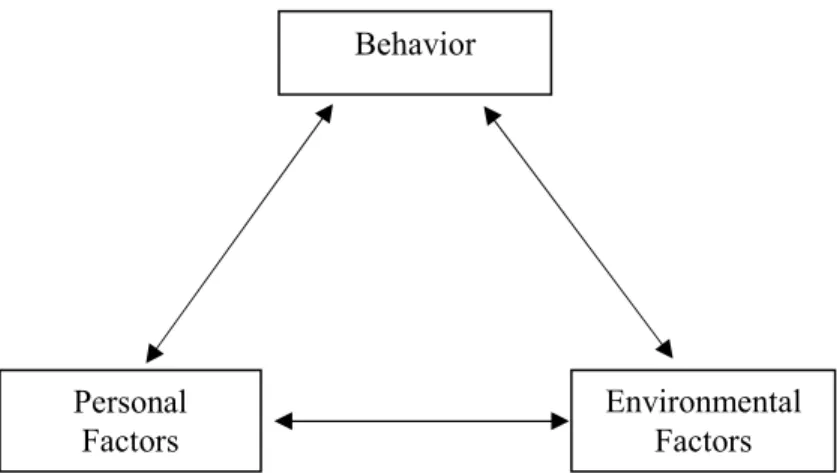
However, social cognitive theory is more inclined to promote a model of causation, known as triadic reciprocal determinism, which proposes a culmination of behavior, cognition, and other personal factors as well as environmental variables that interact and influence each other in a bidirectional manner; these interactive influences are mutually influencing (Pajares, 2002). These bidirectional influences, behavior, personal factors, and environmental factors are depicted in Figure 1. See Appendix E for evidence that this material is in the public domain.
Figure 1.Error! Bookmark not defined. Triadic interplay in reciprocal determinism. Adapted from Overview of Social Cognitive Theory and of Self-Efficacy by Pajares, F. 2002, Retrieved from https://www.uky.edu/~eushe2/Pajares/eff.html. Copyright [2002] by Emory University. Reprinted with permission (see Appendix E).
Constant dynamic interaction occurs between personal, environment, and behavior variables in the triadic combination, with each variable having the potential to change and impact each other; however, the variables of influence are not necessarily equal in strength or do they happen simultaneously (Bandura, 1989). There is consistent interaction between variables, as “the triadic interplay among one’s behavior, the
environment, and personal characteristics affect the learning process” (Bandura, 2006, p. 172). In this regard, the environment, whether it be school, family, socio-cultural context, or religious, ties “frames the learning experience” (Thompson, 2014, p. 2). The
environmental influences, to some extent, direct which types of behavior are developed and activated. Additionally, responses to the social environment can be actuated by age, race, and sex (Lerner, 1982). Learners, as they engage with their learning environment, may transmit and receive signs that result in them as learning “confidently or awkwardly, or distressingly” (Cash Gee & Khoury, 2013, p. 334).
Behavior
Personal Factors
Environmental Factors
As a learner’s personal factors and behavior interact, “the natural and extrinsic effects of their actions, in turn, partly determine their thought patterns and emotional reactions” (Bandura, 1989, p. 3). In this regard, the bidirectional aspect of the model’s sources is reinforced and highlights that the sources do not work in isolation. Later in this section, I examine the influence of thoughts and feelings on learner behavior in the discussion on self-efficacy.
In the behavior and environment dimension of the triadic interplay model, the two sources influence each other and the environment is not influenced unless it is prompted by behavior, and vice versa; therefore, “personal attributes, behavioral experiences, and environmental experiences may be inputs as well as outcomes” (Cash Gee & Khoury, 2013, p. 336). The bidirectional pull between behavior and the environment casts
individuals or learners in the role of products and producers of the environment (Bandura, 1989). While social cognitive theory has been used to explain learning, its limitations have been noted in terms of its assumption that changes in the environment lead to changes in individual behavior, the extent to which the variables of person, behavior, and environment factor into individual behavior and its lack of focus on emotion and
motivation in current experience (LaMorte, 2018)
Self-efficacy, which also contributes to behavior and academic performance, is defined as “the belief in one’s capabilities to organize and execute the courses of action
required to manage prospective situations” (Bandura, 1995, p. 2). The more a person
believes that a particular behavior can result in a desirable outcome, the greater the
particular beliefs about their capabilities and accomplishments and can be mistakenly driven by these beliefs as opposed to being driven by what they can actually accomplish (Pajares & Urdan, 2006). As a result, learners may have wavering levels of self-efficacy as in strong or weak self-efficacy, which will inevitably impact their learning experience. For example, if self-efficacy is strong, challenges may be viewed as tasks to be
conquered as opposed to if self-efficacy is weak, challenges may be avoided and viewed as tasks that are beyond capability. High self-efficacy increases the likelihood that goals may be achieved (Devi, Khandelwal, & Das, 2017)
Bandura (1977) asserted that people’s self-efficacy is derived from multiple sources, specifically mastery experience, vicarious experience, social persuasion, and psychological responses. With regard to mastery experience, repeated success encourages positive efficacy and self-reflection of past successes can spur learners on and strengthen self-efficacy (Bandura). Vicarious experience occurs as people view the success of others and conclude that their own persistence and intensity can help them improve (Bandura, 1977, p. 197; Bhatt & Bahadur, 2018). While vicarious experience may be regarded as an effective way to develop or raise self-efficacy, Bandura cautioned that its modeling nature may make efficacy expectations weaker and more susceptible to change.
Social persuasion and verbal messages may serve as positive drivers of self-efficacy to encourage learners to succeed, or alternatively, they can serve to dissuade learners from achieving goals and objectives (Bandura, 1977). Hence, learners not only need social and verbal persuasion that reiterates their capability to succeed, but they also require learning contexts that enhance self-efficacy. Raising efficacy expectations
without providing conditions to facilitate “effective performance” may result in failure and thwart a learner’s “perceived self-efficacy” (p. 198). Not to mention, failure to provide the appropriate conditions in addition to social and verbal persuasion may undermine the genuine intention of the provider.
Finally, psychological responses may be governed by an individual’s anxiety, stress, or mood (Pajares & Urdan, 2006). The authors reiterated that it is not the intensity of the psychological response that is significant, but the manner in which an individual interprets it and the extent to which they allow it to impact personal self-efficacy. High self-efficacy may foster feelings of composure and confidence in resolving challenging tasks, but in contrast, people with low self-efficacy may overestimate the challenge of a task and this may inadvertently generate a negative psychological response (e.g., anxiety and stress) along with “a narrow vision of how best to solve a problem” (Pajares, 2002, para. 23). To this end, a person can recognize the self-fulfilling prophecy that is
associated with self-efficacy because individuals limit their accomplishments to only what they believe they have the capability to accomplish.
In the context of students enrolled in transitional mathematics utilizing MFL, Bandura’s (1989) reciprocal determinism provided a lens for examining how the interaction of person, behavior, and environment factors may affect learning and the engagement with technology, especially the learning of students who fail transitional mathematics. The interaction of personal, behavioral, and environment factors may have affected the perception of students towards succeeding in mathematics and using MFL. In
reviewing the factors, it would also be interesting to determine whether a particular single factor, personal, behavioral or environment, affected student performance.
Bandura (1989) asserted that the variables in reciprocal determinism are not equal in strength. Given the difference in strength of variables, whether one particular variable has more impact on a student’s learning disposition than another variable can be
questioned. For example, if learners hold a personal belief that is positive towards math, the consequence may be an equally positive interaction between behavior and
environment variables (Cash Gee & Khoury, 2013). Likewise, a negative belief towards math may potentially give rise to a negative interaction between behavior and
environment. In comparing the self-efficacy of students enrolled in either developmental math or calculus, Hall and Ponton (2005) determined that calculus students exhibited a “more powerful sense of self-belief in their ability to succeed in a college mathematics course” (p. 26).
With regard to environment, the importance of classroom climate, whether teacher centered or learner centered, which may or may not increase self-efficacy should not be overlooked (Peters, 2013). Students enrolled in developmental mathematics
experienced both a teacher-centered and learner-centered climate. The traditionally taught classroom based transitional math course was complemented by integrating MFL
technology into the curriculum.
Motivational Theories
While developing the conceptual framework for this study, I examined motivational theories, both intrinsic and extrinsic, along with the ARCS model of
motivational design. The inclusion of a discussion on motivational theories was
significant given that students believe that CAI not only assists their self-discipline but also increases their motivation (Aichele, Tree, Utley, & Wescoatt, 2012). Reviewing motivational theories was also essential in terms of understanding student perceptions of MFL.
Intrinsic and extrinsic motivation. Barak, Watted, and Haick (2016) implied that motivation is situational; a person’s intention may be governed by their situation (p. 50). Intrinsic motivation can be spontaneous and comes from within learners who naturally derive self-fulfillment from a task or learning activity (Ryan & Deci, 2000). Depending on their goals, people may prioritize intrinsic motivation as it relates to their needs or objectives. “People are intrinsically motivated for some activities and not others, and not everyone is intrinsically motivated for any particular task” (p. 71). This not only underscores how individuals may apply meaning to tasks and how this meaning may dictate the degree of intrinsic motivation, but it also suggests how selective individuals may be about the tasks that they pursue. Intrinsic motivation nurtures academic factors, such as wider conceptual understanding and an in-depth processing of learning materials, both factors indirectly related to academic achievement (Trevino & DeFreitas, 2014). There are links between intrinsic motivation and academic achievement or academic success (Petty, 2014).
Extrinsic motivation, on the other hand, differs from intrinsic motivation in that
external sources in the form of rewards, such as good grades and teacher and peer approval, influence learners (Mueller, Yankelwitz, & Maher, 2012). Specifically,
extrinsic motivation is associated with instrumental value relative to tasks and relates to
activities that are executed in order to achieve a separable outcome (Ryan & Deci, 2000).
Ryan and Deci (2000) explained that motivation occurs on a continuum from
internalization to integration as individuals transition through different orientations that include external regulation, introjection, identification, and integration. Ryan and Deci, however, cautioned that transitioning to orientations does not necessarily occur in sequence. As individuals encounter the varied orientations, they experience a degree of autonomy that manifests in “greater persistence, more positive self-perceptions, and better quality of engagement” (Ryan & Deci, 2000, p. 61).
The dualistic approach that divides intrinsic and extrinsic suggests that learners, in terms of motivation, fall into either category, and perhaps does not account for a learner moving from a state of extrinsic motivation to intrinsic motivation and vice versa. As it related to students’ perceptions regarding the use of MFL, depending on student
familiarity with using MFL or previous use of technology, they may have wavered between intrinsic and extrinsic motivation. Significantly, students may thrive better and experience achievement in learning environments that match their motivation orientation (Beenen & Arbaugh, 2018).
ARCS model of motivational design. Keller (1979) developed the ARCS model of motivational design. The model was not only developed to analyze student motivation, but it was also developed for “analyzing learner motivation and designing motivational tactics that are keyed to specific areas of motivational problems and integrated with teaching/learning strategies” (Keller & Suzuki, 2004, p. 230). Keller (2008) also
emphasized how the model could be integrated into the “into the design and delivery of instruction in e3-learning environments” (p. 183). To apply the ARCS model to e-learning or technology, instructional designers must be attuned to the needs of learners and their goals in order to engender motivation in student learning (Hogle, 2017).
The attention component of the design states that learners’ attention is gained through arousal or perceptual, while the relevance component states that motivation is more likely to be piqued if learners perceive that the contents of a subject will help them accomplish goals (Keller & Suzuki, 2004). The third component, confidence, focuses on learners having “positive expectancies for success” (Keller & Suzuki, 2004, p. 231), while the fourth component, satisfaction, proposes that learners should have “positive feelings about their learning experiences” (Keller, 2008, p. 177). In order for motivation to be achieved and sustained, the four conditions of the ARCS model of motivational design should be met (Keller & Suzuki, 2004).
All four of the components of Keller’s model were relevant to the study given the purpose of the study to explore how faculty described the perceptions and experiences of students who failed MATH 062 using MFL. In addition, the motivational and design aspects of the model made it a suitable option for review. Student engagement with the MFL learning system was assessed in terms of the model’s components.
Relevance of the Technology Acceptance Model
The TAM developed by Davis (1989) bore relevance to the study as it emphasized how users perceive the usefulness of technology; and whether there is a perceived ease of use of technology when used for a particular purpose. The model,
although initially applied to a work environment, provided practical background for understanding student perceptions regarding the use of MFL and eliciting feedback and reaction from the end-users of the technology. Students completed the required
assignments and tests in MFL which complemented the traditional face-to-face classroom instruction for developmental math.
Student use of MFL was not optional but mandatory since the technology was an integral component of the learning process. Unlike the tenets of the technology
acceptance model which is founded on concern for workers not using IT available to them and the ways in which acceptance of technology could be encouraged (Holden & Karsh, 2010), students using MFL as a learning tool do not have a say in choosing whether or not they wish to use it. Rather, the expectation is that they accept and familiarize themselves with the technology in order to complete coursework objectives. Building on the technology acceptance model, Tarhani, Elyas, Akour, and Al-Salti (2016) developed a conceptual technology model using the constructs of “quality of work life, social norm, facilitating conditions, and self-efficacy” (p. 73). The elements of the model were relevant to a review of the technology acceptance model as they could impact student engagement with MFL.
The selected conceptual framework and supporting theories related to and aligned with the study approach. Firstly, Bandura’s (1989) triadic reciprocal determinism model provided the background from which to view the behavior and choices of students who failed developmental math, MATH 062. The model, grounded in factors of social, environment, and behavior emphasized the interaction of those factors and could be used
to explain, discuss, or deduce factors leading to why students failed developmental math. Secondly, as it related to developing the interview protocol, the technology acceptance model was used to shape questions directed at participants regarding the ease or difficulty with which students used MFL or the extent to which the use of the learning system allowed them to understand mathematics.
Finally, the ARCS model of motivational design and intrinsic and extrinsic motivation spoke to comprehending whether students were intrinsically or extrinsically motivated, or whether learning MFL was underpinned by attention, relevance,
confidence, and satisfaction. The ARCS model is significant given that the design of MFL required students to be independent learners. Also, the extent to which students were motivated had implications for how successful they would be as independent learners.
Review of the Broader Problem
Reviewing the literature involved a range of articles and Internet sources. The articles selected focused on computer-assisted instruction related to developmental mathematics, perceptions of developmental mathematics, in general, and those of students, self-directed learning and technology, self-efficacy, the effectiveness of developmental mathematics on student success, and studies that concentrated on
comparisons of learning formats, namely accelerated, traditional instruction (face-to-face lecture), traditional combined with online instruction (otherwise referred to as hybrid), and modular instruction. The Walden University library was used in the process of researching. Several databases were examined for relevant articles: Google Scholar,
ERIC, EBSCOHost, and Sage Premier. A variety of journals, including Journal of Developmental Education, Research and Teaching in Developmental Education,
CommunityCollege Enterprise, and Journal of the Scholarship of Teaching were also reviewed for research articles.
Key terms were specifically used for searching databases along with keyword
pairings. Search terms included remediation since the term is used interchangeably with
developmental mathematics, transitional mathematics, MFL, self-directedlearning, and
self-efficacy. In searching, the term developmental mathematics or transitional mathematics was also paired with student perceptions or attitudes, retention or
technology.
Purpose of Developmental Coursework
During 2009-2010, 75% of public 4-year institutions, almost all public 2-year colleges, and 66% of private 4-year institutions offered developmental instruction (Williams, Moore-Jackson, & Webb, 2014). While there exists a consensus on the
necessity of developmental education and its potential effectiveness, some skepticism has not only promoted a call for rethinking the principles of developmental education, but has also caused scholars to support and refute the arguments levelled about the purpose and nature of developmental education (Brothen & Wambuch, 2012; Goudas & Boylan, 2012; Long & Boatman, 2013). Scott-Clayton and Rodriguez (2014) based on a regression discontinuity study determined that while remediation may not perceivably navigate students towards success, there is a diversionary aspect where students are
incorrectly assigned to remedial coursework, thereby misappropriating the number of students placed in this level of work.
Human Resources Perspective of Developmental Education
From a human resources perspective, one needs to consider the impact of students not succeeding in developmental mathematics and persisting to graduation, and the necessity of ensuring that they do succeed. The cost implication of developmental education, “approximately $1 billion”, and the high incidence of student enrollment into developmental coursework influence the decision-making to ensure that students achieve college completion (Pretlow & Wathington, 2013). Data from 2004-2005 showed that in terms of the total revenue of public institutions of higher education, the cost of
developmental education declined to 0.48 % (Pretlow & Wathington, 2012). Some state mandates have approved the restriction and elimination of developmental education or made developmental coursework optional for students as in the case of Florida (Cafarella, 2016a; Mangan, 2013; O’Connor, 2013). In spite of the cost incurred in developmental education, failing to support students in developmental education can have an adverse impact not only on the economy, but also on the country’s potential to equip people for the demands of the labor force (Zientek, Ozel, Fong, & Griffin, 2013).
While developmental education assists students in building skills, acquiring those skills may bring advantages and disadvantages to them. However, developmental course offerings at colleges present equality of opportunity for students who may have otherwise not been able to start on a college career. “Developmental education represents a human capital investments that may influence labor market outcomes in two opposing ways:
productivity increases from improvements in basic numeracy and literacy skills and a decline in productivity due to decreases in labor market engagement” (Hodara & Xu, 2016, p. 784). Considering the apparent need for remediation as students enter college, institutions cannot eliminate developmental coursework from their offerings (Cafarella, 2016b). In spite of the adverse cost associated with offering developmental coursework and the perceived benefits and drawbacks, institutions cannot ignore the needs of students who stand to gain from developmental education which can facilitate a path to a college education.
Improving Student Success
Successful learning in postsecondary education is typically defined by graduation rates but can also be defined by course grades and students expressing satisfaction when surveyed for a course (Driscoll, Jicha, Hunt, Tichavsky, & Thompson, 2012; Wolfle, 2012). Course evaluations administered to students in developmental courses can yield advantageous information that may be utilized to enhance continued course delivery and ultimately engender student success (Rehak & McKinney, 2015). However, in order to derive maximum benefit from student course evaluations, the strategic timing of administering those evaluations is essential. At the college under study, student course evaluations are administered for each course at the end of each 8-week teaching session. A more balanced view of course content could be derived if evaluations were completed by students and faculty. “Given the fact that many students perform poorly or even withdraw from developmental courses, it is important that colleges consider conducting
faculty evaluations and/or collecting data from students earlier in the semester” (Rehak & McKinney, 2015, p. 201).
To improve the success of students enrolled in developmental coursework, specifically mathematics, varied measures have been explored. Acceleration, a means of expediting students through courses to achieve completion, might not always seem an appropriate method for all students and the lack of empirical evidence substantiating its merits further fuels the debate as to its suitability (Edgecombe, 2011). Despite this contention, Jaggars, Hodara, Cho, and Xu (2014) affirmed the merits of accelerated developmental education for students as a “strong positive boost in terms of their probability of enrolling in and completing college-level math and English” (p. 20). The implication is that a more expedited track through developmental courses encourages students to persist to college-level work.
Technology and Computer-Assisted Instruction
Math teaching has evolved to include and supplement technology into the curriculum and developmental mathematics is no exception. Although the inclusion of technology is deemed to enhance student success, it is also felt that the learning style of students may be compromised by the newer and increasingly favored technology which disregards the preferred or natural learning styles of learners. Some students prefer the option of a traditional face to face (F2F) lecture while others express anxiety about learning math on a computer (Cafarella, 2016b).
Given that MFL requires students to pace themselves and self-regulate when and where they complete coursework, there are possible implications that as an instructional
tool it may not be as effective for all students due to individual learning styles. Historically, most students have graduated from a school system that subscribed to a ‘chalk and talk’ teaching tradition for mathematics or a teaching format complemented by the use of a whiteboard. The transition to a student-centered learning environment, complemented by technology, may be more challenging for students, some more than others. As exemplified in the seminal work by Barr and Tagg (1995), transitioning to and achieving a student-centered or learner-centered paradigm is the ultimate objective for successful learning in higher education.
Debate on Teaching and Delivery Formats
Kauffman (2015) examined the effectiveness between online learning formats and traditional classroom environments. The author concluded that emotional intelligence and self-regulation play a significant role in student success in online learning. Spradlin and Ackerman’s (2010) quasi-experimental study compared the performance of students using traditional instruction versus traditional instruction complemented with CAI and concluded that students in control and experimental groups performed similarly with females outperforming their male counterparts. Ethnicity, although highlighted in the demographic distribution of the study, did not feature in the resulting analysis of student performance (Spradlin & Ackerman, 2010).
Ashby et al. (2011) using a sample of 167 participants deduced that learning environments are not equally effective and that online and blended students performed worse than their face-to-face counterparts. Learning environment differences were also impacted by age and gender. One can question whether technology inserted into the
curriculum of specific subjects or disciplines, other than developmental mathematics, has any impact on student performance.
A study conducted by Martirosyan et al. (2017) highlighted faculty member views on the inclusion of technology for teaching developmental math. While faculty opinion was generally favorable towards the use of MML, “9.7% of the coded responses offered a mixed view” and expressed preference for MML “integrated with traditional teaching style” (p. 14). Moreover, faculty also expressed concern about the use of technology in teaching as being less beneficial and more of a distraction (Martirosyan et al., 2017). The results of the aforementioned study, although specifically relevant to MML, are useful for shedding light on faculty impressions of technology. Frantzen (2014), nevertheless, determined no major contrast in student learning in a technology incorporated
criminology course delivered in hybrid, face-to-face, and online modes. Faculty not only favorably viewed the inclusion of technology in learning, but they also felt that the investment in technology was justified by the gains in student learning outcomes (Straumsheim, Jaschik, & Lederman, 2015).
In comparing student performance in F2F, blended, and online formats in a university junior business statistics course, Simmons (2014) stated that in terms of course grades, F2F and blended students performed better than their online counterparts. In addition, across the three teaching formats there was no significant difference in the exams scores of students in blended and F2F formats; however, there was “a significant difference between those modes and the online mode in the linear combination of the third exam” (Simmons, 2014, p. 194). While Simmons’ study was based on the
comparison of student performance in a statistics course, specifically delivered in three different formats, the findings add to an understanding of the impact of varied teaching modes on student performance.
Integrating technology into the developmental mathematics curriculum may not be as inclusive as intended. In fact, the studies that contradict the effectiveness of
computer assisted instruction suggest, somewhat indirectly, that incorporating technology may be exclusive and jeopardize successful performance. Although course grades are indicators of student success and this may imply mastery of course content, it is also important to discern how well technology or computer-assisted courses contribute to the comprehension of concepts that will foster success in subsequent courses (Vilardi & Rice, 2014).
Significance of Motivation
Much has been written about motivation and it isimportant to understand its
contribution within the context of learning, particularly in the context of why students may or may not persist with in math course or engage with technology that accompanies the curriculum. According to McMillan and Forsyth (1991), motivation is “purposeful engagement in classroom tasks and study, to master concepts or skills” (p. 39) while Middleton and Spanias (1999) referred to it as the “reason individuals have for behaving in a given manner in a given situation” (p. 66). The former definition limits motivation to achieving a level of mastery while the latter hints at the impetus which may drive
individual behavior. Graham and Weiner (1996) simply defined motivation as “the study of why people think and behave as they do” (p.63) and as motivation relates to academic