University of Denver University of Denver
Digital Commons @ DU
Digital Commons @ DU
Electronic Theses and Dissertations Graduate Studies
8-1-2018
Attachment Theory as a Framework for Supervision of
Attachment Theory as a Framework for Supervision of
Supervisors-in-Training
Supervisors-in-Training
Alyssa FredricksUniversity of Denver
Follow this and additional works at: https://digitalcommons.du.edu/etd
Part of the Psychology Commons
Recommended Citation Recommended Citation
Fredricks, Alyssa, "Attachment Theory as a Framework for Supervision of Supervisors-in-Training" (2018). Electronic Theses and Dissertations. 1482.
ATTACHMENT THEORY AS A FRAMEWORK FOR SUPERVISION OF SUPERVISORS-IN-TRAINING
_________ A Dissertation
Presented to
the Faculty of the Morgridge College of Education University of Denver
__________
In Partial Fulfillment
of the Requirements for the Degree Doctor of Philosophy
__________ by
Alyssa Fredricks August 2018
©Copyright by Alyssa M. Fredricks 2018 All Rights Reserved
Author: Alyssa M. Fredricks
Title: ATTACHMENT THEORY AS A FRAMEWORK FOR SUPERVISION OF SUPERVISORS-IN-TRAINING
Advisor: Maria T. Riva, Ph.D. Degree Date: August 2018
Abstract
This focus of the study is on the training of new clinical supervisors in health service psychology, specifically the relational processes involved in learning and acquiring competence in clinical supervision. An effective learning environment is critical to supervisor training and development (Borders et al., 2014;Watkins, Budge, & Callahan, 2015) and attachment theory provides a framework for understanding the complex relationship domains and group dynamics inherent to group supervision. Given the recognition that the supervisory alliance is central to the process of competent
supervision (APA, 2015), the purpose of this study is to explore the relationship between adult attachment style, the supervisory alliance, and group cohesion among intern
supervisors in group supervision of supervision. This is particularly important due to limited research and understanding of the development of clinical supervisors and processes and factors that may impact competent training and practice. The current investigation draws on the relevant research on supervision of psychotherapy, small group dynamics, and attachment theory as a scaffold for understanding group supervision of supervision and supervisor training and development.
Participants in the study (n = 45) consisted of pre-doctoral interns in Health Service Psychology throughout North America who are providing supervision to a counselor trainee and are participating in weekly group supervision of supervision to
enhance their training and development as a clinical supervisor. Participants were recruited through APPIC, professional organizational mailing lists, training director mailing lists, and other online forums used by clinical supervisors. Participants who respond to the invitation to participate in the study were emailed a direct link that took them to the survey page. Participants were directed to read the informed consent statement and indicate their consent by agreeing to complete the survey. Participants completed a Demographic Questionnaire, Experiences in Close Relationships Scale-Relational Structures (Fraley et al, 2011), Working Alliance Inventory – Short Form (WAI-S; Horvath & Greenberg, 1989) and the Group Climate Questionnaire-Short Form (GCQ-S; MacKenzie, 1983; Tschuschke, 2002). Descriptive statistics, correlations, and multiple regression analyses were used to interpret the data. Results of the study indicated that specific-attachment to supervisor was a significant predictor of the supervisory alliance and group climate.
Table of Contents
Chapter One: Introduction ... 1
Background ... 3
Supervision Training ... 3
Supervisory Relationship and Attachment Theory ... 5
Purpose of and Justification of the Study ... 7
Research Hypotheses ... 9
Definitions of Terms ... 11
Summary ... 15
Chapter Two: Review of the Literature ... 16
The Supervisory Relationship and Attachment ... 17
Attachment in Counselor Supervision ... 20
Attachment and the Supervisory Relationship ... 20
Supervisor as a Secure Base ... 22
Specific Attachment to Supervisor ... 24
Supervision of Supervisors ... 26
Supervisor Training ... 27
Supervisors-in-Training (SIT) ... 28
Group Dynamics in Supervision of Supervision ... 33
Summary ... 35
Chapter Three: Methodology ... 37
Participants ... 38
Setting. ... 39
Instruments ... 42
Experiences in Close Relationships ... 42
Working Alliance Inventory – Short Form ... 43
The Group Climate Questionnaire-Short Form ... 44
Demographic Questionnaire ... 45
Procedures ... 45
Summary ... 47
Chapter Four: Results ... 48
Preliminary Analyses ... 52 Missing Data ... 52 Main Analyses ... 52 Hypothesis One ... 53 Hypothesis Two ... 56 Hypothesis Three ... 60 Hypothesis Four ... 60 Summary ... 63
Chapter Five: Discussion ... 65
Adult Attachment Style and Supervisor-Specific Attachment ... 65
The Supervisory Relationship and Group Climate ... 69
Limitations and Strengths of the Study ... 71
Implications for Clinical Practice ... 74
Recommendations for Future Research ... 75
Conclusions ... 76 Appendices ... 65 Appendix A ... 93 Appendix B ... 97 Appendix C ... 99 Appendix D ... 100 Appendix E ... 103 Appendix F... 104 Appendix G ... 105 Appendix H ... 106 Appendix I ... 107
List of Tables
Chapter Three: Methodology ... 37
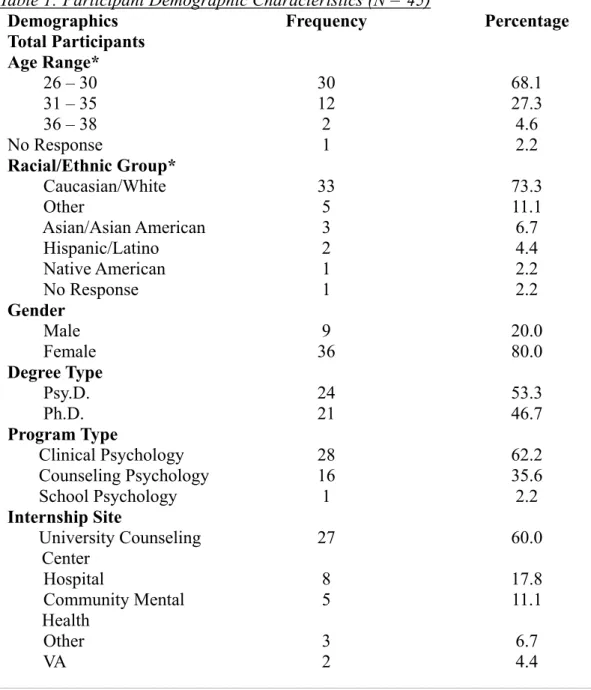
Table 1: Participant Demographic Characteristics (N = 45) ... 40
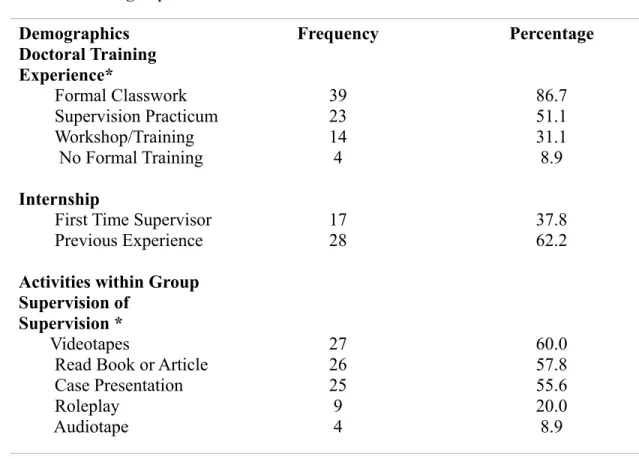
Table 2: Training Experiences ... 41
Chapter Four: Results ... 48
Table 3: Planned Data Analysis ... 49
Table 4: Means, Standard Deviations, Intercorrelations for Adult Global Attachment, Attachment to Supervisor, WAI-S, and GCQ ... 55
Table 5: Hierarchical Regression Analysis Predicting WAI-S from Adult Attachment and Attachment to Supervisor ... 58
Table 6: Stepwise Multiple Regression Analysis Predicting WAI-S from Adult Attachment and Attachment to Supervisor ... 59
Table 7: Hierarchical Multiple Regression Analysis Predicting Group Climate from Attachment to Supervisor ... 62
Chapter One: Introduction
The American Psychological Association (2015) recognizes clinical supervision as a core competency for health service psychologists and a distinct professional practice that requires specialized education and training (APA, 2015; Mann & Merced, 2018). Clinical supervision is the cornerstone for preparing mental health professionals to enter the field and one of the most common clinical activities (Bernard &Goodyear, 2018; Lichtenberg, Hutman, Goodyear, & Overland, 2018). However, supervision education, instruction, and training are limited, variable, and non-standardized across health service psychology doctoral and internship programs (Falender & Shafranske, 2017; Mann & Merced, 2018). This is problematic since research points to the prevalence of harmful and suboptimal supervision (Ellis, 2017; Mann & Merced, 2018). Further, the majority of psychotherapy supervisees will become supervisors and their experiences in
supervision affect the value and importance they place on supervision (Bernard & Goodyear, 2018). Given the lack of systematic training and education in supervision, it seems probable that a maladaptive feedback loop is maintained where insufficiently trained supervisors provided suboptimal supervision to trainees, who then enter the field and replicate their experiences in supervision (Falender & Shafranske, 2017; Mann & Merced, 2018). This may have potential negative clinical, legal, and ethical implications for the client, supervisor, and/or trainee as well as the general well-being of the public.
Scholarly opinion has outpaced implementation and empirical support for competency-based supervision practices and training (Falender & Shafranske, 2017). The focus of this study is on novice supervisor training and development, specifically the relational processes involved in learning and acquiring competence in clinical
supervision. The investigation is specific to “supervisors-in-training.” Novice
supervisors, or supervisors-in-training, are usually advanced doctoral students in health service psychology who oversee the clinical activity of master’s level counseling students or trainees. Supervision of supervision, which also may be referred to as
metasupervision, is typically done in a group format and the SIT receive feedback and guidance about their professional development as a supervisor (Bernard & Goodyear, 2018). To minimize confusion, the term Supervisor-in-Training (SIT) will be used to refer to novice supervisors who are in training to become supervisors of psychotherapists.
Chapter One provides background on attachment theory as a framework for the supervisory alliance and group climate in group supervision of supervision. The chapter also includes a statement of the problem, purpose and justification for studying the problem, as well as research questions and hypotheses. Since there is limited empirically support on supervision of supervision, when no research support is available, the Best Practice Guidelines for Clinical Supervision (APA, 2015; Bernard & Goodyear, 2018; Falender & Shafranske, 2017; Borders et al., 2014) was used to inform the current study and an overview of counseling supervision is presented to provide context and rationale for the investigation.
Background Supervision Training
It has been argued that a prerequisite for being an effective clinical supervisor is knowing how to actively seek out good supervision for yourself (Hawkins, Shohet, Ryde, & Wilmot, 2012). Whereas counseling research focuses heavily on the professional development of new therapists, less attention has been given to fostering competence as a supervisor. Bernard and Goodyear (2018) offered the following definition of supervision based on a review of the relevant literature:
Supervision is an intervention provided by a more senior member of a profession to a more junior colleague or colleagues who typically (but not always) are members of the same profession. This relationship is evaluative and hierarchical, extends over time, and has the simultaneous purpose of enhancing the
professional functioning of the more junior person(s), monitoring the quality of professional services offered to the client that she, he or they see, and serving as a gatekeeper for the particular profession the supervisee seeks to enter. (p. 9) Clinical supervision is considered a core competency of psychologists and although the American Psychological Association requires doctoral students in health service
psychology programs to have some exposure to clinical supervision, a formal class in supervision training is not required (APA, 2015; Bernard & Goodyear, 2018). Recently, the American Psychological Association (2015) adopted guidelines for competency-based clinical supervision. This is important because articulating standards for delivering
competent supervision minimizes potential harm to counselor trainees and their clients (APA, 2015; Falender & Shafranske, 2014). However, these guidelines are not reflected in APA accreditation standards for doctoral, internships, and postdoctoral programs in health service psychology (Falender & Shafranske, 2017; Mann & Merced, 2018).
Instead, the APA identified general expectations throughout levels of training: graduate students are “expected to demonstrated knowledge of supervision models” and
predoctoral interns are “expected to apply this knowledge in direct or simulated practice with other health service psychology trainees or health professionals” (APA, 2015, p. 18). Based on a self-study by the APA’s Committee on Accreditation (CoA, 2017),
supervision is not explicitly or comprehensively evaluated during initial and renewal applications for doctoral, internship, and postdoctoral programs despite being a core competency (APA, 2017, Mann & Merced, 2018).
The APA’s Guidelines on Supervision (2015) posit that “supervisors seek to attain and maintain competence in the practice of supervision through formal education and training” (p. 36) as a provision of competency-based clinical supervision. However, the definition of formal training in supervision is vague and may range from instruction in didactic seminars, continuing education, or supervised supervision experiences (APA, 2015). The benchmarks for competent supervision practice include: models and theories of supervision; modalities; relationship formation, maintenance, rupture and repair; diversity and multiculturalism; feedback, evaluation; management of supervisee’s
emotional reactivity and interpersonal behavior; reflective practice; application of ethical and legal standards; decision making regarding gatekeeping; and considerations of developmental level of the trainee (APA, 2015). Unfortunately, to date there is minimal research on the fidelity of how these principles are taught, applied, and measured in supervision training and practice (Holt et al., 2015).
Although the competence movement has resulted in increased attention to clinical supervision and more opportunities for formal supervision training, there is a significant gap in the literature between conceptual and theoretical models for clinical supervisor development and empirical research for supervision training and practice (Bernard & Goodyear, 2018; Falender & Shafranske, 2017). While conceptual and theoretical models of supervision are important for guiding practice, it is critical that supervision practice and training is informed by research to ensure competent practice. From an ethical viewpoint, it can be argued that in addition to knowledge of supervision theory and research, experiential training in supervision is needed in order to further develop supervisor-specific competencies as well as ensure fidelity in the delivery of competent supervision practices (Bernard & Goodyear, 2014).
Supervisory Relationship and Attachment Theory
The relationship between clinical supervisors and counselor trainees has received the most attention and support in a small but growing body of empirical literature on clinical supervision of counselors or psychotherapists (APA, 2015; Friedlander, 2015). Domain C in The Guidelines for Clinical Supervision in Health Service Psychology
(APA, 2015) states:
The quality of the supervisory relationship is essential to effective clinical supervision. Quality of the supervision relationship is associated with more effective evaluation, satisfaction with supervision, and supervisee self-disclosure of personal and professional reactions including reactivity and
countertransference. The power differential is a central factor in the supervisory relationship and the supervisor bears responsibility for managing, collaborating, and discussing power within the relationship. (p. 35)
conceptualized utilizing attachment theory (Watkins & Riggs, 2012; Wrape, Callahan, Rieck, & Watkins, 2017). In addition, supervision of supervision is most commonly delivered in a group format, particularly in internship training sites at university counseling centers and doctoral practica (Bernard & Goodyear, 2018; Crook-Lyon, Presenell, Silva, Suyama, & Stickney, 2011). Given that this type of supervision training is often delivered in a group format, group dynamics literature would seem to be a relevant body of literature to provide some guidance on the practice of group supervision of supervision. There is a robust body of support for group cohesion as an essential change process in group counseling and psychotherapy (Burlingame, McClendon, & Alonso, 2011; Gullo, Lo Coco, Di Fratello, Giannone, Mannino, & Burlingame, 2015; Yalom, 2005). Group cohesion refers to a group member’s strong liking towards other group members and the overall group as a whole, specifically an individual’s sense of belongingness within the group. In group therapy, higher levels of group cohesion are associated with openness, vulnerability, and change. Further, many group theorists and researchers equate cohesiveness in group therapy as synonymous with the therapeutic alliance in individual therapy.
Recent empirical literature (Kivlighan, Lo Coco, Gullo, Pazzagli, & Mazzeschi, 2017; Marmarosh, 2017) has pointed to the importance of attachment theory in the research and practice of group psychotherapy. Marmarosh (2017) explains that attachment theory facilitates “a richer understanding of group leadership, group cohesions, and the process of change that occurs during group interactions (p. 157). Given the overlap in similarities between group supervision and group psychotherapy, it
seems that attachment would also play a role in how learning occurs in group supervision of supervision. Attachment theory provides a scaffold for understanding the multifaceted relationship interactions in group supervision of supervisors-in-training.
Purpose of and Justification of the Study
The APA’s recognition of supervision as a core competency for psychologists in health service and the implementation of guidelines for competent clinical supervision implies change for many groups of professionals such as accrediting bodies, university training programs, and mental health agencies and hospital settings (Bernard &
Goodyear, 2014; Falender, Burnes, & Ellis, 2013). Further research is needed on the training and development of clinical supervisors to inform clinical practice. There are many risks from psychologists who are not properly trained in supervision, including but not limited to high counselor trainee dropout rates, implementation of potentially harmful practices and behaviors, and abuse of power (Bernard & Goodyear, 2014).
The current state of empirical research to inform and guide supervision practice and training is small but growing despite a paradigm shift towards competency-based clinical supervision and training and the recognition of clinical supervision as a core competency for health service psychologists (APA, 2015; Falender & Shafranske, 2017). Although the APA adopted competency-based supervision as a foundation of health service psychology, it is not reflected in the Accreditation Standard for doctoral programs and predoctoral internships limiting implementation of systematic supervision training. As a result of limited, non-standardized formal education and training in competency-based supervision, the supervisory practice seems to be most often competency-based on an
individual’s experiences of being supervised rather than being trained to be a clinical supervisor (Falender & Shafranske, 2017; Mann & Merced, 2018). Clinical supervision research has shown attention to counselor trainee skill acquisition and development at the expense of clinical supervision competence and training (Falender et al., 2013).
Furthermore, future research is warranted to address the often ignored differences between counselor trainee competency and supervisor competency (Falender et al., 2013).
Recent developments in the literature on counseling supervision have highlighted the importance of counseling supervision on counselor development, positive client outcomes, and its centrality to counselor education and training (Bernard & Goodyear, 2014; Borders et al., 2014). Falender, Shafranske, and Ofek (2014) proposed a meta-theoretical, interpersonal framework to inform competency based supervision practices and supervisor training and guide future research. Overall, the supervisory relationship has emerged as the one competence that has received the most empirical and conceptual support in counselor supervision (APA, 2015; Bernard & Goodyear, 2014; Falender & Shafranske, 2014). Specifically, the supervisory relationship is central to how learning occurs in supervision of counselor trainees. Further, best practice guidelines suggest that supervisor training and supervision of supervision should be informed by recent
developments in counselor supervision, specifically with regards to the supervisory relationship (Borders et al., 2014).
Moreover, a unique characteristic of group supervision is the active participation of group members in the supervision process. Qualitative research on group supervision
of supervision identified several factors that inhibit trainee or student learning in group supervision (Reiser & Milne, 2012). These include “between members” problems, problems with supervisors, trainee anxiety and other perceived negative effects, logical constraints and poor group time management. Based on the group therapy literature, other group dynamics that may impact clinical group supervision include: competitiveness for time, unexpressed expectations, and conflict within the group (Riva, 2014). Given that the relationship is central to the process of supervision, it seems reasonable to assume that the relationship between group members in group supervision is equally important. Since supervision of supervision is most often delivered in a group format (Bernard & Goodyear, 2018), group dynamics and the multiple relationship dynamics in group supervision of supervision is an important area for future research. Given the recognition that the supervisory alliance is central to the process of competent supervision (APA, 20C5), the purpose of this study was to explore the relationship between adult attachment style, the supervisory alliance, and group cohesion among intern supervisors in group supervision of supervision. This research will inform future directions in supervision training and competency among psychologists and help inform guidelines for best practice.
Research Hypotheses
In sum, there is limited empirical support for models of clinical supervisor training and development, particularly since most of the core assumptions have been based on conceptual and theoretical knowledge and opinion (Border et al., 2014; Falender & Shafranske, 2017). There is even less support on supervision of supervisors-in-training
(SIT) and specific dynamics and relationship processes that may impact supervisor development and training (Gazzola, De Stefano, Theriault, & Audet, 2013; Mann & Mercad, 2018). A review of relevant literature on counselor supervision, stability of attachment style across relationships and development, and research on small group dynamics informed this study. It was expected that based on a critical analysis of the most current and best available conceptual and empirical support on attachment theory as a framework for clinical supervision of counselor trainees presented in Chapter Two, with consideration to the gaps and shortcomings of the literature, the following research hypotheses were investigated in this study.
Hypothesis 1. It was expected that there would be a significant positive
relationship between: (a) Scores on the Attachment Anxiety Dimension of the ECR-RS-Global and scores on the Attachment Anxiety Dimension of the ECR-RS-Supervisor, and (b) Scores on the Attachment Avoidance Dimension of the ECR-RS-Global and scores on the Attachment Avoidance Dimension of the ECR-RS-Supervisor.
Hypothesis 2. It was expected that Specific Attachment to Supervisor (ECR-RS-Supervisor Attachment Anxiety and Attachment Avoidance Subscales) would explain a significant amount of variance in SIT perceptions of the Supervisory Alliance (WAI-S Total Score) in group supervision of supervision, above and beyond Adult Attachment Style (ECR-RS-Global Attachment Anxiety and Attachment Avoidance).
Hypothesis 2a. It was expected that supervisor-specific attachment avoidance would be a significant predictor of the strength of the supervisory alliance. It was expected that supervisors-in-training who have high supervisor-specific avoidance will
report weaker supervisory alliances, than supervisors-in-training with low supervisor-specific attachment avoidance.
Hypothesis 3. It was expected that there would be a significant positive
relationship between supervisors-in-training’s perceptions of the Supervisory Alliance (WAI-S Total Score) and their perceptions of Group Cohesion (GCQ-S Engagement Subscale) in group supervision of supervision.
Hypothesis 4a. It was expected that supervisors-in-training who are high in Attachment Anxiety to Supervisor (ECR-RS-Supervisor Attachment Anxiety) will perceive the supervision group as less Engaged, more Avoidant, and having greater Conflict (GCQ-S Engagement, Avoidant, and Conflict Subscales) than SIT who are low in Attachment Anxiety to Supervisor.
Hypothesis 4b. It was expected that supervisors-in-training who are high in Attachment Avoidance to Supervisor will perceive the supervision group as less engaged, more avoidant, and have greater conflict than SIT who are low in attachment avoidance to supervisor.
Definitions of Terms
To provide a common understanding of specific terminology, the following definitions are included:
Attachment-Related Anxiety. Contemporary theories of adult attachment support a dimensional approach to the measurement of individual differences in attachment style across relationships (Fraley et al., 2011; Fraley et al., 2015). Individual differences in attachment orientation across various relationship domains will be measured by two
variables: attachment-related anxiety and attachment-related avoidance. Attachment-related anxiety refers to an individual’s “working model of self” and variations in the extent in which they feel they are worthy of love, affection, and positive regard (Bartholomew & Horowitz, 1991). With respect to adult attachment style, the anxiety dimension measures the extent to which a person worries that a significant other will abandon or reject her or him (Fraley et al., 2015). This includes an individual’s anxiety perceptions about rejection, lovability, and abandonment in close relationships (Brennan, Clark, & Shaver, 1998) and vigilant attunement to the target figures perceived availability and responsiveness (Fraley et al., 2011; Fraley et al., 2015).
Attachment-Related Avoidance. Attachment-related avoidance represents an individual’s working model of others and “the strategies that he or she uses to regulate attachment behavior in specific relational contexts” (Fraley et al., 2015, p. 356). It is a dimensional measure of avoidance of intimacy and dependence in adult interpersonal relationships (Brennan, Clark, & Shaver, 1998), specifically the extent to which people feel comfortable or uncomfortable being close to and/or dependent on others (Fraley et al., 2011).
Attachment Style. Based on Bartholomew and Horowitz’ (1991) theory of adult attachment there are four categories that may be conceptualized among two dimensions of attachment-related anxiety and attachment-related avoidance: (a) Secure (low anxiety and low avoidance); (b) Preoccupied (high abandonment anxiety and high proximity seeking/low avoidance); (c) Fearful (high abandonment anxiety and high avoidance of intimacy and closeness with others); and (d) Dismissive-Avoidant Attachment (low
anxiety but high avoidance of intimacy and closeness with others). Preoccupied-anxious, dismissive-avoidant, and fearful-avoidant attachment patterns are all types of insecure attachment.
Clinical Supervision. Supervision is “an intervention provided by a more senior member of a profession to a more junior member or members. This relationship is evaluative, extends over time, and has the simultaneous purposes of enhancing the professional functioning of the more junior person(s); monitoring the quality of professional services offered to the client that he, she, or they see; and serving as a gatekeeper for the particular profession the supervisee seeks to enter” (Bernard & Goodyear, 2018, p. 9).
Group Cohesion. Group cohesion is an essential change mechanism in the group counseling and psychotherapy literature and refers to the sense of belongingness in a group, or the atmosphere that is created and experienced by members of the group (Kivlighan & Paquin, 2010). Mackenzie (1983) described it as the level of engagement and conflict experienced within a group. For the purpose of this study, group cohesion will be examined within the context of group supervision of supervision.
Group Supervision of Supervision. Group supervision is the regular meeting of a group of supervisors-in-training with a designated supervisor or supervisors to monitor the quality of their work and to further their understanding of themselves as supervisors, of the counselor supervisees with whom they work, and of service delivery in general (Bernard & Goodyear, 2014). Group supervision of supervision allows beginning supervisor’s opportunities to receive feedback on their supervisory skills by a more
advanced clinician with the goals of enhancing their knowledge and understanding of specific supervisory related competencies through experiential training (Keenan-Miller & Corbett, 2015).
Supervisory Alliance. The supervisory alliance has been operationalized as the goals, tasks, and bonds shared by the supervisee and supervisor in the supervision of novice therapists (Bordin, 1983). The bond component refers to the rapport, liking, trust, and connections between supervisor and supervisee; the goals component refers to mutual agreement and understanding about the objectives of supervision; and the goals component refers to the mutual agreement between the supervisee and supervisor of the activities to be executed in the service of goal attainment (Bordin, 1983).
Supervisor Competency. Supervisor competency is defined as requisite
knowledge, skills, and attitudes/values required to deliver effective supervision (APA, 2015; Falender et al., 2004,).
Supervisor Development. Supervisor development is defined as an individual moving through specific processes, developmental stages, or defined period of growth in their role as a supervisor, with the ultimate goal of becoming a practitioner who possesses the knowledge, skills, and attitudes necessary to competently provide supervision (Barker & Hunsley, 2014; Stoltenberg, McNeil, & Delworth, 1998; Watkins, 2012)
Supervisor-in-Training (SIT). An advanced counselor or psychotherapist, who is receiving specific training in supervisory skills, models, and research. Typically, an advanced doctoral student or an unlicensed clinician, supervisors-in-training are
responsible for overseeing the clinical work of beginning counselors-in-training and their clients (Bernard, 2014).
Supervisor of Supervision. Supervision of supervision of refers to the oversight of supervisors-in-training by a more advanced and experienced supervisor with the goals of enhancing their knowledge and understanding of specific supervisory related
competencies (Stoltenberg & McNeil, 2010). In contrast to coursework or workshops in supervision, this allows beginning supervisors an opportunity to apply the supervision skills and knowledge they have acquired in their formal training and implement various models of supervision under the guidance and support of a more advanced practitioner to ensure effective supervision for a counselor trainee (Keenan & Miller, 2015). Supervision of supervision can include group supervision, individual supervision, and peer
supervision. For the purpose of this study, supervision of supervision in a group format will be the focus.
Summary
This chapter provided an overview of the current investigation, background information on competency-based clinical supervision training in health service
psychology, the purpose and justification for the study, as well as the research questions and hypotheses that have been examined for the current investigation. Chapter Two will review the relevant literature on the training of new clinical supervisors in health service psychology. Specifically, the relevant research on attachment theory as a framework for understanding group cohesions and the supervisory alliance in group supervision of supervision will be reviewed.
Chapter Two: Review of the Literature
Empirical literature on clinical supervision is limited but developing, and
highlights a growing need for supervision training. Over 50% of trainees report having a negative supervisory experience at some point during their clinical training (Ellis, 2010; Ellis et al., 2002). Bernard and Goodyear (2014) argue that being an effective or “good” therapist, while necessary, is not sufficient for being a good supervisor. This is similar to how being a good athlete does not necessarily mean that he or she will be a good coach.
This chapter focuses on the training of new clinical supervisors in health service psychology. More specifically, it underscores the complex relationship domains that are distinct to supervisor training and development. The majority of supervision training is conducted in a group called “group supervision of supervision,” which is made up of a supervising group leader and several supervisors-in-training. These groups meet regularly to discuss issues related to counselor supervision and the oversight of counselor trainees (Bernard & Goodyear, 2018; Bernard, 2014; Ellis & Douce, 1994). This model of providing supervision training in a group sometimes is referred to as “group
metasupervision” (Bernard & Goodyear, 2018, p. 294). The literature on competency-based supervision training and practice is limited with scholarly writing and opinion outpacing empirical support and implementation (Bernard & Goodyear, 2018, Falender &
Despite considerable research attention on clinical supervision between a supervisor and a therapist in the past few years, this research has not generalized to supervision that prepares and trains supervisors. Further, there is limited research on group supervision of supervision, which is the most common modality of supervision training (Bernard & Goodyear, 2018, Crook-Lyon, Presenell, Silva, Suyama, & Stickney; 2011; Riva & Cornish, 2008). Although different, there is some overlap between
supervision of early counselors and supervisors in training, especially the importance to both of the supervisory relationship. Therefore, the literature on the supervision of counselors will guide some portion of this review of literature. This chapter emphasizes most heavily the supervisory relationship and how attachment styles impact that
relationship as well as how attachment styles are related to group cohesion. An effective learning environment is critical to supervisor training and development (Watkins, Budge, & Callahan, 2015; Borders et al., 2014) and attachment theory provides a framework for understanding the complex relationship domains and group dynamics inherent to group supervision. The current investigation draws on the relevant research on supervision of counselors, small group dynamics, and attachment theory as a scaffold for understanding group supervision of supervision.
The Supervisory Relationship and Attachment
The connection between the supervisory relationship and attachment style has been explored, but minimally. Attachment style conveys how individuals relate to others as well as how they relate to themselves. The type of bond that infants form with their primary attachment figure during early childhood influences their ability to form future
attachments and relationships with others, and plays a significant role in cognitive, personality, and social development across the lifespan (Bowlby, 1988). Bowlby (1988) proposed that during the years between infancy and adolescence, children gradually develop expectations of their caregivers based on previous experiences and expectations about their caregivers’ responsiveness and availability and these are incorporated into an internal working model that dictates individuals’ perceptions and behaviors in later relationships.
Seminal research by Smith, Murphy, and Coats (1999) illustrated how an
individual’s attachment style influences group dynamics. In the first systematic attempt to apply attachment theory to group processes, Smith et al. (1999) found that higher scores on either group attachment anxiety or group avoidant attachment predicted lower
engagement in group activities, more negative evaluations of social groups, and lower perceived support from groups.
Researchers also have demonstrated that insecurely attached clients exhibit specific patterns of behavior in group therapy. Chen and Mallinckrodt (2002) found that individuals high in attachment anxiety display problematic interpersonal behaviors in group therapy, such as non-assertiveness, vindictiveness, and intrusiveness. They may also be easily exploited and/or overly nurturing. The authors suggested that anxiously attached individuals utilize hyperactivating strategies, such as magnifying cries of distress and make strong efforts to obtain comfort from and maintain proximity to attachment figures. Rom and Mikulincer (2003) showed that when compared to securely attached individuals, those high in attachment anxiety exhibited lower appraisal of
self-efficacy in achieving task-oriented group goals, more negative appraisals of self in interaction with others, more negative memories of group interactions, and increased pursuit of positive appraisal from other members in the groups. However, when groups were more cohesive, these negative behaviors diminished. Both of these studies
demonstrated that individuals with avoidant attachments displayed maladaptive behaviors in group psychotherapy.
Chen and Mallinckrodt (2002) found that attachment avoidance was negatively correlated with group attraction, a measure of the working alliance in group therapy. Avoidance was also related to increased hostility and dominance in interpersonal interactions, with a strong tendency to remain distant and disengaged while projecting hostility onto the group-as-a-whole. Furthermore, Chen and Mikulincer (2003) reported that avoidant clients displayed increased negative emotions in groups and had worse instrumental and socioemotional functioning when compared to securely attached individuals.
Individuals with attachment avoidance are at risk for experiencing a decrease in the therapeutic alliance and dropping out of treatment (Tasca & Balfour, 2014). Despite outward appearances, these individuals are highly sensitive and tend to react negatively to pressures to self-disclose, to bond with the therapist or group, and to express emotions. Distress caused by such pressures may precipitate premature treatment termination among those high in attachment avoidance (Tasca & Balfour, 2014). As such, Tasca and Balfour (2014) concluded that increased group cohesion and therapeutic alliance is crucial for individuals with insecure attachment styles to benefit from group therapy,
particularly their ability to be engaged and reflective in the group. Currently, there are no empirical studies that have examined attachment style in group supervision of
supervision, however, research on small group dynamics with psychotherapists would seem to provide a preliminary guide on processes that may be influential to how
supervisors-in-training learn competent supervision skills and professional development.
Attachment in Counselor Supervision
As a result of the competency movement in psychology, there has been increased interest in clinical supervision theory and research over the past two decades (Watkins, 2015). Several advancements in counselor supervision theory and research have shed light on the importance of the supervisory relationship in the supervision of new counselors. Most notably, the supervisory alliance in supervision of counselor trainees has received the most attention and empirical support. Borders et al. (2014)
recommended that supervision of supervision be guided by the same “best practice guidelines” as the supervision of counselors. Specifically, the supervisory alliance is thought to be central to how learning occurs in supervision of new counselor supervisees (Watkins, Budge, & Callahan, 2015).
Attachment and the Supervisory Relationship
This section draws parallels in the supervisory relations when the supervisee is learning to supervise and when the supervisee is learning to become an effective counselor. The quality of the supervisory alliance in the supervision of counselors is a significant predictor of counselor supervisee’s willingness to disclose, internal
satisfaction with counselor supervision, and adherence to treatment protocol (Angus & Kagan, 2007; Geller, Farber, & Schaffer, 2010; Roth & Pilling, 2008). It is considered an essential mechanism in how positive change occurs in counselor supervision (Bernard & Goodyear, 2014). Adapted from the therapeutic alliance in psychotherapy, Bordin (1979, 1983) described the supervisory alliance as consisting of a mutual agreement and
understanding between the supervisor and counselor trainee on the goals and tasks of supervision, and the affective bond that develops between them as a result of either working together on a common task to achieve these shared goals or on the basis of a shared emotional experience.
Pistole and Watkins (1995) explained that the supervisory alliance is the primary vehicle for how learning takes place in counselor supervision and that security from the supervisory relationship allows counselor trainees to take risks in treatment, learn from mistakes, develop their own therapeutic voice, and integrate a clear professional identity as a therapist. By acting as a secure-base, the supervisor is available to the counselor supervisee for support and emotional regularity in times of uncertainty, and new therapists are more likely to rely on their supervisor for guidance and assistance until their skills have developed to allow them to function more independently (Fitch, Pistole, & Gunn, 2010; Watkins, 1995; Watkins & Riggs, 2012). It may be argued that a similar mechanism occurs in supervision when training supervisors when supervisors provide a “secure base” for supervisors-in-training who are overseeing counselor trainees as they acquire competency.
Supervisor as a Secure Base. Research supports that supervisors’ global
attachment style, or their feelings about close relationships in general, is influential to the supervisory alliance formed with counselor trainees in psychotherapy supervision. Specifically, the supervisory alliance is stronger when counseling trainees perceive their supervisors as having a secure attachment style (Riggs & Bretz, 2006; White & Queener, 2003). Likewise, perceptions of supervisors as having a preoccupied attachment style predicted lower counselor trainee professional development (Foster, Heinen, Lichtenberg, & Gomez, 2006).
White and Queener (2003) examined supervisors’ and supervisees’ perceived ability to form healthy adult attachments and quality of their social networks as related to the supervisory working alliance. In short, these results indicated that supervisors’
attachment style was predictive of both supervisors’ and supervisees’ perceptions of the supervisory working alliance. Supervisors’ ability to trust and rely on others, while also feeling comfortable with intimacy, were related to greater satisfaction with the
supervisory alliance as rated by both the supervisee and the supervisor. Not surprisingly, supervisors with weaker abilities to form attachments to others rated their alliance with their supervisee as weaker, and their supervisees also rated their alliance as weaker compared to supervisors with healthier attachment styles. Therefore, White and Queener (2003) concluded from this study that secure supervisor attachment style, but not insecure attachment style, is predictive of the supervisory alliance.
Riggs and Bretz (2006) were specifically interested in how supervisees viewed the supervisory relationship and their perceptions of their supervisors’ attachment style.
Building on previous research by White and Queener (2003), the investigators
conjectured that parent-child attachment, pathological attachment behaviors, and adult attachment were predictive of the strength of the supervisory working alliance. Riggs and Bretz (2006) randomly selected 200 internship sites from all 50 states across the country from the 2003 APPIC Match Directory and invited pre-doctoral psychology interns from these sites to participate in an online survey of attachment processes and supervisory experiences. The researchers hypothesized that since the supervisory relationship is hierarchical, memories of greater parental indifference and over-control would be related to more negative ratings of the supervisory alliance. The participants (n=87), who were mostly white and female, were asked to keep their current supervisor in mind while filling out the Supervisory Alliance Inventory (Horvath & Greenberg, 1986, 1989, 1994), Measure of Parental Style (Parker, Tupling, & Brown, 1979), and Reciprocal Attachment Questionnaire (West & Sheldon-Keller, 1994). They were also asked to report their own attachment style and their perceptions of their current supervisor’s attachment style using the Relationship Questionnaire.
Based on results of multivariate analyses of variance (MANOVAs), Riggs and Bretz (2006) found that pre-doctoral psychology intern perceptions of their supervisors’ attachment style was a strong predictor of the quality of the supervisory relationship. Follow up analyses of variance (ANOVAs) indicated that participants who perceived their supervisor to have a secure attachment style were more likely to report higher scores on the Task and Bond Subscales of the Supervisory Alliance Inventory, than participants who perceived their supervisors’ attachment style as dismissive or avoidant.
Another notable study on supervisor attachment style was conducted by Foster, Lichtenberg, Heinen, and Gomez (2006), which examined supervisor attachment style as a predictor of developmental ratings of supervisees. Supervisors with preoccupied attachment style were more likely to give their supervisees lower professional ratings than the supervisors with other attachment styles. Since preoccupied attachment styles are characterized by positive views of others and negative views of self, it is likely that preoccupied supervisors may experience internal conflict between the abilities of their supervisees and their own expertise as a supervisor. The authors speculate that this internal conflict may impair the ability for supervisors with preoccupied attachment styles to evaluate their supervisees in an accurate and unbiased way.
Although the number of studies is small, research consistently points to supervisor attachment style as an influential relationship process in supervision. These studies mentioned above highlight the importance of the supervisors need for self-awareness and insight into how their individual attachment styles may impact the process of clinical supervision.
Specific Attachment to Supervisor. Bennett, Mohr, Brintzenhofe-Szoz, and Saks (2008) examined specific-supervisory attachment style and general attachment style among 72 master’s-level social work students and concluded that students with high levels of attachment avoidance were more likely to develop insecure attachment related responses to their clinical supervisor. Additionally, these findings suggest that the
students’ supervisory-specific attachment style strongly predicted the supervisory alliance and supervisory style.
In a similar study, Marmarosh et al. (2013) corroborated the importance of supervisor-specific attachment on the supervisory working alliance based on a sample of 57 students in graduate psychology training programs who were receiving weekly supervision from a licensed clinician who supervised their treatment of adult therapy clients. The purpose of the study was to investigate how adult romantic attachment style relates to supervision attachment style and supervisory working alliance. In addition to the supervisory alliance, this study also investigated how adult attachment style and supervisory attachment relate to supervisees’ counseling self-efficacy. Clinical supervision is an important part of training and professional development, and the supervisory relationship often is understood within the context of how trainees acquire clinical competencies. The study was unique in that it looked at global and specific attachment style and how they related to counseling self-efficacy. Marmarosh et al. (2013) concluded that trainees with higher levels of fearful attachment in supervision had lower counseling self-efficacy and weaker supervisory alliance. Gunn and Pistole (2012) found that more secure attachment within the supervisory relationship facilitated rapport and disclosure in supervision.
Unlike previous research on this topic, McKibben and Webber (2017) used a quasi-experimental design to explore how supervisee attachment to supervisor predicted the supervisory alliance after recalling critical feedback from a supervisor. The
investigators asked counselor trainees in the experimental group (n=93) to recall critical feedback from a supervisor whereas counselor trainees in the control group (n=86) were asked to list objects in the room. Then, both groups completed the Experiences in
Supervision Scale (ESS; Gun & Pistole, 2012) and the Short Supervisory Relationships Questionnaire (S-SRQ; Cliffe et al., 2016). The authors used multiple regression
analyses to examine the effects of thinking about perceived critical feedback as a function of attachment to supervisor on the supervisory relationships. The study found that
anxious and avoidant attachment to supervisor negatively predicted the supervisory relationship.
In sum, further understanding of the complex interaction of supervisor and
supervisee attachment style is warranted given the centrality of the supervisory alliance in clinical supervision. Supervisors-in-training have the unique characteristic of providing clinical supervision in conjunction with their role as a trainee in supervision of
supervision. Increased understanding of the attachment style and its impact on the supervisory alliance may guide future training.
Supervision of Supervisors
Although supervisor development in many ways parallels the process of counselor development, it is important to note that supervisors-in-training struggle with unique components distinct to learning how to supervise (Majcher & Daniluk, 2009). This further underscores the idea that counseling experience alone is not sufficient for supervisory competence (Bernard & Goodyear, 2014; Milne & James, 2002). In this section, the unique experiences of supervisors-in-training and supervision of supervision are explored.
Supervisor Training
Competency-based supervision has been widely embraced internationally, however, theoretical literature and scholarly writing has outpaced empirical support and implementation (Falender & Shafranske, 2017). One of the main barriers to the
implementation of competency-based supervision is the absence of systematic
supervision training. Falender and Shafranske (2017) note the discrepancies between the establishment of standards for clinical supervision competency and their implementation. To further illustrate this point, Simpson-Southward et al. (2017) examined whether
supervisors were receiving consistent messages on how supervision should be conducted. Based on a content-analysis of 52 models of supervision, the authors concluded that the broad content of the models was inconsistent and failed to provide a consistent view of the supervisory process or clear direction on how supervision should be conducted.
Mann and Merced (2018) provide an overview of the current state of supervision training, future directions, and recommendations. Based on their synthesis of the
literature, the authors conclude that even though supervision is a core competency among APA, there is insufficient evidence related to why or how it is implemented (Mann & Merced, 2018). The authors further identify a “maladaptive feedback loop” of suboptimal supervision practices in health service psychology since there is minimal oversight about supervisor training (Mann & Merced, 2018, p. 98). Mann and Merced (2018) explain that a “maladaptive feedback loop is maintained when insufficiently trained supervisors provide inadequate supervision to supervisees, who then enter the field and replicate that which they are familiar” (p. 98). Given the lack of research on clinical supervision
competency acquisition, evaluation, and maintenance, more research is needed on supervision training, supervisory outcomes, and how it is implemented in both novice supervisors and continuing education and evaluation of licensed psychologists providing supervision (Mann and Merced, 2018).
Despite growing interest in supervision literature, there is not enough
methodologically vigorous research to determine if supervision training works. The majority of research has investigated supervisor development, self-report satisfaction with supervision, and the supervisory alliance (Norcross & Popple, 2017). However, the limited research on supervisor training supports its efficacy for supervisor competency development (Milne et al, 2011; Gosselin et al., 2015). Watkins (2017) noted that since supervision is an “educational enterprise,” future research should focus on examining psychotherapy and education theory as well as the needs to develop a “common
language” for supervision to further research support and minimize confusion among the field (p. 148).
Supervisors-in-Training (SIT)
Growing acknowledgment of psychotherapy supervision as an independent competency has led to an increasing number of training opportunities in supervision, many of which involve trainees providing supervised supervision to other students (Newman, 2013; Watkins, 2017). Supervision of supervision provides the opportunity for SIT to not only master supervision competencies but also find their own voice or style as a supervisor (Bernard & Goodyear, 2018). Bernard and Goodyear (2018) described the importance of attending to parallel process in supervision of supervision. Whereas in
counseling supervision, parallel processes may occur in the client-therapist and therapist-supervisor relationships, these processes become even more complicated when added to these two relationships, the possibility of parallel process can also occur between SIT and their supervisor for group supervision of supervision.
Supervisors-in-training (SIT) often provide supervision to counselor trainees while simultaneously being exposed to supervision literature and research for the first time, which creates an overwhelming experience (Bernard, 2014). SIT often struggle to integrate their knowledge of counseling skills and theory, which is an essential part of clinical supervision, with their developing supervisory competencies, which presents an additional obstacle to learning in supervision training (Bernard, 2014).
DiMino and Risler (2012) observed that anxiety and the need to feel competent may be exacerbated among supervisors-in-training, particularly in health service psychology internship programs. Increased anxiety from the pressures and significance SIT place on the successful completion of their psychology internship may interfere with learning processes in supervision of supervision. Consequently, SIT may feel additional pressure to prove themselves as a “non-student” and more hesitant to admit their
weakness or limitations as a supervisor. As a result, SIT may emotionally distance themselves from their supervisor in supervision of supervision in an effort to mask feelings of insecurity and vulnerability (DiMino & Risler, 2014). This anxiety may be further magnified by SIT’s lack of exposure to the literature and research on clinical supervision or experience overseeing the clinical work of a counselor trainee, particularly as doctoral training programs vary in their requirements for supervision training
(Falender & Shafranske, 2014). Bernard (2014) explains that SITs often feel
overwhelmed by the experience of integrating their existing expertise and knowledge of counseling skills with new supervisory-specific skills, while simultaneously providing supervision to a counselor trainee for the first time. Attachment theory may provide a deeper understanding of how SIT cope with stress, and the activation of distancing or other attachment-avoidant behaviors in response to a perceived threat, such as negative feedback from their supervisor (Watkins & Riggs, 2012). Due to the perceived
importance of a positive evaluation from their supervisor for supervisor training, SITs may engage in emotionally distancing techniques to defend against feelings of
inadequacy and may not view supervision of supervision as a “safe environment,”
therefore, compromising the safe base function of the supervisory alliance and disrupting learning processes in supervision of supervision (DiMino & Risler, 2012; Watkins & Riggs, 2012).
Further, DiMino and Risler (2012) pointed out that the multiple roles of the supervisor and supervisor-in-training within the organization may complicate the formation of the relationship in supervision of supervision. For instance, in a qualitative study on group supervision of supervision in a university counseling center, DiMino and Risler (2012) noted an example where the group leader for supervision of supervision with doctoral-level intern supervisors was also the director of the university counseling center. The quality of the SIT’s interactions with their supervisor outside of the group context, such as in agency-wide staff meetings, and perceptions of the power differential further complicated the development of the supervisory alliance. In this case, SIT were
more likely to view their supervisor as an authority figure, which caused tension within the supervisory relationship. As a result, the SIT were dismissive of their supervisor’s feedback and avoided taking risks or sharing vulnerabilities in their professional development as a supervisor (DiMino & Risler, 2012). These examples highlight the hierarchical and evaluative components inherent in the supervisory relationship, their importance to the supervisory alliance, and how they may be exacerbated for supervisors-in-training.
Additionally, DiMino and Risler (2012) also discussed practical considerations for supervision of supervision, the implications for group supervision of supervision, and the formation of the supervisory alliance between a supervisor-in-training and a supervisor. Notably, the authors warned against group supervision of supervision being led by a clinical supervisor for the counselor trainee, who the SIT is overseeing. This may lead to issues of triangulation between the supervisor, supervisor-in-training, and the counselor trainee, as well as inhibit the development of the supervisory relationship between the supervisor and supervisor-in-training (DiMino & Risler, 2012).
Similarly, Borders, Welfare, Sackett, and Cashwell (2017) observed that novice supervisors experienced increased motivation to overcome self-doubt and frustration about giving counselor trainees corrective feedback in counseling supervision when they were provided with support and validation from their faculty supervision in individual supervision as well as their peers in group supervision of supervision. Based on a study of 7 doctoral supervisors’ experiences in individual and group supervision of supervision, Borders et al. (2017) observed that new supervisors often struggled to give supervisees
corrective feedback to counselor trainees and needed assistance gaining insight into their own fears and reluctance. Peer modeling and support in group supervision of supervision helped increase self-reported competence in supervision skills among SIT (Borders, 2017). Borders et al. (2017) described SIT as more likely to implement advanced
supervisory skills, such as providing constructive feedback to their counselor supervisees, when they were given validation and support by their faculty supervisor as well as their peers in both individual and group supervision of supervision.
Further, Borders et al. (2017) suggested that SIT were more likely to describe their experience giving corrective feedback in a positive way and then gained furthered confidence and self-efficacy. Another motivating factor for SIT to take action was when their faculty supervisor directly told them to do so, however, in one scenario the authors described that the SIT experience of giving constructive feedback went “less well” and devolved into “confrontation” when there was a miscommunication between the faculty supervisor and supervisor-in-training about the relationship dynamics between the SIT and counselor trainee. This further supports the importance of a good working
relationship between peers and faculty supervisors and the supervisor-in-training in supervision of supervision, particularly since supervisory skills are learned through modeling and practice (Borders et al., 2017).
Of note, providing supervision of supervision requires a unique skill set, for which there is little specific training or literature to guide a supervisor in the field of psychology (Borders et al., 2018). Milne (2018) noted other organizational difficulties that are unique to supervision of supervision based on a qualitative study of pre-doctoral
intern’s experience of a supervision rotation during internship. Notably, supervision supervisors struggled with maintaining “appropriate supervision” boundaries with interns who were supervising practicum students in counseling and psychotherapy. For instance, supervisors experienced anxiety related to providing enough distance to monitor
practicum students’ clinical activities and client progress without robbing SIT of some of their supervisory responsibilities. Supervisors acknowledged that this difficulty with maintaining boundaries was primarily driven by anxiety related to the welfare of the client. This is an area for further investigation, since supervisors takes on a significant level of responsibility in supervising supervisors-in-training.
O’Donovan et al (2017) observed that supervisor training and competency-based supervision is more robust in international settings. However, there is still a lack of empirical support to guide competency based supervision training. In their 2017 study, the authors investigated a pilot supervision training workshop for experienced and practicing supervisors. This study was also important because it examined experienced and practicing supervisors and emphasized the importance of continuing professional development. Further, the study concluded that supervisor competency increased on measures of observer reports who viewed supervision sessions, but not on supervisor self-report of supervision competencies. However, one of the limitations of the study was the small sample size (n=12) and the limitations in generalizability. There were questions if the study had enough power to detect significant findings and threats to type II error.
Group Dynamics in Supervision of Supervision. Another theme that emerged
dynamics in group supervision of supervision (DiMino & Risler, 2014; Ellis & Douce, 1994; Watkins, 2015). Group supervision is becoming an increasingly popular format for providing clinical supervision among mental health professionals, particularly in
university training programs, university counseling centers, and pre-doctoral internship sites (Bernard & Goodyear, 2014; Riva & Cornish, 1995; 2008). The supervisory
relationship and group cohesion are critical to how positive change and learning occurs in small groups.
One of the distinctive characteristics of the group supervision format is the unique blend of supervision training and group dynamics. Group cohesion refers to a sense of togetherness or community within a group (MacKenzie, 1983; Yalom, 1986). Sodno et al. (2014) described it as the “working alliance in group therapy.” Currently, there is limited information on group cohesion in group supervision of SIT, however, conceptual and theoretical literature has emphasized group process issues as being a significant barrier to clinical supervisor training and development (DiMino & Risler, 2014; Ellis & Douce, 1994). Notably, competitiveness between group members has emerged as a reoccurring trend in the literature, especially for supervisors-in-training during their internship year (Ellis & Douce, 1994).
Ellis and Douce (1994) explained that working through the dual dichotomies of competitiveness and group support in group supervision is a contributing factor in novice supervisor development. Additionally, Gazolla et al. (2013) and DiMino and Risler (2014) both identified managing relationship dynamics with the members of a
supervision group in supervision training as a notable area of difficulty and source of insecurity and anxiety in describing challenges faced by supervisors-in-training.
In spite of the considerable body of research on the supervisory relationship and its importance to clinical supervision of counselor trainees, group cohesion has been an overlooked factor in group supervision of supervision research and literature. Drawing from the group counseling and psychotherapy and small group dynamic literature, insecure attachment style appears to impact group member behavior and perceptions of group cohesion (Marmarosh, 2015; Tasca, Balfour, Ritchie, & Bissada, 2007).
Furthermore, preliminary research supports group member attachment as having an impact on group member behaviors such as engagement in group processes, perceptions of the group cohesion and supervisory alliance, and beliefs about conflict and tension within the overall group (Marmarosh & Tasca, 2013). Given the power of group cohesion, it is essential that it receive more research attention to further understand its impact on group supervision of supervision.
Summary
In sum, clinical supervision practice and training should be driven by theory, best available research, and clinical expertise (Borders et al., 2014; Cummings, Ballantyne, and Scallion, 2015). The recognition of clinical supervision as a distinct competency, requiring specific training, knowledge, and skills and its centrality to counselor training and education has led to increased attention from counselor educators, administers, accreditation bodies, and licensing boards (Borders et al., 2014). As such, two trends in the evolution of the field of clinical supervision have emerged: (a) the need for empirical
research and support to validate the efficacy of clinical supervision and (b) focus on supervisor training and the development of the supervisor. The focus of this study is on supervision training and development, specifically supervision of supervisors-in-training in a group format.
Attachment theory has been used to conceptualize infant-caregiver relationships, adult romantic relationships, the relationship between therapist and client in
psychotherapy, and even more recently the relationship between a supervisor and a counselor in psychotherapy supervision. Research has shown that secure, avoidant, and anxious internal working models influence relationships over the lifespan (Dykas & Cassidy, 2011; Fraley et al., 2011). Attachment theory provides a useful framework for understanding interpersonal and group dynamics and provides a theoretical framework for understanding the complex relationship processes in group supervision of supervision. Chapter Three outlines the methodology of the study and explicates the research design, research sample, procedures, measures, and statistical analyses that were used in the study.
Chapter Three: Methodology
The following chapter describes the research design, sample characteristics, procedures, measures, and statistical analyses for the current study. The purpose of the current study was to examine relationship processes in supervision training that impact supervisor development among new supervisors-in-training in group supervision. The current investigation utilizes a quantitative correlational design to examine the
supervisory alliance and group climate as a function of attachment-related variables in group supervision of supervision. Correlational research is an effective way to explore complex relationships among multiple variables, and describe and predict factors that relate to outcome (Creswell, 2011). Yalom (2005) stated that “a supervised clinical experience is a sine qua non in the education of the group therapist” (p. 515). As with most supervision research and training, supervisors are involved with training individual (and group) psychotherapist. Yet it is the research on the supervisor that lacks attention. As of yet, only limited attention has addressed the development and training of competent clinical supervisors, and for that matter, even models of supervisor training are lacking. Typically, when models have been applied to supervisor training, they have been generalized from those on training psychotherapists. Given the vital importance of competent supervisors, and of the supervisory relationship that is key in supervision,
investigations that pinpoint the components that lead to effective training of supervisors-in-training are needed.
This dissertation study investigates two elements in the supervision of novice supervisors. One variable, attachment, looks at the types of connections between the SIT and the supervisor of that training. The second variable, group cohesion, explores the perceived relationship that the SIT has with the other SITs that are members of the same group supervision. In other words, this study attempted to provide some clarity on the complex relationship between attachment style, perceptions of the supervisory alliance, and group cohesion among supervisors-in-training who are being supervised in a group format.
Participants
Participants (n=45) in this study were predoctoral interns in health services psychology across North America who were providing supervision to a counselor trainee and participating in weekly group supervision of supervision to enhance their training and development as a clinical supervisor. In order to determine the number of participants to recruit for this study, a power analysis using G*Power (Faul, Erdfelder, Buchner, & Lang, 2009) was conducted. Based on a linear multiple regression model with 4 independent variables (i.e., global attachment anxiety, global attachment avoidance, supervisor-specific avoidance, and supervisor-supervisor-specific anxiety) with the total score on Working Alliance Inventory-Short Form as the criterion variable and the power set at .80, it was determined that a minimum of 45 participants would be required to detect a medium effect size, F² = .30 (Cohen, 1988).