Received January 31, 2019, accepted February 11, 2019, date of publication March 7, 2019, date of current version March 20, 2019. Digital Object Identifier 10.1109/ACCESS.2019.2899841
An Integrated Neutrosophic-TOPSIS Approach
and Its Application to Personnel Selection:
A New Trend in Brain Processing
and Analysis
NADA A. NABEEH1, FLORENTIN SMARANDACHE2, MOHAMED ABDEL-BASSET 3,
HAITHAM A. EL-GHAREEB1, AND AHMED ABOELFETOUH1
1Information Systems Department, Faculty of Computers and Information Sciences, Mansoura University, Mansoura 35516, Egypt 2Math and Science Department, The University of New Mexico, Gallup, NM 87301, USA
3Department of Decision Support, Faculty of Computers and Informatics, Zagazig University, Zagazig 44519, Egypt Corresponding author: Mohamed Abdel-Basset ([email protected])
ABSTRACT Personnel selection is a critical obstacle that influences the success of the enterprise. The
complexity of personnel selection is to determine efficiently the proper applicantion to fulfill enter-prise requirements. The decision makers do their best to match enterenter-prise requirements with the most suitable applicant. Unfortunately, the numerous criterions, alternatives, and goals make the process of choosing among several applicants is very complex and confusing to decision making. The environment of decision making is a multi-criteria decision making surrounded by inconsistency and uncertainty. This paper contributes to support personnel selection process by integrating neutrosophic analytical hierarchy process (AHP) with the technique for order preference by similarity to an ideal solution (TOPSIS) to illustrate an ideal solution amongst different alternatives. A case study on smart village Cairo Egypt is developed based on decision maker’s judgments recommendations. The proposed study applies neutrosophic AHP and TOPSIS to enhance the traditional methods of personnel selection to achieve the ideal solutions. By reaching the ideal solutions, the smart village will enhance the resource management for attaining the goals to be a successful enterprise. The proposed method demonstrates a great impact on the personnel selection process rather than the traditional decision-making methods.
INDEX TERMS Personnel selection, multi-criteria decision making (MCDM), neutrosophic sets, analytic
hierarchy process (AHP), topsis.
I. INTRODUCTION
Human resources are considered to be the real wealth for any organization. Personnel selection is a partial sector of human resources that aimed to recommend the ideal candidate to the right position on enterprise [1]. Indeed, the power of personnel selection process manages the input quality in such a way to improve human resource management. To keep going on with globalization and competition, the personnel selection processes need to be improved. Due to many enter-prises have not enough capabilities for funding personnel selection, the enterprises used to choose the candidates with traditional and quickly methods [2]. Nowadays enterprises
The associate editor coordinating the review of this manuscript and approving it for publication was Victor Hugo Albuquerque.
must adequate with the business environmental factors and organization responses which make the necessary to enhance the methods for personnel selection. The researchers mention three factors for the resources of IT which are human, busi-ness, and technology resources. The strategies of choosing persons altered according to enterprises police and funds. Researchers perceive that IT infrastructure do not lead to distinct important benefits, due to the complexity of mobility and imitation [3]. However, human resources sector have direct influence on the performance of enterprise. The asso-ciation between IT skills and enterprise performance has been divided into three groups human, business, and tech-nology resources. Such that, researchers conducted in US retail, human resources combined with IT would improve the enterprises productivity and efficiency [4]. Hence, the
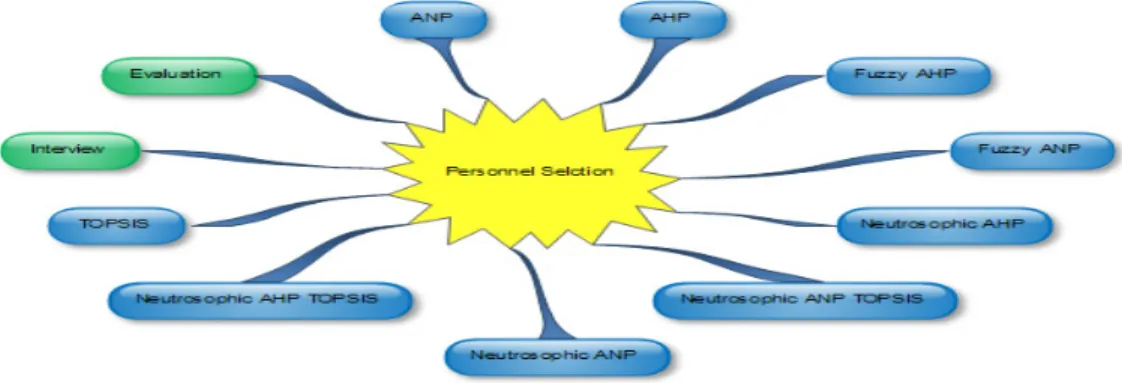
enterprise that strength the human resource with efficient personnel selection methods can handle internal communica-tions between enterprise partners either internal or external sides, in addition, can efficiently predict the requirements of the competitive requirements [5], [6]. Fig.1 models the process for traditional personnel selection. Therefore there is a need to enhance the methods of personnel selection among numerous alternatives by owning different technical and commercial scope [7]–[10].
FIGURE 1. Ontology for traditional methods for personnel selection.
In Research, numerous methods used for personnel selection such as interview, examination, mastery tests, work sample tests, predictive index tests, and person-ality trait quizzes, however there is shortage of the use of MCDM techniques [3]. The enhancements methods of personnel selection problems propose the use of MCDM methods [2], [7], [11]–[13]. The MCDM can handle complex problems and select the appropriate solution among numerous of alternatives solutions with respect to enterprise’s goals [14]. Sometimes not all candidates match enterprise’s purposes, for this reason [15], mentions different patterns for MCDM problems:
1) Identify problem statements.
2) Sort the problem: Classify candidates into related groups.
3) Rank problem’s candidates.
4) Indicate problem candidates’ features.
Due to the complexity of human cognition, MCDM methods of selection ideal candidates are surrounding with vague, impression, inconsistency, and uncertainty [16].
Mostly decision makers do not have a clear conscious-ness about all criterions in order to make the proper deci-sions, which leads for challenges of MCDM methods.The major categories of MCDM are Multi-Criteria Decision Anal-ysis (MCDA) and the one of Multi-Objective Mathemat-ical Programming (MOMP) [17]. First category, MCDA is a method used to detect the relations between different alternatives. The decision is taken based on the surrounding criterions and alternatives. The criterions have some char-acteristics such that, they can be measured and their output can be clearly computed. The consequences of outcome afford the ability of observations and facilities of final decisions. Second category, MOMP deals with numerous and conflict objectives and applies optimization techniques to obtain possible solutions of decisions [18]. The alternatives have been formed using mathematical methods.
AHP is a method to structure complex problems into hierarchical structure to display relationship of goals, alternatives, and criteria to aid decision maker to judge the performance of decisions in such efficient manner [19]. However classical methods of AHP cannot handle the condi-tions of vague, impression, and uncertainty. The fuzzy AHP is proposed to handle the conditions of vague and impres-sion, however fuzzy is working with membership function which is very difficult for decision maker to detect in real situations [20].
Neutrosophy is a new field in philosophy, which studies the scope and origin of neutralities [21], [22]. Neutrosophic is used to resolve numerous applications’ challenges such as critical path problem in project management [23], [14]. Regularly, the preferences between criteria cannot be clearly determined by decision makers in real life situations. The contributions of the use of neutrosophic sets are to over-come the conditions of uncertainty and inconsistency that surrounding environment and affecting on decision maker’s judgments. The degree of importance and weakness within criteria and alternatives should be evaluated. The neutro-sophic method has the ability to model the relationships and dependents between criteria and alternatives. The neutro-sophic theory can explicitly show decision maker’s knowl-edge, reference, and judgments [24]. Neutrosophic are an expansion of Intuitionistic Fuzzy Sets (IFS) that illus-trate accurate perspectives and enhancing interpretation of uncertainty [20]. The neutrosophic set is moving forward by the use of membership of truth, indeterminacy, and non-membership in a given set. The neutrosophic set illus-trates the cases of indeterminacy that exists in real life situa-tions to aid experts of decision makers to make accurate and efficient judgments.
TOPSIS has been first proposed in [25], the method depends on synthesizing the criteria like in AHP. The TOPSIS is rely on dividing alternatives into two groups positive and
negative solutions, the best solution has the shortest distance from positive group of solutions and the longest distance from negative group of solutions [26]. Considering the personnel selection is an MCDM problem, the proposed model inte-grates the AHP with TOPSIS by the use of neutrosophic sets. The decision maker provides the basis judgments for the selection problem. The judgments are obtained in envi-ronment of inconsistency, and uncertainty. The proposed framework handles the current challenges and recommends the ideal solutions with respect to constraint of environment criteria.
Section 2 reviews the literatures for the problem of personnel selections neutrosophic AHP, and TOPSIS. Section 3 presents the proposed methodology to aid decision makers for selecting the appropriate applicant for achieving enterprise goals. Section 4 provides an empirical application to validate of proposed model. Section 5 summarizes the research key point and assigns the research future work.
II. LITERATURE REVIEW
Many issues can affect the process of personnel selection including changing in work, government, behavior, regula-tions, the evolution technology, and others [8], [9], [27], [28]. The traditional methods of interview are validity, reliability, interviewer differences, employment opportunity issues, and decision-making processes. In addition to, the interview can be used as an approach to help personnel and organiza-tion effectiveness [29]. The personality judgments measures are used to efficiently enhance the personnel selections process [30]. Inside enterprise the managers identifies many defects in the business relationships of IT [31]. The focus on the deficiency of information technology managers effec-tiveness, is leading to partial failures in enterprise business relations [32]. In [33], demonstrates a problem in the depart-ment which is the lack for the super-manager for communi-cation skills that make negative impact on the organization success. To overcome the negative impacts, the technical capabilities should be considered. In [5], demonstrates the effectiveness of Information technology to enterprise. The enterprise IT resources are divided into infrastructure, human resources, and enabled intangibles. The IT skills are classified into soft skills such as interpersonal skills, creativity, and time management, and technical skills such as marketing, accounting, and emerging information technologies [34]. An model based for efficiency analysis are proposed for ranking alternatives using the ordered weighted average (OWA) aggregation operators for the purpose of improving decision making processes [35].
Towards enhancing the decision maker’s judgments, deci-sion support system tools are proposed to enhance the personnel selection process [36], [37]. In [38], uses the MCDM methods for personnel selection. The MCDM methods are relying on an aggregating function which represents ‘‘closeness to the ideal’’ solution [39]. AHP decomposes obstacles into hierarchal structure in order to obtain priorities and weights to enhance decision maker’s
judgments [40]. Due to vagueness and impression, the fuzzy methods are provided to enhance the decision maker’s judg-ments in the process of personnel selection [41]. The fuzzy methods combined with AHP to solve information systems problems for the personnel selections [42]. A fuzzy model based on a two-level personnel selection, is proposed to minimize subjective judgments in the methods of choosing between proper candidates to be hired to enterprise [43]. An approach based on ranking fuzzy numbers by metric distance and comparing the proposed method with other methods. In addition, proposing a computer-based group decision support system used three ranking methods for improving personnel selection problem [44]. Fuzzy multiple objective methods are illustrated in order to solve personnel selection problems [45]. Fuzzy multi-objective Boolean linear programming formulation is presented to show the degree of importance for each alternative. A system for personnel selection is based on fuzzy analytic hierarchy for ranking the candidates to achieve the most appropriate candidates [42]. In [46] focuses on the analytical thinking approaches, an analytical network process is proposed to handle the impression and ambiguity in the pairwise compar-ison matrix to reduce the personnel selection biasness.
TOPSIS is proposed as the best solution that has the shortest distance to positive solutions [33]. Traditionally the weights of TOPSIS presented as crisp numbers which cannot be applicable in real environment [47]. Refer-ences [3] and [26] proposes TOPSIS methods for enhancing personnel selection problems. A new TOPSIS based on multi-criteria methods for ranking alternatives according to veto threshold [3]. According to Karnik–Mendel (KM), a fuzzy TOPSIS is proposed to obtain an accurate fuzzy rela-tive closeness instead of crisp value in order to prevent loss of information and efficiency [26]. In [2] and [48] illustrate the method of TOPSIS with a fuzzy multi-criteria decision making algorithms to allow managers to assess information using linguistic and numerical scales with different data sources for solving the personnel selection problems. The AHP TOPSIS combined with fuzzy methods are mentioned in the case of education committee, an integrated method of fuzzy AHP and TOPSIS in an MCDM environment are used to enhance the personnel selection of the training and educa-tion staff [49]. For uncertainty and inconsistency condieduca-tions, the AHP TOPSIS combined with neutrosophic are illustrated in different fields like risks and supplier selections for aiding decision makers to achieve to ideal decisions [50], [51]. We propose to be the first to integrate the neutrosophic environment to AHP and TOPSIS techniques in personnel selection.
III. METHODOLOGY
In our study, the integrating of TOPSIS with neutrosophic is regard as a new contribution to make an ideal selection of applicants in the personnel selection problem. As mentioned in the literature review section, TOPSIS method is used to solve the problem of personnel selection. The recent
FIGURE 2. Mind map of personnel selection problem methods.
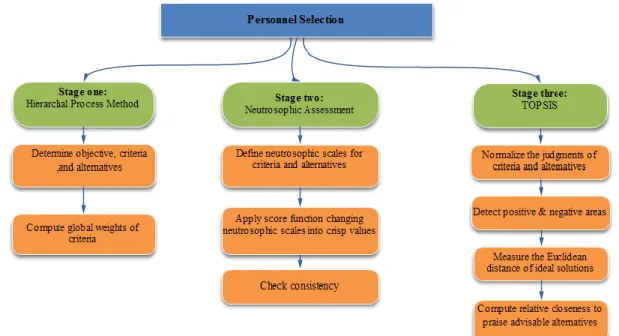
FIGURE 3. Conceptual flow to personnel selection problem.
researches as mentioned in [3] use TOPSIS in solving classical business problems as follows:
• Manufacturing: the supplier selection problems are
handled using fuzzy positive ideal solution (PIS) and negative ideal solution (NIS) [52], [53]. The neutrosophic environment proposed to overcome the personnel selection problems of uncertainty and incon-sistency [54], [55]. The hierarchical fuzzy TOPSIS is used as a recent method for recommending the most appropriate business process [56]. The AHP combined with TOPSIS are used to select the ideal maintenance strategy [57].
• Marketing: the evaluation of new products, service
quality of services, and tourism management, to enhance hotel services by the use of fuzzy methods with AHP [58]–[60].
The traditional personnel selection process steps are divided into two phases. First a group of expertise makes the appraisal methods to evaluate the applicants. The reason to take more than one decision makers are to overcome any personnel biasness perspectives for the committee, and to focus on the success of enterprise factors. Second a final deci-sion is proposed based on the committee judgments. Unfortu-nately, the conditions of uncertainty and inconsistency cannot
be detected by human, due to decision maker’s confusion or less experience.
Mind map is modeled to show the possible methods either traditional or non-traditional that can be used to handle personnel selection problems as mentioned in Fig.2. For the sake of uncertainty and inconsistency, we combine the neutrosophic AHP with TOPSIS techniques in order to handle the personnel selection environment problems as mentioned in Fig.3, to achieve ideal solutions for such a successful organization. The proposed methods steps are mentioned in Fig.4. The conceptual flow is presented in three stages. The first stage is to determine the objectives, criterions and alternatives are considered to insure that the candi-date applicant will fulfill the enterprise needs. The second stage depicts the neutrosophic scales methods to evaluate the surrounding criteria of candidate’s applicants. The third Stage is TOPSIS methods have been applied to choose the ideal candidates by establishing positive and negative areas of candidates. Finally, choose the ideal solution by using the relative closeness centric methods. For more details revise [61].
The explanation for the conceptual steps of combining the neutrosophic AHP with TOPSIS techniques are mentioned in the next steps:
FIGURE 4. The conceptual view steps for the proposed method.
Step 1: Determine objectives and criteria by the model of AHP.
TABLE 1. The triangular neutrosophic scale of AHP.
Step 2: Structure a committee from expertise decision makers to assign their judgments about the proposed alterna-tives and criteria. Aggregate the committee judgments using neutrosophic scales mentioned in table 1. The criteria is represented in comparison matrix, in the case of criteria 1 is strongly significant than criteria 2, the neutrosophic scale value is written as h4,5,6i.Conversely, the neutrosophic scale of criteria 2 to criteria 1 is the inverse ofh4,5,6i which
is denoted asD14,15, 16E.In addition, the neutrosophic scale value will be attached with sureness degree for truth, inde-terminacy, and false degree that represents decision maker’s perspectives. The sureness degree will be used further in the research computations. Giving an example, the preceding decision maker’s perspective presents the structure of neutro-sophic triangular ashh4,5,6i; h0.80,0.15,0.20i. The neutro-sophic triangular scale values are represented ash4,5,6i, respectively to lower, median, and upper values. The sureness degree of decision maker point of view is mentioned as h0.80,0.15 ,0.20i. In addition, the sureness degree of truth, indeterminacy, and falsity are regarded to be independent.
Step 3:Convert the neutrosophic scales 1 to crisp values
by apply score functions ofaijas mentioned:
s(aij)= lrij×mrij×urij)Trij +Irij+Frij 9 (1) where l, m, u denotes lower, median, upper of the scale neutrosophic numbers, T, I, F are the truth-membership, inde-terminacy, and falsity membership functions respectively of triangular neutrosophic number.
After the conversion of neutrosophic scales into crisp values, the perspectives of decision makers should be aggregated. The aggregation should reflect the real preferences within relations as mentioned: xij = z P z=1 (azij) z (2)
The aggregated pair-wise comparison matrix represents the estimation between preferences has been formed as
mentioned: A= x11 x12 · · · xij ... ... ... xi1 xi2 · · · xji (3)
Step 4:Check consistency using the following equation:
CR=CI
RI (4)
where CR is consistency rate, CI is consistency Index, and RI is a random consistency index. The detailed steps to measure consistency are mentioned in [61].
Step 5:Tabulate the weight for each criteria with respect to decision maker’s judgments.
1) Calculate the total of row averages:
wi= n P j=1 (xij) n ; i=1,2,3, . . . .m; j=1,2,3, . . . ,n (5) 2) Normalizewiusing the following equation:
wmi = wi m P i=1 wi ; i=1,2,3, . . . ,m. (6)
Step 6: In order to achieve efficient personnel selection apply TOPSIS methods:
• Step 6.1:Create judgments of decision matrix according to perspectives and expertise of decision makers. Aggre-gate the decision makers judgments matrices in the case of the existence of more than one decision maker:
• Step 6.2:Convert the aggregated decision matrix to crisp values using equation (1). In case of multiple decision makers, the aggregation of pairwise comparison matrix is calculated using equation (2) and formed in form (3).
• Step 6.3: Afterwards the de-neutrosophic process,
the crisp value ofxijshould be normalized which are in the form of decision matrix by applying the mentioned equation: rij = xij s m P i−1 xij2 ; i=1,2,3. . .m; j=1,2,3. . .n (7)
• Step 6.4: Multiply the weights wjof criteria produced from neutrosophic AHP by the normalized decision matrix to produce the weighted matrix as mentioned:
zij=wj×rij (8)
• Step 6.5:Compute the positive and negative areas by the
use equation (9), and (10): A+ = < max(zij|i=1,2, . . . ,m)|j∈j+>, <min(zij|i=1,2, . . . ,m)|j∈j−> (9) A− = < min(zij|i=1,2, . . . ,m)|j∈j+>, <max(zij|i=1,2, . . . ,m)|j∈j−> (10)
Such thatj+refers to profitable impact whilej−indicates non profitable impact.
• Step 6.6: Compute the euclidean distance between
positive (di+) and negative ideal solution (di−) to the proposed alternatives as mentioned:
di+= v u u t n X i=1 (zij−z+j )2,i=1,2, . . . ,m (11) di−= v u u t n X i=1 (zij−z−j )2,i=1,2, . . . ,m (12)
• Step 6.7:Compute the relative closeness to choose the
most appropriate and efficient decision by ranking the alternatives:
ci= di− di++di−
; 1=1,2, . . . ,m (13) Step 7:Based on alternative’s rank, choose the best decision. IV. AN EMPIRICAL APPLICATION
We illustrate an empirical application to present the proposed methodology in real world problems. The case study is applied on smart village Cairo Egypt. The customer service department need to hire new manager, because of the current manager is transferred to another branch outside the country. The judgments committee consists of four deci-sion makers, they recommends five applicants to be the ideal from all the available applicants. After the meeting for decision makers, the general criteria’s for selections are mentioned:
• C1: Professional Knowledge Edge and Expertise.
• C2: Previous Professional Career.
• C3: Personnelality and Potential
The proposed model neutrosophic AHP with TOPSIS applied on case study as follows in the next steps
Step1:In this phase, there are four experts decision makers: 1) Chief executive.
2) chief operating officer. 3) Non-executive director. 4) Social entrepreneur.
The vital criteria’s according to decision judgments and appli-cants are represented in Fig.5.
FIGURE 5. The AHP structure for the proposed criteria and alternatives. Step 2:The proposed case study includes four experts; each decision maker is representing his/her judgment
TABLE 2. The aggregated perspectives of decision makers for criteria.
TABLE 3. The crisp comparison matrix of criteria according to objective with respect to manager’s opinion.
TABLE 4. The wieghts of criteria.
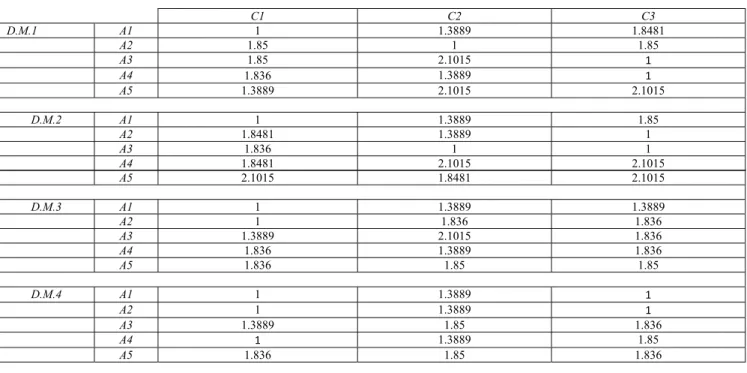
TABLE 5. Decision matrix for judgments committee with respect to criteria and alternative.
using table1. In order to regard a final judgment, a session has been performed with decision makers. The average preferences have been illustrated in table 2, where c1, c2,
and c3 corresponds to, professional knowledge edge and expertise, previous professional career, and personality and potential
TABLE 6. De-neutrosophic crisp values for decision maker’s judgments committee.
TABLE 7. The normalization of decision matrix.
Step 3: The perspectives of decision makers have been converted to crisp values by applying score value of equa-tion (1), the results is presented in table 3.
Step 4:The consistency rate is computed. The consistency rate is accepted which is 1%.
Step 5: The weights of criteria are computed, and repre-sented in table 4 and modeled in Fig.6.
FIGURE 6. The pie chart of personnel selection criteria.
Step 6: The judgments for decision committee for the proposed alternatives and criteria presented in table 5 for
more details in steps. Then use equation 1 to change neutro-sophic scales into crisp values as shown in table 6.
• The aggregated results for committee judgments are
calculated using equation (2). The equation (7), obtains the normalization of alternatives and criteria, and the normalization results are represented in table 7.
• Multiply the weightswjof criteria from table 4 by the
normalized decision matrix in table 7,in order to produce the weighted matrix by the use of equation (8) and results mentioned in table 8.
– Compute the positive and negative areas by the use of equation (9), and (10)
A+= {0.073,0.039,0.032}.
A−= {0.039,0.028,0.021}.
• Compute the Euclidean distance between positive (di+) and negative ideal solution (di− as mentioned in equa-tion (11), and (12). After that, compute the relative closeness to choose the most appropriate and efficient decision by ranking the alternatives using equation (13). The results ofdi+,di−,ci, and final ranking are presented in table 9.
Step 7:The applicants are sorted by the rank of neutrosophic AHP and TOPSIS methods. The applicant four is considered
TABLE 8. The wieghted decision matrix.
TABLE 9. Ranking of applicants.
to be the best one to be hired to smart village. The A4 appli-cant meets the judgments of decision makers committee and criteria to achieve the success of the smart village in Cairo Egypt. However A1 is considered to be the worst choice that cannot meet the specified judgments and criteria to meet the enterprise goals.
FIGURE 7. The relative closeness for applicants.
• The applicants ranking are modeled to show the results of relative closeness between applicants as mentioned in Fig.7. In addition, the sorting of alternatives with respect to ranking results shown that applicant 4 should be hired to the proper position. The proposed case study shows that human resources can be improved by the use of non-traditional methods of neutrosophic AHP with TOPSIS to achieve the best alternatives in personnel selection problem.
V. CONCLUSION AND FUTURE WORK
Personnel selection is a vital problem that impact on the quality of management and enterprises. Many studies try to aid decision makers to improve the decision making. But the use of non-traditional methods to assist decision makers to choose the right person in the right position becomes an
obligatory condition. So the weight of our study evolved to overcome the inconsistency and uncertainty conditions that found in MCDM environment. The proposed study integrates neutrosophic AHP with TOPSIS methods to improve the decision committee judgments by considering the constraint of the environmental criterions. The case study is applied on smart village Cairo, Egypt, shows the efficiency for the proposed method and provides final decision to hire appli-cant four to be in the right position for achieving success organization.
Since, the personnel selection problem is an important issue for gaining true achievements in enterprises, the future work will focus on enhancing of personnel selection criteria. The enhancements are applied by the use of evolutionary algorithms to choose the most effective criteria. Another important discipline is to improve the TOPSIS methods. REFERENCES
[1] A. Baležentis, T. B. Baležentis, and W. K. M. Brauers, ‘‘Personnel selection based on computing with words and fuzzy MULTIMOORA,’’Expert Syst. Appl., vol. 39, no. 9, pp. 7961–7967, 2012.
[2] M. Dursun and E. E. Karsak, ‘‘A fuzzy MCDM approach for personnel selection,’’Expert Syst. Appl., vol. 37, no. 6, pp. 4324–4330, 2010. [3] A. Kelemenis and D. Askounis, ‘‘A new TOPSIS-based multi-criteria
approach to personnel selection,’’Expert Syst. Appl., vol. 37, no. 7, pp. 4999–5008, 2010.
[4] T. C. Powell and A. Dent-Micallef, ‘‘Information technology as competi-tive advantage: The role of human, business, and technology resources,’’
Strategic Manage. J., vol. 18, no. 5, pp. 375–405, 1997.
[5] A. S. Bharadwaj, ‘‘A resource-based perspective on information tech-nology capability and firm performance: An empirical investigation,’’MIS Quart., vol. 24, no. 1, pp. 169–196, 2000.
[6] F. J. Mata, W. L. Fuerst, and J. B. Barney, ‘‘Information technology and sustained competitive advantage: A resource-based analysis,’’MIS Quart., vol. 19, no. 4, pp. 487–505, 1995.
[7] E. K. Zavadskas, Z. Turskis, J. Tamošaitiene, and V. Marina, ‘‘Multicriteria selection of project managers by applying grey criteria,’’Technol. Econ. Develop. Economy, vol. 14, no. 4, pp. 462–477, 2008.
[8] L. M. Hough and F. L. Oswald, ‘‘Personnel selection: Looking toward the future–remembering the past,’’Annu. Rev. Psychol., vol. 51, no. 1, pp. 631–664, 2000.
[9] S.-H. Liao, ‘‘Knowledge management technologies and applications— Literature review from 1995 to 2002,’’Expert Syst. Appl., vol. 25, no. 2, pp. 155–164, 2003.
[10] E. F. Boran, S. Genç, M. Kurt, and D. Akay, ‘‘A multi-criteria intuitionistic fuzzy group decision making for supplier selection with TOPSIS method,’’
Expert Syst. Appl., vol. 36, no. 8, pp. 11363–11368, 2009.
[11] A. Kelemenis, K. Ergazakis, and D. Askounis, ‘‘Support managers’ selec-tion using an extension of fuzzy TOPSIS,’’Expert Syst. Appl., vol. 38, no. 3, pp. 2774–2782, 2011.
[12] B. Ma, C. Tan, Z. Jiang, and H. Deng, ‘‘Intuitionistic fuzzy multicriteria group decision for evaluating and selecting information systems projects,’’
Inf. Technol. J., vol. 12, no. 13, pp. 2505–2511, 2013.
[13] S.-F. Zhang and S.-Y. Liu, ‘‘A GRA-based intuitionistic fuzzy multi-criteria group decision making method for personnel selection,’’Expert Syst. Appl., vol. 38, no. 9, pp. 11401–11405, 2011.
[14] M. Abdel-Basset, M. Mohamed, Y. Zhou, and I. Hezam, ‘‘Multi-criteria group decision making based on neutrosophic analytic hierarchy process,’’
J. Intell. Fuzzy Syst., vol. 33, no. 6, pp. 4055–4066, 2017.
[15] B. Roy, ‘‘Multicriteria methodology for decision aiding,’’ inOperation Research and Decision Theory. New York, NY, USA: Springer, 1996. doi:10.1007/978-1-4757-2500-1.
[16] P. Ji, H.-Y. Zhang, and W.-Q. Wang, ‘‘Selecting an outsourcing provider based on the combined MABAC–ELECTRE method using single-valued neutrosophic linguistic sets,’’Comput. Ind. Eng., vol. 120, pp. 429–441, Jun. 2018.
[17] J. R. Figueira, S. Greco, and M. Ehrgott, ‘‘Multiple criteria decision analysis: State of the art surveys,’’ inInternational Series in Operations Research and Management Science. New York, NY, USA: Springer, 2005. doi:10.1007/978-1-4939-3094-4.
[18] F. B. Abdelaziz, ‘‘Multiple objective programming and goal program-ming: New trends and applications,’’Eur. J. Oper. Res., vol. 177, no. 3, pp. 1520–1522, 2007.
[19] H. Ma, H. Zhu, Z. Hu, K. Li, and W. Tang, ‘‘Time-aware trustworthi-ness ranking prediction for cloud services using interval neutrosophic set and ELECTRE,’’Knowl.-Based Syst., vol. 138, pp. 27–45, Dec. 2017. doi:10.1016/j.knosys.2017.09.027.
[20] M. Abdel-Basset, G. Manogaran, A. Gamal, and F. Smarandache, ‘‘A hybrid approach of neutrosophic sets and DEMATEL method for devel-oping supplier selection criteria,’’Des. Automat. Embedded Syst., vol. 22, no. 3, pp. 257–278, 2018.
[21] F. Smarandache, Neutrosophy, Neutrosophic Logic, Neutrosophic Set, Neutrosophic Probability and Statistics. Ann Arbor, MI, USA: ProQuest, 1998.
[22] F. Smarandache, ‘‘A Unifying Field in Logics: Neutrosophic Logic Neutros-ophy, Neutrosophic Set, Neutrosophic Probability: Neutrosophic Logic. Neutrosophy, Neutrosophic Set, Neutrosophic Probability. Infinite Study. American Research Press, 2005.
[23] B. Gaudenzi and A. Borghesi, ‘‘Managing risks in the supply chain using the AHP Method,’’Int. J. Logistics Manage., vol. 17, no. 1, pp. 114–136, 2006.
[24] F. Smarandache, ‘‘Neutrosophic set-a generalization of the intuitionistic fuzzy set,’’J. Defense Resource Manage., vol. 1, no. 1, p. 107, 2010. [25] C. L. Hwang and K. Yoon, ‘‘Multiple attribute decision making:
Methods and applications,’’ in Business Management (Lecture Notes in Economics and Mathematical Systems). Springer, 1981. doi:10.1007/978-3-642-48318-9.
[26] X. Sang, X. Liu, and J. Qin, ‘‘An analytical solution to fuzzy TOPSIS and its application in personnel selection for knowledge-intensive enterprise,’’
Appl. Soft Comput., vol. 30, pp. 190–204, May 2015.
[27] A. M. Beckers and M. Z. Bsat, ‘‘A DSS classification model for research in human resource information systems,’’Inf. Syst. Manage., vol. 19, no. 3, pp. 1–10, 2002.
[28] I. T. Robertson and M. Smith, ‘‘Personnel selection,’’J. Occupat. Org. Psychol., vol. 74, no. 4, pp. 441–472, 2001.
[29] R. D. Arvey and J. E. Campion, ‘‘The employment interview: A summary and review of recent research,’’ Personnel Psychol., vol. 35, no. 2, pp. 281–322, 1982.
[30] M. G. Rothstein and R. D. Goffin, ‘‘The use of personality measures in personnel selection: What does current research support?’’Hum. Resour. Manage. Rev., vol. 16, no. 2, pp. 155–180, 2006.
[31] G. Dhillon, ‘‘Organizational competence for harnessing IT: A case study,’’
Inf. Manage., vol. 45, no. 5, pp. 297–303, 2008.
[32] L. Willcoxson and R. Chatham, ‘‘Testing the accuracy of the IT stereotype: Profiling IT managers’ personality and behavioural characteristics,’’Inf. Manage., vol. 43, vol. 6, pp. 697–705, 2006.
[33] H. G. Enns, S. L. Huff, and B. R. Golden, ‘‘CIO influence behav-iors: The impact of technical background,’’Inf. Manage., vol. 40, no. 5, pp. 467–485, 2003.
[34] S. Ward, ‘‘Information professionals for the next millennium,’’J. Inf. Sci., vol. 25, no. 4, pp. 239–247, 1999.
[35] L. Canós and V. Liern, ‘‘Soft computing-based aggregation methods for human resource management,’’Eur. J. Oper. Res., vol. 189, no. 3, pp. 669–681, 2008.
[36] M. S. Mehrabad and M. F. Brojeny, ‘‘The development of an expert system for effective selection and appointment of the jobs applicants in human resource management,’’Comput. Ind. Eng., vol. 53, no. 2, pp. 306–312, 2007.
[37] H.-S. Shih, L.-C. Huang, and H.-J. Shyur, ‘‘Recruitment and selection processes through an effective GDSS,’’Comput. Math. Appl., vol. 50, nos. 10–12, pp. 1543–1558, 2005.
[38] C.-F. Chien and L.-F. Chen, ‘‘Data mining to improve personnel selection and enhance human capital: A case study in high-technology industry,’’
Expert Syst. Appl., vol. 34, no. 1, pp. 280–290, 2008.
[39] S. Opricovic and G.-H. Tzeng, ‘‘Compromise solution by MCDM methods: A comparative analysis of VIKOR and TOPSIS,’’Eur. J. Oper. Res., vol. 156, no. 2, pp. 445–455, 2004.
[40] T. L. Saaty, Multicriteria Decision Making: The Analytic Hierarchy Process: Planning, Priority Setting, Resource Allocation, 2nd ed. Pittsburgh, PA, USA: RWS, 1990.
[41] E. E. Karsak, ‘‘Personnel selection using a fuzzy MCDM approach based on ideal and anti-ideal solutions,’’ in Multiple Criteria Deci-sion Making in the New Millennium(Lecture Notes in Economics and Mathematical Systems). Berlin, Germany: Springer, 2001, pp. 393–402. doi:10.1007/978-3-642-56680-6_36.
[42] Z. Güngör, G. Serhadlıoğlu, and S. E. Kesen, ‘‘A fuzzy AHP approach to personnel selection problem,’’ Appl. Soft Comput., vol. 9, no. 2, pp. 641–646, 2009.
[43] S. Petrovic-Lazarevic, ‘‘Personnel selection fuzzy model,’’Int. Trans. Oper. Res., vol. 8, no. 1, pp. 89–105, 2001.
[44] L.-S. Chen and C.-H. Cheng, ‘‘Selecting IS personnel use fuzzy GDSS based on metric distance method,’’Eur. J. Oper. Res., vol. 160, no. 3, pp. 803–820, 2005.
[45] E. E. Karsak, ‘‘A fuzzy multiple objective programming approach for personnel selection,’’ in Proc. IEEE Int. Conf. Syst., Man, Cybern., Nashville, TN, USA, Oct. 2000, pp. 2007–2012. doi:10.1109/ICSMC.2000.886409.
[46] M. Ayub, J. Kabir, and G. R. Alam, ‘‘Personnel selection method using analytic network process (ANP) and fuzzy concept,’’ inProc. 12th Int. Conf. Comput. Inf. Technol., Dhaka, Bangladesh, Dec. 2009, pp. 373–378. doi:10.1109/ICCIT.2009.5407266.
[47] A. İ. Ölçer and A. Y. Odabaşi, ‘‘A new fuzzy multiple attributive group decision making methodology and its application to propul-sion/manoeuvring system selection problem,’’Eur. J. Oper. Res., vol. 166, no. 1, pp. 93–114, 2005. doi:10.1016/j.ejor.2004.02.010.
[48] F. Samanlioglu, Y. E. Taskaya, U. C. Gulen, and O. Cokcan, ‘‘A fuzzy AHP–TOPSIS-based group decision-making approach to IT personnel selection,’’Int. J. Fuzzy Syst., vol. 20, no. 5, pp. 1576–1591, 2018. [49] M. Celik, I. Kandakoglu, and I. D. Er, ‘‘Structuring fuzzy integrated
multi-stages evaluation model on academic personnel recruitment in MET institutions,’’Expert Syst. Appl., vol. 36, no. 3, pp. 6918–6927, 2009. [50] M. Abdel-Basset, M. Mohamed, and F. Smarandache, ‘‘A hybrid
neutro-sophic group ANP-TOPSIS framework for supplier selection problems,’’
Symmetry, vol. 10, no. 6, p. 226, 2018.
[51] M. Abdel-Basset, M. Gunasekaran, M. Mohamed, and N. Chilamkurti, ‘‘A framework for risk assessment, management and evaluation: Economic tool for quantifying risks in supply chain,’’Future Gener. Comput. Syst., vol. 90, pp. 489–502, Jan. 2019.
[52] J.-W. Wang, C.-H. Cheng, and K.-C. Huang, ‘‘Fuzzy hierarchical TOPSIS for supplier selection,’’Appl. Soft Comput., vol. 9, no. 1, pp. 377–386, 2009.
[53] Y.-M. Wang and T. M. S. Elhag, ‘‘Fuzzy TOPSIS method based on alpha level sets with an application to bridge risk assessment,’’Expert Syst. Appl., vol. 31, no. 2, pp. 309–319, 2006.
[54] M. Abdel-Basset, G. Manogaran, M. Mohamed, and N. Chilamkurti, ‘‘Three-way decisions based on neutrosophic sets and AHP-QFD frame-work for supplier selection problem,’’Future Gener. Comput. Syst., vol. 89, pp. 19–30, Dec. 2008.
[55] C. Muralidharan, N. Anantharaman, and S. G. Deshmukh, ‘‘A multi-criteria group decision making model for supplier rating,’’J. Supply Chain Manage., vol. 38, no. 3, pp. 22–33, 2002, 2002.
[56] S. Perçin, ‘‘Fuzzy multi-criteria risk-benefit analysis of business process outsourcing (BPO),’’ Inf. Manage. Comput. Secur., vol. 16, no. 3, pp. 213–234, 2008.
[57] K. Shyjith, M. Ilangkumaran, and S. Kumanan, ‘‘Multi-criteria decision-making approach to evaluate optimum maintenance strategy in textile industry,’’J. Qual. Maintenance Eng., vol. 14, no. 4, pp. 375–386, 2008. [58] C. Kahraman, S. Çevik, N. Y. Ates, and M. Gülbay, ‘‘Fuzzy multi-criteria
evaluation of industrial robotic systems,’’Comput. Ind. Eng., vol. 52, no. 4, pp. 414–433, 2007.
[59] T.-K. Hsu, Y.-F. Tsai, and H.-H. Wu, ‘‘The preference analysis for tourist choice of destination: A case study of Taiwan,’’Tourism Manage., vol. 30, no. 2, pp. 288–297, 2009.
[60] J. M. Benítez, J. C. Martín, and C. Román, ‘‘Using fuzzy number for measuring quality of service in the hotel industry,’’Tourism Manage., vol. 28, no. 2, pp. 544–555, 2007.
[61] M. Abdel-Basset, M. Mohamed, and V. Chang, ‘‘NMCDA: A framework for evaluating cloud computing services,’’Future Gener. Comput. Syst., vol. 86, pp. 12–29, Sep. 2018.
NADA A. NABEEH received the B.S. and master’s degrees in information systems from the Faculty of Computers and Information Sciences, Mansoura University, Egypt. Her research inter-ests include cloud computing, big data, smart city, the Internet of Things, neural networks, artificial intelligence, web service composition, and evolu-tionary algorithms.
FLORENTIN SMARANDACHE received the
M.Sc. degree in mathematics and computer science from the University of Craiova, Romania, and the Ph.D. degree in mathematics from the State University of Kishinev. He held a post-doctoral position in applied mathematics with the Okayama University of Sciences, Japan. He is currently a Professor of mathematics with The University of New Mexico, USA. He has also been the Founder of neutrosophic set, logic, probability, and statistics, since 1995. He has published over 100 papers on neutrosophic physics, superluminal and instantaneous physics, unmatter, absolute theory of relativity, redshift and blueshift due to the medium gradient and refrac-tion index besides the Doppler effect, paradoxism, outerart, neutrosophy as a new branch of philosophy, law of included multiple-middle, degree of dependence and independence between the neutrosophic components, refined neutrosophic over-under-off-set, neutrosophic overset, neutrosophic triplet and duplet structures, DSmT. He has authored many peer-reviewed international journals and many books. He has presented papers and plenary lectures to many international conferences around the world.
MOHAMED ABDEL-BASSETreceived the B.Sc., M.Sc., and Ph.D. degrees in decision support from the Faculty of Computers and Informatics, Zagazig University, Egypt. He has published over 100 articles in international journals and conference proceedings. His current research interests include optimization, operations research, data mining, computational intelligence, applied statistics and decision support systems, robust optimization, engineering optimization, multi-objective opti-mization, swarm intelligence, evolutionary algorithms, and articial neural networks. He is working on the applications of multi-objective and robust meta-heuristic optimization techniques. He is also an Editor and a Reviewer in different international journals and conferences.
HAITHAM A. EL-GHAREEB is currently an Assistant Professor with the Information Systems Department, Faculty of Computers and Informa-tion Sciences, Mansoura University, Egypt. He is a member of many distinguished computer organi-zations, Reviewer for different highly recognized academic journals, contributor to open source projects, and the author of different books. He is interested in E-learning, enterprise architecture, information architecture, especially in service oriented architecture, business process management systems, virtualization, big data, and in collaboration with information systems E-learning organiza-tions and researchers.
AHMED ABOELFETOUHis currently a Professor of intelligent information system and the Vice Dean of Higher Studies with the Faculty of Computers and Information Sciences, Mansoura University, Egypt. His research interests include intelligent information systems, decision support systems, management information systems, and geographic information systems.