Robotic Surgery Program
in a Rural Hospital
JOHN ZENDER, RN, BS, CNOR; CHRISTINA THELL, RN, BSN, CNOR
www.aorn.org/CE
2.8
ABSTRACT
Robotic surgery has become a standard in many large hospitals across the United States and the world. The surgical robot offers the surgeon a three-dimensional view and increased dexterity in addition to providing the benefits of laparoscopic surgery to the patient (eg, shorter hospital stays, decreased pain, fewer postoperative com-plications). The next progression for robotic surgery is a move to rural venues. For many small, rural hospitals, however, obtaining a robot may be cost prohibitive, and these facilities may need to explore sources of funding for the program. Developing a robotics program requires intense training by surgeons and all surgical team members. Effective marketing of the program and the dedication and hard work of surgical team members and administrators are vital to ensure the success of the program. AORN J 92 (July 2010) 72-83. © AORN, Inc, 2010. doi: 10.1016/ j.aorn.2009.10.024
Key words: robotic surgery program, rural health care facilities.
T
he development of robotic surgery has been one of the greatest advances in surgi-cal technology since the introduction of minimally invasive surgery via laparoscopes. Ro-botic surgery was introduced in 1985 with the PUMA 560, which was used to orient a needle for a brain biopsy under computed tomographic guidance.1 Today, the robotic surgical system hasbecome a common tool for laparoscopic surgeries in major metropolitan hospitals, and with a rap-idly expanding market, rural health care facilities now have the opportunity to offer their patients the latest technology in laparoscopic surgery as well.
Although the initial financial obligation is large, a robotics program can give a hospital a competitive advantage in becoming a leader in exceptional care. Purchasing the technology alone is not enough. Developing a robotics program requires intense training, marketing, and the dedi-cation and passion of surgical team members ready to take their surgical care to the next level. With a well-developed robotics program, a hospi-tal has the opportunity for great financial success indicates that continuing education contact
hours are available for this activity. Earn the con-tact hours by reading this article, reviewing the purpose/goal and objectives, and completing the online Examination and Learner Evaluation at http://www.aorn.org/CE. The contact hours for this article expire July 31, 2013.
in addition to providing patients with cutting-edge health care. This article details the implementa-tion of a robotics program at St Joseph’s Medi-cal Center in the rural community of Brainerd, Minnesota.
EVOLUTION OF SURGICAL ROBOTS
Three influential groups of professionals initially developed the concept of using robotic technology in surgery during the late 1980s. First, scientists at the National Aeronautics and Space Adminis-tration (NASA), in Washington, DC, incorporated telepresence into medicine by developing virtual reality.1,2This enabled surgeons to be completely enveloped in their surgical field through use of a computer. When the surgeon looks through the surgeon console, he or she sees only what the endoscope is aimed at and does not have the background distractions that can occur during a typical surgical procedure.
Next, a group of scientists from Stanford Re-search Institute, Menlo Park, California, teamed with NASA to establish telemanipulation.1,3,4 This technology can replicate human hand mo-tions through movement of the robotic instrument arms. This caught the attention of a general sur-gery endoscopist who was working for the US Army.1 The endoscopist saw the benefits of using robotic technology to perform surgery on soldiers in combat zones. The US Army provided funding for medical robotics and was instrumental in the development of the technology.1
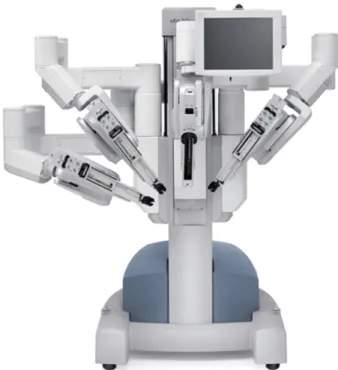
The first independent company to gain US Food and Drug Administration (FDA) approval to market and sell a medical robotic system was Computer Motion, Inc.1 In 1994, Computer Motion launched AESOP®(Automated Endo-scopic System for Optimal Positioning), a robotic telescope manipulator.1 In 1995, a second com-pany, Intuitive Surgical, Inc, joined the market.1,4 Intuitive Surgical developed and began marketing the da Vinci®Robotic Surgical System in 2000 (Figure 1).4 In 2001, Computer Motion began marketing ZEUS®, a complete robotic system.1
Intuitive Surgical purchased Computer Motion in 2003 and now owns rights to the only two FDA-approved robotic surgical systems in the United States, da Vinci and ZEUS.1,4 “Today there are more than 1,482 da Vinci Systems installed in 1,151 hospitals worldwide” (A. Morgan; MarCom Manager, Intuitive Surgical, Inc; e-mail communi-cation; April 18, 2010).
DESCRIPTION OF THE ROBOTIC SYSTEM
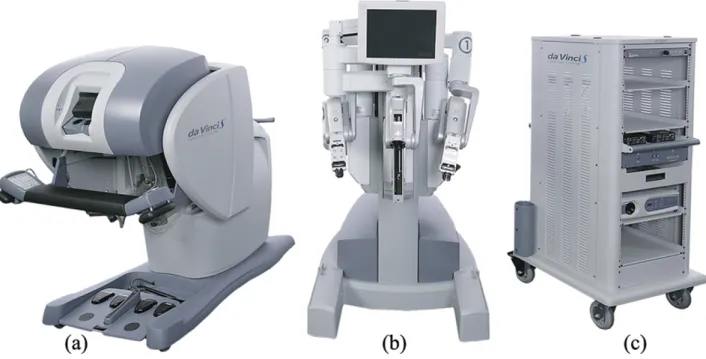
The surgical robot is a “collection of wristed servant tools called manipulators, which receive digital in-structions from an interfaced computer. . . The ma-nipulators inside the patient’s body duplicate the surgeon’s hand movements at the console”2(p2099) (Figure 2). The system consists of three main pieces: the surgeon console, the patient cart, and the vision cart (Figure 3). After the surgeon places the trocars in the desired anatomic location and achieves optimal visualization, guided docking of the robotic arms occurs as the patient cart is moved into posi-tion over the patient. Typically, guided docking is
Figure 1. The da Vinci surgical robot also is referred to as the patient cart. Instruments are attached to the working arms and advanced through trocars to the surgical site. (Photograph courtesy of Intuitive Surgical, Inc, Sunnyvale, CA.)
performed by the circulating nurse, who moves the robotic arms over the patient. The surgeon then guides them to the precise location so the robotic instruments line up parallel to the trocars. The sur-geon attaches the instrument and camera arms to the trocars and places the instrument into the cavity. The surgeon leaves the sterile field and sits at the surgeon console, where he or she performs the pro-cedure. Currently, the FDA mandates that all surgi-cal robots must be controlled by a surgeon who is in the same room as the patient.5
Just as laparoscopy has dramatically changed patient outcomes, so does robotic surgery. In ad-dition to providing all the benefits of laparoscopic procedures such as shorter hospital stays, decreased pain, and fewer postoperative complications, us-ing a surgical robot can overcome the disadvan-tages of traditional laparoscopic surgery. The
sur-gical robot offers the surgeon a three-dimensional view, ergonomic advantages, increased dexterity, and the ability to perform microsurgery.5
The surgeon has a three-dimensional view of the surgical field through two cameras, or “eyes,” in the same scope. This increases the surgeon’s visual and depth perception and mimics the tradi-tional open surgical approach. The surgeon is able to sit comfortably at the console for the majority of the procedure with padded armrests and a height-specific field of vision. This decreases fa-tigue, reduces loss of instrument control, and in-creases the surgeon’s ability to fully concentrate on the procedure at hand.
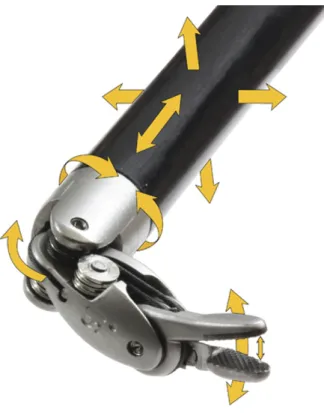
The robot mimics and improves movements of the human wrist, hands, and fingers. The technol-ogy has the ability to filter out the natural hand tremors that a surgeon can experience, which can become magnified in traditional laparoscopic sur-gery. The robotic instruments are wristed (ie, jointed) in seven degrees of freedom (Figure 4). This greatly aids in fine dissection and delicate suturing. The robotic system increases magnifica-tion, which allows earlier detection of bleeding, and increases dexterity, which allows for precise vein ligation. This in turn results in less overall blood loss for the patient and decreases the risk of the need for transfusion.
By using the robot in laparoscopic procedures, surgery can be performed on considerably smaller regions of the body than in conventional proce-dures. For instance, although the prostate is lo-cated deep in the pelvis, it is easily accessed with robotic instrumentation.
One question often asked is, does the surgeon have tactile sensation, known ashaptics, while performing robotic surgery? The answer is yes and no. “The robotic surgical system relays some force feedback sensations from the surgical field back to the surgeon throughout the procedure. This force feedback provides a substitute for tac-tile sensation. This feedback is augmented by the enhanced vision provided by the high-resolution 3D-view.”6(p3) According to Intuitive Surgical,
Figure 2. The manipulators duplicate the surgeon’s hand motions at the surgeon console. (Photograph courtesy of Intuitive Surgical, Inc, Sunnyvale, CA.)
after the surgeon performs a number of robotic procedures and becomes comfortable with the surgeon console and robotic functions, a “visual haptics” occurs. This means that the surgeon achieves a level of comfort with the visual stimu-lation provided by the ability to view in three dimensions, high definition, and increased magni-fication, which can compensate for the loss of tactile stimulation.7
MARKET RESEARCH
The first step in setting up a robotic surgery pro-gram at any facility, but particularly in a rural area, is to perform market research of the geo-graphic area. This helps determine whether there is a potential need for robotic surgeries and whether the program will be successful in a par-ticular setting. In most cases, a state’s hospital association can provide market share information on the types of procedures being performed in the coverage area of a facility. For rural hospitals, this area typically ranges from a 50- to 100-mile radius. From that information, health care facility
administrators can determine the number of surgi-cal patients that have come from the coverage area and whether the facility has lost any of these patients to a competing hospital or facility in a larger city.
At St Joseph’s Medical Center, the nearest ro-botic surgical hospital is 70 miles south and two others are 150 miles away, one to the northwest and one to the northeast. When we conducted market research, we discovered that we were los-ing a percentage of the market share to facilities with robotics programs. We determined that a robotics program would benefit our hospital to gain back that market share, increase productivity, and provide a needed service to our area communities.
If the market research indicates that a program is needed, the next important step is to find out whether surgical staff members are interested in performing robotic procedures. One urologist who performed surgery at our facility had robotic training. For a rural hospital to rely solely on one surgical field of practice to support a robotic
Figure 3. The da Vinci surgical system. From left to right are the surgeon console where the surgeon sits to perform the procedure(a); the patient cart, which holds the instrumentation(b); and the vision cart, which houses the camera, light source, and other ancillary equipment such as the electrosurgical unit(c). (Photograph courtesy of Intuitive Surgical, Inc, Sunnyvale, CA.)
surgery program would result in failure of the program because not enough procedures could be performed to pay for the investment in the robot and required staff training. Fortunately, we had another urologist, three obstetrician/gynecologists, and two general surgeons willing to be trained in robotic surgery. With three surgical services on board, we determined that launching a robotics program in our rural facility would be possible.
It may be wise to ask the surgeons who un-dergo robotics training to sign an agreement (ie, a noncompete clause) that after they are trained, they will commit to the organization and only perform robotic surgery in that health care organi-zation. This may not be a problem in a rural com-munity where surgeons may only practice at one or two health care facilities.
FINANCING
For a small hospital, obtaining financing for a $2 million robot is not an easy task and can make or break a robotic surgery program. Nevertheless,
many different ways to obtain financing are available to rural hospitals; finding one that meets the needs of the institution can be key in acquir-ing a surgical robot. Examples of fundacquir-ing sources include
state and federal programs; foundation grants;
donations;
government programs (ie, economic stimulus package);
grateful patient programs or memorials; employees and physician donations (eg,
monthly paycheck deductions); and loans.
In our case, the chief executive officer ap-pealed to the St Joseph’s Foundation for funding because its board members live in the community and use the services of the hospital. The reasons that we cited for adding a robotic surgery pro-gram included
a noted decrease in surgeries because some that were regularly performed at our facility were being lost to other hospitals where the same surgeries were being performed robotically;
the ability to draw and retain talented sur-geons by having robotic surgery available in our facility; and
the growing trend of robotic surgery expand-ing to rural areas, makexpand-ing it more likely that if we did not obtain a surgical robot, one of our competitors might.
St Joseph’s Foundation granted us the money to purchase the robot. To thank the Foundation for its donation, we provided recognition in our monthly facility newsletter, in advertising, and at board meetings.
PROGRAM DEVELOPMENT
To implement a new program at any facility, a multidisciplinary steering committee should be as-sembled. The steering committee is responsible for
Figure 4. The robotic instruments are wristed (ie, jointed) in seven degrees of freedom. (Photograph courtesy of Intuitive Surgical, Inc, Sunnyvale, CA.)
implementing staff member and surgeon training,
reviewing clinical cases, approving proctors, and
making decisions about the robotics program team.
The first task for the committee, however, is to set goals and develop a plan to accomplish them. Our perioperative director coordinated the pro-gram initiation and brought together the robotics steering committee, which consisted of facility administrators (eg, the chief financial officer, chief nursing officer, chief executive officer), sur-geons, anesthesia care providers, a member of marketing services, and a robotic surgical system company representative. Steering committee members must ask questions such as
Can a robotics program be successful in this community?
How will a robotics program complement ex-isting surgical programs?
How will success be measured (eg, improved clinical outcomes, shorter hospital stays, higher procedure volume)?
The steering committee must establish a bud-get, and the facility should be prepared to make an initial investment of up to $2 million.8 Finan-cial representatives of the steering committee must take into account not only the initial invest-ment but also ongoing maintenance, increased procedure costs, additional instrumentation and equipment, increased staff member educational needs and training costs, and marketing. After the budget is prepared, flexibility is needed until the program is well established.
The steering committee should establish a “beachhead” procedure in the initial kickoff. A beachhead procedure is one that can be exten-sively researched and is widely established in the robotics programs of other hospitals that incorpo-rate the most current, evidence-based practices.8 Robotic prostatectomy is often selected for the beachhead procedure at hospitals where a robotics
program is being established. Focusing on one procedure in the development phase increases technical proficiency and provides the benchmark for other procedures down the road. With repeti-tive exposure, the team is then able to learn, lead, and successfully develop a surgical standard and clinical pathway for other procedures.
At our facility, approval was granted to pur-chase the da Vinci robotic surgical system, and it arrived in September 2008. Initially, the goal was for urologic surgeons to perform prostatectomies; however, gynecology and general surgery were soon added to the program. The gynecologists expressed an early interest in performing robotic hysterectomies, and this interest was accommo-dated. As a result of limited OR time availability for the urologists, we began with two beachhead procedures (ie, robotic prostatectomy, robotic hys-terectomy) and incorporated gynecology as well. EDUCATION
Staff member education is the foundation for ini-tiating any successful program. Education of the initial robotics team is a complex process involv-ing all areas of the surgical department. Staff members who participate in the development of the robotics program should display a passionate interest and be leaders in their current practice. We learned that it is helpful to recruit an initial surgical team to train and gain competence with the new technology and beachhead procedure. The team members will gain the necessary knowl-edge and expertise to excel at the beachhead pro-cedure, which lays the competency foundation for future staff member training. After the beachhead procedure is established, the team can begin in-corporating more specialties to increase system usage and help distribute costs across depart-ments. In our program development phase, we trained all lead staff members from three special-ties: urology, gynecology, and general surgery. This proved cumbersome and inefficient, and there were many communication flaws. This ex-perience supports the need to establish an initial
surgical team to become competent with the one procedure and then pass the gained knowledge and experience on to subsequently trained staff members. Additional training also is needed for staff members in other supporting departments.
Many steps are involved in educating and training the surgical team. The education process starts weeks before the robot arrives in the surgi-cal department. The surgeon starts by studying a CD-ROM provided by the robotics company repre-sentative and then completes an online examination. The surgeon then attends training at a practice facil-ity, where he or she practices docking techniques and using the equipment. The surgeon then performs procedures with the robot on a pig in a laboratory. The surgeon practices dissection, ligation, and knot tying and also performs procedures such as hyster-ectomies and cysthyster-ectomies. Immediately after train-ing in the laboratory, the surgeon performs at least two procedures with a robotic proctor (ie, a board-certified surgeon with robotic training) and com-pletes a total of six proctored procedures before per-forming robotic procedures independently.9,10
The circulating nurses, surgical technologists, and anesthesia care providers also are sent to ob-serve robotic surgery at a nearby facility with an established robotic surgery program. The staff members are given an opportunity to observe and ask questions specific to the role they will per-form. After the observation phase, education con-tinues in the OR with the robotic company repre-sentative. The company representative educates the initial team of nurses and surgical technolo-gists on all of the electronics needed for robotic surgery and how to
connect the robotic system components, calibrate the robot for optimal use, and
troubleshoot technical problems that may arise during a procedure.
An important element of the education is what to do when an emergent situation arises and the procedure must be aborted. Staff members are instructed how to safely and quickly disconnect
the robot (ie, detaching the robotic instruments from the trocars and then physically backing the patient cart away from the surgical field.) Staff members practice procedure-specific techniques with the robotic representative.
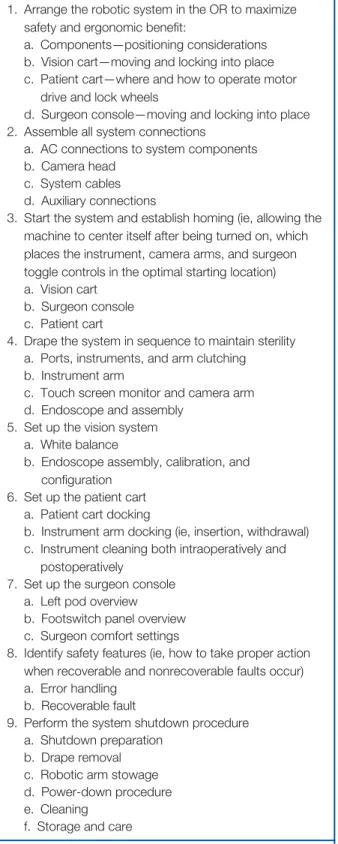
After the initial training has been conducted and the robotic surgical team is comfortable with various robotic procedures, it is time to introduce additional staff members to the procedures and develop a set of competencies.Table 1 is a set of competencies developed at St Joseph’s Medical Center. These competencies are intended for the circulating nurse and the scrub person, whether that person is a nurse or surgical technologist. Although circulating nurses may not be responsi-ble for performing instrument cleaning in some facilities, it is imperative that they understand the delicacy and mechanics of the instruments as well as the process to decontaminate and repro-cess them.
Progress review should be conducted at regular robotics steering committee meetings. The strat-egy of the program should be analyzed and ad-justed as needed to benefit the community, health care facility, and potential patient population. For instance, after 40 successful procedures were completed in six months, the steering committee recommended implementing a robotics coordina-tor. Success should be rewarded and major ac-complishments, such as completing the 100th robotic procedure and increased public interest, should be made known to recognize growth, hard work, and dedication.
ROBOTICS COORDINATOR
The robotics coordinator is a clinical expert and care coordinator for patients undergoing roboti-cally assisted surgery. The robotics coordinator orchestrates scheduling of robotic procedures, ensures instrument availability for robotic
procedures;
assists intraoperatively during robotic procedures;
provides patient and staff member education; and
assists with research efforts and data collection.5(p637)
Table 2 outlines the duties and responsibilities of the robotics coordinator.
It is vital that the robotics coordinator actively participate in any robotic procedure that is per-formed at the facility. The robotics coordinator can act as a liaison between the staff members, surgeons, administrators, marketing team mem-bers, and the robotics company. Establishing this role is instrumental in the early phases of program development and, ideally, would be es-tablished at the onset of a new robotics program TABLE 1. Perioperative Robotics
Competencies1,2
1. Arrange the robotic system in the OR to maximize safety and ergonomic benefit:
a. Components—positioning considerations b. Vision cart—moving and locking into place c. Patient cart—where and how to operate motor
drive and lock wheels
d. Surgeon console—moving and locking into place 2. Assemble all system connections
a. AC connections to system components b. Camera head
c. System cables d. Auxiliary connections
3. Start the system and establish homing (ie, allowing the machine to center itself after being turned on, which places the instrument, camera arms, and surgeon toggle controls in the optimal starting location) a. Vision cart
b. Surgeon console c. Patient cart
4. Drape the system in sequence to maintain sterility a. Ports, instruments, and arm clutching b. Instrument arm
c. Touch screen monitor and camera arm d. Endoscope and assembly
5. Set up the vision system a. White balance
b. Endoscope assembly, calibration, and configuration
6. Set up the patient cart a. Patient cart docking
b. Instrument arm docking (ie, insertion, withdrawal) c. Instrument cleaning both intraoperatively and
postoperatively
7. Set up the surgeon console a. Left pod overview b. Footswitch panel overview c. Surgeon comfort settings
8. Identify safety features (ie, how to take proper action when recoverable and nonrecoverable faults occur) a. Error handling
b. Recoverable fault
9. Perform the system shutdown procedure a. Shutdown preparation
b. Drape removal c. Robotic arm stowage d. Power-down procedure e. Cleaning
f. Storage and care
1.Intuitive Surgical® System Training: System Skill Practicum Participant’s Guide.Sunnyvale, CA: Intuitive Surgical; 2009. 2. Wright D.The Ultimate Guide to Competency Assessment in Healthcare.
3rd ed. Minneapolis, MN: Creative Health Care Management; 2005.
TABLE 2. Robotics Coordinator Responsibilities1
Clinical practice
act as a care coordinator provide direct patient care
organize and maintain inventory of required robotic supplies and equipment
orchestrate the scheduling of procedures provide clinical expertise
Education
orient and educate surgical staff members along with the perioperative educator
perform staff member competency evaluations educate surgical patients and their family members educate the general public and potential patients Administration
act as a liaison in the health care facility act as a liaison between the facility and the
manufacturer and company representatives
act as a liaison with the general public and other health care professionals outside the health care facility Research
participate in data gathering participate in data management ensure data dissemination Professional
maintain clinical expertise and professional skills develop and engage in leadership and consultant
activities
1. Francis P. Evolution of robotics in surgery and implementing a perioperative robotics nurse specialist role.AORN J. 2006;83(3):630-650.
to ensure consistent goal setting and accomplish-ment, program evaluation, and provision of ex-ceptional patient care.5
NURSING CARE OF THE PATIENT UNDERGOING A ROBOT-ASSISTED SURGERY
The preoperative and postoperative care are virtu-ally the same for robotic procedures as they are for traditional laparoscopic procedures, and with both, patient education is a key component to re-covery. There is potential for patient discharge the day after surgery, so instructions must begin before the patient undergoes the procedure. The words that nurses use to describe the surgical ro-bot must be chosen carefully. Surgical team mem-bers must be aware that the termrobot may cause feelings of anxiety or fear, especially if the pa-tient has not been educated on the use of surgical robots. Unlike industrial robots, surgical robots are not autonomous or independent. It must be scribed as a tool used by the surgeon and not a de-vice that acts independently or is preprogrammed.
The first robotic procedures performed at any hospital can prove lengthy and time consuming; for instance, initially a robotic prostatectomy may take up to eight hours compared with an open prostatectomy, which takes approximately two hours. Research has shown that it takes surgeons 20 procedures before their operating times begin to decrease because the learning curve is steep.3 Therefore, to promote positive outcomes, perioper-ative nurses should provide intraoperperioper-ative warming measures and must be cautious with positioning.
Maintaining patient normothermia during a ro-botic procedure is important to prevent adverse consequences as a result of procedure length, es-pecially in the initial procedures during which surgeons and staff members are still honing their skills. General anesthesia or major regional anesthesia impairs the thermoregulatory function of the body. While under anesthesia, the patient is unable to shiver and the patient’s vessels do not
vasoconstrict. Adverse consequences of hypother-mia include increased incidence of postoperative surgical site infections, prolonged recovery and need for postanesthesia care, impaired medication metabolism, and increased risk of cardiac com-plications. Forced-air warming is an effective method of preventing unplanned hypothermia for patients who are anesthetized.11,12
Maintaining skin integrity must be at the fore-front of patient preparations. Trendelenburg and lithotomy are common positions for robotic sur-gery. The surgeon may require that the stirrups and robotic arms be repositioned during a robotic procedure. If this occurs, the circulating nurse should reassess the patient each time the patient’s position is changed or modified.13Sheer-related injuries are a risk of robotic surgery that should be prevented; securing the patient to the OR bed with proper padding and movement-limiting de-vices can decrease the likeliness of this type of injury. Venous return can be decreased because of knee flexion, so using antiembolic stockings or intermittent compression devices is a requirement.
Concerns of the anesthesia care provider during robotic surgery include fluid shifts and restriction of respirations. The anesthesia care provider must carefully monitor fluid levels to prevent detrimen-tal fluid shifts, which can increase blood pressure and intracranial pressure and cause facial edema, congestion, and atelectasis. Furthermore, the ab-dominal viscera can impede diaphragmatic move-ment and compress lung bases.
To provide safe care, the OR requires highly trained personnel to operate, set up, and maintain the surgical robot. Perioperative nurses must be proficient in the setup, connections, and position-ing of the robotic consoles. Nurses must have sufficient training in solving any mechanical prob-lem so the surgeon can focus his or her complete attention on the procedure at hand. Nurses must be prepared for any emergent situation with proper supplies and knowledge of undocking pro-cedures. The nurse must be knowledgeable about
robotic instrumentation and understand how to load, unload, and clean all robotic instruments. Currently, at our facility, we are creating an intra-operative clinical pathway for nurses, both novice and experienced, who care for patients undergoing robotic surgery to ensure consistent patient care.
TROUBLESHOOTING
The robotic surgical system has the technology and capabilities of the most complex computer system in health care. It is able to store memory of past events and errors to the system as well as allow “live” interaction with technical engineers and support staff
members from the headquarters of the robot company. In the event of a techni-cal error, surgitechni-cal team members can receive live technical support on the tele-phone from the
engi-neers at the company. The actual system is con-nected through the Internet, which transmits all computerized messages to the engineers at com-pany headquarters no matter where in the world the surgical team may be situated. This is com-forting to the surgical team because in the event of a machine error or system fault, help is only a telephone call away. The engineers can log in and see what the surgical team members see on their monitors. The engineer can diagnose the problem and may even fix the problem from the headquar-ters location.9
To troubleshoot when a machine fault occurs during a procedure, the team must follow the in-structions displayed on the monitors. There are two main faults that can occur: “recoverable” and “nonrecoverable.” A recoverable fault occurs when there is either a technical or physical error problem with the machine. The classification re-coverable means that the procedure can continue as normal after the team has identified and fixed
the cause of the fault. The system has an alarm to alert the team of such faults, which includes a series of error beeps, messages on the monitors, and error light-emitting diode lights on the patient cart arms. The machine locks when a fault occurs and is easily unlocked when the problem has been identified. In rare instances, the machine will need to be undocked and restarted for the robotic pro-cedure to continue.9
A nonrecoverable fault is one that occurs when the machine will no longer function in a safe manner, requiring the surgical team to abandon
the technology and convert the proce-dure to another ap-proach (eg, standard laparoscopy, open). For example, if the power goes out with no generator backup, the robotic approach will have to be aborted.
An emergency stop button is located on the surgeon console. There is also an emergency power-off button on the back of the surgeon con-sole if the power needs to be completely shut off to the system for any emergent reason, such as a physical hazard in the OR (eg, fire) or the need to convert to an open procedure because of an emer-gency such as internal hemorrhage. The system must be plugged into an appropriate outlet at all times. There is battery backup for the surgeon console and patient cart; however, the battery life is only five minutes.9
If a procedure needs to be converted from a robotic procedure to open surgery, the surgical team must take a few additional steps. The surgi-cal team must remove the robotic instruments and endoscope from the patient, disconnect the robotic arms from the trocars, and undock the patient cart. The team can then proceed with the open procedure as a normal transition from laparo-scopic to open surgery.
The robotic surgical system has the technology
and capabilities of the most complex computer
system in health care. It is able to store memory
of past events and errors to the system as
well as allow “live” interaction with technical
engineers and support staff members.
MARKETING
The hospital marketing team or representative should actively inform the public of the hospital’s new program to ensure its success. A surgical robotic program will not be successful if the robot is not used. One method is to develop a web site to educate the community and target audience. The robotics coordinator and team of staff mem-bers and surgeons should educate others at the facility (eg, employees, board members, referring physicians). This could take the form of an initial open house and display of the robotic system to promote understanding. Patient and physician ed-ucation seminars could be held with the help of local media.
Promoting a robotic surgery program in larger cities can be simpler because of multiple opportu-nities for television, newsprint, billboard, and ra-dio advertising. In a rural community, however, promoting a robotic surgery program is more challenging. In our community, for example, there is one public television network, which limits television advertising opportunities to public cable access. Also, there is only one local newspaper and only a couple of major roadways for bill-board advertisements. The cost of advertising is greatly reduced, but the audience reached is limited.
For a small hospital, promoting a robotic surgi-cal program is a must because of competition with large city programs. Unique marketing op-portunities are available, however. Our vendor has five traveling robots that are used for promotional purposes to allow the public to see and touch the robots and ask questions. We have reserved ro-bots from our vendor several times for public pro-motions. The first promotion for St Joseph’s Med-ical Center was held at a local hotel, where a urologist gave an educational lecture on prostate surgery. The second promotion was held in the hospital lobby for patients and guests. We also conducted a media promotion with our own robot at the hospital with a local resident who is a na-tional fishing television personality. He
demon-strated the robot’s ease of use by tying flies and baiting hooks. For the next promotion, we demon-strated one of the traveling robots at a local sport-ing goods store dursport-ing an active weekend. The retailer allowed the robotic system to be set up at the store and provided a drawing for a $100 gift certificate. Future marketing plans include a pub-lic surgery open house to promote the robot and use of one of the traveling robots at a local minor league baseball game.
CONCLUSION
Development of a surgical robotics program is intense. With a team of dedicated and educated professionals, however, a hospital has the poten-tial to progress from good to great. No longer does the latest technology have to be confined to the major metropolitan areas. As it expands into the rural communities, smaller health care facili-ties can offer their patients the best option for minimally invasive surgery. Surgeons and staff members must strive to provide the best care in a rural community, and robotic surgery is in the forefront of this vision.
Editor’s note: AESOP, da Vinci, and ZEUS are registered trademarks of Intuitive Surgical, Inc, Sunnyvale, CA. Publication of this article does not imply AORN endorsement of specific products.
References
1. Francis P, Winfield HN. Medical robotics: the impact on perioperative nursing practice.Urol Nurs.2006; 26(2):99-108.
2. Berlinger N. Robotic surgery—squeezing into tight places.N Engl J Med.2006;354(20):2099-2101. 3. Franklin B. Robotic surgical systems.Biomed Instrum
Technol.2006;40(6):461-464.
4. About Intuitive. Intuitive Surgical, Inc.http://www .intuitivesurgical.com/corporate/companyprofile/index. aspx. Accessed March 8, 2010.
5. Francis P. Evolution of robotics in surgery and imple-menting a perioperative robotics nurse specialist role. AORN J.2006;83(3):630-650.
6. daVinci® Surgical System frequently asked questions: force feedback.IntuitiveSurgical.com.http://www .intuitivesurgical.com/corporate/newsroom/mediakit/ da_Vinci_Surgical_System_FAQ.pdf. Accessed April 19, 2010.
7. Hagen ME, Meehan JJ, Inan I, Morel P. Visual clues act as a substitute for haptic feedback in robotic sur-gery.Surg Endosc. 2008;22(6):1505-1508.
8. Recommendations for building a da Vinci Robotic Sur-gery Program. Sunnyvale, CA: Intuitive Surgical, Inc; 2006.
9. Intuitive Surgical.da Vinci® Surgical System User’s Manual. Sunnyvale, CA: Intuitive Surgical; 2007. 10. Haggag A. Robotic surgery: when technology meets
surgical precision.Internet J Health. 2006;5(1).
http://www.ispub.com/ostia/index.php?xmlFilePath⫽ journals/ijh/vol5n1/davinci.xml. Accessed March 8, 2010.
11. Recommended practices for the prevention of un-planned perioperative hypothermia. In:Perioperative Standards and Recommended Practices.Denver, CO: AORN, Inc; 2010:298.
12. Hegarty J, Walsh E, Burton A, Murphy S, O’Gorman F, McPolin G. Nurses’ knowledge of inadvertent hypo-thermia.AORN J. 2009;89(4):701-713.
13. Heizenroth PA. Positioning the patient for surgery. In: Rothrock J, ed.Alexander’s Care of the Patient in Sur-gery. 13th ed. St Louis, MO: Elsevier; 2007:149-150.
John Zender, RN, BS, CNOR, is a circulating nurse, St Joseph’s Medical Center, Brainerd, MN.Mr Zender has no declared affiliation that could be perceived as posing a potential con-flict of interest in the publication of this article. Christina Thell, RN, BSN, CNOR, is a cir-culating nurse, St Joseph’s Medical Center, Brainerd, MN. Ms Thell has no declared affili-ation that could be perceived as posing a po-tential conflict of interest in the publication of this article.
CONTINUING EDUCATION PROGRAM
2.8
www.aorn.org/CE
Developing a Successful Robotic
Surgery Program in a Rural Hospital
PURPOSE/GOAL
To educate perioperative nurses about how to develop a successful robotic surgery program in a rural hospital.
OBJECTIVES
1. Discuss the use of a robotic surgery system.
2. Identify the purposes of performing market research before initiating a robotic surgery program.
3. Describe ways to obtain funding for a robotic surgical system.
4. Explain the responsibilities of the steering committee in setting up and maintain-ing a robotic surgery program.
5. Discuss perioperative staff member responsibilities during robotic procedures. 6. Discuss the role of a robotics coordinator.
The Examination and Learner Evaluation are printed here for your conve-nience. To receive continuing education credit, you must complete the Exami-nation and Learner Evaluation online athttp://www.aorn.org/CE.
QUESTIONS
1. Currently, the US Food and Drug Administration mandates that all surgical robots must be controlled by a surgeon in the same room as the patient.
a. true b. false
2. The benefits to the surgeon of using a robotic system to assist in laparoscopic procedures include
1. the ability to perform surgery on considerably smaller regions of the body than in conven-tional procedures.
2. decreased fatigue and reduced loss of instru-ment control.
3. increased dexterity that improves movements of the human wrist, hands, and fingers.
4. a three-dimensional view of the surgical field and increased magnification.
a. 1 and 3 b. 2 and 4 c. 1, 2, and 3 d. 1, 2, 3, and 4
3. Performing market research of a geographic area before embarking on a robotic surgery program helps determine whether
1. the community is computer savvy.
2. the program will be successful in a particular setting.
3. there is a potential need for robotic surgery.
a. 1 and 2 b. 1 and 3 c. 2 and 3 d. 1, 2, and 3
4. Potential financing sources for implementing a robotic surgery system in a rural facility include
1. employee and physician donations or monthly paycheck deductions.
2. grateful patient programs or memorials.
3. foundation grants.
4. government programs (ie, economic stimulus package).
5. loans.
6. state and federal programs.
a. 1, 3, and 5 b. 2, 4, and 6 c. 2, 3, 5, and 6 d. 1, 2, 3, 4, 5, and 6
5. The first task for the steering committee is to a. approve proctors.
b. review clinical cases.
c. implement staff member and surgeon training, d. set goals and develop a plan to accomplish
them.
6. The steering committee can use _____________ to measure whether the robotic surgical program is successful.
1. improved clinical outcomes
2. shorter hospital stays
3. higher procedure volume
a. 1 and 2 b. 1 and 3 c. 2 and 3 d. 1, 2, and 3
7. In addition to the initial cost of purchasing the robotic surgical system, financial representatives of the steering committee must take into account additional costs such as
1. additional instrumentation and equipment.
2. increased staff member educational needs and training costs.
3. marketing.
4. ongoing maintenance.
5. increased procedure costs.
a. 2 and 3 b. 1, 4, and 5 c. 1, 2, 3, and 5 d. 1, 2, 3, 4, and 5 8. The robotics company representative teaches
perioperative nurses and surgical technologists how to
1. calibrate the robot for optimal use.
2. connect the robotic system components.
3. deal with an emergent situation and abort the procedure.
4. insert the trocars into the patient.
5. troubleshoot technical problems that may arise during a procedure.
6. safely and quickly disconnect the robot. a. 1, 3, and 5 b. 2, 4, and 6 c. 1, 2, 3, 5, and 6 d. 1, 2, 3, 4, 5, and 6 9. The robotics coordinator role includes
1. acting as a care coordinator.
2. acting as a liaison between the facility and the manufacturer.
3. educating the surgeons.
4. ensuring data dissemination. a. 1 and 3 b. 2 and 4 c. 1, 2, and 4 d. 1, 2, 3, and 4 10. When educating patients, it is important for the
perioperative nurse to emphasize that unlike in-dustrial robots, surgical robots do not function autonomously and independently.
a. true b. false
The behavioral objectives and examination for this program were prepared by Rebecca Holm, RN, MSN, CNOR, clinical editor, with consultation from Susan Bakewell, RN, MS, BC, director, Center for Perioperative Education. Ms Holm and Ms Bakewell have no declared affiliations that could be perceived as posing potential conflicts of interest in the publication of this article.
CONTINUING EDUCATION PROGRAM
2.8
www.aorn.org/CE
Developing a Successful Robotic
Surgery Program in a Rural Hospital
T
his evaluation is used to determine the extent to which this continuing education program met your learning needs. Rate the items as described below.OBJECTIVES
To what extent were the following objectives of this continuing education program achieved?
1. Discuss the use of a robotic surgery system. Low 1. 2. 3. 4. 5. High
2. Identify the purposes of performing market re-search before initiating a robotic surgery program. Low 1. 2. 3. 4. 5. High
3. Describe ways to obtain funding for a robotic surgical system.
Low 1. 2. 3. 4. 5. High
4. Explain the responsibilities of the steering com-mittee in setting up and maintaining a robotic surgery program.
Low 1. 2. 3. 4. 5. High
5. Discuss perioperative staff member responsibili-ties during robotic procedures.
Low 1. 2. 3. 4. 5. High
6. Discuss the role of a robotics coordinator. Low 1. 2. 3. 4. 5. High
CONTENT
7. To what extent did this article increase your knowledge of the subject matter?
1. 2. 3. 4. 5. High
8. To what extent were your individual objectives met? Low 1. 2. 3. 4. 5. High
9. Will you be able to use the information from this article in your work setting? 1. Yes 2. No 10. Will you change your practice as a result of
reading this article? (If yes, answer question #10A. If no, answer question #10B.)
10A. How will you change your practice? (Select all that apply)
1. I will provide education to my team regard-ing why change is needed.
2. I will work with management to change/im-plement a policy and procedure.
3. I will plan an informational meeting with physicians to seek their input and acceptance of the need for change.
4. I will implement change and evaluate the effect of the change at regular intervals until the change is incorporated as best practice.
5. Other:
10B. If you will not change your practice as a result of reading this article, why?(Select all that apply)
1. The content of the article is not relevant to my practice.
2. I do not have enough time to teach others about the purpose of the needed change.
3. I do not have management support to make a change.
4. Other:
11. Our accrediting body requires that we verify the time you needed to complete the 2.8 continuing education contact hour (168-minute) program:
This program meets criteria for CNOR and CRNFA recertification, as well as other continuing education requirements.
AORN is accredited as a provider of continuing nursing education by the American Nurses Credentialing Center’s Commission on Accreditation.
AORN recognizes these activities as continuing education for registered nurses. This recognition does not imply that AORN or the American Nurses Credentialing Center approves or endorses products mentioned in the activity.
AORN is provider approved by the California Board of Registered Nursing, Provider Number CEP 13019. Check with your state board of nursing for acceptance of this activity for relicensure.
Event:#10051;Session:#4015Fee:Members $14, Nonmembers $28 The deadline for this program is July 31, 2013.
A score of 70% correct on the examination is required for credit. Participants receive feedback on incorrect answers. Each applicant who successfully completes this program can immediately print a certificate of completion.