African Journal of Basic & Applied Sciences 7 (3): 169-175, 2015 ISSN 2079-2034
© IDOSI Publications, 2015
DOI: 10.5829/idosi.ajbas.2015.7.3.22303
Corresponding Author: Dr. V. Karthikeyani, Department of Computer Science,
An Efficient Host Load Aware Algorithm for Scheduling Virtual Machines
in a Cluster of Physical Machines in Datacenter
T. Thiruvenkadam and V. Karthikeyani
1 2
Department of Computer Science, K.S.Rangasamy College of Arts and Science, Tiruchengode, India 1
Department of Computer Science, Thiruvalluvar Govt., Arts College, Rasipuram, India 2
Abstract: Cloud computing is an emerging model that wish to share various resources and dispense services apparently among huge users of internet. IaaS is one of the services of cloud that can be considered as a pool of virtualized computer resources with deployment of software services. The Virtual Machine allocation problem in a cloud infrastructure is investigated by many researchers in the past. But the majority of the presented mechanisms paid no attention to the ever changing load of the physical host and dynamic nature of the Virtual Machine deployment requests that frequently reaches the cloud provider infrastructure. Here we present an efficient hybrid host load aware algorithm for scheduling virtual machines to a cluster of Physical hosts. We developed the algorithm based on two different methods, first by checking the load of the physical host, the load factor of a physical host can be measured by the way of analyzing utilization level of the individual resources like CPU, Memory and Network bandwidth. Second by considering the past utilization activities of a VM to a physical host. The proposed algorithm tries to enhance the rate of resource utilization through accommodating more number of virtual machines in a physical host at the same time without violating any SLA. It also reduces the power consumption by turning off the idle physical host on which no VMs are running.
Key words: Virtualization Scheduling Virtual Machine Physical Machine Cluster Load balancing
INTRODUCTION which are almost completely accumulated, administered
The cloud computing technology employs the browser, Gmail and Sales force are well-known products Internet and remote servers to store and manage data and of SaaS. [1]The challenges of SaaS includes a lesser software applications. Cloud customers and organizations amount of facility to customize the application for can make utilization of cloud applications without particular business needs, complexity in integrating SaaS establishment and access their individual information at with existing software based infrastructure and budgeting any machine with web access. Cloud computing considers suspicions inherent in pay-as you-go pricing models. a great deal more proficient and improved processing by
pooled resources and data transmission. The term Cloud Platform as a Service: The end user of PaaS can deploy Computing refers to both the applications delivered as user created or obtained applications developed using services over the Internet and the servers and system programming languages, libraries, services and tools software in the data centers that provide those services. supported by the service provider on to the cloud.[2] The term cloud computing got popular and the services using a PaaS, organizations can develop new applications offered by cloud IaaS, PaaS & SaaS became formalized. rapidly and with high flexibility than with existing
Cloud Service Model resources. Running application development on a PaaS
Software as a Service:SaaS methods are accepted as an has a more number of advantages. Programmers and alternate for traditional software which exists in an managers need not anxious about the infrastructure but individual computer or is distributed over a local area the cloud provider holds all the care and maintenance of network. In SaaS no need for locally running software and the underlying operating system(s), servers, storage and Applications, delivered to users through a web browser, application containers.
and restructured in the cloud, SaaS runs on a Web
Nfrastructure as a Service: Infrastructure-as-a-Service In [8] the number of physical machines needed to (IaaS) is the most fundamental use of cloud computing. deploy the requested virtual machine instances are The virtualization technology is the base to form an IaaS reduced by combining time series forecasting techniques platform. This proposes the entire computing resources and bin packing heuristic but the model has not included for deploying and executing applications, storing data, or the relationships between multiple resources, like CPU accommodating a company’s complete computing and I/O. In [9] the VM placement algorithms make use of environment. [3] The consumer has control over operating the behavior of VMs to have some properties in general. systems, storage and deployed applications but cannot In [10] for the placement of virtual machines to manage or control the underlying cloud infrastructure. physical machines a two level control management system The service provider manages the virtualization, servers, is used and it uses combinatory and multi-phase networking and storage. This helps to keep away from efficiency to solve potentially inconsistent scheduling expenses on hardware and diminish hazard of return on constraints. In [11], VM scheduling constraints are investment. Some of the most popular service providers considered as single dimension in a multidimensional of IaaS include Amazon, Microsoft, VMware, Rack space Knapsack problem.
and Red Hat. In [12], the VM scheduling policy is primarily dealt
The confront with Iasi is includes lacuna in control out from the viewpoint of network traffic and three over the computing hardware and network devices and common scheduling algorithms have been introduced for disclosure to anonymous consumers who may be running Cloud computing and simulation results provided. In [13] virtual machines on the same physical server as your own the performing load balancing in data centers are organization’s virtual machines. The additional clients in intensively studied the heuristics has been used as a the same physical host can suck up network bandwidth common approach among systems to enables the load and I/O which leads to performance overheads. balancing among physical servers. In [14] the performance Virtualization technologies guarantee opportunities variations have been identified and monitored in a for cloud data centers to host applications on shared physical server hosting VMs. A few simple VM placement infrastructure. Data center expenses can be lessened by algorithms like time-shared and space-shared were using virtual machines (Vs.) Cloud data center providers presented and compared in [15] and introduced a method can create a huge number of virtual machines (VMs) for to model and simulate Cloud computing environments, in different types of workload and specification which the algorithms can be implemented. In [16] requirements.[4] Each VM is configured with a certain pioneered methods for virtual machine migration and amount of computing resources which is adequate with proposed some migration techniques and algorithms. [17] workload requirements. The cloud service providers can Evaluated most important load-balance scheduling consolidate all the VMs into a few numbers of physical algorithms for conventional Web servers. Vector Dot a hosts, keeping in mind the end goal to lessen the novel load-balancing algorithm has been introduced in aggregate number of obliged physical servers and [18] to work with structured and multi-dimensional abusing server capacities all the more completely, resources limitations by taking servers and storage of a permitting cloud providers to spare cash on equipment Cloud into account. A countable measure of load and vitality costs. VM consolidation method is the key imbalance on virtualized data center servers has been sympathy toward attaining economy of scale in a cloud proposed in [19]. In [20] a comparative study of widely data center domain. [5] used VM placement strategies and algorithms for Cloud
Related work: Most of the Iasi cloud data centers uses based VM placement approach has been presented in virtualization technology since it provides a good [21]. In our previous study [22] the comparison of various flexibility in the provisioning and placement of servers VM scheduling algorithm has been presented and and their associated workloads and cost savings [6, 7] demonstrated the necessity of new efficient placement while this model provides a number of advantages, it is VM placement algorithm.
essential to administer the allocation of virtual machines
to the physical hosts in the data center. Even though a lot Problem Formulation: The major principle of the Iasi of researchers have been studied this virtual machine cloud computing system is that its user can make use of mapping problem in the past we draw attention to some of the resources to have good performance and economic the closest work in perspective of our point. benefits. With the support of virtualization innovation data centers has been presented. An overloaded resource
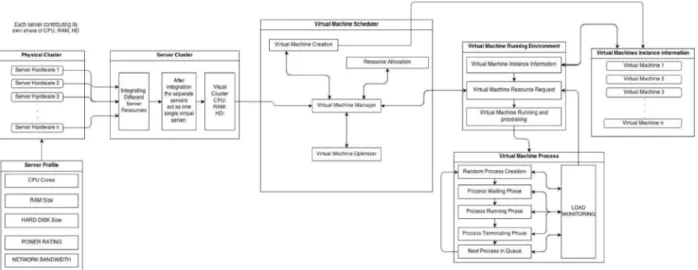
Fig. 1: Framework model for VM placement in a cluster of physical machines
the resources can be conveyed to the users in the form of running the applications and the VM requests are virtual machines hence an efficient virtual machine submitted by the users to the computing system. As the allocation policy and management process is required to submitted VMs enter to the cloud they are wait for their avoid underutilization or overutilization of the physical turn in the stack. The VM requests can be handled by the machines which may affect the quality of services of the virtual machine scheduler and it finds the appropriate Iasi cloud. The under utilization of servers is a well known physical machine by estimating the VM size and checking expenditure concern in cloud management. Low utilization for the availability and capacity of the physical machine of server resources leads to the usage of more physical when it finds the appropriate physical machine the VM machines, increasing expenses for machine power and scheduler immediately allocates the identified physical capital and operational expenses for cooling systems. machine to the virtual machine instance request in queue Moreover, surplus machines require more carbon and the required resource can be allocated to the virtual footprint. The overutilization of physical servers results machine.
in violating the SLA and quality of service constraints.
Efficient allocation of Virtual machine instance request Algorithm Design:This is a simple and efficient method will meet client requirements, improve the resource that uses the load factor of the physical machine and also utilization, increases the overall performance of the cloud input given by the user about the VM resource computing environment and also decreases the number requirement. It also identifies the overloaded physical physical machines used. Therefore an efficient VM machine and selects the VM to migrate based on the past scheduling in Iasi is an important cloud computing behavior of the VM and picks the appropriate PM based problem to resolve. on its resource utilization rate. Then it discovers the
Description of Design Model: To handle the VM some other suitable PMs and turn it off in view of energy scheduling problem we have proposed a physical saving.
host load aware scheduling algorithm and we have
implemented this heuristics in JAVA using Net beans IDE. Process of Virtual Machine Allocation: Since accurately The below figure shows the framework model in which the forecasting the resource requirement and behavior of the proposed algorithm is implemented. Here the physical VM is not possible our algorithm utilizes the user clusters can be formed by adding a set of physical deployed resource details of workload of the VM and servers each server contributing its own share of considers the load factor of the physical machine as well resources such as CPU cores, main memory, disk capacity as physical machine cluster to identify the appropriate PM and network bandwidth. The users can create virtual for the given VM request. We use bin packing heuristic machine instances by giving their requirements for combined with three different algorithms to minimize the underutilized PMs and migrates the VMs running on it to
1 ( , ) nj ( , ) PMx C ts =
∑
= VMxj C ts 1 ( , ) nj ( , ) Mx R ts =∑
= VMxj R ts 1 ( , ) nj ( , ) PMx NB ts =∑
= VMxj NB ts 1 ( , ) nj ( , ) PMx WL ts =∑
= VMxi WL ts ( )resource usage resourcecapacity PMxW ts THvalue PMxW
resource resource
∑ ≤ ≤ ∑
number of Physical machines required to place a set of Where PMCk represents the k physical machine cluster VMs, quick and correct placement of VMs, maintain
balanced load among the servers, increase the resource utilization rate and importantly doing all these things without violating any SLA agreements.
N number of virtual machines with resource requirements VR (CPU, Memory, N/W Bandwidth) to be placed on a set of M physical machines with resource capacities of PR(CPU, Memory, N/W Bandwidth) grouped in K number of physical machine cluster.
ConsiderPMas a set of all the physical machines in the entire system, where PM = {PM , PM , PM … PM }.1 2 3 m
m is the total number of the physical machines and an individual physical machine can be denoted as PM x, wherexdenote the physical machine number and range of x is (1 <= x <= N). Similarly, we have a set of VMs on each physical machine x,VMx= {VMx1, VMx2, VMx n} here n is the number of VMs on the physical server x. If we want to deploy VM y on the PMx then the load of the CPU, RAM and bandwidth has to be calculated individually.The CPU load of the PMx is denoted as follows
(1) The amount of RAM utilized by all the VMs of PMx at the time interval ts can be denoted as follows,
(2) The amount of network bandwidth utilized by all the VMs of PMx at the time interval ts can be denoted as follows
(3) Where PMx represents the x physical machine of theth
Physical Machine Cluster k, VMxj represents j virtualth
machine of the PMx and C, R and NB denotes the amount of CPU, RAM and bandwidth utilized by all the VMs of the PMx respectively.
Hence derived from (1),(2) and (3) the weighted average load of the Physical Machine Cluster k at time interval ts can be denoted as follows
(4)
th
of the datacenter,WL represents the weighted load of physical machine cluster at time interval ts and PMx represents the x physical machine of the Physicalth
Machine Cluster k.
At any time interval the total VM load of a PM should not exceed the host capacity
(5) Where resource _ {CPU, RAM, Network Bandwidth} and Wresource is the weight associated with each resource TH value is the threshold value set by the administrator if the load goes beyond this value the host can be considered as overloaded host and the selected VMs has to be migrated to other appropriate physical machines.
Dynamic IM Placement: In this process the objective is to place the VMs in PMs in a way that the total number of PMs required to place all the VMs is decreased. So we considered this a multi potential bin packing problem since this is a NP-hard problem, we provide a heuristic based on multiple policy. In the earlier stages of allocation most of the PMs are underutilized or not used so our heuristics works as like the first fit scheduler which is a simplest one to implement and which increases the response time of VM placement. As the number of VM grows in the datacenter the utilization level of PM is also being considered by our heuristic which really helps in maintaining the balanced load among servers. Towards the closing stages the heuristic works according to the nature of the VMs workload that is gathered from the user provided hints which helps in avoiding the bottleneck of a particular resource as well as avoiding the violence of any SLA agreements. The algorithm which is used to achieve these things is given below.
Algorithm 1: Dynamic VM placement
Step 1: The VM requests given by the user at the time ti is considered for allocation and scans the values of no CPU cores, amount of RAM and amount of N/W bandwidth required.
Step 2: In this algorithm the scheduler maintains an index table for physical clusters and physical machines as well as their states whether available or busy.
Step 3: The scheduler scans the index table of the Step 22: If Physical Cluster is not found. The scheduler physical cluster for the load below 50 %, from scans the index table for the load below 80 %, top until the first available physical cluster is from top until the first available physical cluster found or the index table is scanned fully. is found or the index table is scanned fully Step 4: If the physical cluster is found then scan the Step 23: If found scan the index table of the PMs based
index table of physical machines for the load on the requirement of the requested VM. below 50 % in all three major resources, from the Step 24: If the requested VM is a CPU intensive then top until the first physical machine is found. scan the PM index table for the least number of Step 5: When found return the ID of the physical CPU cores utilized from the top until the first
machine to the main controller physical machine is found.
Step 6: Assign the VM to the identified PM. Step 25: If found check the host has enough CPU cores Step 7: Update the index table of the PM and Physical to fulfill the VMs CPU requirement and will not
cluster. surpass 90% of load after placing the new VM,
Step 9: Go to the step 1 then return the ID of the physical machine to
Step 8: If not found then scheduler scans the index the main controller.
table of the physical cluster for the load below Step 26: Assign the VM to the identified PM.
70 %, from top until the first available physical Step 27: Update the index table of the PM and Physical cluster is found or the index table is scanned cluster and go to the step 1.
fully. Step 28: Else go to step 22
Step 9: If the physical cluster is found scan the index Step 29: If the requested VM is a memory intensive then table of the PMs based on the requirements of scan the PM index table for the least amount of
the requested VM. RAM utilized from the top until the first
Step 10: If the requested VM is a CPU intensive then physical machine is found.
scan the PM index table for the amount of CPU Step 30: If host has enough RAM to fulfill the VMs utilized is below 70 %, from the top until the first memory requirement and will not surpass 90% physical machine is found. of load after placing the new VM, then return Step 11: When found return the ID of the physical the ID of the physical machine to the main
machine to the main controller controller.
Step 12: Assign the VM to the identified PM. Step 31: Assign the VM to the identified PM.
Step 13: Update the index table of the PM and Physical Step 32: Update the index table of the PM and Physical cluster and go to the step 1 cluster and go to the step 1.
Step 14: If the requested VM is a memory intensive then Step 33: Else go to step 22
scan the PM index table for the amount of RAM Step 34: If the requested VM is a network intensive then utilized is below 70%, from the top until the first scan the PM index table for the least amount of physical machine is found. network bandwidth utilized from the top until Step 15: When found return the ID of the physical the first physical machine is found.
machine to the main controller Step 35: If host has enough bandwidth to fulfill the VMs Step 16: Assign the VM to the identified PM. bandwidth requirement and will not surpass Step 17: Update the index table of the PM and Physical 90% of load after placing the new VM, then cluster and go to the step 1 return the ID of the physical machine to the Step 18: If the requested VM is a network intensive then main controller.
scan the PM index table for the amount of Step 36: Assign the VM to the identified PM.
network bandwidth utilized is below 70%, from Step 37: Update the index table of the PM and Physical the top until the first physical machine is found. cluster and go to the step 1.
Step 19: When found return the ID of the physical Step 38: Else go to step 22 machine to the main controller
Step 20: Assign the VM to the identified PM. Load Balancing among Physical Servers: Since virtual Step 21: Update the index table of the PM and Physical machine workloads frequently change eventually, the well cluster and go to the step 1 primary placement choices is not sufficient to maintain
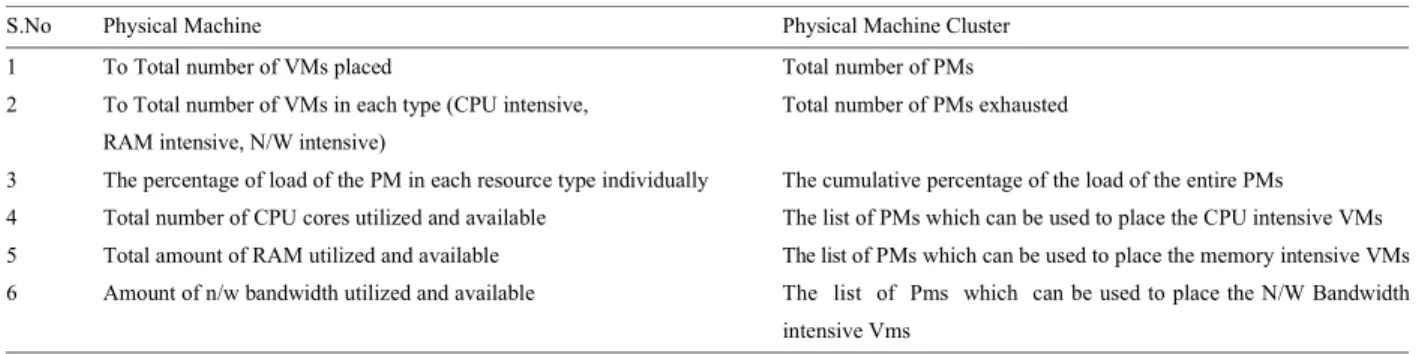
Table 1: Properties required for the index table of physical machine and physical machine cluster
S.No Physical Machine Physical Machine Cluster 1 To Total number of VMs placed Total number of PMs 2 To Total number of VMs in each type (CPU intensive, Total number of PMs exhausted
RAM intensive, N/W intensive)
3 The percentage of load of the PM in each resource type individually The cumulative percentage of the load of the entire PMs 4 Total number of CPU cores utilized and available The list of PMs which can be used to place the CPU intensive VMs 5 Total amount of RAM utilized and available The list of PMs which can be used to place the memory intensive VMs 6 Amount of n/w bandwidth utilized and available The list of Pms which can be used to place the N/W Bandwidth
intensive Vms
the load balance. So it is essential to dynamically rework Step 3: Select and migrate all the VMs individually to the placements to make QOS constraints are to be satisfied next suitable PMs based on the algorithm 1. while change in the data center load. Step 4: If there is no more VM in the list then remove the
Based on the information provided by the monitor PM from the list and power off. drivers Whenever the load factor of the host goes beyond
the threshold value set by the administrator, the below CONCLUSION
algorithm triggers and migrates VMs to other suitable
hosts. We presented our algorithm which will address
ALGORITHM 2: Load Balancing among Physical Servers the number physical host used is minimized, the
Step 1: If any PM resource utilization surpasses the host can be identified and resolved at the same time threshold value that can be considered as an without violating any SLA agreements. Since we consider overloaded host this as a multi potential bin packing problem we combined Step 2: Search for the VMs which resource utilization has three different heuristics which considers load factor of gone beyond its allocated resource limit on the hosts along with user provided information at the various overloaded host and list all those VMs based on stages of placing the VMs in physical hosts. We believe their resource utilization level. that this load aware algorithm really optimizes the VM Step 3: Migrate the first VM in the list to the next suitable placement.
PM based on the algorithm 1. The presented algorithm is implemented in JAVA Step 4: Check the PM load against threshold value. Netbeans IDE. Then we planned to integrate the algorithm Step 5: If the load is below threshold value then exit. Else with CloudSim simulator for simulation to assess the repeat step 3 until condition satisfies. execution and performance of our heuristics with some of
Vm Consolidation: The thought here is to recognize PM Time, Load Balancing among servers, Reasonable running at low use and afterward relocating VMs Resource Utilization, energy consumption, Minimum inhabitant on those PMs to different PMs such that those number of active PMs and Higher profit.
low use PMs can be taken logged off. A straightforward
algorithm to attain this is displayed in algorithm 3. REFERENCE
ALGORITHM 3: Vm Consolidation to Avoid Low 1. Chen, K. and W.M. Zheng, 2009. Cloud Computing:
Utilization of Servers System instance and Current State, Journal of
Step 1: The scheduler evaluates a ranking policy for 2. Xu, Z.W. and H.M. Liao, 2008. The Classification the PMs using the information gathered by the research of Network Computing System, Journal of
monitor drivers. Computing Machine, 18(9): 1509-1515.
Step 2: PM with the highest load ranked top and check 3. Zhang, G.W., R. He and Y. Liu, 2008. The Evolution the load factor of the least ranked PM is below based on Cloud Model, Journal of Computing
20%. Machine, 7: 1233-1239.
the problem of mapping the Vms into PMs such that overutilization and underutilization of the resources of a
the existing scheduling algorithm in terms of Response
4. Breitgand, D. and A. Epstein, 2011. Sla-aware 14. Wood, T., P. Shenoy, A. Venkataramani and placement of multivirtual machine elastic services in M. Yousif, 2007. Black-box and Gray-box Strategies compute clouds. In Integrated Network Management for Virtual Machine Migration. In: Proc of the 4th (IM), 11 IFIP/IEEE International Symposium on, USENIX Symposium on Networked Systems Design
pp: 161-168. and Implementation. Cambridge, MA.
5. Xiaoqiao Meng, Canturk Isci, Jeffrey Kephart, Li 15. Bobroff, N., A. Kochut and K. Beaty, 2007. Zhang, Eric Bouillet and Dimitrios Pendarakis, 2010. Dynamic Placement of Virtual Machines for Efficient resource provisioning in compute clouds Managing SLA Violations. In: Proc of the 10th via vm multiplexing. In Proceeding of the 7th IFIP/IEEE International Symposium on Integrated international conference on Autonomic computing, Network Management. Munich, Germany.
New York, NY, USA, pp: 11-20. 16. Wood, T., 2007. Black-box and gray-box strategies 6. Hewlett Packard Web Site, Introducing Integrity for virtual machine migration, proceedings of Symp. Virtual Machines white paper, http://docs.hp.com/ on Networked Systems Design and Implementation
en/9987/Intro VM 2.1.pdf. (NSDI).
7. VMWareWeb Site, Server Consolidation 17. Zheng, H., L. Zhou and J. Wu, 2006. Design and and Containment Solutions Brief, implementation of load balancing in web server http://www.vmware.com/pdf/server consolidation. cluster system, Journal of Nanjing University of
pdf. Aeronautics & Astronautics, 38(3): 00-00.
8. Norman Bobroff andrzej Kochut and Kirk Beaty, 18. Singh, A., M. Korupolu and D. Mohapatra, 2008. Dynamic Placement of Virtual Machines for Server-storage virtualization: Integration and load Managing SLA Violations. balancing in data centers, Proceedings of the 2008 9. Sindelar, M., R.K. Sitaraman and P. Shenoy, 2011 ACM/IEEE Conference on Supercomputing, pp: 1-12. Sharing-Aware Algorithms for Virtual Machine 19. Arzuaga, E. and D.R. Kaeli, 2010. Quantifying Colocation, In: Proceedings of the 23rd ACM load imbalance on virtualized enterprise servers, Symposium on Parallelismin Algorithms and Proceedings of WOSP/SIPEW’10, San Jose, Architectures, San Jose, California, USA. California, USA, pp: 28-30.
10. Xu, J. and J.A.B. Fortes, 2010. Multi-Objective Virtual 20. Tian, W., C. Jing and J. Hu, 2011. Analysis of Machine Placement in Virtualized Data Center resource allocation and scheduling policies in cloud Environments. In: Proceedings of the 2010 datacenter, Proceedings of the IEEE 3rd IEEE/ACM Int’l Conference on Green Computing International Conference on Networks Security and Communications & Int’l Conference on Cyber, Wireless Communications and Trusted Computing. Physical and Social Computing. Hangshou, PR of 21. Thiruvenkadam, T. and Dr. V. Karthikeyani, 2014.
China. An approach to virtual machine placemnt problem in
11. Singh, A., M. Korupolu and D. Mohapatra, 2008. a datacenter environment based on overloaded Server-Storage Virtualization: Integration and Load resource, International Journal of Computer Science Balancing in Data Centers. In: Proc. of the 2008 and Mobile Computing, 3(6): 837-842.
ACM/IEEE conference on Supercomputing (SC’08), 22. Thiruvenkadam, T. and Dr. V. Karthikeyani, 2014.
Austin, TX, 53:1-53:12. A Comparative study of VM Placement Algorithms
12. Meng, X., V. Pappas and L. Zhang, 2010. Improving in Cloud Computing Environment, In proccedings if the Scalability of Data Center Networks with Traffic- 07 SARC-IRF International Conference, India. aware Virtual Machine Placement, In: Proceedings of
IEEE INFOCOM. San Diego, CA, USA.
13. Kumar, S., V. Talwar, V. Kumar, P. Ranganathan and K. Schwan, 2009. Manage: Loosely Coupled Platform and Virtualization Management in Data Centers. In: Proceedings of the 6th international conference on Autonomic computing. ACM, Barcelona, Spain, pp: 127-136.