Modelling Atmospheric Ozone
Concentration Using Machine Learning
Algorithms
By
Eman Said Al-Abri
A doctoral thesis
Submitted in partial fulfilment of requirements
for the award of
Doctor of Philosophy
Department of Computer Science
Loughborough University
November 2016
© by Eman S. Al-Abri 2016
Air quality monitoring is one of several important tasks carried out in the area of environmental science and engineering. Accordingly, the development of air quality predictive models can be very useful as such models can provide early warnings of pollution levels increasing to unsatisfactory levels. The literature review conducted within the research context of this thesis revealed that only a limited number of widely used machine learning algorithms have been employed for the modelling of the concentrations of atmospheric gases such as ozone, nitrogen oxides etc. Despite this observation the research and technology area of machine learning has recently advanced significantly with the introduction of ensemble learning techniques, convolutional and deep neural networks etc. Given these observations the research presented in this thesis aims to investigate the effective use of ensemble learning algorithms with optimised algorithmic settings and the appropriate choice of base layer algorithms to create effective and efficient models for the prediction and forecasting of specifically, ground level ozone (O3).
Three main research contributions have been made by this thesis in the application area of modelling O3 concentrations. As the first contribution, the performance of several ensemble
learning (Homogeneous and Heterogonous) algorithms were investigated and compared with all popular and widely used single base learning algorithms. The results have showed impressive prediction performance improvement obtainable by using meta learning (Bagging, Stacking, and Voting) algorithms. The performances of the three investigated meta learning algorithms were similar in nature giving an average 0.91 correlation coefficient, in prediction accuracy. Thus as a second contribution, the effective use of feature selection and parameter based optimisation was carried out in conjunction with the application of Multilayer Perceptron, Support Vector Machines, Random Forest and Bagging based learning techniques providing significant improvements in prediction accuracy. The third contribution of research presented in this thesis includes the univariate and multivariate forecasting of ozone concentrations based of optimised Ensemble Learning algorithms. The results reported supersedes the accuracy levels reported in forecasting Ozone concentration variations based on widely used, single base learning algorithms.
In summary the research conducted within this thesis bridges an existing research gap in big data analytics related to environment pollution modelling, prediction and forecasting where present research is largely limited to using standard learning algorithms such as Artificial Neural Networks and Support Vector Machines often available within popular commercial software packages.
My Husband Fahmi Al-Zakwani and
My Kids Ghida, Qusai, and Jassar,
For their
Inspiration,
Sacrifices,
Love
First I would like to thank Allah (GOD), for his guidance and blessings in the completion of this research.
My biggest gratitude goes to my husband Fahmi Al Zakwani for his limitless support and encouragement through-out the years I have spent far from home. He always encouraged me to have positive and independent thinking. To my children Ghida, Qusai and Jassar from whom I built up courage and patience by merely thinking of them. I also would like to thank my sister in-law Maryam Al Zakwani and her husband Ali Al Riyami for their continuous support, love and caring for my children as one of their own for the past 3 years.
My sincere thanks goes to my family for always fueling me with positive encouragement and cheering.
Furthermore, I would like to express my deep thanks to my supervisors Professor Eran A Edirisinghe and Dr. Christian Dawson for all the help and supervision they provided that extremely assisted in the completion of this research. Also, my thanks goes to Dr. Amin for all the help and support he provided.
Moreover, my thanks goes to all of my friends for their love and support during the 3 years. special thanks to Asmaa AlMarhobi, Suaad AlSawafi, Muna AlRahbi and Shadha AlAmri for their supportive friendship and inspiration. Not to forget all the Omani families in Loughborough especially Al Batashi, Al Droushi and Al Harbi whom always were there to provide me with help and company whenever I needed.
In addition, my gratitude goes to Sohar University, Oman for providing me with the necessary data and information in order to initiate this research.
Finally, I would like to thank the Ministry of Manpower for providing the financial support through-out the research period.
Table of Contents
Abstract ... I Acknowledgment ... III List of Tables ... VII List of Figures ... VIII List of Abbreviations ... X
CHAPTER 1: An Overview ... 1
1.1. Introduction ... 1
1.2. Research Motivation ... 5
1.3. Aim and objectives ... 6
1.4. Contributions of Research ... 7
1.5. Thesis Overview ... 8
CHAPTER 2: Literature Review ... 10
2.1. Introduction ... 10
2.2. Monitoring Atmospheric Air Quality ... 11
2.2.1. Literature Review ... 12
2.2.2. Research Gap ... 23
2.3. Use of Ensemble Learning Algorithms in Other Areas ... 24
2.3.1. Literature Review ... 24
2.4. Summary & Conclusion ... 27
CHAPTER 3: Research Background ... 29
3.1. Introduction ... 29
3.2. DOAS (OPSIS) Instrument ... 29
3.3. Machine Learning V.S Statistic Analysis ... 32
3.4. Machine Learning Techniques ... 32
3.4.1. Single Base Learner Algorithms ... 34
3.4.2. Ensemble Learner Algorithms ... 37
3.5. K- fold Cross Validation [74] ... 42
3.6. The Validation Metrics ... 42
3.6.1. Correlation Coefficient (CC) ... 43
3.6.2. Mean Absolute Error (MAE) ... 43
3.6.4. Relative Absolute Error (RAE) ... 44
3.7. Filters and Optimisers in WEKA ... 45
3.7.1. Feature Selection Filters [11][79] ... 45
3.7.2. Parameter Based Learning Algorithm Optimisers ... 47
3.8. Summary ... 47
CHAPTER 4: Data Collection and Representation ... 49
4.1 Sohar University Dataset ... 50
4.1.1 The Sampling Site and Data Gathering ... 50
4.1.2 Dataset Representation ... 52
4.1.3 Data Pre-processing ... 53
4.2 DEFRA Dataset ... 53
4.2.1 Data Pre-processing ... 54
4.3 Summary ... 55
CHAPTER 5: Modelling Atmospheric Ozone Concentration Levels ... 56
5.1 Introduction ... 56
5.2 Motivation ... 57
5.3 Proposed Approach ... 59
5.4 Experiment Settings ... 60
5.5 Experimental Design ... 60
5.6 Results and Discussion ... 63
5.6.1 Group 1 ... 63
5.6.2 Group 2 ... 68
5.7 Conclusion ... 73
CHAPTER 6: Optimising the use of Bagging in Modelling Ground ... 74
Level Ozone Concentration ... 74
6.1. Research Motivation & Overview ... 74
6.2. Experimental Methodology... 75
6.3. Modelling the Ozone Concentration ... 76
6.4. Experimental Results and Analyses ... 77
6.5. Conclusion ... 81
CHAPTER 7: Application of Time Series Analysis in ForecastingGround LevelOzone Concentration ... 83
7.2 Time Series Analysis ... 84
7.2.1 Time Series data ... 84
7.2.2 Lagged Variables ... 87
7.3 Methodology ... 88
7.3.1 Data Pre-processing: ... 90
7.3.2 Data Transformation ... 90
7.3.3 Forecasting Models ... 91
7.4 Experiments Results and Analysis ... 91
7.5 Experiment 1: Univariate Models ... 92
7.5.1 Number of Bags Optimising for Bagged MLP ... 93
7.5.2 Performance of Univariate Forecasting Models ... 95
7.6 Experiments 2: Multivariate Model ... 98
7.6.1 Multivariate Forecasting Based on the Short Dataset ... 99
7.6.2 Multivariate Forecasting Based on the Full Dataset ... 102
7.7 Conclusion ... 104
CHAPTER 8 Conclusion and Future Work ... 107
8.1. Future Work ... 108
References ... 110
Appendix-A ... 118
Scholarly Contribution ... 118
I. Conference Published ... 118
II. Journal Paper under Review ... 118
List of Tables
Table 3.1: Sample of the dataset provided by OPSIS( Sohar University) ... 32
Table 4.1: Sohar University, Dataset Description ... 51
Table 4.2: Attributes of the Sohar University Dataset ... 52
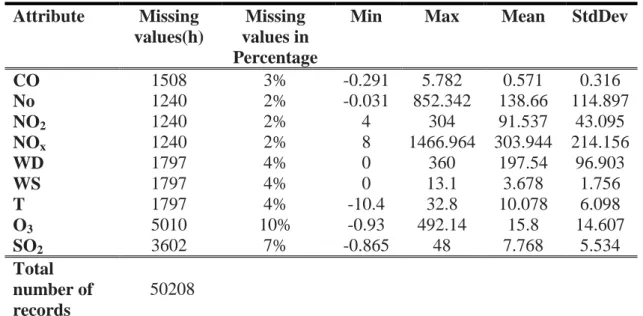
Table 4.3: Statistical presentation of DEFRA dataset ... 54
Table 5.1 : Group 1 Experiments Description ... 61
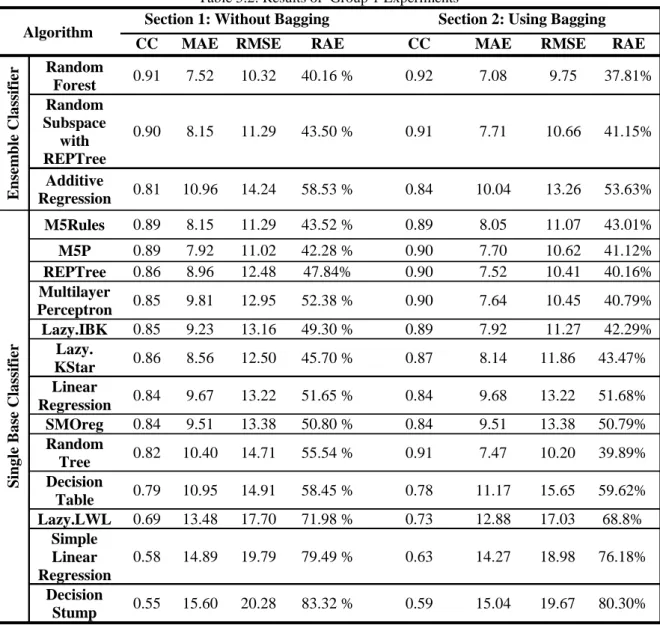
Table 5.2: Results of Group 1 Experiments ... 64
Table 5.3: Result of Evaluation Experiments ... 67
Table 5.4: Results Of Group 2 Experiments ... 69
Table 6.1: Experiments results for parameter based optimisation of the classifiers ... 78
Table 6.2: Summary of Results –Parameter Based Optimisation ... 79
Table 6.3: Results of applying feature/attribute selection ... 81
Table 7.1: Default Settings for the Classifier Parameters ... 92
List of Figures
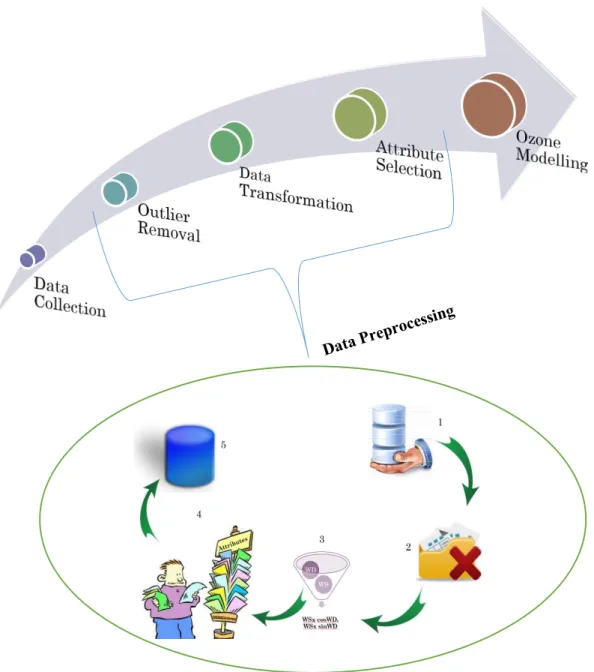
Figure 1.1: Generic System of Ozone Modelling ... 4
Figure 3.1: UV DOAS Technique [54] ... 31
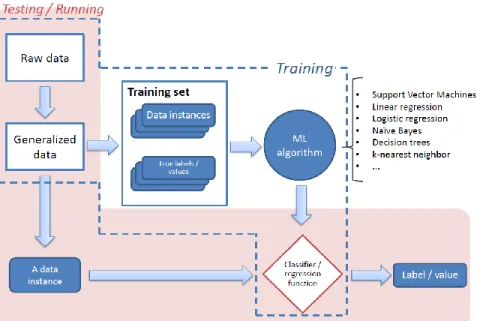
Figure 3.2: The Machine Learning Process (Supervised Learning) ... 33
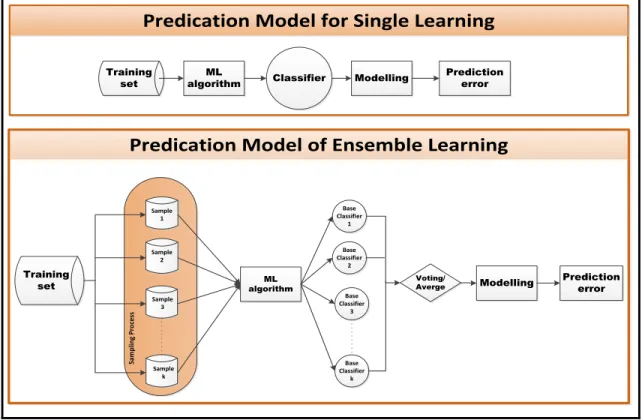
Figure 3.3:The processes of machine learning: Single Base Learner and Ensemble Learner algorithms ... 34
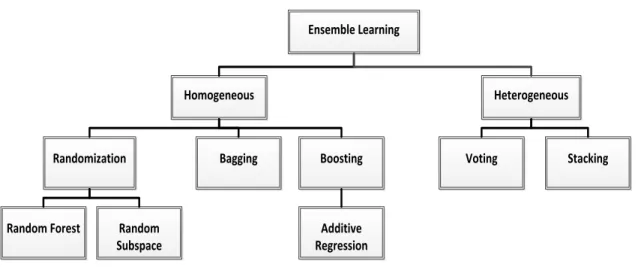
Figure 3.4: Ensemble Learning Hierarchy ... 39
Figure 3.5:Fundamental concepts of the three basic homogeneous methods [42] ... 39
Figure 3.6: Liner correlation : the interpretation of different values [76] ... 43
Figure 4.1: Sampling path of the DOAS instrument installed on the premises of Sohar University, Oman; A = light emitter location, B = reflector location and C = car park .. 51
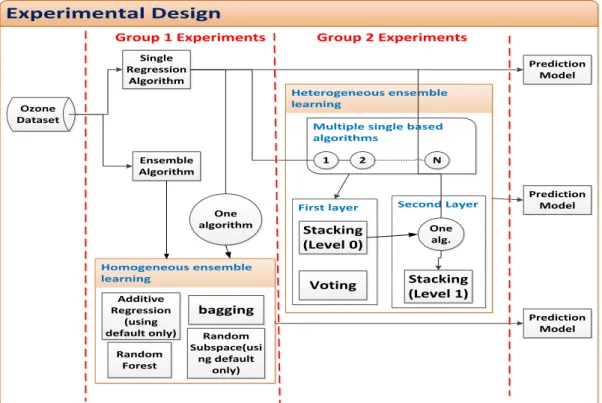
Figure 5.1: Categorisation of Experimental Designs ... 63
Figure 5.2: Prediction Scatter Graphs ... 71
Figure 6.1: Experimental Methodology... 76
Figure 6.2: Scatter Plots of the actual and predicted Ozone for 6 Models ... 80
Figure 7.1: Ozone concentration variations for year 2010 and 2015 ... 85
Figure 7.2: Hourly average Ozone concentrations in months, August (summer) and December (winter) in 2010 and 2015) ... 86
Figure 7.3: Lagged variable creation ... 87
Figure 7.4: Plots of autocorrelation ... 88
Figure 7.5: The experimental procedure adopted by WEKA TFS toolkit ... 90
Figure 7.6: MAE of each univariate forecasted hourly ozone concentration for different number of bags for bagged MLP :(a) Result for training set,(b) Result for Test set. ... 94
Figure 7.7: Univariate Forecasting – Performance of six classifiers measured in MAE when evaluation is done within the training set (a) and within a separate test set (b). .... 95
Figure 7.8: Univariate Forecasting – Performance of six classifiers measured in RAE when evaluation is done within the training set (a) and within a separate test set (b). .... 97
Figure 7.9: MAE of each multivariate forecasted hourly ozone concentration for different number of bags, for bagged MLP :(a) Result for training set,(b) Result for Test set. ... 99
Figure 7.10: Short Dataset: Performance of multivariate forecasting with six different classifiers measured in terms of MAE, (a) when evaluated within the training set and (b) when evaluated within a separate test set ... 100 Figure 7.11: Short Dataset: Performance of multivariate forecasting with six different classifiers measured in terms of RAE, (a) when evaluated within the training set and (b) when evaluated within a separate test set. ... 102 Figure 7.12: Multivariate Model (6 years‟ period) - MAE results for 6 classifiers (a) Training, (b) Testing ... 103 Figure 7.13: Multivariate Model (6 years‟ period) - RAE results for 6 classifiers (a) Training, (b) Testing ... 104
List of Abbreviations
ANN Artificial Neural Network
BTX Benzene , Toluene, and (o, m, p)-Xylene
CC Correlation Coefficient
CO Carbon monoxide
DOAS Deferential Optical Absorption System
LWL Locally Weighted Learning
MAE Mean Absolute Error
ML Machine Learning
MLR Multiple Linear Regression
MLP Multilayer Perceptron
M5R Model Trees Rules
M5P Model Trees Regression
NO Nitrogen Monoxide
NO2 Nitrogen Dioxide
NOx anthropogenic nitrogen oxides
O3 Ozone
PC principle component
PCA principle component analysis
PM10 Particulate Matter
R2 coefficient of determination
RAE Relative Absolute Error
REPTree Reduced Error Pruning Tree
RF Random Forest
RMSE Root Mean Squared Error
RRSE Root Relative Squared Error
SHW Sohar Highway
SLR Simple Linear Regression
SO2 Sulphur Dioxide
SU Sohar University
SVM Support Vector Machine
T Temperature
TSF Time Series analysis and Forecasting toolkit
VOCs volatile organic compounds
WEKA Waikato Environment for Knowledge Analysis toolkit
WD Wind Direction
CHAPTER 1
An Overview
1.1.
Introduction
In recent years, the environmental risks caused by exposure to ground level ozone (O3)
from both stationary and mobile sources have increased annually. Ozone is a transboundary air pollutant that can be formed by photochemical reactions between
anthropogenic nitrogen oxides (NOx) and volatile organic compounds (VOCs) in the
presence of sunlight [1]. There are several sources which produce the particles that react
to form ozone. Example of these sources are oil refining, printing, andmotor vehicle exhaust.
In addition exhaust emissions from motor vehicles are considered to be one of the major sources of pollution where it produces 70% of nitrogen oxides ( main chemical to form ozone) and 50%
of the organic chemicals ( e.g. benzene, toluene and xylene)[2] that are normally present in
the atmosphere of urban regional. When O3 is formed, depending on meteorological
conditions, it remains suspended in the lower atmosphere for hours to days and can endanger local and regional receptors. Several studies that analyse the effects of
meteorological conditions on the formation and transport of O3 have been listed in the
work of [3]. Further, statistically significant relationships have been identified between
elevated concentrations of O3 and environmental risks [4]–[7].
The existing research on modelling atmospheric O3 concentration for air pollution
prediction makes use of widely employed traditional machine learning algorithms such as, Artificial Neural Networks (ANN) and Support Vector Machines (SVM). Although there are more advanced and novel data mining techniques, such as Ensemble Learning approaches, only few attempts have utilised them to predict the ozone concentration; these include the work of [8]–[10]. On the other hand, ensemble learning algorithms have been successfully used in statistical approaches and machine learning used in other application fields. Based on the literature review, the use of ensemble learning
techniques has been found to enhance the accuracy of the predictive models obtained compared to single base learning approaches such as ANN and SVM. However, these studies have also been limited to making use of a few selected ensemble classifiers namely Bagging, Stacking, Voting and Random forest, with no comparisons between the use of different techniques or investigations of scientific rigour. It is also known that the classification approach that works best is dependent on the data and the application domain. Hence a significant research gap exists in the investigation of the best prediction models for atmospheric ozone as no detailed and rigourous investigations have been carried out.
Therefore, the research proposed in Chapter 5 and Chapter 6 of this thesis aims to find the most accurate machine learning algorithms and models that can be used to predict ground level ozone concentrations, given a multitude of meteorological parameters and concentrations of gases that are known to create ozone by decomposition due to natural
causes, e.g., NOx. We describe such a prediction approach a spatial prediction approach
as no time-dependent data, for e.g. concentration of ozone at given times of the day, is considered. Instead the time at which ozone concentration is recorded, is completely ignored and only a concentration value and the parameters that have known to cause such a value is considered for modelling. A comprehensive investigation was carried out comparing the performance of several machine learning techniques. In the research proposed, multiple predictive models were built using 13 single based algorithms and four ensemble learning algorithms using the WEKA (Waikato Environment for Knowledge Analysis) toolkit [11]. In addition, a comparative analysis was performed to determine the algorithm that produced the best performance.
Further to the above, the research presented in Chapter 7 of this thesis also investigates time-series analysis of ground level ozone concentrations. In time series analysis both univariate and multivariate approaches are investigated with the use of both popular but simple machine learning algorithms (e.g., NN and SVM) and more advanced Ensemble Learning algorithms, such as Random Forests and Bagging. The analysis considered above is forecasting future values ozone concentrations based either only on the past ozone concentration values (this is univariate analysis) or together with also other
parameters that are known to have a direct impact on formation of ozone such as meteorological parameters and gases of known concentrations.
Two different experimental datasets (i.e. regression data) are used to support the investigations carried out in this thesis. The first dataset was obtained from Sohar University, Oman, which used a DOAS instrument (see Chapter 3) to gather the environmental data as well as concentrations of other gases known to cause ozone. The second, more comprehensive dataset was obtained from UK‟s biggest air quality dataset produced and made available by DEFRA. Details of the two datasets and their pre-processing are discussed in detail in Chapter 4.
Figure 1.1 illustrates a generic system for modeling the ground level ozone concentration. The system consists of three main stages namely, data collection, data preparation (data preprocessing) and modelling using machine learning algorithm. The data preprocessing stage consists of several steps which can be briefly listed as below:
1. Collect raw data
2. Remove missing values and outliers
3. Transform data if needed to suitable formats
4. Select features/attributes that best describes the data
For the implementation of the machine learning algorithms used in the spatial and time-series prediction of ozone concentrations in this thesis, the popular data mining tool WEKA [12], is used. In addition to the implementation of a large number of popular and advanced machine learning algorithms, the software also implements data cleaning, feature selection, validation performance measurement tools. Throughout the research conducted and presented in this thesis such additional tools have been identified and used to support the rigourous investigations carried out within this thesis.
1.2.
Research Motivation
The motivation for the research conducted within the context and scope of this thesis was derived from a comprehensive literature review conducted on atmospheric air quality prediction, modelling and monitoring that identified gaps in knowledge and associated research. The literature review conducted revealed that the existing research on air pollution measurement and analysis was largely limited to using traditional machine learning techniques (ANNs and SVMs) and statistical approaches. Only a few attempts have been made to utilise state-of-the-art machine learning approaches. Such studies have been limited in scope and rigour, and does not clearly conclude and recommend the best approaches to be used for a given dataset and type of analysis that is being carried out. Therefore, the research presented within the context of the work presented in this thesis studies and examines rigourously the ability of several ensemble learning methods to model, predict and forecast, ground level ozone concentrations. Whilst rigorously comparing and contrasting the performance of a large number of machine learning algorithms in modelling, prediction and forecasting of ground level ozone concentration, the research conducted within this thesis gives a particular emphasis to the use of Ensemble Learning approaches. This particular aspect of investigation has been motivated by the research conducted by [13] who presented an empirical study about ensemble learning and explained why ensemble learning algorithms often perform better than any of the single classifiers in any general application area. Three fundamental reasons for constructing a good ensemble were discussed by Dietterich [13]:
(1) Statistical: ensemble algorithms can solve the problem of having a relatively large number of attributes compared to the number of instances in the dataset.
(2) Computational: in ensemble techniques the full input dataset is divided into smaller
datasets allowing the search to avoid the so called local minima problem. In contrast a
single base classifiers may risk getting stuck at a local minima due to the full dataset being considered as one.
(3) Representational: the mechanism of taking the sum of weighted functions in the ensemble methods can expand the space which it represents, while the single classifiers are limited by one representative function. However, it is noted that this can be provided by some other single classifiers, such as neural networks and decision trees, if they have been given enough training data.
Dietterich [13] also compared the three most common ensemble methods: Bagging, AdaBoost and Randomised Tree approaches. The results showed that adaBoost gives the best result in a noise free data set, while the performances of Bagging and Randomised Tree are very similar. However, randomisation has shown better result than Bagging in cases of very large datasets. For the purpose of deep analysis, the author added 20% artificial noise to his dataset. Hence, the performances of Bagging and adaBoost changed. The results showed the superiority of Bagging when compared to the under-performance of adaBoost and randomisation. This research and the associated observations have motivated the research conducted in this thesis which particularly focuses on Bagging, as an Ensemble Learning algorithm for the modelling, prediction and forecasting of ground level ozone concentrations.
1.3.
Aim and Objectives
The research presented in this thesis aims to investigate the most effective and accurate modelling, prediction and forecasting approaches for the determination of ground level ozone concentration, using state-of-the-art machine learning algorithms, in particular, ensemble learning algorithms.
The following are the key objectives of the proposed work:
To investigate the used of popular single base learning algorithms and
ensemble learning algorithms in time series modelling and forecasting of ground level ozone concentrations.
Examine the effective use of parameter based optimisation of learning
algorithms to optimise the performance of time series modelling and forecasting approaches.
1.4.
Contributions of Research
The research conducted within the remit of this thesis has resulted in the following original contributions to the area of atmospheric air quality modelling, prediction and forecasting:
1. Chapter 5 carries out a comprehensive investigation into the use of a
significant number of machine learning algorithms for the modelling and prediction of ground level ozone concentrations based on meteorological parameters and concentrations of other gases known to cause ozone via degradation, due to natural phenomena. The performance of 16 different single base learning algorithms ware compared against a number of key ensemble learning algorithms including Bagging, Voting and Stacking used under default model parameter settings. The experiment‟s results have shown the ability of ensemble learning algorithms to significantly improve the prediction accuracy.
The research outcomes of this work has been submitted as a journal paper to
the Big Data Research Journal, Elsevier under a title “The Use of
Meta-Learning Ensemble Algorithms for the Prediction of Ground-Level Ozone”.
2. Chapter 6 carries out a detailed investigation into the performance
optimisation of the machine learning algorithms recommended in Chapter 5 to perform best under their default parameter settings and non-optimised procedural operation. In particular parameter based fine tuning / optimisation of the popular single learner algorithms MLP (Multi-Layer Perceptron) and SMOreg (Support Vector Machine), single layer Ensemble Learning algorithm, Random Forest and multi-layer Ensemble Algorithms, Bagging has been investigated. The approaches that can be used to provide optimal performance of the advanced Ensemble Learning algorithms have been
recommended. In addition, the use of feature/attribute/input,
selection/reduction approaches to improve the performance accuracy of algorithms investigated, have been proposed and investigated in detail.
The original research outcomes and contributions of Chapter 6 has been
published as a conference paper “Al Abri, E.S., Edirisinghe, E.A. and
Nawadha, A., 2015. Modelling ground-level ozone concentration using ensemble learning algorithms. Proceedings of the International Conference on Data Mining (DMIN), 27th-30th July 2015, Las Vegas, USA, pp.148-154”.
3. Chapter 7 carries out a detailed investigation into the use of popular single
base learning algorithms and ensemble learning algorithms for time-series forecasting of ground level ozone concentrations. Both univariate and multivariate forecasting options have been considered. A number of conditions that can affect the forecasting performance of different machine learning algorithms have been investigated and recommendations are made for obtaining optimal performance from the investigated algorithms. The original contributions of this chapter will be submitted as a conference paper to 13th International Conference on Machine Learning and Data Mining MLDM 2017.
1.5.
Thesis Overview
For clarity of presentation, the thesis has been organised into eight chapters, as described below:
Chapter 1 provides an overview of the context of the research, identifies the research gaps and briefly presents the fundamental research focus of this thesis. The chapter also highlights the main contributions of the thesis and a chapter overview.
Chapter 2 reviews the existing literature on air quality monitoring and the work presented in literature that uses machine learning techniques for predictive modelling in areas outside environmental air pollution monitoring. The chapter concludes with a critical analysis of current literature, thus identifying research gaps in the subject area.
Chapter 3 focuses on providing background knowledge related to the research presented in this report. The chapter includes a brief description of the DOAS instrument that was used to gather one of the two datasets used in the experiments. The chapter also presents various machine learning algorithms that will be used for modelling Ozone
concentration in the forthcoming chapters and the evaluation criteria that will be used for the comparison of algorithmic performances. Furthermore, data pre-processing/cleaning filters used for data conditioning prior to modelling is also discussed.
Chapter 4 presents the two datasets used in the research conducted, namely the Sohar, Oman dataset and the DEFRA, UK dataset.
Chapter 5 investigates the use of a comprehensive set of single base learning algorithms and ensemble learning algorithms in the prediction of ground level Ozone concentrations, based on meteorological parameters and concentrations of other gasses known to impact the formation of ozone due to natural phenomena. The investigations are limited to identifying the best algorithms for further detailed investigation in Chapter 6.
Chapter 6 investigates the use of Ensemble Learning algorithm, Bagging and Random Forest in detail for modelling and prediction of ground level ozone concentration, making use of the popular single base learning algorithms such as Neural Networks and Support Vector Machines as the base layer algorithm. Parameter based optimisation of such algorithms and the use of feature/attribute reduction algorithms to further improve performance is also investigated in detail.
Chapter 7 investigated the use of machine learning algorithms in the univariate and multivariate forecasting of ozone concentrations in the atmosphere. The investigations have been limited to making use of the best performing single base learning algorithms and ensemble learning algorithms.
Finally, Chapter 8 concludes the research presented in this thesis, summarising the work carried out, making overall conclusions and identifying future directions for research and development.
CHAPTER 2
Literature Review
2.1. Introduction
Air quality monitoring is one of several crucial tasks carried out in the area of environmental science and engineering. Accordingly, the development of air quality predictive models can be very useful as such models can provide early warnings of pollution levels increasing to unsatisfactory levels. Such models can also be used to determine the causes and sources of pollution when combined with other data/information.
During recent decades, the harmful effects of air pollution on the environment and human health have been clearly noticed. Therefore, predictive models that can help monitor atmospheric pollution is required. In building such models, numerous attempts presented in literature have employed common data mining techniques as statistical tools. Due to the complexity and the non-linearity of air quality data, as first proved by [14], environmental researchers have popularly used Artificial Neural Network (ANN) and Support Vector Machine (SVM) algorithms for modelling atmospheric ozone concentration. These algorithms (ANN and SVM) have shown promising results compared with simple tree structured classification algorithms such as, CART, J48, and M5Rule. However, there exist more recent and advanced machine learning techniques that have not been used and investigated in the area of air quality modelling and prediction. These techniques are Bagging, Boosting, Staking, Voting and Random Forest, which are a family of ensemble learning algorithms. These ensemble learning algorithms have been experimented within areas that are beyond air quality management, where they have been shown to outperform the traditional, more popular algorithms, such as ANN and SVM approaches. On other hand, modelling air quality has been examined using ensemble techniques as statistical approaches in [15]–[18]. These researches had proved the ability of ensemble technique to outperform the single base techniques. However, the investigation of statistical approaches is beyond the
discussion research context of this thesis as machine learning based approaches have been proven to outperform statistical approaches, significantly. Therefore, in this research, an intensive investigation is carried out on the performance of a comprehensive set of data mining techniques (single based and ensemble learning) to build predictive models for atmospheric ozone concentration. Although existing literature has few examples of the recent algorithms being investigated for modelling atmospheric pollution, such research is limited to testing one or two of the approaches, without any comprehensive, in-depth analysis as to explaining their performance.
This chapter provides an in-depth literature review of existing work on the use of machine learning based approaches for atmospheric air pollution modelling and prediction in general (see Section 2.2) and in areas outside, such as in bioinformatics and marketing.
For clarity of presentation this chapter has been divided into several sections; each will introduce existing literature on using machine learning algorithms in different fields of study. Section 2.2 provides information about the data mining techniques that have been used to predict the ozone concentration level in the atmospheric pollution monitoring area, and is followed by Section 2.3, which presents the use of ensemble methods to build predictive models in other application areas. Finally, Section 2.4 summarises the chapter, making recommendations regarding the need of comprehensively investigating the use of ensemble classifiers in the modelling of atmospheric ozone concentrations.
2.2. Monitoring Atmospheric Air Quality
Almost all recent studies in atmospheric air quality prediction and modelling have employed an ANN to build a predictive model. The reason goes back to the proven properties of typical atmospheric ozone concentration datasets. These datasets have been described by [19] as very complex and show non-linear relations between the factors which effect the production of ozone. Abdul-Wahab and Al-Alawi [20] proved that an Artificial Neural Network (ANN) model can handle this complexity. Therefore, most researchers in this area have limited their studies to the use of ANN and SVM. The
literature below presents several studies in which ANN and SVM have been used. It is noted here that only a few attempted to employ different machine learning algorithms and carried out comparisons with ANNs. In addition the sensitivity analysis of the model was illustrated in some of the research along with using machine learning within air quality forecasting.
2.2.1.Literature Review
A Rigorous Inter-Comparison of Ground-Level Ozone Predictions[21].
The paper presented a comprehensive study by comparing the performance of 15 statistical techniques for ozone concentration forecasting in Europe. These techniques were examined using 10 different datasets containing different meteorological and emission conditions. A Neural Network was amongst these techniques, and was studied and compared with the rest of the statistical tools. However, the main focus was on statistical tools only. The paper concluded that a satisfactory result was obtained only by the methods which could handle non-linear data. Thus the Neural Network was proven to perform best. The research demonstrated the ability of Neural Networks to work on non-linear datasets. Consequently, the authors of most of the papers in this section cited this study as the reason for using Neural Networks in their research.
Systematic Approach for the Prediction of Ground-Level Air Pollution (around an Industrial Port) Using an Artificial Neural Network [22].
The study conducted in this thesis was carried out in the City of Sohar, Oman, where part of the data for the proposed research was gathered. The study proposed
to develop models for daily predictions of CO, PM10, NO, NO2, NOx, SO2, H2S,
and O3. The training of the prediction models was based on the Multilayer
Perceptron method with the Back-Propagation algorithm, and showed very high concurrence between the actual and predicted concentrations. In addition, the research investigated the MLP model‟s sensitivity to variation of epochs cycle (trial and error technique adopted to try different adjustments).
Forecast of Air Quality Based on Ozone by Decision Trees and Neural Networks [23].
In this research the Authors concluded that the Multilayer Perceptron Neural
Network and algorithms such as Random Forest are capable of predicting O3 with a
similar accuracy. These algorithms will be used in this study with additional attributes such as BTX and solar radiation. Further the use of Support Vector Machines and Bayesian Networks were also considered.
Prediction of Missing Data for Ozone Concentrations Using Support Vector Machines and Radial Basis Neural Networks [24]
The paper studied ozone concentration data in two seasons (summer and winter) to forecast the ozone level. The work proposed used Support Vector Machines (SVM) and Artificial Neural Networks (ANN) to predict the ozone level in two phases: in an hourly basis and one on a weekly basis. The data which was used in the experiment was obtained from the Republic of Macedonia, during the year of 2005. Clean data was selected from the dataset for 10 days in a row for two months (August and December). In addition, the experiment focused only on four input
parameters, nitrogen dioxide (NO2), ozone (O3), temperature and humidity. They
used the WEKA package to build three different models. The first two models used a Support Vector Machine with two different kernels (Polynomial and Gaussian) and the third model used a Artificial Neural Network (ANN) with Radial Basis Function (RBF). The experiments demonstrated that the results provided by SVM with both kernels were better than when using ANN. In conclusion, the author recommended a further study with more meteorological variables.
Neural Networks for Analysing the Relevance of Input Variables in the Prediction of Tropospheric Ozone Concentration [25].
This study employed a Neural Network to build a prediction model for ozone concentration levels and obtained the relationships between the relevant variables.
This experiment included more input variables than the above study: two vehicle
emissions (NO and NO2) and five meteorological variables (temperature, wind
speed, relative humidity, solar irradiation and pressure). Furthermore, a sensitive analysis to determine the relevance of the input variables was carried out in this work. The results showed the complexity, non-linearity and time dependency of the ozone concentration prediction mechanism.
Prediction of Ozone Concentration in Tropospheric Levels Using Artificial Neural Networks and Support Vector Machines at Rio de Janeiro, Brazil [26].
The paper aimed to analyses the behaviour of the input variables of the air quality monitoring dataset. In addition, the implantation of non-linear regression methods, SVM and ANN, were used to build a predictive model for ozone concentration. Both techniques used three different datasets created for the purpose of this study. These databases varied based on season, pollution source, and weather conditions. However, the first two datasets were taken from different places, while the third was produced by merging the first two sets. Hence, an indication of a dependent relationship between ozone concentration and other pollutants and meteorological conditions was obvious in the results. Moreover, the study examined and showed the non-linear relationship between ozone and other input factors. In addition, the resulting predictive model using SVM and ANN was found to be very consistent with actual observations.
Assessment and Prediction of Tropospheric Ozone Concentration Levels Using Artificial Neural Networks [20].
The research employed a ANN to predict the ozone concentration level in an urban area using pollution and meteorological measurements. The relationship between ozone and other ambient air measurements was studied as well. In the work proposed the authors focused on a summer dataset, as the ozone concentration is very high during that period. Therefore, three models were developed for different investigations, with different input variables. The first two models investigated the
factors which control the ozone concentration. However, the first model focuses on a 24 hour period, while the second model looked at the daylight period, when the highest ozone concentration was recorded. Moreover, the third model predicted the daily maximum ozone concentration level. The experiment confirmed the conclusion of other researchers, i.e. that the ozone concentration is high during the summer season. In addition, the results showed the dependent relation between ozone and other input variables (air pollution and meteorological variables). The study also shows the ability of a ANN method to predict and model the ozone concentration.
Hourly Ozone Prediction for a 24-H Horizon Using Neural Networks [27]. The paper aimed to verify the presence of non-linear dynamics in the ozone concentration time series. They presented a study of hourly ozone prediction for 24 hours per day of a whole year. Therefore, two ANN structures (dynamic and static models) were adopted to build the model. The dynamic model of ANN is represented by a cascade 24 Multilayer Perceptron (each with its own output). In other words, the output of the previous flow will be fed as an input of the next one. On the other hand, the static approach has only one layer with 24 outputs. The authors have used the ANN to implement the experiment based on previous studies which have used and proven the ability of ANN to predict the Ozone concentrations. For dynamic model the model used the previous forecasting ozone along with past 24 hour (24 lagged
variables) of meteorological parameter and NO2, while the static used only the past
24h of meteorological parameter and NO2. The result showed both model have a
comparable result which indicate there is no dynamic nonlinear relation on ozone time series. In addition, the author employed sensitivity analysis to test the generalization ability of the two architectures (static and dynamic model). After the inclusion of an optimisation procedure to the two models, the research has introduced the perturbation to input values of the test set from 10 to 40% while the training set was kept as the original. Moreover, another examination has been applied when the same perturbation amount was introduced to training the set while fixing the test set. The results of the test have shown that small changes in the input impact the output.
Learning Machines: Rationale and Application in Ground-Level Ozone Prediction [28].
The paper aimed to produce a study which could be considered a benchmark for further research into atmospheric air quality prediction. They presented the use of MLP with different methods to predict the ozone level. MLP suffers from two main problems, i.e. over-fitting and local minima; a number of researchers have subsequently tried to overcome these problems. Lu et al. [29] applied Practical Swarm Optimisation (PSO), while [30] tried MLP with automatic relevance determination. However, no studies have successfully addressed the two problems simultaneously. Therefore,[28] proposed the use of SVM to address the MLP problems mentioned above. In this study, SVM performance was examined and compared against MLP. The result illustrated that the MLP is better in the sense of risk immunisation, while the SVM was better that the MLP on structural issues.
Multiple Linear Regression And Artificial Neural Networks Based on Principal Components to Predict Ozone Concentrations [31].
The research conducted a study to build a model to predict the hourly ozone concentration. The study employed the feedforward ANN and multiple linear regression with and without Principle Components (PC) as input. Principle Component Analysis (PCA) was used to transfer and reduce the number of predictive variables to new input variables, i.e. a set of Principle Components. In addition, the study investigated the influence of each environmental factor on ozone concentration using statistical analysis. The authors compared the model designed with PC against the original variables. The result showed the ability of Principle Components to improve the prediction of the model. Besides this, PC can reduce the data complexity and co-linearity of the dataset.
Forecast Urban Air Pollution in Mexico City by Using Support Vector Machines: A Kernel Performance Approach [32].
The paper used SVMs to model the concentrations of air pollutants in the city of Mexico. The study utilised several kernels (Gaussian, polynomial and Spline) and compared their performances against each other. The SVM model provided good accuracy in modelling the concentration of the gases ozone, nitrogen dioxide and PM10. They concluded that SVM with a Gaussian kernel provides better performance than the others. However, when using SVM, the Gaussian kernel may not be satisfactory in reality due to its high computational cost.
Development and Evaluation of Data Mining Models for Air Quality Prediction in Athens, Greece [33].
The authors examined the performance of multiple data mining algorithms for modelling air quality. The experiment was implemented using the best known software package for machine learning (WEKA). 84 different models were built from almost all the algorithms implemented in the software. Different statistical tests and indexes were used to evaluate the models. The best performances in classification were obtained from J48, LMT, OneR, Decision Table and REPTree. These algorithms fall under the Tree and Rule categories. In addition, the best algorithms under a regression model are M5P, REPTree, and M5Rule. Meanwhile, the worst results were obtained from the models based on SMOreg and linear regression. However, this work did not consider any of the ensemble classification algorithms which were not implemented within WEKA as the time the study was conducted.
Identifying Pollution Sources and Predicting Urban Air Quality Using Ensemble Learning Methods [9].
The paper conducted one of the few atmospheric environment studies that considered the use of ensemble learning (Bagging and Boosting) for constructing an air quality model. These models were utilised to differentiate air quality during the
different seasons and predict an air quality index. In addition, the study used PCA to identify the main and relevant air pollution sources. Hence, the experiments illustrated a noticeable enhancement in the accuracy of ensemble learning, compared to SVM. Moreover, the PCA identified fuel combustion and vehicular emission as major air pollution sources in the city where the study was carried out.
Forecasting Summertime Surface-Level Ozone Concentrations in the Lower Fraser Valley of British Columbia: An Ensemble Neural Network Approach [10]
Another study that attempted to compare the ensemble methods and the single base learners was presented in this paper. The study built a predictive model to find the maximum average ozone concentration in daylight hours during the summer season. The developed models initially used Multilayer Perceptron (MLP) and Multiple Linear Regression (MLR). To support the experiment, data was taken from 10 different stations for a period of five years. However, both methods suffered from instability and over-fitting problem. Therefore, use of Bagging (one of the ensemble learning techniques) was proposed to improve the stability and accuracy of the designed model. Later, a comparison between bagged MLP (Bagging with MLP as base classifier) and bagged MLR was carried out and compared against the individual models of MLP and MLR. The result showed the ability of Bagging to improve the stability and accuracy of MLP. On the other hand, the result of Bagging was disappointing when using the MLR model. However, bagged MLP outperformed bagged MLR in all the stations.
Assessment of Adding Value of Traffic Information and other Attributes as Part of its Classifiers in a Data Mining Tool Set for Predicting Surface Ozone Levels [8]
This paper utilizes the Sohar dataset which has been employed in this research (see Chapter 4), however, the aims was to examine the effect of traffic information on ozone predication. Several prediction models were contrasted and compared to model the ozone concentration. These models included the single base algorithms
(M5P, REPTree, Kstar, M5Rule, IBK, SMOreg, MLP, Decision Table, LWL, Decision Stump, and RBFNetwork) and ensemble learning algorithms (Bagging, Random Subspace, Regression by Discretization, and Addictive Regression). The results indicated that Bagging was the best classifier based on the values of evaluation indexes (CC, MAE, RMSE, RAE, and RRSE). In addition, the paper extended the research to optimise the parameters of two models (Bagging and M5P). However, the results shown that no significant improvement of the accuracy is obtainable. More experiments on Bagging employed during the day time and using traffic information and compared it without this information. The results showed improvement in the productive model of ozone.
Effective 1-Day Ahead Prediction of Hourly Surface Ozone Concentrations in Eastern Spain Using Linear Models and Neural Networks [34]
The paper used ANNs in forecasting the ozone concentration, 1 day ahead. The authors used data over a 4 years period. The paper aims to use the past and previously predicted values of the inputs to forecast the ozone concentration for one day a head. The authors used the autoregressive moving average with exogenous input (ARMAX), MLP, and finite impulse response (FIR) Neural Network. The paper used an approach for forecasting the hourly ozone that differs from the previous study (where they used the future information of the covariates in order to predict future of ozone) in two aspects (1) they have used the past information of meteorological parameters and ozone as inputs to the model, and not using the currant values of the variables. (2) used the previous forecasted ozone concentrations to predict the current ozone concentration. The authors employed the lag information as an input to the model.
Urban Air Pollution Monitoring System with Forecasting Models [35]
Another recent paper has tested three different classification algorithms, SVM,
two types of models for each gas: (1) Univariate model where the model was built using the target gas only, (2) Multivariate model where other features of gases and meteorological parameters are employed. The paper has used different lag variables (8 and 24) to forecast 1, 8, 12, and 24 hours ahead. The results have indicated the M5P outperform SVM and ANN for all the gases in all the forecasting steps they have tested. The paper did not study the use of ensemble learning algorithms for forecasting ozone concentrations.
Neural Network Modelling and Prediction of Hourly NOx And NO2
Concentrations in Urban Air in London [36]
This paper aimed at building forecasting models for hourly observation of NOx
and NO2 concentrations using MLP. The model was compared with a linear
regression based model (LR). The results have indicated the power of the MLP to deal with complex patterns. Different MLP models and LR models were constructed using different inputs. Some of these models have introduced the historical
information of (NOX/NO2) with two different lagged variables (lag-1 or lag-24). The
results indicted the use of lag-1 is not practical for forecasting, while the lag-24 provided some reasonable predicted episodes. Furthermore, the tests have shown that using lagged variables, improves the model performance.
Hybrid Model for Urban Air Pollution Forecasting: A Stochastic Spatio-Temporal Approach [37]
The paper employed a ANN to concentrate the PM10 forecasting model using the lagged variables and meteorological parameters. The input parameters to the model
were the previous day mean of NO, NO2, CO and PM10 concentration, mean of
meteorological parameters for previous day, and PM10 concentration of the current day. A correlation analysis (backward stepwise regression) adopted to determine the parameters that has the most significant impact to the PM10 forecasting model. These analyses enabled the optimisation of the ANN model.
Multilayer Perceptron and Regression Modelling to Forecast Hourly Nitrogen Dioxide Concentrations [38]
The paper presented forecasting models for NO2 using MLP and multiple
regression (MLR) models that predicted 24 hours ahead. The authors have used
hourly data of NO2 concentration, meteorological parameters and a linear
presentation of the daily and weekly periodic (sine and cosine of each information) values. Both selected learning models were optimised. Several models were constructed using different input parameters employed by both learning algorithms. The Seasonality (t+24), sine and cosine of daily and weekly cycles, were used as an inputs for some of the models. The result showed that a good forecasting model can be achieved using MLP. Furthermore, the best MLP model was obtained when the input parameter used meteorological values, traffic information, seasonality t+24,
NOt and (NO2)t concentrations, while the best MLR model was obtained when using
meteorological values, traffic information, and (NO2)t concentrations.
Forecasting Seasonal Time Series with Neural Networks: A Sensitivity Analysis of Architecture Parameters [39]
The paper aimed to investigate use of MLP in building a forecasting model within different seasonal and trend components. The paper discussed the best MLP architecture to build the forecasting model (OPTIMAL Model) and examined the sensitivity of different MLP to forecast seasonal dataset. The MLP topology was tested in respect to input node, number of layers and activation function. The authors have focused on altering the investigated parameters, while keeping the other parameters set to its generic architecture. The result has shown that the variation of the input and the MLP parameters were impacting on the model‟s performance.
Linear and Nonlinear Modeling Approaches for Urban Air Quality Prediction [40]
The paper aimed at predicting the air quality and examined the sensitivity of the input variables by observing the effectiveness of eliminating some of the inputs. Three different types of the ANN models were investigated, namely, the multilayer perceptron network (MLPN), radial-basis function network (RBFN) and the generalized regression neural network (GRNN). These models were used to
construct models for RSPM, NO2, and SO2, a predictive model for air quality using
meteorological and urban air quality datasets. Hence, for sensitivity analysis the study tested and compared all possible combinations of the input variables that contain groups of one, two, three, four, and five variables. The performance of these tests analysed with an optimal GRNN structure (since the GRNN models outperformed MLPN and RBFN models). The analysis of sensitivity of the models
(RSMP, SO2, and NO2) indicated which of the input groups, were performing the
best in each model.
Establishing Multiple Regression Models for Ozone Sensitivity Analysis to Temperature Variation in Taiwan[41]
The paper studied the sensitivity of the concentration of ground level ozone to temperature changes in Taiwan. Multiple regression models were built using an hourly dataset including ozone, PM10, temperature, relative humidity, wind speed, wind direction, and rainfall. Data were analysed from 2000-2009, where the data from 2000-2009 were used for descriptive statistics and data 2004-2009 were utilised to construct the model. A dataset of 2070 records for surface ozone concentration has been tested for its sensitivity to temperature by replacing the original value with different values of temperatures ±1 C, ±2 and ±5. The indictors of this test (ozone sensitivity to temperature) were the 75th percentile (yearly maximum) and number of ozone exceedance. In addition, a sensitivity analysis was also carried to the 2030 predicated data. The paper concluded there are a positive correlation between ozone sensitivity and temperature variation. Hence the paper focused on future
temperatures and the analyses applied to 2030 predicated data results has indicated that ozone sensitively was strongly associated with ozone seasons. A result which agrees with the findings of other existing studies.
Exploring the Utility of the Random Forest Method for Forecasting Ozone Pollution in SYDNEY [42]
This paper examined the performance of the random forest in forecasting the ground level ozone pollution. The performance of Random Forecast was compared with single tree (CART) classifier. The paper has developed two classification models each using decision tree (CART). In addition, the Random Forest has implemented to go through two phase of modelling to get better accuracy. In the first phase a classic random forest classifier was applied to the training set and to build the forecasting model. Phase two employed the random forest classifier but using a new training set from the phase one‟s forecasting model. This training set consists of all instances which are incorrectly classified. This idea was adopted due to the use of the boosting strategy to boost the result. The paper concluded that results of using Random Forest outperformed the single decision tree in general.
2.2.2. Research Gap
For the last 10 years, atmospheric researchers have used ANNs or SVMs as statistical tools to assist them in monitoring air quality. The preference for these tools is based on the experiments and conclusions of previous research in this area. Meanwhile, there are more advanced techniques in machine learning (ensemble learning) which have demonstrated their ability for more efficient prediction in other areas. Unfortunately, only a few researchers have attempted to use these techniques, namely [8], [9], and [10] (discussed in the above section). A comprehensive investigation into the use of ensemble learning methods with different combinations of base classifiers has not been found in literature. This will be a key focus of the research conducted and presented within this thesis.
Section 2.3 presents existing studies in other application areas (i.e. outside machine learning), which have successfully employed the ensemble learning algorithms, obtaining better results in prediction ability.
2.3. Use of Ensemble Learning Algorithms in Other Areas
Section 2.2 provided an insight into studies of air quality modelling focused mainly on modelling, prediction and forecasting of ozone concentration. These studies used available statistical and machine learning tools to build the desired models. Looking at the nature of data related to air quality, atmospheric researchers have used ANN and SVM algorithms in their design and implementation of models. The reason for this comes from the fact that both of the algorithms are known for their ability to model non-linear datasets, e.g. atmospheric and/or ground level ozone concentration. On the other hand, machine learning now has more advanced techniques (e.g., ensemble learning technique) which have the ability to work with massive and complex datasets. However, ensemble learning algorithms have not been employed widely and rigorously in the modelling and prediction of ozone concentrations. Therefore, this section reviews the use of ensemble methods in areas outside that of atmospheric pollution monitoring.
2.3.1. Literature Review
A Review of Ensemble Methods in Bioinformatics[43]
Yang et al. [43] presented a review of ensemble methods in the area of bioinformatics. This paper discussed the application of the ensemble methods in three topics in bioinformatics: (1) Classification of gene expression microarray data and MS-based proteomics data; (2) Gene-gene interaction identification, and (3) The prediction of regulatory elements of DNA and protein sequences. In all three applications, the authors demonstrated that the ensemble methods are more accurate than the single base methods. The study concluded that ensemble learning in general can achieve higher accuracy and stability than single base
algorithms.
Ensemble machine learning on gene expression data for cancer classification. [44] Tan and Gilbert [44] studied the use of ensemble learning (Bagging and Boosting) to classify a cancer from gene expression data. The performance of ensemble learning was compared with a single algorithm, C4.5 Decision Tree. The improvement obtainable from ensemble learning algorithms was obvious. The study concluded that the ensemble learning techniques often perform better than single algorithms in classification tasks.
A study in the area of medical data analysis by [45] compared the performance of Bagging with 12 other learning algorithms. These algorithms are the most commonly used in real-world applications: Support Vector Machine, Neural Network learner–MLP, Naïve Bayes learner (NB), K-nearest-neighbors (KNN), PART, DecisionTable, OneR, C4.5 DecisionTree, J48, DecisionStump, RandomTree, REPTree, and Naïve-Bayes-Tree. The study used eight imbalanced medical datasets and different statistical tests for the evaluation of models. The result of comparing Bagging with a single algorithm did not show a significantly better result than some of the single learners, such NB, SVM, KNN, DecisionTable and DecisionStump. On the other hand, Bagging statistically performed much better than the remaining single learning algorithms, such as J48, RandomTree, OneR, MLP, and PART.
Bankruptcy forecasting: An empirical comparison of AdaBoost and neural networks [46]
The paper presented another comparison study. The study compared adaBoost (an ensemble method) and ANN in accurately predicting the corporate failure of European firms. The results showed that the ensemble method adaBoost outperformed the accuracy of ANN. In addition, adaBoost reduced the generalisation error by 30%, compared to the error produced by ANN.
Gabralla and Abraham [47] presented a comparative study between several single based learning and ensemble learning (Bagging and Random Subspace) algorithms. The paper aimed to find the most accurate model to predict oil prices. Bagging and Random Subspace were examined using six different base classifiers, namely: Multilayer Perceptron (MLP), Isotonic Regression, Sequential Minimal Optimisation for Regression (SMOreg), Multilayer Perceptron Regressor (MLP Regressor), Extra Tree and Reduce Error Pruning Tree (REPTree). Each of these six models was utilised individually to construct a prediction model. Hence, the results were compared with the corresponding Bagging and Random Subspace algorithms. The experiments showed that the ensemble methods enhanced prediction accuracy except for MLP, with Random Subspace achieving the best results of the adapted techniques.
An ensemble method for predicting biochemical oxygen demand in river water using data mining techniques. [48]
A study proposed by [48] employed Bagging to predict the biochemical oxygen demands in river water. The authors proposed a model that used Bagging with K-star and compared it with seven other models. These models were ANN, Bagging with ANN, SMOreg, Bagging with SMOreg, Multivariate Regression, Regression by Discretization, and K-star. The experiments showed the improvement obtainable in accuracy when Bagging was employed.
Prediction of full load electrical power output of a base load operated combined cycle power plant using machine learning methods. [49]
In the field of Electrical Power and Energy Systems, the paper presented a comprehensive study using most of the machine learning methods. The paper aimed to build a prediction model for a thermodynamic system. 15 predictive models were built and compared using several classifiers, namely Simple Linear Regression, Linear Regression, Least Median Square, Multilayer Perceptron,
Radial Based Function Neural Network, Pace Regression, Support Vector Poly Kernel Regression (SMOreg), IBK, Kstar, LWL, Additive Regression, Bagging with REPTree, M5P, and finally REPTree. As shown by the results of the experiments, Bagging provided the highest prediction accuracy.
The above works indicate that several attempts have already been made in areas beyond air quality prediction in the use of ensemble classifiers. This work has shown that ensemble classifiers outperform the corresponding single classifiers and that the ultimate answer to the question, which classifier works best, depends on the dataset. It is clear that different datasets, in particular from different application domains, are statistically different and this has a high impact on the variability of results.
2.4. Summary & Conclusion
As discussed in this chapter, several studies in the field of environmental science and engineering have focused their interest on constructing a model to deal with air pollution problems. Based on literature above, it can be seen that the methods used by environmental researchers to solve the problem have been rather limited. The majority of environmental researchers tend to use Artificial Neural Networks (ANN) and Support Vector machines (SVM) to model and predict ozone concentration [25], [28], [31], [32], [50]. However, some other researchers have attempted to apply ensemble learning (bagged ANN) and compared the performance with that of the single base learning algorithms, such as the work of [9] and[10]. Both [9] and [10] have proven that the use of Bagging shows improvement over the performance of single models. In the area of forecasting ozone concentrations into the future, the focus has been once again mainly the use of single learning algorithms.
On the other hand, several researches in other research areas such as bioinformatics, medicine and marketing, have successfully used ensemble learning methods to build predictive models [51]–[53] Despite the above conclusion, the use of ensemble learning for predicting ozone concentration was limited to few attempt of using ANNs. A comprehensive and rigorous study of using various ensemble learning algorithms, such
![Figure 3.1: UV DOAS Technique [54]](https://thumb-us.123doks.com/thumbv2/123dok_us/9774915.2469221/44.918.168.766.110.518/figure-uv-doas-technique.webp)
![Figure 3.6: Liner correlation : the interpretation of different values [76]](https://thumb-us.123doks.com/thumbv2/123dok_us/9774915.2469221/56.918.150.790.620.798/figure-liner-correlation-interpretation-different-values.webp)