Do Physicians Underrecognize Obesity?
Rachana Thapa,
MD, Jennifer Friderici,
MS, Reva Kleppel,
MSW, MPH, Jan Fitzgerald,
MS, RN,
and Michael B. Rothberg,
MD, MPHObjectives: A physician’s advice is among the strongest predictors of efforts toward weight management made by obese patients, yet only a minority receives such advice. One contributor could be the physi-cian’s failure to recognize true obesity. The objectives of this study were to assess physicians’ ability to recognize obesity and to identify factors associated with recognition and documentation of obesity.
Methods: Internal medicine residents and attending physicians at three academic urban primary care clinics and their adult patients participated in a study using recognition and documentation of patient obesity as the main measures.
Results: A total of 52 physicians completed weight assessments for 400 patients. The mean patient age was 51 years, 56% were women, 77% were Hispanic, and 67% had one or more obesity-related co-morbidity. There were 192 (48%) patients, of whom 66% were cor-rectly identified by physicians as being obese, 86% of those with a body mass index (BMI)Q35, but only 49% of those with a BMI of 30 to 34.9 (PG0.0001). Fewer obese Hispanic patients were identified than were non-Hispanic patients (62% vs 76%;P= 0.03). No phy-sician characteristics were significantly associated with recognition of obesity. Physicians documented obesity as a problem for 51% of patients. Attending physicians documented obesity more frequently than did residents (64% vs 43%, odds ratio 2.5, 95% confidence in-terval 1.3Y4.6) and normal-weight physicians documented obesity more frequently than overweight physicians (58% vs 41%, odds ratio
2.0, 95% confidence interval 1.0Y4.0). Documentation was more common for patients with a BMIQ35 and for non-Hispanics. Docu-mentation was not more common for patients with obesity-related comorbidities.
Conclusions: Physicians have difficulty recognizing obesity unless patients’ BMI isQ35. Training physicians to recognize true obesity may increase rates of documentation, a first step toward treatment.
Key Words: cross-sectional study, healthcare disparity, obesity, quality of care, survey
O
besity is a growing problem worldwide; more than one-third of the US adult population is obese.1 Obesity isknown to be associated with numerous adverse health out-comes and an increase in mortality.2,3Physicians play a vital
role in recognizing obesity and creating awareness of its im-plications for human health. A physician’s advice is among the strongest predictors of efforts toward weight management made by patients.4Surprisingly, fewer than two-thirds of self-identified obese patients reported having received weight loss advice from their healthcare providers,5,6and previous studies
demonstrate that physicians fail to adequately document obesity.7Y11 Some possible reasons for both phenomena
in-clude lack of time, busy physician schedules, lack of training/ knowledge, or failure to recognize obesity because of its ubiquitous nature. As the population has become increasingly obese, obese individuals, particularly those with a BMI be-tween 30 and 35, do not appear out of the norm. Studies demonstrate that as many as 26% of obese patients do not recognize their own obesity, and minority populations, which have higher rates of obesity, are even less likely to perceive
Key Points
& Physicians correctly identified 68% of patients as obese, but identified less than half of those with a body mass index between 30 and 35 as being obese.
& Physicians documented obesity in only half of the patients, but were more likely to document obesity for patients whom they recognized as obese.
& Physicians were less likely to identify Hispanic patients as obese.
From the Departments of Internal Medicine and Academic Affairs Adminis-tration, Baystate Medical Center, Springfield, Massachusetts, and Cleveland Clinic, Cleveland, Ohio.
Reprint requests to Dr Michael B. Rothberg, Department of Medicine, Medicine Institute, Cleveland Clinic, 9500 Euclid Ave, Cleveland, OH 44195. E-mail: [email protected]
This article has been developed as a Journal CME Activity by the Southern Medical Association. Visit http://sma.inreachce.com to view instructions, documentation, and the complete necessary steps to receive CME credit for reading this article. Fees may apply. CME credit will be available for 2 years after date of publication.
This study was presented in poster form at the 2013 Society for General Internal Medicine National Meeting, Denver, Colorado.
The authors have no financial relationships to disclose and no conflicts of interest to report.
Accepted October 7, 2013.
Copyright*2014 by The Southern Medical Association 0038-4348/0Y2000/107-356
themselves as obese.5We hypothesized that physicians, too,
may fail to recognize obesity in their patients, and that this failure may contribute to their not offering weight loss advice. The objective of this study was to determine how well physi-cians recognize obesity and whether such recognition was associated with documentation of obesity or provision of weight loss advice. We also sought to identify patient- and physician-related factors associated with physicians’ ability to recognize and document obesity.
Methods
The subjects included in this cross-sectional study with chart review were internal medicine residents and attending physicians at three academic primary care clinics affiliated with Baystate Medical Center (Springfield, MA). For each physi-cian, we included all of the adult patients he or she saw during the study session. Patients who were younger than 21 years old were excluded. We also excluded physicians who had no obese patients during any of the sessions they were surveyed because it was not possible to calculate either obesity recognition or documentation. The institutional review board at Baystate Medical Center approved the study.
Participation in the survey was voluntary. Physicians provided personal demographics (physician’s height, weight, year in training, and number of years he or she has lived in the United States) and answered seven questions that measured attitudes about obesity and its treatment. At the end of their clinic session, physicians were provided with a list of the pa-tients seen during that session. Survey sessions were selected at random and the participating physicians were not aware of the study until the time of survey, when the patient visits were complete. Only a small portion of each physician’s sessions were surveyed. Physicians were asked to indicate whether each patient was of a normal weight (body mass index [BMI]
G25 kg/m2), overweight (BMI 25Y29.9), or obese (BMIQ30) based on recall. Information regarding the patient’s BMI was available to the physician before and during the patient’s visit via the electronic health record (EHR), but not at the time the questionnaire was completed. For each patient seen and cate-gorized, a research nurse reviewed the corresponding chart and recorded the following information: demographics, anthropo-metrics, and obesity-related comorbidities (diabetes, osteoar-thritis, hyperlipidemia, coronary disease, and sleep apnea). The nurse also noted whether the physician had documented obe-sity as a problem or had addressed it within three visits before the index visit.
Statistical Analysis
Descriptive statistics (mean/standard deviation; n[%]) were used to characterize physicians and patients included in the study. For each outcome (obesity recognition, obesity documentation/counseling), fixed effects logistic regression models were fitted to derive adjusted odds ratios (AORs) and proportions as a function of patient- and physician-level
predictors and covariates. For outcomes related to one puta-tive exposure (eg, obesity recognition and patient’s ethnicity), covariates were considered for inclusion in the model if their univariable (Fisher exact, unpaired t test) associations were significant at P e 0.20 (two-sided) with both exposure and outcome. Candidate covariates remained in the model if their removal changed the principal exposure coefficient by910%. For research questions requiring predictive models, charac-teristics were considered for inclusion if their likelihood ratio test (intercept-only model vs single-predictor model) was significant at P e 0.2. Two-sided P values of e0.05 were considered significant for all hypothesis tests. Stata/MP 12.1 for Windows (StataCorp, College Station, TX) was used for all of the analyses.
Results
All of the 67 physicians who were invited to participate completed weight assessments. Sixty-two (92%) answered all of the questions on the demographic questionnaires and five submitted incomplete demographic questionnaires. After ex-cluding physicians with no obese patients, those with incom-plete demographic information, and those who did not answer any of the perception questions, there were 52 respondents for analyses on physician attitude and identifying patients as obese. Physician characteristics appear in Table 1.
Table 1. Proportion of obese patients recognized by physicians: characteristics Characteristic N (%) Univariable Multivariablea Identified, % P Identified, % P Position Resident 36 (69) 68 0.59 V V Attending 16 (31) 75 V V Sex Female 27 (52) 81 0.07 77 0.20 Male 25 (48) 58 62 Location of medical school US 29 (56) 77 0.13 77 0.07 Foreign 23 (44) 58 55 Physician’s BMI Normal (G25) 34 (65) 78 0.05 75 0.15 Overweight (25YG30) 18 (35) 51 57 Obese (Q30) 0 (0) V V Obese patients, % G50 22 (42) 62 0.31 V V Q50 30 (58) 75 V V
aMutually adjusted proportions, model includes only sex, US vs foreign medical
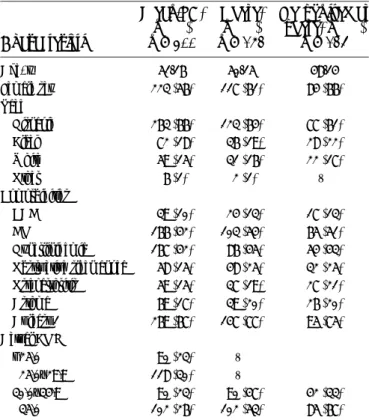
A total of 400 patients were rated by participating physi-cians. Each physician saw an average of six (standard deviation 4) patients per session. Patient characteristics are shown in Table 2. The average patient was 51T16 years old, 56% were women, and 66% were Hispanic. Among all of the patients, 192 (48%) were obese. Of these, 102 (53.1%) had class II obesity (BMI935; classes as defined by the Centers for Disease Control and Pre-vention12) and 77% had at least one obesity-related comorbidity.
Of the 192 obese patients, physicians correctly identified 127 (66%) as obese, 52 (27%) as overweight, and 13 (7%) as normal weight. Physicians identified 85.9% of patients as obese (95% confidence interval [CI] 77.4Y94.4) of those with BMI935 (class II obesity), but only 48.9% (95% CI 34.6Y63.3) of those with BMI 30 to 34.9 (AOR 6.4, 95% CI 2.9Y14.1).
The proportion of obese patients correctly classified by physicians was lower among Hispanic patients (63.8%, 95% CI 50.2Y77.3) than white patients (75.6%, 95% CI 55.9Y95.4) or black patients (82.7%, 95% CI 67.4Y97.9). Adjusting for sex, a possible confounder, reduced the difference between white and black patients (79.8%, 95% CI 62.2Y97.4 vs 81.6%, 95% CI 65.3Y97.9), but did not affect the estimate for Hispanic patients (63.3%, 95% CI 49.5Y77.1). Compared with white and black patients, Hispanic patients were 39% as likely to be correctly classified as obese (sex-adjusted proportions 63% vs 81%; AOR 0.39, 95% CI 0.16Y0.98).
Physician-level predictors of obesity recognition are shown in Table 2. In both unadjusted and adjusted models, the correct recognition of obesity was nonsignificantly associated with female sex, US versus foreign medical school training, and normal BMI versus overweight. Physicians documented obesity as a medical problem (Table 3) for 51% of obese patients (95% CI 42Y60). They were much more likely to document obesity for patients whom they subsequently recalled as being obese (61% if recalled vs 31% if not; P = 0.001). In the multivariable model, physicians were more likely to document obesity in patients whose BMIs wereQ35 versus 30 to 34.9 (AOR 3.5, 95% CI 1.7Y7.3) and non-Hispanic versus Hispanic (AOR 2.1, 95% CI 1.0Y4.3). Patient age was inversely asso-ciated with documentation (AOR 0.98, 95% CI 0.95Y1.00). There was no significant difference in documentation of obe-sity for patients with at least one obeobe-sity-related comorbidity versus without (51% vs 49%;P= 0.84). Attending physicians documented obesity in a patient’s record more frequently than did residents (64% vs 43%, AOR 2.5, 95% CI 1.3Y4.6) and normal-weight physicians documented a patient’s obesity more frequently than did overweight physicians (58% vs 41%; AOR 2.0, 95% CI 1.0Y4.0).
With regard to physicians’ attitudes toward obesity (Table 4), 56% agreed that obesity can be treated effectively by a pri-mary care physician and 27% reported success. Most of the physicians (82%) reported feeling comfortable discussing obe-sity with patients; however, only 67% were confident offering
Table 2. Patient characteristics
Characteristic Mean/SD, n (%) n = 400 Obese, n (%) n = 192 Recognized as obese, n (%) n = 127 Age, y 51/16 50/15 48/14 Female sex 223 (56) 117 (61) 84 (66) Race Hispanic 263 (66) 123 (64) 77 (61) Black 72 (18) 36 (19) 28 (22) White 59 (15) 31 (16) 22 (17) Other 6 (1) 2 (1) V Comorbidities CAD 39 (10) 24 (13) 17 (13) DM 166 (42) 103 (54) 65 (51) Hyperlipidemia 167 (42) 86 (45) 54 (43) Obstructive sleep apnea 58 (15) 48 (25) 32 (25) Osteoarthritis 59 (15) 37 (19) 27 (21) Asthma 69 (17) 39 (20) 26 (20) At least 1 269 (67) 147 (77) 95 (75) Actual BMI G25.0 90 (23) V Q25.0Y29.9 118 (30) V 30.0Y34.9 90 (23) 90 (47) 42 (33) Q35.0 102 (26) 102 (53) 85 (67) BMI, body mass index; CAD, coronary artery disease; DM, diabetes mellitus.
Table 3. Proportion of obese patients documented/ counseled for obesity by physician: characteristics
Univariable Multivariablea Characteristic % P % P Position Resident 43 0.008 43 0.005 Attending 65 64 Sex Female 58 0.18 Male 47 Location of medical school US 58 0.06 57 0.21 Foreign 42 46 Physician’s BMI Normal (G25) 58 0.06 58 0.04 Overweight (Q25) 41 41 Obese patients, % G50 50 0.77 V V Q50 53
BMI, body mass index.
aMutually adjusted proportions; model includes only position and physician’s
weight class. Physician sex and location of medical school were tested in the model but removed when P value for likelihood ratio test was90.20.
dietary advice, and few (6%) were comfortable prescribing weight-loss medication. There was no significant association between physicians’ attitudes and the recognition of obesity.
Discussion
In this study of 67 physicians at three academic ambula-tory clinics, we found that physicians had difficulty recognizing patients’ obesity. Although this difficulty was more evident for patients with a BMI between 30 and 35, and among patients with class II obesity (BMI935), only 86% were correctly identified as being obese. We also found that documentation of obesity was poor, and that attending physicians as well as physicians who were of normal weight were more likely to document obesity
in their patients. In addition, patients whom physicians were able to recall as being obese were more likely to have obesity documented in their EHR.
The widespread failure of physicians to document obesity has been well studied.7Y11Lemay and colleagues determined
that obesity was underdiagnosed based on documentation of obesity by physicians in a cross-sectional chart review.13
Their study, also conducted at an academic health center in Massachusetts, found that patient height and weight were recorded for only 63% of patients. Of these, 41% were obese and 39% of them had their obesity documented. At the time of our study, the height and weight of nearly 100% of patients had been recorded, obesity was more prevalent (48%), and
Table 4. Attitudes toward obesity among physicians with complete questionnaires
Question N (%) endorsing
Av proportion of patients identified as obese Pa
Av proportion of patients with documentation in EHR Pa Obesity is a major health
problem for my patients
52
Disagree 1 (2) 0 100
Neutral 0 (0) V
Agree 51 (98) 66 0.10 47 0.14
Obesity can be effectively treated by primary care physician
52
Disagree 5 (10) 72 35
Neutral 18 (35) 59 56
Agree 29 (56) 66 0.94 45 0.89
I feel comfortable discussing obesity with my patients
51
Disagree 2 (4) 33 67
Neutral 7 (14) 71 43
Agree 42 (82) 64 0.63 48 0.78
I feel confident in my ability to offer dietary advice to patients
51
Disagree 7 (14) 52 41
Neutral 10 (20) 53 41
Agree 34 (67) 72 0.11 53 0.31
I feel comfortable prescribing weight loss medications
51
Disagree 37 (72) 66 49
Neutral 11 (22) 52 45
Agree 3 (6) 94 0.81 47 0.81
I feel comfortable referring my patients for bariatric surgery
52
Disagree 7 (13) 44 44
Neutral 10 (19) 57 52
Agree 35 (67) 71 0.07 48 0.93
I have had success getting patients to lose weight
48
Disagree 14 (29) 65 58
Neutral 21 (44) 56 38
Agree 13 (27) 70 0.78 51 0.58
EHR, electronic health record.
documentation had improved to 51%. Similar to our study, Lemay et al found that physicians were more likely to docu-ment obesity among patients with a higher BMI and that at-tending physicians documented obesity more often than did residents. Other studies have found documentation rates ranging from 16%7to 31%8and most found that
documenta-tion rates were higher for the most obese patients. The use of an EHR to automatically compute BMI and display it as part of patients’ vital signs can improve documentation. In a study by Bordowitz et al, documentation after implantation of the EHR reached 71%.9The authors assessed documentation at any time, whereas we included documentation only in the previous three visits, which may account for our somewhat lower numbers.
Our study differs from previous studies in that we obtained physicians’ direct impressions of individual patients’ BMI, in addition to noting documentation in the EHR. There could be many reasons that clinicians fail to document obesity, including lack of time or a belief that such documentation is not im-portant. Indeed, we found that the rate of documentation was much lower than the rate of recognition of obesity. We hy-pothesized that one reason for not documenting obesity could be a failure to recognize it. Although the BMI is noted in the vital signs section, physicians may fail to look at it or take action. To the extent that recall represents a physician’s working memory, it is likely representative of his or her overall im-pression of a patient. The fact that attending physicians had both better recall and better documentation implies that they paid more attention to obesity. This highlights the need for better resident training in obesity recognition and weight loss counseling.
The underrecognition among physicians of obesity in Hispanic patients appears to be a novel finding. The reason for this is not entirely clear because all three clinics served a predominantly Hispanic population and 64% of the patients were obese. We hypothesized that the high prevalence of obesity in this population may cause physicians to consider obesity the norm and therefore fail to identify patients as obese. A previous study of patients in the same clinics demonstrated ethnic differences in patients’ abilities to identify themselves as obese, with whites more likely to self-report obesity than Hispanics and African Americans.5We did not find that phy-sicians had difficulty identifying African Americans as obese. Further research on the correlation between ethnicity and obesity recognition seems warranted.
Our study has several limitations. First, we relied upon physicians’ ability to recall their patients to complete the survey. If they actually looked at the patient at the time, they may have had a different response. By calling attention to the need to make an assessment, we also could have caused phy-sicians to move away from their usual practice. Our goal was to obtain the impression a physician may develop during a busy
clinical session while addressing competing problems. Another limitation was that we did not differentiate between docu-mentation of obesity as a problem in the patient chart and actual weight loss counseling, which is arguably more important but poorly documented. Finally, our power to assess physician factors related to recognizing obesity was limited as a result of having fewer than expected physicians with at least one obese patient and having a higher-than-anticipated intraclass corre-lation, especially for recognition of obesity.
Conclusions
Physicians, especially residents in training, had difficulty recognizing true obesity unless patients had class II or greater obesity. Physicians had a low likelihood of identifying obesity among Hispanic patients. Even in a setting in which the BMI was automatically calculated by the EHR, we believe that physicians should be trained in the recognition of obesity, es-pecially in Hispanic patients.
References
1. Ogden CL, Carroll MD, Kit BK, et al. Prevalence of obesity in the United States, 2009-2010.NCHS Data Brief2012;82:1Y8.
2. Berrington de Gonzalez A, Hartge P, Cerhan JR, et al. Body-mass index and mortality among 1.46 million white adults.N Engl J Med2010;363: 2211Y2219.
3. Flegal KM, Kit BK, Orpana H, et al. Association of all-cause mortality with overweight and obesity using standard body mass index categories: a systematic review and meta-analysis.JAMA2013;309:71Y82. 4. Rutledge T, Groesz LM, Linke SE, et al. Behavioural weight management
for the primary careprovider.Obes Rev2011;12:e290Ye297.
5. Sivalingam SK, Ashraf J, Vallurupalli N, et al. Ethnic differences in the self-recognition of obesity and obesity-related comorbidities: a cross-sectional analysis.J Gen Intern Med2011;26:616Y620.
6. Thande NK, Hurstak EE, Sciacca RE, et al. Management of obesity: a challenge for medical training and practice. Obesity (Silver Spring) 2009;17:107Y113.
7. Schriefer SP, Landis SE, Turbow DJ, et al. Effect of a computerized body mass index prompt on diagnosis and treatment of adult obesity.Fam Med 2009;41:502Y507.
8. Ruser CB, Sanders L, Brescia GR, et al. Identification and management of overweight and obesity by internal medicine residents.J Gen Intern Med 2005;20:1139Y1141.
9. Bordowitz R, Morland K, Reich D. The use of an electronic medical record to improve documentation and treatment of obesity.Fam Med2007;39: 274Y279.
10. Bardia A, Holtan SG, Slezak JM, et al. Diagnosis of obesity by primary care physicians and impact on obesity management.Mayo Clin Proc 2007;82:927Y932.
11. Melamed OC, Nakar S, Vinker S. Suboptimal identification of obesity by family physicians.Am J Manag Care2009;15:619Y624.
12. Centers for Disease Control and Prevention. QuickStats: prevalence of obesity (class I, II, and III)* among adults aged Q20 years, by age group and sexVNational Health and Nutrition Examination Survey, United States, 2007Y2008.MMWR Morb Mortal Wkly Rep2010;59:527. 13. Lemay CA, Cashman S, Savageau J, et al. Underdiagnosis of obesity at a