CRANFIELD UNIVERSITY
Adnan Qurban A. Alturkistani
DEVELOPMENT OF A LEAN PRINCIPLES FRAMEWORK
FOR ERP IMPLEMENTATION PROCESS
SCHOOL OF AEROSPACE, TRANSPORT AND
MANUFACTURING
PhD
Academic Year: 2018
Supervisor: Professor Essam Shehab
Associate Supervisor: Dr. Ahmed Al-Ashaab
CRANFIELD UNIVERSITY
SCHOOL OF AEROSPACE, TRANSPORT AND
MANUFACTURING
PhD THESIS
Academic Year: 2017- 2018
Adnan Qurban A. Alturkistani
DEVELOPMENT OF A LEAN PRINCIPLES FRAMEWORK
FOR ERP IMPLEMENTATION PROCESS
Supervisor: Professor Essam Shehab
Associate Supervisor: Dr. Ahmed Al-Ashaab
©Cranfield University 2018. All rights reserved. No part of this publication may be reproduced without the written permission of the copyright owner.
ABSTRACT
The aim of this research is to develop a novel framework based on lean principles and tools to be exploited in managing ERP implementation processes in order to enhance the overall success rate of the implementation project, which in turn minimises cost and time overruns. The framework consists of three stages built in a logical sequence taking into consideration the requirements of ERP projects implementations and the lean transformation principles.
The first stage starts with an assessment model to measure the organisational readiness for implementing ERP system using leanness assessment approach. The second stage of the framework introduces the use of the Obeya lean tool along with a change management model to help visualize and streamlining the process of ERP implementation. In the final stage, a value stream mapping technique is used to identify potential waste occurrence and eliminate non-value adding activities from the process. As a result, a new eight stages ERP implementation process is developed and presented with descriptions on the activities encompassed in each stage.
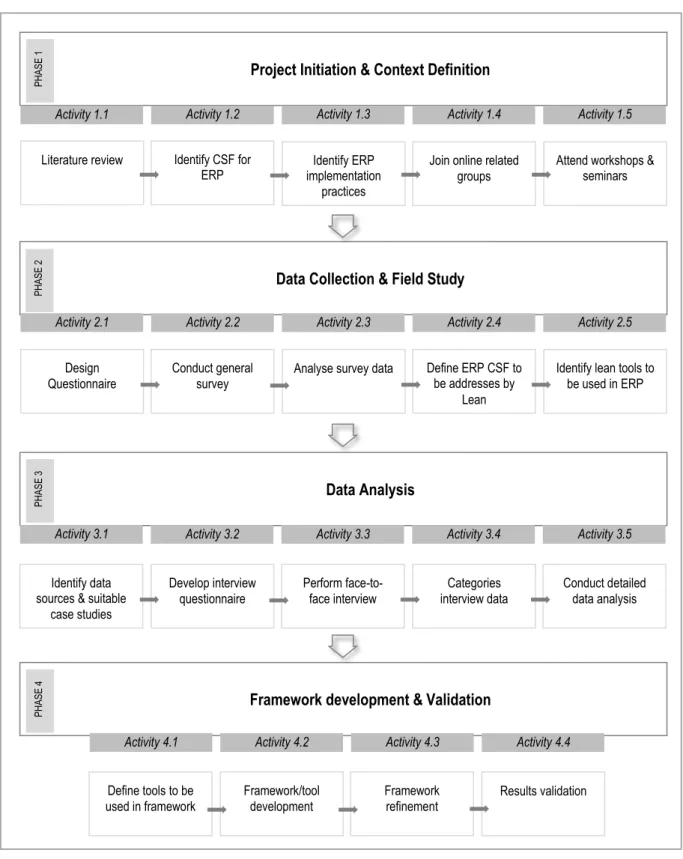
A research methodology consisting of four major phases was employed to attain the targeted objectives of the research; beginning with project initiation and contextual definition followed by data collection and field study. The data acquired from the previous two phases were used to conduct a thorough analysis from which key findings were drawn and used in the creative development of the readiness assessment model and the framework. Finally, elementary aspects of the framework were put to scrutiny through live case studies and professional expert judgement. The author made use of both qualitative and quantitative research measures.
A validation for the ERP readiness assessment model is conducted initially on three case studies, and then the whole framework is validated through two other case studies and experts’ judgments. The results and overall feedback reflected a high level of acceptance of the framework structure and approach. The novel framework has the capability to improve the ERP implementation process
providing it is utilised fully. It helps organisation to successfully deliver ERP systems on time, on budget, and with the required functionalities with high-level of acceptance from all stakeholders.
Keywords: ERP Implementation, ERP Readiness, Lean, Lean IT, Leanness Assessment.
ACKNOWLEDGEMENTS
I would particularly like to express my sincere appreciation to my principal supervisor Professor Essam Shehab for all the guidance and support that he kindly extended throughout the course of my study. The supervision, assistance, and patience provided by Professor Shehab have supplied me with the aptitudes and direction to accomplish this PhD thesis.
I would also like to thank my associate supervisors Dr. Ahmed Al- Ashaab. The support and encouragement provided throughout the duration of this research is highly appreciated. His kindness and relentless support helped me in maintaining the momentum and enjoying the PhD journey.
There are a number of academic and industrial experts who have highly contributed to this research. I especially would like to thank Dr. Patrick McLaughlin, Mr. Chris Alcock, and Mr. Umair Malik for their time and efforts in providing valuable advices and support during my research; their contribution has enhanced the composition of the thesis.
Most importantly, I would like to thank my family and in particular my beloved wife Reem for her encouragement to pursuit this achievement and for here enormous support and inspiration throughout the research duration. I also extend my deep appreciations to my wonderful children who bring me joy and give me reasons to laugh, a big thank you to your patience and joyful support during my PhD journey.
I owe great deal of gratitude to my treasured mother; I could not have done it without your prayers and blessings. I will be forever grateful and indebted for the sacrifices that my mother has made and her ongoing love and emotional support.
Finally, I gratefully dedicate this thesis to the memory of my father, [Qurban Abdullah], who always believed in my ability to succeed, who taught me through his actions more than his words, who has been and always will be my role model, and whom I still miss every day.
LIST OF PUBLICATION
1. Alturkistani, A., Shehab, E. and Al-Ashaab, A., 2017 “Leanness assessment model for ERP implementation process”, International Journal of Agile Systems and Management (Accepted).
2. Alturkistani, A., Shehab, E., Al-Ashaab, A., and Elnadi, M., 2018. “Selecting and Applying an Appropriate Change Management Model for ERP Implementation”, Proceeding of the International Business Information Management Conference (31st IBIMA). Milan, Italy
3. Alturkistani, A., Shehab, E. and Al-Ashaab, A., 2015. Awareness of applying lean principles in ERP implementation, Proceeding of the 13th International Conference on Manufacturing Research (ICMR2015), 8-10 September 2015, University of Bath, UK.
4. Alturkistani, A., Shehab, E. and Al-Ashaab, A., 2014. Challenges of Deploying Lean Principles in Managing ERP Implementation, Proceeding of the 12th International Conference on Manufacturing Research (ICMR2014), 9-11 September 2014, Southampton Solent University, UK.
TABLE OF CONTENTS
ABSTRACT ... i ACKNOWLEDGEMENTS... iii TABLE OF CONTENTS ... v LIST OF FIGURES ... ix LIST OF TABLES ... xiLIST OF ABBREVIATIONS ... xiii
1. INTRODUCTION ... 1
1.1 Research Background ... 1
1.2 Research Motivation ... 4
1.3 Research Scope ... 5
1.4 Research Aim and Objectives ... 6
1.5 Thesis Structure and Summary ... 6
2. LITERATURE REVIEW OF LEAN ERP IMPLEMENTATION ... 10
2.1 Introduction ... 10
2.2 Overview of ERP Systems ... 12
2.2.1 ERP History and Evolution ... 12
2.2.2 ERP Components ... 13
2.2.3 ERP Critical Success Factors ... 14
2.3 ERP Project Implementation Review ... 16
2.3.1 ERP Implementation Approaches ... 16
2.3.2 Stakeholders in ERP Lifecycle ... 17
a) Top Management: ... 19
b) Consultancy Firms and Consultants ... 20
c) ERP Implementation PMs ... 21
d) End users ... 22
2.3.3 Project Management methodologies ... 22
2.3.3.1 PRINCE 2 ... 23
2.3.3.2 PMBOOK ... 23
2.3.3.3 ISO 21500 ... 23
2.3.3.4 ITIL ... 24
2.3.3.5 Agile project management ... 25
2.4 Current ERP Implementation Process ... 26
2.4.1 ERP Implementations Framework in Literature ... 26
2.4.1.1 Research Questions ... 26
2.4.1.2 Search Protocol ... 27
2.4.1.3 Search Results ... 29
2.4.2 Analysis of findings ... 39
2.5 Organisation Readiness for ERP... 46
2.6 Change Management Models ... 49
2.6.2 McKinsey 7 S Model ... 50
2.6.3 ADKAR model ... 51
2.6.4 Bridges’ Transition Model ... 51
2.6.5 Kotter’s Change Model ... 52
2.7 Lean Overview ... 54
2.7.1 Lean history and Background ... 54
2.7.2 The five principles of lean ... 55
2.7.3 Lean core values and wastes ... 56
2.7.4 Critical Success Factors for Lean Transformation ... 56
2.7.5 Leanness Assessment ... 58
2.8 Lean for ERP Implementation ... 60
2.8.1 Lean in none-manufacturing ... 60
2.8.2 Lean in software development and IT ... 62
2.8.3 Challenges of Applying Lean Principles in ERP ... 63
2.9 Research Gaps ... 66
2.10 Summary ... 67
3. RESEARCH METHODOLOGY ... 69
3.1 Introduction ... 69
3.2 Research methodology overview ... 69
3.2.1 Research Purpose and Application... 70
3.2.2 Research Design ... 70
3.2.3 Research strategy... 72
3.2.4 Establishing trustworthiness ... 73
3.2.5 Data collection methods ... 74
3.3 Research methodology adopted... 79
3.4 Summary ... 84
4. CURRENT PRACTICES IN ERP IMPLEMENTATION ... 85
4.1 Introduction ... 85
4.2 Field Study Approach ... 85
4.3 Awareness of Lean Principles in ERP Implementation ... 87
4.3.1 Survey Results and analysis ... 87
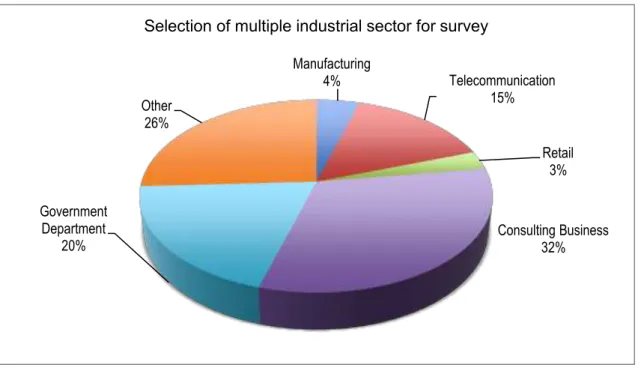
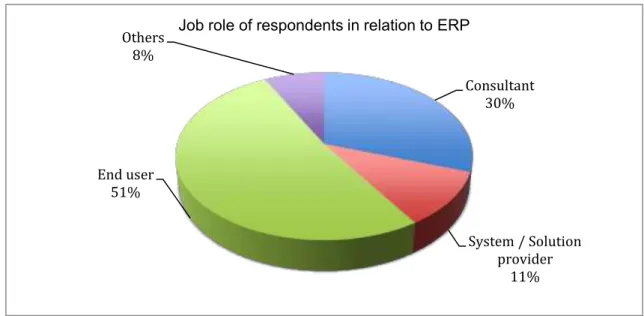
4.3.2 Details of respondents ... 88
4.3.3 Inquiry 1: Perceptions on critical success factors ... 91
4.3.4 Inquiry 2: Adoption of lean principles/tools for ERP implementation improvements ... 93
4.4 Enablers of Lean ERP Implementation ... 97
4.5 Chapter Summary ... 99
5. Lean ERP FRAMEWORK DESIGN AND DEVELOPMENT ... 102
5.1 Introduction ... 102
5.2 Leanness Assessment Model ... 107
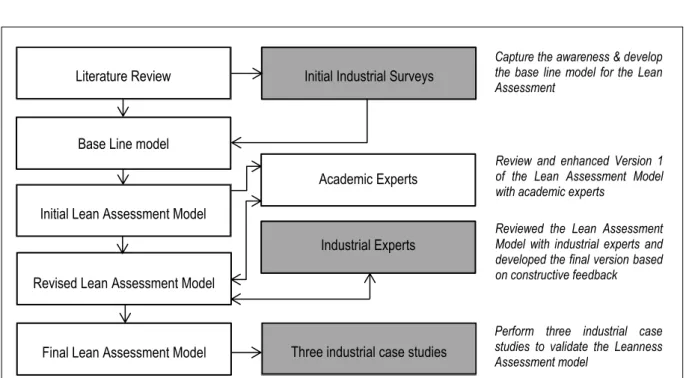
5.2.1 Methodology of Model Development... 107
5.2.3 Design of Assessment Tool ... 112
5.2.4 Case studies ... 120
5.2.4.1 Case Study (A): ... 120
5.2.4.2 Case Study (B): ... 125
5.2.4.3 Case Study (C): ... 133
5.3 Change Management ... 138
5.3.1 Change in ERP implementation ... 139
5.3.2 Applying Kotter’s model ... 140
5.4 OBEYA Room ... 145
5.4.1 History of Obeya... 146
5.4.2 Benefits of Obeya ... 147
5.4.3 The use of Obeya ... 148
5.5 ERP Implementation Process Development ... 149
5.5.1 Comparative Analysis ... 152
5.5.2 Key findings from the comparative study: ... 155
5.5.3 A Lean based workshop ... 156
5.5.4 Value Stream Mapping in IT / ERP ... 157
5.5.5 VSM Workshop Methodology ... 159
5.5.6 Results of VSM Workshop ... 162
5.6 Chapter Summary ... 171
VALIDATION OF LEAN ERP IMPLEMENTATION FRAMEWORK ... 173
6.1 Introduction ... 173
6.2 Validation case studies introduction and plan ... 173
6.3 Case Study (1): NHS trust ... 176
6.3.1 Case Study Background ... 176
6.3.2 Identifying the Current Status Via Leanness Assessment ... 177
6.3.3 Capturing the AS-IS: Case study examination and evaluation ... 179
6.3.4 ERP Implementation Initiative: an opportunity to validate the Lean framework ... 180
6.3.5 Validating the Lean ERP Implementation Framework ... 182
6.4 Second Case Study Validation: Government Sector ... 191
6.4.1 Case Study background ... 191
6.4.2 Conducting the Leanness Assessment to identify the current state 192 6.4.3 Capturing the AS-IS and identifying an opportunity to validate the framework ... 192
6.4.4 Validating the Lean ERP Implementation Framework ... 193
6.5 Validating framework through expert opinion ... 198
a) Participants of Experts Validation ... 198
b) Results from validation with experts ... 198
6.6 Summary ... 205
DISCUSSION AND CONCLUSIONS ... 208
7.2 Discussion of Key Research Findings ... 210
7.2.1 Literature Review ... 210
7.2.2 The research methodology ... 212
7.2.3 ERP Implantation and Lean Awareness ... 214
7.2.4 ERP Challenges and Lean Enablers ... 214
7.2.5 Leanness Assessment Model ... 215
7.2.6 Lean Based ERP implantation Framework ... 216
7.3 Main Contribution to Knowledge... 217
7.4 Fulfilment of Research Objectives ... 218
7.5 Conclusions ... 220
7.6 Research Limitations ... 221
7.7 Suggestions for future research ... 222
REFERENCES ... 224
APPENDICES ... 232
Appendix A: Questionnaire for awareness ... 232
Appendix B: Semi Structured interview ... 238
Appendix C: Invitation to MeetUp ... 243
Appendix D: Questionnaire for meetup ... 245
Appendix E: NHS case ... 248
Appendix F: Validation Questions ... 253
Appendix G: Sample Guidelines ... 263
Appendix H: Requirements document from public tender process ... 272
LIST OF FIGURES
Figure 1-1 Thesis Structure ... 7
Figure 2-1: Key Topics of Investigation in the Literature Review………. 14
Figure 2-2: General ERP Components (Davenport, 1998) ... 14
Figure 2-3: Search and filtration process and results of this review ... 29
Figure 2-4: Stage model and activities………14
Figure 3-1 Research Methodology Design ... 78
Figure 3-2 Research Methodology Structure………...80
Figure 4-1: Research approach adopted during the field study………83
Figure 4-2: Graphical representation of the industrial sectors selected for the survey ... 88
Figure 4-3 :Graphical representation of job roles by respondents ... 89
Figure 4-4: Graphical representation of experience in ERP implementation projects ... 89
Figure 4-5: Graphical representation of the job roles of participants ... 90
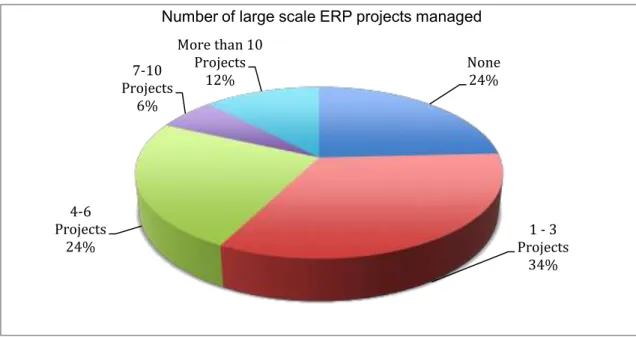
Figure 4-6: Graphical representation of the number of large-scale ERP projects managed by the participants ... 90
Figure 4-7: Rating of importance for critical success factors ... 92
Figure 4-8: The need for a new ERP implementation methodology ... 93
Figure 4-9: Current methods used in implementation management ... 94
Figure 4-10: Awareness Level of some of lean tools……….95
Figure 4-11:Possibility of using lean principles in ERP implementation ... 95
Figure 4-12: Possibility of using lean principles in ERP implementation ... 96
Figure 4-13: Possibility of using lean principles in ERP implementation ... 97
Figure 4-14: Survey for Initial Enablers ... 100
Figure 5-1: Framework Structure ... 100
Figure 5-2: Overall Framework Elemnts ... 100
Figure 5-3: Model Development Methodology ... 100
Figure 5-4: Overview of Model’s Elements ... 100
Figure 5-6: Recording details of the expert………100
Figure 5-7: Relative importance ranking for Enablers………..100
Figure 5-8: Relative importance ranking for Criteria……….100
Figure 5-9: Relative importance ranking for Attributes……….100
Figure 5-10: Actual rating for Attributes………..100
Figure 5-11: Mapping Kotter’s Accelerators to ERP Stages………...100
Figure 5-12: Illustration of the high level approach of the workshop………….100
Figure 5-13: Final developed process with phases and activities ... 100
Figure 5-14: Sample of a guideline page ... 100
Figure 6-1: Lean ERP implementation portfolio: Case Study 1- Validator 1 ... 100
Figure 6-2: Lean ERP implementation portfolio: Case Study 1- Validator 2…100 Figure 6-3: Lean ERP implementation portfolio: Case Study 1- Validator 3…100 Figure 6-4: Lean ERP implementation portfolio: Case Study 1- Validator 4…100 Figure 6-5: Lean ERP implementation portfolio: Case Study 1- Validator 5 ... 100
Figure 6-6: Lean ERP implementation portfolio: Case Study 1- Validator 6…100 Figure 6-7: Lean ERP implementation portfolio: Case Study 1- Validator 7…100 Figure 6-8: Lean ERP implementation portfolio: Case Study P- Validator 1…100 Figure 6-9: Lean ERP implementation portfolio: Case Study P- Validator 2 ... 100
Figure 6-10: Lean ERP implementation portfolio: Case Study P-Validator 3...100
Figure 6-11: Lean ERP implementation portfolio: Case Study P-Validator 4...100
LIST OF TABLES
Table 2-1: List of Critical Success Factors (Momoh et al. 2010) ... 15
Table 2-2: List of search terms ... 28
Table 2-3: Inclusion and Exclusion criteria ... 29
Table 2-4: List of eligible papers – In chronological order ... 30
Table 2-5: Goal Directed Project Management structure ... 38
Table 2-6: ERP vendors covered in each of the studied papers ... 44
Table 2-7: Comparative Presentation of Relevance of Change Models ... 53
Table 3-1: Distinction between Qualitative and Quantitative approaches (Adopted from Burns, 2002) ... 71
Table 3-2: Comparison of qualitative research strategies (Based on the works of Creswell, 1998) ... 72
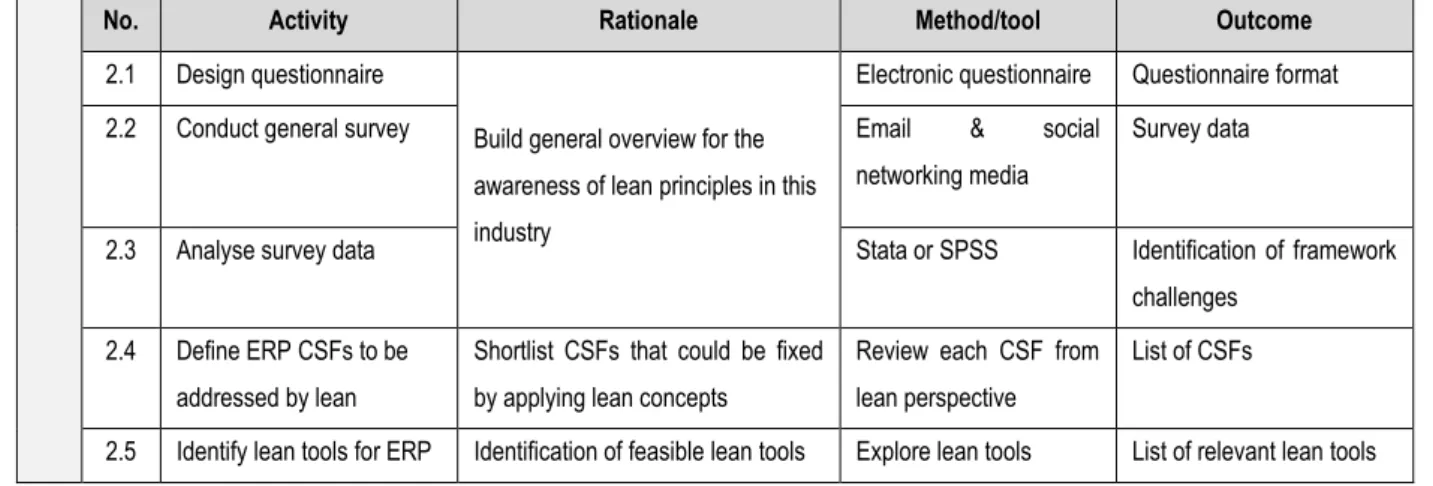
Table 3-3: synopsis of activities to be conducted in Phase 1 of research methodology ... 80
Table 3-4: synopsis of activities to be conducted in Phase 2 of research methodology ... 81
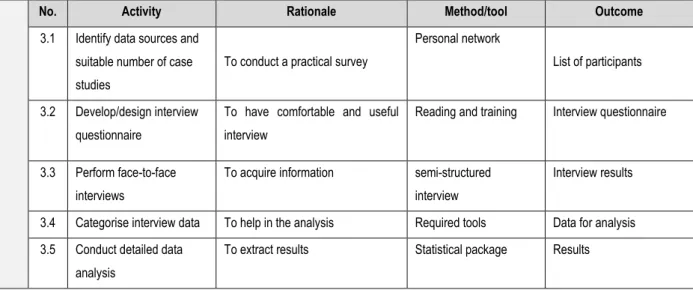
Table 3-5: synopsis of activities to be conducted in Phase 3 of research methodology ... 82
Table 3-6 synopsis of activities to be conducted in Phase 4 of research methodology ... 82
Table 4-1: Major areas of field study inquiry in relation to the research gaps ... 86
Table 4-2: List of 9 critical success factors and their overall ratings ... 92
Table 4-3: Scoring of enablers for options: Important and Above ... 99
Table 5-1: Elements of the assessment model………...…113
Table 5-2: Experts assessment score and weights for Case A……….122
Table 5-3: Calculated indices for all criteria (per expert) Case A ……….123
Table 5-4: Calculated indices for all enablers for Case A. ……….124 Table 5-5: Consolidated indices & weight for enablers. ……….125 Table 5-6: Experts assessment scores and weights. ……….……….127 Table 5-7: Calculated indices for all criteria (per expert). ………..……….128 Table 5-8: Calculated indices for all enablers (per expert). ………..…….129
Table 5-9: Calculated indices for all enablers. ………..………..…….130 Table 5-10: Calculated indices for all enablers. ……….…..………..…….131 Table 5-11: Calculated indices for all enablers. ……….…..………..…….131 Table 5-12: Indices & weight for criteria related to. ……….………..………….132 Table 5-13: Indices & weight for criteria related to Vendor. …………....….….132 Table 5-14: Indices & weight for criteria related to Consultant. …………..…..133 Table 5-15: Experts assessment scores and weights. ………….……..…...….135 Table 5-16: Calculated indices for all criteria. ……….…..…..…….136 Table 5-17: Calculated indices for all enablers. ……….…..………..…….137 Table 5-18: Consolidated indices and weight for enablers. ……….….….138 Table 5-19: First version of the developed implementation process. …..…….150 Table 5-20: Comparative analysis of ERP Implementation processes. ……...153 Table 5-21: Waste in Manufacturing and Software development. ……...…….161 Table 5-22: List of activates with identified possible waste..…...………..…….167 Table 6-1: Case study plan (adopted from Neale, et al. 2006) ... 174 Table 6-2: Lean ERP Framework components covered in case studies ... 175 Table 6-3: Example of Section 1 of Learn ERP Implementation ... 175
LIST OF ABBREVIATIONS
ACM Association for Computing Machinery
BPR Business ProcessReengineering
BSI British Standards Institution
CRM Customer Relationship Management
CSD Customer Specification Document
CSF Critical Success Factor
CSI Continual Service Improvement
DSD Digital Service Department
DT Digital Transformation
DTP Digital transformation programme
ERP Enterprise Resource Planning
FAQ Frequently asked question
GDPM Goal directed project management
GDS Government Digital Service
ICT Information Communication and Technology
IM&T Information Management and technology
IMVP International Motor Vehicle Program
IOA Implementation and optimal adaptation
ISO International Organisation for Standardisation
ITIL Information Technology Infrastructure Library
JIT Just in time
KI-VP Knowledge Innovation / Visual Planning
KPI key performance index
KSS Kanban-based Scheduling System
LDR Local Digital Roadmap
LM Lean management
MRP Material Requirements Planning
NHS National Health Services
NPfIT National Programme for IT
OGC Office of Government Commerce
PM Project Manager
PMBOK Project Management Body of Knowledge
PMI Project Management Institute
PMP Project management professionals
PPM Project phase model
PRINCE2 Projects IN Controlled Environments
S-ERP Sustainable ERP
SCM Supply Chain Management
SD Service Design
SME Small to Medium Enterprise
SO Service Operation
SS Service Strategy
ST Service Transition
STC Saudi Telecom Company
TMS Top managementsupport
TPS Toyota Production System
VCB Visual control boards
Chapter 1
1.
INTRODUCTION
1.1 Research Background
The current digital transformation era and the continuous elevations in global competitiveness and socio-technical advancements has forced businesses to populate the required capabilities to address the market needs in order to sustain business and generate revenue (Leipzig et al., 2017). Automation of business processes became an essential requirement in all businesses and government organisations and it is becoming a vital element for success with the mounting digital transformation programs taking place around the globe. Conserving quality, sustaining competitiveness, reduction in time to market and minimising cost are considered essential objectives that must be addressed to face the challenges of the business environment (Zouaghi and Laghouag, 2012). Through innovation and adaptation of enterprise strategies, businesses have started to experience substantial improvements (Bilgeri, Wortmann and Fleisch, 2017), amongst these include the utilisation of automation of business processes as a response to the increasing demand for e-business solutions. Enterprise Resource Planning (ERP) system is one of the essential enablers for e-business and digital transformation initiatives.
In the early sixties, Material Requirements Planning (MRP) systems were developed in the manufacturing industry with limited functionalities, the evolution was transpired to the entire enterprise and as a result, Enterprise Resource Planning (ERP) emerged. In comparison to the MRP, the ERP system takes into consideration, categorically all aspects of the business as well as encapsulating the manufacturing aspects. The coverage of the ERP systems includes: materials, capacity planning, scheduling, shop floor control, finance, Human Resource (HR), customer satisfaction and supplier relations. As (Simon, 2011) attests, ERP has become one of the most popular business management
systems that is being utilised across numerous industries as its primary automation system.
Through corrective measures, ERP systems have helped businesses gain copious benefits which include instantaneous results and the enhancement of organisational communication (Shehab et al., 2004). As a strategic tool, ERP helps through its integrative modules, all business processes as well as optimisation of available resources (Zouaghi and Laghouag, 2012). Notwithstanding their benefits, the complexity of ERP systems cannot be dismissed, and the nature of implementation of such systems is challenging, time-consuming and financially demanding which place an incredible burden on corporate time and resources.
The dynamic nature of today’s IT landscape, through its introduction and release of new technologies poses challenges in the selection of the correct technological solutions that are in conformance to the business needs. In such instances, the implementation of ERP becomes a predicament for every CIO whose decisions dictates and impacts the notion of business competitiveness and success. The intensification of the challenges increases if the ERP implementation is to be undertaken on a multi-national, multi-site organisation. Additionally, other key challenges typically encountered by such organisations include (but not restricted to): the multitude of departments covered across different locations, dissimilar IT systems adopted for various processes, and non-standardisation of processes (Muscatello and Parente, 2006).
Despite the high number of ERP implementations conducted throughout history, relatively a low number of these could be considered successful. An industrial study revealed 75% of the projects did not finish on the original planned time and 55% exceeded the budgeted coast (Panorama Consulting Solutions, 2015). Typically, ERP implementations encounter delays on estimated schedule, overruns on the initial budge or have shortcomings in their initially planned functionalities (Ehie & Madsen, 2005; de Bakker et al. 2012).
proposed by Womack based on the Toyota Production System (TPS) to improve the productivity of the shop floor by eliminating waste is described as: specify value, identify the value stream and eliminate waste, make the value flow, let the customer pull the (value) process, and pursue perfection (Womack, Jones and Roos, 2008). These principles have been applied in the shop floor what is commonly referred to Lean Manufacturing.
After the exceptional success of Toyota through their TPS, the concept of lean philosophy started to become more concomitant with the manufacturing industry. Whilst maintaining the lean philosophy other industries such as Education, Healthcare, Construction, and IT have started to utilise the lean principles to their advantage (Proudlove, Moxham and Boaden, 2008; Riezebos, Klingenberg and Hicks, 2009; Souza, 2009). In principle, lean could be used with any process to turn the separately managed activities into an end-to-end value stream and as a means for continuously managing the process for further improvements.
The lean software development concept initiated in the early 2000s, it forms its basis on the application of the well established lean principles into an effective management approach to software development as explained by Popperndieck & Poppendieck (2003). Having successfully implemented the principles of lean to great extent in managing complex management transformation, the complexities with ERP implementation deemed a big challenge for those organisations. A research by Haley (2014) revealed that applying lean principles to information technology (IT) projects result in schedule reduction. Haley (2014) analysed archived secondary data, for IT projects in the defence industry, using non-experimental quantitative methods. And they noticed that it is challenging to apply lean in variable environments such as IT implementation projects.
Both the implementation of ERP systems and lean transformation initiatives in any organisation create major change that requires good change management practices to obtain efficacious results. Organisational change management and transformation initiatives enforce massive challenges to existing business
landscapes and leading such change is very perplexing and full of complex obstacles.
The research presented in this thesis studied the application of lean principles on ERP implementation processes and aimed to develop a novel framework to aid this transition. Conventionally, the ERP implementation process is managed using typical project management approaches, however through the incorporation of lean principles with its process improvement process approach it is expected to complement, enhance and further strengthen the effectiveness of project management. A single lean tool cannot solve all the predicaments; therefore, the research investigates the applicability and suitability of the required lean tools/techniques to solve the expected occurrences of the problems during the implementation process, which will be housed in a framework to ensure their corrective selection.
1.2 Research Motivation
The ERP software market is growing rapidly; it was around US$ 22 billion in 2008 ((Shehab, Thomassin and Badawy, 2011) and (IGate, 2018) forecast the enterprise software market to exceed US$ 575 billion by 2024. The total implementation cost for an ERP system for a Small to Medium Enterprise (SME) can reach tens of Millions of dollars, and in large corporations the range is US$ 300-500 million as highlighted by (Mabert, Soni and Venkataramanan, 2003). Allied Waste Industries terminated the ERP implementation project after it cost them US$ 130 Million (MOMOH, 2015). Even though there is a long history of ERP systems and numerous implementations that have been undertaken during the course of years, the failure rate is still as high as 50% of all ERP implementations, the reasons for which vary from case to case (Muscatello & Parente, 2006). According to (Al-Turki, 2011) 68% of ERP implementation projects could be classified as partially failed and 7% as total failure. Moreover, an in-depth investigation and studies of cases by Standish Group reported that: on average 30% achieved the required functionality, 70% were over budget and the time overrun exceeded 2.5 of the expected time (Momoh et al. 2010).
Decisions of ERP system selection are driven mostly by the ERP software costs; however, the cost constitutes only 15% of the total cost of implementation. This under estimation of cost leads to cost overruns as well as contributing to the overall failure of the projects (Ehie & Madsen, 2005; Momoh 2015).
The ERP implementation process is strenuous on time, the complexity of complications range from multiple variables which covering different types of organisational functionalities (Iba, 2006). It is compulsory that all ERP users and participants strive to adhere to techniques and identify solutions in order to increase the success rate for the implementation whilst managing the cost and effort at its source.
Recently, organisations have started to adopt lean thinking in order to further enhance their business attainment, this has been briefly discussed in the previous section and a more detailed account is presented in the proceeding Chapter under Section 3. It is necessary to mention that, Lean IT is relatively a new approach to help organisations advance towards high performance. Taking into consideration the critical success factors for ERP implementation whilst acknowledging the high failure rates there is an opportunity to incorporate lean type thinking through the use of lean principles and its tools/techniques to form a lean based framework for successful ERP implementation to address and resolve the predicaments as well as increasing its overall success rate in an effective manner.
1.3 Research Scope
The scope of the research entails the successful development of a lean based framework, which utilises the most applicable lean tools and principles to enhance the ERP implementation process. Hypothetically, as a consequence of this, the overall success rate of the implementation will be increased. In order to marginalise the research, the following areas have been covered: (1) taking into consideration the complete process from a feasibility perspective through project planning; (2) rollout to post implementation and maintenance stages of the process and (3) placing careful attention on the most critical
success factors associated with the implementation. In order to substantiate the validity, applicability and coverage of the research, the author will conduct case studies of large government and independent corporations in Saudi Arabia. Furthermore, the case studies will be used retrospectively with the developed framework to capture a critical and analytical review and validation from experts.
1.4 Research Aim and Objectives
The aim of this research is to develop a novel framework based on lean principles and tools to be employed during the ERP implementation process in order to enhance the success rate of implementations which in turn reduces lead-time and cost.
The primary objectives of the research are to:
1. Explore and analyse the current ERP implementation processes as well as capturing the critical success factors for its implementation in order to identify and classify opportunities for improvement;
2. Map the current practices of the ERP implementation processes against the lean principles which will serve as the technical platform in the development of the lean assessment mechanism;
3. Assess the ERP implementation process using the value stream mapping technique to identify the possible waste occurrence and the suitable lean tools that could be employed for waste elimination;
4. Develop a lean based framework for ERP implementation process and its associated tools;
5. Validate the proposed framework through case studies and experts’ opinion.
1.5 Thesis Structure and Summary
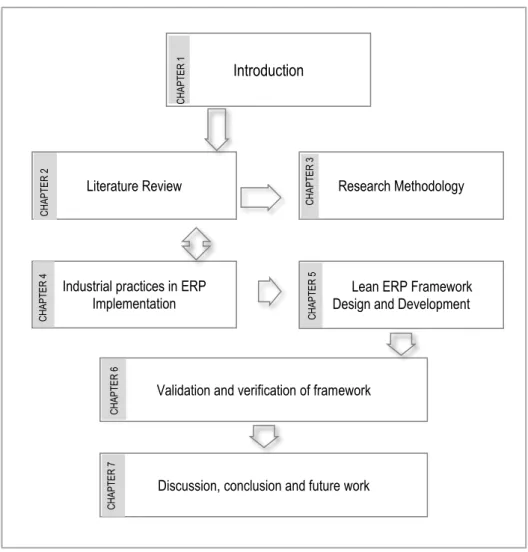
This section delineates the structure of the thesis and a description of the activities conducted in order to realise the research aim has been presented in Figure (1-1)..
The opening Chapter of the thesis provides a brief synopsis of the research by discussing its background and the motivation behind the investigation. In order to contain and keep a focalised study the research scope, aims and objectives have also been listed followed by a listing of the deliverables. Chapter 2 provides a detailed account of the scientific literature which has been reviewed. The purpose of this review is to capture the current trends in the discussion as well as identify research gaps. The research methodology adopted by the author has been detailed in Chapter 3, the research approaches and strategies have been explained and the selection of data collection methods has been justified.
Figure 1-1 Thesis Structure
Introduction
Literature Review Research Methodology
Industrial practices in ERP
Implementation Design and Development Lean ERP Framework
Validation and verification of framework
Discussion, conclusion and future work
C H AP TE R 1 C H AP TE R 2 C H AP TE R 3 C H AP TE R 4 C H AP TE R 5 C H AP TE R 7 C H AP TE R 6
Chapter 4 provides a discussion of the field of study and its results. The purpose of this study sought to establish the current awareness amongst practitioners regarding lean principles and tools during the ERP implementation process. The findings of the survey are graphically illustrated followed by a thorough analysis of the findings.
In Chapter 5, the developed lean based framework for ERP implementation is introduced with description for its different constituents. The process phases, stages, and activities to be performed throughout the process to ensure successful implementation are covered. The author provides technical discussions and arguments for the selection and arrangement of the activities. A high level guideline for some of the activities has been developed; comprising instructions of using the framework along with the required forms and techniques.
Moreover, the chapter comprises a through dissection and explanation of the first part of the framework; the leanness assessment model which cover the model design methodology, a description of its constituents, and its five enablers. The chapter also presents the industrial testing of the for the model with three case studies and the findings in order to establish correlations; the case studies results are presented and discussed farther. The last sections of the chapter explain the remaining parts of the framework, which covers two modules; change management and Obeya room. The elected change model is discussed with some guidelines on how to apply the model in ERP project. Then, the Obeya room is introduced by exploring its background and benefits followed by application guidelines for the room in ERP context. The chapter ceases with the enlightenment for the construction and development of the ERP implementation process.
The validation and verification of the full framework are put forth in Chapter 6, each case study is detailed; drawing references to the suggestions, complications and the overall success encountered during this stage of the
research. In addition t the case study validation, the chapter presents the result of the validation provided by industry experts.
The thesis ceases with Chapter 7 that synthesise outcome of the research. The contributions the study has made to knowledge are listed; the limitations and possible areas for future research are also highlighted. The thesis ceases by drawing conclusions and how well the research aim and objectives were achieved.
The proceeding chapter provides a detailed review of scientific literature in the following areas: ERP implementation, critical success factors, adopting lean type thinking to ERP implementation and change management
Chapter 2
2.
LITERATURE REVIEW OF LEAN ERP
IMPLEMENTATION
2.1 Introduction
The aim of the research is to develop a framework based on lean thinking to manage ERP implementations. The primary objectives reported in this thesis are the exploration and critical analysis of current ERP implementation processes and the effective capture of critical success factors for its consequent implementation, which will in turn be used to identify and classify opportunities for improvement. It is in the interest of this research to conduct a literature review to identify the current status of scientific discussion regarding ERP implementation and to identify the prospects of adopting lean principles to manage and further enhance the implementation process. This discussion will serve as the essential ‘know how’ platform, which will be used as a key element in the development of the framework as listed in Chapter 1.
The main objectives of the chapter are to identify the research gaps through the understanding of available research in the area of ERP implementation and lean management. There are three main parts that constructed this chapter; the first part is covering ERP system and its implementation. The second part is dedicated to investigating the concept of lean and its implementation in non-manufacturing industry. And the final part of the chapter presents the research gap and its analysis.
This chapter addresses this concern through an extensive scientific review of literature; the key areas of investigation have been depicted in Figure 2-1. Having introduced the Chapter in Section 2.1, the key areas of investigation
have been organised based on the logical orientation of the research inquiry, for example Section 2.2 has been allocated for the topic of ERP system overview, while section 2.3 explore the ERP implementation, and section 2.4 present ERP Readiness. Additional areas that are considered essential but supplementary to the research such as project management and change management have been presented in Section 2.5 and 2.6 respectively, followed by a review of on Lean thinking literature in Section 2.7. The key research gaps are drawn and listed in Section 2.8 followed by a Chapter summary in Section 2.9.
PROJECT MANAGEMENT SE C TI O N 2 .5
Organisation Readiness for ERP Readiness Assessment Readiness Models Prince 2 PMBOK ITIL ISO 21500 Agile PM CHANGE MANAGEMENT ERP READINESS SE C TI O N 2 .4 Concept of Change McKinsey 7 S Model ADKAR Model Kotter’s Model Lewin’s Model SE C TI O N 2 .6 LEAN OVERVIEW SE C TI O N 2
.7 Lean History & Background
Lean Principles
CSFs for implementing lean
Lean Core Values Lean Waste
Leanness Assessment LEAN FOR ERP
IMPLEMENTATION SE C TI O N 2
.8 Lean in Non Manufacturing
Lean Software Development Lean IT
ERP SYSTEM OVERVIEW
SE C TI O N 2 .2 ERP Components
History & Evolution ERP Components
ERP Systems future
Implementation Approaches Current ERP Implementation Processes Implementation Stakeholders ERP IMPLEMENTATION REVIEW SE C TI O N 2 .3
2.2 Overview of ERP Systems
The purpose of this section is to review the relevant information associated with ERP systems and implementation approaches and the critical success factors. The section ends with illustrations of the different implementation processes.
2.2.1 ERP History and Evolution
In the early sixties, Material Requirements Planning (MRP) system was developed in the manufacturing industry to aid in the management of materials in terms of quantification based on requirements (for organisational and
scheduling tool only) (Wallace and Kremzar 2001). MRP
II
was the secondgeneration and came with more functionality such as distribution management, shop floor, project management, finance, and human resource (Rashid, Hossain et al. 2002). In the 1980’s, MRP
II
was implemented and working in tens of thousands of manufacturing firms (Guamer 1996).Enterprise Resource Planning (ERP) evolved from MRP
II
and extended beyond the traditional boundaries of manufacturing processes to incorporate all the stakeholders with emphasis on the customer and suppliers. ERP systemsincorporate all functionally active areas business which covers materials and
capacity planning, scheduling, shop floor control, profitability, customer satisfaction and supplier’s relations – practically every aspect of the business (Wallace and Kremzar 2001). The development of ERP systems evolved into a modular structure that enabled the incremental implementation of the system and reduced risks (Cooper 2008).
As a result of incorporating ERP systems, operational efficiency and aptitude of the business are greatly improved inevitably. ERP systems are powerful IT solutions that are promising that enables organisations to function more effectively whilst ensuring the productivity is greatly improved, providing the systems is fully utilised in its correct order.
The 1990s witness a rapid emergence and growth of technology, ERP system was not short of this and was one of the leading areas of development which
provided businesses process integration throughout the functional area. New developments and the number of options in both software and hardware quickly grew; especially with the Y2K threat that drove organisations and major software vendors to seek out upgrades to counteract this warning. Throughout the history, the ERP market has witnessed the incline and decline of many vendors; currently, the key players are SAP, Oracle and Microsoft. Second tier vendors include Infor, Epicor, and Sage. The next phase of ERP systems sets out to merge products and move to full cloud computing to enable artificial intelligence applications.
ERP systems became a web-based ERP solution after the spread of the Internet by the year 2000 (Lawton, 2000). This development entailed the necessity for integration between ERP system and other business applications such as project management systems and other operating systems. ERP system became the backbone for many e-business solutions, which led to high customer satisfaction and operational excellence. Furthermore, the development and advancement of ERP systems have seen an incremental increase in more technical functionalities through the integration of additional applications such as Supply Chain Management (SCM), Customer Relationship Management (CRM) and E-Procurement (Wu, 2011). ERP systems have started to gain popularity and multiple industries and government departments have taken notice of this and started to utilise and reap the benefits from it. E-commerce implementation and the business-to-business (B2B) systems were enabled by ERP system and gained faster access. As a consequence, ERP system moved from being a back office system to a front office, because of the interface with all customer-facing systems. The estimated size of the ERP market, in 2008, was 34.4 billion USD in software licenses and 103 billion USD in ERP related services (AMR Research, 2008)
2.2.2 ERP Components
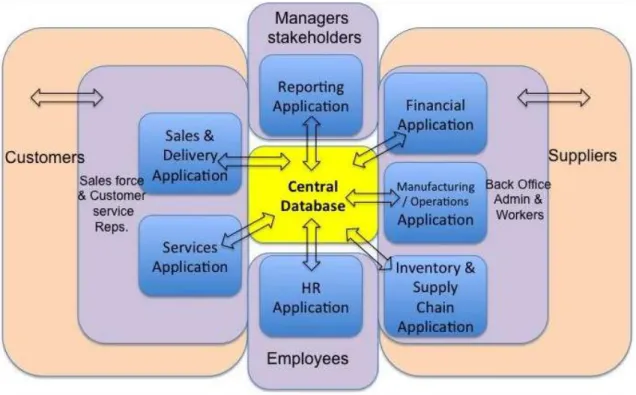
ERP systems are composed of major components which are technically termed as modules, each module consisting of sub-modules that facilitate the integration and management of components that are associated with the
different department of the organisation. There is, however, a set of common modules amongst the different types of available ERP systems they generally include a database and management portal, Error! Reference source not found. reflects typical ERP system components (Davenport, 1998).
Figure 2-2: General ERP Components (Davenport, 1998)
2.2.3 ERP Critical Success Factors
A great deal of research has been undertaken to investigate and study the Critical Success Factors (CSFs) of ERP Implementations. Namely, some of the most comprehensive review articles published on the topic CSFs in the field of ERP implementation include Nah et al. (2001), Somers & Nelson (2001), Finney and Corbett (2007), Dezdar & Sulaiman (2009), and Momoh et al. (2010). Despite the high number of articles discussing CSFs, Dawson & Owens (2008) argued that critical success factors are not similar in all articles, the underlining reason for this is the different use of terminology, which directly to refers to the same CSF, and in some cases, authors combine two CSFs into one CSF.
Taking the aforementioned into account, for the purpose of this research, the CSFs covered in Momoh et al. (2010) will be used a standardised margin, the reason for this decision is that the work by Momoh et al. was comprehensive in nature and in its detailing which included citations from 1997-2009. Table 2-1 lists the nine critical success factors of Momoh et al. (2010) ranked from the most cited factor to the least
Zhe Zhang et al. cite business process re-engineering as a critical factor to the success of the implementation project. They argue that one of the principal reasons of ERP implementation failure is that organizations simply under estimate the extent to which they should change and re-engineer the existing business processes to accommodate their purchase. Shanks’s PPM includes a sub-phase that has an additional component of business process re-engineering.
Table 2-1: List of Critical Success Factors (Momoh et al. 2010)
Rank Critical Success Factor Descriptions
1 Lack of change
management
Not to be treated as a software installation effort only. Should be a program that includes: technology, task, people, structure, and culture.
2 Excessive customization An optimal strategy is to balance between customization of ERP system and changing the
organizational procedure within the company.
3 Dilemma of internal
integration To have end-to-end processes with the managed costs, risks, and changes involved.
4
Poor understanding of business implications and requirements
Realize the full benefits of the solution and reconcile the technological imperatives of ERP with the business needs.
5 Poor data quality To avoid data format incompatibilities with ERP package.
6 Lack of top management
support It is essential to the success of large and complex projects.
7 Limited training Importance of training of all concerned staff with the right timing.
8 Misalignment of IT with
business
To have a dynamic process of mutual adaptation between IT and the rapidly changing business environment.
2.3 ERP Project Implementation Review
2.3.1 ERP Implementation Approaches
There are two main approaches to implement ERP systems in an organisation; one of the approaches to implementing a new ERP system is the full installation of the system across the organisation in a single stroke. This approach was commonly witnessed in the mid-90s due to the issues concerning the Y2K compliance. One of the major advantages of this approach is the short implementation time and consequently the minimal cost associated with it. However, there is a high risk of failure associated with this approach because of the ‘everything-at-once’ nature of the approach (Mabert et al. 2003). The one-time implementation is easier to manage on a single site than multiple sites. One of the major challenges of this approach is full system testing which is hard to achieve; full functionalities and integration are only possible when the system goes live.
The second approach is the franchising strategy of implementation of a partial integration across a few divisions (Lau, 2003), this is also known as Key-Process or Unit-by-Unit implementation, and this is the approach in which the ERP system rolls out in stages. With this type of implementation, the most important ERP modules to an organisation will be initially installed followed a continual step-wise progression onwards. HR and finance functions are usually the commons across the organisation, followed by specific departmental functions.
This is a common approach among large or diverse organisations where top management seeks out a branch or a department with an open-minded team for a pilot implementation in their specific area of work. Following the piloting of the implementation phase, the implementation team could be utilised in providing first-hand support and guidance to implementation teams in the continual phases. This approach is considered to be time-consuming but staff resistance is considered low due to the constant feedback and discussion among colleagues.
This approach has its own advantages; gradual implementation leads to fewer disruptions in the organisation. The inaugurating (open-minded) team leads to a better learning curve and reduces anticipated risks. On the contrary, one drawback of this approach is that it requires high investment for the implementation.
Usually it is recommended to implement one ERP system in the entire organisation; however, not all organisations go by this rule. Ideally, the acquisition of an ERP system for the core function to build upon building other stand-alone systems in order to establish an interface between the systems results in a high-performance system. An organisation could select a single vendor package for its ERP system or it can choose to have different modules from different vendors and integrate them into its systems (Shehab et al. 2004). In conclusion, each approach has its own advantages and disadvantages, and it is important that organisations select the most appropriate implementation strategy that is in compliance with their needs and requirements. In all cases, a number of factors needed to be considered before deciding on which implementation approach to adopt, these include regulatory compliance, acquisitions, capital expenditure programs, an acceptable level of risk and new product introductions. Undoubtedly, ERP implementations are complex due to their scale, scope, and Business Process Reengineering (BPR) requirements.
2.3.2 Stakeholders in ERP Lifecycle
Stakeholder management is looked at as one of the core principles of project management, and an important significant capability within projects is the understanding the influences of stakeholders and their developing engagement (Morris, 2013; PMI, 2013). Aaltonen & Kujala (2016) concluded that the stakeholders are “all organizations and individuals that can affect or are affected by a project and of relationships among these organizations and individuals”. Recognising its importance, PMI included stakeholder management as a new best practice knowledge area in the Project Management Body of Knowledge (PMBOK) in 2013. The Stakeholder theory is based on contemplating and balancing the relevant interests of all possible stakeholders in order to create
and sustain their support (Freeman, 1984; Jones and Wicks, 1999), and it is vital for stakeholders to engage in the project at the very early stages (Greenwood, 2007).
Regardless of the project’s nature, one of the strong reasons for project failure is the lack of practical and efficient interactions between the project stakeholders (Achterkamp and Vos, 2008).
The nature of ERP implementation is technically complex and has an impact on almost every department and function in the organisation as well as other external parties. Hence, this affects the interests of the different stakeholders during the various stages of the project (Kamal et al 2011) and could lead to conflicting views from the different players. Some of the stakeholders in ERP implementation project identified by (Boonstra, 2006) are Top Management, IT department staff, ERP Project team, End users, and External Consultancy. Andersson and Olandersson (2013) investigated the relationship between ERP vendors and the consultants and their role within the stakeholders’ landscape. Many of the challenges in ERP implementations stem from its stakeholders, thus, it is vital to identify those major players and understand their expected reactions to be able to neutralise their influences (Bhasi et al 2014). Alsulami et al, (2016) identified a new critical success factor as ‘stakeholder conflict management’ and they presented four types of conflicts that occur among stakeholders. Previous literature has identified stakeholders’ impact as one of the critical success factors in ERP implementations.
After reviewing the literature, it is concluded that the most influencing / significant stakeholders in ERP implementation project are: Top Management, Consultancy Firms and Consultants, ERP implementation PMs and End users. The following sections will provide some insights on each stakeholder and their importance as discussed in previous literature.
a) Top Management:
Top management is defined as the highest management level in the institution such as the CEO or managing directors who are usually responsible for setting corporate strategy and policy Boonstra (2012).
Most of the major projects in organisations are associated with enormous change, and for these projects to be successful a strong and effective top management support (TMS) is required. ERP implementation is one of these projects and the previous literature has extensively addressed the importance of TMS. Almost all the literature on the critical success factor of ERP implementation included TMS as one the primary factors (Bansal & Agarwal 2015, Boonstra (2012), Elbanna 2011, Martin & Ziaul Huq 2007, Dong, (2001). Young & Jordan 2008 argues that TMS is not one of the CSFs only rather it is the most important CSF.
Bansal & Agarwal 2015, studied the relationship between TMS and the level of competence of the project team and found out that with more support from top management the project team become more competent. And Sudevan et al (2014) analysed the role of top management during the different phases of ERP implementation, they also identified the importance and level of required involvement in each of the four stages off initiation, adoption, adaptation, and use. Barsukova (2013) presented how consultancies perceive top management role and the preferred level of commitment consultants look for. Furthermore, Boonstra (2012) discussed the types of behaviour that are associated with top management support which are: Accommodating the implementation project, reshaping organizational context, adapting the information system to the organization, and Dealing with other stakeholders. Furthermore, they presented the reasons for top management to withhold their support at some stages of ERP lifecycle. Elbanna (2013) scrutinized the top management support in a multiple-project multiple-site environment and looked at relationship complexity. The author revealed that in such environment, the support of top management fluctuates over the project lifecycle because of their support shifts from project to another.
Additionally, Young & Jordan 2008 argued that TPS is more a comprehensive factor that comprises other CSFs, and their findings negate previous conventional thoughts. They also recommended that advice provided to top management should be of a direct interest to them such as the expected value from the ERP system, and to avoid advice that aim to improve technical quality. Martin & Ziaul Huq 2007 argued that, during ERP implementation, top management should concentrate on cultural and environmental aspects only such as managing employee behaviour. This is because top management has the proficiencies and power that enable them to influence these factors. Dong, (2001) analysed the top management commitment to change management and to resources, they also discussed top management's role under five types of implementation modes.
(Olivier et al., 2009) reported that optimization of top management role is an indispensable condition for project success. They presented several actions that should be taken to improve TMS in ERP implementation projects
b) Consultancy Firms and Consultants
Generally, organizations employ external ERP consultants to overcome the implementation complications, and they are considered as a major stakeholder Alsulami et al, (2016). External consultants have accumulated knowledge and experience from the diverse real-life ERP implementations they were involved in. They play a very important and prominent role in the implementations of ERP systems and contribute in steering the project to success by helping organisations overcome their difficulties Lapiedra et al. (2011). External consultants deliver business and technical expertise and help in training end users (Momoh 2015). The terms “Consulting Firms” and “Consultants” will be used interchangeably in this research.
The ERP literature explored the external consultants’ contents from different perspectives such as their roles, their associated cost, and their relations with other stakeholders. Momoh (2015) discussed the importance of the cost of consulting in ERP projects and how it is underestimated most of the times and
implementation projects the cost of consulting reached as high as 70% of the total project costs.
Coelho et al. (2015) investigated the relationship between the consultant and the client in ERP implementation project. They listed three types of client-consultant relationship namely dependency, autonomy, and cooperation and they explored the dynamic power and knowledge of each type. Andersson and Olandersson (2013) analysed the relationship between the consultant and the ERP vendor and presented of the impact of the relationship type on the role of consultants. They presented the differences between a vendor in-house consultant and the independent consulting firm hired directly by the client. Barsukova (2013) explore the consultants’ viewpoint of ERP implementation process and their interaction with the client. The study presented the shared attitudes of consultants such as the need for quick and effective decisions making by clients, the presence of competent and devoted staff in the project team, and to avoid system customizations.
Lapiedra et al. (2011) conducted a study on the effect of consultant quality on ERP implementation success. They provided empirical evidence that ERP implementation success is highly affected by the quality of the external consultant. And they argue that a high level of organizational learning capability end-user satisfaction could be achieved easily. Finally, Jamie et al (2011) discussed the application of control mechanisms for coordinating the work of the different ERP consultants. They argue that effective coordination leads to successful implementation of the different modules of the ERP system.
c) ERP Implementation PMs
Project Managers (PM) are normally responsible for organizing the ERP implementation project for success. They identify the details of every task, assign it to the correct person, and ensure that all tasks are completed on-budget, on-time and exactly as planned. PM should be fully supported by the enterprise’s top management and should be empowered to direct the actions of each individual participant in the implementation project (Sudevan et al., 2014).
PMs can hinder the success of the project by allowing other stakeholders to resist or confront the project. To overcome this potential weakness, PMs should have the ability to report to high-level managers that have the privilege and power to enforce positive actions in favour of project’s interests (Sudevan et al., 2014). The resistance of end users is one of the most common hindrances faced by PMs and is usually due to changes in the business process that is perceived as negatively impacting end users’ workflow. Therefore, PMs should be committed to the project until the final stage to engage end users with clear communication channels.
d) End users
As mentioned earlier, end users are likely to resist the ERP implementation project given the changes imposed by the project to business processes. Therefore, it is necessary to comprehensively evaluate the impact of the project on end users. A complex or demanding ERP software could cause end users to fail to adapt to it unless precautions are taken (Kwak et al., 2012). It is important to understand that system users need are concentrated on completing business processes efficiently and easily track uncompleted processes. End users involvement is not less important than executives and managers involvement in the implementation project to succeed (Sudevan et al., 2014).
2.3.3 Project Management methodologies
Project management is a discipline used with all types of projects such as construction, sales, and information technology (IT). Because of the specific provisions and requirements, all major bodies for project management standard has specific editions for these types of projects including ERP implementation projects. It deems essential to explore some of the most elect project management methodologies that are favoured by industrial practitioners, these findings will be considered in developing the intended lean based framework.
2.3.3.1 PRINCE 2
PRINCE2 (Projects IN Controlled Environments) is currently the most popular project management methodology used in Europe. PRINCE2 methodology is widely favoured because of its nature, which is step-by-step, or ‘how-to’ type of reference.
One of the advantages of the PRINCE2 approach is its flexibility. Easily adapting to the needs of an organisation, it can work alongside other management models.
2.3.3.2 PMBOOK
Currently, on its fifth edition (published in 2013), the Project Management Institute (PMI) originally formulated the Project Management Body Of Knowledge (PBMOK) in 1987 to standardise project management approaches for consultants and practitioners alike (Matos & Lopes, 2013). Its aim was to both provide a common language for project management professionals (PMPs) with which to improve communication, as well as educate all those involved in the success of a project on the range of measurable deliverables they should be seeking to provide.
The PMBOK’s methodology like many other project management systems uses a process-based approach to manage the efficacy of a project’s outputs.
The guide’s comprehensive nature should allow for it to be applied to an IT framework with ease. While the needs, risks and requirements of an organisation may have been identified and planning carried out; IT projects have a considerably low success rate of 16% (Ghosh et al. 2012).
2.3.3.3 ISO 21500
With the support of the ISO (International Organisation for Standardisation) in 2007, hundreds of PMPs and numerous committees from over 30 countries embarked on a five-year project resulting in the ISO 21500 (Stellingwerf et al. 2013).
An international team was perfectly suited to follow the ethos of the ISO who since 1947 have quested to create globally recognised professional standards across numerous industries. Overlapping with some 95% of PMI’s PMBOK methodology, the ISO draws attention to what is involved in project management without offering definitive instructions on how to execute each step (Stellingwerf et al. 2013).
For newcomers to PM, the guide’s abundance of knowledge coupled with its easy to follow terminology will bind them to fellow practitioners. While the debate continues to rage, Ibbs & Kwak (2000), Zwikael & Globerson (2006) continue to subscribe to the belief that the success of a project management approach can be affected by its industry (Zwikael, 2009).
2.3.3.4 ITIL
The Information Technology Infrastructure Library (ITIL) was established in the early 1980s in response to the British Government’s desire for a framework to ensure the consistency and quality of IT service being delivered (Wickboldt et al., 2011).
The ITIL promises organisation that make use of their model, reduced costs as wasteful practices are eliminated and increased customer satisfaction and overall productivity (Hui, 2012).
The ITILs’ coherent approach is structured around a service cycle whose flow includes and titles each of the publication that make up the third version of the framework: Service Strategy (SS), Service Design (SD), Service Transition (ST), Service Operation (SO), and Continual Service Improvement (CSI) (Abid, 2012).
The importance of ITIL’s methodology is that it addresses legal requirements so as to ensure compliance as well as meet stakeholder and customer “round -the-clock service expectations while providing support for business agility, cost reduction and innovation” (Hurwitz & Demacopoulos, 2009).
2.3.3.5 Agile project management
Agile project management is a relatively recent approach that has started in the software development field as an alternative to traditional methodologies that proved inappropriate and potentially disadvantageous for complex projects that are limited in time with the considerable level of uncertainty, a common situation for software development projects. The Agile Manifesto (Fowler and Highsmith, 2001) introduced the term agile in 2001 as an alternative approach to traditional document-driven approaches such as waterfall approach to provide better flexibility and adaptability to change in customer requirements.
One of the major deficiencies in the agile project management is the lack of appropriate governance processes that are necessary to minimize the risk and increase project success. Hence, some PMPs argue that agile approaches such as Scrum should be combined with an approach like PRINCE2 to account for this drawback (Tomanek and Juricek, 2015). In summary, agile principles provide a framework for planning and assigning tasks correctly, and managing change appropriately, whereas PRINCE2 provides the appropriate governance and management processes (Fance, 2010).
It has been shown that the combination of agile and lean principals in software development is very efficient (Dingsøyr et al., 2012). Lean aims to increase value while at the same time reducing waste (Agarwal et al., 2006). Waste is viewed as any activity or process that consumes time and other valuable resources without adding value to the customer (Petersen and Wohlin, 2011). Some researchers argued that Lean and Agile cannot be combined in the manufacturing sector because Lean manufacturing depends on stable requirements and plans (Naylor et al., 1999). However, this is not true for software development industry or ERP implementations where the stable requirement and prospective planning does not play any role in these industries (Conboy, 2009). (Fagerholm et al., 2015) reports that combining Lean and Agile also affects the project team’s productivity as well as the overall development process.