Building world-class ethics
and compliance programs:
Making a good program great
Five ingredients for your program
Introduction 1
How did we get here? 2
What are the ingredients? 3
Tone at the top 4
Corporate culture 7
Compliance risk assessments 12
The Chief Compliance Officer 18
Testing and monitoring 23
Contacts 29
Introduction
The expression “never a dull moment” could have been tailor-made to describe the ethics and compliance function and how it has evolved over the past decade or so. The well-publicized financial scandals that marked the aftermath of the tech bubble in 2002 and the housing bubble in 2008 led the Congress to pass sweeping legislation that called for increased regulation, greater financial transparency, and more rigorous scrutiny of large corporations.
Suddenly, the ethics and compliance function found itself front and center, its responsibilities greatly expanded, and its activities far more integral to the strategic core of organizations struggling to regain public trust.
Furthermore, the stunning growth of social media, mobile technologies, and “big data” has ushered in a new era of transparency, exposing illegal transactions and raising profound new ethical questions about the way business is conducted. Once again, the ethics and compliance function has a central role to play in teasing out these issues.
What has become abundantly clear is that when it comes to creating ethics and compliance programs, organizations today cannot afford to settle. “Good enough” is simply not good enough. Rather, organizations should continuously strive for “great.”
What separates a “good” ethics and compliance program from a “great” one? How does an organization’s investment in compliance and reputation risk mitigation systems and processes measure up against leading practices? At a time when risks are increasing, what are the building blocks upon which to build a world-class ethics and compliance program that not only protects an organization from internal and external threats, but also enhances its brand and strengthens its relationships with all stakeholders?
These are all questions that were explored in our series of articles about the ingredients of a world-class ethics and compliance program. We’ve combined all of the articles into this compendium to allow for easier reading and reference. We hope you find these insights helpful. To learn more, please visit us at: www.deloitte.com/us/ecs or www.deloitte.com/us/goodtogreat.
Nicole Sandford Partner | Deloitte Advisory National Practice Leader, Enterprise Compliance Services Deloitte & Touche LLP
How did we get here?
During the 1990s, the bulls were running wild. NASDAQ rose from 329.8 in October 1990 to its historical high of 5,048.62 in March 20001 and the Dow Jones Industrial Average rose from 2,442.33 to 9,928.82 in the same time period.2 The dramatic rise in market value may have caused stakeholders—such as regulators and investors—to hesitate in questioning the underpinnings and legitimacy of the bull market.
When a number of high-profile corporate scandals were exposed, there was a devastating loss of trust; it was as if the public had been trampled by those same bulls. NASDAQ fell to 1,139.90 in October 2002,3 losing nearly 80 percent of its value, while corporate stocks on all exchanges collectively lost $7 trillion in market value.4 Painfully, these scandals exposed widespread arrogance, fraud, conflicts-of-interest, preferential treatment, and a collective failure among the gatekeepers charged with oversight and maintaining the public trust.
The public and Congress questioned where the leaders were and who held the reins. In response, Congress passed The Sarbanes-Oxley Act of 2002, demanding greater accountability by boards and top executives. In particular, this law offered the platform to popularize the term “tone at the top,” clearly an element missing in the aforementioned scandals. In addition, the 2004 amendments to the U.S. Federal Sentencing Guidelines
created powerful incentives for corporations to “promote an organizational culture that encourages ethical conduct and a commitment to compliance with the law.”5 Much of this legislation also emphasized the importance of assigning a high-ranking official to administer the organization’s ethics and compliance programs.
Fast forward to a time when a global economic tsunami followed failures in the financial services industry and the nationalization and recapitalization of banks and other proud institutions. The world stood as a powerless witness to the loss of more than 30 million jobs worldwide6 and a 37 percent decline in the value of global equities.7 In its wake, the meltdown exposed bribery and corruption, fraud, insider trading, conflicts-of-interest, money laundering, price fixing, and Ponzi schemes on an unthinkable scale. Then President-elect Obama spoke about “reckless greed and irresponsibility.”
In response, Congress passed the expansive new requirements in the Dodd-Frank Wall Street Reform and Consumer Protection Act, coinciding with an unprecedented level of cross-border cooperation of regulators and prosecutors globally. Then, in March 2010, the Organisation for Economic Co-operation and Development (OECD) issued its Good Practice Guidance
urging companies to promote a comprehensive system of ethics and a culture of integrity, to which 45 nations have become signatories. In May 2013, The Committee of Sponsoring Organizations of the Treadway Commission (COSO) adopted provisions to its original guidance promoting ethics and culture as integral to a comprehensive framework for reputation risk management.
All told this adds up to a clear mandate for organizations everywhere: it’s time to get serious about developing a truly effective ethics and compliance program. Your survival could well depend on it.
What are the ingredients of a great ethics and
compliance program?
While there are a number of factors that separate the “good” from the “great,” in our experience, there are five factors that are key differentiators in the highest-performing ethics and compliance programs.
Tone at the top—The starting point for any world-class ethics and compliance program is the board and senior management, and the sense of responsibility they share to protect the shareholders’ reputational and financial assets. The board and senior management should do more than pay “lip service” to ethics and compliance. They need to empower and properly resource the individuals who have day-to-day responsibilities to mitigate risks and build organizational trust.
Corporate culture—A culture of integrity is central to any effective ethics and compliance program. Initiatives that do not clearly contribute to a culture of ethical and compliant behavior may be viewed as perfunctory functions instilling controls that are impediments to driving the “value change” of the enterprise.
Risk assessments—Ethics and compliance risk assessments are not just about process—they are also about
understanding the risks that an organization faces. The risk assessment focuses the board and senior management on those risks that are most significant within the organization, and provides the basis for determining the actions necessary to avoid, mitigate, or remediate those risks.
The Chief Compliance Officer (CCO)—The CCO has day-to-day responsibility for overseeing the management of compliance and reputational risks, and is the agent for the board’s fiduciary obligations in this regard. A skilled CCO can create a competitive edge for their organization.
Testing and monitoring—A robust testing and monitoring program can help ensure that the control environment is effective. The process begins with implementing appropriate controls, which should be tested and ultimately monitored and audited on a regular basis.
On the following pages, we will explore each of these elements in greater detail.
Tone at the top
Tone at the top is what instills the organization with a culture of integrity.
Without question, reputation risks today are at least as great as strategic, operating, and financial risks. That’s because, as we’ve seen again and again, once an organization’s reputation is compromised, the impact can be devastating—from a plummeting stock price to a loss of customers.
Guarding against reputational risk begins with setting the proper tone at the top that the organization values and embraces a culture of integrity.
How can chief executive officers (CEOs) create the right tone at the top? What role should the board play? How about the CCO? How does tone at the top cascade to the middle and beyond?
Who sets the tone?
In the context of an ethics and compliance program, the tone at the top sets an organization’s guiding values and ethical climate. Properly fed and nurtured, it is the foundation upon which the culture of an enterprise is built. Ultimately, it is the glue that holds an organization together.
The board, the CEO, and the CCO play critical roles in setting the tone at the top.
The board
The starting point for setting the tone begins with the organization’s governing authority—most frequently this means the board of directors. The board’s most fundamental tasks would typically include hiring the CEO, approving strategy, monitoring execution of the plan, setting risk appetite, and exercising appropriate oversight regarding risk mitigations, all with the underlying goal of preserving and creating shareholder value.
The board sets the tone of the organization in the way that it executes each of these responsibilities. However, perhaps no single decision drives tone at the top more than the selection of the CEO. That process must necessarily focus on competence, character, and chemistry and raises questions such as the following;
• Does the prospective CEO have the requisite skills and experience to move the organization forward?
• Does this person possess the character and moral fiber to model and contribute to the development of a values-centered enterprise and strategy?
• Does the CEO have the chemistry and communication skills necessary to rally others to successfully and consistently deliver on the organization’s value proposition to all stakeholders?
Boards must provide appropriate weight to each of these considerations. Too often, the CEO selection process focuses mostly on competence, with less thought given to character and chemistry.
Once selected, the board is accountable to monitor the CEO’s performance based upon appropriate metrics for competence, character, and chemistry. In summary, the governing authority must ensure that ethical objectives are built into the actions and the strategy of the organization, and that they are not merely a statement of good intentions.
“Sometimes, all it takes is a rumor, a
hint of impropriety or malfeasance,
or a social media post gone viral, to
negatively impact shareholder value
and damage—or worse, destroy—
corporate and brand reputations in
an instant.”
The CEO
Establishing the right tone at the top is much more than a system of compliance. Establishing the right tone is essential to fortifying the organization’s reputation and its relationship with all stakeholders. The street is littered with corporate failures and sub-optimal performance from CEOs who have neglected to prioritize the development of a culture of integrity.
The CEO is the face of the organization, the figurehead to whom employees ultimately look for vision, guidance, and leadership. A CEO’s behavior tells employees what counts, and what’s rewarded and punished. Leadership derives from trust, and trust is built upon a common understanding between people.8 Leadership, therefore, is relational, not transactional.
Tone at the top demands that leaders—and especially the CEO—find ways to connect with people inside and outside the organization. Leaders must openly and continually communicate their values, using different platforms and distribution systems. Unfortunately, many companies under-communicate values by a significant degree.
Developing a sense of shared values—a set of beliefs against which all decisions can be measured and tested—is increasingly the basis on which long-term strategies and successful implementations are built. Failure to align ethics and values to business strategies and operating plans bears potentially heavy costs.9
The CCO
Clearly, the chief compliance officer plays a critical role in setting and reinforcing the tone at the top. The person selected for this role must be beyond reproach—someone whose integrity is clear and who can earn the respect of personnel at all levels. The character and stature of the person the board and executive management team select
The CCO contributes to tone at the top in both direct and indirect ways. The CCO has a built-in platform for reinforcing the organization’s values; balancing the messaging related to sales and growth. The CCO is also the leader that employees seek out when they have ethical concerns. Therefore, he or she plays a crucial role in creating a “speak up” culture—an essential element of tone at the top.
In addition, the best CCOs seek out opportunities for the CEO to convey key ethics and compliance messages in both internal and external communications. He or she also proactively assists the board in both understanding and executing their role in setting the tone at the top.
Beyond the roles described above, the board and executive management help translate the “tone at the top” to a healthy “mood in the middle” by ensuring certain organizational practices are in place at all levels, including among others:
• Recruiting and screening methodologies—It begins with intake channels and screening for people’s character, competence, and chemistry. Everyone in the hiring process should recruit for character first.
• Socialization and training—Organizations should create a seamless integration—beginning in orientation—to
“People are suspicious of leaders
who are closed about their values or
standards. Stakeholders assume if you
value nothing, you’ll value anything.”
Thomas Rollauer, executive director, Deloitte Center for Regulatory Strategies• Reward systems—You get what you measure. Recognition and rewards should be aligned with desired values and behaviors. Everyone must be reviewed not only for what they do, but how they do it. Moreover, employees with the courage to step forward with ethical concerns must be appropriately recognized and rewarded to help encourage others to follow suit.
• Employee exits—People leaving the organization should be treated equal to how they were brought in. It sends a message regarding how people are valued.
Unique challenges
In creating the right tone, certain issues require special attention from the board and senior leaders. These unique challenges include:
• Mergers and acquisitions—Cultural integration is essential to a successful combination, especially in mitigating risks to the combined entity. Leaders must ensure that acquired employees don’t feel plundered, exploited, or occupied.
• Autonomous and decentralized operations—The further away from headquarters, the greater the likelihood that something gets “lost in translation.” Take time to understand and respect other peoples’ cultures, and pay special attention to business units or individuals that operate with significant autonomy. Neither moral imperialism nor moral relativism works. Co-create a new understanding.
• Discontents—Nothing will undermine tone quicker than not addressing and dealing with individuals whose actions are contrary to the organization’s beliefs. • Institutionalization—Institutionalization of values is
often the first step toward bureaucracy. The senior leadership helps set the tone at the top by keeping values and culture “fresh.”
There is also another reality that must be recognized in developing tone. Given the proliferation of social media and mobile technologies, there are conversations going on between and among all stakeholders at any given moment. The world is becoming increasingly transparent. As a result, the gaps between a leader’s words and actions can “go viral” in a nanosecond, thus undermining efforts to build a consistent message and tone. Where there are actions that cannot be spoken about, or words that cannot be put into action, the moral development of the enterprise can be undermined by cynicism.
Setting the right tone offers lasting benefits
At its most basic level, an organization is a community of people with common interests and shared values banded together to achieve a common goal.10 Increasingly, employees are saying they want to be identified with an organization that stands for something more than quarterly earnings and whose values align with their own. They want to take pride in what they produce. They want to admire the people with whom they work.11
Creating and maintaining the right tone at the top is an essential first step in creating an enterprise anchored to an effective ethics and compliance program. It also offers benefits that extend beyond compliance programs themselves—benefits that include both client and customer retention, increased employee engagement, and the establishment of an enduring brand.
Reinforcing tone at the top
• Walk the talk: Implement and publish board operating principles that align with the organization’s values, and provide specific responsibilities for acting in an ethical manner at all times.
• Remember the water cooler: When making difficult decisions about unethical behavior involving anyone in a management role, assume both the ethical breach, and your response to it, will be widely known within the organization. Think about how the decision may reinforce—or conflict with—the company’s stated values. • Keep an ear to the ground: Use new technologies to monitor the corporate buzz.
What are your employees, customers, and other stakeholders saying about the organization’s culture in social media and other digital platforms?
• Reward for principled performance: Include ethics and compliance in performance goals for C-Suite executives, and tie those goals to compensation. • Build an ethical corporate ladder: Consider the ethics and compliance track
record when promoting people into senior leadership roles, particularly as part of succession planning.
Corporate culture
A culture of ethics and compliance is at the core of a strong risk management program.
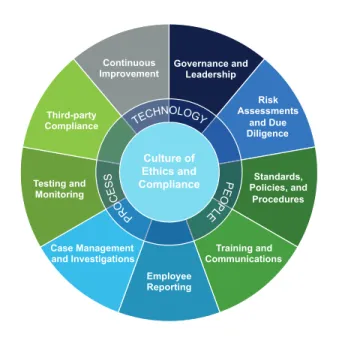
In a business environment where reputational threats lurk around every corner, a strong culture of ethics and compliance is the foundation of a robust risk management program. The lessons learned related to scandals and organizational crises that trace back to the early 2000s make one thing clear: without an ethical and compliant culture, organizations will always be at risk. In fact, more and more, culture is moving from a lofty, “squishy” concept to something that should be defined, measured, and improved (see figure 1).
Culture has always been important to how organizations operate. So why is it getting so much attention lately? One reason is that regulators have come to the realization that without a culture of integrity, organizations are likely to view their ethics and compliance programs as a set of check-the-box activities, or even worse, as a roadblock to achieving their business objectives. In fact, organizations responsible for some of the most egregious acts of malfeasance have had quite impressive, formalized ethics and compliance guidelines. The problem was either leadership or a group of influential insiders operated outside of those guidelines.
What is a culture of integrity?
Culture is one of the biggest determinants of how employees behave. Strong cultures have two common elements: there is a high level of agreement about what is valued, and a high level of intensity with regard to those values. Of course, not all cultures encourage good or ethical behaviors. When it comes to developing world-class ethics and compliance programs, the starting point is a positive culture of integrity.
Figure 1: Culture is the foundation
Third-party Compliance Training and Communications Case Management and Investigations Continuous
Improvement Governance and Leadership
Employee Reporting Risk Assessments and Due Diligence Standards, Policies, and Procedures Testing and Monitoring Culture of Ethics and Compliance
The Deloitte Ethics and Compliance Framework recognizes that an ethical and compliant culture is the core element of an organization’s ethics and compliance program. If the culture of the organization does not support principled performance, then all of the people, processes, and technologies that are put in place to mitigate ethics and compliance risks are suboptimized.
“Fundamentally, culture is about how
things get done in an organization.
The power of culture can be
extraordinary.”
A culture of integrity is generally characterized by:
• Organizational values: A set of clear values that, among other things, emphasizes the organization’s commitment to legal and regulatory compliance, integrity, and business ethics.
• Tone at the top: Executive leadership and senior managers across the organization encourage employees and business partners to behave legally and ethically, and in accordance with compliance and policy requirements. • Consistency of messaging: Operational directives
and business imperatives align with the messages from leadership related to ethics and compliance.
• Middle management carries the banner: Front-line and mid-level supervisors turn principles into practice. They often use the power of stories and symbols to promote ethical behaviors.
• Comfort speaking up: Employees across the
organization are comfortable coming forward with legal, compliance, and ethics questions and concerns without fear of retaliation. When people believe that they will be heard, their level of trust in the organization increases. This in turn leads to higher-performing teams and increased employee engagement.
• Accountability: Senior leaders hold themselves and those reporting to them accountable for complying with the law and organizational policy.
• The hire-to-retire life cycle: The organization recruits and screens employees based on character, as well as competence. The on-boarding process steeps new employees in organizational values, and mentoring also reflects those values. Employees are well-treated when they leave or retire, creating colleagues for life. • Incentives and rewards: The organization rewards and
promotes people based, in part, on their adherence to ethical values. It is not only clear that good behavior is rewarded, but that bad behavior (such as achieving results regardless of method) can have negative consequences.
• Procedural justice: Internal matters are adjudicated equitably at all levels of the organization. Employees may not always agree with decisions, but they will accept them if they believe a process has been fairly administered and they have been treated as such.
Organizations with strong positive cultures create trusting relationships with stakeholders. In our experience, those relationships become reciprocal; that is, stakeholders trust the enterprise and the brand. This creates employee, customer, and supplier loyalty. A strong culture helps to build positive relationships with regulators and it helps attract long-term investors. Ultimately, a culture of integrity is reflected in superior, long-term performance.
Facing up to the challenges
More and more organizations are choosing to create additional structure around their ethics and compliance program. This can include the appointment of a Chief Ethics Officer (or expanding the Chief Compliance Officer’s role to include specific responsibility for the ethics program), enhancing the code of conduct and related controls and procedures, and improving accountability for ethical behavior through training and performance assessments. In our experience, these actions are a great start toward the creation of a strong culture and will benefit the broader efforts around risk management and compliance.
Establishing a strong culture of integrity is not a discrete project with a beginning and an end, nor is it always smooth sailing. Despite best efforts, many organizations may run up against a number of obstacles.
“Culture helps people understand
what is expected of them and how
they need to behave. When the
organizational culture embraces
integrity, people know that integrity
needs to characterize their actions.”
George Hanley, director, Deloitte Advisory, Deloitte & Touche LLPDefining the culture
Most leaders believe they understand and can define their organization’s culture. However, often there is a gap between management’s perception of the culture and how the rest of the enterprise views it. It is a mistake for leaders to assume they always have their finger on the pulse of the organization’s culture. To get a more accurate picture, organizations can set up listening posts, such as cultural assessments using employee surveys and outside observers. It is especially helpful to offer avenues, such as focus groups, run by third parties, for employees to provide open-ended responses that truly reflect their perceptions of the enterprise.
Instilling culture and values throughout the organization
While executive leadership may work hard to establish a culture of integrity at headquarters, something often gets lost in translation as one moves farther away from the central office. This is why attention to culture needs to be active and continuous, especially in large organizations with distant outposts. Values—with ethics and integrity at their core—must be clearly and consistently communicated. Messaging needs to be explicit and repeated, so that it becomes embedded in how work gets done.
Communicating culture can be especially challenging when crossing borders. It is important that everyone understands the expected behaviors of the enterprise and the principles against which decisions will be made. Values need to be articulated in a manner that transcends nationality—for example, the concepts of honesty and trustworthiness are universally acknowledged. Nevertheless, it is important to recognize that cultural differences will influence how messages are heard and interpreted, and adjustments may need to be made in training, employee onboarding, and performance reviews.
“One test of a positive, values-
based culture is the comfort level
for employees to speak up and
report concerns without fear of
retaliation. A well-communicated
and strongly-enforced non-retaliation
policy reinforces a culture of ethics
and compliance.”
Martin Biegelman, director, Deloitte Advisory, Deloitte Financial Advisory Services LLP
Extending cultural values to mergers and acquisitions
Cultural fit is one of the biggest stumbling blocks in integrating a merged or acquired organization; in fact, it is one reason such transactions fail, despite the potential business benefits. This is why executives may want to conduct a cultural “audit” as part of the due diligence process. If the target acquisition diverges significantly from a buyer’s values, this could be a red flag. A well-developed integration plan will ensure both entities understand and reinforce desired values. From day one, management needs to let new employees know that they are welcome. At the same time, leaders need to communicate how the organization expects them to behave and how they can expect to be treated in return.
Handling the naysayers
Nothing will damage culture more than the malcontents. When people get in the way of supporting the culture, they can cause roadblocks and undermine the efforts of the enterprise. They must be identified, counseled, and offered the opportunity to conform to expected behavior, or they should be separated from the organization. Training programs focusing on ethics and compliance are one way to communicate values to individuals who may need additional reinforcement. As a next step, performance reviews should be structured to include an evaluation of not just an individual’s results, but should also reflect how results were achieved. Some organizations even make adhering to values part of the goal-planning process by setting objectives that are tied to specific cultural elements.
Battling values fatigue
While ongoing communication is essential, organizations should avoid delivering exactly the same message again and again. This is because messages can get stale, causing employees to ignore the underlying values and principles. Communicating values is much like a marketing campaign—it needs to capture people’s attention and use different content, formats, and communication channels to remain fresh. One way to achieve this level of interest is through the power of stories. Stories can not only make values concrete, they connect people to those values in ways other forms of communication cannot.
Addressing leadership flux
When organizations experience rapid turnover of CEOs and other senior leaders, maintaining a consistent identity and set of values can sometimes be a challenge. Clearly, selecting the right individuals to lead the organization is critical. If everyone in the organization lives its values, then promoting from within is one way to ensure those values remain intact. But that is not always either practical or possible. The board is usually involved in external hiring of senior leaders, especially CEOs. They need to pay particular attention to cultural fit and consider candidates who are not only competent, but who have the chemistry, character, and moral capability to inspire and win the hearts and minds of all stakeholders. Regardless of the CEO selection, it is important that culture not be dependent on a single person or group. A robust ethics and compliance program—appropriately designed, positioned, and resourced—will survive executive changes at the top of the organization.
Appealing to a cross-generational workforce
Revolving leadership is not the only source of change that can undermine culture. Employee turnover can threaten it as well. Organizations today need to appeal to the most multi-generational workforce in history.12 For both financial and other reasons, baby boomers are not retiring the minute they hit age 65. Many are choosing to remain employed, sometimes postponing promotional opportunities for younger, Generation X workers. At the same time, Millennials entering the workforce are often driven by a sense of purpose and crave a more collaborative culture. They are more likely to pursue portfolio careers in which they change jobs frequently to seek organizations that fit with their values. To create cultures with staying power, organizations must therefore foster an environment that balances a “something for everyone” appeal, with a set of consistent values that all generations will be able to embrace.
Values: the building blocks of culture
Organizations that have a strong sense of shared values are primed for success. Building a culture of integrity not only fortifies them against risk, but also leads to employee engagement and strong loyalties from all stakeholders. In the long run, a positive culture of integrity is the foundation for an effective ethics and compliance program, which, when properly embedded into an organization, can create a competitive advantage and serve as a valuable organizational asset.
Reinforcing culture and values
• Create listening posts: Conduct cultural assess-ments that get at the core of how people behave and what they think.
• Maintain a healthy mood in the middle: Much hinges on middle management’s ability to translate tone at the top into the policies and practices that drive everyday behavior.
• Keep it interesting: Find new and innovative ways to communicate cultural values and reward val-ues-based behavior. Encourage storytelling to bring values to life.
• Play fair: Reward the right behaviors and penalize the wrong ones. Don’t play favorites.
• Shout it from the rooftops: Leaders tend to undercommunicate values and expectations. In this case, more is better.
“People behave in the way they
are rewarded to behave. If leaders
are incentivized to focus on one
goal above all others, they do not
necessarily focus on how that goal is
achieved. Incentives must be aligned
to performance — but performance
with integrity.”
Compliance risk assessments
You can’t mitigate a risk if you don’t know it’s there.
As global regulations proliferate and become more complex, and as stakeholder expectations increase, organizations are exposed to a greater degree of compliance risk than ever before. Global regulatory convergence and the expansion of businesses into new or adjacent industries have also increased the need for a broader view of compliance risk.
Compliance risk is the threat posed to an organization’s financial, organizational, or reputational standing resulting from violations of laws, regulations, codes of conduct, or organizational standards of practice. To understand their risk exposure, many organizations may need to improve their risk assessment process so that it fully incorporates compliance risk exposure. Nevertheless, according to a survey conducted jointly by Deloitte13 and Compliance
Week,14 40 percent of companies do not perform an annual compliance risk assessment.
Many ethics and compliance officers will likely agree that new ethics, compliance, and reputational risks appear each day. At the same time, the recent global recession forced many corporate functions to closely examine their budgets and resources. Together, these factors have created a tension between growing regulatory obligations and the pressure to do more with less. To help resolve this situation and continue to add value to their organizations, ethics and compliance professionals need to be sure they understand the full spectrum of compliance risks lurking in each part of the organization. They then need to assess which risks have the greatest potential for legal, financial, operational, or reputational damage and allocate limited resources to mitigate those risks.
How is a compliance risk assessment different from other risk assessments?
Organizations conduct assessments to identify different types of organizational risk. For example, they may conduct enterprise risk assessments to identify the strategic, operational, financial, and compliance risks to which the organization is exposed. In most cases, the enterprise risk assessment process is focused on the identification of “bet the company” risks—those that could impact the organization’s ability to achieve its strategic objectives. Most organizations also conduct internal audit risk assessments to aid in the development of the internal audit plan. A traditional internal audit risk assessment is likely to consider financial statement risks and other operational and compliance risks.
While both of these kinds of risk assessments are typically intended to identify significant compliance-related risks, neither are designed to specifically identify legal or regulatory compliance risks (see illustrative table). Therefore, while compliance risk assessments should certainly be linked with the enterprise or internal audit risk processes, they generally require a more focused approach. That is not to say that they cannot be completed concurrently, or that they ought to be siloed efforts—most organizations may be able to combine the activities that support various risk assessments, perhaps following an initial compliance risk identification and assessment process.
The interrelationship among enterprise risk management (ERM), internal audit, and compliance risk assessments
ERM Internal audit Compliance Objective Identify, prioritize, and
assign accountability for managing strategic, operational, financial, and reputational risks
Determine and prioritize risks to aid in developing the internal audit plan, helping to provide the board and the executive team with assurances related to risk management efforts and other compliance activities
Identify, prioritize, and assign accountability for managing existing or potential threats related to legal or policy noncompliance—or ethical misconduct—that could lead to fines or penalties, reputational damage, or the inability to operate in key markets
Scope Any risk significantly impacting the organization’s ability to achieve its strategic objectives
Financial statement and internal control risks, as well as some operational and compliance risks that are likely to materially impact the performance of the enterprise or financial statements
Laws and regulations with which the organization is required to comply in all jurisdictions where it conducts business, as well as critical organizational policies—whether or not those policies are based on legal requirements
Typical owner
Chief Risk Officer/Chief Financial Officer
Chief Audit Executive Chief Compliance Officer
Understanding your top compliance risks
The compliance risk assessment can help the organization understand the full range of its risk exposure, including the likelihood that a risk event may occur, the reasons it may occur, and the potential severity of its impact. An effectively designed compliance risk assessment also helps organizations prioritize risks, map these risks to the applicable risk owners, and effectively allocate resources to risk mitigation.
Building a framework and methodology
Because the array of potential compliance risks facing an organization is typically very complex, any robust assessment should employ both a framework and methodology. The framework lays out the organization’s compliance risk landscape and organizes it into risk domains, while the methodology contemplates both objective and subjective ways to assess those risks.
“The starting point for all compliance
programs is knowing what areas have
the highest potential for violations
of law. You need to ferret out and
prevent the most serious types of risk
for your organization. That means
you need a solid understanding of the
environment you are operating in.”
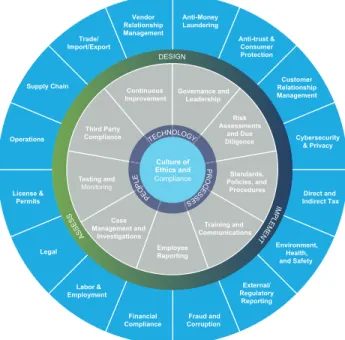
Tim Cercelle, director, Deloitte Advisory, Deloitte & Touche LLPThe framework needs to be comprehensive, dynamic, and customizable, allowing the organization to identify and assess the categories of compliance risk to which it may be exposed (see figure 2). Some compliance risks are specific to an industry or organization—for example, worker safety regulations for manufacturers or rules governing the behavior of sales representatives in the pharmaceutical industry. Other compliance risks transcend industries or geographies, such as conflicts of interest, harassment, privacy, and document retention.
An effective framework may also outline and organize the elements of an effective risk mitigation strategy that can be applied to each compliance risk domain.
Figure 2: Enterprise ethics and compliance program and risk exposure framework: An illustrative example
Fraud and Corruption Financial Compliance Direct and Indirect Tax Anti-Money Laundering Anti-trust & Consumer Protection Environment, Health, and Safety External/ Regulatory Reporting Labor & Employment Legal License & Permits Cybersecurity & Privacy Vendor Relationship Management Customer Relationship Management Supply Chain Trade/ Import/Export Operations Third Party Compliance Training and Communications Case Management and Investigations Continuous
Improvement Governance and Leadership
Employee Reporting Risk Assessments and Due Diligence Standards, Policies, and Procedures Testing and Monitoring Culture of Ethics and Compliance
Applying the methodology and conducting the risk assessment
Using an objective methodology to evaluate the likelihood and potential impact of each risk will help the organization understand its inherent risk exposure. “Inherent risk” is the risk that exists in the absence of any controls or mitigation strategies. At the outset, gaining a preliminary understanding of inherent risk helps the organization develop an early view on its strategy for risk mitigation. And when organizations identify inherent risk they should consider key risk drivers that can be organized into the following four broad categories:
• Legal impact: Regulatory or legal action brought against the organization or its employees that could result in fines, penalties, imprisonment, product seizures, or debarment.
• Financial impact: Negative impacts with regard to the organization’s bottom line, share price, potential future earnings, or loss of investor confidence.
• Business impact: Adverse events, such as embargos or plant shutdowns, that could significantly disrupt the organization’s ability to operate.
• Reputational impact: Damage to the organization’s reputation or brand—for example, bad press or social media discussion, loss of customer trust, or decreased employee morale.
It is important to provide both quantitative and qualitative measures for each category. However, as with all risk assessments, precise measurement may prove to be elusive. In the case of risks with direct financial impact, an actual monetary value may be measurable with respect to the risk. Another way to evaluate risk is using a criticality scale that indicates the extent of impact should noncompliance occur. Extent of impact can be described in qualitative terms. For example, for reputational impact, low impact might be minimal to no press coverage, while high impact might be extensive negative press in the national media (see figure 3).
Determining residual risk
While it is impossible to eliminate all of an organization’s risk exposure, the risk framework and methodology help the organization prioritize which risks it wants to more actively manage. Developing a framework and methodology helps organizations determine the extent to which the organization’s existing risk-mitigation activities (for example, testing and monitoring or employee training programs) are able to reduce risk. Effective risk mitigation activities may reduce the likelihood of the risk event occurring, as well as the potential severity of impact to the organization.
When an organization evaluates inherent risk in light of its existing control environment and activities, the degree of
“Some basic rules apply to risk
assessments: always partner
with business leaders, keep the
methodology simple, but robust, and
make your documentation intuitive
and user-friendly.”
Kevin Lane, principal, Deloitte Advisory, Deloitte & Touche LLP Figure 3: An illustrative criticality scale (© Deloitte Development LLC)
Rating Reputational fallout/ Brand damage
Civil or criminal fines or penalties Loss of sales/ customer confidence
Sustained U.S. national (and international) negative media coverage (front page of business section)
Major federal or state action/ Fraud or bribery investigation
Significant loss or harm of customer relationship(s), including customer shut downs
Negative U.S. national or international media coverage (not front page)
Federal or state investigations Failure of ability to meet customer needs, e.g., significant quality issues, customer delays, or inability to deliver products to customer
Negative media coverage in a specific U.S. region or a foreign country
Routine costly litigation Ineffective products delivered to customers or delay in customer delivery Localized negative impact on
reputation (such as a single large customer) but recoverable
Smaller actions, penalties/fines Less than optimal acceptance by customers
No press exposure No regulatory or legal action Limited, if any, impact on
customers
Lo
w
What makes a compliance risk assessment world class?
While every compliance risk assessment is different, the most effective ones have a number of things in common. To build a world-class assessment, consider the following leading practices:
• Gather input from a cross-functional team: A compliance risk assessment requires the participation of deep subject matter specialists from the compliance department and across the enterprise. It is the people living and breathing the business—those in specific functions, business units, and geographies—who truly understand the risks to which the organization is exposed, and will help ensure all key risks are identified and assessed. In addition, if the methodology is designed in a vacuum without consulting the risk owners, the output of the process will lack credibility when it comes to implementing mitigation programs.
• Build on what has already been done: Rather than starting from scratch, look for ways to leverage existing material—such as enterprise risk assessments, internal audit reports, and quality reviews—and integrate compliance risk content where appropriate. Be sure to communicate the differences between the compliance risk assessments and other assessments to groups you seek to engage. Clearly, the output of each risk assessment process should inform and connect with each of the others.
• Establish clear risk ownership of specific risks and drive toward better transparency: A comprehensive compliance risk assessment will help identify those individuals responsible for managing each type of risk, and make it easier for executives to get a handle on risk mitigation activities, remediation efforts, and emerging risk exposures.
• Make the assessment actionable: The assessment both prioritizes risks and indicates how they should be mitigated or remediated. Remediation actions should be universally understood and viable across borders. Be sure the output of the risk assessment can be used in operational planning to allocate resources and that it can also serve as the starting point for testing and monitoring programs.
• Solicit external input when appropriate: By definition, a risk assessment relies on knowledge of emerging risks and regulatory behavior, which are not always well known within the organization. Tapping outside expertise can inform the assessment and ensure that it incorporates a detailed understanding of emerging compliance issues.
• Treat the assessment as a living, breathing document: Once you allocate resources to mitigate or remediate compliance risks, the potential severity of those risks will change. The same goes for events in the business environment. All of this should drive changes to the assessment itself.
• Use plain language that speaks to a general business audience: The assessment needs to be clear, easy to understand, and actionable. Avoid absolutes and complex legal analysis.
• Periodically repeat the risk assessment: Effective compliance risk assessments strive to ensure a consistent approach that continues to be implemented over time, e.g., every one or two years. At the same time, risk intelligence requires ongoing analysis and environment scanning to identify emerging risks or early warning signs.
• Leverage data: By incorporating and analyzing key data (e.g., hotline statistics, transactional records, audit findings, compliance exception reports, etc.), organizations can gain a deeper understanding of where existing or emerging risks may reside within the business. Many organizations are considering investments in technology, such as analytical and brand monitoring tools, to help leverage and analyze data to strengthen their risk-sensing capabilities. Additionally, organizations are considering investments in data, including traditional media/negative mention monitoring, social media data, surveying, and other data sources.
Some key questions about your exposure There are a number of critical questions organizations should ask related to compliance risks and the program(s) in place to mitigate those risks: • What kinds of compliance failures would create
significant brand risk or reputational damage? Could the failures arise internally, in the supply chain, or with regard to third parties operating on the organization’s behalf? What is the likely impact of that damage on the organization’s market value, sales, profit, customer loyalty, or ability to operate? • What kinds of compliance missteps could cause
the organization to lose the ability to sell or deliver products/services for a period of time?
• How should the compliance program design, technology, processes, and resource requirements change in light of growth plans, acquisitions, or product/category/service expansions?
• Is the organization doing enough to inform customers, investors, third parties, and other stakeholders about its vision and values? Is it making the most of ethics, compliance, and risk management investments as potential competitive differentiators?
• What are the total compliance costs—beyond salaries and benefits at the centralized level—and how are costs aligned with the most significant compliance risks that could impact the brand or result in significant fines, penalties, and/or litigation? • How well-positioned is the compliance function?
Does it have a seat “at the table” in assessing and influencing strategic decisions?
• What are the personal and professional exposures of executive management and the board of directors with respect to compliance?
Assess for success
The constantly changing regulatory environment increases the vulnerability of most organizations to compliance risk. This is particularly true for those organizations that operate on a global scale. The complexity of the risk landscape and the penalties for non-compliance make it essential for organizations to conduct thorough assessments of their compliance risk exposure. A good ethics and compliance risk assessment includes both a comprehensive framework and a methodology for evaluating and prioritizing risk. With this information in hand, organizations will be able to develop effective mitigation strategies and reduce the likelihood of a major noncompliance event or ethics failure, setting themselves apart in the marketplace from their competitors.
The Chief Compliance Officer
It takes an extraordinary leader to uphold the integrity of an organization.
Enterprise ethics and compliance executives represent a young, but rapidly maturing profession—one that began to emerge in the late 1980s when several government initiatives and high-level commissions began recommending that specific senior-level personnel should have responsibility for overseeing an organization’s ethics and compliance program. These recommendations were reinforced by a host of new regulations and leading-practice guidance issued in the early 2000s.
In practice, the job responsibilities and the titles for these professionals vary, from chief compliance officer (with or without ethics responsibilities) to chief ethics officer (with or without compliance responsibilities) to many models in between. Despite these variables in organizational design, individuals leading efforts to protect the company from ethics and compliance risks have a unique role and special importance within an organization. The principles discussed here apply to those leaders regardless of their title.
Chief compliance officers now operate in a dynamic legal, regulatory, social, and economic environment that is often characterized by complex and sometimes conflicting rules and regulations. Regulatory expectations have risen not just in the United States, but globally, placing tremendous pressure on organizations, particularly those with international operations. Designing programs that help ensure compliance with all of these regulations and guidelines falls squarely on the shoulders of CCOs.
Yet this is only a part of their responsibilities. CCOs must also respond to a host of rapidly emerging new risks. For example, enforcement authorities have reached an unprecedented level of cross-border cooperation in an effort to control bribery and corruption. Money laundering is no longer solely an issue for the banking sector, but for organizations across all industries. Cyber risk and digital crime represent enormous threats to businesses everywhere, and organizations need to step up their efforts to ensure compliance with internal policies designed to address those threats. In addition, a more aggressive focus on transparency has brought many previously hidden conflicts of interest to light.
As a result of these developments, the CCO profession has begun to shift in ways that are subtle yet profound— an indication that organizations are acknowledging the significant role that CCOs play. In short, these key business leaders are responsible not only for maintaining compliance, but also for safeguarding what is arguably an organization’s most valuable asset: its reputation.
A profession in flux: Where the journey is heading
While for some organizations the CCO role remains frozen in time, for others, it has transitioned into one that is both strategic and value-adding. Companies with world-class ethics and compliance programs make sure they have a world-class CCO leading the charge. These individuals have helped to bring the profession to a new level. It’s a level that many aspire to—and it’s also an indication of where the profession is headed. Following are examples of how the role has evolved in some organizations over the last decade.
“Risks are rising, we are still in
an environment of austerity—a
dangerous combination. That’s why
you need an astute CCO who is able
to look ahead and think strategically
about tomorrow’s risks.”
From compliance gatekeeper to risk manager As the risk landscape continues to shift, and as ethics and compliance functions become more integrated into the fabric of organizations, CCOs are assuming a much more strategic role when it comes to helping organizations manage compliance and reputational risk. In the past, risk management was the purview of other areas of the organization, while the CCO focused primarily on routine compliance risk management activities. However, in more recent years, many organizations have begun to recognize that the risks CCOs mitigate—in particular, reputational risk—are critical. As a result, assessing and raising
awareness of risks that could call the organization’s integrity into question has become a key part of the CCO’s job. Today’s CCOs not only need an understanding of the full range of reputational risks, they need an instinct for what can go wrong and how their organizations can prepare.
From legal program manager to senior-level advisor Because a visible number of the CCO roles originated in response to enforcement activities, and because many of the more modern ethics and compliance functions evolved from regulatory compliance departments, many of the first CCOs came from legal backgrounds. These compliance officers either sat within, or reported to, the Office of the General Counsel (GC). This has clearly begun to change. In a recent survey of CCOs conducted jointly by Deloitte
and Compliance Week15, only 21 percent of respondents
said they reported to the GC, while 36 percent said they reported directly to the CEO. Moreover, an additional 21 percent reported to the board of directors. From a governance perspective, especially in industries like financial services and health care, there is regulatory pressure for CCOs to move out from under the legal department: for money center banks, CCOs should report to the chief risk officer; in health care, The Department of Health and Human Services prefers to see an independent CCO, and one that is not subordinate in any way to the GC. At
This compliance and legal restructuring is also reflected in the changing background of many who enter the profession today. Increasingly, these CCOs have broad-based experiences, including stints in operations where they have had profit and loss responsibilities. More and more, organizations seek dynamic CCOs who can think strategically, communicate and persuade effectively, and work cross-functionally. The most sought-after candidates for the CCO role have skills beyond the ability to design the necessary compliance architecture, assess risks from across the business, develop training and communication strategies, evaluate data, and conduct sometimes-critical investigations. These world-class leaders also have an aptitude for auditing and monitoring, the ability to influence organizational culture and behavior, and a solid grounding in public relations tactics, since a key part of their role is to clearly communicate the vision, mission, and strategy of the ethics and compliance program.
“Leading CCOs are starting to crack
the code on effective risk-sensing
solutions that use controls and
technology they already know and
data they already have, but putting
them together in a way that’s
brand-new.”
To be effective, CCOs need to be involved not just in day-to-day issues, but also in the strategic decisions facing the enterprise. As the importance and prominence of the role increases, some CCOs are moving to higher levels within their organizations, with a seat on the executive committee and unfiltered access to the board. The changing
reporting structure for CCOs can send a strong signal to all stakeholders, including personnel and regulators, that the organization takes ethics and compliance seriously.
From checking boxes to asking questions
Fundamental to the CCO’s role is designing programs that help to ensure compliance with laws, regulations, and enterprise policies. This requires spending considerable time on the nuts and bolts and making sure the right resources, systems, and controls are in place. But in the eyes of many, this is “Compliance 101.” In today’s global economy, where organizations are under pressure to achieve transparency across their entire supply chain, simply operating in compliance with the law may not be enough. Enforcement authorities require measures that go beyond what is legally required, including embedding a culture of integrity to achieve appropriate prevention and detection of improper behavior. CCOs need to be able to get out into the businesses and ask the hard questions in order to determine where the organization might be vulnerable or exposed.
From an expense to an asset
In organizations with more mature ethics and compliance programs, the CCO is viewed as a business enabler rather than a source of overhead. These organizations recognize that the CCO’s efforts ultimately protect the organization’s reputation—perhaps its most important asset. The value of a reputation can be quantified—it is quite simply the market capitalization of the enterprise. All it takes is a rumor or hint of malfeasance or a social media post gone viral and investor reaction can be swift and punishing. For companies that have suffered unfavorable news headlines, the value of maintaining integrity is more than apparent.
From living apart to building bridges
When the CCO role was in a more nascent state, many organizations kept their CCOs somewhat apart from the rest of the organization—perhaps in an effort to maintain structural and functional independence. As a result, many CCOs, positioned in the relative isolation of headquarters, would issue mandates, directives, and policies without an appreciation or understanding of the day-to-day business activities and pressures in the field. Eventually organizations began to realize the divisive and counterproductive effect of this arrangement, since it inhibited the CCO’s ability to understand the organization’s business processes, the risks to which their organizations were exposed, and the opportunities for greater compliance synergies and cost savings.
Over time, this began to change as CCOs emerged from behind their desks and started embedding with the businesses. Getting out and learning the business is especially important to gaining the trust of employees on the operational side, particularly when they are being asked to make changes to how they work. Today’s CCO is a leader who can build partnerships, who can enhance trust within the organization and with all its stakeholders, and who can work to build brand and reputational value.
“Today’s CCO is a leader who can
help build partnerships, enhance trust
within the organization and with all its
stakeholders, and work to build brand
and reputational value.”
From no you can’t, to yes we can
A common complaint and misperception about CCOs is that they are “police officers” or gatekeepers, whose primary duty is to point a finger at the activities that are disallowed by law or policy. In reality, CCOs in many organizations are viewed more and more as business partners, collaborators, strategists, and internal consultants. They add value by sitting down with the businesses and coming up with solutions for how to achieve objectives within the guidelines of what is permissible. Today’s CCOs are more about starting conversations than shutting them down. When they can work hand-in-hand with the business to come up with a solution that works for everyone, this can become a competitive differentiator for the entire organization.
From down in the weeds to up in the trees
What began as a primarily administrative role—involving inventorying and understanding the detailed regulations and laws that applied to an organization—has changed. Today’s CCOs are taking things to the next level—digesting and assessing risk information, determining what it means, and translating those insights into a consistent ethics and compliance program and framework for managing risks. In addition, the unprecedented velocity of change in the external environment means that CCOs must always be on the lookout for any new risks (for example, technological risks, customer information risks, emerging market risks) that are just over the horizon and may require enhanced policies or heightened enforcement. To prepare for these new and emerging risks, organizations need visionary CCOs who can view the entire risk landscape and “see around corners.”
Strategies for getting to world-class Not every company has a world-class ethics and compliance program. But CCOs—whether they are new to the role or a more seasoned professional— who are intent on moving their organizations in a world-class direction, can start with a few leading practices. As we conducted research to build out the Deloitte Chief Ethics and Compliance Officer Transition Lab, a day-long tailored experience where the CCO creates a personal roadmap for success, the following leading practices emerged:
• Cultivate the right stakeholder relationships • Build your organization’s and team’s bench strength • Define your legacy
• Separate out the urgent from the important • Overcommunicate integrity and values so it’s clear
what matters most
• Become a trusted advisor to the businesses • Develop a network of internal and external subject
matter experts to support your growth and development
• Connect with your peers: sharing is common for CCOs across competitors
and industries
• Stand up for what you believe is right
• Remember to stop, get out of the weeds, look up to the trees, and be strategic
• Manage your time and focus on priorities • Be a lifelong learner: the best leaders are the best
Key considerations about the CCO role
Organizations intent on finding a world-class CCO and creating an environment where they can thrive should consider the following questions:
• Does the CCO have access to the board? • Does the CCO occupy a sufficiently senior position
(e.g., executive vice president, senior vice president, vice president)?
• How often does the CCO present to the board or a committee of the board?
• How is the CCO’s performance measured?
• Does the CCO have sufficient oversight authority for compliance resources in the business units? • Can the CCO drive or influence the organization’s
culture?
• Does the CCO have operational experience? • Does the CCO have a good understanding of the
business?
• Does the CCO have the knowledge and passion for the profession?
• Does the CCO communicate with people inside and outside the organization to see how others are experiencing the role?
• Is the CCO seen as a role model for integrity inside the organization?
• Does the CCO have an aptitude for understanding and managing current and emerging risks? • Is the CCO viewed as an authentic leader? From cleaning up to keeping clean
Over the years, a number of organizations have experienced the pain of an ethics or compliance crisis. In response, they have ramped up their compliance efforts for a specific period of time until the storm passed, later reducing the CCO’s role to more of an administrative one. Clearly, this kind of short-term response is fraught with peril, and can send a strong negative message to employees and regulators about what matters most and how an organization conducts itself when it believes no one is watching. Organizations that take compliance seriously task their CCOs with developing processes and a mindset that weave integrity into the fabric of the organization.
A CCO for all seasons
As the volume and potential impact of compliance risks raining down on organizations threatens to overwhelm them, the CCO has emerged as a beacon in the storm. No longer seen as a functionary within the administrative branch of the legal department, a back-office indexer of regulatory requirements, or an obstructionist gatekeeper, today’s CCO plays a strategic role within the organization. The CCO helps to shape organizational strategy, setting the “tone at the top” while gauging the “mood in the middle” and the “buzz at the base.” A visionary and activist, the CCO is instrumental to making compliance a dynamic, rather than a reactive, endeavor and establishing an ethics and compliance program that safeguards both the organization and its reputation.
Testing and monitoring
Testing and monitoring takes the pulse of the compliance program, ensuring its ongoing health.
Testing and monitoring is one of the most critical elements of an effective ethics and compliance program, and is a required program component in certain industries. Why? Because without testing, it is difficult or impossible to understand what is working and what needs enhancement. Similarly, robust monitoring programs serve as an early warning system that allows compliance professionals to identify—sooner rather than later— potential compliance issues.
As important as testing and monitoring are, they are often misunderstood and undervalued. Implementing and sustaining efficient and effective testing and monitoring programs continues to challenge organizations for many reasons, including the lack of skilled resources, the difficulty of design and of driving consistency across the enterprise, and the reliance on others in the organization for both the data and, in many cases, the execution of the programs.
The emphasis on other compliance program elements— such as risk assessments, training, or policies and procedures—has sometimes led to the undervaluing and under-resourcing of the testing and monitoring functions. As compliance programs mature, these elements serve as an invaluable source of information about deviations in expected behavior that might open the window to potential material or systemic compliance risks. What’s more, companies often say that the implementation of new laws and regulations presents risk, yet this is an area that is often not tested, or not tested sufficiently, to determine whether the organization is complying with the requirements.
The lack of effective testing and monitoring can have a ripple effect on other areas of the compliance program. In a number of recent studies and surveys16, compliance professionals consistently indicated frustration with the quality of metrics used to measure the effectiveness of their compliance programs. The outcome of ongoing testing
metrics are already well established or even mandated, and for many companies these activities create new, more insightful metrics related to program performance than those compliance professionals have relied upon in the past.
Similarly, robust testing and monitoring—and the data associated with it—provides relevant and reliable information to stakeholders of the ethics and compliance program:
• Regulators view testing and monitoring activities as a demonstration of the company’s commitment to ethics and compliance. Moreover, for some industries such as financial services, testing and monitoring programs are a regulatory requirement, and companies may face fines or penalties for failing to implement them.
• Boards require substantiated information on the effectiveness of the ethics and compliance programs in order to execute fiduciary duties.
• Internal and external counsel point to these activities as indicators of the company’s diligence around ethics and compliance as part of their legal strategies. • Employees, customers, and investors desire a deeper
understanding of ethics and compliance programs and may even use this information to make employment, purchase, or investment decisions.
“An effective testing and monitoring
approach can help you ‘kick the tires’
on your efforts to comply with policy
and procedural requirements.”
Testing and monitoring: defined and contrasted
Many ethics and compliance professionals use the terms “testing” and “monitoring” interchangeably. While testing and monitoring may be two sides of the same coin, and one cannot be fully optimized without the other, they are not interchangeable. Many believe both their design and desired outcomes are quite different. Commonly recognized definitions of each are as follows:
• Testing program: A dynamic, risk-based, independent compliance oversight process designed to periodically select and review a sample of business products, services, communications, and other areas to gauge and report on the operating effectiveness of compliance controls and/or adherence to stated policies and procedures.
• Monitoring program: The ongoing surveillance, review, and analysis of key business performance and risk indicators that allows the organization to identify potential compliance violations. While many seek to implement “automated” monitoring programs, monitoring activities can be either automated or manual.
These definitions make the goals and objectives of testing and monitoring clearer; however, the specific steps for reaching these goals and objectives are not always easily defined. Even if regulatory expectations related to these critical elements are clear—as they may be in certain areas of the banking and pharmaceutical industries—detailed information about the specific testing and monitoring activities that will meet those expectations may not be. In other sectors, regulatory guidance related to the specific expectations of testing and monitoring activities may not be available at all. Even in cases where there is clarity around regulatory expectations, the design, implementation, and sustainment of an effective testing and monitoring program is one of the most challenging tasks facing those responsible for the risk and compliance functions.
In the next section, we will explore the distinguishing characteristics of “great” testing and monitoring programs.
Great testing programs
Great testing programs have a number of common attributes:
Compliance is tested at the level of accountability. In a great testing program, compliance testing is executed at each level of the organization. In this model, weak controls are quickly identified in the business where they are most likely to be quickly remediated.
• The first line of defense: At this level, the business unit leadership—which is primarily accountable for the development of controls and activities to prevent, detect, and respond to compliance failures—invests the time and resources to determine that such controls and activities are adequately designed and operating effectively. • The second line of defense: Within the second-