ISSN 2354-004X | 49 THE IMPLEMENTATION OF VISUAL PRINTED MEDIA
IN ENGLISH LANGUAGE TEACHING
Regina Rahmi1
ABSTRACT
This study which was conducted at SD Islam Laboratorium Neuhen, Mesjid Raya is intended to figure out how the implementation of visual printed media in English language teaching to the six levels. The study was conducted case study r esearch desi gn. T he populat ion was 44 and t he sample was taken by usi ng nonprobability sample that is convenience sampling was 22 students and 1 English teacher. The research problems are: (1) what kinds of visual printed media are used by the teacher in teaching English? (2) how does the teacher implement visual printed media in teaching English? (3) what are the obstacles faced by the teacher in teaching English by using visual printed media The data were collected by using instruments, namely: observation checklist sheets, interview guidelines, and documentations. Based on the data analysis, it was found that (1) the English teacher at SD Islam Laboratorium used book, magazine and newspaper as printed media. (2) the teacher did three phases in using visual printed media. They are: (a) preparation; learning curriculum and syllabus, the teacher matches the basic competences with appropriate visual printed media, preparing the visual printed media, bring the media to the class, recognizing the types of the students (b) core DFWLYLW\ VWXGHQWV¶ TXHVWLRQ DERXW PHdia, student-centered in learning process while using media, good interaction in using visual printed media, cognitive-affective-psychomotor of the student in using visual printed media (c) closing; summarization of using visual printed media, motivation/moral value of using visual printed media, giving homework. In addition the teacher did positive performance in using visual printed media (3) some difficulties faced by the teacher in the implementation of visual printed media in English language teaching, they are: designing lesson plan and preparing appropriate teaching materials as visual printed media. So, it is suggested that English teacher should use the visual printed media, because they are the effective tools in English teaching-learning process.
Key words: English Language Teaching, Visual Printed Media
1 Regina Rahmi, Dosen Prodi Pendidikan Bahasa Inggris ± STKIP Bina Bangsa Getsempena, Email: [email protected]
ISSN 2354-004X | 50 INTRODUCTION
Teaching Basic English to the young learners in primary level has important role. The English teacher has to understand much more about young learners in choosing methods, techniques and media based on the VWXGHQWV¶ DELOLW\ QHHG DQG LQWHUHVW The objectives of English language teaching to the young learners are to introduce English as second language to them, build the basic knowledge of English and give them motivation in English learning process by making rewards for their need and interest of this language in the future. For example the teaching English by using media to the six levels students at SD Islam Laboratorium, Neuheun, Mesjid Raya, Aceh Besar. The teacher asked the students to bring their small favorite things from home, than the teacher discuss it in learning vocabularies by asking the English meaning to the students.
Visual printed media are very important to help students in understanding English as the foreign language. There are many kinds of visual printed media which can be used by the teacher in English teaching learning process, but the teacher should be selective on choosing the visual printed media, especially in teaching English to the primary school students. As recommended by Richard and Rodgers (1986: 87) that students are supposed to study second language enjoyably. It means the role of the teacher is very LPSRUWDQW LQ PRWLYDWLQJ WKH VWXGHQWV¶ LQWHUHVW in English teaching-learning process and also
the relationship connection between teacher and students.
Clearly, there are many kinds of visual printed media that can be used by the teacher in English teaching-learning process to the young learners such as book, magazine, and newspaper. In this study, the researcher hopes to English teacher in order to teach English by using various instructional materials as media, therefore the teacher can make the students interest to study English language everywhere, in classroom or outside the classroom, over all SD Islam Laboratorium has applied English from first levels till six levels as local content subject.
Research Problems
The problems of the study that the researcher considers important to be searched as the following:
1. What kinds of visual printed media are used by the teacher in teaching English at Six Level of SD Islam Laboratorium Neuheun?
2. How does the teacher implement visual printed media in teaching English at Six Level of SD Islam Laboratorium Neuheun?
3. What are the obstacles faced by the teacher in teaching English by using visual printed media at Six Level of SD Islam Laboratorium Neuheun?
Research Objective
There are four objectives of study that the writer wants to know:
ISSN 2354-004X | 51 1. The kind of visual printed media in
teaching English at Six Level of SD Islam Laboratorium Neuheun.
2. The English teacher implementing teaching-learning process in using visual printed media at Six Level of SD Islam Laboratorium Neuheun.
3. The obstacles faced by the teacher in teaching English by using visual printed media at Six Level of SD Islam Laboratorium Neuheun.
THEORITICAL REVIEW OF LITERATURE
1. Definition of Visual Printed Media Media are very important to help students in understanding English as the foreign language. There are many kinds of media which can be used by the teacher in English teaching learning process, but the teacher should be selective on choosing the media, especially in teaching English to the primary school students.
As recommended by Richard and Rodgers (1986: 87) that students are supposed to study second language enjoyably. It means the role of the teacher is very important in PRWLYDWLQJ WKH VWXGHQWV¶ LQWHUHVW LQ (QJOLVK teaching-learning process and also the relationship connection between teacher and students.
Harmer (2007: 114-115) supported that, The relationship connection can be done in several ways. For example, by showing interest in each student as a person, giving IHHGEDFN RQ WKH VWXGHQWV¶ SURJUHVV RSHQO\ VROLFLWLQJ VWXGHQWV¶ LGHDV DQG IHHOLQJV valuing
and respecting what students think and say, laughing with, not at them, working with, not against them, developing a genuine sense of vicarious joy when they learn something or otherwise succeed, and other positive things to do.
In teaching-learning process, media can be use by the teacher as a good way to be closer to the students. It is because the young learners cannot learn through abstract things; they are interest in real object that can be seen and touch.
Richards and Rodgers (1986: 12) confirm that material is the product that can promote student interaction, student-teacher interaction, and teacher-student interaction also save teaching time to present large information. In addition they said that materials will involve different kind of texts and different kinds of media, which the learners can use to develop their competence through a variety of different activities and tasks. So media not only use as teaching materials, but also as an efficient way to motivate the students in second language learning. And by using appropriate media, English teacher can better interact with their student and help them achieve their language learning goals.
According to the name, visual printed media are medium which prepared on paper. It also the oldest media in education, this category of media are useful for informational or motivational purposes. They are used to convey verbal information through print. They are going to be formed the most widely used media in education and they had been included
ISSN 2354-004X | 52 textbooks, periodicals encyclopedia,
newspapers magazines, file records minutes, and so on. They provide good source for trainee teachers to structure their lesson plans and notes.
As Onasanya (2004: 128) in her Journal ³6HOHFWLRQ DQG 8WLOL]DWLRQ RI
Instructional Media for Effective Practice
7HDFKLQJ´ mentioned that as the oldest media, there are legions of textbooks on all areas of subject discipline. Sometime, they carry the main responsibility of organizing instruction and they can be used as basic instructional guide. Further, she explained that newspapers, magazines, documents, file record and so on, are also very relevant for the media which give much information. Information contained in them can be current. Print medium can be used to supplement other media with maximum effect. Print can also incorporate several other media, like pictures and graphic materials, thus serving as multi-media.
As supported by Ruis, et al (2009: 12) that visual printed media is the use of heading and underlining serves to accentuate selected element in printed text with the expectation of improving learner acquisition and retention. The generous use of open space in printed instructional materials is a necessity for aiding comprehension.
2. 7HDFKHU¶V 5ROHV LQ 7HDFKLQJ (QJOLVK by
Using Media to Children
In teaching English to children by using media, teacher conduct as a model, facilitator, controller, assessor, organizer,
participant and prompter. As clearly says by Harmer (2007: 260-261) that well prepared teachers need to know about the job they are going to do before they can start successful plans. In his descriptions, he mentioned there are six major areas of necessary knowledge, namely:
1. The language for the level
The teacher must know the language they are going to teach. Its can say that the teachers can use language themselves and elaborate it into language rules.
2. The skill for the level
The teachers have to know the skill or competence they are going to ask to the student. Especially, they have to identify the characteristic or kinds of students. For example, recognize the audio students, visual students or audio-visual student. Its mean that teachers can be applied the English teaching according to levels and types of the students. 3. The learning aids available for the level
The appropriate media will much help the teachers in improving the skill of the students. The teachers should to consider in choosing the media according to the curriculum, syllabus, lesson plan and competences (methods and techniques)
4. Stages and techniques in teaching
As the facilitator, the teachers need to know and recognize different teaching techniques and stages according to the textbook or the media they are using.
5. Systematical activities
Well preparation teachers in teaching English can be seen in the activities that they allow systematically. The students can follow
ISSN 2354-004X | 53 the steps of teaching-learning process in
enjoyable, because unsystematically activities that done by the teachers can make the students confuse and boring.
6. Classroom management skill
Like activities, classroom management also takes a big part of the successful of the English teaching by using media. As the facilitator, the teachers have to explore their skill in managing the enjoyable classroom. As learning center, classroom helps the students to express themselves or to find their needs. Besides that, the use of classroom language helps students appreciate English as the real communication to develop their confidence. Louwerse (2001: 1) in her journal about Encouraging Classroom Language Use stated that for many students, classroom is the focal point of their English exposure. It is the best of where, when, why and how they speak English.
Besides some points above, the teachHU¶V UROHV LV DOVR KDYH WR EH GHYHORSHG E\ creating good interaction between teacher and student; there are three main points that can be offered by the teacher in stimulating the positive climate:
1. Rapport establishment
Relationship and connection between teacher and students have to build by the WHDFKHU WR PDNH WKH VWXGHQWV¶ WUXVW DQG UHVSHFW to the teacher in English teaching-learning process. Its mean, the teacher as an organizer have to smart in creating important concept of positive energy wherever the teaching-learning process take place.
2. 3UDLVH DQG FULWLFLVP¶V EDODQFH
³:HOO GRQH´ ³JRRG MRE´ ³WKDW V IDQWDVWLF´ that are some examples of teacher praise to involve positive words as affective UHVSRQVH WR VWXGHQWV EHKDYLRUV RU VWXGHQWV¶ performance. It also can be done by several actions, such as by showing genuine pleasure RI ZKDW WKH VWXGHQWV¶ WKLQNV DQG VD\V JLYLQJ feedback to guide students in ways to improve their performance, by providing information of their ability to achieve success in the future. As defined by Brophy (1981: 5), praise as ³FRPPHQGLQJ WKH ZRUWK RI´ RU ³WR H[SUHVV DSSURYDO RU DGPLUDWLRQ´ +H DOVR VDLG WKDW praise should be delivered in response to a specific behavior.
3. Energy generation
As already talk above, the teacher have much things to do in English teaching-learning process to build up the positive energy in increasing the ability of the students. 6ROLG SUHSDUDWLRQ WHDFKHU¶V VHOI FRQILGHQFH positive believe to the student, and a sense of joy in doing the activities in the classroom are some positive criteria that can do by the teacher in strengthen herself and her students. So that, the teacher needs some support for herself, such as the qualification and school facilities.
Afterward, by looking at the physiological aspect of the child, Louwerse (2000: 4) says that it is essential for teacher to use please and thank you when asking students to do something and be positive when the students reject to do the command. Moreover, it is better focusing on positive behavior rather than telling children what not to do. It can be summarized that the teacher should also be
ISSN 2354-004X | 54 flexible. If something is not going to be
worked then change the activity. It is very important also for the teacher to involve shy children. Teacher should help them to express themselves.
3. Curriculum, Syllabus and Lessons Plan in Using Media
Curriculum, syllabus, and lesson plan are important components in language teaching. Especially English, the teacher have to plan what and how to teach, what methods, strategies and media that can be used, how to combine the connection between the steps in teaching according curriculum, syllabus, lesson plan with the methods, strategies and media that will be used in teaching learning process. And also how to achieve the goal of the English teaching programs.
a. Curriculum
Curriculum in educational program defined as a plan for teaching-learning process. Richard, et al (1987: 70) mentioned the meaning of curriculum as educational purpose of program which contained of the teaching procedure and learning experiences that will be necessary to achieve the purpose in assessing the ending of educational program.
In addition, they stated that curriculum is the study and the development of the goals,
content, implementation, and evaluation of an educational system. According to the research needs, the researcher can say that curriculum is the one of basic component in arranging the WHDFKHU¶V ZRUN VKHHWV WR LPSO\ WKH PHGLD LQ English teaching-learning process to the children.
b. Syllabus
$V WKH WHDFKHU¶V JXLGDQFH V\OODEXV which concluded in the curriculum component must be concerned in having good quality of VFKRRO¶V JUDGXDWHV 7KH DLPV RI GHVLJQLQJ syllabus are to control what materials should be taught at the first meeting, the second meeting, and so forth; to guide the teacher on how to implement the English language teaFKLQJ DFFRUGLQJ WR WKH GLIIHUHQW DJH¶V students; and to detect how far the objective of English teaching-learning process achieve by the students.
Nunan (1991: 2) says that syllabus is concerned with what, why, and when; methodology is concerned with how. Whereas, Richard, et. al. (1987: 66-67) defined as the procedure for deciding what will be taught in a language. In summarize, the researcher can be said that all of the English teachers in every level have to design an English syllabus which includes all of the components above as the guide or route map before staring teaching-learning process wherever it take place (in
ISSN 2354-004X | 55 classroom or out classroom). It is especially in
English teaching-learning process by using media.
4. Kind of visual printed media a. Book or Textbook
Textbook can be defined as a collection of writing which is made by the author systematically containing materials of certain subject by following the curriculum implemented at that time (Depdiknas, 2004:6). As stated by Brown (2001:141) that textbook FDQ DOVR EH GHILQHG DV ³RQH W\SH RI WH[W D book for use in an educational curriculum. So that, textbook is a book giving instruction in a subject that considered the acceptable way of doing something.. In English language teaching to children, the common media that always used by the teacher is text book. The WH[WERRN ³*URZ ZLWK (QJOLVK $Q (QJOLVK &RXUVH IRU (OHPHQWDU\ %RRN ´ 0XNDUWR HW al, 2003) is being used by the teacher for six level students at SD Islam laboratorium Neuheuen. In general teaching-learning process, the teacher follows the steps of WH[WERRN¶V LQVWUXFWLRQ IRU H[DPSOH WKH instruction to listen, to speak, to read, or to write.
b. Magazine and Newspaper Magazine is a type of a large thin book with a paper cover, containing stories, picture, etc and issued usually every week or every month, while newspaper is a printed publication appearing daily or weekly and containing news, advertisement and articles on various subject (Hornby, 1995: 706 & 782).
Magazine or newspaper is an informal printed report, which is distributed to members of a particular group in order to share information. Magazine or newspaper can be useful to promote good public relations, offering evidence that the school, college or other organization is working hard to achieve its targets. To keep a record of newspaper you have made, punch holes in them and store them in a special file.
RESEARCH METHODOLOGY
Based on the objective of this study, the research conducted the study in the form of investigation intended to obtain information on the use of visual printed media in English language teaching at SD Islam Laboratorium Neuheun. This study tries to collect the information on the use of visual printed media in English language teaching at SD Islam Laboratorium Neuhen. More specially, the data gathered on what visual printed media used by the teacher in teaching English and the obstacles faced by the teacher in teaching English by using media at SD Islam Laboratorium Neuhen by using observation check list and interview guidelines. The target population of this study is all of six level¶V students of SD Islam Laboratorium Neuheun, Mesjid Raya. By using convenience sampling as a procedure to get sampling unit according to the research need, the sample is 23, which were 22 students and 1 English teacher.
ISSN 2354-004X | 56
RESEARCH FINDING AND
DISCUSSIONS
1. The Kind of visual printed media in Teaching English at Six Level of SD Islam Laboratorium Neuhen
Table 1. Kind of visual printed media in English Language Teaching Visual Printed
Medium Yes No
Basic Competency
Vocabulary Reading Writing Listening Speaking
Book ¥ ¥ ¥ ¥ ¥ ¥
Magazine ¥ ¥ ¥ ¥ ¥
Newspaper ¥ ¥ ¥ ¥ ¥
Mail ¥
In observation of printed media, the teacher used course book for all competences, magazine and newspaper used in reading, writing, speaking, and vocabulary. In informal short interview of the using printed media, the researcher asked to the teacher about her reason why she did not use magazine and newspaper in teaching listening, but actually in case, the teacher could read the articles from magazine and newspaper loudly, so that the
students listened carefully. From the teacher explanation, the researcher could received her reason that she could not used magazine and newspaper in listening because of her ability in reading of high level language which used in the articles.
2. The teacher Implements Visual Printed Media in Teaching English at Six Level of SD Islam Laboratorium Neuheun
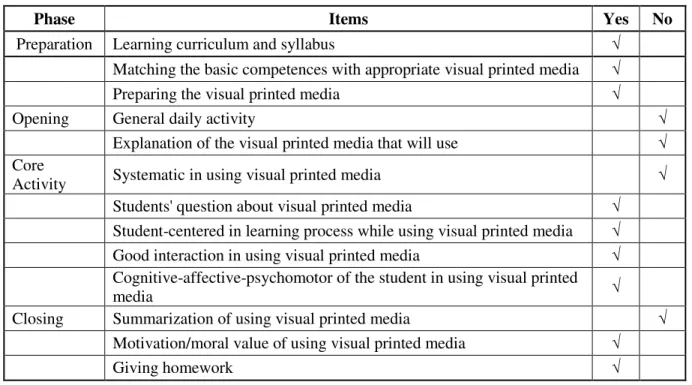
Table 2 The 7HDFKHUV¶Steps in Using Visual Printed Media
Phase Items Yes No
Preparation Learning curriculum and syllabus ¥
Matching the basic competences with appropriate visual printed media ¥
Preparing the visual printed media ¥
Opening General daily activity ¥
Explanation of the visual printed media that will use ¥ Core
Activity Systematic in using visual printed media ¥
Students' question about visual printed media ¥
Student-centered in learning process while using visual printed media ¥
Good interaction in using visual printed media ¥
Cognitive-affective-psychomotor of the student in using visual printed
media ¥
Closing Summarization of using visual printed media ¥
Motivation/moral value of using visual printed media ¥
ISSN 2354-004X | 57 %DVHG RQ UHVHDUFKHU¶V REVHUYDWLRQ WKH
WHDFKHU¶V ZHDNQHVVHV ZHUH RQ WKH SUHSDUDWLRQ of visual printed media, like not matching the basic competences with appropriate visual printed media. From the above table, it could be seen that the teacher was not being good in opening phase. In the classroom, the researcher found that the routine activities were almost the same done by the teacher and students. After the teacher came to the classroom, the students would greet to the teacher. Then, the teacher would check the attendance of the students. After that the teacher would review the previous subject to refresh the studenWV¶ PLQG DERXW ODVW OHVVRQ
In the preparing phase, the teacher learns more the curriculum and syllabus to see the topic which will teach to the student, and then she matches the basic competencies according to the curriculum, syllabus and topic with the appropriate visual printed media. Preparing the visual printed media is the next step that the teacher do in preparation phase.
In the core activities phase, the teacher did not do the phases systematically. It was hard to do because the teacher did not have the systematically lesson plan on using media. She used the guide from textbook in using media (what media presented on the textbook). In the next steps, the teacher asked to the students to make some groups to analyze the content of visual printed media which was presented. The student-centered built up the spirit in the classroom, which students were more active than the teacher. The teacher was done monitoring of all groups and helps them if needed. The teacher has good interaction with
the students, and also gave the other realistic example for the lesson that the students could easy to understand. The teacher in this session also used blackboard and chalk to stick figure the thing to explain it to the student. The Taxonomy Bloom is also included in aspect of learning process in using media; they are cognitive or mental skill (knowledge), affective or the growth in feelings or emotional area (attitude), and psychomotor or the manual or physical skills (skills).
In addition, in closing phase, the teacher did not summarize the lesson as the feedback for them. Actually, summary is very needed for the students to memorize the lesson that they learned. Before gave the homework, the teacher motivated the students at the end of the class to keep leaning at home.
In conclusion, it can be said that the WHDFKHUV¶ SHUIRUPDQFH ZHUH JRRG WKRXJK there was still a little thing to improve by the teacher such as built up the own lesson plan in using media. It is needed to making the class run systematically as planned. The teacher also should be aware of problems that might happen during the teaching-learning process. 3. The Obstacles Faced by the Teacher in
Teaching English by Using Media Based on the data collected through short interview to the English teacher, it can be sum up that the teacher got difficulties on some aspects in implementing media in English language teaching. The result is based on the assumption that the teacher still has some difficulties on implementation of visual printed media in English language teaching, they are about designing lesson plan and
ISSN 2354-004X | 58 preparing appropriate teaching materials as
media.
The following table delineates the GHVFULSWLRQ RI WHDFKHUV¶ GLIILFXOWLHV RQ
implementation of visual printed media in English language teaching at SD Islam Laboratorium Neuheun.
Table 3. 7HDFKHU¶V 3UREOHPV RQ 'HVLJQLQJ /HVVRQ 3ODQ DQG 3UHSDULQJ 0DWHULDOV No The Difficulties About Lesson Plan and Material Resources Yes No
1 Formulating the lesson plan in teaching English by using visual media ¥
2 Following the steps on lesson plan ¥
3 Ignoring the lesson plan ¥
4 The availability of materials source ¥
5 Choosing and modifying materials ¥
No The Difficulties About Lesson Plan and Material Resources Yes No 6 Arranging the material systematically and accurately ¥
7 The availability of found for authentic material ¥
8 Choosing appropriate material base on students' ability, need, and interest ¥ As shown in table 4.3, it could be said
that there was an important indicator of designing lesson plan of teaching English by using visual printed media. Finding showed that the teacher did not use lesson plan in English teaching-learning process by using visual printed media. The researcher assumed that she got difficulties in arranging the lesson plan. The result was based on the assumption that the English teacher at SD Islam Laboratorium Neuheun had adjusting to the syllabus and text book in English teaching-learning process.
From the table, it was stated that the most serious problem concerning to the English language teaching is in teaching materials preparation. In this case, the researcher assumed that the school administration should allocate some more financials for materials provision. The teacher had problem on arrange the material systematically or accurately. This result was based on assumption that the teacher got
difficulties in arrange the materials systematically. The researcher assumed that the teacher has to study or trainee more about how to arrange the lessons plan and the materials available which have to include in teacher lesson plan on English language teaching by using materials to the young learners. The others indicator that having the availability of materials sources, choosing, and modifying the materials and choosing DSSURSULDWH PDWHULDOV EDVHG RQ WKH VWXGHQW¶V ability, need and interest. The result gave the researcher assumption that English teacher of SD Islam Laboratorium Neuheun got difficulties on the indicators mentioned previously. It mean that the teacher had to got more training or study more about the cases in order to reduce their weaknesses on the aspects. Besides, she should be supported by the effective and continuous workshop to improve her knowledge and competence.
ISSN 2354-004X | 59 CONCLUSIONS AND SUGGESTIONS
The study investigated a number of issues as presented in the findings comprising the media which are used by the teacher in English language teaching according to the basic competences in primary school, how is the teacher implementing the media in English language teaching, what are the problems faced by the teacher in implementing media in (QJOLVK ODQJXDJH WHDFKLQJ DQG DOVR VWXGHQWV¶ responses toward the implementation of visual printed media
Besides, from the study it also found that there are two obstacles faced by the teacher in teaching English by using media at SD Islam Laboratorium Neheuen Aceh Besar, they are in designing lesson plan and preparing materials. The first problem faced by the teacher was being in designing lesson plan of using media. The teacher cannot designed the lesson plan on it because she had not been has the guideline to prepare all the role that should be put in the lesson plan on the using media in English language teaching. But she only uses the general lesson plan in whole English teaching-learning process. The lesson plan was designed according to the syllabus.
The most important to discuss is about teaching materials problem. The majority of teaching materials adjusting from text book by the teacher, it was hard to the teacher to arranged the materials systematically and because she did not have ability on how to arrange the materials as media. The teacher also has the problem on how choosing and modifying the materials and choosing
PDWHULDOV DEVHG RQ WKH VWXGHQWV¶ DELOLW\ QHHG and interest.
The English teacher had adjusting to the syllabus and text book in English teaching-learning process. In solving teaching materials preparation problems, the school administration should allocate some more financials for materials provision, and also the teacher should get more training or study more about the cases in order to reduce their weaknesses on the aspects.
The students respond positively toward the implementation of visual printed media in English language teaching. It was proved based on the data obtained from questionnaire; they totally selected the options of strongly agree and agree on the questionnaire sheet that the media has the important role or good way to improve their ability in basic competencies and enrich their vocabulary.
5.1. Suggestions
The value of materials as media in English language teaching has been extensively discussed but there is still room for more analysis and creativity regarding the use of visual printed media in English language teaching generally. The teacher needs to increase her ability to find the useful of the other media to create teaching objectives from media. She also has to design instructional materials to help students to better understand a foreign language in this case is English.
To achieve the goals of implementation of visual printed media in English language teaching to be optimal, the
ISSN 2354-004X | 60 researcher would like to give some
suggestions:
1. The teacher is expected to maximize in LPSURYLQJ WKH DELOLW\ RI WKH VWXGHQWV¶ competencies by introducing the sufficient media for each competence (skill) in order to motivate the students in every condition through using the real object and interesting media for them to keep trying and learning.
The teacher also can enrich her ability in create the instructional materials by accessing the website for find out a lot of way to produce the interesting media for young learners or searching for the other sources of teaching materials.
2. In teaching process, the teacher should follow the steps of teaching stated in the lesson plan. In the other words, the lesson plan is a guide for teaching but not just for completing the administrative requirement. So that in implementation of visual printed media in English language teaching also has to follow the lesson plan as the guideline. The teacher hoped to start to arrange the lesson plan on it.
3. The function of visual printed media are to improve the ability of the students, so that, the good facilities in the school can help the teacher to do interactive teaching-learning process to develop the students aware in learning English as second language. In viewing, the language learning is to make easy in communication. The School has to provide of new media as the facilities that can help the teacher to do interactive teaching-learning process to develop the students aware in learning English as second language.
4. There are many assumptions that the implementation of visual printed media in English language teaching is suitable for young learner. But actually the case is teaching by using media also can applied for adult beginners. It was researched by some expert which researcher read.
REFERENCE
Bodgan, R.C, Biklen, S.K. (1998). Qualitative Research for Education. USA: Allyn and Bacon. Brown, H.D. (2001). Doing Second Language Research, USA: Oxford University.
Cohen, L. Manion, L. & Morrison, K. (2005). Research Methods in Education (5th ed). London & New York: Routledge Falme.
Harmer, J. (2007). The Practice of English Language Teaching. 4th Edition. New York: Longman Heinich, R. Molenda, M. Russell, J.D, & Scnaldino, S.E. (1996). Intructional and the New
Tecnologies of Instruction. New York: Macmillan
Kasbolah, Kasihani. (1995). Instructional Media for Young Learners of EFL. ELE. I Malang: IKIP Malang.
ISSN 2354-004X | 61 McGLothin, J. Doug. (1997). $ &KLOG¶V )LUVW 6WHS LQ /DQJXDJH /HDUQLQJ Retrieved on Thursday,
May 05, 2011 at 8am. From http://iteslj.org.
Onasanya, S.A. (2004). Selection and Utilization of Instructional Media for Effective Practice Teaching. Institute Journal of Studies in Education Vol. 2 No. 1 June 2004, ISSN 0795-2199 Richards, J. and T. Rodgers. (1986). Approach and Methods in Language Teaching. Cambridge:
Cambridge University Press.
Ruis, Nuhung. Muhyidin. Waluyo, Tri. (2009). Instructional Media. Jakarta: Ministry of National Education.Sadiman et al, (2010; 14)