Master Thesis
Academic Year 2008 - 2009
Master Thesis in Intelligent Systems
A General Framework Supporting User-Adaptive
Learning for Highly Interactive Content in Virtual
Learning Environments
Author:
F. Javier Torrente Vigil
Directed by:
Dr. Baltasar Fernández Manjón
Dr. Pablo Moreno-Ger
Madrid, September 2009
Master of Research in Computer Science
School of Informatics (Facultad de informática)
Complutense University of Madrid (Universidad Complutense
de Madrid)
Proyecto de Fin de Máster
Curso 2008 - 2009
Proyecto de Fin de Máster en Sistemas
Inteligentes
Un Marco de Referencia para la Integración de
Aprendizaje Personalizado Basado en Contenido
Altamente Interactivo en Entornos Virtuales de
Enseñanza
Autor:
F. Javier Torrente Vigil
Dirigido por:
Baltasar Fernández Manjón
Pablo Moreno-Ger
Madrid, Septiembre de 2009
Máster en Investigación en Informática
Facultad de Informática
A General Framework Supporting User-Adaptive
Learning for Highly Interactive Content in Virtual
Learning Environments
Proyecto de Fin de Máster en Sistemas Inteligentes
Facultad de Informática
Universidad Complutense de Madrid
Autor:
Francisco Javier Torrente Vigil
Profesores directores:
Dr. Baltasar Fernández Manjón
Dr. Pablo Moreno Ger
Curso 2008 / 2009
Agradecimientos
Este proyecto culmina el trabajo de más de un año. No ha sido fácil llegar hasta aquí, y como en toda investigación el fruto recogido no puede atribuirse a una sola persona aunque ésta figure como único autor. Por eso no hay mejor forma de comenzar que agradeciendo su apoyo y colaboración a todo el que me ha acompañado en este proceso.
En primer lugar, gracias a mis directores de tesis, Baltasar Fernández Manjón y Pablo Moreno Ger, por su orientación a la hora de realizar mi trabajo y por haber confiado en mí capacidad para llevar a cabo este proyecto así como muchos otros desde el primer momento. Siempre su puerta siempre estuvo abierta para mí y eso es algo que debo agradecer especialmente.
En segundo lugar, gracias a Iván, Pilar y demás compañeros del grupo <e-UCM> con los que he trabajado y de los que he podido aprender mucho en diversas colaboraciones.
Gracias también al departamento de Ingeniería del Software e Inteligencia Artificial, y en especial a su director Luis Hernández Yáñez, en el que he colaborado durante los últimos meses en labores docentes, y que siempre ha hecho lo posible para facilitar mi trabajo de investigación y que pudiera compaginarlo con la docencia.
Como no, he de dar las gracias a Ángel, Eugenio y Kike, compañeros de fatigas en este año, y que han hecho las largas jornadas de trabajo mucho más amenas y fáciles de llevar.
He de dar las gracias especialmente a mis padres, hermanos, sobrinos y amigos, quiénes han sufrido las consecuencias de los largos días en la Facultad de los últimos años. A ellos especialmente debo agradecerles el apoyo y comprensión recibidos, sin los cuales no habría podido llegar hasta aquí.
Y por último, a todos aquellos que desde que era pequeño me ayudaron en algún momento. A todos vosotros ¡gracias!
Acknowledgments
This project is the culmination of the work carried out during the last year. It has not been easy to get to the end. Moreover, as in any investigation the results achieved do not belong to only one person, even if that person is the “author” of the work. For that reason, there is no better way to start this document than thanking all the support and collaboration received during this process.
In first place, thanks to my PhD. Advisors, Baltasar Fernández-Manjón and Pablo Moreno-Ger, for their advise and their confidence in my ability to carry out not only this project but many others as well. Their offices were always open to me, and that’s something I must especially thank.
Secondly, thanks to Iván, Pilar and the other people of the <e-UCM> research group I’ve worked with. I’ve had the chance to collaborate with them and that allowed me to learn a lot from their experience.
Thanks to the department of Software Engineering and Artificial Intelligence in general, and to Luis Hernández Yáñez in particular, where I’ve collaborated during the last months as assistant teacher. It was always possible for me to combine my research and my teaching duties because the department made it possible, and that is something I must not forget.
Of course, Ángel, Eugenio and Kike, my ‘<e-Adventure>’ mates, deserve special gratitude. Their company made the long journeys of work much more enjoyable and relaxed.
I must thank especially my parents, brothers, sisters, niece, nephews and friends, who have suffered the consequences of those long days at work during the last years. Without their support and comprehension I would not have gone so far.
And finally, thanks to all the people that have helped me since I was little. To all of you, thank you so much!
El/la abajo firmante, matriculado/a en el Máster en Investigación en Informática de la
Facultad de Informática, autoriza a la Universidad Complutense de Madrid (UCM) a
difundir y utilizar con fines académicos, no comerciales y mencionando expresamente a
su autor el presente Trabajo Fin de Máster:
“A General Framework Supporting User-Adaptive
Learning for Highly Interactive Content in Virtual Learning Environments”
, realizado durante el
curso académico 2008-2009 bajo la dirección de Dr. Baltasar Fernández Manjón y Dr.
Pablo Moreno Ger en el Departamento de Ingeniería del Software e Inteligencia Artificial
(DISIA), y a la Biblioteca de la UCM a depositarlo en el Archivo Institucional E-Prints
Complutense con el objeto de incrementar la difusión, uso e impacto del trabajo en
Internet y garantizar su preservación y acceso a largo plazo.
Palabras clave para búsqueda bibliográfica:
Aprendizaje adaptativo
Personalización
Modelado de Usuario
Entorno Virtual de Enseñanza
Juego educativo
Accesibilidad
Contenido interactivo
Videojuego
Simulación
<e-Adventure>
Keywords (for indexed search):
Adaptive learning
Personalization
User modelling
Virtual Learning Environment
Game-based learning
Accessibility
Interactive content
Video game
Simulation
<e-Adventure>
Resumen
El campo del e-Learning ha evolucionado y madurado durante las últimas décadas. Poco queda ya de aquellos antiguos repositorios de contenido estático que recibieron un sonoro fracaso en los 90. Los actuales Sistemas de Administración del Aprendizaje (SAA) son ricas aplicaciones Web que apoyan los procesos de aprendizaje para múltiples roles y estrategias pedagógicas. Además, los SAA combinan muchas de las herramientas más comunes que se encuentran disponibles en la Web (por ejemplo foros, chats, wikis, etc.), revisadas y adaptadas para aumentar su potencial educativo. Como consecuencia, los SAA se han convertido en una tendencia muy popular en el campo del aprendizaje asistido por ordenador.
Sin embargo, los SAA siguen teniendo tareas pendientes. Una de las más importantes concierne a la falta de soporte para el aprendizaje adaptativo de estas plataformas. Aunque la idea de personalizar la experiencia de aprendizaje a las necesidades de cada alumno ha estado presente en el campo durante décadas, pocos de los conceptos propuestos han llegado a los SAA. Muchas han sido las causas a las que se ha atribuido esto, a las que nosotros ahora queremos añadir una más: la ausencia de contenido flexible y altamente interactivo en este tipo de entornos. Este tipo de contenido permitiría por una parte, adaptar de forma más sencilla el contenido educativo, y por otra, facilitaría que el sistema pudiera llegar a “conocer” al alumno para personalizar su aprendizaje. Según nuestra opinión, muchos de los sistemas adaptativos que han triunfado en otros campos (por ejemplo Amazon™) lo han hecho en parte por guardar multitud de información sobre la interacción del usuario para así personalizar los servicios que le ofrecen. Si algún día los SAA tienen que dar soporte al aprendizaje adaptativo, esto debería tenerse en consideración.
Dentro de este enfoque, proponemos la introducción de contenido altamente interactivo en SAA, y concretamente de video juegos educativos. El potencial del aprendizaje basado en juegos está ya prácticamente fuera de discusión; además su potencial adaptativo está todavía por descubrir. Sin embargo, existe un problema relacionado con la accesibilidad de los juegos, un tema que debe solucionarse dada la importancia de involucrar a todos los alumnos en su educación.
Por ello en este trabajo proponemos un marco de trabajo genérico y flexible que tenga en cuenta estos requisitos:
Que facilite la integración de juegos en SAA.
Que permita establecer un canal de comunicación entre distintos SAA y juegos para dotar al SAA de más información sobre la interacción con el usuario. Que considere accesibilidad desde el momento de su concepción como algo fundamental.
Abstract
The field of e-Learning has evolved and matured during the last decades. From the old static repositories of content that achieved a thunderous failure in the 90’s very little is left. Modern Learning Management Systems (LMS) are now powerful Web-oriented environments that support the learning processes for multiple roles and pedagogical strategies. Moreover, LMS brings together most of the common features that are available on the Web (e.g. chats, forums, wikis, etc.), but reviewed and adapted to enhance their educational potential. As a consequence, LMS are probably the most popular trend in computer-supported learning not only within the academia but also in the industry.
Nevertheless, LMS still have some pending tasks. One of the most important is the lack of explicit support for adaptive learning that these systems usually present. While the idea of computer-supported adaptive learning has been around for decades, populating the research field with multiple approaches and pilots, LMS have not incorporated any of those ideas in order to tailor the learning experience for the needs of each student. Many are the reasons that have been related to this issue; nonetheless we would like to point out one more: the absence of highly interactive and flexible content that could be easily adapted on the one hand, and which could provide LMS with valuable information about the user interaction on the other. In our opinion, most of the adaptive systems that have achieved success in other fields (e.g. Amazon™) are known to store all the data that the system can get from the user in order to personalize their services. If adaptive learning is to be supported by LMS, this should be considered as a mandatory point.
Within this perspective we propose the introduction of highly interactive content in current LMS, and more specifically the introduction of educational adaptive video games. During the last years the educational potential of video games has been broadly accepted in the academic community, and their adaptive potential is to be unveiled yet for educational purposes. However there is a problem in educational gaming that has not been addressed yet: the lack of “accessibility”, which should be addressed given the importance of involving all the students in learning.
Therefore in this work we present a general and flexible framework that deals with these issues:
It facilitates the integration of video games in Learning Management Systems. It establishes a communication channel between different LMS and games to provide the LMS with information about the user’s interaction.
Table of Contents
Preface
Agradecimientos... 7
Acknowledgments ...9
Resumen... 15
Abstract ... 17
Chapter I. Introduction...23
1. e-Learning: the digital age meets education ...24
2. The need of personalization in e-Learning ...25
3. Video games: the future of adaptive e-Learning systems? ...26
4. Accessibility in e-Learning and games: a specific case of adaptation ...27
5. Summary and conclusions of the chapter. Identification of goals ...27
Chapter II. State of the Art... 31
1. Introduction...32
2. Adaptive Learning Environments and Learning Management Systems ...32
2.1. Adaptive Learning Environments...32
2.1.1. Intelligent tutors and Adaptive Hypermedia Systems. ...33
2.1.2. Student and domain models ...35
2.1.3. Current limitations of ALEs ...36
2.2. Learning Management Systems ...36
2.2.1. Standards and specifications to promote interoperability and
reuse ... 37
2.2.2. Current support for adaptive learning in LMS...38
3. Adaptive video games...39
3.1. About the motivation of adaptive gaming and its relation to learning .39
3.2. General approaches to the management of challenge in games: from
difficulty profiles to DDA... 40
3.2.1. Difficulty profile settings & gaming modification tools ... 40
3.2.2. Dynamic Difficulty Adjustment ...42
3.3. Acquisition of knowledge about the player ...44
3.3.1. Offline: player types...45
3.3.2. Online: Player models ...46
3.4. Learning models, methodologies and architectures for educational
adaptive gaming...47
4. Assistive technology & accessibility in e-Learning ... 49
4.1. Assistive technology for computer-based use ... 50
4.1.1. Special and adapted hardware ... 50
4.1.2. Accessible software ...51
4.2. Initiatives towards the universal accessibility of the Web ...51
4.3. Special initiatives about accessibility in e-Learning... 52
5. Accessibility in digital games... 53
5.1. Input Device Adaptation for Video games ... 53
5.2. Methodologies, Tools and Design Patterns for Accessible Videogames54
5.3. Accessibility in Entertainment-driven video games... 56
6. Summary and conclusions of the chapter ... 59
Chapter III. The Framework Proposed...61
1. Introduction ... 62
2. General description of the framework ... 62
3. Models... 64
2.1. User model (UM) ... 65
2.2. Domain, Context and Game States models ... 66
4. Reference architecture... 68
5. Summary and conclusions of the chapter ... 71
Chapter IV. Particularization of the Framework for <e-Adventure>73
1. Introduction ...74
1.1. About <e-Adventure> ...74
2. General particularities of the framework ...75
3. Particularization of the models ...77
4. Particularization of the architecture ... 78
5. Summary and conclusions of the chapter ... 82
Chapter V. Conclusions & Future Work ...83
1. Summary ... 84
2. Contributions... 86
3. Future work ... 87
Chapter VI. Appendices...89
Appendix A. “Implementing Accessibility in Educational Videogames with
<e-Adventure>”... 90
Index of Tables
Table 1. Summary of approaches proposed in (M. H. Bierre, T Martin, M
McIntosh, T Snider, 2004)for addressing accessibility in games... 55
Table 2. Attributes of the Special Needs Model for <e-Adventure> ...77
Table 3. Some example of voice commands supported by the Voice Input
Module in <e-Adventure> ...80
Table 4. Principal input and output modules ...80
Index of Figures
Figure 1. Screenshot of the Virtual Campus used in Oxford University, which is
based on the Sakai™ Learning Management System. ... 25
Figure 2. Venn diagram representing the relation between adaptation and
accessibility in learning and gaming. ... 28
Figure 3. Graphical author tool for the AHA!© Adaptive Hypermedia System.
The editor allows instructors to define prerequisites between nodes,
fixing the possible navigation itineraries. Adapted from the AHA! Online
tutorial... 34
Figure 4. Results of the evaluation of adaptation in LMS carried out by Graf &
List... 38
Figure 5. Screenshot of the Hammer© editor, developed by Valve Software™.
This is the map modification tool for the popular game Half Life 2™...41
Figure 6. Screenshot of MaxPayne™. Copyright by 3D Realms™... 42
Figure 7. Typical curves of challenge variation in games following the
approach of “difficulty profiles” (a) and DDA (b) ... 44
Figure 8. Example of a hierarchical player model for Shot’em up games.
Adapted from (Houlette, 2004)... 46
Figure 9. Adaptation model considering adaptation in two phases
(gross-grained Vs fine-(gross-grained), as described in (J. Torrente et al., 2008b). In
this model two itineraries are considered as an example, one is
game-based and the other HTML-game-based. Within the game several student
profiles are considered for adaptation. Copyright Springer-Verlag©...48
Figure 10. Diagram of the educational gaming architecture described in
Figure 11. This specialized joystick mouse, called JAWS 2™, enables people
who cannot use hand-input devices to control a computer with their
mouth, chin and cheeks...50
Figure 12. Out-of-the-box screen magnifier included with Microsoft’s Windows
Vista©... 51
Figure 13. Dream-Gamer Cap™: adapted controller for Sony’s Play Station™.
Games are controlled by means of movements of the head. ...53
Figure 14. Valve’s Half Life 2™. ... 57
Figure 15. Terraformers game: left image shows normal mode, and right image
shows the same scene with high contrast. ... 57
Figure 16. Results of the survey carried out by the IGDA in 2004 in terms of
game categories. ...58
Figure 17. Results of the survey carried out by the IGDA in 2004 in terms of
impairments addressed...59
Figure 18. Top-level view of the framework, including entities involved and
information exchange ...62
Figure 19. Adaptation model, including sequence of activities divided by entity
responsible (LMS in blue, game in green). ...64
Figure 20. Game states model...68
Figure 21. Modular architecture proposed for developing adaptive games ...69
Figure 22. Example of the in-game tool “screen magnifier” in the 1492... 75
Figure 23. In-game conversation between the player and the NPC guide when
the system detects a situation where the student is “stuck”...76
Figure 24. Particularization of the two phase adaptation model proposed in
section III.4 ... 77
Figure 25. Particularization of the architecture proposed in section III.4 for
<e-Adventure>. ...79
Chapter I
- 24 -
1. e-Learning: the digital age meets education
The evolution and rapid development that technology has experienced in the last decades has changed our lives dramatically. Especially the rise and extension of the Web and the Internet has modified the way we interact with the world and what we expect from it, giving origin to what has been called the digital revolution. And this sudden revolution has not only affected the business sector; the fact is that all the fields have been forced to follow a process of self-reinvention in order to accommodate to this new digital age (adapt or die).
The educational field would not be the one to escape from this trend. During the last decades the interest in how to exploit the new possibilities presented by technology in order to provide students with better learning experiences has increased exponentially, originating a research field known as Technology-Enhanced Learning (TEL). Numerous approaches are covered within this field, including, for instance, the use of intelligent tutors, mobile devices, videogames or even educational robots, achieving different rates of adoption in each case (P. Brusilovsky, 1998; Sharples et al., 2005). One of the trends that have really achieved general adoption is related to the use of Web-based systems, the so called e-Learning. The term comes from the early 90’s, when the rise of the Internet provoked that the market were suddenly populated with loads of systems containing primarily hypermedia and hypertext learning materials. The “big idea” was that students would be able to access such content from the comfort of their own homes, learning at their own pace and exactly when they wanted. That is the well known motto of “learning everywhere and at every place”, which originated a trend that was given the name of e-Learning. Nevertheless these early and naïve e-Learning systems were mainly a spectacular failure, as their simplicity made them unattractive to students, what added to the disconnection between instructor and student resulted in systems with a very low access rate, high dropout rates, and which produced very poor learning outcomes (Fernández-Manjón et al., 2007; Fernández-Manjón et al., 2009).
But the e-Learning field learnt from its mistakes, and with the explosion of rich web applications e-Learning reinvented itself. Thus e-Learning systems are not any more passive repositories of content which students are supposed to access at their own risk, but rich applications that support the learning processes in multiple manners and for all the roles involved in them (that is not only students but also instructors, content authors or even course administrators).E-Learning systems are not any more naïve repositories of static content but live environments that provide students and instructors with tools supporting the whole learning process. These are the so called Learning Management Systems (LMS), also known as Virtual Learning Environments (VLE). If these terms were to be defined with total accuracy differences between them will arise; however for the scope of this work all will considered the same as they present a common set of features.
The use of these systems has growth so much in the last years that now most of the educational institutions in the developed countries offer these systems as a support tool. For instance, most of the universities in Spain have their own Virtual Campus, which is usually a web platform based on a LMS. Best known examples of these tools could be Moodle™, Sakai™, .LRN™ or WebCT™-Blackboard™.
- 25 -
Figure 1. Screenshot of the Virtual Campus used in Oxford University, which is based on the Sakai™ Learning Management System.
2. The need of personalization in e-Learning
So now the discussion is not any more about the effectiveness of e-Learning environments, but about how to move towards new challenges. Between the multiple active research areas that might lay the basis for next-generation e-Learning systems, we can find authors advocating for the integration of the Semantic Web (Koper, 2004), social software (Cho et al., 2007; Naeve et al., 2006), informal learning (Eraut, 2004; Folkestad, 2006), computer supported collaborative learning (Cho et al., 2007), mobile learning (Sharples et al., 2005), etc.
In this mare magnum of research, there is a strong trend that advocates for the personalization of the learning experience for each individual. Multiple researchers have put forward that students abilities, attitudes and conditions towards learning may vary so widely that what might make a student learn might not work at all for a different student (Gagné et al., 1992). Moreover, it has also been said that the lack of personalization in learning may be one of the foremost causes of scholastic failures and drop outs. While instructors can deal with this issue in the classroom, at least partially, it is much more difficult to do so in online courses. That is a strong argument to support the need of e-Learning systems that incorporate personalization as a mandatory feature.
This idea is not new. The concept of personalized learning has been around almost since computers were born. Authors quickly started to argue that computers could support the development of “intelligent systems” that would be able to guide students during the learning process, providing in this manner personalized, student-meaningful learning experiences. Following this basic idea multiple systems rapidly started to populate the market. Some of the most popular were Adaptive Hypermedia Systems (AHS) (P. Brusilovsky, 1998; P. Brusilovsky et al., 2007) or Intelligent Tutors
- 26 -
(Murray, 1999).
In spite of these efforts, adaptive learning systems have not achieved a real success in terms of general adoption. As a proof of that, we could say that there are few LMS integrating ideas from adaptive learning environments or providing any kind of explicit support for adaptive learning. This might be attributed to several factors. To begin with this field of research is currently being developed, and little evidence about the effectiveness of the approaches presented to the academic community has been provided. Secondly, developers of e-Learning platforms may see that the relation between development cost and effectiveness of adaptive systems is still unbalanced, what makes the investment very risky (Hauger et al., 2007). Nonetheless, this lack of success of adaptive learning systems is probably related on the one hand, to the kind of content they are usually intended for and, on the other hand, to a lack of real data about the user.
About the first issue, these systems are usually oriented to Web and multimedia materials which are not very flexible and therefore it is difficult to personalize them if we try to go beyond a simple personalization of the interface. The second issue is as well related to the type of content. This kind of content is not really interactive and as a consequence system cannot really track the interaction with the student and thus it is much more difficult for the system to infer knowledge about the student. Since most of the adaptive learning models proposed include an explicit or implicit model of the student as a base, this is a major issue. The conclusion is that the introduction of new types of content, much more interactive and flexible, may provide, or at least outline, new perspectives that could lead to the general adoption of adaptive learning systems.
3. Video games: the future of adaptive e-Learning
systems?
Video games are one of the types of content that meet the requirements above described in terms of flexibility and interactivity. In fact, video games have been pointed out as a good educational approach due to the numerous enhancements of the educational processes they can provide, if properly used (Aldrich, 2005; J. Gee, 2007; J. P. Gee, 2003; T. W. Malone et al., 1987). Between the most frequently cited advantages related to educational gaming are their power to keep students focused and motivated (T. Malone, 1981), their ability to immerse students in the in-game world (Squire, 2003), their short feedback cycles (de Freitas et al., 2006), perception of progress or their relation to constructivist theories and support of scaffolded learning (Prensky, 2001).
Moreover, some authors indicate that video games are an ideal medium for personalize learning experiences (Leutner, 1993). Digital games are rich pieces of interactive software that can gather a lot of information about the students. Furthermore adaptation is innate in digital games as game designers try to adjust the learning experience to enhance the engagement of the game for each user. It is true that most of the adaptation techniques implemented in video games are naive, like rough profiles of difficulty (e.g. novice, intermediate and advanced) where the user should choose the one that better fits him/her. Nonetheless there are video games which implement much more advanced adaptation models, like Dynamic Difficulty Adjustment techniques (R. Hunicke, 2005). As a consequence, educational games could not only provide real game-based adaptive learning experiences, as digital games can be adapted on-the-fly, but to provide a very interesting source of interaction that could be used to enhance the amount and value of information about the user, improving thereby the performance of the overall adaptive system.
- 27 -
But in spite of the potential of adaptive educational gaming, there are still few educational games implementing adaptive behaviour. The scarceness of adaptive educational games may be directly influenced by the extra development cost it involves. Moreover, market pressure makes that game companies keep their advances in the matter very secret, what impedes reuse and prevents the academic community could from profiting on the advancements of the industry.
4. Accessibility in e-Learning and games: a specific case of
adaptation
Accessibility is an issue that has a great impact in technology-enhanced learning settings. After all education is a universal right and therefore when it is not taken into account students with special rights may be deprived of such right. According to the
2007 US Census Bureau1, 18% of the US population and 11% of children from 6 to 14
have some level of disability, with 12% of the total population having a severe disability. That is a lot of students that need special support from educational technologies, affecting both e-Learning environments and educational games.
Thus there has risen an initiatives aiming to guarantee the universal accessibility of e-Learning environments and educational games, such as the IMS AccessForAll
(IMS Global Consortium, 2004a) specification or the International Game Developers Association (IGDA) special interest group in accessibility, which provide
guidelines to produce accessible content (M. H. Bierre, T Martin, M McIntosh, T Snider, 2004). These guidelines usually recommend that all the information, even the small details must be transmitted through alternative channels at the same time in order to make the content accessible to people with visual or hearing disabilities. That is usually carried out, for example, by combining subtitles and sound/voices so the lack of a sense does not imply that any kind of information is lost.
It is interesting to see the relation that exists between accessibility and adaptation in the terms above defined. For instance, consider an “ideal” adaptive learning environment and a specific situation where a learner is located at an extremely noisy place. If an activity of the course that the learner is accessing contains information that is transmitted through sound, the student will not be able to receive it. Thus the system should be able to adapt the learning experience and provide the information using text or other channels available at that time. In this case there is little between a person that is deaf and a student that can hear perfectly under normal conditions.
Therefore accessibility could be seen as a specific case of user-adaptation. Moreover, ideally adaptive learning environments should compulsory deal with accessibility issues. However both fields are still analyzed separately.
5. Summary and conclusions of the chapter.
Identification of goals
In this chapter the e-Learning field has been described, giving a high-level perspective, trying to explain where it comes from and how it has evolved and become a mature technology. However there are still unresolved issues, like the lack of explicit support for adaptation in e-Learning systems. While the concept of computer-supported adaptive learning has been around in the field even before e-Learning was born, it has not found its way to reach the most popular platforms nowadays: the Learning Management Systems. Between the causes, the lack of scalability of typical
- 28 -
adaptive learning environments, like AHS and IT, and the deficiencies of the content which is typically used within these systems in terms of flexibility and interactivity, which impedes the systems of getting the amount of information needed to get real knowledge about the user.
After that educational gaming has been introduced as a very promising field, with lots of advocators (and also some detractors) arguing about the potential of games for learning in terms of motivation, immersion and short feedback cycles, and after a long list, for supporting adaptive learning. Nonetheless several pending issues need attention in this field, such as how to integrate the games in the classroom. Furthermore, it is not clear how to design or implement adaptive games, neither from an educational nor an entertainment-driven perspective, which is a major challenge.
Finally issues about accessibility in e-Learning and games have been presented. While the importance of making technology accessible to all people with independence of their specific needs is broadly accepted there is no general agreement in how to translate this to video games. And if video games are to be integrated in our schools this is an issue that cannot be left aside.
The heterogeneous nature of this chapter may surprise the reader since, apparently, there is not a clear connection between the fields presented. But, in my opinion such connection not only exists but also can help to solve the numerous challenges discussed so far if it is developed carefully; actually most of those challenges are unlikely to get solved if each field is considered separately.
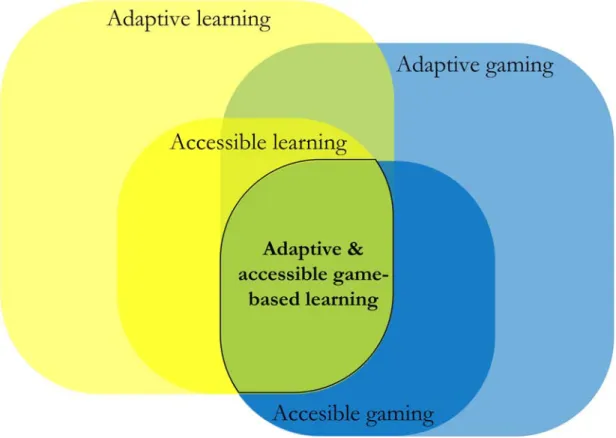
Figure 2. Venn diagram representing the relation between adaptation and accessibility in learning and gaming.
In this manner, e-Learning environments can profit from games as they are highly interactive pieces of software that can provide loads of valuable information about the user, how he/she learns and plays. Moreover video games are, as opposite to Web and typical multimedia content, extremely flexible and could be adapted in many different ways to cater for the needs of a broad audience. In return e-Learning can be an ideal medium to introduce games in the classroom given its general adoption.
- 29 -
On the other hand, accessibility can be considered just a special case of adaptation. Actually “accessibility” can be defined as the intent to attend the special requirements of people with disabilities and impairments, a definition that fits very well in the concept of adaptive gaming and adaptive learning (cater for the needs of each individual). Moreover, addressing the needs of impaired people from a more general point of view can achieve a level of enhancement of the game and learning experiences that could not be achieved otherwise.
As a conclusion, we oversee that all these issues can converge in one solid approach, which constitutes the ambitious motivation of this work. The final goal could be summarized as the development of adaptive game-based learning experiences that could be integrated into current e-Learning systems to promote its general use and which consider accessibility as a special case of adaptation.
In addition we should clarify a bit the scope of this work and the approach followed. It is almost impossible to address the problem presented from all the different perspectives (that is, e-Learning environments, adaptive learning, adaptive gaming, accessible gaming, etc.). Besides, each field itself is still mutable and attracting a lot of research from different areas. Thus the scope of this work is limited to make a general study of all the fields and aspects, trying to find points were they could converge, and propose a general framework where research within the areas involved could coexist. Therefore it is not the purpose of this work to develop a full model of adaptation where detailing all the aspects, but to generate the base for a future and ambitious line of research. However, this work is promoted within the
FLEXO2 project (Spanish Ministry of Industry, Tourism & Trade, “Avanza” Program
I+D: TSI-020301-2008-19), which aims to develop a generic model of adaptive and
accessible learning in open-source systems. Within this project the <e-UCM>3
research group, where this work has been developed, is focused on the development of adaptive and accessible games that can be integrated in e-Learning systems. That constraint motivated that the approach followed in this work is much more closed to the “gaming” point of view than to any other. Finally, we also include as an appendix the result of this work, the paper entitled “Implementing Accessibility in Educational
Videogames with <e-Adventure>”, which is to appear in the proceedings of the 1st
International Workshop on Multimedia Technologies for Distance Learning (MTDL 2009). Further details about the workshop and the full citation can be found on appendix A.
Considering all these premises we define the following goals:
• To develop a general framework that integrates adaptive gaming in Learning Management Systems, with the double motivation of enhancing students’ experience in terms of engagement and learning outcomes and provide sources of user-related information for the LMS in order to maximize the adaptation capabilities of the system. Besides the framework should consider additional requirements that may arise as a consequence of considering accessibility as a particular case of adaptation.
• To particularize the framework for the <e-Adventure> platform as a requirement of the FLEXO project, with the objective of facilitating the development of adaptive and accessible video games that could be integrated in standards-compliant Learning Management Systems.
2
http://www.ines.org.es/flexo/
3
Chapter II
- 32 -
1. Introduction
In this section the state of the art that supports the motivation of this work is presented and discussed. As this work aims to achieve the convergence of e-Learning, adaptive educational gaming and accessibility as a particular case of adaptation into a solid approach that would address some of the challenges that these areas are facing separately, the state of the art of each field has to be analyzed separately. However, a detailed description of all the fields is out of the scope of this work. Therefore these areas are analyzed from the perspective of what each one can contribute to the global junction, describing the most representative approaches and ideas that could be reused for this work.
Therefore this chapter is structured in five sections, six if this introduction is counted. Firstly, in section 2 the current state of the art of adaptive learning environments and e-Learning systems is analyzed. Then in section 3 issues about adaptation in video games are discussed, both considering educational and entertainment-driven uses. After that, in section 4, the most important initiatives that are being carried out to guarantee the universal accessibility in e-Learning systems are briefly presented. The last discussion, section 5, describes the special nature of accessibility in digital games, as the particularities of this type of content demand special attention. Finally section 6 provides the conclusions that we have extracted from the analysis of all these fields, and which lay the basis of our motivation to approach this work.
2. Adaptive Learning Environments and Learning
Management Systems
According to some scholars, the observation of the Computer Assisted Instruction (CAI) field depicts a clear dichotomy, with Adaptive Learning Environments (ALEs) on one side, and Learning Management Systems on the other (Hauger et al., 2007; Paramythis et al., 2004). While the first have rarely escaped the research field, the second are the most popular tools in the market of learning technologies. While ALEs implement innovative and complex techniques for user-modelling, content adaptation, etc., LMS integrate concepts that have succeeded in the world of Web technologies and apply them to the support of learning from a practical point of view. In this section we briefly describe both trends from a critical point of view, trying to identify successful elements that could be applied the framework we aim to develop.
2.1. Adaptive Learning Environments
The idea of developing software tools to support students along their educational process almost dates back to the day computers were born. Very quickly the concept evolved and the idea of providing personalized tutoring using computers arose. Actually Adaptive Learning Environments (ALE) are one of the pioneer systems targeting user-personalization, applying techniques that have been generalized to
other fields, like online associative shopping systems (e.g. Amazon™4) or music
players (e.g. LastFM™5). However, between the numerous systems which could be
labelled as Adaptive Learning Environments, only few have achieved real success, and they were never left the boundaries of the research field. This section provides a brief
4
http://www.amazon.com
5
- 33 -
analysis of the most popular trends in ALEs, the so called Intelligent Tutors (IT) and Adaptive Hypermedia Systems (AHS). Thus in section 2.1.1 the common techniques used in ITs and AHSs are discussed. After that, in section 2.1.2 common approaches to the representation of user and domain information (user and domain modelling) are presented, as those are relevant for our work. Finally section 2.1.3 aims to provide the reader with a critical view of ALEs, identifying potential causes of their failure. It is not the purpose of this work to give concrete examples of ALE systems, which can be consulted in one of the reviews on ALEs that are available in the literature: (P. Brusilovsky, 1996; Graf et al., 2005; Hauger et al., 2007; Kareal et al., 2006; Paramythis et al., 2004; Shute et al., 2003).
2.1.1. Intelligent tutors and Adaptive Hypermedia Systems.
One of the first trends that could fall in the category of Adaptive Learning Environments is the related to the development of Intelligent Tutors or Intelligent Tutoring Systems (IT). As an informal description, an IT is an expert system that provides customized instruction and feedback to the student. Usually ITs are considered as Artificial Intelligence programs that simulate the behaviour of a real instructor. In this manner, first pilots of ITs were mainly shell-based conversational systems where students could ask questions and receive feedback (Murray, 1999), although modern ITs include GUI-based interaction. The main goal of ITs were to detect wrong mental patterns of the student, correct them by providing the adequate information, or guide the student to the acquisition of the right mental pattern. Thus ITs are clearly oriented to the personalization of the learning experience according to the knowledge the student has (or has not). In addition, some ITs provide adaptation according to the preferences of the student.
Other trend that has been focusing on the personalization of the learning experience for each student is the related to Hypertext and Hypermedia Systems. Hypertext could be defined as collections of text (nodes) containing links to other chunks of text (other nodes) (McKnight et al., 1991). With the generalization of multimedia the term “hypermedia” was coined as a generalization of hypertext, considering not only text but other kinds of information such as images, sound, etc. (Gygi, 1990; Seaman, 1993). Hypermedia Systems rapidly attracted researchers trying to implement adaptation techniques over HS that could personalize the information that each user receives depending on his/her specific characteristics, originating the so called Adaptive Hypermedia Systems (AHS) (P. Brusilovsky, 1996; Peter Brusilovsky et al., 2001; De Bra et al., 2003).
In AHS adaptation is usually carried out at two levels (Beaumont et al., 1995): at the content level and on the link (or navigational) level. Adaptation at the content level is usually related to the presentation of that content. Thereby, no adaptation over the content itself is carried out. Typical examples of adaptation at the presentation level would be replacing a graphic by another one. However, few times the own content is adapted, as this is a significant challenge. Regarding the approaches followed in AHS for “content adaptation”, (Hauger et al., 2007) classifies them in 5 categories (adapted from (Hauger et al., 2007)):
• Additional explanations. The system tailors the content that is delivered to
the user, displaying only the parts of the document that match the student’s knowledge or learning goal. The idea of adapting the learning content according to the learning goals is quite frequent in AHS. For instance, Brusilovsky (1996) identifies that students usually have different goals and expectations when approaching to learning in diverse contexts or situations.
- 34 -
needs to have to be able to understand others) for a concept is not sufficiently known, that information is inserted by the system so the student can really understand the concept.
• Comparative explanations. The system links the knowledge that the
student is trying to acquire to those that already has, facilitating learning for students who prefer meaningful learning (Ausubel, 1963).
• Explanation variants. When this kind of adaptation is carried out, the
system chooses from a list of knowledge fragments which is the one that better suits the learner’s requirements.
• Sorting. The system orders the pieces of information according to the
student’s requirements and learning tastes. This facilitates learning for students with different learning styles (Vermunt, 1996).
Figure 3. Graphical author tool for the AHA!© Adaptive Hypermedia System. The editor allows instructors to define prerequisites between nodes, fixing the possible navigation itineraries.
Adapted from the AHA! Online tutorial6
Adaptation at the link level is, on the other hand, oriented to guide the user in the discovery of the knowledge that the system presents. For instance, following this approach it could be possible to prevent the user from accessing an advanced piece of content before other, more basic concepts, are acquired. Moreover, instructors could apply different instructional strategies over the navigational space by defining
6
- 35 -
alternative routes over the navigational space for users with different requirements. Navigational adaptation approaches can be classified as follows:
• Direct guidance. The user has not the control over the learning process, as
the system decides in each step what is the next portion of knowledge that the student has to be acquired. This is usually performed in a manner that the user is not aware of this process. For instance, an approach in this regard is to display the same “next link” button for all users but adapting the content that is displayed next for each user.
• Adaptive sorting. The system proposes the order in which the student has
to visit all the pieces of information, but the user decides where to go next. This is usually done by sorting the list of links.
• Adaptive hiding. Depending on the characteristics of the user and the
knowledge he/she possesses, the system hides or disables links that lead to concepts that are irrelevant or distracting.
• Link, map and graphics annotation. Links, graphics or other content are
annotated by text, colouring, an icon, etc., to give some extra information to the learner that could help him/her during the process of knowledge discovery.
2.1.2. Student and domain models
As discussed so far, there are a lot of different approaches and adaptation techniques within the field of Adaptive Learning Environments. Most of them rely on implicit or explicit models, like the adaptation or instructional models. However, the most common models in these systems are the information that the system keeps about the user, which is usually known as the student model, and the domain model, used to represent the knowledge that the student must acquire. While the first is always present, implicitly or explicitly, the second can be present or not depending on the type of ALE. According to Aroyo (2006), some adaptive systems use a specific domain model (“concept-based”), but others are not bound to a specific concept and do not require a domain model. ALEs of the second type try to be applicable for teaching multiple domains. However, concept-based systems are much more frequent. The next paragraphs give more details and general considerations about how ALEs treat the student and the domain models.
Kareal (2006) states that the presented information should adapt to the learners’ prior knowledge and skills, learning capabilities, learning preferences or styles, performance level and knowledge state, interests, personal circumstances (location, tempo, etc.) and motivation.
• Student model. Also called learner model. This is a general model
containing information about the user, but including data about his/her approach to learning. This may include the idea of learning styles. While instructors usually have the intuition that learning styles exist, there is no evidence that confirm this hypothesis. Actually, the approach of learning styles has been criticised sometimes by claiming that the same person will necessarily use different learning styles for different goals and domains. Regarding how student models are updated, this could be done either at interaction time, keeping the trace of the student, or using the assessment of the learning experiences in order to determine what knowledge did or did not acquire. Besides, student models may include information about the knowledge the student has, does not have, and even what he/she thinks to have (wrong assumptions). When such issues are considered, the definition of a domain model is also required (P. Brusilovsky et al., 2007).
- 36 -
• Domain model. As discussed in section 2.1.1, most of current ALEs are
focused on the adaptation of how the content is presented to the student. Therefore the domain is usually a representation of the course being offered. Nonetheless, in the cases where more general learning activities are supported the domain model may additionally contain information about workflows, instructional approach, participants and their roles, etc. (P. Brusilovsky, 1996).
2.1.3. Current limitations of ALEs
As analyzed so far, ALEs have been on the debate for long. Most of them propose interesting features and approaches to guide the student through the learning process, or to personalize the “chunks” of content that are presented to them. Then the question is why these systems have not succeeded beyond the research field. Some authors have depicted possible causes of this lack of success. According to (Conlan et al., 2002) the level of reuse in ALEs is very low, as most of the times these are tightened to a certain domain. Other authors point out that the lack of standardization in the field is one of the main causes of this lack of reusability (Paramythis et al., 2004). This is a major issue, as to enable full interoperability between platforms there should be “standard” models for user and domain. While the first issue could be addressed, the second is almost impossible.
In our opinion, this is lack of generalized adoption is also linked to the type of content these systems consider. The adaptation of documents is a very complex issue given that documents are rigid pieces of content. While there are techniques for adapting and building text automatically (these are usually investigated within the natural language processing field), they are costly and not mature enough to be applied in real scenarios. On the other hand, these approaches present limitations that come from the nature of the content they present, not from the implementation or design of the systems. While the system is able to track the interaction of the user
within the system (e.g. links that are pressed), it is not able to track the interaction
with the content as documents are not interactive. This is a clear constraint that limits the source of information that the system can use to infer the user model. Thus ALEs make their assumptions about the user by measuring time stamps of the navigation events (e.g. when a link is followed), the results of online tests or the sequence of nodes visited. But how can the system determine, for instance, if the user is stuck? Just determining if the student is really reading the text, skimming it or has gone for a coffee is something hard. This is a major issue that should be addressed as adaptive systems that have succeed, as Amazon™ or LastFM™ rely on huge amounts of data about the user and his/her interaction within the system.
2.2. Learning Management Systems
By the term of Learning Management System, informally speaking, we identify environments that are usually Web-oriented, and which support the learning process with multiple tools like synchronous and asynchronous communication facilities, course management features, in-built assessment tools, etc. Moreover, LMS include mechanisms to involve people with different roles (e.g. instructors, students, course administrators, etc.), facilitating the interaction between all of them. In addition, their use is getting more and more generalized in diverse contexts (undergraduate education, professional training, etc.), not only as an alternative to face-to-face learning, but also as a complement to traditional models. This approach has been dubbed b-Learning (Garrison et al., 2004; Osguthorpe et al., 2003).
In this section we provide an overview of these environments, analyzing two aspects that are especially relevant for the scope of this work: the standards and
- 37 -
specifications that have been developed to guarantee content interoperability within these systems, and the support for adaptive learning that modern LMS implement.
2.2.1. Standards and specifications to promote interoperability and
reuse
The rapid generalization of the use of Learning Management Systems has promoted that the market had been populated with a broad range of competing platforms, each one trying to get their own business quota. Additionally, the e-Learning field is mature enough to admit that we cannot rely on delivering any kind of content at the students and expect them to learn. There is a need for high quality content, built with solid educational principles. This means that the authoring and maintenance costs for this content are becoming huge, and the variety of competing platforms may put the investment at risk if that expensive content is not interoperable between environments such as LMS, content repositories, etc.
That is the motivation for the trend of developing standards and specifications for educational content that is revolving e-Learning and therefore, Learning Management Systems. That is the case of the Learning Objects Model (Balatsoukas et al., 2008; Polsani, 2003) which addresses these issues by proposing a development strategy of learning content based on self-contained pieces of content that can then be assembled into courses and a standardized interchange format to simplify the interoperability of contents among systems and avoid vendor lock-in. The LOM model has been developed therefore in a very flexible manner, as a Learning Object can be, in fact, whatever kind of educational content, going from a simple HTML document to a huge, complex course. However, this may be seen as a drawback that limits the level of goal accomplishment that the model can get, as the lack of an underlying instructional model and a delimitation of the LO structure makes the model too complex to be manageable by instructors and therefore reusability may be unfeasible.
Taking LOM as a base, there are standards trying to regulate the encapsulation of content. That is the case of the IMS Content Packaging specification (IMS Global Consortium, 2004b) promoted by the IMS Global Consortium. The specification establishes a standardized format for the packaging and distribution of LO which is mainly a compressed file containing all the learning contents along with a manifest file which provides information that mainly describes the structure of the learning contents. Most of the more popular LMS have facilities to import and export IMS CP contents, such as Moodle™ (Dougiamas et al., 2003) or WebCT™/BlackBoard™ (Goldberg et al., 1997). This widespread adoption suggests that IMS CP can be taken as a preferred standard when it comes to packaging content.
In addition, the IMS CP specification is flexible and can be customized to specific scenarios through the so-called Application Profiles. One such profile is the Shareable Content Object Reference Model (SCORM) Content Aggregation Model (ADL, 2006), created in the context of the Advanced Distributed Learning (ADL) initiative.
ADL SCORM not only covers the packaging of learning objects, but also provides a communication protocol between an LMS and the learning objects that enables the exchange of data between the LMS and the content itself. This allows the LMS to gather tracking and assessment information generated within the LO. Moreover this connection can be used by the LMS to drive some kind of adaptation of the content (Ghali et al., 2008). In addition, the latest version of the ADL SCORM (Academic ADL Co-Lab, 2004) reference model introduces the concepts of Sequencing and Navigation (SCORM SN). SCORM SN allows content developers to create activity sequences and to define the interaction mechanisms to navigate through them. Thereby the interaction between the student and an LO can affect the sequencing
- 38 -
process through the aforementioned communication mechanism (Anido-Rifón et al., 2002; Gonzalez-Barbone et al., 2008), which can also have valuable meaning from adaptation point of view. In this case the idea would be to alter pre-defined sequences of activities according to the outcomes of previous activities.
SCORM SN has a homologous alternative in the IMS Simple Sequencing specification. Another specification that is competing with SCORM is IMS Learning Design (IMS Global Consortium, 2003). In IMS LD, the LOs are part of the environments provided to the student during the exposition of activities and their outcomes can affect future branching decisions during the learning experience.
2.2.2. Current support for adaptive learning in LMS
Current specifications such as SCORM or IMS-LD include mechanisms for establishing a communication channel between LMS and content. Besides, they include specifications that allow instructors to define sequences of activities with branches. In this manner the outcomes of some activities can affect the decisions of the system and change what is the next activity to be delivered to the student. While this outlines a potential for adaptation, it is not an “in-built” adaptation feature. Actually, as some studies reveal, the support for adaptation in LMS is scarce.
0; 0% 5; 56% (.LRN, ILIAS, OpenUSS, Sakai, Spaghettilearning) 3; 33% (ATutor, LON-CAPA, Moodle) 1; 11% (Dokeos)
* (extremely valuable) # (very valuable) + (valuable) | (marginally valuable) 0 (not valuable)
Figure 4. Results of the evaluation of adaptation in LMS carried out by Graf & List.
For example, in 2005, Graf & List (2005) carried out an evaluation of open source e-Learning platforms, including most of the more popular LMS, analyzing the quality of the support for several functionalities (e.g. forums, tests, etc.) provided by these environments, with special interest on the support for “adaptivity”. In this work “adaptivity” is defined as “all kinds of automatic adaptation to the individual user’s
needs (e.g. personal annotations of learning objects or automatically adapted content)”. The study evaluated 9 different platforms, including Moodle™, .LRN™, ILIAS™ and Sakai™, 4 well-known LMS, which met minimum criteria about its
- 39 -
usage: to have an active community, a stable development status, and a good documentation of the platform. In this study adaptivity was evaluated according to the Qualitative Weight and Sum (QWS) approach (Scriven, 1991), giving each platform a level of quality within these 5 possibilities: *, #, +, | or 0, where * means extremely valuable and 0 means not valuable. The results of the evaluation are summarized in Figure 4.
As the graphic depicts, support for adaptivity in most of the platforms was evaluated as not valuable (56%) or marginally valuable (33%). Only 1 was evaluated as valuable (Dokeos™).
Multiple causes can be attributed to this lack of support for adaptation. Between the most frequently cited we find the scepticism of e-Learning developers towards the efficacy of Adaptive Learning Environments or the risk that involves investing in such technologies due to their high development costs.
3. Adaptive video games
The field of adaptive gaming is very wide and complex, including lot of research from the AI and Machine Learning fields. It is not the intention of this work to focus on such aspects, but on general trends and issues that could be applicable to general adaptive educational game development. Details about the concrete techniques applied in each case can be gathered from the references included along this section.
Thus this section starts with a discussion about the motivations for developing adaptive games and the relation that exists between those motivations and their potential to maximize the effectiveness of learning. After that, in section 3.2, we discuss the most common approaches for including in-game adaptation in games. As this section describes, most of the approaches deal with the concept of “challenge”, trying to adapt the difficulty of the game for each player’s abilities. In section 3.3 we provide an analysis of how adaptive video games generate information about the user in order to provide personalized gaming experiences. Finally, in section 3.4 some high-level approaches that are relevant for this work are described, including architectures, learning models and methodologies that deal specifically with adaptive gaming for educational purposes.
3.1. About the motivation of adaptive gaming and its
relation to learning
There are multiple motivations that justify the need of user-adaptation in video games. Different authors have analyzed from the business perspective the economic profit that adaptable gaming experiences bring to the gaming industry, as adaptable gaming would attract more players into the market, one the one hand. For instance, Beal (2002) argues that gender-based adaptation may bring more female players, based on the relation between genders and approaches to problem solving, as girls usually prefer reasoned strategies where the solution is the logic conclusion of a thorough analysis of pros and cons. According to this supposition, a female player will undoubtedly need more time than a male player to react, for example, to the attack of an enemy. On the other, adaptive gaming will increase the overall satisfaction of the player as a costumer and therefore the “replay-ability” of the game will increase; that is, the probability that the player will play the game again, or future issues of the saga (Beal et al., 2002).
However, the most interesting from the educational point of view comes from the relation between learning and playing video games. Actually one of the reasons used to support the need of adaptation in video games is that the ability of the players
- 40 -
increases as they learn how to play the game. This notion is considered by all game developers, although not all of them are conscious about it. The most traditional approach is to assume that the player will learn to play gradually as long as he or she progresses in the game, and use this “scalar acquisition of knowledge” to balance the difficulty of the games. That is what Charles (2004) calls the “learning curve”, which can be smoothed applying adaptation techniques. Linking this to an educational process could make students (in this case players of an educational game) improve their learning outcomes.
This idea has been linked to the theory of flow proposed by (Csikszentmihalyi, 1990) (Chen, 2007). Based on the definition of Csikszentmihalyi of flow, which could be summarized as an extremely engaging experience, authors like (Chen, 2007; Salen et al., 2003) state that games have thus proven to be an ideal medium to achieve optimal flow experiences. As stated by (Shernoff et al., 2003) this is one of the most difficult characteristics of engaging learning activities. However, flow is still a notion in videogames, with scholars trying to model the aspects of the relation game-player that cause optimal flow (Cowley et al., 2008).
Another feature of video games that is remarkaby aligned to learning & education is that games provide immediate feedback to the player (Chen, 2007).
3.2. General approaches to the management of challenge in
games: from difficulty profiles to DDA
Along with the development of adaptive gaming, different approaches have been proposed. For instance, a game could uses changes of camera and sudden turns in character’s view in order to provide in-game guidance, and how this may be used for educational purposes. Following a similar idea, some authors have identified the potential for education of NPC-guidance (Non-Player Character). In this manner, the game will use a NPC to provide some aid to the player without breaking the game atmosphere, for instance, when the player is stuck. One good example of this approach is The Prime Club/Climb™ game (Stern et al., 2005). Other approaches would be to provide simple hints, like illuminating a specific area of the scene, or adapting the behaviour of NPCs or even the own player’s abilities. Other interesting approaches are those trying to provide adaptive game narratives, which is something challenging from a technical perspective but full of potential, as the Façade™ game depicts (Conati, 2002). However, the most common approach is to deal with the concept of challenge and try to adapt the game to make it enough challenging to be engaging but not frustrating, according to the player’s abilities (that is again, the theory of flow). In this section we analyze most common approaches for dealing with difficulty adjustment in games: difficulty profiles and gaming ‘mods’ on the one hand, and Dynamic Difficulty Adjustment on the other.
3.2.1. Difficulty profile settings & gaming modification tools
The idea of personalizing the challenge of games for the abilities of each individual is not new, although the most common approaches to achieve this can be considered quite straightforward. However, “straightforward” in the last sentence should not be given a negative meaning. Sometimes simple solutions work better for complex problems than more advanced solutions. That will depend on the requisites of each application.
In this line two approaches are the most used by far: difficulty profiles and
gaming modification tools. The first one is related to the typical screens where
- 41 -
novice, medium and advanced). In this manner the game is configured, before play starts, with a set of pre-defined parameters, such as the number of opponents per room, the speed of vehicles or the damage that each shot will produce in enemies, that are completely static (that is, they will never be changed online in the game). During the game-play the challenge that the player faces will increase linearly as a function of the levels or game tasks completed, assuming that the ability of the player increase linearly as well, or not vary at all. This behaviour is quite easy to implement for game developers, as once the parameters that will be adjusted in each case are identified the exact values for each difficulty profile can be determined during the testing phase. In other kind of games, such as adventure games, the difficulty profiles can be implemented completely “ad-hoc”, allowing novice users to progress in the game without completing complex tasks. It deserves to be noted, nonetheless, that there are neither standards for defining difficulty profiles in games nor to define how to measure the difficulty of a game: each developer chooses their own classification.
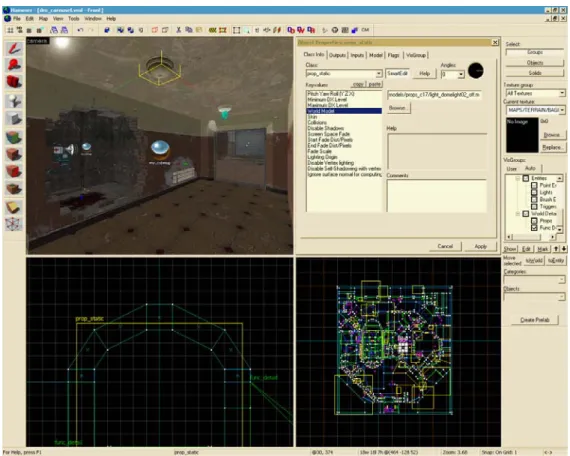
Figure 5. Screenshot of the Hammer© editor, developed by Valve Software™7. This is the map modification tool for the popular game Half Life 2™.
The second approach, game modification tools (‘mods’ in colloquial language), is very popular as well, but it is more tightly linked to certain game genres, like Role-Playing Games, First-Person Shooters or strategy games. These tools typically allow users to customize their own game-play experience by defining their own maps, levels, and characters. The challenge of the game can be adjusted thereby by modification these elements. This makes the life time of the games much longer as when players are not challenged by the original game any more they can produce their own new levels. That is why these modification tools are sometimes developed and distributed by the own company that created the game. That is the case of id
7