Calhoun: The NPS Institutional Archive
Theses and Dissertations Thesis and Dissertation Collection
2016-09
Securing healthcare's quantified-self data: a
comparative analysis versus personal
financial account aggregators based on
Porter's Five Forces Framework for
competitive forces
Chiang, Catherine H.
Monterey, California: Naval Postgraduate School http://hdl.handle.net/10945/50523
NAVAL
POSTGRADUATE
SCHOOL
MONTEREY, CALIFORNIA
THESIS
Approved for public release. Distribution is unlimited. SECURING HEALTHCARE’S QUANTIFIED-SELF
DATA: A COMPARATIVE ANALYSIS VERSUS PERSONAL FINANCIAL ACCOUNT AGGREGATORS BASED ON PORTER’S FIVE FORCES FRAMEWORK
FOR COMPETITIVE FORCES by
Catherine H. Chiang
September 2016
Thesis Advisor: Rodrigo Nieto-Gomez
REPORT DOCUMENTATION PAGE Form Approved OMB No. 0704-0188
Public reporting burden for this collection of information is estimated to average 1 hour per response, including the time for reviewing instruction, searching existing data sources, gathering and maintaining the data needed, and completing and reviewing the collection of information. Send comments regarding this burden estimate or any other aspect of this collection of information, including suggestions for reducing this burden, to Washington headquarters Services, Directorate for Information Operations and Reports, 1215 Jefferson Davis Highway, Suite 1204, Arlington, VA 22202-4302, and to the Office of Management and Budget, Paperwork Reduction Project (0704-0188) Washington, DC 20503.
1. AGENCY USE ONLY (Leave blank)
2. REPORT DATE September 2016
3. REPORT TYPE AND DATES COVERED Master’s thesis
4. TITLE AND SUBTITLE
SECURING HEALTHCARE’S QUANTIFIED-SELF DATA: A COMPARATIVE ANALYSIS VERSUS PERSONAL FINANCIAL ACCOUNT AGGREGATORS BASED ON PORTER’S FIVE FORCES FRAMEWORK FOR COMPETITIVE FORCES
5. FUNDING NUMBERS
6. AUTHOR(S) Catherine H. Chiang
7. PERFORMING ORGANIZATION NAME(S) AND ADDRESS(ES) Naval Postgraduate School
Monterey, CA 93943-5000
8. PERFORMING
ORGANIZATION REPORT NUMBER
9. SPONSORING /MONITORING AGENCY NAME(S) AND ADDRESS(ES)
N/A
10. SPONSORING / MONITORING AGENCY REPORT NUMBER
11. SUPPLEMENTARY NOTES The views expressed in this thesis are those of the author and do not reflect the official policy or position of the Department of Homeland Security or the U.S. Government. IRB number ____N/A____.
12a. DISTRIBUTION / AVAILABILITY STATEMENT Approved for public release. Distribution is unlimited.
12b. DISTRIBUTION CODE 13. ABSTRACT (maximum 200 words)
This thesis explores possible solutions to secure the aggregation and sharing of healthcare’s quantified-self data, based on lessons from the personal financial industry. To address this concern, Porter’s Five Forces Framework is used to understand how consumers are impacted by the two sectors’ differences in legislation, technology, and security. The analysis in this thesis indicates that consumers of financial account aggregators benefit from more secure and interoperable services. In contrast, users of healthcare aggregators are negatively affected by the healthcare industry’s higher threat of new entrants and the bargaining power of suppliers. Therefore, healthcare leaders should improve consumer benefits by transforming their industry’s competitive forces to mimic those of the financial services industry. To accomplish this goal, industry leaders could focus on filling the gap in the Health Insurance Portability and Accountability Act (HIPAA) for self-generated data, improving security innovations, and attracting third-party developers to secure data interoperability.
14. SUBJECT TERMS
quantified-self movement, data aggregation, data sharing, account aggregators, screen scraping, healthcare, personal finance, Porter’s Five Forces, competitive forces, information security, privacy, data security and interoperability
15. NUMBER OF PAGES 107 16. PRICE CODE 17. SECURITY CLASSIFICATION OF REPORT Unclassified 18. SECURITY CLASSIFICATION OF THIS PAGE Unclassified 19. SECURITY CLASSIFICATION OF ABSTRACT Unclassified 20. LIMITATION OF ABSTRACT UU
NSN 7540-01-280-5500 Standard Form 298 (Rev. 2-89) Prescribed by ANSI Std. 239-18
Approved for public release. Distribution is unlimited.
SECURING HEALTHCARE’S QUANTIFIED-SELF DATA: A COMPARATIVE ANALYSIS VERSUS PERSONAL FINANCIAL ACCOUNT AGGREGATORS
BASED ON PORTER’S FIVE FORCES FRAMEWORK FOR COMPETITIVE FORCES
Catherine H. Chiang Management Program Analyst,
United States Citizenship and Immigration Services B.A., University of California, Berkeley, 2009
Submitted in partial fulfillment of the requirements for the degree of
MASTER OF ARTS IN SECURITY STUDIES (HOMELAND SECURITY AND DEFENSE)
from the
NAVAL POSTGRADUATE SCHOOL September 2016
Approved by: Rodrigo Nieto-Gomez, Ph.D. Thesis Advisor
John Rollins Co-Advisor
Erik Dahl, Ph.D.
Associate Chair of Instruction,
ABSTRACT
This thesis explores possible solutions to secure the aggregation and sharing of healthcare’s quantified-self data, based on lessons from the personal financial industry. To address this concern, Porter’s Five Forces Framework is used to understand how consumers are impacted by the two sectors’ differences in legislation, technology, and security. The analysis in this thesis indicates that consumers of financial account aggregators benefit from more secure and interoperable services. In contrast, users of healthcare aggregators are negatively affected by the healthcare industry’s higher threat of new entrants the and bargaining power of suppliers. Therefore, healthcare leaders should improve consumer benefits by transforming their industry’s competitive forces to mimic those of the financial services industry. To accomplish this goal, industry leaders could focus on filling the gap in the Health Insurance Portability and Accountability Act (HIPAA) for self-generated data, improving security innovations, and attracting third-party developers to secure data interoperability.
TABLE OF CONTENTS
I. INTRODUCTION ... 1
A. RESEARCH QUESTION ... 1
B. PROBLEM STATEMENT ... 1
C. LITERATURE REVIEW ... 3
1. Aggregation, Sharing, and Security Challenges of the Quantified-Self Data ... 4
2. The Most Vulnerable Method of Financial Account Aggregation ... 9 3. Conclusion ... 13 D. RESEARCH DESIGN ... 13 1. Objective... 14 2. Sample Selection ... 14 3. Source Data ... 15 4. Method ... 15 5. Outcome ... 15
II. PERSONAL FINANCE ... 17
A. LEGISLATIONS AND REGULATIONS ... 20
B. TECHNOLOGY ... 23 1. Data Aggregation ... 23 2. Data Sharing ... 27 C. SECURITY ... 29 1. Data Aggregation ... 29 2. Data Sharing ... 31 III. HEALTHCARE ... 33
A. LEGISLATIONS AND REGULATIONS ... 37
B. TECHNOLOGY ... 39 1. Data Aggregation ... 40 2. Data Sharing ... 43 C. SECURITY ... 45 1. Data Aggregation ... 46 2. Data Sharing ... 47
IV. COMPARATIVE ANALYSIS VIA PORTER’S FIVE FORCES FRAMEWORK ... 49
B. THREAT OF NEW ENTRANTS ... 55
1. Comprehensive Legislations as Barriers to Entry ... 55
2. Innovative Security Measures as Barriers to Entry ... 56
C. THREAT OF SUBSTITUTE PRODUCTS OR SERVICES ... 57
1. Microsoft Excel ... 58
2. Other Sources of Substitutes: IFTTT and FreshBooks ... 60
D. BARGAINING POWER OF SUPPLIERS ... 61
E. BARGAINING POWER OF BUYERS ... 63
F. CONCLUSION ... 65
V. CONCLUSION ... 67
A. RECOMMENDATIONS ... 67
1. Fill the Gap in HIPAA ... 67
2. Encourage Industry Security Innovations ... 68
3. Attract Third-Party Developers to Secure Data Interoperability ... 70
B. IMPLEMENTATION STRATEGIES – BUILDING A WINNING COALITION ... 71 1. Industry Standards ... 72 2. Legislative Change ... 74 C. RESEARCH LIMITATIONS ... 75 D. FUTURE RESEARCH ... 76 LIST OF REFERENCES ... 77
LIST OF FIGURES
Figure 1. Consumer Spending Index from Mint. ... 20
Figure 2. Dashboard of Mint. ... 24
Figure 3. Retirement Planner from Personal Capital. ... 26
Figure 4. Graph of Market Trend Comparison from Personal Capital. ... 27
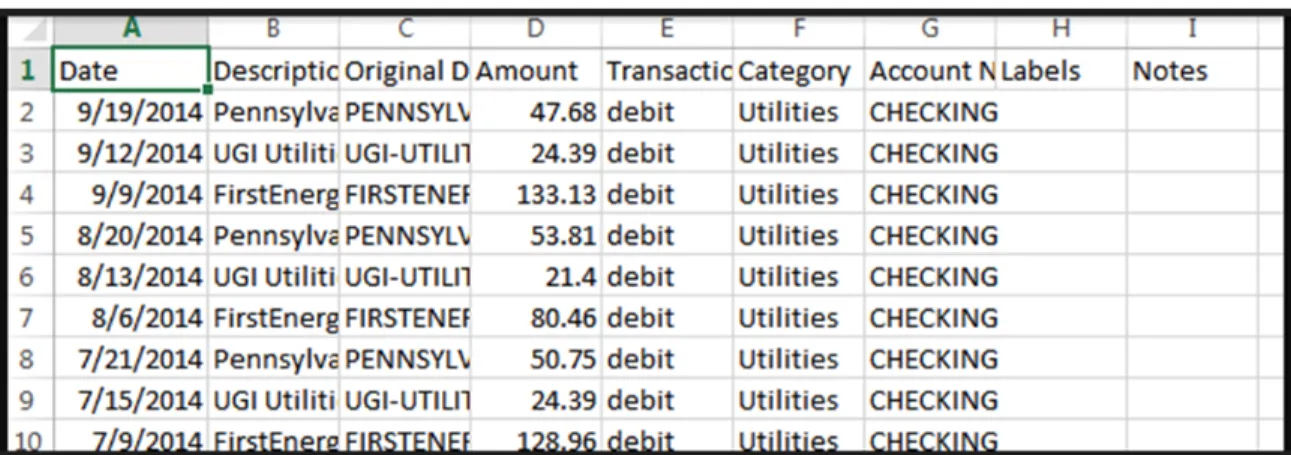
Figure 5. Exportable CSV File from Mint. ... 28
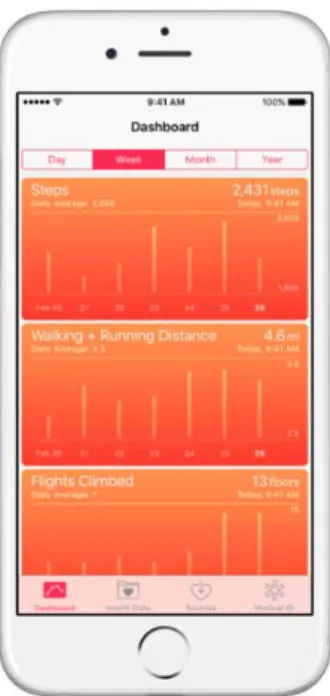
Figure 6. Dashboard of Apple’s Health. ... 40
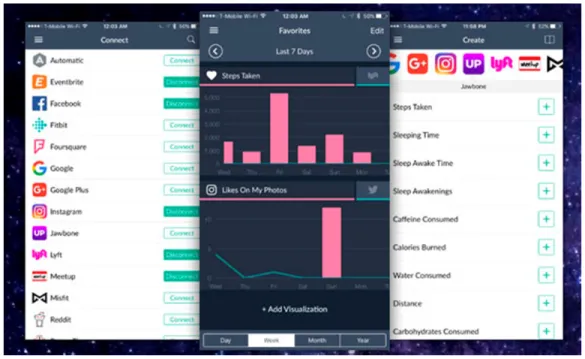
Figure 7. Dashboard of Sherbit. ... 41
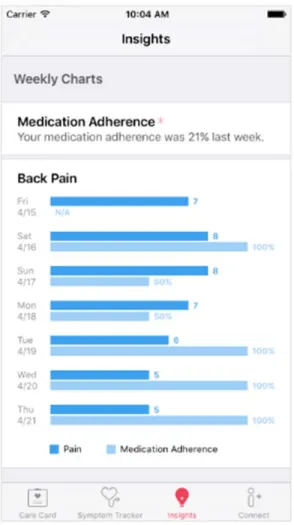
Figure 8. Dashboard of CareKit’s Insight Module. ... 43
Figure 9. XML Data Export File from Apple’s Health. ... 44
LIST OF ACRONYMS AND ABBREVIATIONS
API Application Programming Interface APPS Application Privacy, Protection and Security BMJ British Medical Journal
CSV Common Separated Value
DOW Dow Jones Industrial Average EHR Electronic Health Record FCRA Fair Credit Reporting Act
FDA Food and Drug Administration
FFIEC Federal Financial Institutions Examination Council FTC Federal Trade Commission
GLBA Gramm-Leach-Bailey Act
HIPAA Health Insurance Portability and Accountability Act IEEE Institute of Electrical and Electronics Engineers IFTTT If This Then That
ISO International Organization for Standardization PHI Protected Health Information
PII Personally Identifiable Information PIN Personal Identification Number
PSDO Partner Standards Development Organization RIA Registered Investment Advisors
S&P Standard and Poors
SDO Standards Development Organization SEC Securities and Exchange Commission XML Extensible Markup Language
EXECUTIVE SUMMARY
Healthcare industry’s quantified-self movement empowers individuals via active self-tracking. This movement describes individuals’ use of applications and devices, such as Fitbit, to monitor and manage their health. Most importantly, the granularity of quantified-self data holds the potential to truly personalize healthcare. However, this consolidation of detailed personal data also exponentially increases information security and privacy risks. Ultimately, these vulnerabilities in data aggregation and sharing impede progression towards personalized healthcare. Therefore, this thesis addresses healthcare industry’s lack of security with successful practices from the personal financial sector.
To determine applicable smart practices, a comparative case study was conducted between the financial services and healthcare industries. The comparison focused on three key factors that influence data aggregation and sharing in the two sectors: legislation, technology, and security. These areas signify different ways in which industries impact consumer benefits through relevant security and privacy practices. To discern the effects on consumer benefits, this thesis used Porter’s Five Forces Framework to evaluate the two sectors. The five forces are competitive rivalry, threat of new entrants, threat of substitute products or services, bargaining power of suppliers, and bargaining power of buyers.1
The results of Porter’s Five Forces Framework indicate that consumers benefit more from the personal financial industry in comparison to the healthcare sector. The personal financial industry is not as competitive due to its lower threat of new entrants and bargaining power of suppliers. The financial services sector is more resilient to the threat of new entrants, because of its comprehensive legislation and innovative security measures that serve as
1 Michael E. Porter, Competitive Strategy: Techniques for Analyzing Industries and Competitors: With a New Introduction (New York, NY: The Free Press, 1998),
barriers to entry. Also, since third parties produced most of the financial aggregators, banking institutions have lower bargaining powers as the industry’s suppliers. These weaker forces enable personal financial aggregators to provide their consumers with more secure and interoperable services. Therefore, healthcare leaders should reform their industry’s competitive forces to imitate that of financial services.
Based on the analysis and outcomes, this thesis provides three recommendations to increase consumer benefits in the healthcare industry. First is to fill the gap in the Health Insurance Portability and Accountability Act (HIPAA). Currently, HIPAA does not define consumers as a covered entity. Hence, its provisions do not protect the security and privacy of user-generated health data. In contrast, policymakers are able to extend financial industry’s existing legislation to account aggregators. Thus, users of financial account aggregators continue to enjoy comprehensive protections. To follow suit, policymakers should fill this gap in HIPAA’s coverage to ensure the security and privacy of consumer-generated health data.
The second recommendation is to encourage healthcare industry’s security innovations. Personal finance as an industry prioritizes its security efforts, as demonstrated by account aggregators’ innovative solutions. For example, a leading account aggregator, Mint, has invented and patented its pioneering security process to counter a key vulnerability of the screen scraping aggregation method. Financial account aggregators go to great lengths to reassure their users of information security. This commitment not only deters competitors with sub-standard security measures from entering the market, but it also encourages consumers to adopt account aggregation services. As demonstrated by those in the financial services sector, leaders of the healthcare industry should also focus their efforts on such security innovations.
The last recommendation is to attract third-party developers to facilitate the interoperability of secure data. As producers of most leading financial account aggregators, third-party developers prioritize data integration across
various sources. This focus closely aligns with consumer interests. On the other hand, healthcare corporations assume dominant roles in both manufacturing devices and providing aggregation services. Because of this dual role, corporate leaders tend to be focused solely on the internal interoperability between their devices and the associated apps, rather than external integration with other apps, devices, and platforms. For instance, corporations block public access to their protocols and prevent others from connecting to their devices with proprietary protocols. Moreover, the lack of standardized protocols could result in some databases being more susceptible to hacking, which would cause any connected systems to become vulnerable as well. Therefore, healthcare leaders should moderate corporate ownership to attain secure data integration.
ACKNOWLEDGMENTS
This thesis could not have become a reality without the consistent guidance and support of many individuals. I am greatly indebted to all of them in addition to the ones mentioned here.
First of all, I would like to recognize the faculty and staff of Naval Postgraduate School’s Center for Homeland Defense and Security for providing me with this exceptional opportunity. They have made this program one of my most rewarding experiences.
Specifically, I would like to extend my deepest gratitude to a select few from the school. To my advisors, Rodrigo Nieto-Gomez and John Rollins, thank you for imparting your pivotal insights and for continuing to challenge me throughout this process. Additionally, a special thank you to Nick Drew for your indispensable expertise on Porter’s Five Forces Framework. Finally, to Michelle Pagnani and Chloe Woida, I am grateful for your patient coaching in making me a better writer. It has truly been an honor to work with all of you.
Most importantly, I would like to express my utmost appreciation for my family by dedicating this thesis to them. This thesis would not have been possible without their unwavering support and encouragement. Thank you for all that you do.
I. INTRODUCTION
A. RESEARCH QUESTION
As more consumers adopt technologies to quantify their lives, can the healthcare community apply the experience of securing the aggregation and sharing of financial data to the quantified-self data, without discouraging innovation in the healthcare industry?
B. PROBLEM STATEMENT
The quantified-self movement empowers individuals through active self-monitoring. Self-tracking enables participants to quantify their internal and external experiences with the world.1 As part of the movement, individuals track
inputs into the body, emotional and physiological states, and mental and physical performances via wearable technologies.2 They can immediately observe their
bodies’ responses to changes in their behaviors, which then motivate them to take ownership of their health.3 This instant feedback encourages individuals to
become more aware and interested in self-monitored health.
Aside from empowering individuals, the quantified-self movement has the potential to truly personalize healthcare. While major advancements in genomic mapping have taken place, tracking of physical indicators such as “blood pressure [and] self-reported activity levels” remains manual and archaic.4 The
quantified-self movement enables the automation of detailed physical and physiological monitoring. Better tracking of these responses would lead to more tailored and effective treatment plans.
1 Nadine Razzouk, “Quantified Self,” 2015, http://ft.parsons.edu/skin/wp-content/uploads/ 2015/05/Nadine_RAZZOUK1.pdf.
2 Ibid.
3 Maulik D. Majmudar, Lina Avancini Colucci, and Adam B. Landman, “The Quantified Patient of the Future: Opportunities and Challenges,” Healthcare (Amsterdam, Netherlands) 3, no. 3 (September 2015): 153–56, doi:10.1016/j.hjdsi.2015.02.001.
Another aspect to accomplishing personalized healthcare is the systematic use of big data analytics. Machine-learning algorithms use databases to produce significant findings.5 The findings rely on algorithms to establish
population-level baselines and to pinpoint variability.6 Once abnormal behaviors
or activities are identified, devices could alert their users with personalized messages. For instance, the optimal hours of sleep a night typically vary from person to person.7 Therefore, by monitoring an individual’s sleep pattern,
unusual deviations from the norm could be easily detected. Given Swan’s research showing that sleep deprivation and degradation lead to diabetes,8 a
drop in sleep quality could be indicative of serious health conditions that might require behavioral changes. By making individuals aware of such issues, they could then take preventative actions to improve their health.
Along with the aforementioned benefits, the quantified-self movement also exponentially increases the security risks of aggregated and shared information. Traditional personally identifiable information (PII) mainly consists of identity and contact information. Yet, it already carries serious threats to consumers’ security and privacy. Posing an even greater threat, self-tracking data captures PII at a much higher volume and greater granularity, which could even be used to predict individuals’ future behaviors.9 Unfortunately, since most self-monitoring services
are linked to mobile applications, they retain similar security issues as typical mobile apps.10 Examples of vulnerabilities include location tracking, unencrypted
transmission of personal data, nonexistent privacy policies, contact of multiple
5 Melanie Swan, “The Quantified Self: Fundamental Disruption in Big Data Science and Biological Discovery,” Big Data 1, no. 2 (June 1, 2013): 85–99, doi:10.1089/big.2012.0002.
6 Ibid. 7 Ibid. 8 Ibid.
9 Mario Ballano Barcena, Candid Wueest, and Hon Lau, How Safe Is Your Quantified Self? (Mountain View, CA: Symantec Corporation, August 11, 2014), 19, http://www.symantec.com/ content/en/us/enterprise/media/security_response/whitepapers/how-safe-is-your-quantified-self.pdf.
domains, insecure session management, and unintended data leakages.11 If
these vulnerabilities are exploited, malicious actors could use the stolen information for insurance fraud, identity theft, financial gain, prescription drug abuse, or targeted attacks.12 More importantly, consumers’ lives could be
seriously threatened if healthcare professionals and researchers used falsified or altered data to derive treatment plans and medical findings. The lack of security would not only sabotage the quantified-self movement, but it could also result in aggressive backlashes from endangered patients.
Ultimately, this lack of security when aggregating and sharing quantified-self data impedes the advancement of personalized healthcare. Leading technology companies are attempting to overcome these barriers via recent application releases. To evaluate the effectiveness and security of the healthcare industry’s existing efforts to address this issue, a comparative case study is conducted against successful personal financial aggregators. Specifically, the analysis assesses distinctions between the two industries based on Porter’s Five Forces Framework. Smart practices from the financial services are reviewed to offer recommendations for securing the aggregation and sharing of quantified-self data.
C. LITERATURE REVIEW
This literature review focuses on published research regarding data aggregation and sharing in the healthcare and financial industries. The first section describes the aggregation, sharing, and security issues of the quantified-self data. These identified issues are accompanied by respective mitigation strategies. The next section concentrates on the most vulnerable aggregation method in the financial industry, and possible approaches to manage the risks of this method are discussed subsequently.
11 Ibid.
12 Institute for Critical Infrastructure Technology, “Hacking Healthcare IT in 2016,” January 2016, http://icitech.org/wp-content/uploads/2016/01/ICIT-Brief-Hacking-Healthcare-IT-in-20161.pdf.
1. Aggregation, Sharing, and Security Challenges of the Quantified-Self Data
This section examines aggregation, sharing, and security challenges in the healthcare industry along with potential solutions. One of the challenges is data silo, which is driven by corporations that segregate users’ information by independently storing it within the bounds of their devices or apps. Secondly, corporate leaders are unwilling to focus their efforts on enabling integration with data from other devices or apps. In addition, users’ experiences could be negatively affected by challenges in data quality that stem from duplicate and unverifiable records. Furthermore, quantified-self participants experience increased security and privacy concerns because of the voluminous and frequent accumulation of personal data. The granularity of this data makes protecting individuals’ identities even more difficult.
a. Data Silos
Data silos originate from corporations limiting users from accessing their personal data. Since most consumer-generated healthcare data is collected via mobile applications or wearable devices, this data tends to reside within the bounds of service providers. For instance, users’ access to minute-to-minute Fitbit data is restricted.13 To retrieve their data, users need to request special
access from the Fitbit team.14
The following researchers validate this phenomenon by noting corporate ownership as the primary cause to data fragmentation. As Chris Till states, users’ exercise data is compartmentalized and owned by the application or equipment providers.15 Companies segregate users’ data by containing it within their apps
13 Ernesto Ramirez, “How to Download Minute-by-Minute Fitbit Data,” Quantified Self, September 26, 2014, http://quantifiedself.com/2014/09/download-minute-fitbit-data/.
14 Ibid.
15 Chris Till, “Exercise as Labour: Quantified Self and the Transformation of Exercise into Labour,” Societies 4, no. 3 (August 28, 2014): 446–62, doi:10.3390/soc4030446.
or devices, creating barriers to data aggregation.16 Even though Chris Till’s
research was based mainly on fitness applications, other researchers support similar findings. Melanie Swan discusses the need to aggregate healthcare information across multiple data streams: “wearable electronics, biosensors, mobile phones, genomic data, and cloud-based services.”17 Overcoming these
confinements is the only way to achieve extensive data integration.
Yet, corporate leaders are not producing solutions to eliminate data silos. Shameer et al. pointed out the aforementioned phenomenon of product-specific databases as well as corporations’ lack of effort to create integration tools.18
Without the necessary tools to integrate data, fragmented databases continue to remain isolated. Furthermore, Gay and Leijdekkers indicated that existing protocols are too diverse and not available enough to the public.19 They also
noted that some vendors’ proprietary protocols even prevent third parties from communicating directly with the devices. The heterogeneous and inaccessible protocols further obstruct the integration effort.
As one possible solution to integrate data, application programming interface (API) seems to have gained the widest acclaim. API platforms specify how various data sources should interact.20 Shameer et al. suggest using APIs
as a primary method for integration.21 Also, Gay and Leijdekkers used APIs to
create a mobile application, myFitnessCompanion, which integrates activity
16 Ibid.
17 Swan, “The Quantified Self.”
18 Khader Shameer et al., “Translational Bioinformatics in the Era of Real-Time Biomedical, Healthcare and Wellness Data Streams,” Briefings in Bioinformatics, February 14, 2016, bbv118, doi:10.1093/bib/bbv118.
19 Valerie Gay and Peter Leijdekkers, “Bringing Health and Fitness Data Together for Connected Health Care: Mobile Apps as Enablers of Interoperability,” Journal of Medical Internet Research 17, no. 11 (November 18, 2015), doi:10.2196/jmir.5094.
20 Melanie Swan, “Sensor Mania! The internet of Things, Wearable Computing, Objective Metrics, and the Quantified Self 2.0,” Journal of Sensor and Actuator Networks 1, no. 3 (November 8, 2012): 217–53, doi:10.3390/jsan1030217.
21 Shameer et al., “Translational Bioinformatics in the Era of Real-Time Biomedical, Health Care and Wellness Data Streams.”
trackers, wireless sensors, and servers.22 While this app succeeded in
aggregating data from a variety of sources, it is only available for Android platforms and does not integrate with the official electronic health record (EHR) systems, which block all third-party accesses.23 However, researchers noted
existing efforts to integrate APIs, such as Apple HealthKit or ResearchKit, with EHRs.24 These efforts signify healthcare industry’s attempt to close the gap by
integrating personal informatics with EHRs.25 Based on these publications,
researchers agree that APIs have the potential to solve the data fragmentation issue, though challenges still exist in integrating personal and EHR data.
b. Data Quality
Once aggregated, data quality could be affected by multiple readings and unverifiable information. In regards to data duplication, Gay and Leijdekkers claim that multiple sources of data could result in numerous recordings, such as simultaneous heart rate readings by different devices.26 Since different devices
might not always capture the same readings, such discrepancies could negatively impact the accuracy of medical research or treatment plans.27
Subsequently, data reliability is yet another concern, especially since the quantified-self devices are not regulated.28 Consumers could suffer serious
consequences if medical diagnoses are based on unreliable data from inferior sensors.29
22 Gay and Leijdekkers, “Bringing Health and Fitness Data Together for Connected Healthcare.”
23 Ibid.
24 Shameer et al., “Translational Bioinformatics in the Era of Real-Time Biomedical, Healthcare and Wellness Data Streams.”
25 Ibid.
26 Gay and Leijdekkers, “Bringing Health and Fitness Data Together for Connected Healthcare.”
27 Ibid. 28 Ibid. 29 Ibid.
Fortunately, data duplication and reliability issues are manageable. To minimize data discrepancies, apps can allow users to designate the primary source of real-time data.30 Also, tracking data sources could help to alleviate
reliability issues.31 Consumers, healthcare professionals, and medical
researchers could evaluate data quality based on the reliability of its sources. These straightforward solutions for data duplication and reliability can be easily implemented to improve information quality.
c. Privacy and Security
In addition to data interoperability and quality concerns, quantified-self participants do not want their privacy compromised in exchange for sharing their information. A 2014 American Health Information Management Association Journal article indicated that over 90% of those willing to share their data prioritized the need for anonymity.32 These consumers believe in advancing
healthcare by sharing detailed information about their behaviors, but they insist on maintaining their privacy. According to Diamond et al., privacy is a key attribute in obtaining public trust for information sharing.33 Anonymity drives
voluntary participation, which increases the volume and accuracy of data available for medical diagnoses and research studies.
Notably, privacy is especially important to consumers when sharing their information with the government. Anderson et al. claim that consumers require additional assurance to share information with the government and public health agencies versus hospitals and pharmaceutical companies.34 However, traditional
30 Ibid. 31 Ibid.
32 Harry Rhodes, “Accessing and Using Data from Wearable Fitness Devices” 85, no. 9 (September 2014): 48–50.
33 Carol C. Diamond, Farzad Mostashari, and Clay Shirky, “Collecting And Sharing Data For Population Health: A New Paradigm,” Health Affairs 28, no. 2 (March 1, 2009): 454–66,
doi:10.1377/hlthaff.28.2.454.
34 Catherine L. Anderson and Ritu Agarwal, “The Digitization of Healthcare: Boundary Risks, Emotion, and Consumer Willingness to Disclose Personal Health Information,” Information Systems Research, April 8, 2011, http://pubsonline.informs.org/doi/abs/10.1287/isre.1100.0335.
mechanisms to ensure data privacy, such as HIPAA, need to be revamped to match the current capabilities of data sharing via social networks and other means.35 Rhodes believes that as the industry reaches a level of maturity,
information standardization and governance will be addressed accordingly, along with the need to balance privacy, confidentiality, security, intellectual property, and science.36
Despite the emphasis on privacy, risks of compromising consumers’ identities surge, because detailed personal data is gathered and shared at a high frequency. Swan argues for difficulty in protecting individuals’ identities when a large quantity of personal healthcare data is openly shared.37 This dataset allows
patterns of distinctive characteristics to be tracked. As more behaviors are digitized, these unique characteristics could easily be used to identify individuals.
Apart from privacy, real-life implications of these data also support the need for enhanced security. Swan predicted that data would become an intermediary of individuals’ experiences with reality, and thereby taking on a more intimate role.38 Swan continued to suggest that it would become an
extension of people’s subjective experiences with the potential to change behaviors. In essence, individuals’ experiences are translated into a sequence of numbers. After assessing these values, individuals could adjust how they interact with their surroundings accordingly. Therefore, they could gravely endanger their health if they modified their behaviors based on tampered data. This intimate relationship with the quantified-self data would require more robust security to prevent malicious manipulation.
As a result, possible solutions have been suggested to boost the security of quantified-self data. Based on a white paper published in 2014, Symantec
35 Swan, “Sensor Mania! The internet of Things, Wearable Computing, Objective Metrics, and the Quantified Self 2.0.”
36 Harry Rhodes, “Accessing and Using Data from Wearable Fitness Devices.”
37 Swan, “Sensor Mania! The internet of Things, Wearable Computing, Objective Metrics, and the Quantified Self 2.0.”
Corporation described various security issues with the quantified-self movement and provided possible mitigation strategies for using a single data stream.39
Symantec’s recommendations for users include effective passwords, device-based security measures, full device encryption, and disabling Bluetooth whenever possible. Even though Symantec only focused on vulnerabilities of one data source, it identified risks and solutions that could be applicable to aggregated data as well. On the other hand, Doukas et al. support digital certificates and PKI data encryption to secure the internet of Things gateways that aggregate health data from sensors.40 Their solutions warrant that patients’
data are shared securely with authenticated recipients. As a third option, Diamond et al. claim that collecting only aggregated data will mitigate concerns regarding centralized databases of PIIs.41 Preventing aggregators from collecting
PIIs from start removes any traceability to the participants. Thus, far, despite consensus to prioritize security, researchers have yet to reach an agreement on the best solution to address these challenges.
2. The Most Vulnerable Method of Financial Account Aggregation
Financial account aggregators, like Mint, have succeeded in advancing the security of personal financial services. These web services provide individuals a holistic view of their financial portfolios with ease and security. Despite concerns, none of the financial aggregators in the United States are authorized to transfer funds as of 2002.42 Without the potential risk of
compromising users’ bank accounts, financial aggregators continue to flourish.
39 See Barcena, Wueest, and Lau, How Safe Is Your Quantified Self?”
40 C. Doukas et al., “Enabling Data Protection through PKI Encryption in IoT M-Health Devices,” in 2012 IEEE 12th International Conference on Bioinformatics Bioengineering (BIBE), 2012, 25–29, doi:10.1109/BIBE.2012.6399701.
41 Diamond, Mostashari, and Shirky, “Collecting And Sharing Data For Population Health.” 42 Hiroshi Fujii et al., “E-Aggregation: The Present and Future of Online Financial Services in Asia-Pacific,” SSRN Scholarly Paper (Rochester, NY: Social Science Research Network, July 1, 2002), http://papers.ssrn.com/abstract=376864.
There are three main methods of account aggregation: screen scraping, permissive aggregation, and user-driven aggregation. Screen scraping requires an individual’s authentic username and personal identification number (PIN) for each bank account in order for the aggregator to obtain user’s information from these accounts.43 Permissive aggregation, or direct feed, describes the method
of partnering with financial institutions to obtain direct access to users’ accounts.44 The third method, user-driven, requires users to download agent
software onto their personal computers.45 Then, aggregator services can access
users’ accounts via the authentications stored on users’ computers.46 Given that
screen scraping is the most popular yet least secure method of the three, the subsequent sections primarily focus on exploring its weaknesses and the financial industry’s responses.
a. Vulnerabilities of Screen Scraping
The screen scraping method is accompanied by three main vulnerabilities. The Federal Financial Institutions Examination Council (FFIEC) warned against screen scraping because of its associated weaknesses.47 First is the need to
surrender users’ login information to the account aggregators.48 By surrendering
their account access information, consumers amplify the risk of their accounts being compromised. Delivery of accurate data is another concern, since frequent updates to banks’ websites could result in unreliable data.49 Screen scraping
requires very specific mapping to websites’ layouts, so any changes to the
43 Manish Agrawal et al., “A Conceptual Approach to Information Security in Financial Account Aggregation,” in Proceedings of the 6th International Conference on Electronic Commerce, ICEC ‘04 (New York, NY: ACM, 2004), 619–26, doi:10.1145/1052220.1052299.
44 Ibid. 45 Ibid. 46 Ibid.
47 FFIEC, “FFIEC IT Examination Handbook InfoBase – Appendix D: Aggregation Services,” accessed January 22, 2016,
http://ithandbook.ffiec.gov/it-booklets/e-banking/appendix-d-aggregation-services.aspx. 48 Ibid.
websites would directly impact data quality. Also, these aggregators need to proactively seek out and capture new information, because they are not synchronized with users’ bank accounts for automatic updates. As a result, the aggregation services might not always display the most current account data. Third is users’ dependency on aggregators’ ability to protect their usernames and passwords.50 This vulnerability poses the greatest threat to information security.
Ann Spiotto confirmed that screen scraping is the most popular yet dangerous method, because of its possible data errors, delays in transmission, and security issues relating to the use of consumers’ usernames and PINs.51 In essence,
screen scraping is vulnerable predominantly because it requires users to surrender their bank accounts’ logon information.
In contrast to screen scraping, user-driven agent and direct feed are perceived to be more secure because neither requires users to surrender their account information. For user-driven agent software, Agrawal et al. indicated that this alternative was introduced solely due to strong security concerns regarding screen scraping.52 They also stated that the user-driven method is perceived to
be more secure, because it does not require users to surrender their account logon information. In regards to direct feed, FFIEC reasoned it to be a more reliable and traceable method compared to screen scraping.53 Despite FFIEC’s
preference for direct feed, this method relies heavily on the partnership between aggregators and financial institutions, thus making it more difficult to pursue.
b. Suggested Solutions
Since screen scraping is unlikely to be completely replaced, researchers have suggested solutions to relief some of its core vulnerabilities. Agrawal et al.
50 Ibid.
51 Ann S. Spiotto, “Financial Account Aggregation: The Liability Perspective,” Fordham Journal of Corporate & Financial Law 8, no. 2 (2003): 557–605.
52 Agrawal et al., “A Conceptual Approach to Information Security in Financial Account Aggregation.”
stated that the primary issue is that banks are unable to differentiate users’ identities.54 Since consumers and aggregators currently share the same
credential, accesses from these two parties are indistinguishable to financial institutions.55 To manage this issue, proposed options include two-password
model and logon pattern.56 The two-password model recommends for banks to
issue different passwords to users and aggregators.57 On the other hand, the
logon pattern detection distinguishes the two groups by identifying aggregators’ automatic logon and logoff patterns versus that of consumers’ manual logons.58
Conversely, banks could reduce security and privacy concerns by taking on an active role in managing account aggregators. The Office of the Comptroller of the Currency of the Administrator of National Banks published a news release in 2001 for the Second Account Aggregation Conference to persuade firms to become an aggregator rather than being aggregated.59 Banks can successfully
assume the aggregator role by overseeing their relationships with third parties and taking on responsibilities to ensure customer privacy.60 Moreover, as noted
by Ann Spiotto,61 banks’ concerns diminished when they tried to partner with
aggregator entities.
Yet even with notable vulnerabilities associated with screen scraping, industry leaders refused unnecessary regulations that would hinder technological progression. Spiotto believes it made more sense to let businesses develop
54 Agrawal et al., “A Conceptual Approach to Information Security in Financial Account Aggregation.”
55 Ibid. 56 Ibid. 57 Ibid. 58 Ibid.
59 Julie L. Williams, “The Impact of Aggregation on the Financial Services Industry” (Second Account Aggregation Conference, Tysons Corner, Virginia: Administrator of National Banks, 2001), 1–7, http://www.occ.gov/static/news-issuances/news-releases/2001/nr-occ-2001-39.pdf.
60 Ibid.
before taking actions out of fear for liability.62 Furthermore, a number of
correspondents argued against regulations that might prevent the creation of innovative solutions that benefit consumers.63 Since existing laws do protect
users of aggregation services from financial losses, there is no immediate need for new regulations until the current ones become insufficient. Most importantly, developers of account aggregators have not declared any security breaches due to vulnerabilities of screen scraping.
3. Conclusion
This literature review demonstrates that there are some areas of consensus as well as some gaps in existing research for the healthcare sector. Currently, quantified-self participants are concerned about their information security and privacy, because of the vast and detailed data collected via healthcare aggregators. However, researchers have not presented consistent solutions. Therefore, given its success in securing the most vulnerable method of data aggregation, the personal financial industry might be able to provide some insights into how healthcare leaders could address securing the aggregation and sharing of quantified-self data.
D. RESEARCH DESIGN
The following sections discuss the study design. The sections include research objective, sample selection, data sources, method, and expected outcomes. To address the research question, this thesis focuses on a comparative study between the personal financial and healthcare industries. The comparison is expected to yield recommendations for healthcare leaders and policymakers.
62 Julie L. Williams, “The Impact of Aggregation on the Financial Services Industry.” 63 Ibid.
1. Objective
The objective of this thesis is to obtain best security and privacy practices from the financial sector to apply to the healthcare industry. As an industry, personal finance has had a history of experience and success in digital information security. On the other hand, the healthcare sector has just started to embark on this journey of building its digital database via the quantified-self movement. Therefore, personal financial industry’s smart practices would help to expedite healthcare sector’s efforts in overcoming relevant security and privacy concerns in order to achieve personalized healthcare.
2. Sample Selection
To compare the two industries, three factors are selected to demonstrate how each sector relates to its consumers. The factors are legislation, technology, and security. These elements represent the different ways that consumers could be impacted by industries’ practices. For legislation, this thesis examines existing laws and regulations relevant to data aggregation and sharing. In terms of technology and security, the functionalities of selected aggregators are assessed with respect to each factor.
The aggregators are selected based on their relevance, amount of publically available information, industry dominance, and distinguishing functionalities. For financial services, Mint (owned by Intuit) and Personal Capital (owned by Yodlee) are used as primary examples given the two services’ reputations, longevity, and popularity among their users. These two services not only represent the most established financial aggregators, but both are also supported by reputable financial software companies. Additionally, Betterment is included for its innovative investments tools.
With the same selection criteria, aggregators developed by Apple and Google are included as predominant examples from the healthcare industry. The specific applications and APIs are Apple Health, HealthKit, ResearchKit, CareKit,
and Google Fit. Lastly, Sherbit, a newly released application, is also studied for its promising capabilities to advance the quantified health.
3. Source Data
This thesis is supported mainly by qualitative data. Data sources include journal articles, research papers, government publications, news reports, and reviews and specifications of apps and APIs. These qualitative data are obtained via online resources such as government websites, Google Scholar, professional associations, Wall Street Journal, Apple, Google, Yodlee, and Intuit. Relevant information from these sources is presented to compare the two industries’ current security measures. It is also used subsequently to determine healthcare sector’s areas of improvement.
4. Method
From the policymakers’ perspective, consumer benefits and protections are of the utmost importance. To understand how different industry’s dynamics impact consumer benefits, a comparative analysis is conducted based on Porter’s Five Forces Framework. First, an overview of each industry is provided, comprising of the aforementioned categories: legislation, technology, and security. Then, to assess how the two industries relate to their consumers, each of the five forces is used as a basis for comparison. Finally, factors contributing to the success of financial account aggregators are evaluated to determine best practices that could be reapplied to the healthcare industry.
5. Outcome
The finished product consists of recommendations to secure healthcare data based on lessons from the financial services. Healthcare leaders could use the outputs from this thesis to better secure the aggregation and sharing of the quantified-self data. As a result, the recommended changes would help to build bigger and more robust databases that benefit the consumers, medical researchers, and healthcare professionals. Additionally, policymakers could
formalize the recommendations as policies or legislations to further safeguard consumers’ information security and privacy.
II. PERSONAL
FINANCE
Traditionally, financial transactions required the tangible movement of money and involvement of brick-and-mortar institutions. Money is a medium of exchange and is used to trade for goods or services.64 Common forms of money
included precious metals, paper currency, and even paper receipts, such as checks.65 The trading of money is recorded as a financial transaction.66 Payment
from one party to another represented the transferring of wealth ownership. For the transaction to take place, individuals needed to physically enter a bank and withdraw money, which are then handed or mailed to the receiving party.67 The
other option is via the exchange of personal checks, which the recipient would then take to the bank to trade for money.68
In contrast, financial transactions today are digitized with the evolution of electronic money and internet finance. Electronic money “exists only in banking computer systems and not held in any physical form.”69 In essence, it is virtual
money represented by numbers transmitted from banks to customers.70 The
widespread adoption of digital currency enabled the development of electronic finance as a new channel to deliver financial management services.71 Electronic
finance is the use of digital communication and computation to provide financial
64 David Wessel, “The Hutchins Center Explains: How Blockchain Could Change the Financial System (part 1),” The Brookings Institution, accessed June 4, 2016,
http://www.brookings.edu/blogs/up-front/posts/2016/01/11-how-blockchain-change-financial-wessel.
65 Ibid. 66 Ibid.
67 NBC News, “What It Was Like Before ATMs and Online Banking,” NBC News, accessed June 4, 2016, http://www.nbcnews.com/video/what-it-was-like-before-atms-and-online-banking-472991811754.
68 Ibid.
69 F. Sameni Keivani, M. Joubarkand, and M. Khodadadi, “A General View on E-Banking” (Roudsar, Iran: Department Accounting, Islamic Azad University, Roudsar and Amlash Branch, n.d.).
70 Ibid. 71 Ibid.
services.72 These services include online banking, electronic fund transfers, and
investments.
Given the growth of internet-based services, financial account aggregators are developed to fill the gap of convenience and efficiency. Typically, an individual have accounts with several organizations. In order to obtain an overview of his or her financial standing, the individual needs to log into each account separately and manually assemble each piece of their financial puzzle. This tedious process can be replaced by adopting an account aggregator. An account aggregator is an entity that collects “financial information transparently from multiple sources and analyzes it.”73 Account aggregation allows for the
convergence of personal financial data. This automated service eliminates the need for consumers to manually gather their financial information from multiple accounts.
Another added benefit, account aggregators empower individuals by providing insights into their financial data. The shift towards electronic finance forces institutions to focus on providing exceptional customer services tailored to the diverse needs of multiple customer segments.74 To meet these needs,
account aggregators deliver personalized financial planning advices with respect to saving, spending, and investing wealth.75 Aggregators do not simply combine
data from various financial accounts. These services recommend behavioral changes to support users in reaching their financial goals.76
Aside from benefiting the consumers, transactional data helps lending institutions with managing credit risks. Typical risk estimates are based on limited
72 Ibid.
73 Fujii et al., “E-Aggregation.”
74 Kate Stalter, “The Future of Banking,” accessed June 4, 2016, http://money.usnews.com/ money/personal-finance/articles/2015/06/29/the-future-of-banking.
75 Ibid.
76 Philip Moeller, “How to Track All Your Money From One Place,” U.S. News & World Report, May 24, 2013, http://money.usnews.com/money/blogs/the-best-life/2013/05/24/how-to-track-all-your-money-from-one-place.
information from the credit bureaus. The use of transactional data projects a much more comprehensive overview of a person or a company’s financial health.77 For instance, the amount of taxes a business pays can indicate its
profitability.78 Furthermore, transactional data could help peer-to-peer lenders to
more accurately differentiate between high and low credit-risk investments and appropriately balance risks across their portfolio.79
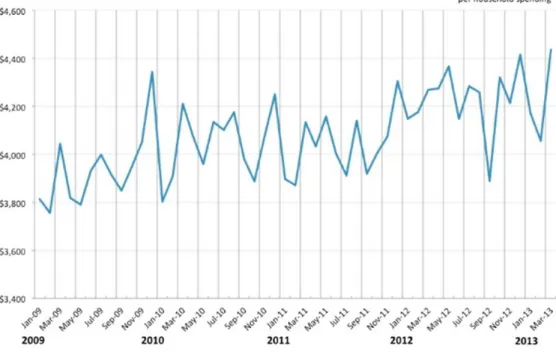
Finally, everyone benefits from the sharing of aggregated data. In 2010, Mint had delivered a public real-time economic index that drilled down to the city level (Figure 1).80 This index was calculated based on aggregated transactional
data from the anonymous two million of Mint’s thirteen million users, who opted to participate in this program.81 Participants could compare their spending habits
to others in the vicinity, or even nationally, to gain insights into how their peers are budgeting.82 In turn, this targeted information help consumers to adjust their
spending decisions accordingly. Additionally, researchers and policymakers could use this index to evaluate real-time economic impacts of policies, global events, and natural disasters.
77 The Economist, “Cracking the Vault,” The Economist, October 24, 2015,
http://www.economist.com/news/finance-and-economics/21676826-grip-banks-have-over-their-customers-weakening-cracking-vault.
78 Ibid. 79 Ibid.
80 BusinessWire, “What Do People Really Spend? Mint Data Delivers Real-Time View,” October 28, 2010, http://www.businesswire.com/news/home/20101028005921/en.
81 Luke Landes, “Mint.com Tracks Two Million Users to Create Spending Index,” accessed June 11, 2016, http://www.consumerismcommentary.com/mint-intuit-consumer-spending-index/.
Figure 1. Consumer Spending Index from Mint.83
In order to reap the aforementioned benefits, the following sections examine three key factors that greatly contributed to the flourishing industry. These key elements are legislation, technology, and security. Legislations and regulations protect consumer benefits. On the other hand, the accompanying technology defines purpose and encourages consumer adoption. Lastly, information security and privacy are imperative to ensure growing participation.
A. LEGISLATIONS AND REGULATIONS
The rise of electronic finance’s popularity urges scrutiny of applicable legislations and regulations. Online financing did not exist prior to the enactment of some of the laws regulating financial services. Therefore, understanding how
policymakers applied existing legislations to new services will be insightful, since their decisions directly impact the growth of an industry.
In regards to security and customer liability, the Federal Reserve Board still has yet to issue clear guidance on the applicability of Regulation E. Enacted in 1978, Regulation E defines a financial institution as one which issues its customers “an ‘access device’ (such as an ATM and PIN)” and allows electronic funds transfer.84 This regulation limits customer liability and holds institutions
responsible for customers’ losses due to security breaches.85 Federal Reserve
Board has sought comments from the public regarding the applicability of Regulation E to account aggregators, but it has yet to issue formal clarifications after the comment period had ended on August 31, 2000.86 However, the
regulation does include language indicating that those services not explicitly stated in the regulation would fall under Federal Trade Commission’s (FTC) jurisdiction.87 Additionally, the Office of the Comptroller of the Currency of the
U.S. Department of the Treasury issued guidance in February 2001 to encourage banking institutions to take on a more conservative interpretation if they choose to provide account aggregation services.88 However, the guidance referred
strictly to banks interested in providing aggregation services. Independent or external aggregators were not explicitly mentioned.
Conversely, the Gramm-Leach-Bailey Act (GLBA) clearly describes confidentiality safeguards for consumers using account aggregation services. The GLBA defined financial institutions as any organization that engages in financial activities, such as data processing, transmission, hardware, and
84 John Hackett, “Domesticating Account Aggregators,” Bank Technology News, accessed June 5, 2016, http://www.americanbanker.com/btn/13_10/-135131-1.html.
85 Ibid. 86 Ibid. 87 Ibid.
88 Office of the Comptroller of the Currency, “Bank-Provided Account Aggregation Services: Guidance to Banks,” February 28, 2001, http://www.occ.gov/news-issuances/bulletins/2001/ bulletin-2001-12.html.
software.89 Thus, the FTC and Federal Reserve Board interpreted GLBA privacy
provisions to include account aggregators.90 The privacy requirements, Title V of
the GLBA, require written policies and disclosures to customers.91 Also, account
aggregators need to allow customers to opt out of sharing information with non-affiliates, and they could only share aggregated information with third parties to support their services.92 These requirements protect information confidentiality
and empower consumers with control over their shared data.
Another possible privacy trigger is the Fair Credit Reporting Act (FCRA). The FCRA regulates consumer reporting agencies, which are institutions that share customers’ information gathered outside of their businesses or services.93
FCRA considers the disclosing organization a consumer reporting agency, unless the receiving party is an affiliate and complies with providing FCRA notification and opt-out provisions.94 If dictated as a consumer reporting agency,
the institution must “ensure that the information it provides will be used for legitimate business purposes, to maintain the integrity of the data, and to provide notice to consumers of their ability to review and correct inaccurate information.”95 These mandates warrant the accuracy and quality of data being
disseminated about the consumers. Applicability of FCRA to account aggregators will depend on organizations’ data gathering and sharing practices.
Despite having the necessary legislations and regulations in place, none overtly refers to account aggregators. While GLBA is the most clearly interpreted,
89 Kimberly Wierzel, “If You Can’t Beat Them, Join Them: Dara Aggregators and Financial Institutions,” North Carolina Banking Institute 5, no. 1 (April 1, 2001): 457.
90 Ibid. 91 Ibid.
92 Heidi Mandanis Schooner and Michael Taylor, “United Kingdom and United States Reponses to the Regulatory Challenges of Modern Financial Markets,” Texas International Law Journal 38 (2003): 317.
93 Office of the Comptroller of the Currency, “Bank-Provided Account Aggregation Services.” 94 Ibid.
95 Marc S. Roth and Charles Washburn, “Data Brokers Face Blurring Lines, Increased Regulatory Risks,” accessed June 5, 2016, http://www.bna.com/data-brokers-face-blurring-lines/.
Regulation E and FCRA are still left open for interpretation. This level of flexibility seems to display an encouraging attitude towards the advancement of account aggregators.
B. TECHNOLOGY
Account aggregators typically use the screen scraping method to gather users’ information. Screen scraping “involves the simulation of users’ behaviors to access the financial account website and scrape account summary information from the site.”96 Essentially, an aggregator logs into users’ accounts with their
logon information. Then, the aggregator extracts data from accounts’ webpages and consolidates them in one central location. Financial aggregators automate this process as well as summarize and analyze users’ account information. The following two sections examine the most notable aggregation and sharing features of personal financial aggregators.
1. Data Aggregation
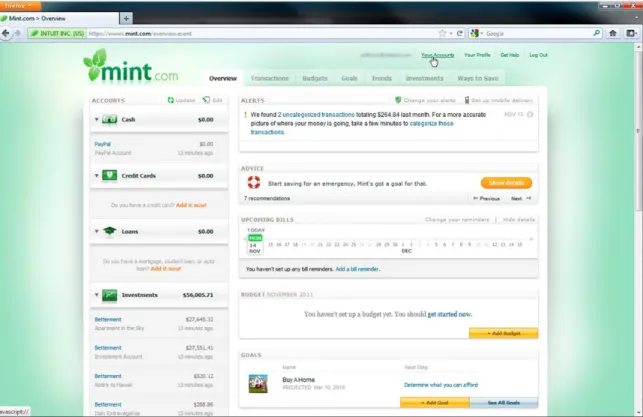
Account aggregators motivate individuals to become their own financial managers with real-time, simple, and insightful dashboards. Delivering a centralized hub, Mint automatically gathers real-time information from users’ bank accounts, credit bureaus, and investment companies.97 The Intuit
supported software saves users the time and effort involved in logging onto various financial accounts to collect up-to-date budget information. Its interface provides an overview of users’ financial health at a glance. In one screen, Mint displays wealth allocation across various accounts as well as trends, alerts, credit score, and personalized advices (Figure 2).98 Along with the overview, Mint
provides additional tabs showing users’ transactions, goals, trends, investments
96 Ann S. Spiotto, “Financial Account Aggregation: The Liability Perspective.” 97 Mint, “All in One,” Mint, accessed February 21, 2016, https://www.mint.com/. 98 Johanna Scott, “New Integration with Mint,” Betterment, November 16, 2011, https://www.betterment.com/resources/inside-betterment/new-integration-with-mint/.
and ways to save. Users can get a current and complete picture of their net worth at any time and on any device.
Figure 2. Dashboard of Mint.99
Proactive monitoring is another key feature of account aggregators. Mint is capable of providing up to twenty types of alerts for its users.100 These warnings
include notifications of over budget, hidden fees, suspicious account activities, and bill reminders.101 Mint signals areas requiring additional attention and
alleviate hidden financial burdens from unsuspecting customers. With financial aggregators, users can now be alerted of any issue regarding their accounts, whereas these anomalies might have gone undetected otherwise.
99 Source: Ibid. 100 Mint, “All in One.” 101 Ibid.
Furthermore, automated adjustments reduce the need for users to make changes manually. Betterment manages users’ investments based on their financial goals. As a robo-advisor, it uses digital algorithms to optimize its portfolio analysis and investment strategies.102 Focused on investing for
retirement funds, Betterment tends to maximize return with minimal risks.103 It
automates users’ retirement planning with its proprietary tools, such as auto-deposits, SmartDeposit, and intelligent account rebalancing.104
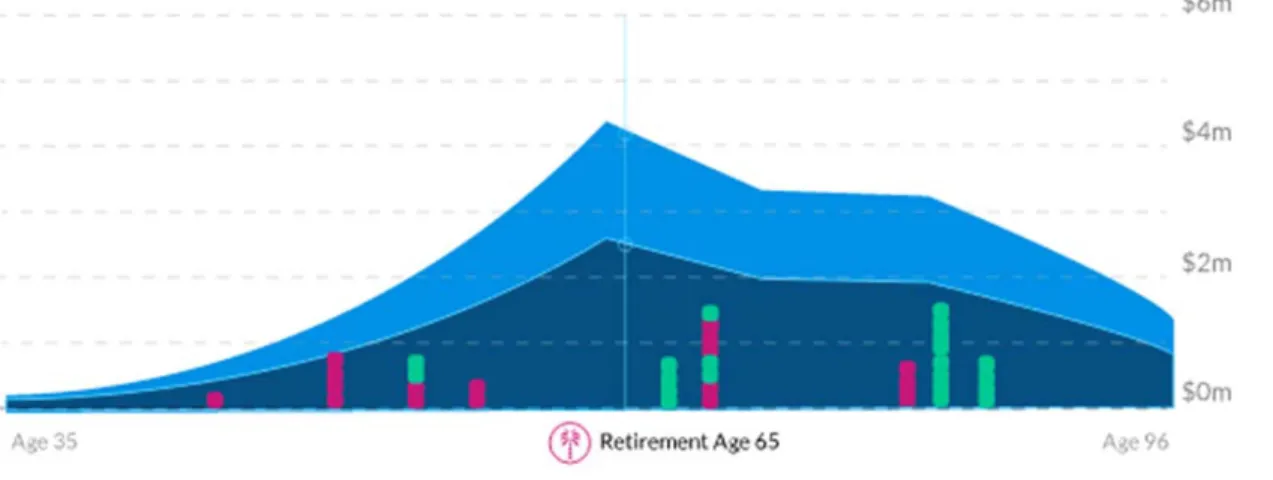
Aside from managing current expenditures and investments, financial aggregators allow users to anticipate and adapt to life-changing events. Personal Capital provides tailored portfolio management with a synopsis of personal net worth, portfolio analysis, and retirement planner (Figure 3).105 Via analytics,
Personal Capital let users see how planned or unplanned events impact their financial health. Specifically, users could experiment and evaluate how certain events affect their retirement goals.106 These events include college tuitions,
purchase of a new home, marriage, and adoption.107 This feature prepares users
for possible adjustments they might need to make in order to accommodate these life events without diverting from their financial goals.
102 Betterment, “Why Betterment,” Betterment, accessed May 30, 2016, https://www.betterment.com/why-betterment/.
103 Ibid. 104 Ibid.
105 Personal Capital, “Free Finance Tools, Calculators & Software,” accessed April 14, 2016, https://www.personalcapital.com.
106 Ibid. 107 Ibid.
Figure 3. Retirement Planner from Personal Capital.108
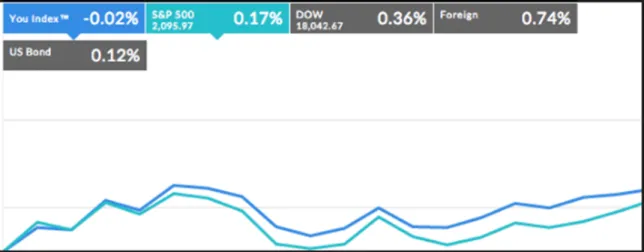
Lastly, users can compare their overall financial standing to the market. Personal Capital allows users to compare their indexed rate of return to that of the stock market (Figure 4).109 Market trends available for comparison include
the Standard and Poors (S&P) 500, Dow Jones Industrial Average (DOW), Foreign Index, and U.S. Bond Index.110 The graph visualizes users’ portfolio
performances against that of the market. Users could use this function as an additional tool to evaluate the growth of their investments with considerations for market conditions.
108 Source: Ibid.
109 Kristin Wong, “How to Start Tracking Your Investments With Personal Capital,” Two Cents, accessed May 30, 2016, http://twocents.lifehacker.com/how-to-start-tracking-your-investments-with-personal-ca-1697801188.
Figure 4. Graph of Market Trend Comparison from Personal Capital.111
2. Data Sharing
Users can obtain their financial data from account aggregators. Transactional data from Mint can be exported as a common separated value (CSV) file (Figure 5).112 Users are then able to share this raw data or perform
any additional analysis to their liking. Mint empowers users by providing them the option to access, share, and own their aggregated financial data.
111 Source: Ibid.
112 Emily Price, “10 Things You Didn’t Know Mint Could Do,” Mashable, accessed April 15, 2016, http://mashable.com/2012/08/22/mint-tips/.
Figure 5. Exportable CSV File from Mint.113
Moreover, account aggregators allow users to designate an additional party to be informed. Mint’s weekly summaries are “built for two.”114 Users can
elect to have a partner to also receive account updates. Correspondingly, Betterment provides the option for joint accounts.115 This option allows both
account holders to create common goals, transfer funds, change allocations, and monitor the account.
Aside from sharing information with friends and family, personal financial aggregators connect users to professional advisors as well. Users of Personal Capital have access to dedicated advisors to help them create a “globally diversified investment portfolio tailored around…[their] unique financial goals.”116
These advisors are Registered Investment Advisors (RIA), legally bound act in the clients’ best interests.117 Access to financial expertise can be done remotely
or in-person.118 Personal Capital provides a hybrid model of technologically
113 Source: Imgur, “Imgur: The Most Awesome Images on the Internet,” Imgur, accessed June 12, 2016, http://imgur.com/TbSKGAl.
114 Price, “10 Things You Didn’t Know Mint Could Do.”
115 Betterment, “Betterment Joint Accounts,” accessed June 12, 2016, http://support.betterment.com/customer/portal/topics/749330-joint-accounts.
116 Personal Capital, “Free Finance Tools, Calculators & Software.” 117 Ibid.
enhanced advising, combining both robo-advising and dedicated financial advisors.
C. SECURITY
Despite the technological benefits of screen scraping, its associated risks need to be examined as well. As the most convenient method of account aggregation, screen scraping is also the most vulnerable. Therefore, it would be invaluable to review some of the personal financial industry’s countermeasures. The following sections explore security practices implemented by developers of financial aggregators.
1. Data Aggregation
Developers of financial account aggregators model their security level to that of the brick-and-mortar institutions. With respect to security, financial institutions have earned their position as the standards of excellence with their vast experiences and positive reputations. To model after these institutions, Mint implemented triple-layered bank-level security features, including “128-bit SSL encryption and physical security standards.”119 By mimicking banks’ security
measures, account aggregators could more easily gain consumers’ confidence.
Coupled with bank-level security, account aggregators store customers’ credentials separately to protect users’ identities. For both Personal Capital and Mint, users’ bank account credentials are stored separately from their financial data. Personal Capital stores users’ credentials on Yodlee’s database and never sends credentials to users’ web browsers.120 On the other hand, Mint stores
users’ credentials on its own server, which is locked in the cage of an unmarked building.121 This segregation of data storage minimizes risks in the event of a
119 Jennifer Saranow Schultz, “Should You Trust Mint.com?,” Bucks Blog, 1278443106, http://bucks.blogs.nytimes.com/2010/07/06/should-you-trust-mint-com/.
120 Personal Capital, “Financial Planning Software & Finance Apps,” Personal Capital, accessed April 16, 2016, https://www.personalcapital.com.
121 Jennifer Saranow Schultz, “Should You Trust Mint.com?” New York Times, accessed February 7, 2016, http://bucks.blogs.nytimes.com/2010/07/06/should-you-trust-mint-com/?_r=0.