2015
Information Seeking
During Pregnancy:
Exploring the Changing Landscape and
Planning for the Future
Information Seeking During Pregnancy
2015
Authors
Rachel McDougall, Public Health Nurse, Wellington-Dufferin-Guelph Public Health Kelly Ecclestone, Public Health Nurse, Wellington-Dufferin-Guelph Public Health
Acknowledgements
Liz Robson, Manager, Reproductive Health, Wellington-Dufferin-Guelph Public Health
Melissa Potwarka, Reproductive Heath Manager (A), Wellington-Dufferin-Guelph Public Health Jessica Wood,Public Health Nurse, Wellington-Dufferin-Guelph Public Health
Mai Miner, Data Analyst, Wellington-Dufferin-Guelph Public Health
Meghan Wiles, Health Promotion Specialist, Wellington-Dufferin-Guelph Public Health Patrick Seliske, Epidemiologist, Wellington-Dufferin-Guelph Public Health
April 2015
©Wellington-Dufferin-Guelph Public Health 2015 For more information, please contact:
Reproductive Health Program
Wellington-Dufferin-Guelph Public Health 474 Wellington Road #18, Suite 100 RR#1 Fergus, ON, N1M 2W3 T: 1-800-265-7293
www.wdgpublichealth.ca
Terms of use
Information in this report has been produced with the intent that it be readily available for personal or public non-commercial use and may be reproduced, in part or in whole, and by any means, without further permission. Users are required to:
Exercise due diligence in ensuring the accuracy of the materials reproduced; and Reference the report using the citation below, giving full acknowledgement to Wellington-Dufferin-Guelph Public Health.
Citation
Wellington-Dufferin-Guelph Public Health (2015). Information Seeking During Pregnancy: Exploring the Changing Landscape and Planning for the Future. Guelph, Ontario.
Information Seeking During Pregnancy
2015
Table of Contents
Executive Summary ... 4 Introduction ... 4 Methods ... 4 Sample Population ... 5 Results ... 5 Recommendations... 6 Conclusion ... 7 Introduction ... 8 Objectives ... 9 Methodology ... 9 Survey Development ... 9 Recruitment ... 9 Sample Population ...11 Analysis ...13 Limitations ...13 Results ...14 Demographics ...14Sources of Pregnancy Information ...17
Public Health as an Information Source ...21
Public Health Prenatal Classes...21
Public Health Service Exploration ...22
Internet Use & Pregnancy...25
Key Findings ...28
Healthcare Providers and Websites Are Most Useful Sources of Information ...29
Public Health Viewed as a Trustworthy Source of Information ...29
Online Information & the Role of Healthcare Providers ...30
Recommendations ...30
Multipronged Communication Strategy ...30
Healthcare Provider Outreach ...32
Public Health Prenatal Program Evaluation ...32
Conclusion ...33
References ...34
Information Seeking During Pregnancy
2015
Executive Summary
Introduction
Public health programs are created on the foundation of evidence informed practice. The goal of the Reproductive Health Program Standard is “to enable individuals and families to achieve optimal preconception health, experience a healthy pregnancy, have the healthiest newborn(s) possible, and be prepared for parenthood” (Ontario Ministry of Health and Long-Term Care, 2010). In order to achieve this goal, the Reproductive Health Program team at Wellington-Dufferin-Guelph Public Health (WDGPH) conducted a literature review to understand how pregnant women access or receive information about pregnancy. One of the recommendations from this review was to conduct a survey with pregnant women in Wellington, Dufferin and Guelph (WDG) to better understand the pregnancy information needs and interests of the local population. Promising approaches and tools identified in the literature review guided the development of the local survey, focusing on: 1) information technology (i.e., text messaging, apps, email, and social media), 2) health care provider outreach, and 3) public awareness. The objectives of the local survey for pregnant women were to:
1. Determine how pregnant women in WDG are accessing pregnancy related information 2. Learn which sources of information are most useful
3. Understand how pregnant women in WDG would like to receive pregnancy related information from WDGPH
4. Gain insight into the role of healthcare providers in relation to Internet-based resources; including the distribution of resources to pregnant clients and discussing Internet-based information accessed by them.
Methods
The community survey was developed by Public Health Nurses from the Reproductive Health Program, in consultation with the Program Manager, a Health Promotion Specialist, Data Analysts and an Epidemiologist. All survey materials were reviewed and approved by the WDGPH Ethics Review Board. The survey involved 37 brief questions; predominantly quantitative in nature. The survey was uploaded to Fluid Surveys and was available online to participants. Participants had the option to complete hard copies of the survey at several healthcare provider offices, or to complete the survey on the phone by calling WDGPH. The survey was available to participants from November 21, 2013 to January 31, 2014. Promotional postcards and posters were
designed and distributed through WDGPH programs and other community partners. Strategies were employed to optimize representation from a variety of demographics and all geographic areas within WDG.
Information Seeking During Pregnancy
2015
Sample Population
A total of 237 pregnant women participated in the survey; 27 of these women lived outside the geographic areas served by WDGPH, or did not provide location of residence. As a result, responses from 210 participants were included in the analysis. Participants represented all geographic areas served by WDGPH, including both urban and rural, with the exception of the municipality of East Garafraxa. Participants are the total number of women who completed the survey, whereas respondents are the number of women who answered a particular question contributing to the results outlined below.
Results
Sources of Pregnancy Information
Of the 202 respondents, 48% (n=96) reported their healthcare provider as the most useful source of information.
The top five sources of information identified by respondents (n=204), when asked to select all that apply, included:
o healthcare provider by 89% (n=182) o websites by 84% (n=172)
o friends or family by 81% (n=166) o books by 79% (n=162)
o pamphlets by 48% (n=98)
Public Health as an Information Source
Of the 204 respondents, 84% (n=171) identified WDGPH as a trustworthy source, while 15% (n=30) were unsure.
Public Health Prenatal Classes
Of the 204 respondents, 36% (n=73) had taken or planned to take prenatal classes with WDGPH. An additional 13% (n=27) were undecided.
Just over half of the 204 respondents (51%, n=104) reported they would not be taking prenatal classes with WDGPH.
Women who attended WDGPH prenatal classes were more likely to express interest in other WDGPH services.
Public Health Service Exploration
Of the 197 respondents, 58% were interested in both online chat (n=115) and telephone (n=114) communication with WDGPH.
Of the 200 respondents, 76% (n=152) were interested in communication from WDGPH via e-newsletter.
Of the 197 respondents, 50% (n=99) were interested in Facebook communication with WDGPH.
Information Seeking During Pregnancy
2015
Recommendations
Wellington-Dufferin-Guelph Public Health’s goal is to engage all women during the prenatal period. Based on the key findings from the community survey, supported by the literature review, it is recommended that WDGPH develop a multipronged communication and healthcare provider outreach strategy to most effectively reach women in the prenatal period. Further exploration and evaluation of the WDGPH Prenatal Program is also recommended to better understand the impact on pregnant women who participate, as well as the reasons why pregnant women choose not to participate. These recommendations are further described below.
Multipronged Communication Strategy
Telephone supportDevelop a marketing strategy to increase the number of calls to KIDS LINE during the prenatal period. KIDS LINE is an established telephone information line for parents and parents-to-be.
E-newsletter
Expand the current WDGPH parenting e-newsletter to include additional prenatal content. Wellington-Dufferin-Guelph Public Health has an existing e-newsletter subscription service, adapted from Grey Bruce Public Health’s Let’s Grow newsletter, which includes one newsletter during the prenatal period and 12 additional e-newsletters for parents who have children from birth to five years of age. Further expansion of the WDGPH e-newsletter prenatal content is recommended.
Develop and implement a promotion plan targeting expectant parents with a goal of increasing the number of expectant families subscribing to the e-newsletter.
Develop an evaluation plan targeting expectant parents who receive the e-newsletter.
Social Media
Build on the current Child Health Twitter account (@KIDSLINEonline), to develop a broad social media strategy using other platforms, such as Facebook, with a focus on the prenatal period.
Health Care Provider Outreach
Increase the capacity of healthcare providers to direct their clients to reputable online prenatal sources.
Explore existing best practices or promising approaches to support healthcare providers in the transfer of reputable online sources to their patients.
Engage in a consultation process with key healthcare providers from a variety of disciplines and agencies with the following objectives in mind:
1. Identify prenatal health champions
2. Share findings from the literature review and community survey, emphasizing the importance of the interface between healthcare providers and online information
Information Seeking During Pregnancy
2015
3. Determine how WDGPH can best support healthcare providers in providing reputable online sources to patients
Public Health Prenatal Program Evaluation
Address a gap in the community survey by developing and implementing a comprehensive prenatal program evaluation to answer the following questions:
1. What other prenatal programs exist locally, provincially and/or nationally? 2. Are WDGPH prenatal classes meeting the needs of those who attend?
3. For those who do not attend WDGPH prenatal classes, what are the factors that influence that decision?
4. How can WDGPH best support the needs of those who choose not to attend prenatal classes?
Conclusion
A literature review and community survey identified sources of information women are using, or are interested in using to obtain prenatal information. Healthcare providers were found to have a unique and valuable role in disseminating pregnancy related information, with the potential to guide women to reputable online sources. Pregnant women also indicated interest in multiple communication platforms with WDGPH, including Facebook, one-on-one telephone
conversations, and email newsletters. Based on these findings, WDGPH will develop a
multipronged communication strategy and health care provider outreach strategy to effectively reach as many women as possible during the prenatal period. To address gaps in the survey, WDGPH will also develop and implement a comprehensive prenatal education evaluation to identify outstanding needs and potential opportunities that exist in current prenatal
Information Seeking During Pregnancy
2015
Introduction
Public health programs are created on the foundation of evidence informed practice, thus being responsive to the needs and emerging issues of the communities they serve. The Ontario Public Health Standards (OPHS) specifically require public health agencies to analyze surveillance data, influence the development and implementation of healthy policies, increase public
awareness, and provide advice and information to link people to programs and services (Ontario Ministry of Health and Long-Term Care, 2014). The goal of the Reproductive Health Program Standard is “to enable individuals and families to achieve optimal preconception health,
experience a healthy pregnancy, have the healthiest newborn(s) possible, and be prepared for parenthood” (Ontario Ministry of Health and Long-Term Care, 2010).
These foundational and program specific standards led the Reproductive Health Program team at Wellington-Dufferin-Guelph Public Health (WDGPH) to conduct a literature review to address the following research question: How are pregnant women accessing or receiving information about pregnancy? One of the resulting recommendations was to conduct a survey with pregnant women in Wellington, Dufferin and Guelph (WDG) to understand their needs and interests regarding pregnancy related information.
The survey was designed to address any outstanding questions from the literature review and provide a better understanding of the local context. Promising approaches and tools identified in the literature review guided the development of the local survey, focusing on: 1) information technology (i.e., text messaging, apps, email, and social media), 2) health care provider
outreach, and 3) public awareness.Specifically, the following questions were considered during survey development:
How do pregnant women in WDG currently access pregnancy information? How do pregnant women want to receive information from WDGPH?
What are the most effective strategies for WDGPH to reach pregnant women based on parity, age, residence and education?
Are individuals who attend WDGPH prenatal classes different (e.g., parity, age, location of residence, education, information sources used) than those who do not?
Do health care providers offer Internet-based resources to their patients?
Do healthcare providers discuss the quality of Internet-based resources and/or patient comprehension of Internet-based information with patients?
Recommendations based on the survey analysis, supported by the literature review findings, will guide future program planning for the Reproductive Health Program at WDGPH and identify new ways that WDGPH can engage pregnant women in our communities. These new approaches will augment the programs and services already provided.
Information Seeking During Pregnancy
2015
Objectives
The objectives of the local survey for pregnant women were to:
1. Determine how pregnant women in WDG are accessing pregnancy related information. 2. Learn which sources of information are most useful.
3. Understand how pregnant women in WDG would like to receive pregnancy related information from WDGPH.
4. Gain insight into the role of healthcare providers in relation to Internet-based resources; including the distribution of resources to pregnant clients and discussing Internet-based information accessed by them.
Methodology
Survey Development
The community survey was developed by Public Health Nurses from the Reproductive Health Program, in consultation with the Program Manager, a Health Promotion Specialist, Data Analysts and an Epidemiologist. All survey materials were reviewed and approved by the WDGPH Ethics Review Board. The survey involved 37 brief questions; predominantly
quantitative in nature. Each survey question was optional, which often resulted in less than a 100% response rate. Blank responses are only discussed in this report when they exceeded 10% of the total responses.
Recruitment
The survey was uploaded to Fluid Surveys and was available online to participants from November 21, 2013 to January 31, 2014. In an attempt to reach a broader sample population, the survey was also available in hard copy at several healthcare provider offices. Participants also had the option to complete the survey by telephone. Two women called to inquire about completing the survey by telephone, but neither met the eligibility criteria. All pregnant women who completed the survey were offered a $5 Tim Horton’s gift card and a chance to win a $50 Shoppers Drug Mart gift card as a token of appreciation.
Several promotion materials were developed, including postcards and posters (Figure 2). These materials were distributed through WDGPH programs and through other community partners. Specifically, health care providers throughout WDG were asked to distribute and promote this survey, with a focus on obstetricians and midwives. Family doctors who deliver babies in rural communities were included, in an effort to gain representation across all geographic areas within WDG. All participating healthcare providers were asked to display survey promotional materials (i.e., posters and postcards), and whenever possible, promote the survey during face-to-face interactions with their patients. Some healthcare providers chose not to promote the
Information Seeking During Pregnancy
2015
available at rural hospitals providing pre-birth clinics or tours; including Groves Memorial Community Hospital, Headwaters Healthcare Centre and North Wellington Health Care sites. The Guelph Community Health Center (GCHC) provides medical services to high risk families in Guelph. Both GCHC sites promoted the survey in an attempt to reach these families.
Promotional materials and hard copies of the survey were also available at WDGPH’s Canada Prenatal Nutrition Program (CPNP) and the Low German Newcomer Program, which serve diverse populations from many ethnic and cultural backgrounds. Participants of these programs were able to complete the survey with support from interpreters or a Public Health Nurse. Postcards and face-to-face promotion strategies were used at WDGPH prenatal classes during the survey period. At least one prenatal class series was targeted in each geographic area across WDG. Hard copies of the survey were not provided in an attempt to avoid over-representation of women already accessing WDGPH services.
The survey was promoted on the homepage of the WDGPH website and the “Parents and Parents to be” landing page. The survey was also promoted to WDGPH staff through electronic newsletters and emails.
A variety of other promotion avenues were used throughout WDG, including WDGPH flu clinics, Nurturing Neighbourhoods, Ontario Early Years Centres, a local pregnancy counselling service, private baby stores and a midwifery practice Facebook page.
Information Seeking During Pregnancy
2015
Figure 2: Survey Promotional Poster
Sample Population
In order to meet the eligibility criteria for this survey, participants had to be pregnant and reside in WDG. A total of 237 pregnant women participated in the survey; 27 of these women lived outside the geographic areas served by WDGPH, or did not provide location of residence. As a result, only responses from the 210 participants were included in the analysis. For the purposes of this report, people who completed the survey are referred to as participants and those who answered particular questions are referred to as respondents.
Participants represented all geographic areas served by WDGPH, including both urban and rural, with the exception of the municipality of East Garafraxa which was not identified as the
Information Seeking During Pregnancy
2015
geographical area, which is comprised of two counties: Wellington County (including the City of Guelph) and Dufferin County. WDG is located in southwestern Ontario, approximately 100 kilometers west of Toronto.
Figure 1: Geographical area of Wellington-Dufferin-Guelph Public Health
Note: All geographic areas were represented in the sample population, with the exception of East Garafraxa.
Information Seeking During Pregnancy
2015
Analysis
The analysis of the survey results were supported by a Data Analyst, using Microsoft Excel software, in consultation with the Public Health Nurses and Manager from the Reproductive Health Program. This report focuses on the results of the analysis specific to the survey objectives.
Limitations
There are some limitations related to the community survey design, methods and analysis that are worthwhile noting. Although several health care providers in WDG were involved in the survey promotion and recruitment, other healthcare providers elected not to participate, and others were not contacted by WDGPH, due to time and resource constraints. Of those healthcare providers who promoted the survey, many were unable to make hard copies available, due to challenges in remaining compliant with provincial privacy legislation requirements.
Uptake of the survey among pregnant women may have been affected by whether healthcare provider offices “actively” promoted the survey (i.e., spoke with or handed promotional materials to patients) or “passively” promoted the survey (i.e., displaying materials for patients to see or take). Uptake of promotional material and the survey may have also been impacted by whether the survey was promoted by the healthcare provider or administrative staff. These factors may have resulted in a smaller, less representative, and/or biased sample.
There were some inherent potential limitations for participants completing the survey. First, the survey was self-administered, thereby limiting opportunities for participants to seek clarification about survey questions. Telephone support was available to those requesting assistance, however WDGPH did not receive any requests for telephone support. Second, the survey was only offered in English and the literacy level of the survey was not formally evaluated, possibly excluding those with limited English or lower literacy skills. Interpreters were only available to women completing the survey while attending CPNP. Finally, the primary method of survey completion was online, thereby limiting the online survey to women with access to the internet and the skills needed to complete a survey on line.
The number of surveys completed by teens, new immigrants, those without a high school diploma, and other priority populations was low, thereby limiting the ability to generalize results to these groups.
By design, each survey question was optional to allow participants to continue completing the survey if they chose not to respond to one of the questions. This frequently resulted in a less than 100% response rate for individual questions. The response options did not include “I don’t know” and/or “I prefer not to answer”, thereby making it impossible to determine the reasons for non-responses.
Information Seeking During Pregnancy
2015
Results
Demographics
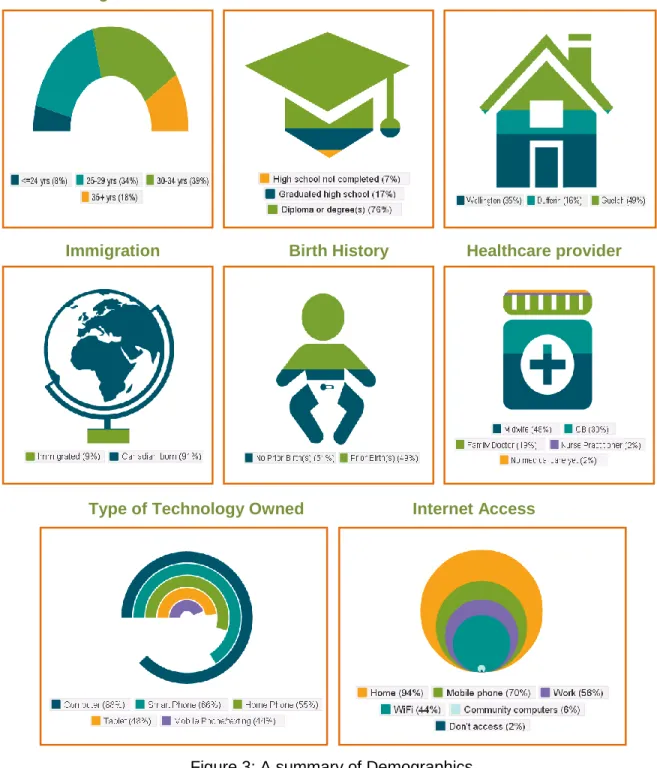
The following demographic indicators were collected: age, education, place of residence, immigration to Canada, birth history, healthcare provider, type of technology owned, and Internet access (Figure 3).
Age
Survey participants were asked “How old are you?” Of the 209 respondents, 8% (n=17) were 24 years of age or younger, 34% (n=72) were 25 to 29 years, 39% (n=82) were 30 to 34 years, and 18% (n=38) were 35 years or older. The age range of respondents was 18 to 43 years, with the majority (73%, n=154) falling between 25 and 34 years of age. This is comparable to the provincial maternal age distribution, whereby women ages 25 to 34 years account for the majority of pregnancies in Ontario (BORN, 2013).
Education
Survey participants were asked “What is your highest level of education?” Of the 206 respondents, the majority (76%, n=157), reported a post-secondary diploma or degree as their highest level of education completed, followed by 17% (n=103) who reported graduating from high school. Seven percent of respondents (7%, n=14) reported that they did not graduate from high school.
Census data for WDG indicates that 48% of residents 25 to 64 years of age have a post-secondary certificate, diploma or degree(s) (WDGPH, 2013a). In comparison, 76% of the
WDGPH
survey respondents reported a post-secondary education, which suggests a higher representation of this cohort in the survey sample.Place of Residence
Survey participants were asked “Where do you live?” Of the 210 respondents, 49% (n=102) reported that they were from the City of Guelph, 37% (n=77) from the County of Wellington, and 15% (n=31) from the County of Dufferin. Both urban and rural areas were represented, with 58% (n=122) of respondents living in an urban area (i.e., City of Guelph or Town of Orangeville) and 42% (n=88) of respondents living in a rural area.
The survey sample closely aligns with the urban to rural distribution for WDG. Furthermore, the survey sample distribution in Wellington, Dufferin and Guelph is comparable to the distribution of live births in each geographic area. (WDGPH, 2013a)
Information Seeking During Pregnancy
2015
Immigration
Survey participants were asked “Were you born in Canada?” If they were not born in Canada, participants were also asked the number of years since they moved to Canada. Of the 207 respondents, 5% (n=10) reported they immigrated to Canada within the last 5 years. The
percent of survey respondents who identified as new immigrants (5%) is comparable to the new immigrant population of WDG (2%) (Census 2006, Statistics Canada). A higher proportion of new immigrant responses would only be expected with a targeted recruitment strategy.
Birth History
Survey participants were asked “Have you given birth before?” Of the 207 respondents, 51% (n=106) had never given birth before. This is similar to provincial population distributions, where 43% of all births in 2011-2012 were among women who had never given birth before (BORN, 2013).
Healthcare Provider
Survey participants were asked “Who is your healthcare provider for this pregnancy?” Of the 206 respondents, 48% (n=98) were under the care of a midwife, 30% (n=61) with an obstetrician, 19% with a family doctor (n=38) and 2% (n=4) with a nurse practitioner.
Type of Technology Owned
Survey participants were asked, “Which of the following do you own?” with the option to select all that apply. Of the 207 respondents, 88% (n=183) owned a computer, 66% (n=137) owned a Smart phone, 55% (n=114) owned a home phone, and 48% (n=99) owned a tablet. Ninety-two percent (92%, n=191) of respondents owned two or more types of technology and 72% (n=149) owned three or more. These trends are comparable to Canadian rates highlighted in a recent report, which found that 62% of the population owned a Smart phone and 39% owned a tablet. The report also noted that technology ownership increased by more than 10% between 2012 and 2013. While there has been an increase in technology ownership among Canadian households, including mobile devices, there has been a simultaneous decrease in telephone landline ownership (CRTC, 2014).
Internet Access
Survey participants were asked “Where do you access the Internet?” with the option to select all that apply, including home, work, community computers (e.g., library), mobile phone, and public Wi-Fi using a personally owned device. Participants also had the option to select, “I do not access the Internet”. Of the 207 respondents, 94% (n=195) reported accessing the Internet from home, 70% (n=144) from mobile phone, 56% (n=115) from work, 44% (n=90) from public Wifi using a personal device, and 6% (n=12) from a community computer. Only 2% (n=4) of
respondents indicated they do not access the Internet from any location. Similarly, the Canadian Internet Use Survey reports that 94% of Canadians under the age of 45 use the Internet
Information Seeking During Pregnancy
2015
Age Education Place of Residence
Immigration Birth History Healthcare provider
Type of Technology Owned Internet Access
Information Seeking During Pregnancy
2015
Sources of Pregnancy Information
Overall Results
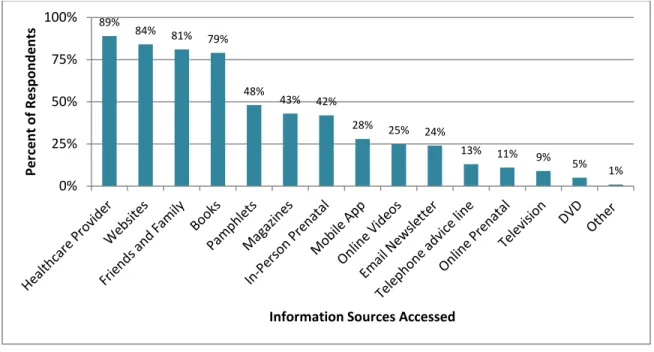
Survey participants were asked “Which of the following have you used to get information about pregnancy?” with the option to select all that apply. Based on 204 respondents, the top five sources of information were healthcare provider by 89% (n=182), websites by 84% (n=172), friends or family by 81% (n=166), books by 79% (n=162), and pamphlets by 48% (n=98) (Figure 4).
Figure 4: Information Sources Accessed During Pregnancy
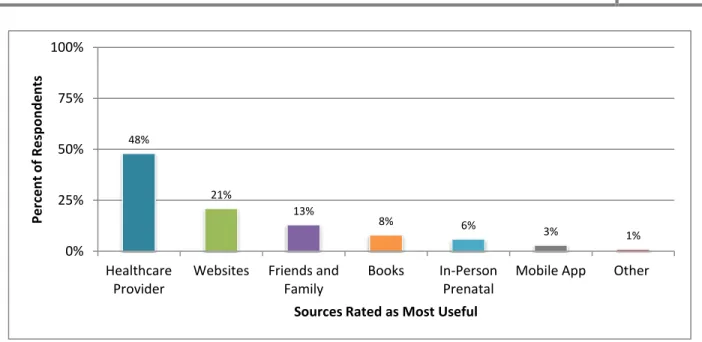
Survey participants were also asked “What are your 3 most useful sources of pregnancy information?” As part of this question, participants were asked to rank these in order of usefulness, with their first choice being the most useful. When examining the results for the 1st choice (from 202 respondents), healthcare providers had the highest percent of respondents (48%, n=96), followed by websites (21%, n=42) and family and friends (13%, n=26). Figure 5 illustrates respondents’ first choice in regards to this question.
89% 84% 81% 79% 48% 43% 42% 28% 25% 24% 13% 11% 9% 5% 1% 0% 25% 50% 75% 100% Per ce n t o f R e sp o n d e n ts
Information Seeking During Pregnancy
2015
Figure 5: 1st Choice for Most Useful Sources of Information
Table 1 provides further detail of the results to this question. For each source of information, the percentages for respondents’ first, second and third choice were summed to determine the total percent of respondents who selected the respective sources as one of their top three.
Source 1st Choice (n=202)* 2nd Choice (n=199)* 3rd Choice (n=197)* Total Healthcare Provider 48% 20% 12% 80% Websites 21% 22% 17% 60% Books 8% 22% 19% 49%
Friends & Family 13% 12% 22% 47%
Table 1: Most Useful Sources of Information, by Total
*Note: Some participants only indicated one or two information sources, resulting in a slightly smaller sample size for 2nd and 3rd choices.
Results by Birth History
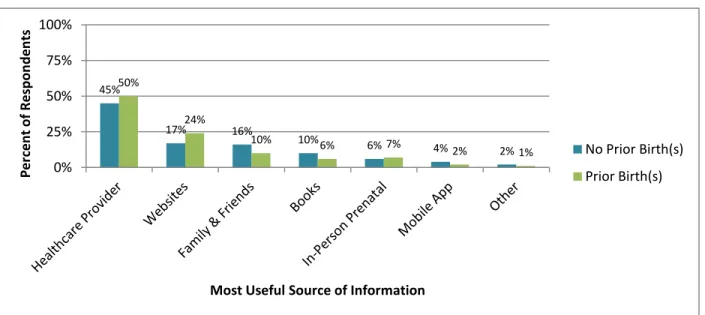
There was a similar distribution for the 1st choice by women who had given birth before and those who had not given birth before, specifically:
Healthcare provider had the highest percent when examining the 1st choice for most useful source of information for both groups (Figure 7).
48% 21% 13% 8% 6% 3% 1% 0% 25% 50% 75% 100% Healthcare Provider
Websites Friends and Family
Books In-Person Prenatal
Mobile App Other
Per ce n t o f R e sp o n d e n ts
Information Seeking During Pregnancy
2015
When examining the total percentage for respondents’ first, second and third choice for most useful source of information, healthcare providers continued to have the highest total percent by both groups.
Figure 7: 1st Choice for Most Useful Sources of Information, by Birth History
Results by Age
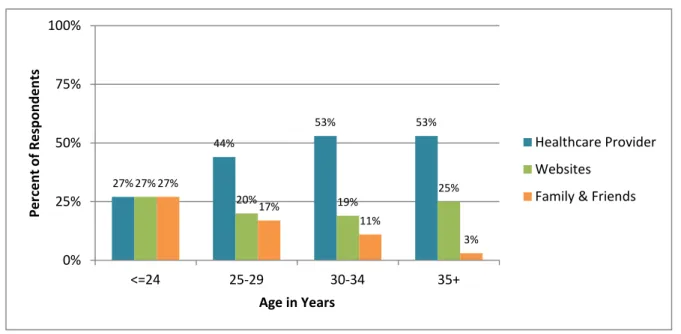
The sources of information reported as most useful varied by respondents’ age, specifically: Respondents ages 24 years and younger were equally likely to select healthcare provider, websites, and family and friends as their 1st choice (Figure 8).
As the age of respondents increased, the percent of respondents selecting healthcare providers as their 1st choice also increased (Figure 8).
As the age of respondents increased, the percent of respondents selecting family and friends as their 1st choice decreased (Figure 8).
Websites were consistently selected by approximately 60% of respondents in each age category as one of the top 3 most useful sources of information (Figure 9).
45% 17% 16% 10% 6% 4% 2% 50% 24% 10% 6% 7% 2% 1% 0% 25% 50% 75% 100% P er ce n t of R esp on d en ts
Most Useful Source of Information
No Prior Birth(s) Prior Birth(s)
Information Seeking During Pregnancy
2015
Figure 8: 1st Choice for Most Useful Sources of Information, by Age
Figure 9: Most Useful Sources of Information, by Total and Age
Note: The percentages displayed in Figure 9 represent the total percent of respondents who selected the above sources as one of their top three choices.
27% 44% 53% 53% 27% 20% 19% 25% 27% 17% 11% 3% 0% 25% 50% 75% 100% <=24 25-29 30-34 35+ Per ce n t o f R e sp o n d e n ts Age in Years Healthcare Provider Websites
Family & Friends
41% 81% 84% 81% 62% 60% 58% 62% 84% 44% 47% 37% 0% 25% 50% 75% 100% <=24 25-29 30-34 35+ Per ce n t o f R e sp o n d e n ts Age in Years Healthcare Provider Websites
Information Seeking During Pregnancy
2015
Results by Place of Residence
When comparing the results by place of residence, there were no significant differences between the urban and rural areas.
Public Health as an Information Source
Survey participants were asked “In your opinion, is Public Health a trustworthy source of pregnancy information?” Of the 204 respondents, 84% (n=171) viewed WDGPH as a trustworthy source, while 15% (n=30) were unsure. Two percent (2%, n=3) of respondents reported that they do not trust WDGPH as a source of pregnancy information.
Public Health Prenatal Classes
Overall Results
Survey participants were asked “Are you currently taking or do you plan to take prenatal classes with Public Health?” Of the 204 respondents, 51% (n=104) did not plan to take WDGPH
prenatal classes, 36% (n=73) were taking or planned to take WDGPH prenatal classes, and 13% (n=27) were unsure.
Results by Birth History
When comparing responses by birth history, it was noted that women who had not given birth before were more likely to take prenatal classes with WDGPH (56%, n=57 of 101 respondents) compared to women who had previously given birth (16%, n=16 of 100 respondents).
Results by Age
When comparing responses by age, the following were noted:
Women in all age categories were equally likely to attend prenatal classes with WDGPH. Women who were 24 years of age or younger had the highest rate of women reporting that they were unsure (31%, n=5 of 16 respondents) about attending prenatal classes with WDGPH.
Results by Place of Residence
Analysis of the results by place of residence indicated that there was a lower percent of respondents from Wellington County who reported attending prenatal classes with WDGPH, compared to respondents from the City of Guelph, Orangeville and rural Dufferin.
Information Seeking During Pregnancy
2015
Results by Education
When comparing results by level of education, more women who did not complete a college or university program reported that they were unsure about attending prenatal classes with WDGPH.
Public Health Service Exploration
Participants were asked to rate their interest in a variety of WDGPH services by indicating “very interested”, “somewhat interested”, “not likely interested”, or “not interested”. The “very
interested” and “somewhat interested” responses were grouped together for analysis and termed “interested”. Similarly, “not likely interested” and “not interested” responses were combined together and referred to as “not interested”.
Overall Results
Survey participants were asked to “Please let us know how interested you would be in having a one-on-one conversation about your pregnancy with a Public Health Nurse using [video chat, texting, online chat or telephone]”. Figure 10 illustrates the results for each of these platforms.
Telephone: Of the 197 women responding, 58% (n=114) were interested
Online Chat: Of the 197 women responding, 58% (n=115) were interested
Text Message: Of the 199 women responding, 35% were interested
Video Chat: Of the 201 women responding, 14% (n=29) were interested
Figure 10: Interest in One-on-One Conversations with Wellington-Dufferin-Guelph Public Health
58% 58% 35% 14% 0% 25% 50% 75% 100%
Telephone Online Chat Text Message Video Chat
Per ce n t o f R e sp o n d e n ts
Information Seeking During Pregnancy
2015
Survey participants were asked to “Please let us know how interested you would be in
communicating with Public Health using [Facebook, Twitter, blog, or message board]”. Figure 11 illustrates the results for each of these platforms.
Facebook: Of the 197 women responding, 50% (n=99) were interested
Message Board: Of the 164 women responding, 35% (n=58) were interested
Blog: Of the 195 women responding, 24% were interested
Twitter: Of the 193 women responding, 11% (n=19) were interested
Figure 11: Interest in Social Media Communication with Wellington-Dufferin-Guelph Public Health
There was a 22% (n=46) non-response rate to the message board component of this question. This can be partially attributed to the fact that the hard-copy version of the survey was
unintentionally missing the “message board” option (i.e., women were only asked to respond about Facebook, Twitter, and blogs on the hard copy survey). It is expected that the non-response rate would have otherwise been less than 10%, as was the case for all other survey questions.
Survey participants were asked to “Please let us know how interested you would be in having Public Health provide information about pregnancy using [emails, audio messages, mobile app, or video]”. Figure 12 illustrates the results for each of these platforms.
Email: Of the 200 women responding, 76% (n=152) were interested
App: Of the 195 women responding, 53% (n=104) were interested
Video: Of the 196 women responding, 48% (n=93) were interested
Podcast: Of the 198 women responding, 20% (n=39) were interested
50% 35% 24% 11% 0% 25% 50% 75% 100%
Facebook Message Board Blog Twitter
Per ce n t o f R e sp o n d e n ts
Information Seeking During Pregnancy
2015
Figure 12: Interest in Other Communication with Wellington-Dufferin-Guelph Public Health
Results by Birth History
When comparing responses by birth history, the following was noted:
Women who had not given birth before were more interested in information from WDGPH.
Women who had previously given birth were slightly more interested in Facebook.
Results by Prenatal Class Attendance
When comparing responses by prenatal class attendance, it was noted that women who attended WDGPH prenatal classes were more likely to express interest in other WDGPH services.
Responses from those women who did not attend WDGPH prenatal classes are illustrated in Figure 13. The information platforms receiving the most interest included:
Email Newsletter: 61%(n=62 of 102 respondents)
Telephone: 50% (n=49 of 99 respondents)
Online Chat: 48%(n=48 of 99 respondents)
Facebook: 44% (n=44 of 100 respondents) 76% 53% 48% 20% 0% 25% 50% 75% 100%
Email App Video Podcast
Per ce n t o f R e sp o n d e n ts
Information Seeking During Pregnancy
2015
Figure 13: Interest in Wellington-Dufferin-Guelph Public Health Information Platforms by Those Not Attending Wellington-Dufferin-Guelph Public Health Prenatal Classes
Internet Use & Pregnancy
Survey participants were asked “Do you use the Internet to get information about pregnancy?” Of the 201 respondents, 95% (n=191) reported using the internet to access pregnancy related information.
Survey participants were then asked “How do you usually find websites about pregnancy?” Of the 189 respondents, 94% (n=177) reported using a search engine, 41% (n=78) reported using sites recommended by family or friends, and 37% (n=70) reported using sites recommended by their healthcare provider.
Survey participants were asked “What pregnancy related topics have you searched for on the Internet?” with the option to select all that apply. Of the 189 respondents, greater than 50% reported seeking information about the following topics:
Fetal development (86%, n=163) Baby products (79%, n=149) Medications (68%, n=129) Physical changes (65%, n=123)
Nutrition (64%, n=121)
Labour and birth (63%, n=119) Breastfeeding (60%, n=113) Prenatal tests (55%, n=104)
Figure 14 provides an overview of all the topics respondents reported seeking information about on the Internet. 50% 48% 23% 9% 44% 27% 18% 9% 61% 41% 33% 13% 0% 25% 50% 75% 100% Per ce n t o f R e sp o n d e n ts
Information Seeking During Pregnancy
2015
Figure 14: Pregnancy Topics Searched on the Internet
Survey participants were asked “Do you discuss the pregnancy information you find on the Internet with your healthcare provider?” From 187 respondents:
20% (n=38) reported they discussed the information with their healthcare provider 63% (n=117) reported that they sometimes discussed the information with their
healthcare provider
17% (n=32) indicated they did not discuss the information with their healthcare provider Survey participants who responded ‘no’ or ‘sometimes’ to the above question were asked “What stops you from talking to your healthcare provider about the information you find on the
Internet?” with the option to select all that apply. A text box was available to provide further information if respondents selected “other”. From 147 respondents, the following reasons were selected:
88% (n=129) “not necessary for all topics”
17% (n=25) “not enough time at the appointment”
3% (n=5) “I am not comfortable discussing the information”
3% (n=4) “I tried but my healthcare provider did not want to discuss” 3% (n=5) “other”
The “other” comments included: “I forget to discuss…”, “language”, “seek out information at the time I think of it”, “[my health care provider] tells me not to use Internet because it is not always true”, “they usually agree or disagree…no advice or recommendation is given.”
86% 79% 68% 65% 64% 63% 60% 55% 46% 41% 40% 38% 27% 22% 10% 5% 0% 25% 50% 75% 100% Per ce n t o f R e sp o n d e n ts Pregnancy Topics
Information Seeking During Pregnancy
2015
Survey participants were asked “Has your healthcare provider suggested online sources of information to use during your pregnancy?” Of the 187 respondents, 55% (n=102) indicated that their healthcare provider did not recommend any online sources of information.
The respondents with Healthcare providers who recommended online sources were then asked “Did you look at the online source(s) suggested by your healthcare provider?” Of the 85
respondents, 89% (n=76) accessed the recommended sources and 7% (n=6) still planned to access the recommended sources (Figure 15).
Figure 15: Percent of Women Accessing Online Sources When Recommended by Health Care Provider
When healthcare providers did not recommend online sources, respondents were asked “How likely would you be to go to online sources recommended by your healthcare provider for
pregnancy information?” Of the 100 respondents, 75% (n=75) indicated they would likely access the recommended online source, and an additional 23% indicated that they may have accessed the online source (Figure 16).
Information Seeking During Pregnancy
2015
Figure 16: Percent of Women Likely to Access Online Sources If Recommended by Health Care Provider
Key Findings
Individuals and communities are relying more heavily on technology and Internet based services than ever before. It is important to evaluate the evidence, including academic sources,
professional literature and local perspectives to understand the relevance and cost
effectiveness of traditional, and technology-based methods of sharing information with pregnant women.
When developing the survey, WDGPH’s Reproductive Health Program team identified the following objectives:
1. To determine how pregnant women in WDG are accessing pregnancy related information. 2. To learn which sources of information are most useful.
3. To understand how pregnant women in WDG would like to receive pregnancy related information from WDGPH.
4. To gain insight into the role of healthcare providers in relation to Internet-based resources for pregnancy related information.
Information Seeking During Pregnancy
2015
Healthcare Providers and Websites Are Most
Useful Sources of Information
When pregnant women were asked where they get information about pregnancy, 89% of respondents reported their healthcare provider as a source of information, closely followed by websites (84%), family and friends (81%), and books (79%). The value of the healthcare provider was further confirmed when survey respondents were asked to rate the usefulness of these sources. Healthcare providers were identified by 48% of survey respondents as their most useful source, compared to websites by 21%, family and friends by 13%, and books by 8%. The 2013 literature review aligns with these survey findings, where websites and healthcare
providers were identified as a common source of pregnancy related information (Public Health, 2013).
When examining the results by age groups, respondents 24 years of age and under were equally likely to select family and friends, healthcare provider and websites as the most useful source of information. When considering the top 3 most useful sources of pregnancy related information for this age group, 84% selected family and friends, 62% selected websites, and 41% selected their healthcare provider. This differs from the other age groups, where healthcare providers were identified as one of the top three most useful sources by 81-84% of respondents and family and friends by 37-47% of respondents.
Public Health Viewed as a Trustworthy Source of
Information
The majority (84%) of survey respondents identified WDGPH as a trustworthy source of pregnancy information, which provides a strong foundation for future WDGPH initiatives. To inform program planning at WDGPH, survey participants were asked to identify types of interactions they would be interested in having with WDGPH. Respondents were most interested in interacting with WDGPH by email (e.g., e-newsletter) (76%), telephone (58%), live online chat (58%) and Facebook (50%).
Women who had never given birth before were more interested in information from WDGPH compared to women who had given birth before, but the difference between these groups was often less than 10%. Women who had never given birth before and who reported attending WDGPH prenatal classes reported the most interest in receiving information from WDGPH. Unfortunately, the survey did not explore why women were choosing not to attend WDGPH prenatal classes.
Information Seeking During Pregnancy
2015
Online Information & the Role of Healthcare Providers
Healthcare providers emerged as the most commonly accessed source of pregnancy
information by 89% of respondents, and websites were the second most commonly accessed source by 84%. A promising approach from the 2013 literature review suggested creating a healthcare provider-technology interface by having “healthcare providers guide their patients to reliable online sources of information“. This interface was explored with survey participants and less than half reported receiving recommendations about online resources from their healthcare provider. However, 89% of women who received direction to online sources of information by their healthcare provider reported accessing those sources. This indicates an important opportunity moving forward.
Recommendations
Based on the key findings from the community survey, supported by the literature review, it is recommended that WDGPH develop a multipronged communication and healthcare provider outreach strategy to most effectively reach women in the prenatal period. Further exploration and evaluation of the WDGPH Prenatal Program is also recommended to better understand the impact on pregnant women who participate, as well as the reasons why pregnant women choose not to participate.
Multipronged Communication Strategy
The goal of a multipronged communication strategy would be to engage all women during the prenatal period. The majority (87%) of survey respondents were interested in telephone, email, or Facebook interactions with WDGPH. These findings, along with current resources, and successes, were considered in recommending the following communication platforms.
KIDS LINE Prenatal Promotion Project
KIDS LINE is a well promoted and established telephone information line primarily accessed by parents, but also available to expectant parents, and those planning a pregnancy. Clients can have a conversation with a Public Health Nurse about preconception and prenatal health, breastfeeding, child growth and development, and parenting.
Survey results indicated that 58% of respondents indicated they would be interested in having a one-on-one telephone conversation with a Public Health Nurse. KIDS LINE received 3,520 calls in 2013 with 129 of those being pregnancy related. Local data indicates that there are
approximately 3,000 live births annually in WDG (WDGPH, 2013a), suggesting that KIDS LINE is underutilized as a prenatal service.
To increase the utilization of KIDS LINE during the prenatal period, a marketing strategy needs to be developed. This will build on pre-existing awareness of KIDS LINE by healthcare
Information Seeking During Pregnancy
2015
promotion campaign will be evaluated by monitoring the uptake of promotional resources and pregnancy related calls.
E-Newsletter Expansion Project
Wellington-Dufferin-Guelph Public Health has an existing e-newsletter subscription service, adapted from Grey Bruce Public Health’s Let’s Grow newsletter, which includes one e-newsletter during the prenatal period and 12 additional e-e-newsletters for parents who have children from birth to five years of age. The e-newsletter is actively promoted during WDGPH prenatal classes, which is the primary promotion strategy targeting the prenatal population. There are more than 2,400 e-newsletter subscribers overall; 175 referred during the prenatal period.
Recommendations to expand the prenatal component of the e-newsletter include the following activities:
Develop additional e-newsletter content for the prenatal period in collaboration with the Child Health Team.
Develop and implement an e-newsletter promotion plan targeting expectant parents. Develop an e-newsletter evaluation plan; including the opportunity for user feedback
related to prenatal content.
Social Media Strategy
Social media continues to change the way individuals and institutions communicate. It has the potential to help Public Health agencies “meet the Ontario Public Health Standards of
surveillance, research and knowledge, program evaluation, and increased public awareness” (Davies et al., 2014). Implementing a WDGPH social media strategy is another important opportunity to reach women during the prenatal period.
Based on the survey findings, the social media platform that received the most interest was Facebook (50%). This is supported by an Ipsos Reid report stating 86% of Internet users have a Facebook account. Although the number of Canadian Twitter profiles rose significantly between 2010 and 2011 (10% to 19% respectively), Facebook remained the favourite for those people with multiple profiles (Ipsos Reid, 2012).
The Child Health program, with the support of the Reproductive Health program and an internal social media committee, is currently implementing a Twitter account. The Twitter account will provide a foundation for a larger social media strategy for Family Health, with a focus on the prenatal period. Moving forward, complementary social media platforms, such as Facebook, will be explored.
Information Seeking During Pregnancy
2015
Healthcare Provider Outreach
Healthcare providers and websites emerged as the most frequent responses when participants were asked where they get their pregnancy information, and when they were asked to rank their three most useful sources of pregnancy information. These findings represent an important opportunity to increase the capacity of healthcare providers to direct their pregnant clients to reputable online sources.
Best Practice Exploration
It is recommended that WDGPH explore existing best practices or promising approaches to support healthcare providers in communicating reputable online sources to their patients.
Healthcare Provider Consultation
It is recommended that WDGPH engage in a consultation process with key healthcare providers from a variety of disciplines and agencies (e.g., family doctors, family health teams, hospitals, midwives, obstetricians, etc.) to achieve the following:
identify prenatal health champions within the healthcare provider community, share findings from the 2013 literature review and the 2014 survey, emphasizing the
importance of the healthcare provider-online interface, and
determine how WDGPH can best support healthcare providers in providing reputable online sources to patients.
Public Health Prenatal Program Evaluation
One of the gaps in the community survey was inquiring about participant’s decisions to enroll in WDGPH prenatal classes. Additional information is needed to understand the factors that
influence clients’ decisions about whether to attend WDGPH prenatal classes. In order to address this gap, it is recommended that WDGPH develop and implement a comprehensive program evaluation to answer the following outstanding questions:
What other prenatal programs exist locally and provincially?
Are WDGPH prenatal classes meeting the needs of those who attend?
For those who do not attend WDGPH prenatal classes, what are the factors that influence that decision?
How can WDGPH best support the needs of those who choose not to attend prenatal classes?
Information Seeking During Pregnancy
2015
Conclusion
A Wellington-Dufferin-Guelph Public Health literature review and community survey identified sources of information women are using, or are interested in using to obtain prenatal information. Healthcare providers were found to have a unique and valuable role in disseminating pregnancy related information, with the potential to guide women to reputable online sources. Pregnant women also indicated interest in multiple communication platforms with WDGPH, including one-on-one telephone conversations, email newsletters, and Facebook.
Based on these findings, WDGPH will develop a multipronged communication strategy and healthcare provider outreach strategy to effectively reach as many women as possible during the prenatal period. To address gaps in the survey, WDGPH will also develop and implement a comprehensive prenatal education evaluation to identify outstanding needs and potential opportunities that exist in current prenatal programming.
Information Seeking During Pregnancy
2015
References
Better Outcomes Registry & Network (BORN) Ontario Program Report 2011–2012. Ottawa, Ontario, 2013. Retrieved from http://www.bornontario.ca/assets/documents/BORN%202011-2012%20Program%20Report.pdf
Canadian Radio-television and Telecommunications Commission. (2014). CRTC releases 2014 report on the state of the Canadian telecommunications industry [Press release]. Retrieved from http://news.gc.ca/web/article-en.do?nid=887589
Davies,J., Dhaliwal,M., Brankley,L., McColl,K., Mai,D., & Williams,M. (2014). Social Media Toolkit for Ontario Public Health Units. Retrieved from
https://www.wdgpublichealth.ca/sites/default/files/wdgphfiles/Social-toolkit-public-health-printable.pdf
Ipsos Reid (2012). The Ipsos Canadian inter@ctive Reid Report Fact Guide: The Definitive Resource on Canadians and the Internet. Retrieved from
http://www.ipsos.ca/common/dl/pdf/Ipsos_InteractiveReidReport_FactGuide_2012.pdf Ontario. Ministry of Health and Long-Term Care (2008). Ontario public health standards. (Revised May 1, 2014). Retrieved from
http://www.health.gov.on.ca/en/pro/programs/publichealth/oph_standards/docs/ophs_2008.pdf Ontario. Ministry of Health and Long-Term Care. Reproductive Health Guidance Document. Toronto, ON: Queen's Printer for Ontario; 2010. Retrieved from
http://www.mhp.gov.on.ca/en/healthy-communities/public-health/guidance-docs/ReproductiveHealth.pdf
Statistics Canada (2010). The Canadian Internet Use Survey (CIUS). Retrieved from http://www.statcan.gc.ca/daily-quotidien/111012/t111012a3-eng.htm
Guelph Public Health. (2013a). Reproductive Health in Wellington-Dufferin-Guelph. Retrieved from http://www.wdgpublichealth.ca/sites/default/files/wdgphfiles/reproductive-health-status-report-2013.pdf
Wellington-Dufferin-Guelph Public Health (2013b). Prenatal Health Project: Synthesis of Findings. Guelph, Ontario.
Information Seeking During Pregnancy
2015
Appendix
Where Do You Find Information About Pregnancy?
Purpose:
Public Health wants to know more about the types of resources pregnant women living in Wellington County, Dufferin County and the City of Guelph are using to get pregnancy
information. Pregnancy information refers to any information gathered during pregnancy about pregnancy, labour and birth, breastfeeding, or getting ready to be a parent. Your feedback will help Public Health better serve the needs of pregnant women and their families in our
community. Inclusion Criteria:
You must be pregnant and living in Wellington County, Dufferin County, or the City of Guelph to participate in this survey.
Participation:
This survey should take about 10 minutes to complete. Your participation in this survey is voluntary, and you may stop completing the survey at any time. You may skip questions that make you feel uncomfortable or that you do not wish to answer. Your decision to complete this survey will not affect the services offered by Public Health and/or participating Healthcare providers.
Confidentiality:
Personal identifying information is not collected on the survey. However, you will need to provide your contact information at the end of the survey if you agree to be contacted about a focus group or if you would like to receive a gift card as described below. All survey responses will be kept confidential.
Incentive:
After you submit your survey, you may provide your contact information to receive a $5 Tim Horton’s gift card and to be entered into a draw for a $50 Shoppers Drug Mart gift card. Your contact information will not be connected with your survey responses and will only be used to provide you with more information about a focus group or to mail you a gift card, if requested.
Information Seeking During Pregnancy
2015
Ethics Approval:
This study has received ethics approval from Wellington-Dufferin-Guelph Public Health and from the Homewood Research Ethics Board on behalf of Groves Memorial Hospital. For any
questions regarding your rights as a research participant please contact: Steve Abdool at 519-824-1010 ext. 2118.
Questions:
If you would like to receive a copy of the survey findings or have any questions about the survey, please contact:
Rachel McDougall at [email protected] (1-800-265-7293 ext. 3600)
Kelly Ecclestone at [email protected] (1-800-265-7293 ext. 2641).
Where Do You Find Information About Pregnancy?
A. Consent to Participate:
1. By selecting “I agree to participate” below you confirm that you understand: a) What is required based on reading the survey cover page.
b) That your participation is voluntary and that you may stop completing the survey at any time.
c) That your responses will be kept confidential. o I agree to participate
o I do not agree to participate
B. Demographic Questions:
2. Are you pregnant?
o
Yes (Go to question 3.)o
No (Sorry, only pregnant women are eligible for this survey.)3. How many weeks have you been pregnant with this baby?
Information Seeking During Pregnancy
2015
4. Who is your healthcare provider for thispregnancy?
o Family Doctor o Obstetrician (OB) o Midwife
o Nurse Practitioner o Walk-in Clinic
o I have not had a medical appointment during this pregnancy
5. Have you been pregnant before? o Yes
o No
6. Have you given birth before? o Yes
o No
7. How old are you? ___________
8. Where do you live?
o Amaranth
o Centre Wellington o City of Guelph o East Garafraxa
o East Luther Grand Valley o Erin o Guelph/Eramosa o Mapleton o Melancthon o Minto o Mono o Mulmur o Orangeville o Puslinch o Shelburne o Wellington North
Information Seeking During Pregnancy
2015
9. What is your postal code? ________________________
10. Were you born in Canada?
o Yes
o No. I have been in Canada for _____ years
11. Is English your first language?
o Yes
o No
12. Would you want to receive pregnancy information in a language other than English?
o Yes o No
13. What isyour highest level of education?
o Completed grade 8 or less
o Some high school but did not complete
o Completed high school
o Some college or university but did not complete
o Completed diploma or undergraduate degree
o Completed graduate degree
14. Which of the following do you own? (Check all that apply.)
o Home phone
o Mobile phone-no texting o Mobile phone-with texting
o Smart phone
o Computer
o Tablet
15. Where do you access the Internet? (Check all that apply.)
o Home
o Work
o Community computers (For example: library)
o Mobile phone
o Public Wifi using my own device (For example: my own laptop/tablet in a coffee shop)
Information Seeking During Pregnancy
2015
C. Sources of Information:
16. Which of the following have you used to get information about pregnancy?
(Check all that apply.)
o Health care provider (For example: doctor/obstetrician, midwife, nurse practitioner)
o Television
o DVDs
o Online videos (For example: You Tube)
o Pamphlets
o Books o Magazines o Websites
o Email newsletter
o Telephone advice line (For example: KIDS LINE,TeleHealth)
o In-person prenatal class or series (with Public Health or other provider) o Online prenatal program (with Public Health or other provider)
o Friends/family
o Mobile pregnancy app (Provide name of app(s) if possible)
____________________________________________________________
o Other (please specify) __________________________________________
17. From the options listed in question 16, what are your 3 most useful sources of
pregnancy information? (#1 is the most useful)
#1 _____________________________
#2 _____________________________
#3 _____________________________
D. Public Health Programs and Services:
18. In your opinion, is Public Health a trustworthy source of pregnancy information?
o Yes o No
Information Seeking During Pregnancy
2015
19. Are you currently taking or do you plan to take prenatal classes with Public Health?
o Yes o No
20. Please let us know how interested you would be in having a one-on-one conversation about your pregnancy with a Public Health Nurse using the following types of technology.
a) Video chat (For example: Skype)
o Very interested
o Somewhat interested
o Not likely interested o Not interested b) Texting
o Very interested
o Somewhat interested
o Not likely interested o Not interested
c) Online chat (For example: enter a question and get a live answer) o Very interested
o Somewhat interested
o Not likely interested o Not interested d) Telephone
o Very interested
o Somewhat interested
o Not likely interested o Not interested
21. Please let us know how interested you would be in communicating with Public Health using the following social media or group forums.
a) Facebook
o Very interested
o Somewhat interested
o Not likely interested o Not interested
Information Seeking During Pregnancy
2015
b) Twitter
o Very interested
o Somewhat interested
o Not likely interested o Not interested c) Blog
o Very interested
o Somewhat interested
o Not likely interested o Not interested d) Message Boards
o Very interested
o Somewhat interested
o Not likely interested o Not interested
22. Please let us know how interested you would be in having Public Health provide information about pregnancy using the following methods. a) Emails (For example: an e-newsletter)
o Very interested
o Somewhat interested
o Not likely interested o Not interested
b) Audio messages (For example: podcasts) o Very interested
o Somewhat interested
o Not likely interested o Not interested c) Mobile app
o Very interested
o Somewhat interested
o Not likely interested o Not interested
Information Seeking During Pregnancy
2015
d) Video (For example: YouTube) o Very interested
o Somewhat interested
o Not likely interested o Not interested
23. Are there any other ways you would like to interact with Public Health about your pregnancy related questions?
o Yes.
Please explain.________________________________________________ o No
E. Internet Use:
24. Do you use the Internet to get information about pregnancy?
o Yes (Continue with questions 25-37)
o No (Go to question 37)
25. What type of websites do you usually use to get information about pregnancy? (Check all that apply.)
o Social Media (For example: Facebook, Twitter, blogs)
o Medical sites (For example: WebMD, Society of Obstetricians and
Gynecologists, Motherisk)
o Government sites (For example: Health Canada, Public Health)
o Consumer sites (to research or buy baby/pregnancy products)
o Discussion forums/LISTSERV
o Information sites (For example: Wikipedia, About.com, ask.com)
o Other, please explain__________________________________________
o I don’t know
26. How do you usually find websites about pregnancy? (Check all that apply.)
o Using a search engine (For example: Google, Yahoo)
o Websites suggested by healthcare provider
o Websites suggested by family or friend
Information Seeking During Pregnancy
2015
27. How do you decide if pregnancy information you find on the Internet is trustworthy? o Please explain _______________________________________________________________ _______________________________________________________________ _______________________________________________________________ o I don’t know
28. What pregnancy related topics have you searched for on the Internet? (Check
all that apply.)
o Baby products (For example: stroller, car seat, cribs) o Breastfeeding
o Environmental exposures (For example: pain, toxic materials, viruses)
o Fetal (baby) development
o Labour and birth
o Lifestyle (For example: exercise, smoking, alcohol, drugs)
o Medications in pregnancy
o Mood/depression
o Nutrition
o Physical/body changes
o Preparing for parenthood o Relationships
o Services/supports in the community o Sex/intimacy
o Tests during pregnancy (For example: genetic screening, Group B Strep test)
o Other, please explain____________________________________________
29. From the list in question 28, what three topics are most important to you? (#1
is most important.) #1_________________________ #2_________________________ #3_________________________
Information Seeking During Pregnancy
2015
F. Internet Information, Your healthcare provider and You:
30. When are you most likely to search the Internet for pregnancy related information?
o Right BEFORE a prenatal appointment with my healthcare provider
o Right AFTER a prenatal appointment with my healthcare provider
o Both before AND after a prenatal appointment with my healthcare provider
o Anytime; appointments with my healthcare provider do not affect when I use
the Internet
o I’m not sure
31. Do you discuss the pregnancy information you find on the Internet with your healthcare provider?
o Yes (skip to question 33)
o Sometimes
o No
32. What stops you from talking to your healthcare provider about the information you find on