1 / 6
Author: Klaus Hübschle, Josha Dittgen, Thomas Gaus Created on: June 2015
Version: 1.0
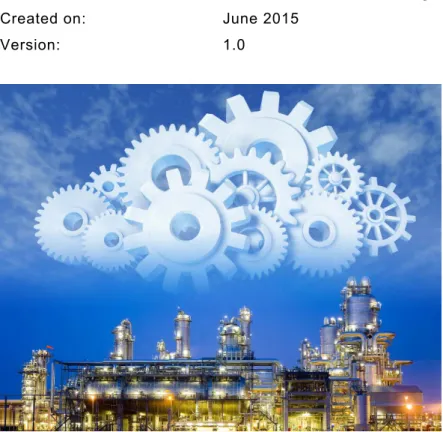
Fig. 1: Promising future anticipated for cloud computing in automation technology.
Cloud Computing in automation technology
All key facts that you should know
Cloud platforms are not only characterized by enormous computing power and storage capacity, they are at the same time cost efficient, reliable and available for use anywhere and anytime. Solutions based on this technology stand out for high availability, scalability according to requirements and the possibility for usage-based billing. This article covers industrial
applications and describes the key features of cloud-based approaches. It also discusses why cloud computing is already an interesting topic today despite existing security concerns.
Most IT experts predict a promising future for cloud computing – also in the automation industry. Taking however a closer look at the market, there are so far only very few “real” cloud solutions in automation technology. ”Real” cloud solutions are based on Public Platform-as-a-Service (PaaS) offers which provide multiple client capability. These are characterized by an infrastructure shared by all customers and application logic with isolated data management and processing. Small and medium-size enterprises (SME) in particular still tend to be rather sceptical concerning the based approach. There is however a sufficient number of potential applications scenarios for cloud-based software solutions.
2 / 6 Potential candidates for the cloud
In industrial environments, there are many potential applications where cloud-based solutions play out their strengths and offer added value.
A machine tool manufacturer e.g. wants to permanently monitor the performance and condition data of his machines installed all over the globe in order to consolidate and manage this data centrally. By means of systematic data analysis he hopes to be able to guarantee his customers utmost availability of his machine tools. On top of that, the machine tool manufacturer wants to use the globally collected data to derive new ideas for the development of future products.
A manufacturer of field devices has similar intentions. In order to be able to offer global status monitoring for all supplied devices, he wants to make sure that the continuously collected device data are maintained centrally. To offer added value, they also want to make the status monitoring results directly available online and independent of platforms.
The process engineers of a globally acting manufacturing company want to systematically acquire data for certain process steps at production sites across the globe for future analysis concerning systematic interdependencies using data mining and in order to derive potential process improvements.
The operator of a small manufacturing company wants to be able to monitor the status of the different production facilities of his plants – even while he is travelling. In case of extremely critical situations, he wants to receive alarm messages via his smartphone and to remotely check the status of his facility.
As part of a nation-wide program for the improvement of environmental standards, several thousand measurement points shall be installed for the systematic collection of measurement data related to air and water pollution and in order to send them to a control centre for permanent monitoring.
Why is the cloud suitable?
While all the above scenarios are different, the general requirements are not new at all and in many fields they also overlap: large amounts of data have to be permanently collected and stored reliably in a central location to allow for comprehensive analysis
The amount of data to be collected may start from just a few megabytes, but may well also reach the terabyte range. This means that common relational database systems may be overburdened or require massive hardware resources – making it difficult for SMEs to start using this technology. At this point, cloud solutions are beginning to make sense, offering resources, which compared to traditional in-house solutions can be scaled exactly to current requirements and billed accordingly. For an efficient monitoring, data have to be visualized in an appropriate way. The easiest way to do this is to use browser-based solutions which are developed using HTML5 and which can then be made available for mobile devices, too. Real benefit can be achieved in combination with mobile cloud services. This is due to cross-platform services offering standard interfaces to different device platforms (iOS, Android, etc.), e.g. for push-type messages or services solving common problems such as synchronization of offline data.
The raw data alone, such as e.g. collected during monitoring, are not of much use. It is therefore necessary to analyse and to aggregate the data parallel to real-time monitoring according to certain criteria in order to calculate meaningful key performance indicators (KPIs). These can then be used to derive automatic actions or notifications. Appropriate solutions are complex and not easy to
3 / 6
design. Cloud service providers therefore offer pre-configured services, which can be linked with existing data. The provided services usually rely on computationally intensive technologies such as complex event processing or machine learning. The necessary computational power is largely required for relatively short periods – a property that providers try to make use of. They therefore dynamically provide to several customers a high-performance infrastructure based on commodity hardware (cost-efficient, widely available, and easy to replace standard hardware), Sharing their cost advantages with their customers, they make the technologies available also to customers who previously did not have access to them due to cost reasons.
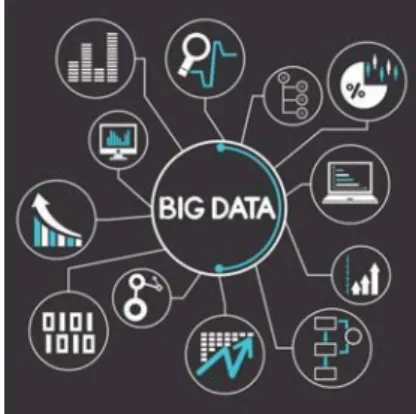
The analysis of historic mass data may lead to important conclusions. New “big data” methods are gaining more and more importance for this. In addition to short-term computation performance, considerable amount of storage is required for data archiving. Especially when it comes to in-memory technologies or Hadoop clusters, many companies are not able to meet infrastructure requirements.
Fig. 2: Technologies for the automatic analysis of big data are gaining more and more importance.
Considering the multitude of existing devices (sensors, control systems, etc.) which are able to transmit data in short intervals, conventional systems quickly reach their limits. This can be remedied by means of cloud providers using so-called “Internet of Things” infrastructures. These are highly available, scalable, and secure platforms, which can handle and process data from millions of devices. Devices can easily be connected to the provided services since cloud services usually offer a REST interface. REST services are based on the HTTP protocol and can be addressed in almost any environment and programming language – even beyond firewall boundaries. In addition, the providers usually offer additional frameworks for embedded devices, allowing for easy interfacing to the cloud (e.g. Microsoft via .Net Micro Framework).
Widely distributed data sources, big data, high or dynamic data throughput, sporadically increased demand for computational capacity for resource-hungry computations, global availability of results – all these are clear indicators for applications being ideal candidates for a cloud solution.
Data security currently is a major topic
The collected data are usually very sensitive and therefore need to be effectively protected against unauthorized access. This leads many people to irrationally assume that these data should by no means leave the local Intranet and that storage and processing in the public cloud are completely
4 / 6
out of the question - in particular, when it comes to a cloud solution, which is operated, on one of the big platforms such as Microsoft Azure or Amazon Web Services. However, in general, a cloud-based solution is by no means more risky than an in-house solution. Access to data from any point in the world adds vulnerability for any type of application. This is however inevitable due to given requirements. The authors of this article agree that especially because data security is so enormously important, it is better to entrust a highly professional operator of big data centres instead of the internal, potentially under-staffed IT department, or, even worse, a so-called shadow IT managed by the internal development and production department.
Fig. 3: Security of data is a major issue.
Certificates such as ISO27001, SAS70/SSAE 16, FISMA, HISPAA, or similar, which are approved as test labels for IT security and compliance, can be helpful for the selection and assessment of cloud providers.
These certificates are usually issued by independent laboratories and audited regularly. The audit results are published in an audit report and made available to the public. In order to meet the stringent requirements, the cloud-service provider Microsoft e.g. uses a comprehensive security strategy (defence in depth strategy). It is based on a number of technical and organizational measures as well as on a comprehensive internal control system to verify the compliance. The defence in depth strategy covers all areas from data security, application and host monitoring to physical security measures. Cloud providers are permanently eager to meet existing requirements/security concerns as this market promises big business potentials. While solutions based on the major platforms currently already offer high security standards, it is almost impossible for SMEs to achieve a comparable security level using their in-house operated infrastructure. In addition to the extremely high efforts and costs for procuring and operating this infrastructure, it is almost impossible to acquire the required know-how within limited time frames. Interestingly, the acceptance of cloud computing is higher among very large corporations than it is among SMEs, although these could profit much stronger from these benefits. Various surveys such as the current Cloud Monitor 2014 study, conducted by KPMG in cooperation with Bitkom, show that cloud computing is already a quasi-standard for large corporations today while having significantly lower importance for small enterprises.
There is demand for consulting
Software-as-a-Service (SaaS) offers based on public cloud infrastructures are going to prevail in the medium term. Numerous IT experts agree that time is working for cloud computing and an increasing number of IT managers is focusing on this topic. However, the step towards the cloud and towards a new distribution and business model for software solutions should not be taken naively or in a hurry, especially bearing in mind the large number of current data security scandals. Concerning the awareness about impacts of cloud computing on software providers, M&M Software
5 / 6
has identified considerable backlog demand not only concerning organisational and legal aspects, but in particular also concerning technical and financial aspects – both in the automation technology and in machinery and equipment industry. The globally acting technology and consulting company has specialized in this topic in order to offer competent professional support for all questions concerning cloud computing. The service portfolio covers support for identifying the vision, analysis of requirements and solution planning. M&M also supports the following steps of product implementation – which could be either a new development or the migration of an existing application to the cloud.■
www.mm-software.de
Author: Klaus Hübschle, Managing Director and Technical Director, M&M Software GmbH, St. Georgen, Germany
Author: Josha Dittgen, Consultant,
M&M-Software GmbH, St. Georgen, Germany
Author: Thomas Gaus, Consultant/Solution Architect, M&M-Software GmbH, St. Georgen, Germany
Picture: M&M Software GmbH
Click here for our brochure:
6 / 6
M&M Software GmbH +49(0)7724/9415-0
Industriestr. 5 Fax +49(0)7724/9415-23 78112 St. Georgen Email: [email protected]
GERMANY Internet: www.mm-software.com
Registered Office: St.Georgen, Germany Registry Court: Freiburg HRB 602021 Directors: Erwin Mueller, Klaus Huebschle, Andreas Boerngen
M&M Software is a globally acting technology and consulting company. Our service portfolio includes management and technology consulting, software development and maintenance, as well as quality assurance and IT services. From our locations in Germany und China, we provide unique, premium software solutions to our customers.
M&M stands for innovation, problem-solving competence, and quality. For almost 30 years, M&M has gained a reputation as a reliable partner countless established companies from all parts of the globe. Our extensive industry know-how is reflected by a multitude of innovative and unique software solutions which we develop for and also in collaboration with our customers from various industries.
The company headquarters is located in St. Georgen (Black Forest, Germany). With our subsidiary in Suzhou near Shanghai (China), we are not only serving the upcoming Asian markets, but we are also offering offshore development services with proven M&M quality to our customers in Europe and America with significant price benefits.
Your contact person for this press release:
Kenan Sengün Tel.: +49 7724 9415-42 Fax: +49 7724 9415-23