1
How do technologies support School
Direct student
s’
learning on a PGCE with
Qualified Teacher Status within a
Networked Learning model?
Mike Toyn (BSc, PGCE, MA)
January 2018
Declaration
This thesis was completed as part of the Doctoral Programme in E-Research &
Technology Enhanced Learning
Department of Educational Research,
Lancaster University, UK
This thesis is entirely my own work and has not been offered previously for any other
degree or diploma.
2 How do technologies support School Direct students’ learning on a PGCE with Qualified Teacher Status within a Networked Learning model?
Mike Toyn (BSc, PGCE, MA)
Doctor of Philosophy, January 2018.
Abstract
This work is a study of the way that students select and use technologies to build and maintain a learning network while training to become primary school teachers. It builds on the body of research which has explored Networked Learning by applying it to the context of teacher education and by applying it to a course where the ICTs used are selected by
students not provided by tutors.
It is a case study based on intrinsic interest with an exploratory focus to understand how and why students make use of the technologies they select. It uses multiple data sources
including group interviews with students, interviews with tutors, questionnaires, virtual learning environment data and transcripts of students’ social media interactions. The analysis of these has been performed along three lines of enquiry to establish who is talking to whom, what they are talking about and why they are talking about it.
The findings bring together a novel approach to the application of Networked Learning and research into a new route into teaching and show that students are sophisticated and agile users of a range of technologies. They use a variety of technologies to build and support interactions with artefacts, tutors and other learners. Where there are constraints in place, such as tutors’ preference for face-to-face interactions there is evidence that students will make use of technologies to substitute other interactions in their place. It finds that students’ most extensive interactions take place with other students and that these are multifaceted combining interactions directly related to learning, around-task interactions and social elements.
3
Contents
Abstract ... 2
List of Figures ... 6
List of Tables ... 6
List of Abbreviations ... 7
Acknowledgements ... 8
Chapter 1 Introduction and Background ... 9
1.1 The context of this research ... 9
1.2 Research question ... 13
Chapter 2 Review of Literature ... 14
2.1 Networked Learning ... 14
2.2 Teacher education ... 19
2.3 Blended Learning ... 22
2.4 Social aspects of learning ... 25
2.5 SNS within higher education ... 29
2.5.1 SNS as a VLE ... 29
2.5.2 SNS as a social tool ... 31
2.5.3 SNS as a third space ... 33
Chapter 3 Research Design ... 35
3.1 Case study ... 37
3.2 Methods ... 41
3.3 Limitations ... 43
3.4 Ethical considerations ... 47
Chapter 4 Presentation of Data ... 51
4.1 Data sources which relate to more than one sub-question ... 51
4.2 An overview of the data arising from group interviews. ... 51
4.3 An overview of the data arising from student surveys. ... 52
4.4 Student-to-artefact interactions ... 53
4.4.1 Data relating to interactions between students and artefacts via Blackboard 53 4.4.2 Data from group interviews relating to students’ interactions with artefacts 56 4.4.3 Data from student surveys relating to student-to-artefact interactions ... 60
4.5 Student-to-tutor interactions ... 66
4.5.1 Overview of student-to-tutor interactions and associated data sources. ... 66
4.5.2 Data from group interviews relating to student interactions with tutors. ... 67
Student interactions with mentors as ‘tutors’ ... 67
4
Student interactions with others outside the course ... 72
4.5.3 Data from student surveys pertaining to Student-to-tutor interaction. ... 72
4.5.4 Data arising from interviews with UPLs relating to Student-to-tutor interactions ... 76
4.6 Student-to-student interactions ... 79
4.6.1 The use of Social Network Analysis within NL ... 80
4.6.2 Graphical representations of Social Network Analysis ... 80
4.6.3 Statistical data arising from Social Network Analysis ... 83
Freeman centrality measures ... 83
4.6.4 Chronological analysis of Facebook and WhatsApp data ... 84
Analysis of SNS usage over time ... 85
4.6.5 An overview of content analysis of SNS transcripts ... 88
4.6.6 Content analysis of SNS transcripts based on both content and context of posts 89 4.6.7 Content analysis of SNS transcripts based on social presence indicators ... 93
Affective domain: Emotions ... 95
Affective domain: Humour ... 95
Affective domain: Self-Disclosure ... 95
Cohesive domain: Inclusive pronouns ... 96
Cohesive domain: Phatics / Salutations ... 96
Cohesive domain: Vocatives ... 96
Interactive domain: Agreeing... 97
Interactive domain: Asking questions ... 97
Interactive domain: Complimenting ... 98
4.6.8 Data from group interviews relating to student-to-student interactions. ... 98
4.6.9 Data from student surveys relating to student-to-student interactions ... 105
Chapter 5 Discussion of results ... 109
5.1 Discussion of student-to-artefact interactions ... 109
5.1.1 Interactions taking place through Blackboard Virtual Learning Environment 109 5.1.2 Student interactions with Online sources for academic learning ... 112
5.1.3 Interactions with Online sources for professional learning ... 113
5.2 Discussion of student-to-tutor interactions ... 115
5.2.1 Interactions between students and UPLs ... 115
5.2.2 Interactions between students and mentors ... 120
5.2.3 Interactions with others ... 122
5
5.3.1 Who is talking to whom – a discussion of SNA ... 123
5.3.2 What are they talking about - Context analysis of students’ SNS interactions 125 On-task interactions between students via SNS ... 125
Around-task interactions between students via SNS ... 128
5.3.3 Social aspects of learning ... 130
Social presence ... 133
Social presence indicators in students’ SNS interactions: affective responses ... 134
Social presence indicators in students’ SNS interactions: interactive responses ... 134
Social presence indicators in students’ SNS interactions: cohesive responses ... 135
The importance of Social presence ... 136
Chapter 6 Conclusion ... 138
6.1 Sub question one: How do students make use of technologies to support student-to-artefact interactions? ... 138
6.2 Sub-question two: How do students use technologies to support student-to-tutor interactions? ... 139
6.3 Sub-question three: How do students use technologies to support student-to-student interactions? ... 140
6.4 Implications for Networked Learning ... 141
6.5 Contributions to the field ... 142
6.6 Contributions to practice and policy ... 142
6.7 Limitations of this study ... 143
6.8 Further work ... 144
6
List of Figures
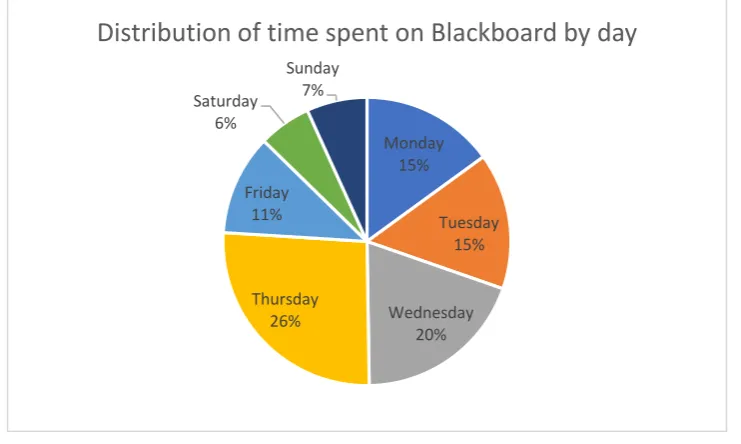
Figure 1: Distribution of time spent on Blackboard by day ... 54
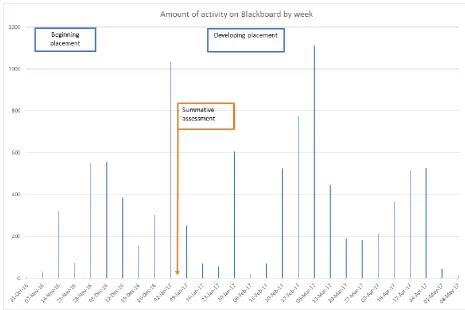
Figure 2: Amount of activity on Blackboard by week ... 55
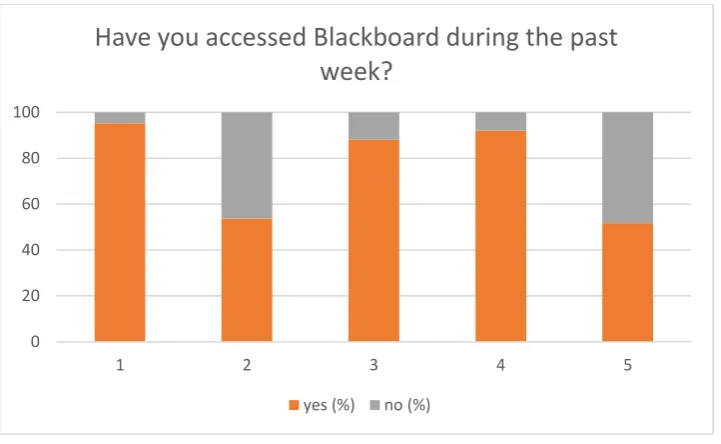
Figure 3: Summary of Blackboard access from survey data ... 61
Figure 4: Breakdown of Blackboard access by purpose of visit ... 62
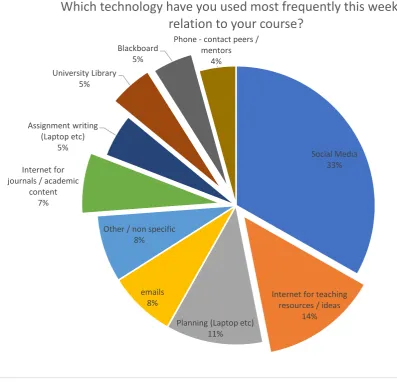
Figure 5: Student views on which technologies play a role in their learning ... 64
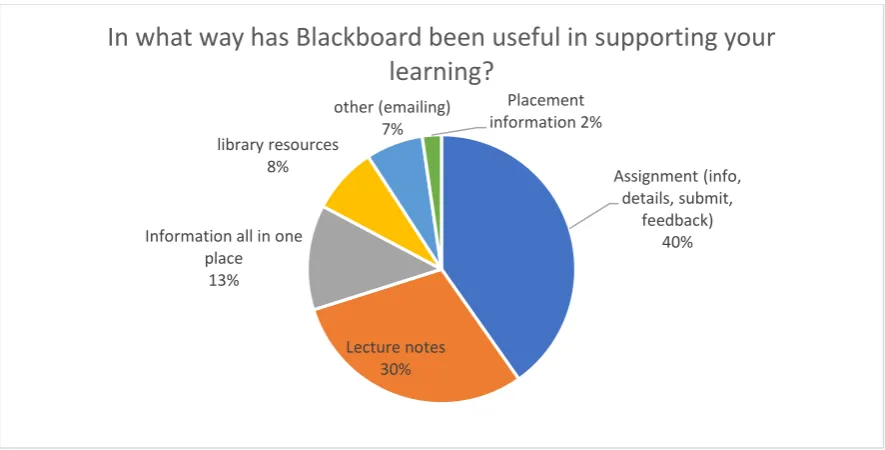
Figure 6: The role of Blackboard in learning ... 65
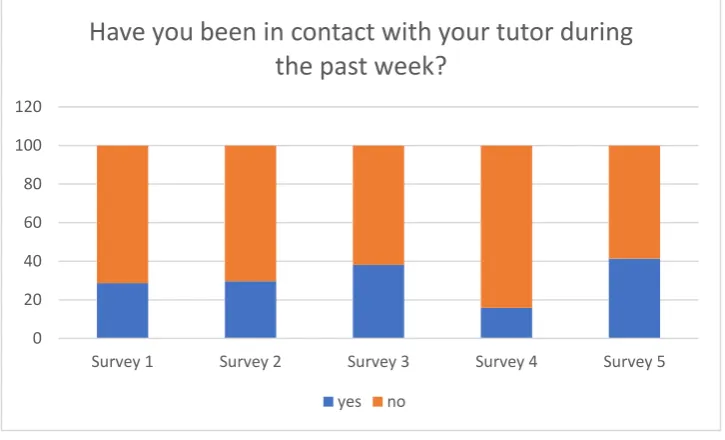
Figure 7: Chart showing percentage of students who have been in contact with their tutor 73 Figure 8: Methods used to contact tutors ... 74
Figure 9: How have you used email to support your learning? ... 75
Figure 10: How have you used SMS to support your learning? ... 76
Figure 11: SNA graph for Preston ... 81
Figure 12: SNA graph for Fylde ... 81
Figure 13: SNA graph for Carlisle ... 82
Figure 14: Frequency of posts over time (Preston) ... 86
Figure 15: Frequency of posts over time (Fylde) ... 86
Figure 16: Frequency of posts over time (Blackburn) ... 87
Figure 17: Responses to the question "Have you been in contact with other members of your group" ... 106
Figure 18: Responses to the question "How did you communicate with other members of your group?" ... 107
Figure 19: Responses to the question "What was the purpose of your communication?" .. 107
List of Tables
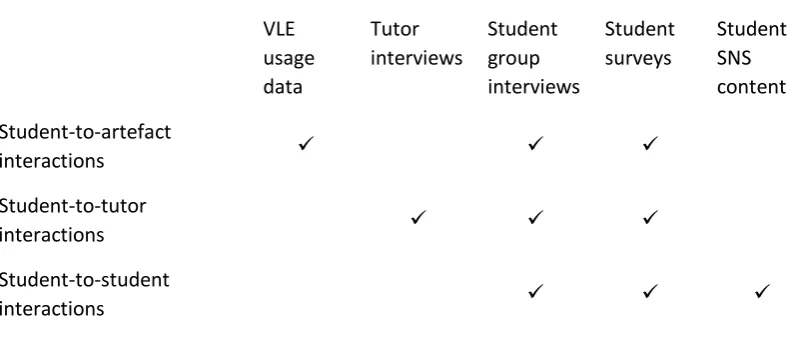
Table 1: Research question and data collection methods ... 43Table 2: Yin's (2014) design tests ... 46
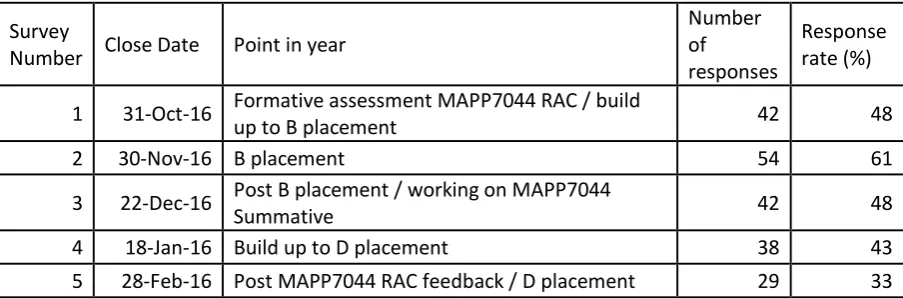
Table 3: Student survey dates ... 53
Table 4: Reasons for tutor contact ... 74
Table 5: Freeman centrality measures... 84
Table 6: Context and Content codes used to categorise SNS discussions ... 89
7
List of Abbreviations
CMC Computer mediated communication CSCL Computer supported collaborative learning HQLT High Quality Learning and Teaching module ITT Initial Teacher Training
NL Networked Learning
PGCE Post Graduate Certificate in Education PPL Partnership Programme Lead
QTS Qualified Teacher Status
RAC Raising the Achievement of Children module SD School Direct
8
Acknowledgements
There are no endeavours that are truly individual efforts. This work would not have been possible without the advice, guidance and support of many people. I would like to recognise the contributions that everyone has made to this work.
Firstly, the role that all participants played in this study must be acknowledged. Without them the research could not have taken place. Their willingness to take part and contribute made the research process as simple as possible. In some cases, participants went out of their way to help me and for this I am moved and grateful.
Secondly, I would like to thank my colleagues who have been supportive of my study and for putting up with me when my mind has been focussed on this research when it should have been concentrating on work. I would like to extend specific thanks to all the colleagues who covered my workload while I was on sabbatical leave.
Thirdly, I would like to thank my institution for the financial support they have provided towards my fees and for enabling a period of sabbatical leave which made the task of writing up this research enjoyable and engaging.
Fourthly, I would like to thank my supervisor, Julie-Ann Sime, for her support and encouragement throughout this work. Her prompt and constructive feedback was invaluable.
Finally, I would like to thank my family for the support and encouragement they have provided on what has been a long and involved journey.
9
Chapter 1
Introduction and Background
This research aims to explore the contributions that technologies make to the learning of a group of students on a teacher training course. It seeks to develop an understanding of the complex and varied role that technologies play in supporting learning interactions that the students have. It draws upon Networked Learning (NL) to provide a framework to
understand these interactions. NL (which is explored in detail in section 2.1) can be summarised as learning which results when learners make use of technologies to interact with other learners, tutors and artefacts.
This research will contribute to the body of NL research by evaluating its application to a context to which it has not previously been applied. It will also make a contribution to teacher training practice by deepening the understanding of a little researched aspect of student learning.
1.1
The context of this research
As this research is a case study (further discussion of this presented in Chapter 3) this overview of the context in which the research is situated will be rich and detailed. This will allow the results and discussion to be more fully understood.
I work in the Institute of Education at a University in the North West of England which is one of the largest providers of Initial Teacher Training (ITT) in England. This university offers postgraduate courses that offer students the opportunity to gain an academic qualification as well as Qualified Teacher Status (QTS) which is a professional qualification that is required for those wishing to teach in maintained schools in England (National College for Teaching and Leadership 2014). The combination of university based study with placements in schools leads to the award of Post Graduate Certificate in Education (PGCE) with QTS.
Since September 2012, (Department for Education 2012) a new route of ITT has been available: School Direct (SD). This is characterised by a greater involvement of schools in the design and delivery of PGCE with QTS courses; lead schools work with a partner university and agree how student fees will be split between the two parties. The way that my
10 needs to reflect the fact that SD students would find it difficult to travel to our campus. This approach is reflected in the partnership statement:
The partnership benefits from the diversity of school-experience that it can offer its learning teachers – from small rural schools in Cumbria and north Lancashire to large, urban schools in Barrow, Blackburn, Carlisle, Lancaster, London or Preston. It values the expertise and opportunity offered by its diverse partners and celebrates the consistently high-quality experience that all learners experience.
(University of Cxxxxxx 2015)
Consequently, SD at my university is organised in a dispersed way. Schools that are interested in becoming a SD partner work with the university to create a SD alliance and then build their course, this is based on the same modules and assessments as our campus-based PGCE with QTS but the finer details of module content are decided by the lead school. Each alliance has a University Programme Lead (UPL), who is a university tutor assigned to work with that alliance. Alliances recruit their own students and arrange the school based placements for students, in addition to this they plan the timetable for the students and draw upon experienced teachers from within the alliance to teach some of the modules. The PGCE with QTS comprises eight modules:
• The PGCE component is made up of two contributory level 7 modules of 30 credits each.
• The QTS component is a professional qualification that is based on the Teachers’
Standards (Department for Education, 2011). These are eight areas of professional responsibility that students must demonstrate competence in to gain QTS. They demonstrate their competence through three school based, practical placement modules.
• Both the PGCE and QTS components are supported by three modules. These are taught at level 6 and there is no assessment activity associated with them. They are part of the preparation for the placement modules.
11 qualificatory modules is undertaken by teachers and consultants from within each SD
alliance.
The three school-based, practical placement modules are called: Beginning, Developing and Extending and last for four, five and eight weeks respectively. All placements take place at the same time across all SD alliances. This approach means that whilst our SD alliances share some common factors such as the number of placements that students do, the modules that they study and the assignments that they complete, there are many other aspects that are bespoke and unique.
In addition to being one of the largest providers of ITT in England my institution is also one of the largest providers of SD ITT provision. In the academic year 2015-16 we worked with 18 alliances and had approximately 250 students enrolled, in the academic year 2016-17 we worked with 15 alliances and had a similar number of students. The implication of all this information is that this is a relatively new form of course which is delivered in a dispersed way. With the exception of registration day at the start of the course, students do not come to campus, nor do they work with students from other alliances. Thus, the course is
composed of several discrete and dispersed cohorts of students.
To this point, this discussion has focussed on the organisation of the SD PGCE with QTS course with little mention of technologies. For the purpose of this thesis, technologies is deemed to refer to physical and virtual tools, for example, laptops, tablets and phones would all be considered as technologies as would virtual learning environments, internet based text or video content or internet based services such as social media networks or email. My institution uses Blackboard as its virtual learning environment (VLE) and has a policy that all courses should provide a course Blackboard site which will contain key information such as the course handbook, course timetable, and contact details as a minimum. In addition, each module that students study is supported by a module
12 and Nouby 2008; Akkoyunlu and Soylu 2008; Poon 2013; Shen et al. 2013; Bicen et al. 2014; O’Byrne and Pytash 2015; Wasoh 2016). What they do provide is an understanding of the range of approaches that can be considered blended learning. Bayne et al. (2014 p3) offer a reminder that it is not appropriate to think of universities as the exclusive locations where learning takes place for students. This is described by Aspden and Helm (2004 p249) as having contact with the university even when they are not there. Thus, the various
combinations of physical and virtual learning that Poon (2013 p274), Shen et al. (2013 p59) and Motteram (2006 p20) outline should not be considered unusual in order to combine the benefits of each (Bicen 2014 p532). There are various roles that the virtual element can take: an online presence for the course instructors (Irwin et al. 2012 p1221) or the approach where face-to-face teaching is considered to be the supervised element and is supported on online interactions that allows students to learn at their place, time and pace (O’Bryne and Pytash 2015 p138). The SD course is most closely aligned with this model where face-to-face teaching and interactions are supported by the provision of online resources, this is because of the intense nature of the course which leaves little free time for students to engage in online activities as well as the practical nature of much of the teaching and learning activities which are not well suited to online activities. This is similar to the model described by Wasoh (2016 p166) where there is an online environment to accompany the teaching with the addition of online modes of assessment which is done through Turnitin. The use of Turnitin is due to a combination of the advantages of an online system for dispersed learners alongside the benefits of this tool for providing effective feedback to learners.
A final technology which is provided by my institution and that is available to learners is the online library resources which comprise books, journal access, a search tool and databases. In addition to the institutionally provided resources, it is known that students make use of internet based text and video content to support their learning as well as internet based services such as social network sites, email and short message service. Whilst it is known that students have access to the technologies mentioned, there is uncertainty about how they make use of them.
13 interact with students and their expectations of student actions whilst on the course. The following research questions arise from my interest in this area.
1.2
Research question
How do technologies support School Direct students’ learning on a PGCE with Qualified Teacher Status within a Networked Learning model? (Networked Learning is discussed in further detail in section 2.1)
This gives rise to the following three sub-questions:
• How do students make use of technologies to support student-to-artefact interactions? • How do students use technologies to support student-to-tutor interactions?
• How do students use technologies to support student-to-student interactions?
14
Chapter 2
Review of Literature
This study is focussed on student use of technologies to support learning within the context of a PGCE course using a Networked Learning (NL) framework. The course makes use of a VLE and it is known that students on the course frequently make use of SNS to facilitated inter-group interactions. The study is interested in both the direct use of technologies to support learning as well as the indirect impact of social interactions on learning.
Consequently, the review of literature related to this study covers NL, teacher education, blended learning, social aspects of learning and the use of SNS within HE: these areas will form the structure of the review.
The aim of this literature review is twofold. Firstly, to identify relevant and current issues in each of the areas and, secondly, to provide a rationale for the relevance of this study in relation to gaps in current understanding in these areas.
2.1
Networked Learning
Dirckinck-Holmfeld et al. (2014 p6) recite a definition of NL that has stood the test of time since 1999 when it was first coined.
Networked learning is learning in which information and communications technology (ICT) is used to promote connections; between one learner and other learners, between learners and tutors; between a learning community and its learning resources
What Dirckinck-Holmfeld et al. (2014 p8-9) go on to outline are some pedagogical approaches to which they believe NL is aligned. There are six of these areas:
• Openness in the educational process; • Self-determined learning;
• A real purpose in the cooperative process; • A supportive learning environment; • Collaborative assessment of learning;
• Assessment and evaluation of the ongoing learning process;
15 the cooperative process as the students are working towards QTS which is a professional qualification and so their learning has a real purpose. It also has a supportive learning environment even if there are no explicit aspects of the course which set out expectations or actively promote such an approach. There is a degree of self-determined learning as
students self-select the topics for the assessment of their two credit-bearing modules and they will each be working on areas of the Teachers’ Standards which are relevant to them. However, some of the areas listed above do not apply, or only apply partially to the SD course. Firstly, the collaborative assessment of learning. The course does include a formative assessment activity where peers and tutors give feedback on a verbal presentation of progress on an assignment but the rest of the credit-bearing assessment activities are assessed by the UPL. Students and mentors engage in collaborative judgements of
professional practice on placement against the Teachers’ Standards but this does not include other students. Finally, there is no formal provision for the evaluation of the ongoing
learning process. Despite these limitations, it is proposed that the SD course offers a suitable match for the application of NL theory as a framework for research, if only to establish the extent to which it is applicable.
NL has obvious roots in areas such as online learning environments, an example of this is provided by Clark (2001) who explored ways to stimulate collaboration and discussion in online environments and found that there is a need for tutors to facilitate discussion and to establish ground rules for the nature, tone and purpose of interactions. This has clear links to the ideas underpinning NL. Other historical examples of work that can be seen as part of the evolutionary history of NL include that of Breuleux et al. (1998) who researched the role of technology in networks and its potential to facilitate collective understanding. This work was related to the professional development of teachers and student teachers. Thus, the role of technology in interactions is not new, nor is research into its place in teacher education.
As well as early work on online learning environments, the computer mediated
16 Following on from CMC is the approach of computer supported collaborative learning (CSCL). It is evident in the titles of CMC and CSCL that the latter places a greater emphasis on the interactions that take place through the use of technology. Also implicit in CSCL is that it is a broader approach than CMC which is concerned with the use of technology to support communication, whereas CSCL looks to the use of technology to support learning without restricting it to communications, thus it encompasses the use of technology to support interactions with learning resources. De Laat et al. (2007a) use NL and CSCL interchangeably and argue that NL is a European term that is synonymous with CSCL. In contrast to this, Dirckinck-Holmfeld et al. (2014) argue that the two are not synonymous as CSCL has a strong focus on collaborative learning which they associate with strong ties. They argue that such a focus does not take adequate account of the existence of weak ties between learners. An additional argument to distinguish between NL and CSCL is provided by Jones et al. (2008) who make the point that CSCL is close knit and characterised by a unity of purpose. Thus, NL is more open and caters for diverse learning desires, a point emphasised by De Laat (2006) who notes it is a loose form of collective learning and that learning communities emerge to solve particular problems and are established around a shared interest. Given the nature of the SD course and its absence of collaborative learning activities, it is probably appropriate to assume that the distinction between NL and CSCL is appropriate in this case.
17 commercial SNS to support interactions between learners (mainly in relation to
advertisements and ownership of content). Jones and Healing (2010) looked into the use of technologies by undergraduate students and found a high degree of integration of digital technologies into their lives which served to blur the boundaries of face-to-face interactions and those mediated by technologies. Thus, the selection of technologies by strong ties can be varied and may not be confined to those provided as part of a course.
In addition to the variety of contexts that NL research has been applied to (e.g. the work of Bonzo 2012, with learning technology professionals; De Laat 2006, with police; or, Terzi and Çelik 2005, with computer science students) there have been various applications of different research approaches to gain an understanding of the learning processes that take place within NL communities. These have included the use of phenomenography by Booth (2008) as a way to understand the variation in students’ conceptions of NL. In this example, the learners were non-typical, distance learning students. The use of virtual ethnography was adopted by Bosch (2009), in this example the research was not framed by a NL framework but the exploration of social networking that the study was based on is applicable to the NL canon. The exploration of networked groups goes beyond education research as illustrated by the work of Wisdom et al. (2013) whose work in the psychology field explored the variety of learning strategies adopted by learners within a network. There have been numerous studies that used Social Network Analysis (SNA) approaches to help to understand the dynamics of NL communities.
Petropoulou et al.’s (2010) work focussed on how to measure learner activity in NL
environments. They note how hard it can be to track all the interactions that take place and advocate the use of SNA approaches in order to provide quantitative measures of
18 links (those that exist in theory but have yet to be realised). The descriptive power of SNA is realised by Gewerc et al. (2014) who made use of a tool to extract data from a VLE in order to automatically visualise interactions. However, this was supported with keyword searches in order to gain an insight into the quality of learning that took place.
There is a significant body of work by De Laat (2006), De Laat et al. (2007a), De Laat and Lally (2003), De Laat and Lally (2004), De Laat et al. (2006), De Laat et al. (2007a) and De Laat et al. (2007b) which makes use of SNA in order to understand the structure of networks, in other words to work out who is talking to whom. This body of work extends this approach by the use of content analysis to explore what they are talking about. Their final approach is to use context analysis to gain understanding of why they are talking about these things. This multi-layered approach helps to avoid the limitations of any single approach. For example, it means that findings are not limited to descriptive statistics and summaries of network structure. They note that gaining access to the content of text based discussions is
straightforward but the subsequent coding presents challenges as it is time consuming and prone to issues relating to validity and reliability. A further argument for this approach is the need to go beyond grades and outcomes as indicators of learning as these only provide information about the end point and do not take account of the process of learning that has taken place. What is interesting about the approaches in these works is the variety of ways these methods have been put into practice. For example, De Laat et al. (2006) added a time dimension to their study in order to look at the way the interactions changed over time. Alternatively, De Laat and Lally (2004) looked at the interactions within a network from a students’ perspective, which is contrasted with De Laat et al. (2007b) which took a similar approach but looked from a tutors’ perspective.
19 role of the researcher to look for evidence of learning having occurred, whilst for others such as Kio and Negrerios (2013) the approach of learners self-reporting about learning in
response to Facebook interactions was sufficient. In a related paper, De Laat et al. (2006) argue that online learning represents a complex environment and that a multi-method approach is the most appropriate way to unpick learning.
When it comes to the processes by which interactions can lead to learning, some writers such as Cain and Policastri (2011) explored the role of Facebook as an informal learning environment and that the interactions that take place outside the constraints of the formal curriculum lead to informal learning which complements the formal learning of the course. In contrast to this Kožuh et al. (2014) took a more detailed look at interaction and learning, their research found that both the intensity and quality of interaction are connected with academic success. A mechanism for this is suggested by El-Deghaidy and Nouby (2008) who propose that cooperation results in interaction as individuals begin to work together to encourage and support one another to learn. However, a contrasting perspective is outlined by Terenzini et al. (2001) who put forward the notion that it is effective instruction that stimulates interaction and in their work they separate learning activities from interaction.
In summary, this section traces some antecedents of NL and makes a case for the relevance of NL to the context of this study. It also highlights the tentative nature of links between interaction in an NL environment and learning occuring. Significantly, it discusses some of the research approaches that have been used to research NL, particularly those which support mixed methods approaches.
What is missing from this literature are examples of the application of a mixed methods approach to a teacher education setting. Likewise, examples of the application of NL theory to contexts which are not fully online are sparse. Thus, this creates a gap into which this study can fit by providing an opportunity to apply NL theory to such contexts.
2.2
Teacher education
20 in order to model the use of it to students with the aim that it will develop their competence in order that they can utilise technology in their teaching practice.
This theme is evident in a range of other research findings. For example, Ng (2008), working in Hong Kong, designed a blended learning course in order to model the use of technology to pre-service teachers with the finding that the students appreciated and liked the course but did no better in their assessments than those who had studied face-to-face. Likewise, Rawlins and Kehrwald (2014) integrated technology into a teacher education course in New Zealand with the aim of modelling its use to students. In addition to this, their study
attempted to evaluate the ability of technology to facilitate a move away from teacher-centred, didactic approaches towards a more student-centred approach. Their findings were that the inclusion of technology on its own will not change pedagogical approaches but it does offer the opportunity to enhance student-centred learning. This is of significance to this study due to the way that UPLs typically give precedence to face-to-face teaching and do not offer opportunities for online interactions as part of the formal course structure despite the provision of a VLE capable of doing so.
Another theme which is evident in the literature reviewed is research into the effectiveness of course designs which move either towards blended approaches or fully online
approaches. An example of this is the work by Young and Lewis (2008) who explored student satisfaction with an online teacher education course in the USA. Their findings were that such an approach was not at odds with student satisfaction but it is worth noting that their reasons for conducting the research were led by a desire to try out the use of technology, rather than being driven by a pedagogical belief that it would lead to better outcomes. This research is not typical though, a contrasting perspective is provided by Harrell and Harris (2006) whose research (also based in the USA) was grounded in a desire to widen
participation by making teacher education available to those who were unable to travel to a campus or for whom travel to a campus was inconvenient. Their findings were that such an online course was successful in attracting a different profile of learners to their course. This is of interest as the SD course is structured in response to the geographical constraints of the area however, rather than adopting an online structure, it has chosen to adopt a dispersed face-to-face approach.
21 the year of their research took place, they concluded there was still a lot of work to be done in this area. Delfino and Persico (2007) undertook a five-year study exploring the
effectiveness of different combinations of face-to-face, blended and online delivery patterns of a teacher education course. Aside from their findings that, through effective design, it was possible to achieve comparable outcomes for students, it is noticeable that the decision to undertake such a long-term piece of research was driven by a desire to establish if it was possible to move teacher education online rather than to achieve a stated pedagogical goal. One study of particular interest is that of Hramiak (2010) who developed an online
community using a tool embedded within a VLE in order to support students while they were on placement by reducing the isolation that is sometimes experienced. The finding was that this was positively received by students. The relevance of this is that this was an
institutionally provided tool that was adopted by students, this is in contrast to this study where the online community is a student-created one and it excludes tutors. This might suggest that it is the provision of an online community for students to participate in while on placement (or otherwise) is something that pre-service teachers frequently desire and that there is little significance attached to who provides it. However, the establishment of effective online communities is not easy as Carr and Chambers (2006) discovered when they offered online environments in which student teachers could share experiences and
resources. These were not received positively due to a feeling by the participants of a lack of common purpose indicating that simply providing an online space is not adequate, rather students must feel a common purpose with the other users if they are to make use of it. In summary, there have been a number of attempts to move teacher education online or partially online. In some cases, these have been driven by pedagogical goals or by widening participation goals. However, in other cases they have been as experiments to see if it is possible. Another aim of research into the role of technology in teacher education has been a desire to model the use of educational technologies to students in order that they might subsequently be more confident to adopt it in their own practice.
What is missing from this literature are studies that look at the place of NL within teacher education or the way that students self-select technologies to support interaction and group cohesion. In other words, having built a blended or online course, most studies have
22
2.3
Blended Learning
Whilst the focus of this study is not to explore the design or impact of blended learning on the course, it cannot be ignored that the course mixes face-to-face teaching with resources located on a VLE and so falls into the category of blended learning provision. Thus, a review of research which has explored different aspects of blended learning will be included in order to provide an overview of how it can impact on the process of teaching and learning. In addition, it is one of the ways in which students will interact with artefacts as some of these are provided via Blackboard. Many of the sources reviewed related to blended approaches to teacher education courses but not exclusively so in order to provide an additional, external perspective.
What is clear from the sources reviewed is that there are a number of ways in which provision can be blended. A range of different approaches have been advocated or trialled which helps to emphasise the different ways in which courses can be structured to provide a blended experience for learners. Gorghiu et al. (2014) propose that there are four roles that technology can play which are: as a communication tool, as a source of knowledge, as a mediation tool or as a visualisation tool. Cheng and Chau (2016) also suggest that there are four roles that online provision can offer, their categories are: information access,
interactive learning, networked learning and materials development. It is easy to see the correlation between the categories ‘source of knowledge’ and ‘information access’, likewise it is not too difficult to see that there is an overlap between ‘communication tool’ and ‘networked learning’ but the other categories do not have direct matches which would suggest that different roles are being discussed in each case.
23 order to make face-to-face interactions richer and deeper. This is clearly a contrast to the examples discussed above where the discussion and interaction is taking place online. In addition to using blended environments for teaching, some studies have explored how it can be used for assessment. One such example is by Ajjawi et al. (2013) who used it to good effect to support teacher feedback and dialogue via a journal tool.
There are a number of reasons why blended learning approaches are advocated which are rooted in the claims made about it. Shen et al. (2013) argue that it can lead to improved teacher education by providing increased accessibility to learning and better quality. Poon (2013) believes that face-to-face and online provision complement each other whilst Chou and Chou (2011) argue that blending can lead to increased efficiency. Indeed, writing back in 2000, Navarro and Shoemaker (2000) claimed that learning can be just as effective online via the use of content, assessment and discussion. Such varied claims will evidently drive
pedagogical choices and lead to the provision of blended provision which seeks to emphasise the perceived benefits. In response to this, some authors such as Wikeley and Muschamp (2004) argue that there are no new ways of learning, just effective pedagogy in a new context, or O'Bryne and Pytash (2015) who put forward the case that pedagogy should drive choices about the use of technology. An example of the way in which pedagogical beliefs have driven course design choices is provided by Wasoh (2016) who found eight different reasons why tutors chose to blend courses. Out of the list of eight, flexible access to materials, supporting face-to-face teaching, communication, and student-centred learning approaches are the most relevant to the course at the centre of this study.
24 the opportunity to revisit materials when needed. Some studies found mixed outcomes, one such example, is that of Shen et al. (2013) who noted that a blended approach allowed for learners to learn at their own pace and place but found that limited interaction led to less effective outcomes and that the workload involved for learners could also be a negative factor. An interesting outcome is presented by Akkoyunlu and Soylu (2008) who found different levels of student satisfaction in relation to web based learning materials, interaction and face-to-face learning depending on the learning style attributed to the students but also found that these differences in student satisfaction did not translate into differences in learning outcomes.
Several studies have looked at the role of the tutor in blended environments. Vaughan and Garrison (2005) argue that when blended learning is used, it is important for the tutor to have a higher presence online than they would otherwise have in a face-to-face situation. A similar finding is presented by Paechter et al. (2010) who found the tutors’ role to be of prime importance in learning outcomes due to the role it plays in supporting interaction. The role that tutors play in interaction was also noted by Wu and Tennyson et al. (2010) who found that it impacts the learning climate with a subsequent impact on student satisfaction, a comparable finding is presented by Sun et al. (2008). Further support for the importance of the tutor role in interaction online is provided by Paran et al. (2004) whose participants, when engaged in a course utilising online tutor interactions, expressed a desire for more interaction with their tutor.
Another aspect of blended learning is the relationship between the online and face-to-face elements. El-Deghaidy and Nouby (2008) found that greater familiarity in the real world led to better quality interactions online. Likewise, Donnelly (2006) found that a strong social aspect was needed if online constructivism was to be effective. However, questions over the appropriateness of online provision for deep learning are raised by Paechter and Maier (2010) who found that students valued face-to-face interactions rather than online ones if the desired outcome was meaningful learning.
In summary, in the literature reviewed there are a range of different ways in which courses can blend online and face-to-face provision and there are some mixed opinions about whether these bring benefits or not. What might be concluded is that one should not look to technology to bring about benefits, rather technology should be used to support the
25 online approaches to support interaction, it would seem that the tutor role is important in this and that online relationships are strengthened by face-to-face ones. It also
demonstrates that, although the course could be described as minimally-blended, in that it is primarily a face-to-face course that is supported by VLE based content and online
assessments, this is not an unusual approach. It aligns with findings that suggest that students prefer face-to-face for deep learning and also takes account of the heavy workload of students on such an intensive course by keeping the online content light.
What is not present in this literature is any detailed exploration of the relationship between blended learning environments and NL or the social aspects of student learning. In other words, these studies have explored blended environments as entities in themselves and there do not appear to be any which look at a blended environment through a NL framework. Likewise, there do not appear to be any which look at the way that social aspects of student relationships play out in a blended environment.
2.4
Social aspects of learning
The research question for this study and its related sub-questions relate to students’ use of technologies to support learning and thus a clarification of the inclusion of a review of literature on the social aspects of learning is needed. As earlier research (Toyn 2015a, Toyn 2015b) has found, students typically make use of SNS in the form of a closed-group while on the course. The content of the posts to these SNS groups includes discussions of academic content but significant proportions of it are social in nature. The relationship between these social exchanges and learning will form an aspect of this study.
Smith and Peterson (2007) state that there is over 20 years’ worth of understanding that student interaction influences achievement. They propose that this lies in the links between conversations based on tasks or emotional matters and outcomes in the form of grades. As this study is concerned with students’ use of technologies, then it is appropriate to focus on online sociability as well as the wider benefits of social interaction on student outcomes. Several authors address the bridge between the two. For example, Beldarrain (2006) found that interactivity is a necessary ingredient of successful learning and that technology can facilitate interaction and collaboration. In a similar vein, Balakrishnan (2014) found that the use of SNS by students resulted in them self-reporting benefits for their academic outcomes and learning. Similarly, Kreijns et al. (2013) found that a key element in collaborative
26 interpersonal relationships can be developed are all essential features needed to develop effective interaction. They also make the point that effective groups are close and friendly, adding further weight to the importance of social relationships on learning.
With the exception of work which looks at SNS (which is covered elsewhere in this literature review), much of the work in this area looks at the role of social interactions that take place in online learning environments. On the one hand, this is of limited value as students on this course do not engage in any online discussions as part of their learning, however the area of social presence is relevant to this study due to the way it helps understand what it is, how it is developed and the role it plays in learning. In other words, the social presence that students develop via SNS can be translated to their face-to-face interactions as well as being an affective element of their learning.
Social presence is the extent to which people are able to express and present themselves online. It is often considered as part of the community of inquiry model that argues that the intersection between social presence, cognitive presence and teaching presence is where learning takes place in online environments. For example, Garrison et al. (2000) found that social presence supports cognitive engagement by indirectly facilitating critical thinking and that it has a direct impact on student enjoyment, persistence and fulfilment. They also claim that a sense of community amongst learners is needed for higher order thinking to take place and that the socio-emotional support of other learners is essential for meaningful and worthwhile educational outcomes. Whilst they were discussing online communities, the link between support, community and learning can be applied to settings where the interactions are online but relate to face-to-face learning settings.
27 Further work exploring the impact of social presence was carried out by Bentley et al. (2015) who found that social presence was linked to three aspects of the quality of online learning, namely: participation, engagement and satisfaction. If the assumption that online
interaction and development of social presence can be translated into face-to-face participation and engagement then this finding is of relevance to this study. Other studies which report of the impact of social presence include Wegerif (1998) who found that collaboration was central to feelings of success or failure; Richardson and Swan (2003) who found links between social presence, outcomes and satisfaction, and Kehrwald (2010) who found it was essential for online learning as it enabled and promoted social activity. Kehrwald (2010) also found that effective use of technologies creates an illusion of direct experience and that a strong social presence narrows the gap between direct experience and interactions that take place online. Studies by Kear (2010) and Kear et al. (2014) both promote approaches that tutors can take to foster social presence. This is of relevance to this study as it supports the idea that the student use of SNS is a way for them to establish social presence online in a way which is similar to their face-to-face interactions and allows them to transfer the benefits of online social presence to their face-to-face experiences on the course. It is also of relevance due to the absence of tutors in students’ SNS groups, particularly in relation to the finding by Stacey (2002) that up to 50% of online
28 In addition to the research discussed above which is primarily concerned with social
presence, there is a body of work which spans the fields of social presence and NL. For example, da Silva and Siqueria (2016) explored the relationship between social presence and NL, in particular through the use of social network analysis (SNA) (discussed in detail in section 4.6.1). Their work looked for correlations between the density of social presence indicators and SNA measures of density and betweenness but found that such links were not clear. On the basis of such findings, Satar and Akcan (2018) attempted to provide clarity on such connections but found comparable outcomes. They did note that there are some links between the two, but these were not conclusive. Likewise, Lowenthall and Dennen (2017) found that social presence is not a factor of the volume of contributions in learning networks, rather the key factor is that participants share identity cues. All of these studies highlight the importance of social presence. It is this, combined with the difficulties in capturing the impact of social presence through SNA that provide a justification for the focus on social presence within this study. This is highlighted by the work of Swan (2005) and Hostetter (2013) whose work identified links between social presence and learning outcomes.
The connection between social presence and learning in a network was explored by Yilmaz (2017) in relation to the way that social presence builds knowledge sharing behaviours. It was found that social presence played a significant role in such behaviours in online learning environments. If such a finding can be extended to apply to a blended environment that is further justification for the importance of a focus on social presence within this study. Indeed, a similar approach was taken by Leafman et al. (2013) who looked at the way that students created their own SNS groups, as part of an online course, when the virtual learning environment did not facilitate the development of social presence indicating that the
approach of participants in this study is not unique.
In summary, there is a lot of support for the significance of interpersonal relationships on learning. Much of the literature reviewed has explored how these relationships impact outcomes in online courses and found that there are several measures of outcomes that benefit. The literature has also highlighted how there are some connections between social presence indicators and social network analysis measures however, it appears that these are not robust.
29
2.5
SNS within higher education
When considering research and literature relating to the role of SNS within higher education, there are three broad areas. Firstly, there is work which has looked at the use of SNS as VLEs, in other words as locations to host formal teaching and learning activities. Whilst these are not directly related to this study, a sample of them will be reviewed as they set the scene for the second area. This concerns the use of SNS by students as a social tool, in other words how learners make use of SNS to establish and maintain social bonds which are not directly related to learning activities. This area is relevant as the participants make use of SNS and an aspect of this will be social. However, not all of their SNS will be social which gives relevance to the final area; that of SNS as a third space or a place which is not for formal learning but is not purely social and provides a medium for interactions related to learning or around learning.
2.5.1
SNS as a VLE
There have been several attempts to explore the value of using SNS as a VLE, in all the cases reviewed, the SNS has been Facebook, probably as a result of its widespread adoption by students. The reasons for such explorations are varied with some, such as Meishar-Tal et al. (2012) suggesting that the reason for adopting the use of Facebook as a VLE is in order to overcome the pedagogical challenges of using it effectively. Others such as Shaltry et al. (2013) who used Facebook with a group of undergraduate teachers did so because they believed it would help them to not only learn via Facebook but that it would model how technology could be used in teaching with the aim of replicating it in classrooms. However, a more commonly cited reason is to be able to draw upon the way that SNS facilitate
interactions and discussions between members and to utilise this as part of interactive teaching approaches.
30 sharing a social space with tutors. This is not uncommon as it was also cited by Miron and Ravid (2015) and Baran (2010).
There have been a range of findings relating to positive outcomes. These include: knowledge sharing (Baran 2010), greater engagement in discussion activities (Nkhoma et al. 2015), increased levels of interaction between learners (Karimi and Khodabandelou 2013). But, as has already been stated it is not always clear what the incentive was for tutors to attempt to use SNS as a formal learning environment. An example of this would be Nkhoma et al. (2015) who appear to have replicated the discussion board feature of a VLE for the purpose of establishing if it is possible to do via SNS.
When students have been consulted about their views of the use of SNS for formal learning activities or in place of a VLE an interesting pattern appears to emerge. This is illustrated by Cabero-Almenara and Marin-Diaz (2014) who found that students would report that they can see the value of SNS as part of their learning environment in theory, but responded less positively in relation to actually agreeing to adopt it in their own learning. This finding is aligned with the outcomes presented by Irwin et al. (2012), but the students in this survey did agree that it had potential to encourage collaboration. A study of a similar nature was conducted by Wong et al. (2015) who looked specifically at students’ willingness to use mobile SNS applications within their learning. The potential to support collaboration and interaction was explored by Pilli (2014) who argue that the existing social networks support such collaboration. A comparable finding is presented by Miron and Ravid (2015) who noted that the collaboration that took place blurred the boundaries between on-task interactions and interactions of a social nature.
In summary, research which has looked into the application of SNS as a VLE has been mixed, this is a finding supported by the literature review carried out by Manca and Ranieri (2013). It cites a number of benefits to such approaches but frequently these are tempered by issues relating to the technical ability of SNS to fulfil all the functions of a VLE or by issues of privacy and a separation of learning from social activities.
31
2.5.2
SNS as a social tool
An interesting observation when reviewing literature for this element was that alongside the studies which have looked solely into students’ social uses of SNS there are those that have looked at the potential for SNS to be used for teaching purposes (as per the preceding section) or the overlap between students’ social uses of SNS and academic uses (as per the following section).
Donlan (2014) found that undergraduate students would typically make use of SNS for staying in contact with friends or making social arrangements. This was a finding echoed by Madge et al. (2009) who also found that undergraduate students would use SNS to make contact with others prior to starting at a new university. They also found that the majority of contacts that students had via SNS were with people who the students knew in real life, in other words there were very few instances of students having connections that were only virtual.
In addition to the findings relating to the patterns of SNS use are studies that report on the relationship between SNS use and learning. Distraction or procrastination was found to be regularly cited by students as a negative impact of SNS, for example Fewkes and McCabe (2012) found this to be reported among high school students, Madge et al. (2009) reported that undergraduate students perceived SNS to be a distraction as did Blankenship (2011) and Petrovic et al. (2013). A related finding was presented by Kirschner and Karpinski (2010) who looked into the relationship between SNS use and grade outcomes. They found that higher levels of SNS use were associated with lower grade outcomes.
32 The overlap between SNS as a social tool and its role in supporting learning is a feature of a number of studies. Some authors, such as Abbasi (2016) writing in opinion pieces, are particularly enthusiastic about the potential that this offers but those who have carried out research in the field tend to find more mixed outcomes. For example, Belangee et al. (2015) found that the responses from undergraduate participants in their study about a range of questions relating to SNS use gave the highest levels of agreement to the statement that SNS has the potential to contribute to learning if students and tutors are both online. Research by Lin et al. (2013) into SNS spaces shared by tutors and students found that students were happy to be recipients of information sent by tutors but rarely forwarded or shared this with others and were even less likely to share information of their own. This indicates that the students were not viewing the SNS use as a collaborative learning network. This parallels the work of Rap and Blonder (2016) whose use of SNS was a little more formalised. They
established groups with the hope that they would be used to support chemistry learning. However, one outcome was that students tended to use the groups for social purposes rather than learning interactions. On a similar theme, Donlan (2014) found that students reported a willingness to accept the idea of SNS being used to interact about academic work but a resistance to doing so in practice and didn’t access the academic content posted by tutors.
Where students’ social use of SNS has crossed over into academic use, there are some noteworthy patterns. Firstly, the finding by Donlan (2014) that students used SNS to interact with one another to discuss forthcoming assessment activities even if they didn’t regard this as learning. Likewise, Vivian et al. (2014) found that students would make greater use of SNS at times of greatest course activity, for example, when assessments were due but this use was still secondary to the social use of SNS which dominated their interactions.
33 What is missing from this review of research is an understanding of the value that social interactions play in helping to motivate students, helping them to build social bonds that they can draw upon in face-to-face learning scenarios and the way that social use of SNS crosses over into learning related interactions. This final point will be considered in a little more detail in the next section.
2.5.3
SNS as a third space
This is an area where the body of literature is not very broad. The use of the term ‘third space’ follows from the work of Aaen and Dalsgaard (2016) who used the phrase to describe how Danish school pupils would use social media to support one another with homework and assignments. It reflects the fact that it is not being used as an educational space (as discussed in 2.5.1) nor is it solely being used for social purposes (as in section 2.5.2) and that it is being used somewhere between the two. In previous work, Dalsgaard (2014) had noted how widespread this use of SNS was amongst Danish pupils, particularly when they were self-organising to support one another to help with homework. It was noted that SNS has the potential to help support peer-to-peer learning with a key feature being the absence of a teacher.
Other work of a similar nature has found comparable outcomes, for example, Lampe et al. (2011) also found that students would use it make arrangements and to organise around class based activities. It is the interplay between face to face teaching activities and the use of SNS in supporting this that is of particular interest to this study. The impact of SNS amongst undergraduate students in Sweden to help them understand academic norms and complete tasks was the focus of work by Cuesta et al. (2016) and it was found to be a valued tool for this by the participants.
34 through strengthened social interactions. The place of social friendships and the unity of class cohorts in response to SNS use was a finding of Kio and Negreiros (2013) in a study of undergraduate students in Macao. Likewise, Manasijevic et al. (2016) found a positive regard for the value of SNS friendships in relation to real-life friendships and classroom interactions and discussions.
As has been mentioned, all of these positive findings relate to SNS where the teachers are absent. To highlight the importance of this it is worth considering the findings of Sendurur et al. (2015) who found that SNS was widely used to keep in touch with friends and to maintain existing friendships. They also found that a significant majority of participants viewed the idea of interacting with tutors via SNS in a negative way.
In summary, there have been a number of studies that have researched the role that SNS can play for learners as a third space. This can be described as a space which is not part of the formal learning environment, nor is it entirely social; rather it exists somewhere between the two. They are characterised as being student created spaces where tutors are absent. Whilst they do not typically host in-depth or deep learning related interactions, they are considered to be important places that play a positive role in student outcomes and any related face-to-face learning interactions.
What is missing from these studies is an application to the context of student teachers or post-graduate students. Also, these studies have focussed exclusively on the role of SNS as a third space meaning that the bigger picture of interactions within a NL environment have not been considered nor have they explored in great detail the role that the non-learning related interactions play in group cohesion.
35
Chapter 3
Research Design
Clough & Nutbrown (2012) provide a metaphor for methodology and methods based on cooking. They suggest that research methods are like the ingredients whilst methodology is the reason for choosing a particular recipe. They continue by stating that the starting point should be the research question (Clough & Nutbrown, 2012 p34) and from this an
appropriate methodology can be selected: “a methodology shows how research questions are articulated with questions asked in the field. Its effect is a claim about significance” (Clough & Nutbrown, 2012 p36). Whilst they note that definitive definitions of methodology are hard to come by, they suggest that a common aspect is that of justification; in other words, it provides a justification for the research design and attempts to articulate assumptions that have been made.
The first assumption that needs to be articulated is that of philosophical stance on the nature of reality. Savin-Baden & Howell Major (2013) propose that this begins with a twofold split of ideas between those who take a realist perspective that reality exists and that researchers may be able to find this reality, and those who come from idealism and believe that reality is a subjective entity that is constructed within the mind. Stake (1995 p37) also discusses this and articulates it as a difference between knowledge discovered and knowledge constructed. Likewise, this split is also explored by Cohen et al. (2011) who phrase the distinction in terms of the location of social reality. Either it exists in the world and is objective or it is a result of individual cognition and thus subjective. Having identified and discussed this, Cohen et al. (2011) propose that the next assumption that should be addressed is the means by which knowledge of social reality can be ascertained. In simple terms, if a researcher has the belief that reality is objective, hard and fixed then they will need to adopt a position as an observer in which they are seeking to uncover this reality. Whilst a researcher who believes in a subjective reality will naturally tend towards approaches that involve engagement with research participants.
Both Cohen et al. (2011) and Blatter & Haverland (2012) locate positivism firmly in the realm of objective reality. Broadly speaking, it employs what is known as the scientific method as a tool to uncover laws which underpin or explain objective reality, frequently seeking
36 perspective of social reality. For example, Cohen et al. (2011 p17) present post-positivism and anti-positivism being aligned with three schools of thought “phenomenology,
ethnomethodology and symbolic interactionism”. These all share a common theme in that they are concerned with phenomena or experiences of events and the qualitative
experience of these. However, Blatter & Haverland (2012) put forward two schools of thought that lie outside of positivist approaches (but not included in Cohen et al.’s
classification). The first of these they label as constructivism / conventionalism and critical theory. These are grouped together because of their common belief in the role of
interpretation and communication in the generation of knowledge. These are both held to have a stronger influence than sensory impressions because of the way that pre-existing frameworks shape the way that sensory impressions are processed. They point out how such areas of thought originated in phenomenology. Unlike Cohen et al. (2011), Blatter &
Haverland (2012) outline a third epistemological standpoint which they term pragmatism / naturalism and critical realism. This might be thought of as a middle ground as its adherents assume that there is an objective social reality outside the mind of the researcher but the way to discover this is not through sense observations. Nor does it seek to establish law-like patterns between variables. Rather it acknowledges that universal laws are not appropriate for its world view and that either explanations of specific cases or contingent generalisations are what can be achieved.
Further distinctions are proposed by Savin-Baden & Howell Major (2013) who offer a scale of positions between objective and subjective reality with corresponding ontological and epistemological positions. They offer: critical social theory, pragmatism, phenomenology, post-structuralism, social constructivism and constructivism as research approaches representing the range from most objective to most subjective. Many of the paradigms which fall outside of positivist approaches can be classified as interpretivist, where the researcher attempts to construct an understanding of reality by interpreting the understanding of those involved in the area of study (Thanh & Thanh, 2015).
37 expect these social realities to vary between different groups of participants and that I should not expect to find universal truths, rather I must aim to interpret their experience of this.
As mentioned, my interest lies in using a Networked Learning model to explore the use of technologies that support learning by students who are studying for a PGCE with QTS. It follows that I am seeking to understand the experience of the students concerned and this is aligned with an interpretivist perspective. A further point that can be drawn from my
interest relates to the generation of understanding of how students are operating within a network and as such it would be fair to propose that the interactions of the students are of interest and it is their co-constructed experience of the phenomena that is important. This aligns the research question with a social constructivist ontology. The research question is “How do technologies support SD student learning on PGCE with QTS within a Networked Learning model?”
It is worth reiterating some of the key aspects that need to be taken into account. Firstly, that the research question is not seeking to establish general laws or rules which govern an objective reality. Rather, it aims to understand and interpret the socially constructed reality that arises from students’ experience of the phenomena of networked learning and the role that technologies play in supporting this. This is crucial to the choice of research design and has led to the selection of case study; as Thanh & Thanh (2015) point out, case studies are frequently used in qualitative studies by interpretivists.