ISSN Print: 2160-8792
DOI: 10.4236/ojog.2017.712119 Nov. 15, 2017 1174 Open Journal of Obstetrics and Gynecology
How to Avoid Primary Caesarean Section? A
Five-Year Experience Report from a Level 2
Facility in Dakar Senegal
Mame Diarra Ndiaye Gueye, Mamour Gueye
*, Magatte Mbaye, Abdelouahed Chraibi, Aliou Diouf,
Mouhamadou Wade, Moussa Diallo, Omar Gassama, Mor Cisse, Youssoupha Toure,
Moustapha Thiam, Jean Charles Moreau
Gynecologic and Obstetric Clinic, Aristide Le Dantec Teaching Hospital, Cheikh Anta DIOP University, Dakar, Senegal
Abstract
Objectives: The aim of this study was to analyse key factors and main indica-tions of primary caesarean secindica-tions and find out ways to reduce the rising rates. Patients and method: This was a longitudinal and retrospective study carried out from 1 January 2012 to 31 December 2016. The study included all patients in whom a primary CS was performed. A previous uterine scar was a non-inclusion criterion. We analysed the main indications and their trends during these five years, Apgar score at the 5th minute according to the course of caesarean section rate and the impact of daily audit. Data were collected retrospectively from 2012 to 2015, then prospectively in 2016 using a File-maker database. Data were analysed with SPSS 21 software, Mac version. Av-erages were calculated for quantitative data and percentage for qualitative ones. The statistical tests used were the Pearson Chi2 test. The differences ob-served were considered significant when the p value was less than 0.05. Re-sults: During the study period, we registered 21.308 deliveries and 6.292 cae-sarean sections (29.5%). Primary CS concerned 72.5% of overall CS. The main indications were suspicious of fetal distress (29.1%), obstructed or prolonged labour (21.7%), breech and twin delivery with respectively 8.2% and 5.2%. We registered more vaginal deliveries with induction of labour: 81.4% versus 75.2%. An obstetrical audit allowed better management of labour and decrease of CS rate. Conclusion: We need to focus on diagnosis of fetal distress, man-agement of breech presentation in twin delivery and singleton. The induction of labour can be an effective alternative in some indications. An obstetrical audit is necessary to reverse caesarean section rate.
How to cite this paper: Gueye, M.D.N., Gueye, M., Mbaye, M., Chraibi, A., Diouf, A., Wade, M., Diallo, M., Gassama, O., Cisse, M., Toure, Y., Thiam, M. and Moreau, J.C. (2017) How to Avoid Primary Caesarean Section? A Five-Year Experience Report from a Level 2 Facility in Dakar Senegal. Open Journal of Obstetrics and Gynecology, 7, 1174-1182.
https://doi.org/10.4236/ojog.2017.712119
Received: September 25, 2017 Accepted: November 12, 2017 Published: November 15, 2017
Copyright © 2017 by authors and Scientific Research Publishing Inc. This work is licensed under the Creative Commons Attribution International License (CC BY 4.0).
http://creativecommons.org/licenses/by/4.0/
DOI: 10.4236/ojog.2017.712119 1175 Open Journal of Obstetrics and Gynecology
Keywords
Caesarean Section Rate, Indications, Apgar Score, Obstetrical Audit
1. Introduction
Caesarean section (CS) is a surgical procedure used commonly to reduce mater-nal and neonatal morbidity. However, CS rate without medical indications can expose mothers and newborns to unnecessary risks [1]. According to the World Health Organization (WHO), an appropriate CS rate should be between 5 and 15% [2]. CS rate is increasing steadily in many countries [2]. In several coun-tries, CS rate reaches 30% or more: 31.1% in the United States of America in 2006 [3], more than 30% in many European countries and 30.5% in Singapore in 2003 [4]. In Senegal, a Sub-Saharan low-income country, the national CS rate in 2014 was 4.4% with huge disparities between facilities: from 0.1% in remote ar-eas to 50.2% in the capital [5]. However, an analysis needs to be done to identify the sources of what appears to be, on one hand, an inadequate access to CS and, on the other hand, an unnecessary indication of CS. According to Robson’s Ten Group classification system, one of the steps of maintaining an appropriate CS rate is an assessment of obstetrical management [6]. Many studies showed the major contribution of Group 5 (previous caesarean section, singleton, cephalic, after 37 weeks’ gestation) in the increase of CS rate [4][7][8].
We have carried out this study to identify the key factors leading to CS and find the means and ways to avoid unnecessary primary CS.
2. Patients and Method
This longitudinal and retrospective study is taking into account the period be-tween 1 January 2012 and 31 December 2016 in a level 2 perinatal care facility in Dakar the capital of Senegal.
It is based on all primary CS patients. Consequently, a previous uterine scar was a non-inclusion criterion.
In fact, medical data were recorded retrospectively between January the 1st 2012 and December 31th 2015. After this date, data are recorded on a daily basis using Filemaker 15 software. Since 2015, an audit is carried out day by day to analyse, a posteriori, CS indications.
Multiparous are patients who gave birth once at least.
DOI: 10.4236/ojog.2017.712119 1176 Open Journal of Obstetrics and Gynecology
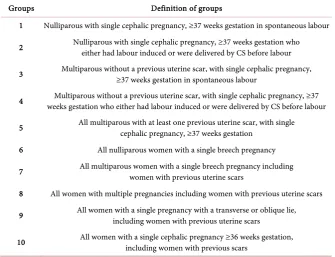
Table 1. Robson’s ten groups classification.
Groups Definition of groups
1 Nulliparous with single cephalic pregnancy, ≥37 weeks gestation in spontaneous labour
2 Nulliparous with single cephalic pregnancy, ≥37 weeks gestation who either had labour induced or were delivered by CS before labour
3 Multiparous without a previous uterine scar, with single cephalic pregnancy, ≥37 weeks gestation in spontaneous labour
4 weeks gestation who either had labour induced or were delivered by CS before labour Multiparous without a previous uterine scar, with single cephalic pregnancy, ≥37
5 All multiparous with at least one previous uterine scar, with single cephalic pregnancy, ≥37 weeks gestation
6 All nulliparous women with a single breech pregnancy
7 All multiparous women with a single breech pregnancy including women with previous uterine scars
8 All women with multiple pregnancies including women with previous uterine scars
9 All women with a single pregnancy with a transverse or oblique lie, including women with previous uterine scars
10 All women with a single cephalic pregnancy ≥36 weeks gestation, including women with previous scars
Obstructed labour is a mechanical obstruction resulting from fetopelvic dis-proportion. Prolonged labour is due to dynamic labour disorders with inade-quate uterine contractions [10]. The diagnosis was made in two main forms: a stationary cervical dilation for 2 hours after 4 cm or a latent phase that lasts more than 12 hours for primiparous and 8 hours for multiparous.
Regarding Fetal distress, it is suspected when an abnormal fetal heart rate oc-curred at intermittent auscultation (less than 110 or more than 160 pulses per minute) associated to meconium in amniotic fluid.
Antepartum haemorrhage involved placental abruption and placenta praevia. Impact of induction of labour was also assessed. Induction of labour is a method of artificial initiation of labour [11]. We used an E2 prostaglandin ana-logue. Oral or vaginal route were used with 25 μg per 6 hours. A maximum of 4 doses was given.
New-born characteristics were analysed using mainly Apgar score.
Data were analysed with the help of SPSS 21 software, Mac version. We re-sorted to the calculation of the Average for quantitative data whereas the quali-tative ones were expressed in percentages. Pearson Chi2 test or Fisher exact test were used accordingly. The differences observed were seen as significant when the p value was less than 0.05.
3. Results
DOI: 10.4236/ojog.2017.712119 1177 Open Journal of Obstetrics and Gynecology The final sample representing patients with unscarred uterus and undergoing CS was 4.564 patients. With regard to the age of patients, the average was 27.2 years (from 13 to 47 years old). Multiparous represented nearly half of the sam-ple (49.7%).
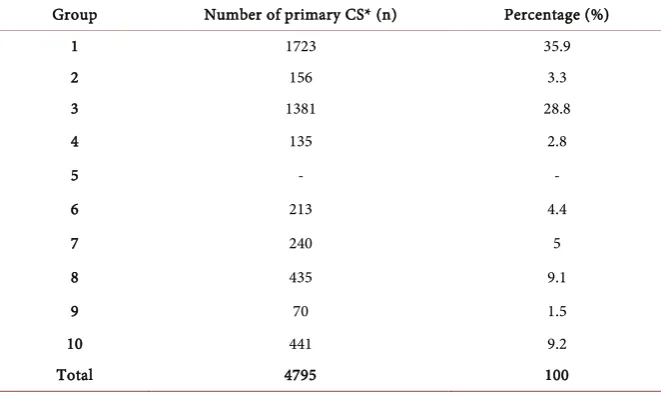
[image:4.595.207.538.284.481.2]Robson groups 1 and 3, respectively 35.9% and 28.8%, were the most repre-sented among patients who have experienced primary caesarean.
Table 2 represents the contribution of each of Robson’s Ten Groups to
pri-mary CS.
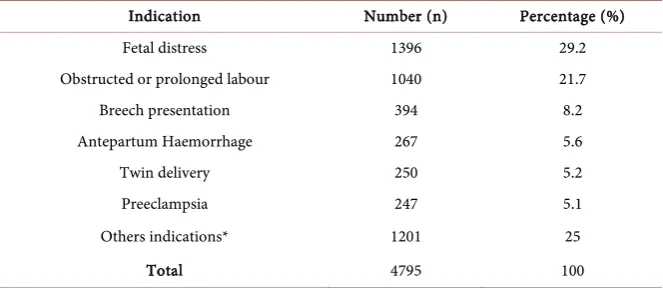
[image:4.595.208.537.525.702.2]The most common indication of CS appears to be foetal distress (29.1%). However, only 6.6% of these new-borns had an Apgar score less than 7 at the 5th minute.
Table 3, representing the trends of deliveries during the 5 years, has revealed a
Table 2. Distribution of patients according to Robson’s Ten groups classification.
Group Number of primary CS* (n) Percentage (%)
1 1723 35.9
2 156 3.3
3 1381 28.8
4 135 2.8
5 - -
6 213 4.4
7 240 5
8 435 9.1
9 70 1.5
10 441 9.2
Total 4795 100
*CS = caesarean section.
Table 3. Trends of delivery through five years.
Year Data 2012 2013 2014 2015 2016 p
Number of delivery 2801 3094 4251 4223 4564
Caesarean section 1070 (38.2%) 635 (20.5%) 955 (22.5%) 1029 (24.4%) 875 (19.2%) 0.000 Preeclampsia-eclampsia 163 (22%) 164 (12%) 202 (12.5%) 192 (10.7%) 237 (9.7%) 0.000
Prolonged or
Obstructed labour 458 (16.2%) 217 (6.8%) 344 (7.9%) 273 (6.3%) 219 (4.7%) 0.000 Labour Abnormalities* 1234 (44.4%) 1672 (54.4%) 2118 (50.3%) 2282 (54.3%) 2237 (49.2%) 0.000 Induction of labour 23 (0.9%) 48 (1.6%) 75 (1.8%) 28 (0.7%) 164 (3.7%) 0.000
Vacuum extractor
DOI: 10.4236/ojog.2017.712119 1178 Open Journal of Obstetrics and Gynecology crescent number of deliveries and a variable CS rate. The lowest CS rate was achieved in 2016 (19.2%) and the highest one was registered in 2012. The lowest rate of obstructed labour and prolonged labour was registered in 2016 (4.7%) and the highest rate in 2012 (Table 4).
Senior residents performed regularly an obstetrical audit during year 2016, at least 5 days a week.
The rate of Apgar score below 7 ranged between 0.7% and 2.6%. The lowest rate was obtained in 2013.
Breech presentation of the first twin was the main indication of CS in twin de-livery.
[image:5.595.211.537.308.488.2]CS rate was variable through the 5 years. In 2013 we observed 38.5% of cae-sarean in twin delivery with 0.5% of Apgar score below 7. In 2015 we noticed the highest CS rate (51.3%) and the highest Apgar score below 7 (4.3%). The Apgar score was not related to the CS rate. A lower neonatal morbidity was registered when the CS rate was ranged between 38.5% and 46.5% (Figure 1).
Figure 1. Distribution of patients according to Caesarean section and Apgar score rates
for twin delivery.
Table 4. Distribution of patients according to the main indication of caesarean section.
Indication Number (n) Percentage (%)
Fetal distress 1396 29.2
Obstructed or prolonged labour 1040 21.7
Breech presentation 394 8.2
Antepartum Haemorrhage 267 5.6
Twin delivery 250 5.2
Preeclampsia 247 5.1
Others indications* 1201 25
Total 4795 100
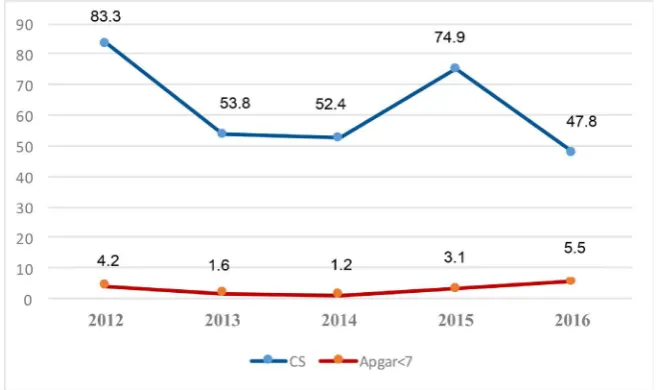
[image:5.595.207.539.552.696.2]DOI: 10.4236/ojog.2017.712119 1179 Open Journal of Obstetrics and Gynecology In breech presentation, the lowest rate of Apgar score below 7 (1.2% - 1.6%) was achieved when CS rate ranged between 52.4% and 53.8% (Figure 2).
Induction of labour was performed in 3.7% of patients in 2016 and 0.9% in 2012. It was associated with a highest rate of vaginal delivery: 81.4% versus 75.2% (p = 0.005 OR = 0.9 [0.87 - 0.97]).
4. Discussion
4.1. Patient’s Profile
In our study, primary CS represented more than half of overall CS (72.5%). To reduce CS rate, we need to focus on the primary indications for two main rea-sons: the important part of primary CS and the limited possibilities in scared uterus. Obviously, a scared uterus is immediately an obstetrical pathology that highly exposes to CS.
A proportion of 35.9% of patients who underwent CS was primiparous with vertex presentation.
4.2. Analysis of Main Indications
[image:6.595.207.538.498.693.2]Caesarean section for suspected acute fetal distress was the largest group we had to deal with. Intrapartum asphyxia is defined as metabolic acidosis at birth with a pH less than 7.00 and base deficit greater or equal to 12 mmol/l [12]. In our center, diagnosis of fetal asphyxia was based on abnormal fetal heart rate at in-termittent auscultation (less than 110 or more than 160 pulses per minute) asso-ciated to meconium in amniotic fluid. According to Bouiller et al., amniotic fluid aspects do not interfere with the occurring of a metabolic acidosis. Furthermore they concluded that Apgar score at 5th minute seems predictive for a neonatal encephalopathy with 100% when Apgar score is less than 4 and 11% when it’s greater than 6 [13]. In our study only 6.6% of newborns in whom fetal
Figure 2. Distribution of patients according to Caesarean section and Apgar score rates
DOI: 10.4236/ojog.2017.712119 1180 Open Journal of Obstetrics and Gynecology distress was suspected had an Agpar score less than 7 at the 5th minutes. This raises the debate of criterion of diagnosis and predictive patterns of intrapartum asphyxia. Intermittent auscultation and amniotic fluid aspect are insufficient. According to certain publications, recurrent late or variable or prolonged decel-erations, bradycardia with absent fetal heart rate (FHR) variability and sudden severe bradycardia are the FHR patterns that are predictive of severe fetal acido-sis [13] [14]. Given that situation, our policies must emphasize on ways and means of proper diagnoses of foetal asphyxia risk. Cardiotocography availability will be a good help to succeed in reducing CS rate for foetal asphyxia risk. In ad-dition, it’s necessary to diagnose hidden foetal distress. This strategy is cost-ef- fective for it could lessen the cost of deliveries as well as neonatal morbidity.
Hannah’s term breech trial advocated a planned caesarean section for the sin-gleton fetus in breech presentation at term [15]. This point of view impacted on twin delivery particularly when the first or the second twin is in non-vertex presentation [16][17]. Thus, recent publications emphasize on the high CS rate in twin delivery [16] [17] [18]. In our facility, vaginal delivery was performed regardless of the second twin’s presentation. We identified several trends: one obstetrical team who performed caesarean delivery when first twin was in breech presentation in 2012 and 2015, another obstetrical team (in 2013 and 2016) that attempted vaginal delivery in these cases.
In both cases (twin delivery and breech presentation), CS rate was lower in 2016. For twin delivery, the highest CS rate was occurred during the year 2015 while the highest rate of Apgar score less than 7. The situation was similar for breech presentation. These evidences do not argue for systematic CS for breech presentation in both single and twin pregnancies. It is necessary for this indica-tion to find the best compromise between low CS rate and low neonatal morbid-ity. In our study, CS rates that provide the lowest neonatal morbidity ranged between 38.5% and 46.5% for twin delivery and between 52.4% and 53.8% for singleton breech presenting. That’s the reason why we are encouraging vaginal delivery in breech-presenting first in twin and singleton with reasonable rate that allow a good neonatal outcome.
4.3. An Obstetrical Audit to Reduce CS rate?
DOI: 10.4236/ojog.2017.712119 1181 Open Journal of Obstetrics and Gynecology
4.4. Others Interventions
Induction of labour can be an efficient alternative in some indications. This strategy was most often used in 2016. A Prostaglandin E2 analogue was almost exclusively used because of its availability. A dose of 25 μg per 6 hours was ad-ministered by vaginal or oral route. The main indications were post-term preg-nancy, preeclampsia after 37 weeks of gestation, pre-labour rupture of mem-branes and diabetes mellitus. The outcome of our study, namely the effectiveness of misoprostol, has already been demonstrated by several previous publications [11]. In low resource settings, the use of misoprostol is a safe method and can help reducing CS occurrence.
5. Conclusions
Even though there are sharp variations in CS rate between rural and urban areas, we can notice a steady maternal morbidity. Because, many CS were performed on the ground of suspected foetal distress without an accurate diagnosis. More-over, further prospective studies are required to shed a light on predictive factors of intrapartum asphyxia. In addition, an availability of cardiotocography and pH of scalp can reduce unnecessary CS.
CS for breech presentation in singleton or twin delivery should not be system-atic. A staff of obstetricians and neonatologists must discuss indications. Above a certain rate, caesarean section does not improve the Apgar score in twin and breech delivery.
An obstetrical audit provides information for the adjustment of management of delivery.
Safety and effectiveness of labour induction is demonstrated. It must take more and more place in obstetrical management.
References
[1] Souza, J., Gülmezoglu, A. and Lumbiganon, P. (2010) Caesarean Section without Medical Indications Is Associated with an Increased Risk of Adverse Short-Term Maternal Outcomes. The 2004-2008 WHO Global Survey on Maternal and Perinatal Health BMC Med, 8, 71.
[2] WHO. (1985) Appropriate Technology for Birth. The Lancet, 2, 436-437.
[3] Hamilton, B.E., Martin, J.A. and Ventura, S.J. (2007) Births: Preliminary Data for 2006. National Vital Statistics Reports, 56, 1-18.
[4] Chong, C., Su, L.L. and Biswas, A. (2012) Changing Trends of Cesarean Section Births by the Robson Ten Group Classification in a Tertiary Teaching Hospital.
Acta Obstetricia et Gynecologica Scandinavica, 91, 1422-1427.
https://doi.org/10.1111/j.1600-0412.2012.01529.x
[5] National Agency of Statistics and Demography of Dakar. (2015) Investigation Demographic and Continuous Health (EDS-Continuous) 2014. Final Report, Calverton.
DOI: 10.4236/ojog.2017.712119 1182 Open Journal of Obstetrics and Gynecology Clinical Obstetrics & Gynaecology, 27, 297-308.
https://doi.org/10.1016/j.bpobgyn.2012.09.004
[7] Betran, A.P., Gulmezoglu, A.M., Robson, M., Merialdi, M., Souza, J.P., Wojdyla, D.,
et al. (2009) WHO Global Survey on Maternal and Perinatal Health in Latin America: Classifying Caesarean Sections. Reproductive Health, 6, 18.
https://doi.org/10.1186/1742-4755-6-18
[8] Vogel, J.P., Betran, A.P., Vindevoghel, N., Souza, J.P., Torloni, M.R., Zhang, J., et al.
(2015) Use of the Robson Classification to Assess Caesarean Section Trends in 21 Countries: A Secondary Analysis of Two WHO Multicountry Surveys. The Lancet Global Health, 3, e260-e270. https://doi.org/10.1016/S2214-109X(15)70094-X [9] Robson, M.S. (2001) Can We Reduce the Caesarean Section Rate? Best Practice &
Research Clinical Obstetrics & Gynaecology, 15, 179-194.
https://doi.org/10.1053/beog.2000.0156
[10] Taylor, L. and Lon, A. (2016) Abnormal Labour. Obstetrics, Gynaecology & Reproductive Medicine, 26, 85-88. https://doi.org/10.1016/j.ogrm.2015.12.002 [11] Roisin, R. and Fergus, M. (2016) Induction of Labour. Obstetrics, Gynaecology &
Reproductive Medicine, 26, 304-310. https://doi.org/10.1016/j.ogrm.2016.07.005 [12] Zupan Simunek, V. (2008) Définition de l’asphyxie intrapartum et conséquences
sur le devenir. [Definition of Intrapartum Asphyxia and Effects on Outcome.] La Revue Sage-Femme, 7, 79-86. https://doi.org/10.1016/j.sagf.2008.04.008
[13] Bouiller, J.P., Dreyfus, M., Mortamet, G., Guillois, B. and Benoist, G. (2016) Asphyxie perpartum à terme: Facteurs de risque de survenue et conséquences à court terme. À propos de 82 cas. Journal de Gynécologie Obstétrique et Biologie de la Reproduction, 45, 626-632. https://doi.org/10.1016/j.jgyn.2015.06.022
[14] Martin, A. (2008) Rythme Cardiaque fœtal pendant le travail: Définitions et interprétation. [Fetal Heart Rate during Labour.] Journal de Gynécologie Obstétrique et Biologie de la Reproduction, 37, S34-S45.
https://doi.org/10.1016/j.jgyn.2007.11.009
[15] Hannah, M.E., Hannah, W.J., Hewson, S.A., Hodnett, E.D., Saigal, S. and Willan, A.R. (2000) Planned Caesarean Section vs. Planned Vaginal Birth for Breech Presentation at Term: A Randomised Multicentre Trial. Term Breech Trial Collaborative Group. The Lancet, 356, 1375-1383.
https://doi.org/10.1016/S0140-6736(00)02840-3
[16] Easter, S.R., Lieberman, E. and Carusi, D. (2016) Fetal Presentation and Successful Twin Vaginal Delivery. American Journal of Obstetrics and Gynecology, 214, 116.e1-e10. https://doi.org/10.1016/j.ajog.2015.08.017
[17] Easter, S.R., Taouk, L., Schulkin, J. and Robinson, J.N. (2017) Twin Vaginal Delivery: Innovate or Abdicate. American Journal of Obstetrics and Gynecology, 216, 484-8.e4. https://doi.org/10.1016/j.ajog.2017.01.041