Munich Personal RePEc Archive
A Business Model Bridging Knowledge
Gaps
Fioretti, Guido and Kwan, Stephen K. and Niciforo, Stefania
University of Bologna, San José State University, University of
Bologna
15 January 2018
Online at
https://mpra.ub.uni-muenchen.de/83936/
A BUSINESS MODEL BRIDGING KNOWLEDGE GAPS
Guido Fioretti University of Bologna
Stephen K. Kwan San José State University
Stefania Niciforo University of Bologna
Abstract
Starting with a case-study we illustrate an emerging business model for the Industrial Internet of Things that applies to other ITC-based industries as well. We formalize this business model by importing the concept of structural holes into semantic networks and suggest that a similar logic applies to conceptual maps of consumers’ behaviour, too.
Introduction
Quick and free availability of information made possible by the Internet has rendered “business as usual” impossible in quite many established industries, ranging from music to news. Many firms have been forced to re-think the assumptions of their strategies, asking themselves what
competencies would produce value and, most importantly, how they could harness it. The Internet forced many firms to elaborate radically new strategies and formulate new business models that would question assumptions that they had taken for granted.
Disentangling the concepts of ‘strategy’ and ‘business model’ may not be easy on certain
circumstances. One approach for conceptualizing the difference is that thinking about a business model implies exploring novel sources of value, whereas strategies are formulated even when no radical change is implied (Shafer et al., 2005; Teece, 2010; Zott et al., 2011). Another path towards a clear definition is eventually suggested by the observation that envisioning a business model implies exploring a set of possible strategies, only one of which is actually implemented
(Casadesus-Masanell and Ricart, 2010). Whatever the definitions that will eventually emerge, it is obvious that firms eventually conceive radically novel business models at certain points in time, and that this happens with or without the Internet (Magretta, 2002; Teece, 2010). However, the Internet made many items available for free that were previously sold on a market, forcing many firms to conceive new business models.
extreme a strategy as those adopted by free-software vendors, it nonetheless follows a similar business model (Teece, 2010).
We believe that identifying broad categories of business models is useful for academics and practitioners alike and, indeed, many scholars have proposed sensible taxonomies (Schweitzer, 2005; Gunther McGrath, 2010). This paper reports on a Silicon Valley firm that is developing a novel and interesting business model in a field where lots of technological promises are made but little profits have been harnessed hitherto. While appreciating the innovativeness and peculiarities of a business model that is based on bridging between previously unrelated knowledge, we also recognized that this business model has certain similarities to those adopted by certain other firms in completely different fields. Thus, we illustrate our case-study as prototypical for a new class of business models based on the ability to bridge previously unrelated knowledge.
The rest of this paper is organized as follows. In the ensuing section, the features and potentialities of the Internet of Things (IoT) and the Industrial Internet of Things (IIoT) are discussed. The development of the IIoT is intertwined with the story of Echelon, a pioneer firm we studified as a case-study, will be illustrated in the second section. Echelon’s business model is expounded in the third section, and generalized into quite general a framework in the fourth section. The fifth section postulates that a similar framework governs certain features of consumers’ behavior, followed by conclusions in the sixth section.
Distributed Control, IoT and IIoT
The Internet created unprecedented possibilities for diffusion of information and coordination of behaviour, ranging from crowd-founding to virtual games to flash mobs. It did so by connecting millions of computers in a huge web where flows – unlike those of many previous communication media – are neither planned, nor centralized.
As early as in the 1980s, at a time when the Internet itself was still in its infancy, a few visionary IT specialists speculated that if microchips would be embedded in physical devices that would be allowed to communicate with one another, their functionalities would go beyond those of each single device (Wired, 1993). For example, an occupancy sensor, a light switch and a thermostat could regulate the lighting and temperature of a room as soon as someone entered it. Or, an alarm clock could wake you up but also send a message to a machine that brews a cup of coffee. Similar applications would span as diverse fields as the automation of large buildings, the management of agile productive plants, the regulation of flows along a grid of power plants or, in short, any setting where a large number of heterogeneous devices coordinate their operations while retaining some degree of flexibility.
In 1988, a few prominent Silicon Valley entrepreneurs and venture capitalists founded a company in order to bring this vision to market. Echelon, so the name of the company,designed the Neuron, a microchip that could be embedded in physical devices which, in their turn, would be connected to one another through the power line network (PLN). Echelon would sell the Neuron and the LonTalk
The architecture designed by Echelon was radically different from the leading technological paradigm of that time. According to the received wisdom of the 1980s and 90s, sensors and
actuators would be wired through a hierarchical set of data hubs which would route all information to a central computer which, in its turn, would issue appropriate commands to local devices. By contrast, Echelon set out to implement a distributed control architecture. Each device would be endowed with its own microchip, and each device would be able to communicate with any other. Distributed control is technically superior to centralized control. Its advantages are due to (i)
scalability, in the sense that devices can be added or taken away without re-programming the whole system, and (ii) reliability in front of power shortages, for several microchips working in parallel take a much shorter time to restore normal operation. From a purely technical point of view, there was no doubt that distributed control would make centralized control obsolete.
However, distributed control provides its largest benefits if a large number of heterogeneous devices are connected, which are eventually produced by competing firms. Each of these firms may have an interest in connecting its own devices to one another by means of a distributed architecture, but none of them is happy to see distributed networks where devices from different vendors compete with one another. Each producer in each industry strives to sign contracts where only its own products are used, so each producer typically adds any sort of technical difficulty to impair its devices from communicating with those of its competitors. Thus, we are experiencing the
paradoxical reality of a superior technology that is technically available since the end of the 1980s, but that has not been allowed to spread into the economy hitherto (Rossi et al., 2009).
Distributed control did not spread, but it did not disappear either. Rather, it survived and diffused in specific market niches. Echelon did not thrive, but it did not go bankrupt either. It rather set on a slow but steady growth path, possibly disappointing with respect to the initial (exaggerated) expectations but respectably positive and reasonably good in the long run.
Quite surprisingly for the disillusioned fans of distributed control, the new century brought a new spike of great expectations. This new wave of expectations also had a brand new name: The
Internet of Things would connect devices of any sort, making everything smart: smart cities, smart homes, etc. Remarkably, the new name did not stress technical superiority (distributed control vs. centralized control) but rather what the devices would do for the final user: They would provide smart environments because they would connect to one another just like computers do.
This focus on consumers is possibly connected with an afterthought that is likely to loom very large in the minds of all actors involved, namely, the possibility that “smart” devices could be used in order to collect big data about consumers (European Parliament, 2015). If this will come true, then distributed control will finally spread, yet not because of its technical superiority but rather because it will allow better consumer profilation. It is a dream, or a nightmare, that is still far from coming true in any case.
Interestingly, Echelon is staying away from all talks about big data and IoT. It is focusing on the ‘Industrial’ IoT instead (IIoT), where technical expertise matters and where profits can be made here and now rather than at some distant future. In retrospect, one may observe that throughout its whole existence Echelon stayed firmly within the IIoT although it switched its main focus from building automation to power grids to lighting throughout the years. In broad terms, we can observe a certain constancy and coherence with its origins (Hannan and Freeman, 1984) co-existing with the entrepreneurial ability of re-directing its core activities from building automation to power grids to smart urban environments and beyond.
and Strauss, 1967; Orton, 1997), where our initial expectations concerned the interplay between constancy and adaptability in Echelon’s strategy. In particular, we made open-ended interviews to:
• Chris Dingley, VP for Sales (unrecorded);
• Robert Dolin, former CTO and VP for Engineering (recorded);
• Robert Maxfield, Board Member since inception (recorded);
• Sohrab Modi, CTO and VP for Engineering (unrecorded);
• Ronald Sege, CEO and Chairman of the Board (unrecorded).
Handwritten notes were taken in all interviews, including those where recording was not allowed. Excerpts from these notes were submitted for approval.
In parallel to interviewing Echelon we actively attended ongoing debates in Silicon Valley on IoT, IIoT and big data. In particular, we were struck by the scheme for a business model proposed by
Claro Partners (2014), a specialized consultant. Following the methodology of Grounded Theory we combined Claro Partners’ insights with the inputs provided by Echelon in order to arrange higher-order concepts (Glaser, 2002; Glaser and Holton, 2004) which, in our case, translated into a business model that we found interesting and innovative. In a third stage concepts were re-arranged again, drawing similarities with experiences of other firms in different industries. Finally, we realized that certain aspects of this business model would shed light on consumers’ behavior as well.
It is worth to stress that, in accordance with the principles of Grounded Theory (Glaser, 2002), our interpretation of Echelon’s business model is not necessarily Echelon’s own interpretation. It is our own theory, grounded on testimonies provided by Echelon as well as other sources.
Change and Continuity
Echelon was founded in 1988 in order to provide distributed solutions to control problems affecting as diverse industries as machineries manufacturing, building automation, consumer durables, and beyond (Echelon, 1990). A choice had to be made. At that time, it seemed reasonable to begin with a section of building automation where the potential advantages from connecting devices to one another were substantial, the so-called HVAC industries (Heating, Ventilation, and Air
Conditioning).
Echelon started selling its microchips in 1990. Its initial strategy consisted of stipulating agreements with the main HVAC manufacturers in order to embed microchips in their devices. Since 1996, a new strategy complemented these agreements (Lane and Maxfield, 2005). According to this new strategy, Echelon would produce modules with embedded Neuron chips that interfaced via industry-standard interfaces to devices of any maker. These general-purpose modules would be sold to independent 'System Integrators' who in their turn would provide networked solutions for building automation incorporating devices from multiple suppliers.
In 2000, the Italian electricity provider Enel asked Echelon to embed its microchips in a new series of smart meters that would substitute all previous electricity meters in Italy. For Enel, this was not just a means to implement remote reading of its meters. Its CEO aimed at providing home
new market. In the subsequent years, smart grids became more important for Echelon than HVAC. Applications to building automation were still being made (through system integrators as well as through agreements with HVAC manufacturers), but power grids were the main focus.
However, most electricity providers had little interest in combining intelligent meters with home automation. Most of them were just interested in remote reading of meters, a basic functionality for which cheaper devices were available (Thoma, 2017). Even Enel lost interest in integrating home automation with their metering network when a new CEO was appointed in 2002 (Dolin, 2015). For some years Echelon continued to focus on smart grids but eventually sold its operations in 2014 (Echelon, 2014).
Echelon left the smart grid in order to enter smart lighting through the acquisition of Lumewave
(Echelon, 2014). In the course if this transition its discourse also shifted from “distributed control” to the IIoT where Echelon became a key player. Echelon was founded with the idea of providing a general solution for the problem of control in any industry but, in practice, it could only zig-zag across separate markets such as HVAC, power grids and lighting (Lane and Maxfield, 2009). What is most remarkable with these strategy shifts is that in spite of all changes, and in spite of all the hype on IoT and big data, Echelon never deviated from understanding itself as a firm based on technical excellence. Apparently, this firm has never been tempted by the possibility of using smart devices in order to enter the business of consumer profilation. On the one hand, its zig-zag through strategies and markets is an instance of change management. On the other hand, at a more
fundamental level that defines its identity and the source of its competitive advantage, Echelon
appears not to have ever changed. The many turnarounds of strategy are instances of adaptation (Cyert and March, 1963), but they are also manifestations of a core identity that is just as invariant as the organizational ecologies approach would predict (Hannan and Freeman, 1977, 1984).
This ambivalence can be eventually understood by recallimg the concepts of capabilities and
routines. Capabilities stand for firm-specific, often tacit knowledge that constitutes the core of its resources. Eventually, capabilities can be understood in terms of firm-specific routines if one wants to stress the fact that organizational knowledge is embedded in sequences of actions that are
repeated again and again (Grant, 1991; Winter, 2000). This case-study shows that – similarly to other organizational features (Scott, 1998) – only core organizational capabilities and routines contribute to organizational inertia, whereas more peripheral capabilities can be easily adapted to a changing environment.
Finally, our case-study confirms the importance of managerial cognition in detecting opportunities, envisioning strategies and directing action (Garud and Rappa, 1994; Tripsas and Gavetti, 2000; Nadkarni and Barr, 2008; Plambeck, 2012; Hadida, 2014). In our case, Echelon’s focus on IIoT comes along with the identification of profit opportunities in IIoT to the detriment of those in IoT (see Appendix A).
A Business Model for the Industrial Internet of Things
Possibly, a hidden presumption surrounding IoT is that it will yield profits insofar it will allow the collection of big data for consumer profilation, but how to make profits with the IIoT is still unclear. We believe that the Echelon case is illuminating in this respect.
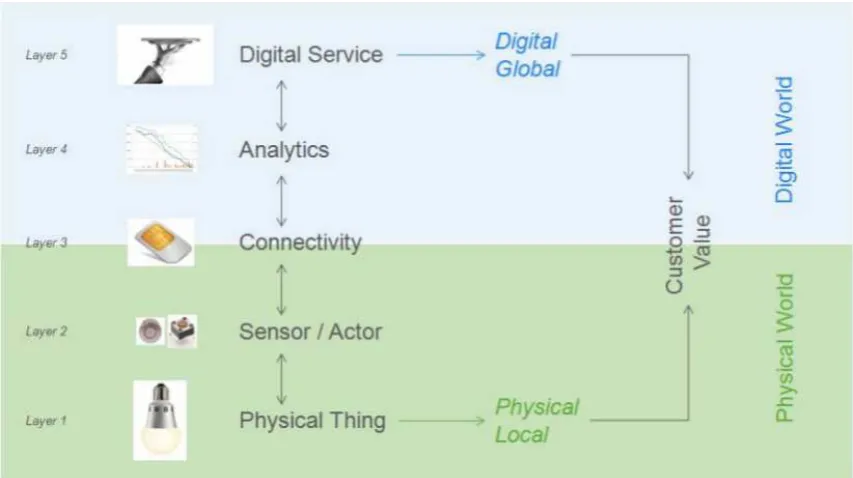
In general, IoT/IIoT experts claim that the added value of this technology will arise out of a combination of hardware, software and semantic capabilities. In particular, single devices are “smart” insofar they add logical capabilities to physical action whereas embedding them in a network adds a semantic level to the underlying layers of logical signals and physical magnitudes (Yoo et al., 2010). Ultimately, customer value is supposed to arise from the ability to link the physical layer and the logical signals to functionalities that have a meaning for the final user or, in short, from the ability to connect the physical to the digital world (Claro Partners, 2014; Fleisch et al., 2014).
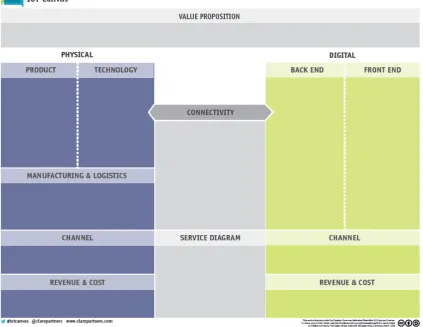
The main schemes proposed in the literature are reproduced in Appendix B. We found that these schemes entail a very interesting proposition insofar they highlight that customer value arises from the ability to bridge between the technical, physical features of devices and the logical possibilities that arise when they are connected to one another. We also found that the Echelon case can fill this scheme with details that make it more general and useful in other contexts.
In the early days, Echelon sold microchips that would communicate with one another through the proprietary protocol LonTalk (Lane and Maxfield, 2005). Echelon’s dream was that of achieving a near-monopolistic position in distributed control, where its proprietary communication protocol would be the only available bridge through which devices would communicate. This dream never realized, either because the big players proposed solutions that would involve their devices only (e.g., the HVAC industry) or because cheaper solutions were available to provide basic
functionalities (e.g., remote reading for electricity providers). Today, Echelon makes use of an open communication protocol that can be used by anyone (Thoma, 2017). Instead of making profits by selling the real thing (i.e. the Neuron microchips, the LonTalk communication protocol), it makes profits by designing IIoT solutions for specific customers.
Superficially, this business model is similar to those of certain providers of open-source software who do not make money by selling a software which in any case is available for free, but rather a series of additional services that may include implementation design, installation and maintenance (Timmers, 1998; Gunther McGrath, 2010). However, the difference is that Echelon is not making profits on additional services, but rather on its main solution, namely distributed control for the IIoT. This fact deserves closer scrutiny.
In the 1990s and 2000s, Echelon based its solutions for building automation and the smart grid on power line communication (PLC). The technical principle is that since electrical signals at different frequency can travel on the same wire without confusing with one another, the wires that host a 220 V alternate current at a frequency of 50-60 Hz can also be used in order to make sensors and actuators communicate with one another through signals at a different frequency. Today, most IoT applications are based on wireless communication (WC) because it is cheaper and easier to set up. However, both media have advantages and drawbacks. On the one hand, WC is difficult or impossible if there are obstacles such as tunnels or large buildings. On the other hand, PLC has trouble getting around transformers and, furthermore, its cost is typically higher than WC.
of communication networks that employ both WC and PLC. Bridges can be easily drawn, but bridges rest on pillars, and at least one pillar is difficult to imitate.
Semantic Network Analysis
The above account of a possible business model for the IIoT can be understood by means of the tools of network analysis. However, we shall consider networks where nodes represent concepts rather than social actors, and edges relations between concepts rather than social ties. It is a semantic network rather than a social network.
Semantic networks are an established tool, mainly used in Artificial Intelligence, where nodes represent concepts linked by logical relations represented by edges. In the simplest semantic networks edges represent definitions or assertions, others entail more complex logical relations such as inclusion of certain nodes into higher-order nodes or executing algorithms (Sowa, 1992). Henceforth, we shall represent our semantic network as a bipartite graph where nodes are included in two subnets. Furthermore, our nodes will be assumed to be reciprocally interdependent (Thomson, 1967) albeit the details of their interactions will be left unspecified.
Semantic networks have already been in organizational contexts. Notable instances are the structure of relationships between scientific theories (Leydesdorff, 1991) as well as the structure of the relations between the contents of patents (Yoon and Kim, 2011). Furthermore, social networks analysis approaches semantics when it finds out that innovative knowledge arises out of connecting previously unrelated social actors (Burt, 2004; Rodan and Galunic, 2004; Rodan, 2010; Corredoira and McDermott, 2014).
We shall apply key concepts of social network analysis to our semantic network, a combination that has already been explored and adequately theorized (Downes, 2005; Jung and Euzenat, 2007; Mika, 2007). In particular, we shall employ the distinction between weak ties and strong ties (Burt, 1992). In social network analysis the distinction between weak ties and strong ties has been made à propos
knowledge embedded in the second pillar; however, Echelon has some difficult-to-imitate knowledge in the first pillar.
By contrast, consider Echelon’s business model in its early days, when it sold its proprietary communication protocol LonTalk. In those days, value was supposed to accrue from the bridge. Expertise with PLC was not particularly developed, whereas WC did not yet exist. Similarly, the other pillar consisted of knowledge that was openly discussed, just as it is today.
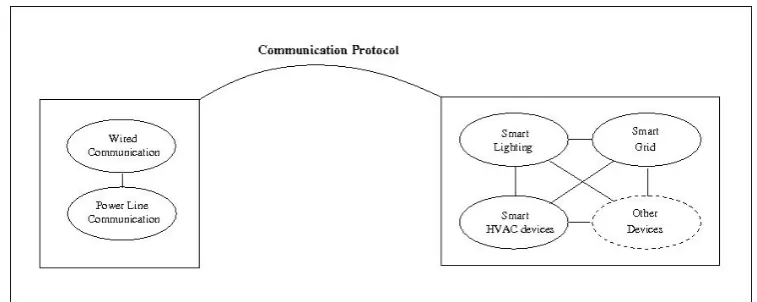
[image:9.595.107.486.346.497.2]On the whole, the bridge-and-pillars metaphor can be used to frame different business models, depending on what components provide value. According to this metaphor, value can either accrue because one is able to link to previously disconnected sets of nodes, or because one controls at least one of the two sets of nodes, or both. In the first case, value arises from a weak tie: the ability to bridge between previously unrelated knowledge. This is the most obvious business model, the one that Echelon adopted at first. In the second case, value arises from adding nodes and constructing strong ties between them: by adding, or reinforcing a pillar, value arises from the ability to make knowledge flow through freely available bridges. This is a less obvious business model, yet just as viable as the first one.
Figure 1. The semantic network underlying Echelon's business model. On the left, the pillar made of knowledge about communication technologies: it is a network made of two nodes, wired communication (WC) and power line communication (PLC). On the right, the pillar made of knowledge about smart devices: it is a network made of a large number of nodes, here summarized as a node for smart lighting, a node for smart grids, one for smart HVAC devices and a residual node. The communication protocol bridges between these two pillars.
In principle one may envisage many different combinations in terms of the number and strength of connections between the nodes that constitute the pillars (strong ties) or the ability to bridge between sets of tightly connected nodes (weak ties). However, we deem that many unconventional business models consist of creating new nodes of knowledge and connecting them with strong ties up to have a new pillar of knowledge, rather than attempting to control the weak tie provided by a bridge. Consider the following examples:
order results by the number of hyperlinks pointing to them (competitor Alta Vista showed the number of hyperlinks but did not use this information to order results). Later on, Google was the first search engine that exploited users' past searches in order to show those results first, in which any single used was most likely to be interested. In our interpretation, the Internet constitutes one pillar of a huge semantic network where each site is a node. Search engines constitute the nodes of the other pillar, while using one of them amounts to throw a bridge that allows to reach a point in the network. Among the nodes of the pillar constituted by search engines, Google reached prominence because it provided the best starting point for a bridge towards the Internet. Everyone can use any search engine for free, so the bridge in itself provides no value. Google’s competitive advantage is rather in one of the pillars, which it contributed to create.
• Social Networks Media. Communication media such as Facebook, Twitter or WhatsApp
arrange social contacts between users that are generally identified by cellular phone numbers according to similar, albeit slightly different rules. In our interpretation, the social networks – the bridges between users – arranged by these media rest on two pillars: on the one hand the phone numbers, on the other hand the interaction opportunities and rules proposed by
Facebook, Twitter and WhatsApp. These media do not extract value from the bridges that users establish between their phone numbers, which is generally free for everyone (a minor exception is WhatsApp requiring payment of a fee in order to be used on Saturdays). Rather, they extract value from the possibilities they offer for building bridges out of the interaction opportunities that they provide (strictly speaking, in this case we actually have double bridges for any time a user links on to another user it is first a bridge from a phone number to a social communication medium, then a bridge from the medium to a different phone number). Interaction opportunities and interaction rules constitute the unique pillar from which communication media allow their users to throw any number of bridges towards their knowledge of phone numbers.
• Scientific Publishers. Scientific publishing used to be quite crowded an industry, with many publishing houses competing for a tiny market where only a few of them managed to emerge. The advent of citation counting changed it. Thomson Reuters’ Web of Science was the first database of scientific publications where citations, impact factors, h-index and other metrics created rankings of journals, books and their publishers. A few years later one scientific publisher, Elsevier, created a similar database called Scopus. The Web of Science is independent of single publishers, but Scopus is not: Since Scopus is there, Elsevier gained a prominent position among scientific publishers. Our interpretation of this state of affairs is that each publisher is a node in a semantic network about scientific discourse, discoveries and trends: This becomes a pillar once a bridge is put in place. The other pillar entails the ability to search scientific publications in order to extract meaningful indicators: This pillar is made of two nodes, Scopus and Web of Science. A bridge between these two knowledge pillars is created whenever Scopus or Web of Science are used in order to evaluate journals and publishers. Unlike free communication protocols between smart devices, these bridges provide revenues because Universities pay a fee in order to use Scopus and Web of Science. However, this is a minor issue. The remarkable fact is that the industry of scientific publishing changed because a second pillar of knowledge was created – Scopus and Web of Science – which enabled bridges to be thrown between publishers and databases. In particular, Elsevier was quick to exploit this possibility to the most.
The Elsevier example has a sequel that suggests a more dynamical framework. Today, after Elsevier
publications to users. In the new knowledge pillar that Elsevier contributed to build, other sorts of companies may be more proficient than the pioneers.
This circumstance suggests an important difference between extracting value from bridges and extracting value from building pillars. Extracting value from bridges is a rather traditional, safe activity where a stable flow of profits is likely to be harnessed. By contrast, building new pillars can unleash forces that upset the whole industry landscape, providing revenues that may be substantial and yet uncertain at a time.
The Demand Side
In the previous examples, a firm was able to create or modify a semantic network in such a way that it would provide better bridges between sub-networks, or “pillars.” Launching a bridge was quite an effortless activity, but creating a new semantic knowledge network required substantial effort and from this activity value would eventually accrue to the firm.
In all previous examples it was taken for granted that consumers would appreciate a certain functionality. There was no need to explain what new services would be provided. It was implicitly assumed that the supply side was all what mattered, for consumers would immediately grasp the usefulness of the service that was going to be provided.
Unfortunately, this is not always the case. For instance, the launch of the post-it was problematic because its usage was not obvious from pictures and verbal descriptions. In the very beginning, its promoters had to visit administrative offices and offer a few items for trial until employees eventually realized what they could do with it (Nayak and Ketteringham, 1994, Ch. III).
We maintain that when the usage and usefulness of a new product is not clear from the outset, marketeers may eventually attempt to create new semantic networks in the minds of consumers using the principles outlined above. For instance, the case of the post-it could be interpreted as follows. Once the post-it had been invented, there existed a pillar made by nodes describing its technical features, such as ‘small leaflets’ and ‘weak glue’. Consumers would buy it if they had a pillar in their minds describing what the usage of such an object would be, so that a bridge could be established between the concepts representing the object and the concepts representing its usage. Showing possible usages to secretaries amounted to suggest the pillars and bridges of a semantic network. In this case one may claim that it is the bridge that generates value, but the fact is that no bridge could be thrown unless a pillar was there, that represented possible usages of the post-it. Other instances are not as simple. Consider the laser, for example. Its invention triggered a cascade of usages ranging from cutting machines to photocopiers to surgery to devices for measuring distance (Hecht, 2010). We would propose that each of these usages is represented by a concept in consumers’ minds, and that from each of these concepts a bridge can be thrown towards nodes representing the laser’s technical features. Also in this case, the crucial issue is adding a concept – figuring out a new possible usage – rather than throwing a bridge.
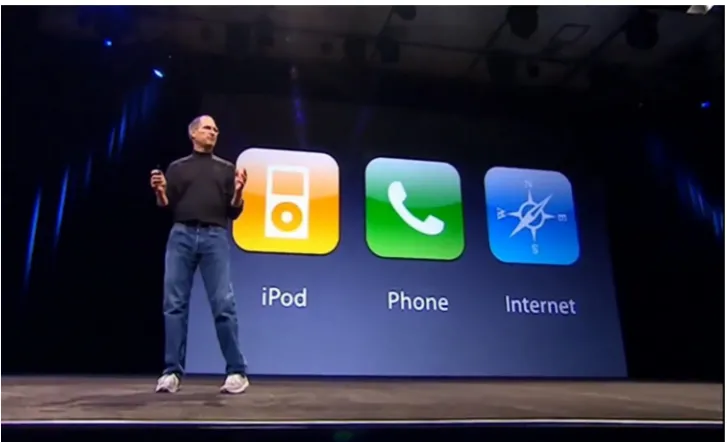
iPhone was, he pointed to three objects that potential users already knew: the iPod – a device for listening to music – the Internet, and phones (Apple, 2007). That is, he defined the smartphone as a device that would combine functionalities that the public already knew. And this process went on in the subsequent years, with smartphones including previously self-standing objects such as digital cameras, videocameras and GPSs.
Figure 2. Steve Jobs explains what the first smartphone is: Something that allows users to listen to music, navigate the Internet and make a call with one single object (Apple, 2007).
We deem that the pillars-and-bridge scheme that we introduced in order to explain certain unconventional business models can also be used in order to understand the way the smartphone was explained to consumers. Consider existing devices as nodes in consumers' knowledge: One node for the (classical) phone, one node for music players, one node for personal computers to navigate the Internet – other nodes representing digital cameras, videocameras and GPSs could be added to the picture. Steve Jobs did not create bridges between existing devices; rather, he created a new device – a new pillar – from which conceptual bridges could be thrown towards the existing devices. Indeed, so effective a bridge that the new device superseded many of the old ones.
Conclusions
Similarly to the organizations that we have examined hitherto, those that are based on mediating technologies bridge between knowledge bases. However, the organizations that inspired the concept of mediating technologies were such that the structure of communications within the two populations did not matter; for instance, lenders generally do not communicate with one another and borrowers don’t do it either. In these conditions, only the bridge matters.
In many traditional situations, the bridge is the source of value. And of course, the fewer the organizations that are able to bridge between populations that would not communicate otherwise, the greater the profits that accrue to them. In the limit, monopolistic profits accrue to the one organization that owns the only bridge through which two populations can communicate.
In its beginnings, Echelon thought of a business model where profits would accrue from its ability to bridge, which would be provided by its communication protocol LonTalk. It was an instance of a simple mediating technology. However, this business model failed because it was all too easy for competitors to create their own communication protocol.
This is quite general a pattern induced by ICT. Greater possibilities for communication make that, in many cases, bridges must be given away for free because they are so easily imitated. At the same time, greater possibilities for communication mean that the members of those populations between which bridges used to mediate eventually communicate with one another, and they do it creating structures that eventually matter for the final outcome. Bridges have lost much of their importance, but the structure of communication within pillars of knowledge matters more than it used to do. This provides novel possibilities for extracting value by providing novel communication structures within each population rather than extracting tolls from the bridge that connects them. In many such arrangements, the strong ties that create a structure of communication between tightly connected nodes may matter more than the tiny weak ties that bridge between them. In a sense, we are proposing a refinement and improvement of the concept of mediating technologies.
From a slightly different point of view, our proposal is also related to Actor-Network Theory (ANT), a sociological theory of the arousal and acceptance of innovations that highlights the interests and politics of all the actors involved (Hughes, 1986; Law, 1986; Latour, 1988). For instance, ANT analyzed the discovery and diffusion of vaccines highlighting the interplay between Louis Pasteur, the aims of the emerging hygienist movement, the needs of doctors to retain prominence, military interests in making soldiers immune to tropical diseases as well as the behavior of microbes (Latour, 1988). Our approach is certainly less detailed, less rich than ANT. In particular, our simple scheme based on knowledge networks provides a terribly crude description of interests and power positions which, in our case, are limited to those arising from commanding relevant knowledge.
However, ANT bears some similarity with our proposal in that it reconstructs complex networks where social actors make it possible for an innovation to have a value because social actors find it convenient. ANT does not have any simple rule for generating value and, certainly, from ANT’s point of view our bridge-and-pillars framework appears at the very least simplistic. Goals are also different, however. ANT is a complex and generalist approach that can be applied to any innovation, provided that sufficient resources are invested into it. Our framework does not aspire to generality but hopes to be useful for understanding certain specific business models. From this point of view, our modest contribution may be hopefully accepted by ANT theorists as a useful first-order approximation.
We thank Echelon for interviews and information disclosure. In particular, we wish to express our gratitude to Robert Dolin and Robert Maxfield for their help and support.
This research did not receive any specific grant from funding agencies in the public, commercial, or not-for-profit sectors.
References
Apple (2007) [HD] Steve Jobs - iPhone Introduction in 2007 (Complete). Video available from <www.youtube.com/watch?v=9hUIxyE2Ns8>.
Aral S, Van Alstyne M (2011) The Diversity-Bandwidth Trade-Off. American Journal of Sociology, 117: 90-171.
Burt RS (1992) Structural Holes. Cambridge (MA), Harvard University Press.
Burt RS (2000) The Network Structure of Social Capital. Research in Organizational Behaviour, 22: 345-423.
Burt RS (2004) Structural Holes and Good Ideas. American Journal of Sociology, 110: 349-399. Casadesus-Masanell R, Ricart JE (2010) From Strategy to Business Models and Onto Tactics. Long
Range Planning, 43: 195-215.
Claro Partners (2014) A Guide to Succeeding in the Internet of Things. Available at <www.claropartners.com>.
Corredoira RA, McDermott GA (2014) Adaptation, Bridging and Firm Upgrading: How non-market institutions and MNCs facilitate knowledge recombination in emerging markets. Journal of International Business Studies, 45: 699-722.
Cyert RM, March JG (1963) A Behavioral Theory of the Firm. Englewood Cliffs (NJ); Prentice-Hall.
Dolin R (2015) Interview. In Niciforo S: Business Models and Economic Implications of Distributed Control in the Internet of Things Area. University of Bologna, Scuola di Economia, Management e Statistica, Master Thesis.
Downes S (2005) Semantic Networks and Social Networks. The Learning Organization, 12: 411-417.
Echelon (1990) Dec 5, 1990: The Day That Everything Began to Work Together. Company Video. Echelon (2014) Echelon Expands Presence in Outdoor Lighting With Acquisition of Established
European Parliament (2015) Big Data and Smart Devices and Their Impact on Privacy. Directorate-General for Internal Policies, Policy Department C: Citizens’ Rights and Constitutional Affairs.
Fleisch E, Weinberger M, Wortmann F (2014) Business Models and the Internet of Things. Available at <www.iot-lab.ch/?page_id=10543>.
Garud R, Rappa MA (1994) A Socio-Cognitive Model of Technology Evolution: The case of cochlear implants. Organization Science, 5: 344-362.
Glaser BG (2002) Conceptualization: On theory and theorizing using grounded theory.
International Journal of Qualitative Methods, 1: 23-38.
Glaser BG, Holton J (2004) Remodeling Grounded Theory. The Grounded Theory Review, 4: 1-24. Glaser BG, Strauss AL (1967) The Discovery of Grounded Theory. New Brunswick, Aldine
Transaction.
Grant RM (1991) The Resource-Based Theory of Competitive Advantage: Implications for strategy formulation. California Management Review, 33: 114-135.
Gunther McGrath R (2010) Business Models: A discovery driven approach. Long Range Planning, 43: 247-261.
Hadida AL (2014) Managerial Cognition and the Value Chain in the Digital Music Industry.
Technological Forecasting and Social Change, 83: 84-97.
Hannan MT, Freeman J (1977) The Population Ecology of Organizations. American Journal of Sociology, 82: 929-964.
Hannan MT, Freeman J (1984) Structural Inertia and Organizational Change. American Sociological Review, 49: 303-313.
Hecht J (2010) Short History of Laser Development. Optical Engineering, 49, 091002. Available at <www.spiedigitallibrary.org/journals/Optical-Engineering>.
Hemphälä J, Magnusson M (2012) Networks for Innovation – But What Networks and What Innovation? Creativity and Innovation Management, 21: 3-16.
Hughes TP (1986) The seamless web: Technology, science etcetera. Social Studies of Science, 16: 281-292.
Jung JJ, Euzenat J (2007) Towards Semantic Social Networks. In E Franconi, M Kifer, W May (eds.), The Semantic Web: Research and applications, Ch. XIX, pp. 267-280.
Lane DA, Maxfield RR (2005) Ontological Uncertainty and Innovation. Journal of Evolutionary Economics, 15: 3-50.
Lane DA, Maxfield RR (2009) Building a New Market System: Effective action, redirection and generative relationships. In D Lane, S van der Leeuw, D Pumain, G West (eds.), Complexity Perspectives in Innovation and Social Change, Ch. IX, pp. 263-288.
Law J (1986) ‘On the methods of long distance control: Vessels, navigation and the Portuguese route to India’, in J. Law (ed.) Power, Action and Belief: a new Sociology of Knowledge? Sociological Review Monograph, London: Routledge and Kegan Paul.
Leydesdorff L (1991) In Search of Epistemic Networks. Social Studies of Science, 21: 75-110. Magretta J (2002) Why Business Models Matter. Harvard Business Review, May.
Mika P (2007) Ontologies Are Us: A unified model of social networks and semantics. Journal of Web Semantics, 5: 5-15.
Nadkarni S, Barr PS (2008) Environmental Context, Managerial Cognition, and Strategic Action: An integrated view. Strategic Management Journal, 29: 1395-1427.
Nayak PR, Ketteringham JM (1994) Breakthroughs! Amsterdam, Pfeiffer & Company.
Orton JD (1997) From Inductive to Iterative Grounded Theory: Zipping the gap between process theory and process data. Scandinavian Journal of Management, 13: 419-438.
Pippel (2017) Interview. In Bandini F: Editoria accademica scientifica: mercato e leadership. University of Bologna, Scuola di Economia, Management e Statistica, Master Thesis. Plambeck N (2012) The Development of New Products: The role of firm context and managerial
cognition. Journal of Business Venturing, 27: 607-621.
Rodan S (2010) Structural Holes and Managerial Performance: Identifying the underlying mechanism. Social Networks, 32: 168-179.
Rodan S, Galunic C (2004) More than Network Structure: How knowledge heterogeneity influences managerial performance and innovativeness. Strategic Management Journal, 25: 541-562. Schweitzer L (2005) Concept and Evolution of Business Models. Journal of General Management,
31: 37-56.
Scott WR (1998) Organizations: Rational, natural, and open systems. Upper Saddle River (NJ), Prentice Hall.
Shafer SM, Smith HJ, Linder JC (2005) The Power of Business Models. Business Horizons, 48: 199-207.
Sowa JF (1992) Semantic Neworks. In SC Shapiro (ed.), Encyclopedia of Artificial Intelligence. New York, Wiley.
Reagans R, Zuckerman EW (2008) Networks, Diversity, and Productivity: The Social Capital of Corporate R&D Teams. Organization Science, 12: 502-517.
Rossi F, Bertossi P, Gurisatti P, Sovieni L (2009) Incorporating a New Technology into Agent-Artifact Space: The case of control automation in Europe. In Lane DA, van der Leeuw S, Pumain D, West G (eds.), Complexity Perspectives in Innovation and Social Change. Springer Verlag, Berlin-Heidelberg.
Teece DJ (2010) Business Models, Business Strategy and Innovation. Long Range Planning, 43: 172-194.
Thoma G (2017) Commercialization Strategy of a General Purpose Technology. In G. Thoma (ed.),
Patent Management and Valuation, Ch. V, pp. 151-178. New York, Routledge.
Timmers P (1998) Business Models for Electronic Markets. CommerceNet Research Note No. 98-21.
Tiwana A (2008) Do Bridging Ties Complement Strong Ties? An Empirical Examination of Alliance Ambidexterity. Strategic Management Journal, 29: 251-272.
Thompson JD (1976) Organizations in Action. New York, McGraw-Hill.
Tripsas M, Gavetti G (2000) Capabilities, Cognition, and Inertia: Evidence from digital imaging.
Strategic Management Journal, 21: 1147-1161.
Winter SG (2000) The Satisfycing Principle in Capability Learning. Strategic Management Journal, 21: 981-996.
Wired (1993) If Your Toaster Had a Brain. Wired, 01-01-1993. Available at <http://www.wired.com/1993/01/toaster>. Accessed on 18/03/2016.
Yoo Y, Henfridsson O, Lyytinen K (2010) The New Organizing Logic of Digital Innovation: An agenda for information systems research. Information Systems Research, 21: 724-735.
Yoon J, Kim K (2011) Identifying Rapidly Evolving Technological Trends for R&D Planning Using SAO-Based Semantic Patent Networks. Scientometrics, 88: 213-228.
Zott C, Amit R, Massa L (2011) The Business Model: Recent developments and future research.
Journal of Management, 37: 1019-1042.
APPENDIX A
Interview with Echelon CEO
Consumer and industrial market are very different. The problem with the consumer market is that,
yes, you have a lot of applications and devices to connect, a lot of opportunities and so on, but you
have few profit margins. We are already established in the systems of building automation, air
conditioning and heating, systems of smart meters, as you know in Italy with Enel, so we felt it was
a natural consequence evolving towards this direction. We have the tool, the customers, and the
alliances and now we’re investing a lot of money in industrial IoT solutions. We’re using our
Although the consumer IoT gets more press attention, the real financial and societal potential lies
in the industrial IoT. The cost of connecting to the IoT is dropping. Ten years ago, it was about $10
per connection, now it’s $4 for a Wi-Fi module or Echelon chip, and soon it’ll be $2. Also, and this
is important, customers don’t really buy an ‘IoT.’ They buy solutions to certain vertical market
problems. As for vertical market opportunities, we see lighting as the one with the biggest
immediate potential, because connecting highly controllable and sensor-enabled LED lights can
have many, many benefits in terms of health, customer satisfaction, asset utilization and learning.
Beyond lighting, we foresee big opportunities in transportation — such as locomotion, aircraft
telemetry and smart traffic systems — and the smart grid.
(Sege, 2015)
APPENDIX B
This appendix entails the received wisdom on business models for the IIoT. In particular, Figure (B1) shows the scheme of Fleisch et al. (2014), whereas Figure (B2) shows the scheme of Claro Partners (2014). Albeit neither scheme differentiates between IoT and IIoT, both of them assume that value coincides with customer value, thereby ruling out any possibility that the value arises out of the possibility of consumer profilation. Thus, we find that both schemes are particularly relevant for IIoT, rather than IoT.
[image:18.595.84.511.486.725.2]