RESEARCH ARTICLE
A COMPARATIVE STUDY BETWEEN VEGETABLE AND CHROME TANNED LEATHER ARTIFACTS
TO EXPLAIN THE EXTENT OF RESISTANCE OF CHROMIUM TOXICITY AGAINST THE
MICROBIOLOGICAL DETERIORATION AND BIODEGRADATION OF CHROME
*Elsayda-Nafesa El-Shamy
Conservation Department, Faculty of Archaeology and Tourism Guidance, Misr University of Science
and Technology, 6 October, Egypt
ARTICLE INFO ABSTRACT
There are huge and Historic collections in museums archives and libraries are basically made of organic materials that are hygroscopic and sensitive to bio-deterioration processes. Often, collections are located in historical buildings that maintain micro environments appropriated for the development of microorganisms on their objects including proteins objects and leather artifacts. Collagen in tanned leather is more resistant to mold growth than in untanned leather. Unfortunately, historical manuscripts covers are vegetable tanned leathers, but chrome leathers being used primarily in leather artifacts like shoes, luggage and other such items. Both kinds of them exposed to microorganism deterioration resulted in different aspects of deterioration. This study aims to compare between the chromium and vegetable tanned leathers in resistant against microbiological deterioration and explain how chrome-tanned leathers are more resistant than vegetable-tanned leathers according to chrome toxicity, and test this resistant by measuring the mechanical properties (tensile strength – elongation) of the new tanned samples treated with the microbiological accelerated ageing cycle by identified microorganisms at different conditions. Also explain the biological degradation of chrome and how the microorganism degradation occurred through a survey of the previous studies of most common microorganisms that infected the historical vegetable/chrome tanned leathers in museums.
Copyright © 2018, Elsayda-Nafesa El-Shamy. This is an open access article distributed under the Creative Commons Attribution License, which permits unrestricted use, distribution, and reproduction in any medium, provided the original work is properly cited.
INTRODUCTION
Tanning is the process by which the covalent bonds are formed between reactive amino and carboxyl groups and the tanning agent. Stabilization of the collagen complex results in: improved resistance to heat, moisture, and microbial degradation (Valentín, 2003). Collagen, the major structural component of leather is comprised of coiled-coil structures; called chains. The structure and stability of collagen is mainly due to inter chain hydrogen bonds, involving the occurrence of glycine. Stability also results from restricted rotation about the bonds along the polypeptide backbone, due to the high amino
acids content (Brown et al., 1997b). Raw hides are treated with
sodium chloride soaking and removal of unwanted flesh; the cysteine cross-links in the hair (keratin) are hydrolysed with alkali (generally lime). Sodium sulphide is added as a reducing agent to prevent new disulphide bridges forming. This treatment loosens the hair follicles from the skin, allowing their removal.
*Corresponding author: Elsayda-Nafesa El-Shamy,
Conservation Department, Faculty of Archaeology and Tourism Guidance, Misr University of Science and Technology, 6 October, Egypt.
The alkali treatment making the collagen structure opened up, accessible and permeable to tanning agents. The number of free carboxyl groups is increased and nitrogen is lost as ammonia and keto-amide groups in the backbone of collagen chains. This results in a swelling of the fibrils rupturing some of the covalent bonds between the protein chains. The hides are then pickled using sulphuric acid, prior to tanning with chromium sulphate (Gustavson, 1949; Mann, 1971). Finished historical manuscripts leather covers and leather artifacts, manufactured from the animal skin are highly susceptible for microbiological attack. The animal skin contains large number of microbes when the animal is alive most of these microbes have little effect on the skin. But after the removal of the skin from the dead animals, during finishing operation, all microbes find themselves in a perfect medium for the growth and immediately start multiplying at an enormous rate. That can be observed in the various types of leather that susceptible to micro-biological attack, resulted in aggressive deterioration aspects during leather manufacture, finishing process, storage cases and in use as historical manuscripts covers as relative
humidity plays an important role (Rathore, et al., 2013; 2015).
ISSN: 0975-833X
International Journal of Current Research
Vol. 10, Issue, 02, pp.65197-65202, February, 2018
INTERNATIONAL JOURNAL OF CURRENT RESEARCH
Article History:
Received 14th November, 2017
Received in revised form 23rd December, 2017
Accepted 08th January, 2018
Published online 18th February, 2018
Citation: Elsayda-Nafesa El-Shamy. 2018. “A comparative study between vegetable and chrome tanned leather artifacts to explain the extent of resistance of
chromium toxicity against the microbiological deterioration and biodegradation of chrome”, International Journal of Current Research, 10, (02), 65197-65202.
Key words:
Chrome/Vegetable tanning, Leather,
Raw hides containing high levels of nitrogen and protein that are considered high quality resources for micro-organisms which capable of the degrading steps rapidly. Deterioration of raw hides depends on a number of factors: time, temperature, moisture content, and the state of the hide. However, the tanning process reduced microbial decomposition and produce more durable product especially chromium agents in chrome tanned leather compared to vegetable tanned leather. But, the microbial decomposition of chromium tanned is poorly studied. According to Orlita 1968; 2004 leather is a biological product and very suitable medium for the growth of microorganism due to presence of protein and lipids in the form of glycerides (Orlita, 1968; 2004). Leather is manufactured from the raw hides of cattle and sheep in a multistep process to produce vegetable/chromium tanned leather. Chrome tanning is one of the best inventions in leather history (Tegtmeyer and Kleban, 2013). It is noticed that mold growth does not attack the hide-tannin complex itself. The components of leather which support mold growth are the lubricants, the conditioning materials and the finish (Skooglund, 1924).
Survey of the most common microorganisms that infected the vegetable/chrome tanned leathers
Gibbons and MacDonald, 1961; Waldvogel and Swartz, 1969
found Collagenase activity by bacteria of Clostridium spp.,
Bacteriodes spp. And Staphylococcus aereus in the chrome
tanned leather. Welton and Woods, 1973 reported case of an aerobically produced collagenase was from a strain of
Achromobacter iophagus isolated from chromium leather
samples. Pettit and Abbott, 1975 reported that the conditions of
32 oC, 80-90 % relative humidity were ideal for the
proliferation of microorganisms of the leather. Microbial growth, especially fungal growth, has been observed on finished leathers after storage in warm humid conditions that increasing susceptibility of degradation. Datta and Chandra, 1982 isolated a single bacterial strain possessing gelatinolytic activity that was able to hydrolyse chromium tanned and vegetable tanned leathers. After incubation for 72 hours at 28-37 °C and pH 7-8, 20 % of the chromium tanned substrate had been hydrolysed. Aislabie and Loutit, 1986 isolated
Coryneform bacteria from a chromium contaminated marine
samples which were able to tolerate or resistance Cr (III).
Sivaparvathi et al., 1986b reported that a strain of
Pseudomonas aeruginosa was able to hydrolyse chrome tanned
leather samples after 16 hours incubation. Birbir and llgaz, 1996 reported that the bacterial flora of leather changed during
the manufacture of finished leather from raw hide. Bacillus
spp. were the most prevalent, and were found in nearly all steps
of the tanning process especially Bacillus cereus and Bacillus
subtilis have been found with the majority of cases of
deterioration of hides and skins. Baird, 1998 studied the short term decomposition of the autoclaved chrome tanned leather for 30 and 60-day incubations and found pH increased from 7.5 to 5 between 20 and 60 days, and a great deal of decomposition occurred also observed extensive microbial growth on leather substrates decomposed for 9 months (Fungal hyphae,
actinomycetes were seen on most substrates, and Cocci
bacteria). Valentín, 2003 studied the biodeterioration of proteinaceous materials: which is detected by stained spots, loss in tensile strength, and hydrolysis of the proteinic compounds. Among the microorganisms that commonly growth on proteinaceous materials, Collagen can be hydrolysed
by collagenase produced by bacteria such as Clostridium.
Strains of Bacillus, Pseudomonas, Sarcina, Bacillus subtilis
exhibits very high activity in hydrolyzing collagen at 95% RH
approximately. Megharaj et al., 2003 and Piñón‐Castillo et al.,
2010 studied species of bacteria Pseudomonas, Bacillus and
Arthrobacter for reducing the level of chromium which depend
on microbial activities. But, exposure to chromium for a long
time can reduce microbial diversity and activity. Rai et al.,
2005 did a study on seasonal variation of algal growth in tannery leather samples and metal accumulation potential for Chromium removal scheme. It has been noticed that different algal species found with accumulated Chromium in their tissue, which could be used in bioremediation process for chrome
degradation. Rathore et al., 2013 studied the effects of fungi on
47 samples of vegetable/ chrome tanned leather and fungal
species were recorded were Aspergillus niger, A. flavus, A.
fumigatus, A. amstelodami, A.sydowii and P.citrinum etc.
Rathore, 2015 studied various types of finished leather i.e. vegetable tanned sole leather (buff), semi-chrome tanned leather (buff), chrome tanned softy leather (cow), Zuggrain chrome tanned leather (cow), chrome retan leather (cow), vegetable tanned leather (goat), chrome tanned leather (goat), oil tanned chamois leather (goat), vegetable tanned leather (sheep), and chrome tanned leather (sheep). Also various types of naturally deteriorated finished leather’s articles like gent’s footwear, ladies footwear, belts, leather cases, and bags or
purses. The fungus was isolated and identified were p.
purpurogenum, A. nidulans, Aspergillus niger, Aspergillus
sp.,Cladosporium herbarum, Paecilomyces sp; Tricoderma
spp.,Mucor spp., Trichophyton interdegitale and T. rosaccum .
MATERIALS AND METHODS
Method of Sampling and preparation of new samples
According to the survey of the different finished leather artifacts belonging to different animals, tanning with vegetable/chrome deteriorated with micro-organisms from different places on museums, storages, tannery places and libraries mentioned before, identified microorganisms were
selected (Aspergillus flavus fungal contamination) and new
leather samples were prepared. Samples preparations of leather were applied according to the ancient recipes and the references in this field (Reed, 1972; EL-Moselhy, 2012, 2016); then the samples were cut into specific dimensions according to mechanical properties (tensile strength – elongation) analysis requirements.
Media used
PDA medium consists of 200gm. aqueous extract of potato; 20gm. Dextrose; 20gm. Agar and 1 liter distilled water (Kamal, 1976). Sucrose (source of Carbone) was removed from the cultural of fungi was melt extract agar and autoc1aved at 121°C for 20 minutes. Media pH was 5.5 (Raper and Fennell,
1965; Barnett and Hunter, 1972; Domsch et al., 1980; Stevens,
1981; and Carlile et al., 2001).
Accelerated ageing technique used (micro ageing
technique)
The plates were observed and the infected leather samples measured by mechanical properties analysis.
Mechanical properties (tensile strength – elongation)
Mechanical properties of the aged leather and blank samples were tested using tensile testing machine of model H5KT, Tinius Olsen Co. SDL-UK of capacity 5kN (1,000 lbf). In the Textile Testing Lab., Division of Chemical Metrology, National Institute for Standards, Egypt. The maximum tensile strength and elongation of control and infected leather samples were measured to assess the loss of resistance of the leather fibers due to fungal attack.
RESULTS AND DISCUSSION
Mechanical properties (tensile strength – elongation)
The bio-deterioration of fungi caused clear damage on the leather surface which affects the historical manuscripts leather covers in museums. Table 1 exhibits the results of leather mechanical properties test (tensile strength and elongation) evaluation of chrome and vegetable-tanned contaminated samples.
The tensile strength and elongation values for the control samples (not attacked by the fungus) were higher than those presented by contaminated samples. The values of elongation were 60.51 and turned into 50.18 after two months of ageing cycle in the chrome tanned leather samples. On contrary, the values were 45.31 and turned to 30.15 in the vegetable tanned leather samples. Also the results of the tensile strength were 11.39 and 7.16 in the control samples after the first month of microbiological ageing cycle, but become 11.15 and 6.68 for the same samples.
All the results explained in Table 1. This proves that microbiological contamination in leathers leads to structural changes and loss in their physical mechanical properties. On contrary, it was noticed that Chrome tanned leather samples had higher tensile strength and elongation values compared to the vegetable-tanned leather. Which emphasizes that the chrome tanned leather is more resistant against microbiological deterioration than the vegetable tanned leather samples in losing in physical – mechanical properties. This important characteristic in chrome tanned leather is due to chrome toxicity.
Chromium toxicity
Chrome is a special element used in leather tanning as an important factor. There are different forms of chromium. The elementary, trivalent forms and the hexavalent (Tegtmeyer and Kleban, 2013). It is a necessary metal that is involved in the metabolism of glucose in every biological organism, but its hexavalent form is very toxic and carcinogenic; Hexavalent chromium is the main chromium species used in different industrial processes also chrome leather tanning (Rahmaty, 2011). It is extremely venomous and carcinogenic to humans,
animals and environment (Harshita, et al., 2015).
Naturally chromium occurs in various oxidation states, but Cr (III) and Cr (VI) are remarkable components biologically (Cr in the hexavalent phase (Cr-Vl) is more toxic then in trivalent state (Cr-III)). Chromium in the trivalent form Cr (III) has a lower biological toxicity than Cr (VI) due to its impermeable nature through cell membranes. Cr (V) and other intermediates have a very short life time within the cellular membrane (Rutland, 1991). Chrome has been found to play a role in glucose and cholesterol metabolism in mammals and
[image:3.595.63.542.374.472.2]bio-organisms (Wackett et al., 1989).
Table 1. Tensile strength and elongation values of the microbiological infected vegetable/chrome tanned leather samples after two months of ageing cycle
Month Microbiological aged tanned leather samples Samples No. Elongation (%) Tensile strength (Maximum force (N/mm2))
M.1 Chrome tanned leather samples Control sample 70.74 11.39
Aged sample 60.51 10.05
Vegetable tanned leather samples Control sample 55.50 7.16
Aged sample 45.31 6.18
M.2 Chrome tanned leather samples Control sample 68.35 11.15
Aged sample 50.18 7.25
Vegetable tanned leather samples Control sample 53.48 6.68
Aged sample 30.15 5.10
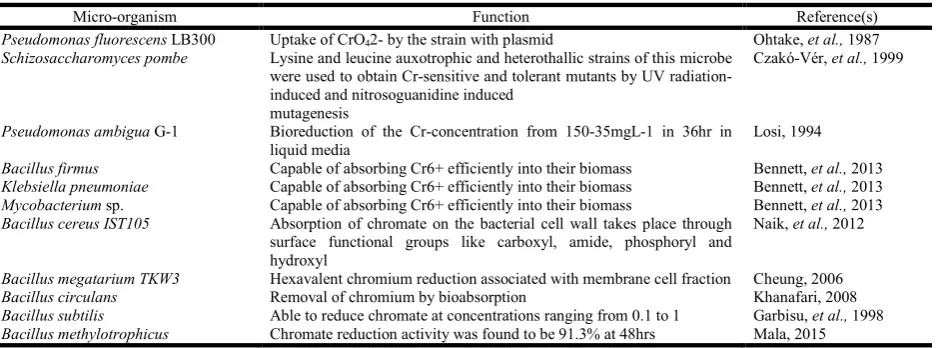
Table 2. Most common micro-organisms' functions in reduction of chrome
Micro-organism Function Reference(s)
Pseudomonas fluorescens LB300 Uptake of CrO42- by the strain with plasmid Ohtake, et al., 1987
Schizosaccharomyces pombe Lysine and leucine auxotrophic and heterothallic strains of this microbe
were used to obtain Cr-sensitive and tolerant mutants by UV radiation-induced and nitrosoguanidine radiation-induced
mutagenesis
Czakó-Vér, et al., 1999
Pseudomonas ambigua G-1 Bioreduction of the Cr-concentration from 150-35mgL-1 in 36hr in
liquid media
Losi, 1994
Bacillus firmus Capable of absorbing Cr6+ efficiently into their biomass Bennett, et al., 2013
Klebsiella pneumoniae Capable of absorbing Cr6+ efficiently into their biomass Bennett, et al., 2013
Mycobacterium sp. Capable of absorbing Cr6+ efficiently into their biomass Bennett, et al., 2013
Bacillus cereus IST105 Absorption of chromate on the bacterial cell wall takes place through
surface functional groups like carboxyl, amide, phosphoryl and hydroxyl
Naik, et al., 2012
Bacillus megatarium TKW3 Hexavalent chromium reduction associated with membrane cell fraction Cheung, 2006
Bacillus circulans Removal of chromium by bioabsorption Khanafari, 2008
Bacillus subtilis Able to reduce chromate at concentrations ranging from 0.1 to 1 Garbisu, et al., 1998
[image:3.595.68.537.499.673.2]Under normal mammalian physiological conditions, Cr (VI), can easily taken up into cells through nonspecific ion channels,
in a similar manner to phosphate and sulphate (Stearns et al.,
1995). Although Cr (III) compounds can rarely cross the cellular membranes (Sanderson, 1982). It is noticed that Cr (V) regenerates Cr (VI) by undergoing one electron redox cycle and transferring electron oxygen. This leads to the production of one reactive oxygen species (ROS) that can easily combine with DNA protein complexes. Cr (IV) may determine the normal physiological functions by binding to cellular materials
(Cheung, 2007; Manimita et al., 2015). In contrast, other heavy
metals, including cadmium, mercury, and zinc, made the cellular toxicity by binding directly to protein sulphydryl
groups (Katz and Salem, 1994). Studies by Kortenkamp et al.
(1996) showed that chromium toxicity was due to single-strand breaks in DNA, or by modification of the purine and pyrimidine bases. However, toxicity caused by DNA-DNA
cross-linking by Cr(llI) (Okada et al., 1983; Kortenkamp et al.,
1996). In fungi, both Cr (Ill) and Cr (VI) are resulting in toxicity (McGrath, 1982), with the prevailing view that Cr (VI) is more toxic than Cr (Ill) (Peterson and Girling, 1981, Sharma
et al., 1995).
Fig.1. Schematic diagram of the toxicity of Cr (VI) (Cheng et al., 2010)
Biological degradation of chrome by microorganisms
Even if the chrome tanned leathers proved its durability and resistance against the microbiological deterioration more than the vegetable tanned leathers, but these chrome tanned leathers are damaged also with continuous ageing time due to microorganisms which can be explained as the following. Unlike organic contaminants, the metals cannot be ruined, but can be converted to a stable form or removed. This process of using microorganisms is known as biodegradation or bioremediation. The term "bioremediation" has been used to describe the process of using microorganisms to degrade or remove hazardous pollutants from the environment (Glazer and Nikaido, 1995). Also it should be noticed that the rate of microbiological degradation process of chrome depends on microbes (biomass concentration, population diversity and enzyme activities), substrate (physicochemical characteristics, molecular structure and concentration), and a range of environmental factors (pH, temperature, moisture content, availability of electron acceptors, and carbon and energy
sources) (Vijayanand et al., 2012).
Many aerobic and anaerobic microorganisms are capable of reducing Cr (VI) to Cr (III), bioremediation may play an
important role for the detoxification from Cr (VI) even at very low (ppm or ppb) level. It has already been reported that because of the presence of some enzymes called chromium reductases (Gu and Cheung, 2001), completely different
microorganisms belonging particularly to the genus,
Pseudomonas can reduce Cr (VI) to Cr (III). The reduction of
transformation capacity of Cr (VI) by microorganisms at higher initial concentration of Cr (VI) has been observed by other
researchers (Biddut, 2013; Arellano et al., 2004; Middleton,
2003) and the phenomenon has been explained by the presence of inhibitory effect of Cr (VI) at high concentration level (Turick and Apel, 1997). Even though Cr (VI) can be reduced by algae or plants (fungi), microorganism has been confirmed
to be most effective (Ganguli and Tripathi, 2002; Francisco et
al., 2002; Basu et al., 1997).
Fig.2. Cr (VI) reduction in respiratory chain involving trans membrane protein (Myers, et al., 2000).
Fig.3. Microbial processes used in bioremediation technologies modified from Lloyd and Lovley (Lloyd, and Lovley, 2001)
Fungi play an important role by means of their hyphal systems they are also able to colonize and penetrate substrates rapidly
and to transport and redistribute nutrients (Joutey, et al., 2013).
Also fungi behave as bio-absorptive material to eliminate hexavalent chromium. Bio-sorption mechanism (metal sorption to cell surface by physicochemical mechanisms) is done by two
methods- metabolism dependent and non-metabolism
dependent. The other processes happened are bioleaching (heavy metal mobilization through the excretion of organic acids or methylation reactions), bio-mineralization (heavy metal immobilization through the formation of insoluble sulfides, etc), accumulation inside cell, and enzyme-catalyzed reactions (redox reactions).The chemicals get attach to the functional groups on the surface and get absorbed. Several fungi can be treated as a natural bio-sorbents to absorb hexavalent chromium in environment. Bio-sorption of the
fungal species. It was noticed that the chromium binding sites on the fungal cell surface were most likely carboxyl and amine groups (Vankar, 2008; Lloyd, and Lovley, 2001).
Also many bacterial species are surviving in presence of chromium for years in contaminated sites which considered
important factors for removal of chromium (e.g. Bacillus
coagulans, Corynebacterium, Mycobacterium, and Aeromonas)
(Viti, 2001). However, some bacteria within the presence or absence of oxygen will reduce the toxic form of Cr (VI) to its
trivalent form (Francisco et al., 2002). These are identified as
chromium reducing bacteria (CRB). For example gram-positive CRB are significantly tolerant to Cr (VI) toxicity at relatively high concentration, whereas gram-negative CRB are
more sensitive to Cr (VI) (Sarker et al., 2013; QuiIntana,
2001). Microbial reduction of chromate can occur both
aerobically (Bopp, 1988) and aerobically (Komori et al., 1990)
which can be summarized of the most common
microorganisms as follows:
Conclusion
Historical organic materials spread in museums, when museums lacks to standers of preservation and the suitable conditions if found, historical manuscripts and other organic collections exposed to aggressive damage from different microorganisms. These manuscripts covered with historical leathers besides different leather artifacts. This study compare between both kinds of tanned leathers to explain the durability of the chrome tanned leathers against microbiological deterioration according to chrome toxicity that not found in the vegetable tanned leathers also how this damage affected the mechanical properties of the leathers through analysis of elongation and tensile strength of the samples. The results proved that chrome tanned leathers is more resistant than vegetable tanned leathers against microorganisms degradation. According to the results values of chrome tanned leather were higher in tensile strength and elongation values compared to
the vegetable-tanned leather. Due to microbiological
degradation in leathers which leads to structural changes and loss in the mechanical properties. Also the study explains the mechanism of microbiological degradation of chrome through a historical survey of the most common microorganisms that infected the leather artifacts in museums.
Acknowledgement
All thanks to all the different libraries, whether outside or inside Egypt, which helped me to collect all the scientific data material for this study. Also many thanks for all the work team of Textile Testing Lab., Division of Chemical Metrology in the National Institute for Standards in Egypt.
REFERENCES
Aislabie, J. and Loutit, M. 1986. Accumulation of Cr (ill) by
bacteria isolated from polluted sediment. Marine
Environmental Research 20: 221-232
Arellano HG, Alcalde M, Ballesteros A. 2004. Use and improvement of microbial redox enzyme for environmental
purposes. Microbial Cell Factories 3(10), doi:
10.1186/1475-2859-3-10.
Baird, D. H. 1998. The Microbial Decomposition of Chromium
Tanned Leather, Masters degree of Science in
Microbiology, University of Canterbury, p.2.
Basu, M., S. Bhattacharya, and A. Paul, Bulletin of environmental contamination and toxicology, 1997. 58(4): p. 535-542.
Bennett, R.M., et al. 2013. Chemistry and Ecology,. 29(4): p.
320-328.
Birbir, M. and llgaz, A. 1996. Isolation and identification of bacteria adversely affecting hide and leather quality.
Journal of the Society of Leather Technologists and
Chemists 80: 147-153.
Bopp, L.H. and H.L. 1988. Ehrlich, Archives of microbiology. 150(5): p. 426-431.
Brown, E., King, G. and Chen, J. 1997b. Model of the helical
portion of a type I collagen microfibril. Journal of the
American Leather Chemists Association 92: 1-7.
Cheng, Y., et al. 2010. Environmental science & technology.
44(16): p. 6357-6363.
Cheung, K. and J.D. Gu, 2007. International Biodeterioration & Biodegradation, 59(1): p. 8-15.
Cheung, K., H. Lai, and J.D. Gu, 2006. Journal of
Microbiology and Biotechnology,. 16(6): p. 855-862.
Czakó-Vér, K., et al. 1999. FEMS microbiology letters, 178(1):
p. 109-115.
Datta, S. and Chandra, A 1982. Bacterial degradation of leather
wastes. In Waste treatment and utilization, theory and
practice of waste management. v.2. Pergamon Press,
Oxford. pp.325-327
Francisco, R., M. Alpoim, and P. Morais, DJournal of Applied Microbiology, 2002. 92(5): p. 837-843.
Ganguli, A. and A. Tripathi, 2002. Applied Microbiology and Biotechnology, 58(3): p. 416-420.
Garbisu, C., et al., Biodegradation, 1998. 9(2): p. 133-141.
Gibbons, R. and MacDonald, J. (1961). Degradation of
collagenous substrates by Bacteriodes melanimogenicus.
Journal of Bacteriology 81: 614-621.
Glazer AN, Nikaido H. 1995. Microbial Biotechnology: Fundamentals of Applied Microbiology. Freeman, New York.
Gu, J.D. and K. Cheung, 2001. World Journal of Microbiology and Biotechnology. 17(5): p. 475-480.
Gustavson, K. 1949. Some protein-chemical aspects of tanning
processes. In Advances in protein chemistry. v.5. M. Anson,
J. Edsall and K. Bailey, Eds. Academic Press, Inc, New York. pp.353421
Joutey, N.T. et al. 2013. Biodegradation: involved
microorganisms and genetically engineered
microorganisms. Biodegradation-life of science. InTech, Rijeka, p. 289-320
Katz, S. and Salem, H. 1994. The biological and environmental
chemistry of chromium. VCH Publishers, Inc., New York.
214p.
Khanafari, A., S. Eshghdoost, and Mashinchian, A. 2008.
Iranian Journal of Environmental Health Science &
Engineering. 5(3): p. 195-200.
Komori, K., et al. 1990. Biotechnology and bioengineering,
35(9): p. 951-954.
Kortenkamp, A., Casadevall, M. and da Cruz Fresco, P. 1996. The reductive conversion of the carcinogen chromium (VI)
and its role in the formation of DNA lesions. Annals of
Clinical and Laboratory Science 26: 160-175.
Lloyd, J.R. and Lovley, D.R. 2001. Current Opinion in Biotechnology. 12(3): p. 248-253.
Losi, M., C. Amrhein, and W. Frankenberger Jr,
Environmental biochemistry of chromium, in Reviews of
environmental contamination and toxicology. 1994,
Mala, J.G.S., D. Sujatha, and Rose,C. 2015. Microbiological
research, 170: p. 235-241.
Manimita Das*, Harshita Nigam, Shraddha Chauhan, Poornima Pandey, P. Swati, Mahavir Yadav and Archana Tiwari, 2015. Microbial chromium degradation: Biological evolution, mitigation and mechanism, Pelagia Research Library, Advances in Applied Science Research, 2015, 6(5):6-12.
Mann, B. 1971. Pollution and the leather industry. In
Environment and Industry. J. Coxon and J. Hogan, Eds. NZ
Institute of Chemistry (Inc.). pp.73-76
McGrath, S. 1982. The uptake and translocation of tin and hexavalent chromium and effects on the growth of oat in
flowing nutrient solution and in soil. New Phytologist 92:
381-390.
Megharaj, M., S. Avudainayagam, and Naidu, R. 2003. Current microbiology. 47(1): p. 0051-0054.
Middleton, S.S., et al. 2003. Biotechnology and
bioengineering, 2003. 83(6): p. 627-637.
Myers, C., et al. 2000. Journal of Applied Microbiology,.
88(1): p. 98-106.
Naik, U.C., S. Srivastava, and Thakur, I.S. 2012.
Environmental Science and Pollution Research, 19(7):
p.3005-3014.
Ohtake, H., C. Cervantes, and Silver, S. 1987. Journal of
bacteriology, 169(8): p. 3853-3856.
Okada,S., Suzuki, M. and Ohba, H. 1983. Enhancement of ribonucleic acid synthesis by chromium(III) in mouse liver.
Journal of Inorganic Biochemistry 19: 95-103.
Orlita, A. 1968. Biodeterioration in leather industry. Biodeterioration of materials . Elsevier Pub. Co. Ltd., England.
Orlita, A. 2004. Microbial deterioration of leather and its control; a review; Int. Biodeterior. Biodegrad. 53: 57-163. Peterson, P. and Girlin C. 1981. Other trace metals: chromium.
In Effect of heavy metal on pollution on plants. v.l. N.
Lepp, Ed. Applied Science Publishers, London. pp.222-229 Pettit, D. and Abbott, S. 1975. Biodeterioration of footwear. In
Microbial aspects of the deterioration of materials. R.
Gilbert and D. Lovelock, Eds. Academic Press, London QuiIntana, M., G. Curutchet, and E. Donati, Biochemical
Engineering Journal, 2001. 9(1): p. 11-15.
Rahmaty, R. and Khara, J. 2011. Turkish Journal of Biology,. 35(1): p. 51-58.
Rai UN, Dwivedi S, Tripathi RD, Shukla OP, Singh NK. 2005. Algal biomass: An economical method for removal of
Chromium from tannery effluent. Bulletin of
Environmental Contamination and Toxicology 75(2), 297– 303.
Rathore, D.S. 2015. Study of fungal Diversity on different types of Finished Leather and Leather Articles, Research Journal of Recent Sciences, ISSN 2277-2502, Res. J. Recent. Sci., Vol. 4(ISC-2014), 228-234.
Rutland, F. 1991. Environmental compatibility of
chromium-containing tannery and other leather product wastes at
land disposal sites. Cincinnati, Leather Industries Research
Laboratory, University of Cincinnati.
Sanderson, C. 1982. Applications of 51 chromium in cell
biology and medicine. In Biological and environmental
aspects of chromium. S. Langard, Ed. Elsevier Biomedical
Press,Amsterdam. pp.l01-116
Sarker, B.C., B. Basak, and Islam, M.S. 2013. International
Journal of Agronomy and Agricultural Research,.3(11): p.
23-35.
Sharma, D., Chatterjee, C. and Sharma, C. 1995. Chromium
accumulation and its effects on wheat (Triticum aestivum 1.
cv. HD 2204) metabolism. Plant Science 111: 145-151.
Sivaparvathi, M., Suseela, K and Nandy, S. 1986b. Purification
and properties of Pseudomonas aeruginosa protease
causing hydrolysis of chrome shavings. Leather Science 33:
303-307.
Skooglund, J. 1924. Utilization of hair and leather in the
manufacture of commercial fertilizers. Journal of the
American Leather Chemists Association 19: 11-14.
Stearns, D., Belbruno, J. and Wetterhahn, K 1995. A prediction of chromium(III) accumulation in humans from chromium
dietary supplements. F ASEB Journal 9: 1650-1657.
Tegtmeyer, D., Kleban, M. 2013. A balanced view of scientific facts and figures, Chromium and Leather Research, August 2013, P. 2.
Turick, C. and W. Apel, 1997. Journal of Industrial Microbiology and Biotechnology, 18(4): p. 247-250. Valentín, N., Microbial contamination and insect infestation in
organic
Vankar, P.S. and D. Bajpai, Desalination, 2008. 222(1): p. 255-262.
Vijayanand KP, Ganesh P, Raj AJR, Achary A. 2012. Studies
on the Bioremediation of Sarker et al. Page 35
Chromium(VI) Through Bioleaching by Thiobacillus ferrooxidans. Int. Journal of Research in Environmental Science and Technology 2(3), 54-60.
Viti, C. and Giovannetti, L. 2001. Annals of microbiology, 2001. 51(2): p. 201-214.
Wackett, 1., Orme-Johnson, W. and Walsh, C. 1989. Transition
metal enzymes in bacterial metabolism. In Metal ions and
bacteria. T. Beveridge and R. Doyle, Eds. John Wiley &
Sons, Inc., New York. pp.165-206
Waldvogel, F. and Swartz, M. 1969. Collagenolytic activity of
bacteria. Journal of Bacteriology 98: 662-667.
Welton, R. and Woods, D. 1973. Halotolerant collagenolytic
activity of Achromobacter iophagus.Journal of General
Microbiology 75: 191-196.