Intelligence Irrigation Control System for
Agriculture using ARM7 Controller
Gopalkrishna Khanai1, Akshay BP2, Bhandarkavathe Sagar Someshwar3, Abhijeet Tambole4, Krishnappa R5 1, 2, 3, 4, 5
Dept. of Mechanical Engineering, Atria Institute of Technology, Bengaluru
Abstract: Agriculture is the backbone of Indian Economy, Where irrigation method is a key concern/factor. So this automatic irrigation system is designed to optimize the usage of water for agricultural land, crops using ARM7 controller, Zigbee module, GSM Modem and sensors. Sensors senses the field parameters like temperature, humidity, soil moisture, water level of well or sump tank and 3-phase (3-ɸ) supply in the farm land. These entire field conditions are sensed/checked by the sensors, sends the information to the processor and from Zigbee module, it’s been sent to the former’s mobile number using Zigbee and GSM. By using the details displayed on the farmer’s mobile screen, the farmer can take the required measures for the land/crops further. Keywords: Agricultural field, ARM7, GSM Module, Zigbee, Sensors.
I. INTRODUCTION
Nearly 70% of the fresh water available is being used for agricultural purpose. The necessity for the water resources for irrigation will go on increasing because of increased population which in turn increases the food demand. Hence there is a need to minimize the usage of water using science and technology. Irrigation is the artificial supply of water to the farm land/soil, which in turn assists in the growth of agricultural crops. In country like India irrigation is the main key concern for agriculture, where monsoon rainfall is unevenly distributed.
As 90% of our farmers in India are illiterate, they are still using the traditional method of irrigation which leads to wastage of water resources. Hence the paper “Agricultural Field Monitoring system” has come up with modernizing the agricultural monitoring procedure using science and technology. The agricultural activity comprises of field watering, the measure of rainfall in field, sunlight in the field, motor ON/OFF time. All these activities are controlled by ARM controller and conditions and are sensed by
the respective sensors like temperature sensors, humidity sensor, soil moisture content sensor, etc. and also 3-ɸ supply checker to
check the load shedding condition. In this paper we are mainly concentrating on following factors
A. To check the wet and dry conditions of soi
B. To check the temperature of the field
C. To check the desired water level in the well
D. To check the humidity and dew point content.
The sensors give the information about the field conditions to the farmer in case of extreme conditions. Sensors senses, the field parameters like temperature, humidity, moisture content in the soil. All these field conditions are sensed by the senses and send this information to the “LPC2148 Microcontroller ARM7’’. LCD display will be connected to the microcontroller which records or notices the sensed values. Then the microcontroller sends the information to the zigbee module and from zigbee module the information is sent to the farmer’s mobile number using GSM.
In this project the development of the deployment of an automated irrigation system based on ARM controllers and wireless communication at experimental scale within rural areas is presented. The aim of this paper is to demonstrate that the automatic irrigation can be used to reduce the usage of water resources in the agricultural field.
II. NEEDOFTHEAUTOMATICIRRIGATIONSYSTEM
to meet specific management objectives. If the farmer is staying far away from the agricultural land he will not be aware of current conditions of his land. So, efficient water management plays an important role in the Irrigated agricultural cropping systems.
[image:2.612.191.422.115.295.2]III. SYSTEM DESIGN
Fig.1 Block Diagram of the Automatic Irrigation System
IV. TECHNOLOGY TO BE PROPOSED IN THIS SYSTEM
A. Arm7 Microcontroller (Lpc2148)
Microcontroller is the heart of the system. We have used LPC2148 Microcontroller which has 16/32 bits. It has 64pins. The power
requirement of LPC2148 microcontroller is 3.3V (DC). The power supply is produced by using available 1ɸ, 230V (AC) with the
help of AC to DC supply which includes 4 basic steps of step down the available power to the required level of power supply.
Rectification of 1ɸ supply to the pulsated DC supply, Filtering of pulsated DC supply to a non regulated DC supply and then
through regulator a pure regulated DC supply is produced.
B. Zigbee Module
The system uses the Zigbee technology. Zigbee is a low power wireless sensor used in many applications such as industrial monitoring, field monitoring, mine safety etc. It is used in low data rate application. Zigbee range is up to 300 meters and rate of transmission and reception is around 225kbps, zigbee technology is the standard of choice among other wireless technologies due to its efficient low power connectivity and ability to connect a large number of devices into a single network, zigbee technology uses the globally available license free 2.4GHz frequency band. Application of zigbee is in wireless light switches, traffic management system and other application in agriculture and food demand. The low power usage allows longer life with smaller batteries and mesh networking provides high reliability and longer range. But the usage of zigbee wireless sensor network in agricultural field is very low. The paper shows the model for perfect monitoring of crop field and experimental result of that model when deploying nodes in real time. Physical and MAC (Medium Access Control) layers of zigbee are supported by IEEE 802.15.4 The physical layer supports 3 frequency bands that are 2.450MHz, 915MHz, 865MHz with different gross data rates (250kbps-1), (40kbps-1), (20kbps).
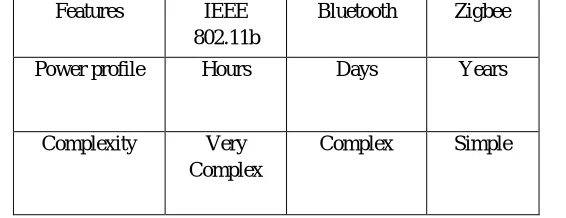
Table I The features of the Bluetooth and Zigbee with their comparative features.
Features IEEE
802.11b
Bluetooth Zigbee
Power profile Hours Days Years
Complexity Very
Complex
[image:2.612.168.451.616.725.2]Nodes/Master 32 7 64000
Latency Enumeratio
n upto 3 seconds
Enumeration upto 10 seconds
Enumerati on 30ms
Range 100 m 10 m 10m-400
m
Extendibility Roaming
possible
No Yes
Data rate 11Mbps 1Mbps 250Kbps
Security
Authenticat ion service
set ID (SSID)
64bit, 128bit
128 bit AES and application
Layer user defined
C. Gsm Technology (Global System For Mobile)
GSM is a transmission media which are being used to transmit data control station to server. GSM provide some basic services like voice services, data services and Short message services. It provides same additional services like emergency number, electronic mail. It’s a digital mobile telephone system that it is widely used in many parts of world. It uses TDMA (Time Division Multiple Access) and in most widely used of the three digital wireless telephone technologies (TDMA, GSM, CDMA). GSM digitizes and compresses data and sends it down a channel with two other streams of uses data in its own time slot each GSM operates in the 900MHz, 1800MHz or 1900MHz frequency range.
D. Sensors
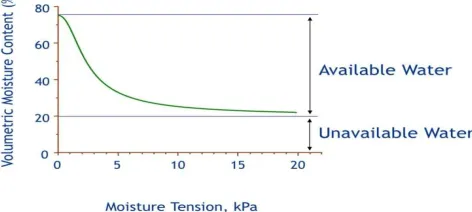
[image:3.612.188.424.599.705.2]1) Soil Moisture Sensors: Soil moisture sensors senses the level of water content in the soil. In this case basically we have used Hydrometer sensors to measure the soil moisture content. Firstly, this sensor is immersed in the soil, when it’s been immersed in the soil it checks the moisture content in the soil and if in case the soil is dry then the GSM will send information to the user. Like “soil is Dry.” And then when the water content is reached the desired value or when the soil gets moisture, GSM will send SMS to the user saying “Soil is wet” and the motor is switched off automatically. And also all these readings are displayed on the LCD display in the digital form of values.
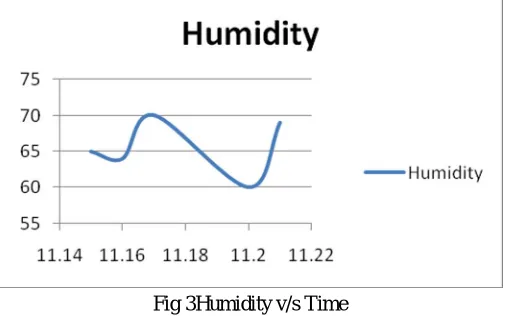
2) Humidity Sensor: Humidity sensors are used to sense the amount of vapor present in the air and it regularly reports the relative humidity in the air. This means it measures both air temperature and moisture. Relative humidity is generally expressed as percentage; it is the ratio of actual moisture in the air to the highest amount of moisture air at that temperature can hold. The warmer the air it can hold more moisture content, so relative humidity changes with the fluctuations in the temperature. Generally Hydrometer sensors are used to measure the humidity and moisture content in the soil. The hydrometer sensor in composed of two metal plates with a non-conductive polymer film between them. The film collects the moisture from the air and the moisture causes minute changes in the voltage between two plates. This change in voltage is converted into digital readings showing the amount of moisture content in the air.
Fig 3Humidity v/s Time
3) Temperature Sensor: The temperature sensors are used to measure the temperature in the field. We have used LM35 temperature sensor. LM35 series temperature sensors are the precision integrated-circuit temperature sensors, whose output
voltage is linearly proportional to the Celsius (centigrade) and it can measure the temperature range from -55ᵒC to +150ᵒC and
it operates at 4volts to 3volts.
25.5 26 26.5 27 27.5
11.1 11.15 11.2 11.25
Temperature c
Temperature c
Fig 4 Temperature v/s Time
V. ADVANTAGES
A. Simple in design and easy to install.
B. No man power is required and it’s safe.
C. PH content of the soil is maintained.
D. Reduces the soil erosion.
E. The system can operate with smaller water resources also, as it consumes less water.
F. Irrigation prawn can be handled properly and started and stopped accordingly that results in optimization of energy
VI. DISADVANTAGE
The main disadvantage of this project is initial cost and maintenance cost however if we reduce the maintenance cost, we can successfully implement this idea to the agricultural field.
VII. CONCLUSION
The proposed model using ARM-LPC2148 is fully based on zigbee technology and GSM module, this project helps in the growth and development of agricultural crops field and increase the growth of production. It saves the farmers time and effort with an excellent water management technology.
REFERENCES
[1] GSM and Zigbee detailed introduction by Tarun Agarwal [2] GSM SIM900 online user manual.
[3] Online user manual of different sensors and ZIGBEE module
[4] Mr.Kirubakaran,SelviRamalin,S.MeerabaiV.Preethi. “Surveillance and Steering of
[5] Agricultural Field using Zigbee” International Journal on Recent and Innovation Trends in Computing and Communication ISSN
[6] Dr. Deepak Gupta, Amit Kushwaha , Mohammad Sikander, Shushma Trivedi, Precesion Agriculture for Drip Irrigation Using Microcontroller and GSM Technology, Int. Journal of Engineering Research and Applications www.ijera.com ISSN : 2248-9622, Vol. 4, Issue 6( Version 5), June 2014, pp.229-233. [7] AT Commands Interface Guide at Version: 004, 05 April 2002.