The Covert Helps Parse the Overt
Xun Zhang, Weiwei Sun and Xiaojun Wan
Institute of Computer Science and Technology, Peking University The MOE Key Laboratory of Computational Linguistics, Peking University
{zhangxunah,ws,wanxiaojun}@pku.edu.cn
Abstract
This paper is concerned with whether deep syntactic information can help sur-face parsing, with a particular focus on empty categories. We design new al-gorithms to produce dependency trees in which empty elements are allowed, and evaluate the impact of information about empty category on parsing overt elements. Such information is helpful to reduce the approximation error in a structured pars-ing model, but increases the search space for inference and accordingly the estima-tion error. To deal with structure-based overfitting, we propose to integrate disam-biguation models with and without empty elements, and perform structure regular-ization via joint decoding. Experiments on English and Chinese TreeBanks with dif-ferent parsing models indicate that incor-porating empty elements consistently im-proves surface parsing.
1 Introduction
In the last two decades, there was an increas-ing interest in producincreas-ing rich syntactic annota-tions that are not limited to surface analysis. See, among others, (Callmeier, 2000; Kaplan et al.,
2004; Clark and Curran, 2007; Miyao and Tsu-jii, 2008; Zhang et al., 2016). Such analysis, e.g. deep dependency structures (King et al.,
2003), is usually coupled with grammars un-der deep formalisms, e.g. Combinatory Cate-gorial Grammar (CCG; Steedman, 2000), Head-driven Phrase-Structure Grammar (HPSG;Pollard and Sag, 1994) and Lexical-Functional Grammar (LFG;Bresnan and Kaplan,1982). Although deep grammar formalisms allow information beyond local construction to be constructed, it is still not
clear whether such additional information is help-ful for surface syntactic analysis. This is partly because analysis grounded on different grammar formalisms, e.g. HPSGandCFG, are not directly comparable.
In the Government and Binding (GB; Chom-sky, 1981) theory, empty category is a key con-cept bridging S-Structure and D-Structure, due to its possible contribution to tracemovements. Fol-lowing the linguistic insights underlyingGB, a tra-ditional dependency analysis can be augmented with empty elements, viz. covert elements (Xue and Yang, 2013). See Figure 1 for an example. The new representation provides a considerable amount of deep syntactic information, while keep-ing intact all dependencies of overt words. Inte-grating both overt and covert elements in one uni-fied representation provides an effective yet light-weight way to achieve deeper language under-standing beyond surface syntax1. Even more
im-portant, this modest way to modify tree analysis makes possible fair evaluation of the influence of deep syntactic elements on surface parsing.
We study graph-based parsing models for this new representation with a particular focus on the impact of information about the covert on parsing the overt. The major advantage of the graph-based approach to dependency parsing is that its con-strained factorization enables the design of poly-nomial time algorithms for decoding, especially for projective structures. FollowingGB, an empty element can be only a dependent. Furthermore, the number and distribution of empty elements in one sentence is highly constrained. These prop-erties makes polynomial time decoding for joint empty element detection and dependency parsing still plausible. To exemplify our idea, we design novel second- and third-order algorithms for the 1 In this paper, we arguably call dependencies among
overt words only surface analysis.
But it ∅1 is n’t clear how long GM would be willing ∅2 to fight Ford for Jaguar ∅3
[image:2.595.81.524.68.135.2]root
Figure 1: An example from PTB. The dependency structure is according to Stanford Dependency (de Marneffe et al.,2006). “∅” denotes an empty element. “∅1” indicates an expletive construction; “∅2”
indicates that the subject forfight, i.e.GM, is located in another place; “∅3” indicates awh-movement.
new problem.
The influence of incorporating empty elements is twofold. On the one hand, the extra informa-tion enriches the structural informainforma-tion of the out-puts, which is important to reduce the approxi-mation error in a structured prediction problem. On the other hand, predicting empty elements creases the search space for decoding, and thus in-creases the difficulty of parameter estimation for disambiguation. Our experiments on English Penn TreeBank (PTB;Marcus et al.,1993) and Chinese TreeBank (CTB;Xue et al.,2005) shows that the second effect is prominant. The accuracy of pre-dicting dependencies among overt words some-times declines slightly.
To ensure that predicting the empty elements helps parse the overt, we need to reduce the new estimation error. To this end, we propose to inte-grate scores from parsing models with and with-out empty elements and perform joint decoding. The intuition is to leverage parameters estimated without empty elements as a backoff, which ex-hibit better generalization ability. We evaluate two joint decoders: One is based on chart merging and the other is based on dual decomposition. Ex-periments demonstrate that information about the covert improves surface analysis in this way. Ac-curacy evaluated using parsing models with differ-ent factorizations and on data sets from differdiffer-ent languages is consistently improved. Especially, for those sentences in which there is no empty el-ement, accuracy is improved too. This highlights the fact that empty category can help reduce the approximation error for surface analysis.
The remaining part of the paper is organized as follows. Section 2 is a brief introduction to the problem. Section3 describes existing algorithms for parsing for overt words only, while Section4
gives the details of our new algorithms for parsing with empty elements. Section5describes the
de-tails of the joint models as well as the decoding al-gorithms. Section6presents experimental results and empirical analyses. Section 7 concludes the paper.
2 Syntactic Analysis with Empty Category
InGB, empty categories are an important piece of machinery in representing the syntactic structure of a sentence. An empty category is a covert nomi-nal element that is unpronounced, such as dropped pronouns and traces of dislocated elements. In treebanks, empty categories have been used to in-dicate long-distance dependencies, discontinuous constituents, and certain dropped elements ( Mar-cus et al.,1993;Xue et al.,2005). Together with labeled brackets and function tags, they make up the full syntactic representation of a sentence.
Empty category is one key concept bridging S-Structure and D-S-Structure, given that they contain essential information to tracemovements, i.e. the transformation procedure to convert a D-Structure to an S-Structure. When representing empty cate-gories in dependency trees, we can use a null sym-bol to depict the idea that there is a mental cate-gory at the level being represented. See Figure1
for an example.
(2013) proposed to identify empty categories after syntactic parsing. Different from the above pre-processing strategy, their post-pre-processing models can not use information about empty category to improve parsing. Cai et al.(2011) introduced an integrated model, where empty category detection and phrase-structure parsing are combined in a single model. They, however, did not report any improvement for parsing.2
Seeker et al. (2012) evaluted all above strate-gies to include empty nodes in dependency pars-ing for German and Hungarian. To predict both empty nodes and dependency relations, they en-riched the information encoded in dependency la-bels. They showed that both pre-processing and integrated strategies failed to leverage empty cat-egories to improve parsing. Especially, their pre-processing method significantly descreased pars-ing accuracy.
Although empty categories are very important in theory, it is still unclear that they can help pars-ing in practice.
3 The Existing Parsing Algorithms
Data-driven dependency parsing has received an increasing amount of attention in the past decade. Such approaches, e.g. transition-based (Yamada and Matsumoto, 2003;Nivre,2008;Andor et al.,
2016) and graph-based (McDonald, 2006; Tor-res Martins et al., 2009;Lei et al.,2014) models have attracted the most attention of dependency parsing in recent years. A graph-based system ex-plicitly parameterizes models over substructures of a dependency tree, and formulates parsing as a Maximum Spanning Tree problem (McDonald et al., 2005). A number of dynamic program-ming (DP) algorithms have been designed. Here we summarize the design of two widely used al-gorithms for second- and third-order factorization, since it is the basis of our new algorithms.
3.1 Algorithm 1: Sibling Factorization
Eisner(1996) introduced a widely-used DP algo-rithm for first-order parsing. Their algoalgo-rithm in-cludes two interrelated types of DP structures: (1) complete spans, which consist of a head-word and its descendents on one side, and (2) incomplete spans, which consist of a dependency and the re-gion between the head and modifier. To include 2Comparing their numeric results with other papers’, we
find that their model does not result in improved parsing.
r l
=
m
l + m r
r l
=
m l
+
r m+1
r l
=
m
[image:3.595.324.505.61.186.2]l + m r
Figure 2: The DP structures and derivations of the standard sibling algorithm. Complete spans are depicted as triangles, incomplete spans as trape-zoids, and sibling spans as rectangles. A new de-pendency is created by applying the last rule. Es-pecially, the score associated with the last rule is determined by a sibling part. For brevity, we elide the right-headed versions.
r m l
=
m n
l + m r
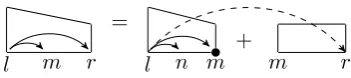
Figure 3: The modified construction rule for the tri-sibling algorithm.
second-order sibling parts,McDonald and Pereira
(2006) extended Eisner’s algorithm with a third structure, viz. (3) sibling spans, which represent the region between successive modifiers of same head. The second-order algorithm visits all the spans from bottom to top, finding the best com-bination of smaller structures to form a new one. Each type of span is created by recursively com-bining two smaller, adjacent spans. The DP struc-tures and their constructions are specified graphi-cally in Figure2.
3.2 Algorithm 2: Tri-sibling Factorization
[image:3.595.327.503.331.370.2]h ∅1 n
... ... ∅2
a h1 ∅1 ∅2 ∅3 ∅4 h2
[image:4.595.346.488.61.136.2]... ... ...
Figure 4: Prototypes of structures related to empty categories.
4 The New Algorithms
We propose three novel algorithms for the new parsing problem. We only consider projective structures. For sake of concision, we call an edge with an empty child empty edge, and call other edges normal ones. Not only normal edges but also empty edges do not cross with each other. We illustrate several properties of empty elements that are fundamental requirements of our algorithms, and then give details of our new algorithms.
4.1 Properties of empty elements
Two theoretical and empirical properties of empty elements results in the design of exact parsing al-gorithms for simultaneously predicting dependen-cies as well detecting empty elements.
1. According to GB, an empty element cannot be regarded as a head word.
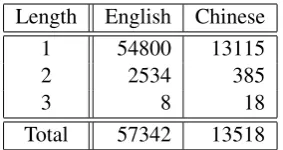
2. There are very limited number of successive empty elements in between two successive overt words. Therefore, we can treat all suc-cessive empty elements governed by same head as one word. We can use the label as-sociated to the corresponding empty edge to distinguish how many empty nodes are there. According to the first property, we have two prototype structures of empty nodes and their as-sociated edges. If there are two empty elements that are governed by the same head, the overt words in between them must be their siblings or dominated by their siblings. We graphically show this case as the upper figure in Figure4. If there is a sequence of successive empty elements in be-tween two overt words, the prototype structure is shown as the bottom figure in Figure4.
Now we consider the emprical coverage of the second property on PTB and CTB. The coverage is evaluated using sentences in the training sets (as
Length English Chinese
1 54800 13115
2 2534 385
3 8 18
Total 57342 13518
Table 1: Coverage relative to the number of suc-cessive empty elements that have the same head.
defined in Section 6). We show the statistics in Table1. The length indicates the number of suc-cessive empty elements that are governed by the same overt word. At most three empty elements are next to each other.
4.2 Algorithm 3: Partial Sibling Model 4.2.1 DP Structures
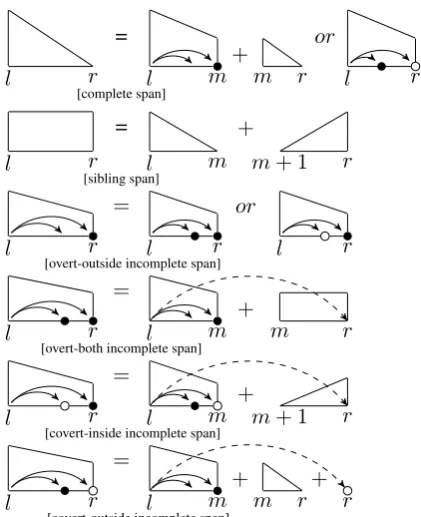
Now we consider parsing with empty category de-tection by extending Algorithm 1. We consider six DP structures when we construct a tree with empty elements on a given span[i, k]of vertices. See Figure5for graphical visualization. The first two are adapted in concord with Algorithm 1, and we introduce four new DP structures, transformed from incomplete constituent, which can manipu-late the empty nodes. These new DP structures are explained below. Without loss of generality, we only illustrate the left-headed versions.
Overt-outside Incomplete Span. The
right-most word must be an overt word.
Overt-both Incomplete Span. Both the
right-most mode and the inner sibling of incomplete spans are overt words. An incomplete span struc-ture is associated with an edge that crosses the whole span. We also care about its left sibling, and thus record it using an extra index. We call this sibling the inner sibling.
Covert-inside Incomplete Span. The rightmost
word must be an overt word, while the inner sib-ling of incomplete span is a covert word.
Covert-ouside Incomplete Span. The
right-most word must be a covert word, while the inner sibling of incomplete span is an overt word.
[image:4.595.90.270.68.158.2]r l
=
m
l +m r
or
r l
[complete span]
r l
=
m l
+
r m+ 1
[sibling span]
r l
=
m
l + m r
[overt-both incomplete span]
r l
=
r l
or
r l
[overt-outside incomplete span]
r l
=
m
l +m r+ r
[covert-outside incomplete span]
r l
=
m
l +m+ 1 r
[covert-inside incomplete span]
Figure 5: Graphic representations of new DP structures and their derivations of Algorithm 3. For brevity, we elide the right-headed versions.
4.2.2 Construction Rules
Figure5provides a graphical specification of the construction of all six DP structures. The follow-ing is the explaination for each construction rule.
1. The rightmost child of the head in a com-plete span may be an empty node. If so, the empty node must located at the boundary, be-cause no empty node can be a head. There-fore a complete span itself is a covert-outside incomplete span. Otherwise, the rightmost child separates the complete span into an overt-outside incomplete span and another smaller complete span.
2. A sibling span is decomposed in the same way to Algorithm 1.
3. An overt-outside incomplete span is the ex-tension of the incomplete span from the old algorithm. We consider two cases according to the type of the inner sibling. So it is ei-ther an overt-both or a covert-inside incom-plete span.
4. Like a standard incomplete span in Algo-rithm 1, an overt-both incomplete span is
made of an overt-outside incomplete span and a sibling span. A normal edge is created during the construction.
5. A covert-inside incomplete span is built from a covert-outside incomplete span and a com-plete span in the opposite direction rather than a sibling span. This is because the empty node does not have any child. A normal edge is also created here.
6. A covert-outside incomplete span is made up of an overt-outside incomplete span, an adje-cent complete span and a new covert word. In this step, we add a new empty element as well as an empty edge.
4.2.3 Complexity
The set of complete or sibling spans hasO(n2)
el-ements, while the set of each type of incomplete spans has O(n2) elements. Therefore, the space
requirement is ofO(n2). To build a new DP
struc-ture in any type, we either change the type of an existing DP structure or search for the best posi-tion to separate the whole structure into two parts. The second case is worse and needs time ofO(n3).
As a result, Algorithm 3 runs in time ofO(n3).
4.3 Algorithm 4: Full Sibling Model
Now consider the difference between Algorithm 1 and 3. It is easy to figure out that not all sibling factors summed by Algorithm 1 are included by Algorithm 3. Specifically, if two normal edges that are adjacent to each other (say e1 ande2) are
in-serted with an empty edge,e1ande2are taken as a
sibling part by Algorithm 1 but not 3. Now we are going to modify Algorithm 3 to include all such sibling parts. To this end, we modify the covert-inside span structure as well as its the construction rule. In particular, we explictly utilize the index of the inner child provided by a covert-inside span. Figure6gives a specification.
r m l
=
m
l +m+ 1 r
[covert-inside span]
[image:5.595.77.288.58.317.2] [image:5.595.326.504.659.703.2]r l
=
m n
l +m r
or
r m l
r l
=
m l
+
r m+1
r m l
=
m n
l + m r
r m l
=
r m l
or
r m l
r m l
=
m n
l +m r+ r
r m l
=
m n
l +m+1 r
Figure 7: Graphic representations of new DP structures and their derivations of Algorithm 5. For brevity, we elide the right-headed versions.
The modification of the construction rule for the covert-inside incomplete span increases the com-plexity. The time and space requirements of Al-gorithm 4 areO(n4)andO(n3) respectively,
be-cause we must consider the position of the inner sibling, viz.m, in Figure6.
4.4 Algorithm 5: Partial Tri-sibling Model
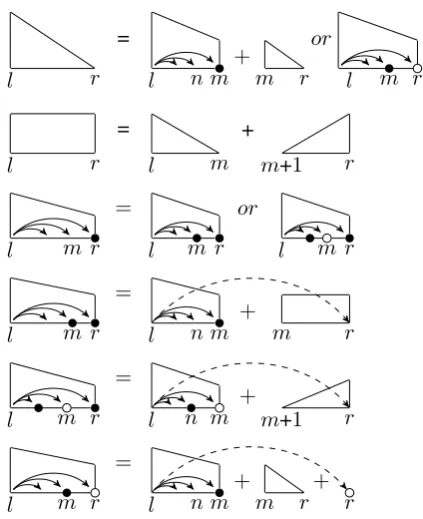
Previous work shows that it is relatively easy to ex-tend the second-order sibling factorization to parts containing multiple siblings for standard parsing. It is similar when empty elements are taken into account. Adding the index of one more inner mod-ifier to all incomplete span structures allows tri-sibling features to be calculated. We sketch the idea in Figure7.
We add one more index to all the four incom-plete DP structures in Algorithm 3. The time and space complexity are increased by a factor of O(n). The analysis of the complexity of rithm 5 is similar to Algorithm 3. In short, Algo-rithm 5 runs in time O(n4)with a space
require-ment ofO(n3). We can also extend Algorithm 5 to
a full version, like what we have done for sibling models. The time complexity will go up toO(n5),
which makes the algorithm somehow impractical.
5 Structure Regularization via Joint Decoding
We can see from the definition of the extended al-gorithms that the search space for decoding is sig-nificantly increased. This results in a side effect for practical parsing. Given the limit of available annotations for training, searching for more com-plicated structures in a larger space is harmful to the generalization ability in structured prediction (Sun, 2014). Incorporating empty elements sig-nificantly increases the difficulty for parameter es-timation, and therefore it is harder to find a good disambiguation model. To control structure-based overfitting, we propose a new way to perform structure regularization: combining the two score functions learned from models with and without empty elements.
We formalize the idea as follows. Consider a sentence s = w1w2· · ·wn. We denote the
index set of all possible dependencies as I =
{(i, j)|i, j ∈ {1,· · ·, n}, i 6= j}. A dependency parse then can be represented as a vector
y={y(i, j) : (i, j)∈ I}
where y(i, j) = 1 if there is an arc i → j in the graph, 0 otherwise. Let Y denote the set of all possible y. We use another index set I0 =
{(i, j)|i, j ∈ {1,· · · , n+ 12}}, wherei > n
in-dicates an empty node. Then a dependency parse with empty nodes can be represented as a vector similar toy:
z={z(i, j) : (i, j)∈ I0}.
LetZ denote the set of all possiblez. Assume thatf : Y → R andg : Z → R assign scores to parse trees without and with empty elements. A reasonable model to integratefandgis to find the optimal parse by solving the following optimiza-tion problem:
max. λf(y) + (1−λ)g(z) s.t. y∈ Y,z∈ Z
y(i, j) =z(i, j), ∀(i, j)∈ I (1)
λis a weight for combining scores. We use the validation data to get an appropriate value forλ3.
3Given the similarity of the parsing models with and
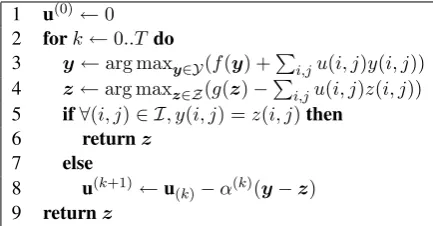
[image:6.595.76.288.57.317.2]1 u(0)←0
2 fork←0..Tdo
3 y←arg maxy∈Y(f(y) +Pi,ju(i, j)y(i, j)) 4 z←arg maxz∈Z(g(z)−Pi,ju(i, j)z(i, j)) 5 if∀(i, j)∈ I, y(i, j) =z(i, j)then
6 returnz
7 else
8 u(k+1)←u
(k)−α(k)(y−z)
[image:7.595.305.528.61.137.2]9 returnz
Figure 8: Joint decoding based on dual decompo-sition.
5.1 Chart Merging
The optimization problem (1) can be solved using Algorithm 3 to 5. For example, if we try to com-bine models coupled with Algorithm 1 and 3, or Algorithm 1 and 4, we can merge the local scores of all sibling parts and then apply Algorithm 4 for solutions. Note that Algorithm 3 here cannot pro-duce the exact solution. If we try to combine mod-els coupled with Algorithm 2 and 5, we can use an algorithm of which the time complexity isO(n5).
We have mentioned such an algorithm at the end of Section4.4. Similar to sibling factorization, Algo-rithm 5 can only produce approximate solutions.
5.2 Dual Decomposition
The chart merging method can be applied to al-gorithms that have highly coherent DP structures. Dual decomposition is an alternative yet more flexible method for solving the optimization prob-lem (1). Heterogeneous models can be combined, and for the majority of input sentences exact solu-tions can be found in a few iterasolu-tions. We sketch the solution as follows.
The Lagrangian of (1), i.e.L(y,z;u), is
f(y) +g(z) + X (i,j)∈I
u(i, j)(y(i, j)−z(i, j))
where u is the Lagrangian multiplier. Then the dual is
L(u) = max
y∈Y,z∈ZL(y,z;u) = max
y∈Y(f(y) +
X
(i,j)∈I
u(i, j)y(i, j))
+ max
z∈Z(g(z)−
X
(i,j)∈I
u(i, j)z(i, j))
We instead try to find the solution forminuL(u). By using a subgradient method for this
optimiza-#{Sent} #{Overt} #{Covert}
En train 38667 909114 57342
test 2336 54242 3447
Ch train 8605 193417 13518
[image:7.595.74.291.62.175.2]test 941 21797 1520
Table 2: Numbers of sentences, overt and covert elements in training and test sets.
tion problem, we have another joint decoding al-gorithm, as shown in Figure8.
6 Experiments
6.1 Data Sets
We conduct experiments on both English and Chi-nese treebanks. In particular, PTB and CTB are used. Because PTB and CTB are phrase-structure treebanks, we need to convert them into depen-dency annotations. To do so, we use the tool pro-vided by Stanford CoreNLP to process PTB, and the tool provided byXue and Yang(2013) to pro-cess CTB 5.0. We use gold-standard POS to derive features for disambiguation.
To simpify our experiments, we preprocess the obtained dependency tree in the following way.
1. We combine successive empty elements with identical head into one new empty node which is still linked to the common head word.
2. Because the high-order algorithm spends is very expensive, we only use relatively short sentence. Here we only keep sentences less than 64 tokens.
3. We focus on unlabeled parsing.
The statistics of the data after cleaning is shown in Table2
funi(X):
X.w,Y.p,X.w◦X.p fbi(X, Y):
X.wp◦Y.w,X.wp◦Y.p,X.w◦Y.wp,X.p◦ Y.wp,X.wp◦Y.wp
fcontext(X, Y):
X.p◦Y.p◦X1.p◦Y−1.p,X.p◦Y.p◦X−1.p◦ Y−1.p,X.p◦Y.p◦X1.p◦Y1.p,X.p◦Y.p◦ X−1.p◦Y1.p
X.p◦Y.p◦Z.p,Zis token betweenXandY fsib(X, Y):
X.w◦Y.w,X.w◦Y.p,X.p◦Y.w,X.p◦Y.p fsib(X, Y, Z):
X.p◦Y.p◦Z.p ftsib(X, Y, Z, W):
[image:8.595.76.288.60.344.2]X.w◦Y.w◦Z.p◦W.p,X.w◦Y.p◦Z.w◦W.p, X.w◦Y.p◦Z.p◦W.w,X.p◦Y.w◦Z.w◦W.p, X.p◦Y.w◦Z.p◦W.w,X.p◦Y.p◦Z.w◦W.w, X.w◦Y.p◦Z.p◦W.p,X.p◦Y.w◦Z.p◦W.p, X.p◦Y.p◦Z.w◦W.p,X.p◦Y.p◦Z.p◦W.w
Table 3: Feature template functions.
6.2 Statistical Disambiguation
In the context of data-driven parsing, we still need an extra disambiguation model for building a prac-tical parser. As with many other parsers, we em-ploy a global linear model. To estimate parame-ters, we utilize the averaged perceptron algorithm (Collins, 2002). Developing features has been shown crucial to advancing the state-of-the-art in dependency parsing. We adopt features from pre-vious work.
We refer to the head/child of the arc ash/c, the k-th inner split point asmk, and the grand point asg. We list features selected by different algo-rithm as follows, and all following features should be concatenated with direction and distance of the arc.
• arc features: funi(h),
funi(c), fbi(h, c), fcontext(h, c).
• sibling features: fsib(c, m0), fsib(h, c, mk). • tri-sibling features: fsib(h, c, m1),
ftsib(h, c, m, m1).
6.3 Results of Individual Models
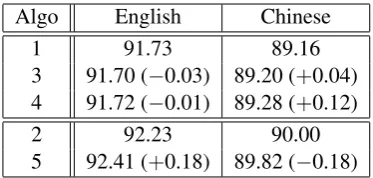
Table 4 lists the accuracy of individual models coupled with different decoding algorithms on the test sets. We focus on the prediction for overt
Algo English Chinese
1 91.73 89.16
3 91.70 (−0.03) 89.20 (+0.04) 4 91.72 (−0.01) 89.28 (+0.12)
2 92.23 90.00
[image:8.595.323.510.61.150.2]5 92.41 (+0.18) 89.82 (−0.18)
Table 4: UASo of different individual models on test data. The upper and bottom blocks present results obtained by sibling and tri-sibling models respectively.
Algo English Chinese
CM 1+3 91.94 (+0.21) 89.53 (+0.37) 1+4 91.88 (+0.15) 89.44 (+0.28) DD 1+3 91.96 (+0.23) 89.53 (+0.37) 1+4 91.94 (+0.21) 89.53 (+0.37) CM 2+5 92.60 (+0.37) 90.35 (+0.35) DD 2+5 92.71 (+0.48) 90.38 (+0.38) Table 5: UASo of different joint decoding mod-els on test data. “CM” and “DD” are short for joint decoders based on chart merging and dual decomposition respectively. The upper and bot-tom blocks present results obtained by sibling and tri-sibling models respectively. All improvements are statistically significant.
words only. Models coupled with Algorithm 1, 3 and 4 are second-order models, while with 2 and 5 third-order ones. When we take into account empty categories, more information is available. The empirical results suggest that deep linguis-tic information does not necessarily help surface analysis.
6.4 Results of Joint Decoding
Table 5 lists the accuracy of different joint de-coding models on the test sets. We can see that the joint decoding framework is effective to deal with structure-based overfitting. This time, the accuracy of analysis for overt words is consis-tently improved across a wide range of condi-tions. Especially, the third-order model is im-proved more. We use the Hypothesis Tests method (Berg-Kirkpatrick et al.,2012) to evaluate the im-provements. When thep-value is set to 0.05, all improvements in Figure 5 is statistically signifi-cant.
English Chinese
Algo −EC +EC −EC +EC
3 92.50 91.53 90.92 88.60
1+3 92.83 91.77 91.12 88.97
4 92.82 91.48 91.29 88.58
1+4 92.84 91.74 91.10 88.98
5 93.68 92.13 92.00 89.06
[image:9.595.88.275.62.178.2]2+5 93.99 92.43 92.10 89.77
Table 6: UASo evaluated using different types of sentences. Dual decomposition is used for joint decoding.
55 60 65 70 75 80 85 90 95 100
5 10 15 20 25 30 35 40 45 50
Percentage of decoding termination
Iteration
1+3 (en) 1+4 (en) 2+5 (en) 1+3 (cn) 1+4 (cn) 2+5 (cn)
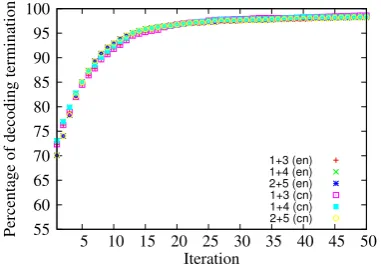
Figure 9: The exact decoding rate on development data.
empty elements and the other contains other sen-tences. The accuracy evaluated on the two sets are summarized in Table 6. For those sentences in which there is no empty element, accuracy is improved as well. This indicates that empty cate-gory can help reduce the approximation error for surface analysis.
6.5 Efficiency of Joint Decoding
One thing worth noting is that the chart merging method with an approximate decoder is compara-ble to other more complex solutions that produce exact or nearly exact results. Chart merging with approximate decoders only modifies scores as-signed to secord- or third-order parts, while keep-ing intact the decodkeep-ing procedure. As a result, the efficiency of approximate chart merging is compa-rable to individual models.
Dual decomposition-based joint decoder itera-tively calls individual decoders. Due to the simi-larity of models with and without empty elements, this iteration procedure usually terminates very fast. We calculate the percentage of finding ex-act decoding belowkiterations, and the result is show in Figure 9. For most sentences, dual
de-composition practically gives the exact solutions in a few iterations. One advantage relevant is that such a decoder can integrate parsing models that are somehow heterogeneous. Refer to (Koo et al.,
2010) for example.
7 Discussion and Conclusion
Can deep syntactic information help surface pars-ing, which is the mainstream focus of NLP re-search. In this paper, we investigate this topic under the umbrella of Transformational Grammar,
GBin particular. We focused on empty category augmented dependency analysis. We demonstrate that on the one hand deep information helps re-duce the approximation error for traditional (sur-face) parsing, while on the other hand traditional parsing helps reduce the estimation error for deep parsing. Coupling surface and deep information in an appropriate way is able to produce better syntactic analysis. A natural avenue for further research would be the integrating parsing models under deep and shallow grammar formalisms.
In addition to empty category detection, empty categories should be linked to an overt element if possible. Take the second empty element in Fig-ure1for example. The information about its exis-tance is valuable, but knowing it acturally refers to GM is more helpful. However, adding such coreference information makes the syntactic rep-resentation no long trees and thus brings along new challenges for designing algorithms. How to deal with empty category detection and resolution in one unified model? It would be an interesting topic for future investigation.
Acknowledgments
This work was supported by 863 Program of China (2015AA015403), NSFC (61331011), and Key Laboratory of Science, Technology and Standard in Press Industry (Key Laboratory of Intelligent Press Media Technology). Weiwei Sun is the cor-responding author.
References
[image:9.595.84.275.240.373.2]Linguistics, Berlin, Germany, pages 2442–2452.
http://www.aclweb.org/anthology/P16-1231.
Taylor Berg-Kirkpatrick, David Burkett, and Dan Klein. 2012. An empirical investigation of statis-tical significance in nlp. InProceedings of the 2012 Joint Conference on Empirical Methods in ral Language Processing and Computational Natu-ral Language Learning. Association for Computa-tional Linguistics, Jeju Island, Korea, pages 995– 1005.http://www.aclweb.org/anthology/D12-1091.
J. Bresnan and R. M. Kaplan. 1982. Introduction: Grammars as mental representations of language. In J. Bresnan, editor, The Mental Representation of Grammatical Relations, MIT Press, Cambridge, MA, pages xvii–lii.
Shu Cai, David Chiang, and Yoav Goldberg. 2011. Language-independent parsing with empty elements. In Proceedings of the 49th An-nual Meeting of the Association for Compu-tational Linguistics: Human Language Tech-nologies. Association for Computational Linguis-tics, Portland, Oregon, USA, pages 212–216.
http://www.aclweb.org/anthology/P11-2037.
Ulrich Callmeier. 2000. Pet. a platform for experi-mentation with efficient hpsg processing techniques.
Journal of Natural Language Engineering6(1):99– 108.
Noam Chomsky. 1981. Lectures on Government and Binding. Foris Publications, Dordecht.
Tagyoung Chung and Daniel Gildea. 2010. Ef-fects of empty categories on machine transla-tion. In Proceedings of the 2010 Confer-ence on Empirical Methods in Natural Lan-guage Processing. Association for Computational Linguistics, Cambridge, MA, pages 636–645.
http://www.aclweb.org/anthology/D10-1062.
Stephen Clark and James R. Curran. 2007.
Wide-coverage efficient statistical pars-ing with CCG and log-linear models.
Computational Linguistics 33(4):493–552.
https://doi.org/10.1162/coli.2007.33.4.493.
Michael Collins. 2002. Discriminative training meth-ods for hidden markov models: Theory and ex-periments with perceptron algorithms. In Pro-ceedings of the 2002 Conference on Empirical Methods in Natural Language Processing. Asso-ciation for Computational Linguistics, pages 1–8.
https://doi.org/10.3115/1118693.1118694.
Marie-Catherine de Marneffe, Bill MacCartney, and Christopher D. Manning. 2006. Generating typed dependency parses from phrase structure parses. In
IN PROC. INT’L CONF. ON LANGUAGE RE-SOURCES AND EVALUATION (LREC. pages 449– 454.
P´etr Dienes and Amit Dubey. 2003. Deep syn-tactic processing by combining shallow meth-ods. In Proceedings of the 41st Annual Meeting of the Association for Computational Linguistics. Association for Computational Linguistics, Sapporo, Japan, pages 431–438.
https://doi.org/10.3115/1075096.1075151.
Jason M. Eisner. 1996. Three new probabilistic models for dependency parsing: an exploration. In Proceed-ings of the 16th conference on Computational lin-guistics - Volume 1. Association for Computational Linguistics, Stroudsburg, PA, USA, pages 340–345.
Mark Johnson. 2002. A simple pattern-matching al-gorithm for recovering empty nodes and their an-tecedents. In Proceedings of 40th Annual Meet-ing of the Association for Computational LMeet-inguis- Linguis-tics. Association for Computational Linguistics, Philadelphia, Pennsylvania, USA, pages 136–143.
https://doi.org/10.3115/1073083.1073107.
Ron Kaplan, Stefan Riezler, Tracy H King, John T Maxwell III, Alex Vasserman, and Richard Crouch. 2004. Speed and accuracy in shallow and deep stochastic parsing. In Daniel Marcu Susan Du-mais and Salim Roukos, editors,HLT-NAACL 2004: Main Proceedings. Association for Computational Linguistics, Boston, Massachusetts, USA, pages 97–104.
Tracy Holloway King, Richard Crouch, Stefan Riezler, Mary Dalrymple, and Ronald M. Kaplan. 2003. The PARC 700 dependency bank. InIn Proceedings of the 4th International Workshop on Linguistically In-terpreted Corpora (LINC-03). pages 1–8.
Terry Koo and Michael Collins. 2010. Efficient third-order dependency parsers. In Proceedings of the 48th Annual Meeting of the Association for Com-putational Linguistics. Association for Computa-tional Linguistics, Uppsala, Sweden, pages 1–11.
http://www.aclweb.org/anthology/P10-1001.
Terry Koo, Alexander M. Rush, Michael Collins, Tommi Jaakkola, and David Sontag. 2010. Dual decomposition for parsing with non-projective head automata. In Proceedings of the 2010 Con-ference on Empirical Methods in Natural Lan-guage Processing. Association for Computational Linguistics, Cambridge, MA, pages 1288–1298.
http://www.aclweb.org/anthology/D10-1125.
Tao Lei, Yu Xin, Yuan Zhang, Regina Barzilay, and Tommi Jaakkola. 2014. Low-rank tensors for scoring dependency structures. In Proceed-ings of the 52nd Annual Meeting of the Asso-ciation for Computational Linguistics (Volume 1: Long Papers). Association for Computational Lin-guistics, Baltimore, Maryland, pages 1381–1391.
http://www.aclweb.org/anthology/P14-1130.
annotated corpus of english: the penn tree-bank. Computational Linguistics 19(2):313–330.
http://dl.acm.org/citation.cfm?id=972470.972475. Ryan McDonald. 2006. Discriminative learning and
spanning tree algorithms for dependency parsing. Ph.D. thesis, University of Pennsylvania, Philadel-phia, PA, USA.
Ryan McDonald and Fernando Pereira. 2006. Online learning of approximate dependency parsing algo-rithms. In Proceedings of 11th Conference of the European Chapter of the Association for Computa-tional Linguistics (EACL-2006)). volume 6, pages 81–88.
Ryan McDonald, Fernando Pereira, Kiril Ribarov, and Jan Hajic. 2005. Non-projective dependency pars-ing uspars-ing spannpars-ing tree algorithms. InProceedings of Human Language Technology Conference and Conference on Empirical Methods in Natural Lan-guage Processing. Association for Computational Linguistics, Vancouver, British Columbia, Canada, pages 523–530.
Yusuke Miyao and Jun’ichi Tsujii. 2008. Fea-ture forest models for probabilistic hpsg pars-ing. Computational Linguistics 34(1):35–80.
https://doi.org/10.1162/coli.2008.34.1.35.
Joakim Nivre. 2008. Algorithms for
de-terministic incremental dependency pars-ing. Computational Linguistics 34:513–553.
https://doi.org/http://dx.doi.org/10.1162/coli.07-056-R1-07-027.
Carl Pollard and Ivan A. Sag. 1994. Head-Driven Phrase Structure Grammar. The University of Chicago Press, Chicago.
Wolfgang Seeker, Rich´ard Farkas, Bernd Bohnet, Hel-mut Schmid, and Jonas Kuhn. 2012. Data-driven de-pendency parsing with empty heads. InProceedings of COLING 2012: Posters. The COLING 2012 Or-ganizing Committee, Mumbai, India, pages 1081– 1090.http://www.aclweb.org/anthology/C12-2105. Mark Steedman. 2000. The syntactic process. MIT
Press, Cambridge, MA, USA.
Xu Sun. 2014. Structure regularization for struc-tured prediction. In Z. Ghahramani, M. Welling, C. Cortes, N. D. Lawrence, and K. Q. Weinberger, editors,Advances in Neural Information Processing Systems 27, Curran Associates, Inc., pages 2402– 2410. http://papers.nips.cc/paper/5563-structure-regularization-for-structured-prediction.pdf. Andre Torres Martins, Noah Smith, and Eric Xing.
2009. Concise integer linear programming for-mulations for dependency parsing. In Proceed-ings of the Joint Conference of the 47th An-nual Meeting of the ACL and the 4th Interna-tional Joint Conference on Natural Language Pro-cessing of the AFNLP. Association for Computa-tional Linguistics, Suntec, Singapore, pages 342–
350. http://www.aclweb.org/anthology/P/P09/P09-1039.
Naiwen Xue, Fei Xia, Fu-dong Chiou, and Marta Palmer. 2005. The penn Chinese treebank: Phrase structure annotation of a large corpus.
Natural Language Engineering 11:207–238.
https://doi.org/10.1017/S135132490400364X. Nianwen Xue and Yaqin Yang. 2013.
Dependency-based empty category detection via phrase struc-ture trees. In Proceedings of the 2013 Confer-ence of the North American Chapter of the As-sociation for Computational Linguistics: Human Language Technologies. Association for Computa-tional Linguistics, Atlanta, Georgia, pages 1051– 1060.http://www.aclweb.org/anthology/N13-1125. Hiroyasu Yamada and Yuji Matsumoto. 2003.
Statis-tical dependency analysis with support vector ma-chines. InThe 8th International Workshop of Pars-ing Technologies (IWPT2003). pages 195–206. Xun Zhang, Yantao Du, Weiwei Sun, and Xiaojun
Wan. 2016. Transition-based parsing for deep de-pendency structures. Computational Linguistics