JOURNAL OF FOREST SCIENCE, 58, 2012 (4): 165–169
A road network in forest lands provides easy ac-cess to forest resources for extraction, regeneration, protection and recreation activities (Akay et al. 2008; Khalipoor et al. 2008). Skid trails are used in ground skidding systems and are recognized as the source of erosion (Jusoff, Majid 1996). Log extrac-tion by skidders can lead to soil compacextrac-tion, increase runoff, and cause deep rills and erosion (Ballard 2000; Wood et al. 2003; Najafi et al. 2009; Saffih-Hdadi et al. 2009; Ampoorter et al. 2010). An-thropogenic sediment sources on forest hill slopes include roads, skid trails and timber harvest units (Sidle et al. 2006; Litschert, MacDonald 2009). Timber harvest units represent the largest areas of anthropogenic disturbance and can increase erosion rates by one to five times relative to undisturbed ar-eas (Litschert, MacDonald 2009). Roads contrib-ute to sedimentation caused by erosion on cut and fill slopes, on the road surface and by stream diversion. Skid trails, like forest roads, can be sources of sedi-mentation of surface waters. Skid trails are used by conventional systems when rubber-tire skidders can cause rutting and puddling of soils. Also, they affect subsurface hydrology by increasing the soil bulk
den-sity and decreasing hydraulic conductivity (Edwin, Christopher 2002). Erosion from forest roads is a major concern in forest management due to the capability of causing adverse environmental effects. Roads accelerate erosion by increasing slope gradi-ents and interrupting normal drainage patterns. Ero-sion produced from forest roads eventually reaches to streams and degrades the quality of water (Grace 2000; Grace, Clinton 2007). So, the study on forest road and skid trail erosion and use of some practices for reducing and preventing erosion seem to be nec-essary. The objective of the present study is to review the effective factors on soil erosion, introduce two methods (water diversion and vegetation cover) for preventing erosion on forest roads and skid trails (fo-cus on management practices), and state the neces-sity of knowledge for future study.
Factors affecting erosion on forest roads and skid trails
Erosion can occur on forest roads and skid trails because of various factors. One of these factors
Reducing erosion from forest roads and skid trails
by management practices
M. Akbarimehr, R. Naghdi
Department of Forestry, Faculty of Natural Resources, University of Guilan, Somehsara, Iran
AbstRAct: A road network in forest lands provides easy access to forest resources for extraction, regeneration,
protection and recreation activities. Erosion from forest roads and skid trails is a major concern in forest management due to the capability to cause adverse environmental effects. The objective of this paper is to introduce two methods for reducing erosion on forest roads and skid trails: water diversion and vegetation cover. Factors affecting erosion on forest roads and skid trails are climate, quality of forest road surfacing material, traffic, slope and vegetation cover. There are several management practices to mitigate the impact of logging and forest road and skid trail construc-tion on stream water quality. Sediments delivered to streams from roads and skid trails lead to a number of dramatic effects on water quality and aquatic life. These management practices were found to be effective in controlling and reducing the runoff volume and soil erosion. Therefore, management and maintenance of forest roads and skid trails are essential elements to mitigate erosion.
Keywords: water diversion; vegetation cover; erosion; skid trails; management practices; sediment delivery;
affecting surface erosion on roads and skid trails is climate such as rainfall intensity and duration, snowfall, wind etc. (Byblyuk et al. 2010; Fu et al. 2010). Other factors that can affect erosion are the quality of forest road surfacing material (asphalt road surfacing with the lowest effect and native road surfacing with ruts with the highest effect on erosion and with the 0.03 and 2 surfacing factors, respectively) and traffic (main highway and blocked road with the traffic factors of 120 and 0.1, respec-tively) especially during wet weather (Akay et al. 2008; Khalipoor et al. 2008). Also, slope steep-ness is an important factor in soil erosion by water. Steep roads and skid trails lead to greater erosion rates (Luce, Black 2001; Sidle et al. 2006; Bybly-uk et al. 2010; Fu et al. 2010). Slope length also has a significant role in erosion. As Luce and Black (1999) found out, an increase in both road length and gradient can lead to increased erosion. They stated that erosion is proportional to the product of road length and the square of slope (E~LS2). Fi-nally, vegetation cover plays a significant role in controlling erosion, especially on cut slopes. The
amount of erosion depends on the percentage of vegetation or rock cover (100% cover or non-cover by the cover factors of 0.1023 and 1, respectively). Vegetation cover can increase the stability of soil on steep slopes and during a rainfall of high inten-sity and prevent the soil erosion (Khalipoor et al. 2008; Fu et al. 2010; Byblyuk et al. 2010).
two methods for reducing erosion
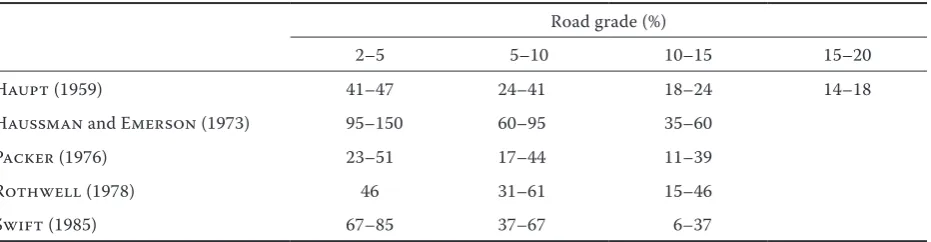
[image:2.595.64.532.87.233.2]There are several management practices that are used in forestry operations to mitigate the impact of logging, forest road and skid trail construction on stream water quality. These practices are de-signed to achieve two significant objectives: to control erosion and to minimize the delivery of sediments to drainage lines (Wallbrink, Croke 2002). One of these practices is the use of drainage culverts on forest roads and water diversions (wa-ter bars) on skid trails just af(wa-ter logging. This struc-ture was found to be effective in controlling and re-ducing the runoff volume and soil erosion (Croke Table 1. Guidelines for maximum distance between contiguous cross drains based on USCS soil erodibility groups (m) (Copstead et al. 1998)
Road grade
(%) Aggregate surfacingGW, GP GM, GC CH, CL MH, SC, SM SW, SP, ML
2 120 97 75 52 29
4 103 84 65 45 26
6 88 71 55 39 23
8 74 60 47 33 20
10 61 50 39 28 17
12 50 41 32 23 14
14 42 34 26 19 11
GW – gravel well graded, GP – gravel poorly graded, GM – gravel silt like, GC – gravel clay like, CH – clay high liquid limit, CL – clay low liquid limit, MH – silt high liquid limit, SC – sand clay like, SM – sand silt like, SW – sand well graded, SP – sand poorly graded, ML – silt low liquid limit
Table 2. Maximum surface cross drain recommendation (m) for native soil surfaced roads (Copstead et al. 1998)
Road grade (%)
2–5 5–10 10–15 15–20
Haupt (1959) 41–47 24–41 18–24 14–18
Haussman and Emerson (1973) 95–150 60–95 35–60
Packer (1976) 23–51 17–44 11–39
Rothwell (1978) 46 31–61 15–46
[image:2.595.67.533.635.756.2]et al. 2001; Wallbrink, Croke 2002; Litschert, MacDonald 2009; Akbarimehr 2010). Further-more, water diversions should be constructed on skid trails in appropriate intervals according to climate, soil type, slope that are shown in Tables 1 and 2. While Akbarimehr and Naghdi (2012) re-ported that 50 m was the most effective distance between water diversions in seep skid trails (more than 20% slope) and in skid trails with less than 20% slope, water diversions could be constructed at a greater distance of 75 m in length. Grace (2000) mentioned that sediment production decreased with increasing ground cover. He used native and exotic species in his study. The results of his study confirmed that treatments with high percent cover could mitigate the sediment yield. Also, some other studies confirmed that soil erosion has a relation with vegetation cover (Table 3) (Kasran, Nik 1994; Arnàez et al. 2004; Martinez-Zavala et al. 2008).
REsULts AND DIscUssION
As mentioned above and revealed by other au-thors like Croke et al. (2001), most of the erosion related to forest operations is typically from forest roads, skid trails and logging. Thus, drainage and rehabilitation of forest roads and skid trails are es-sential processes in the management of sediment movement and prevention of off-side impacts. So, post-harvest treatments of forest roads and skid trails are critical for reducing the delivery of sedi-ments from harvest units to streams. As Wall-brink and Croke (2002) mentioned, the creation of water diversion is a very effective strategy to control the runoff and soil loss. On steep slopes, runoff affected by the slope gradient leads to in-creasing soil erosion (Fox, Bryan 1999). Water diversions are used in forestry operations to miti-gate the impact of logging because water diversion is a major region of sediment deposition (Croke
et al. 2001; Wallbrink, Croke 2002). Because of the cost involved in constructing and maintaining water diversions, it is important to determine their location. Akbarimehr (2010) compared water di-version locations and determined that the water diversions should be installed in 50 m intervals for steep slopes. Also, the distances between water di-versions are related to precipitation, soil type, to-pography, type and extent of vegetation cover, traf-fic, lithology, etc., which are different in each site (Wallbrink, Croke 2002; Akbarimehr 2010). These studies showed that the distance between cross drainage and water diversions should be ad-justed to site, climate and slope.
The most important effect of forest disturbance on slope stability is the loss of the cohesive soil strength when reinforcing roots die and decay. Bal-lard (2000), Keim and Skaugset (2003) found that disruption of the forest floor can expose meral soil to raindrop impact, which can reduce in-filtration capacity. Also, the combination of canopy removal and forest floor disturbance may result in excess overland flow during a rainfall of high inten-sity and affect a range of hydrological processes, in-cluding infiltration and erosion. Fast initial growth and quickly formed cover are essential to minimize the soil movement from roadside slopes. This is es-pecially true of newly constructed roadside slopes. Soil on newly constructed roadside slopes is often loose and also is void of the vegetation cover that protects the surface soil from rain drop splash and surface flow (Grigal 2000; Grace 2000). But the presence of vegetation provides a cover of organic matter over the soil, provides surface roughness, improves the soil structure and thus increases infil-tration capacity. All these factors could reduce the erosive impact of raindrops on the ground surface (Kasran, Nik 1994; De Baets et al. 2006). Grace (2000) found out that the high percent of vegeta-tion cover exhibits the greatest mitigating effects on both sediment yield and runoff. Furthermore, a more significant contribution of plant vegetation to the stability is the additional strength imparted within the soil mantle by root systems. Thus the dense root network protects the surface from sig-nificant sediment transport (De Baets et al. 2006; Sidle 2008).
[image:3.595.63.291.86.156.2]Then, skid trail and road construction removes the forest vegetation, disturbs the forest floor, damages the soil structure and finally increases runoff and soil erosion. Therefore, sediment and water control practices are essential to reduce the quantity of sediments introduced into for-est stands and available for transport directly to Table 3. Correlation between soil erosion and vegetation
(rock) cover
R P
Arnàez et al. (2004) 0.076 0.070* Martinez-Zavala et al. (2008) –0.830 0.000* Jordán-López et al. (2008) 0.685 0.014*
stream systems. Sediments delivered to streams from roads and skid trails lead to a number of dramatic effects on water quality and aquatic life. Also, water must be drained before it concentrates to volumes that will cause erosion. Therefore, management and maintenance of forest roads and skid trails are essential elements to mitigate ero-sion. The construction of water diversions on skid trails after logging reduces subsequent sediment delivery. Furthermore, a reduction of rain splash by vegetation regrowth leads to a decrease in the soil loss. But additional work with detailed track-ing of sediment movement from forest roads and skid trails and management practices are required to better understand erosion mitigation tech-niques on the roads and skid trails.
References
Akay A.E., Erdas O., Reis M., Yuksel A. (2008): Estimat-ing sediment yield from a forest road network by usEstimat-ing a sediment prediction model and GIS techniques. Building and Environment, 43: 687–695.
Akbarimehr M. (2010): Determination of most appropriate distance between water diversion in skid trails, case study: Shafarood catchment, Guilan province. [MSc. Thesis.] Iran, Guilan University of Natural Resources in Somehsara: 67. (in Persian).
Akbarimehr M., Naghdi R. (2012): Determination of most appropriate distance between water diversion on skid trails in the mountainous forest, north of Iran. Catena, 88: 68–72. Ampoorter E., Van Nevel L., De Vos B., Hermy M.,
Verheyan K. (2010): Assessing the effects of initial soil characteristics, machine mass and traffic intensity on forest soil compaction. Forest Ecology and Management, 260: 1664–1676.
Arnàez J., Larrea V., Ortigosa L. (2004): Surface runoff and soil erosion on unpaved forest roads from rainfall simulations tests in northeastern Spain. Catena, 57: 1–14. Ballard T.M. (2000): Impacts of forest management on
northern forest soils. Forest Ecology and Management, 133: 37–42.
Byblyuk N., Styranivsky O., Korzhov V., Kudra V. (2010): Timber harvesting in the Ukrainian Carpathians: ecological problems and methods to solve them. Journal of Forest Science, 56: 333–340.
Costead L., Johansen D.K., Moll J. (1998): Water/Road Interaction: Introduction to Surface Drains. San Dimas. U.S. Department of Agriculture, Forest Service: 16. Croke J., Hairsine P., Fogarty P. (2001): Soil recovery
from track construction and harvesting changes in surface infiltration, erosion and delivery rates with time. Forest Ecology and Management, 143: 3–12.
De Baets S., Poesen J., Gyssels G., Knapen A. (2006): Effects of grass roots on the erodibility of topsoils during concentrated flow. Geomorphology, 76: 54–67.
Edwin A., Christopher J.R. (2002): Post harvest evalu-ation of BMP for the prevention of erosion in Virginia. [MSc. Thesis.] Blacksburg, Virginia, Faculty of Virginia Polytechnic Institute and State University: 125.
Fox D.M., Bryan R.B. (1999): The relationship of soil loss by interrill erosion to slope gradient. Catena, 38: 211–222. Fu B., Newham L.TH., Ramos-Scharron C.E. (2010): A
review of surface erosion and sediment delivery models for unsealed road. Environmental Modeling and Software, 25: 1–14.
Grace J.M. III. (2000): Forest road sideslopes and soil con-servation techniques. Journal of Soil and Water Conserva-tion, 55: 96–101.
Grace J.M. III., Clinton B.D. (2007): Protecting soil and water in forest road management. American Society of Agricultural and Biological Engineers, 50: 1579–1584. Grigal D.F. (2000): Effects of extensive forest management
on soil productivity. Forest Ecology and Management, 138: 167–185.
Haupt H.F. (1959): A Method for Controlling Sediment from Logging Roads. Ogden, United State Department of Agriculture: 22.
Haussman R.F., Emerson W.P. (1973): Permanent Logging Roads for Better Woodlot Management. Upper Darby, Di-vision of State and Private Forestry, Forest Service, Eastern Region, U.S. Department of Agriculture: 45.
Jordán-López A., Martinez-Zavala L., Bellinfante N. (2008): Impact of different parts of unpaved forest roads on runoff and sediment yield in a Mediterranean area. Science of the Total Environment, 407: 937–944.
Jusoff K., Majid N.M. (1996): The impacts of skid trails on the physical properties of Hill forest soils. Pertanika, 9: 311–321.
Kasran B., Nik A.R. (1994): Suspended sediment yield resulting from selective logging practices in a small wa-tershed in Peninsular Malaysia. Journal of Tropical Forest Science, 7: 286–295.
Keim R.F., Skaugset A.E. (2003): Modelling effects of for-est canopies on slope stability. Hydrological Processes, 17: 1457–1467.
Khalipoor H., Hosseini S.A., Lotfalian M., Kooch Y. (2008): The assessment of sediment production yield from forest road using sediment production model. Journal of Applied Sciences, 8: 1944–1949.
Litschert S.E., MacDonald L.H. (2009): Frequency and characteristics of sediment delivery pathways from forest harvest units to streams. Forest Ecology and Management, 259: 143–150.
Luce C.H., Black T.A. (2001): Spatial and temporal patterns in erosion from forest roads. In: Wigmosta M.S., Burges S.J. (eds): Influence of Urban and Forest Land Uses on the Hydrologic-Geomorphic Responses of Watersheds. Water Resources Monographs. Washington, DC, American Geo-physical Union: 165–178.
Martinez-Zavala L., Jordan–Lopez A., Bellinfate N. (2008): Seasonal variability of runoff and soil loss on forest road back slopes under simulated rainfall. Catena, 74: 73–79.
Najafi A., Solgi A., Sadeghi S.H. (2009): Soil disturbance following four wheel skidder logging on steep trail in the north mountainous forest of Iran. Soil and Tillage Research, 103: 165–169.
Packer P.E. (1976): Criteria for designing and locating log-ging roads to control sediment. Forest Science, 13: 2–18. Rothwell R.L. (1978): Watershed Management Guidelines
for Logging and Road Construction in Alberta. Edmonton, Northern Forest Research Centre, Canadian Forestry Ser-vice, Fisheries and Environment Canada: 43.
Saffih-Hdadi K., Défossez P., Richard G., Cui Y.J., Tang A.M., Chaplain V. (2009): A method for predicting soil susceptibility to the compaction of surface layers as a func-tion of water content and bulk density. Soil and Tillage Research, 105: 96–103.
Sidle R.C., Ziegler A.D., Negish J.N., Nik A.R., Siew R., Turkelboom F. (2006): Erosion processes in steep train-truths, myths and uncertainties related to forest manage-ment in Southeast Asia. Forest Ecology and Managemanage-ment, 244: 199–225.
Sidle R. (2008): Slope Stability: Benefits of Forest Vegeta-tion in Central Japan. Kyoto, Disaster PrevenVegeta-tion Research Institute, Kyoto University: 11.
Swift L.W. (1985): Forest road design to minimize erosion in the Southern Appalachians. In: Blackman B.G. (ed.): Proceedings of Forestry and Water Quality: a Mid-South Symposium. Monticello, 8.–9. May 1985. Little Rock, De-partment of Forest Resources: 141–151.
Wallbrink P.J., Croke G. (2002): A combined rainfall simulator and tracer approach to assess the role of Best Management Practices in minimising sediment redistribu-tion and loss in forests after harvesting. Forest Ecology and Management, 170: 217–232.
Wood M.J., Cring P.A., Moffat A.J. (2003): Reduced ground disturbance during mechanized forest harvesting on sensitive forest soils in the UK. Forestry, 76: 345–361.
Received for publication December 6, 2010 Accepted after corrections January 26, 2012
Corresponding author:
Mananeh Akbarimehr, MSc, University of Guilan, Faculty of Natural Resources, Department of Forestry, P. O. Box 1144, Somehsara, Iran