CHITOSAN: AN OVERVIEW
Poonam Yeul
Priyadarshini College of Engineering, Nagpur ( India)
ARTICLE INFO ABSTRACT
Chitosan is produced commercially by deacetylation of chitin, which is the structural element in the exoskeleton of crustaceans such as crabs and shrimp & cell walls of fungi. The degree of deacetylation (%DD) can be determi
chitosans ranges from 60 to 100%. A common method for the synthesis of chitosan is the deacetylation of chitin using sodium hydroxide in excess as a reagent and water as a solvent. This reaction pathway, w
the Chitosan properties, modifications & applications.
INTRODUCTION
Chitosan is a natural polysaccharide comprising copolymers of glucosamine and N-acetylglucosamine, and can be obtained by the partial deacetylation of chitin, from crustacean shells, the second most abundant natural polymer after cellulose. Chitin can be converted into chitosan by enzymatic means or alkali deacetylation, this being the most utilized method. During the course of deacetylation, part of polymer N-acetyl links are broken with the formation of D-glucosamine units, which contain a free amine group, increasing the polymer’s solubility in aqueous means (Chen & Tsaih, 1998). Chitosan has been widely used in vastly diverse fields, ranging from waste management to food processing, medicine and biotechnology. It becomes an interesting material in pharmaceutical applications due to its biodegradability and biocompatibility, and low toxicity. Chitosan has found wide applicability in conventional pharmaceutical devices as a potential formulation excipient. The use of chitosan in novel drug delivery as mucoadhesive, peptide and gene delivery, as well as oral enhancer have been reported in the literature. Chitosan exhibits myriad biological actions such as hypocholesterolemic, antimicrobial, and wound healing properties. Since chitosan is a new substance, it is important to carry out precise standardization for its pharmaceutical and biomedical applications like other auxiliary substances.
Chitosan can be characterized in terms of its quality, intrinsic properties (purity, molecular weight, viscosity, and degree of deacetylation) and physical forms. Furthermore, the quality and properties of chitosan product may vary widely because many factors in the manufacturing process can influence the characteristics of the final product. Chitosan is commercially available from a number of suppliers in various grades of purity, molecular weight, and degree of deacetylation.
*Corresponding author: [email protected]
ISSN: 0975-833X
Available online at http://www.journalcra.com
International Journal of Current Research
Vol.
Article History:
Received 24th
July, 2012 Received in revised form
15th
August, 2012
Accepted 16th September, 2012
Published online 30th
October, 2012
Key words:
Chitosan; Overview; Modifications; Applications.
RESEARCH ARTICLE
CHITOSAN: AN OVERVIEW
Poonam Yeul and Seema Shrivastava*
Priyadarshini College of Engineering, Nagpur ( India)ABSTRACT
Chitosan is produced commercially by deacetylation of chitin, which is the structural element in the exoskeleton of crustaceans such as crabs and shrimp & cell walls of fungi. The degree of deacetylation (%DD) can be determined by NMR spectroscopy, and the
chitosans ranges from 60 to 100%. A common method for the synthesis of chitosan is the deacetylation of chitin using sodium hydroxide in excess as a reagent and water as a solvent. This reaction pathway, when allowed to go to completion yields up to 98% product. This review explores the Chitosan properties, modifications & applications.
Copy Right, IJCR, 2012, Academic Journals
Chitosan is a natural polysaccharide comprising copolymers of acetylglucosamine, and can be obtained by the partial deacetylation of chitin, from crustacean shells, the second most abundant natural polymer after cellulose. Chitin can be converted into chitosan by enzymatic means or alkali he most utilized method. During the acetyl links are glucosamine units, which contain a free amine group, increasing the polymer’s solubility hitosan has been widely used in vastly diverse fields, ranging from waste management to food processing, medicine and biotechnology. It becomes an interesting material in pharmaceutical applications due to its biodegradability and biocompatibility,
toxicity. Chitosan has found wide applicability in conventional pharmaceutical devices as a potential
formulation excipient. The use of chitosan in novel drug
delivery as mucoadhesive, peptide and gene delivery, as l as oral enhancer have been reported in the literature. Chitosan exhibits myriad biological actions such as
hypocholesterolemic, antimicrobial, and wound healing properties. Since chitosan is a new substance, it is important to out precise standardization for its pharmaceutical and biomedical applications like other auxiliary substances.
Chitosan can be characterized in terms of its quality, intrinsic properties (purity, molecular weight, viscosity, and degree of and physical forms. Furthermore, the quality and properties of chitosan product may vary widely because many factors in the manufacturing process can influence the characteristics of the final product. Chitosan is commercially uppliers in various grades of purity, molecular weight, and degree of deacetylation.
The variations in preparation methods of chitosan result in differences in its deacetylation degree, the distribution of acetyl groups, the viscosity and its molecular weight (Berger
et al., 2005). These variations influence the solubility,
antimicrobial activity among other properties, being that commercial chitosan usually has a deacetylation degree varying from 70% to 95%, and a molecular weight ranging from 50 to 2000 kDa (Rege et al., 2003). The deacetylation degree is the proportion of glucosamine mon
chitin. It has a striking effect on the solubility and solution properties of chitin. By convention, chitin and chitosan are distinguished by their solubility in dilute aqueous acids such as acetic acid (Muzzarelli, 1977). Chitin does not
dilute acetic acid. When chitin is deacetylated to a certain degree (~ 60% deacetylation) where it becomes soluble in the acid, it is referred to as chitosan.
A typical deacetylation process of chitin involves the reaction of chitin powder or flake in an aqueous 40
hydroxide solution at 100-120°C for several hours to hydrolyze N-acetyl linkages (Roberts, 1992). Repetition of the process can give deacetylation values up to 98% but the complete deacetylation can never be achieved by t heterogeneous deacetylation process without modification. Fully deacetylated (nearly 100%) chitosan can be prepared by the alkaline treatment of a gel form instead of the powder form of Chitosan (Mima et al., 1983). The amino group in chitosan has a pKa value of ~6.5, which leads to a protonation in acidic to neutral solution with a charge density dependent on pH and the %DA-value. This makes chitosan water soluble and a bioadhesive which readily binds to negatively charged surfaces such as mucosal membranes. Chitosan enhances the transport of polar drugs across epithelial surfaces, and is biocompatible and biodegradable. Purified quantities of chitosans are available for biomedical applications. Chitosan and its derivatives, such as trimethylchitosan (w
Available online at http://www.journalcra.com
ternational Journal of Current Research
Vol. 4, Issue, 10, pp.176-182, October,2012
INTERNATIONAL
OF CURRENT RESEARCH
Chitosan is produced commercially by deacetylation of chitin, which is the structural element in the exoskeleton of crustaceans such as crabs and shrimp & cell walls of fungi. The degree of ned by NMR spectroscopy, and the %DD in commercial chitosans ranges from 60 to 100%. A common method for the synthesis of chitosan is the deacetylation of chitin using sodium hydroxide in excess as a reagent and water as a solvent. This hen allowed to go to completion yields up to 98% product. This review explores
, Academic Journals. All rights reserved.
The variations in preparation methods of chitosan result in differences in its deacetylation degree, the distribution of acetyl groups, the viscosity and its molecular weight (Berger ., 2005). These variations influence the solubility, ctivity among other properties, being that commercial chitosan usually has a deacetylation degree varying from 70% to 95%, and a molecular weight ranging ., 2003). The deacetylation degree is the proportion of glucosamine monomer residues in chitin. It has a striking effect on the solubility and solution properties of chitin. By convention, chitin and chitosan are distinguished by their solubility in dilute aqueous acids such as acetic acid (Muzzarelli, 1977). Chitin does not dissolve in dilute acetic acid. When chitin is deacetylated to a certain degree (~ 60% deacetylation) where it becomes soluble in the
A typical deacetylation process of chitin involves the reaction flake in an aqueous 40-50% sodium 120°C for several hours to acetyl linkages (Roberts, 1992). Repetition of the process can give deacetylation values up to 98% but the complete deacetylation can never be achieved by this heterogeneous deacetylation process without modification. Fully deacetylated (nearly 100%) chitosan can be prepared by the alkaline treatment of a gel form instead of the powder form The amino group in chitosan a value of ~6.5, which leads to a protonation in acidic to neutral solution with a charge density dependent on pH and value. This makes chitosan water soluble and a bioadhesive which readily binds to negatively charged ranes. Chitosan enhances the transport of polar drugs across epithelial surfaces, and is biocompatible and biodegradable. Purified quantities of chitosans are available for biomedical applications. Chitosan and its derivatives, such as trimethylchitosan (where the amino INTERNATIONAL JOURNAL
group has been trimethylated), have been used in nonviral gene delivery. Trimethylchitosan, or quaternised chitosan, has been shown to transfect breast cancer cells, with increased degree of trimethylation increasing the cytotoxicity; at approximately 50% trimethylation, the derivative is the most efficient at gene delivery. Oligomeric derivatives (3-6 kDa) are relatively nontoxic and have good gene delivery properties (Kean T et al, 2005).
Properties of Chitosan
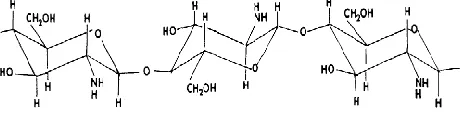
[image:2.612.63.294.224.282.2]Chitosan is a non toxic, biodegradable polymer of high molecular weight, and is very much similar to cellulose, a plant fiber. The chemical representation of Chitosan is shown below
Fig. 1. The structuralformula of Chitosan
Degree of Deacetylation in Chitosan
Deacetylation process is the removal of acetyl groups from the molecular chain of chitin, leaving behind a compound (chitosan) with a high degree chemical reactive amino group (-NH2). This makes the degree of deacetylation an important property in chitosan production as it affects the physicochemical properties, hence determines its appropriate applications (Rout, 2001). Deacetylation also affects the biodegradability and immunological activity (Tolaimate et al., 2000). A sharp nomenclature border has not been defined between Chitin and Chitosan based on the degree of N-deacetylation (Rout, 2001). In an earlier study by Rudall (1963), he reviewed evidences suggesting that approximately one in every six to seven residues in the chain has a proportion of free amino groups that manifests some histochemical properties. In any case, the degree of deacetylation can be employed to differentiate between chitin and chitosan because it determines the content of free amino groups in the polysaccharides. There are two advantages of chitosan over chitin. The first one is, in order to dissolve chitin, highly toxic solvents such as lithium chloride and dimethylacetamide are used whereas chitosan is readily dissolved in diluted acetic acid.
The second advantage is that chitosan possesses free amine groups which are an active site in many chemical reactions (Knaul et al., 1999).The degree of deacetylation of chitosan ranges from 56% to 99% with an average of 80%, depending on the crustacean species and the preparation methods (No and Meyers, 1995). Chitin with a degree of deacetylation of 75% or above is known as chitosan (Knaul et al., 1999). Various methods have been reported for the determination of the degree of deacetylation of chitosan. These included ninhydrin test, linear potentiometric titration, near-infrared spectroscopy, nuclear magnetic resonance spectroscopy, hydrogen bromide titrimetry, infrared spectroscopy, and first derivative UV-spectrophotometry (Khan et al., 2002). The infrared spectroscopy method, which was first proposed by Moore and Roberts (1980), is commonly used for the estimation of
chitosan degree of deacetylation values. This method has a number of advantages and disadvantages. First, it is relatively fast and unlike other spectroscopic methods, does not require purity of the sample to be tested nor require dissolution of the chitosan sample in an aqueous solvent (Baxter et al., 1992). However, the infrared method utilizing baseline for degree of deacetylation calculation, and as such there may be possible argument for employment of different baseline which would inevitably contribute to variation in the degree of deacetylation values. Secondly, sample preparation, type of instrument used and conditions may influence the sample analysis. Since chitosan is hygroscopic in nature and samples with lower degree of deacetylation may absorb more moisture than those with higher degree of deacetylation, it is essential that the samples under analysis be completely dry (Khan et al., 2001; Blair et al., 1987).
Molecular Weight
Chitosan having high molecular weight. Like its composition, the molecular weight of chitosan varies with the raw material sources and the method of preparation. Molecular weight of native chitin is usually larger than one million Daltons while commercial chitosan products have the molecular weight range of 100,000 – 1,200,000 Daltons, depending on the process and grades of the product (Li et al., 1992). In general, high temperature, dissolved oxygen, and shear stress can cause degradation of chitosan. For instance at a temperature over 280°C, thermal degradation of Chitosan occurs and polymer chains rapidly break down, thereby lowering molecular weight (Rout, 2001). Also, maximal depolymerization caused by utilization of high temperature or concentrated acids, such as hydrochloric acid followed by acetic acid and sulfurous acid, results in molecular weight changes with minimal degradation with the use of EDTA (Rout, 2001). The molecular weight of chitosan can be determined by methods such as chromatography (Bough et al., 1978), light scattering (Muzzarelli, 1977), and viscometry (Maghami and Roberts, 1988)
Viscosity
sodium hypochlorite) at any stage since bleaching considerably reduces the viscosity of the final chitosan product. Similarly, No et al. (1999) demonstrated that chitosan viscosity is considerably affected by physical (grinding, heating, autoclaving, ultrasonication) and chemical (ozone) treatments, except for freezing, and decreases with an increase in treatment time and temperature. Chitosan solution stored at 4°C is found to be relatively stable from a viscosity point of view (No et al., 1999). The effect of particle size on the quality of chitosan products was investigated by Bough et al. (1978), who reported that smaller particle size (1mm) results in chitosan products of both higher viscosity and molecular weight than those of either 2 or 6.4 mm particle size. They further enumerated that a larger particle size requires longer swelling time, resulting in a slower deacetylation rate. But, in contrast, Lusena and Rose (1953) reported that the size of chitin particle within the 20-80 mesh (0.841-0.177 mm) range had no effect on the viscosity of the Chitosan solutions.
Solubility
While chitin is insoluble in most organic solvents, chitosan is readily soluble in dilute acidic solutions below pH 6.0. Organic acids such as acetic, formic, and lactic acids are used for dissolving chitosan. The most commonly used is 1% acetic acid solution at about pH 4.0 as a reference. Chitosan is also soluble in 1% hydrochloric acid but insoluble in sulfuric and phosphoric acids. Solubility of chitosan in inorganic acids is quite limited. Concentrated acetic acid solutions at high temperature can cause depolymerization of chitosan (Roberts and Domszy, 1982). Above pH 7.0 Chitosan solubility’s stability is poor. At higher pH, precipitation or gelation tends to occur and the chitosan solution forms poly-ion complex with anionic hydrocolloid resulting in the gel formation (Kurita, 1998). The concentration ratio between chitosan and acid is of great importance to impart desired functionality (Mima, 1983).
At concentrations as high as 50 % organic solvent, chitosan still works as a viscosifier causing the solution to remain smooth. There are several critical factors affecting chitosan solubility including temperature and time of deacetylation, alkali concentration, and prior treatments applied to chitin isolation, ratio of chitin to alkali solution, and particle size. The solubility, however, is controlled by the degree of deacetylation and it is estimated that deacetylation must be at least 85% complete in order to achieve the desired solubility (No et al., 1995). The acid-soluble chitosans with >95% solubility in 1% acetic acid at a 0.5% concentration could be obtained by treatment of the original chitin with 45-50% NaOH for 10-30 min. Chitosans treated with 45% NaOH for only 5 min, and/or with 40% NaOH for 30 min, were not deacetylated sufficiently to be soluble in 1% acetic acid. Insoluble particles were found in both solutions. According to Bough et al. (1978), a reaction time of 5 min with 45% NaOH may not be enough for chitin particles to be sufficiently swollen. A decrease of the NaOH concentration to 40% required increased time of >30 min to obtain a soluble chitosan (No et al., 2000).
Bulk Density
The bulk density of chitin from shrimp and crab is normally between 0.06 and 0.17 g/ml, respectively (Shahidi and Synowiecki, 1991), indicating that shrimp chitin is more
porous than crab chitin. Krill chitin was found to be 2.6 times more porous than crab chitin (Anderson et al., 1978). In a study conducted by Rout (2001), the bulk density of chitin and chitosan from crawfish shell, is very high (0.39 g/cm3). This perhaps could be due to the porosity of the material before treatment. But once crawfish shell had been demineralized or deproteinized or both there seem to be very minor variations unpacked in bulk density between chitin and chitosan produced. A comparison of the bulk densities of crawfish and commercial chitin and Chitosan indicated some variations, which can be attributed to crustacean species or sources of chitosan and the methods of preparation (Rout, 2001), as also stated earlier by Brine and Austin (1981). Rout (2001) reported that increased degree of deacetylation decreased bulk density.
Color
The pigment in the crustacean shells forms complexes with chitin (4-keto and 3, 4, 4'-diketo-ß-carotene derivatives) (Rout, 2001). Chitosan powder is quite flabby in nature and its color varies from pale yellow to white whereas starch and cellulose powder have smooth texture and white color.
Water Binding Capacity (WBC) and Fat Binding Capacity (FBC)
Water uptake of chitosan was significantly greater than that of cellulose and even chitin (Knorr, 1982). Basically, WBC for chitosan ranges between 581 to 1150% with an average of 702%, according to Rout (2001). In his report, Rout (2001) also noted that reversing the sequence of steps such as demineralization and deproteinization had a pronounced effect on WBC and FBC. Deproteinization of demineralized shell also gives higher WBC compared to the process when demineralization of the deproteinized shell is conducted. Besides, the process of decoloration also causes a decrease in WBC of chitosan than those of unbleached crawfish chitosan. The fat uptake of chitin and chitosan ranges from 315 to 170% with Chitosan having the lowest and chitin the highest fat uptake (Knorr, 1982). In a study by Rout (2001) on this aspect, he reported that the average FBC of crawfish chitosans and commercial crab chitosans for soybean oil was 706% and 587%, respectively. The inclusion of decoloration step during the production of chitosan was found to decrease the fat binding capacity of crawfish chitosans, affect the viscosity of chitosan (Moorjani, 1975). The decreased viscosity as evidenced may be a cause for decrease in fat binding capacity among unbleached and bleached crawfish chitosan samples. Rout (2001) also reported that changing the sequence of steps, i.e., when demineralization is conducted prior to deproteinization, followed by deacetylation.
Film-Forming/ Gelling Properties
has been extensively studied for applications as films or membranes. These films can be described as biofilms with a homogeneous matrix, stable structure, good water barrier, and mechanical properties (Uragami 1997). The functional properties of Chitosan films are improved when chitosan is combined with other film-forming materials. Hosokawa et al. (1990) reported that when biodegradable films were made from chitosan and homogenized cellulose oxidized with ozone the number of carbonyl and carboxyl groups on the cellulose interacting with the amino groups on the chitosan increased. The water resistance of chitosan film was ameliorated by the incorporation of hydrophobic materials such as fatty acids to enhance the film’s hydrophobicity . Starch has been used to produce biodegradable films to partially or entirely replace plastic polymers because of its low cost and renewability. However, a wide application of starch film is limited by its water solubility and brittleness (Xu et al, 2005). Hydrogels are three-dimensional networks that swell in water and aqueous solutions. These materials, based on both natural and synthetic polymers, are currently attracting a great deal of interest as bioactive molecules and in tissue engineering. Among natural biopolymers of interest, chitosan stands out due to its unique combination of favorable properties such as hydrogel forming.
Chitosan hydrogels can be divided into two classes: physical and chemical. Chemical hydrogels are formed by irreversible covalent links, whereas physical hydrogels are formed by various reversible links. For various reasons, physically cross-linked hydrogels have attracted increasing attention as bioactive compounds. The preparation and characterization of a few hydrogels of chitosan have been reported, such as thermo reversible chitosan-oxalate, chitosan-aldehyde gels and chitosan-alginate.
So far, no simple ionic and nontoxic cross-linking agent has been found that gives reproducible chitosan gels at low
concentrations, such as calcium ions for gelling of alginates. However, aqueous Chitosan gels crosslinked with molybdate polyoxy-anions have been reported, resulting in transparent, thermo irreversible gels that are able to swell several times their original size in aqueous solutions, depending on the ionic strength (Draget et al,1992). Different chitosan gels made with covalent cross-linking have been reported, with cross-linking with glutaraldehyde being the most widely applied. In addition, an enzymatic gelling system with chitosan has been reported (Kumar et al, 2000).
Modifications and Applications of Chitosan
Chemical modifications of Chitosan are increasingly studied as it has the potential of providing new applications. With regard to its unique properties such as biocompatibility, biodegradability, and no toxicity to mammals, it is widely used in fields like biotechnology, pharmaceutics, cosmetics and agriculture. In particular the antimicrobial activities of chitosan and its derivatives have aroused considerable recent interest. Unfortunately, in spite of the Chitosan advantages, the poor solubility, low surface area, and porosity of chitosan are the major limiting factors in its utilization. Its solubility is limited at a pH higher than 6.5 where Chitosan starts to lose its cationic nature. This problem is probably the major limiting factor for chitosan utilization, that is, its application in biology, since many enzyme assays are performed at neutral pH. If water-soluble chitosan would be easily accessible, it is expected that the biological and physiological potential would increase dramatically. Chitosan can be modified by physical or chemical processes in order to improve the mechanical and chemical properties. Chitosan is a multi nucleophilic polymer due to the presence of the amino group at C-2 and hydroxyl
groups at C-3 and C-6 in the GlcN residue. Chitosan membrane is swollen in water; the amino groups may be Illustrates the some modified forms & applications of Chitosan
Material Physical forms Application Ref
Chitosan Beads Color removal (Wu,2001)
Chitosan Hydro gel beads Adsorption of nitrate (Chatterjee,2009)
Chitosan Beads Drugs releases (Sezer,1995)
Chitosan Hydrogel beads Fulvic acid adsorption (Wang,2008)
Chitosan Beads Sorption of Cr(VI) (Kousalyaa,2010)
Chitosan Porous beads Cu(II) ion adsorption (Zhao,2007)
Chitosan Hydro gel beads Encapsulate proteins (Alsarra,2004)
Chitosan Hydrogel beads Fulvic acid removal (sun,2008)
Chitosan Micro spheres Drug release (Li, 1992)
Chitosan Micro spheres Encapsulation (kosaraju, 2006)
Chitosan calcium phosphate composite fiber Biomedical drug carrier (Matsuda,2004)
Chitosan-poly glutamic acid fiber Industrial application (Jaipura,2006)
Collagen-chitosan Nano fibers Tissue engineering (Chen.2007)
Chitosan /sodium alginate + silver sulfadiazine Sponge Wound dressing application (Kim, 1999)
Chitosan-fibroin bled Sponge Dressing material (strobin, 2006)
Chitosan cross linked with glutaraldehyde Micro spheres Drug release (Genta,1998)
K-carrageen an chitosan Membrane capsule Drug release (Tomida,1994)
Chitosan carrageenan cross linked with glutaric
acid and glutaraldehyde
Hydrogel beads Drug (piyakulawat,2007)
Chitosan and chitosan-alginate Beads Removal of cut(II) ions (wan nagh,2008)
Ionic cross-linked chitosan Beads Drug release (Shu,2002)
Cross-linked chitosan aldinate Beads Drug release (Anal,1994)
chemically cross-linked chitosan Beads Remove the dyes (Chiou,2004)
Glutaraldehyde-activated alginate- chitosan Gel beads Immobililization of antibodies (albarghouthi,200)
Chitosan flake and cross-linked chitosan beads with glutraldehyde
Flakes and beads Adsorption of p-nitro phenol (wan Ngah,2006)
Cross linked chitosan with (GLA). (ECH) and
ethylene diglycidylethe
Beads Adsorption of Fet(III) ions (wan Ngah,2005)
Chitosan cross-linked with sodium
tripolyphosphate
protonated and leave the hydroxide ions free in water, which may contribute to the ionic conduction in the membrane. The initial sites where substitution occurs are the more nucleophilic amino groups. However, the experimental conditions and protection of the amino groups reduce the intermolecular hydrogen bonding and creates space for water molecules to fill in and solvate the hydrophilic groups of the polymer backbone (Sashiwa and Shigemasa 1999). For introducing alkyl or substituted alkyl groups selectively at the amino groups, reductive alkylation is the most reliable procedure. Chitosan is treated with an aldehyde to give an imine (Schiff base), which is easily converted into an N-alkyl derivative by reduction with sodium borohydride or sodium cyanoborohydride (Yalpani and Hall 1984). These reactions are facile; the DSs are generally high and the products are soluble in water or dilute acids. The chitosan derivatives mentioned in the literatures showed that one can differentiate specific reactions involving the –NH2 group at the C-2 position or nonspecific reactions of –OH groups at the C-3 and C-6 positions (especially esterification and etherification). The positive charges on chitosan can also participate in ionic interactions, particularly with polyanions such as alginate and pectin.
The complexes formed by electrostatic interaction between COO− or SO4−− and NH4 + have been proposed for the recovery of suspended solids from aqueous food processing streams that can be used for animal feed. Hydroxyalkyl chitosans are usually obtained in reactions of chitosan with epoxides. Depending on the reaction conditions (pH, solvent, and temperature); the reaction may take place predominantly at the amino or hydroxy groups giving N-hydroxyalkyl- or O-hydroxyalkyl chitosans or a mixture of both types. Under neutral and acidic conditions, N-hydroxyalkyl chitosan is preferred, leading to DS value <2.
However, under alkaline conditions, the strongly nucleophilic oxygen ions will react much faster, resulting in O-hydroxyalkyl chitosan with DS values > 2(Roberts 1992) Acylation of chitosan was the usual method involving reacting chitosan under homogeneous reaction conditions with either an acid chloride or acid anhydride. Acylation was shown to proceed smoothly at the free amino groups preferentially and then more slowly at the hydroxyl groups . Complete N-acylation has been achieved by treating chitosan with cyclic acid anhydrides in aqueous homogeneous media at pH 4 to 8. Some of the resulting Ncarboxyacyl chitosans were successfully converted into the corresponding imido forms by thermal dehydration. N-acetylation of chitosan can be controlled when carried out in aqueous acetic acid solutions or in a highly swollen gel state in pyridine. With this gel, 50% N-acetylation was achieved, and the product was found to be soluble in neutral water. In case the swelling of chitosan is not sufficient, even the product with a similar DA does not give a homogeneous solution in water. Furthermore, no appreciable degradation is expected during the acetylation, and hence water-soluble chitosans with desired MWs can be prepared. Partial acetylation is also possible in homogeneous solutions in aqueous acetic acid/methanol (Roberts 2003) or in aqueous acetic acid to give water-soluble products. The highest water solubility was again observed for a DA of 0.5. Under appropriate conditions similar to those for the benzoylation of chitin, chitosan was benzoylated (DS up to 2.5) with benzoyl
chloride in methanesulfonic acid. N-saturated fatty acyl chitosan derivatives soluble in water, aqueous alkaline and acid solutions were prepared. Acyl substitution was reported to take place on both O- and N-positions under a large excess of acid chloride. The preparation of O,O-didecanoyl chitosan was also reported through a protected N-phthaloyl chitosan as intermediate. However, this method needs several steps for the protection and deprotection of the N-phthaloyl groups.
Some N-carboxyacyl chitosans were also prepared by reaction of chitosan with intramolecular carboxylic anhydrides including maleic, glutaric, phthalic, and succinic (Hirano and Moriyasu 2004). As related compounds, some cyclic phthalimido derivatives of chitosan were reported. In addition, N-carboxyacyl chitosans filaments were synthesized by suspended chitosan in methanol and carboxylic anhydrides were added. These compounds are usable as new functional materials in many fields because of their hydrophilic and acidic properties. Grafting of chitosan allows the formation of functional derivatives by covalent binding of a molecule, the graft, onto the chitosan backbone. The properties of the resulting graft copolymers are controlled by the characteristics of the side chains, including molecular structure, length, and number. The cross-linking agents can be of varying length and contain other functional groups than those involved in cross-linking. Partial cross linking by di/polyfunctional reagents enables the use of chitosan for metal adsorption in acidic medium. Several bior polyfunctional cross-linking agents such as glutaraldehyde, ethylene glycol diglycidyl ether, glyoxal, epichlorohydrin, benzoquinone, and cyclodextrin have been used. The fact that the cross-linking agents cited before are neither safe nor environment friendly has led to the use of water-soluble crosslinking agents such as sodium trimetaphosphate, sodium tripolyphosphate, or carboxylic acids. One of the important strategies to increase both the solubility and positive charge density of chitosan is based on the introduction of quaternary ammonium groups into chitosan. This modification has got the commonly accepted term “quaternization of chitosan”. Thus, derivatives soluble in water and in both acidic and basic physiologic circumstances may be good candidates for the polycationic biocides. Many efforts to synthesize quaternized chitosan derivatives have been reported. For example, Muzzarelli and Tanfani (1985) reported the formation of N,Ndimethyl chitosan and the preparation of N,N,N-trimethyl chitosan iodide with formaldehyde and sodium borohydride.
N-methylene phosphonic chitosans. So the functional groups of chitosan are easily modified by many organic reactions: tosylation, alkylation, carboxylation, sulfonation , Schiff base and quaternary salt.
Conclusion
In spite of the chitosan advantages, the poor solubility, low-surface area, and porosity of chitosan are the major limiting factors in its utilization. Therefore, there is an urgent need to develop water soluble chitosan which can be put into use for different applications.
REFERENCES
Allan G. G. and Peyron, M.(1995) “Molecular weight manipulation of chitosan II: prediction and control of extent of depolymerization by nitrous acid,”
Carbohydrate Research, vol. 277, no. 2, pp. 273–282.
Badawy, M. E. I. (2010) “Preparation and antimicrobial activity of some chitosan-metal complexes against some plant pathogenic bacteria and fungi,” Journal of Pest
Control and Environmental Sciences, vol. 18, pp. 37–50.
Badawy, M. E. I. Rabea, E. I. Rogge T. M.(2004) “Synthesis and fungicidal activity of new N,O-acyl chitosan derivatives,” Biomacromolecules, vol. 5, no. 2, pp. 589– 595.
Badawy, M. E.I. (2008) “Chemical modification of chitosan: synthesis and biological activity of new heterocyclic chitosan derivatives,” Polymer International, vol. 57, no. 2, pp. 254–261.
Berth G. and Dautzenberg, H. (2002) “The degree of acetylation of chitosans and its effect on the chain conformation in aqueous solution,” Carbohydrate
Polymers, vol. 47, no. 1, pp. 39–51.
Bohdanecky M.and Kovar, J. (1982) Viscosity of Polymer Solutions, Elsevier, Amsterdam, The Netherlands, Cho, Y. I. No, H. K. and Meyers, S. P.(1998)
“Physicochemical characteristics and functional properties of various commercial chitin and chitosan products,” Journal of Agricultural and Food Chemistry, vol. 46, no. 9, pp. 3839–3843.
Del Blanco, L. F Rodriguez, M. S.. Schulz, P. C and Agull E. (1999) “Influence of the deacetylation degree on Chitosan emulsification properties,” Colloid and Polymer Science, vol. 277, no. 11, pp. 1087–1092.
Domard, A.(1987) “pH and CD measurements on a fully deacetylated chitosan: application to Cu(II)-polymer interactions,” International Journal of Biological
Macromolecules, vol. 9, no. 2, pp. 98–104.
Draget, K. I.. V°arum, K. Moen, M E. Gynnild, H. and Smidsrod, O. (1992) “Chitosan cross-linked with Mo(VI) polyoxyanions: a new gelling system,” Biomaterials, vol. 13, no. 9, pp. 635–638.
Duarte, M. L. Ferreira, M. C.. Marv˜ao, M. R and Rocha, J. (2002) “An optimised method to determine the degree of acetylation of chitin and chitosan by FTIR spectroscopy,”
International Journal of iological Macromolecules, vol.
31, no. 1–3, pp. 1– 8.
Esam A. El-hefian, Mohamed Mahmoud Nasef and Abdul Hamid Yahaya, (2011) “Chitosan Physical Forms: A Short Review”Australian Journal of Basic and Applied
Sciences, 5(5): 670-677.
Flory, P. J. (1953) Principles of Polymer Chemistry, CornellUniversity Press, Ithaca, NY, USA.
Gross, P. Konrad, E. and Mager, H. (1983) “Investigations on chitosan as a natural film forming ingredient in hair cosmetic products under the consideration of ecological aspects,” Parfuem Kosmet, vol. 64, p. 367.
Higazy, A. Hashem, M. ElShafei, A. Shaker, N. and Hady, M. A. (2001) “Development of antimicrobial jute packaging using chitosan and chitosan-metal complex,”
CarbohydratePolymer, vol. 42, no. 25, pp. 9921–9927.
Hirano S .and Moriyasu, T. (2004) “Some novel N- (carboxyacyl)chitosan filaments,” Carbohydrate
Polymers, vol. 55, no. 3, pp. 245–248.
Hirano S. and Moriyasu, T.(1981) “N-(carboxyacyl)chitosans,” Carbohydrate Research, vol. 92, no. 2, pp. 323–327.
Hirano,S. Yamaguchi,Y. and Kamiya,M. (2003) “Water-soluble N-(n-fatty acyl)chitosans,” Macromolecular
Bioscience, vol. 3, no. 10, pp. 629–631.
Holappa, J. Nevalainen, T. Savolainen J.(2004) “Synthesis and characterization of chitosan N-betainates having various degrees of substitution,” Macromolecules, vol. 37, no. 8, pp. 2784–2789.
Hosokawa, J. Nishiyama, M. Yoshihara, K. and Kubo, T.(1990) “Biodegradable film derived from chitosan and homogenized cellulose,” Industrials and Engineering
Chemistry Research, vol. 29, no. 5, pp. 800–805.
Hudson S. M. and Jenkins, D. W. (2001) Chitin and Chitosan, Encyclopedia of Polymer Science and Technology, Wiley Interscience, New York, NY, USA, 3rd edition.
Hugerth, A. Caram-Lelham, N. and Sundel L. O.(1997) “The effect of charge density and conformation on the polyelectrolyte complex formation between carrageenan and chitosan,” Carbohydrate Polymers, vol. 34, no. 3, pp. 149–156.
Inoue Y.(1997) “NMR determination of the degree of acetylation,” in Chitin Handbook, Muzzarelli R. A. A. and Peter, M.G Eds., pp. 133–136, European Chitin Society, Grottammare, Italy.
Jaworska, M. Sakurai, K. Gaudon, P. and Guibal, E.(2003) “Influence of chitosan characteristics on polymer properties. I: crystallographic properties,” Polymer
International, vol. 52, no. 2, pp. 198–205.
Jia, Z. Shen, D. and. Xu, W (2001) “Synthesis and antibacterial activities of quaternary ammonium salt of chitosan,” Carbohydrate Research, vol. 333, no. 1, pp. 1– 6.
Jiang W.and Han S.(1998) “Sensibility of the chitosan to the addition of salt by viscometry,” Acta Polymerica Sinica, no. 5, pp. 571–572.
Kasaai, M. R. (2010) “Determination of the degree of N-acetylation for chitin and chitosan by various NMR spectroscopy techniques: a review,” Carbohydrate
Polymers, vol. 79, no. 4, pp. 801–810.
Kean T, Roth S, Thanou M (2005)"Trimethylated chitosans as non-viral gene delivery vectors: cytotoxicity and transfection efficiency". J Control Release 103 (3): 643– 53.
Kim C. H. and. Choi, K. S (2002) “Synthesis and antibacterial activity of quaternized chitosan derivatives having different methylene spacers,” Journal of Industrial and
Engineering Chemistry, vol. 8, no. 1, pp. 71–76.
Koide, S. S. (1998) “Chitin-chitosan: properties, benefits and risks,” Nutrition Research, vol. 18, no. 6, pp. 1091–1101. Kuhn W.and Kuhn H.(1943)“Die Frage nach der Aufrollung
von Fadenmolek¨ulen in str¨omenden L¨osungen,”
Helvetica Chimica Acta, vol. 26, pp. 1394–1465.
Kumar, G.. Bristow, J. F Smith, P. J. and Payne, G. F.(2000) “Enzymatic gelation of the natural polymer chitosan,”
Polymer, vol. 41, no. 6, pp. 2157–2168.
Mekahlia S. and Bouzid, B. (2009) “Chitosan-Copper (II) complex as antibacterial agent: synthesis, characterization and coordinating bond-activity correlation study,” Physics
Procedia, vol. 2, no. 3, pp. 1045–1053.
Muzzarelli R. A. A. and Tanfani, F. (1985) “The permethylation of chitosan and the preparation of N-trimethyl Chitosan iodide,” Carbohydrate Polymers, vol. 5, no. 4, pp. 297–307.
Prashanth Harish K. V., Kittur, F. S. and Tharanathan, R. N. (2002) “Solid state structure of chitosan prepared under different Ndeacetylating conditions,” Carbohydrate
Polymers, vol. 50, no.1, pp. 27–33.
Rabea, E. I. Badawy, M. E. I. Rogge T.M.(2006) “Enhancement of fungicidal and insecticidal activity by reductive alkylation of chitosan,” Pest Management
Science, vol. 62, no. 9, pp. 890– 897.
Rao, D. G.(1993) “Studies on viscosity-molecular weight relationship of chitosan solutions,” Journal of Food
Science and Technology, vol. 30, pp. 66–67.
Rathke T. D. and Hodson, S. M.(1994) “Review of chitin and chitosan as fibre and film formers,” Journal of Molecular Science. Reviews in Macromolecular Chemistry, vol. C34, p. 375.
Rhazi M, J. Desbri`eres, A. Tolaimate, M. Rinaudo, Vottero, P. and Alagui, A.(2002) “Contribution to the study of the complexation of copper by chitosan and oligomers,”
Polymer, vol. 43, no. 4, pp. 1267–1276.
Rinaudo, M. (2007) “Properties and degradation of selected polysaccharides: hyaluronan and chitosan,” Corrosion
Engineering Science and Technology, vol. 42, no. 4, pp.
324–334.
Rinaudo, M. Pavlov, G. and Desbri`eres, J. (1999) “Influence of acetic acid concentration on the solubilization of chitosan,” Polymer, vol. 40, no. 25, pp. 7029–7032. Rinaudo, M.(2006) “Chitin and chitosan: properties and
applications,” Progress in Polymer Science, vol. 31, no. 7, pp. 603–632.
Roberts, G. A. F. V°arum, K. M. Guibal, E. and Smidsrød, O.(2003) “Binding of ions to chitosan—selectivity studies,” Carbohydrate Polymers, vol. 54, no. 4, pp. 471– 477.
Rout, D. K.. Pulapura, S. K and Gross, R. A (1993) “Liquid crystalline characteristics of site-selectively-modified chitosan,” Macromolecules, vol. 26, no. 22, pp. 5999– 6006.
Rout, S. K.(2001) Physicochemical, functional, and spectroscopic analysis of crawfish chitin and chitosan as affected by process modification, dissertation, Louisiana State University, Baton Rouge, La, USA.
Sannan, T Kurita, K.and Iwakura, Y. (1976)“Studies on chitin, 2. Effect of deacetylation on solubility,” Die
Makromolekulare Chemie, vol. 177, pp. 3589–3600.
Sashiwa H. and Shigemasa, Y. (1999) “Chemical modification of chitin and chitosan. 2: preparation and water soluble property of N-acylated or N-alkylated partially deacetylated chitins,” Carbohydrate Polymers, vol. 39, no. 2, pp. 127–138.
Sorlier, P. Denuzi`ere, A. Viton, C. and Domard, A. (2001) “Relation between the degree of acetylation and the electrostatic properties of chitin and chitosan,”
Biomacromolecules, vol. 2, no. 3, pp. 765–772.
Terbojevich M. and Cosani, A(1997) “Molecular weight determination of chitin and chitosan,” in ChitinHandbook Atec, R. A. A. Muzzarelli and M. G. Peter, Eds., pp. 87– 101.
Uragami, T. (2003) “Preparation and characteristics of Chitosan membranes,” in Chitin Handbook, R. A. A. Muzzarelli andM. G. Peter Eds., p. 451,
European Chitin Society, Grottammare, Italy, 1997. Toward the chemical plating on plastics,” Biomacromolecules, vol. 3, no. 5, pp. 1120–1125, 2002. vol. 117, no. 2, pp. 960–969, 2010. vol. 19, no. 23, pp. 9896–9903.
Varma, A. J. Deshpande, S. V. and Kennedy, J. F. (2004) “Metal complexation by chitosan and its derivatives: a review,” Carbohydrate Polymers, vol. 55, no. 1, pp. 77– 93.
Wang, W. Bo, S.. Li, S and. Qin, W (1991) “Determination of the Mark-Houwink equation for chitosans with different degrees of deacetylation,” International Journal of
Biological Macromol. 13:281-285
Wang, X. Du, Y. and Liu, H. (2004) “Preparation, characterization and antimicrobial activity of chitosan-Zn complex,” Carbohydrate Polymers, vol. 56, no. 1, pp. 21– 26.
Xu, Y. X. Kim, K. M.. Hanna, M. A and Nag, D. (2005 ) “Chitosanstarch composite film: preparation and characterization,” Industrial Crops and Products, vol. 21, no. 2, pp. 185–192.
Yalpani M. and Hall, L. D.(1984) “Some chemical and analytical aspects of polysaccharide modifications. 3. Formation of branched-chain, soluble chitosan derivatives,” Macromolecules, vol. 17, no. 3, pp. 272– 281.
Yau, W.W. Kirkland, J. J. and Bly, D. D.(1979) Modern Size Exclusion Liquid Chromatography, JohnWiley and Sons, New York, NY, USA.
Yuan, Z (2007)"Study on the synthesis and catalyst oxidation properties of chitosan bound nickel(II) complexes." (PDF). Journal of Agricultural and Food Chemistry (Huagong Shikan Zazhishe) 21 (5): 22–24.