Pharmaceutical solvates, hydrates and amorphous forms: A special
emphasis on cocrystals
☆
Anne Marie Healy
a,⁎
, Zelalem Ayenew Worku
a,1, Dinesh Kumar
a,1, Atif M. Madi
b,1 aSynthesis and Solid State Pharmaceutical Centre, School of Pharmacy and Pharmaceutical Sciences, Trinity College Dublin, Dublin 2, Ireland
bSchool of Pharmacy and Pharmaceutical Sciences, Trinity College Dublin, Dublin 2, Ireland
a b s t r a c t
a r t i c l e i n f o
Article history:
Received 18 November 2016
Received in revised form 27 January 2017 Accepted 21 March 2017
Available online xxxx
Active pharmaceutical ingredients (APIs) may exist in various solid forms, which can lead to differences in the intermolecular interactions, affecting the internal energy and enthalpy, and the degree of disorder, affecting the entropy. Differences in solid forms often lead to differences in thermodynamic parameters and physicochem-ical properties for example solubility, dissolution rate, stability and mechanphysicochem-ical properties of APIs and excipients. Hence, solid forms of APIs play a vital role in drug discovery and development in the context of optimization of bioavailability,filing intellectual property rights and developing suitable manufacturing methods. In this review, the fundamental characteristics and trends observed for pharmaceutical hydrates, solvates and amorphous forms are presented, with special emphasis, due to their relative abundance, on pharmaceutical hydrates with single and two-component (i.e. cocrystal) host molecules.
© 2017 Elsevier B.V. All rights reserved.
Keywords:
Hydrates Solvates Amorphous form Cocrystal Hydrated cocrystal Solvated cocrystal Solid dispersion Water cluster
Solid state characterization Tendency for hydrate formation
Contents
1. Introduction . . . 0
2. Pharmaceutical hydrates and solvates. . . 0
2.1. Principles of water and solvent associations. . . 0
2.2. Tendency for hydrate formation and nature of water clusters . . . 0
2.2.1. Factors affecting the tendency for hydrate formation . . . 0
2.2.2. Water clusters in hydrated organic compounds . . . 0
2.2.3. Water clusters and‘structure-stability’of hydrated cocrystals . . . 0
2.3. Survey of hydrated organic compounds: CSD 2016 . . . 0
2.3.1. Trends in hydrated organic molecules . . . 0
2.3.2. Trends in the frequency of functional groups . . . 0
2.4. Phase transformation of hydrates and solvates . . . 0
2.5. Solvated and hydrated cocrystals . . . 0
2.6. Cocrystal polymorphs . . . 0
2.6.1. Synthon polymorphs . . . 0
2.6.2. Conformational polymorphs . . . 0
2.6.3. Packing polymorphs . . . 0
2.6.4. Tautomeric polymorphs . . . 0
2.7. Cocrystal hydrates, solvates, and their polymorphism . . . 0
Advanced Drug Delivery Reviews xxx (2017) xxx–xxx
☆ This review is part of theAdvanced Drug Delivery Reviewstheme issue on“Polymorphs: Advances and Challenges”.
⁎ Corresponding author at: School of Pharmacy and Pharmaceutical Sciences, Panoz Institute, Trinity College Dublin, Dublin, Ireland.
E-mail address:[email protected](A.M. Healy). 1
ZAW, DK and AM contributed equally to this work.
http://dx.doi.org/10.1016/j.addr.2017.03.002
0169-409X/© 2017 Elsevier B.V. All rights reserved.
Contents lists available atScienceDirect
Advanced Drug Delivery Reviews
3. Factors affecting the amorphous forms of single and multicomponent systems. . . 0
3.1. Glass forming ability and stability . . . 0
3.2. Role of excipients and co-formers . . . 0
3.3. Role of manufacturing method . . . 0
4. Solid state characterization of hydrates, solvates and amorphous forms . . . 0
4.1. X-ray diffraction techniques . . . 0
4.2. Spectroscopic techniques . . . 0
4.3. Thermal techniques. . . 0
4.3.1. Differential scanning calorimetry (DSC). . . 0
4.3.2. Thermogravimetric analysis (TGA) . . . 0
4.3.3. Microscopy . . . 0
4.4. Dynamic vapor sorption . . . 0
5. Future outlook and conclusions . . . 0
Acknowledgements . . . 0
References. . . 0
1. Introduction
Pharmaceutical solids are classified as thermodynamically stable crystalline and unstable amorphous forms. A crystalline solid can be characterized by the presence of three-dimensional long-range order. However, amorphous solids are characterized by the presence of ran-dom atomic structure and a short range order of molecules. These mol-ecules are randomly oriented in different directions and show different conformational states. The lack of three-dimensional long-range order is commonly manifested as a diffuse X-ray diffraction pattern and lack of melting endotherm[1]. A mesophase material (e.g. liquid crystals) is described as having intermediate symmetry, while the amorphous state shows no symmetry (Fig. 1)[2,3]. Such differences in the range of molecular or atomic order and packing properties can lead to differ-ences in pharmaceutically relevant physicochemical properties such as
flow, compression properties, hardness, density, solubility and bioavail-ability[1]. Some studies caution that what appears to be an amorphous solid may not be a completely amorphous phase, but can comprise some structurally ordered components (Fig. 1), insufficient to signify crystal-linity by routine analysis techniques[4,5].
The behavior of amorphous materials can be elucidated by changes in thermodynamic parameters (free volume, enthalpy and entropy) with a variation in temperature. Amorphous solids are further charac-terized by the absence of distinctive melting points. When the molar volume or heat content of an amorphous sample is plotted against the temperature, these variables vary smoothly until it comes to the region known as glass transition temperature (Tg), where they change sharply.
TheTgcan be defined as the temperature at which a material is
convert-ed from an equilibrium super-coolconvert-ed state to a non-equilibrium glassy state during cooling or vice versa during heating, and is manifested as a step change in heatflow due to an abrupt change in heat capacity dur-ing the heatdur-ing. A glass transition is a thermodynamic event that is asso-ciated with structural relaxation of the amorphous material which, in turn, depends on heating rate[6]. The physicochemical properties of the amorphous materials vary in the glassy compared to the super-cooled state[7]. Amorphous solids in the glassy state have rheological properties of solids, but have a high molecular mobility[8].
The solubilisation of crystalline solids comprises of three processes: solvation, cavitation and disruption of crystal packing. The disruption of the crystal lattice by a solvent requires energy input during the dissolution process. Amorphous systems do not require the breakage of the crystal lat-tice and hence they have a solubility advantage compared to the equiva-lent crystal solid forms[9]. An important characteristic of amorphous forms is that they are thermodynamically unstable, and tend to crystallize with time, which is generally associated with an increase in density, higher density being a characteristic feature of the crystalline form[8].
Crystalline systems may exist in various polymorphic forms, con-taining the same elemental composition and characterized by differ-ences in unit cell structure arising from packing or conformational
disparities. Mitscherlich (in 1822 and 1823) was thefirst to use the term polymorphism in crystallography, even though this term has been used in a variety of disciplines[10]. Active pharmaceutical ingredi-ents (APIs) and excipiingredi-ents may contain solvent(s) in the crystal struc-ture. The term hydrate is used for crystal structures that contain water molecule(s) in the crystal lattice. Solvated organic compounds contain a solvent of crystallization other than water. Pfeiffer et al.[11]suggested a classification system based on the crystallographic characteristics of solvated and desolvated crystalline compounds. For the hydrated and solvated APIs, cephalexin hydrate and hydrocortisonetert-butylacetate ethanolate, the crystal structures remain intact after desolvation and the powder diffraction patterns are similar. Such systems were
identi-fied as pseudopolymorphic forms, whereas solvated or hydrated APIs (deoxyadenosine hydrate, cytosine hydrate, and 5-nitouracil hydrate) that transform into a new crystal structure after desolvation were clas-sified as polymorphic solvates. Thus, polymorphic solvates will have dif-ferent X-ray powder diffraction patterns due to the difference in crystal structure[11,12]. Recently the term“pseudopolymorphism”has be-come more commonly used for all crystal structures with differences in elemental composition due to the presence of solvent molecules in the crystal structure. The term“solvatomorphism”has also been used repeatedly in books and publications instead of“pseudopolymorphism” [13]. Both polymorphic and amorphous forms are considered as a spe-cial type of polymorphism according to FDA guidelines[14].
In this manuscript we review the fundamental characteristics and trends observed for pharmaceutical hydrates, solvates and amorphous forms, placing special emphasis on pharmaceutical hydrates comprising both single and two-components (i.e. cocrystals). We briefly discuss basic concepts related to pharmaceutical solvates, hydrates and related amorphous forms. We consider factors influencing amorphisation of crystalline and cocrystalline forms and present advances in tools for characterization of different solid states. In describing these various solid state forms our objective is to make particular reference through-out to cocrystals (or equivalent coamorphous forms).
2. Pharmaceutical hydrates and solvates
solid form of APIs should be selected forfirst-time-in-man/human for-mulation development prior to scale-up and clinical trials[13].
With a view to achieving a common consensus, industrial and aca-demic researchers from crystal engineering and pharmaceutical sci-ences recently suggested a comprehensive classification scheme for the solid forms of APIs and multicomponent systems (Fig. 2)[18].
Hydrates and solvates are thus multicomponent crystalline solid molecular adducts containing both the host molecule (API or excipient) and guest molecule (water (hydrate) or other solvents (solvate)) incorporated in the crystal lattice structure, commonly known as pseudopolymorphic forms.
Water and other solvent molecules often form H bonds and coordi-nate covalent bonds in a crystal lattice with APIs or excipients. Most small molecular weight APIs and excipients tend to form solvates and hydrates readily due to their small molecular size. Water molecules have both hydrogen bond donor and acceptor atoms, which can form intermolecular hydrogen bonding with host molecules. As a result, hy-drates are the most common type of solvated organic compounds [19]. The presence of water molecules affects the level of intermolecular interactions (internal energy and enthalpy) and the degree of crystal-line disorder (entropy). Hence, it impacts the free energy, thermody-namic parameters, solubility, dissolution rate, solid state stability, and bioavailability of hydrated APIs. Mechanical properties and deformation mechanisms such as tableting, grinding/milling can also vary among different solid forms (Table 1)[20].
Crystallization is governed by thermodynamic and kinetic condi-tions, where it is generally advocated to use slow cooling to generate relatively pure stable polymorphic forms[36]. Altered kinetic condi-tions (e.g. rapid cooling) may lead to a mixture of stable form(s), meta-stable polymorphs and/or amorphous forms.
2.1. Principles of water and solvent associations
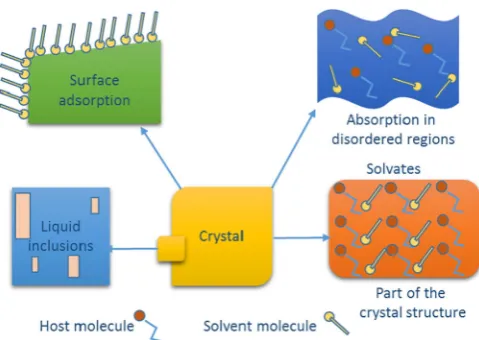
There are various means by which solvent can be associated with crystalline solids: adsorption on a solid surface, adsorption and absorp-tion into disordered regions and crystal defects, the physical inclusion of liquid during crystal growth, and solvent associated as part of crystal packing (solvates or hydrates) (Fig. 3)[37]. Adsorbed water can exist as a monomer, dimer, multimer, 2D bilayers, 3D clusters and diverse ice structures[38]. Amorphous solids and disordered systems (metasta-ble regions) usually have higher volumes and weaker intermolecular in-teractions, hence solvent association is relatively higher than for crystalline forms[37].
Solvents can lead to problems in organic compounds by inducing disorder in the crystal structure, leading to the formation of relatively metastable systems. However, solvent molecules in the crystal lattice can also create strong interactions and hydrogen bonding with APIs and other solvent molecules to formflexible clusters, which can im-prove the stability of metastable solid forms[39–43]. Solvent molecules may also play a role of spacefillers in the crystal lattice without forming strong interactions with host molecules[44,45].
[image:3.595.132.473.52.210.2]Water is one of the most abundant molecules on the earth's surface and in the atmosphere[46]. It has a unique chemistry compared to other organic solvents, consisting of two positive and two negative re-gions of charge[20,47]. Generally, electrostatic forces, electrostatic charge transfer, covalent bonds, dispersion forces and exchange repul-sion are the main components of hydrogen bonds[47]. Hence, a water molecule can form a coordinate covalent bond, a hydrogen bond or van der Waals interaction including induced dipole, dipole-dipole, and dispersion forces with API(s) or excipient(s), which is attributed to the acidic\\OH fragments and the basic oxygen lone pairs[47]. Organic
[image:3.595.87.517.578.727.2]compounds with proton donors moieties (R\\OH, R1R2\\NH), proton acceptors moieties (R\\COO−, R\\O−, Cl−) and other highly electron negative atoms tend to be involved in intermolecular hydrogen bonds with water molecules[20].
2.2. Tendency for hydrate formation and nature of water clusters
2.2.1. Factors affecting the tendency for hydrate formation
Based on a study conducted in 1995,b5% of water molecules in hy-drated organic compounds are without intermolecular interaction[48]. Water molecules can form tetrahedral networks due to interactions among the two hydrogens (hydrogen bond donors) and the two lone pairs of an oxygen atom (hydrogen bond acceptors)[49]. They can also formflexible hydrogen bonds with other organic compounds in disordered or ordered systems. Water moleculesfill void spaces in crys-tal lattice structures and form intermolecular hydrogen bonds with or-ganic compounds. The intermolecular hydrogen bonding may provide
stability to the crystal lattice, improving the stability of the hydrated crystal form compared to the anhydrous crystal form[50]. There are a significant number of marketed stable hydrated forms of APIs: for example, the cardiovascular drug creatine phosphate sodium ‘tetrahydrate’(CPS·4.5H2O)[51], the beta-lactam antibiotic ampicillin trihydrate[52]and the synthetic broad spectrum cephalosporin antibi-otic, cephalexin monohydrate[53].
Water molecules can exist as a cluster of multiple numbers of mole-cules in hydrated crystalline organic compounds. Infantes et al. present-ed the results of comprehensive studies, baspresent-ed on the Cambridge Structural Database (CSD), to identify the critical factors affecting the tendency for hydrate formation for organic crystalline compounds, and the nature of the clusters of water molecules in hydrated structures [50,54,55].
In an earlier study of 2566 hydrates from the CSD, Desiraju showed that 65% of the hydrated structures have a hydrogen bond donor-accep-tor ratio ofb0.5, indicating an inverse relationship between the tenden-cy for hydrate formation and the donor-acceptor ratio of organic compounds[56]. The presence of water molecules provides additional options of hydrogen bond donors and acceptors for organic compounds with an extreme imbalance in the number of donor and acceptor groups or atoms. This enables the hydrogen donors or acceptors to be involved in intermolecular hydrogen bonding.
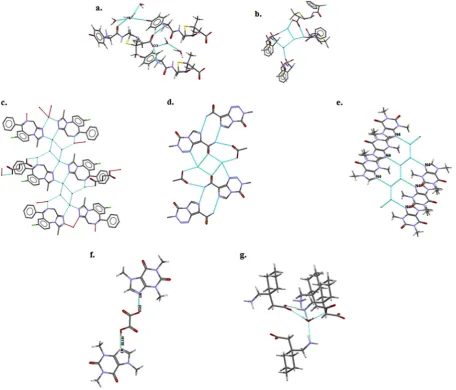
[image:4.595.34.553.76.283.2]Infantes et al. identified the sum of the average donor and acceptor counts of the functional groups, polarity and the presence of charged atoms or groups as critical factors affecting hydrate formation in organic crystal structures (Table 2)[55]. However, this database study on 34,770 organic crystal structures showed no significant effect of the donor/acceptor ratio or the molecular weight of the organic compounds on the tendency for hydrate formation[55]. The polarity of functional groups and atoms was strongly related to the tendency for hydrate formation, where organic compounds with highly polar and charged functional groups or atoms accounted forN90% of the total hydrates from the CSD database. For example, the charged R\\COO\\(O3) functional group of amoxicillin and R\\NH3+functional group of gabapentin form strong hydrogen bonding with water molecules in the crystal structure of amoxicillin trihydrate (beta-lactam antibiot-ic, space groupP212121and CSD refcode: AMOXCT10) (Fig. 4a) and gabapentin monohydrate (antiepileptic, space group P 21/c and refcode: QIMKOM) (Fig. 4g), respectively. Hydrate formation can Fig. 3.Schematic representation of principles of solvent associations with pharmaceutical
[image:4.595.38.278.546.716.2]solids[37]. Table 1
Physical properties of solid forms which have been shown to change with solid state form[13].
Physical properties Examples (*hydrate or solvate)
Packing properties Unit cell volume (crystalline forms only) Sulfanilamide[21]
Density Indomethacin[22](in most cases, stable forms have higher
density and smaller unit cell volume) and sulfanilamide[21]
Refractive index Sulfanilamide[21]
Hygroscopicity Carbamazepine[23]
Thermodynamic properties Melting point Most polymorphic forms
Enthalpy, entropy and free energy Most polymorphic forms
Solubility Carbamazepine (anhydrous form I and form II)[24]and carbamazepine (anhydrous form I and dihydrate)*[17]
Kinetic properties Dissolution rate Anhydrous theophylline[25]and carbamazepine dihydrate*[17]
Rates of solid state reaction Vitamin A[26]
Stability (chemical and physical) Prednisolonetert-butylacetate[27]and quinapril HCl[28]
Surface properties Surface free energy Paracetamol (disparity in wetting properties of the same Miller indexed faces)[29]
Interfacial tension
Crystal habit Ritonavir[30]
Spectroscopic properties Electronic transitions (UV–vis spectra)a
, vibrational transitions (Infrared (IR) and Raman spectra)b, rotational transitions (far-IR or microwave spectra)c, nuclear spin transitions (nuclear magnetic resonance (NMR) spectra)d
Ranitidine hydrochlorideb
[31],flufenamic acidb
[32], procaine hydrochloride and tetracaine hydrochlorided[33]
Mechanical properties and processability Hardness/tensile strength, compactability/tabletingb
Paracetamolb
[34]
Flowability/blending Low level of amorphous fraction (even below 5%) can affect blend uniformity of Xemilofiban[35]
also be affected by the experimental conditions (shear forces and the presence of seeds) during the crystallization process in an aqueous environment[59].
[image:5.595.41.562.77.252.2]Previous studies are either based on random sampling from the CSD database or use of a data retrieval approach with limitations. Streek et al. used an in-house software to overhaul what they considered to be Table 2
Factors affecting hydrate formation in organic compounds (based on references[50,55,56,60]and examples from the CSD).
Factors Examples References/Remarks
The polarity of functional groups and atoms (COO−)[55], R2PO2−,Cl−and C–NH3+
[60]
(norfloxacin hydrate, space groupP21/c, CSD refcode: CONYIO)
Compounds with charged atoms and groups or high polarity have a high tendency of forming hydrates.
Hydrogen bond donor-acceptor ratio (d/a) 3,5-Dinitrosalicylic acid*, 2, 5-nitrosalicylic acid** and 3-amino-5-nitrosalicylic acid **[56]
*Has low d/a (b0.5) and crystallized as monohydrate and ** have high d/a crystallized as anhydrous[56]. Thisfinding was only applicable for randomly selected samples (limitation).
The total number of hydrogen bond donor and acceptor groups and atoms, and the balance between them
Higher number of acceptor and donor groups and atoms, and extreme imbalance between them, correlated with high tendency for hydrate formation[54]
Polar surface High percentage of polar surface is correlated with higher tendency for
hydrate formation whereas polar volume is not critical parameter[55]
Unsatisfied hydrogen bond donors Compounds with higher number of unsatisfied hydrogen bond donors groups and atoms have shown higher tendency for hydrate formation[60]
Chirality of organic compounds Chiral compounds have a higher tendency for hydrate formation than achiral compounds. Enantiopure compounds have higher tendency for hydrate formation than racemic forms[60]
Kinetic and external factors Caffeine, carbamazepine, nitrofurantoin, sulfaguanidine and theophylline[59]
Compound-specific properties (solubility) and process parameters (the presence of seeds and extent of applied shear)[59]
Fig. 4.(a) Amoxycillin trihydrate with charged R\\COO–(O3) (space groupP2
12121and refcode: AMOXCT10), (b) ampicillin trihydrate (space groupP212121and CSD refcode AMPCIH01), (c) Water clusters in hydrated cocrystals of alprazolam hemikis (succinic acid) trihydrate (CSD refcode: CAKZUL and space group: C 2/c) (hemikis mean 1/2 times), (d) Water molecules devoid of both discrete chain and ring clusters for monohydrate of temozolomide and acetic acid (CSD refcode: ACEQOQ and space group:P-1), (e) Caffeine monohydrate (space group
[image:5.595.75.532.304.694.2]data harvesting problems of the ConQuest program from the CSD data-base. They were able to extract data from the CSD database on com-pounds having both solvated and unsolvated forms, comcom-pounds having only solvated or unsolvated forms, crystallization solvent used, and the stereochemistry of the compounds,[60]. Streek et al. found that the number of water molecules per asymmetric unit of host mole-cule increases with both molecular weight and the number of hydrogen bond donor and acceptor groups. The charged function groups have a relatively high degree of prevalence in hydrated forms of organic com-pounds[60], which is a similar observation to that of Infantes et al. [55]. The average number of contacts was also specific to functional groups. In contrast to Desiraju's work[56], the tendency for hydrate formation was determined to be more related to the overall number of acceptor and donor groups[60]. The unsatisfied donor groups were found to be often more critical than the acceptor groups in dictating the tendency for hydrate formation[60]. The various factors which tend to affect hydrate formation in organic compounds are summarized inTable 2.
2.2.2. Water clusters in hydrated organic compounds
Water molecules can participate in intermolecular interaction with other water molecules and the host organic compound in the crystal lat-tice. Based on the pattern of water clusters, hydrates may be classified as follows: (1)isolated lattice site(discrete chains or rings), where water molecules are devoid of any direct hydrogen bond; (2)channel(chain or tape structures), where water molecules form a direct intermolecular hydrogen bond to create a tunnel; (3)expanded channels; (4)lattice planes; (5)dehydrated hydratesand (6)metal–ion coordinated hydrates, where water molecules directly create interactions with alkali and tran-sition metals[61]. The water cluster may be part of a very complex in-termolecular interaction pattern in the crystal structure, where the same water molecules can often form a number of different hydrogen bonds with the host organic compound. For instance, the water mole-cules in ampicillin trihydrate are part of both the acyclic discrete chain of a water molecules cluster and the supramolecular heterosynthons with the carboxylic acid, the amide carbonyl and the primary amine groups of ampicillin (Fig. 4b)[50]. The hydrogen bonds are considered as an important type of intermolecular interaction in multicomponent crystalline systems, and the structures formed by those hydrogen bonds can be among the same (termed homosynthon) or different (termed heterosynthon) functional groups[62].
Infantes and Motherwell presented a comprehensive analysis of the nature of water clusters for hydrated organic compounds in the CSD using the ConQuest search program[50]. Water molecules were found to exist in diverse patterns of clusters: discrete chains, discrete rings,
in-finite chains in one dimension involving no rings, infinite tapes in one dimension involving rings, and infinite layers in two dimensions (Fig. 5).b5% of the structures had a water molecule cluster which dif-fered from the general classification and was classified as cross-linked discrete rings, unclassified structures in one dimension, unclassified structures in two dimensions, and infinite networks in three dimen-sions[50].
Most of the water molecule clusters (ca. 61%) in organic molecule crystals exist as acyclic discrete chains (D,Fig. 5), of which 73% of them contain two water molecules with intermolecular hydrogen bonding, as depicted inFig. 5as D2. The third most abundant pattern of water molecules clusters also have discrete but cyclic patterns con-taining three to nine water molecules (Rn, n = 3–9,Fig. 5). The second most abundant pattern of water clusters contain infinite acyclic chains of water molecules (C,Fig. 5) where the number with the letter designa-tion stands for the number of water molecules in a unit cell for a water cluster in a crystal lattice structure[50].
2.2.3. Water clusters and‘structure-stability’of hydrated cocrystals A cocrystal can be described as a crystalline structure formed by gen-erally two, or sometimes more, different molecular entities, present in
stoichiometric ratio. Cocrystals can exist as anhydrous or hydrous solid forms that can convert to either form during dissolution, manufacturing, and storage. There is no distinction between the nature of the water cluster in hydrated cocrystals and that in hydrated organic compounds with only one type of host molecule.
In hydrated cocrystals, water molecules form intermolecular in-teractions with either or both components (API and co-former) of the cocrystal. Water molecules form a combination of cluster pat-terns in the alprazolam hemikis (succinic acid) trihydrate (Fig. 4c, CSD refcode: CAKZUL) cocrystal, where four water molecules form a discrete ring (R4) with intermolecular hydrogen bonding. A dis-crete ring bridges water molecules and the nitrogens of thefi ve-member heterocyclic triazole ring of alprazolam. One more water molecule forms a discrete chain (D2) with one of the water mole-cules in the discrete ring (R4). This discrete chain creates strong in-termolecular interactions with succinic acid and the nitrogen of the benzodiazepine ring, which acts as a linker between alprazolam and succinic acid.
[image:6.595.307.548.55.325.2]Water molecules can simply be involved in intermolecular hydrogen bonding without forming any type of cluster. Water molecules obstruct the acid–amide heterosynthon of temozolomide and acetic acid cocrystal to form a monohydrate (Fig. 4d)[63]. There are few studies and limited understanding of the structural factors which affect the sta-bility of hydrated cocrystals. Clarke et al. presented a comprehensive study on 11 hydrated cocrystals with a view to understanding the inter-play between structure and stability[64]. Generally, the correlation be-tween stability (dehydration temperature) and the three structural properties of hydrogen bond donors and acceptors, nature of water cluster (tunnels or isolated) and packing efficiency (the volume fraction of atoms in crystal structure per volume of unit cell) was insignificant [64]. The water cluster pattern affected the dehydration temperature, where the tunnels hydrate tended to lose water near the boiling of water, whereas the dehydration temperature of the isolated hydrates depended on the number of strong hydrogen bonds[64].
Cocrystallisation can also decrease the tendency for hydrate forma-tion, where the co-former can take over the role of the water molecule in the crystal structure. For instance, anhydrous caffeine has a tendency to form hydrates with varying degrees of hydration, which is attributed to a high imbalance between the number of a hydrogen bond donors (ca. zero) and acceptors (ca. six) with a hydrophilic center at the imid-azole ring nitrogen[65]. Water molecules form an infinite chain and strong intermolecular interactions with the imidazole ring nitrogen (N4 or N3) (Fig. 4e). Trask et al. showed that caffeine and dicarboxylic acid co-formers, oxalic acid and malonic acid, form heteromeric synthons with a strong O\\H\\N (N4 or N3) and a weaker C\\H\\O hy-drogen bond (Fig. 4f)[58]. The anhydrous caffeine-dicarboxylic acid cocrystal forms showed superior physical stability to anhydrous caffeine upon storage at higher humidity, which was attributed to the absence of a free imidazole ring nitrogen (N4 or N3) for hydrate formation in the cocrystal.
2.3. Survey of hydrated organic compounds: CSD 2016
Intermolecular interactions like hydrogen bonding are inevitable in-teractions between water molecules and/or water and host organic compounds. Steiner reported that, of a sample of 672 water molecules from compounds of biological origin (amino acids, alkaloids, carbohy-drates, nucleosides and nucleotides, purines and pyrimidines, steroids), only 4% were the water molecules devoid of hydrogen bonding[48].
ConQuest 1.18 (CSD software, Cambridge, UK) was used to search for text entries and extract the number of hits from the CSD 2016. The search for“hydrates”resulted in 105,450 hits including organics, organ-ometallics, small molecules, polymers, disordered and ordered systems, of which hydrated organic molecules without traces of disorder accounted for about 19% (20,249 hits). The hydrated organic molecules contain from 1/2 (hemihydrates) to 19 (nonadecahydrates) molecules of water per host organic molecule. The trends in hydrated organic mol-ecules entry, the number of molmol-ecules in the asymmetric unit (Z prime), unit cell structure (Z) and calculated density are presented in this sec-tion for hydrated organic molecules with and without bioactivity.
Various pharmacological activities such as analgesic, anthelmintic, antimalarial and others and related keywords are stored in the“ Bioac-tivity”field of the CSD, where‘Drugs’are also included in this search
field.“Bioactivity”may also include biologically active compounds (e.g. insecticidal) and receptor(s) (Conquest user manual, page 184). A search of“bioactivity”generates 13,976 (1.6% of the total entries) hits out of ca. 850,000 entries in the CSD.
2.3.1. Trends in hydrated organic molecules
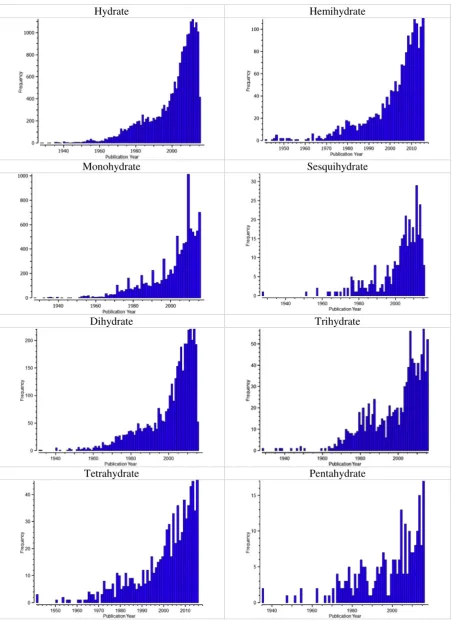
Generally, the number of entries of hydrated organic molecules in the CSD has been increasing gradually over the last half century. The number of entries of hydrated organic molecules has increased at a faster rate over the last two decades, where the number of hydrates in-creased toN1000 for each year from 2011 to 2014. The number of hy-drate entries shows no clear trends between 2000 and 2016 (Fig. 6).
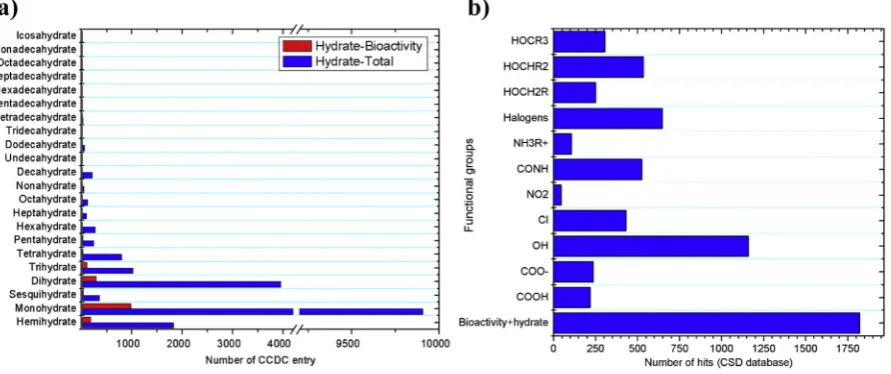
The average number of water molecules per host molecule is about 1.8, where monohydrates and dihydrates account for about 73% of all hydrated organic compounds. Bioactive hydrates show a similar trend with a slightly lower average of 1.6 water molecules per host com-pound. About 89% of bioactive hydrates contain four water molecules or less per host molecule (Fig. 7a).
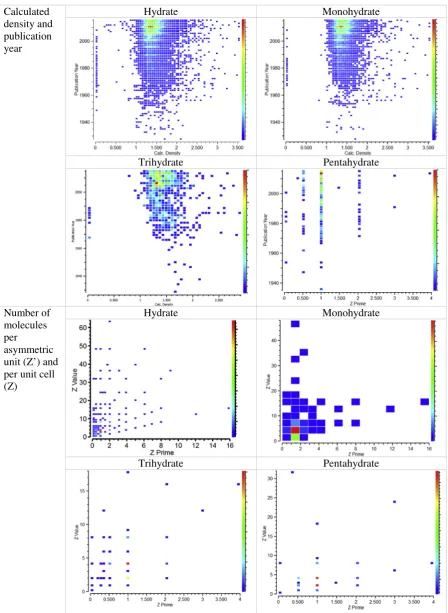
The range of calculated densities of hydrated organic molecules has become wider over time, where the calculated density was between 1 and 2 g/cm3, prior to 1940. This range of calculated densities of the hy-drated organic molecules recently stretched to lower than 0.5 and as high as 3.5 g/cm3. Most of these molecules have a calculated density be-tween 1 and 2 g/cm3, where the mean calculated density, the number of molecules per asymmetric unit and unit cell of the hydrates are 1.42 g/ml, 1.09 and 4.15, respectively (Fig. 8).
2.3.2. Trends in the frequency of functional groups
The polarity of functional groups or atoms had been reported to be a critical property affecting the tendency for hydrate formation in crystal-line organic compounds[60]. Charged functional groups and polar sur-face area are often correlated with the high frequency of hydrates in the CSD database, as was comprehensively discussed in the previous sec-tions[55]. Hydroxyl moieties also showed a clear trend, where a hy-droxyl group attached to a tertiary carbon is the most common, followed by secondary and primary structures[60].
The combination of all text searches for‘hydrate’,‘bioactivity’and ‘functional groups’showed that hydroxyl moieties are the most com-mon type of functional group, followed by halogens, in hydrated organic compounds with biological activity, but there is no obvious trend in terms of frequency of occurrence of hydroxyl groups attached to prima-ry, secondary or tertiary carbons (Fig. 7b) (CSD updated version 5.37 (May 2016)). The occurrence of charged functional groups, NH3R+ and COO−, is relatively low.
2.4. Phase transformation of hydrates and solvates
Particle engineering and solid form modification of APIs and func-tional excipients can occur during spray drying[66,67], crystallization [68], milling[69,70], wet extrusion, wet granulation and hot melt extru-sion[71]. Multiparticulate systems and tablet dosage forms can be coat-ed by functional excipients to modify drug release [72], to avoid chemical degradation[73]and to reduce irritation of parts of the gastro-intestinal tract[74]. The use of solvent and mechanoactivation in these manufacturing processes may lead to solution and/or solid-mediated phase transformations.
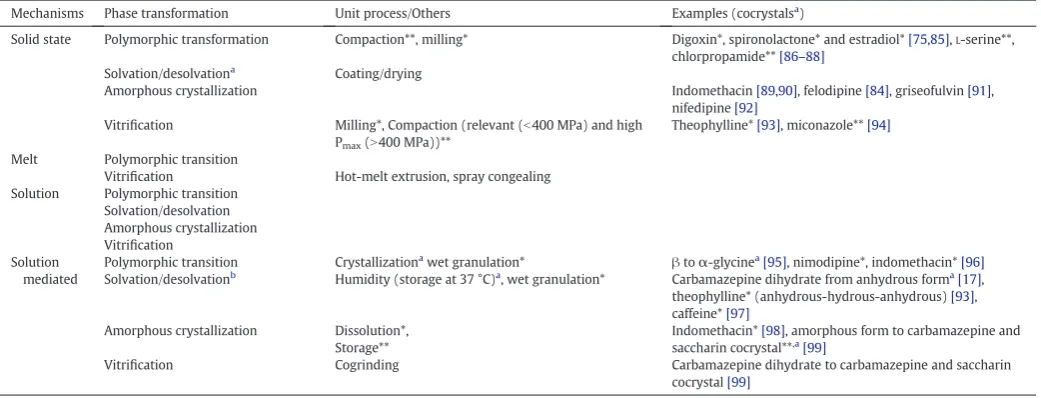
The physical stability of solid phases depends on experimental and manufacturing process conditions such as temperature, pressure, and composition or the presence of a solvent, where only one solid phase has a minimum free energy in a given condition. Generally, the mecha-nisms of phase transformation are solid-, melt state- and solution-medi-ated (Table 3). Solid phases can undergo a polymorphic transformation, solvation/desolvation, crystallization of amorphous forms and vitrifi ca-tion during manufacturing, storage, and dissoluca-tion[75,76].
Exposure of metastable solid forms to a liquid vehicle(s), aqueous or organic solvent, may lead to solution-mediated phase transformation. An aqueous or organic solvent can dissolve traces or part of the API, which leads to the formation of a saturated solution followed by nucle-ation and precipitnucle-ation (crystalliznucle-ation) to a stable form. Solution-medi-ated phase transformation can occur from a supersaturSolution-medi-ated solution or on the surface of a dissolving solid during dissolution, and in the course of manufacture and storage of liquid dosage forms as aqueous suspen-sions[77]. Phase transformation can lead to the precipitation of a less sol-uble and stable solid form from a metastable form[78]. Exposure to high humidity over the shelf life of the therapeutic product may also lead to the transformation of APIs and excipients to hydrated phases[20].
Cardew and Davey presented a comprehensive and detailed theory on the kinetics of solution-mediated phase transformations for both in-organic and in-organic compounds[36,79]. Depending on the experimen-tal conditions, such as concentration, temperature, and pressure, precipitation from a solution with compositionxa(supersaturated
com-position for stable phase II) may lead solution-mediated phase transfor-mation to a thermodynamically favorable less soluble and more stable solid phase (phase II) (Fig. 9)[36]. A solution withxbconcentration,
which is supersaturated for both the stable and the metastable phases, can precipitate to both metastable and stable phases. According to Ostwald's Law of Stages, nucleation, and crystal growth kinetics favor the formation of the metastable phase I at the initial stage of precipita-tion from soluprecipita-tion withxbconcentration, which leads to a decrease in
where the metastable phase dissolves during crystal growth of the sta-ble phase to maintain a saturated solution for the metastasta-ble phase.
Generally, metastable solid phases have a higher solubility, which may enhance the bioavailability of the drug from the drug product.
The drug release of the metastable phase (phase I) can be as high as the equilibrium solubility (xi) during dissolution which may lead to
nu-cleation and the crystal growth of phase II. The transformation kinetics depend on the dissolution rate of the metastable and growth rate of
Hydrate
Hemihydrate
Monohydrate
Sesquihydrate
Dihydrate
Trihydrate
[image:8.595.68.521.50.674.2]Tetrahydrate
Pentahydrate
the stable phase[76]. The degree of supersaturation dictates both nucle-ation and crystal growth according to the simplified Cardew and Davey model. Various reviews are available on solid-state characterization techniques before and during dissolution[76,80].
Various additional factors such as specific rate constants, interfacial energies, free energies of formation, solute diffusivity and mixing inten-sity may also affect the crystallization kinetics during solution-mediated phase transformation. Thompson and Dixon used population balance models to simulate solution mediated phase transformation by incorpo-rating these diverse numbers of factors. These population balance models for metastable phase transformation can simulate, not only the degree of supersaturation but also the size distribution and compo-sition of the solid particles[81].
Solution-mediated transformation of APIs and excipients alters physicochemical properties, which may affect drug product perfor-mance. However, the Cardew and Davey model, which is based on an interplay between dissolution and growth rate, was unable to simulate anhydrate-hydrate transformation of nitrofurantoin, theophylline, caf-feine, sulfaguanidine, and carbamazepine under wet granulation pro-cess conditions. In this study, Wikstrom et al. identified that solution mediated hydrate formation is compound specific and was also dictated by surface properties, seeding conditions and shear forces[59].
A dissolution-precipitation model can also be applied to forecast drug absorption from the gastrointestinal tract. Prediction of bioavail-ability of new chemical entities can alleviate the problem of small sam-ple quantity during early stage drug product development. Jakubiak et al. proposed a mechanistic dissolution-precipitation model which takes into account not only dissolution and dose-dependent precipita-tion but also precipitaprecipita-tion (nucleaprecipita-tion and growth) initiated by undis-solved solids. The dissolution-precipitation model combined with a physiological model predicted the oral bioavailability of dipyridamole, bifonazole, aripiprazole and other APIs[82]. The mechanistic model was also further applied to explain the solution-mediated polymorphic transformation of piracetam, tolbutamide, ritonavir andL-glutamic for diverse experimental conditions: solvent, temperature, solution con-centration and total solid composition[83].
Solid-mediated phase transformation occurs in the solid state with-out transformation to the gaseous or liquid state. The kinetic driving forces for solid-state transformation are temperature, pressure, mois-ture, crystal defects, particle size distribution, and impurities[75]. Sur-face and bulk crystallizations dictate the overall crystallization of amorphous drugs. However, the surface crystallization growth rate is often faster than the bulk crystallization of solids in the glassy state. As a result, mechanical stresses which affect particle size distribution and
surface area can lead to solid-mediated phase transformation to other solid state forms. For instance, the surface crystallization of felodipine is six times faster than the bulk of the powder[84].
Zhang et al. published a comprehensive review of manufacturing pro-cess induced phase transformation and solid state considerations during product development of solid oral dosage forms[75]. Manufacturing pro-cesses which involve mechanical stress may lead to the formation of crys-tal defects or amorphous material and can cause phase transformation to metastable polymorphic forms. The most commonly used manufacturing processes for oral solid dosage forms use solvents and high temperature for drying. These manufacturing processes can lead to a solution- and/or solid-mediated transformation and to solvation or desolvation of APIs or functional excipients. A comprehensive summary of manufacturing pro-cess induced phase transformation, mechanisms of the transformation and examples are presented inTable 3.
2.5. Solvated and hydrated cocrystals
Pharmaceutical cocrystals have emerged in the last two decades as a new promising class of solid form in the arena of advanced drug devel-opment. Broadly speaking, a cocrystal is considered to be a multicompo-nent molecular crystal, which is a crystalline adduct comprising two or more chemically different components. This definition also includes sol-vates, hydrates, and lattice inclusion molecules[100]. Bernstein et al. have observed that at least 50% of compounds, when screened thor-oughly for polymorphs, show polymorphism[101]. A similar level of oc-currence of polymorphism was also observed for cocrystals and slightly lower levels were observed for solvates and hydrates[101]. Cocrystal based systems were generally believed to show a lesser propensity for different polymorphic forms, solvates, and hydrates when compared to single-component crystalline systems. However, recent literature shows that cocrystals have the same propensity to form different polymorphs, solvates, and hydrates as single-component crystalline systems. Studies related to crystal form diversity in terms of polymorphs and pseudopolymorphs of the cocrystal is an increasing trend[102–105].
[image:9.595.83.529.55.242.2]polymorphs and hydrates/solvates has been examined by means of their occurrence in the CSD. The number of polymorphic cocrystals and their hydrates/solvates that have been added to the CSD in recent
years is larger than for single component crystals[103]. This may be due to the increasing interest in the development of cocrystals as novel entities[107].
Calculated
density and
publication
year
Hydrate
Monohydrate
Trihydrate
Pentahydrate
Number of
molecules
per
asymmetric
unit (Z’) and
per unit cell
(Z)
Hydrate
Monohydrate
[image:10.595.70.519.50.664.2]Trihydrate
Pentahydrate
Fig. 8.Calculated density (g/cm3
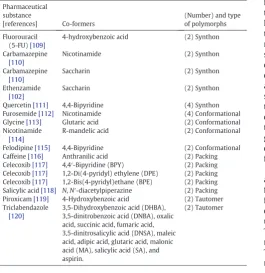
The probability of the two-component cocrystals forming varied and multiple hydrogen bonding motifs with different functional groups, such as carboxylic acid and hydroxyl groups, invariably leads to cocrystal polymorphism. Similarly to single component systems, in crystallization processes, the combination of structure-related factors (hydrogen bonding motifs, different donor–acceptor ratio, and variable conformations) and process-related factors (crystallization medium, temperature profile, and solubility kinetics and supersaturation level) gives rise to diverse possibilities for supramolecular transformations. These possibilities make the outcome of cocrystallization unpredictable; thefinal outcome can be a different polymorphic form/solvate/hydrate. This variability can be considered an adversary to crystal engineering because of the high level of unpredictability[108]. For example, Row et al. studied the polymorphs of a 1:1 GA (gallic acid)–SM (succinimide) cocrystal. Three different stoichiometry hydrates (1:1:1, 2:2:1 and 2:4:1) of the GA–SM cocrystals were obtained concurrently with poly-morph I of the (1:2) cocrystal upon crystallization of (1:1) GA–SM. These hydrates show similar supramolecular patterns, with voidsfilled with variable numbers of water molecules. They also found GA–SM cocrystal solvates, where 1,4-dioxane (1:1:1) and acetone (2:2:1) sol-vates were observed initially. Other different associated solsol-vates like (GA–SM–tetrahydrofuran in 2:2:1 and GA–SM–ethyl acetate in 3:3:1 ratios) were also observed[108]. This shows the complexity of cocrystal related systems (Fig. 10). There are numerous reported polymorphs, solvates, and hydrates of other cocrystals which are summarized in Table 4.
2.6. Cocrystal polymorphs
Generally, single entity polymorphism can be classified into the cat-egories of synthon, packing, conformational, and tautomeric polymor-phism. Synthon polymorphism can be identified by the presence of different forms of the primary synthons[121]. Conformational polymor-phism can be defined as molecular moieties with varied rotational de-grees of freedom which embrace different conformations in the unit cell[111]. Packing polymorphism applies to similar molecular moieties packing into different periodic crystal structures[109]. Tautomeric polymorphism can be defined as the coexistence of crystallized tauto-mers in equilibrium conditions[119]. Cocrystals include two or more molecular entities in the single unit cell, so the classification of poly-morphs in cocrystal systems should be based on conformational
differences of constituents, as well as on the basis of the intermolecular interactions among the different constituent molecules. Aitipamula et al. classified different types of polymorphism observed in cocrystals [107]. In the current review, cocrystal polymorphism involving APIs and co-formers is described. In addition, information about polymor-phism in cocrystal hydrates and solvates in also presented.
2.6.1. Synthon polymorphs
Synthon polymorphism can be identified by the presence of differ-ent forms of the primary synthons[121]. They differ in their primary hy-drogen-bond motifs. A systematic methodology for designing cocrystals has introduced the theory of supramolecular synthesis, where specific intermolecular interactions are identified initially which can unfailingly bring together two different molecules, in a process parallel to organic covalent synthesis. The synthon principle of organic synthesis has been used to define supramolecular synthons which can be assembled by known intermolecular interactions. Examples of homomeric interac-tions, which is another name referring to homosynthons, include car-boxylic acids, amides, oximes, and pyridines etc. Heterosynthons are more frequently observed in cocrystals than homosynthons. General heterosynthons that are reported repeatedly in the literature include carboxylic acid-amide, carboxylic acid-pyridine, and alcohol-pyridine. Cocrystals of carbamazepine (CBZ) with nicotinamide (NCT) and sac-charin (SAC) are shown to exist as heterosynthon polymorphic forms. Table 3
Mechanisms of phase transformations[75].
Mechanisms Phase transformation Unit process/Others Examples (cocrystalsa)
Solid state Polymorphic transformation Compaction**, milling* Digoxin*, spironolactone* and estradiol*[75,85],L-serine**, chlorpropamide**[86–88]
Solvation/desolvationa
Coating/drying
Amorphous crystallization Indomethacin[89,90], felodipine[84], griseofulvin[91],
nifedipine[92]
Vitrification Milling*, Compaction (relevant (b400 MPa) and high Pmax(N400 MPa))**
Theophylline*[93], miconazole**[94]
Melt Polymorphic transition
Vitrification Hot-melt extrusion, spray congealing Solution Polymorphic transition
Solvation/desolvation Amorphous crystallization Vitrification
Solution mediated
Polymorphic transition Crystallizationa
wet granulation* βtoα-glycinea
[95], nimodipine*, indomethacin*[96]
Solvation/desolvationb
Humidity (storage at 37 °C)a
, wet granulation* Carbamazepine dihydrate from anhydrous forma
[17], theophylline* (anhydrous-hydrous-anhydrous)[93], caffeine*[97]
Amorphous crystallization Dissolution*, Storage**
Indomethacin*[98], amorphous form to carbamazepine and saccharin cocrystal**,a
[99]
Vitrification Cogrinding Carbamazepine dihydrate to carbamazepine and saccharin
cocrystal[99]
*,** Unit process matching with examples. aCocrystal example.
b
Solvation or desolvation includes hydration/dehydration.
[image:11.595.321.551.580.717.2]Fig. 9.Solubility and thermodynamic curve for monotropic polymorphs (modified from
Two polymorphs of NCT cocrystals and two polymorphs of CBZ-SAC cocrystals have been observed [122]. The CBZ-SAC (form II) cocrystal represents a heterosynthon polymorph (Fig. 11a and b) [110]. These findings are important, as CBZ based cocrystals are among the most extensively researched cocrystals[110]. Polymorphs of 4-hydroxybenzoic acid (4HBA) and 4,4′-bipyridine (BP) denote a common example of synthon cocrystal polymorphs where the form I contains acid–acid dimer and hydroxyl–pyridine synthons, while form II shows acid–pyridine and hydroxyl–carbonyl synthons[121]. Dubey and Desiraju reported synthon polymorphs of the quercetin-bipyridine
cocrystal system (QUE: 4BP)[111]. Molecules which have multiple H-bonding capabilities are more inclined to form synthon polymorphs. The table (Table 4) shows a few more examples of pharmaceutical cocrystal systems which demonstrate synthon polymorphism.
2.6.2. Conformational polymorphs
Conformational polymorphism can be identified by the existence of different molecular conformations in the polymorphs. This is generally observed inflexible molecules which show high degrees of torsional freedom. Specifically, low-energy conformers show more susceptibly for conformational polymorphism. The existence of a conformational polymorphism in pharmaceutical materials has been credited to their
flexible molecules with high degrees of torsional freedom. Pharmaceu-tical molecules which areflexible conformationally may possess a higher chance to show polymorphism, as the energies required for rota-tional bonds (single) are similar to the lattice energy gap between poly-morphs. In terms of cocrystals, various studied cocrystal polymorphs show different conformers of the cocrystal constituents and, hence, can be categorized as conformational cocrystal polymorphs. Boldyreva et al. have reported glycine cocrystals with the carboxylic acid glutaric acid as the co-former[113]. This glycine-glutaric acid cocrystal has shown a structural phase transition on increasing pressure. This phase transition is related to a change in the glutaric acid conformation. The data obtained from the glycine–glutaric acid cocrystals study suggest that if a crystal contains conformationallyflexible molecules, like glutaric acid, and rigid components, like glycine, then the pressure-in-duced phase transition depends on the conformational changes of the
flexible component[113].
Lian et al. have studied the conformational polymorphism of nicotin-amide cocrystals and observed that nicotinnicotin-amide is a conformationally
[image:12.595.97.489.56.304.2]flexible molecule and forms cocrystals with various lower energy co-formers as well as with high energy co-co-formers. The nicotinamide cocrystals with high energy co-formers have comparable formation vol-ume and energies as those cocrystals with the low energy co-formers. This versatile nature of nicotinamide to show conformationalflexibility may be responsible for its ability to form numerous cocrystals[114]. Terada et al. observed four conformational polymorphs of furosemide− nicotinamide 1:1 cocrystal[112]. A thermodynamic stability study of Table 4
Summary of polymorphs, solvates, and hydrates of cocrystals.
[image:12.595.37.303.477.751.2]Pharmaceutical substance
[references] Co-formers
(Number) and type of polymorphs
Fluorouracil (5-FU)[109]
4-hydroxybenzoic acid (2) Synthon
Carbamazepine
[110]
Nicotinamide (2) Synthon
Carbamazepine
[110]
Saccharin (2) Synthon
Ethenzamide
[102]
Saccharin (2) Synthon
Quercetin[111] 4,4-Bipyridine (4) Synthon
Furosemide[112] Nicotinamide (4) Conformational
Glycine[113] Glutaric acid (2) Conformational
Nicotinamide
[114]
R-mandelic acid (2) Conformational
Felodipine[115] 4,4-Bipyridine (2) Conformational Caffeine[116] Anthranilic acid (2) Packing Celecoxib[117] 4,4′-Bipyridine (BPY) (2) Packing Celecoxib[117] 1,2-Di(4-pyridyl) ethylene (DPE) (2) Packing Celecoxib[117] 1,2-Bis(4-pyridyl)ethane (BPE) (2) Packing Salicylic acid[118] N,N′-diacetylpiperazine (2) Packing Piroxicam[119] 4-Hydroxybenzoic acid (2) Tautomer Triclabendazole
[120]
3,5-Dihydroxybenzoic acid (DHBA), 3,5-dinitrobenzoic acid (DNBA), oxalic acid, succinic acid, fumaric acid, 3,5-dinitrosalicylic acid (DNSA), maleic acid, adipic acid, glutaric acid, malonic acid (MA), salicylic acid (SA), and aspirin.
(2) Tautomer
these polymorphs was performed by slurry conversion experiments, and stability was determined to be in the order: INIIINIINVNIV.
2.6.3. Packing polymorphs
Packing polymorphism applies to similar molecular moieties pack-ing into different overall 3-D crystal packpack-ing[109]. Different packing of constituent molecules with similar conformations can be referred to as packing polymorphism. It is sometimes confusing to differentiate be-tween conformational polymorphism and packing polymorphism as most of the polymorphs show some differences in conformation. Al-though there is no clear difference between packing polymorphs and other reported types of polymorphs, the earlier is more common for very rigid molecules and molecules with fragile conformationalfl exibil-ity. Skovsgaard and Bond studied cocrystal polymorphism[118]. They observed cocrystals between benzoic acid: diaza-bicyclo-octane (2:1), and benzoic acid: aminopyridine (2:1). They used solution and sol-vent-drop grinding as cocrystallizing methods and observed that the polymorphs obtained by the grinding method had a higher packing co-efficient than the polymorphs obtained by the solution method[118]. In the same study, they observed that the crystal packing of forms I and form II in a salicylic acid andN,N′-diacetyl piperazine cocrystal (2:1) showed significant differences despite the similar hydrogen bonding pattern in both polymorphs (Fig. 11c and d). They observed a layered pattern in form I, however, this layered pattern was absent in form II [118].
2.6.4. Tautomeric polymorphs
When different tautomers of an organic compound crystallize and co-exist in equilibrium in multiple crystal forms, they can be termed as tautomeric polymorphs [119]. Generally, tautomeric polymorphism occurs when the isomers exist in the dynamic equilibri-um with each other. The tautomers that interconvert in solution are considered to be the same chemical compound, and therefore the crystal forms that comprise these tautomers can be categorized as polymorphs. A cocrystal of the nonsteroidal anti-inflammatory drugs (NSAIDs), piroxicam, with 4-hydroxybenzoic acid (4HBA)
demonstrates tautomeric polymorphism. One of the polymorphs shows the piroxicam molecule as the zwitterionic form, whereas the other contains it as the non-ionized form[119]. Desiraju et al. carried out several cocrystallization experiments on triclabendazole with sever-al co-formers which included dihydroxybenzoic acid, dinitro benzoic acid, dinitro salicylic acid, oxalic acid, fumaric acid, succinic acid, glutaric acid, maleic acid, malonic acid, adipic acid, aspirin and salicylic acid [120]. This resulted in nine cocrystals of which two cocrystals were found to be tautomer A and the other seven cocrystals existed as tauto-mer B[120].
2.7. Cocrystal hydrates, solvates, and their polymorphism
Hydrates of active pharmaceutical ingredients are considered as a specific class of solvates where water molecules are included in the crystal lattice of APIs[106]. Pharmaceutical hydrates are more common than other organic solvates due to the atmospheric humidity, the small size of water molecules, and the ability of water to act as hydrogen donor as well as acceptor. Solvates and hydrates provide a way of in-creasing the number of related solid forms for a cocrystal. The cocrystal systems reported in recent studies show polymorphic behavior (discussed in the previous section) and a strong tendency for solvates as well as hydrates, however, the literature concerning polymorphism in cocrystal solvates/hydrates is very rare when compared to single component crystals. Due to the limited literature, it is challenging to make any classifications with regard to this class of cocrystal. However, they can be classified on the same basis as hydrates/solvates of single component crystals[123]. Motherwell and Infantes studied the patterns of water clusters in hydrates. They classified these hydrates into discrete rings (I), chains (II), infinite chains (III), tapes (IV) and layer structures (V) (detailed discussion in the previous section)[50]. They observed that discrete chains (II) (61%) were mostly observed followed by infi -nite chains (III) (20%) and discrete rings (I) (9%).
[image:13.595.134.472.52.320.2]isoniazid: hydroxybenzoic acid cocrystal hydrate were converted to Form II of the isoniazid: hydroxybenzoic acid hydrate when held for an accelerated stability study at 40 °C and 75% RH[124]. Jones et al. car-ried out polymorph screening of the caffeine: anthranilic acid cocrystal (1:1). They revealed that this cocrystal exists as two different hydrates and seven solvates. The reported hydrates were confirmed as poly-morphs[116]. The existence of isostructurality (similar crystal structure but not certainly the similar cell dimensions and chemical alignment) was also observed in the caffeine solvates. The caffeine: anthranilic: tolu-ene mono solvate was isostructural with the caffeine: anthranilic: o-xy-lene mono solvate and the caffeine: anthranilic: toluene hemisolvate was isostructural with the caffeine: anthranilic: chlorobenzene hemisolvate and caffeine: anthranilic: bromobenzene hemisolvate[116]. Jacobs and Amombo Noa studied cocrystals and cocrystal hydrates of vanillic acid[125]. Cocrystals involving caffeine and the methylated xanthines as co-formers showed different stoichiometry with cocrystals of vanillic acid: caffeine (1:2), vanillic acid: theophylline (2:1) and the cocrystal hydrate vanillic acid: theobromine (1:1): 2H2O. The vanillic acid: nicotinamide and vanillic acid: acridine cocrystals displayed 1:1 M ratios and the same ratio in hydrates (2 vanillic acid: 2 nicotin-amide: 2 H2O) [125]. Tan et al. studied cocrystal hydrates of nitrofurantoin where they found that nitrofurantoin: melanin: H2O was stable up to 166 °C and dehydration resulted in a new anhydrous cocrystal form[126]. This investigation demonstrated a new method of cocrystal screening. Mei et al. synthesized the celecoxib cocrystal with 4,4′-bipyridine and 1,2-di(4-pyridyl)ethylene as co-formers [117]. They observed that this cocrystal forms six isomorphic solvates with acetone, tetrahydrofuran, and 1,4-dioxane. These isomorphic cocrystal solvates are isostructural and show the same cell parameters and similar crystal packing features (this is also discussed above as an ex-ample of packing polymorphism). Hydrogen-bond motifs were also found to be similar in all six solvates. These cocrystal solvates crystallized in the monoclinicC2/cspace group. Their unit cells show similar stoichio-metric ratio (1 celecoxib:1 co-former:1/2 solvent molecule)[117].
3. Factors affecting the amorphous forms of single and multicomponent systems
3.1. Glass forming ability and stability
The glass forming ability and glass stability of small molecular weight APIs are considered to be crucial factors affecting their crystalli-zation tendency[127]. Several efforts have been made to create a rule of thumb to forecast the glass-forming ability of drugs. Commonly, the glass forming tendency of an API can be correlated with thermal indica-tors and the chemical structure, as summarized inTable 5. However,
these thermal and chemical properties are not always reliable in predicting crystallization tendency.
Tgis the most frequently used property to predict the glass forming
tendency[129]. The use ofTgalone has limited predictability. However,
thermal properties and related chemical structure information, when treated by statistical tools, showed improved forecasting of glass forming capability. Molecular weight is another major indicator of the glass forming ability, and organic molecules with high molecular weight and complex structures usually show high glass forming ability[131]. However, drugs like haloperidol and griseofulvin have a higher tenden-cy for crystallization (poor glass forming ability), despite their higher molecular weights compared to some other organic molecules with good glass forming ability, such as ketoprofen and procaine[127]. Baird et al. subjected many drugs to DSC heating/cooling cycles and cat-egorized compounds into three classes on the basis of DSC results[127].
Class 1 Highly crystallizing APIs, which crystallized during the cooling cycle.
Class 2 Moderately crystallizing APIs, which crystallized during the 2nd heating cycle.
Class 3 Non-crystallizing APIs, which did not crystallize during cooling/ heating cycles.
From the classification above, it suggests that class 1 APIs are more likely to show a higher propensity for crystallization, while class 3 compounds are relatively good glass formers. The DSC based classification can provide early predictions from a simple experiment for assessing the tendency of API(s) to trans-form from an amorphous/glassy state to the crystalline state or to the glassy state from a crystalline state. In general, polymeric pharmaceutical excipients have a high molecular weight, a hard monomer and as a result a highTg(e.g. polyvinylpyrrolidone
(PVP)[133]and hydroxymethyl cellulose (HPMC)). As a result, polymeric excipients are relatively good glass formers com-pared to small molecular weight APIs.
3.2. Role of excipients and co-formers
Solid form screening, modification and particle engineering of phar-maceutical excipients and APIs have been performed using solvent evaporation[128–130], fusion (rapid heating)[131]and milling[128] techniques. During processing, excipients may be added to API for a va-riety of reasons, e.g. to stabilize proteins by reducing denaturation dur-ing manufacturdur-ing[132], to improve aerosolization performance of powder inhalers[68,133,134], to improve compactability of APIs[135, 136]and to improve the solid state stability of amorphous solid disper-sions[67]. Hence, the overall outcome after processing depends on the manufacturing route as well as the crystallization and vitrification pro-pensity of the API and/or excipient(s)/co-former(s) in multicomponent systems[137].
Numerous methods to increase the quantity of dissolved API at the absorption site have been utilised, particularly for poorly soluble drugs. These include chemically modifying the API (e.g., using a prodrug approach), physically modifying the API (through particle size reduc-tion) or employing crystal engineering/solid state modifications (e.g., amorphous, cocrystal or polymorphic forms)[134–136]. Generally, physicochemical properties of the API determine the most suitable method from those mentioned above.
While the amorphous form of an API alone may be too unstable (e.g. Class 2 or 3 above) to be considered suitable for inclusion in a conven-tional solid dosage formulation alone, polymeric excipients with high Tgmay be used to stabilize the high energy amorphous form. Solid
[image:14.595.35.286.588.726.2]dis-persions can be defined as dispersions of API/APIs in inert (hydrophilic) polymer carriers, and may be generated by solvent, fusion, or solvent-fusion methods[134]. Solid dispersions are classified on the basis of the solubility value of the API in the polymeric carrier. If the drug is dis-persed at a molecular level then the system can be called a“molecular Table 5
Physicochemical parameters used for prediction of glass forming tendency of small molec-ular weight organic molecules.
Attribute Drug property
Glass forming propertya
References
Thermal properties
Glass transition temp,Tg + [128]
Crystallization temp,Tc + [129]
Free energyΔGv(negative) + [130] Configurational entropy,Sc
(aboveTg)
+ [131]
Melting point/glass transition temp,Tm/Tg
−
Chemical properties
Molecular weight + [127]
Benzene ring − [132]
Rotational bonds + [131]
Branches +
Molecular symmetry −
H-bond acceptor/H-bond donor +
dispersion”or“solid solution”, whereas if the API is dispersed at the par-ticulate level the term“particulate dispersion”is used[137]. In general, the term amorphous solid dispersion (ASD) most usually applies to solid solutions, which are distinguished by having a singleTgvalue.
Solid suspensions differ from solid solutions in that the amorphous par-ticles are dispersed in the polymer carrier at the particle level, which is distinguished by the system having two separateTgvalues for the drug
and the carrier polymer.
Polymers impact the shelf-life or solid state stability of amorphous solid dispersions by maintaining drug molecules in a rigid glass form, averting crystallization. Factors of importance in the design of ASDs in-clude drug loading, solubility values and other physicochemical proper-ties of both the drug and carrier (polymer).
Cocrystal and coamorphous systems are also alternative formulation approaches to enhancing drug dissolution performance and physical stability of poorly water soluble drugs. The glass forming ability of the co-former (API or non-API) plays a vital role in determining the forma-tion of a coamorphous or cocrystal system. A coamorphous form of naproxen (a poor glass former) and indomethacin with improved disso-lution rate and physical stability was developed by a melt cool method [138]. The formation of the coamorphous system (rather than a cocrystal) can be attributed to the good glass forming ability of indo-methacin. Lobmann et al. used amino acids as stabilizers to generate coamorphous systems with carbamazepine and indomethacin where both are good glass formers[139].
3.3. Role of manufacturing method
Pharmaceutical excipients, APIs, and their mixtures/formulations can be processed by different techniques, including solvent-based and fusion-based methods. Solvent-based methods depend mainly on the preparation of a solution, suspension or emulsion of the API(s), pharma-ceutical excipients and their mixtures. For example:fluid bed granula-tion involves the removal of solvent from convengranula-tional formulagranula-tion equipment[140]; spray drying differs fromfluid bed granulation in the rapid solvent removal in a controlled environment[141]; solvent controlled precipitation or co-precipitation is the process of evaporating the solvent from an aqueous solution; supercriticalfluid technology in-volves the use of somefluids which, at their supercritical state exhibit combined characteristics of liquids (e.g. dissolving power) and gases (e.g. diffusivity)[142], electrospinning involves the drawing of nanofi -bers under high electrostatic potential; and cryogenic processing is in-volved in freeze drying and spray freeze drying[143]. Fusion based technologies are based on heating and mixing the API(s), pharmaceuti-cal excipients and their mixtures, e.g. melt extrusion[144]and melt granulation[145]. Milling and high shear milling are techniques used to effect mixing, particle size reduction and solid state modifications [146].
Different manufacturing methods can lead to different solid forms of single and multicomponent systems. Grossjohann et al. used liquid-assisted milling and spray drying to generate two different polymorphic forms of sulfadimidine:4-aminosalicylic acid cocrystals (1:1) where spray drying from ethanol led to the formation of the metastable form II of the cocrystal and liquid (ethanol)-assisted milling led to the forma-tion of the thermodynamically stable form I of the cocrystal. Spray dry-ing was determined, by PXRD and DVS to lead to partial amorphisation, which was not observed for form II cocrystals prepared by liquid-assisted milling or solvent evaporation from ethanol or acetone[147]. Alhalaweh and Velaga showed that spray drying of incongruently satu-rating systems can lead to the formation of pure cocrystals. On the other hand, solvent evaporation of the same systems gives rise to a mixture of solid phases of single and multicomponent systems. This evidently demonstrated that, for incongruently saturating systems, kinetic factors can be a more prominent driving factor than thermodynamic factors for cocrystal formation[148].
It has been found that both coamorphisation and cocrystallisation can occur upon grinding/milling of physical mixtures of API and coformer. TheTgof the solid solution and the processing conditions,
e.g. milling temperature, can govern the tendency of cocrystallisation and co-amorphisation of physical mixtures. Jayasankar et al., demon-strated that milling a mixture of the co-crystal components, carbamaz-epine and saccharin, far below the expectedTgof their solid solution
provides an amorphous phase at room temperature. Moreover, they also showed that if the milling temperature was close to theTgof the
mixture, co-amorphisation is not likely to occur due to high molecular mobility near the glass transition, and that cocrystallisation will pre-dominate[99].
4. Solid state characterization of hydrates, solvates and amorphous forms
Cocrystals, their polymorphs, solvates and hydrates can be success-fully characterized using similar advanced analytical techniques as those conventionally used to characterize single component crystals (Fig. 12). In general, comprehensive solid state characterization necessi-tates the use of a combination of analytical techniques (Table 6). These comprise primarily diffraction techniques such as single-crystal X-ray diffraction (SCXRD), and powder X-ray diffraction (PXRD), spectroscop-ic methods such as vibrational spectroscopy (FTIR and Raman) and solid state NMR, and thermal methods such as polarized optical hot-stage mi-croscopy (HSM), thermogravimetric analysis (TGA) and differential scanning calorimetry (DSC)[149]. Dynamic vapor sorption (DVS) is also an important technique in the case of hydrates and solvates.
The complete qualitative and quantitative analysis of amorphous materials in terms of crystallization tendency, molecular mobility, sur-face chemistry, crystallinity and intermolecular interactions necessi-tates the use of a combination of analytical tools. Thermal characterization tools such as DSC and isothermal microcalorimetry (IMC) are important for the exploration of amorphous solids and ASDs [150]. Dielectric spectroscopy is also becoming an important technique for ASD characterization. Infrared spectroscopy, Raman spectroscopy, and solid-state nuclear magnetic resonance spectroscopy (SSNMR) validate the level of the molecular interactions among the different indi-vidual components of ASDs and phase transformation in crystallization, and may be used to quantify crystallinity[151]. Polarized light micros-copy (PLM), scanning electron microsmicros-copy (SEM), scanning transmis-sion electron microscopy (STEM), HSM and atomic force microscopy (AFM) analyze various morphological parameters and their spatial phase distribution. PXRD is a well-established technique for quantifi ca-tion of percentage crystallinity existing initially or transformed during manufacturing[151]. X-ray photoelectron scattering (XPS)[152]and inverse gas chromatography (IGC)[153]are very sensitive techniques for surface analysis and anisotropy. DVS plays an important role in cal-culating the hygroscopicity and the level of intermolecular interactions [154], while TGA may be used to calculate the moisture level in the solid form. The use of combinations of various analyzing techniques for inte-grated information is an increasing trend.
4.1. X-ray diffraction techniques
using PXRD is a well-known technique. The intensity and area of diffrac-tion peaks increase propordiffrac-tionally with an increase in crystallinity [161–164]. A more challenging aspect is to quantify nanocrystals in an
[image:16.595.115.479.56.412.2]amorphous material. Scherrer broadening (broadening of the diffrac-tion peaks due to a reducdiffrac-tion in crystallite size) may reduce the diffracted intensity for a crystalline material such that it becomes Fig. 12.Solid state characterization techniques for polymorphs, solvates, hydrates and amorphous forms.
Table 6
Characterization techniques that have been used for cocrystals and their polymorphs, solvates, and hydrates.
Pharmaceutical cocrystal polymorph, solvate, hydrate FTIR Raman SSNMR SCXRD PXRD, synchrotron (S), variable temperature (VT) HSM DSC TGA DVS
Celecoxib cocrystal polymorphs and solvates[117] √ √ √ √ √ √
Gallic acid cocrystal polymorphs and solvates[108] √ √ √ √ √
Ethenzamide cocrystal polymorphs and solvates[103] √ √ √ √ √
Ethenzamide cocrystal polymorphs[102] √ √ √ √ √
Ethenzamide cocrystal polymorphs[205] √(ATR) √ √ √
Nitrofurantoin cocrystal solvate, hydrates, salts[206] √ √ √ √ √
Nitrofurantoin cocrystal hydrate[126] √ √ √ √ √
Caffeine cocrystal polymorph, hydrate and solvates[116] √ √ √(S) √ √
5-Fluorouracil cocrystal polymorphism[109] √ √ √(VT) √ √
Piroxicam cocrystal polymorph[119] √ √ √ √
Carbamazepine cocrystal polymorph[110] √ √ √ √(VT) √ √
Furosemide cocrystal polymorph hydrate[112] √ √ √ √ √
Furosemide cocrystal polymorph[207] √ √ √ √
Salicylic acid cocrystal polymorphs[118] √ √
Felodipine cocrystal polymorph[115] √ √ √
Benzoic acid cocrystal polymorph[208] √ √ √
Glycine cocrystal polymorph[166] √ √
Vanillic acid cocrystal hydrate[125] √ √ √ √
Agomelatin cocrystal polymorph[209] √ √ √ √
Diclofenac cocrystal polymorph hydrate[104] √ √(VT) √ √
Nicotinamide cocrystal polymorph[210] √ √ √ √ √
Phenazine cocrystal polymorph and solvate[105] √ √(VT) √ √
Tegafur cocrystal hydrate[211] √ √ √ √ √ √
Theophylline cocrystal polymorph[212] √ √ √ √(S) √ √
Temozolomide cocrystal polymorphism[213] √ √ √ √ √ √
[image:16.595.36.557.500.750.2]![Fig. 1. Scales of order for solid forms from crystals to amorphous material with various range (long, medium or short) of order or mesomorphic states (smectic or nematic) [3].](https://thumb-us.123doks.com/thumbv2/123dok_us/1476928.687137/3.595.87.517.578.727/scales-crystals-amorphous-material-various-mesomorphic-smectic-nematic.webp)
![Fig. 5. The most common types of patterns of water cluster in crystalline organic molecules(a black circle marker is a designation for one water molecule) (from [50] withpermission).](https://thumb-us.123doks.com/thumbv2/123dok_us/1476928.687137/6.595.307.548.55.325/patterns-cluster-crystalline-organic-molecules-designation-molecule-withpermission.webp)