Improved Information Structure Analysis of Scientific Documents Through
Discourse and Lexical Constraints
Yufan Guo
University of Cambridge, UK
Roi Reichart
University of Cambridge, UK
Anna Korhonen University of Cambridge, UK
Abstract
Inferring the information structure of scien-tific documents is useful for many down-stream applications. Existing feature-based machine learning approaches to this task re-quire substantial training data and suffer from limited performance. Our idea is to guide feature-based models with declarative domain knowledge encoded as posterior distribution constraints. We explore a rich set of discourse and lexical constraints which we incorporate through the Generalized Expectation (GE) cri-terion. Our constrained model improves the performance of existing fully and lightly su-pervised models. Even a fully unsusu-pervised version of this model outperforms lightly su-pervised feature-based models, showing that our approach can be useful even when no la-beled data is available.
1 Introduction
Techniques that enable automatic analysis of the in-formation structure of scientific articles can help sci-entists identify information of interest in the grow-ing volume of scientific literature. For example, classification of sentences according to argumenta-tive zones (AZ) – an information structure scheme that is applicable across scientific domains (Teufel et al., 2009) – can support information retrieval, in-formation extraction and summarization (Teufel and Moens, 2002; Tbahriti et al., 2006; Ruch et al., 2007; Liakata et al., 2012; Contractor et al., 2012).
Previous work on sentence-based classification of scientific literature according to categories of infor-mation structure has mostly used feature-based
ma-chine learning, such as Support Vector Mama-chines (SVM) and Conditional Random Fields (CRF) (e.g. (Teufel and Moens, 2002; Lin et al., 2006; Hiro-hata et al., 2008; Shatkay et al., 2008; Guo et al., 2010; Liakata et al., 2012)). Unfortunately, the per-formance of these methods is rather limited, as indi-cated e.g. by the relatively low numbers reported by Liakata et al. (2012) in biochemistry and chemistry with per-class F-scores ranging from .18 to .76.
We propose a novel approach to this task in which traditional feature-based models are augmented with explicit declarative expert and domain knowledge, and apply it to sentence-based AZ. We explore two sources of declarative knowledge for our task - dis-course and lexical. One way to utilize discourse knowledge is to guide the model predictions by en-coding a desired predicted class (i.e. information category) distribution in a given position in the doc-ument. Consider, for example, sentence (1) from the first paragraph of theDiscussionsection in a paper:
(1)In time, this will prove to be most suitable for detailed analysis of the role of these hormones in mammary cancer development.
Although the future tense and cue phrases such as “in time” can indicate that authors are discussing fu-ture work (i.e. the “Fufu-ture work” class in the AZ scheme), in this case they refer to their own contri-bution (i.e. the “Conclusion” class in AZ). As most authors discuss their own contribution in the begin-ning of theDiscussionsection and future directions in the end, encoding the desired class distribution as a function of the position in this section can guide the model to the right decision.
Likewise, lexical knowledge can guide the model
through predicted class distributions for sentences that contain specific vocabulary. Consider, for ex-ample, sentence (2):
(2) The values calculated for lungs include the presumed DNA adduct of BA and might thus be slightly overestimated.
The verb “calculated” usually indicates the “Method” class, but, when accompanied by the modal verb “might”, it is more likely to imply that authors are interpreting their own results (i.e. the “Conclusion” class in AZ). This can be explicitly encoded in the model through a target distribution for sentences containing certain modal verbs.
Recent work has shown that explicit declaration of domain and expert knowledge can be highly use-ful for structured NLP tasks such as parsing, POS tagging and information extraction (Chang et al., 2007; Mann and McCallum, 2008; Ganchev et al., 2010). These works have encoded expert knowledge through constraints, with different frameworks dif-fering in the type of constraints and the inference and learning algorithms used. We build on the Gen-eralized Expectation (GE) framework (Mann and McCallum, 2007) which encodes expert knowledge through a preference (i.e. soft) constraints for pa-rameter settings for which the predicted label distri-bution matches a target distridistri-bution.
In order to integrate domain knowledge with a features-based model, we develop a simple taxon-omy of constraints (i.e. desired class distributions) and employ a top-down classification algorithm on top of a Maximum Entropy Model augmented with GE constraints. This algorithm enables us to break the multi-class prediction into a pipeline of consecu-tive, simpler predictions which can be better assisted by the encoded knowledge.
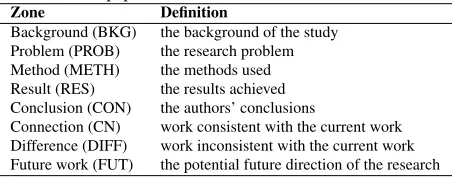
We experiment in the biological domain with the eight-category AZ scheme (Table 1) adapted from (Mizuta et al., 2006) and described in (Contractor et al., 2012). The results show that our constrained model substantially outperforms a baseline uncon-strained Maximum Entropy Model. While this type of constrained models have previously improved the feature-based model performance mostly in the weakly supervised and domain adaptation scenarios (e.g. (Mann and McCallum, 2007; Mann and Mc-Callum, 2008; Ganchev et al., 2010)), we demon-strate substantial gains both when the Maximum
En-Table 1: The AZ categories included in the categorization scheme of this paper.
Zone Definition
Background (BKG) the background of the study Problem (PROB) the research problem Method (METH) the methods used Result (RES) the results achieved Conclusion (CON) the authors’ conclusions
Connection (CN) work consistent with the current work Difference (DIFF) work inconsistent with the current work Future work (FUT) the potential future direction of the research
tropy Model is fully trained and when its training data is sparse. This demonstrates the importance of expert knowledge for our task and supports our mod-eling decision that combines feature-based methods with domain knowledge encoded via constraints.
2 Previous work
Information structure analysis The information structure of scientific documents (e.g. journal ar-ticles, abstracts, essays) can be analyzed in terms of patterns of topics, functions or relations observed in multi-sentence scientific text. Computational ap-proaches have mainly focused on analysis based on argumentative zones (Teufel and Moens, 2002; Mizuta et al., 2006; Hachey and Grover, 2006; Teufel et al., 2009), discourse structure (Burstein et al., 2003; Webber et al., 2011), qualitative dimen-sions (Shatkay et al., 2008), scientific claims (Blake, 2009), scientific concepts (Liakata et al., 2010) and information status (Markert et al., 2012).
Most existing methods for analyzing scientific text according to information structure use full supervision in the form of thousands of manu-ally annotated sentences (Teufel and Moens, 2002; Burstein et al., 2003; Mizuta et al., 2006; Shatkay et al., 2008; Guo et al., 2010; Liakata et al., 2012; Markert et al., 2012). Because manual annotation is prohibitively expensive, approaches based on light supervision are now emerging for the task, including those based on active learning and self-training (Guo et al., 2011) and unsupervised methods (Varga et al., 2012; Reichart and Korhonen, 2012). Unfortunately, these approaches do not reach the performance level of fully supervised models, let alone exceed it. Our novel method addresses this problem.
[image:2.612.314.540.84.173.2]models works well in many NLP tasks (Chang et al., 2007; Mann and McCallum, 2008; Druck et al., 2008; Bellare et al., 2009; Ganchev et al., 2010). Such constraints can be used in a semi-supervised or unsupervised fashion. For example, (Mann and Mc-Callum, 2008) shows that using CRF in conjunction with auxiliary constraints on unlabeled data signif-icantly outperforms traditional CRF in information extraction, and (Druck et al., 2008) shows that using declarative constraints alone for unsupervised learn-ing achieves good results in text classification. We show that declarative constraints can be highly use-ful for the identification of information structure of scientific documents. In contrast with most previous works, we show that such constraints can improve the performance of a fully supervised model. The constraints are particularly helpful for identifying low-frequency information categories, but still yield high performance on high-frequency categories.
3 Maximum-Entropy Estimation and Generalized Expectation (GE)
In this section we describe the Generalized Expecta-tion method for declarative knowledge encoding.
Maximum Entropy (ME)The idea of General-ized Expectation (Dud´ık, 2007; Mann and McCal-lum, 2008; Druck et al., 2008) stems from the prin-ciple of maximum entropy (Jaynes, 1957; Pietra and Pietra, 1993) which raises the following constrained optimization problem:
max p H(·)
subject to Ep[f(·)] =Ep˜[f(·)] p(·)≥0
X
p(·) = 1, (1)
where p˜(·) is the empirical distribution, p(·) is a probability distribution in the model andH(·)is the corresponding information entropy,f(·)is a collec-tion of feature funccollec-tions, andEp[f(·)]andEp˜[f(·)]
are the expectations of f with respect to p(·) and ˜
p(·). An example of p(·) could be a conditional probability distribution p(y|x), and H(·) could be a conditional entropyH(y|x). The optimal p(y|x) will take on an exponential form:
pλ(y|x) = 1
Zλ
exp(λ·f(x, y)), (2)
where λ is the Lagrange multipliers in the corre-sponding unconstrained objective function, and Zλ
is the partition function. The dual problem be-comes maximizing the conditional log-likelihood of labeled dataL(Berger et al., 1996):
max λ
X
(xi,yi)∈L
log(pλ(yi|xi)), (3)
which is usually known as a Log-linear or Maximum Entropy Model (MaxEnt).
ME with Generalized Expectation The objec-tive function and the constraints onexpectationsin (1) can begeneralizedto:
max
λ −
X
x ˜
p(x)D(pλ(y|x)||p0(y|x))
−g(Ep˜(x)[Epλ(y|x)[f(x, y)|x]]), (4)
whereD(pλ||p0)is the divergence frompλto a base
distributionp0, andg(·)is a constraint/penalty
func-tion that takes empirical evidenceEp˜(x,y)[f(x, y)]as a reference point (Pietra and Pietra, 1993; Chen et al., 2000; Dud´ık, 2007). Note that a special case of this is MaxEnt wherep0is set to be a uniform
distri-bution,D(·)to be the KL divergence, andg(·)to be an equality constraint.
The constraintg(·)can be set in a relaxed manner:
X
k 1 2ρ2
k
(Ep˜(x)[Epλ(y|x)[fk(x, y)|x]]−Ep˜(x,y)[fk(x, y)])
2 ,
which is the logarithm of a Gaussian distribution centered at the reference values with a diagonal co-variance matrix (Pietra and Pietra, 1993), and the dual problem will become a regularized MaxEnt with a Gaussian prior (µk = 0, σk2 = ρ12
k
) over the parameters:
max λ
X
(xi,yi)∈L
log(pλ(yi|xi))− X
k
λ2k 2σ2
k
(5)
Such a model can be further extended to include expert knowledge or auxiliary constraints on unla-beled dataU (Mann and McCallum, 2008; Druck et al., 2008; Bellare et al., 2009):
max λ
X
(xi,yi)∈L
log(pλ(yi|xi))− X
k
λ2k 2σ2
k
−γg∗(Epλ(y|x)[f
∗
(x, y)]) (6)
wheref∗(·)is a collection of auxiliary feature func-tions on U, g∗(·)is a constraint function that takes expert/declarative knowledgeEp∗(y|x)[f∗(x, y)]as a
The auxiliary constraint g∗(·) can take on many forms and the one we used in this work is an L2 penalty function (Dud´ık, 2007). We trained the model with L-BFGS (Nocedal, 1980) in supervised, semi-supervised and unsupervised fashions on la-beled and/or unlala-beled data, using the Mallet soft-ware (McCallum, 2002).
4 Incorporating Expert Knowledge into GE constraints
We defined the auxiliary feature functions – the ex-pert knowledge on unlabeled data as1:
fk∗(x, y) =1(xk,yk)(x, y),
such thatEp∗(y|x)[fk(x, y)] =p∗(yk|xk), (7)
where 1(xk,yk)(x, y) is an indicator function, and
p∗(yk|xk) is a conditional probability specified in the form of
p∗(yk|xk)∈[ak, bk] (8)
by experts. In particular, we took
p∗(yk|xk) =
ak ifpλ(yk|xk)< a
bk ifpλ(yk|xk)> b
pλ(yk|xk) ifa≤pλ(yk|xk)≤b
(9)
as the reference point when calculatingg∗(·). We defined two types of constraints: those based ondiscourseproperties such as the location of a sen-tence in a particular section or paragraph, and those based on lexicalproperties such as citations, refer-ences to tables and figures, word lists, tenses, and so on. Note that the word lists actually contain both lexical and semantic information.
To make an efficient use of the declarative knowl-edge we build a taxonomy of information structure categories centered around the distinction between categories that describe the authors’OWN work and those that describeOTHERwork (see Section 5). In practice, our model labels every sentence with an AZ category augmented by one of the two cate-gories, OWN orOTHER. In evaluation we consider only the standard AZ categories which are part of the annotation scheme of (Contractor et al., 2012).
1Accordingly,E
[image:4.612.308.544.88.690.2]pλ(y|x)[fk(x, y)] =pλ(yk|xk)
Table 2:Discourse and lexical constraints for identifying infor-mation categories at different levels of the inforinfor-mation structure taxonomy.
(a)OWN/OTHER
OWN Discourse
(1) Target(last part of paragraph) = 1 (2) Target(last part of section) = 1 Lexical
(3) Target(tables/figures)≥1
(4)∃x∈ {w|w∼we}Target(x) = 1
∧ ∀y∈ {w|w∼previous}Target(y) = 0
(5)∃x∈ {w|w∼thus}Target(x) = 1
OTHER Lexical
(6) Target(cite) = 1 (7) Target(cite)>1 (8) Backward(cite) = 1
∧ ∃x∈ {w|w∼in addition}Target(x) = 1
(b)PROB/METH/RES/CON/FUT
PROB Discourse
(1) Target(last part in section) = 1 Lexical
(2)∃x∈ {w|w∼aim}Target(x) = 1
(3)∃x∈ {w|w∼question}Target(x) = 1
(4)∃x∈ {w|w∼investigate}Target(x) = 1
METH Lexical
(5)∃x∈ {w|w∼{use,method}}Target(x) = 1
RES Lexical
(6) Target(tables/figures)≥1
(7)∃x∈ {w|w∼observe}Target(x) = 1
CON Lexical
(8) Target(cite)≥1
(9)∃x∈ {w|w∼conclude}Target(x) = 1
(10)∃x∈ {w|w∼{suggest, thus, because, likely}}
Target(x) = 1
FUT Discourse
(11) Target(first part in section) = 1 (12) Target(last part in section) = 1
∧ ∃x∈ {w|w∼{will,need,future}}Target(x) = 1
Lexical
(13)∃x{w|w∼will,future}Target(x) = 1
(14) Target(present continuous tense) = 1
(c)BKG/CN/DIFF
BKG Discourse
(1) Target(first part in paragraph) = 1 (2) Target(first part in section) = 1 Lexical
(3)∃x∈ {w|w∼we}Target(x) = 1
∧ ∀y∈ {w|w∼previous}Target(y) = 0
(4) Forward(cite) = 1
∧ ∀x∈ {w|w∼{consistent,inconsistent,than}}
(Target(x) = 0∧Forward(x) = 0)
CN Lexical
(5)∃x∈ {w|w∼consistent}Target(x) = 1
(6)∃x∈ {w|w∼consistent}Forward(x) = 1
DIFF Lexical
(7)∃x∈ {w|w∼inconsistent}Target(x) = 1
(8)∃x∈ {w|w∼inconsistent}Forward(x) = 1
(9)∃x∈ {w|w∼{inconsistent,than,however}}
Forward(x) = 1∧ ∃y∈ {w|w∼we}Forward(y) = 1
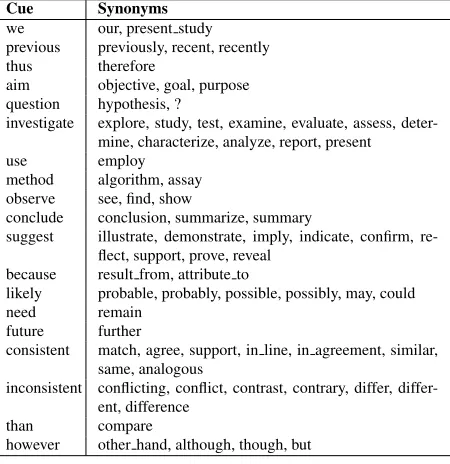
Table 3:The lexical sets used as properties in the constraints.
Cue Synonyms we our, present study previous previously, recent, recently thus therefore
aim objective, goal, purpose question hypothesis, ?
investigate explore, study, test, examine, evaluate, assess, deter-mine, characterize, analyze, report, present
use employ
method algorithm, assay observe see, find, show
conclude conclusion, summarize, summary
suggest illustrate, demonstrate, imply, indicate, confirm, re-flect, support, prove, reveal
because result from, attribute to
likely probable, probably, possible, possibly, may, could need remain
future further
consistent match, agree, support, in line, in agreement, similar, same, analogous
inconsistent conflicting, conflict, contrast, contrary, differ, differ-ent, difference
than compare
however other hand, although, though, but
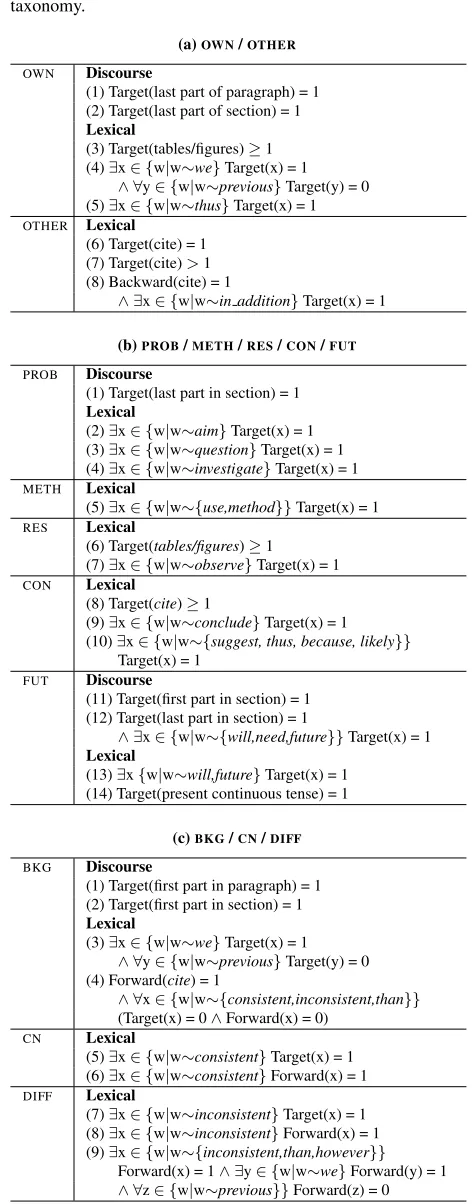
The constraints in Table 2(a) refer to the top level of this taxonomy: distinction between the authors’ own work and the work of others, and the constraints in Tables 2(b)-(c) refer to the bottom level of the tax-onomy: distinction between AZ categories related to the authors’ own work (Table 2(b)) and other’s work (Table 2(c)).
The first and second columns in each table refer to theyandxvariables in Equation (8), respectively. The functions Target(·), Forward(·) and Backward(·) refer to the property value for the target, next and preceding sentence, respectively. If their value is 1 then the property holds for the respective sentence, if it is 0, the property does not hold. In some cases the value of such functions can be greater than 1, meaning that the property appears multiple times in the sentence. Terms of the form{w|w∼{wi}}refer to any word/bi-grams that have the same sense aswi, where the actual word set we use with every example word in Table 2 is described in Table 3.
[image:5.612.316.536.75.152.2]For example, take constraints (1) and (4) in Table 2(a). The former is a standard discourse constraint that refers to the probability that the target sentence describes the authors’ own work given that it appears in the last of the ten parts in the paragraph. The lat-ter is a standard lexical constraint that refers to the probability that a sentence presents other people’s work given that it contains any words in {we, our, present study}and that it doesn’t contain any words
Figure 1:The constraint taxonomy for top-down modeling.
INFO[Table 2(a)]
OWN[Table 2(b)]
PROB METH RES CON FUT
OTHER[Table 2(c)]
BKG CN DIFF
in{previous, previously, recent, recently}. Our con-straint set further includes concon-straints that combine both types of information. For example, constraint (12) in Table 2(b) refers to the probability that a sen-tence discusses future work given that it appears in the last of the ten parts of the section (discourse) and that it contains at least one word in{will, future, fur-ther, need, remain}(lexical).
5 Top-Down Model
An interesting property of our task and domain is that the available expert knowledge does not directly support the distinctions between AZ categories, but it does provide valuable indirect guidance. For ex-ample, the number of citations in a sentence is only useful for separating the authors’ work from other people’s work, but not for further fine grained dis-tinctions between zone categories. Moreover, those constraints that are useful for making fine grained distinctions between AZ categories are usually use-ful only for a particular subset of the categories only. For example, all the constraints in Table 2(b) are conditioned on the assumption that the sentence de-scribes the authors’ own work.
To make the best use of the domain knowledge, we developed a simple constraint taxonomy, and ap-ply a top-down classification approach which uti-lizes it. The taxonomy is presented in Figure 1. For classification we trained three MaxEnt models aug-mented with GE constraints: one for distinguishing between OWN and OTHER2, one for distinguishing between the AZ categories under theOWNauxiliary category and one for distinguishing between the AZ categories under the OTHER auxiliary category. At test time we first apply the first classifier and based on its prediction we apply either the classifier that distinguishes between OWN categories or the one that distinguishes betweenOTHERcategories.
2
6 Experiments
DataWe used the full paper corpus used by Contrac-tor et al. (2012) which contains 8171 sentences from 50 biomedical journal articles. The corpus is anno-tated according to the AZ scheme described in Table 1. AZ describes the logical structure, scientific argu-mentation and intellectual attribution of a scientific paper. It was originally introduced by Teufel and Moens (2002) and applied to computational linguis-tics papers, and later adapted to other domains such as biology (Mizuta et al., 2006) – which we used in this work – and chemistry (Teufel et al., 2009).
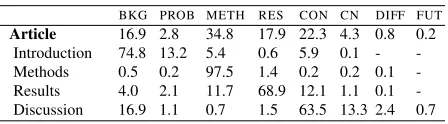
Table 4 shows the AZ class distribution in full ar-ticles as well as in individual sections. Since section names vary across scientific articles, we grouped similar sections before calculating the statistics (e.g. DiscussionandConclusionssections were grouped underDiscussion). We can see that although there is a major category in each section (e.g. CON in Dis-cussion), up to 36.5% of the sentences in each sec-tion still belong to other categories.
Features We extracted the following features from each sentence and used them in the feature-based classifiers: (1) Discourse features: location in the article/section/paragraph. For this feature each text batch was divided to ten equal size parts and the corresponding feature value identifies the relevant part; (2) Lexical features: number of citations and references to tables and figures (0, 1, or more), word, bi-gram, verb, and verb class (obtained by spectral clustering (Sun and Korhonen, 2009)); (3) Syntac-tic features: tense and voice (POS tags of main and auxiliary verbs), grammatical relation, subject and object. The lexical and the syntactic features were extracted for the represented sentence as well as for its surrounding sentences. We used the C&C POS tagger and parser (Curran et al., 2007) for extract-ing the lexical and the syntactic features. Note that all the information encoded into our constraints is also encoded in the features and is thus available to the feature-based model. This enables us to properly evaluate the impact of our modeling decision which augments a feature-based model with constraints.
Baselines We compared our model against four baselines, two with full supervision: Support Vec-tor Machines (SVM) and Maximum Entropy Mod-els (MaxEnt), and two with light supervision:
Trans-Table 4: Class distribution (shown in percentages) in articles and their individual sections in the AZ-annotated corpus.
BKG PROB METH RES CON CN DIFF FUT
[image:6.612.315.539.88.150.2]Article 16.9 2.8 34.8 17.9 22.3 4.3 0.8 0.2 Introduction 74.8 13.2 5.4 0.6 5.9 0.1 - -Methods 0.5 0.2 97.5 1.4 0.2 0.2 0.1 -Results 4.0 2.1 11.7 68.9 12.1 1.1 0.1 -Discussion 16.9 1.1 0.7 1.5 63.5 13.3 2.4 0.7
Table 5:Performance of baselines on theDiscussionsection. BKG PROB METH RES CON CN DIFF FUT
Full supervision
SVM .56 0 0 0 .84 .35 0 0
MaxEnt .55 .08 0 0 .84 .38 0 0
Light supervision with 150 labeled sentence
SVM .26 0 0 0 .80 .05 0 0
TSVM .25 .04 .04 .03 .33 14 .06 .02
MaxEnt .25 0 0 0 .80 .10 0 0
MaxEnt+ER .23 0 0 0 .80 .07 0 0
ductive SVM (TSVM) and semi-supervised Max-Ent based on Max-Entropy Regularization (ER) (Vapnik, 1998; Jiao et al., 2006). SVM and MaxEnt have proved successful in information structure analysis (e.g. (Merity et al., 2009; Guo et al., 2011)) but, to the best of our knowledge, their semi-supervised versions have not been used for AZ of full articles.
Parameter tuning The boundaries of the ref-erence probabilities (ak and bk in Equation (8)) were defined and optimized on the development data which consists of one third of the corpus. We con-sidered six types of boundaries: Fairly High for 1, High for [0.9,1), Medium High for [0.5,0.9), Medium Low for [0.1,0.5), Low for [0,0.1), and Fairly Low for 0.
EvaluationWe evaluated the precision, recall and F-score for each category, using a standard ten-fold cross-validation scheme. The models were tested on each of the ten folds and trained on the rest of them, and the results were averaged across the ten folds.
7 Results
We report results at two levels of granularity. We first provide detailed results for theDiscussion sec-tion which should be, as is clearly evident from Ta-ble 4, the most difficult section for AZ prediction as only 63.5% of its sentences take its most dominant class (CON). As we show below, this is also where our constrained model is most effective. We then show the advantages of our model for other sections.
[image:6.612.317.538.175.262.2]bet-Table 6:Discussionsection performance of MaxEnt, MaxEnt+GE and a MaxEnt+GE model that does not include our top-down classification scheme. Results are presented for different amounts of labeled training data. The MaxEnt+GE (Top-down) model outperforms the MaxEnt in 44 out of 48 cases, and MaxEnt+GE (Flat) in 39 out of 48 cases.
MaxEnt MaxEnt + GE (Top-down) MaxEnt + GE (Flat)
50 100 150 500 1000 Full 50 100 150 500 1000 Full 50 100 150 500 1000 Full
BKG .10 .26 .25 .44 .48 .55 .49 .49 .48 .52 .55 .57 .35 .37 .37 .46 .51 .53
PROB 0 0 0 0 0 0 .38 .16 .29 .13 .30 .41 .38 .23 .19 .39 .38 .33
METH 0 0 0 0 0 0 .17 .22 .37 .35 .50 .39 .16 .17 .21 .24 .32 .29
RES 0 0 0 0 0 0 .18 .24 .58 0 0 .46 .13 .05 .21 .31 .25 .34
CON .79 .80 .80 .83 .83 .84 .77 .78 .82 .83 .84 .84 .63 .66 .68 .74 .78 .78
CN .02 .04 .10 .24 .34 .38 .29 .31 .33 .35 .40 .39 .21 .21 .24 .26 .30 .32
DIFF 0 0 0 0 0 0 .26 .25 .25 .19 .24 .21 .14 .16 .15 .14 .18 .17
[image:7.612.76.538.221.345.2]FUT 0 0 0 0 0 0 .35 .38 .31 .25 .35 .31 .36 .36 .39 .33 .25 .37
Figure 2: Performance of the MaxEnt and MaxEnt+GE models on theIntroduction(left),Methods(middle) andResults(right) sections. The MaxEnt+GE model is superior.
0 0.2 0.4 0.6 0.8 1
BKG PROB METH RES CON CN DIFF FUT
F-s
c
o
re
MaxEnt MaxEnt+GE
0 0.2 0.4 0.6 0.8 1
BKG PROB METH RES CON CN DIFF FUT
F
-sco
re
MaxEnt MaxEnt+GE
0 0.2 0.4 0.6 0.8 1
BKG PROB METH RES CON CN DIFF FUT
F
-sco
re
MaxEnt MaxEnt+GE
0 0.2 0.4 0.6 0.8 1
BKG PROB METH RES CON CN DIFF FUT
F
-sco
re
MaxEnt MaxEnt+GE
Table 7:Discussionsection performance of the MaxEnt, Max-Ent+GE and unsupervised GE models when the former two are trained with 150 labeled sentences. Unsupervised GE outper-forms the standard MaxEnt model for all categories except for CON– the major category of the section. The result pattern for the other sections are very similar.
MaxEnt MaxEnt + GE Unsup GE
P R F P R F P R F
BKG .38 .19 .25 .49 .48 .48 .49 .44 .46
PROB 0 0 0 .38 .23 .29 .28 .38 .32
METH 0 0 0 .29 .50 .37 .08 .56 .14
RES 0 0 0 .68 .51 .58 .08 .51 .14
CON .69 .96 .80 .81 .84 .82 .74 .69 .71
CN .35 .06 .10 .39 .29 .33 .40 .13 .20
DIFF 0 0 0 .21 .30 .25 .12 .13 .12
FUT 0 0 0 .24 .44 .31 .26 .61 .36
ter understanding of the nature of the challenge we face, Table 5 shows the F-scores of fully- and semi-supervised SVM and MaxEnt on theDiscussion sec-tion. The dominant zone category CON, which ac-counts for 63.5% of the section sentences, has the highest F-scores for all methods and scenarios. Most of the methods also identify the second and the third most frequent zonesBKGandCN, but with relatively lower F-scores. Other low-frequency categories can hardly be identified by any of the methods regardless of the amount of labeled data available for training. Note that the compared models perform quite sim-ilarly. We therefore use the MaxEnt model, which
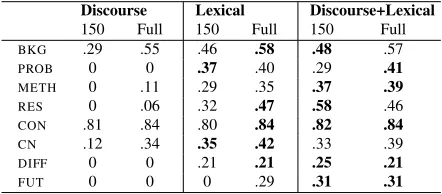
Table 8:Analysis of the impact of the different constraint types for the lightly supervised and the fully supervised cases. Results are presented for theDiscussionsection. Using only the lexical constraints is generally preferable in the fully supervised case. Combining the different constraint types is preferable for the lightly supervised case.
Discourse Lexical Discourse+Lexical 150 Full 150 Full 150 Full
BKG .29 .55 .46 .58 .48 .57
PROB 0 0 .37 .40 .29 .41
METH 0 .11 .29 .35 .37 .39
RES 0 .06 .32 .47 .58 .46
CON .81 .84 .80 .84 .82 .84
CN .12 .34 .35 .42 .33 .39
DIFF 0 0 .21 .21 .25 .21
FUT 0 0 0 .29 .31 .31
is most naturally augmented with GE constraints, as the baseline unconstrained model.
[image:7.612.316.537.418.515.2] [image:7.612.86.287.418.515.2]better in 44 out of the 48 cases presented in the table. Importantly, the constrained model provides sub-stantial improvements for both the relatively high-frequency classes (BKGandCNwhich together label 30.2% of the sentences) and for the low-frequency classes (which together label 6.4% of the sentences). The table also clearly demonstrates the impact of our tree-based top-down classification scheme, by comparing the Top-down version of MaxEnt+GE to the standard “Flat” version. In 39 out of 48 cases, the Top-down model performs better. In some cases, especially for high-frequency categories and when the amount of training data increases, un-constrained MaxEnt even outperforms the flat Max-Ent+GE model. The results presented in the rest of the paper for the MaxEnt+GE model therefore refer to its Top-down version.
All sections We next turn to the performance of our model on the three other sections. Our exper-iments show that augmenting the MaxEnt model with domain knowledge constraints improves per-formance for all the categories (either low or high frequency), except the major section category, and keep the performance for the latter on the same level. Figure 2 demonstrates this pattern for the lightly su-pervised case with 150 training sentences but the same pattern applies to all other amounts of training data, including the fully supervised case. Naturally, we cannot demonstrate all these cases due to space limitations. The result patterns are very similar to those presented above for theDiscussionsection.
Unsupervised GEWe next explore the quality of the domain knowledge constraints when used in iso-lation from a feature-based model. The objective function of this model is identical to Equation (6) except that the first (likelihood) term is omitted. Our experiments reveal that this unsupervised GE model outperforms standard MaxEnt for all the categories except the major category of the section, when up to 150 training sentences are used. Table 7 demon-strates this for theDiscussionsection. This pattern holds for the other scientific article sections. Even when more than 150 labeled sentences are used, the unsupervised model better detects the low frequency categories (i.e. those that label less than 10% of the sentences) for all sections. These results provide strong evidence for the usefulness of our constraints even when they are used with no labeled data.
Model component analysis We finally analyze the impact of the different types of constraints on the performance of our model. Table 8 presents the Discussion section performance of the constrained model with only one or the full set of constraints. Interestingly, when the feature-based model is fully trained the application of the lexical constraints alone results in a very similar performance to the application of the full set of lexical and discourse constraints. It is only in the lightly supervised case where the full set of constraints is required and re-sults in the best performing model.
8 Conclusions and Future Work
We have explored the application of posterior dis-course and lexical constraints for the analysis of the information structure of scientific documents. Our results are strong. Our constrained model outper-forms standard feature-based models by a large mar-gin in both the fully and the lightly supervised cases. Even an unsupervised model based on these con-straints provides substantial gains over feature-based models for most AZ categories.
References
Kedar Bellare, Gregory Druck, and Andrew McCallum. 2009. Alternating projections for learning with expec-tation constraints. InProceedings of the Twenty-Fifth Conference on Uncertainty in Artificial Intelligence, UAI ’09, pages 43–50, Arlington, Virginia, United States. AUAI Press.
Adam L. Berger, Vincent J. Della Pietra, and Stephen A. Della Pietra. 1996. A maximum entropy approach to natural language processing. Comput. Linguist., 22(1):39–71.
Catherine Blake. 2009. Beyond genes, proteins, and abstracts: Identifying scientific claims from full-text biomedical articles. J Biomed Inform, 43(2):173–89. Jill Burstein, Daniel Marcu, and Kevin Knight. 2003.
Finding the write stuff: Automatic identification of discourse structure in student essays. IEEE Intelligent Systems, 18(1):32–39.
M.W. Chang, L. Ratinovc, and D. Roth. 2007. Guiding semi-supervision with constraint-driven learning. In
ACL.
Stanley F. Chen, Ronald Rosenfeld, and Associate Mem-ber. 2000. A survey of smoothing techniques for me models. IEEE Transactions on Speech and Audio Pro-cessing, 8:37–50.
Danish Contractor, Yufan Guo, and Anna Korhonen. 2012. Using argumentative zones for extractive sum-marization of scientific articles. InCOLING.
J. R. Curran, S. Clark, and J. Bos. 2007. Linguisti-cally motivated large-scale nlp with c&c and boxer. In
Proceedings of the ACL 2007 Demonstrations Session, pages 33–36.
Gregory Druck, Gideon Mann, and Andrew McCallum. 2008. Learning from labeled features using gener-alized expectation criteria. In Proceedings of the 31st annual international ACM SIGIR conference on Research and development in information retrieval, pages 595–602.
Miroslav Dud´ık. 2007. Maximum entropy density estimation and modeling geographic distributions of species. Ph.D. thesis.
K. Ganchev, J. Graca, J. Gillenwater, and B. Taskar. 2010. Posterior regularization for structured latent variable models. Journal of Machine Learning Re-search.
Yufan Guo, Anna Korhonen, Maria Liakata, Ilona Silins Karolinska, Lin Sun, and Ulla Stenius. 2010. Identi-fying the information structure of scientific abstracts: an investigation of three different schemes. In Pro-ceedings of BioNLP, pages 99–107.
Yufan Guo, Anna Korhonen, and Thierry Poibeau. 2011. A weakly-supervised approach to argumentative zon-ing of scientific documents. In Proceedings of the
2011 Conference on Empirical Methods in Natural Language Processing, pages 273–283.
Ben Hachey and Claire Grover. 2006. Extractive sum-marisation of legal texts. Artif. Intell. Law, 14:305– 345.
K. Hirohata, N. Okazaki, S. Ananiadou, and M. Ishizuka. 2008. Identifying sections in scientific abstracts us-ing conditional random fields. InProceedings of 3rd International Joint Conference on Natural Language Processing, pages 381–388.
E. T. Jaynes. 1957. Information Theory and Statistical Mechanics. Physical Review Online Archive (Prola), 106(4):620–630.
F. Jiao, S. Wang, C. Lee, R. Greiner, and D. Schuur-mans. 2006. Semi-supervised conditional random fields for improved sequence segmentation and label-ing. InCOLING/ACL, pages 209–216.
M. Liakata, S. Teufel, A. Siddharthan, and C. Batchelor. 2010. Corpora for the conceptualisation and zoning of scientific papers. InProceedings of LREC’10. Maria Liakata, Shyamasree Saha, Simon Dobnik, Colin
Batchelor, and Dietrich Rebholz-Schuhmann. 2012. Automatic recognition of conceptualisation zones in scientific articles and two life science applications.
Bioinformatics, 28:991–1000.
J. Lin, D. Karakos, D. Demner-Fushman, and S. Khu-danpur. 2006. Generative content models for struc-tural analysis of medical abstracts. InProceedings of BioNLP-06, pages 65–72.
G. Mann and A. McCallum. 2007. Simple, robust, scal-able semi-supervised learning via expectation regular-ization. InICML.
G. Mann and A. McCallum. 2008. Generalized expec-tation criteria for semi-supervised learning of condi-tional random fields. InACL.
Katja Markert, Yufang Hou, and Michael Strube. 2012. Collective classification for fine-grained information status. InProceedings of ACL 2012, pages 795–804. A. K. McCallum. 2002. Mallet: A machine learning for
language toolkit. http://mallet.cs.umass.edu.
S. Merity, T. Murphy, and J. R. Curran. 2009. Accurate argumentative zoning with maximum entropy models. InProceedings of the 2009 Workshop on Text and Ci-tation Analysis for Scholarly Digital Libraries, pages 19–26.
Y. Mizuta, A. Korhonen, T. Mullen, and N. Collier. 2006. Zone analysis in biology articles as a basis for in-formation extraction. International Journal of Med-ical Informatics on Natural Language Processing in Biomedicine and Its Applications, 75(6):468–487. Jorge Nocedal. 1980. Updating Quasi-Newton Matrices
S. Della Pietra and V. Della Pietra. 1993. Statistical mod-eling by me. Technical report, IBM.
Roi Reichart and Anna Korhonen. 2012. Document and corpus level inference for unsupervised and transduc-tive learning of information structure of scientic docu-ments. InProceedings of COLING 2012.
P. Ruch, C. Boyer, C. Chichester, I. Tbahriti, A. Geiss-buhler, P. Fabry, J. Gobeill, V. Pillet, D. Rebholz-Schuhmann, C. Lovis, and A. L. Veuthey. 2007. Using argumentation to extract key sentences from biomedi-cal abstracts. Int J Med Inform, 76(2-3):195–200. H. Shatkay, F. Pan, A. Rzhetsky, and W. J. Wilbur. 2008.
Multi-dimensional classification of biomedical text: Toward automated, practical provision of high-utility text to diverse users. Bioinformatics, 24(18):2086– 2093.
L. Sun and A. Korhonen. 2009. Improving verb cluster-ing with automatically acquired selectional preference. InProceedings of EMNLP, pages 638–647.
I. Tbahriti, C. Chichester, Frederique Lisacek, and P. Ruch. 2006. Using argumentation to retrieve articles with similar citations. Int J Med Inform, 75(6):488–495.
S. Teufel and M. Moens. 2002. Summarizing scien-tific articles: Experiments with relevance and rhetor-ical status. Computational Linguistics, 28:409–445. S. Teufel, A. Siddharthan, and C. Batchelor. 2009.
To-wards discipline-independent argumentative zoning: Evidence from chemistry and computational linguis-tics. InEMNLP.
V. N. Vapnik. 1998. Statistical learning theory. Wiley, New York.
Andrea Varga, Daniel Preotiuc-Pietro, and Fabio Ciravegna. 2012. Unsupervised document zone iden-tification using probabilistic graphical models. In
Proceedings of the Eight International Conference on Language Resources and Evaluation (LREC’12). B. Webber, M. Egg, and V. Kordoni. 2011. Discourse