Human Language Technologies: The 2015 Annual Conference of the North American Chapter of the ACL, pages 1627–1637,
Unsupervised Morphology Induction Using Word Embeddings
Radu Soricut
Google Inc.
Franz Och∗ Human Longevity Inc.
Abstract
We present a language agnostic, unsupervised method for inducing morphological transfor-mations between words. The method re-lies on certain regularities manifest in high-dimensional vector spaces. We show that this method is capable of discovering a wide range of morphological rules, which in turn are used to build morphological analyzers. We evaluate this method across six different languages and nine datasets, and show significant improve-ments across all languages.
1 Introduction
Word representations obtained via neural net-works (Bengio et al., 2003; Socher et al., 2011a) or specialized models (Mikolov et al., 2013a) have been used to address various natural language pro-cessing tasks (Mnih et al., 2009; Huang et al., 2014; Bansal et al., 2014). These vector representations capture various syntactic and semantic properties of natural language (Mikolov et al., 2013b). In many instances, natural language uses a small set of concepts to render a much larger set of mean-ing variations via morphology. We show in this pa-per that morphological transformations can be cap-tured by exploiting regularities present in word-representations as the ones trained using the Skip-Gram model (Mikolov et al., 2013a).
In contrast to previous approaches that com-bine morphology with vector-based word represen-tations (Luong et al., 2013; Botha and Blunsom, 2014), we do not rely on an external morpholog-ical analyzer, such as Morfessor (Creutz and
La-∗Work done at Google, now at Human Longevity Inc.
gus, 2007). Instead, our method automatically in-duces morphological rules and transformations, rep-resented as vectors in the same embedding space.
At the heart of our method is the SkipGram model described in (Mikolov et al., 2013a). We fur-ther exploit the observations made by Mikolov et al (2013b), and further studied by (Levy and Gold-berg, 2014; Pennington et al., 2014), regarding the regularities exhibited by such embedding spaces. These regularities have been shown to allow infer-ences of certain types (e.g., king is to man what queenis towoman). Such regularities also hold for certain morphological relations (e.g., caris tocars whatdogis todogs). In this paper, we show that one can exploit these regularities to model, in a princi-pled way, prefix- and suffix-based morphology. The main contributions of this paper are as follows:
1. provides a method by which morphological rules are learned in an unsupervised, language-agnostic fashion;
2. provides a mechanism for applying these rules to known words (e.g., boldly is analyzed as bold+ly, whileonlyis not);
3. provides a mechanism for applying these rules to rare and unseen words;
We show that this method improves state-of-the-art performance on a word-similarity rating task using standard datasets. We also quantify the impact of our morphology treatment when using large amounts of training data (tens/hundreds of billions of words).
The technique we describe is capable of induc-ing transformations that cover both typical, regu-lar morphological rules, such as adding suffix ed
to verbs in English, as well as exceptions to such rules, such as the fact that pluralization of words that end in y require substituting it with ies. Be-cause each such transformation is represented in the high-dimensional embedding space, it therefore cap-tures the semantics of the change. Consequently, it allows us to build vector representations for any unseen word for which a morphological analysis is found, therefore covering an unbounded (albeit in-complete) vocabulary.
Our empirical evaluations show that this language-agnostic technique is capable of learning morphological transformations across various language families. We present results for English, German, French, Spanish, Romanian, Arabic, and Uzbek. The results indicate that the induced morphological analysis deals successfully with sophisticated morphological variations.
2 Previous Work
Many recent proposals in the literature use word-representations as the basic units for tackling sentence-level tasks such as language model-ing (Mnih and Hinton, 2007; Mikolov and Zweig, 2012), paraphrase detection (Socher et al., 2011a), sentiment analysis (Socher et al., 2011b), discrimi-native parsing (Collobert, 2011), as well as similar tasks involving larger units such as documents (Glo-rot et al., 2011; Huang et al., 2012; Le and Mikolov, 2014). The main advantage offered by these tech-niques is that they can be both trained in an unsu-pervised manner, and also tuned using suunsu-pervised la-bels. However, most of these approaches treat words as units, and fail to account for phenomena involv-ing the relationship between various morphological forms that affect word semantics, especially for rare or unseen words.
Previous attempts at dealing with sub-word units and their compositionality have looked at explicitly-engineered features such as stems, cases, POS, etc., and used models such as factored NLMs (Alexan-drescu and Kirchhoff, 2006) to obtain representa-tions for unseen words, or compositional distribu-tional semantic models (Lazaridou et al., 2013) to derive representations for morphologically-inflected words, based on the composing morphemes. A more recent trend has seen proposals that deal with
mor-phology using vector-space representations (Luong et al., 2013; Botha and Blunsom, 2014). Given word morphemes (affixes, roots), a neural-network archi-tecture (recursive neural networks in the work of Luong et al (2013), log-bilinear models in the case of Botha and Blunsom (2014)), is used to obtain embedding representations for existing morphemes, and also to combine them into (possibly novel) em-bedding representations for words that may not have been seen at training time.
Common to these proposals is the fact that the morphological analysis of words is treated as an external, preprocessing-style step. This step is done using off-the-shelf analyzers such as Morfes-sor (Creutz and Lagus, 2007). As a result, the mor-phological analysis happens within a different model compared to the model in which the resulting mor-phemes are consequently used. In contrast, the work presented here uses the same vector-space embed-ding to achieve both the morphological analysis of words and to compute their representation. As a consequence, the morphological analysis can be jus-tified in terms of the relationship between the result-ing representation and other words that exhibit sim-ilar morphological properties.
3 Morphology Induction using Embedding Spaces
The method we present induces morphological transformations supported by evidence in terms of regularities within a word-embedding space. We de-scribe in this section the algorithm used to induce such transformations.
3.1 Morphological Transformations
We consider two main transformation types, namely prefix and suffix substitutions. Other transformation types can also be considered, but we restrict the fo-cus of this work to morphological phenomena that can be modeled via prefixes and suffixes.
We provide first a high-level description of our al-gorithm, followed by details regarding the individual steps. The following steps are applied to monolin-gual training data over a finite vocabularyV:
1. Extract candidate prefix/suffix rules fromV 2. Train embedding spaceEn⊂Rnfor all words
3. Evaluate quality of candidate rules inEn
4. Generate lexicalized morphological transfor-mations
We provide more detailed descriptions next.
Extract candidate rules from V
Starting from (w1, w2) ∈ V2, the algorithm
extracts all possible prefix and suffix substitu-tions from w1 to w2, up to a specified size1.
We denote such substitutions using triplets of the form type:from:to. For instance, triplet
suffix:ed:ingdenotes the substitution of suf-fixed with suffixing; this substitution is supported by many word pairs in an English vocabulary, e.g. (bored, boring), (stopped, stopping), etc. We call these triplets candidate rules, because they form the basis of an extended set from which the algorithm extracts morphological rules.
At this stage, the candidate rules set contains both rules that reflect true morphology phenomena, e.g.
suffix:s: (replace suffix s with the null suf-fix, extracted from (stops, stop), (weds, wed), etc.), orprefix:un:(replace prefixun with the null prefix, from (undone, done), etc.), but also rules that simply reflect surface-level coincidences, e.g.
prefix:S:(deleteSat the beginning of a word, from (Scream, cream), (Scope, cope), etc.).
Train embedding space
Using a large monolingual corpus, we train a word-embedding spaceEn of dimensionalitynfor
all words inV using the SkipGram model (Mikolov et al., 2013a). For the experiments reported in this paper, we used our own implementation of this model (which varies only slightly from the publicly-availableword2vecimplementation2).
Evaluate quality of candidate rules
The extracted candidate rules set is evaluated by using, for each proposed ruler, its support set:
Sr={(w1, w2)∈V2|w1−→r w2}
The notationw1 →r w2 means that rulerapplies to
wordw1(e.g., for rulesuffix:ed:ing, wordw1
1A maximum size of 6 is used in our experiments. 2Atcode.google.com/p/word2vec.
rule hit rate Example↑dw
suffix:er:o 0.8 ↑dVoter suffix:ton: 1.1 ↑dGaleton
prefix:S: 1.6 ↑dSDK prefix::in 28.8 ↑d competent suffix:ly: 32.1 ↑dofficially prefix::re 37.0 ↑d sited prefix:un:re 39.0 ↑dunmade suffix:st:sm 52.5 ↑degoist suffix:ted:te 54.9 ↑dimitated suffix:ed:ing 68.1 ↑dprocured suffix:y:ies 69.6 ↑dfoundry
[image:3.612.320.534.59.254.2]suffix:t:ts 73.0 ↑dpugilist suffix:sed:zed 80.1 ↑dserialised
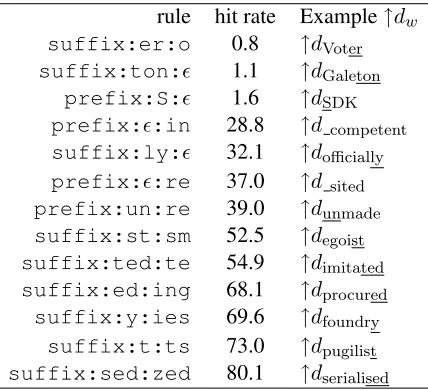
Table 1: Candidate rules evaluated inEn.
ends with suffixed), and the result of applying the rule to wordw1 is wordw2. To speed up
computa-tion, we downsample the setsSr to a large-enough
number of word pairs (1000 has been used in the ex-periments in this paper).
We define a generic evaluation functionEvF over
paired couples inSr×Sr, using a functionF :Rn×
Rn→R, as follows:
EvF((w1, w2),(w, w0)) =FE(w2, w1+↑dw) (1)
(w1, w2),(w, w0)∈Sr, ↑dw =w0−w
Word-pair combinations inSr×Srare evaluated
us-ing Eq. 1 to assess the meanus-ing-preservation prop-erty of rule r. We use as FE function rankE,
the cosine-similarity rank function in En. We can
quantitatively measure the assertion “car is tocars whatdog is todogs”, as rankE(cars,car+↑ddog ).
We use a single thresholdt0
rankto capture meaning preservation (all the experiments in this paper use t0
rank = 100): for each proposed rule r, we com-pute a hit rate based on the number of times Eq. 1 scores abovet0
rank, over the number of times it has been evaluated. In Table 1 we present some of these candidate rules and their hit rate.
We note that rules that are non-meaning– preserving receive low hit rates, while rules that are morphological in nature, such assuffix:ed:ing
w1 w2 rank cosine transformation
create created 0 0.58 suffix::d:↑dethrone
create creates 0 0.65 suffix:te:tes:↑evaluate
create creates 1 0.62 suffix::s:↑contradict
created create 0 0.65 suffix:ed:e↑eroded
creation create 0 0.52 suffix:ion:e:↑communication
creation created 0 0.54 suffix:ion:ed:↑disruption
recreations recreate 2 0.59 suffix:ions:e:↑translations
recreations recreating 1 0.53 suffix:ions:ing:↑constructions
[image:4.612.105.508.60.207.2]recreations Recreations 81 0.64 prefix:r:R:↑remediation
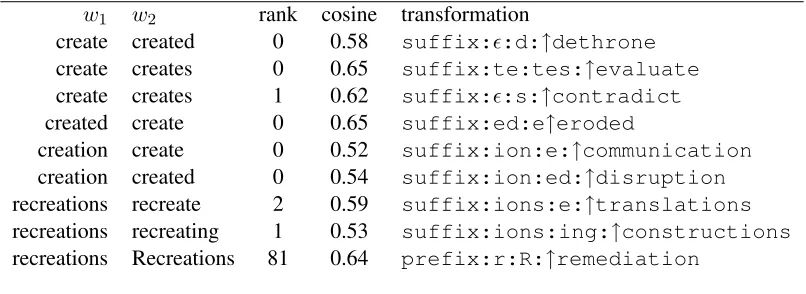
Table 2: Examples of lexicalized morphological transformations evaluated inEnusing rank and cosine.
Generate lexicalized morphological transformations
The results in Table 1 indicate the need for cre-atinglexicalizedtransformations. For instance, rule
suffix:ly:(drop suffix ly, a perfectly reason-able morphological transformation in English) is evaluated to have a hit rate of 32.1%. While such transformations are desirable, we want to avoid ap-plying them when firing without yielding meaning-preserving results (the rest of 67.9%), e.g., for word-pair (only, on). We therefore create lexicalized trans-formations by restricting the rule application to the vocabulary subset ofV which passes the meaning-preservation criterion.
The algorithm also computes best direction vec-tors ↑dw for each rule support set Sr. It greedily
selects a direction vector↑dw0 that explains (based
on Equation 1) the most pairs in Sr. After subset
Sw0
r is computed for direction vector ↑dw0, it
ap-plies recursively on setSr−Srw0. This yields a new
best direction vector↑dw1, and so on. The recursion
stops when it finds a direction vector↑dwk that
ex-plains less than a predefined number of words (we used 10 in all the experiments from this paper).
We consider multiple direction vectors ↑dwi
because of the possibly-ambiguous nature of a morphological transformation. Consider rule
suffix::s, which can be applied to the noun walk to yield plural-nounwalks; this case is mod-eled with a transformation likewalk+↑dinvention ,
since↑dinvention =inventions−invention is a
direc-tion that our procedure deems to explain well noun pluralization; it can also be applied to the verbwalk
to yield the 3rd-person singular form of the verb, in which case it is modeled aswalk+ ↑denlist , since
↑denlist =enlists−enlist is a direction that our
pro-cedure deems to explain well 3rd-person singular verb forms. In that sense, our algorithm goes beyond proposing simple surface-level morphemes, with di-rection vectors encoding well-defined semantics for our morphological analysis.
Lexicalized rules enhanced with direction vectors are calledmorphological transformations. For each morphological transformation, we evaluate again how well it passes a proximity test in En for the
words it applies to. As evaluation criteria, we use two instances of Eq 1, withFE instantiated to rankE
and cosineE, respectively. We apply more stringent
criteria in this second pass, using thresholds on the resulting rank (trank) and cosine (tcosine) values to indicate meaning preservation (we usedtrank = 30
andtcosine = 0.5in all the experiments in this pa-per). We present in Table 2 a sample of the re-sults of this procedure. For instance, word create can be transformed to creates using two different transformations: suffix:te:tes:↑evaluate
and suffix::s:↑contradict, passing the meaning-preservation criteria with rank=0, co-sine=0.65, and rank=1, cosine=0.62, respectively.
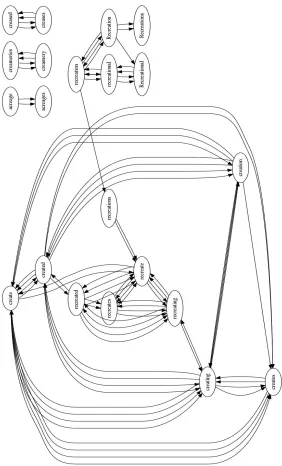
Figure 1: A few strongly connected components of aGV
Morphgraph for English.
e.g. created→create→created in Table 2). We use the notation GV
Morph to denote such a graph.
GV
Morph usually contains many strongly connected
components, with components representing families of morphological variations. As an illustration, we present in Figure 1 a few strongly connected compo-nents obtained for an English embedding space (for illustration purposes, we show only a maximum of 2 directed edges between any two nodes in this multi-graph, even though more may exist).
3.2 Inducing 1-to-1 Morphological Mappings
The induced graphGV
Morph encodes a lot of
infor-mation about words and how they relate to each other. For some applications, however, we want to normalize away morphological diversity by map-ping to a canonical surface form. This amounts to selecting, from among all the candidate morpholog-ical transformations generated, specific 1-to-1 map-pings. In graph terms, this means building a labeled, weighted, acyclic, directed graph DV
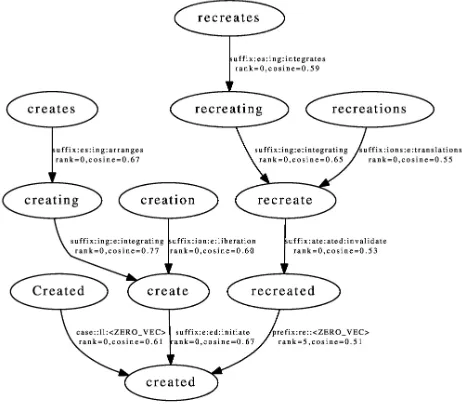
Figure 2: A part of aDV
Morph graph, with the morpho-logical family for the normal-formcreated.
fromGV
Morph, using the nodes fromGVMorphand
re-taining only edges that meet certain criteria.
For the experiments presented in Section 4, we build a directed graphDV
Morph as follows:
1. edgew1 (→r,c)w2inGVMorphis considered only
if count(w1)≤count(w2)inV;
2. if multiple such edges exist, chose the one with minimal rankr;
3. if multiple such edges still exist, chose the one with the maximal cosinec.
The interpretation we give is word-normalization: a normalization ofwtow0is guaranteed to be
mean-ing preservmean-ing (usmean-ing the direction-vector seman-tics), and to a more frequent form. A snippet of the resulting graphDV
Morph is presented in Figure 2.
One notable aspect of this normalization pro-cedure is that these are not “traditional” morpho-logical mappings, with morphology-inflected words mapped to their linguistic roots. Rather, our method produces morphological mappings that favor fre-quency over linguistic normalization. An exam-ple of this can be seen in Figure 2, where the root form create is morphologically-explained by map-ping it to the form created. This choice is purely based on our desire to favor the accuracy of the
word-representations for the normal forms; differ-ent choices regarding how this pruning procedure is performed lead to different normalization proce-dures, including some that are more linguistically-motivated (e.g., length-based).
3.3 Morphological Transformations for Rare and Unknown Words
For some count thresholdC, we defineVC ={w∈
V|C≤count(w)}. The method we presented up to this point induces a morphology graphDVC
Morphthat
can be used to perform morphological analysis for any words inVC. We analyze the rest of the words
we may encounter (i.e., rare words and OOVs) by mapping them directly to nodes inDVC
Morph.
We extract such mappings from DVC
Morph using
all the sequences of edges that start at nodes in the graph and end in a normal-form (i.e., nodes that have out-degree 0). The result is a set of rule sequences denoted RS. A count cutoff on the rule sequence counts is used, since low-count sequences tend to be less reliable (in the experiments reported in this paper we use a cutoff of 50). We also denote withR the set of all edges inDMorph. Using setsRSandR,
we mapw6∈VCto a nodew0 ∈DVMorphC , as follows:
1. for rule-sequences s ∈ RS from highest-to-lowest count, ifw →s w0 andw0 ∈ DVC
Morph,
thensis the morphological analysis forw;
2. if no s is found, do breadth-first search in DVC
Morphusingr∈R, up to a predefined3depth
d; for k ≤ d, word w0 with w r−→1...rk w0 ∈
DVC
Morphand the highest count inVCis the
mor-phological analysis forw.
For example, this procedure uses the RS sequence s=prefix:un:,suffix:ness: to perform the OOV morphological analysis unassertiveness
s
−→assertive. We perform an in-depth analysis of the performance of this procedure in Section 4.2.
4 Empirical Results
In this section, we evaluate the performance of the procedure described in Section 3. Our evaluations aim at answering several empirical questions: how
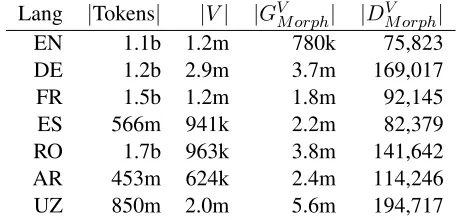
Lang |Tokens| |V| |GV
Morph| |DVMorph|
[image:7.612.70.301.60.170.2]EN 1.1b 1.2m 780k 75,823 DE 1.2b 2.9m 3.7m 169,017 FR 1.5b 1.2m 1.8m 92,145 ES 566m 941k 2.2m 82,379 RO 1.7b 963k 3.8m 141,642 AR 453m 624k 2.4m 114,246 UZ 850m 2.0m 5.6m 194,717
Table 3: Statistics regarding the size of the training data and the induced morphology graphs.
well does our method capture morphology, and how does it compare with previous approaches that use word-representations for morphology? How well does this method handle OOVs? How does the im-pact of morphology analysis change with training data size? We provide both qualitative and quanti-tative answers for each of these questions next.
4.1 Quality of Morphological Analysis
We first evaluate the impact of our morphologi-cal analysis on a standard word-similarity rating task. The task measures word-level understand-ing by comparunderstand-ing the correlation between human-produced similarity ratings for word pairs, e.g. ( in-traspecific, interspecies), with those produced by an algorithm. For the experiments reported here, we train SkipGram models4 using a dimensionality of n = 500. We denote a system using only Skip-Gram model embeddings as SG. To evaluate the im-pact of our method, we perform morphological anal-ysis for words below a count threshold C. For a word w ∈ DVC
Morph , we simply use the SkipGram
vector-representation; for a wordw 6∈ DVC
Morph, we
use as word-representation its mapping inDVC
Morph;
we denote such a system SG+Morph. For both SG and SG+Morph systems, we compute the similarity of word-pairs using the cosine distance between the vector-representations.
Data
We train both the SG and SG+Morph models from scratch, for all languages considered. For English,
4Additional settings include a window-size of 5 and negative
sampling set to 5. Unseen words receive a zero-vector embed-ding and a cosine score of 0.
we use the Wikipedia data (Shaoul and Westbury, 2010). For German, French, and Spanish, we use the monolingual data released as part of the WMT-2013 shared task (Bojar et al., WMT-2013). For Arabic we use the Arabic GigaWord corpus (Parker et al., 2011). For Romanian and Uzbek, we use collections of News harvested from the web and cleaned (boiler-plate removed, formatting removed, encoding made consistent, etc.). All SkipGram models are trained using a count cutoff of 5 (all words with count less than the cutoff are ignored). Table 3 presents statis-tics on the data and vocabulary size, as well as the size of the induced morphology graphs. These num-bers illustrate the richness of the morphological phe-nomena present in languages such as German, Ro-manian, Arabic, and Uzbek, compared to English.
As test sets, we use standard, publicly-available word-similarity datasets. Most relevant for our ap-proach is the Stanford English Rare-Word (RW) dataset (Luong et al., 2013), consisting of 2034 word pairs with a higher degree of English morphol-ogy compared to other word-similarity datasets. We also use for English the WS353 (Finkelstein et al., 2002) and RG65 datasets (Rubenstein and Goode-nough, 1965). For German, we use the Gur350 and ZG222 datasets (Zesch and Gurevych, 2006). For French we use the RG65 French version (Joubarne and Inkpen, 2011); for Spanish, Romanian, and Ara-bic we use their respective versions of WS353 (Has-san and Mihalcea, 2009).
Results
We present in Table 4 the results obtained across 6 language pairs and 9 datasets, using a count threshold for SG+Morph of C = 100. We also include the results obtained by two previously-proposed methods, LSM2013 (Luong et al., 2013) and BB2014 (Botha and Blunsom, 2014), which share some of the characteristics of our method.
improve-Spearmanρ
Language EN DE FR ES RO AR
Testset RW WS RG Gur ZG RG WS WS WS
System
LSM2013 w/o morph 26.8 62.6 62.8 - - -
-LSM2013 w/ morph 34.4 64.6 65.5 - - -
-BB2014 w/o morph 18.0 32.0 47.0 36.0 6.0 33.0 26.0 - -BB2014 w/ morph 30.0 40.0 41.0 56.0 25.0 45.0 28.0 -
-SG 35.8 71.2 75.1 62.4 16.6 63.6 36.5 51.7 37.1
SG+Morph 41.8 71.2 75.1 64.1 21.5 67.3 47.3 53.1 43.1
[image:8.612.73.527.68.212.2]# pairs 2034 353 65 350 222 65 353 353 353
Table 4: Performance of previously proposed methods, compared to SG and SG+Morph trained on Wiki1b. LSM2013 uses exactly the same training data for EN, whereas BB2014 uses the same training data for DE, FR, ES.
ment under the morphology condition). The mor-phological treatment used by LSM2013 also has a small effect on the words present in the English WS and RG sets; our method does not propose any separate morphological treatment for the words in these datasets, since all of them have been observed more than our C = 100 threshold in the training data (therefore have reliable representations). The SG word-representations for all the other languages (German, French, Spanish, Romanian, and Arabic) also perform well on this task, with much higher Spearman scores obtained by SG compared with the previously-reported scores.
The results in Table 4 also show that our mor-phology treatment provides consistent gains across all languages considered. For morphologically-rich languages, all datasets reflect the impact of mor-phology treatment. We observe significant gains be-tween the performance of the SG and SG+Morph systems, on top of the high correlation numbers of the SG system. For German, the relatively small increase we observe is due to the fact the German noun-compounds are not covered by our morpholog-ical treatment. For French, Spanish, Romanian, and Arabic, the gains by the SG+Morph support the con-clusion that our method, while completely language-agnostic, handles well the variety of morphological phenomena present in these languages.
4.2 Quality of Morphological Analysis for Unknown/Rare Words
In this section, we quantify the accuracy of the mor-phological treatment for OOVs presented in
Sec-tion 3.3. We assume that the statistics for unseen words (with respect to their morphological make-up) are similar with the statistics for low-frequency words. Therefore, for some relatively-low countsL andH, the setV[L,H) = VL−VH is a good proxy
for the population of OOV words that we see at run-time. We evaluate OOV morphology as follows:
1. Run the procedure for morphology induction onVL, resulting inDVMorphL ;
2. Run the procedure for morphology induction onVH, resulting inDVMorphH ;
3. Apply OOV morphology using DVH
Morph for
eachw ∈ V[L,H]; evaluate resultingw → w0
against referencew → w0
ref fromDVMorphL , as
normal-form(w0)≡normal-form(w0
ref).
To make the analysis more revealing, we split the en-tries inV[L,H)in two: type T1 entries are those that
have in-degree>0inDVL
Morph (i.e., words that have
a morphological mapping in the reference graph); type T2 entries are those that have 0 in-degree in DVL
Morph(i.e., words with no morphological mapping
in the reference, e.g., proper-nouns in English). Note that the T1/T2 distinction reflects a recall/precision trade-off: T1-words should be morphologically an-alyzed, while T2-words should not; a method that over-analyses has poor performance on T2, while one that under-analyses performs poorly on T1.
EN (RW testset) DE (RG testset)
|Unmapped| Spearmanρ |Unmapped| Spearmanρ Wiki1b News120b Wiki1b News120b WMT2b News20b WMT2b News20b
SG 80 177 35.8 44.7 0 20 62.4 62.1
SG+Morph 1 0 41.8 52.0 0 0 64.1 69.1
Table 5: Comparison between models SG and SG+Morph at different training-data sizes.
|V[1000,2000)| Accuracy
Lang T1 T2 T1 T2
EN 3421 10617 89.7% 89.6% DE 10778 21234 90.8% 93.1% FR 6435 9807 90.3% 90.4% ES 5724 7412 91.1% 90.3% RO 11905 9254 86.5% 85.3% AR 7913 5202 92.4% 69.0% UZ 11772 9027 81.3% 84.1%
Table 6: Accuracy of Rare&OOV analysis.
the same setup. CountL = 1000was chosen such thatDVL
Morph is reliable enough to be used as
refer-ence. The accuracy results are consistently high (in the 80-90% range) for both T1- and T2-words, even for morphologically-rich languages such as Uzbek. These results indicate that our method does well at both identifying a morphological analysis when ap-propriate, as well as not proposing one when not jus-tified, and therefore provides accurate morphology analysis for rare and OOV words.
4.3 Morphology and Training Data Size
We also evaluate the impact of our morphology anal-ysis under a regime with substantially more training data. To this end, we use large collections of En-glish and German News, harvested from the web and cleaned (boiler-plate removed, formatting removed, encoding made consistent). Statistics regarding the resulting vocabularies and the induced morphology are presented in Table 7 (vocabulary cutoffs of 400 for EN and 50 for DE). We present results using the word-similarity task using the same Stanford Rare-Word (RW) dataset for EN and RG dataset for DE, compared against the setup using only 1-2 bil-lion training tokens. For SG+Morph, we use count thresholds of 3000 for EN and 100 for DE. The re-sults are given in Table 5. For English, a 100x
in-Lang |Tokens| |V| |GV
Morph| |DVMorph|
EN 120b 1.0m 2.9m 98,268 DE 20b 1.8m 6.7m 351,980
Table 7: Statistics for large training-data sizes.
crease in the training data for EN brings a 10-point increase in Spearmanρ(from 35.8 to 44.7, and from 41.8 to 52.0). The morphological analysis provides substantial gains at either level of training-data size: 6 points inρfor Wiki1b (from 35.8 to 41.8), and 7.3 points for News120b EN (from 44.7 to 52.0). For German, the increase in training-data size does not bring visible improvements (perhaps due the high vocabulary cutoff), but the morphological treatment has a large impact under the large training-data con-dition (7 points for News20b DE, from 62.1 to 69.1).
5 Conclusions and Future Work
We have presented an unsupervised method for mor-phology induction. The method derives a morpho-logical analyzer from scratch, and only requires a monolingual corpus for training, with no additional knowledge of the language. Our evaluation shows that this method performs well across a large va-riety of language families, and we present here re-sults that improve on current state-of-the-art for the morphologically-rich Stanford Rare-word dataset.
References
Andrei Alexandrescu and Katrin Kirchhoff. 2006. Fac-tored neural language models. In Human Language Technology Conference of the North American Chap-ter of the Association of Computational Linguistics. Mohit Bansal, Kevin Gimpel, and Karen Livescu. 2014.
Tailoring continuous word representations for depen-dency parsing. In Proceedings of the 52nd Annual Meeting of the Association for Computational Linguis-tics, ACL 2014, June 22-27, Baltimore, MD, USA, Vol-ume 2: Short Papers, pages 809–815.
Yoshua Bengio, R´ejean Ducharme, Pascal Vincent, and Christian Janvin. 2003. A neural probabilistic lan-guage model. Journal of Machine Learning Research, 3:1137–1155.
Ondˇrej Bojar, Christian Buck, Chris Callison-Burch, Christian Federmann, Barry Haddow, Philipp Koehn, Christof Monz, Matt Post, Radu Soricut, and Lucia Specia. 2013. Findings of the 2013 Workshop on Statistical Machine Translation. InProceedings of the Eighth Workshop on Statistical Machine Translation, pages 1–44, Sofia, Bulgaria, August. Association for Computational Linguistics.
Jan A. Botha and Phil Blunsom. 2014. Compositional morphology for word representations and language modelling. CoRR.
Ronan Collobert. 2011. Deep learning for efficient dis-criminative parsing. InProceedings of the Fourteenth International Conference on Artificial Intelligence and Statistics, pages 224–232.
Mathias Creutz and Krista Lagus. 2007. Unsupervised models for morpheme segmentation and morphology learning.TSLP, 4(1).
Lev Finkelstein, Evgeniy Gabrilovich, Yossi Matias, Ehud Rivlin, Zach Solan, Gadi Wolfman, and Eytan Ruppin. 2002. Placing search in context: the concept revisited. ACM Trans. Inf. Syst., 20(1):116–131. Xavier Glorot, Antoine Bordes, and Yoshua Bengio.
2011. Domain adaptation for large-scale sentiment classification: A deep learning approach. In Proceed-ings of the 28th International Conference on Machine Learning, pages 513–520.
Samer Hassan and Rada Mihalcea. 2009. Cross-lingual semantic relatedness using encyclopedic knowledge. In Proceedings of the 2009 Conference on Empiri-cal Methods in Natural Language Processing, pages 1192–1201.
Eric H. Huang, Richard Socher, Christopher D. Manning, and Andrew Y. Ng. 2012. Improving word representa-tions via global context and multiple word prototypes. InProceedings of the 50th Annual Meeting of the Asso-ciation for Computational Linguistics, pages 873–882.
Fei Huang, Arun Ahuja, Doug Downey, Yi Yang, Yuhong Guo, and Alexander Yates. 2014. Learning repre-sentations for weakly supervised natural language pro-cessing tasks. Computational Linguistics, 40(1):85– 120.
Colette Joubarne and Diana Inkpen. 2011. Comparison of semantic similarity for different languages using the google n-gram corpus and second-order co-occurrence measures. InAdvances in Artificial Intelligence - 24th Canadian Conference on Artificial Intelligence, pages 216–221.
Angeliki Lazaridou, Marco Marelli, Roberto Zamparelli, and Marco Baroni. 2013. Compositionally derived representations of morphologically complex words in distributional semantics. In Proceedings of the 51st Annual Meeting of the Association for Computational Linguistics, pages 1517–1526.
Quoc V. Le and Tomas Mikolov. 2014. Distributed representations of sentences and documents. CoRR, abs/1405.4053.
Omer Levy and Yoav Goldberg. 2014. Dependency-based word embeddings. InProceedings of the 52nd Annual Meeting of the Association for Computational Linguistics, ACL 2014, June 22-27, 2014, Baltimore, MD, USA, Volume 2: Short Papers, pages 302–308. Minh-Thang Luong, Richard Socher, and Christopher D.
Manning. 2013. Better word representations with re-cursive neural networks for morphology. InCoNLL, Sofia, Bulgaria.
Tomas Mikolov and Geoffrey Zweig. 2012. Context de-pendent recurrent neural network language model. In
IEEE Spoken Language Technology Workshop (SLT), pages 234–239.
Tomas Mikolov, Kai Chen, Greg Corrado, and Jeff Dean. 2013a. Efficient estimation of word representations in vector space.CoRR, abs/1301.3781.
Tomas Mikolov, Wen-tau Yih, and Geoffrey Zweig. 2013b. Linguistic regularities in continuous space word representations. InHuman Language Technolo-gies: Conference of the North American Chapter of the Association of Computational Linguistics, pages 746– 751.
Andriy Mnih and Geoffrey E. Hinton. 2007. Three new graphical models for statistical language modelling. In
Machine Learning, Proceedings of the Twenty-Fourth International Conference, pages 641–648.
Andriy Mnih, Zhang Yuecheng, and Geoffrey E. Hin-ton. 2009. Improving a statistical language model through non-linear prediction. Neurocomputing, 72(7-9):1414–1418.
Jeffrey Pennington, Richard Socher, and Christopher D. Manning. 2014. Glove: Global vectors for word rep-resentation. InProceedings of EMNLP.
Herbert Rubenstein and John B. Goodenough. 1965. Contextual correlates of synonymy. Communications of the ACM, 8(10):627633.
Cyrus Shaoul and Chris Westbury. 2010. The Westbury lab Wikipedia corpus.
Richard Socher, Eric H. Huang, Jeffrey Pennington, An-drew Y. Ng, and Christopher D. Manning. 2011a. Dy-namic pooling and unfolding recursive autoencoders for paraphrase detection. In 25th Annual Confer-ence on Neural Information Processing Systems, pages 801–809.
Richard Socher, Jeffrey Pennington, Eric H. Huang, An-drew Y. Ng, and Christopher D. Manning. 2011b. Semi-supervised recursive autoencoders for predicting sentiment distributions. In Proceedings of the 2011 Conference on Empirical Methods in Natural Lan-guage Processing, pages 151–161.