RACAI: Meaning Affinity Models
Radu Ion
Institute for Artificial Intelligence 13, “13 Septembrie”, 050711, Bucharest 5,
Romania [email protected]
Dan Tufis¸
Institute for Artificial Intelligence 13, “13 Septembrie”, 050711, Bucharest 5,
Romania [email protected]
Abstract
This article introduces an unsupervised word sense disambiguation algorithm that is in-spired by the lexical attraction models of Yuret (1998). It is based on the assump-tion that the meanings of the words that form a sentence can be best assigned by con-structing an interpretation of the whole sen-tence. This interpretation is facilitated by a dependency-like context specification of a content word within the sentence. Thus, finding the context words of a target word is a matter of finding a pseudo-syntactic de-pendency analysis of the sentence, called a linkage.
1 Introduction
Word Sense Disambiguation (WSD) is a difficult Natural Language Processing task which requires that for every content word (noun, adjective, verb or adverb) the appropriate meaning is automatically selected from the available sense inventory1. Tradi-tionally, the WSD algorithms are divided into two rough classes: supervised and unsupervised. The supervised paradigm relies on sense annotated cor-pora, with the assumption that neighbouring disam-biguate words provide a strongly discriminating and generalizable context representation for the meaning of a target word. Obviously, this approach suffers from the knowledge acquisition bottleneck in that
1
In principle, one can select meanings for any part of speech that is represented into the semantic lexicon (prepositions for instance) but the content words disambiguation is the de facto standard.
there will never be enough training data to ensure a scalable result of such algorithms. The unsuper-vised alternative to WSD tries to alleviate the burden of manually sense tagging the corpora, by employ-ing algorithms that use different knowledge sources to determine the correct meaning in context. In fact, the “knowledge source usage” is another way to dis-tinguish among the WSD methods. Such methods call upon further processing of the text to be dis-ambiguated such as parsing and/or use handcrafted, semantically rich sense inventories such as Word-Net (Fellbaum, 1998). WSD methods in this cate-gory range from the very simple ranking based on counting the number of words occurring in both the target word’s context and its sense definitions in a reference dictionary (Lesk, 1986) to the more elabo-rated approaches using the semantic lexicon’s tax-onomies, (shallow) parsing, collocation discovery etc. (Stevenson and Wilks, 2001).
One of the central issues of any WSD implemen-tation is given by the context representation. The standard principle that is applied when trying to dis-ambiguate the meaning of a word is that the same word in similar contexts should have the same mean-ing. By and large, the context of a target word is ma-terialized by a collection of features among which are: the collocates of the target word, the part-of-speech (POS) of the target word, ±k words sur-rounding the target word and/or their POSes and so on. More often than not, the contexts similarity is es-timated by the distance in the feature vector space. Lin (1997) defines the local context of a target word by the collection of syntactic dependencies in which the word takes part. According to this notion of
text, Lin assumes that two different words are likely to have similar meanings if they occur in identical local contexts.
What we will attempt here is to combine the two views of context similarity/identity versus meaning similarity/identity by using a dependency-like repre-sentation of the context as a lexical attraction model. More specifically, we will not consider any feature of the context and will try to maximize a meaning at-traction function over all linked words of a sentence. In section 2 we will describeSynWSD, an unsuper-vised, knowledge-based WSD algorithm and in sec-tions 3 and 4 we will present the application of Syn-WSD to two of SEMEVAL-2007 “all words” tasks:
English Coarse-Grained and English Fine-Grained. Finally, with section 5 we will conclude the article.
2 SynWSD
The syntactic context representation is not new in the realm of WSD algorithms. For instance, Lin (1997) used the dependency relations of the target word to specify its context and Stetina (1998) ex-tracted head-modifier relations to obtain the context pairs for each word of interest from a constituents tree. The syntactic representation of the context of a target word has one main advantage over the collec-tion of features method: the target word is related only with the relevant word(s) in its window and not with all the words and thus, many noisy cooc-currences are eliminated. Mel’ˇcuk (1988) further strengthens the intuition of a syntactic context rep-resentation with his Meaning Text Model in which there is a deterministic translation from the surface syntactic dependency realization of the sentence to its deep syntactic one and therefore to the semantic representation.
To use a syntactic analysis as a context representa-tion, one needs a parser which will supply the WSD algorithm with the required analysis. Because we have intended to develop a language independent WSD algorithm and because there is no available, reliable dependency parser for Romanian, we have backed off to a simpler, easier to obtain dependency-like representation of a sentence: a slightly modified version of the lexical attraction models of (Yuret, 1998).
2.1 LexPar
Lexical attraction is viewed as the likelihood of a syntactic dependency relation between two words of a sentence and is measured by the pointwise mutual information between them. Yuret (1998) shows that the search for the lowest entropy lexical attraction model leads to the unsupervised discovery of undi-rected dependency relations or links.
LexPar (Ion and Barbu Mititelu, 2006) is a link analyzer (a linker) which generates a connected, undirected, acyclic and planar graph of an input tence in which the nodes are the words of the sen-tence and the edges are the highest lexical attracted dependency-like relations. This program is simi-lar to the suboptimal one presented in (Yuret, 1998) with the following main differences:
• the policy of checking pairs of words to be re-lated is based on the assumption that most of the syntactic relations2are formed between ad-jacent words and then between adad-jacent groups of linked words;
• it operates on POS-tagged and lemmatized cor-pora and attempts to improve parameter estima-tion by using both lemmas and POS tags. The score of a link is defined as the weighted sum of the pointwise mutual information of the lem-mas and of the POS tags, thus coping even with the unknown lemmas;
• it uses a rule filter that will deny the formation of certain links based on the POSes of the can-didate words. For instance, neither the relation between a determiner and an adverb nor the re-lation between a singular determiner and a plu-ral noun should be permitted;
In Figure 1 we have an example of a XML en-coded, LexPar processed sentence. The head at-tribute of thewtag specifies the position of the head word of the tagged word. Because LexPar considers non-directed dependency relations, for the purposes of XML encoding3, the first word of every sentence
2At least for our languages of interest, namely English and Romanian.
Figure 1: The XML representation of a LexPar pro-cessed sentence.
(position 0) is always the root of the syntactic de-pendency tree, its dependents are its children nodes, and so on while we recursively build the tree from the LexPar result.
We have chosen not to give a detailed presentation of LexPar here (the reader is directed towards (Yuret, 1998; Ion and Barbu Mititelu, 2006)) and instead, to briefly explain how the linkage in Figure 1 was obtained. The processor begins by inspecting a list
Gof groups of linked words which initially contains the positions of each of the words in the sentence:
G0 = {(0),(1),(2),(3),(4),(5)}
The linking policy is trying to link words in the groups (0) and (1) or (1) and (2). The syntactic rule filter says that auxiliary verbs (Va) can only be linked with main verbs (Vm) and so one link is formed and the list of groups becomes:
G1 = {(0),(h1,2i),(3),(4),(5)}
Next, the processor must decide linking the groups
(h1,2i)and(3)or(3)and(4)but the syntactic rule filter is denying any link from positions1or2to3
(no links from any kind of verb Vto any kind of a determinerD) or from3 to4(no link from a nega-tive determinerDz3to a qualificative adjectiveAf). Continuing this way, the progress ofGlist is as fol-lows:
G1 = {(0),(h1,2i),(3),(h4,5i)}
G2 = {(h0,2i,h1,2i),(h3,5i,h4,5i)}
G3 = {(h0,2i,h1,2i,h2,5i,h3,5i,h4,5i)}
So in 3 stepsG3 contains a single group of linked words namely the linkage of the sentence.
2.2 Meaning Affinity Models
If the lexical attraction models are geared towards the discovery of the most probable syntactic rela-tions of a sentence, we can naturally generalize this idea to construct a class of models that will find a combination of meanings that maximizes a certain meaning attraction function over a linkage of a sen-tence. We call this class of models the meaning affinity models.
Optimizing meaning affinity over a syntactic rep-resentation of a sentence has been tried in (Stetina et al., 1998; Horbovanu, 2002). SynWSD (Ion, 2007) is an implementation with two phases of the mean-ing affinity concept: training which takes as input a corpus with LexPar linked sentences (of the type shown in Figure 1) and outputs a tableM of mean-ing co-occurrence frequencies anddisambiguation
of a LexPar linked sentenceS, based on the counts in tableMfrom the previous phase.
Before continuing with the descriptions of these phases, we will introduce the notations that we will use throughout this section:
• A n-word sentence is represented by a vec-tor S of n elements, each of them contain-ing a triplehwordform,lemma,POSi. For in-stance, the first element fromS in Figure 1 is
S[0] =hWe,we,Pp1−pni;
• Lis the LexPar linkage ofS, and is also a vec-tor containing pairs of positionshi, jiinSthat are related, where0≤i < j < n;
• lem(S, i)andpos(S, i) are two functions that give the lemma and the POS of the positioniin
S,0≤i < n.
The training phaseis responsible for collecting meaning co-occurrence counts. It simply iterates over each sentenceS of the training corpus and for every linkL[k]of the formha, bi from its linkage, does the following (K stores the total number of recorded meaning pairs):
1. extracts the sets of meaningsIa andIb
corre-sponding to the lemmalem(S, a)with the POS pos(S, a)and to the lemmalem(S, b)with the POSpos(S, b)from the sense inventory4;
2. increases by 1 theM table frequencies for ev-ery pair of the cartesian productIa×Ib. For
every meaning m ∈ Ia, the frequency of the
special pairhm,∗iis increased with|Ib|.
Simi-larly, the pairh∗, mifrequency is also increased with|Ia|form∈Ib);
3. K←K+|Ia×Ib|.
We have used the Princeton WordNet (Fellbaum, 1998), version 2.0 (PWN20) as our sense inventory and the mappings from its synsets to the SUMO ontology concepts (Niles and Pease, 2003) and to the IRST domains (Magnini and Cavaglia, 2000). Thus we have tree different sense inventories each with a different granularity. For instance, the noun
homeless has 2 senses in PWN20, its first sense (“someone with no housing”) being mapped onto the more general HumanSUMO concept and onto the
person IRST domain. The second sense of the same noun is “people who are homeless” which cor-responds to the same SUMO concept and to a differ-ent IRST domain (factotum).
In order to reduce the number of recorded pairs in the case of PWN20 meanings (the finest granular-ity available) and to obtain reliable counts, we have modified the step 1 of the training phase in the fol-lowing manner:
• if we are dealing with nouns or verbs, for every meaning mi of the lemma, extract the
upper-most hypernym meaning which does not sub-sume any other meaning of the same lemma;
• if we are dealing with adjectives, for every meaningmiof the lemma, extract the meaning
of the head adjective ifmi is part of a cluster;
• if we are dealing with adverbs, for every mean-ingmiof the lemma, returnmi(no
generaliza-tion is made available by the sense inventory in this case).
This generalization procedure will be reversed at the time of disambiguation as will be explained shortly.
POS does not give a noun, verb, adjective or adverb, the lemma itself is returned as the sole meaning because in the disambigua-tion phase we need a meaning for every word of the sentence, be it content word or otherwise.
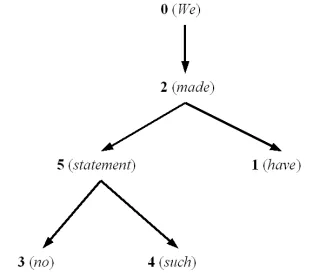
Figure 2: The tree representation of the sentence in Figure 1.
The disambiguation phasetakes care of finding the best interpretation of a linked sentence based on the frequency tableM. For a test sentenceS, with the linkageL, the procedure goes as follows:
1. produce a proper treeT of positions fromLby taking position 0 as the root of the tree. Then, for every link that contains 0 make the other po-sition in the link a child of 0 and then, in a re-cursive manner, apply the same process for all children of 0. For instance, the tree for Figure 1 if depicted in Figure 2;
2. construct a vectorP of sentence positions vis-ited during a depth-first traversal of theT tree. The vector of sentence positions for Figure 2 is
P = (0,2,5,3,5,4,5,2,1,2,0)
3. construct a meaning vector V of the same length as P. V[i] contains the list of mean-ings of the lemma lem(S, P[i]) with the POS pos(S, P[i]). If the sense inventory is PWN20, every meaning from the list is generalized as described above;
4. finally, apply the Viterbi algorithm ((Viterbi, 1967)) on theV vector and extract the path (se-quence of meanings) which maximizes mean-ing affinity.
Each state transition is scored according to a meaning affinity function. In our experiments we have considered three meaning affinity functions. If
[image:4.612.347.502.55.193.2]andm2are two meanings from adjacentV positions for whichf(m1, m2)is the pair frequency extracted fromM, the functions are:
1. DICE:
dice(m1, m2) =
2f(m1,m2)+2f(m2,m1)
f(m1,∗)+f(∗,m1)+f(m2,∗)+f(∗,m2)
2. Pointwise mutual information:
mi(m1, m2) =
log Kf(m1,m2)+Kf(m2,m1) (f(m1,∗)+f(∗,m1))(f(m2,∗)+f(∗,m2))
3. Log-Likelihood, ll(m1, m2) which is com-puted as in (Moore, 2004).
After the Viterbi path (best path) has been calcu-lated, every state (meaning) fromV[i](0≤i <|V|) along this path is added to a finalDvector. When the PWN20 sense inventory is used, the reverse of the generalization procedure is applied to each meaning recorded in D, thus coming back to the meanings of the words of S. Please note that an entry in D
may contain more than one meaning especially in the case of PWN20 meanings for which there was not enough training data.
3 SEMEVAL-2007 Task #7:
Coarse-grained English All-Words
LexPar and SynWSD were trained on an 1 million words corpus comprising the George Orwell’s 1984 novel and the SemCor corpus (Miller et al., 1993). Both texts have been POS-tagged (with MULTEXT-East compliant POS tags) and lemmatized and the result was carefully checked by human judges to en-sure a correct annotation.
SynWSD was run with all the meaning attraction functions (dice, miand ll) for all the sense in-ventories (PWN20, SUMO categories and IRST do-mains) and a combined result was submitted to the task organizers. The combined result was prepared in the following way:
1. for each sense inventory and for each token identifier, get the union of the meanings for each run (dice,miandll);
2. for each token identifier with its three union sets of PWN20 meanings, SUMO categories and IRST domains:
(a) for each PWN20 meaningmiin the union,
if there is a SUMO category that maps onto it, increasemi’s weight by 1;
(b) for each PWN20 meaningmiin the union,
if there is a IRST domain that maps onto it, increasemi’s weight by 1;
(c) from the set of weighted PWN20 mean-ings, select the subset C that best over-laps with a cluster. That is, the intersec-tion between the subset and the cluster has a maximal number of meanings for which the sum of weights is also the greatest; (d) output the lowest numbered meaning inC.
With this combination, the official F-measure of SynWSD is 0.65712 which places it into the 11th
position out of16competing systems5.
Another possible combination is that of the inter-section which is obtained with the exact same steps as above, replacing the union operation with the in-tersection. When the PWN20 meanings set is void, we can make use of the most frequent sense (MFS) backoff strategy thus selecting the MFS of the cur-rent test word from PWN20. Working with the of-ficial key file and scoring software, the intersection combination with MFS backoff gives an F-measure of0.78713corresponding to the6thbest result. The same combination method but without MFS backoff achieves a precision of0.80559but at the cost of a very low F-measure (0.41492).
4 SEMEVAL-2007 Task #17: English
All-Words
For this task, LexPar and SynWSD were further trained on a 12 million POS tagged and lemmatized balanced corpus6. The run that was submitted was the intersection combination with the MFS backoff strategy which obtained an F-measure of0.527. This score puts our algorithm on the8th position out of 14 competing systems. For the union combinator
5
Precision = Recall = F-measure. In what follows, mention-ing only the F-measure means that this equality holds.
6A random subset of the BNC (http://www.natcorp.
(the MFS backoff strategy is not applicable), the F-measure decreases to0.445(10thplace). Finally, if we train SynWSD only on corpora from task#7, the union combinator leads to an F-measure of0.344.
5 Conclusions
SynWSD is a knowledge-based, unsupervised WSD algorithm that uses a dependency-like analysis of a sentence as a uniform context representation. It is a language independent algorithm that doesn’t require any feature selection.
Our system can be improved in several ways. First, one can modify the generalization procedure in the case of PWN20 meanings in the sense of se-lecting a fixed set of top level hypernyms. The size of this set will directly affect the quality of meaning co-occurrence frequencies. Second, one may study the effect of a proper dependency parsing on the re-sults of the disambiguation process including here making use of the syntactic relations names and ori-entation.
Even if SynWSD rankings are not the best avail-able, we believe that the unsupervised approach to the WSD problem combined with different knowl-edge sources represents the future of these systems even if, at least during the last semantic evalua-tion exercise SENSEVAL-3, the supervised systems
achieved top rankings.
References
Christiane Fellbaum, editor. 1998. WordNet. An Elec-tronic Lexical Database. MIT Press, May.
Vladimir Horbovanu. 2002. Word Sense Disambigua-tion using WordNet. ”Alexandru Ioan Cuza” Univer-sity, Faculty of Computer Science, Ias¸i, Romania. In Romanian.
Radu Ion and Verginica Barbu Mititelu. 2006. Con-strained lexical attraction models. InProceedings of the Nineteenth International Florida Artificial Intelli-gence Research Society Conference, pages 297–302, Menlo Park, Calif., USA. AAAI Press.
Radu Ion. 2007. Word Sense Disambiguation meth-ods applied to English and Romanian. Ph.D. thesis, Research Institute for Artificial Intelligence (RACAI), Romanian Academy, January. In Romanian, to be de-fended.
Michael Lesk. 1986. Automatic sense disambiguation : How to tell a pine cone from an ice cream cone. In Proceedings of the 1986 SIGDOC Conference, Asso-ciation for Computing Machinery, pages 24–26, New York.
Dekang Lin. 1997. Using syntactic dependency as lo-cal context to resolve word sense ambiguity. In Pro-ceedings of the 35th Annual Meeting of the Association for Computational Linguistics, pages 64–71, Madrid, Spain, July.
Bernardo Magnini and Gabriela Cavaglia. 2000. Inte-grating Subject Field Codes into WordNet. In Gavrili-dou M., Crayannis G., Markantonatu S., Piperidis S., and Stainhaouer G., editors, Proceedings of LREC-2000, Second International Conference on Language Resources and Evaluation, pages 1413–1418, Athens, Greece, June.
Igor Mel’ˇcuk. 1988. Dependency Syntax: theory and practice. State University of New York Press, Albany, NY.
George A. Miller, Claudia Leacock, Randee Tengi, and Ross T. Bunker. 1993. A semantic concordance. In Proceedings of the 3rd DARPA Workshop on Hu-man Language Technology, pages 303–308, Plains-boro, New Jersey.
Robert C. Moore. 2004. On Log-Likelihood Ratios and the Significance of Rare Events. In Proceedings of the 2004 Conference on Empirical Methods in Natu-ral Language Processing, pages 333–340, Barcelona, Spain.
Ian Niles and Adam Pease. 2003. Linking Lexicons and Ontologies: Mapping WordNet to the Suggested Upper Merged Ontology. InProceedings of the 2003 International Conference on Information and Knowl-edge Engineering (IKE 03), Las Vegas, Nevada, June.
Jiri Stetina, Sadao Kurohashi, and Makoto Nagao. 1998. General word sense disambiguation method based on a full sentential context. InProceedings of the Coling-ACL’98 Workshop “Usage of WordNet in Natural Lan-guage Processing Systems”, pages 1–8, Montreal.
Mark Stevenson and Yorick Wilks. 2001. The interaction of knowledge sources in word sense disambiguation. Computational Linguistics, 27(3):321–349.
Andrew J. Viterbi. 1967. Error bounds for convolu-tional codes and an asymptotically optimum decoding algorithm.IEEE Transactions on Information Theory, IT(13):260–269, April.