warwick.ac.uk/lib-publications
A Thesis Submitted for the Degree of PhD at the University of Warwick
Permanent WRAP URL:
http://wrap.warwick.ac.uk/106507
Copyright and reuse:
This thesis is made available online and is protected by original copyright.
Please scroll down to view the document itself.
Please refer to the repository record for this item for information to help you to cite it.
Our policy information is available from the repository home page.
THE BRITISH L IB R A R Y
DOCUMENT SUPPLY CENTRE
TITLE
T o w a r d s A K n o w l e d g e - B a s e d D i s c r e t e S i m u l a t i o n
M o d e l l i n g E n v ir o n m e n t U s i n g P r o l o g
AUTHOR
A l i AhmadINSTITUTION
and DATE
U n i v e r s i t y o f M a r w i c k
J u n e 19 89
Attention is drawn to the fact that the copyright of
this thesis rests with its author.
This copy of the thesis has been supplied on condition
that anyone who consults it is understood to recognise
that its copyright rests with its author and that no
information derived from it may be published without
the author’s prior written consent.
T H E B R IT IS H L I B R A R Y
T o w a r d s A K n o w l e d g e - B a s e d D i s c r e t e S i m u l a t i o n
M o d e l l i n g E n v ir o n m e n t U s i n g P r o l o g
b y
A l i Ahmad
A t h e s i s s u b m i t t e d f o r a d m i s s i o n t o t h e d e g r e e o f
D o c t o r o f P h i l o s o p h y
U n i v e r s i t y o f M a r w i c k
S c h o o l o f I n d u s t r i a l a n d B u s i n e s s S t u d i e s
J u n e 1989
TABLE OF C O N TE N TS
Title ... i
Table of contents ... il List of illu stration s... x ii Acknowledgements ... x iv Summary ... xv
Introduction ... x v i C H A P T ER It P R O B L E M S O L V IN G ________ ____________________...____ 1 IN T R O D U C T IO N ... I 1.1. P R O B L E M SOLVING IN G E N E R A L ... 1
1.1.1. PR O BLE M A TIC SITUATIONS ... I 1.1.2. PR O BLE M DESCRIPTION ... 2
1.1.3. T H E SOLUTION ... 2
1.1.4. P R O BLE M S O L V IN G ... 3
1.1.5. AB ST R A C T IO N: REPR ESENTATION IN FO R M AL L A N G U A G E S ... 4
1.1.6. G E N E R A L FORMS ... 5
1.1.7. SO LU T IO N PR O CEDURES ... 6
1.1.8. PR O BLE M FO R M U LATIO N ... 7
1.1.9. M ET H O D O LO G Y IN PR OBLEM SOLVING ... 7
1.1.10. THEORIES OF PROBLEM SOLVING ... 9
1.1.11. C LASSES OF PROBLEMS ... 9
1.1.12. PR O BLE M SOLVING PA R A D IG M S ... 10
1.2. O P E R A T IO N A L RESEARCH A P P R O A CH E S T O PROBLEM SO LVING ... 10
1.2.1. PR O BLE M SOLVING WITHIN O R G A N IZA T IO N A L DECISION M A K IN G ... 10
1.2.2. M ET H O D O LO G Y O F O PE R A T IO N A L RESEARCH ... 11
1.2.3. TECH N IQ UES OF O P E R A T IO N A L R E S E A R C H ...12
1.2.4. DE C ISIO N -M AK E R A N D TH E A N A L Y S T ... 12
1.3. T H E USE O F COMPUTERS IN PROBLEM S O L V IN G ... 13
1.3.1. SO LU T IO N PR O CEDURES A PP LIE D BY H UM ANS ______ ..._______________________ ___________________ 13 1.3.2. T H E USE O F D E V IC E S ... 13
Ui
1.3.4. D IG IT A L C O M P U T E R S IN PROBLEM SO L V IN G ...— . 14
1.3.5. THE USE OF C O M P U T E R S IN O P E R A T IO N A L R E S E A R C H ... 16
1.3.6. T O W AR D S A R T IF IC IA L IN T EL L IG E N C E ... 19
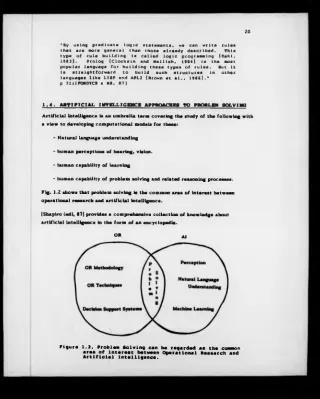
1.4. AR T IFIC IA L IN T E L L IG E N C E A PP R O A CH E S T O PROBLEM S O L V I N G ... 20
1.4.1. PR OBLEM SO LV ING A N D AR T IFIC IA L IN T E L L IG E N C E ... 21
1.4.2. THE F O R M U LA T IO N O F PR OBLEMS IN A I ... 21
1.4.3. PR O BLE M -SO LV ING PR O CED U R ES U SE D IN A I ... 21
1.4.4. K N O W L E D G E -B A S E D SYSTEMS (E X P E R T SYSTEMS) ... 22
1.5. T O W AR D S A D A P T IN G AR T IFIC IA L IN T E L L IG E N C E T E C H N O LO G Y IN M AN A G E M E N T S C IE N C E / O P E R A T IO N A L RESEAR CH ... 22
1.5.1. THE E A R L Y H ISTO RY O F OR A N D A I ... 22
1.5.2. THE P O T E N T IA L A P P LIC A T IO NS ... 23
1.6. C O N C LU S IO N ... 24
C H A P T E R 2i A REVIEW O F S IM U LA T IO N M O D E L U N G ... 25
IN T R O D U C T IO N ... 25
2.1. A B O U T SIM U LA TIO N ...--- 25
2.1.1. DEFINITIONS O F S IM U L A T IO N ... 25
2.1.2. THE P L A C E O F SIM ULATION IN T H E PR O BLE M SO LVER ’S T O O L B O X ... 26
2.1.3. THE DIM ENS IO NS O F SIM ULATION ... 27
2.1.4. THE A P P U C A T I O N AR EAS ... 28
2.1.5. PR OBLEMS WTTH TH E USE O F S IM U L A T IO N ... 28
2.2. TH E E X PE R IM E NT A L FR A M E ... 28
2.3. SIM ULATION M O D E L U N G ... 31
2.3.1. SYSTEM D ESCR IP TIO N ... 31
2.3.2. THE ’E X E C U T A B L E ’ SIM ULATION M O D E L ... 31
2.4. D Y N A M IC B E H A V IO U R G ENER ATIO N ... 32
2.4.1. SIM ULATIO N EXECUTIVES ... 33
2.4.2. THE R E PR ES E NT A T IO N SCHEME F O R T H E SYSTEM'S STATE 33 2.4.3. A P P R O A C H E S T O D Y N AM 1C B Ê H A VIO Ù R * G E N E R A T IO N ... 34
2.5. SIM ULATION S O F T W A R E ... 42
2.5.1. SIM ULATIO N L A N G U A G E S A N D P A C K A G E S ... 42
2.5.2. SIM ULATIO N PR O G R A M G E N E R A T O R S ... 43
iv
2.6. T H E IN FLUENCES O N SIM ULATIO N SO F TW AR E O F
DEVELOPMENTS IN C O M P U T E R SCIENCE ... 45 2.6.1. H A R D W A R E ... 45 2.6.2. THE A V A IL A B ILIT Y O F NEW PR O G R A M M IN G
L A N G U A G E S ... 45 2.6.3. THE G R A M M A R FOR S IM U LA T IO N
L A N G U A G E S ... 2.6.4. OBJECT O R IE N T ED P R O G R A M M IN G 2.6.5. C O M P UTE R G R A P H IC S ... 2.6.6. INTER ACTIVE SOFTWARE ...
2.6.7. SOFTWARE ENG INEER IN G ... 47 2.6.8. D A T A -B A S E FACILITIES ... 48 2.6.9. F U N C T IO N A L - A N D LO G IC PR O G R A M M IN G
PA R A D IG M S ... 48
2.7. C U R R E N T TR E N D S IN SIM U LA TIO N M E T H O D O LO G Y ... 49 2.7.1. TRENDS IN T H E P R A C T IC E O F SIM ULATIO N ... 49 2.7.2. E X P E R IM E N T A L-F R AM E BA SE A N D M ODEL
B A S E ... 50 2.7.3. INTER ACTIVE M O D EL D E V E LO P M E N T BY N O N
EXPERTS ... 50
2.7.4. GR A P H IC S WITHIN S IM U LA T IO N ... 50
2.8. S IM U LA T IO N A N D A R T IFIC IA L IN T E L L IG E N C E ... 50 2.8.1. VIEWS A B O U T THE USE O F A I TECH N IQ UES IN
SIM U LA T IO N ... 51 2.8.2. THE IM PLEM ENTATIO N O F A R T IF IC IA L
IN T ELLIG E NC E T E C H N O L O G Y IN VA R IO US
PHASES O F A S IM U LA T IO N S T U D Y ... 56
C H A P T E R 3: K NO W LE D G E -B A SE D SYSTEMS- A N D
L O G IC P R O G R A M M IN G P A R A D IG M S ... 59
IN T R O D U C T IO N ...— ...--- ...--- ... ... 59
3.1. A REVIEW O F T H E K N O W LE D G E B A S E D SYSTEMS
PA R A D IG M ... 59 3.1.1. FROM G E N E R A L PR O BLEM SO LVING TO
K N O W LE D G E -B A SE D P R O BLE M SO LVING ... 59 3.1.2. C O M P UT E R SYSTEMS F O R T H E 1990«... 61 3.1.3. T E C H N IC A L A N D F U N C T IO N A L
CLA SS IFIC ATIO N S O F E X P E R T S Y S T E M S ... 61 3.1.4. K NO W LE D G E -B A SE D SYSTEMS
A R C H IT E C T U R E ... 62 3.1.5. K N O W LE D G E R E PR ES E NT A T IO N SCHEMES ... 62 3.1.6. THE IN F E R E N C E ENG INE ... 62 3.1.7. THE C O N T R O L M ECH ANISM S FO R
IN F E R E N C E ... 65 3.1.8. THE H A N D L IN G O F U N C E R T A IN T Y WITHIN
IN F E R E N C E 65
3.1.9. THE USER IN T ER F A CE A N D E X P L A N A T IO N
3.1.10. THE K N O W LE D G E ENG INEER'S SO F TW AR E
T O O LS ... 67
3.2. A REVIEW O F TH E L O G IC P R O G R A M M IN G P A R A D IG M ... 68
3.2.1. A U T O M A T IO N O F DE D U CTIO N IN FIRST ORDER PR E D IC A T E LO G IC ... 68
3.2.2. T H E C H A R A C T E R IS T IC F E A T U R E S OF PR O LO G ... 69
3.2.3. THE PR O BLEM SOLVING IN T ER PR E T A T IO NS OF A SET OF P R O LO G C L A U S E S ... 70
3.2.4. D A T A -B A S E IN TER PR E TA TIO N O F PR O LO G C LA U S E S ... 70
3.2.5. C O M P ILE R W R ITING A N D P R O L O G ... 71
3.2.6. THE RE LATIO N SH IP BETWEEN P R O L O G A N D OBJECTS ...— ... 71
3.3. TH E R E PO R T ED USE O F PR O LO G IN S IM U LA T IO N ... 72
3.4. A R G U M E N T S T O S U P P O R T THE USE O F P R O L O G AS T H E IM PLEM ENTATIO N L A N G U A G E FOR THIS P R O JEC T ... 74
3.4.1. T H E DISTINCTION BETWEEN K N O W L E D G E REPR ESENTATIO N SCH EM ES A N D IM PLEM ENTATIO N L A N G U A G E S ... 74
3.4.2. S U P P O R T IN G A R G U M E N TS ... 74
3.5. IN IT IAL C O NJE CT U R E S R ELATIN G T O P R O L O G A N D S IM U LA T IO N L A N G U A G E G R A M M A R S ... 77
C H A P T E R 4: A P R O T O T Y P E SIM ULATIO N E N G IN E WRITTEN IN P R O L O G ... ... 78
IN T R O D U C T IO N ... 78
4.1. TH E IN IT IAL W O R K T O W AR D S A S IM U LA T IO N ENGINE USING P A S C A L ... 79
4.1.1. B A C K G R O U N D ... 79
4.1.2. M O T IV A T IO N ... 80
4.1.3. T H E IN ITIAL W O R K IN P A S C A L ... 81
4.2. TH E M O TIVATION F O R TH E SHIFT T O W A R D S LOGIC P R O G R A M M IN G ... 82
4.2.1. T O E X P L O R E TH E FEAsrälLTTY O F USING LO G IC PR O G R A M M IN G FOR S IM U LA T E D B E HAVIO U R G E N ER AT IO N ... 82
4.2.2. T O FA C ILIT A T E TH E USE O F S IM U LA T IO N BASED A I PR OBLEM SO L V IN G T E C H N O L O G Y ... 82
4.3. B A C K G R O U N D ...--- -— ...— ... «4
4.3.1. EXPR ESSING SIM ULATION M ODELS USING A LTER N ATIVE F O R M A L IS M S ... 84
4.3.2. A P R O T O T Y P E IN T ER AC T IV E SIM ULATIO N M O D E L U N G E N V IR O N M EN T ... 84
4.3.3. A P R O T O T Y P E SIM ULATIO N ENG INE WRITTEN IN PR O LO G ...--- .... 85
4.4. O BJEC TIVES ... ... ...---...--- 85
4.5. T H E FIR ST VERSION OF TH E SIM U LATIO N ENG INE (T H R E E PHASE O N L Y ) ... 86
4.5.1. T H E DESIGN FEATUR ES ... 86
4.5.2. IM PLEM E NTA TIO N ... 89
4.5.3. A N EX AM PLE OF BEHAVIO UR G E N ER AT IO N BY USING THE SIM U LATIO N ENG INE ... 93
4.6. THE S E C O N D VERSION O F THE SIM ULATIO N E N G I N E ... 95
4.6.1. EXTENSIONS TO THE DESIGN SPECIFICATIONS ... 95
4.6.2. IM PLEM E NT A T IO N ... 95
4.6.3. A N E X AM PLE O F BEHAVIO UR G E N E R A T IO N BY EXPRESSING TH E ’L O R R Y ' M O D EL USING PROCESSES O N L Y ... 98
4.6.4. A N EX AM PLE O F B E HAVIO U R G E N E R A T IO N BY EXPRESSING THE 'L O R R Y ' M ODEL USING PROCESSES, EVENTS A N D ACTIVITIES ... 99
4.6.5. A C O N S O LID A T E D VIEW O F T H E SIM ULATION ENG INE ... 99
4.7. T H E D ESIR ABILITY OF THE P U R E L Y D E C LA R A T IV E SPECIFIC ATIO N O F SIM U LA TIO N M ODELS ... 99
4.7.1. DISCUSSION ... 99
4.7.2. A N EX A M P LE ... 102
4.8. C O N C L U S IO N S A N D FUR TH ER RESE A R C H ... 102
4.8.1. C O N C LU S IO N S ... 102
4.8.2. F U R T H E R RESEAR CH ... 103
A N N E X E 4 A ... 105
4A.1. S IM U LA T IO N PROBLEM ('lo r r y ')... 105
4A.1.1. N A T U R A L L A N G U A G E DESCRIPTION O F THE PROBLEM ... 105
4A.1.2. N A T U R A L L A N G U A G E D ESCRIPTIO N O F THE SYSTEM ... 105
A N N E X E 4B ... 108
4B.1. T H E ‘lorry* MODEL (THREE PH ASE O N L Y ) ... 108
4B.1.1. M O D E L A R T IC U L A T IO N ... 108
4B.1.2. A T R A C E OF TH E S IM U LA T E D BEHAVIOUR G E N ER AT E D BY TH E SttIU LA T IO N ENG INE (THREE PH ASE O N L Y ) ... 111
vil
4C.1. TH E ’lorry' M ODEL (PROCESSES O N L Y ) ... 114 4C.1.1. M ODEL A R T IC U L A T IO N ... 114 4C.1.2. A T R A C E O F THE SIM U LA TE D B E H A V IO U R
G E N ER AT E D BY T H E SIM ULATIO N E N G IN E
(PROCESSES O N L Y ) ... U S
A N N E X E 4 D ... ... T--- TTT„ „ 119
4D.1. TH E ’lorry' M ODEL (A M IX T UR E OF TH R EE P H A S E
A N D P R O CE SS E S)... 119 4D .1 .I. M ODEL A R T IC U L A T IO N ... 119 4D.1.2. A T R A C E O F THE SIM U LA TE D B E H A V IO U R
G EN ER AT E D BY T H E SIM U LATIO N E N G IN E
(MIX ED THREE PH A S E A N D P R O C E S S E S )... 119
A N N E X E 4E ... 123
4E.1. A D E C LA R A T IV E A R T IC U L A T IO N O F THE ’lorry’
M O D E L ... 123
4E.2. THE D O C UM E NT A T IO N FO R T H E P R ED ICA T E S USED
FOR D EC LA R A T IV E A R T IC U L A T IO N ... 123
4E.3. IM PLICATIO N S IN R ELATIO N T O MODEL
G E N E R A T IO N ... 125
A N N E X E 4C ... .. 114
C H A P T E R 5: A PR O T O T Y PE K N O W LE D G E -B A SE D D IS CR E TE
SIM ULATIO N M ODEL G E N E R A T IO N F A C IL IT Y ... 126
IN T R O D U CT IO N ...____ ... 126
5.1. C O M P U T E R SU PP O R T FOR C O N S T R U C T IN G
SIM ULATIO N P R O G R A M S ... 127 5.1.1. THE INTER ACTIVE E N T R Y O F M O D EL
C O M PO NENTS EXPRESSED IN A
D IA G R A M M A T IC FO RM ALISM ... 128 5.1.2. SIM ULATION PR O G R A M G E N E R A T IO N IN
A LT E R N A T E L A N G U A G E S ... 129 5.1.3. M O D EL E NT R Y A N D O U T P U T USING
A LT E R N A T E W O R L D VIEWS ... 129 5.1.4. ASSISTANCE IN M ODEL F O R M U LA T IO N ... 130 5.1.5. KN O W LE D G E -B A SE D SIM ULATIO N
M O D E L L IN G ... 130 5.1.6. KN O W LE D G E -B A SE D SO FTW ARE
SPECIFICATION A N D PR O G R AM
SYNTHESIS ... 131
5.2. M O TIVATION « ... 132
5.3. OBJECTIVE ... 133
viU
5.4. A SUB SET O F SIM U LA T IO N MODELS ... 133
5.4.1. C LA S S E S O F ENTITIES ... 134
5.4.2. Q U E U E S ---...--- ...----...— 134
5.4.3. A C T IV IT Y -S E T S ... 134
5.4.4. R E S O U R C E S ...--- ...— ... 134
5.5. DESIGN A S P E C T S ... 134
5.5.1. D ESIG N P H IL O S O P H Y ... 134
5.5.2. A F O R M FO R T H E G ENER IC SPECIFIC ATIO N O F S IM U LA T IO N M ODELS ... 135
5.5.3. T H E F O R M O F THE E X E C U T A B LE M ODEL ... 136
5.6. A P R O T O T Y P E K N O W LE D G E -B A SE D DISCRETE S IM U LA T IO N M O D E L GE N ER ATIO N F A C IL IT Y .... ...--- --- ... 136
5.6.1. A N O V E R V IE W ... 136
5.6.2. T H E RE PR ES E NTA TIO N OF T H E K N O W LE D G E ... 136 5.6.3. T H E M ET H O D EM P LO Y E D FOR M ODEL B U IL D IN G ... 141
5.7. E X A M P LE S O F B U IL D IN G SIMPLE M ODELS ... 141
5.7.1. T H E P A R T IA L 'lorry' MODELS ('merchant' O N L Y ) ... 142 5.7.2. T H E P A R T IA L 'lorry' MODELS ('merchant' A N D 'neb' O N L Y ) ____...--- ...--- 142
5.7.3. A C O M P L E T E VERSION O F THE 'lorry' M O D E L ... 148
5.7.4. A H A R B O U R M O D E L ...--- -— ... 148
5.7.5. 'harbour-1' M O D E L ...— ... 149
5.8. EX TE NS IO NS T O A L L O W M ORE C O M P LE X MODELS ... 151
5.8.1. A L A R G E R M O D E L ... 151
5.8.2. T H E 'harbour-2' M O D E L --- ... 152
5.9. C O N C L U S IO N S A N D F U T U R E DEVELO PM ENT ... 156
5.9.1. C O N C L U S IO N S ... 156
5.9.2. F U T U R E D EVELO P M EN T ... 156
A N N E X E 5 A ...--- ...--- .... 158
5A.1. THE P A R T IA L 'lorry' M ODEL (M E R C H A N T O N L Y , O N E IN S T A N C E O F WEIGH BRIDGE) ... 158
5A.1.1. T H E M O D E L A R T IC U L A T IO N A T A V E R Y HIGH L E V E L ... 158
5A . 1.2. T H E K N O W LE D G E -B A S E ... 158
5A . 1.3. T H E E X E C U T A B LE MODEL AS G E N E R A T E D ... 159
to
5B.1. T H E P A R T IA L 'lorry' M O D EL (M E R C H A N T O N L Y , T W O
INSTA NC E S O F WEIGH BRIDGE) ... 165 5B.1.1. THE M O D E L A R T IC U L A T IO N A T A V E R Y H IGH
L E V E L ... 165 5B.1.2. THE K N O W L E D G E -B A S E ... 165 5B.1.3. THE E X E C U T A B LE M ODEL AS G E N E R A T E D ...
165
5B.1.4. THE C O N T E N T S O F THE W O R K ING M E M O R Y BEFO RE T H E O U T P U T O F THE
E X E C U T A B L E M ODEL ... 166
A N N E X E 5C ... 168
5C.1. T H E P A R T IA L 'lorry' M O D EL (M E R C H A N T A N D N C B O N L Y , O N E IN S T A N C E OF WE1GH-BRIDGE,
M IXED Q U E U E I N G )... 168 5C.1.1. THE M O D E L A R T IC U L A T IO N A T A V E R Y HIGH
L E V E L ... 168 5C.1.2. THE K N O W LE D G E -B A S E ... 168 5C.1.3. THE E X E C U T A B LE M ODEL AS
G E N E R A T E D ... 169 5C.1.4. THE C O N T E N T S O F THE W O R K IN G M E M O R Y
BEFO RE THE O U T PU T O F THE
E X E C U T A B L E M ODEL ... 170
A N N E X E 5D ... 173
5D.1. TH E P A R T IA L 'lorry* M O D EL (M E R C H A N T A N D N C B O N L Y , O N E IN S T A N C E O F WE1GH-BRIDGE,
S E P AR AT E Q U E U E IN G ) ... 173 5D.1.1. THE M O D E L A R T IC U L A T IO N A T A V E R Y HIGH
L E V E L ... 173 5D.1.2. TH E K N O W LE D G E -B A S E ... 173 5D.1.3. TH E E X E C U T A B LE M ODEL ... 173 5D.1.4. TH E C O N T E N T S OF THE W O R K ING M E M O R Y
BEFO R E T H E O U T P U T O F THE
E X E C U T A B L E M O D EL ....____ 174
A N N E X E 5 1 ... ... 178
5E.1. T H E C O M P LE T E 'lorry' M ODEL (M E R C H A N T , N C B A N D T R A IN , O N E IN S T A N C E OF W EIG H-BR ID G E, O N E IN S T A N C E OF LO AD ER , SE P AR AT E
Q U E U E IN G )... 178 5E.1.1. THE M O D E L A R T IC U L A T IO N AT A V E R Y H IGH
L E V E L ... 178 5E.1.2. THE K N O W L E D G E -B A S E ... 178 5E.1.3. THE E X E C U T A B LE M O D EL AS G E N E R A T E D ...
179
5E.1.4. THE C O N T E N T S O F THE W O R K ING M E M O R Y BEFO RE TH E O U T P U T O F TH E
E X E C U T A B LE M ODEL ... 181
5F.1. THE Turbour-I' M O D E L ... 184
5F.1.1. T H E M ODEL A R T IC U L A T IO N A T A V ER Y HIGH L E V E L ... 184
5F.1.2. T H E K N O W L E D G E BASE ... 184
5F.1.3. T H E E X E C U T A B L E MODEL AS G E N E R A T E D ...______________ _______ ..._______ ____185 A N N E X E 5G ... 188
5G.1. TH E lia r hour+lorry’ M O D E L ... 188
5G.1.1. T H E MODEL A R T IC U L A T IO N A T A V E R Y HIGH L E V E L ... 188
5G.1.2. TH E K N O W L E D G E B A S E ... 188
5G.1.3. TH E E X E C U T A B L E MODEL AS G E N E R A T E D ... 190 A N N E X E 5 F ... ... ...___ ... 184
A N N E X E 5H ...— ...— . 194
5H.1. T H E harbour-2' M O D E L ... 194
5H.1.1. T H E MODEL A R T IC U L A T IO N A T A V E R Y HIGH L E V E L ... 194
5H.1.2. T H E K N O W L E D G E -B A S E _____________ ... 194
5H.1.3. TH E E X E C U T A B L E MODEL AS G E N E R A T E D ...195
5H.1.4. TH E E X E C U T A B L E MODEL AFTER EDITING ... 196
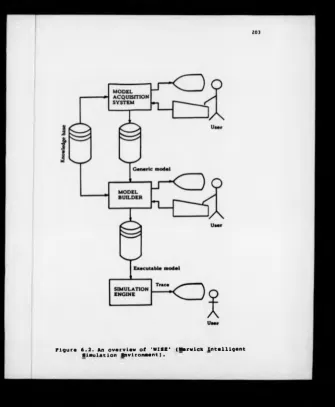
C H A P T ER 6s 'WISE' — A P R O T O T Y P E KN O W LE D G E -B A SE D D ISCRETE SIM U LATIO N M O DELLING E NV IR O N M EN T --- ... ... ... 199
IN T R O D U C T IO N ... 199
6.1. M O TIVATIO N ... 200
6.2. T H E C O N C E P T U A L F R A M E W O R K ... ... 200
6.3. IN IT IAL PROBLEMS ..._____... 202
6.4. IM PLEM ENTATIO N ...__ ...____ ....--- 202
6.5. A N E X A M P LE ______________ ...____ ...--- ... 204
6.5.1. T H E K N O W L E D G E -B A S E ... 204
6.5.2. TH E IN T ER AC T IV E DEFINITION O F T H E 'lorry' MODEL ... 206
6.5.3. EXCEPTION H A N D L IN G ... 213
6.6. T O W A R D S G E N E R A L IZ A T IO N S ...218
6.6.1. T H E SIM ULATIO N M ET H O D O LO G Y K N O W LE D G E __ ...________________ ...______ ...__________218 6.6.2. C O N D IT IO N A L B R A N C H IN G ...219
6.6.3. T H E FORM O F THE E X E CU T A B LE M O D E L ...220
6.6.4. T H E SU B-M O D ELS K N O W LE D G E B A S E ...220
6.7. C O N C L U S IO N S ..._____ ...___ ... 224
C H A P T ER 7s C O N C L U S IO N S A N D F U R TH E R RESE A R C H ... 225
7.1. C O N C L U S IO N S ... 225
7.1.1. C O N C LU S IO N S R E L A T E D TO THE W O R K O N THE SIM U LATIO N E N G INE ... 225
7.1.2. C O N C LU S IO N S R E L A T E D TO THE SIM ULATIO N M O D E LLING ENV IR O N M EN T ... 226
7.2. F U R T H E R R E SE A R C H ...__ ... 228
R E F E R E N C E S ...231
REFERENCES C IT E D WITHIN Q U O T ES ... 249
A PP EN D IX I ... ... ... ... 253
A PP EN D IX O ...259
B IB L IO G R A P H Y ... 265
xi
L I S T OP IL L U S T R A T IO N S L I S T OF IL L U S T R A T IO N S
Figure 1.1. Summary o f a package o f methodological tools for
systems modelling ... 18
Figure 1.2. Problem Solving can be regarded as the common area of interest between Operational Research and A rtificial
In tellig en ce... 20
Figure 2.1. A fram ework for sim u lation ... 30
Figure 2.2. The sim plified development of certain two-phase
simulation la n g u a g e s... 37
Figure 2.3. The sim plified development of three-phase simulation
lan gu ages... 38
Figure 2.4. Simulation in the past was characterised by a lack o f a
unified methodology ... 41
Figure 3.1. A knowledge system and its environmental
c o n t e x t... 63
Figure 3.2. The building blocks o f a knowledge s y st e m ... 64
Figure 4.1. A n overview o f the simulation engine
environm ent... 87
Figure 4.2. The organisation o f the Arity/Prolog D a t a b a s e ... 88
Figure 4.3. A flow diagram fo r the 'four phase' mode o f behaviour generation where the model can be expressed as a
combination o f events, activities and processes ... 97
Figure 4.4. A consolidated view o f the simulation engine ... 100
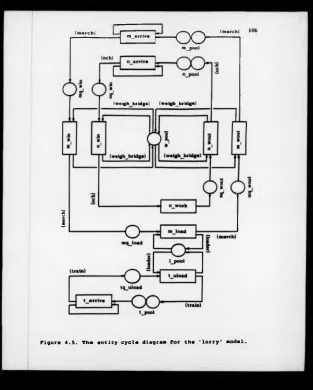
Figure 4.5. The entity cycle diagram for the 'lorry' m o d e l... 106
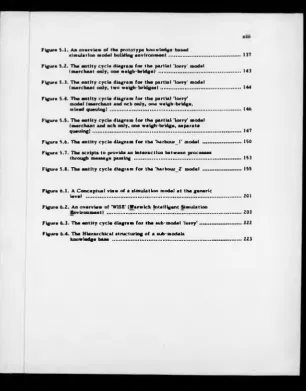
Figura 5.1. An ovarviaw of tha prototypa knowledge-based
simulation modal building anvironroant ... 13?
Figura 5.2. Tha antity cycle diagram fo r the partial ’lorry' modal
(marchant only, one waigh-bridge) ... 143
Figure 5.3. The antity cycle diagram for the partial 'lorry' modal
(merchant only, two w eigh -brid ges)... 144
Figure 5.4. The entity cycle diagram for the partial 'lorry' model (merchant and neb only, one weigh bridge,
mixed queuing) ... 146
Figure 5.5. The entity cycle diagram for the partial 'lorry' model (merchant and neb only, one weigh bridge, separate
qu eu in g )... 147
Figure 5.6. The entity cycle diagram for the 'harbou r_l' model ... 150
Figure 5.7. The scripts to provide an interaction between processes
through message passing ... 153
Figura 5.8. Tha entity cycle diagram for the 'harbour_2' model ... 155
Figure 6.1. A Conceptual view of a simulation model at the generic
level ...201
Figure 6.2. An overview of 'WISE' (W arwick Intelligent Simulation
Environment) ... .'...203
Figure 6.3. The entity cycle diagram for the sub-model ’lo r r y '...222
Figure 6.4. Tha Hierarchical structuring of a sub-models
ACKNOWLEDGEMENTS
I fee l g reatly indebted to The British Council for their Fellowship Aw ard to me
which has enabled this project.
My first thanks should go to my Ph.D. supervisor, Dr. Robert Hurrion, for
accepting to supervise this research, for his support during the project in the form
o f helpful discussions and comments on earlier drafts of this thesis, and for
making available source code fo r his 'LEGO' system during early phases o f this
research.
I thank the following for their respective contribution in this project«
P rof. R o lfe Tomlinson for supporting my application to The British Council for
extension in the duration o f the Fellowship Aw ard and also for permission to use a
hard disk personal computer fo r this project for nearly a year.
Mr. Keith Halstead for making available the Pascal source code for an arithmetic
statem ents interpreter.
The School o f Industrial and Business Studies for allowing the use o f an O livetti
M24 personal computer exclusively for this project and also for allowing use of
photocopying, word processing and laser printing facilities within the School.
Lastly, I take this opportunity to o ffe r my special thanks to my parents for their
painstaking e ffort in bringing me up and for providing me with education and
XV
SUMMARY
The in itial chapters of this thesis cover a survey of literature re latin g to problem solving, discrete simulation, knowledge-based systems and logic programming.
The main emphasis in these chapters is on a review of the state o f the art in the
use o f A rt ific ia l Intelligence methods in Operational Research in general and D iscrete Simulation in particular.
One o f th e fundamental problems in discrete simulation is to m im ic the operation
o f a system as a part of problem solving relating to the system. A number of methods o f simulated behaviour generation exist which d ictate the form in which
a sim ulation model must be expressed. This thesis explores the possibility of
employing logic programming paradigm for this purpose as it has been claimed to o ffe r a number of advantages over procedural programming paradigm . As a result
a prototype simulation engine has been implemented using P ro lo g which can
gen erate simulated behaviour from an articulation of model using a three phase or process 'w orld views' (or a sensible mixture o f these). The sim ulation engine
approach can o ffer the advantage of building simulation models incrementally.
A new paradigm for computer software systems in the form o f Know ledge-Based Systems has emerged from the research in the area of A rtific ia l Intelligence. Use
of this paradigm has been explored in the area o f simulation m odel building. A feasible method of knowledge-based simulation model generation has been
proposed »n d using this method a prototype knowledge-based simulation modelling environment has been implemented using Prolog. The knowledge based system
paradigm has been seen to o ffe r a number o f advantages which include the possibility o f representing both the application domain knowledge and the
simulation methodology knowledge which can assist in the model definition as well
as in the generation o f executable code. These, in turn, may o f f e r a greater amount o f computer assistance in developing simulation models than would be
possible otherwise.
The re se arch aim is to make advances towards the goal of 'intelligent' simulation
modelling environments. It consolidates the knowledge related to simulated
behaviour generation methods using symbolic representation fo r the system state while perm itting the use o f alternate (and mixed) 'world views' fo r the model
articulation. It further demonstrates that use o f the knowledge-based systems paradigm fo r implementing a discrete simulation modelling environment is
xvi
INTRODUCTION
T b t research described in this thesis was undertaken within the Operational
Research/Systems Group o f the School of Industrial and Business Studies under the
supervision o f Dr. R . D. Hurrion. The research started in October 1985 and this
thesis marks its 'completion' in June 1989. The main concern o f this thesis is
D iscrete Simulation Modelling.
The availability of inexpensive processing power in the form o f micro computers
has provided necessary encouragement for the use of discrete simulation for
problem solving. Previously simulation has been regarded as a 'court o f last
resort', mainly because o f its empirical nature, the amount o f labour involved and
the need for highly trained personnel for conducting these studies. This view has
changed a great deal by the introduction of the visual interactive approach to
Simulation which enables direct involvement o f the decision maker in the
simulation model development and also provides fo r interactive experimentation
with these models. The use o f an animated graph ic trace provides a quicker
verification o f simulation models.
In the past, the conduct o f simulation studies h ave been facilitated by special
purpose softw are in the form o f simulation languages and packages. The current
trend in simulation softw are is to provide s o ftw a re tools for computer support in
all phases o f a simulation study and, with the h elp o f suitable interfaces, to
integrate such tools to provide integrated sim ulation environments. The main aim
o f such integration is to provide for the ease o f conducting simulation studies and
also to enable the conduct o f simulation studies by non-simulation-experts
(S H A N N O N , 86).
Concurrently with the ideas related to the developm ent o f integrated simulation
environments have emerged two new paradigms related to computer softw are
from research in the area o f artificial intelligence. These are the Knowledge-
Baaed Systems paradigm fo r softw are systems and the Logic Programming
paradigm fo r computer programming. This thesis addresses the problems of
implementing a prototype discrete simulation environment while using these new
paradigms. T w o areas o f discrete simulation that have been concentrated upon
are: (a ) the generation o f simulated behaviour fr o m the articulation o f a
XV ii
generation while using a knowledge-based systems framework. The logic
programming language Prolog has been used for implementation throughout. The
method employed for research has been mainly exploratory programming and
prototype system implementation as is the case with roost A rtificial Intelligence
related research.
Chapters 1 and 2 are intended to provide a perspective for the research described
in later chapters and attempt a literature survey on Problem Solving and Discrete
Simulation. These chapters undertake a review o f the ideas related to the
application o f artificial intelligence techniques within expert problem solving and
simulation. Chapter 3 looks somewhat more closely at the new paradigms o f
Know ledge-Based Systems and Logic Programming and argues in favour o f
exploring their use for providing 'intelligent' discrete simulation modelling
environments.
C hapter 4 describes the research for devising a prototype simulation engine using
Prolog as the implementation language. This simulation engine interprets the
model code at run-time and is capable of driving simulated behaviour from
articulation of model using three phase (i.e. events/activities) or process 'world
views'. A sensible mixture o f these two 'world views' is also supported. The need
to support model articulation using alternative or multiple 'world views' was seen
as a possible approach towards the goal of knowledge based simulation
environments. The knowledge of the dynamic behaviour of systems in a given
application domain can be more naturally captured as events, activities or
processes [H UR R IO N, 85]. The ability of a simulation engine to support multiple
'world views' would have direct relevance to the creation of a knowledge-based
simulation modelling environment where the knowledge could be retrieved and
assembled, without a 'world view' related transformation, into an executable
simulation model directly.
C hapter 5 covers research fo r suitable knowledge representations to enable
knowledge-based construction o f simulation models. As a result o f this research a
prototype knowledge-based model builder has been implemented using Prolog. The
working o f this model builder has beed demonstrated with the help o f a number of
examples.
C hapter 6 further develops the knowledge representations o f chapter 5 to devise
and implement a knowledge-based model acquisition system for interactively
xviii
generalisations w hich can be developed from the experiences gained from this
Chapter 7 concludes this thesis with the research findings of using Prolog in
knowledge based environments and gives some ideas about further research.
A note on the citatio n of references. References cited within square brackets can
be found in the section titled 'References'. Those references which have been
cited by others w ithin quotes have been enclosed in curly brackets and have been
compiled in the section titled 'References Cited Within Quotes'.
A Bibliography a t the end of this thesis represents the additional m aterial
1
CHAPTER I s PROBLEM SO LV ING
INTRODUCTION
ThU chapter alma to provide a perspective to the re se a rc h described in this thesis.
It takes a brief look at the problem solving activity a t a general level w hile taking
into account the role o f previously accumulated application domain knowledge and
problem solving methodology knowledge. The role o f a b stra c t knowledge and
form al languages in relation to problem solving has b e e n described and the use of
Operational Research and Systems Analysis methodology and techniques in
relation to managerial decision making has been b rie fly covered. The ro le of
digital computers and computer programming languages fo r information
processing during problem solving has been considered and Discrete Com puter
Simulation, as one o f the Operational Research techniques, has been introduced.
More recent developments relating to problem solving com puter systems (expert
systems, knowledge-based systems), as have emerged fr o m research in A rtificial
Intelligence, have been considered and different view s relating to their
relationship with Operational Research have been com piled. The relationships
between artificial intelligence technology and discrete computer simulation have
been taken up in more detail in chapter 2.
1 . 1 . PROBLEM SO LV ING IN GENERAL
1 . 1 . 1 . PROBLEMATIC S IT U A T IO N S
From what w e already know about reality, and from w h a t we currently observe we
attempt to figure out if anything is going wrong or if an y opportunities a r e being
lost due to taking either a wrong action or not taking th e right action o f
appropriate magnitude. If these 'symptoms' can be id en tified in a real life
situation, it can be regarded as a problematic situation ( e g . [SIMON It
2
1 . 1 . 2 . PROBLEM D E S C R IP T IO N
For the purpose o f this thesis w e shall take the view that a communicable
description of reality which poses itself as a problem is the starting point of
problem solving. Such a description shall be referred to as a problem description.
It is only natural that the problem description is expressed in one o f the 'natural'
languages (e.g. Greek).
'Regardless of the specific way in which a problem statement cones about ... it is conceptually useful to assume that there always exists such a statement (or its equivalent, from the point of view of information content and access) at the starting point of any problem-solving process. If the problem-solving activity requires a problem-acquisition stage whose end point is a problem statement that will govern the next stage of solution construction, it is useful to conceive of the situation as consisting of two well- defined problems: a problem-acquisition problem and a solution-construction problem.11
p 768;(AMAREL, 87)
A problem description th erefore should indicate as to what information — directly
observable, measurable or in ferred — has led us to believe that w e currently face
a problematic situation, and the criterion which makes us believe so. The sorts of
criteria which may be used include: our belief structure, utilization of resources,
ecological reasons (e.g. pollution), better performance by competitors and so on.
The process o f translating the problematic situation into problem description will
be referred to as problem understanding.
1 . 1 . 3 . THE SO LU T IO N
With reference to a problem description, a solution is a description o f an
achievable real life situation which we desire, envisage or hope fo r as a result of
taking some form o f corrective action. Generally, the specification of the
corrective action is also considered as a part o f the solution.
A solution is something w e do not know directly and is something we seek to find.
However, w e know something about it. For example, when faced with the problem
o f planning a layout fo r a fac to ry , w e know the requirements which the layout
must fu lfil but w e do not know the layout directly. I f it is possible to describe the
solution precisely by its characteristics then the problem is said to be well
further exploratory work is gen erally needed to know more about the problem and
the possible solutions that can be considered.
1 . 1 . 4 . PROBLEM SO LV ING
Once it has been possible to describe the problem and the various properties/
features/characteristics/aspects o f the solution we a r e looking fo r, then com es
the task o f determining a course o f action about which we can claim that on
im plementation it will transform the current problematic situation into a situation
which w e presently describe and seek as a solution. This task w e shall r e f e r to as
problem solving.
This requires bringing into play a ll the relevant pieces o f knowledge w e h a v e about
the situation under study and about the particular problem at hand in a suitable
form ation to bridge the gap b etw een the problem description and the solution
description. Particularly w e must know what actions are applicable in th e current
situation and what effect each actio n or a sequence o f actions w ill have on the
situation and its successive developments.
The quality o f knowledge we h ave therefore plays an important role in problem
solving and the certainty with w hich each item of knowledge can be applied to the
situation under study needs to b e taken into account. We prefer our kn ow ledge to
be in as general a form as possible as this gives us the opportunity to apply it
within the widest possible context. We also prefer our knowledge to be as 'fin e
grained' as possible as this allow s us to consider the problematic situations in
greater detail. Sometimes when relevant pieces o f knowledge are not a v a ila b le a
resort has to be made to gen erate such unavailable knowledge by carryin g out
carefully controlled experiments.
It is th erefore important that eac h experience of problem solving is w ell
documented so that the knowledge is available for fu ture problem solving
situations. With an increasing body o f knowledge it is a practical necessity that
our knowledge base is partitioned fo r the convenience o f learning and re fe re n c e .
It is out o f this necessity that various disciplines o f study have em erged. F o r
example law , social sciences, physical sciences, engineering, technology, m edical
4
1 . 1 . 5 . A B ST R A C T IO N : REPR ESENTATIO N I N FORMAL LANGUAGES
A s noted earlier, knowledge about real life situations can be recorded using one of
the natural languages. Words need to be chosen or invented to describe various
elements of the situation and the way these are related to each other and the way
they interact as a part o f their behaviour. Natural languages su ffer the lim itation
that their words do not always convey precise meaning and there is room fo r
ambiguity. These are therefore not considered entirely suitable fo r d escribing our
understanding o f reality precisely with a view to problem solving. This is
especially the case because w e are always looking fo r procedural techniques for
problem solving and, the problem description in a natural language is d iffic u lt to
subject to known problem solving procedures, to say the least. These
requirements on the use of knowledge have necessitated that the application
domain knowledge is represented in a formal language to convey precise meanings
whereas the problem solving knowledge takes the form of procedures to
manipulate the knowledge thus represented (e.g. [N E W E LL , 69]).
Formal languages are characterized by their finite vocabulary, precise meaning
and precise rules of grammar fo r making legal constructs in those respective
languages. It is not at all necessary that a form al language be restricted to words
and sentences, it can consist o f a set o f symbols and rules (i.e. gram m ar) fo r
combining these symbols to convey specific meanings. For example in Chem istry
a set o f symbols are used to represent elements, chemical reactions, the bondage
of atoms in molecules and so on. Mathematics is another example o f a fo rm a l
language in which the quantitative relationships o f real situations can be
described. Various diagrammatic languages have been used to capture the system
description such as entity cycle diagrams, petri-nets ...
The development of precise form al languages has also led to the developm ent o f a
body o f abstract knowledge which need not have any relationship with a spe cific
real world situation (although abstract knowledge itself is a reality). G en erally,
the development o f abstract knowledge begins with a set of definitions and axioms
which intuitively we accept to be 'true'. For example with the introduction of
simple ideas about a point, a straight line and a circle, the whole body o f abstract
knowledge called Euclidean Geom etry has been developed. Abstract K now ledge is
developed by using methods o f logical inference and proof procedures to derive
more abstract knowledge from the existing abstract knowledge. Many branches of
d ifferential calculus, Integral calculus, complex mathematics, and so on, are
examples o f these bodies o f abstract knowledge.
If it is possible to describe a real world problem in a language fo r which w e have
available a body o f abstract knowledge, then such abstract knowledge (in the form
o f theorems, lemmas, ...) becom es directly applicable and can assist in arriving at
a solution. For exam ple, the language o f geom etry can be used to assist a land
revenue department in assessing the tax fo r a piece of land and also it can assist
an engineer to estim ate forces in structural frames. Another example is linear
programming. If it is possible to express the problematic situation as a linear
objective function and a set o f linear constraints, then it is possible to 'solve' the
problem o f optimising the objective function. Such 'ready made' procedures based
on abstract knowledge which transform the problem expressed in one form into a
solution are re ferred to as problem solving techniques.
Not only does the abstract knowledge help us solve problems related to existing
systems but it also assists us in the design o f future systems. It is evident that by
the use o f abstract knowledge it has been possible to design and build systems of
immense complexity. Examples are space missions, global communication
networks, banking systems, and so on.
1 . 1 . 9 . GENERAL FORKS
With the development o f abstract knowledge in various languages it has been
found to be convenient to describe this knowledge around some generalized form s.
A general form provides a kind of template in which some o f the aspects are made
invariable whereas others may vary from one problem to another. For exam ple in
linear algebra w e define a general form fo r a linear programming (L P ) problem.
This form requires an objective function and a set o f linear constraints which
constitutes the invariable part of the form . The part which can vary from one LP
problem to another is the coefficients in the objective function, the number o f
variables, the number o f constraints, the coefficients o f the variables in the
constraints.
An attempt is made to develop a general solution procedure related to each
general form o f the problem. For example a Simplex procedure is a general
procedure fo r the solution o f any problem which can be expressed in the gen eral
form for an L P problem. T here may be more than one gen eral solution procedure
associated with a general form o f a problem. Alternatively it may not alw ays be
6
possible to develop a general solution procedure for a given general form . The
claim for gen erality o f a solution procedure related to a general form is backed by
some form o f p ro o f that the application of the procedure to the problem
description w ill a lw a y s lead to the solution of the problem, provided one exists.
The knowledge o f gen eral forms and the related general solution procedures
provide us with the necessary abstract conceptual fram ework with which we
attempt to view problem atic situations. If it is possible to express a problematic
situation in a ge n e ra l form for which a general solution procedure is available then
the problem is said to be well structured otherwise with the current state o f our
knowledge it is said to be ill structured.
N ew ell has described this activity in the following words:
"Ws observe that on occasion express ions in some language are put forward that purport to state 'a problem. ' in response a method (or algorithm) is advanced that claims to solve the problem. That is, if input data are given that meet all the specifications of the problem statement, the method produces another expression in the language that is the solution to the problem. If there is a challenge as to whether the method actually provides a general solution to the problem (l.e., for all admissible Inputs), a proof may be forthcoming that it does. If there is a challenge to whether the problem statement is well defined, additional formalization of the problem statement may occur. In the extreme this can reach back to formalization of the language used to s t ate the problem, until a formal logical calculus is used."
p 363) (NEWELL, 69)
1 . 1 . 7 . S O L U T IO N PROCEDURES
The general solution procedures which are backed by a proof are called
algorithms. H ow ever, where adequate theory does not exist to provide the
necessary proof but a procedure is intuitively known to provide an acceptable
solution, the procedure is known as a heuristic. (Simon and N ew ell, 1958} have
identified heuristics as appropriate fo r ill-structured problems and algorithms as
appropriate to w ell-stru ctu red problems (F O R D Y C E St NS, 87}.
( A ) ALGORITHMS
(Reitman, 1964} has pointed out that the existence o f an algorithm presumes: (1)
program f o r the algorithm to (3) some well-defined criterion for solution,
(F O R D Y C C «1 NS, «7).
( B ) H E U R IS T IC S
{B eltram i and Bod in, 1974} has defined heuristics as follow s: Think o f heuristic
reasoning as meaning that one brings to bear as much intuition, and as many
plausible arguments, as possible on problems which are either computationally
in tractable, or for which inadequate theory exists.' [F O R D Y C E fc NS, 87].
l . l . t . PROBLEM FORMULATION
The form u lation of a problem in a form al language represents our understanding of
the problem atic situation and our approach to its solution procedure. So fa r there
is no gen e ra l procedure fo r formulating problems and this area is regarded as an
art rather than a science. A number o f 'tactics' are used during the form ulation
phase w hich include simplifying the problem by the use o f assumptions and
introducing various levels o f representation and interpretation.
The introduction of simplifying assumptions amounts to saying that the analyst
knowingly solves a simpler problem (because he is lim ited either by the
availa bility o f technique^) for solving the full problem or if available, their
application is not cost e ffective). He can then amend the solution thus obtained in
the light o f the assumptions he has made (by making use o f judgment or by
additional computation).
Representation is used to describe the problem in term s o f the theory on which a
known problem-solving technique is based. A solution has to be interpreted (i.e.
translated back from the formalism in which the problem w as originally
represented).
7
1 . 1 . 9 . METHODOLOGY I N PROBLEM SO LV ING
Having considered the role o f abstract (theoretical) knowledge in problem solving
w e now turn our attention to the knowledge which re lates to the generalizations
o f methods used within problem solving itself. These generalisations are
applicable at the appropriate stages o f both real world problem solving and o f the
developm ent o f a theory (L e . abstract knowledge) since the development o f a
In another sense methodology also implies a criteria which has earned some
credibility to b e e ffectiv e in dealing with problem s and therefore should be
complied with e .g . scientific method.
8
( A ) METHODS WHICH CHARACTERIZE THE APPROACH TO PROBLEM SO LV ING
( a ) T o p - D o w n a n d B o t t o m -O p A p p r o a c h e s
When we start the process o f problem solving from our knowledge o f the solution
(i.e. goal) and w ork backwards through subgoals until we arrive at the existing
situation, this approach is known as top-down. Alternatively when we proceed
from the current problematic state and proceed towards the solution the approach
is known as bottom -up. For more detail see p 7-8;[K O W ALSK I, 79]
( b ) P r o b le m R e d u c t i o n ( D e a l i n g w i t h c o m p l e x i t y )
While dealing w ith complex problematic situations (ones which do not lend
themselves d ire c tly to be formulated within a general form fo r which we have a
general solution procedure available) the problem needs to be divided into sm aller
more m anageable sub-problems. This approach to problem solving is called
problem reduction.
“When we are confronted with a coaplex system and have decided upon a way of looking at this system, we nay ask: how are its components to be identified? There is no unique answer t o this question. Sometimes the answer is evident, sometimes it is a matter of taste, and at other times the selection of suitable components is a crucial point in the analysis."
p 23: (BIRTWISTLE t DMN, 79).
( B ) METHODS WHICH ALLOW OS TO GENERATE MORE KNOWLEDGE FROM OOR E X IS T IN G KNOWLEDGE
( A ) I n d u c t i o n
Induction is in ferring a general principle from a set o f examples.
( b ) D e d u c t i o n
Deduction is in ferrin g a conclusion (specific or general) from known facts and
( c ) A b d u c t i o n
Abduction is form ulating s hypothesis about a law governing an observed
phenomenon.
( C ) METHODS WHICH RELATE TO A S C E R T A IN IN G OUR KNOWLEDGE
( a ) H y p o t h e s i s T e s t i n g ( E x p e r i m e n t i n g )
The knowledge which is generated needs to be tested before it can be accepted
gen erally. This is done by performing experiments, whose outcome needs to be
consistent with our expectations if the knowledge which we have generated is
true.
1 . 1 . 1 0 . THEORIES O F PROBLEM SO L V IN G
H aving made use o f abstraction in problem solving it is natural that some
attention has been paid to develop an abstract theory for the problem solving
phenomenon itself. [W IC K E L G R E N , 74] describes elements o f a theory o f problem
solving. Encyclopedic entry [A M A R E L , 87] presents a formal abstract view of
problem solving from the point o f view of creating problem solving systems.
[K O W A L S K I, 79] compares the models of problem solving developed in cognitive
psychology and artificial intelligence and argues in favour o f logical inference as
the general model fo r problem solving. [R IC H , 83] presents a view of basic
problem solving methods and representation schemes used in artificial intelligence
and related solution procedures.
1 . 1 . 1 1 . CLA SS E S O F PROBLEMS
When confronted with a problematic situation it is helpful to recognize it as one
o f a broad category o f problems for which we have some accumulation of problem
solving knowledge available. Apart from more usual classification — such as
physical sciences, social sciences, and so on — a functional classification with a
particular view to applicable problem solving methods has also evolved. For
exam ple a given problematic situation may be classified as a diagnostic problem, a
design problem, a planning problem, a control problem and so on. Such
classification is based on the nature of the problem and general sim ilarities in
their solution steps. For example, a doctor trying to diagnose an illness o f a
patient and an engineer trying to figure out what is wrong with a particular piece
10
strategy to narrow down th « area in which the problem exiata. Each may be
hypothesizing and then making some tests to either confirm the hypothesis or rule
a possibility out. This is so because both are working on a diagnostic problem.
Such functional classification is a convenient way of classifying our problem
solving knowledge at a functional level. Such a classification does not imply well
defined general solution procedures, such as discussed previously, but only
sim ilarities o f patterns o f problem solving methods.
1 . 1 . 1 2 . PROBLEM SO L V IN G PARADIGMS
The following problem solving paradigms are relevant to this thesis]
Scientific Method
Operational R esearch and Systems Analysis
A rtificial Intelligence (Expert Systems)
1 . 2 . O PER ATIO NAL RESEARCH APPROACHES TO PROBLEM SO LVING
1 . 2 . 1 . PROBLEM S O L V IN G W IT H IN O RG A N ISA TIO N AL D E C IS IO N MAKING
Organizational decision making is characterized by an organizational structure
with functional and hierarchical relationships, a communication/re porting
protocol, operating procedures, organizational objectives and the environments
within which the organization operates. Actions are taken in accordance with the
decisions made by the decision makers within the organization. As an
organization operates in real time, it is important to consider the times taken by
the decision makers to sense the problematic situation, the tim e taken to decide
upoo a future course o f action and the time taken to implement the decision.
(TO M LINSO N li D, 83] has proposed a feedback control model fo r strategic
management which takes into account these time factors.
During the course o f organizational decision making considerable knowledge is
generated and the accumulation of such knowledge can be used in forecasting the
future and then planning the organizational objectives, and course o f actions
accordingly. The forecast and the plans serve as a reference against which the
actual performance is compared to sense if there is any cause to react.
making within an organizational context from a number o f angles o f views in
addition to the modelling approach taken by Operational Research.
"... generic definition of tere 'model', given first by (Minsky, 65}
'An object 'A' is a model of an object ‘B* for an observer 'C* if the observer can use 'A' to answer questions that interest hie about *B'.'a
p 189;(OREN, 82)
The idea o f using abstract models has existed in physical sciences for a long time
but its application in decision making, initially to the war time problems, marked
the beginnings of Operational Research (WHITE, 85]. L ater on the ideas from
Systems Analysis (the theory and methods developed to deal with the study o f
complex systems and problem solving therein) which again had their beginnings in
the physical sciences were also introduced in the organizational decision making.
These ideas were also employed later on for decision making within commercial
organizations and governmental departments other than defence. Since then these
ideas have grown into a discipline o f study with its own set o f methodologies and
techniques to deal with decision making situations within the organizational
context.
"... OR has developed in two ways: first as an approach to aiding management decisions through modelling; second, by producing powerful standard models and methods to fit some well defined commonly encountered classes of decision." p 145;(COOKE & S, 84).
1 . 2 . 2 . METHODOLOGY OF OPERATIONAL RESEARCH
( A ) S C I E N T I F I C METHOD AND O PERATIONAL RESEARCH
Initially, Operational Research and Systems Analysis was equivalent to the
application o f a scientific method to organizational decision problems. In recent
years a large amount o f experience has been gained from using this approach to
organizational decision problems and consequently this view is changing. A
number of papers in (Tomlinson A K (eds), 84] particularly concentrate on this
issue, i.e. the evaluation of methodologies from past practices and their outcomes.
More recently Simon has stated this issue in the following words:
"The real world of human decisions is not a world of ideal gases, frictionless planes, or vacuums."
12
( B ) M U L T I -D I S C I P L I N A R Y APPROACH I N OPERATIONAL RESEARCH
" ... and, indeed, our whole process in Operational Research ie a synthesis of various known, or at least accepted, hypoth e s e s combined to produce a composite prediction." p 3 ; (WHITE, 851.
O perational research has drawn upon various disciplines fo r its problem solving
knowledge. Such knowledge includes both the methodology and the theory on
which v a rio u s techniques have been based. These include linear algebra,
p robability theory, statistics, kinetic theory o f gases, and so on. In e ff e c t the
operational research approach tends to integrate and further gen eralize the
problem so lvin g knowledge already available in other disciplines.
( C ) O P T IM IZ A T IO N
In O p eratio n al Research a great amount o f e ffo r t has been spent on developing
and em ployin g optimization techniques to arrive at an optimum solution.
Experience has shown that the meaning of optimum is only related to a particular
form u lation and is not absolutely related to reality. In recent years th ere has
been m ore emphasis on achieving a 'satisfactory' solution rather than an 'optimum'
solution.
1 . 2 . 3 . TECH N IQ UES OF O PER ATIO NAL RESEARCH
The techniqu es of operational research are generally classified as deterministic
and stoch a stic. Deterministic techniques do not take into account the
probabilistic variation in various elements o f the model and mainly resort to
m athem atical forms of reasoning. Stochastic techniques on the other hand take
into acc ou n t the possible variability of model parameters and measurement
precision. T hese techniques are mainly based on probability theory and statistical
forms o f re a so ning. Further, a set of techniques is based on fuzzy form s of
reasoning.
An ap plic ation oriented also prevails. For example techniques related to project
planning, scheduling, allocation, distribution, and so on
1.2.4. DECISION-MAKER AND THE ANALYST
Typically in an organization a decision maker (a line person, as opposed to s ta ff) is
analyst (a s ta ff person) has the responsibility to provide the necessary support
during the process of decision making.
It can be said that the decision maker on his o w n , or with the assistance of analyst
brings about a declarative formulation for a decision problem. W hereas the role
o f the analyst is to make use of specialized proble m solving know ledge to
transcribe the declarative formulation into a procedural form ulation, so as to
provide a solution to the formulated problem.
1 . 3 . THE USE O f COMPUTERS IN PROBLEM SOLVIMG
1 . 3 . 1 . SO LU T IO N PROCEDURES A P P L I E D BY HUMANS
When solving a specific problem which has b e e n formulated in one o f the general
forms for which a solution procedure is a v a ila b le , that solution procedure needs to
be carried out to obtain the solution. For ex a m p le , the solution procedure may
involve drawing a geometrical construction to sc a le and then m easuring o ff the
solution (e.g. some problems in statics, dynam ics, ...). For other problem s it might
involve performing some arithmetical operations on numbers which have a specific
meaning for the problem in hand. For more com p lex and lengthy procedures some
form o f ready reckoners in the form of tables o f values have been used. (e.g.
logarithmic tables, trigonometric t a b le s ,... ).
13
1 . 3 . 2 . THE USE OF D EVICES
To further ease the burden of calculation (w ith some sacrifice o f accuracy)
various devices have been invented which represen t numerical quantities on
logarithmic and other scales for manipulation. F o r example, in a slide rule these
scales can be aligned and the result can be re a d o f f from the alignm ent. In
specialized areas, such as weaving looms, m usical instruments, it w a s also possible
to store the procedure itself (e.g. a weaving p a tte rn ) which is a cted upon by the
machine at the time o f weaving. In general, a person skilled in th e use o f these
techniques is required to perform the procedures.
1 . 3 . 3 . ANALOGUE ELECTRONIC D E V IC E S
Advancements in electronics have led to in terestin g developments in which it has
been possible to represent various quantities an d their relationships in terms of
![Figure 2.4 from [SCHMIDT, 88] depicts the present state of simulation software.](https://thumb-us.123doks.com/thumbv2/123dok_us/9874677.488667/61.364.18.345.12.389/figure-schmidt-depicts-present-state-simulation-software.webp)