Volume 7 Issue 2 Article 2
October 2015
Defining adolescence
Defining adolescence
Alexa C. Curtis
University of San Francisco, [email protected]
Follow this and additional works at: https://scholar.utc.edu/jafh
Part of the Education Commons, Medicine and Health Sciences Commons, and the Social and Behavioral Sciences Commons
Recommended Citation Recommended Citation
Curtis, Alexa C. (2015) "Defining adolescence," Journal of Adolescent and Family Health: Vol. 7 : Iss. 2 , Article 2.
Available at: https://scholar.utc.edu/jafh/vol7/iss2/2
Defining Adolescence
“Adolescence” is a dynamically evolving theoretical construct informed through physiologic,
psychosocial, temporal and cultural lenses. This critical developmental period is
conventionally understood as the years between the onset of puberty and the establishment of
social independence (Steinberg, 2014). The most commonly used chronologic definition of
adolescence includes the ages of 10-18, but may incorporate a span of 9 to 26 years depending
on the source (APA, 2002). Inconsistencies in the inclusion criteria of “adolescence”, and
adolescent sub- stages, can create confusion in the construction of adolescent research and
adolescent program planning. Although an appreciation for developmental variability is
imperative when discussing adolescence, there is an equal necessity for conceptual clarity.
This article explores the developmental foundation for definitions of adolescence, identifies
commonly used chronologic parameters and posits a theoretically consistent chronology of
adolescence and adolescent sub- stages for use in research and program development.
The Foundation of Risk, Resilience and Opportunity
Adolescence is a distinct phase of the developmental life cycle in humans and other animal
species (Elliot & Feldman, 1990; Spear 2000). Among humans, adolescence is a complex,
multi- system transitional process involving progression from the immaturity and social
dependency of childhood into adult life with the goal and expectation of fulfilled
developmental potential, personal agency, and social accountability (Greenfield, Keller,
Fuligni, & Maynard, 2003; Graber & Brookes-Gunn, 1996; Modell & Goodman, 1990;
Steinberg, 2002). Conceptualized by G. Stanley Hall, the founder of adolescent science, as a
corporal development with the evolution of a matured existential essence and integration of
the nascent self within family, community, and culture (Arnett, 2002; Berzonsky, 2000; Blos,
1979). Developmental transitions occurring during adolescence require reciprocal
reorganization of the individual and the context influencing cognition, emotion, behavior and
relationships (Graber & Brooks-Gunn, 1996; Lerner & Castellino, 2002). This interdependent,
individual and contextual evolution presents multi-system challenges constituting the basis of
risk, resiliency, and opportunity in adolescence (Geidd, 2015; Graber, Brooks-Gunn, &
Petersen, 1996; Steinberg, 2014).
Culture and Adolescence
This article explores the definition of adolescence situated within a broad consideration of
pluralistic contemporary western culture. Adolescents are “simultaneously biological and
cultural beings” (Miller, 2002, p.151) with culture, defined as a dynamic system of shared
activities and meanings (Greenfield et al., 2003; Swanson, et al., 2003), and biology mutually
informing the process of development (Greenfield, 2002; Lerner, 1992). The cultural meaning
ascribed to physical maturation and the process of social redefinition during adolescence may
vary significantly throughout cultural, social, and historical contexts (Steinberg, 2002;
Swanson et al., 2003). For example, achievement of “autonomy”, generally considered an
essential normative psychosocial task of adolescence, might be operationalized differently
between collectivist and individualist cultures (Zimmer-Gembeck & Collins, 2003). In both
western society and globally, adolescent achievement of independence and self-sufficiency is
not universally prioritized over conformity to familial and cultural identity, expectations and
Although an array of cultures is subsumed within the geographic construct of
contemporary western society, fostering the potential for discrepancy in the understanding of
adolescence, significant international and cross-cultural commonalities do exist to inform the
meaning and chronology of adolescence (Arnett & Galambos, 2003). The age of first
marriage, closely linked to childbirth statistics, has risen globally, with substantially fewer
percentages of women marrying before age 20 (Blum & Nelson-Mmari, 2004; Steinberg,
2014; United Nations, 2009). Also, formal education has been increasing across continents
with a narrowing gender discrepancy between educational opportunities for girls and boys
(Blum & Nelson-Mmari, 2004). Among developed nations globally, women now consistently
outnumber men in post-secondary education, a significant trend reversal since the 1970s
(National Bureau of Economic Research, 2015; YaleGlobal online, 2014). This combination of
increasingly delayed marriage and childbirth, and prolonged education fosters a suspension of
adult roles and responsibilities, or “psychosocial moratorium” as described by Margaret Mead
(1961) and Eric Erikson (1968), and therefore an international trend toward the existence and
prolongation of “adolescence”.
Psychosocial Theories of Adolescent Development
The definition of adolescence and adolescent sub-stages are founded in a theoretical
understanding of adolescent development. Classic theories of adolescent development extend
from a range of philosophical perspectives including the biosocial, organismic, and contextual
(See Figure 1). Hall’s (1904) biosocial conception of adolescent development was based
heavily on Darwin’s (1859,1979) theories of phylogenetic evolution. This perspective assumes
that development is controlled by genetically pre-determined physiologic changes mimicking
Darwin’s work also influenced Freud’s (1962) intra-psychic theories of psychosocial
development emphasizing energy, drive, and instincts, propelled by biological forces (Muuss,
1996). However, Freud is considered philosophically organismic because of his recognition of
contextual influences on biological imperatives (Steinberg, 2002). Organismic theories
emphasize teleological pre-determined epigenesis (stage theories) secondarily influenced by
contextual forces (Ford & Lerner, 1992; Steinberg, 2002). NeoFreudians, Anna Freud and
Peter Blos, expanded Freud’s organismic theories into the realm of adolescent development.
Erikson’s (1968) construction of child development theories around psychological conflicts
reflects his Freudian psychoanalytic training; however, Erikson emphasized the social aspects
of child development rather than the internal psychic. Although Piaget’s conceptualization of
“egocentrism” in childhood psychology is compatible with Freudian theory, Piaget focused on
the conflict-free, rational aspect of development and emphasized the growth of cognition
(Piaget & Inhelder, 2000). Kohlberg’s (1980) theory of moral development in adolescence
relies heavily on a Piagetian understanding of conceptual-cognitive development, and James
Fowler credited Kohlberg as providing the most profound influence for his work on faith
development (Fowler, & Dell, 2004). Kohlberg (1980) also inspired Selman’s (1980) work on
Social Cognition.
Contextual theories of development play a significant role in defining adolescence. The
major contextual theorists contributing significantly to the understanding of adolescent
development include Margaret Mead, Urie Bronfenbrenner, and Richard Lerner. Mead (1961,
2001) is renowned for her anthropological work on the cultural context of adolescent
development published in Coming of Age in Samoa. Bronfenbrenner (1979) built upon Kurt
the interplay between person and environment, and the importance of contextually situated
developmental research. Within the same philosophical movement toward contextual
understanding of development, Richard Lerner combined the conceptualizations of
comparative psychology, the life span view of human development, Reigel’s dialectic
metamodel of development, and systems theory to construct his theory of Developmental
Contextualism (Ford & Lerner, 1992). Lerner’s developmental theory emphasizes probabilistic
ontogeny, as opposed to predetermined epigenesis. His theory appreciates the potential for
human plasticity and recognizes the reciprocal interdependence of biological and contextual
forces (Lerner & Castellino, 2002). Although generally appearing in the educational literature
and not frequently cited in discussions of adolescent development, it is important to note the
contributions of the social constructionists, particularly Lev Vygotsky (1978). Vygotsky’s
theories emphasize the fundamental role of social interaction in the development of cognition
through the construction of personal meaning. Vygotsky argues that social learning precedes
and directly influences cognitive development.
Many of the classic theoretical foundations for developmental science have been
extensively critiqued for the use of potentially gender biased, realist and reductionist
assumptions (Gilligan, 1982; Jaffee & Hyde, 2000; Walker, 2004). More contemporary
theories emphasize contextually situated continuity and plasticity in human development
rather than rigidly structured stage theories (APA, 2002). However, the recent research in
adolescent development has been primarily focused on “mini-theories” and applied
developmental science (APA, 2002; Steinberg & Morris, 2001) and despite acknowledged
limitations, the older comprehensive models of development remain useful when employed
adolescence sheds new light on the classic theories through validation of differences in
subjectivity, gender and sexuality, race and class, and temporal and spatial locations
Biosocial perspective Charles Darwin (1809-1882) Phylogenetic evolution
Stanley Hall (1844-1924) Recapitulation
Organismic perspective Sigmund Freud (1856-1939) Psychoanalytic/Psychosexual emphasis
Anna Freud (1895-1982) Peter Blos (1904-1997)
NeoFreudians
Erik Erikson (1902-1994) Psychosocial emphasis
Jean Piaget Lawrence Kohlberg
(1896-1980) (1927-1987)
Cognitive emphasis Moral Development
James Fowler Robert Selman
(1940- ) (1942- )
Faith Development Social Cognition
Contextual Perspective Margaret Mead (1901-1978) Anthropological frame
Lev Vygotsky (1896-1934) Social Constructionism
Kurt Lewin (1890-1947)
Behavioral science/Field Theory
Urie Bronfenbrenner (1917-2005)
Ecological orientation Carol Gilligan (1936- )
[image:8.612.75.509.62.642.2]Moral Development Richard Lerner (1946- ) Feminist Perspective Developmental Contextualism
Physical Development in Adolescence
The most readily recognized hallmark of adolescence is the pubertal metamorphosis
orchestrating the visible transformation of a “child” into an “adult”. Adolescent physical
growth and sexual maturation begin and unfold with significant variability influenced by a
variety of factors including gender, race, body mass, environmental influences and overall
health status (APA, 2002; Stienberg, 2014; Styne, 2004). The accepted mean age for the onset
of puberty is simplified to 11 years, with boys beginning between the ages of 9 and 13.5 years,
and girls between 7 and 13 years (APA, 2002; Grumbach & Styne, 1998). The characteristic
skeletal growth spurt generally occurs in females between the ages of 10-12 and 12-14 in
males; terminating in adult stature between the ages of 17-19 in females and by the age of 20
in males (APA, 2002). A trend toward earlier transitions into puberty has been documented
particularly among youth with a higher proportion of body fat and increased exposure to
natural and artificial light (Steinberg, 2014). Delayed puberty in boys is defined as the absence
of testicular enlargement by age 14, and in girls the absence of breast development by age 13
(Dynamed, 2015; Rosenthal et al., 2002).
Adolescent Brain Development
Current research, including the use of functional magnetic resonance imaging (fMRI)
technology, has contributed significantly to new understandings of adolescent brain
development (Geidd, 2015; Stienberg, 2014). Fueled in part by the surge of sex hormones, the
adolescent brain demonstrates unique plasticity through the strengthening of frequently used
neuronal connections, the pruning of unused connections and increased sensitivity to
brain is not an old child brain or a half-baked adult brain; it is a unique entity characterized by
changeability and an increase in networking among brain regions” (Giedd, 2015, p. 33).
Extensive brain maturation occurs in three neuronal systems during adolescence: the reward
system, the relationship system and the regulatory system (Steinberg, 2014). Research has
specifically highlighted the lack of synchronicity between the pubertal acceleration of the
limbic system (the reward system), and the later maturation of the pre-frontal cortex (the
regulatory system) (Geidd, 2015). Studies reveal that changes in neuronal connectivity
continue to develop throughout the teens and 20s, potentially influencing reasoning capacity,
affective states, and impulse control (Beckman, 2004; Geidd, 2015; Spear, 2000).
Defining Adolescence
Although it is imperative to remain mindful of the tremendous individual and cultural
variability in the journey through adolescence, it is equally essential to develop clarity in the
language used to ascribe boundaries and sub-stages to this critical developmental period. The
current lack of consensus of an operational definition of adolescent chronology can be
attributed to a number of factors, including: the appreciated continuity of human
development; a recognition of individual, cultural, gender and racial variability; the ascribed
relative salience of specific developmental milestones, and a perpetually refined science of
human development in a dynamically evolving society. However, benchmarks in adolescent
existence can be identified and delineated to construct a coherent, developmentally consistent,
yet flexible operational definition of “adolescence” and the sub-stages within this transitional
Chronologic Definitions of Adolescence
According to the Oxford English Dictionary, the original 1482 definition of adolescence
referred to a period between childhood and adulthood that extended between ages 14 and 25
years in males and 12 and 21 years in females (Murray et al., 1989). Hall’s (1904) original
conception of adolescence included both genders between the ages of 14 and 24 years. More
recent definitions of adolescence vary depending on the source without much discussion of the
reasoning behind the proposed chronology. In 1995 the Society for Adolescent Medicine
(SAM) published a position paper on adolescent health research defining adolescence as the
ages 10 to 25. The American Academy of Pediatrics (AAP) “Bright Futures”
recommendations for pediatric preventive services identifies adolescence as the ages of 11-21
years (2015). The U.S. Department of Health and Human Services (USDHHS) “Adolescent
and Young Adult Health Program” webpage defines adolescents as ages 10-19 and young
adults as ages 20-24 (2015). The Center for Disease Control and Prevention’s Youth Risk
Behavior Surveillance System is constructed using a high school sample, grades 9-12, rather
than age (CDC, 2015). The U.S. Census Bureau uses different constructs for the adolescent
population dependent on the specific topic including 12-17 and 15-19 (U.S. Census Bureau,
2015). The World Health Organization (WHO) defines “adolescents” as individuals between
10 and 19 years, “youth” between 15 and 24 years, and “young people” between 10 and 24
years (Blum & Nelson-Nmari, 2004; WHO, 2015) (See Table 1).
Adolescent Sub-stages
Obviously, tremendous developmental discrepancy exists between the ages of 10 through 25
years and therefore “adolescence” is generally divided into sub-stages. Theorists and
Nienstein et al. (2009), a frequently consulted clinical authority, designates early adolescence
as approximately 10 to 13 years, middle adolescence as approximately 14 to 16 years, and late
adolescence as approximately 17 to 21 years. Steinberg (2002) previously identified
adolescent sub-stages as early (10 to 13 years), middle (14 to 18 years), and late (19 to 22
years), however more recent publications (2014) include youth up to 25 within the construct
of adolescence. Elliott and Feldman (1990) described early adolescence as 10 to 14 years,
middle adolescence as 15 to 17 years, and late adolescence as 18 years to the mid-20s. Other
prominent researchers separate youth into early adolescence (10 to 14 years), late adolescence
(15 to 19 years), and young adulthood (20 to 24 years) (Irwin, Burg, & Cart, 2002). Finally,
Arnett (2000) proposed removing the ages of 18 to 25 years from “adolescence” all together
in favor of a new distinct phase of human development, the “Emergent Adult.” Other
nomenclature used to describe people in their early 20s include “youthhood,” “thesholders,”
“twixters” and “adultescents” (Grossman, 2005). “Transitional age youth (TAY)” is a
descriptor generally associated with disconnected adolescents and young adults at risk for
poor developmental outcomes, particularly those aging out of state services (Mandarino,
2014; TAYSF, 2014). There is currently no accepted chronologic definition for transitional
age youth; age ranges can extend from 14-29 years, however a frequently used designation
Organization/Theorist Definition of Adolescence (years)
Historical Definition (1482) Males: 14-25
Females: 12-21
G. Stanley Hall (1904) 14-24
Society for Adolescent Medicine Position Statement (1995)
10-25
American Academy of Pediatrics (2014) 11-21
USDHSS (2015) Adolescents 10-19
Young Adults 10-24
Center for Disease Control and Prevention: YRBSS
9th – 12th grade
U.S. Census Bureau (2015) 12 to 17 or
15 to 19
World Health Organization (2004) Adolescents: 10 to 19 Youth: 15 to 24
Young People: 10 to 24
Table 1. Chronologic Constructs of Adolescence
Proposed Chronological Framework of Adolescence
This article proposes an operational definition of “adolescence” based in developmentalscience
that includes the ages of 11 to 25 years. In this definition, “early adolescence” and “young
adulthood” are sub-stages of this critical transitional period. The proposed chronology is not
presented as the exclusively “correct” definition of adolescence, however it is one possible
construction supported by developmental theory. An overview of the developmental
processes occurring during each stage is presented to inform a probabilistic understanding of
Early Adolescence (11-13 years)
It has been said that adolescence begins in biology and ends in culture (Steinberg, 2014). This
proposed definition uses both biology and culture as guides for the chronologic parameters for
the first stage of this transitional process, “early adolescence.” Beginning with biology, the
mean age for the onset of puberty is 11 years (APA, 2002; Grumbach & Styne, 1998).
Certainly there are youth who experience puberty before age 11 and many who transition after
the age of 11, but the group experience of puberty is inclined more towards 11 than it is the
age of 10 or earlier. From a cultural perspective, a 10 year old is generally still rooted firmly
within the elementary school environment whereas an 11 year old is making the transition to
secondary education, middle/junior high school in America, that more closely aligns with
adolescent activities including increased freedom, more rigorous academic expectations, and
early romantic attachments. Using the age of 11 as the boundary for entry into early
adolescence is consistent with the American Academy of Pediatrics Bright Futures framework
(2105) for preventative care services. The end of “early adolescence” in this definition is
demarcated at age 13. From a biological perspective, a diagnosis of delayed puberty is made
by the age of 14 in the absence of the development of secondary sexual characteristics
(Dynamed, 2015; Rosenthal et al., 2002). In a cultural context, American youth generally
leave middle/junior high school at the age of 13 and transition into high school (upper
secondary education) at age 14, embarking on the full “adolescent” experience.
Early Adolescent Development. Early adolescence is heralded by the onset of accelerated
physical and sexual maturation. Accompanying psychosocial adjustment to pubescent changes
evokes a pre-occupation with body image (Radzik, Sherer & Neinstein, 2002). The early
cognitive ability; synaptic pruning, affecting coordination and efficiency of thought; and
neurotransmitter changes implicated in mood, appetite and sensation-seeking predilections
(Casey, Tottenham, Liston, & Durston, 2005; Barnes-Goraly et al., 2005, Luna et al., 2004;
Steinberg, 2014). Cognitive function in adolescence evolves from the concrete “operational
logic” of childhood to increasing “formal operations” and nascent abstract thought (Piaget &
Inhelder, 2000). As the ability of abstraction increases, there is a shift from an objectivist
perspective to a relativist orientation (Byrnes, 2003), and emergence of reflective thinking
(Selman, 1980). The combination of mesocorticolimbic activity, pubertal hormonal changes,
and multifaceted social stressors may cause the early adolescent to be increasingly susceptible
to wide mood swings, emotional lability and reduced impulse control (Arnett, 1999;
Buchanan, Eccles, & Becker, 1992; Neinstein, 2002; Spear, 2000; Rosenblum & Lewis,
2003).
Social role development emphasizes “industry vs. inferiority,” a psychosocial orientation
accentuating accomplishment (Erikson, 1968). Emotional conflict with parents escalates
(Laursen, Coy & Collins, 1998) coinciding with a shifting emphasis to peer involvement
(Bradford-Brown & Klute, 2003; Neinstein, 2002) predominated by unisex relationships with
increasing interest in heterosexual group contact (Bouchey & Furman, 2003). There is an
amplification of overt sexual curiosity and experimentation possibly related to adrenarche and
gonadarche (Harrison, 2003; Radzik, Sheres, & Neinstein, 2002). First awareness of same
gender attraction for gay and lesbian youth often occurs during early adolescence (Anhalt &
Morris, 1998; Pew Research Center, 2013).
Morality generally functions at a “conventional” level, preoccupied with social norms and
2001). An understanding of social equity shifts from strict adherence to equal treatment to a
more individualized appreciation of human need (Nucci, 2001). Faith ranges from the
“literal-mythic” to the “synthetic-conventional” relying heavily on compliance with the beliefs of
influential others (Fowler & Dell, 2004).
In the American academic setting, the early adolescent usually transitions from the
nurturing nest of a single educator primary school environment to a middle/junior high school
context. Generally, the new academic system incorporates a variety of educators and reduced
teacher- student relationships, stricter social controls with more punitive consequences, and a
more competitive grading structure with increased academic demands (Eccles & Buchanan,
1996; Eccles et al., 1993; Fenzel, Blyth & Simmons, 1991; George et al, 1992). Legally, the
early adolescent remains highly dependent on adult authority. However at the age of 12 in
some states the adolescent may consent autonomously for confidential health care services
(English, 2002).
Adolescence (14-17 years)
All proposed definitions of adolescence, both current and historic, include the ages of 14-17,
the high school years in the American education system. High school is a significant, often
idealized and romanticized cultural phenomenon in western society (Modell & Goodman,
1990) portrayed throughout cinema in movies such as Grease, Mean Girls and Dead Poets
Society. The lived experience of a high school student is qualitatively different in culture,
expectations, exposures and opportunities than that of a middle/junior high student or a high
school graduate. Accordingly, the CDC uses high school, grades 9-12,as the sampling frame
movement from early adolescence begins at the average age of entrance into high school at
age 14 and ends at age 18, generally coinciding with graduation from secondary education and
the most common age of legal majority in western cultures (UNICEF, 2015). Although other
western countries employ varying constructs for secondary education, all include the ages of
14-17 with compulsory education generally mandated until the age of 16 (NCES, 2015).
From a developmental perspective, the age of 14 years is considered a significant
psychosocial benchmark. It is widely purported in the developmental literature that at age 14
an adolescent demonstrates the “ability” to maintain adult reasoning patterns (Petersen &
Leffert, 1995). “Ability” for adult reasoning is differentiated from reasoning “capacity” which
is highly subject to life experience and other contextual factors (Petersen & Leffert, 1995;
SAM, 2003). The reasoning mechanisms of adolescents have been found to fluctuate
considerably in response to contextual forces such as peer influence (Petersen & Leffert,
1995; Stienberg & Scott, 2003; Dorn, Susman & Fletcher, 1995). An appreciation for
developmental changes in reasoning ability supports a theoretical separation between the
early adolescent (before age 14) from the older adolescent (after age 14).
It is tempting to designate 14-17 as “middle” adolescence since the developmental
transition is most frequently divided as a triad. However, this proposed definition does not use
“adolescent” nomenclature for the ages of 18-25, therefore eliminating identification of a
“middle” adolescent stage.
Adolescent Development. Throughout adolescence the teenage body and brain proceeds in
development toward full adult stature and complete sexual maturation. Although there is an
increasing acceptance of the pubertal physique, concern over making the body more attractive
frontal lobe development, cerebral myelination and synaptic pruning, and neurotransmitter
stabilization (Spear, 2000; Steinberg, 2014). There can be heightened vulnerability due to
asynchronous development between the highly attenuated cerebral sensation-seeking
mechanismand a developing self-regulatory system (Steinberg, 2014). Although full “formal
cognitive operations” begin to emerge and reasoning capacity becomes more complex,
abstract and logical (Piaget & Inhelder, 2000), efficiency of cognitive process and control of
impulsivity remains immature (Steinberg, 2014). While a highly relativistic perspective may
predominate, there is an increasing appreciation for the validity of multiple perspectives and
maturation of principled moral judgments (Byrnes, 2003; Smetana & Turiel, 2003) including
the use of third person or mutual perspective taking (Selman, 1980).
There is an increasing scope of emotions throughout adolescence related to progressive
cognitive development and cumulative life experience (Rosenblum & Lewis, 2003). Research
suggests that classic adolescent egocentric thought patterns, including the construction of an
“imaginary audience” and a “personal fable” (Elkind, 1978), originally believed to arise from
immature cognitive abstraction, may be better explained as “interpersonally-oriented
daydreaming” associated with the process of separation-individuation (Vartanian, 2000).
Developmentally propelled narcissism and its counterpart, personal despair, contribute to the
potentially tumultuous emotional state of the adolescent (Blos, 1979).
The parental relationship is transformational, characterized by a steadily decreasing
frequency of conflict but an increase in the emotional intensity of the disagreements (Larson,
et. al., 1996; Laursen, Coy & Collins, 1998; Zimmer-Gembeck & Collins, 2003). Peer
involvement peaks during this stage as heterosexual peer groups develop into cliques and
prevalence and intensity (Bouchey & Furman, 2003; Bradford-Brown & Klute, 2003;
Neinstein, 2002).
Role development emphasizes “identity vs. role confusion,” the task of defining “self” and
the “self” in relation to society (Erikson, 1968). Conscious sexual identity awareness and
formation accelerates (Ryan & Futerman, 1997) and sexual experimentation, activity, and risk
behaviors proliferate (Neinstein, 2002). By the end of high school, approximately one half
(48.6 %) of in-school American youth have engaged in sexual intercourse (CDC, 2015). This
statistic is likely an underestimate of the amount of total sexual behavior in adolescence
because it does not include sampling of the highest risk out-of-school youth. In the gay and
lesbian youth populations, initial same gender sexual experience and self-identification as gay
or bisexual occurs most frequently in the high school years, at a median age of 17 (Anhalt &
Morris, 1998; IOM, 2011; Pew Research Center, 2013).
Morality during this period may assume an “interpersonal normative” perspective
emphasizing the concerns and expectations of significant others or move towards a social
system perspective, morality governed by law and authority (Kohlberg, 1980; Nucci, 2001).
Faith tends to be “synthetic-conventional,” adhering to the beliefs that predominate within the
social environment and moving increasingly toward an “individual analytical reflective” belief
pattern (Fowler & Dell, 2004).
Academic accountability and achievement is emphasized during the high school years and
the curriculum becomes increasingly more diverse, rigorous and competitive (Eccles &
Roeser, 2003; George et al., 1992). The adolescent accrues new legal privileges between the
ages of 14-17 allowing for increasing independence from adult guardians and may be
most states, the 16 year old can obtain a driver’s license, enter the work force, drop out of
formal education, and apply for emancipated status (English, 2002).
Young Adulthood (18 to 25 years)
The final phase of the “adolescent” transition begins at the age of majority, accepted in most
American states and internationally as age 18 (UNICEF, 2015). Exceptions in the U.S. are
Alabama, Delaware and Nebraska where the age of majority is 19 years, and 21 years in
Mississippi. Although in Mississippi an 18 year old may consent for health care (English,
2002; NCSL, 2015). In most cultures, reaching the age of majority imputes legal autonomy
and an expectation of increasing social and economic independence. There is a categorical
difference between opportunities, capabilities, and responsibilities in society before and after
the age of majority. Therefore, any sub-division of adolescence combining pre-majority youth
and post- majority youth is conceptually flawed. Age 18 also usually corresponds with
graduation from secondary education in the U.S., another significant social indicator of
movement away from childhood and into social maturity. In several American states
graduation from high school is used as a legal criterion for reaching the age of majority
(NCSL, 2015).
The incorporation of the late teens and early 20s into the understanding of the transitional
phase of “adolescence” reflects the most current perspective on physical and social
development in youth. Although the 18-25 year old may appear complete in physical maturity,
MRI research demonstrates that the frontal lobe and limbic system of the human brain
continue to develop through the late teens and possibly even into the early 20s (Beckman,
behaviors often peak during the ages of 18-25 (Arnett, 2002; Bachman et al., 1996; NAHIC,
2014). Shakespeare, without the use of fMRI technology, concurred with this understanding of
youth in 1623 as expressed in The Winter’s Tale:
“I would there were no age between sixteen and three-and-twenty, or that youth would
sleep out the rest; for there is nothing in the between but getting wenches with child,
wronging the ancientry, stealing, fighting--Hark you now! Would any but these boiled
brains of nineteen and two-and-twenty hunt this weather?” (Shakespeare, trans. 1969, 3.3,
58-64)
The minimum age to be eligible to serve as an elected representative to the U.S. Congress is 25
( U.S. House of Representatives, 2015) reflecting a cultural understanding of the transition into
full adult reasoning since the inception of the United States.
Erik Erikson (1968) and Margaret Mead (1961) conceptualized late adolescence as a
period of “psychosocial moratorium,” a granted delay of obligations and responsibilities
which functions as an opportunity for young people to try on roles and gather experiential
understanding without the obligation of permanent commitment (Erikson, 1968; Mead, 1961).
Arnett’s (2000) theory of the “Emergent Adult,” describes a period of social instability,
change and exploration. Since the mid-twentieth century the percentage of American youth
entering higher education after high school has risen from 14% to 60%, delaying full time
employment, marriage and parenthood until the mid to late 20s or beyond (Arnett, 2002).
Many developmental theorists conclude that a prolonged “adolescence” has become a cultural
imperative for transition into adulthood in complex industrialized societies (Arnett, 2000;
Graber & Brooks-Gunn, 1996; Steinberg, 2002). Clearly, there is considerable variance in the
countries. Countries and cultures with a lower socioeconomic status retain less financial
reserve to facilitate prolonged education and other youth development activities and therefore
include more adolescents in the labor force and in adult family roles (Fussell & Greene,
2002).
Social factors such as marriage, parenthood, entrance into the work force and financial
independence provide indicators for a terminal point of adolescence (Arnett, 2000; Elliot &
Feldman, 1990). The average age for first marriage in the U.S. for men is 29.3 years and 27.0
years for women (U.S. Census Bureau, 2015); the mean age for first childbirth is 26.0 years
(CDC, 2015); and the vast majority of the full time work force is comprised of workers
between the ages of 25 and 64 years (Bureau of Labor Statistics, 2015). The Affordable Care
Act of 2010 now allows for youth through the 25th year to be included as dependents on their
parent’s health care insurance (CMS, 2015). These facts argue for a conceptual chronological
boundary of “adolescence”, the process of transitioning into adulthood, as through 25.
Although it is argued that role transitions assume less relevance for the personal conception of
adulthood than character qualities reflecting self-sufficiency, “emergence into adulthood” by
subjective character qualities and self-definition is still delayed until the late 20s (Arnett, 2002;
Arnett & Galambros, 2003).
The dilemma arises of what to call this age group. A variety of descriptors including
“youth”, “late-” and “post-adolescence”, and “emergent adult” have been suggested for this
later transitional phase. The proposed definition of adolescent chronology has adopted “young
adult” as the nomenclature for the later phase of this developmental transition for a variety of
reasons. Foremost, generally at the age of 18 and fully by the age of 21, youth assume the
military participation, and property ownership. These societal responsibilities are significantly
distinct from the earlier adolescent experience. As important, cultural humility would dictate
that persons be respectfully addressed as they self-define. In a convenience sample of over 200
rural, suburban and urban youth between the ages of 18-25 in Northern California, the vast
majority of participants selected “young adult” over “adolescent” as the preferred
self-descriptor. It seems only fitting to confer respect for progressive maturity as readily as we
ascribe personal responsibility. That being said, this chronology assumes that “young
adulthood” is a component of the critical “adolescent” developmental transition deserving of
equal investment in youth program development and research.
Young Adult Development. As physical growth terminates in adult stature in young
adulthood, there is an acceptance of pubertal changes and an integration of body image with
personality (Neinstein, 2002). Although the physical stature of the 18 year old may appear
fully developed, the frontal lobe of the cerebral cortex continues to develop into the early 20s
(Beckman, 2004; Spear, 2000) and cognitive processes become increasingly complex, abstract
(Piaget & Inhelder, 2000) and less impulsive (Beckman, 2004). Reason-based techniques for
appreciating the validity of multiple perspectives are further established (Byrnes, 2003). The
amplitude of mood swings is reduced and a relative even-temperedness emerges as
development of the mesocorticolimbic systems enhances the self-regulatory mechanism,
pubertal hormones are stabilized, and there is increased practice and experience with
emotional expression (Blos, 1979; Buchanan et al., 1992; Spear, 2000; Steinberg, 2005;
Rosenblum & Lewis, 2003).
Role development shifts from “identity vs. role confusion” (Erikson, 1968) as realistic
with concern for establishing long-term interpersonal relationships. Peer group interaction
becomes less important and more time is spent in intimate relationships with increasing sexual
activity (Bouchey & Furman, 2003; Bradford-Brown & Klute, 2003; Lerner, 2002; Neinstein,
2002). Gay, lesbian, and bisexual youth first disclose their sexual orientation on average
during young adulthood, at a median age of 20 (Anhalt & Morris, 1998; Pew Research Center,
2013). Parental conflict continues to diminish in frequency yet remains high in intensity
(Larsen et al., 1996; Laursen et al., 1998).
Although the young adult may exist in a fluctuating and uncommitted social space, or
moratorium (Arnett, 2002), the beginning manifestation of a life plan emerges (Blos, 1979).
The young adult may increasingly include “social system morality” entrenched in law and
authority (Kohlberg, 1980; Nucci, 2001) and “societal perspective taking” (Selman, 1980) to
the moral reasoning repertoire; or perhaps move into an experience of post-conventional
morality, although this advanced level of moral reasoning is limited in early adulthood and
beyond (Lapsley, 1990). Young adults may tend to negate convention as “nothing but” the
expectations of society, and systems of norms may be viewed as arbitrary, inspiring value
relativism and situational ethics (Nucci, 2001). Moral judgments throughout adolescence and
young adulthood have been found to be highly dependent on content and context, and an
individual may use varying patterns of moral processing dependent on the specific situation
(Smetana & Turiel, 2003; Walker, 2004). “Synthetic-conventional” spiritual faith is
predominant, however a transition to “individuative- reflective” spirituality, applying a more
personal existential responsibility for beliefs, commitments, and life-styles may occur (Fowler
The young adult leaves secondary education for vocational training, collegiate and
graduate education, or adult social roles such as employment and parenting, where adult
learning styles and individual accountability are expected (Bryde & Milburn, 1990). In most
states, the individual assumes full rights and responsibilities of a citizen at the age of 18.
Post-majority youth may vote, command personal finances, enlist in the military, consent for health
care, legally engage in sexual intercourse, and enter into marriage (English, 2002). Within the
legal system, the post-majority youth is processed as an adult. The young adult may purchase
cigarettes, and in some states marijuana at age 18, but is generally prohibited from purchasing
alcohol until age 21. Risk behaviors including unprotected sex, substance abuse and risky
driving practices peak during the young adult years and then decline during the middle to late
20s (Arnett, 2002; Bachman, et al., 1996; NAHIC, 2014).
The Adolescent Transition Continuum
Using these three significant transitions within adolescence–the initiation of puberty, entrance
into high school and the age of majority–a framework for the chronological definition of
sub-stages within adolescence emerges, delineating “early adolescence” as the ages of 11 to 13
years, “adolescence” as the ages of 14 to 17 years, and “young adulthood” as the ages of 18
Early Adolescent (11-13)
Child Adolescent
Initial pubertal transition
Secondary education transition
Adolescent (14-17)
Continued pubertal transition
High school (upper secondary education) transition
Social independence transition
Young Adult (18-25)
Adolescent Adult
Completed pubertal transition
Vocational/academic transition
Social accountability transition
Figure 2. Transitional Sub-stages of Adolescence
Conclusion
The definition of adolescence matters substantially to adolescent research and youth program
development. Clearly, the experiences of a 12 year old adolescent and a 17 year old adolescent
cannot be statistically “averaged” to obtain a valid conclusion on the nature of adolescent risk
and opportunity. The comparison of research findings across the empirical literature when the
sampling frames are inconsistent is also confusing. Likewise, youth program development is
dependent on a theoretical understanding of this critical transitional period. Service needs of
high school student or young adult. Advocacy for youth development programs will benefit
greatly from clarity of language with an articulation of the developmental reasoning supporting
the requisite youth services.
There is not necessarily one correct construction of the developmental transition of
adolescence and any proposed definition is understood as a highly variable continuum
dependent on context and subject to cultural and temporal influences. As the science of human
development evolves, so will the understanding of adolescent development. However, given
an appreciation for continual conceptual evolution, consistency in the description of
adolescence is essential to the science of adolescent health and advocacy for youth
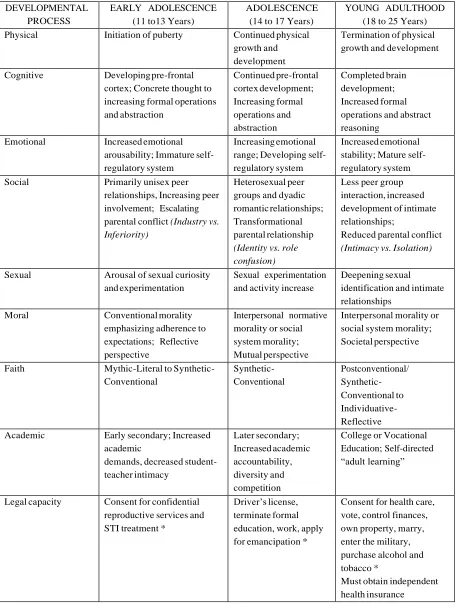
Table 2. Summary of the Stages of Adolescence and Their Developmental Processes (*Ages vary by State)
DEVELOPMENTAL PROCESS
EARLY ADOLESCENCE (11 to13 Years)
ADOLESCENCE (14 to 17 Years)
YOUNG ADULTHOOD (18 to 25 Years) Physical Initiation of puberty Continued physical
growth and development
Termination of physical growth and development
Cognitive Developing pre-frontal cortex; Concrete thought to increasing formal operations and abstraction Continued pre-frontal cortex development; Increasing formal operations and abstraction Completed brain development; Increased formal operations and abstract reasoning
Emotional Increased emotional arousability; Immature self- regulatory system
Increasing emotional range; Developing self- regulatory system
Increased emotional stability; Mature self- regulatory system Social Primarily unisex peer
relationships, Increasing peer involvement; Escalating parental conflict (Industry vs. Inferiority)
Heterosexual peer groups and dyadic romantic relationships; Transformational parental relationship
(Identity vs. role confusion)
Less peer group interaction, increased development of intimate relationships;
Reduced parental conflict
(Intimacy vs. Isolation)
Sexual Arousal of sexual curiosity and experimentation
Sexual experimentation and activity increase
Deepening sexual identification and intimate relationships
Moral Conventional morality emphasizing adherence to expectations; Reflective perspective
Interpersonal normative morality or social system morality; Mutual perspective
Interpersonal morality or social system morality; Societal perspective
Faith Mythic-Literal to Synthetic- Conventional Synthetic- Conventional Postconventional/ Synthetic- Conventional to Individuative- Reflective Academic Early secondary; Increased
academic
demands, decreased student- teacher intimacy Later secondary; Increased academic accountability, diversity and competition
College or Vocational Education; Self-directed “adult learning”
Legal capacity Consent for confidential reproductive services and STI treatment *
Driver’s license, terminate formal education, work, apply for emancipation *
Consent for health care, vote, control finances, own property, marry, enter the military, purchase alcohol and tobacco *
References
AAP (2105). Bright futures guidelines for health supervision of infants, children and
adolescents. Retrieved from
https://brightfutures.aap.org/Bright%20Futures%20Documents/18-Adolescence.pdf.
AAPD (n.d.). Identifying transition-age youth with disability. Retrieved from
http://www.aapd.com/resources/publications/hunter-collegeidentifying.pdf.
Anhalt, K. & Morris, T. L. (1998). Developmental and adjustment issues of gay, lesbian, and
bisexual adolescents: A review of the empirical literature. Clinical Child and Family
Psychology Review, 1(4), 215-230.
APA (2002). Developing adolescents: A reference for professionals. Washington, DC: American
Psychological Society.
Arnett, J. J. (1999). Adolescent storm and stress, reconsidered. American Psychologist, 54(5),
317-326.
Arnett, J. J. (2000). Emerging adulthood: A theory of development from the late teens through
the twenties. American Psychologist, 55 (5), 469-480.
Arnett, J. J. (2002). Emerging adulthood: A theory of development from the late teens through
the twenties. In J. J. Arnett (Ed.), Readings on adolescence and emerging adulthood (pp.17-
31). Upper Saddle River: Prentice Hall.
Arnett, J.J. & Galambos, N.L. (2003). Culture and conceptions of adulthood. New Directions for
Child and Adolescent Development, 100, 91-98.
Bachman, J. G., Johnston, L. D., O'Malley, P. M., & Schulenberg, J. (1996). Transitions in drug
use during late adolescence and young adulthood. In J. A. Graber, J. Brooks-Gunn & A.
Petersen (Eds.), Transitions through adolescence: Interpersonal domains and context (pp.
Barnes-Goraly, N., Menon, V., Eckert, M., Leanne, T., Bammer, R., Karchemisky, A., et al.
(2005). White matter development during childhood and adolescence: A Cross-sectional
diffusion tensor imaging study. Cerebral Cortex, Advanced Access Publication. Retrieved
from http://www.ncbi.nlm.nih.gov.
Beckman, M. (2004). Crime, culpability, and the adolescent brain. Science, 305 (5684), 596-599.
Berzonsky, M. D. (2004). Identity style, parental authority, and identity commitment. Journal of
Youth and Adolescence, 33(3), 213-220.
Blos, P. (1979). The adolescent passage: developmental issues. New York: International
Universities Press.
Blum, R., W., & Nelson-Nmari, K. (2004). The health of young people in a global context.
Journal of Adolescent Health, 35, 402-418.
Bouchey, H. A., & Furman, W. (2003). Dating and romantic experiences in adolescence. In G.
Adams & M. D. Berzonsky (Eds.), Blackwell handbook of adolescence (pp. 313-329).
Malden: Blackwell Publishing.
Bradford-Brown, B., & Klute, C. (2003). Friendships, cliques, and crowds. In G. R. Adams & M.
D. Berzonsky (Eds.), Blackwell handbook of adolescence (pp. 330-348). Malden: Blackwell
Publishing.
Bronfenbrenner, U. (1979). The ecology of human development: Experiments by nature and
design. Cambridge: Harvard University Press.
Bryde, J. F., & Milburn, C. M. (1990). Helping to make the transition from high school to
college. In R. L. Emans (Ed.), Understanding undergraduate education (pp. 203-213).
Buchanan, C. M., Eccles, J., & Becker, J. B. (1992). Are adolescents the victims of raging
hormones: Evidence for activational effects of hormones on moods and behavior at
adolescence. Psychological Bulletin, 111(1), 62-107.
Bureau of Labor Statistics (2015). Labor force statistics from the current population survey.
Retrieved from http://www.bls.gov/cps/cpsaat11b.htm
Byrnes. (2003). Cognitive development during adolescence. In G. Adams & M. D. Berzonsky
(Eds.), Blackwell handbook of adolescence (pp.227-246). Malden: Blackwell Publishing.
Casey, B. J., Tottenham, N., Liston, C., & Durston, S. (2005). Imaging the developing brain:
What have we learned about cognitive development. Trends in Cognitive Sciences, 9(3), 104-
110.
CDC (2015). Births and natality. Retrieved from
http://www.cdc.gov/nchs/fastats/births.htm
CDC (2015). Youth risk behavioral surveillance system. Retrieved from
http://www.cdc.gov/healthyyouth/data/yrbs/.
CMS (2015). Young adults and the Affordable Care Act: Protecting young adults and
Eliminating burdens on families and businesses. Retrieved from
https://www.cms.gov/CCIIO/Resources/Files/adult_child_fact_sheet.html
Darwin, C. (1979). The origin of species. New York: Random House.
Dorn, L., Susman, E., & Fletcher, J. (1995). Informed consent in children and adolescents: Age,
maturation and psychological state. Journal of Adolescent Health, 16, 185-190.
DynaMed (2015). Male delayed puberty/Female delayed puberty. Retrieved from
Eccles, J., & Buchanan, C. M. (1996). School transitions in early adolescence: What are we
doing to our young people? In J. A. Graber, J. Brooks-Gunn & A. Petersen (Eds.), Transitions
through adolescence: Interpersonal domains and context (pp. 251-284). Mahwah: Lawrence
Erlbaum.
Eccles, J., Midgley, C., Wigfield, A., Buchanan, C. M., Reuman, D., Flanagan, C., et al. (1993).
Development during adolescence: The impact of stage-environment fit on young adolescents'
experiences in schools and families. American Psychologist, 48(2), 90-101.
Eccles, J., & Roeser, R. W. (2003). Schools as developmental contexts. In G. Adams & M. D.
Berzonsky (Eds.), Blackwell handbook of adolescence (pp. 129-148). Malden: Blackwell
Publishing.
Elliott, G. R., & Feldman, S. S. (1990). Capturing the adolescent experience. In S.S. Feldman &
G.R. Elliot (Eds.), At the threshold: The developing adolescent (pp. 1-13). Cambridge:
Harvard University Press.
Elkind, D. (1978). Understanding the young adolescent. Adolescence,13(49), 127-134.
English, A. (2002). Understanding legal aspects of care. In L. Neinstein (Ed.), Adolescent health
care: A practical guide (4th ed., pp. 186-194). Philadelphia: Lippincott.
Erikson, E. H. (1968). Identity: youth and crisis. New York: Norton.
Fenzel, L. M., Blyth, D. A., & Simmons, R. G. (1991). School transitions, secondary. In R. M.
Lerner, A. Petersen & J. Brooks-Gunn (Eds.), Encyclopedia of adolescence (pp. 970-975).
New York: Garland.
Ford, D. H., & Lerner, R. M. (1992). Developmental systems theory: An Integrative approach.
Fowler, J. W., & Dell, M. L. (2004). Stages of faith and identity: Birth-teens. Child & Adolescent
Psychiatric Clinics of North America, 13(1), 17-33.
Freud, S. (1962). The ego and the id. New York: W.W. Norton.
Fussell, E., & Greene, M. (2002). Demographic trends affecting youth across the world. In B. B.
Brown, R. W. Larson & T. S. Saraswathi (Eds.), The world's youth: Adolescence in eight
regions of the globe (pp. 21-60). Cambridge: Cambridge University Press.
George, P. S., Stevenson, C. S., Thomason, J., & Beane, J. (1992). The middle school - and
beyond. Alexandria: Association for Supervision and Curriculum Development.
Giedd, J.N. (2015). The amazing teen brain. Scientific American, 312, 32-37.
doi:10.1038/scientificamerican0615-32
Gilligan, C. (1982). In a different voice. Cambridge: Harvard.
Graber, J. A., & Brooks-Gunn, J. (1996). Transitions and turning points: Navigating the passage
from childhood through adolescence. Developmental Psychology, 32(4), 768-776.
Graber, J. A., Brooks-Gunn, J., & Petersen, A. C. (Eds.). (1996). Transitions through
adolescence: Interpersonal domains and context. Mahwah, NJ: Lawrence Erlbaum.
Greenfield, P. M. (2002). The mutual definition of culture and biology in development. In H.
Keller, Y. H. Poortinga & A. Scholmerich (Eds.), Between culture and biology: Perspectives
on ontogenetic development (pp.57-76). Cambridge: Cambridge University Press.
Greenfield, P. M., Keller, H., Fuligni, A., & Maynard, A. (2003). Cultural pathways through
universal development. Annual Review of Psychology, 54, 461-490.
Grossman, L. (2005). Twixter generation: Young adults who won’t grow up. Retrieved from
Grumbach, M. M., & Styne, D. M. (1998). Puberty: Ontogeny, neuroendocrinology, physiology,
and disorders. In W. J. et al. (Ed.), Williams textbook of endocrinology (9th ed.). Philadelphia:
W.B. Saunders.
Hall, G. S. (1904). Adolescence: Its psychology and its relations to physiology, anthropology,
sociology, sex, crime, religion and education. New York: Appleton and Company.
Harrison, T. W. (2003). Adolescent homosexuality and concerns regarding disclosure. Journal of
School Health, 73(3),107-112.
Huyssen, A. (1999). Whither Postmodernism. In C. Lemert (Ed.), Social theory: The
multicultural and classic readings (pp. 463-470). Boulder: Westview Press.
IOM (2011). Committee on Lesbian, Gay, Bisexual, and Transgender Health Issues and
Research Gaps and Opportunities. The Health of Lesbian, Gay, Bisexual, and Transgender
People: Building a Foundation for Better Understanding. Washington (DC): National
Academies Press (US).
Irwin, C. E., Burg, S. J., & Cart, C. U. (2002). America's adolescents: Where have we been,
where are we going? Journal of Adolescent Health, 31, 91-121.
Jaffee, S., & Hyde, J. S. (2000). Gender differences in moral orientation: A meta-analysis.
Psychological Bulletin, 126(5), 703-726.
Kohlberg, L. (1980). Stages of moral development as a basis for moral education. In B. Munsey
(Ed.), Moral development, moral education, and Kohlberg (pp. 15-100). Birmingham:
Religious Education Press.
Lapsely, D. K. (1990). Continuity and discontinuity in adolescent social cognitive development.
In R. Montemayor, G. Adams & T. P. Gullota (Eds.), From childhood to adolescence: A
Larson, R. W., Richards, M. H., Moneta, G., Holmbeck, G., & Duckett, E. (1996). Changes in
adolescent’s daily interactions with their families from ages 10-18: disengagement and
transformation. Development and Psychopathology, 32(4), 744-754.
Laursen, B., Coy, K. C., & Collins, W. A. (1998). Reconsidering changes in parent-child conflict
across adolescence: A meta-analysis. Child Development, 69(3), 817-832.
Lerner, R. M. (1992). Dialectics, developmental contextualism, and the further enhancement of
theory about puberty and psychosocial development. Journal of Adolescence, 12(4), 366-388.
Lerner, R. M., & Castellino, D. (2002). Contemporary developmental theory and adolescence: A
developmental systems and applied developmental science. Journal of Adolescent Health,
31(6S), 122-135.
Luna, B., Graver, K., Urban, T., Lazar, N., & Sweeney, J. (2004). Maturation of cognitive
processes from late childhood to adulthood. Child Development, 75(5), 1357-1372.
Mandarino (2104). Transitional-age youths: Barriers to accessing adult mental health services
and the changing definition of adolescence. Journal of Human Behavior in the Social
Environment, DOI: 10.1080/10911359.2013.835760
Mead, M. (1961). The young adult. In E. Ginzberg (Ed.), Values and ideals of American youth
(pp. 37-51). New York: Columbia University Press.
Mead, M. (2001/1961). Coming of age in Samoa: A Psychological study of primitive youth for
western civilisation. New York: Perennial Classics.
Miller, J. G. (2002). Integrating cultural, psychological and biological perspectives in
understanding and child development. In H. Keller, Y. H. Poortinga & A. Scholmerich (Eds.),
Between culture and biology: Perspectives on ontogenetic development (pp.136-156).
Modell, J., & Goodman, M. (1990). Historical perspectives. In S. S. Feldman & G. R. Elliott
(Eds.), At the threshold: The developing adolescent (pp. 93-122). Cambridge: Harvard
University Press.
Murray, J., Bradley, H., Craigie, W. A., & Onions, C. T. (1989). Oxford English dictionary.
Oxford: Oxford University Press.
Muuss, R. E. (1996). Theories of adolescence (6th ed.). New York: McGraw-Hill.
NAHIC (2014). Adolescent and young adult health in the past decade: Little improvement and
young adults remain worse off than adolescents. Retrieved from
http://nahic.ucsf.edu/?s=young+adult.
National Bureau of Economic Research (2015). Why do women out number men in college?
Retrieved from http://www.nber.org/digest/jan07/w12139.html.
NCES (2015). The structure of upper secondary education. Retrieved from
https://nces.ed.gov/pubs/eiip/eiip3s01.asp
NCSL (2015). Termination of support-Age of majority. Retrieved from
http://www.ncsl.org/research/human-services/termination-of-child-support-age-of-
majority.aspx
Neinstein, L. S. (2002). Adolescent health care: A practical guide (4th ed.). Philadelphia:
Lippincott.
Neinstein, L. (2009). Handbook of adolescent healthcare. Philadelphia, PA: Lipppincott,
Williams & Wilkins.
Nucci, L. P. (2001). Education in the moral domain. Cambridge: Cambridge University Press.
Pew Research Center (2013). A survey of LGBT Americans: Attitudes, experiences and values
Petersen, A., & Leffert, N. (1995). Developmental issues influencing guidelines for adolescent
health research: A review. Journal of Adolescent Health, 17, 298-305.
Piaget, J., & Inhelder, B. (2000). The psychology of the child. New York: Basic Books.
Rosenblum, G., & Lewis, M. (2003). Emotional Development in Adolescence. In G. Adams &
M. D. Berzonsky (Eds.), Blackwell handbook of adolescence (pp. 269-289). Malden:
Blackwell Publishing.
Rosenthal, S. M., et al., (2002). Pediatric Endocrinology. In A. M. Rudolph (Ed.), Rudolph's
fundamentals of pediatrics (3rd ed., pp. 747-795): McGraw-Hill.
Radzik, M., Sherer, S., & Neinstein, L. S. (2002). Psychosocial development in normal
adolescents. In L. S. Neinstein (Ed.), Adolescent health care: A practical guide (4th ed., pp.
52-58). Philadelphia: Lippincott.
Rosenblum, G., & Lewis, M. (2003). Emotional Development in Adolescence. In G. Adams &
M. D. Berzonsky (Eds.), Blackwell handbook of adolescence (pp. 269-289). Malden:
Blackwell Publishing.
Ryan, C., & Futterman, D. (1997). Lesbian and gay adolescents: Identity development.
Adolescent Medicine: State of the Art Reviews, 8, 211-223.
Selman, R. (1980). The growth of interpersonal understanding: Developmental and clinical
analyses. New York: Academic Press.
Shakespeare, W. (1969). The Winters Tale. Ed. E. Schanzer. New York: Penguin Books.
Smetana, J. G., & Turiel, E. (2003). Moral development during adolescence. In G. Adams & M.
D. Berzonsky (Eds.), Blackwell handbook of adolescence (pp. 247-268). Malden, MA:
Society of Adolescent Medicine (SAM) (1995). Guidelines for adolescent health research: A
position paper of the society for adolescent medicine. Journal of Adolescent Health, 17, 270-
276.
Society of Adolescent Medicine (SAM) (2003). Guidelines for adolescent health research: A
position paper of the society for adolescent medicine. Journal of Adolescent Health, 33(5),
396- 409.
Spear, L. P. (2000). The adolescent brain and age-related behavioral manifestations.
Neuroscience and Biobehavioral Reviews, 24, 417-463.
Steinberg, L. (2002). Adolescence (6th ed.). Boston, MA: McGraw Hill.
Steinberg, L. (2005). Cognitive and affective development in adolescence. Trends in Cognitive
Sciences, 9(2), 69-74.
Steinberg, L. (2014). Age of opportunity: Lessons from the new science of adolescence. Boston,
MA: Houghton Mifflin Harcourt.
Steinberg, L., & Morris, A. S. (2001). Adolescent development. Annual Review of Psychology,
52, 83-110.
Steinberg, L., & Scott, E. (2003). Less guilty by reason of adolescence: Developmental
immaturity, diminished responsibility, and the juvenile death penalty. American Psychologist,
58, 1009-1018.
Styne, D. M. (2004). Puberty, obesity and ethnicity. Trends in Endocrinology and Metabolism,
15(10), Retrieved from http://www.sciencedirect.com.
Swanson, D. P., Spencer, M. B., Harpalani, V., Dupree, D., Noll, E., Ginzburg, S., et al. (2003).
Psychosocial development in racially and ethnically diverse youth: Conceptual and
methodological challenges in the 21st century. Development and Psychopathology, 15, 743-
TAYSF (2014). Policies and priorities for transitional age youth: Vision and goals 2014-2016.
Retrieved from
http://www.taysf.org/wp-content/uploads/2014/03/TAYSF_PolicyPrioritiesdoc.pdf
Unicef (2015). Are you old enough? Retrieved from
http://www.unicef.org/rightsite/433_457.htm
United Nations (2009). World fertility report. Retrieved from
http://www.un.org/esa/population/publications/WFR2009_Web/Data/WFR2009_Report.pdf
USDHHS (2015). Adolescent and young adult health program. Retrieved from
http://mchb.hrsa.gov/programs/adolescents/.
U.S. Census Bureau (2015). Families and living arrangement. Retrieved from
https://www.census.gov/hhes/families/data/marital.html
U.S Census Bureau (2105). People and households. Retrieved from
http://www.census.gov/people/.
U.S. House of Representatives (2015). Constitutional qualifications. Retrieved from
http://history.house.gov/Institution/Origins-Development/Constitutional-Qualifications/
Vartanian, L. R. (2000). Revisiting the imaginary audience and personal fable constructs of
adolescent egocentrism: A conceptual review. Adolescence, 35(140), 639-661.
Vygotsky, L. (1978). Mind in society. Cambridge: Harvard University Press.
Walker, J. L. (2004). Progress and prospects in the psychology of moral development. Merrill-
Palmer Quarterly, 50(4), 546-557.
WHO (2015). Adolescent health. Retrieved from
http://www.who.int/topics/adolescent_health/en/
YaleGlobal online (2014). Women more educated than men but still paid less. Retrieved from
Zimmer-Gembeck, M., & Colins, A. (2003). Autonomy development during adolescence. In G.
Adams & M. D. Berzonsky (Eds.), Blackwell handbook of adolescence (pp. 174-204). Malden: