i
Integrating value modeling
ii
MASTER THESIS HAO DING
Enschede, 2015
Graduation Committee
Dr. Maria-Eugenia Iacob
Department
Industrial Engineering and
Business Information Systems
[email protected]
Dr. ir. Marten van Sinderen
Department
Department of Computer
Science
[email protected]
A.I. Adina Aldea
Department
BIZZDesign
[email protected]
Author
Hao Ding
Programme:
MSc Business Information Technology
Institute:
University of Twente
Faculty of Electrical Engineering, Mathematics and
Computer Science
Enschede, the Netherlands
Student number:
S1349716
E-mail:
[email protected]
iii
Management Summary
This research focuses on defining an efficient and effective approach to construct a value model with ArchiMate. A value model described the value creation process, which include the proposition, participants, commodities, activities and business networks. Clearly defining the value creation process could help managers capture the essential resources, activities involved in the progress, make more accurate cost/benefit estimation. Currently, information technology innovations are rapidly changing the world, more and more business innovations are supported by IT systems. To get support from the IT side, managers need to communicate with IT specialists in order to present their business idea to the IT side and get full support. However, the IT side finds difficulty in capturing the entire value creation logic, from the strategic level to the implementation phase.
The reason is that both sides use different languages. The business side uses business models and related technology to address the business requirements and make new value proposition accordingly. Meanwhile, IT managers and specialists use other modeling techniques to construct the IT infrastructure. The functional difference between these two sides lead to the difficulty of capturing each other’s logics.
To solve these conflicts, there is a need to design a coherent and comprehensive modeling approach. The enterprise architecture (EA) represents an architectural landscape of the whole organization, which captures the relationship of business, process and IT as well as the services it delivers to its customers. The attribution of EA makes it an ideal tooling as an intermediary between the business side and IT side. One of the widely accepted EA languages is called ArchiMate. ArchiMate provides a graphical representation of enterprise architectures, which include the interrelated architectures, the specific viewpoints for selected stakeholders, their motivations. The main research question of this thesis is how to use ArchiMate to model the value creation process.
To solve this problem, we introduce the Value Delivery Modeling Language (VDML), which integrates multiple business modeling techniques. VDML is capable of modeling a business idea from different perspectives, including the value proposition, business activities, capabilities, etc. More importantly, VDML contains multiple meta-models to address these aspects. In this thesis, we construct a value modeling approach with ArchiMate by mapping the concepts in ArchiMate with those in VDML. By comparing the concepts, we construct a series of value related viewpoints with ArchiMate. These viewpoints covers different aspects in the value creation process. To efficiently use these viewpoints, a guideline is provided to show the construction process of a value model.
iv
Acknowledgements
This thesis represents the final research work as a “Business&IT” master student at the University of Twente. Upon delivery, it also means the end of my student career. As a foreign student, I enjoyed the time spent in UT and learned a lot from my Dutch schoolmates.
This research is conducted at the University of Twente under the supervision of Maria-Eugenia Iacob, Marten van Sinderen and Adina Aldea, who are the experts in the field of Enterprise Architecture. During the research, they gave me valuable advice and guide me on applying theories into practice. During the research session, I encountered several difficulties, both from internal and external. I’m glad that finally I overcame these issues and finished the study.
First, I would like to thank Maria-Eugenia Iacob and Marten van Sinderen as my university supervisors. I really appreciate for your patience and kindness on guiding me to finish my master thesis. Your experiences and views gave me room to improve my ideas.
Next, I would like to thank Adina Aldea as my supervisor at BiZZdesign. I’m grateful for your kind help along the way of writing the thesis. Especially for the great help in the evaluation session. The experts from BiZZdesign gave me valuable feedbacks regarding my research.
At last, I would like to thank my family for their understanding and help during this period of time. Furthermore, I would like to thank all my friends, as well as the experts from BiZZdesign, for their help.
As the author, I hope you will enjoy reading this thesis. In case you have any questions,
please do not hesitate to contact me.
Hao Ding
v
TABLE OF CONTENTS
Management Summary... iii
Acknowledgements... iv
TABLE OF CONTENTS... v
LIST OF TABLES ... vii
LIST OF FIGURES...viii
CHAPTER I ... 10
1.1 Introduction ... 10
1.2 Background ... 11
1.3 Problem statement and research question ... 13
1.4 Research Scope ... 14
1.5 Research methodology ... 14
CHAPTER II: Literature Review... 16
2.1 The Literature Review Framework ... 16
2.2 Step A: Planning the review... 16
2.3 Step B: Conducting the review ... 17
Stage one: Define search words and select database ... 17
Stage two: Filtering the article ... 17
Value in Business Model ... 18
Stage three: Analysis of the article ... 19
2.4 Step C: Reporting the review ... 19
The essence of value... 19
Value Creation ... 20
The Value Creation Process ... 21
Business Model Canvas ... 23
Value creation and exchange in network perspective ... 24
E3value model and e3alignment... 26
Value Delivery Modeling Language ... 28
2.5 ArchiMate and value modeling... 30
Introduction ... 30
ArchiMate 2.1 ... 31
Value in ArchiMate ... 33
Value network and ArchiMate ... 35
Value modeling capability with ArchiMate ... 36
UML and ArchiMate... 37
2.6 Summary of the Literature Review ... 38
CHAPTER III: Develop value model in ArchiMate ... 40
3.1 Refine the Concept of Value ... 40
3.2 Build a Value modelling Framework ... 40
Integration methodology ... 42
Model strategy with ArchiMate ... 43
ValueProposition class diagram mapping ... 44
Identify the exchange value and use value with ArchiMate ... 48
vi
Activity class diagram Mapping ... 50
Construct the activity meta-model with ArchiMate ... 54
Relating ValueAdd with Activities ... 55
Collaboration class diagram Mapping: ... 56
Construct the collaboration meta-model with ArchiMate ... 58
Relationships and Ports ... 59
3.3 The Integration of Meta-models... 62
3.4 Apply the Meta-model to a VDML Case ... 64
3.5 The Value Related Viewpoints ... 68
3.6 The use of the value related viewpoints ... 73
CHAPTER IV: Demonstration ... 76
4.1 Case introduction ... 76
4.2 Design the value model ... 77
4.3 Compare the value viewpoints with e3value ... 84
CHAPTER V: Evaluation... 85
5.1 The Survey Approach ... 85
5.2 The Acceptance of Information Technology ... 85
5.3 Construct the questionnaire ... 86
5.4 Data analysis and feedbacks ... 87
CHAPTER VI: Conclusion ... 91
6.1 Summary ... 91
6.2 Contributions ... 92
6.3 Limitations ... 93
6.4 Future works ... 93
REFERENCES ... 94
vii
LIST OF TABLES
Table
Page
Table 1: Literature research and results ... 18
Table 2: Summarize of business model definitions... 19
Table 3: Comparison between Resources and Inputs ... 23
Table 4: The multi-viewpoint approach (Kinderen et al., 2014) ... 26
Table 5: Summary of the e3value notation ... 27
Table 6: Four perspectives in e3alignment and the mapping with ArchiMate architectural framework ... 28
Table 7: VDML Class definition ... 29
Table 8: Alignment between VDML and E3value (OMG, 2015) ... 29
Table 9: Mapping E3value and ArchiMate via DEMO ... 36
Table 10: Classification of ArchiMate elements (Singh, 2013) ... 37
Table 11: Relating ArchiMate to UML ... 38
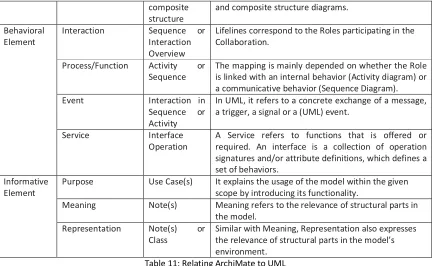
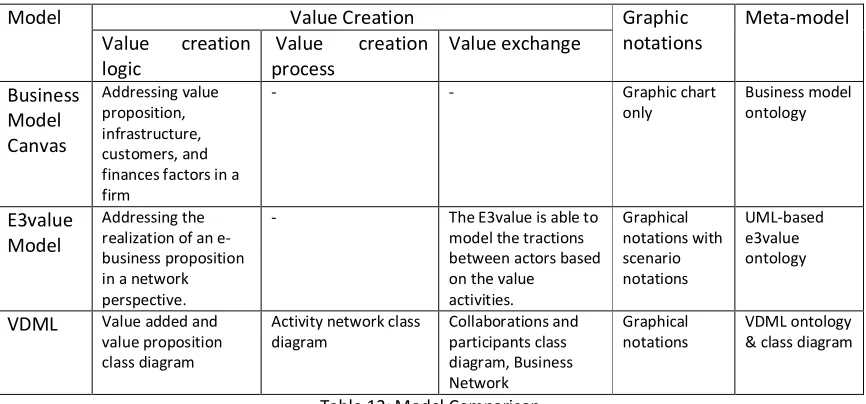
Table 12: Model Comparison ... 39
Table 13: Summarize of the value proposition mapping ... 49
Table 14: Concepts can be used as resources ... 51
Table 15: Summarize of Activity diagram alignment ... 54
Table 16: Summarize of collaboration diagram alignment ... 59
Table 17: Relationship matching ... 60
Table 18: Classifications of ports ... 61
Table 19: Port matching ... 62
Table 20: Value viewpoint description ... 69
Table 21: Stakeholder viewpoint description ... 70
Table 22: Value proposition viewpoint description ... 71
Table 23: Value Proposition Exchange description ... 73
Table 24: Identify value related activities ... 74
Table 25: Analysis of value proposition components ... 81
Table 26: Questions for expert opinion ... 87
Table 27: Data analysis of usefulness ... 88
Table 28: Data analysis of ease of use ... 89
Table 29: Data analysis of self-efficacy ... 90
viii
LIST OF FIGURES
Figure
Page
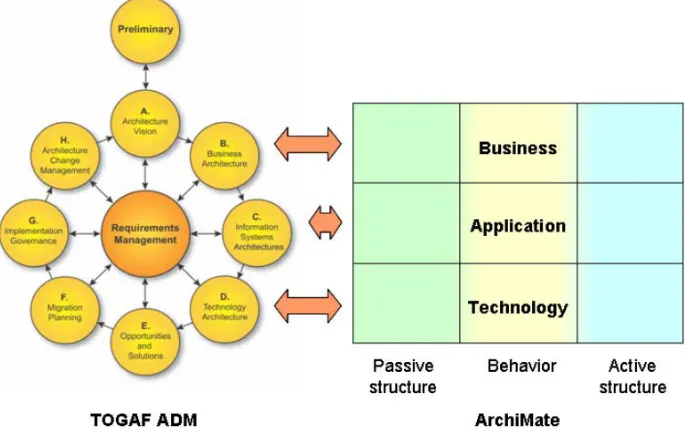
Figure 1: ArchiMate Commentary on the TOGAF ADM (Jonkers et al., 2009)... 12
Figure 2: Design Science Research Methodology (Peffers et al., 2007) ... 15
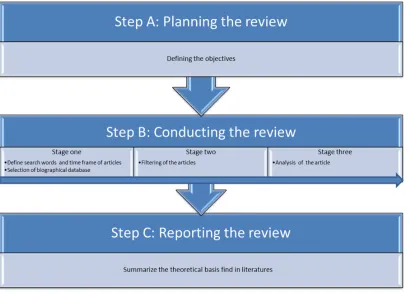
Figure 3. Systematic review process ... 16
Figure 4: The value-in-use and value-in-exchange in the Value Creation Process (Bowman & Ambrosini, 2003) ... 22
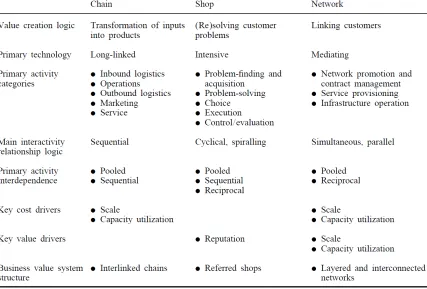
Figure 5: Overview of value configurations (Stabell & Fjeldstad, 1998). ... 25
Figure 6: Value network ... 26
Figure 7: The e3alignment Framework (Pijpers et al., 2009) ... 27
Figure 8: VDML viewpoints (OMG, 2015) ... 28
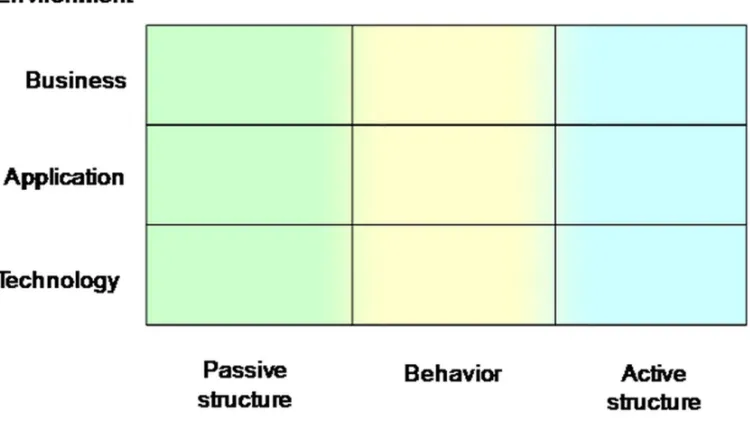
Figure 9: The Core Concepts of ArchiMate ... 30
Figure 10: Architectural Framework ... 31
Figure 11: Meta-model of Motivation Extension (OMG, 2012) ... 32
Figure 12: The Implementation and Migration extension... 32
Figure 13: Relationship between concepts ... 33
Figure 14: Correspondence between ArchiMate's and models' elements ... 34
Figure 15: Mapping between BMC and ArchiMate (Iacob et al. 2014) ... 34
Figure 16: Value modelling Framework ... 41
Figure 17: Integration Methodology ... 42
Figure 18: Strategic planning process (Aldea et al., 2015) ... 43
Figure 19: Modelling strategy with ArchiMate (Aldea et al., 2015) ... 44
Figure 20: Model Business Strategy ... 44
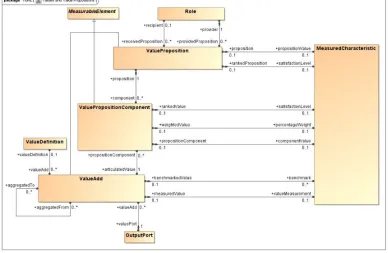
Figure 21: Values and ValueProposition diagram (OMG, 2015) ... 45
Figure 22: Value Proposition ... 45
Figure 23: Example of ValueProposition Exchange ... 46
Figure 24: Value Proposition Exchange in ArchiMate ... 46
Figure 25: Proposed relationship between business actor and product ... 47
Figure 26: ValueProposition components ... 47
Figure 27: Value definition ... 48
Figure 28: Value exchange with flow relationship ... 48
Figure 29: Proposed value exchange meta-model... 49
Figure 30: Value Proposition meta-model ... 50
Figure 31: Activity diagram (OMG, 2015) ... 51
Figure 32: Example of Activity diagram... 52
Figure 33: Idea Approvement in ArchiMate ... 52
Figure 34: Example of activities ... 52
Figure 35: Initiation of Monitoring Capability Method () ... 53
Figure 36: Initiation of Monitoring in ArchiMate ... 53
Figure 37: Activity meta-model ... 55
Figure 38: Schematic representation of activity (OMG, 2012) ... 55
Figure 39: Value contribution (OMG, 2012) ... 56
Figure 40: Relating business activities with value ... 56
Figure 41: Collaboration Diagram (OMG, 2015) ... 57
Figure 42: Business collaboration in ArciMate ... 57
Figure 43: Business Actor in Collaboration ... 58
Figure 44: Collaboration meta-model ... 59
Figure 45: Deliver flow in VDML (OMG, 2015) ... 59
Figure 46: Classification of ports ... 60
ix
Figure 48: Translate ports into ArchiMate ... 62
Figure 49: Value Modeling meta model ... 63
Figure 50: The Value Model ... 64
Figure 51: Value Proposition Exchange for the Value Stream (OMG, 2012) ... 65
Figure 52: Model value proposition exchange with ArchiMate... 65
Figure 53: Customer analysis and value proposition components ... 66
Figure 54: Maternity Care Activity Diagram ... 66
Figure 55: Model Maternity Care Activities with ArchiMate ... 67
Figure 56: Method of visiting doctor's office (OMG, 2012) ... 67
Figure 57: Visiting the doctor's office architecture ... 68
Figure 58: The value viewpoint ... 69
Figure 59: Example of value viewpoint ... 70
Figure 60: Stakeholder viewpoint ... 71
Figure 61: Example of stakeholder viewpoint ... 71
Figure 62: Value proposition viewpoint ... 72
Figure 63: Example of Value Proposition viewpoint ... 72
Figure 64: Value Proposition Exchange viewpoint ... 73
Figure 65: Example of value proposition exchange ... 73
Figure 66: Value model developing method ... 75
Figure 67: Acquiring Test Readers in e3value (Schuster & Motal, 2009) ... 76
Figure 68: Newspaper value proposition exchange ... 77
Figure 69: Newspaper value proposition ... 78
Figure 70: Stakeholder analysis ... 78
Figure 71: Reuirement-proposition alignment ... 79
Figure 72: Refined value proposition ... 80
Figure 73: Refine the value proposition alignment... 81
Figure 74: Value model of the Call center and gift vendor... 82
Figure 75: The value model of newspaper case ... 83
CHAPTER I
1.1 Introduction
Although information technology innovations are rapidly changing the world each day, the innovation itself does not contain any objective value before it is used in a certain commercialized purpose. Enterprises which have experience of adopting similar technologies can easily allocate new resources into the organization. However, to those companies which intend to create new valuable deliveries by implementing new technologies, may encounter difficulties on how to combine resources with new technology and how to make profits from the new production. A business model can be applied to solve this problem. It is used to illustrate the value creation and realization in a network perspective. Such a network is often characterized as a value chain (Laffey and Gandy, 2009). Pateli and Giaglis (2004) claim that such a business model can illustrate the interactions between firms. These interactions include the exchange of products and services. In case of the new technology have no obvious business model available, managers then need to find an appropriate model based on their own expertise in order to capture the potential value. Under these circumstances, the knowledge limitations on both new technology and modelling method could lead to the situation that new technologies show less value to the enterprise than expected, or the resources cost of new business misaligned with the company strategy. Although the term business model has been widely investigated, many works only focus on the study of a single firm (Pateli and Giaglis, 2004; Osterwalder et al, 2005). This means the business model cannot describe the impacts of interactions between enterprises to the value creation. Furthermore, continuously bring in new IT systems may cause compatibility problems and lead to the situation that enterprises have to deal with more legacy systems.
To solve these conflicts, there is a need to design a coherent and comprehensive modeling approach, where firms are analyzed at two different levels: the firm level and the network level. At the firm level, an enterprise architecture represents an architectural landscape of the whole organization, which captures the relationship of business, process and IT as well as the services it delivers to its customers. In this thesis, the definition given by Lankhorst is used, who combines the definition of enterprise defined by The Open Group and give the definition of enterprise architecture as: “A coherent whole of principles, methods, and models that are used in the design and realization of an enterprise organizational structure, business processes, information systems, and infrastructure.” (Lankhorst, 2013). At the network level, Gordijn and Akkermans (2003) proposed a value modeling methodology which is able to model how enterprises consume, create and distribute commodities in a network perspective. This methodology is known as E3value model, which is first known as an electronic business model (Gordijn et al., 2000b). However, there still lacks a way of analyzing an enterprise in both levels within one method. Hereby, aligning the concept of value modeling with enterprise architecture could contribute the efficiency and effectiveness when creating innovations.
Some previous researches have been done relate to the study of mapping the concepts between the domains of business model and enterprise architecture (Janssen, et al., 2005) (Kinderen, et al., 2012) (Kinderen, et al., 2014) (Iacob et al., 2014). The main contributions can be concluded as:
A traceable way of merging business requirements from business models to an enterprise architecture model and vice visa;
A more powerful and accurate way of calculating costs in the value exchanges.
1.2 Background
In this section, we present the most important topics in this thesis, which are the EA frameworks, business models and alignment. The information provides valuable insights relating to the problem statement.
Enterprise Architecture
An enterprise architecture describes the components of an organization their interactions with each other. So far, many frameworks have been defined and each of them provides a way of constructing an enterprise architecture; such as Zachman framework, Architecture of Integrated Information Systems (ARIS), Federal Enterprise Architecture Framework (FEAF), Model Driven Architecture (MDA) and The Open Group Architecture Framework (TOGAF). Iacob et al., (2012) claim that a comprehensive EA approach should include:
A framework, which divides an architecture into different domains, as well as the relationships between these domains.
A language, which is used to describe an architecture by using a certain kind of representation method, e.g. graphics.
A process is needed to explain the way of working. More specifically, a step-wise prescriptive method for developing architectural descriptions.
Figure 1: ArchiMate Commentary on the TOGAF ADM (Jonkers et al., 2009)
Business model and value modeling
A business model is a virtual representation of an organization, including all core interrelated financial arrangements designed and developed to achieve a company’s strategic goals and objectives presently or in the future (Al-Debei, 2008). Similar to this definition, Chesbrough (2010) also claims that, a business model contains several functions, including value proposition, market segment, the structure of the value chain, revenue mechanisms, cost/profit estimation, competitive strategy and the position of the firm. Many business model frameworks are available for managers to choose, such as the BMO (Osterwalder, 2004), e3value (Gordijn, 2002), RCOV (Demil et al., 2010), the BM concept (Hedman and Kalling, 2003), Value Delivery Modeling Language (VDML) (OMG, 2015) and Entrepreneur’s BM (Morris et al., 2005). Some of these models focus on the interactions with information systems, and other models consider more on strategic or enterprise level (Iacob et al., 2012). Through these models, some of them (e.g. The Activity System, RCOV, BM concept, etc.) lack of a formal way to present the model, or there is no meta-model described in these models. Compare to these models, the e3value and VDML have a more formal way to illustrate the value creation and exchange process, since both of them use meta-models and graphical representations to represent the full picture. More importantly, both of the two methodologies are able to demonstrate the economic value in a network perspective
Based on the value-based requirements engineering technique, the e3value model describes the value creation, distribution, and consumption in a network perspective (Gordijn & Akkermans, 2003). According to the e3value ontology, several concepts are defined to represent the value exchanges: (Composite) actor, value object, value exchange, value port, value offering, value interface, value activity and market segment. In order to guarantee the newly created e-commerce is applicable, the e3value model is also able to capture the scenario paths where value objects are exchanged to fulfill the needs of customers by using (end) stimulus.
The Value Delivery Modeling Language (VDML) is proposed by the Object Management Group, Inc. (OMG) to design and analyze the value creation and exchange in the firm level. Compares to the E3value, it does not only representing the value exchanging process, but also able to support strategic analysis as well as align other business models. It is designed to fulfill several business requirements:
The capacity to model complex collaborations and business networks.
A flexible and sustainable way to model business activities in environments of high variability.
Supporting capability optimization and deployment.
Alignment
ArchiMate as an enterprise architecture modeling methodology has become the Open Group standard (Lankhorst, 2009; Iacob et al., 2012). Although ArchiMate allows representing the IT infrastructure of firms in a comprehensive way, it currently lacks of expressivity to model the value exchanges of an enterprise and guidelines to model business processes which support the transactions from a value perspective (Pijpers, 2009; Kinderen, 2014). One way of solving the problem is through model integration (Ettema & Dietz, 2009). Some works are found relate to this subject. Fritscher and Pigneur (2011) used the BMC and ArchiMate to illustrate the importance of aligning business model with enterprise architecture. Through the integration, enterprise is able to identify the priority of the assets. The none core services can then be outsourced and deploy assets to new value propositions with a more accurate cost estimation. This approach only provides global mapping and comparisons while technical details such as concepts and relationships are not addressed.
Related to the study of e3value, Kinderen et al., (2014) apply the ontology alignment techniques and using DEMO as an intermediate between e3value and ArchiMate, show a transformation between the meta-models underlying e3value, DEMO and ArchiMate. The e3value focuses on modeling the value exchanges in a value network, it considers the activities of the enterprise from a value perspective. DEMO is the short for Design and Engineering Methodology for Organizations, it contains a comprehensive set of conceptual modeling techniques, together with a theory-based way of thinking and associated way of working, focused on modeling/analyzing/designing the essential aspects of an organization (Dietz, 2006*).
1.3 Problem statement and research question
Op't Land et al., (2008) claim that trace the value exchange activities of an enterprise is very useful. More specifically, it is suggested to integrate languages such as e3value, DEMO and ArchiMate. However, the integrations done by Kinderen et al., mainly focus on only mapping the concepts of the actor/market segment, value object and value activity to DEMO and then to the ArchiMate. While the other concepts: value interface, value port and value exchange have no related DEMO concepts. These limitations are caused by the missing of meta-model in DEMO, and there lacks of a systemic approach to define the principles of model transformations (Baudry et al., 2010).
The previous mapping works use other methodologies as intermediate to perform the model transformation. Since the intermediate has its own meta-model which is different from e3value model and ArchiMate, inevitably it will lead to an incomplete mapping between these two models. Besides, rather than integrate the two models to express and trace the creation and realization of value objects, a comprehensive approach of how to allow ArchiMate modeling the value contents by itself is still missing. The reason is that, to better understand the business goals, the business side and IT side have to use the same language when discussing the value creation and realization process. It is obligatory for the managers and IT specialists understanding how value is being created based on enterprise resources, and how profits are generated during the exchange process. The thesis tries to solve the problem of demonstrating and analyzing the value creation and realization processes in an organization with ArchiMate. Hereby, we bring out our main research question in this thesis:
How to create modeling support for value modeling in (EA) Archimate?
Sub 1. What is the meaning of value to an enterprise?
To answer the first sub question, a systematic literature review will be performed to define the concept of value means to a company. Then compare this concept with the one defined in ArchiMate.
Sub 2. How the value exchange modeling method can be integrated into the ArchiMate meta-model?
The second sub question relates to explain the mapping rules between the two models. As a value modeling language, VDML shows a new and formal way of representing value creation process. In this thesis, we intend to align ArchiMate with VDML. In order to do so, we need to find a valid approach through literature review.
Sub 2.1. What are the aspects which the integration does not address while it should be included in a comprehensive value modeling approach?
By aligning VDML and ArchiMate, we intend to see whether the concepts in VDML can become a useful replenishment to ArchiMate, which has not been defined in ArchiMate so far.
Sub 3. How to extend ArchiMate making it able to value modeling?
In ArchiMate, viewpoints are defined to describe how a view can be constructed to show the special interest of a stakeholder. Since the ArchiMate lacks a way of modeling the value model with external environments, create new viewpoints could be an option to solve this problem.
1.4 Research Scope
In order to present a clearer and ease of use value modelling concept, we limit the scope of the model extension to the business layer. Our decision is based on the assumption that most interactions between participating actors in a business collaboration occurring at the level of the business layer. Besides, the E3value model is used as a formal approach of modeling networked value constellations, it is selected to match with ArchiMate and possibly most of the concepts can be aligned in the business layer.
Although the scope limitation will lead to a less complex model transformation mechanism, some concepts which are not covered by E3value will also be discussed so that the extension of ArchiMate can be more comprehensive. Nevertheless, this model transformation can be easily extended in a similar way to cover all other ArchiMate layers.
1.5 Research methodology
Figure 2: Design Science Research Methodology (Peffers et al., 2007)
A. Identify problem & Motivate
As the first step of the SRM process, it is necessary to define the research problem and state the motivation of doing the research. The research problems defined in chapter 1 will be further explored in the literature review in chapter 2.
B. Define objectives of a solution
The second step defines the potential solutions based on the problem and knowledge of what is possible and feasible. Besides, what are the improvements compare to previous researches (if any) is also claimed in this part.
C. Design & Development
In the D&D phase, an artifact or prototype should be built. It is designed to solve the problems stated in Activity 1 with the objectives as stated in 2. The resources required for this step include theories which can be used to formalize the solution.
D. Demonstration
Demonstrating how one or more problems can be solved with the application. The artifact will be demonstrated by applying the proposed integrated approach to a case. This demonstration is provided in chapter 4.
E. Evaluation
Assess the usability of the artifact on solving the problem and compare the result with the objectives of the solution derived in the design & development phase. The evaluation provides valuable suggestions regarding the improvement of the method.
F. Communication
CHAPTER II: Literature Review
This chapter belongs to phase B in DSRM. To define the solution, a systematic literature review will be performed so feasible knowledge can be found. The structure of this chapter is shown below:
Section 2.1 introduces the framework of literature review, which defines the review processes. In section 2.2, an introduction will be given to step A, which defines the review objectives.
Section 2.3 defines the keywords in step B and filters articles from databases. In this thesis we use Scopus and Google Scholar as the main bibliographical databases.
Section 2.4-2.5 reports the literature findings based on the keywords. In this section, the concepts relate to value are first defined, which include the essence of value and value creation process. Following with the findings, we further introduce the value concept in ArchiMate and previous works on aligning ArchiMate with business models.
Section 2.6 Summarize the findings and defines the gap of current solutions.
2.1 The Literature Review Framework
[image:16.612.97.504.349.643.2]The purpose of the literature review is to provide useful background knowledge of the subject in order to support the research questions, objectives and methods. In this thesis, we use the Tranfield et al.’s (2003) three-stage procedure: planning, conducting and third reporting the review. Figure 3 represents the rview procedure.
Figure 3.Systematic review process
2.2 Step A: Planning the review
Define the objectives
The systematic literature research is carried out to answer the sub question 1 and 2, which is to identify the latest trends on defining the concept of value, value creation, value exchange and value modeling, as well as their relations. At the end of the review session, the theoretical and methodological backgrounds will be summarized.
2.3 Step B: Conducting the review
There are three stages in the step B, covering from defining the research key words, choosing the biographical databases, filtering and analyzing articles found in the database.
Stage one: Define search words and select database
As mentioned in the step A, the aim of conducting the research is to build a theory base of the value concept which can be modeled in ArchiMate. In order to do so, the value modeling concepts and the enrichment to ArchiMate should be identified. Hereby, the keywords selected for the literature review are:
Value: What is the meaning of value, especially how it is defined in business models. The term business model involves with the creation of value and delivery process in a economic context. Understanding the features of the value concept can become a good replenishment to relate concepts modeled in ArchiMate.
Value modeling and ArchiMate: It includes all the previous studies in this particular domain, especially the research on integrating E3value with ArchiMate.
Some of the bibliographic databases are selected to conduct the review: Google Scholar; Science Direct; Scopus and Web of Science. Among these databases, the databases with higher coverage coupled with functionality and full article access are selected: Google Scholar and Scopus. Google Scholar provides an ease of use approach to search scholarly literatures. However, functions provided by Google are very limited when supporting a systematic literature research. Scopus as one of the most famous search engine which provides abstract and citation database of peer-reviewed literatures are considered as an ideal platform to perform the review task. In this case, the Scopus is selected to perform the filtering and searching tasks with the keywords, while Google Scholar is used to find specific articles.
In order to study the value concept in a more appropriate scope, we narrow down the subject area in Scopus to ‘computer science’ and ‘Business, Management and Accounting’. Besides, only the papers published in journals are chosen and all scholarly articles from January 1980 to May 2015 are considered.
Stage two: Filtering the article
The literature research starts with formalizing the search strings. A search string is composed of the keywords defined by researchers with conjunction words such as AND or OR. The query in Scopus searches by title, author and abstract and sorted by the number of citations, while Google Scholar searches by full text and ranked by relevance. The following list (Table 1) shows the used search terms and the number of articles found in both Scopus and Google Scholar:
Search keyword Results in
Scopus
Results in Google Scholar "business model" AND enterprise architecture AND value 12 17,900
"value modeling" AND ArchiMate 1 45
Table 1: Literature research and results
The results from Scopus and Google Scholar show quite large differences, this can be explained partially by the searching options given by the two databases are different and Scopus is provided with more filtering options. In most of the results, the Google Scholar returned far more results than could be handled due to the time constraints. Since Google Scholar ranks the results based on the relevance to the search query, we only take the top 50 results into account. This manual filtering is acceptable considering the fact that the ranking mechanism in Google Scholar is evaluating each of the documents, include publishing year, author and the reference count. Among thes search results in Scopus, the number of articles under the searching query of ““business model” AND value” also shows a high volume of articles that is not able to be handled in this research. Hereby, we then apply a filtering mechanism based on number of citations. The decision has been made since the ranking in Google Scholar is based on relevance, sorting the articles in Scopus by citation can avoid more duplication.
Value in Business Model
In 1957, the concept of “business model” was first proposed in an academic paper as: “And many more problems arise to plague us in the construction of these business models than ever confronted an engineer.” (Bellman et al., 1957). In another word, a business model represents the reality of the world through a simulation model (DaSilva & Trkman, 2014). Since 1990s (Osterwalder et al., 2005), the researchers in the field of Information Systems have started the study of business model. These studies focus on understanding the value creation process for stakeholders. Some of the definitions are summarized in Table 2.
Author(s) Definition Features of
definition
Timmers, (1998)
The business model is:
• “An architecture for products, services and information flows, including a description of various business actors and their roles;
• A description of the potential benefits of the various business actors; and • A description of sources of revenues.”
Architecture, Value proposition, Revenue sources. Amit & Zott,
(2001); Zott & Amit, (2010)
The business model depicts “the content, structure, and governance of transactions designed so as to create value through the exploitation of business opportunities” (2001). Based on the fact that transactions connect activities, the authors further evolved this definition to conceptualize a firm’s business model as “a system of interdependent activities that transcends the focal firm and spans its boundaries” (2010).
Value creation & transaction.
Morris et al., (2005)
A business model is a “concise representation of how an interrelated set of decision variables in the areas of venture strategy, architecture, and economics are addressed to create sustainable competitive advantage in defined markets”. It has six fundamental components: Value proposition, customer, internal processes/competencies, external positioning, economic model, and personal/investor factors.
Representation
Osterwalder et al., (2005)
A business model is a conceptual tool that contains a set of elements and their relationships and allows expressing the business logic of a specific firm. It is a description of the value a company offers to one or several segments of customers and of the architecture of the firm and its network of partners for creating, marketing, and delivering this value relationship capital, to generate profitable and sustainable revenue streams.
Value creation & transaction
Al-Debei et al., (2008)
The business model is an abstract representation of an organization, be it conceptual, textual, and/or graphical, of all core interrelated architectural, co-operational, and financial arrangements designed and developed by an organization presently and in the future, as well as all core products and/or services the organization offers, or will offer, based on these arrangements that are needed to achieve its strategic goals and objectives
Representation
Teece, (2010) “A business model articulates the logic, the data and other evidence that support a value proposition for the customer and a viable structure of revenues and costs for
Value
the enterprise delivering that value”. transaction Osterwalder et
al., (2010)
“A business model describes the rationale of how an organization creates, delivers, and captures value.”
Value creation & transaction DaSilva &
Trkman, (2014)
The business model is an “incomplete approach”, since it does not “give strategists all the answers for how to operate a business and generate a sustainable competitive advantage. Instead, it paints a picture of the company and reveals how the various elements of the business work together at a certain moment in time.”
Short-term representation of business
Table 2: Summarize of business model definitions
Based on these definitions, we present a general understanding of the business model is an
architecture (Timmers, 1998), a conceptual tool (Osterwalder et al., 2005) or template (Amit & Zott,
2001, Zott & Amit, 2010), which is a representation(Morris et al., 2005, Al-Debei et al., 2008) of how the value is created, delivered, and captured in an organization (Teece, 2010, Osterwalder et al., 2010). An interesting finding is that, DaSilva & Trkman, (2014) claim that it is an “incomplete approach”, since there has no alignment with long-term strategies in a company while Morris et al., (2005) believe that it is able “to create sustainable competitive advantage in defined markets”. These two conflicting viewpoints represent the differences in defining the scope of business model, DaSilva & Trkman distinguish it among other model concepts while in the six-component framework proposed by Morris et al., some sub models are mentioned, e.g. a subsistence model, an income model, a growth model and a speculative model. This summarization is made to provide a more comprehensive view on the nature of the business model, meanwhile this thesis is not going to evaluate these definitions and claim which one is more representative among others. Meanwhile, almost all the definitions agree that the creation of a business model is to present the highest level of a firm’s value logic, by means of the creation of value.
Stage three: Analysis of the article
When the initial search is done and the scope limitation is given to Google, articles have to be filtered according to the title, authors, publish year and abstract to remove irrelevant papers and duplications. A series of filtering rules have given in the refining process:
Rule 1: Based on the title, whether the article could have contributions to answer the research questions.
Rule 2: Read the abstract to judge whether the article is primarily dealing with value (modeling) and enterprise architecture.
Rule 3: The article is not a superseded edition.
Rule 4: Except for the relevant literatures shown in the searching results, articles which are cited in these literatures can be also considered as references.
The first rule is applied based on the title, the year of publication and the publisher. The year of publication is taken into account because more recent articles will provide more information on recent developments in the field, and whether or not the article has been superseded is also determined by this. The three rules are used in consequence, only the articles fulfill rule No. 1 can be preceded with rule No. 2. If the contents are not clear when reading the title, rule 2 can also be used for further clarification. The third rule is to guarantee that the paper is up-to-date. The last rule is set as an extension to find more valuable articles. After selection, 25 articles remain in scope.
2.4 Step C: Reporting the review
The essence of value
under the scope of business model and enterprise architecture in a firm since it is aligned with the research direction.
Before narrowing down the scope of this thesis, we need to first understand the origin of value. The essence of value has been studied and debated since ancient Greek, which was started by Aristotle. According to Aristotle, value can be further distinguished into two folders, “value-in-exchange” and “value-in-use” (Fleetwood, 1997; Vargoet et al., 2008).
The “value-in-exchange” is also seen as the traditional view of value, also known as goods-dominant (G-D) logic, which claims that firm creates value through the manufacturing process and instantiated through trading activities in the market (Vargo & Lusch, 2004). Take the example of cell phone, the manufacturing firm assembles a mobile phone with PCB board, chips, plastic, LED and other parts, test and package it before transported to the local store. Then the phone is purchased by a customer. In another word, the manufacturing firm creates added value in the mobile phone by assembling electronic components.
The concept of “value-in-use” refers to the knowledge based value co-creation process through a mutual beneficial relationship built between the trading partners (Bowman & Ambrosini, 2003). More specifically, manufacturers use the knowledge and expertise they have to create productions or services, and customers applying their knowledge and skills when using it in their own lives. Meanwhile, customers can gain/provide services to others based on their own needs/resources, and the firm creates value to customers and itself through the knowledge injection process. Use the cell phone case again; the mobile phone is designed by the knowledge and skills the firm has. However, if the client does not know how to use the cell phone, the cell phone means no value. Only when the customer uses it in his/her daily life, the phone shows value. As a matter of fact, it is also defined as the service-dominant (S-D) logic (Vargo, et al., 2008).
Some other studies also claim that the definition of value should be classified under different scopes, since individuals have their own needs (Vargo, et al., 2008), or they are playing different roles in a firm, by which it refers to customers, suppliers, employees and investors (Pombinho, et al., 2012) (Bowman & Ambrosini, 2003). Porter defines value as “the amount buyers are willing to pay for what a firm provides them… A firm is profitable if the value it commands exceeds the costs involved in creating the product.” (Porter, 1985). From these literatures, we can summarize the character of value in general:
1. Value always has a carrier; it can be either a tangible or intangible object or both. 2. Value exists for the purpose of fulfilling a specific need.
3. The real value is estimated by the purchasing side, while the provider only makes value proposition.
After the term value is defined, the nest step is to understand the process of value creation in business. A business model is considered as an efficient and effective approach to achieve this goal. The business model approach has been widely used by consultants and business publications to represent the way a firm doing its business (Gilbert et al., 2003; Johnson, 2010).
Value Creation
Amit & Zott (2001) argue in their business model definition that the BM should be used to analyze the value creation. To illustrate the creation of value in a business model, we need to refer back to the two types of values defined in the previous sector, and then discuss the logical reason in detail. After that, we introduce one value creation models for further study, which is the Business Model Canvas (Osterwalder, 2004).
certain consumer who is focus of value creation” (Khalifa, 2004, Lepak et al. 2007), it is a “central concept in the management and organization literature” but is “not well understood” (Lepak et al., 2007)”.
According to Lepak et al., (2007) there are three main reasons which lead to the confusion. The first is that scholars with different backgrounds and expertises show different focus in the direction of explaining how value is created and various disciplines formulated by researchers lead to different types of value creation. Researchers in strategic management, marketing, or entrepreneurship prefer to focus on studying the role of business owners (Porter, 1985; Sirmon, Hitt, & Ireland, 2007) and stakeholders (Post, Preston, & Sachs, 2002). Scholars from sociological or economic disciplines may focus on value creation in terms of society (Lee, Peng, & Barney, 2007). Second, the creation of value involves with two perspectives, the content and the process, the two perspectives lead to different focus areas of studying value creation. The content refers to answering the questions as “what is value, who values what, and where the value resides”. When used to specify a process, it refers to “how value is generated and the role, if any, of management in this process” (Lepak et al., 2007). The last reason is the conceptual confusion between value creations, value capture. The value capture refers to the extent that a firm can retain all the new created value, considering the fact that the new value will lose or have to be shared with other stakeholders, such as employees, competitors, or society (Coff, 1999; Makadok & Coff, 2002).
Based on the analysis to the dimensions of value creation, Lepak, Smith, & Taylor (2007) refine the definition as: “value creation depends on the relative amount of value that is subjectively realized by a target user (or buyer) who is the focus of value creation—whether individual, organization, or society—and that this subjective value realization must at least translate into the user’s willingness to exchange a monetary amount for the value received.” Furthermore, two additional conditions are included as well. Without the additional factors, there will be no long-term trading activities between creators and consumers (Lepak, Smith, & Taylor, 2007):
1. During the trading process, the amount of money exchanged must exceeds the costs spent on creating the value, such as money, time and manpower.
2. The amount of money that a consumer is willing to pay stands for the expectation of the newly created value contained in the product or service, which is influences by the consumer’s closest alternatives.
This definition quantified the term value creation, which mainly focuses on the economic side. Considering the second factor, in the definition proposed by Lepak, Smitrmh, & Taylor, the realized amount of value refers to the content perspective in the valuable delivery, while the process perspective is not properly described.
The Value Creation Process
The firm is seen as both the roles of buyer and seller in the business, and five types of activity are distinguished. Two of the activities describe the process of value creation; the other two types are involved with the maintenance tasks and its capital stock. The last one refers to activities that destroy value.A detailed description is shown below:
1. Activities that capture exchange value – These activities include the main activities involved in the value chain (Porter, 1985), which refer to the manufacturing and selling of product and service.
2. Activities that capture use value – These activities involve with the motivation of firms as a client, which is to maximize the use value from the suppliers of input, for a given amount of exchange value.
3. Capital stock creating activities – These activities include marketing, research&development and training. The capital stock creating activities focus on generating value streams for a firm in the future.
4. Firm maintenance activities – This sort of activity has no connection with the profit stream to the firm. However, it is essential for the firm to conduct business, since it involves with those indispensable maintenance, such as finance, company secretariat, health and safety.
5. Value destroying activities – As is illustrated by its literal meaning, such activities are the inefficiencies within a firm which have zero contribution to the creation of value. Poor management ability is the main reason of causing these issues.
According to the proposition made by Bouwman and Ambrosini, activities that capture Exchange Value and use value are connected with the process of value creation. Based on these two types of value, a value creation model is proposed (Figure 4). The square stands for the value exchange between suppliers and firm, as well as the firm and customers. The circle in the middle refers to the production process, where insert inputs are transferred to productions or services. As illustrated in the picture, the inputs for the value creation process include inert inputs and human input and enduring capital, which are all the components of use value. The UVp here stands for the new use values created while the Evp refers to the exchange value paid by customers. The UVp andEVp describe how value is realized as the firm becomes a supplier and they are the components of activities that capture exchange value. The value creation components are further classified as follows:
Figure 4: The value-in-use and value-in-exchange in the Value Creation Process (Bowman & Ambrosini, 2003)
1. Inert inputs (UVi) Within the firm (change of organization), employees transform the use values
word, each of the inputs has value-in-use, but cannot create additional use value by itself. 2. Human inputs (UVh) Unlike the insert inputs, the human inputs include the individual ability
each employee gained from experience and learning which contributes to enhance the productive capabilities (Argote, 1993; Nonaka and Takeuchi, 1995; Senge, 1990). This category would also include the cultures of an enterprise which are embodied through the working activities (Barney 1986; Bartlett and Ghoshal, 1993; Nahapiet and Ghoshal, 1998).
3. Enduring capital (UVc) The enduring insert use values includes all the facilities of the firm,
including plants and machines. The UVc is the physical basis of the enterprise to create value-in-use. It indirectly improves the efficiency & effectiveness of creating the exchange value, such as brand awareness, reputation and trust (Amit and Shoemaker, 1993; Brooking, 1997, Edvinsson and Malone, 1997, Sveiby, 1997).
Bouwman and Ambrosini provide a theoretical basis of understanding the value creation process, below we present more concrete understanding of value creation by demonstrating a widely discussed business model.
Business Model Canvas
The Business Model Canvas is composed of 9 building blocks illustrating the value creation of a firm. It is developed based on the business model ontology (Alexander Osterwalder, 2004). The model addresses several parts regarding the business of the company, including the value proposition, infrastructures, customers, and finances. The potential trade offs and aligned activities can be shown in the model. The nine building blocks of the business model canvas include:
Customer Segments The segments are composed of different groups of people or organizations
that the firm is going to serve.
Value Proposition This block describes the bundle of products and services that has use value to
a particular group of customers.
Channels The channels building block describes the approach a firm delivers a value proposition
to the target clients.
Customer Relationships The customer relationship is involved with the way a firm builds
relationship with specific customer segments.
Revenue Streams This part describes how the cash is generated from each customer segment,
the earnings refer to the amount of money that subtract the costs from revenues.
Key Resources The key resources are the necessary assets required to make a value proposition
work.
Key Activities The key activities describe the most important activities performed by the
company to guarantee the business model work.
Key Partnership All the network of suppliers and partners that make the business model work
are included in this block.
Cost Structure The cost structure sector refers to the operational cost.
A business model presents the blueprint for implementing business strategy in the organization, which means value is created through a set of activities performed to the resources provided in the firm. In the model proposed by Osterwalder (2004), the resource elements are also classified into three folders, we further compare these contents with the components defined by Bouwman and Ambrosini (Table 3).
Osterwalder Bowman and Ambrosini
Tangible – physical resources, such as plants and equipments
Inert inputs Enduring capital Intangible – patents, brands and similar resources
Human – employees, employee skills Human inputs
Table 3: Comparison between Resources and Inputs
to the enduring capital mentioned by Bowman. The tangible resources include all physical stuffs which include plants and equipments, while the UVi components primarily have physical properties and only have use value, the buildings and machines belong to the enduring capital. The intangible resources are mapped to the enduring capital (UVc). The intangible resources refer to patents, brands and similar resources which have comparable meaning as is addressed in the UVc – the physical basis of the enterprise to create value-in-use. The last aspect refers to the employees and their expertise in the process of value creation.
In conclusion, the in-use can be further cataloged into two folders, which are the direct value-in-use and indirect value-value-in-use. The direct value-value-in-use refers to the resources which cannot be self-extended. The indirect value-in-use is generated during the activities which convert resources into products or services in order to provide usable value for consumers. The exchange value can be extended by the value-in-use added during the producing process.
Value creation and exchange in network perspective
Following with the fast-paced technology development, productions and services become more complicated for a firm to manage the whole process by itself. Under these circumstances, firms tend to cooperate and divide the task force to many other companies in order to create an agile working environment or a more efficient way of managing the assembling lines. Although the BMC is capable of modeling value proposition in a firm, it does not address the value exchange among firms. In contrast, the E3value model (Gordijn, 2003) and the Value Delivery Modeling Language (OMG,2015) are proposed for the purpose of modeling value exchange process. These two approaches will be introduced after the theoretical review.
Porter (1985) proposed the value chain framework for the purpose of presenting and analyzing the value creation logic at firm level. The framework provides a method to identify the strategically important activities of the firm, and illustrates its impact on cost and value (Stabell & Fjeldstad, 1998). Stabell & Fjeldstad adopted the Thompson’s (1967) typology of long-linked, intensive and mediating technologies as value creation logic and further defined three types of value configurations, which are value chain, value shop and value network (Figure 5).
Figure 5: Overview of value configurations (Stabell & Fjeldstad, 1998).
When Stabell & Fjeldstad first defined the value configuration concepts, the importance of information technology has not been well addressed. With the fast-paced development of IT, it allows a company to make possible business configurations since the coordination and transaction costs are reduced (Coase 1937; Williamson 1975). Laffey & Gandy (2009) applied the three generic value configuration frameworks and discussed the usability in the e-commerce markets. The value chain here is described as click chain which refers to the search engines. The value shop is discussed through the use of a comparison site, which intends to minimize the informationasymmetry in the comparison process. The value network has proven useful to describe the growth of comparison websites. The extension of the value configurations is a mirror of the traditional value creation. However, none of the models could describe the whole company business by itself, since the interaction between firms are more complicated nowadays. Osterwalder (2004) argues that companies are now working closely with each other, offering joint value propositions and revenue streams, together with distribution networks.
Different from the above theory, Lietaer (2001) claims that the network is the main mechanism to describe the conversion process of value. The main mechanism for value conversion here is a network, it describes the creation of value in a more comprehensive way, which addresses the exchanges of tangible and intangible values contained in the specific outcomes (MacCauley, 1963; Granovetter & Swedberg, 2001; Allee, 2002). The definition of value network is further defined as: “any set of roles and interactions in which people engage in both tangible and intangible exchanges to achieve economic or social good” (Allee, 2008). A value network is composed by the internal value network and the external-facing value network. The internal value network include activity-focused set of relationships between individuals and departments, and among work groups that make up the organization. The external-facing value networks include those between the organization and its suppliers, investors; business partners and customers.
self-extendable. Within the firm, value is co-created through multiple work groups in the form of tangible or intangible goods. The co-creation process is seen as a conversion progress of value, where the knowledge and skills of the employees are involved in transferring the input materials to valuable goods for certain consumer(s). The value is finally realized during the value exchange process, which is subjectively decided by the willingness of the clients to pay for it. The clients can be an end user or other firms, where added value is created based on the current use-value provided by the firm.
Figure 6: Value network
E3value model and e3alignment
The e3value model is a value model established based on requirements engineering and conceptual modeling techniques, serve the purpose of modeling the creation, distribution, and consumption of economic value in a multi-actor network (Gordijn & Akkermans, 2003, Kinderen, 2014). A value model illustrates the exchange of economic valuable elements between actors (Gordijn & Akkermans, 2003). It is first proposed to construct an e-commerce idea which can be easily understood by all stakeholders, while recently it also applies to other industries, such as health care and banks (Kinderen et al., 2014). The E3value model takes the value viewpoint approach to demonstrate all the requirements from various stakeholders, which lie on top of the electronic commerce framework (Table 4). The concepts defined in e3value are described in Table 5.
Viewpoint name Viewpoint holder Viewpoint engineer
Viewpoint focus Viewpoint representation Value viewpoint CxOs, marketers,
consumer groups
Business developer Economic value object creation, distribution and consumption
e3value and UCM scenarios Process viewpoint Operational management Business process (re)designer
Process ownership and flow, resources needed
UML activity, sequence, diagrams, Petri nets
Information system viewpoint
IT department System architect System component ownership
Ownership diagrams
Table 4: The multi-viewpoint approach (Kinderen et al., 2014)
Concept Notation Definition
(Composite) Actor An (Composite) actor is one or more independent economic entity(s) with clustered value interfaces.
Value object A label sitting on a value exchange Services, goods, money, or even consumer experiences exchanged between actors, a value object is of value for one or more actors. Value exchange A value exchange is used to connect two value ports with each
Value port A value port shows the provided or requested value objects in its environment that an actor wants to provide or request value objects.
Value offering Refer to value interface. A value offering models what an actor offers to (an outgoing offering) or requests from (an ingoing offering) its environment, and closely relates to the value interface concept
Value interface A value interface consists of one offering, but in many cases a value interface is composed of one ingoing and one outgoing value offering. It shows the mechanism of economic reciprocity. Value activity A value activity is the collection of operational activities which can
be assigned as a whole to actors.
Market segment The concept of market segment shows a set of actors that for one or more of their value interfaces value objects equally from an economic perspective.
And/Or fork and join A AND fork splits a scenario path into two or more subpaths, while the AND join collapses sub-paths into a single path. An OR fork models a continuation of the scenario path into one direction that is to be chosen from a number of alternatives. The OR join merges two or more paths into one path.
Start & End stimulate A scenario path starts with a start stimulus, which represents a consumer need. The last segment(s) of a scenario path is connected to a stop stimulus. A stop stimulus indicates that the scenario path ends.
Scenario paths A scenario path consists of one or more segments, related by connection elements, start and stop stimuli, and responsibility points.
Table 5: Summary of the e3value notation
The E3value technique focuses on describing only the economic value which enterprises are exchanging with each other, while the strategic rationales and the capability analysis are not addressed. To close this gap, Pijpers et al. (2009) introduces e3alignment, which address the interactions between enterprises from four different perspectives, including a strategic, value, process, and IS perspective (Figure 7). The four perspectives cover not only the economic value transformation, but also describe the strategic influences, orders and activities behind the interaction, as well as the information exchanges. The e3alignment framework takes the alignment from two domains. The vertical arrows in Figure 7 concern the alignment within an organization, while the horizontal arrows describe the interactions between actors in a value network.
Figure 7: The e3alignment Framework (Pijpers et al., 2009)
A detailed description on each of the perspectives is shown in Table 6. The framework is similar to the ArchiMate architectural framework, which includes the business layer, application layer and the technology layer. The business strategy can be seen as the motivation concepts (Table 6).
Perspectives Description Mapping with ArchiMate
Strategy perspective
position of an organization on the long term.
The Value Creation perspective
It considers how value is created by the networked value constellation in which the organization operates. It shows the things of economic value exchanged between actors in a network to ultimately be able to meet a customer need.
Business layer
The Process perspective
The cross-organizational coordination processes support the value creation by showing the actual physical transfer of objects and takes “time” into consideration.
The IT/IS perspective
It refers to information systems and technologies used to interact with the environment to exchange information.
Application layer
Technology
Table 6: Four perspectives in e3alignment and the mapping with ArchiMate architectural framework
Value Delivery Modeling Language
Similar with e3alignment, the VDML modeling is composed of different concepts addressing different aspects at the enterprise level. It supports multiple viewpoints concerns with the design of an enterprise as well as business modeling techniques (Figure 8). The current version of VDML includes sub-clauses describe the business concepts and interactions closely related model elements (Table 7).
Figure 8: VDML viewpoints (OMG, 2015)
Class name Description Collaboration
and value creation