Master Thesis
System Dynamics-based
Scenario Planning
Dion Engelbertink
S1425021
Faculty of Behavioural, Management and Social sciences
Supervisors
DR.IR. Erwin Hofman
Executive Summary
Companies are involved in complex environments driven by uncertainty and rapid development of technology and change. In order to remain competitive in complex environments driven by uncertainty, companies have to make strategic decisions which are robust in multiple futures. Therefore, a wide variety of management processes, frameworks and techniques are available in which technology planning becomes increasingly important. An appropriate management of these tools helps to improve productivity and to sustain in competitive environments.
A popular strategic management tool which helps to cope with strategic direction in changing business environments is scenario planning. Popularized by companies such as Royal Dutch Shell, scenario planning is a widely used tool in order to understand future environmental uncertainty. The great value in scenario planning is the ability to present all complex elements together into a
coherent, systematic, comprehensive and plausible manner.
Scenario planning is conducted in environments or ‘’systems’’ which are highly complex. This
complexity could refer to combinatorial complexity or dynamic complexity. It has been found, people face difficulties in dealing with complex systems. Therefore, it is important to understand the system on which scenarios are based. The combination of system dynamics and scenario planning could leverage strengths, as system dynamics allows to address complexity in scenario planning. System dynamics is a method which could be used to study the world around us. The central concept of system dynamics includes understanding the basic structure of a system and how objects interact with each other.
To address the research goal, the study starts with a literature review to investigate the definition, features, schools of thought and approaches of scenario planning and system dynamics. Thereafter both theories are compared to uncover similarities, differences, and complementary factors. Based on the literature review, a combined approach of scenario planning and system dynamics is
designed. In iterative experimenting with combing both methods while maintaining strengths of both theories, the following phases are proposed: preparation, definition, conceptualization, scenario definition, formulation, testing, scenario development and validation and evaluation & strategic decision making.
After the approach had been designed, a short case study was conducted to illustrate and test the technique in order to assess the technique in an iterative way, and draw conclusions about the usability. The case study is conducted by using the oil and gas industry as subject. Within the case, dynamic scenarios are created based on a system dynamics model of the oil and gas industry. Besides following the approach, the case study also shows the possibility of creating multiple scenarios. This is done by creating twenty-two scenario themes containing two variables and creating eighty-eight scenarios based on scenario themes. The scenarios show the behaviour of variables when two variables of the themes behave in a certain way.
List of Figures and Tables
Figure 1: Research Model ... 7
Figure 2: Event-Oriented View (J. D. Sterman, 2001) ... 26
Figure 3: Feedback View of the World (J. D. Sterman, 2001) ... 27
Figure 4: Positive Feedback Loop (Sterman, 2000) ... 28
Figure 5: Negative Feedback Loop (Sterman, 2000) ... 29
Figure 6: Causal Loop Diagram (Sterman, 2000) ... 29
Figure 7: Single and Double Feedback Loop (J. D. Sterman, 1994) ... 30
Figure 8: Stock and Flow Diagram Example (Dangerfield, 2014) ... 32
Figure 9: Behaviour of Dynamic Complexity (J. D. Sterman, 2000) ... 33
Figure 10: System Dynamics-based Scenario Planning ... 48
Figure 11: Theme 1 ... 57
Figure 12: Variables and Relations ... 63
Figure 13: Causal Loop Model Energy Market ... 63
Figure 14: Theme 1 ... 64
Figure 15: Theme 2 ... 66
Table 1: Intuitive Logics Scenario Planning Process ... 16
Table 2: Scenario Planning Overview ... 22
Table 3: Dynamic Complexity Sources (J. Sterman, 2002) ... 24
Table 4: The System Dynamics Modelling Process across the Classic Literature (Luna‐Reyes & Andersen, 2003) ... 34
Table 5: Adjusted from Luna‐Reyes and Andersen (2003); Martinez‐Moyano and Richardson (2013) 35 Table 6: Dimensions and Components of Group Modelling Projects ... 39
Table 7: System Dynamics Overview ... 40
Table 8: Scenario Planning and System Dynamics Theory Comparison ... 42
Table 9: Scenario Planning and System Dynamics Similarities and Differences ... 44
Table 10: System Dynamics-Based Scenario Planning ... 56
Table 11: Drivers and Definitions ... 60
Table 12: Endogenous, Exogenous, and Excluded Variables... 62
Contents
Executive Summary ...ii
List of Figures and Tables ... iv
1 Introduction & Research Design ... 1
1.1 Scenario Planning ... 1
1.2 Problem Definition ... 2
1.2.1 System Dynamics to Cope with Complex Systems ... 3
1.3 Research in Strategic Management ... 4
1.4 Research Goal ... 4
1.5 Research Questions ... 4
1.6 Research Model ... 7
1.7 Research Methods ... 8
1.7.1 Literature Review ... 8
1.7.2 Case Study ... 9
1.8 Overview ... 10
2 Literature Review ... 11
2.1 Scenario Planning ... 11
2.1.1 What is Scenario Planning? ... 12
2.1.2 Origins of Scenario Planning: USA and France ... 13
2.1.3 Approaches ... 18
2.1.4 Summary ... 21
2.2 System Dynamics ... 23
2.2.1 Policy Resistance and Mental Models ... 24
2.2.2 The Feedback View ... 26
2.2.3 Learning as Feedback Process ... 30
2.2.4 System Dynamics Complexity Sources ... 31
2.2.5 Approaches ... 34
2.2.6 Summarized Results ... 40
2.3 Theory Comparison ... 41
2.3.1 Similarities and Differences ... 41
2.4 Complementary Factors ... 45
3 Theory Development ... 47
3.1 System Dynamics-based Scenario Planning ... 49
4 Case Study ... 57
5 Conclusion and Discussion ... 70
5.2 Contributions ... 72
5.3 Limitations ... 72
5.4 Future Research... 73
1
Introduction & Research Design
Companies are facing turbulent environments driven by high uncertainty and rapid development of technology and change. Managers need guidance on how to cope with turbulent environments in order to improve corporate performance, mitigate risk and uncertainty. These turbulent
environments could be defined as: ‘’having high levels of inter-period change that creates uncertainty and unpredictability, dynamic and volatile conditions with sharp discontinuities in demand and growth rates, temporary competitive advantages that continually are created or eroded, and low barriers to entry/exit that continuously change the competitive structure of the industry’’ (Calantone, Garcia, & Dröge, 2003). For a business, the external environment is increasingly characterized as dynamic, e.g. in terms of legal, technological, economic, supplies, customer,
competitive, financial and social environments (Davis, Morris, & Allen, 1991). In order to cope with turbulent environments, a wide variety of management processes, frameworks, and techniques are used in which the role of technology planning becomes increasingly important. Managing these tools helps to improve the productivity and to sustain in competitive environments (Jin, Jeong, & Yoon, 2015; J. H. Lee, Kim, & Phaal, 2012; Phaal & Muller, 2009).
1.1
Scenario Planning
is Royal Dutch Shell. Pierre Wack started using intuitive scenario planning techniques with his team in Shell. Throughout the years, Shell extensively used scenario planning and it has been considered Shell is better in forecasting than other oil companies (Coates, 2000).
Since the 1970’s scenario planning gained prominence as a strategic tool and it recently took a front seat in developing roadmaps (H. Lee & Geum, 2017; Miller & Waller, 2003). Scenario planning has main advantages such as thinking in a non-numerical ways, thinking in systems, being a flexible and adaptive tool, being externally focussed and fostering coordination and communication (Miller & Waller, 2003). It has been stressed, the great value of scenario planning is being able to present all complex elements together into a coherent, systematic, comprehensive and plausible manner (Coates, 2000). Within the scenario planning literature, no single approach is dominant and the review of Amer, Daim, and Jetter (2013) reveals several scenario planning methodologies exist.
1.2
Problem Definition
1.2.1
System Dynamics to Cope with Complex Systems
Scenarios create several possible stories of the future and consist of several drivers which could be causally related towards each other. Creating a coherent and systematic story of interacting elements in dynamic complex environments requires an understanding of the system in which companies are operating. The implementation of system dynamics allows making consistent stories which consist of interrelated factors. A storyline based on system dynamics creates an understanding of complex systems in which companies are operating and could assess the outcome when one or more factors change. Besides scenario creation, system dynamics allows testing assumptions and assessing impacts of changes in the system: identified policies/ strategies could be judged in multiple scenarios. This creates a better understanding of the complex system in which companies are operating and the fit between chosen strategic direction and the uncertain future. By better
1.3
Research in Strategic Management
This research elaborates on a broader research at the University of Twente in the field of Strategic Management. The overarching research aims at improving strategic management tools regarding aligning internal company strategies with long-term developments in the external market by providing robust approaches while maintaining communicative and directive strengths. As part of this research a published paper of Siebelink, Halman, and Hofman (2016) aims at providing insight in the topic of dealing with uncertainty of business roadmaps and provide an decent approach which enables companies to benefit from guiding strategic innovation activities while being successful under a wide range of possible future environments. The output of the study was a developed business roadmap able to respond to a range of future environments while retaining communicative strengths.
1.4
Research Goal
The utility of this report could be found in responding to the overarching research of improving strategic management tools while keeping communicative strengths. Scenario planning is a popular tool to deal with future uncertainties but is based on factors interacting with each other in a system. Within this system complexity could occur and people have difficulties dealing with complex systems. Besides dealing with uncertainty, this research focuses on dealing with complexity in scenario
planning. Therefore the research goal of this research is stated as:
To meet the requirements of the research goal, this research first focuses on the features of scenario planning and system dynamics and which features can be used to combine both methods. Therefore, the first central research question is addressed as:
1. Which features of system dynamics and scenario planning can be combined to develop a
system dynamics-based scenario planning approach, in order to address dynamic
complexity in scenario planning?
In this research question ‘’features’’ relate to a typical quality or an important part of something. This thus relates to scenario planning theory and system dynamics theory. Furthermore, dynamic
complexity relates to behavior of complex systems that emerges from the interactions of variables over time. To investigate the features of both theories, both theories will be mapped. Therefore, the following sub-questions will be considered:
1.1 What are the definitions of scenario planning and system dynamics?
1.2 What are the features of scenario planning and system dynamics?
1.3 What schools of thoughts and approaches exist in the literature of scenario planning and system
dynamics?
1.4 What are the similarities between approaches of system dynamics theory and scenario planning
theory?
1.5 What are the differences between approaches of system dynamics and scenario planning?
When the theories are mapped in terms of definitions, features, schools of thought/ approaches, similarities and differences, there will be investigated in which way a combined method could be designed to address dynamic complexity in scenario planning. Therefore the second central research question will be addressed:
2. In which way could a system dynamics-based scenario planning approach be designed on
the basis of the concepts in order to create a credible approach to address dynamic
complexity in scenario planning?
an approach, the features of both theories will be investigated in terms of complementary features and bottlenecks. The following sub-questions are considered:
2.1 What complementary factors exist between the method of scenario planning and system
dynamics?
As last, the approach will be illustrated by providing a short case study. The case study will test the approach and eventually provide some concluding remarks regarding the system dynamics-based scenario planning approach. Therefore, the last central research considered is:
1.6
Research Model
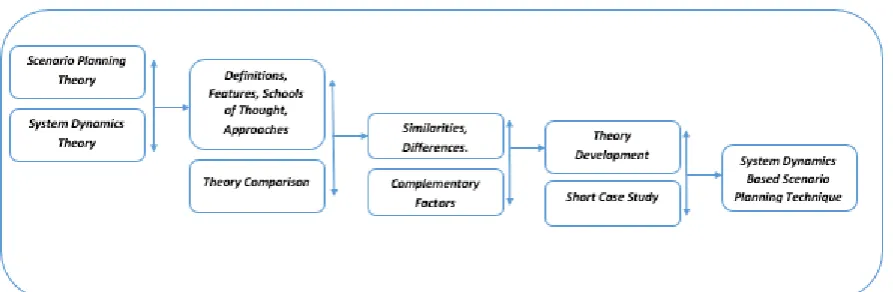
[image:13.595.77.524.390.536.2]This research aims at creating a new technique based on scenario planning and system dynamics to address dynamic complexity in scenario planning. The research model guiding this research is provided in Figure 1. In order to combine scenario planning and system dynamics theory, both theories were studied in terms of definitions, features, schools of thought, and approaches. This was done by conducting a literature review on both theories. When both theories were studied and an overview was provided, theories were compared in order to uncover similarities, differences, complementing factors and eventual constraints. Based on these insights, the theory development phase took place. By the acquired insights, the goal was to increase the strengths of a combined theory by adding complementary strengths. Theory development was done in an iterative way. It was tested while conducting a short case study concerning the oil & gas industry. Iterative theory development and applying the technique to a case study led to a proposed ‘’System Dynamics Based- Scenario Planning Technique’’.
1.7
Research Methods
1.7.1
Literature Review
A substantial part is dedicated to reviewing the literature. So, In the first phase, a literature review is conducted in order to identify relevant literature which will be used to identify what is present in the field and in order to provide a foundation for this research. Literature in the field of scenario planning and system dynamics theory provides research guidance in this research. The outcomes of the literature review act as input for theory creation regarding system dynamics based scenario planning.
While conducting the literature review, the first three steps in the five-stage grounded-theory method for reviewing the literature in an area, proposed by Wolfswinkel, Furtmueller, and Wilderom (2013) were considered. The first three steps consist of define, search and select (Wolfswinkel et al., 2013).
The defining stage consists of four steps. The first step consists of defining criteria for inclusion and/ or exclusion of an article in the data set. In this research, the author is interested in developing a new approach by combining system dynamics in scenario planning. Therefore, the inclusion of articles must contain a theory about these theories in strategic planning. Other strategic methods will not be addressed in this research and will be excluded. In the second step of the defining process,
appropriate ‘fields’ of research should be identified. In this research, the strategic management field will be approached as these theories are part of strategic management, in particular, strategic management planning and decision making methods. In step 3 of the defining process, the
appropriate sources must be selected. In this study, databases will be used as Google Scholar, Web of Science and Scopus. Step four consists of a formulation of variously possible search terms. Regarding scenario planning, search terms as scenario(s), scenario planning will be used, and in case of system dynamics, system dynamics, system thinking, system learning will be used.
The search stage includes the actual search through identified sources (Wolfswinkel et al., 2013). In this stage, the databases are used to find relevant articles. Based on the requirement, articles are selected.
1.7.2
Case Study
The literature review is used as the foundation of this research and act as input for theory development. To develop the technique, theory of scenario planning and system dynamics were confronted with each other in terms of similarities, differences, and complementary factors. After theory development, a short case study was conducted. This case study aims at testing and
illustrating the technique in order to assess the technique in an iterative way and draw conclusions about the usability.
The case study follows the steps created in the theory development phase which could be found in the Theory Development chapter. Furthermore the case study will be connected to the overarching research as explained in chapter 1.4. During the research the author attended an experiment
conducted concerning the oil and gas industry. Within this research, drivers regarding the oil and gas industry are identified and used to develop scenarios. As the author is not exclusively involved in the oil and gas industry, academic articles were addressed to further identify drivers and structures to develop the system in order to increase credibility of the system.
1.8
Overview
The structure of this report is in line with the research model to develop theory and provide a case study. This provides a structured approach to develop theory based on academic background.
Chapter two starts with the literature review of scenario planning and system dynamics. Theory will be researched in terms of definitions, features, schools of thought and approaches. Thereafter, theory will be discussed in terms of similarities, differences, and complementing factors. Insights will provide input for theory development. In order to test and adjust theory, chapter four provides a short case study regarding the oil and gas industry. As last, chapter five provides a discussion, conclusions and implications.
It should be noticed while the structure seems consecutively, theory development is done iteratively. The thesis starts with literature review and comparison to create an overview of both theories and is used as input for theory development. However, during theory construction new insights could appear. Unexpected complementary elements and/ or bottlenecks could arise. Therefore, iteration allows flexibility in order to develop theory and explore insights. The structure of this report is stated below.
Ch. 2
• Literature Review
Ch. 3
• Theory Development
Ch. 4
• Short Case Study
2
Literature Review
To develop a new approach which aims at addressing complex systems in scenario planning, the relevant theoretical background will be discussed per theory in terms of definitions, characteristics, and schools of thought/ approaches. First theory regarding scenario planning will be discussed, thereafter system dynamics will be addressed. After the literature review, scenario planning and system dynamics are compared in terms of similarities and differences, and complementary factors are identified. The literature review and the analysis in terms of similarities, differences and
complementary factors, provides an overview of possible inputs for developing the new approach.
2.1
Scenario Planning
In dynamic business environments in which uncertainty and rapid changes occur, value propositions, strategies and business models of companies are exposed to the threat posed by competitors and new competitive entrants. Such a competitive environment makes it more difficult for business executives to develop and sustain corporate strategies. A corporate-level strategy is centered on long-term direction and competitive market positioning. Firms need to consider how their corporate strategy remains relevant in turbulent and uncertain conditions and in which way the company can develop a long-term certainty in their strategic approach. The essence of the corporate strategy is about choosing the strategic direction of an organization and strategic fit with the business
2.1.1
What is Scenario Planning?
Scenario planning has become a widely used strategic management tool in order to understand future environmental uncertainty (Bowman et al., 2013). H. Lee and Geum (2017) describes the use of scenarios as one of the most important issues in today’s business, as the dynamic environment makes organizations more competitive. Therefore, companies need to respond to dynamic environments by creating a strategy which is sustainable in several futures.
Within the literature, multiple definitions of scenario planning exist. The terms range from movie scripts and loose projections to statistical combinations of uncertainty (Schoemaker, 1993). Bishop, Hines, and Collins (2007) found in their review a variety of definitions of scenarios in throughout literature. The latter authors argue its suffice to say that a scenario is ‘’a product that describes some possible future state and/ or that tells the story about how such a state might come out’’ (Bishop et al., 2007). In this definition, we can find a distinction in which the former refers to an end-state while the latter refers to a chain of events. Furthermore, Schoemaker (1993) argues scenario planning is an important tool to assess fundamental uncertainties and expand people’s thinking. This author defines scenarios broadly as ‘’focused descriptions of fundamentally different futures presented in coherent script-like or narrative fashion’’. This description clarifies that scenarios consist of coherent stories. Within these stories, each scenario tells about the interaction of various elements under certain conditions in which consistency among the stories is important. Scenario planning is
applicable to most situations in which decision-makers want to create an image of the future and the great value considered is being able to present all complex elements together into a coherent, systematic, comprehensive and plausible manner (Coates, 2000; Schoemaker, 1995). The scenario planning approach, which considers and manages business uncertainty, enables executives to surpass fixed future forecasts and create a more robust competitive strategy, so scenario planning is important in examining fundamental uncertainties and expand people thinking (Oliver & Parrett, 2017; Schoemaker, 1993). It is argued scenarios are the archetypical of future studies as it addresses the central principles of this discipline. Future studies consider it is important to think deeply and creatively about the future in order to avoid risk of being surprised and unprepared, and
scenarios could be used to tell about a future state or condition in which the situation is embedded. These scenarios are referred to as descriptive scenarios and are used to motivate users to develop practical choices, policies, and alternative actions which could deal with the consequences of the scenario. The second category of scenarios assume policy has been established and will be integrated with its consequences into a story about some future state. This category is refered to as normative scenarios and rather than stimulating policy choice, it displays consequences of a set of choices. So, the first category aims to stimulate thinking about policies and the second aims to explore the consequences of policy decisions (Coates, 2000).
Scenario planning has become popular as the world is more complex and the tools enable executives to deal with uncertain business environments, e.g. in terms of customers, suppliers, regulators, cultural social, governmental, and economic factors which differs from their comfort zone (Coates, 2000). Other techniques also exist, but it is argued other techniques are more limited in scope and organizational friendliness (Schoemaker, 1993). Furthermore, scenario planning distinguishes itself from other techniques as it addresses uncertainty rather than risks, it provides a qualitative and contextual description rather than numerical, and develops multiple possible futures which could occur rather than one fixed future (Schnaars, 1987; Tapinos, 2012). As Schnaars (1987) describe, the combination of offering multiple possible futures in the form of narratives is considered more reasonable than an attempt to predict what will happen in the future. They further argue writing the scenarios is a highly qualitative process and is derived from guts rather than a computer, although quantitative models could be established.
2.1.2
Origins of Scenario Planning: USA and France
practical level, multiple approaches exist of which the approach of Schoemaker and Schwartz are considered as often cited and popular methods within the literature (Amer et al., 2013).
The scenario planning method has been considered as very old practice. Records show people were early interested in scenarios as historical philosophers were interested in desired future states of society. As a strategic planning tool, scenario planning has its roots in the military in the 1950’s, and modern day techniques emerged in the post-war period. In the 1960’s two geographical centres emerged in the USA centre and the French centre. The USA centre concerns the Intuitive Logic school and the probabilistic Modified Trends, and the French centre concerns the La Prospective school (Bradfield et al., 2005; Schnaars, 1987).
scenarios for developing desired images or normative scenarios. Berger died in 1960, but the method was during the 1960’s widely used in public issues as the environment, regional planning and
education (Bradfield et al., 2005; Schnaars, 1987). The schools of thoughts, Intuitive Logics, Probabilistic Modified Trends and La Prospective will be discussed in further detail in the following parts.
Intuitive Logic School
The intuitive Logics school received most attention in the literature of scenario planning. As
described in the story about the origins above, these approaches originate from Kahn’s approach at the Rand Corporation. After he left and applied the method for the public domain, it did not take long before scenario planning was used within business planning. Shell companies in 1969 received the task to look in the future and create stories of the year 1985. In that time, Pierre Wack was a planner of Shell located in France. He was familiar with the approach which was proposed by Kahn and started experimenting. The first attempts were not considered successful, as the technique did not provide new insights. However, at Shell, they realized that a promising tool was discovered. Throughout the years Shell extensively used scenario planning and it has been considered Shell is better in forecasting than other oil companies. Therefore, there is also referred to this technique as ‘Shell approach’. Furthermore, Intuitive logics is still leading as school of thoughts for scenario planning methods. Intuitive logic assumes that business decisions are based on a complex set of relationships among the economic, political, technological, social, resource, and environmental factors. This can be used to develop flexible and internally consistent scenarios and relies on commitment, credibility, communication skills and knowledge of team members. Intuitive Logic methods could serve multiple purposes, ranging from one-time sense-making or strategy development activity to an ongoing learning activity. Referring to the distinction made between descriptive or normative, there could be said Intuitive Logic methods could serve both scenario planning purposes. Originally methods are focussed on the long term, but this could vary from 3 till 20 or more years and the team involved in the process normally contains an internal team of the concerning organization. The starting point of the scenario planning process is generally a
However, besides the various approaches in intuitive logics, Wright, Bradfield, and Cairns (2013) identified various stages of the basic scenario planning process considering intuitive logics. Their intuitive logics scenario planning method is derived from number of writers and organizations over many decades, and is focused on developing multiple scenarios. This intuitive logics method
considers the relation between critical uncertainties, important predetermined trends and behaviour of actors. The intuitive logics embraces and integrates considering PESTEL elements (political,
economic, social, technological, ecological and legal) which shape the future (Wright et al., 2013). The main stages of the basic intuitive logics scenario process are displayed in Table 1.
Table 1: Intuitive Logics Scenario Planning Process
Probabilistic Modified Trends school
The school of probabilistic modified trends emerged from work of Olaf Helmer and Ted Gordon at the Rand Corporation. The Probabilistic Modified Trends school consists of two different matrix based technologies: trend impact analysis (TIA) and cross-impact analysis (CIA). These methods are considered as probabilistic modification of extrapolated trends (Amer et al., 2013).
Trend impact analysis is developed in the early 70’s. The concept of TIA is modifying simple extrapolations and involves four steps. First, historical data related to the issue is examined and collected, then an algorithm selects specified curve-fitting historical data and extrapolates this to generate so-called surprise-free future trends. Thereafter a list is developed of unprecedented future events which could cause deviations from extrapolated trends. As for last, experts judge the
Among other sources, cross-impact analysis (CIA) originated from work on Delphi technique. The method was developed by Helmer and Gordon in 1966 at Rand and used for Kaiser-Aluminium. CIA takes causality into consideration as it is unrealistic to forecast an event in isolation without considering other key drivers. A general assumption of the CIA is that no development occurs in isolation. The technique captures cross-impacts from experts’ judgemental estimates and relies on experts estimates on the likelihood of occurrence of certain events. This data is used to run mathematical programming or computer simulations which results in a most likely scenario or scenarios ranked by probability. Even as in TIA, CIA evaluates changes in the probability of occurrence of events which could cause deviations, and underlying assumptions are simple. However, CIA adds complexity by including an extra layer which determines the conditional or proportional probabilities of pairs of future events given that events did or did not occur. So, underlying to CIA is that many events are interdepend (Amer et al., 2013; Bradfield et al., 2005; Schnaars, 1987).
La Prospective
La Prospective has its origin in the work of Gaston Berger, who presented scenario planning approach for public issues in the long term. Godet considers his approach as an integrated approach by the use of mixed methods. La prospective considers that the future is not part of a predetermined temporal continuity, and it can be deliberately created and modeled. In general, La Prospective methods aim to develop more effective policies and strategic decisions. To a large extent, this approach combines intuitive logic with probabilistic logic but exists for almost as long as intuitive logic and probabilistic modified trends. La Prospective is considered more elaborate, complex and mechanistic than intuitive logics as its relying heavily on computer and mathematical models which have roots in the probabilistic modified trends school. Among other things, La Prospective use morphological analysis for scenario development, Micmac to identify important variables and Mactor for actors’ analysis strategies and Smic-Prob-Expert in order to determine the probability of scenarios. Furthermore, La Prospective is mostly used in the public sector (Amer et al., 2013; Bradfield et al., 2005). A
2.1.3
Approaches
As earlier discussed, it has been considered a lack of consensus exists within areas of scenario planning. No single approach of scenario planning exists, but it several camps of opinions can be found in literature. In the former paragraphs, the literature of scenario planning is introduced by providing the origins of scenario planning and elaborating on the developed schools of thought. Among other authors, Bradfield et al. (2005) reviewed the origins and schools of scenario planning. It has been considered authors of such reviews did an admirable and useful job in providing different ways to think about scenarios. However, these authors identified schools of thoughts within the scenario planning literature to high-level attributes, and actual techniques in use were not
considered (Bishop et al., 2007). The review of Bishop et al. (2007) aims at providing a deeper level by outlining existing methods and techniques within the literature that fit within the considered higher level categories. Based on their review, these authors identified eight general categories of scenario techniques including two to three variations per type. The eight categories of scenario building consist of judgemental, baseline/ expected, elaboration of fixed scenarios, event sequences, backcasting, dimensions of uncertainty, cross-impact analysis, and modeling. Based on the review of Bishop et al. (2007) will be discussed below.
Judgemental techniques are easiest to describe and are considered the most common practice of
scenario planning. Judgemental techniques rely on the judgement of an individual or group who describe the future. These techniques could use information, analogy, and reasoning to support assertions, but do not include other methods. Variants of judgemental techniques consist of genius forecasting, visualization, role-playing, Coates and Jarratt.
Baseline/ expected methods produce only one scenario which is considered as expected or baseline
The elaboration of fixed scenarios starts with considering multiple scenarios. In general, scenarios are developed from scratch and starts with pre-specified scenarios. Thereafter, there will be elaborated on scenario logics and implications of alternative futures are discussed. Methods based on the elaboration of fixed scenarios are incasting and SRI.
Event sequences assume that future series of events could be seen just as past sequences of events,
except occurrence of events are not known. Therefore probabilities will be assigned to events. If an event happens the future will be steered in that direction. Approaches within the event sequences are probability trees, sociovision, and divergence mapping.
The fifth collection of approaches, backcasting consists of horizon mission methodology, impact of future technologies and future mapping. These approaches assume most people see the future as an extension of the present, which is a disadvantage as ‘’baggage’’ of the past and present is carried into the future. This limits creativity and assumes safe future. Therefore, the first step in this approach is to explore a future state at a certain time which can be plausible or imaginable. Thereafter it is case to connect the dots from present to the future. So, instead of forecasting, this approach makes use of backcasting.
The dimensions of uncertainty assume the reason to use scenario is uncertainty in predictive forecasting. Information is incomplete, theories of human behavior are not as good as physical phenomena theories and an unpredictable state of chaos and emergent states exists. Scenario development in the dimension of uncertainty is created by identifying unpredictable states and used as the basis for alternative futures. Approaches are morphological analysis, field anomaly relaxation, GBN, MORPHOL and OS/SE.
The seventh stream, cross-impact analysis consists of SMIC PROF-Expert or IFS techniques. This approach is discussed before as variant of the Probabilistic Modified Trend school of thought. The objective is not only to identify characteristics of conditions, events, and scenarios but also to calculate relative probabilities of occurrence. In this approach, it is also considered that probabilities of an event is also based on occurrences of other events. These conditions/ events are inserted in the rows and columns of the matrix and the conditional probability is provided given the occurrence of other conditions/ events. This matrix could be run in order to create a distribution of probabilities.
Besides identifying and describing the approaches, Bishop et al. (2007) compare the techniques. First, the starting points, processes, and products of scenario techniques are discussed. There could be concluded the starting point ranges from open to beginning with draft scenario logic. The first approaches start scanning the environment to develop materials which could be crafted in logics of scenarios. The latter extreme starts with scenario logics and elaborating or customize this to explore implications. Furthermore, the greatest distinctions of the approaches could be found in the process of scenario development and the end-product varies per technique. Most methods develop one or more scenarios by using logic or probabilities. The starting points, processes, and products per approach are summarized inAppendix A: Scenario Planning Techniques & Features, derived from Bishop et al. (2007).
Besides Bishop et al. (2007), Schnaars (1987) also identified different characteristics throughout scenario planning methods. Schnaars (1987) first describe characteristics of scenario planning approaches throughout the literature ranging from scope, content, time horizon, number. Scenario planning approaches within literature know a wide variety of scopes. On the one extreme, the worldview exists, which is popularized by Herman Kahn. A world-view scenario approach simply encompasses the goal of identifying a set of plausible futures and consequences. On the other hand, more focused scenarios exist. Executives, involved in corporate planning, are more focused on aspects which affect their business environment. The latter is considered more feasible while there is a risk of a scope which is too narrow as accuracy could be influenced by events which are not
considered. A trade-off is faced regarding the number of variables included as too many variables lead to an unwieldy analysis and including too few variables could lead to a risk of a narrow focus. Regarding the content of scenarios, there is a confusion within the literature regarding which kinds of information should be included in scenarios. On the one hand, the scenario planning approach could identify multiple possible futures which the firm could face. In this case, the strategic direction could be based on these scenarios. On the other hand, not only (business) environmental forecasts could be created, but several plans could be assessed within certain scenarios. So in the latter case, the performance of several plans must also be estimated.
Techniques vary in their basis, perspective, number of participants and estimated difficulty. The base consists of judgement and quantification. As earlier mentioned, judgement is the most-used and is the basis of scenario planning methods. Furthermore, the perspective is considered as ‘’timeline’’ which could be chronological or backward, as with backcasting. Most methods start with the present and work towards the future as it could be easier and so more popular. Regarding groups, the genius forecast is the only technique which is not used in a group as it relies on the ‘genius’. Also, in most cases, computers are not used, besides a couple of quantitative methods. This provides eventual opportunities in developing scenarios. As last, a scale of 1 to 4 is used to mark the difficulty in carrying out the method (Bishop et al., 2007). As last, these authors also provided a table in which the advantages and disadvantages of methods are described. These will also be provided in Appendix A: Scenario Planning Techniques & Features.
2.1.4
Summary
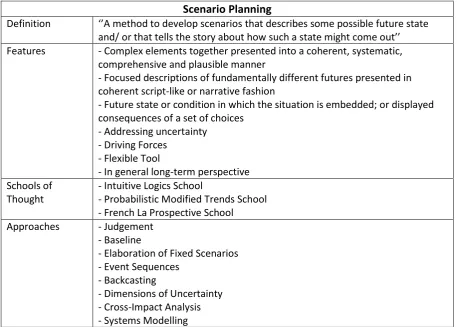
In this part the definition, features, schools of thought and approaches are researched for scenario planning. A brief overview of the outcomes is presented below. In general, it can be concluded scenario planning is a method to develop scenarios that describes some possible future state and/ or that tells the story about how such a state might come out. Scenario planning focusses on
Scenario Planning
Definition ‘’A method to develop scenarios that describes some possible future state and/ or that tells the story about how such a state might come out’’ Features - Complex elements together presented into a coherent, systematic,
comprehensive and plausible manner
- Focused descriptions of fundamentally different futures presented in coherent script-like or narrative fashion
- Future state or condition in which the situation is embedded; or displayed consequences of a set of choices
- Addressing uncertainty - Driving Forces
- Flexible Tool
- In general long-term perspective Schools of
Thought
- Intuitive Logics School
- Probabilistic Modified Trends School - French La Prospective School Approaches - Judgement
- Baseline
- Elaboration of Fixed Scenarios - Event Sequences
- Backcasting
[image:28.595.70.528.70.397.2]- Dimensions of Uncertainty - Cross-Impact Analysis - Systems Modelling
2.2
System Dynamics
The environments which companies face increases in complexity and change. Past methods fail to recognize these problems and might even cause them. With their best intention, methods could cause unforeseen or unconsidered side-effects which influence the system. Therefore, in an increasingly changing and complex world, business leaders, educators, environmentalists, and scholars are calling for developing system thinking in order to improve our ability to take effective actions (Dörner, 1980; J. D. Sterman, 2001). System dynamics is created in the 1950’s by professor Jay Forrester at the Massachusetts Institute of Technology (MIT). As Forrester (1993) argues everyone speaks of systems, such as social systems, economic systems, computer systems etc. However, only few are aware of how pervasive systems are, how embedded we are in systems, and how systems are influential in creating difficulties we face every day. System dynamics provide a common foundation by combining theory, methods and philosophy to analyse behaviour of systems in which people are interested to understand and influence changes over time. Possible fields could be management, environment, economics, politics, engineering etc. (Forrester, 1993). The approach is created to consider learning about structures and dynamics of complex systems we face, design policies for sustained improvement and to catalyze successful implementation and change (J. Sterman, 2002). The Massachusetts Institute of Technology (1997) define in their introduction page of system dynamics that system dynamics is a method for studying the world around us. Rather than ‘other’ scientist who break things up into smaller pieces, system dynamicists look at the system as a whole. The central concept in system dynamics is understanding the basic structure of a system and how the objects in the system interact with each other. This interaction goes through feedback loops, in which a change in one variable causes a change in another variable. Furthermore, system
2.2.1
Policy Resistance and Mental Models
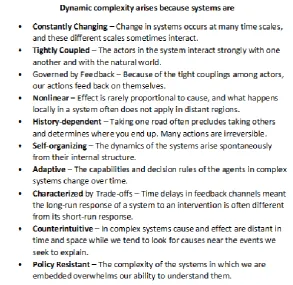
[image:30.595.74.368.374.659.2]In complex systems, decision makers often introduce policies which are difficult to implement because constructs of complex systems are neglected. The main principle considered in system thinking is ‘’policy resistance’’ which could be defined as ‘’the tendency for well-intentioned interventions to be defeated by the response of the system to the intervention itself’’ (J. Sterman, 2002). Policy resistance occurs because of the human mind being unable to understand the complexity of the world and having limited, internally inconsistent and unreliable mental models. Complexity could be separated in combinatorial complexity and dynamic complexity. The first refers to the number of links among the elements of a system, or the dimensionality of a search space, while the latter refers to the counterintuitive behavior of complex systems that emerges from the interactions of the agents over time. Policy resistance mostly occurs because of dynamic complexity. Characteristics of dynamics complexity could be found in Table 3.
Advocates of system thinking suggest the art of system thinking involves being able to represent and assess dynamic complexity in a textual and graphical way. More specific, required skills are being able to understand the behavior of the system as a result of interactions of its agents over time, discover and represent feedback processes as underlying pattern of behavior, identify stock and flow relationships, recognize delays and understand their impact, identify nonlinearities and recognize and challenge boundaries of mental models (Sweeney & Sterman, 2000). According the study of Sweeney and Sterman (2000) high educated subjects have a poor understanding of basic concepts of system dynamics, and specifically stocks and flows, time delays and feedback. Furthermore, a study of Dörner (1980) focussed on the ability or inability of human thinking in very complex systems. The study made a distinction between ‘’good’’ and ‘’bad’’ subject in which good subjects were better able to deal with complex systems and vice versa. In the study, the author found primary mistakes, which almost all subjects made, and characteristics of thoughts of ‘’bad’’ subjects. In general primary mistakes consists of:
• Insufficient consideration of processes in time – most people are not interested in existent trends and developmental tendencies but in the status quo.
• Difficulties in dealing with exponential developments – people have no intuitive feeling for exponentially developed processes.
• Thinking in causal series instead of causal nets –people tend to see the main effect and not the side-effects.
According to the author, failure threatens the individual and continual failure of one’s action implies the subject does not control the area which leads to further loss of control and fear of failure. This results in the following consequences:
• Thematic vagabonding – individuals change topic during experimental sessions relatively quickly often without ending themes.
• Encystment – in opposite to the latter point, this point considers sticking to a subject matter so subjects are enclosed in areas which do not offer difficulties.
• Decreased willingness of decision making – the number of decisions decreases. • Tendency to delegate – subjects try to delegate decisions to other authorities. • Exculpation tendency – the subject tries to blame external factors for their failure in
The authors also believe the sinking intellectual level, which was caused by subjects losing control, leads to a reduction in self-reflection and number of plans, increased stereotyping and a decreased control over the realization of plans. This will lead to a superficial look at conditions in the decision-making problem which will lead to an increase in risky behavior, increase in a number of violations of rules and regulations and an increasing tendency to escape (Dörner, 1980).
2.2.2
The Feedback View
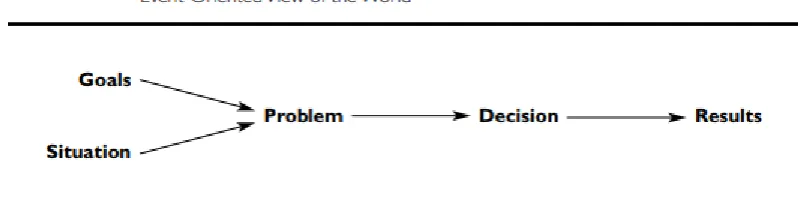
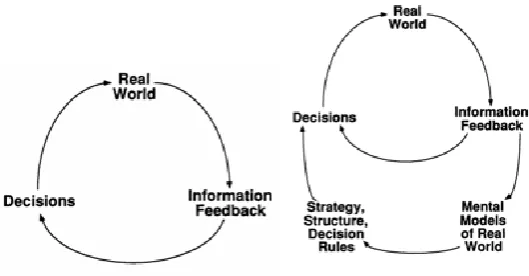
[image:32.595.83.486.417.519.2]A main principle of system dynamics which is the consideration of feedback. People tend to interpret experiences as series of events which allow people to blame others for difficulties rather than the system. This worldview is called an event-oriented open-loop worldview in which the state of affairs is assessed and compared to goals, the gap between desired situation and the current situation is defined as a problem, and several options considered and selected (J. Sterman, 2002). This process could be found in the Figure 2 below.
Figure 2: Event-Oriented View (J. D. Sterman, 2001)
As an example of an event-oriented view of the world, one could consider a company of which profit fall below expectations and so, risks financial difficulties. The goal of the company was to reach an x amount of profit, so the company would do a good job and do not face financial difficulties.
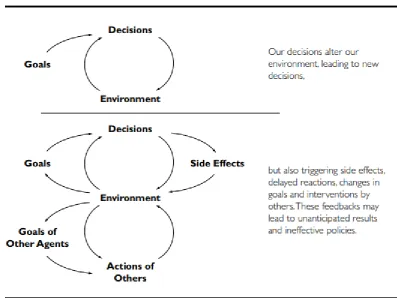
Based on analysis, certain decisions are taken to boost sales and decrease costs. Everybody moves on and the problem seems to be solved. However, in real complex environments, the environment responds to one's actions and so, people have to deal with feedback. This picture shows systems respond to intervention and lead to new situations in the future. This new situation changes the view of the problem and leads to new situations. This could be found in the upper part of Figure 3.
However, besides the world changing because of one's actions, side effects which were not
anticipated on appears. Following the example described above in which plans for cost reduction and sales increases could also cause other companies improving their operations in terms of cost
[image:33.595.89.487.331.629.2]reduction and sales increases. This could lead to policy resistance as the full range of feedbacks were not understood throughout the system (J. D. Sterman, 2001).
Within system dynamics, a substantial part is dedicated to representing feedback processes and other elements of complexity. The dynamics from interacting factors could simply exist of positive and negative feedback loops (J. D. Sterman, 2001). Positive and negative feedback loops could be best explained with an example. Among author sources, a clear example could be found in J. D. Sterman (2000).
Positive Feedback Loop
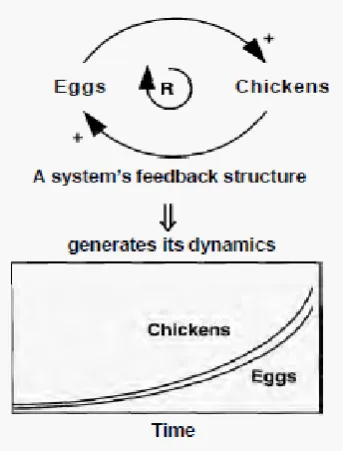
A positive feedback loop causes one variable increases the other variable, but also a reduction in one variable means a reduction in the other variable. Furthermore, a positive feedback loop is self-reinforcing so it tends to move away from an equilibrium.
Positive loops which are growing produces exponentially increasing behavior (Dangerfield, 2014). The example states that more chickens lay more eggs which leads to an increase in chicken population and therefore an increase in more eggs etc. The arrows in the diagram state the causal relationship, in this case, a + arrow which indicates a positive relation. This feedback loop is self-reinforcing, which is indicated by an R in an arrow. In case the feedback loop is going one way, e.g. an increase in chickens causes an increase in eggs etc., the feedback loop will grow exponentially. However, it has been stated grow is not unlimited because of limits to growth which
[image:34.595.366.538.281.507.2]Negative Feedback Loop
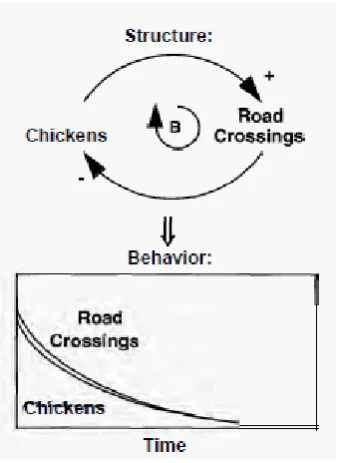
Negative loops tend to be self-correcting or self-limiting processes which create balance and equilibrium (J. D. Sterman, 2001). When the chicken population is growing, several negative loops will balance the chicken population. The example of J. D. Sterman (2000) states an increase in chicken populations causes more risky road crossing which decreases the chicken population. In this case, instead of an R, the B in the loop stand for a balancing feedback. When the road-crossing loop was the only one active, the number of chickens decline until no one is left.
All systems, whether it is complex or not, consists of positive and negative feedback networks and all dynamics arise from the interaction of these loops with each other.
[image:35.595.361.531.90.322.2]The network of the positive and negative feedback could be found in Figure 6. This figure shows the chicken population is influenced by the positive and negative feedback loops.
[image:35.595.71.415.471.591.2]Figure 6: Causal Loop Diagram (Sterman, 2000)
2.2.3
Learning as Feedback Process
[image:36.595.71.336.559.697.2]2.2.4
System Dynamics Complexity Sources
In order to improve learning in complex systems tools are needed which capture feedback processes, stocks and flows, time delays, and other sources of dynamic complexity (J. D. Sterman, 2001). In this part, dynamic complexity sources will be discussed further in terms of causal loop diagrams, stocks and flows, and time delays.
Causal Loop Diagrams
As mentioned within system dynamics, a substantial part is dedicated to representing feedback processes and other elements of complexity. The representation of feedback processes is done by using Causal Loop Diagrams (or influence diagrams) which is an important tool to represent feedback. Causal loop diagrams capture hypothesis about causes of dynamics, elicit and capture mental models of the individuals and communicate important feedbacks which are considered responsible for a problem. A causal loop diagram consists of connected variables in which arrows denote the influence among variables. As been discussed, relations could be positive or negative and feedback loops could be positive (reinforcing) or negative (balancing). Important loops are
highlighted by loop identifiers which note whether loops are positive or negative. The identifier in the loop further shows to which direction the loop corresponds (J. D. Sterman, 2000). A simple example can be found in the before mentioned positive feedback loop of the chicken population. However, we saw there was also a negative feedback loop influencing the chicken population which led to a broader model. This was only a simple example of a positive and negative feedback loop influencing the chicken population. In the real world, the chicken population is depending on more factors than a number of eggs and road crossing, and on this turn, the number of eggs and road crossings is depending on its own variables. So, one can imagine the causal loop diagram of the chicken population could be much more extended to a more complex causal loop diagram.
Stocks and Flows
Within system dynamics, the flow rates are displayed by ‘’tap-like’’ symbols, which represents a device which can control the flow and a stock is represented by a rectangle. Furthermore, a cloud-like symbol represents a boundary of a flow at the edge of the system. (Dangerfield, 2014) Assume the example derived from Dangerfield (2014) provided inFigure 8.
Figure 8: Stock and Flow Diagram Example (Dangerfield, 2014)
The cloud-like symbol, in the beginning, represents the boundary of the flow, in this case, the start of the system. The pool of primary school pupils, which in this case is a stock-variable, is ‘’filled or drained’’ by the enrolments into primary school, which represents a flow-variable. The transition from the pool of primary school pupils to pool of secondary school pupils is controlled by the flow-variable ‘’enrolments into secondary school’’. As last school peoples leave secondary school by going to work or tertiary education. After this stage, the system is closed by a boundary symbol which represents the end of this system.
Time Delays
The last factor causing dynamic complexity described here, are time delays. Time delays are considered as an important factor of system dynamics as it introduces extra complexity within the system. When people take actions, most of the time, feedback does not immediately return to the action-taker/ decision maker: there is a delay. The time between taking decisions and the effects on the system, the time delay, is problematic considered and could cause more harm than good. Delays in receiving feedback lead to systems to fluctuate. As a result, decision-makers are trying to
Dynamic Complex Behaviour
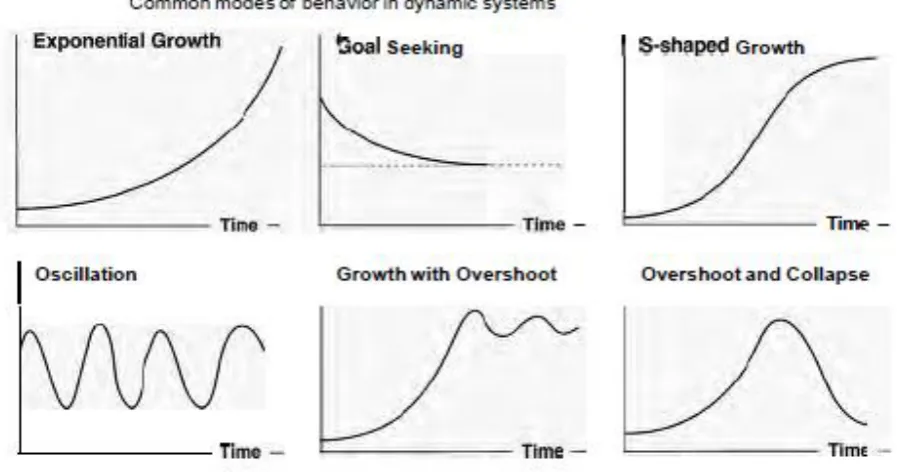
[image:39.595.76.525.290.526.2]The structure of a system defines the behaviour. The structure consists of the feedback loop, stocks and flows, delays, and nonlinearities created by interaction of the structure of the system. So, system behaviour depends on the structure in which certain kinds of structures lead to a certain kind of behaviour. A positive feedback loop leads to ‘’growth’’ behaviour, negative feedback leads to ‘’goal seeking behaviour, and negative feedback in combination with time delays leads to oscillation. As last, nonlinear interaction of these basic structures could lead to other complex types of behaviour such as S-shaped growth, overshoot and collapse (Sterman, 2000).
2.2.5
Approaches
In this part the approaches of system dynamics will be discussed. System dynamics consists of various basic characteristics, discussed before, but also multiple approaches and ‘’branches’’. This part aims at providing a short but structured discussion of approaches and additions.
System dynamics has been applied within many disciplines such as physics, engineering, economics, management etc. Among these disciplines, the application in strategic management has a particular relevance and could be considered as flexible research methodology which can be integrated with strategic management approaches and frameworks. In the beginning years of System Dynamics application within management practices, the methodology was mainly used as consultancy tool. It was used to analyse a business and building models and providing recommendations without key actor involvement. There was a main focus on improving strategy formulation and corporate planning. Since the 90’s, key actors within companies were more involved in the process of system dynamics by the introduction of ‘group model building’ which was introduced simultaneously with System Thinking stream (Cosenz & Noto, 2016).
System dynamic approaches
On the one hand, the approach of Wolstenholme (1990) consists of only three phases while on the other hand, the theory of Richardson and Pugh (1981) consists of seven phases. Other theories varies from four till six phases. Despite several approaches exists, Luna‐Reyes and Andersen (2003)
identified phases which exists in all approaches as stages remain reasonably consistent. The authors summarize the approaches of the classic literature in four stages: the conceptualization stage, formulation stage, testing stage and implementation stage. Besides the identification of system dynamics modelling in the classical literature by these authors, Martinez‐Moyano and Richardson (2013) conducted a research by exploring opinions of a group of experts in the field regarding best practices of system dynamics modelling. These authors investigated what experts think about the best way of conducting system dynamics modelling, essential specific core activities for exemplary action during the stages and most important practices during the different stages. Among other things, this research resulted in a list of factors of high important aspects and high/ low agreement level. These authors also considered the approaches of Randers (1980), Richardson and Pugh (1981), and Sterman (2000), selected stages based on these approaches and assigned practices of
importance to these stages. In the following part the description of the approaches will be structured around the ‘’fundamental’’ stages of Luna‐Reyes and Andersen (2003) which consists of stages to which all approaches could be traced back. This will be complemented by the practises discussed by Martinez‐Moyano and Richardson (2013). The latter approaches considered could be found in Table 5.
System Dynamics Approaches Review
Luna‐Reyes & Andersen, 2003 Martinez‐Moyano and Richardson (2013)
Conceptualization Stage Problem Identification and Definition System Conceptualization Formulation Stage Model Formulation
Testing Stage Model Testing and Evaluation
Implementation Stage
Model Use, Implementation, and Dissemination
[image:41.595.70.478.479.683.2]Design of Learning Strategy/ Infrastructure
Conceptualization Stage
In the conceptualization stage, the problem is defined and the system conceptualized. As could be seen in the table, the authors of classic system dynamics literature indicate this stage as,
conceptualization stage, problem definition and system conceptualization, diagram construction and analysis, and problem articulation and dynamic hypothesis. This stage focusses on a part of the real world based on the mental models including feedback loops. It is addressed this stage is mainly qualitative in nature, as there is often a dynamic problem which consists of variables which are traditionally not quantified and it is likely the modeller or client is familiar with the dynamic process without using data. However, there is a debate whether or not to simulate models based on qualitative data. In the classic literature, several variants are used regarding the conceptualization stage. In this stage, Martinez‐Moyano and Richardson (2013) identified there is a high agreement among experts regarding the importance of involving problem owners, identifying the purpose, formulating a dynamic hypothesis and clearly articulating dynamics of the problem using the current and expected behavior. This leads to a shared understanding of identifying and defining dynamic problems. However, experts do not share the agreement regarding the focus of the modelling, which could be a focus on the system or a focus on the problem. Furthermore, regarding conceptualization, experts agree about using different approaches creatively to gain an understanding of the problem owners. This could lead to the identification of critical stocks which are important in the system and thinking in terms of dynamic hypothesis. In this stage, there is a high agreement of identifying critical stocks, however there is a lower agreement on whether to use a causal-loop diagram or stock-and-flow diagram to conceptualize which results in differences in approaches. Martinez‐Moyano and Richardson (2013) argue that causal-loop thinking prefers an endogenous perspective (focus on feedback loops) while using a stock-and-flow diagram prefers the identification of critical system elements. However, the best results come from a combination and iterative use of both approaches.
Formulation Stage
expert’s experience, so the model has real-life meaning and dimensional consistency (Martinez‐ Moyano & Richardson, 2013). These authors further identifies two approaches of formulating models. The first approach starts small while adding complexity when necessary, and the second approach considers big chunks complexity at a time. Second disagreement found by the authors relates to operational thinking on one hand, versus extreme conditions thinking on the other hand. The authors mention that some experts believe implementing extreme conditions is crucial in model building while others think this pushes a model to a regime which will never exists.
Testing Stage
In the model testing stage the stages in the literature varies from testing, analysis of model behavior and model evaluation, model behavior and model evaluation and simulation phase (stage 1). Luna‐ Reyes and Andersen (2003) argue in their review that Senge and Forrester (1980) provides great detail in describing 17 tests at this model development stage. E.g. One verification tests includes testing whether the model does not contradict knowledge about the structure of the real system. This qualitative test is the first test conducted on basis of model builder’s personal knowledge and include criticisms by others with direct experience from the real system. Furthermore, it is argued modellers’ biases must be addressed and model testing should include all sources of available
knowledge whether it is qualitative or quantitative. However, Luna‐Reyes and Andersen (2003) found a high level of agreement in using statistical measures of pattern fit to model testing and evaluation, and comparing simulated behavior patterns with real behavior (data). This practice could be used in quantitative models to uncover flaws and to add/ decrease complexity or restructure the model. Regarding the iterative approach to test and build confidence, low agreement was found. Some authors prefer incremental actions while others prefer more radical approaches. As last, in this stage low agreement was found in testing dimensional consistency, which might signal this practice is considered for the formulation stage.
Implementation Stage
problem owners and having a high level of agreement among the members. Furthermore, it is important simplified causal-loop diagrams must be used to tell systems theories rather than relying on the model itself. Communicating findings must be purposeful and deliberative. As last, there is less agreement regarding the important topics which should be emphasized. A distinction could be found in focusing on the model itself as source of learning providing insights, others favor emphasize using the model to focus on providing insights (Martinez‐Moyano & Richardson, 2013).
Client involvement: Group Model Building
System dynamics applications have been used since the 1950’s. In the first applications, system dynamics was more used as a consulting tool in which modellers worked on the tools and provided recommendations based on system dynamics (Cosenz & Noto, 2016). Although Forrester (1961) argued the importance of addressing mental models of managers in the system dynamics modelling process, it was in the late 1970’s publications started on describing procedures in which clients were involved in the process of system dynamics. Nowadays, it has been considered the system dynamics modelling process can be conducted throughout two types of projects. In first place, projects could be managed by one or more modellers which acquire data, gain expertise and design the model. A second type of projects could be introducing experts on the system which are not only used as source, but also as participant of the modelling process with help of an expert/ team in the system dynamics field (Bérard, 2010). The main reasons to include clients in the process is risking a lack of implementation. This could be the case when the model does not match with prevailing discussions within the form or a lack of ownership of the model. Therefore, approaches were developed to structure the involvement of clients within the process which are referred to as ‘’group model building’’ (Rouwette & Vennix, 2006). Vennix (1999) describe group model building as ‘’a system dynamics model-building process in which a client group is deeply involved in the process of model construction’’. Based on research, the author mentions system dynamicists involve clients in order to capture required knowledge in mental models of the client, to increase the chance of
Group Model Building Approach
During the years, the literature derived a certain degree of consensus regarding principal challenges in modelling. The literature follows a model of eliciting information, developing model structure and testing the structure. Even as in the classical literature regarding system dynamics, group model building also knows several approaches. The difference in these approaches are based on general discussions which are also present in the classical system dynamics literature. Even as in classic literature, in group model building two important debates include the use of qualitative or
quantitative models, and the appropriate size of the models (Rouwette & Vennix, 2006). Even as in the classic literature, the findings of Martinez‐Moyano and Richardson (2013) could be applied in Group Model Building in terms of listening to clients, formulate dynamic hypothesis, use methods creatively to conceptualize, generate dialogues etc. In a group model building project, one or more models are created by the participants with help of a facilitator (Vennix, 1999). The sessions which take place in order to create one or more models are referred to as ‘’group modelling workshops, work session or conferences’’. In these sessions, besides system dynamics expert(s), the participants consists of clients/ problem owners, eventual researchers/ specialists/ practitioners of the systems (Bérard, 2010). This research further describes the group modelling projects and makes a distinction between two dimensions in the process, which are the structural and process dimensions. The structural dimension described is derived from the research of Andersen et al. (1997) who states two structural components based on their structure. These components consists of the group structure and the logistic component. The group structure takes the participants, the composition of groups and sub-groups involved and the facilitation aspects into account while the logistic component includes all aspect related to location, fitting and equipment of the room. The process dimension is derived from Sterman (2000) and is earlier described in this report. These approaches involves problem articulation, formulation of dynamic hypotheses, formulation of the simulation model, testing of the model and formulation of potential strategies and evaluation. Both 2 approaches led to seven components which are further used in the study of Bérard (2010) to characterize group
[image:45.595.74.518.653.741.2]modelling projects while using system dynamics. To illustrate their dimensions and components, Table 6 is inserted below.