warwick.ac.uk/lib-publications
A Thesis Submitted for the Degree of PhD at the University of Warwick
Permanent WRAP URL:
http://wrap.warwick.ac.uk/95273
Copyright and reuse:
This thesis is made available online and is protected by original copyright. Please scroll down to view the document itself.
Please refer to the repository record for this item for information to help you to cite it. Our policy information is available from the repository home page.
Multiblock Copolymers via Reversible
Addition−Fragmentation Chain Transfer
Polymerization
Junliang Zhang
A thesis submitted in partial fulfilment of the requirements of the
degree of
Doctor of Philosophy in Chemistry
Department of Chemistry
University of Warwick
Table of Contents
Table of Contents ... i
List of Figures ... vi
List of Tables ... xii
List of Schemes ... xiii
Abbreviations ... xiv
Acknowledgements ... xvii
Declaration... xx
Abstract ... xxi
Chapter 1 Introduction... 1
1.1 RAFT polymerization ... 1
1.1.1 The mechanism of RAFT polymerization ... 1
1.1.2 Selection of RAFT agents ... 3
1.2 Multiblock copolymers by RAFT polymerization ... 6
1.2.1 General considerations about multiblock copolymers by RAFT polymerization ... 6
1.2.2 Calculation of the theoretical livingness in multiblock copolymers ... 8
1.2.3 Advances and highlights of multiblock copolymers by RAFT polymerization ... 8
1.3 Single Chain Nanoparticles (SCNPs) ... 10
1.3.1 Synthetic strategies of SCNPs ... 11
1.3.2 Cross-linking chemistries for the generation of SCNPs ... 12
1.4 References ... 17
Chapter 2 Evolution of microphase separation with variations of segments of sequence-controlled multiblock copolymers ... 25
2.1 Introduction ... 27
2.3 Conclusions ... 44
2.4 Experimental ... 45
2.4.1Materials ... 45
2.4.2Methods ... 45
2.4.2.1 Proton Nuclear Magnetic Resonance (1H NMR) spectroscopy ... 45
2.4.2.2 Determination of monomer conversions ... 46
2.4.2.3 Size Exclusion Chromatography (SEC) ... 46
2.4.2.4 Calculation of Mn,th ... 46
2.4.2.5 Calculation of the Theoretical Number Fraction of Living Chains (L) ... 47
2.4.2.6 Differential Scanning Calorimetry (DSC) ... 47
2.4.2.7 Small angle X-ray scattering (SAXS) ... 48
2.4.3 Multiblock copolymer synthesis by RAFT polymerization. ... 48
2.4.3.1 General procedures for the synthesis of the first block ... 48
2.4.3.2 General procedures for the synthesis of the following blocks ... 48
2.4.3.3 Preparation of polymer blends ... 49
2.4.4 Supporting Information ... 49
2.5 References ... 81
Chapter 3 Synthesis of Sequence-Controlled Multi-block Single Chain Nanoparticles by a Step-wise Folding-Chain Extension-Folding Process ... 86
3.1 Introduction ... 87
3.2 Results and Discussion ... 89
3.2.1Synthesis and folding of the first block (B1 and B1SCNP)... 90
3.2.2 Synthesis and folding of Triblock copolymer (B1SCNP-B2-B3SCNP) ... 97
3.2.3 Synthesis and folding of Penta-block copolymer (B1SCNP-B2-B3SCNP-B4-B5SCNP) .. 102
3.4 Experimental ... 107
3.4.1 Materials ... 107
3.4.2 Methods ... 108
3.4.2.1 Nuclear Magnetic Resonance (NMR) spectroscopy (1H NMR and 13C NMR) ... 108
3.4.2.2 Size Exclusion Chromatography (SEC) ... 108
3.4.2.3 Differential Scanning Calorimetry (DSC) ... 109
3.4.2.3 Dynamic Light Scattering (DLS) ... 110
3.4.2.4 Atomic Force Microscopy (AFM) ... 110
3.4.2.5 Determination of monomer conversions ... 110
3.4.2.6 General procedures for copolymer synthesis by RAFT polymerization ... 111
3.4.2.7 General procedures for the synthesis of single chain nanoparticles (SCNP) . 111 3.4.3 Synthesis. ... 112
3.4.3.1 Synthesis of RAFT agent methoxy-(propanoic acid)yl butyl trithiocarbonate (MPABTC) ... 112
3.4.3.2 Synthesis of linear copolymer B1 ... 113
3.4.3.3 Synthesis of copolymer B1SCNP ... 115
3.4.3.4 Synthesis of B1ctr ... 116
3.4.3.5 Synthesis of B1SCNP-B2... 118
3.4.3.6 Synthesis of B1SCNP-B2-B3 ... 119
3.4.3.7 Synthesis of B1SCNP-B2-B3SCNP... 120
3.4.3.8 Synthesis of B1-B2 ... 121
3.4.3.9 Synthesis of B1-B2-B3 ... 123
3.4.3.10 Synthesis of (B1-B2-B3)SCNP... 124
3.4.3.12 Synthesis of B1SCNP-B2-B3SCNP-B4-B5 ... 126
3.4.3.13 Synthesis of B1SCNP-B2-B3SCNP-B4-B5SCNP ... 127
3.4.4 Supporting Information ... 128
3.5 References ... 130
Chapter 4 Self-assembly and Dis-assembly of Stimuli Responsive Tadpole-like Single Chain Nanoparticles using a Switchable Hydrophilic/Hydrophobic Boronic Acid Cross-linker ... 134
4.1 Introduction ... 136
4.2 Results and Discussion ... 138
4.3 Conclusions ... 159
4.4 Experimental ... 159
4.4.1Materials ... 159
4.4.2Methods ... 160
4.4.2.1 Nuclear Magnetic Resonance (NMR) spectroscopy ... 160
4.4.2.2 Size Exclusion Chromatography (SEC) ... 160
4.4.2.3 Differential Scanning Calorimetry (DSC) ... 161
4.4.2.4 Transmission Electron Microscopy (TEM) ... 161
4.4.2.5 Atomic Force Microscopy (AFM) ... 161
4.4.2.6 Dynamic Light Scattering (DLS) ... 162
4.4.2.7 Determination of monomer conversions ... 162
4.4.2.8 General procedures for copolymer synthesis by RAFT polymerization ... 163
4.4.2.9 Integration in the 1H NMR spectroscopy of the purified polymers of AB1, AB2, AB1SCNP and AB2SCNP at different pH values... 163
4.4.2.11 Sugar responsive study of AB1SCNP, AB2SCNP, and AB2SCNPself-assembly at pH
7.60 ... 164
4.4.3 Synthesis ... 165
4.4.3.1 Synthesis of glycerol acrylate (GLA) ... 165
4.4.3.2 Synthesis of linear copolymer AB1 ... 167
4.4.3.3 Synthesis of linear copolymer AB2 ... 168
4.4.3.4 Single chain nanoparticles (SCNP) synthesis ... 169
4.4.4 Appendix: Supporting Information ... 169
4.5 References ... 171
List of Figures
Figure 1.1 General structures and examples of RAFT agents with different functional units of the Z group. ... 4
Figure 1.2 Guidelines for the selection of the Z group for a CTA for various polymerization: addition rates decrease and fragmentation rates increase from left to right. ... 5
Figure 1.3 Guidelines for the selection of the R group for a CTA: fragmentation rates decrease from left to right. ... 5
Figure 2.1 Comparison of Tg values of multiblock copolymers (total DP = 200), homopolymers EGMEA and tBA (DP = 200, 100, 50, 33, 25, 10, respectively) and statistical copolymer of
EGMEA and tBA (DP = 200). Data represent mean values only (error bars within point size, see
Tables 2.1 and 2.9 for SD). ... 33
Figure 2.2 Dependence of thermal glass transition temperature of polymer A on the molecular
weight of homopolymer. Fitting with Fox-Flory equation gives TAg,∞ = -32 C, KA = 1.3104 K. . 36
Figure 2.3 Dependence of thermal glass transition temperature of polymer B on the molecular
weight of homopolymer. Fitting with Fox-Flory equation gives TBg,∞ = 50 C, KB = 5.5104 K. ... 36
Figure 2.4 The comparison of Tg values of homopolymers (DP=200, 100, 50, 33, 25 and 10) and corresponding polymer blends. Data represent mean values only (error bars within point size, see
Tables 2.1 and 2.9 for SD). ... 38
Figure 2.5 The comparison of Tg values of multiblock copolymers (total DP=200) and polymer
blends. Data represent mean values only (error bars within point size, see Tables 2.1 and 2.9 for
SD). ... 39
Figure 2.6 Experimental glass transition temperatures for pure homopolymers (solid square and solid triangle), mixtures of homopolymers (hollow triangle and hollow circle), and predictions of
glass transition temperatures for mixtures (dash lines, = 0.25). ... 40
Figure 2.7 The comparison of Tg values of diblock copolymers (DP=100, 50, 33, 25 and 10 for each block) and multiblock copolymers (total DP=200). Data represent mean values only (error
bars within point size, see Tables 2.1 and 2.9 for SD). ... 40
Figure 2.8 Radially integrated Small angle X-ray scattering data for different MBCPs, the
measurements were carried out at -30 °C for the BCPhexa, BCPocta, and BCPicosa – all measurements
were performed for 2 h. ... 41
Figure 2.9 (a) Plot of log d versus log N for the amorphous domains in the multiblock copolymer
series (BCPdi, BCPtetra, BCPhexa, BCPocta), where the domain spacing is the distance between like
polymer phases (taken from SAXS data) and Neff is the total degree of polymerization of the diblock
shown in (b)]. The dashed line is a linear fit of the data points with a gradient of 0.78 and a
regression value (r2) of 0.98. ... 43
Figure 2.101H NMR spectrum (CDCl 3, 300 MHz) of: A100B100 showing the monomer conversion for each block after iterative RAFT polymerization. ... 56
Figure 2.11 Detailed structural assignment of A100B100. ... 56
Figure 2.12 1H NMR spectrum (CDCl3, 300 MHz) of A50B50A50B50 showing the monomer conversion for each block after iterative RAFT polymerization. ... 57
Figure 2.131H NMR spectrum (CDCl3, 300 MHz) of A33B33A33B33A33B33 showing the monomer conversion for each block after iterative RAFT polymerization. ... 57
Figure 2.14 1H NMR spectrum (CDCl3, 300 MHz) of A25B25A25B25A25B25A25B25 showing the monomer conversion for each block after iterative RAFT polymerization. ... 58
Figure 2.15 1H NMR spectrum (CDCl3, 300 MHz) of A10B10A10B10A10B10A10B10A10B10A10B10A10B10A10B10A10B10A10B10 showing the monomer conversion for each block after iterative RAFT polymerization. ... 58
Figure 2.16 Molecular weight distributions for successive block extensions of the diblock copolymer (BCPdi:A100B100, SEC RI traces in CHCl3). ... 59
Figure 2.17 Molecular weight distributions for successive block extensions of the tetrablock copolymer (BCPtetra:A50B50A50B50, SEC RI traces in CHCl3). ... 59
Figure 2.18 Molecular weight distributions for successive block extensions of the hexablock copolymer (BCPhexa:A 33B33A33B33 A33B33, SEC RI traces in CHCl3). ... 60
Figure 2.19 Molecular weight distributions for successive block extensions of the octablock copolymer (BCPocta:A25B25A25B25A25B25A25B25, SEC RI traces in CHCl3). ... 60
Figure 2.20 Molecular weight distributions for successive block extensions of the icosablock copolymer (BCPicosa:A 10B10A10B10A10B10A10B10A10B10A10B10A10B10A10B10A10B10A10B10, SEC RI traces in CHCl3). ... 61
Figure 2.21 DSC curves of the diblock copolymer A100B100. ... 61
Figure 2.22 DSC curves of the tetrablock copolymer A50B50A50B50. ... 62
Figure 2.23 DSC curves of the hexablock copolymer A33B33A33B33A33B33. ... 62
Figure 2.24 DSC curves of the octablock copolymer A25B25A25B25A25B25A25B25. ... 63
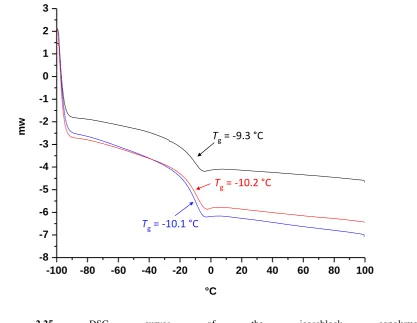
Figure 2.25 DSC curves of the icosablock copolymer A10B10A10B10A10B10A10B10A10B10A10B10A10B10A10B10A10B10A10B10. ... 63
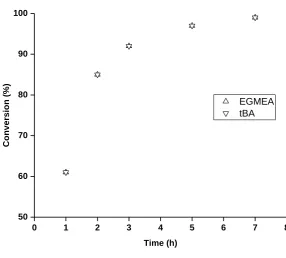
Figure 2.261H NMR of the random copolymer synthesis (samples taken at different time to check the conversions of the two monomers EGMEA and tBA). ... 64
Figure 2.28 Molecular weight distributions for the kinetics (samples taken at different time) of the
random copolymer synthesis (SEC RI traces in CHCl3). ... 65
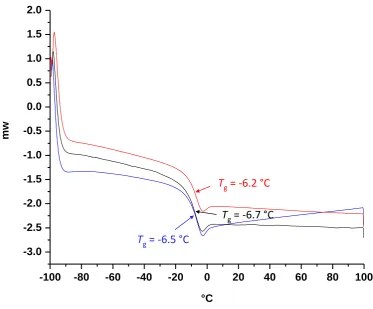
Figure 2.29 DSC curves of the random copolymer A100-ran-B100. ... 65
Figure 2.301H NMR spectrum (CDCl3, 300 MHz) of A200 after RAFT polymerization. ... 67
Figure 2.311H NMR spectrum (CDCl3, 300 MHz) of B200 after RAFT polymerization. ... 68
Figure 2.321H NMR spectrum (CDCl3, 300 MHz) of B100 after RAFT polymerization. ... 68
Figure 2.331H NMR spectrum (CDCl 3, 300 MHz) of B50 after RAFT polymerization. ... 68
Figure 2.341H NMR spectrum (CDCl3, 300 MHz) of B33 after RAFT polymerization. ... 69
Figure 2.351H NMR spectrum (CDCl3, 300 MHz) of B25 after RAFT polymerization. ... 69
Figure 2.361H NMR spectrum (CDCl3, 300 MHz) of B10 after RAFT polymerization. ... 69
Figure 2.37 Molecular weight distributions for homopolymers: A10, A25, A33, A50, A100, and A200 (SEC RI traces in CHCl3)... 70
Figure 2.38 Molecular weight distributions for homopolymers: B10, B 25, B 33, B 50, B 100, and B 200 (SEC RI traces in CHCl3)... 70
Figure 2.39 DSC curves of the homopolymer A200. ... 71
Figure 2.40 DSC curves of the homopolymer A100. ... 71
Figure 2.41 DSC curves of the homopolymer A50. ... 72
Figure 2.42 DSC curves of the homopolymer A33. ... 72
Figure 2.43 DSC curves of the homopolymer A25. ... 73
Figure 2.44 DSC curves of the homopolymer A10. ... 73
Figure 2.45 DSC curves of the homopolymer B200. ... 74
Figure 2.46 DSC curves of the homopolymer B100. ... 74
Figure 2.47 DSC curves of the homopolymer B50. ... 75
Figure 2.48 DSC curves of the homopolymer B33. ... 75
Figure 2.49 DSC curves of the homopolymer B25. ... 76
Figure 2.50 DSC curves of the homopolymer B10. ... 76
Figure 2.51 DSC curves of the A100, B100polymer blend. ... 77
Figure 2.52 DSC curves of the A50, B50polymer blend. ... 77
Figure 2.53 DSC curves of the A33, B33polymer blend. ... 78
Figure 2.54 DSC curves of the A25, B25polymer blend. ... 78
Figure 2.55 DSC curves of the A10, B10polymer blend. ... 79
Figure 2.56 DSC curves of the diblock copolymer A50B50. ... 79
Figure 2.57 DSC curves of the diblock copolymer A33B33. ... 80
Figure 2.58 DSC curves of the diblock copolymer A25B25. ... 80
Figure 3.1 SEC RI traces of B1,B1SCNPand B1ctrin CHCl3 (A) and in DMF (B). ... 93
Figure 3.2 1H NMR spectra (400MHz) of linear polymer B1, folded polymer B1SCNP as well as
control polymer B1ctr in DMSO-d6 (A) and CDCl3 (B), respectively. ... 94
Figure 3.3 DSC curves of linear polymer B1, control polymer B1ctr andfolded polymer B1SCNP. 96
Figure 3.4 DLS for B1, B1SCNPand B1ctr in chloroform (1 mg/mL). ... 97
Figure 3.5 SEC chromatograms (RI traces) of B1SCNP-B2, B1SCNP-B2-B3 and B1SCNP-B2-B3SCNPin
CHCl3. ... 99
Figure 3.6 1H NMR spectrum (DMSO-d6, 600MHz) of single chain nanoparticles B1SCNP-B2
-B3SCNP. ... 100
Figure 3.71H NMR spectrum (DMSO-d6, 400MHz) of single chain nanoparticles (B1-B2-B3)SCNP.
... 101
Figure 3.8 Overlay of SEC chromatograms (RI traces) obtained in CHCl3 for B1SCNP-B2-B3SCNP,
B1-B2-B3, and B1-B2-B3)SCNP.... 102
Figure 3.9 Overlay of SEC chromatograms (RI traces) obtained in CHCl3 for: B1SCNP-B2-B3SCNP
-B4, B1SCNP-B2-B3SCNP-B4-B5SCNP, and B1SCNP-B2-B3SCNP-B4-B5. ... 103
Figure 3.10 1H NMR spectrum (DMSO-d6, 400MHz) of single chain nanoparticles B1SCNP-B2
-B3SCNP-B4-B5SCNP. ... 104
Figure 3.11 Overlay of SEC chromatograms (RI traces) obtained in CHCl3 for penta-block based
SCNP (B1SCNP-B2-B3SCNP-B4-B5SCNP) before and after treatment with DMF sample. ... 105
Figure 3.12 AFM topography image of penta-block based SCNP B1SCNP-B2-B3SCNP-B4-B5SCNP (1
µm× 1 µm scan size, sample dissolved in chloroform). ... 106
Figure 3.131H NMR spectrum (400 MHz, CDCl3) of MPABTC. ... 113
Figure 3.1413C NMR spectrum (100 MHz, CDCl3) of MPABTC. ... 113
Figure 3.151H NMR spectrum (DMSO-d
6, 400MHz) of linear polymer B1. ... 115
Figure 3.161H NMR spectrum (DMSO-d6, 400MHz) of single chain nanoparticles B1SCNP. .... 116
Figure 3.171H NMR spectrum (DMSO-d6, 400MHz) of linear copolymer B1ctr. ... 117
Figure 3.181H NMR spectrum (CDCl3, 400MHz) of B1SCNP-B2 (reaction mixture, mesitylene was
used as reference for the determination of conversion). ... 119
Figure 3.191H NMR spectrum (DMSO-d6, 600MHz) of B1SCNP-B2-B3. ... 120
Figure 3.20 SEC chromatogram obtained in CHCl3 for thecopolymer of B1-B2. ... 122
Figure 3.211H NMR spectrum (DMSO-d6, 400MHz) of linear diblock copolymer B1-B2(reaction
mixture). ... 122
Figure 3.221H NMR spectrum (DMSO-d6, 400MHz) of linear triblock copolymer B1-B2-B3. . 124
Figure 3.23 1H NMR spectrum (CDCl3, 400MHz) of B1SCNP-B2-B3SCNP-B4 (reaction mixture,
Figure 3.24 1H NMR spectrum (DMSO-d6, 600MHz) of single chain nanoparticles B1SCNP-B2
-B3SCNP-B4-B5. ... 127
Figure 3.251H NMR spectrum (DMSO-d
6, 400MHz) of MDI. ... 128
Figure 3.261H NMR spectrum (DMSO-d6, 400MHz) of 4, 4’-methylenedianiline (MDA). ... 129
Figure 3.271H NMR spectrum (DMSO-d6, 400MHz) of the crude product after MDI reacted with
CH3OH. ... 129
Figure 3.28 SEC chromatograms (RI traces) of B1SCNP-B2-B3SCNP-B4-B5SCNP analysed for 5 times
in CHCl3. ... 130
Figure 4.11H NMR spectrum (DMSO-d6, 300MHz) of AB1 (PNAM100-b-P(NAM80-stat-GLA20)) showing the monomer conversion for each block after iterative RAFT polymerization. ... 139
Figure 4.21H NMR spectrum (DMSO-d
6, 300MHz) of AB2 (PNAM100-b-P(NAM20-stat-GLA80))
showing the monomer conversion for each block after iterative RAFT polymerization. ... 140
Figure 4.3 Molecular weight distributions (SEC RI traces in DMF) for successive block extensions
of the diblock copolymer AB1 (PNAM100-b-P(NAM80-stat-GLA20). ... 141
Figure 4.4 Molecular weight distributions (SEC RI traces in DMF) for successive block extensions
of the diblock copolymer AB2 (PNAM100-b-P(NAM20-stat-GLA80). ... 141
Figure 4.5 SEC chromatograms (RI traces) obtained in DMFfor: (a) AB1and AB1SCNP; (b) AB2
and AB2SCNP. ... 143
Figure 4.6 Hydrodynamic size distributionsobtained by DLS in H2O for (a) AB1and AB1SCNP (pH
= 10.02); (b) AB2 and AB2SCNP (pH = 10.20). ... 144
Figure 4.7 DSC curves of (a) the linear copolymer AB1 and folded polymer AB1SCNP; (b)
homopolymer A, statistical copolymer B1, and linear copolymer AB1 ... 145
Figure 4.8 DSC curves of (a) the linear copolymer AB2 and the folded polymer AB2SCNP; (b) a
zoomed in figure of the folded polymer AB2SCNP. ... 146
Figure 4.9 Average hydrodynamic size distributions of AB1SCNP at different pH values obtained
by DLS in H2O. ... 147
Figure 4.10 Hydrodynamic size distributionsobtained by DLS in H2O for: AB2, AB2SCNP at pH =
10.20, and AB2SCNP self-assembly at pH = 7.60... 149
Figure 4.11 Hydrodynamic size distributionsof AB2SCNP at different pH values obtained by DLS
in H2O. ... 149
Figure 4.12 1H NMR spectra (300 MHz, DMSO-d6) of: (from bottom to top) linear copolymer
AB1, folded copolymer AB1SCNP at pH = 10.02,folded copolymer AB1SCNP at pH = 2.36, and linear
copolymer AB1 mixed with free DBA cross-linker in DMSO-d6. ... 150
Figure 4.13 1H NMR spectra (300 MHz, DMSO-d6) of linear polymer AB2 (bottom), folded
in DMSO-d6 (top). The integration of the peaks between δ = 2.00 and 1.28 ppm was used as internal
reference (see the experimental for how to integrate these peaks). ... 151
Figure 4.14 SEC chromatograms (RI traces) obtained in DMFfor: AB1(Mp,SEC = 27200 g mol-1, Mn,SEC = 23700 g mol-1, Ð = 1.14)and AB1SCNP at pH = 2.36 (Mp,SEC = 26100 g mol-1, Mn,SEC = 22000 g mol-1, Ð = 1.19, <G> = 0.96). ... 153
Figure 4.15 SEC chromatograms (RI traces) obtained in DMFfor: AB2, AB2SCNP self-assembly at pH = 7.60, and AB2SCNP at pH = 2.50. These samples were run in the same calibration which is different to those in Figure 4.5 due to the recalibration of theSEC system when the analysis was carried out. ... 154
Figure 4.16 Representative image of nanoparticles formed by the self-assembly of AB2SCNP obtained by TEM (a) and size distributions of nanoparticles analyzed from TEM results (b). ... 155
Figure 4.17 Representative AFM topography image ofnanoparticles formed by the self-assembly of AB2SCNP. The red line in the topography image shows the analyzed particles. ... 156
Figure 4.18 Hydrodynamic size distributionsobtained by DLS in H2O for: AB1SCNP at pH = 10.02, AB1SCNP with addition of glucose at pH = 10.02, and linear copolymer AB1. ... 157
Figure 4.19 Hydrodynamic size distributionsobtained by DLS in H2O for: linear copolymer AB2, AB2SCNP with addition of glucose at pH = 10.20, AB2SCNP self-assembly with addition of glucose at pH = 7.60, and AB2SCNP self-assembly at pH = 7.60. ... 157
Figure 4.20 SEC chromatograms (RI traces) obtained in DMFfor: AB1(solid) and AB1SCNP with addition of glucose at pH = 10.02 (dash). These samples were run in the same calibration which is different to those in Figure 1 due to the recalibration of the SEC system when the analysis was carried out. ... 158
Figure 4.21 SEC chromatograms (RI traces) obtained in DMFfor: AB2SCNP self-assembly with addition of glucose at pH = 7.60 (black dash), AB2SCNP withaddition of glucose at pH = 10.20 (red), and linear copolymer AB2 (black solid). These samples were run in the same calibration which is different to those in Figure 4.5 due to the recalibration of the SEC system when the analysis was carried out. ... 158
Figure 4.221H NMR spectrum (DMSO-d 6, 400 MHz) of SA. ... 166
Figure 4.231H NMR spectrum (DMSO-d6, 300 MHz) of GLA. ... 167
Figure 4.241H NMR spectrum (DMSO-d6, 300 MHz) of free DBA. ... 169
Figure 4.251H NMR spectrum (DMSO-d6, 300 MHz) of free DBAatpH ≈ 10. ... 170
List of Tables
Table 1.1 Irreversible covalent cross-linking reactions for the synthesis of SCNPs. ... 13
Table 1.2 Noncovalent cross-linking reactions for the synthesis of SCNPs. ... 15
Table 1.3 Dynamic covalent cross-linking reactions for the synthesis of SCNPs. ... 16
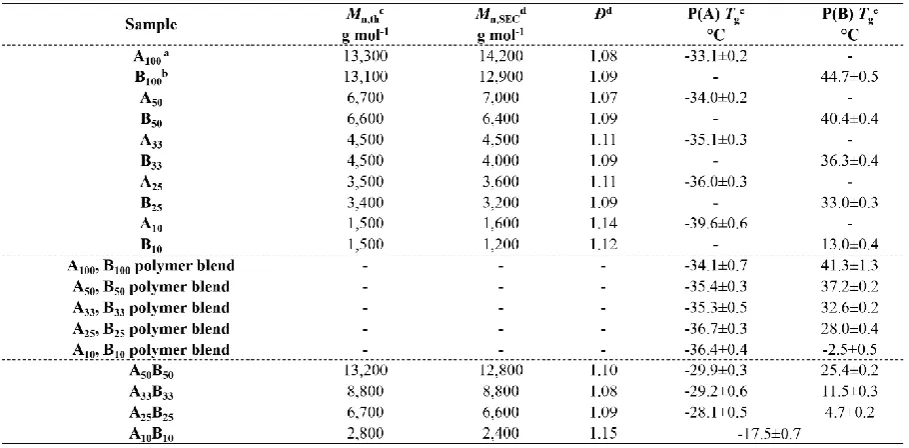
Table 2.1 Characterization of the Multiblock Copolymers by 1H NMR, CHCl3-SEC and DSC. . 32
Table 2.2 Experimental conditions used for the synthesis and characterization data of the diblock
copolymer: A100B100. ... 49
Table 2.3 Experimental conditions used for the synthesis and characterization data of the tetrablock
copolymer: A50B50A50B50. ... 51
Table 2.4 Experimental conditions used for the synthesis and characterization data of the hexablock
copolymer: A33B33A33B33A33B33. ... 52
Table 2.5 Experimental conditions used for the synthesis and characterization data of the octablock
copolymer: A25B25A25B25A25B25A25B25. ... 53
Table 2.6 Experimental conditions used for the synthesis and characterization data of the
icosablock copolymer: A10B10A10B10A10B10A10B10A10B10A10B10A10B10A10B10A10B10A10B10(blocks
1-10). ... 54
Table 2.7 Experimental conditions used for the synthesis and characterization data of the
icosablock copolymer: A10B10A10B10A10B10A10B10A10B10A10B10A10B10A10B10A10B10A10B10(blocks
11-20). ... 55
Table 2.8 Experimental conditions used for the synthesis and characterization data of the homopolymers. ... 66
Table 2.9 Characterization of the Homopolymers, Polymer Blends and Diblock Copolymers by 1H
NMR, CHCl3-SEC and DSC. ... 67
Table 3.1 Characterization of the polymers by 1H NMR and CHCl3-SEC. ... 92
Table 3.2 Experimental conditions used and obtained conversions for the preparation of various polymers at 70 ˚C. ... 128
Table 4.1 Characterization of the linear copolymers, SCNPs by 1H NMR spectroscopy, DMF-SEC, DLS and DSC. ... 142
Table 4.2 Hydrodynamic sizes of AB1SCNP at different pH values obtained by DLS in H2O. .... 147
Table 4.3 Hydrodynamic sizes of AB2SCNP at different pH values obtained by DLS in H2O. .... 148
List of Schemes
Scheme 1.1 Mechanism of reversible addition-fragmentation chain transfer (RAFT) polymerization: I) initiation step; II) propagation and fragmentation step; III) re-initiation step; IV)
equilibration step; V) termination step. ... 2
Scheme 1.2 Simplified mechanism and structures of the propagating radicals and intermediate radicals in RAFT polymerization. ... 7
Scheme 2.1 a) Schematic Representation of Multiblock Copolymers Investigated in this Study. b)
Synthesis of the Tetrablock Copolymer of A50B50A50B50by RAFT Polymerization (where A and B
represent EGMEA and tBA, respectively). ... 31
Scheme 3.1 Schematic representation of the synthesis of the multiblock single chain nanoparticles by a repeated folding-chain extension-folding process. ... 88
Scheme 3.2 Synthesis of the single chain polymeric nanoparticles B1SCNP and the linear control
copolymer B1ctr from the precursor copolymer B1 (Poly(NAM39-stat-HEA10)). ... 91
Scheme 3.3 Schematic representation of the folding of B1-B2-B3. ... 100
Scheme 3.4 Synthetic route of MPABTC. ... 112
Scheme 4.1 a) Equilibrium formation of boronate esters from 1,2-diols at high pH in water; b) Equilibrium formation of boronic esters from 1,2-diols at neutural pH in water; c) Schematic
representation of the synthesis of hydrophilic diblock copolymers of AB1 and AB2by RAFT
polymerization. d) Schematic representation of the synthesis of tadpole-like SCNPs. ... 138
Abbreviations
3D Three dimensional
ACVA 4, 4′-azobis(4-cyanovaleric acid)
AFM Atomic force microscopy
ATRP Atom transfer radical polymerisation
CDCl3 Deuterated chloroform
CHCl3 Chloroform
CTA Chain transfer agent
Đ Dispersity
DBA Benzene-1,4-diboronic acid
DBTDL Dibutyltin dilaurate
DCM Dichloromethane
Dh Hydrodynamic diameter
DP Degree of polymerization
DLS Dynamic light scattering
DMAP 4-dimethylaminopyridine
DMF Dimethylformamide
DMSO Dimethyl sulfoxide
DRI Differential refractive index
DSC Differential scanning calorimetry
EDC.HCl 1-(3-Dimethylaminopropyl)-3-ethylcarbodiimide hydrochloride
EGMEA Ethylene glycol methyl ether acrylate
<G> Compaction parameter
GLA Glycerol acrylate
HEA 2-hydroxyethyl acrylate
MBCP multiblock copolymer
MDI 4, 4′-Methylenebis(phenyl isocyanate) MeOH Nethanol
Mn Number average molar mass
MPABTC Methoxy-(propanoic acid)yl butyl trithiocarbonate
Na2SO4 Sodium sulphate
Neff Effective number of monomer units
NMP Nitroxide mediated polymerisation
NAM 4-acryloylmorpholine
NMR Nuclear magnetic resonance
ODT Order-disorder transition
PABTC 2-(((butylthio)-carbonothioyl)thio)propanoic acid (called (propanoic acid)yl butyl trithiocarbonate
PB Polybutadiene
PNAM Poly(4-Acryloylmorpholine)
PS Polystyrene
pTI p-tolyl isocyanate
RAFT Reversible addition fragmentation chain transfer
Rh Radius hydrodynamic
RDRP Reversible deactivation radical polymerization
SAXS Small angel X-ray scattering
SCNP Single chain nanoparticle
SCJNP Single chain Janus nanoparticle
Tg Glass transition temperature
TEM Transmission electron microscopy
tBA tert-butyl acrylate
TEA Triethylamine
THF Tetrahydrofuran
UV Ultraviolet
Acknowledgements
I would like to take this opportunity to thank all the people who provided me great help
during my PhD study.
First and foremost, I would like to thank my supervisor, Professor Sébastien Perrier, for
giving me this opportunity to pursue my PhD study in this great group and for being a great
mentor to let me have the freedom to explore my ability to uncover the mystery of science. I
cannot thank you enough for what you have done for me: from before I joined the group,
throughout the whole process of my PhD study, and the help and support when I was looking
for a job. Thank you very much for your guidance during my PhD researches, your
encouragement when I met difficulties, your advices when I needed them, and help in finding
ways for my PhD going to the promising direction. Thank you for providing me the
opportunities to participate conferences to improve my presentation skills and meet scientists
from different places of the world. Thank you very much for choosing me as your student even
my background was not relevant to the research of the group. Thank you for everything you
have done for me!
I would also like to extend my acknowledgement to Professor David M. Haddleton for
giving me useful suggestions and guidance for my PhD research. Thank you very much for
your help and support when I was applying for fellowship and jobs. Thank you for being my
PhD thesis examiner and the useful suggestions and discussions.
Also thanks Dr. Remzi Becer from Queen Mary, University of London for being my PhD
thesis examiner and the suggestions and corrections for my thesis. I would also like to thank
Dr. David Fox for giving me suggestions in my first two years’ annual reports. Special thanks
to my Masters’ study supervisor Professor Hui Xu for the great mentor and continuous supports
I would also like to thank Dr. Guillaume Gody, the master of RAFT polymerization.
Thank you for teaching me the knowledge of RAFT polymerization and synthesis of multiblock
copolymers, answering me questions, and help and guidance for my first PhD project. I cannot
forget the way you carry out scientific research, the integrity you showed in doing scientific
research.
Also, I would like to express my great gratitude to Dr. Matthias Hartlieb for the help
throughout my PhD. I learned a lot from you about analysing data and writing scientific
publications. Thank you for the help of my PhD researches and writing manuscripts. Especially
thanks for the help when I was applying for jobs.
Thanks also go to Mr. Robert Deubler and Professor Dr. Felix H. Schacher from
Friedrich-Schiller-University Jena for the SAXS analysis of my samples and contributions of
the writing of the manuscript. Many thanks to Ms. Elena Patyukova and Dr. Paul D. Topham
from Aston University for the theoretical study and the data analysis of my results and the
contributions to the writing of manuscript.
I also would like to express my enormous and special thanks to Mr. Joji Tanaka. Thank
you very much for the nice ideas and help in my PhD research. Many thanks for getting
involved and contributions in my PhD projects. I will always remember the many nights of
working until very late in the labs and office with you. Thank you so much for your kind
explanations of both scientific and non-scientific questions without complaining. Thanks for
being so modest. It has been a really nice pleasure working with you.
Big thanks also goes to Dr. Johannes C. Brendel for the ideas and suggestions for my
PhD research and the help when I was applying for the job in University Jena. Also thanks Dr.
Sylvain Catrouillet for the help in my research and manuscript writing. Thanks Mr. Pratik
Martin for the fruitful discussion about the RAFT polymerization and help for my research.
Thanks Dr. Paul Wilson for the corrections of the manuscript.
The NMR analysis for my samples by Dr. Ivan Prokes is really appreciated. Thanks Dr.
Neil Wilson for providing training and the access of the AFM equipment. Great appreciation
to Dr. Daniel Lester for the help and maintenance of the GPC. Thanks Mr. David Hammond
and Mr. Patrick De Jongh for the help in DSC analysis.Huge thanks toMr.Jason Noone for
solving the IT problems for me.
I would also like to thank all the colleagues and friends (Dr. Chongyu Zhu, Mr.Sangho
Won, and Mr. Nuttapol Risangud) across the corridor. Many thanks to all the Perrier group
members for the help in my PhD study, for making my life here colourful and enjoyable. I will
miss the time of playing football together with you (cheers, football teammates!), group outing,
and group seminars. I will remember everyone, especially Majda’s laugh. Yes, that’s the one!
Finally, I would like to thank all my family members for the encouragement, support and
the endless love throughout the years. Especially, sincerely thanks to my beautiful, lovely wife,
Pei Zhou, for the companion of so many years, all the support, encouragement, and
Declaration
Experimental work contained in this thesis is original research carried out by the author,
unless otherwise stated, in the Department of Chemistry at the University of Warwick, October
2013 and July 2017. No material contained herein has been submitted for any other degree, or
at any other institution.
Results from other authors are referenced in the usual manner throughout thetext.
Date:
Abstract
Reversible addition fragmentation chain transfer (RAFT) polymerization is a very
versatile way to generate synthetic polymeric materials. Multiblock copolymers have received
enormous scientific interest recently due to the ability to mimic the sequence-regulated
microstructure of biopolymers. The objective of this thesis was to investigate RAFT
polymerization and explore its potential in the synthesis of sequence-controlled multiblock
polymeric chains, and their use to tune the micro-structure of the polymers, engineer single
chain polymeric nanoparticles, and fabricate functional polymeric nanomaterials.
This work firstly addresses the investigation of the enormous ability of
sequence-controlled multiblock copolymer to tune the physical properties by altering their
microstructure. A series of sequence controlled multiblock copolymers were synthesized by
RAFT polymerization using ethylene glycol methyl ether acrylate and tert-butyl acrylate as
monomers. These block copolymers were synthesized with an alternating order of the two
monomers with a similar total degree of polymerization. The number of blocks was varied by
decreasing the length of each block while keeping the ratio of monomers constant. Their
microphase separation was studied by investigating the glass transition temperature utilizing
differential scanning calorimetry analysis. Small angel X-ray scattering analysis was also
applied to investigate the transition of the microphase separation with the variation of the
segmentations of these multiblock copolymers. The study found the microstructure was
significantly affected by the number of segments of the polymer chain whilst keeping the total
length constant.
Having demonstrated the enormous potential of sequence controlled multiblock
copolymers to access defined microstructures, further studies were focused on mimicking the
sequence controlled multiblock copolymers. RAFT polymerization was used to produce
multiblock copolymers, which are decorated with pendant cross-linkable groups in foldable
sections, separated by non-functional spacer blocks in between. An external cross linker was
then used to cause the folding of the specific domains. A chain extension-folding sequence was
applied to create polymer chains having individual folded subdomains. In order to achieve a
further step on the way to copy nature’s ability to synthesize highly defined
bio-macromolecules with a distinct three dimensional structure, linear diblock copolymer
precursors were synthesized by RAFT polymerization. One block of the precursor with pendant
functional groups was folded using an external cross-linker to form tadpole-like single chain
nanoparticles (SCNPs). These tadpole-like SCNPs could then self-assemble into a more
complex stimuli responsive 3D structure by adaptation to environmental pH changes. The
stimuli responsive assemblies were found to be able to dissociate responding to low pH or
Chapter 1 Introduction
1.1 RAFT polymerization
1.1.1 The mechanism of RAFT polymerization
Reversible addition-fragmentation chain transfer (RAFT) polymerization was first
reported by Moad, Rizzardo, and Thang in 1998.1 RAFT has since become one of the most powerful and versatile tools for the synthesis of polymers in the area of reversible deactivation
radical polymerization (RDRP).2-4 RAFT polymerization is a process similar to a conventional free-radical system (monomer and initiator) with the exception of requiring the introduction of
a dithioester compound as chain transfer agent (CTA). The generally accepted mechanism of
RAFT polymerization based on addition-fragmentation5-10 is depicted in Scheme 1.1, which consists of several elementary steps, including: initiation, chain transfer, re-initiation, chain
equilibration, and termination.
The radicals generated by the decomposition of the initiator react with the monomer
which is called initiation step (step I, ki, the radicals may add directly to the RAFT agent before
react with any monomer). The propagating radicals (Pm•, growing polymer chains) add onto
the thiolcarbonyl double bond (C=S) of the RAFT agent (1) to form the radical intermediate (2, step II, kadd). The intermediate 2 subsequently fragments into a macro chain transfer agent
(Macro-CTA, 3) and a new reinitiating radical R• (chain transfer step, step II, kβ). The formed
R• group will re-initiate the polymerization by reacting with other monomers to start another polymer chain P1• (kre-in, step III), which subsequently either forms a new propagating group
Pn• (kp, step III) or reacts with the Macro-CTA (kβ, step II). When the initial CTA is completely
between the active (Pn• or Pm•) and dormant chains (thiocarbonyl-thio capped 3 or 5). This
equilibrium will provide all chains equal probability to grow and, therefore, lead to the
formation of polymers with narrow molar mass distribution. The intermediate radicals 2 will also beinvolved in reactions of termination with other radicals by combination (ktc, step V).
Scheme 1.1 Mechanism of reversible addition-fragmentation chain transfer (RAFT) polymerization: I) initiation step; II) propagation and fragmentation step; III) re-initiation step; IV) equilibration step; V) termination step.
As RAFT polymerization is carried out under experimental conditions which are almost
identical to those used in conventional radical polymerization, it exhibits most of the
advantages of a free radical process. These advantages include its applicability to a large variety
of monomers (e.g., (meth)acrylates, (meth)acrylamides, styrene derivatives, dienes, vinyl
esters).3 Besides, various solvents ranging from aqueous conditions11-13 to organic solvents5, 14
hydroxyl, acid, and tertiary amino groups.1, 5 RAFT polymerization can be performed in solution, bulk, suspension or emulsion, with the possibility to achieve a wide range of molar
masses.5
Although RAFT polymerization is not a pure living technique (termination occurs in the
system, step V in Scheme 1.1), it still has the living character which is maintained by the reversible addition fragmentation process mediated by the transfer of the S=C(Z)S- group
between the active and dormant chains.1 The living character of RAFT process can be assessed
by the following parameters: (a) the product should have narrow polydispersity; (b) the
evolution of molecular weight versus conversion should be linear; (c) the molecular weight
should be predictable by the ratio of monomer consumed to CTA; (d) further monomer addition
should produce block (co)polymer.20
1.1.2 Selection of RAFT agents
The influence of CTA is critical for the RAFT process in terms of controlling the
molecular weight and maintaining narrow molecular weight distribution (Ð). The molecular
weight distribution (Ð) is calculated according to Equation 1.1. In order to ensure a narrow dispersity, the CTA should have a high chain transfer constant (Ctr) which means the transfer
rate constant (ktr) of the CTA should be relative high compared to the propagation constant (kp)
of the monomer (Equation 1.2).
Ð = 1 +𝐶1
𝑡𝑟 (Equation 1.1)
𝐶𝑡𝑟 = 𝑘𝐾𝑡𝑟
𝑝 (Equation 1.2)
The transfer rate constant (ktr) of the CTA depends on several factors according to
fragmentation rate of the intermediate 2 to release radical R• (kβ), and the rate of the
intermediate 2 re-fragmenting back the propagating monomer (k-add).
𝑘𝑡𝑟 = 𝑘𝑎𝑑𝑑𝑘 𝑘β
−𝑎𝑑𝑑+𝑘β (Equation 1.3)
A wide range of CTAs have been discovered (e.g. dithioesters,1 xanthates,21, 22 dithiocarbamates,23, 24 trithiocarbonates,20, 25 and phosphoryl-/
(thiophosphoryl)dithioformates26) to control the polymerization of a large variety of monomers (Figure 1.1).
Figure 1.1 General structures and examples of RAFT agents with different functional units of the Z group. There are two requirements for a RAFT agent to be effective.23 One is both, addition and fragmentation rate need to be relatively fast compared to the propagation rate of the monomer
to ensure the initial RAFT agent to be rapidly consumed, and a fast equilibration between the
active and dormant chains . The second requirement is that the expelled radical (R•) should be able to reinitiate the polymerization to ensure chain growth. Z and R groups are crucial in the
choice of the RAFT agent to ensure the success of polymerization.
The Z group strongly affects the stability of the intermediate radicals and the reactivity
the influence of the Z group on the polymerization of various monomers have been published.19,
23, 24, 28-31 Based on this research, the phenyl group has been identified as an ideal Z group for
most monomers because it can keep the balance between the radical intermediate stability and
the reactivity to form propagating radicals. Also, the following order has been suggested by the
experimental data19, 23, 24, 28-32 and ab initio calculations33 when choosing the Z group of a CTA: addition rates decrease and fragmentation rates increase from left to right (Figure 1.2).
Figure 1.2 Guidelines for the selection of the Z group for a CTA for various polymerization: addition rates decrease and fragmentation rates increase from left to right.
The R group of the CTA should be an excellent free-radical leaving group. At the same
time, R• should effectively reinitiate the free radical polymerization. When choosing the R group, the stability of the expelled radical, polarity, and steric bulk should also be considered.4 There have been many studies investigating the importance of the R group for the
polymerizations of different monomers.14, 27, 34-41 Cumyl or cyanoisopropyl units have been found to be the most efficient for the reinitiation step.24 All the above experimental data and
the ab initio calculations33 give the following guidelines for choosing the R group of the CTA for various polymerizations: fragmentation rates decrease from left to right (Figure 1.3).
1.2 Multiblock copolymers by RAFT polymerization
1.2.1 General considerations about multiblock copolymers by RAFT
polymerization
As mentioned above, RAFT polymerization has living character originating from the
ability of the S=C(Z)S- moiety to transfer radicals between dormant and active chains.5 Considering most of the chains generated from RAFT process possess a S=C(Z)S- end group
(as minimum amount of initiator was used for the polymerization), polymerization will be able
to continue in the presence of additional monomers to afford block copolymers.5 Synthesizing
block copolymers is one of the main advantages of RAFT polymerization over a free radical
polymerization. Multiblock copolymers which have a higher level of structural control are
polymers in which the sequence of the large number of monomers/functionalities is regulated
along the polymer chain. This characteristic of multiblock copolymers enables them to mimic
the properties and structural features of biopolymers, such as proteins and nucleic acids.42-44
The highly specific functions of these macromolecules originate from the elegantly controlled
primary structure along the polymer backbone.45 By incorporating a wide range of functional groups in specific domains of a polymer chain, highly ordered materials with unique properties
will be generated.
A basic requirement for the synthesis of block copolymers with a narrow molecular
weight distribution in a RAFT polymerization is that the polymeric thiocarbonylthio compound
(Macro-CTA) formed in the former block should have a high chain transfer constant in the
following polymerization to form the subsequent block. This will require the propagating
that of the new (later formed) propagating radical Pn• under the polymerization conditions
(Scheme 1.2).5
Scheme 1.2 Simplified mechanism and structures of the propagating radicals and intermediate radicals in RAFT polymerization.
However, since free radical intermediates are formed in the process of RAFT
polymerization, radical-radical termination is unavoidable.46 Therefore, dead polymer chains derived from initiator radicals will be formed ultimately. In order to synthesize multiblock
copolymers, keeping a high fraction of living chains is of major significance. To achieve
polymers with narrow polydispersities and a high number of living chains, the priority is to
minimize the consumed initiator and, as a result, to minimize the number of initiator-derived
chains.6 The polymerization usually needs to be stopped at low to moderate monomer
conversions to preserve a high livingness, which will severely limit the practice of the synthesis
of multiblock copolymers.47 There are several different parameters which can be optimized in order to maintain a high level of livingness in a RAFT polymerization process, e.g. monomer
concentration,48 solvent,49-52 reaction temperature,51, 53 and pressure.53, 54 For example, increasing the monomer concentration will increase the Arrhenius pre-exponential factor which
will accelerate the speed of polymerization.48, 55 Choosing a polar solvent (i.e. water) will help stabilizing the transition state of the propagating radicals, which will lower the termination rate
and the activation energy, therefore increase the speed of propagation.49 Furthermore, the propagation rate constant (kp), is considered to be chemically affected and therefore to be
1.2.2 Calculation of the theoretical livingness in multiblock copolymers
The livingness (the number fraction of living chains which have the CTA end group, L)
in the synthesis of multiblock copolymers is calculated according to Equation 1.4.
𝐿 = [CTA]0
[CTA]0+2𝑓[𝐼]0(1−e−𝑘𝑑t)(1−𝑓𝑐2)
(Equation 1.4)
where L is the number fraction of living chains, [CTA]0 and [I]0 are the initial concentrations
of CTA and initiator, respectively. The term ‘2’ represents that one molecule of azo initiator
degrades into two primary radicals with a certain efficiency f (taken as 0.5 in this thesis). kd is
the decomposition rate coefficient of the initiator. The term (1 ─ fc/2) represents the number of
chains produced in a radical–radical termination event with fc the coupling factor (fc = 1 means
100% bimolecular termination by combination, fc = 0 means 100% bimolecular termination by
disproportionation). Using this equation, it is possible to predict the amount of chains
possessing the CTA end group and the structures of generated block copolymers.
1.2.3 Advances and highlights of multiblock copolymers by RAFT
polymerization
Multiblock copolymers have received considerable attention in recent years as they aid
to understand the relationship between the monomer sequence of a polymer chain and the
resulting structure and functionality.57-62 For instance, the self-assembly of block copolymers
in solution or in bulk can lead to the formation of different types of objects with tailored
microstructures.63-71 Although having great promises, the synthesis of sequence controlled multiblock copolymers by RAFT polymerization still remains challenging. This is attributed
to the inevitably loss of chain ends during polymerization as a result from the termination
reactions due to the requirement of an external radical source which will cause the overall
chains only corresponds to the amount of radicals derived from the decomposed initiator in the
RAFT polymerization (depicted in Equation 1.1), it is possible to reach quantitative monomer conversions with a high fraction of living chains by keeping the decomposed initiator at a
minimum concentration. However, lowering the initiator concentration will slow down the
polymerization rate and will therefore prolong the reaction time.2 This drawback can be overcome by optimizing other reaction parameters.
Recently, our group developed an approach which enables the synthesis of highly
complex multiblock copolymers with near full monomer conversion for each block extension
and good control of molecular weight distributions. This strategy employed a one-pot approach
via sequential monomers addition to synthesize multiblock copolymers using RAFT
polymerization by optimizing the reaction parameters.18 A dodecablock and an amphiphilic hexablock copolymer were synthesized by utilizing carefully selected conditions to polymerize
acrylamide (high kp) monomers using AIBN as the initiator and a trithiocarbonate as the CTA
(low retardation) using dioxane as solvent at 65˚C. Near full monomer conversion (> 99%)
was obtained within 24 h for each chain extension with a final theoretical livingness of up to
95%. In order to avoid the lengthy reaction time to reach full monomer conversion, an initiator
which decomposes much faster than AIBN
(2,2’-azobis[2-(2-imidazolin-2-yl)propane]dihydrochloride (VA-044)) was employed. This approach demonstrated the high
versatility by synthesizing the first reported icosablock (20 blocks, 2 h per block at 70˚C in
H2O) copolymer with ~ 98 – 99% conversion for each chain extension and a remarkable control
of the molecular weight with a final dispersity of 1.4 and a 93.8% theoretical livingness. This
study illustrates the great potential of using RAFT polymerization to the synthesis of highly
complex functional polymers with precisely distribution of monomers sequence along the
polymer chain. These approaches, however, still have limitation, i.e. not suitable for monomers
Very recently, the Haddleton group reported the synthesis of sequence-controlled
multiblock copolymers using various methacrylate monomers via a sulfur-free emulsion RAFT
polymerization technic.72 Despite the significant challenge of using methacrylates for the fabrication of complex multiblock copolymers, several higher order multiblock copolymers
(up to 24 blocks) were successfully obtained with low molecular weight distribution (Ð < 1.5)
in a facile, rapid, quantitative, and scalable approach (up to 80 g).
All the above approaches offer new perspective for building sequence controlled
synthetic polymers which have great potential in the wide range of applications, including
nanostructured materials, microphase separation, and single chain folding.
1.3 Single Chain Nanoparticles (SCNPs)
The advances of multiblock copolymers enable the access to well defined complex
architectures as a further step on the way to control the sequence of synthetic polymers.
Recently, mimicking the highly specific sequence of biopolymers (e.g. proteins and nucleic
acids) has attracted substantial interest in the field of the polymer synthesis.44, 73, 74 These sequence controlled biomacromolecules are significant to the development, functioning and
reproduction of all living systems.72 The wide variety of functionalities of natural polymers result from their sophisticated structures which originate from the controlled folding of
polymer chain.45 Inspired by this elegant folding process, considerable attention has been drawn to employ synthetic polymers to reproduce this precision, which is folding a single
polymer chain into a single chain nanoparticles (SCNPs). SCNPs are a promising type of
1.3.1 Synthetic strategies of SCNPs
Considering the RAFT technique can be employed to polymerize various monomers and
there are relative few side reactions involved which will interfere with the RAFT process,
polymer scaffolds with functional groups which can be modified by post-polymerization can
easily be accessed without protection/deprotection of monomers.82, 83 Well-defined SCNPs
have been accessible by single chain folding of synthetic polymer chains with controlled
composition, molecular weight, and molecular weight distribution.84
The general strategy for the synthesis of SCNPs is based on the intramolecular single
chain collapse of a polymer. There are three main approaches to induce a polymer chain
collapse: homo-functional chain folding, hetero-bifunctional chain folding, and cross-linker
mediated chain folding. In addition to the folding of a whole polymer chain, the folding process
can also be performed within one block of a diblock or triblock copolymer, which leads the
formation of SCNPs with different shapes, e.g. tadpole-like SCNPs.85
In the homo-functional intra-chain cross-linking approach, the linear copolymer chain is
decorated with one type of reactive functional groups (e.g. double bonds) which can react with
each other to cause the intramolecular cross-linking. The hetero-bifunctional chain folding
strategy is similar to the homo-functional chain collaps but requires two different but
complementary functional pendant groups along the polymer backbone. However, it is usually
difficult to synthesize such copolymers. In both these methods, the cross-linking reaction needs
to be carried out under ultra-dilute conditions in order to avoid the competing intermolecular
cross-linking. The concentration of the functional groups is usually in the region of 10-5 – 10-6 mol/L.86 This drawback severely precludes the synthesis of SCNPs in a large scale. Utilizing a bifunctional cross-linker to react with the pendant reactive units present in the polymer chain
is a widely employed approach to generate SCNPs efficiently as the synthesis of the linear
precursor is easier considering a wide variety of functional groups can be introduced into the
polymer chain. Besides, extra functional groups can be incorporated into the polymer backbone
by the cross-linking reagent. Also, cross-linker mediated single chain folding can either be
performed under ultra-dilute conditions or employing a “slow-addition” method, as developed
by Hawker et. al..86 This method allows the synthesis of SCNPs in a large quantity and avoids intermolecular interactions which are still evident even under dilute conditions.
1.3.2 Cross-linking chemistries for the generation of SCNPs
A wide variety of reactions have been used for the intramolecular cross-linking of linear
polymer chains to synthesize SCNPs which include covalent chemistry, non-covalent
chemistry, and dynamic covalent chemistry.87-92
Covalent chemistry is the most widely utilized approach to generate SCNPs as it is very
versatile in terms of functional groups and reaction conditions (e.g. temperature and solvent).
Table 1.1 summarizes the frequently used covalent strategies which have been developed for the generation of SCNPs, including Friedel Crafts reaction, free radical coupling,Diels-Alder
ligation, copper-catalysed azide-alkyne cycloaddition (CuAAC), Tetrazole-ene Cycloaddition,
isocyanate amine coupling,Thiol-Yne coupling,amide formation, etc.. Covalent cross-linking
generates SCNPs with desired structures which remain stable upon exposed to the
environmental changes. In addition to this advantage, the covalent conjugations have specific
disadvantages, for instance, harsh conditions may be required during cross linking (e.g. high
temperature), or the requirement of a catalyst or initiator (for radical induced cross-linking).93 The irreversible nature of covalent cross-linking also limits their biomimetic functions which
Table 1.1 Irreversible covalent cross-linking reactions for the synthesis of SCNPs.
Cross-linking chemistry and
mode* Functional group precursors Cross-linked structure References
Friedel Crafts reaction (Het) Sillescu94
Free radical coupling (Hom)
Thayumanava n,95 Miller,96
Du Prez.97
Photoinduced Diels-Alder ligation
(Het)
Barner-Kowollik98
Photoinduced Tetrazole-ene Cycloaddition
(Het)
Barner-Kowollik99
Photo-cross-linking of cinnamoyl groups
(Hom)
Liu,100, 101
Chen,102, 103
Khan.104
Tetrazine-norbornene reaction
(XL) O’Reilly
105
Isocyanate amine coupling
(XL) Hawker
106
Azide-alkyne click chemistry (Het or XL)
Loinaz,107, 108
Pomposo,109, 110
Odriozola,77
Yagci,111
Table 1.1 continued Cross-linking chemistry and
mode*
Functional group precursors Cross-linked structure References
Thiol-Yne coupling chemistry
(XL)
Pomposo112
Amide formation
(XL) Pomposo
113
Olefin metathesis Coates114
* Hom represents homofunctional cross-linking; Het represents heterofunctional cross-linking; XL represents cross-linker medidated cross-linking reaction.
In order to realize the folding/unfolding process as displayed by biomacromolecules (e.g.
proteins), non-covalent interaction which are also called supramolecular interactions, including
hydrogen bonds, host-gest interactions, metal-ligand coordination, etc. can be used to produce
bio-mimicking SCNPs. Table 1.2 summarizes the frequently used non-covalent bonds to synthesize SCNPs. The reversible cross linking is regulated by temperature, pH, UV light,
redox potential, concentration, pressure, competing chemical agents, etc.91, 115 SCNPs
generated by non-covalent bonds have great potential applications in self-healing materials,
biosensors, and smart adaptable systems. However, the advantages can sometimes be
disadvantages. Some non-covalent bonds might be incompatible with certain solvents, for
example, the hydrogen bonds are usually disrupted by hydrogen bonding competitor solvents
Table 1.2 Noncovalent cross-linking reactions for the synthesis of SCNPs.
Cross-linking chemistry and
mode*
Functional group precursors Cross-linked structure References
Thymine-diaminopyridine hydrogen bonding
(Het)
Barner-Kowollik,117
Rotello.118
Upy dimerization hydrogen bonding
(Hom)
Meijer119-123
Pd-complexation (XL)
Barner-Kowollik124
Cyclodextrins Host-guest Chemistry
(Het)
Barner-Kowollik125
BTA stacking
(Hom) Meijer
126-132
* Hom represents homofunctional cross-linking; Het represents heterofunctional cross-linking; XL represents cross-linker medidated cross-linking reaction.
Dynamic covalent bonds not only show all the properties that displayed by conventional
stimuli, e.g. oxidizing or reducing reagents, pH, chemical species, etc.133-135 Table 1.3
summarizes the frequently used dynamic covalent cross-linking reactions for the fabrication of
SCNPs, including disulphide chemistry, hydrazone chemistry, enamine chemistry, imine
chemistry, acetal chemistry, boronate ester chemistry, etc. The main property exhibited by
dynamic covalent bonds mediated SCNPs is responsive and adaptive behaviour to the changes
of their environment. This important property enables a component exchange along the
polymer backbone or inside the nanoparticles. The reversible nature allows the nanoparticles
to be used in the area of encapsulation and controlled drug delivery/release.136 Table 1.3 Dynamic covalent cross-linking reactions for the synthesis of SCNPs.
Cross-linking chemistry and mode*
Functional group
precursors Cross-linked structure References Disulfide chemistry
(Hom)
Lutz,137 Thayumanavan.138 Hydrazone chemistry
(XL) Fulton
139, 140
Enamine chemistry
(XL) Pomposo
141
Imine chemistry
(XL) Yang
142
Acetal chemistry
(XL) Haag,
143 Tran.144
Boronate ester (XL)
Lam,145 Wang,146 Levkin.147
* Hom represents homofunctional cross-linking; Het represents heterofunctional cross-linking; XL represents cross-linker medidated cross-linking reaction.
The above mentioned chemistries have been widely employed to construct well-defined
1.4 References
1. Chiefari, J.; Chong, Y. K.; Ercole, F.; Krstina, J.; Jeffery, J.; Le, T. P. T.; Mayadunne, R. T. A.; Meijs, G. F.; Moad, C. L.; Moad, G.; Rizzardo, E.and Thang, S. H. Living Free-Radical Polymerization by Reversible Addition−Fragmentation Chain Transfer: The RAFT Process. Macromolecules 1998, 31 (16), 5559-5562. 2. Hill, M. R.; Carmean, R. N.and Sumerlin, B. S. Expanding the Scope of RAFT Polymerization: Recent Advances and New Horizons. Macromolecules 2015, 48 (16), 5459-5469.
3. Moad, G.; Rizzardo, E.and Thang, S. H. Living Radical Polymerization by the RAFT Process – A Third Update. Aust. J. Chem. 2012, 65 (8), 985-1076.
4. Perrier, S.and Takolpuckdee, P. Macromolecular design via reversible addition–fragmentation chain transfer (RAFT)/xanthates (MADIX) polymerization. J. Polym. Sci., Part A: Polym. Chem. 2005, 43 (22), 5347-5393.
5. Chong, Y. K.; Le, T. P. T.; Moad, G.; Rizzardo, E.and Thang, S. H. A More Versatile Route to Block Copolymers and Other Polymers of Complex Architecture by Living Radical Polymerization: The RAFT Process.
Macromolecules 1999, 32 (6), 2071-2074.
6. Moad, G.; Chiefari, J.; Chong, Y. K.; Krstina, J.; Mayadunne, R. T. A.; Postma, A.; Rizzardo, E.and Thang, S. H. Living free radical polymerization with reversible addition – fragmentation chain transfer (the life of RAFT). Polym. Int. 2000, 49 (9), 993-1001.
7. Barner-Kowollik, C.; Davis, T. P.; Heuts, J. P. A.; Stenzel, M. H.; Vana, P.and Whittaker, M. RAFTing down under: Tales of missing radicals, fancy architectures, and mysterious holes. J. Polym. Sci., Part A: Polym.
Chem. 2003, 41 (3), 365-375.
8. Moad, G.; Rizzardo, E.and Thang, S. H. Living Radical Polymerization by the RAFT Process. Aust. J.
Chem. 2005, 58 (6), 379-410.
9. Moad, G.; Rizzardo, E.and Thang, S. H. Living Radical Polymerization by the RAFT ProcessA First Update. Aust. J. Chem. 2006, 59 (10), 669-692.
10. Moad, G.; Rizzardo, E.and Thang, S. H. Living Radical Polymerization by the RAFT Process A Second Update. Aust. J. Chem. 2009, 62 (11), 1402-1472.
11. Li, M.; Li, H.; De, P.and Sumerlin, B. S. Thermoresponsive Block Copolymer–Protein Conjugates Prepared by Grafting-from via RAFT Polymerization. Macromol. Rapid Commun. 2011, 32 (4), 354-359. 12. Martin, L.; Gody, G.and Perrier, S. Preparation of complex multiblock copolymers via aqueous RAFT polymerization at room temperature. Polym. Chem. 2015, 6 (27), 4875-4886.
13. Hoff, E. A.; Abel, B. A.; Tretbar, C. A.; McCormick, C. L.and Patton, D. L. Aqueous RAFT at pH zero: enabling controlled polymerization of unprotected acyl hydrazide methacrylamides. Polym. Chem. 2017. 14. Benaglia, M.; Rizzardo, E.; Alberti, A.and Guerra, M. Searching for More Effective Agents and Conditions for the RAFT Polymerization of MMA: Influence of Dithioester Substituents, Solvent, and Temperature. Macromolecules 2005, 38 (8), 3129-3140.
15. Sun, X.-L.; He, W.-D.; Li, J.; Li, L.-Y.; Zhang, B.-Y.and Pan, T.-T. RAFT cryopolymerizations of N,N-dimethylacrylamide and N-isopropylacrylamide in moderately frozen aqueous solution. J. Polym. Sci., Part A:
Polym. Chem. 2009, 47 (24), 6863-6872.
16. Sun, X.-L.; He, W.-D.; Pan, T.-T.; Ding, Z.-L.and Zhang, Y.-J. RAFT cryopolymerizations of acrylamides and acrylates in dioxane at −5 °C. Polymer 2010, 51 (1), 110-114.
17. Paulus, R. M.; Becer, C. R.; Hoogenboom, R.and Schubert, U. S. High Temperature Initiator-Free RAFT Polymerization of Methyl Methacrylate in a Microwave Reactor. Aust. J. Chem. 2009, 62 (3), 254-259.
18. Gody, G.; Maschmeyer, T.; Zetterlund, P. B.and Perrier, S. Rapid and quantitative one-pot synthesis of sequence-controlled polymers by radical polymerization. Nat. Commun. 2013, 4, 2505.