Original Article
The effect of a three-dimensional structure
evaluation system on the continuing care
of patients having liver cancer surgery
Jin Liu1, Wei Zhu2, Chunyan Xu3, Cuiping Zhang4
Departments of 1Integrated Chinese and Western Medicine, 2Lymphoma, 3Hepatobiliary and Pancreatic Surgery, 4Nursing, The 3rd Affiliated Teaching Hospital of Xinjiang Medical University (Affiliated Cancer Hospital), Urumqi,
Xinjiang Uygur Autonomous Region, China
Received September 17, 2019; Accepted January 3, 2020; Epub February 15, 2020; Published February 28, 2020
Abstract: Objective: To explore the effect of a three-dimensional structure evaluation system in the continuing care of patients having liver cancer surgery. Methods: A total of 198 patients with liver cancer who underwent a surgical resection were randomly divided into two groups, with 99 patients in each group. The first group received continuing care after undergoing liver cancer surgery (the CC group); the second group received continuing care combined with a three-dimensional structure evaluation system after undergoing liver cancer surgery (the TH group). There were no differences in the baseline conditions between the two groups. Nursing satisfaction, the SF-36 quality-of-life Instru-ment score, the medication possession ratio (MPR), the self-rating anxiety scale (SAS) score, and the postsurgical complications were compared between the two groups at 3, 6, and 12 months after the nursing intervention. Re-sults: The MPR of both the CC group and the TH group gradually decreased over time, but the MPR of the TH group was higher than the MPR of the CC group at all time points (all P<0.05). The SAS scores of both groups decreased after the nursing intervention, but the SAS score of the CC group was higher than the SAS score of the TH group at all time points (all P<0.05). Moreover, the SF-36 score of the TH group was significantly higher than the SF-36 score of the CC group at 3 months after surgery (P<0.05). The nursing satisfaction rate of the TH group was 80.81%, which is significantly higher than the 69.70% of the CC group (P<0.05). At 6 months after surgery, the Child-Pugh classifi -cations of the two groups were significantly different (P<0.05); there were 72 class A and 27 class B patients in the CC group, and there were 83 class A and 16 class B patients in the TH group. Conclusion: The three-dimensional structure evaluation system improved the outcome of the continuing care, alleviated anxiety, and reduced postsurgi-cal complications in patients who underwent liver cancer surgery.
Keywords: Continuing care, liver cancer, three-dimensional structure, evaluation system
Introduction
Liver cancer is a common malignant tumor of the digestive system, and its mortality rate ranks third in the world [1]. China is a country with a high incidence of liver cancer, account-ing for more than half of the world’s morbidity and death each year, which seriously threatens the lives of Chinese citizens [2]. Many factors are believed to be involved in the etiology of liver cancer, such as viral infections, diet, and environmental pollution, etc. [3]. The early diag-nosis of liver cancer is difficult, and the rate of surgical resection remains very low after diag-nosis. Although surgical resection is the main means of treating liver cancer, many patients
for surgery when diagnosed [4]. Therefore, the overall therapeutic effect of liver cancer is not satisfactory [5]. In the course of treatment, patients not only have to suffer from the pain of surgery, but they also endure tremendous psy-chological pressure and even lose hope, such that their quality of life is greatly reduced [6]. Studies have confirmed that the psychological and physiological conditions of patients will have a certain impact on their therapeutic effects, and research in related fields has grad -ually become a research hotspot [7].
the hospital, and it also offers guidance for a series of problems such as the patient’s psy-chological and daily life problems after dis-charge, so as to help the patients better achieve rehabilitation [8, 9]. Previous studies have found that after continuing care, patients’ body functions and quality of life were significantly improved. Furthermore, continuing care effec-tively improves the postoperative viability and reduces the incidence of complications in patients who have undergone tumor surgery [10]. With the development of China’s medical industry, the overall level of continuing care has been greatly improved [11].
Avedis et al. have proposed using a structure-process-outcome evaluation system to analyze and evaluate the effects of medical care [12]. The structure-process-outcome evaluation sys-tem is referred to as the three-dimensional structure evaluation system [13]. The “struc-ture” mainly refers to various implementation elements, which are configured by manpower and material resources. The “process” refers to applying various elements of the structure to practice. The “outcome” refers to the final result achieved by the implementation process, which is the key to the evaluation of nursing care [14]. Previous studies have used a three-dimensional evaluation system to evaluate the quality of nursing care and achieved satisfac-tory results [15]. Therefore, we explored the effects of the three-dimensional structure eval-uation system on the continuing care of patients with liver cancer surgery, hoping to provide a theoretical basis for the improvement of the quality of continuing care.
Materials and methods
Patients
A total of 198 patients who underwent liver cancer surgery at The 3rd Affiliated Teaching Hospital of Xinjiang Medical University (Affilia-ted Cancer Hospital) from January 2017 to May 2019 were enrolled in this study. The patients were randomly divided into two gr- oups at discharge, with 99 patients in each group. The first group received continuing ca-re after undergoing liver cancer surgery (the CC group); the second group received conti- nuing care combined with a three-dimensional structure evaluation system after undergoing liver cancer surgery (the TH group). This study
was approved by the ethics committee of The 3rd Affiliated Teaching Hospital of Xinjiang Medical University (Affiliated Cancer Hos-pital), and all patients provided an informed consent. Inclusion criteria: patients who were diagnosed with liver cancer and received their initial treat-ment at The 3rd Affiliated Teaching Hospital of Xinjiang Medical University (Affiliated Cancer Hospital) [16]; patients whose Child-Pugh clas-sification was A or B at discharge; patients who were between 18 and 70 years old; patients who had no post-surgical complications; pa- tients who had no major organ dysfunction. Exclusion criteria: patients who had a recur-rence of liver cancer; patients who had mental illness; patients who had other malignant tu- mors.
Continuing care
Continuing care is long-term care. After a patient is discharged, the medical staff contin-ues to perform daily care that is similar to the care in the hospital. Through the telephone or internet video chat, the continuing care was carried out as follows.
Dietary guidance: a recipe was created by a professional dietitian and adjusted according to the condition of the liver cancer patient. The recipe was sent to the patient via the internet. The patients could also inform the dietitian about their diet habits and requirements via SMS or Internet, and they could give feedback about the use of the recipe.
support meetings. Disease knowledge was delivered to the patients through the social media software to increase the self-confidence of liver cancer patients.
Sleeping guidance: the patients were instruct-ed to avoid unhealthy sleeping habits. Sleeping intervention was used for patients with sleep-ing problems. Relaxsleep-ing music was sent to the patients through social media software, so the patients could enjoy the music before going to sleep.
Patient follow-up: follow-up was carried out via telephone or internet video chat according to a pre-established schedule. At 1 week after dis-charge, the patients were asked about any adverse reactions to the treatment. At 2 weeks after discharge, the patients were asked about their exercising and sleeping quality. At 3 weeks after discharge, the patients were asked about their psychological conditions, and detailed records were kept for each patient.
Continuing care combined with a
three-dimen-sional structure evaluation system
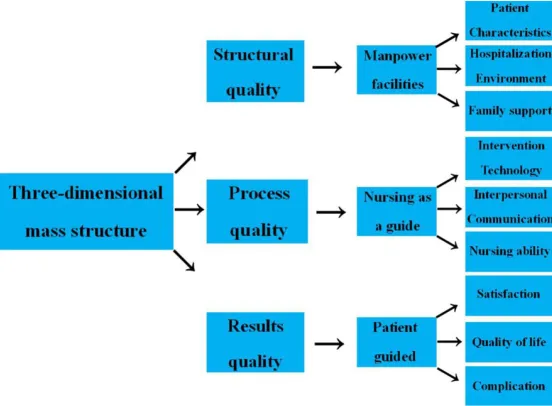
The TH group received continuing care com-bined with a three-dimensional structure evalu-ation system. The continuing care quality was evaluated in three aspects: structure quality, process quality, and outcome quality. Structure quality includes the quality of manpower, mate-rial resources, family support, etc., which are
[image:3.612.93.369.74.277.2]the fundamental elements of continuing care. Process qu- ality means the quality of the intervention management, interpersonal communication, nursing skills, etc. Outcome qu- ality was accessed based on the nursing satisfaction, quali-ty of life, and postsurgical com-plications, which are the main indices for evaluating the qual-ity of continuing care. Before the continuing care was imple-mented, a cancer care team was set up and workflow rules and regulations were estab-lished. Each department was centered on the cancer care team and required to give full cooperation. The head nurse was selected as the leader of Figure 1. The three-dimensional structure evaluation system.
the cancer care team and was responsible for the reporting implementation problems every week. The workflow rules and regulations were amended when necessary based on the report-ed problems by team members, so as to pro-vide the patients with the best healthcare expe-rience (Figure 1).
Observational indices
Medication possession ratio (MPR): The MPR of each group was compared before and at 3, 6, 12 months after discharge. The higher the MPR, the better the compliance. MPR = ber of days covered by medications/total num-ber of days of treatment *100%.
Self-rating anxiety scale (SAS) score: The SAS scores were compared between the two groups before and at 3, 6, and 12 months after dis-charge. The higher the SAS score, the more severe the anxiety. SAS has 20 items, with 10 items representing positive statements and 10 items representing negative statements. Each item is scored on a scale of 1-4, and the stan-dardized cut-off score is 50 points. 51-59 points: mild anxiety; 60-69 points: moderate anxiety; ≥70 points: severe anxiety.
pain, general health, validity, social function, role-emotional, and mental health. The total score is 100, and the higher the score, the bet-ter the quality of life.
Nursing satisfaction
At 3 months after discharge, the patients were asked to rate their nursing satisfaction on a scale of 1-3 as follows: satisfied, neutral, and
unsatisfied. Nursing satisfac -tion rate = (satisfied + neutral)/ total *100%.
Child-Pugh classification
The Pugh-Child score is deter-mined by scoring 5 clinical measures of liver disease. The 5 clinical measures include total bilirubin, serum albumin, prothrombin time, ascites, and hepatic encephalopathy. A sc- ore of 1, 2, or 3 is given to each measure, with 3 being the mo- st severe. The total score rang-es from 5 to 15 points. Liver function is classified as class A, B, or C based on the total Pugh-Child score. Class A: 5-6 points; class B: 7-9 points; class C: ≥10 points. The Child-Pugh classification was com -pared between the two groups at 6 months after discharge. Statistical analysis
All data were analyzed using the SPSS 22.0 statistical pack-age. Quantitative values were expressed as the mean ± sd and the differences between groups were evaluated using an independent t-test.; the enumeration data were ex- pressed as number/percent-age (n/%) and differences be- tween groups were compared using χ2 tests. A P value less
than 0.05 was considered si- gnificant.
Results
Comparison of the baseline conditions
There were no differences regarding gender, age, and Child-Pugh classification between the two groups (all P<0.05). See Table 1.
Comparison of MPR
[image:4.612.91.372.84.216.2]The MPR of patients in both groups gradually decreased over time, but the MPR in the TH
Table 1. Comparisons of the baseline conditions (n)
Groups CC group TH group χ2 P
Gender 0.187 0.665
Male 38 41
Female 61 58
Age 0.721 0.395
<50 48 54
≥50 51 45
Child-Pugh classification 0.153 0.695
Class A 31 28
Class B 68 71
Note: the first group received continuing care after undergoing liver cancer
[image:4.612.90.374.306.387.2]surgery (the CC group); the second group received continuing care combined with a three-dimensional structure evaluation system after undergoing liver cancer surgery (the TH group).
Table 2. Comparison of the medication possession ratios (mean ± sd)
MPR (%)
At 3 months At 6 months At 12 months CC group (n=99) 85.67±7.45 82.24±5.38 79.26±5.79 TH group (n=99) 96.24±8.35 93.46±7.35 90.32±6.54
t 9.442 12.327 12.591
P <0.001 <0.001 <0.001
Note: the first group received continuing care after undergoing liver cancer
surgery (the CC group); the second group received continuing care combined with a three-dimensional structure evaluation system after undergoing liver cancer surgery (the TH group). MPR, Medication Possession Ratio.
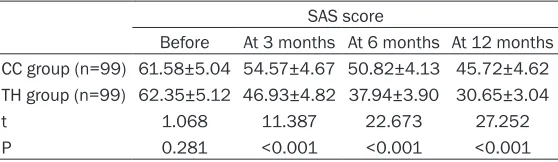
Table 3. Comparison of the SAS scores (mean ± sd) SAS score
Before At 3 months At 6 months At 12 months CC group (n=99) 61.58±5.04 54.57±4.67 50.82±4.13 45.72±4.62 TH group (n=99) 62.35±5.12 46.93±4.82 37.94±3.90 30.65±3.04
t 1.068 11.387 22.673 27.252
P 0.281 <0.001 <0.001 <0.001
Note: the first group received continuing care after undergoing liver cancer
[image:4.612.92.371.462.543.2]Table 4. Comparison of the SF-36 scores (mean ± sd)
Physical function Bodily pain Validity Social function Role-emotional Mental health General health Role-physical CC group (n=99) 75.12±5.85 74.72±6.07 73.29±7.13 70.25±5.44 77.29±6.52 71.69±5.83 70.23±7.69 74.92±5.69 TH group (n=99) 88.39±6.89 85.33±7.32 82.07±8.13 79.47±7.62 82.34±6.03 82.77±7.41 82.05±7.19 85.23±6.59
t 8.041 6.101 4.447 5.367 3.091 6.656 6.151 6.486
P <0.001 <0.001 0.004 0.002 0.031 <0.001 <0.001 <0.001
Note: the first group received continuing care after undergoing liver cancer surgery (the CC group); the second group received continuing care combined with a three-dimensional
group was significantly higher than it was in the CC group at all time points (all P<0.05), as shown in Table 2.
Comparison of the SAS scores
There was no significant difference in the SAS scores between the two groups before continu-ing care (P>0.05). However, the mental status of both groups improved over time. The SAS score (30.65±3.04) of the TH group was signifi -cantly lower than it was in the CC group (45.72±4.62) (P<0.05). See Table 3.
Comparison of the SF-36 score
The SF-36 scores of the TH group were signifi -cantly higher than those of the CC group at all dimensions (all P<0.05), as shown in Table 4. Comparison of nursing satisfaction
Sixty nine patients in the CC group rated nurs-ing satisfaction as satisfied or neutral, with a nursing satisfaction rate of 69.70%. In contrast, 80 patients in the TH group rated nursing satis-faction as satisfied or neutral; their nursing sat -isfaction rate was 80.81%, which is significantly higher than the rate in the CC group (P<0.05), as shown in Table 5.
Comparison of the Child-Pugh classification
[image:6.612.89.360.85.162.2]At 6 months after discharge, there were 63
Table 5. Comparison of the nursing satisfaction Satisfied
(n) Neutral (n) Unsatisfied (n) Nursing satisfaction rate (%)
CC group (n=99) 27 42 30 69.70
TH group (n=99) 48 32 19 80.81
T 9.701
P 0.007
Note: the first group received continuing care after undergoing liver cancer
surgery (the CC group); the second group received continuing care combined with a three-dimensional structure evaluation system after undergoing liver cancer surgery (the TH group).
Table 6. Comparison of the postsurgical complications
n Class A Class B χ2 P
CC group (n=99) 99 63 (63.64) 36 (36.36) 10.432 0.001
TH group (n=99) 99 83 (83.84) 16 (16.16)*
Note: the first group received continuing care after undergoing liver cancer
surgery (the CC group); the second group received continuing care combined with a three-dimensional structure evaluation system after undergoing liver cancer surgery (the TH group). *P<0.05, compared with the CC group.
there were 83 class A and 16 class B patients in the TH group. The difference between the two groups was statistically significant (P<0.05), as shown in Table 6.
Discussion
[image:6.612.89.358.239.279.2]implement-ftware, internet video chat, etc. Patients could receive dietary, psychological, sleeping, and daily life guidance from medical professionals to help them cope with health-related prob-lems. As a result, the patients had better sleep-ing and emotional statuses after receivsleep-ing con-tinuing care; at the same time, postsurgical complications were reduced and medication compliance was increased, which is conducive to the improved quality of life and better prog-nosis [22]. Multiple clinical studies have dem-onstrated the use of a three-dimensional struc-ture evaluation system to evaluate the quality of nursing care and have achieved satisfactory results. The mutual impact correlation between “structure”, “process”, and “outcome” has ma- de the continuing care evaluation system more relevant to the actual clinical effect. Nursing personnel are more likely to use this system to construct a reasonable workflow to conduct continuing care and achieve better outcome. As shown in our study, a continuing care scheme based on the “structure-process-out-come” three-dimensional structure evaluation theory could significantly improve the quality of life and nursing satisfaction of liver cancer patients after discharge [23].
In summary, continuing care combined with the three-dimensional structure evaluation system could more effectively reduce the anxiety and postsurgical complications in liver cancer patients. However, the single-center, small sample size is a limitation of this study. The conclusions of this study are to be confirmed by the results of a multi-center randomized con-trolled trial with a larger sample size.
Acknowledgements
This work was supported by the Natural Science Foundation of Xinjiang Uygur Autonomous Region for The construction of perioperative nursing plan under the mode of rehabilitation surgery accelerated by multidisciplinary coop-eration of liver cancer (2017D01C369).
Disclosure of conflict of interest
None.
Address correspondence to: Chunyan Xu, De- partment of Hepatobiliary and Pancreatic Surgery, The 3rd Affiliated Teaching Hospital of Xinjiang Medical University (Affiliated Cancer Hospital), No.
789 Suzhou East Street, Urumqi 830011, Xinjiang Uygur Autonomous Region, China. Tel: +86-0991-7819311; E-mail: [email protected]; Cui- ping Zhang, Department of Nursing, The 3rd Affiliated Teaching Hospital of Xinjiang Medical University (Affiliated Cancer Hospital), No. 789 Suzhou East Street, Urumqi 830011, Xinjiang Uy- gur Autonomous Region, China. Tel: +86-0991-7819454; E-mail: [email protected]
References
[1] Zheng C, Zheng L, Yoo JK, Guo H, Zhang Y, Guo X, Kang B, Hu R, Huang JY, Zhang Q, Liu Z, Dong M, Hu X, Ouyang W, Peng J and Zhang Z. Landscape of infiltrating T cells in liver cancer revealed by single-cell sequencing. Cell 2017; 169: 1342-1356, e16.
[2] Zhu YJ, Zheng B, Wang HY and Chen L. New knowledge of the mechanisms of sorafenib re-sistance in liver cancer. Acta Pharmacol Sin 2017; 38: 614-622.
[3] Wu W, He X, Andayani D, Yang L, Ye J, Li Y, Chen Y and Li L. Pattern of distant extrahepatic me-tastases in primary liver cancer: a SEER based study. J Cancer 2017; 8: 2312-2318.
[4] Li HM and Ye ZH. Microenvironment of liver re-generation in liver cancer. Chin J Integr Med 2017; 23: 555-560.
[5] Fang T, Lv H, Lv G, Li T, Wang C, Han Q, Yu L, Su B, Guo L, Huang S, Cao D, Tang L, Tang S, Wu M, Yang W and Wang H. Tumor-derived exo-somal miR-1247-3p induces cancer-associat-ed fibroblast activation to foster lung metasta -sis of liver cancer. Nat Commun 2018; 9: 191. [6] Jie QY, Liu YH and Wu YY. Effect of continuity
nursing on rehabilitation in patients with liver cancer after operation. Chin J Clin Oncol Reha-bil 2017; 24: 203-205.
[7] Lee JE and Severt D. Diagnostic assessments of service quality in a Continuing Care Retire-ment Community (CCRC): an exploratory study. Int J Health Care Qual Assur 2017; 19: 1-21. [8] Tan XX, Peng TL, Liu JY, Ouyang ML, Gan HY,
Zhang HX and Jiang S. Application of construc-tion-process-result three-dimensional quality assessment mode in continuing nursing of pa-tients with liver cirrhosis after EVL. Modern Clinical Nursing 2017; 16: 44-49.
[9] Huanng YT. Effect of continuation nursing on physical and mental health recovery and qual-ity of life of postoperative patients with liver cancer. Heilongjiang J Tradit Chin Med 2017; 46: 38-39.
a poor prognosis of patients with liver cancer. Oncoimmunology 2016; 6: e1264562. [11] Zou PF. Effect of continuous care on quality of
life and treatment compliance in patients with liver cancer undergoing interventional therapy. China Health Standard Management 2017; 8: 147-148.
[12] Wang H, Huo X, Yang XR, He J, Cheng L, Wang N, Deng X, Jin H, Wang N, Wang C, Zhao F, Fang J, Yao M, Fan J and Qin W. STAT3-mediated up-regulation of lncRNA HOXD-AS1 as a ceRNA facilitates liver cancer metastasis by regulat-ing SOX4. Mol Cancer 2017; 16: 136.
[13] Feng F. Effect of continuation nursing on physi-cal and mental health recovery and quality of life of postoperative patients with liver cancer. Henan Med Res 2017; 26: 1142-1143. [14] Markov BN, Emel’Yanov PN, Glubokov AV and
Shulepov AV. A procedure for the evaluation of functional parameters of the three-dimension-al structure of surface roughness specified by the ISO standards. Measurement Techniques 2018; 61: 120-126.
[15] Chiang JK, Chih-Wen L and Kao YH. Effect of ultrasonography surveillance in patients with liver cancer: a population-based longitudinal study. BMJ Open 2017; 7: e015936.
[16] Zhou GD. Laboratory diagnosis of primary he-patocellular carcinoma. Infect Dis Info 2017; 30: 252-254.
[17] Wu SM, Lin SL, Lee KY, Chuang HC, Feng PH, Cheng WL, Liao CJ, Chi HC, Lin YH, Tsai CY, Chen WJ, Yeh CT and Lin KH. Hepatoma cell functions modulated by NEK2 are associated with liver cancer progression. Int J Cancer 2017; 140: 1581-1596.
[18] Duan J, Lu X and He G. The selective effect of plasma activated medium in an in vitro co-cul-ture of liver cancer and normal cells. J Appl Phys 2017; 121: 013302.
[19] Chen J, Zhu J, Wang G, Groopman JD and Kensler TW. Qidong: a crucible for studies on liver cancer etiology and prevention. Cancer Biol Med 2019; 16: 24-37.
[20] Huang SY, Wen QZ and Duan YW. Effect of con-tinuity care on selfcare ability and quality of life in patients with liver cancer undergoing percu-taneous radiofrequency ablation. Chin J Clin Oncol Rehabil 2017; 24: 336-339.
[21] Chaudhary K, Poirion OB, Lu L and Garmire LX. Deep learning-based multi-omics integration robustly predicts survival in liver cancer. Clin Cancer Res 2018; 24: 1248-1259.
[22] Liu F. Influence of continuous nursing on self-care ability and quality of life after early prima-ry liver cancer operation. Chinese Community Doctors 2017; 33: 141-142.