Original Article
Relative adrenal insufficiency is not associated with
prognosis in patients undergoing cardiac surgery
Lianghe Wen*, Ming Ye*, Shaofei Lou, Hongmei Ma, Huaiquan Wang, Mingyan Zhao
The Second Affiliated Hospital of Harbin Medical University, 246 Xuefu Road, Harbin 150086, Hei Long Jiang Province, China. *Equal contributors.
Received November 4, 2017; Accepted September 12, 2018; Epub January 15, 2019; Published January 30, 2019
Abstract: Low cortisol levels (<276 nmol/L) are regarded as relative adrenal insufficiency (RAI) and associated with adverse events in critical illness. Whether RAI affects cardiac surgery patients is unknown. In this study, se-rum cortisol and adrenocorticotropic hormone (ACTH) levels were prospectively examined in 90 adult patients who underwent elective cardiac surgery from April to August, 2015. RAI was defined as basal cortisol <276 nmol/L at postoperative day 1. Perioperative outcomes were recorded. It was found that the incidence of RAI was 55.56% (50/90). Patients with RAI did not show worse outcomes as compared with patients with non-RAI (P>0.05). A lon-ger duration of surlon-gery and higher preoperative ACTH levels were shown to significantly delay weaning (B = 0.349, P<0.001; B = 1.367, P = 0.001, respectively) and prolong time spent in the ICU (B = 0.385, P<0.001; B = 1.255, P = 0.003, respectively). Age (B = 0.245, P = 0.012) and operation duration (B = 0.058, P = 0.002) prolonged the hospitalization. Cox proportional hazards regression showed that preoperative ACTH levels and New York Heart Association class were associated with a higher rate of 48-hour ICU hospitalization (hazard rate [HR] 0.977, P = 0.034; HR 0.568, P = 0.005, respectively). These results presented here indicated that RAI after heart surgery does not lead to worse outcomes, and the cut-off value of 276 nmol/L for cortisol is not appropriate for identifying RAI in patients who underwent cardiac surgery.
Keywords: Cortisol, relative adrenal insufficiency (rai), cardiac surgery, intensive care unit (icu) hospitalization time, mechanical ventilation
Introduction
Stress is an adaptive response of body for adapting to a changing environment, such as surgery, trauma, and infection. It is character-ized by activation of the hypothalamic-pitui- tary-adrenal (HPA) axis, with release of cortisol. Release of cortisol could further affect anti-inflammatory reactions, permissive action, and restore homeostasis. During critical illness, many factors such as inflammatory cytokines, anoxia, and ischemia could impair this axis. These factors lead to a relatively inadequate cortisol response in relation to the severity of illness and stress, which was defined as rela -tive adrenal insufficiency (RAI) [1].
Due to the differences in patients grouping and diagnostic criteria, the incidence of RAI varies from 30% to 70% [2, 3]. Despite that, critically ill patients with RAI have common features of
Anesthetic management and procedure
All patients received the same anesthetic man-agement protocol. Induction of anesthesia in- volved fentanyl (20-30 µg/kg), pipecuronium (0.08-0.12 mg/kg), midazolam (0.1-0.2 mg/ kg), etomidate (0.2-0.3 mg/kg), and lidocaine (0.6-1.4 mg/kg). Maintenance anesthesia was achieved with continuous intravenous infusion of fentanyl (8-10 µg/kg/h), propofol (1.5-4.0 mg/kg/h), and inhalation sevoflurane (0.5-1.5 vol. %). Ventilation was provided with a breath-ing mixture of 50% oxygen and air to maintain end-tidal carbon dioxide at 35 mmHg. Basal vital signs (electrocardiography, blood sure, oxygen saturation, central venous pres-sure), nasopharyngeal temperature and urine output were monitored intraoperatively.
All patients underwent surgery through median sternotomy, with or without CPB, depending on the surgeons. Patients were excluded once weaning from failed CPB, or when they need-ed extracorporeal membrane oxygenation. Na- sopharyngeal temperature was maintained at 32°C to 35°C according to the type of surgery (on-pump or off-pump surgery). Central venous pressure (CVP) was maintained at 8 to 12 mmHg by crystalloids and colloids infusion. If mean arterial pressure was below 60 mmHg, norepinephrine was supplied.
Patients were transferred to cardiac ICU with intubation after surgery. The time of weaning from mechanical ventilation was determined by ICU physicians according to hemodynamic stability.
Data collection
Demographic data, including preoperative New York Heart Association (NYHA) functional class and intraoperative parameters (operation time, CPB duration), were collected. Cortisol and cor -ticotropin levels were measured twice during the study period. One measurement was made before anesthesia and intubation on the opera-tion day (cortisol0, ACTH0) and the other mea-surement was made on postoperative day (POD) 1 (cortisol1, ACTH1). Cortisol was mea-sured by fluorescent magnetic particle enzyme immunoassay (ST AIA-PACK CORT, AIA-2000 ST; Tosoh Corporation, Tokyo, Japan). ACTH was measured by chemiluminescent immunoassay (MAGLUMI 2000 plus; SNIBE Co., Ltd., Guang- critical patients [6], and thus the RAI cannot be
used to predict the end of diseases [7]. Under stressful conditions, secretion of cortisol is increased by endogenous ACTH stimulation. Exogenous corticotrophin stimulation may lead to adrenocortical exhaustion during the follow-ing days after the test [8, 9]. Therefore, we used criterion of a random total cortisol level <276 nmol/L (10 μg/dL) for RAI in this study.
Because of anesthesia, procedures, and the inflammatory response during cardiopulmonary bypass (CPB), cardiac surgery inevitably arous -es the str-ess r-esponse. Previously, low cortisol levels (<276 nmol/L) are regarded as relative adrenal insufficiency (RAI) and associated with adverse events in critical illness, but the effects of RAI on cardiac surgery patients remains unknown so far. This study aimed to study whether RAI indicates a poor outcome for car-diac surgery patients.
Materials and methods
Selection of patients and study design
We performed a prospective, observational study from April to August in 2015 and the post-operative care was provided in the cardiac intensive care unit (ICU). Local institutional eth -ics committee approval was given for the study protocol, and the study complied with principle of informed consent.
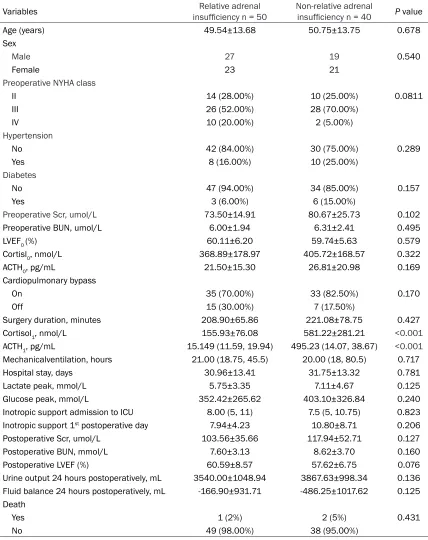
Table 1. Demographic characteristics and perioperative variables between the groups
Variables insufficiency n = 50Relative adrenal Non-relative adrenal insufficiency n = 40 P value
Age (years) 49.54±13.68 50.75±13.75 0.678
Sex
Male 27 19 0.540
Female 23 21
Preoperative NYHA class
II 14 (28.00%) 10 (25.00%) 0.0811
III 26 (52.00%) 28 (70.00%)
IV 10 (20.00%) 2 (5.00%)
Hypertension
No 42 (84.00%) 30 (75.00%) 0.289
Yes 8 (16.00%) 10 (25.00%)
Diabetes
No 47 (94.00%) 34 (85.00%) 0.157
Yes 3 (6.00%) 6 (15.00%)
Preoperative Scr, umol/L 73.50±14.91 80.67±25.73 0.102
Preoperative BUN, umol/L 6.00±1.94 6.31±2.41 0.495
LVEF0 (%) 60.11±6.20 59.74±5.63 0.579
Cortisl0, nmol/L 368.89±178.97 405.72±168.57 0.322
ACTH0, pg/mL 21.50±15.30 26.81±20.98 0.169
Cardiopulmonary bypass
On 35 (70.00%) 33 (82.50%) 0.170
Off 15 (30.00%) 7 (17.50%)
Surgery duration, minutes 208.90±65.86 221.08±78.75 0.427
Cortisol1, nmol/L 155.93±76.08 581.22±281.21 <0.001
ACTH1, pg/mL 15.149 (11.59, 19.94) 495.23 (14.07, 38.67) <0.001
Mechanicalventilation, hours 21.00 (18.75, 45.5) 20.00 (18, 80.5) 0.717
Hospital stay, days 30.96±13.41 31.75±13.32 0.781
Lactate peak, mmol/L 5.75±3.35 7.11±4.67 0.125
Glucose peak, mmol/L 352.42±265.62 403.10±326.84 0.240
Inotropic support admission to ICU 8.00 (5, 11) 7.5 (5, 10.75) 0.823
Inotropic support 1st postoperative day 7.94±4.23 10.80±8.71 0.206
Postoperative Scr, umol/L 103.56±35.66 117.94±52.71 0.127
Postoperative BUN, mmol/L 7.60±3.13 8.62±3.70 0.160
Postoperative LVEF (%) 60.59±8.57 57.62±6.75 0.076
Urine output 24 hours postoperatively, mL 3540.00±1048.94 3867.63±998.34 0.136
Fluid balance 24 hours postoperatively, mL -166.90±931.71 -486.25±1017.62 0.125 Death
Yes 1 (2%) 2 (5%) 0.431
No 49 (98.00%) 38 (95.00%)
NYHA indicates New York Heart Association. Scr indicates serum creatinine. BUN indicates blood urine nitrogen. Cortisol0 and ACTH0 indicate cortisol levels and adrenocorticotropic hormone levels at preoperation, respectively. Cortisol1 and ACTH1
indicate cortisol levels and adrenocorticotropic hormone levels on the first postoperative morning, respectively. LVEF0 indicates preoperative left ventricular ejection fraction. Inotropic support 1st indicates inotropic support on the first postoperative morn
-ing. Comparisons between the two groups were analyzed by the t test.
dong, China). Other postoperative parameters,
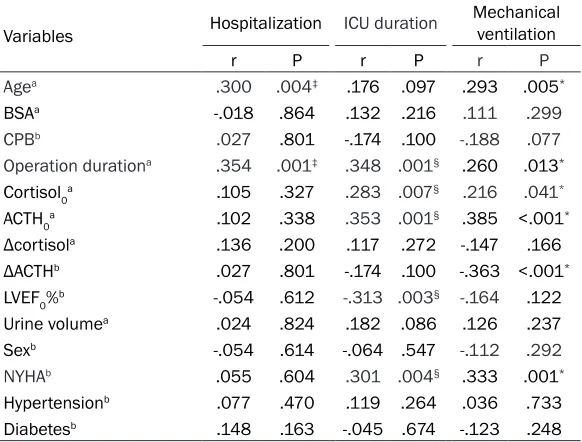
-Table 2. Correlation analysis for the factors of hospitalization, ICU duration, and mechanical ventilation
Variables Hospitalization ICU duration
Mechanical ventilation
r P r P r P
Agea .300 .004‡ .176 .097 .293 .005*
BSAa -.018 .864 .132 .216 .111 .299
CPBb .027 .801 -.174 .100 -.188 .077
Operation durationa .354 .001‡ .348 .001§ .260 .013*
Cortisol0a .105 .327 .283 .007§ .216 .041*
ACTH0a .102 .338 .353 .001§ .385 <.001*
Δcortisola .136 .200 .117 .272 -.147 .166
ΔACTHb .027 .801 -.174 .100 -.363 <.001*
LVEF0%b -.054 .612 -.313 .003§ -.164 .122
Urine volumea .024 .824 .182 .086 .126 .237
Sexb -.054 .614 -.064 .547 -.112 .292
NYHAb .055 .604 .301 .004§ .333 .001*
Hypertensionb .077 .470 .119 .264 .036 .733
Diabetesb .148 .163 -.045 .674 -.123 .248
Δcortisol = cortisol1 C cortisol0, ΔACTH = ACTH1-ACTH0. aValues were analyzed by
Spearman’s correlation coefficient; bvalues were analyzed by Pearson’s correlation
coefficient.*P<0.05 for analysis of mechanical ventilation; §P<0.05 for analysis of ICU stay; ‡P<0.05 for analysis of hospital stay.
ing of POD 1. IS was evaluated as follows: 1 × dopamine or dobutamine dose (mcg/kg/min) + 10 × milrinone or phenylephrine dose (mcg/kg/ min) + 100 × epinephrine or norepinephrine dose (mcg/kg/min) + 10,000 × vasopressin dose (U/kg/min) [10, 11].
Statistical analysis
Normally distributed variables are shown as mean ± standard deviation (SD) and non-nor-mally distributed variables are presented as median and interquartile range (IQR). Com- parisons between groups were analyzed by the
t test or the Mann-Whitney test. Discrete vari-ables were analyzed by the χ2 test or Fisher’s exact test, when appropriate. Correlations were analyzed by Pearson’s or Spearman’s correla-tion coefficient. Associacorrela-tions were analyzed with multivariable linear regression. Kaplan-Meier survival analysis was used to describe the time of ventilation and ICU duration within 48 hours, and the time of hospitalization within 28 days. The Cox proportional hazards model was used to identify significant predictors of the rate of weaning from ventilation, ICU dis -charge rate of 48 hours, and hospital dis-charge rate of 28 days. Two-sided P values less than
be the reason for a low prevalence of hyperten-sion (20%) in this study.
At a cut-off of cortisol1 levels <276 nmol/L, the incidence of RAI was 55.56% (50/90). Baseline values were equal between RAI group and non-RAI group (age, preoperative left ventricular ejection fraction% [LVEF0%], operation dura -tion, cortisol0, and ACTH0). Although the propor-tion of patients with NYHA class IV appeared to be higher in RAI group than in non-RAI group (20% vs 5%), there was no significance (P = 0.08). Mortality rates were 2% (1/50) and 5% (2/40) in RAI group and non-RAI group, respec-tively, with no significant difference between the two groups (χ2 = 0.621, P = 0.431). Patients in RAI group did not have a longer postopera-tive mechanical ventilation time (P = 0.717), time of ICU hospitalization (P = 0.807), or length of hospital stay (P = 0.781), as com -pared with patients in non-RAI group. Patients in RAI group also did not have higher plasma lactate peak levels, glucose peak levels, or IS scores compared with those in non-RAI group (Table 1).
We further investigated related factors of mechanical ventilation, ICU duration, and hos
-0.05 were considered statis-tically significant. All of the calculations were perform- ed by SPSS 18.0 for Win- dows (SPSS Inc., Chicago, IL, USA).
Results
[image:4.612.91.382.98.319.2]Table 3. Multivariate analysis for factors associated with mechanical ventilation, ICU duration and hospitalization
Variables Mechanical Ventilation ICU Duration Hospitalization
B Std. Error P Value B Std. Error P Value B Std. Error P Value Operation duration* .349 .095 <.001 .385 .099 <.001 .058 .018 .002
Cortisol0 .069 .041 .096 .073 .043 .092
ACTH0* 1.367 .398 .001 1.255 .413 .003
NYHA 14.110 11.055 .205 16.073 11.586 .169
ΔACTH -.060 .082 .467
LVEF0% -1.317 1.197 .274
Age* .245 .095 .012
*P<0.05 for regression analysis of mechanical ventilation.
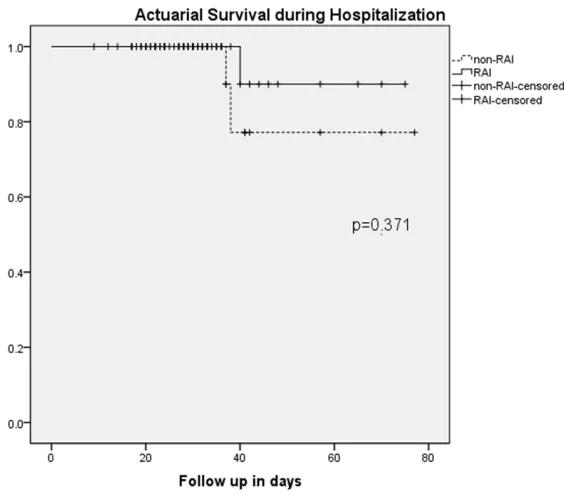
tively correlated with age (r = 0.300, P = 0.004) and the length of operation (r = 0.354, P = 0.001, Table 2). Multiva- riable linear regression show- ed that a longer duration of surgery or higher ACTH0 tended to delay weaning (B = 0.349, P<0.001; B = 1.367, P = 0.001, respectively) and prolonged ICU duration (B = 0.385, P< 0.001; B = 1.255, P = 0.003, respectively). Factors that pro-longing the hospitalization we- re age (B = 0.245, P = 0.012) and operation duration (B = 0.058, P = 0.002) (Table 3). We followed up all of the patients they were discharged from hospital or died in hospi-tal. The median follow-up time was 31 days (9-77 days). Ka- plan-Meier survival analysis sh- owed that the median survival Figure 1. Kaplan-Meier survival curves during the hospital stay by study
group. RAI, relative adrenal insufficiency; non-RAI, non-relative adrenal in-sufficiency.
pitalization. Mechanical ventilation time was positively correlated with age (r = 0.293, P = 0.005), the length of the operation (r = 0.260, P = 0.013), cortisol0 levels (r = 0.216, P = 0.041), ACTH0 levels (r = 0.385, P<0.001), and NYHA functional class (r = 0.333, P = 0.001), and negatively correlated with ΔACTH (ACTH1 -ACTH0) (r = -0.363, P<0.001). ICU duration was positively correlated with the length of the operation (r = 0.384, P = 0.001), cortisol0 (r = 0.283, P = 0.007), ACTH0 (r = 0.353, P = 0.001), and NYHA functional class (r = 0.301, P = 0.004), and negatively correlated with LVEF0% (r = -0.313, P = 0.003). Hospital stay was posi
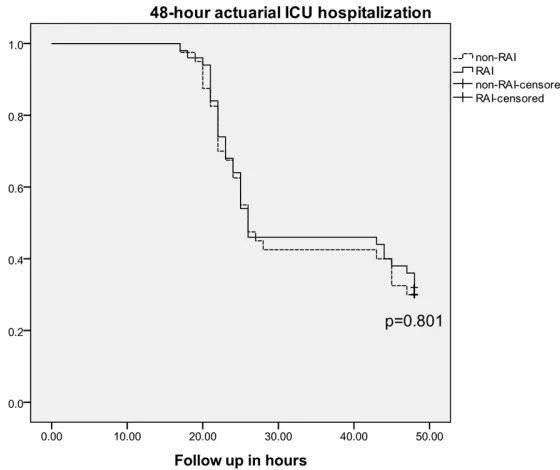
[image:5.612.88.370.248.495.2]with longer than 48-hour me- chanical ventilation (hazard ratio [HR] 0.964, P<0.001; HR 0.994, P = 0.004, respective -ly). ACTH levels and NYHA class before the operation were associated with a longer than 48-hour ICU stay (HR 0.977, P = 0.034; HR 0.568, P = 0.005, respectively). Patients who were not supported by bypass were more likely to be dis-charged from the ICU within 48 hours (HR 1.998, P = 0.025). Age and surgery duration were associated with a longer than 28-day hospitalization (HR 0.965, P = 0.003; HR 0.994, P = 0.020, respectively).
Discussion
RAI is a syndrome that is char-acterized by relatively lower cortisol levels under stress. RAI is caused by HPA axis dis-order, and finally leads to an inadequate adaptive response to disease. Recent studies of RAI have mostly focused on patients with sepsis or sepsis shock, but rarely paid attention to surgical or trauma patients. In our study, the morbidity of RAI was 55.56% (50/90) by using the criterion of a rand- om plasma cortisol level <276 nmol/L. However, we did not perform an ACTH test for the following considerations. After ACTH (250 μg) administration, an increment of cortisol <276 nmol/L reflects a relative lack of reserve capacity in the adre-nal gland for an extra stressful episode. This amount does not indicate that the degree of stress response is insufficient at that moment. Since our study aimed to evaluate the Figure 2. Kaplan-Meier curves of actuarial mechanical ventilation at 48
[image:6.612.89.371.76.316.2]hours postoperatively. RAI, relative adrenal insufficiency; non-RAI, non-rela-tive adrenal insufficiency.
Figure 3. Kaplan-Meier curves of actuarial ICU hospitalization at 48 hours postoperatively. RAI, relative adrenal insufficiency; non-RAI, non-relative ad-renal insufficiency.
and ICU discharge, and 28-day hospital dis -charge between the two groups were analyzed by Cox proportional hazards model (Tables 4-6). Age and CPB duration were associated
[image:6.612.87.367.377.612.2]Table 5. Multivariable Cox proportional hazards model for 48-hour ICU hospitalization
Predictor B HR 95.0% CI valueP
Age -.032 .969 .949 .988 .002
CPB (no/yes) .692 1.998 1.089 3.663 .025
ACTH0 -.023 .977 .956 .998 .034
NYHA -.565 .568 .382 .846 .005
Operation duration -.005 .995 .991 .998 .003
[image:7.612.92.298.392.434.2]HR, hazard ratio; CI, confidence interval; CPB, cardiopulmo -nary bypass; ACTH0, adrenocorticotrophic hormone level on the morning of the operation; NYHA, New York Heart Association.
Table 4. Multivariable Cox proportional hazards model for 48-hour mechanical ventilation
Predictor B HR 95.0% CI P value
Age -.036 .964 .947 .982 <.001
CPB duration -.006 .994 .990 .998 .004
HR, hazard ratio; CI, confidence interval; CPB, cardiopulmo -nary by pass.
Table 6. Multivariable Cox proportional hazards model for 28-day hospitalization
Predictor B HR 95.0% CI P value
Age -.036 .965 .943 .988 .003
Operation duration -.006 .994 .988 .999 .020
HR, hazard ratio; CI, confidence interval.
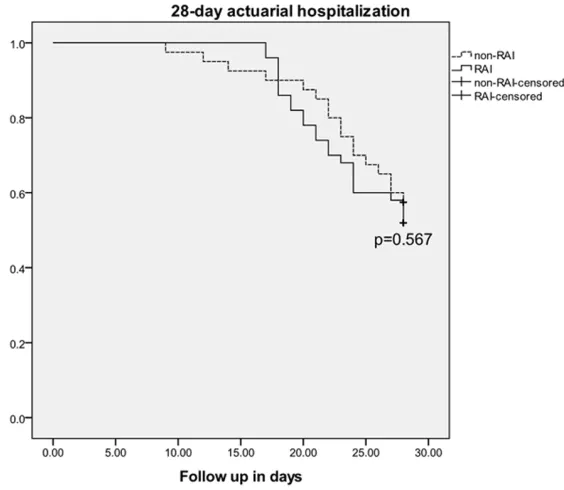
[image:7.612.90.298.502.591.2]In the present study, patients with RAI did not have a higher mortality than those without RAI. Furthermore, less people died in RAI group than in non-RAI group. But there was no significant difference. McKee et al. [12] reported that pa-tients with septic shock and RAI suffered from higher mor-tality and adverse outcomes than patients with septic sh- ock only. Although we did not observe this finding, this pre-vious result is supported by many recently published stud-ies [13, 14], in which reported that lower plasma cortisol lev-els do not increase mortality. Harish et al. [15] performed a prospective, observational stu- dy on 23 neonates with con-genital heart disease to obser- ve the association between postoperative cortisol profile Figure 4. Kaplan-Meier curves of actuarial hospitalization at 28 days. RAI,
relative adrenal insufficiency; non-RAI, non-relative adrenal insufficiency.
and early outcomes. They showed that higher postoperative cortisol levels were associated with increased postoperative morbidity and indicators of a more complicated perioperative course. Such a large difference in prognosis for RAI in critical illness is mainly due to inconsis-tent definitions.
[image:7.612.90.300.679.720.2]Iribarren et al. [9] showed that RAI induced postoperative vasopressor dependency in a group of patients who underwent CPB. The IS in our study was not significantly different between RAI and non-RAI groups. We specu-lated that patients in RAI group had less nega-tive fluid balance than those in non-RAI group at 24 hours postoperatively. Therefore, patients with RAI were likely to have a high liquid load. Multiple regression showed that ACTH0 and the duration of operation mainly affected ventilator weaning and ICU stay. With a rise in ACTH0 lev-els and extension of operation duration, wean-ing from the ventilator is delayed and the ICU stay is extended. The Cox proportional hazards model showed that each additional unit of ACTH0 reduced the probability of ICU dischar-ge by 0.997 times. This result confirms the important role of HPA axis in critical illness, which is closely associated with the outcome of heart surgery patients. After the concept of RAI was first suggested, researchers attempted to find an appropriate cut-off value to define RAI, and also show that cortisol levels below the cut-off value indicated a poor outcome for patients under stress of a critical illness. Unexpectedly, the criteria of RAI definition are still controversial [9, 21, 22]. Some researchers fail to find worse outcomes of RAI [23] and oth -ers even find the opposite results [24]. The-refore, a moderate degree of stress response should be paid with more attention, because extremely low and extremely high cortisol levels are harmful, and an appropriate cortisol level needs to be determined.
Study limitations
The study has several limitations. The number of cases was small, but this was only a pilot study. We intend to increase the number of patients and dynamic observations on function of the HPA axis in ongoing study. We only used random plasma cortisol measurements with-out an ACTH stimulation test, which prevented us from observing diurnal changes. However, such tests could not be reliably used in this cohort of complex and frequently unstable patients.
Conclusion
In heart surgery patients, the incidence of RAI is 55.56% (50/90) by the criterion of a cut-off
cortisol level <276 nmol/L on POD1. Patients with RAI do not show a more complicated peri-operative course than those without RAI. Lower cortisol levels are not associated with worse outcomes. However, the higher basal cortico-tropin levels are, the longer mechanical ventila-tion time and the ICU stay are. In future studies, an appropriate stress response level needs to be determined that is neither especially low nor exceptionally high.
Acknowledgements
All procedures performed in the study were in accordance with the ethical standards of the institutional and/or national research commit-tee and with the 1964 Helsinki declaration and its later amendments or comparable ethical standards.
Disclosure of conflict of interest
None.
Address correspondence to: Ming Ye, The Second Affiliated Hospital of Harbin Medical University, 246 Xuefu Road, Harbin 150086, Hei Long Jiang Pro- vince, China. E-mail: [email protected]
References
[1] Cooper MS and Stewart PM. Corticosteroid in-sufficiency in acutely ill patients. New Engl J Med 2003; 348: 727-734.
[2] Zaloga GP and Marik P. Hypothalamic-pituitary-adrenal insufficiency. Crit Care Clin 2001; 17: 25-41.
[3] Yang Y, Liu L, Zhao B, Li MQ, Wu B, Yan Z, Gu Q, Sun H and Qiu HB. Relationship between adre-nal function and prognosis in patients with se-vere sepsis. Chin Med J (Engl) 2007; 120: 1578-1582.
[4] Rothwell PM, Udwadia ZF and Lawler PG. Corti-sol response to corticotropin and survival in septic shock. Lancet 1991; 337: 582-583. [5] Marik PE, Pastores SM, Annane D, Meduri GU,
[6] Fernandes N, Brown G and Russell J. Adrenal insufficiency in critically ill. Intens Care Med 2001; 27: 1434-1434.
[7] Schroeder S, Wichers M, Klingmüller D, Höfer M, Lehmann LE, Von ST, Hering R, Putensen C, Hoeft A and Stüber F. The hypothalamic-pitu-itary-adrenal axis of patients with severe sep-sis: altered response to corticotropin-releasing hormone. Crit Care Med 2001; 29: 310-316. [8] Charmandari E, Nicolaides NC and Chrousos
GP. Adrenal insufficiency. Lancet 2014; 383: 433-436.
[9] Moraes RB, Czepielewski MA, Friedman G and Borba EL. Diagnosis of adrenal failure in criti-cally ill patients. Arq Bras Endocrinol Metabol 2011; 55: 295-302.
[10] Mastropietro CW, Barrett R, Davalos MC, Zidan M, Valentine KM and Delius RE. Cumulative corticosteroid exposure and infection risk after complex pediatric cardiac surgery. Ann Thorac Surg 2013; 95: 2133-2139.
[11] Gaies MG, Gurney JG, Yen AH, Napoli ML, Ga-jarski RJ, Ohye RG, Charpie JR and Hirsch JC. Vasoactive-inotropic score as a predictor of morbidity and mortality in infants after cardio-pulmonary bypass. Pediatr Crit Care Me 2010; 11: 234-238.
[12] Mckee J and Finlay WI. Cortisol replacement in severely stressed patients. Lancet 1983; 1: 484.
[13] Sam S, Corbridge TC, Mokhlesi B, Comellas AP and Molitch ME. Cortisol levels and mortality in severe sepsis. Clin Endocrinol (Oxf) 2004; 60: 29-35.
[14] Iribarren JL, Jiménez JJ, Hernández D, Lorenzo L, Brouard M, Milena A, Mora ML and Martínez R. Relative adrenal insufficiency and hemody-namic status in cardiopulmonary bypass sur-gery patients. A prospective cohort study. J Cardiothorac Surg 2010; 5: 26.
[15] Bangalore H, Ocampo EC, Rodriguez LM, Mi-nard CG, Checchia PA, Heinle JS and Sheker-demian LS. Serum cortisol and early postop-erative outcome after stage-1 palliation for hypoplastic left heart syndrome. Pediatr Crit Care Med 2014; 15: 211-218.
[16] Mershon JL, Sehlhorst CS, Rebar RW and Liu JH. Evidence of a corticotropin-releasing hor-mone pulse generator in the macaque hypo-thalamus. Endocrinology 1992; 130: 2991. [17] Walker JJ, Spiga F, Waite E, Zhao Z, Kershaw Y,
Terry JR and Lightman SL. The origin of gluco-corticoid hormone oscillations. PLoS Biol 2012; 10: e1001341.
[18] Walker JJ, Terry JR and Lightman SL. Origin of ultradian pulsatility in the hypothalamic-pitu-itary-adrenal axis. Proc Biol Sci 2010; 277: 1627-1633.
[19] Lightman SL and Conwaycampbell BL. The cru-cial role of pulsatile activity of the HPA axis for continuous dynamic equilibration. Nat Rev Neurosci 2010; 11: 710.
[20] Gibbison B, Spiga F, Walker JJ, Russell GM, Ste-venson K, Kershaw Y, Zhao Z, Henley D, Ange-lini GD and Lightman SL. Dynamic pituitary-adrenal interactions in response to cardiac surgery. Crit Care Med 2015; 43: 791-800. [21] Beishuizen A and Thijs LG. Relative adrenal
failure in intensive care: an identifiable prob-lem requiring treatment? Best Pract Res Clin Endocrinol Metab 2001; 15: 513-531. [22] Cohen J and Venkatesh B. Relative adrenal
in-sufficiency in the intensive care population; background and critical appraisal of the evi-dence. Anaesth Intensive Care 2010; 38: 425-436.
[23] Rady MY, Johnson DJ, Patel B, Larson J and Helmers R. Cortisol levels and corticosteroid administration fail to predict mortality in criti-cal illness: the confounding effects of organ dysfunction and sex. Arch Surg 2005; 140: 661-8; discussion 669.
Supplementary Table 1.Base-line of the 90 study populations
Variables Baseline Characteristics
N 90
Age, (years) 50±14
Male 46 (51%)
Preoperative NYHA functional class
I 0 (0%)
II 24 (27%)
III 54 (60%)
IV 12 (13%)
Hypertension 18 (20%)
Diabetes 9 (10%)
LVEF0 (%) 61.00 (58.45, 63.00)
Preoperative Scr, umol/L 93.83±30.47
Cortisol0, nmol/L 385.26±174.43
ACTH0, pg/mL 20.92 (14.23, 27.28)
Cortisol0 and ACTH0 stand for cortisol level and adrenocorticotropic hormone level pre-operation respectively. LVEF0 indicates preopera-tive left ventricular ejection fraction.
Supplementary Table 2. Cardiac surgery
Relative adrenal
insufficiency n = 50 Non-relative adrenal insufficiency n = 40 P value
Coronary artery bypass graft 14 (28.00%) 5 (12.5%) 0.085
Valve replacement (aortic/mitral valve or both) 21 (42.00%) 16 (40.00%)
Congenital heart disease repair 13 (26.00%) 10 (25.00%)
Pericardial stripping 1 (2.00%) 2 (5.00%)
Aortic dissection repair 0 (0.00%) 4 (10.00%)