B-GL-321-004/FT-001
SIGNALS IN BATTLE
VOLUME 4
TACTICAL ELECTRONIC WARFARE
(BILINGUAL)
(This publication supersedes B-GL-321-004/FT-001 Interim 1 dated 1986-08-01)
WARNING
ALTHOUGH NOT CLASSIFIED THIS PUBLICATION, OR ANY PART OF IT, MAY BE EXEMPTED FROM
DISCLOSURE TO THE PUBLIC UNDER THE ACCESS TO INFORMATION ACT. ALL ELEMENTS OF INFORMATION CONTAINED HEREIN MUST BE CLOSELY SCRUTINIZED TO ASCERTAIN WHETHER OR NOT THE PUBLICATION, OR ANY PART OF IT MAY BE RELEASED.
Issued on Authority of the Chief of the Defence Staff
LIST OF EFFECTIVE PAGES
Insert latest pages; dispose of superseded pages in accordance with applicable orders.
NOTE
The portion of the text affected by the latest change is indicated by a black vertical line in the margin of the page. Changes to illustrations are indicated by miniature pointing hands or black vertical lines.
Dates of issue for original and changed pages: Original ...0...1989-07-31
Zero in Change No. Column indicates an original page. The total number of pages in this publication is 168 consisting of the following:
Page No. Change No. Page No. Change No.
Title ...0 5-1-1 to 5-1-7/5-1-8 ... 0
A...0 5-2-1 to 5-2-3/5-2-4 ... 0
i to ix/x ...0 5-3-1 to 5-3-4... 0
1-1-1 to 1-1-2 ...0 5-4-1 to 5-4-5/5-4-6 ... 0
1-2-1, 1-2-2 ...0 5-5-1 to 5-5-3/5-5-4 ... 0
1-3-1/1-3-2 ...0 6-1-1 to 6-1-2... 0
1-4-1, 1-4-2 ...0 6-2-1 to 6-2-3/6-2-4 ... 0
2-1-1 to 2-1-4 ...0 6-3-1 to 6-3-4... 0
2-2-1 to 2-2-4 ...0 6-4-1 to 6-4-5/6-4-6 ... 0
2-3-1 to 2-3-5/2-3-6 ...0 6-5-1 to 6-5-5/6-5-6 ... 0
2-4-1 to 2-4-4 ...0 6-6-1 to 6-6-6... 0
2-5-1 to 2-5-5/2-5-6 ...0 7-1-1 to 7-1-2... 0
3-1-1 to 3-1-2 ...0 7-2-1 to 7-2-3/7-2-4 ... 0
3-2-1 to 3-2-4 ...0 7-3-1 to 7-3-3/7-3-4 ... 0
3-3-1 to 3-3-4 ...0 7-4-1, 7-4-2... 0
4-1-1 to 4-1-2 ...0 7A-1 to 7A-6... 0
4-2-1 to 4-2-3/4-2-4 ...0 7B-1, 7B-2 ... 0
4-3-1 to 4-3-5/4-3-6 ...0 7C-1, 7C-2 ... 0
4-4-1 to 4-4-3/4-4-4 ...0 7D-1 to 7D-4... 0
FOREWORD
GENERAL
1. B-GL-321-004/FT-001, Signals in Battle, Volume 4, Tactical Electronic Warfare, is issued on the authority of the Chief of the Defence Staff. It is effective on receipt.
2. Suggestions for amendments should be forwarded through normal command channels to Mobile Command Headquarters, Attention: Senior Staff Officer Signals.
3. Electronic Warfare (EW) training has suffered from the lack of a definitive reference manual and adequate emphasis at all levels. It is now recognized that EW must be accepted as a normal battlefield activity, and not only must land forces be versed in the defensive aspects of EW, but all commanders and staffs must also be educated in its offensive application. EW is not by itself a battle-winning weapon; if, however, we are not prepared to use it or defend ourselves against it, the course of battle may well be determined in favour of the enemy on the basis of EW activity alone.
AIM
4. The aim of this manual is to provide guidance for the employment of EW elements in land operations within a Canadian corps.
SCOPE
5. This publication contains EW doctrine, appropriate to corps, division, independent brigade group and brigade, covering all operations of war in a high intensity conflict, as part of Corps '86. In outline, it covers:
a. the EW process and the staff responsibilities for the employment of EW elements offensively;
b. the threat to our electronic systems and the staff responsibilities for the employment of EW elements defensively; and
c. organizations and tactics.
6. Where material is covered in other publications, cross-references are made to avoid unnecessary duplication.
REFERENCES
ATP 51 Electronic Warfare in the Land Battle; and
B-GL-301-001/FP-001 Operations - Land and Tactical Air, Volume 1, Land Formations in Battle.
8. Related references that are referred to within B-GL-321-004/FT-001 include: B-GL-303-001/AF-001 Staff Manuals, Volume 1, 'Corps 86 Establishments; B-GL-303-002/FP-000 Staff Manuals, Volume 2, Staff Duties in the Field; B-GL-303-004/AF-001 Staff Manuals, Volume 4, Operational Staff Data; and TC 32-20 Electronic Warfare Training
9. Associated manuals in this series include:
B-GL-321-001/FT-001 Signals in Battle, Volume 1, Principles and Employment; B-GL-321-002/FT-001 Signals in Battle, Volume 2, Signals in the Brigade and Brigade Group;
B-GL-321-003/FT-001 Signals in Battle, Volume 3, Signals in the Corps and the Division; and
B-OT-321-006/PT-001 Signals in Battle, Volume 6, Signal Field Handbook.
10. The NATO Standardization Agreement STANAG 6004 MEACONING, INTRUSION, JAMMING AND INTERFERENCE REPORT has been wholly incorporated in this volume.
TERMINOLOGY
CONTENTS
CHAPTER 1 - INTRODUCTION SECTION 1 - GENERAL
BACKGROUND SCOPE
DEFINITIONS
SECTION 2 - THE THREAT STRATEGIC
TACTICAL
ELECTRONIC WARFARE TARGET
SECTION 3 - THE ROLE OF ELECTRONIC WARFARE GENERAL
EXPLOITATION DISRUPTION PROTECTION
SECTION 4 - THE DIVISIONS OF ELECTRONIC WARFARE GENERAL
ELECTRONIC SUPPORT MEASURE ELECTRONIC COUNTERMEASURES
ELECTRONIC COUNTER-COUNTERMEASURES
CHAPTER 2 - TACTICAL ELECTRONIC WARFARE ORGANIZATIONS SECTION 1 - GENERAL
CONCEPT OF ELECTRONIC WARFARE SUPPORT ROLE OF ELECTRONIC WARFARE ORGANIZATIONS CAPABILITY REQUIREMENTS
ORGANIZATIONAL FACTORS
SECTION 2 - CORPS ELECTRONIC WARFARE REGIMENT TASKS
SECTION 3 - DIVISION ELECTRONIC WARFARE SQUADRON GENERAL
ARMOURED DIVISION ELECTRONIC WARFARE SQUADRON
MECHANIZED INFANTRY DIVISION ELECTRONIC WARFARE SQUADRON SECTION 4 - INDEPENDENT BRIGADE GROUP ELECTRONIC WARFARE TROOP GENERAL
ORGANIZATION AND CAPABILITIES SECTION 5 - COMMAND AND CONTROL GENERAL
TECHNICAL VERSUS OPERATIONAL CONTROL COMPONENTS
TYPICAL DEPLOYMENT COMBAT SERVICE SUPPORT
CHAPTER 3 - OFFENSIVE ELECTRONIC WARFARE SECTION 1 - GENERAL
RESPONSIBILITY
ELECTRONIC WARFARE PROCESS
SECTION 2 - ELECTRONIC SUPPORT MEASURES GENERAL
SEARCH INTERCEPT
DIRECTION-FINDING ANALYSIS
SECTION 3 - ELECTRONIC COUNTERMEASURES GENERAL
JAMMING DECEPTION
NON-COMMUNICATION ELECTRONIC COUNTERMEASURES CHAPTER 4 - DEFENSIVE ELECTRONIC WARFARE
AIM
SUB-DIVISIONS OF ELECTRONIC COUNTER-COUNTERMEASURES SECTION 2 - TECHNICAL
GENERAL
CRYPTOGRAPHIC TECHNIQUES ANTENNA TECHNIQUES
TRANSMISSION TECHNIQUES
NON-COMMUNICATION TECHNIQUES SECTION 3 - PROCEDURAL
GENERAL
AVOID DETECTION AVOID IDENTIFICATION MAINTAIN SECURITY DEFEAT DECEPTION DEFEAT JAMMING REPORTING
SECTION 4 - TACTICAL GENERAL
EMISSION CONTROL MOVEMENT AND SITING COMMUNICATION PLANNING DEFENCE BY ATTACK
SECTION 5 - MISCELLANEOUS SIGNAL SECURITY
TRAINING
DEFENSIVE ELECTRONIC WARFARE AIDE-MEMOIRE CHAPTER 5 - ELECTRONIC WARFARE TACTICS
SECTION 1 - DEPLOYMENT OF ELECTRONIC WARFARE RESOURCES GENERAL 5-1-1
GUIDELINES FOR ELECTRONIC COUNTERMEASURES NON-COMMUNICATION APPLICATIONS
SECTION 2 - OFFENSIVE OPERATIONS GENERAL
ADVANCE TO CONTACT ATTACK
PURSUIT
SECTION 3 - DEFENSIVE OPERATIONS GENERAL
DEFENCE DELAY
WITHDRAWAL
SECTION 4 - SPECIAL OPERATIONS AIRMOBILE OPERATIONS
AIRBORNE OPERATIONS AMPHIBIOUS OPERATIONS
CROSSING AND BREACHING OPERATIONS
SECTION 5 - ENVIRONMENTAL CONSIDERATIONS MOUNTAINS
ARCTIC AND COLD WEATHER DESERTS
JUNGLES
NUCLEAR, BIOLOGICAL AND CHEMICAL MISCELLANEOUS
CHAPTER 6 - STAFF RESPONSIBILITIES FOR ELECTRONIC WARFARE PLANNING SECTION 1 - GENERAL
PRINCIPLES OF EMPLOYMENT
CONCEPT OF ELECTRONIC WARFARE PLANNING
SECTION 2 - ELECTRONIC WARFARE PLANNING CYCLE GENERAL
RESPONSIBILITIES
SECTION 3 - STAFF RELATIONSHIPS GENERAL
SIGNALS
MISCELLANEOUS
SECTION 4 - EMISSION CONTROL PLANNING GENERAL
FACTORS POLICY
SECTION 5 - ELECTRONIC COUNTERMEASURES PLANNING GENERAL
JAMMING DECEPTION
SECTION 6 - STAFF DUTIES
ELECTRONIC WARFARE ESTIMATE OF THE SITUATION ELECTRONIC WARFARE PARTS OF AN OPERATION ORDER RESTRICTED FREQUENCY LISTS
ELECTRONIC WARFARE SYMBOLS
CHAPTER 7 - ELECTRONIC WARFARE TRAINING SECTION 1 - GENERAL
INTRODUCTION REQUIREMENTS
SECTION 2 - INDIVIDUAL TRAINING OPERATORS AND USERS
COMMANDERS AND STAFF
SIGNAL AND ELECTRONIC WARFARE SPECIALISTS SECTION 3 - UNIT TRAINING
GENERAL MONITORING
JAMMING AND DECEPTION
SECTION 4 - FORMATION TRAINING GENERAL
ANNEX - VOCABULARY OF ELECTRONIC WARFARE DEFINITIONS
ANNEX - MEACONING, INTRUSION, JAMMING AND INTERFERENCE (MIJI) REPORT (extraction of main items from STANAG 6004)
ANNEX - DEFENSIVE ELECTRONIC WARFARE AIDE MEMOIRE
ANNEX - EXAMPLE OF AN ELECTRONIC WARFARE ANNEX
LIST OF FIGURES
FIGURE TITLE
Figure 1-1-1 The Electromagnetic Spectrum Figure 1-4-1 Divisions of Electronic Warfare
Figure 2-1-1 Table of Electronic Warfare Resources Allocated to Formations Figure 2-2-1 Corps Electronic Warfare Regiment
Figure 2-3-1 Armoured Division Electronic Warfare Squadron
Figure 2-3-2 Mechanized Infantry Division Electronic Warfare Squadron
Figure 2-3-3 Summary of Mechanical Infantry Division Electronic Warfare Squadron Capabilities
Figure 2-4-1 Independent Brigade Group Electronic Warfare Troop
Figure 2-4-2 Summary of Independent Brigade Group Electronic Warfare Troop Capabilities
Figure 2-5-1 Technical Versus Operational Control
Figure 2-5-2 Typical Deployment of Division Defensive Electronic Warfare Squadron Figure 3-1-1 Electronic Warfare Process
Figure 3-2-1 Direction-Finding Figure 3-2-2 Analysis
Figure 4-1-1 ELECTRONIC COUNTER-COUNTERMEASURES
Figure 4-2-1 Antenna Techniques
Figure 4-5-1 Defensive Electronic Warfare Training Figure 5-1-1 Sources of Intelligence
Figure 5-1-2 Electronic Warfare Siting Distances Figure 5-1-3 Jamming Ranges
Figure 5-2-1 Electronic Warfare in Support of an Attack Figure 5-3-1 Defensive Electronic Warfare Support Figure 6-2-1 Electronic Warfare Planning Cycle Figure 6-3-1 Electronic Warfare Staff Relationships Figure 6-4-1 Example of Emission Control Policy Figure 6-6-1 Electronic Warfare Grouping and Tasks Figure 6-6-2 Electronic Warfare Symbols
CHAPTER 1
INTRODUCTION
SECTION 1
GENERAL
BACKGROUND
1. Electronic warfare (EW) has been practised in every major conflict since radio
communications were first used in war. Early techniques were often primitive, however; only since World War II has an element of sophistication been introduced. It has been estimated that 60 per cent of all available intelligence during World War II was derived from electronic means, a proportion which has increased since that time. As an example, preparation for the Normandy invasion included a massive electronic deception plan that fooled Hitler into believing the main landing would be in the Pas-de-Calais area.
2. EW, although an integral part of air and naval operations, was generally ignored by Western armies after World War 11 until the Vietnam War. The United States Army found, when North Vietnamese intercept teams were discovered hiding underground, that even a relatively unsophisticated enemy could effectively use opposing forces' radio traffic. The first employment of Soviet-built, radar-controlled air defence systems caused heavy losses and forced the US to rapidly develop improved early warning equipment and countermeasures such as anti-radiation missiles and modernized chaff. The 1973 Yom Kippur war demonstrated the capability of the full range of Soviet air defence systems, which the Israeli Air Force was eventually able to suppress but only after numerous losses. On the ground, both sides possessed a significant intercept, direction-finding and jamming capability. Prior to the attack across the Suez Canal, the Egyptians made extensive use of line to link units and even individual tanks, thus denying the Israeli intercept sites any information on their intentions.
3. These conflicts demonstrated the effectiveness of electronic warfare and created renewed interest in EW throughout all NATO armies. Today, greater effort is devoted to this critical component of combat power. Modern warfare is becoming increasingly dependent on high technology, command and control, and surveillance and weapon systems, the majority of which use some part of the electromagnetic spectrum for guidance and communications. To illustrate the magnitude of the situation, a division contains over 20,000 separate emitters and an army approaches 175,000 emitters: that is, in excess of one electronic device for each officer and other rank.
4. The side that makes best use of the electromagnetic spectrum and reduces the enemy's use of the same spectrum will have a decided advantage in winning the next war. It is of great
importance, therefore, that commanders, their staffs, and their subordinates understand the scope of EW, how it can be employed both offensively and defensively, and how their own surveillance devices, weapon systems and communications can be protected from enemy EW actions.
5. The material in this volume is presented in a form suitable for all arms training and instruction, with particular emphasis placed on information required by commanders and staff officers to better understand tactical EW. Although EW is discussed within the context of a corps, emphasis is placed on how it is integrated as an important component of division and brigade group level operations.
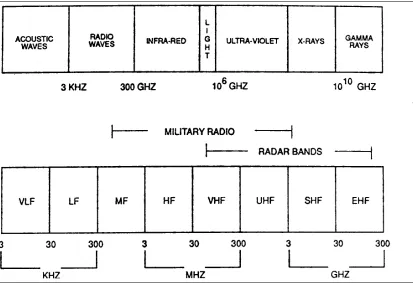
6. EW encompasses all electronic equipment working across all parts of the electromagnetic spectrum. The most common systems include radio communications, radar for surveillance, fire control and missile guidance, navigational aids and identification friend or foe (IFF). A new range of infra-red and electro-optic equipment is also coming into service. It is common practice to divide these electromagnetic systems into communication and non-communication systems. Figure 1-1-1 gives a simple illustration of the electromagnetic spectrum.
DEFINITIONS
SECTION 2
THE THREAT
STRATEGIC
1. It is important to realize that EW is an activity that goes on in peacetime as well as in war. The Soviets operate a world-wide intelligence collection system, based primarily on
electronic intercept; it is aimed at gathering as much information as possible on Western military capabilities, procedures, unit identities and even the personality of commanders. NATO forces in Europe are closely monitored both in garrison and on exercise by Warsaw Pact static intercept sites. Soviet trawlers not only shadow NATO naval exercises, but are also capable of intercepting commercial and military transmissions within Canada. When this threat is coupled with their airborne and satellite intercept and surveillance capability, it can be assumed that all our headquarters, bases and training areas are not only vulnerable to, but are in fact targeted for, intercept.
2. Even on a lower level, our communications are vulnerable to intercept by terrorists using equipment that has been captured, purchased or locally manufactured.
TACTICAL
3. Radio Electronic Combat Support. The Warsaw Pact regards EW an essential part of battle. Commanders at all levels consider EW in their planning for each operation. The Warsaw Pact uses the term Radio Electronic Combat Support (RECS) which is aimed at limiting, delaying or nullifying our command and control systems at critical times, while protecting their own electronic means through defensive measures. The offensive aspect of RECS primarily involves the use of all-source intelligence to produce a plan which coordinates physical
destruction resources, jamming and deception in an attempt to destroy or disrupt our command and control systems. (Note that jamming and deception are regarded as weapon systems.) The defensive aspect of RECS places emphasis on communication security and on what is called counter- reconnaissance, the aim of which is to deny, delay or confuse our reconnaissance in acquisition and identification of critical targets.
4. Priority Targets. The RECS plan will usually be a well coordinated, time-phased jamming and fire plan. Because the Warsaw Pact nations do not hold sufficient resources to disrupt our entire command and control system at once, they-will attack vulnerable points in sequence as they become critical to the battle. During the covering force battle, for example, artillery observation and target acquisition nets would probably be among prime targets. Either gunfire, rockets or jamming could be used to attack them. Whichever method was used, it would be carefully coordinated as part of the overall plan to avoid interference with their own
a. nuclear weapon systems, including the means of delivery, storage areas and control systems;
b. artillery units, including communication and target acquisition systems; c. command and control systems, including all radio nets, particularly higher
formation nets;
d. airborne radars, ground-to-air communications and forward air control links; e. air defence systems, including communication equipment and radars used for
detection, fire control and target acquisition; f. EW units, particularly intercept sites and jammers;
g. reserves, particularly when they are about to be employed; and h. logistic centres.
5. Capability. EW equipment is found in a number of units of the Warsaw Pact ground forces. This equipment includes:
a. intercept and direction-finding resources which are integral to their reconnaissance organizations, starting with the divisional reconnaissance battalion. The radio and radar intercept company is capable of intercepting and locating all our tactical communications and radar, and is usually deployed well forward (immediately behind first echelon regiments) to enable in-depth
interception of our transmissions. When radio and radar intercept companies are coordinated with longer range HF and airborne intercept systems from army and front, the Warsaw Pact commander has the capability of identifying and locating most of our important command and control links;
b. radar direction-finding equipment which is used as part of the surveillance and target acquisition process. It is also used by observation units integral to artillery grouping at division, army and front levels;
capability to suppress our air defence radars. Despite this capability, it is believed the Warsaw Pact is more likely to physically destroy located targets than to
neutralize them by jamming or deception. The reason for this: their preponderance of attack aircraft, artillery and direct-fire weapons.
ELECTRONIC WARFARE TARGET
6. Command and Control. Warsaw Pact doctrine places heavy emphasis on extensive planning, precise scheduling and close coordinating. This results in a tight central system of command and control, which is supported by a two-down, or skip-echelon, method of
communicating. Any disruption in this method of operation, because of their echelon system of tactics, will likely make their forces very reliant on electronic systems for command, control and weapon delivery from the early stages of a battle. This constitutes an inherent weakness that can be exploited. Coordinated attack of the electronics associated with the enemy's communications, command and control, surveillance, targeting and guidance system will seriously diminish its combat power. A Warsaw Pact formation on the advance is vulnerable to electronic attack, particularity if lead echelons can be isolated by jamming.
7. Communications. A Canadian defensive division will be faced with several thousand enemy communication emitters organized into several hundred nets. VHF net radio is the primary means of combat communications from division headquarters forward: radio relay facilities also exist down to regimental headquarters. Helicopters may be used as airborne rebroadcast/relay stations or as command posts on division and army level nets. UHF radio is used for ground-to-air nets, including forward air control. HF radio is widely used as a back-up to VHF nets and for some primary links between formations. The Warsaw Pact commander is particularity conscious of protecting communications, and line is used whenever practicable down to battalion/company level. Line is used extensively in defence and even along main axes during a period of rapid advance. There is considerable duplication in important radio links and secure radio systems are used as much as possible. There is also an increased use of digital data transmission, particularity on fire control and special forces nets. Communication operators are generally well trained in communication security procedures and net discipline is strict.
8. Non-Communications. The main users of radar in the Warsaw Pact ground forces are artillery (for target acquisition) and air defence units down to battalion level. Other combat elements control their own radar equipment for early warning, fire control and battlefield
surveillance. Optical/television tracking has been added to many fire control systems and several infra-red techniques and night vision aids are in service. Laser range finding and target
SECTION 3
THE ROLE OF ELECTRONIC WARFARE
GENERAL
1. Concept. The corps operational concept is based upon the concurrent engagement of all echelons of the enemy forces to the full extent of weapons systems' capabilities. EW has the capability to acquire all enemy echelons within a corps area of interest and engage them within the area of influence. EW can be used to attack or defend electromagnetic systems from the lowest tactical detachment to the corps level, and therefore must be an integrated part of operations at all levels. Formations must have adequate specialized EW resources which are grouped and organized to intercept, locate, analyse and engage enemy electromagnetic targets at critical times. In addition, all friendly electromagnetic equipment must be protected from the effects of enemy EW activities in support of their operations.
2. Role. In the battle for command and control, EW plays a key role by contributing to the disruption, exploitation and deception of the enemy's electronic systems. The role of EW is to determine, exploit and prevent the enemy's use of the electromagnetic spectrum and to defend our own use of the spectrum in accordance with the supported commander's direction.
Specifically, EW provides the supported commander with:
a. information on the enemy by exploiting its transmissions;
b. an advantage in combat power by disrupting the enemy's use of the electromagnetic spectrum; and
c. continued use of our electronic systems by protecting them against the enemy's RECS effort.
EXPLOITATION
3. An enormous amount of intelligence can be gained by exploiting the enemy's use of the electromagnetic spectrum, whether it is for communications, navigation, targeting or weapon guidance. Electronic surveillance or reconnaissance can permit the exploitation of enemy signals and provide a commander with early warning and, after further analysis, with combat
information. There are essentially four methods of exploiting an enemy signal:
a. the actual message content of the radiated signal intended for the enemy's own use is extracted and used against the enemy;
c. the type of signal (modulation, frequency, etc) can provide identification of the enemy emitter or unit; and
d. the quantity of enemy signals can disclose enemy intentions.
DISRUPTION
4. By degrading, disrupting or neutralizing the enemy's command, control and weapon systems, we can seriously reduce its combat capability. Disruption can be achieved by physically attacking enemy positions, by jamming its electronic systems or deceiving its operators.
PROTECTION
SECTION 4
THE DIVISIONS OF ELECTRONIC WARFARE
GENERAL
1. Definition. EW is military action involving the use of electromagnetic energy to
determine, exploit, reduce or prevent hostile use of the electromagnetic spectrum, and action to retain its effective use by friendly forces (AAP-6 NATO Glossary of Terms and Definitions). It embraces the following three divisions:
a. Electronic (Warfare) Support Measures (ESM); b. Electronic Countermeasures (ECM); and c. Electronic Counter-Countermeasures (ECCM).
2. ECCM are the defensive measures taken by all friendly forces to protect all our electronic systems from the RECS threat.They are an all-arms responsibility. On the other hand, ESM and ECM are the offensive measures performed by an EW unit in attacking the enemy's electronic systems. The EW assets at all levels of command do not work in isolation, but rather complement each other; for example, the airborne and long range HF resources at corps will superimpose over the subordinate formations' electronic coverage. As a general rule:
a. ESM resources are oriented to a formation commander's area of interest; and b. ECM resources are oriented to a formation commander's area of influence.
3. The divisions of EW and their relationship with other EW terms is shown in Figure 1-4-1. Appendix 1 to Annex A contains a glossary of EW definitions.
ELECTRONIC SUPPORT MEASURES
4. Definition. ESM is that division of EW involving actions taken to search for, intercept, identify and locate radiated electromagnetic energy for the purpose of immediate threat
a. SIGINT operations provide information and technical data for intelligence purposes. The SIGINT analysts spend considerable time and effort processing, analysing and interpreting the intercepted traffic to develop in-depth knowledge of the activities and intentions of the nets under observation. The collated net data base will be passed to ESM for targeting purposes when the net is of no further value to intelligence; and
b. ESM provides the information necessary for the immediate conduct of EW activities including threat warning, avoidance, targeting, homing and jamming. It must be recognized that ESM will also produce SIGINT and the effective conduct of many ESM operations will require the use of technical and intelligence
[image:21.612.114.541.269.547.2]information derived from SIGINT.
Figure 1-4-1 Divisions of Electronic Warfare
6. ESM are performed by EW units; however, commanders exercise operational control over all supporting ESM resources. The results of the ESM effort are made immediately
ELECTRONIC COUNTERMEASURES
7. Definition. That division of EW involving actions taken to prevent or reduce an enemy's effective use of the electromagnetic spectrum (AAP-6). ECM operations are performed by EW units and are of two different types: jamming and deception. Since certain ECM may adversely affect friendly electronic systems or friendly intelligence gathering activities, planned ECM must be well coordinated and controlled at the highest practical level. On the other hand, it is
necessary to decentralize control of ECM elements to achieve the degree of flexibility and responsiveness needed to react to targets of opportunity in support of lower command elements. Accordingly, immediate employment of ECM resources will be permitted when, in the judgment of the supported formation commander, they will influence ongoing or imminent combat
operations.
ELECTRONIC COUNTER-COUNTERMEASURES
8. Definition. That division of EW involving actions taken to ensure friendly effective use of the electromagnetic spectrum despite the enemy's use of EW (AAP-6). ECCM can be
CHAPTER 2
TACTICAL ELECTRONIC WARFARE ORGANIZATIONS
SECTION 1
GENERAL
CONCEPT OF ELECTRONIC WARFARE SUPPORT
1. Corps Concept. The corps operational concept is based upon the concurrent engagement of all echelons of the enemy forces to the extent of weapons systems' capabilities. EW has the capability to acquire all enemy echelons within a corps area of interest and engage them within the area of influence. EW can be used to attack or defend electromagnetic systems from the lowest tactical detachment to the corps level and therefore must be an integrated part of operations at all levels. Formations must have adequate specialized EW resources which are grouped and organized to acquire, locate, analyse and engage enemy electromagnetic targets at critical times. In addition, all friendly electromagnetic equipment must be protected from the enemy RECS threat.
2. Control Versus Responsiveness. The best use of EW resources requires close technical control at the highest possible level (ie, corps) to avoid duplication of effort, to ensure the best coverage of all enemy electronic systems and to provide a common technical data base for passage of tactical SIGINT of mutual interest. On the other hand, to function effectively EW elements must be deployed as far forward as possible; not only to be within range of target emitters, but more importantly to be more responsive to the needs of subordinate formations and units. The most critical factor in EW is time. An EW unit provides combat information on enemy activities in the form of immediate threat warning and target acquisition data, all of which have a short period of usefulness. In addition, jammers must deny the enemy use of the electromagnetic spectrum at critical times in the battle. An EW element provides these functions through a dynamic process in a changing electromagnetic environment.
3. Decentralization. To provide commanders with the responsive EW capability required, EW resources must be decentralized to the formation level which can process, evaluate and quickly react to the collected information. Within a Canadian corps, the division and independent brigade group are the lowest formations with a large enough organic intelligence organization to process the collected ESM and tactical SIGINT products. Therefore, Canadian EW elements have been designed for corps, division and independent brigade group.
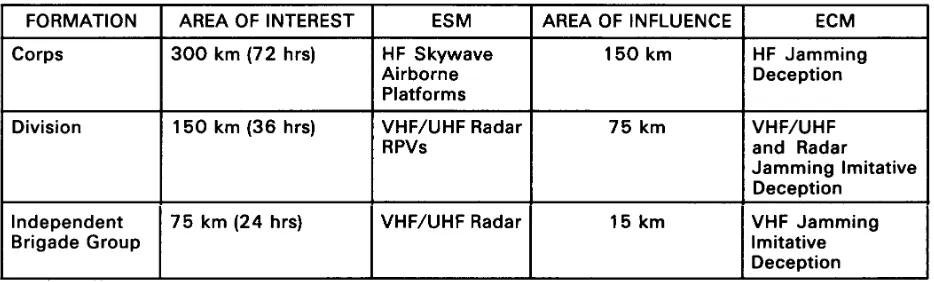
a. ESM resources correspond to a formation commander's area of interest; and b. ECM resources correspond to a formation commander's area of influence. An example of the EW resources allocated to formations based on these guidelines is shown in Figure 2-1-1 below.
Figure 2-1-1 Table of Electronic Warfare Resources Allocated to Formations
ROLE OF ELECTRONIC WARFARE ORGANIZATIONS
6. The role of EW organizations is to provide the framework to carry out offensive EW. They also support defensive EW carried out by all arms/services. Specifically, the following tasks can be carried out by tactical EW organizations:
a. provide immediate threat warning;
b. provide tactical SIGINT which supports current operations and future planning; c. provide target acquisition of enemy electromagnetic emitters;
d. provide ECM support which increases the formation's attack options; and e. provide ECCM advice to decrease friendly vulnerability to enemy electronic
exploitation.
CAPABILITY REQUIREMENTS
8. General. To perform the role/tasks assigned to them, EW elements must have the following basic capabilities:
a. an uninterrupted 24/7 capability;
b. a capability to provide tactical SIGINT and ESM support through continuous coverage of a commander's area of interest;
c. a capability to provide ECM support of a commander's area of influence; d. the capability to process large amounts of information quickly;
e. secure and reliable communication means within the EW organization, to the supported formation HQ, and to the higher EW organization;
f. a capability to operate in an EW and/or a nuclear, biological and chemical (NBC) environment; and
g. mobility and armour protection equal to that of the supported formation. 9. Equipment. These fundamental capabilities can be better defined in terms of equipment/system types required at each formation level to execute the corps concept of concurrent engagement of all enemy echelons. They are as follows:
a. Corps:
(1) ground-based HF skywave ESM system,
(2) ground-based ESM and ECM equipment (VHF/UHF and
non-communication) to support rear area security operations, corps troops and augment lower formation EW support operations,
(3) remotely piloted vehicles (RPV) with an ESM and ECM capability, (4) aviation resources with an ESM and ECM capability,
(5) automatic data processing (ADP) support for production of tactical SIGINT, and
(6) specialized maintenance equipment to support unique EW equipment. b. Division:
(2) ADP support for production of tactical SIGINT and ESM,
(3) specialized maintenance equipment to support unique EW equipment, and (4) elevated platforms with an ESM capability in the mechanized infantry
division.
c. Independent Brigade Group:
(1) ground-based ESM and ECM systems,
(2) ADP support for production of tactical SIGINT and ESM, and
(3) specialized maintenance equipment to support unique EW equipment. 10. The above distribution of EW systems not only gives formation commanders the
resources needed to fight their particular battle, but also provides complete electronic coverage of the corps area of interest. The HF skywave, RPV and aviation resources at corps augment the division/independent brigade group ground-based ESM/ECM coverage.
ORGANIZATIONAL FACTORS
11. General. To develop the EW organizations required to support any formation, there are basic components that must be maintained at every level. Chapter 3 outlines the EW process; however, it is important to note here that the cycle begins with a search then is followed by intercept, direction finding and analysis. Jamming and deception can be executed only with steerage from these first steps. Finally, the command and control structure ties the entire EW effort together.
12. Components. The fundamental building blocks of any EW element are: a. search and intercept system;
b. analysis/information processing system;
c. communication locating system (direction-finding baseline); d. non-communication (radar) intercept and locating system;
These fundamental components can be mounted on airborne platforms, such as RPVs, helicopters, fixed wing aircraft or ground vehicles according to the range and mobility requirement.
13. Command and Control. To maximize the combat power of EW assets, command and control must provide for rapid transmission of information and tasks. Coordination of corps and lower formation EW resources is very important because of their dependence on radiated power and distance from their targets. The essential command and control components of EW are:
a. an EW coordination centre at the main and alternate headquarters of the supported formation;
b. a main and alternate operations centre to enhance survivability of the technical data base and to provide continuous intercept, analysis, steerage and tasking; c. forward operation centres to control the deployed EW detachments;
d. EW liaison detachments to flanking formations (corps and division) and for each of the manoeuvre brigades in the corps; and
e. dedicated and secure communications to tie these elements together.
14. Electronic Warfare Organizations. The types of EW organizations needed to provide the required capabilities of the corps concept are as follows:
a. corps EW regiment;
b. armoured division EW squadron;
SECTION 2
CORPS ELECTRONIC WARFARE REGIMENT
TASKS
1. Strategic. As corps is the highest level of tactical command, the corps EW regiment is required to provide the necessary interface with the strategic/national SIGINT organization. It not only provides input to the strategic system, but also receives SIGINT of interest to the corps commander. Therefore, the corps EW regiment is responsible for maintaining a corps technical data base that collates input from all integral EW elements and also provides tactical SIGINT to subordinate formations. For these reasons it is essential that corps maintains technical control over the activities of all corps EW elements along with the requirement to ensure optimum coverage of the electronic target array. (This will be discussed further in Section 5 - Command and Control.)
2. Tactical. In line with the capability requirements defined earlier (see Section 1), the specific tasks of the corps EW regiment are:
a. to provide an EW coordination centre (EWCC) at the main and alternate corps headquarters to plan and coordinate the employment of the corps EW resources with the general staff, including the technical control over EW resources under command of subordinate formations;
b. to provide a control, automatic processing and analysis function. The corps EW regiment's task is to collate SIGINT for the corps commander's area of interest for use by the corps G2/G3 staff. It also provides SIGINT to subordinate formation EW elements to assist with EW operations within their formation's area of interest;
c. to provide ESM and ECM capabilities (similar to those within subordinate formations) to be employed on corps tasks or to supplement the division EW resources, or to provide an independent brigade group with an EW capability; d. to provide ESM and ECM capabilities that are not found within the division,
namely:
(1) HF skywave intercept and direction-finding;
(3) elevated platform RPV enhancement of the ground-based intercept, direction-finding and jamming capability; and
e. to provide specialized maintenance to support unique EW equipment.
ORGANIZATION
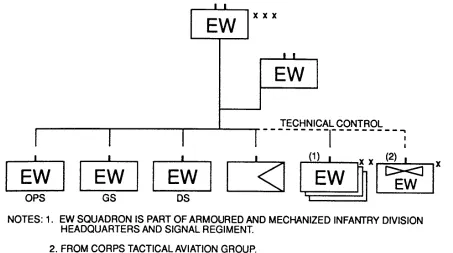
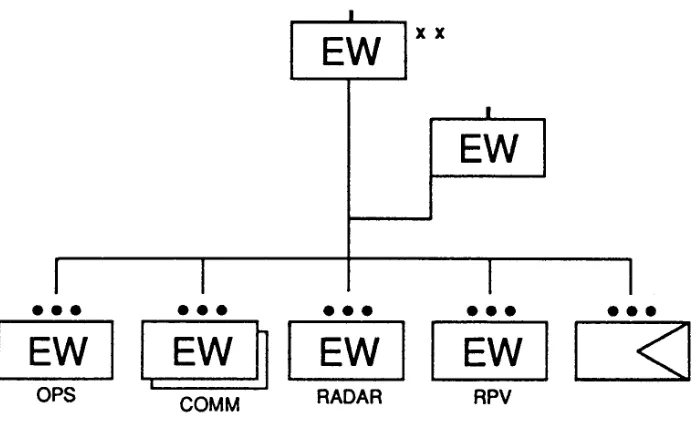
3. The corps EW regiment is part of the corps signal brigade and is organized as shown in Figure 2-2-1. B-GL-303-001/AF-001 Corps '86 Establishments shows the complete staff table for this unit. Of particular note are the following general points:
a. Headquarters provides the EWCC at corps main and alternate headquarters, plus liaison teams to other formations. The corps EW staff is responsible for
coordinating overlapping target areas and for exercising technical control over all EW resources in keeping with the corps commander's plan;
b. Operations Squadron provides the operations centres (main, alternate and rear area security), provides the signal elements of the regiment, and maintains the corps EW/SIGINT data base which interfaces with the strategic SIGINT sources and integral tactical EW elements;
c. General Support Squadron looks deep into the corps area of interest and
complements the forward divisions' coverage. It also protects the corps rear area; d. Direct Support Squadron is used to reinforce subordinate formations. For
example, an EW troop can be formed and detached under command of a corps mechanized brigade group (CMBG) or an armoured cavalry brigade group
(ACBG) when deployed on independent missions (eg, covering force, flank guard, rear guard);
e. Division EW Squadrons are under the command of the division headquarters and signal regiment but technically are controlled by the corps EW regiment; and f. EW Aviation Squadron is integral to the corps aviation group but is assigned in
Figure 2-2-1 Corps Electronic Warfare Regiment
CAPABILITIES
4. Headquarters. The commanding (CO) with the EW staff controls all corps EW activities from the EWCC at both the corps main and alternate headquarters. Corps EW officers provide liaison with higher, flank and lower formations or other allied EW organizations as required. 5. Operations Squadron. This squadron provides the following operations and signal elements for control of all corps EW activities, and/or processing and coordination of tactical SIGINT:
a. Operation Centres. These include main, alternate and rear area, all of which have search, intercept and analysis capability; and
b. Signal Troop. It provides radio (data and voice) and line communications plus access to the corps trunk system (radio relay).
a. Headquarters and Signal Troop; b. RPV Troop consisting of:
(1) ESM Section which consists of one communication and one radar control station,each capable of launching four RPVs,
(2) ECM Section which consists of one communication and one radar control station, each capable of launching four RPVs, and
(3) Expendable Jammer Section with a launcher station and four RPVs capable of dropping expendable jammers;
c. HF Skywave Troop which provides an HF (skywave) search, intercept and DF baseline of five stations;
d. Rear Area ESM Troop which is capable of operating a communication DF baseline (five stations) and two homing stations in support of rear area security operations;
e. ECM Troop with six communication ECM detachments; and
f. Aviation Liaison Troop which provides communications and radar exploitation sections for fitting necessary equipment to helicopters or fixed wing aircraft, depending upon mission tasking.
7. Direct Support Squadron. To reinforce forward divisions or to support independent brigade group operations, this squadron is primarily equipped with ground-based detachments which are:
a. Headquarters and Signal Troop:
(1) squadron officer commanding (OC) and EW staff form EWCC at main and alternate headquarters of supported formations,
(2) electronic warfare liaison officer (EWLO) to flank/higher formation, and (3) main and alternate operation centres, including intercept, analysis and
operation staff; b. Communication Troop:
(2) two communication (HF/VHF/UHF) DF baselines, and (3) six ECM detachments;
c. Radar Troop:
(1) three radar intercept/DF stations, and (2) two radar ECM stations; and
d. Combat Service Support Troop capable of supporting squadron elements detached with lower formations.
8. Combat Service Support Squadron. This squadron provides first line administrative support, including vehicle and equipment maintenance, medical, supply, transport and messing. This squadron will form a regimental echelon in the corps rear area.
9. Electronic Warfare Aviation Squadron. Although this squadron is integral to the corps aviation group, it is assigned in support of the EW regiment. It consists of:
a. ESM/ECM helicopters equipped to conduct close or stand-off operations against communication targets; and
b. ESM/ECM helicopters equipped to conduct close or stand-off operations against radar targets.
SECTION 3
DIVISION ELECTRONIC WARFARE SQUADRON
GENERAL
1. Introduction. The division EW squadron is integral to the division headquarters and signal regiment, although technical control of EW activities are still maintained by the corps EW regiment. At the division level, there are fewer HF and airborne resources as the EW squadrons are primarily concerned with exploiting and attacking enemy communications and radar used in the forward area. Therefore, the majority of EW resources are ground-based mobile detachments augmented by some elevated platforms. The principal aim of the division EW squadron is to provide timely combat information and ECM support not only to division headquarters but also to the subordinate formations. Through the division signal officer, the EW squadron OC assists the division commander in selecting EW target priorities in accordance with corps direction, the commander's intention, the threat to the division, and the target's vulnerability.
2. Required Capability. Based on the potential target array a Canadian division is expected to be confronted with, the supporting EW organization should possess the following capabilities:
a. ESM (to cover the division's area of interest):
(1) search for and detect communication and radar transmissions, (2) intercept and analyse critical HF/VHF/UHF nets,
(3) locate all enemy communication emitters with sufficient accuracy to permit countermeasures,
(4) intercept enemy air-ground-air and air-air transmissions (communication and navigation),
(5) identify and locate all enemy jammers,
(6) identify and locate all ground radar emitters, and (7) intercept and locate all radio relayemnitters; b. ECM (to cover the division's area of influence):
(1) neutralize the fire support and command and control communications of enemy regimental, divisional and army command posts,
(4) neutralize enemy surveillance and counter-mortar/artillery radars; and c. Command and Control:
(1) provide an EWCC at division main and alternate headquarters,
(2) provide EWLOs to subordinate and flank formation headquarters or to other allied EW organizations to effect mutual support, and
(3) provide an EW operation centre to control all EW activity within the division's area of responsibility.
ARMOURED DIVISION ELECTRONIC WARFARE SQUADRON
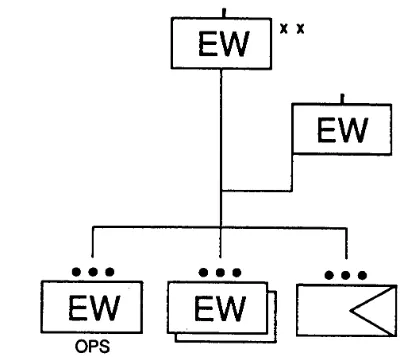
[image:34.612.181.381.477.656.2]3. Organization. Due to the highly mobile and offensive tasks usually given to an armoured division (such as blocking and counter-attack operations), its integral EW organization is tailored to support this role. The EW organization provided to an armoured division is essentially the same as that of a mechanized infantry division, with the exception that no direction-finding capability is provided. Direction-finding results are obtained from other EW elements within the corps that tend to be less mobile and operate on a wider frontage (conditions required to effectively deploy a baseline). However, the armoured division EW squadron has increased ECM resources, which are most effectively used in support of an attack. The outline organization of an armoured division EW squadron is shown in Figure 2-3-1. The detailed staff table is in B-GL-303-001/AF-001 Corps '86
Establishments.
4. Capabilities of the Armoured Division Electronic Warfare Squadron.
a. Headquarters Troop which is comprised of:
(1) the squadron commander and a small EW staff form an EWCC at armoured division main and alternate headquarters,
(2) a signal section provides internal radio and line communications, plus access nodes for main and alternate EW operation centres to join the division area trunk system, and
(3) four EWLOs for subordinate brigades, flank formation and, if required, other allied EW organizations;
b. Operations Troop which provides main and alternate EW operations centres,including squadron command post, search, intercept and analysis; c. ECM Troops which are comprised of two identical troops, each providing:
(1) one forward operation centre consisting of two or three armoured vehicles with some intercept facilities but primarily used for control of EW
elements in forward brigade areas,
(2) six communication ECM detachments, and (3) four radar ECM detachments; and
d. Combat Service Support Troop which provides first line support from a squadron echelon deployed near the main EW operations centre. Second line support comes from the division headquarters and signal regiment.
MECHANIZED INFANTRY DIVISION ELECTRONIC WARFARE SQUADRON
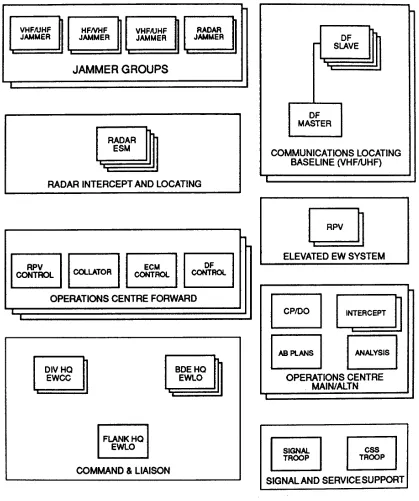
Figure 2-3-2 Mechanized Infantry Division Electronic Warfare Squadron
6. Capabilities of the Mechanized Infantry Division Electronic Warfare Squadron.
a. Headquarters Troop:
(1) the squadron commander and a small EW staff form the EWCC at division main and alternate headquarters,
(2) the signal section provides internal radio and line communications plus access nodes for main and alternate EW operation centres to join the division area trunk system, and
(3) four EWLOs for subordinate brigades, a flank division and, if required, other allied EW organizations;
b. Operations Troop which provides main and alternate EW operations centres, including squadron command post, search, intercept, analysis and airborne plans; c. Communication Troops which are comprised of two identical troops with each
providing:
(2) one communication direction-finding baseline of five detachments that would usually deploy across the division frontage, and
(3) six communication jammer detachments as follows: (a) two HF/VHF, and
(b) four VHF/UHF; d. Radar Troop which is comprised of:
(1) ELINT control which deploys as a forward operations centre/troop headquarters,
(2) four radar ESM (intercept and locating) detachments that usually form a baseline across the division area, and
(3) four radar jammers;
e. RPV Troop which provides two RPV sections that would usually work from a forward operation centre. These sections consist of:
(1) one communications ESM section (a control station and a launcher vehicle with two RPVs), and
(2) one radar ESM section (a control station and a launcher vehicle with two RPVs); and
f. Combat Service Support Troop which provides first line support from a squadron echelon deployed near the main EW operation centre (second line crypto, EW and ADP support comes from the division headquarters and signal regiment).
SECTION 4
INDEPENDENT BRIGADE GROUP ELECTRONIC WARFARE TROOP
GENERAL
1. Introduction. An EW troop may be assigned from the corps EW regiment to support a brigade group (eg, CMBG or ACBG) tasked with an independent mission such as covering force, flank guard, rear guard, etc. In this case, the EW troop would be detached under command of the brigade group headquarters and signal squadron. The ESM and ECM resources would be similar to a division EW squadron; however, the overall organization is much smaller. There is no RPV system in this EW troop.
2. Required Capability. The EW capability needed to cover an independent brigade group's area of interest/influence is similar to that of a division; the essential differences are reduced ranges and a smaller enemy target array. Depending upon the type of independent mission assigned to a brigade group, the following EW capabilities will be required:
a. ESM (to cover the brigade group's area of interest):
(1) search for and detect communication and radar transmissions, (2) intercept and analyse critical enemy HF/VHF/UHF nets,
(3) locate all VHF/UHF communication emitters with sufficient accuracy to permit countermeasures,
(4) identify and locate enemy jammers,
(5) intercept enemy air-ground-air and air-air transmissions, (6) intercept and locate radar emitters, and
(7) intercept and locate radio relay emitters; and b. ECM (to cover the brigade group's area of influence):
(1) neutralize command and control and fire control links of up to three enemy regiments, plus higher echelon communications as required,
(2) neutralize air-ground-air or air-air frequencies, and
ORGANIZATION AND CAPABILITIES
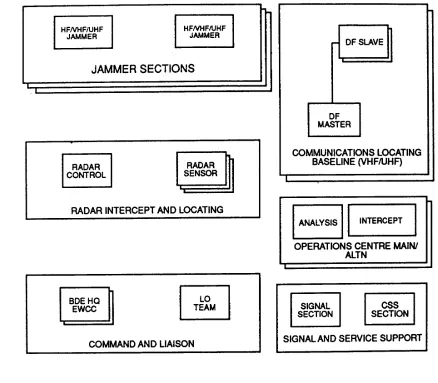
3. Organization. The EW troop assigned to an independent brigade group would be task organized from the corps EW regiment's direct support (DS) squadron along the lines of a reduced division EW squadron to provide complete ESM/ECM coverage. The difference from a reduced division EW squadron would be no radar ECM capability and no RPV system. A typical organization for an independent brigade group EW troop is shown in Figure 2-4-1. The size of this organization will vary according to the nature of the task and will be roughly one third of a division EW squadron.
4. Capabilities. Although this EW troop would be tailored to support the role of an independent brigade group, the following could be provided:
[image:40.612.87.539.291.598.2]a. Headquarters Section which consists of:
Figure 2-4-1 Independent Brigade Group Electronic Warfare Troop
(1) troop commander and small staff which form EWCC at brigade group main and alternate headquarters,
(2) one EWLO deployed to higher formation or allied EW organization, and (3) a signal section for internal communications;
c. Communication Section which consists of:
(1) one forward operation centre with some intercept capability,
(2) two communication DF baselines, consisting of one master and two slave stations each, and
(3) six jammer detachments covering all communication bands; d. Radar Section which consists of:
(1) one ELINT control deployed as a forward operation centre, and (2) four radar ESM sensors for intercept and to form a DF baseline; and e. Combat Service Support Section which provides first line support and is usually
collocated with the brigade group headquarters and signal squadron administrative echelon.
SECTION 5
COMMAND AND CONTROL
GENERAL
1. Command. Command of EW units is carried out through the normal chain of command. The corps signal brigade commander (Commander Corps Signals) is the corps commander's adviser on all signals matters including EW. A similar relationship exists at the division and brigade group levels. G3 and G2 control of EW is exercised through the EWCC and EWLOs. Technical control is exercised through EW channels, ie, from the EW regiment operations centre at corps level to lower formation EW operation centres.
2. Communications. The need for immediate passage (near real time) of information obtained through ESM and jamming support can only be adequately met if dedicated secure and automated communication systems are available to the EW systems and its major users. To decrease the vulnerability of these dedicated communication systems, they should not present a unique communication signature when compared with other systems on the battlefield.
TECHNICAL VERSUS OPERATIONAL CONTROL
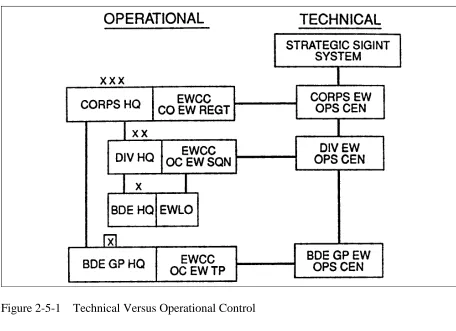
3. Technical Control. Technical control of all EW elements within the corps is maintained by the corps EW regiment for the following reasons:
a. coordination to ensure:
(1) all EW systems complement each other, (2) complete electronic coverage, and (3) no unnecessary duplication of effort; and
b. passage of technical data for the development of tactical SIGINT.
4. Technical Data. EW elements cannot be deployed blindly on the battlefield and be expected to produce results immediately. The ESM system needs to develop a technical information data base on enemy and friendly emitters in the area of operation before it can function. Due to the density of emitters, this would take days; this delay would be completely unacceptable to the formation commander. Therefore, this technical data must be provided to the EW unit before it deploys and must be updated constantly during the battle. The corps EW regiment is responsible to tie into the strategic SIGINT system to obtain the necessary
5. Operational Control. Formation commanders exercise operational control over their assigned EW resources. Although technical coordination of EW is important, operational control has precedence so that the needs of the formation commander are met. Responsibility for
operational control of an EW element includes planning guidance, ESM target priorities, ECM tasking and control measures and movement control. This is exercised through the EW
coordination centre at the formation headquarters. Chapter 6 expands on specific staff responsibilities.
41. The diagram in Figure 2-5-1 illustrates the relationship between technical and operational control.
COMPONENTS
[image:44.612.71.527.331.662.2]7. General. EW organizations are assigned to almost every manoeuvre formation and must deploy well forward to acquire enemy targets. Not only must they interface with their supported formation at every level, but they must also provide effective control of individual detachments throughout the corps area. To accomplish this command and control, the following components are established:
Figure 2-5-1 Technical Versus Operational Control
a. EWCC at the supported formation headquarters;
c. main operation centres to control all EW unit activities; and
d. forward operation centres to control individual EW detachments in the forward area.
8. Electronic Warfare Coordination Centres. These coordination centres, which are provided from the supporting EW organization, are collocated with formation headquarters. Their primary functions are to:
a. assist the commander in EW planning and coordination in conjunction with other staff cells of the headquarters, principally G3, G2 and elements of artillery, air and aviation (see Chapter 6 Staff Responsibilities for Electronic Warfare Planning); b. coordinate all aspects of EW with higher and adjacent formation EWCCs,
particularly:
(1) exchange of EW information,
(2) requests for mutual EW support (ECM or ESM),
(3) EW coverage and planned deployment of EW resources, and (4) update of EW policy, plans, orders and instructions; and
c. coordinate EW support to subordinate formations through EWLOs (or another EWCC in the case of corps), particularity:
(1) provide all applicable EW policy, plans, orders and instructions, (2) provide ESM results (likely from the main operation centre),
(3) approve subordinate formation EW plans, including ECM support, and (4) deploy EW elements within subordinate formation areas.
9. Electronic Warfare Liaison Officers. The EWLO at brigade headquarters provides the brigade commander and staff access to the entire EW system: first to request specific EW support (ECM and ESM) and then to receive immediate threat warning, combat information and tactical SIGINT. The EWLO coordinates with the G3 and G2 staff all EW activities within the brigade area for the brigade signal officer; the EWLO is also responsible for passing on EW results which directly affect the brigade in battle. Planned deployment and terrain clearance of EW elements within the brigade area are coordinated with the G3 staff at this level. Brigade priority
intelligence requirements and ECM requirements are passed by the EWLO to the EWCC for approval or other appropriate action. Brigade intelligence that enhances EW operations is also passed by the EWLO to the EWCC and EW operation centres. On occasion, if EW resources are allocated in direct support of the brigade, the EWLO may coordinate EW support directly
through a forward operation centre (for example, EW supporting a brigade attack).
10. Main Operation Centre. Based on orders and direction from the EWCC, the main operation centre implements all EW taskings. Specifically, this EW operation centre is responsible for:
a. control, tasking and deploying EW detachments (such as those conducting jamming, direction finding and intercept) through the forward operation centres; b. analysing information derived from signal sources;
c. integration with higher and adjacent EW systems, including airborne assets; and d. updating the EW technical data base.
The main operation centre is essentially the squadron headquarters and is the heart of all EW activity. This is where the majority of the search and intercept is performed to start the EW process. This is also where the analysts collate the intercepted traffic to produce immediate threat warning (such as an indication of an imminent attack or air strike) and piece together the enemy's electronic order of battle, which is passed back to the formation headquarters as hard
intelligence. The direction/information received from the EWCC includes all applicable policy, plans, orders and instructions, in addition to collateral intelligence, specific ECM tasks and authority for deployment of EW detachments. The main operation centre is responsible for keeping the EWCC current on all ESM results, success of ECM missions, and the location of all EW elements within the formation area. As appropriate, this type of information is also passed directly to a brigade EWLO.
control and RPV control; they also provide limited intercept to augment that of the main operation centre. Although no complete analysis is done at this level, results are still initially collated. If EW resources are placed in direct support of a brigade, the forward operation centre could be directed by the EWLO for specific EW support in the brigade area (for example, jammers assigned in direct support of a counter-attack).
TYPICAL DEPLOYMENT
12. Summary. To summarize the command and control exercised within an EW element, Figure 2-5-2 illustrates a division EW squadron defensively deployed. Points worth particular note are:
a. two separate direction-finding baselines are required for continuous movement and sufficient redundancy across a division frontage;
b. jammers must work in pairs for movement and survivability;
c. two of the three forward operation centres will usually be operating at any given time while the third operation centre is moving;
d. forward operation centres may (but not necessarily) be affiliated with a brigade since they are usually deployed geographically;
e. EW support is provided to brigade headquarters through a liaison officer who also may have resources allocated in direct support;
f. the command of the squadron and staff interface is exercised by the EWCC at division headquarters;
g. the EWCC and main operation centre report to their respective corps counterparts on technical matters; and
h. the squadron has its own administrative echelon to provide first line support.
COMBAT SERVICE SUPPORT
13. General. Commanders at all levels must be aware of the special requirements of EW elements due to their deployment over a much broader front than other units of comparable size. They must also be prepared to assist logistically in their area of responsibility.
14. Supply. EW detachments deploy with sufficient supplies to be self sustaining for limited periods. Resupply will usually be effected by the administrative echelon integral to an EW element; however, tasking of collocated units and formations may occur.
15. Maintenance. All EW elements have an integral first line capability as most EW
second line maintenance support, while third line support is carried out by the corps signal maintenance squadron. Non-specialized repair and maintenance, such as recovery of vehicle casualties, could be provided by collocated formations and units if it is beyond the capability of the EW administrative echelon.
[image:48.612.89.531.237.503.2]16. Airborne Platform Maintenance. The corps EW regiment, the division headquarters and signal regiment have the capability to conduct first line maintenance for their own airborne platforms. Second line maintenance is conducted by Division Service Group (DISGP) or Corps Support Command (COSCOM) maintenance units. Helicopters are maintained by the corps aviation group. Airborne EW sensor packages are maintained as any other EW sensor.
CHAPTER 3
OFFENSIVE ELECTRONIC WARFARE
SECTION 1
GENERAL
RESPONSIBILITY
1. Offensive EW is the aspect of EW used to electronically attack the enemy by exploiting, disrupting or deceiving its electronic systems. As introduced in Chapter 1, Section 4, offensive EW includes:
a. Electronic Support Measures (ESM) which exploit enemy transmissions to give combat information and tactical signal intelligence (SIGINT); and
b. Electronic Countermeasures (ECM) which disrupt or deceive the enemy's electronic emitters.
2. ESM and ECM are measures performed by a tactical EW organization in support of a formation. However, this organization does not function in isolation, but rather with tasking and guidance from the supported formation commander and staff. It is the G2 and G3 staffs that are responsible for providing the EW policy, tasking priorities and initial guidance to start the EW process. Chapter 6 gives a detailed description of staff responsibilities for EW.
ELECTRONIC WARFARE PROCESS
3. General. Offensive EW is an activity that has several interrelated and interdependent components. Figure 3-1-1 summarizes the entire EW process. Information from search, intercept and direction-finding is collected, recorded and then collated by EW analysts who produce tactical signal intelligence for the staff. If the staff or analysts require more information on a particular enemy activity, they steer the intercept and direction-finding detachments on to that activity. Alternatively, the staff may decide to electronically attack a target using jamming or deception, or if sufficient intelligence is available, the target could be neutralized by physical attack.
4. Steerage. Steerage is the name given to the directions which EW detachments need to carry out their task. For example, a search operator looking for a particular enemy net would be given details of its frequency band, procedures and normal net composition. Once the search operator has identified the target net, the operator would pass the necessary details (eg, frequency, modulation, call signs) to an intercept and direction-finding station. If it was
5. Analysis. In conjunction with other means of surveillance, the EW process helps to build up a picture of the enemy forces. EW units try to discover, for example, the enemy order of battle, deployments, movements, combat readiness and future intentions. It is not necessary for communications to be in plain language to obtain intelligence from them; EW operators and analysts can glean information from the pattern and density of traffic flow. Intercepted signals are used to identify specific transmitters and hence specific units, headquarters and formations. It must be remembered that the passive (ESM) aspect of this EW process is ongoing in peacetime as well as in war.
[image:50.612.84.544.377.656.2]6. Electronic Countermeasures Versus Electronic Support Measures. As shown in Figure 3-1-1, once the enemy emitter is found, identified and located, this information flows to the headquarters staff in the form of threat warning, combat information or tactical intelligence. Here a decision is made whether to neutralize (jamming or deception), destroy, or exploit for intelligence. The entire decision-making process must be integrated with all other staffs involved. If the decision is to listen for intelligence purposes, at some point this decision must be
re-evaluated. Commanders should identify those nets that have high tactical value to the enemy but have little or no intelligence value. Enemy fire direction nets and tactical air communications usually meet this criterion and should be jammed according to standing operating procedures (SOP) and the coordination centre should be informed. In other cases, the commander may direct that certain targets, such as enemy jammers, be fired upon as an SOP once the targets are
identified and located.
SECTION 2
ELECTRONIC SUPPORT MEASURES
GENERAL
1. Definition. The formal definition of ESM is stated in Chapter 1 and also in Annex A. Essentially, ESM are the exploitation of enemy transmissions for the purpose of immediate threat warning and the provision of combat information about the area of interest of the supported formation. Once analysed in depth, the results of ESM provide SIGINT which may be of use to the tactical commander; therefore, these ESM results are called tactical SIGINT. ESM, which provide the essential first step in the EW process, can be carried out from ground-based equipment in the forward area and at greatly extended ranges from airborne platforms. All electromagnetic radiations have a distinct characteristic or signature, ranging from a single radio frequency to the unique signature of an air defence radar/weapon system. The ESM process consists of deploying electronic sensors so they can listen to, locate, and identify enemy transmissions.
2. ESM, since they are passive, give no indication to the enemy and therefore provide a significant advantage. Nevertheless, the ESM process requires special equipment, well trained soldiers (eg, linguists) and clear direction from the G2 on priorities, the types of targets sought, and the kind of information desired so wasted effort is prevented. To be most effective, ESM detachments must have specific tasks and requirements.
3. Functions. To exploit the enemy's transmissions, EW elements search the spectrum to find which frequencies the enemy is using. When they find a target frequency, they then intercept the transmissions, use direction-finding equipment to locate the transmitters and then analyse the message content or emission types to gain combat information, intelligence, and to identify the target transmitter.
SEARCH
4. Start of the Process. It is here that operators set out to discover enemy transmissions. Some operators will be looking in the HF band, some in the VHF and UHF band and others for radar transmissions. The communication bands are divided into sectors and the general search operator, who has some knowledge of the target language, records all transmissions heard in that sector. The operator notes the frequency, the type of modulation, and the mode of transmission. If the net is operating in plain language, the operator can log the call signs, the type of net and an outline of the traffic. If the operator recognizes it as an important net, the operator calls for another operator to look specifically at that particular frequency. In the case of radar, search receivers and operators are looking for unique signal characteristics.
useful information are then passed to an intercept operator. Modern search equipment
incorporates micro-processors, which can be programmed to automatically scan a portion of the band, ignoring friendly or restricted frequencies.
INTERCEPT
6. Radio. Communication intercept involves recording transmissions from a radio net which has been detected by search. Once an important radio net is identified, it is handed off to an intercept operator who records the gist of the information passed on that net. Even if the net is in clear, it is unlikely the operator will have time to study its contents; however, the operator will pick up any breaches of security which will be passed immediately to the staff as combat information. Obviously, an intercept operator must have a complete knowledge of the enemy's language and procedures. The tapes and log sheets are then passed to an analyst for detailed scrutiny. Intercept can be conducted against secure and insecure nets but the information obtained will vary. Crypto-protected targets yield valuable information in the form of emission characteristics (eg, frequency and modulation), and some inference can be drawn about the relative importance of the link based on traffic patterns and location of stations. Secure stations are still subject to direction-finding as are stations working in clear.
7. Radar. Each radar has a characteristic frequency, power, pulse length, pulse repetition frequency, beam width, antenna scan rate and polarisation. These properties determine the function and operating parameters of a radar and may be used to classify and identify it. However, the modern trend is for radars to have variable parameters which will make
identification more difficult. Given such information, ESM may provide identification of radar types and, in some cases, individual emitters. Some radar targets may be associated with a
particular gun or missile fire control system, or a missile guidance/homing system. In these cases, analysis of the interception usually reveals the state of activation of the whole weapon system. 8. Equipment. The fundamental equipment in any intercept system is the receiver and associated antenna. Intercept receivers are very sensitive with a high degree of frequency accuracy and stability; with a high gain antenna and good siting, they are capable of receiving signals at a greater range than normal communication receivers. Although most intercept is conducted from