Blood Bank Practices for Sickle Cell Patients in North Carolina
ArabaN. Afenyi-Annan, MD
A Master's paper submitted to the faculty of the University of North Carolina at Chapel Hill in partial fulfillment of the requirements for the degree of
Master of Public Health in the Public Health Leadership Program.
ABSTRACT
Blood Bank Practices for Sickle Cell Patients in North Carolina
ArabaN. Afenyi-Annan
Sickle cell disease (SCD) remains an important public health problem.
Predominantly affecting African Americans, SCD is associated with significant
health, financial, and psychosocial costs. Therefore, it is vital to find new ways to
improve delivery of care to this patient population.
The hospital blood bank plays a key role in delivering transfusion therapy to SCD
I
'patients. Because transfusion therapy represents the mainstay of treatment for
most SCD patients, we hypothesized that a systematic review of blood bank
practices for these patients might uncover new opportunities to improve this care.
Current blood bank practices for SCD patient have not been previously described.
This paper discusses blood bank practices for SCD patients in North Carolina.
The layout is as follows. First, the underlying cause, history, and costs of sickle
cell disease are described. Next, evidence supporting the use of transfusions for
SCD management and its associated risks are considered. Data from a
cross-sectional study ofNC blood bank practices for SCD patients are then presented.
INTRODUCTION
Sickle cell disease (SCD) is a heterogeneous group of inherited disorders,
characterized by the vasa-occlusive episodes with end organ damage, chronic
pain and hemolytic anemia*. Replacement of a single amino acid (i.e. point
mutation) in both ~-subunits of the hemoglobin (Hgb) molecule causes a
conformational change of red blood cells (RBCs) under low oxygen tension,
resulting in the characteristic "sickle cells" observed microscopically in a
peripheral blood smear for which this disease is named. Clinically, SCD varies in
severity both within and between specific genotypes; however, all SCD patients
have abnormal RBCs that 1) are poor carriers of oxygen, 2) break easily creating
a state of chronic anemia, and 3) lodge in small caliber vessels further preventing
oxygen delivery to the tissue.
Approximately 70,000 to 80,000 Americans have SCD making this one of
the most common genetic disorders; an additional2.5 million carry the sickle cell
trait.1' 2 Although SCD occurs in a variety of racial/ethnic groups, this disease
disproportionately affects African Americans, an already vulnerable population.
In the United States, health disparities clearly exist for patients in racial/ethnic
minorities and those with lower educational attainment and socio-economic
status. SCD patients typically fall into all of these categories? An important
national goal is the reduction and elimination of these health disparities.4 More than thirty years ago, SCD was formally recognized as a national
health priority.2 In 1972, the National Sickle Cell Anemia Control Act was
programs, health education for both health providers and the public, and finally,
research and research training. Shortly thereafter, the Secretary of Department of
Health and Human Services (formerly known as the Department of Health,
Education, and Welfare) created a National Sickle Cell Disease Program under
the direction of the National Heart Lung and Blood Institute (NHLBI) within the
National Institutes of Health (NIH)*. Since then, NHLBI has devoted over 923
million dollars for research in SCD.2 Through the Blood Diseases Program, under the Division of Blood Diseases and Resources, NHLBI develops and disseminates
materials on SCD, supports research on the use of blood and blood components in
the treatment and prevention of disease, and leads a national multidisciplinary
program of basic, clinical and applied research through NIH funded
Comprehensive Sickle Cell Centers.5 Although these efforts have dramatically
improved the lives of SCD patients, this chronic disease still remains an important
public health issue today.
In addition to disease morbidity and mortality, there are significant
societal and individual costs for persons affected with SCD. Annual total health
care costs for SCD patients exceed $3 billion dollars6 due to frequent interactions
with the health care system. Inpatient admissions occur at a rate of 0.9 per patient
per year (75,000 hospitalizations armually) with an estimated cost in excess of
4 7 5 million dollars? Outpatient visits occur at a rate of 8 visits per patient per
year. 8 Total hospital and physician charges are estimated to be in the order of $8,000 dollars per patient per year.8 Nearly all SCD patients rely on government support through national and state programs to pay for these high medical
expenditures.9'11 Individual costs include financial strain, mood disorders such as
anxiety and depression, drug abuse, developmental delays, frequent interruptions
in school and work, and inability to work secondary to chronic disability. All of
these factors present a tremendous burden to patients, their families, and society.
In addition to these costs, SCD patients remain at risk for early mortality and
significant disease morbidity.
Once a uniformly fatal disease of childhood, today> 85% of children with
SCD survive past 18 years of age.2• 12 This contrasts with 1974 autopsy data that
showed the average life span of a person with SCD in the United States was
approximately 14 years.13• 14 Today, the average life expectancy for African
American males affected by SCD is 42 years and 45 years for affected African
American females. 15 Although sickle cell patients now live into late adulthood, their life expectancy is still decreased by approximately 25 to 30 years as
compared to their African American counterparts in the United States. Risk
factors for early mortality include frequent pain episodes, renal failure, stroke, and
acute chest syndrome, all of which represent significant disease morbidity.16 Disease morbidity is secondary to the chronic occlusion of vessels causing
painful "crisis" and end organ damage as described above. Commonly affected
organs include the spleen, brain, lungs, kidney, and joints. Complications in
SCD patients include painful crisis, aplastic anemia, acute chest syndrome, stroke,
and renal failure. Surgical complications, even for minor surgeries such as
tonsillectomy and cholecystectomy, occur in up to 35% ofpatients.17' 18 These
complications are potentially life threatening.
An important advancement in the management of this disease has been use
of transfusion therapy, which has been a key component of improved survival
rates in SCD patients.19 For the great majority of SCD patients, transfusion therapy represents the mainstay of care. By age 20, approximately 70-80% of
patients will have been transfused.18• 20.23 The underlying rationale for using RBC
transfusions is to improve tissue oxygenation by decreasing the proportion ofHbS
red cells and suppressing further production ofHbS through replacement of sickle
cells with blood from normal donors.
The benefits of transfusion therapy, which include decreased morbidity
and mortality, have been demonstrated in a few randomized control trials (RCT)
and several observational studies. The first RCT to demonstrate a dramatic
I
Jreduction in disease morbidity and mortality with the use of transfusions was a
1998 study comparing the incidence of stroke among children with SCD
identified as high risk by transcranial Doppler ultrasound. The authors of this
study found a greater than 90% reduction in the incidence of first stroke in
children who received periodic prophylactic transfusions (chronic transfusions).24 This trial was stopped after only 18 months due to overwhelming morbidity for
patients in the non-transfusion arm. Other studies have shown that chronic
transfusions also reduce the risk of recurrent stroke in children.Z5• 26 Studies in
both children and adult patients receiving chronic transfusions have shown a
reduction in hospitalization rates, emergency room visits, recurrence of acute
chest syndrome, and severity and frequency of severe pain episodes.27.30 A RCT
undergoing surgery showed a decrease of some peri-operative complications.18 Based on these and other studies, transfusion are recommended for the acute
management oflife threatening and organ threatening vaso-occlusive episodes
such as acute chest syndrome, multi-system organ failure, splenic sequestration,
and stroke and prevention of disease complications?6•31.35
Transfusion therapy however, is not without risks. Potential
complications of transfusion therapy, as for any patient, include transmission of
infectious diseases, allergic reactions, and hemolytic and non-hemolytic
transfusion reactions. Sickle cell patients however, are at increased risk for
hyperviscosity, iron overload, painful episodes, alloimmunization, and severe
hemolytic transfusion reactions (delayed and acute )_36 -38
Alloimmunization is the most frequent and problematic complication of
transfusion therapy. Rates of alloimunization for SCD patients in the published
literature vary from 18 to 36%?1• 22' 39-41 These are significantly higher than those
in other chronically transfused populations such patients with ~-thalessemia
(5%).41-44 On average, 1/3 of SCD patients who receive transfusions develop
alloantibodies to RBC antigens that are not present on their own RBCs. Figure 1
illustrates the mechanism by which alloimmunization occurs. The risk of
alloimmunization also increases with each transfusion episode.40 The mean number of units a chronically transfusion SCD patient receives is approximately
30 units/year (range= 17-42 units/year).45 The consequences of alloimunization include difficulty obtaining compatible blood for transfusions. In the past 2 decades, SCD patients have been the single largest users of national rare donor
blood*.46
Differences in antigen frequencies between blood donors and SCD
patients, particularly of the Rh and Kell blood groups, are thought to constitute a
major reason for the high rates of alloimmunization observed in this population.22•
40
•47 Because the frequency of red cell antigens vary by racial/ethnic groups, the
probability of transfusing a SCD patient with blood of a similar antigen profile is
several times greater if blood from an African American donor is used. The
probability of finding a compatible unit of blood is dependent upon the number of
antigens required to be absent on donor red cells and the demographic
composition of the donor pool. For example, the probability of finding a
compatible unit lacking the three most common antigens missing on the red cells
of African Americans (C, E, and K) is 1/33 in the typical donor pool composed of
90% Caucasians and < I 0% African American. In contrast, finding these same
units screening only African American donors is 114, an 8 fold difference.48 More recently, Castro et a!. showed that one is 24 times more likely to find a compatible
unit lacking nine of the most common antigens causing alloimmunization in SCD
patients if blood is selected from an African American donor.49 However, the
small number of African American blood donors relative to the entire donor
pool. 5°· 51 52 makes this approach impractical. Prophylactic antigen matching, that
is providing SCD patients with blood from donors who lack similar major and
l
minor red cell antigens before antibody development, is an alternate strategy to
decrease alloimmunization rates and prevent associated hemolytic transfusion
Hemolytic transfusion reactions in SCD patients range from mild to life
threatening. Delayed hemolytic transfusion reactions occur days to weeks after
being transfused with red cells containing antigens absent on their own red cells.
Although usually mild, these reactions can severe and also precipitate more
serious SCD related complications. 32' 53' 54 Life threatening reactions include
acute transfusions reactions. One atypical reaction that occurs in SCD patients is
the "hyperhemolysis phenomenon" where the patient destroys transfused donor
red cells as well their own red cells.55' 56 This cycle of destruction is potentially
fatal.
Alternatives to transfusion therapy include medication (hydroxyurea) to
decrease the frequency of disease related complications57 and bone marrow transplantation for potential cure. 58 Most patients however will still rely on
transfusion therapy for treatment. Therefore, managing the risks of transfusion
therapy by judicious use of transfusions in clinical practice and identifying new
opportunities to improve delivery of this therapy remain critically important to
improving the health of this patient population.
BACKGROUND
North Carolina (NC) is "a national model for innovation and excellence in
the diagnosis, treatment, and research ofSCD".59 This is due in part to two important factors, the large number of persons affected by SCD in the state and its
longstanding comprehensive state sickle cell program. African Americans
comprise 22% of the NC's population.60 Of the 1.7 million African Americans in
North Carolina, about one out of every 294 is born with SCD and approximately
12,730 newborns carry sickle cell trait.61 About 2400 children and adults have been diagnosed with SCD; an estimated 500 remain unidentified. 59 The North
Carolina Sickle Cell Program (NCSCP) was one of the first state programs in the
country.59 Created in 1973 in the Department of Health and Human Services, Division of Maternal and Child Health, it serves to promote the health and well
being of persons with SCD through the reduction of mortality and morbidity. It
accomplishes this mission through free newborn screening, genetic counseling to
those with sickle trait, education to health professionals and the public, financial
assistance for medical services, and coordinated care through a multidisciplinary
program of four (4) community based centers and six (6) academic and regional
medical centers in the state.59•61 The latter includes a NIH-funded
Comprehensive Sickle Cell center shared between two large academic centers,
Duke University and The University of North Carolina. Studies suggest that SCD
patients receive better quality of care through comprehensive sickle cell centers.12'
62,63
practices of blood bank as a component of the delivery of transfusion therapy.
Specifically, blood banks provide laboratory testing of patient samples, special
transfusion services, blood products for transfusion, and clinical oversight for the
management of transfusion complications. Despite these functions, blood bank
practices for SCD patients have not been well studied. To date, there have been
no studies that provide a comprehensive overview ofthe way blood banks are
currently managing SCD patients.
Two important sources for transfusion management guidelines for SCD
patients are the updated Nlli monograph "The Management of Sickle Cell Disease"14 and a consensus document from an international workshop of hematologists held in 1999, published in Seminars in Hematology. 64 Both describe the appropriate indications for transfusions, blood product use and
administration techniques, and the diagnosis and management of transfusion
related complications. Despite the existence of these sources, some aspects of
managing SCD patients remain unclear.
One example of this is the use of antigen matched RBCs for all SCD
patients. Several authors have promoted the widespread use of this practice;
others support its use in a more limited fashion. 38• 39• 47• 65 Recent studies
describing the use of antigen matched RBCs for SCD patients among blood banks
confirmed that no single standard of care exists for this practice. 66• 67
Based on review of the literature, anecdotal evidence, referral patterns, and
expert opinion, our research team hypothesized that signification variation exists
in blood bank practices for SCD patients. To test this hypothesis, we developed
and performed a cross-sectional survey of hospital-based blood banks in North
Carolina, with the following specific aims:
1. To describe the current practices of hospital blood banks providing
transfusion care to sickle cell patients;
2. To describe factors that may influence these practices, and;
3. To describe the use of NIH transfusion guidelines.
The study described below attempts to provide new information to those
caring for SCD patients, particularly blood bankers. We hope this study will
serve to provide information to blood bankers about how their practices might
'
differ from their peers and evidence based literature and identity newopportunities to improve the delivery of transfusion therapy to this patient
METHODS Sample
In order to conduct this cross-sectional survey of hospital-based blood banks in North Carolina (NC) to assess their current blood bank and transfusion
practices for SCD patients, we first constructed a database ofNC hospitals that
potentially provide services to this population. Using the data from the state
hospital licensure files, the American Hospitals Association (AHA) directory, and
the Medicare On-Line Certification and Reporting (OSCAR) files, we identified
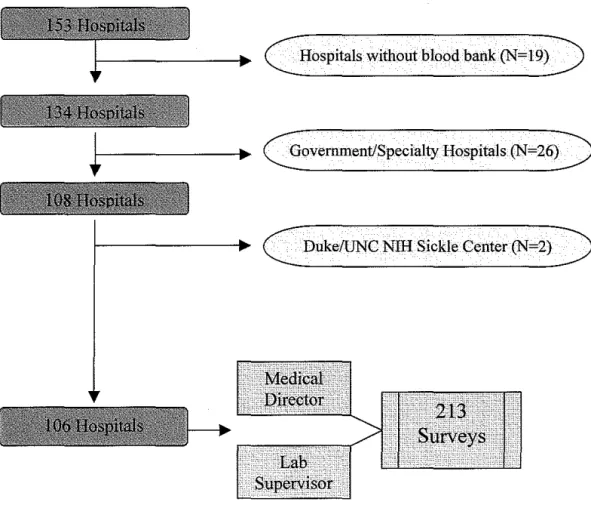
153 hospitals in NC. Hospitals that did not provide on-site blood banking,
apheresis services, or both within their facility were excluded (N=l9). This
included regional and local blood centers that provided contractual arrangements
with hospitals for these services. Based on these criteria, 132 of 157 hospitals
were initially selected for inclusion. We then excluded government-associated
hospitals such as Veteran's Administration and Armed Forces hospitals and
specialty hospitals providing care to only select, limited patient groups, i.e.
Women's Hospital of Greensboro (N=26). The former were excluded because we
hypothesized that standardization within these systems could potentially mask the
variation in practice we sought to describe, the latter, as they were as they were
unlikely to care for sickle cell disease patients. Finally, we also excluded the two
academic hospitals, University of North Carolina Hospitals and Duke University
Hospitals, which comprise a national Nlli Comprehensive Sickle Center. Rather,
these hospitals were included in a subsequent study of blood bank practices at
Nlli-funded Comprehensive Sickle Centers. Therefore, the final survey sample
was composed of 106 hospitals.
Next, we used the membership roster of the American Association of
Blood Banks (AABB), and information provided by the American Red Cross,
Carolinas Region to obtain contact information for each hospital blood bank, the
blood bank medical director, and laboratory supervisor. For each hospital, we
selected two possible respondents, the blood bank medical director and the
laboratory supervisor. The rationale for having two respondents per institution
was based on our a priori hypothesis that each of these informants could provide
unique and specific expertise relevant to different areas of the survey. We
believed the blood bank medical director would provide the most accurate
information on questions pertaining to clinical management and decision-making,
while the laboratory supervisor could provide the most accurate information on
questions relating to the day-to-day operations. Figure 2 illustrates the sampling
methodology.
The final mailing list contained the following identifying information:
hospital name, phone number, and address; medical directors and laboratory
supervisors' name, phone number, mailing address, and email address. Telephone
screening of each hospital was performed to confirm the currency and accuracy of
the contact information.
All medical directors and laboratory supervisors at hospitals meeting the
study criteria were mailed a self-administered, written survey accompanied by a
cover letter describing the purpose of the survey, assuring confidentiality, and
number allowing data to be linked to an individual subject and the institution.
The prefix ''ND" was used to indicate the North Carolina medical director; "NS" was used to indicate the North Carolina laboratory supervisor.
Survey Design and Content
The 30 minute, 35 item survey questionnaire was designed to assess six
general content areas: 1) background demographic information of the hospital
and blood bank, 2) respondent demographic characteristics, 3) the sickle cell
population serviced by the hospitaVblood bank, 4) blood banking, transfusion, and
apheresis practices and available services, 5) clinical management of SCD
patients, and 6) availability and utilization of educational resources. To maximize
the quality of information obtained on this wide range of topics, we used several
response formats, including yes/no responses, single-item and multi-item
responses, 4 and 5 point Likert-scale items, and open-ended responses.
Additional information about the clinical management of SCD patients was
collected using clinical vignettes that only the medical directors were asked to
complete. The survey also collected information about individual respondent
characteristics such as education/training, familiarity with NIH SCD Management
guidelines, and opinions about consensus with transfusion guidelines.
Pre-testing
A draft survey instrument was pre-tested to address face validity, content,
clarity, individual item format, and overall questionnaire format. For pre-testing,
we selected a non-random sample often (10) large community based and
university hospital blood banks in Michigan and Virginia. These sites were
selected based on previous experience with the medical directors at these
institutions (principal investigator) in the former, and hypothesized regional
similarities in patient population and practice patterns in the latter. Each potential
participant was called by the principal investigator and asked to participate in the
pre-testing of the survey instrument. After obtaining verbal agreement to
participate, each participant was mailed a packet containing a cover letter
explaining the purpose of the survey and pre-testing, the draft survey instrument,
and an evaluation/feedback form (APPENDIX A). Responses were received from
5/10 participants (50% response rate). In summary, respondents indicated the
content, format, and length of the survey instrument was appropriate but several
questions were confusing.
Next, the principal investigator contacted six national experts on the
management of SCD patients (by telephone and email) to gather additional
feedback on the clinical vignette section. These vignettes were composed of four
case scenarios designed to assess different areas of clinical management of SCD
patients. Medical directors were asked to select the single best response based on
1) the information provided and, 2) how such a patient would be managed in their
own hospital. Feedback from these experts confirmed the appropriateness of the
content, format, and clarity of these four vignettes.
Based on all of the pre-testing information, a final survey instrument was
drafted. As a result of feedback, the entire lay out of the survey was revised,
responses categories were simplified. The final survey instrument and cover
letters accompanying each wave of data collection can be found in Appendix B.
Survey Administration
A summary of the procedures for administration of this survey is
described below. A survey packet containing a cover letter, survey, and return
postage-paid envelope was sent to the blood bank medical director and laboratory
supervisor at each of the 106 hospitals. One hospital had two laboratory
supervisors so a total of total of213 surveys were mailed initially. Two weeks
later, non-respondents were mailed a postcard reminder asking them to complete
the sent survey. One month later, non-respondents received a second mailing of
the survey packet. Two months after the first mailing, non-respondents received a
third and final mailing of the survey packet.
Coding and data entry were performed as the surveys were returned.
Detailed information on survey tracking, coding, and data entry can be found in
Appendix B-3. The principal investigator ensured that all appropriate policies and
procedures are followed. This study was approved by the Schools of Medicine
and Public Health Institutional Review Boards at the University of North Carolina
at Chapel Hill.
Measures
The following variables were selected from the NIH monograph, The
Management of Sickle Cell Disease, as measures of blood bank practices: 1) use
of leukocyte-reduced RBCs and 2) sickle trait negative RBCs, 3) performing
patient RBC phenotyping, 4) providing this information to the patient or family,
and 5) use of antigen matched RBCs. These measure were selected as concrete
and directly measurable. NIH guidelines were used as our source because it was
felt that they not only reflected the opinions of the authors ofthe earlier consensus
but also other health professionals involved in the care of SCD patients.
Specifically, NIH guidelines state the following:14
I. All blood should be screened for the absence of sickle cell trait.
2. Prestorage leukodepletion of red cells is standard practice to reduce febrile
reactions, platelet refractoriness, infections, and cytokine induced
complications.
3. The antigenic phenotype of the red cells (at least ABO, Rh, Kell Duffy,
K.idd, Lewis, Lutheran, P, and MNS) should be determined in all patients
older than 6 months of age.
4. A permanent record of the phenotyping should be maintained in the blood
bank to optimize matching, and a copy of the record should be given to the
patient or family.
5. Limited matching for E, C, and Kell [sic] antigens is usually performed,
unless patients have antibodies.
Next, we developed a model of the delivery of transfusion care to SCD
patients in which the blood bank was an independent factor (Figure 2). We
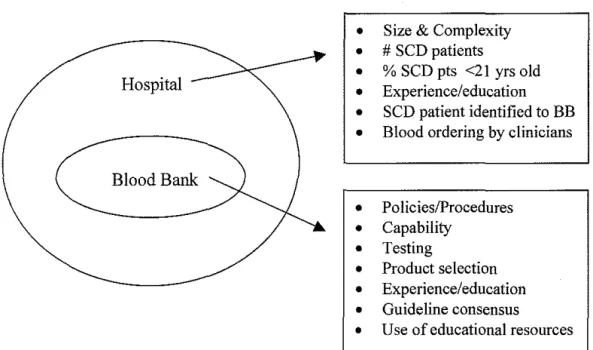
hypothesized both external (hospital level) and internal (blood bank level) factors
might affect the blood bank's ability to deliver transfusion care to SCD patients.
Figure 3A-B illustrates these possible factors. The survey instrument measured
The survey instrument measured the following external factors: hospital type
(academic, community, other), presence of a trauma center and number ofRBC
units transfused/year (surrogate markers of hospital size/complexity),
identification of a sickle cell patient to the blood bank prior to transfusion.
Internal blood bank factors measured were specific policies/procedures for SCD
patients; blood bank capabilities measured by offered services such as simple
transfusions, exchange transfusions and a chronic transfusion program, testing
(perform phenotyping of patient RBCs and communication of results to patient or
family), blood product selection (age ofRBC, special RBC products), clinical
management ofSCD patients in that institutions (clinical vignettes), opinions on
whether clear consensus exists on the management of SCD patients, and finally,
training and educational resources (availability, conference attendance, sources of
SCD information).
Analysis
Because the hospital was the unit of analysis, survey responses received from
either the blood bank medical director or the laboratory supervisor were
considered a positive response. If responses were received from both respondents
at a single institution, we preferentially selected the medical director's survey for
inclusion. This method allowed us to include clinical management of sickle cell
patient as an independent variable. We also excluded surveys with> 10%
missing data. In that case, the more complete of the two responses was selected for analysis.
The descriptive analyses are reported as percentages of the total number of
surveys used in the analysis for categorical variables; normally distributed
continuous variables are reported as means and ranges. For non-parametric
continuous variables, medians and ranges are reported for a more accurate
depiction of the data.
Finally, in order to provide a general assessment of use of NIH transfusion
guidelines by blood banks in NC, were-categorized the five measures selected
from the NIH monograph into dichotomous variables based on clinical
significance or positive (affirmative) and negative responses. Descriptive
analyses were performed using a standard statistical software program (STAT A,
RESULTS
Of the 106 hospital blood banks surveyed, 76 returned completed or nearly
complete surveys, 9 returned invalid or incomplete responses, and three surveys
(3) were returned undeliverable, for a final response rate of 80.4% (8511 06).
Excluding invalid/incomplete surveys, a total of76/106 surveys (70% of sample)
were included in the analysis. The individual response rate was 55.4% (115/213).
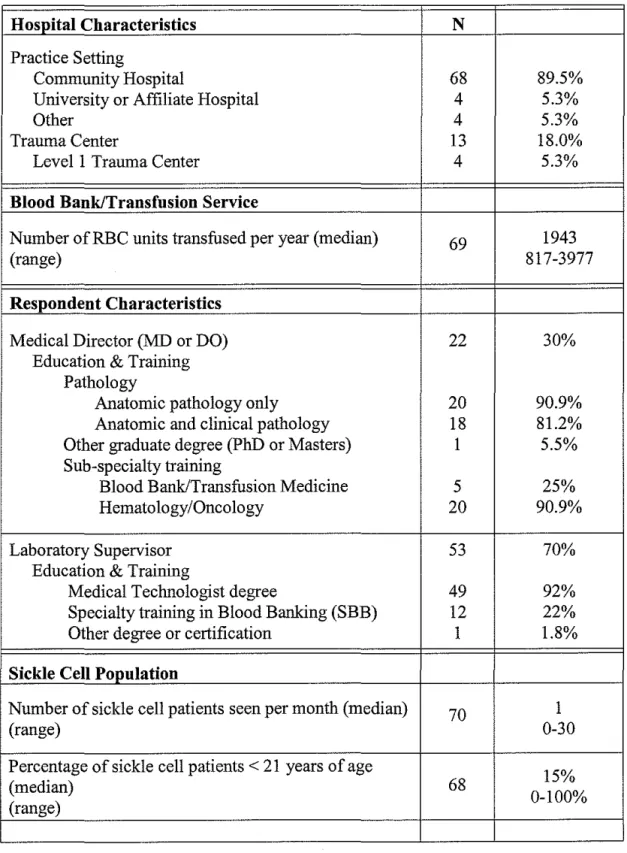
Characteristics of the hospitals, blood banks/transfusion medicine services,
respondents, and sickle cell population are reported in Table 1.
Nearly all of the hospitals in our sample were community-based (90%);
approximately 5% were university or university-affiliated hospitals. The majority
of hospitals (82%) did not have a trauma center. Ofthose that did, only 5% were
Levell trauma centers. Hospitals in our sample were representative of hospitals
inNC.
As described in the methods, we sampled two respondents per hospital,
the medical director and the laboratory supervisor. On average, laboratory
supervisors responded twice as frequently as the medical directors (70% vs. 30% ).
All medical directors had doctorates in medicine or osteopathy; a minority also
had an additional graduate degree (5%). The majority had medical training in
hematology/oncology or pathology (91 %). One fourth of these physicians also
had subspecialty training in blood banking/transfusion medicine. Nearly all of the
laboratory supervisors were medical technologists (85%) and about one quarter
had obtained sub-specialty certification in blood banking (SBB) (22%).
Hospital blood banks transfused a median of 1943 RBC units per year
(range= 30-26,000 units). North Carolina blood banks provided services for 0-30
SCD patients per month (median= 1 ). The percentage of sickle cell patients
younger than 21 years of age, ranged from 0 to 100% (median= 15%). Thus,
most blood banks transfused a small number ofRBC units per month, and
encountered few SCD patients per month. The majority of these were adults
patients
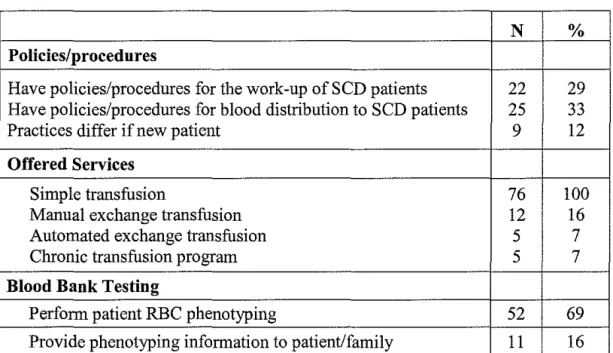
Blood bank practices such as specific policies/procedures, offered
services, and testing, are reported in Table 2. About one third of hospitals had
specific policies/procedures for the work-up of a sample from a SCD patient and
for the distribution of blood products to SCD patients. These practices did not
appear to depend upon whether a patient was new or already known to the blood
bank (88.3%). All blood banks offered simple transfusion ofRBCs. Few offered
manual RBC exchange transfusions (16%) and even fewer offered automated
RBC exchanges (6.6%) or chronic exchange transfusion programss (6.9%).
Although the majority ofNC blood banks performed patient RBC phenotyping
( 69% ), few patients or families received the results ofthis testing ( 16% ).
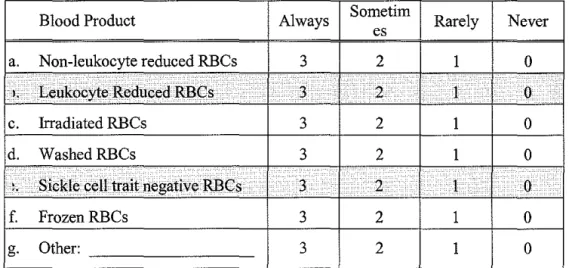
Table 3 shows the frequency and types ofRBCs routinely used for SCD
patients. The majority of our sample typically provided RBCs that were less than
or 14 days old to their SCD patients. About 16% provided RBCs less than 7 days
old. The vast majority of blood banks in our sample routinely provided leukocyte
reduced RBCs to SCD patients (91% always or sometimes). Few routinely
provided washed, irradiated, or frozen RBCs. Finally, nearly two-thirds ofNC
patients (62%). Of those that did about half provided these units before a patient
was transfused.
Respondents indicated that several external factors affected their practices
for SCD patients. These included the frequency in which SCD patients were
identified to the blood bank prior to transfusion, availability of compatible units,
and cost. Identification of SCD patients to the blood bank prior to transfusion
was fairly poor. In our sample, 52% indicated patients were always or often
identified, 21% sometimes identified, and 27% rarely or never identified. When
asked how difficult it was to obtain compatible RBC units for SCD patients, 9%
indicated that it was very difficult, 57% indicated it was somewhat difficult, and
34% indicated it was not difficult at all. Finally, only 16% of the respondents
indicated that cost affected their practices. When asked if cost were not an issue
would their practices change, the overwhehning majority said no (83%).
Internal factors, measured in the survey were clinical management of
sickle cell patients, consensus with transfusion guidelines, training, and
availability/utilization of educational resources. There was significant item
non-response for these questions. As previously described, only medical directors
were asked to complete the section on clinical management of SCD patients
within their institutions. Only 50% of medical directors completed this section.
Therefore, these results were omitted from this paper. Approximately 75% of
hospitals provided information on consensus, training, and education. Although
results are not available for 25% of hospitals, we examined these items to identify
possible trends and opportunities for future interventions. These results are
described below.
We originally postulated that blood bank practices could be influenced by
the perception that clear consensus existed for different aspects of managing SCD
patients. Approximately 50% of respondents indicated that there was clear
consensus with the selection of blood products for SCD patients, indications for
transfusion therapy, and the use of phenotypically matched (antigen matched)
RBCs. However, the majority (70%) did not feel there was clear consensus on the
use of a chronic transfusion program. The actual percentages of respondents who
agreed and disagreed as well as their level of agreement/disagreement for each of
these items can be found in Table 4.
Similar results were found for items related to education and available
resources (Table 5). Half of the respondents felt their training had prepared them
to manage the needs of SCD patients and that blood bank/transfusion information
for SCD patients was readily available. The majority of respondents (65%) were
not familiar with the NIH monograph, Management of Sickle Cell Disease. This
finding is not surprising given the fact that no study respondents cited the NIH as
a source of information about the management of SCD patients.
The most frequently listed resources for blood bank/transfusion
information on SCD patient management by respondents in this sample are
described in Table 6. Pathology professional societies were the most utilized
source (39%) of information for blood bankers; the American Association of
Blood Banks represented the bulk of this category. Consultation with
source (21% ). The remainder of sources (in decreasing order of frequency) included the American Red Cross (17%), the Internet (11 %), conferences (6%)
and other (5%). No respondents cited the NIH as source of information about
SCD.
Finally, a few respondents provide feedback about their concerns in
managing SCD patients via responses to open-ended questions. A sample of
these written comments follows:
• "if we knew what the consensus was on what to do" and "we see so few
patients"
• "if we know specific needs of our sickle cell patients we'd want to do all that
we can to help"
• "currently we have very few sickle cell patients with time and info, we would
I
'
perform prophylactic antigen typing"
• "We have a very low number of sickle cell patients. Most are referred out."
• "We have no protocol, are not consulted. For the most part, SS patients are
transferred."
• "Patient management [is] under control of hematologist, not BB Medical
Director"
• "Would love to be informed of continuing education re: SCD."
• "These patients would most likely be transferred to a larger facility."
• "Our hospital is very small; we would always try to get these patients to a
larger facility."
• "Need guidelines for transfusion selection/crisis management/diagnosis.
Standards change per region."
• Provide special units "if ordered by MD." "Provide leukocyte reduced units if
certain physicians order them."
• "May look at current practice of local area and see if we need to update our
policy."
• "Antigen negative blood from ARC [American Red Cross} is too expensive to
phenotypically match every sickle cell patient. Would phenotypically match
sickle cell patients if antigen blood from ARC wasn't so expensive."
• "Computer system doesn't display patient diagnosis; we don't know we are
transfusing a SCD patient."
• "Heme/one docs manage our rare HbSS patients."
• "Test patient for Fya, Fyb, Jka, Jkb, S, s but do not provide units negative due
to cost/availability."
• "Adult and peds [patients] are treated differently"
• "Blood Bank doesn't know if patient has SCD; patients managed by their
MD's."
• "Never had a SC patient. Only have 1 family of African Americans in our
community."
• "I would like to know what the best practices are for management of sickle
cell patients."
DISCUSSION
This descriptive study provides the first comprehensive glimpse of how
blood banks are currently managing transfusion therapy for SCD patients.
Findings from this study support the notion that the hospital blood bank is a
source of variation in the delivery of transfusion care to this patient population.
In addition, they further strengthen our contention that opportunities exist to improve this care by interventions designed to address factors that affect the blood
bank's ability to deliver transfusion therapy. This study also suggests that Nlli
transfusion guidelines are not a source of information for blood bank personnel.
These results provide important and useful information to consider in the design
of future interventions to improve the delivery of transfusion therapy to SCD
patients
Our study confirms previous findings that variation exists in the use of
specific blood products for SCD patients. Blood banks appear to uniformly
provide leukocyte reduced RBCs (92%) to these patients but not antigen matched
blood. In our sample, approximately 30% of blood banks provided antigen
matched at any time to SCD patients. This finding is consistent with the results of
a 2004 College of American Pathologists' survey of 1172 accredited laboratories
in the US67 but contrasts with another that showed 73% of academic medical centers in the US and Canada provide antigen matched blood to SCD patients
prior to transfusion. 66• 67 Availability of these units has been cited as a limiting
factor to this practice.49 Nearly two-thirds of our sample indicated that getting compatible, antigen matched blood was very or somewhat difficult. Given the
Page 27 of47
j L
t-
fact that nationally, over the past 30 years the percentage of African American
donors has remained at less than I 0%50' 68'70the use of antigen matched blood for
SCD patients may still not be feasible for most blood banks. Costs associated
with routinely providing antigen- matched blood to SCD patients have also been
cited as a barrier to widespread implementation of this practice. 39 It is estimated that antigen matched units are on average 1.5 to 2 times the cost of a usual RBC
unit.47 In this study, cost did not appear to be a barrier as only 16% of our sample described cost as influencing their practices.
Although there is no published data that we are aware of to compare with
our finding that 52% of blood banks in NC always or sometimes provide sickle
cell trait negative blood, anecdotally we know that it is standard practice among
many blood banks to only screen RBC units for sickle cell trait when providing
these units for manual or automated exchange transfusions (7% in our sample). In
this case, pre and post transfusion monitoring ofHbS is important to determine if
the goals oftherapy were met. With the current composition of donors, roughly 9
out oflO RBC units will be negative for sickle cell trait. In light of this fact, the utility of screening every blood unit of for sickle cell trait becomes questionable.
Therefore, our results may represent a significant underestimation of the
frequency in which SCD patients actually receive sickle trait negative blood.
Our study also suggests that communication between patients, clinicians,
and blood bank personnel could be improved. Our finding that less than 1/3 of
blood banks who phenotype patient's RBC then provide these results to SCD
SCD patients are already at high risk for alloimmunization and potentially severe
transfusion reactions. Documentation of these results in patients' medical records
may not be inadequate protection for SCD patients who receive care at multiple
institutions. More frequent identification of SCD patients to the hospital blood
bank prior to transfusion may help ensure that the blood bank utilizes all available
resources for these patients.
As in other areas of medicine, little is known about the use of practice
guidelines. In our study blood bankers, did not consider the NIH to be a
definitive source of information about managing SCD patients. In addition, most felt that consensus did not exist on how to managing these patients. One possible
reason for this finding may be disagreement about the evidence for various
I
!practices. This has been true for the practice of prophylactically providing
antigen matched RBCs. Some authors have suggested the need for a randomized
control trial comparing outcomes in patients receiving prophylactic antigen
matched RBC vs. those who do not.38 Our findings support the need for this future study. Additional reasons for our findings may include 1) a lack of
involvement by blood bankers in the development and dissemination of
information pertaining to transfusion therapy, 2) lack of participation in
educational activities about SCD, and 3) lack of knowledge about the practices of
their peers. Further work is need to elucidate whether increased awareness of the
NIH guidelines will result in increased us by blood bankers. exists for
management of SCD patients. for the latter may include Practice guidelines are.
Limitations
Our study has several limitations. First, these results are only descriptive
and should therefore be considered preliminary. Further planned analyses will
include testing for non-response bias, assessment of correlation between
variables, and multivariate analysis. The small sample size relative to the number
of variables will likely preclude the use of modeling data for a specific outcome.
The results of these analyses will provide a more complete view of our study
findings. Furthermore, the study design, a cross-sectional survey, provides only
limited information about this complex issue. An inherent limitation of this
design is that causality cannot be assessed.
As previously mentioned, NC is a unique state for the treatment and
management of SCD patients. Therefore our results may not generalizable to
other states. The effect of having a longstanding statewide program and an Nill
Comprehensive Sickle Cell Center on blood bank practices was not assessed in
this study. However, we know from discussions with the state program manager
that education to health professional in this state has not included blood bank
personnel. The large SCD population in NC may also have affected the quality
of our data. Our sample was possibly already attuned to the needs of SCD
patients so interest in participating in this study was much higher than could
otherwise be expected.
Next, our selection ofNC hospitals may have also affected the quality of
our data. Hospitals that currently provide transfusion care to sickle cell patients
We intentionally excluded the two large academic centers that comprise NIH
Comprehensive Sickle Cell Center to minimize bias in our data. As a
consequence, blood bank practices for nearly 1400 SCD patients who receive care
through this combined center are not represented in our study. In addition, we do not know the extent to which practices these two institutions reflect those in the
rest of the state.
Finally, the quality of our data may also have been affected by our
sampling strategy of two possible respondents per hospital. Based on our a priori
hypothesis that the medical director was the better of the two informants, we
preferentially used data from this respondent. In actuality, medical directors were more often non-respondents and more likely return incomplete survey, which in
tum, hindered our ability to obtain information about clinical management of
SCD patients in each institution. Therefore, data from these respondents may not
accurately reflect those of the laboratory supervisor. However, several of the
surveys sent to the medical director were completed and returned by the
laboratory supervisor; comments on a few of these surveys were "it was felt that
only one response was necessary." Accurate comparison of the responses by
blood bank medical directors vs. laboratory supervisors may not be possible. Our
response rate and rate of item non-response, may have due to the length and
comprehensiveness of the survey instrument of survey. This most likely required
respondents to actively seek out information they may not have already known or
had readily available.
Despite these limitations, our study provides the useful information about
the delivery of transfusion therapy to SCD patients in NC. Variation in blood
bank practices may be factor in the quality of transfusion care SCD patients
receive. Further studies are needed to confirm whether our findings are
representative of state, regional, and national practices. Additional studies
should also attempt elucidate the possible impact of this variation on patient
outcomes. Finally, improved collaboration and communication among all health
professionals caring for this patient population may be one unrealized, yet
Figure 1. Mechanism of Alloimmnnization
A B
c
<:
Antigens.y
Antibody((
•
•
<1J(
(
~
Native Post-transfusion Alloimmunization
Figure 1. Schematic diagram of alloimmunization in SCD patients. (A) Native
sickle cells tend to lack red cell antigens. (B) After transfusion, two populations of red cells exist. The normal (donor) red cells have surface antigens. (C) The body then recognizes the antigens on these cells as foreign and develops antibodies against them.
Figure 2. Patient Interactions with Health Care System
Clinician Blood Bank
Figure 3. Factors Affecting Transfusion Delivery to SCD Patients
3A. Hospital and Blood Bank Level Factors
•
•
•
Hospital
•
•
•
Blood Bank•
•
•
•
•
•
•
3B. External and Internal Factors
Blood Bank Practices
I
External FactorsI
I
Hospital size & complexity Number of SCD patients
Types of patients Patient identification Product Availability
Cost
Size & Complexity
# SCD patients
% SCD pts <21 yrs old Experience/education SCD patient identified to BB Blood ordering by clinicians
Policies/Procedures Capability Testing Product selection Experience/education Guideline consensus
Use of educational resources
Figure 4. Sampling Methodology
C
Hospitals without blood bank (N=l9)~
~f---•...
CGovernment!Specialty Hospitals.(N=26)~
C
Duke/UNC NIH Sickle Center (N=2)~
Page 35 of47
L
F
Figure 5. Guidelines with Corresponding Survey Items
• NIH Guideline: All blood should be screened for the absence of sickle cell trait.
• NIH Guideline: Presto rage leukodepletion of red cells is standard
practice to reduce febrile reactions, platelet refractoriness, infections, and cytokine-induced complications.
Corresponding Survey Items:
The following is a list ofRBC products that a Blood Bank might provide for a sickle cell patient. Please indicate how often each of the following products is provided for a sickle cell patient in your hospital.
Blood Product Always Sornetirn Rarely Never es
a. Non-leukocyte reduced RBCs 3 2 1 0 I, Leukocyte Reduced RBCs . . 3 .• 2 I ·. 0
c. Irradiated RBCs 3 2 1 0
d. WashedRBCs 3 2 1 0
..
Sickle cell trait negative RBCs 3 . 2 1 0f. FrozenRBCs 3 2 1 0
g. Other: 3 2 1 0
• NIH Guideline: The antigenic phenotype of the red cells (at least ABO, Rh, Kell, Duffy, Kidd, Lewis, Lutheran, P, and MNS) should be
determined in all patients older than 6 months of age.
Corresponding Survey Item
Do you perform patient RBC phenotyping ... ? (Choose one) 1. Before transfusion of blood products
NIH Guideline: A permanent record of the phenotyping should be
maintained in the blood bank to optimize matching, and a copy ofthe record should be given to the patient of family.
Corresponding Survey Item
Do you provide this phenotyping information to the patient?
0. No
1. Yes 7 please describe how
• NIH Guideline: Limited matching forE, C, and Kell [sic] antigens is usually performed, unless patients have antibodies.
Corresponding Survey Items
C-8. Does your Blood Bank routinely provide phenotypically matched RBCs for sickle cell patients? (Choose one)
1. Yes, perform pre-transfusion prophylactic antigen matching. 2. Yes, perform prophylactic antigen matching after patient makes an
antibody.
3. No, do not perform prophylactic antigen matching. (i.e. only honor antibodies patient has already made) --> Skip to question C-1 0
C-9. Please circle the specific antigens that your blood bank prophylactically matches for.
Blood Groups
Specific Antigens
Rh D
c
c E eKell K k
Duffy Fya Fyb
Kidd Jka Jkb
MNS M N
s
su
Others: Please
list
Table 3. Sample Characteristics (N=76)
Hospital Characteristics N
Practice Setting
Community Hospital 68 89.5%
University or Affiliate Hospital 4 5.3%
Other 4 5.3%
Trauma Center 13 18.0%
Level 1 Trauma Center 4 5.3%
Blood Bank/Transfusion Service
Number ofRBC units transfused per year (median) 69 1943
(range) 817-3977
Respondent Characteristics
Medical Director (MD or DO) 22 30%
Education & Training Pathology
Anatomic pathology only 20 90.9%
Anatomic and clinical pathology 18 81.2%
Other graduate degree (PhD or Masters) 1 5.5%
Sub-specialty training
Blood Bank/Transfusion Medicine 5 25%
Hematology/Oncology 20 90.9%
Laboratory Supervisor 53 70%
Education & Training
Medical Technologist degree 49 92%
Specialty training in Blood Banking (SBB) 12 22%
Other degree or certification 1 1.8%
Sickle Cell Population
Number of sickle cell patients seen per month (median) 70 1
(range) 0-30
Percentage of sickle cell patients < 21 years of age
15%
(median) 68
Table 4. Blood Bank Practices (N=76)
N %
Policies/procedures
Have policies/procedures for the work-up ofSCD patients 22 29
Have policies/procedures for blood distribution to SCD patients 25 33
Practices differ if new patient 9 12
Offered Services
Simple transfusion 76 100
Manual exchange transfusion 12 16
Automated exchange transfusion 5 7
Chronic transfusion program 5 7
Blood Bank Testing
Perform patient RBC phenotyping 52 69
Provide phenotyping information to patient/family 11 16
Table 5. Types and Frequency ofRBCs Used (N=76)
Always Sometimes Rarely Never RBCProduct
Non-leukocyte reduced RBCs 3.2% 6.5% 3.2% 87.1%
Leukocyte Reduced RBCs 86.1% 5.6% 4.2% 4.2%
Irradiated RBCs 0% 16.4% 31.2% 52.5%
WashedRBCs 0% 4.9% 44.3% 50.8%
Sickle cell trait negative RBCs 41.5% 10.8% 9.2% 38.5%
FrozenRBCs 0% 13.3% 30.0% 56.7%
Table 7. Use of Transfusion Guidelines (in decreasing order offreqnency)
Guideline N %
Leukocyte reduced RBCs (always/sometimes) 71
92
Perform patient RBC phenotyping 74
69
Sickle cell trait negative RBCs (always/sometimes)
39
52
Provide antigen matched RBCs for C, E, and Kell
23
30Provide phenotyping results to patient
69
16
Table 8. Agreement with Consensus (N=55)
Strongly
Agree Disagree Strongly
Agree Disagree
There is clear consensus ou ...
. . . the selection of blood products for
9.3% 35.2% 48.2% 7.4%
sickle cell patients .
. . .indications for transfusion therapy
5.5% 41.8% 50.9% 1.8%
for sickle cell patients . . . . phenotypic matching of blood
12.7% 34.5% 47.3% 5.5%
products for sickle cell patients . . . . the use of chronic transfusion (i.e.
hypertransfusion) programs for 2% 28% 66% 4%
Table 8. Agreement with Education and Training (N=55)
Strongly
Agree Disagree Strongly
Agree Disagree
Education/Training
My training prepared me to manage 10.9% 38.2% 47.3% 3.6%
the needs of SCD pts.
Blood bank/transfusion information 8.9% 42.9% 42.9% 5.4%
for SCD pts. is readily available.
I am familiar with the NIH
publication, Management of Sickle 5.5% 29.1% 54.6% 10.9%
Cell Disease.
Table 9. Sources of Information about SCD (in decreasing order of frequency)
N %
Source (N=53)
American Association of Blood Banks 18 34
Peer-Reviewed Literature 18 34
Consultation (hematologists/other hospitals) 11 21
American Red Cross 9 17
Internet 7 11
Conferences 4 6
College of American Pathologists 3 5
Other 3 5
REFERENCES
1. Thorpe L, Glasser R. Management of Sickle Cell Disease in Florida-What is needed? Florida Health Care Journal. 2001 ;2(1 ):22-24.
2. National Heart Lung and Blood Institute. Sickle Cell Research for Treatment and Cure; NIH Publication No. 02-5214. Bethesda, MD: National Institutes of Health; 2002.
3. Agency for Healthcare Research and Quality. National Healthcare
Disparities Report. Rockville, MD: U.S. Department of Health and Human Services; 2003.
4. Institutes of Medicine. Unequal Treatment: Confronting Racial and Ethnic Disparities in Healthcare: National Academies Press; 2003.
5. National Heart Lung and Blood Institute. About NHLBI.
6. HCUPnet HCaUP. Agency for Healthcare Research and Quality.
Accessed August 14, 2003, 2000.
7. Davis H, MooreR, Geregen P. Cost of hospitalizations associated with sickle cell disease in the United States. Public Health Reports.
1997;112:40-43.
8. Nietert PJ, Silverstein MD, Abboud MR. Sickle Cell Anaemia:
epidemiology and cost of illness. Pharmacoeconomics. 2002;20(6):357-366.
9. Woods K, Karrison T, Koshy M, Patel A, Friedmann P, Cassel C. Hospital utilization patterns and costs for adult sickle cell patients in Illinois. Public
Health Reports. Jan-Feb 1997 1997;112(1):44-51.
10. Mayer M, Konrad T, Dvorak C. Hopital resource utilization among patients with sickle cell disease. Journal of Health care for the poor
underserved. February 2003;14(1):122-135.
11. Nietert P, Abboud M, Zoller J, Silverstein M. Costs, charges, and reimbursements for persons iwth sickle cell disease. J Pediatr Hematol
Oneal. Sep-Oct 1999;21(5):389-396.
12. Quinn CT, Rogers ZR, Buchanan GR. Survival of Children With Sickle Cell Disease. Blood. 2004; 1 03(11 ):4023-4027.
13. Diggs L. Sickle Cell Disease-Diagnosis, Management, Education, and
14. National Heart Lung and Blood Institute. The management of sickle cell disease; NIH Publication No. 02-2117. 4 ed. Bethesda, MD: National Institutes of Health; 2002.
15. Statistics NCfH. Vital statistics of the United States, 1985. Vol Vol. II. Mortality. Washington, D.C.: Government Printing Office; 1988.
16. Platt OS, Brambilla DJ, Rosse WF, et al. Mortality in sickle cell disease. Life expectancy and risk factors for early death.[comment]. New England
Journal of Medicine. 1994;330(23):1639-1644.
17. Koshy M, Weiner S, Miller ST, et al. Surgery and anesthesia in sickel cell disease. Cooperative study of Sickle Cell Diseases. Blood. November 15 1995;86(1 0):3676-3684.
18.
19.
Vichinsky EP, Haberkem CM, Neumayr L, et al. A comparison of conservative and aggressive transfusion regimens in the perioperative management of sickle cell disease. The Preoperative Transfusion in Sickle Cell Disease Study Group.[ comment]. New England Journal of Medicine. 1995;333( 4):206-213.
Reed W, Vichinsky EP. Transfusion therapy: a coming-of-age treatment for patients with sickle cell disease. Journal of Pediatric
Hematology/Oncology. 2001;23(4):197-202.
20. Thame J, Hambleton I, Seijeant G. RBC transfusion in sickle cell anemia (HbSS): experience of the Jamaican Cohort Study. Transfusion.
21.
2001 ;41(5):596-601.
Sarnaik S, Schomack J, Lusher J. The incidence of development of irregular red cell antibodies in patients with sickle cell anemia.
Transfusion. 1986;26:249-252.
22. Vichinsky EP, Earles A, Johnson RA, Hoag MS, Williams A, Lubin B. Alloimmunization in sickle cell anemia and transfusion of racially
unmatched blood. New England Journal of Medicine. 1990;322(23):16!7-1621.
23. Friedman D, Lukas M, Jawad A, Larson P, Ohene-Frempong K, Manno C.
Alloimmunization to platelets in heavily transfused patients with sickle cell disease. Blood. 1996;88:3216-3222.
24. Adams RJ, McKie VC, Hsu L, et al. Prevention of First stroke by
Transfusion in Children with Sickle Cell Anemia and Abnormal results on Transcranial Doppler Ultrasonography. New England Journal of
Medicine. 1998;339(1):5-11.
25. Russell M, Goldberg HI, Hodson A, eta!. Effect of transfusion therapy on areteriographic abnormalities and on recurrence of stroke in sicke cell disease. Blood. Blood. January 1984;63(1):162-169.
26. Wang WC, Kovnar E, Tonkin I, eta!. High risk of recurrent stroke after discontinuance of five to twelve years of transfusion therapy in patients with sickle cell disease. Pediatrics. March 1991;118(3):377-382.
27. Styles L, Vichinsky E. Efficacy of a long-term transfusion regimen on sickle cell-related illnesses. J Pediatr. 1994;125:909-911.
28. Edmond A, Collis R, Darvill D, Higgs D, Maude G, Serjeant G. Acute splenic sequestration in homozygous sickle cell disease: natural history and management. J Pediatr. 1985;107(201-206).
29. Emre U, MillerS, Gutierez M, Steiner P, Rao S, Rao M. Effect of transfusion in acute chest syndrome. J Pediatr. 1995;127:901-904.
30. Hassell KL, Eckman JR, Lane P A. Acute Multi organ Failure Syndrome-A Potentially Catastrophic Complication of Sever Sickle-Cell Pain Episodes.
American Jounal of Medicine. 1994;96(2):155-162.
31. Vichinsky EP, Styles LA, Colangelo LH, Wright EC, Castro 0, Nickerson B. Acute chest syndrome in sickle cell disease: clinical presentation and course. Cooperative Study of Sickle Cell Disease. Blood.
1997;89(5):1787-1792.
32. Rosse W, Telen M, Ware R. Transfusion Support for Patients with Sickle
Cell Disease. Bethesda, MD: AABB Press; 1998.
33. Ohene-Frempong K. Indications for red cell transfusion in sickle cell disease. Seminars in Hematology. 2001;38(1 Suppl1):5-13.
34. Grover R, Wethers D. Management of acute splenic sequestration crisis in sickle cell disease. Journal Assoc. A cad Minor Phys. 1990; 1 (3):67 -70.
35. Rao S, Gooden S. Splenic sequestration in sickle cell disease: role of transfusion therapy. American Journal of Pediatric Hematology and
Oncology. 1985 1985;7(3):298-301.
36. Telen MJ. Principles and problems of transfusion in sickle cell disease.
Seminars in Hematology. 2001;38(4):315-323.
38. Vichinsky EP, Luban NL, Wright E, eta!. Prospective RBC phenotype matching in a stroke-prevention trial in sickle cell anemia: a multicenter transfusion trial. Transfusion. 2001 ;41(9): 1086-1092.
39. Tahhan HR, Holbrook CT, Braddy LR, Brewer LD, Christie JD. Antigen-matched donor blood in the transfusion management of patients with sickle cell disease. Transfusion. 1994;34(7):562-569.
40. Rosse W, Gallagher D, Dosik H, et al. Transfusion and alloirnrnunization in sickle cell disease. Blood. 1990;76:1431-1437.
41.
42.
43.
44.
45.
Arnbruso DR, Githens JH, Alcorn R, et a!. Experience with donors
matched for minor blood group antigens in patients with sickle cell anemia who are receiving chronic transfusion therapy. Transfusion.
1987;27(1 ):94-98.
Coles S, a!. e. Alloirnrnunization in two Multitransfused Patient Populations. Transfusion. 1981;21(4):462-466.
Luban NL. Variability in rates of alloirnrnunization in diffent groups of children with Sickle Cell Disease: effect of ethnic background. American Journal of Pediatric Hematology and Oncology. Fall1989;11(3):314-319.
Michail-Merianou V, ale. Alloirnrnunization to Red Cell Antigens in Thalassemia: Comparitive Study of Usual versus Better-Match Transfusion Programmes. Vox Sanguinis. 1987;52:95-98.
Wayne A, Schoenike S, Pegelow C. Financial analysis of chronic transfusion for stroke prevention in sickle cell disease. Blood. October 1
2000;96(7):2369-2372.
46. Mallory D, Malamut D, Sandler S. A Decade of Rare Donor Services in the United States. Vox Sang. 1992;63:186-191.
47. Orlina A, Sosler S, Koshy M. Problems of chronic transfusion in sickle cell disease. Journal of Clinical Apheresis. 1991;6:234-240.
48. Sosler S, Jilly B, Saporito C, Koshy M. A simple, practical model for reducing alloirnrnunization in sickle cell disease. American Journal of Hematology. June 1993;43(2):103-106.
49. Castro 0, Sandler S, Houston-Yu P, Rana S. Predicting the effect of transfusing only phenotype-matched RBCs to patients with sickle cell disease: theoretical and practical implications. Transfusion. June
2002;42(6):684-690.
50. Wu Y, Glynn S, Schreiber G, a!. e. First-time blood donors: demographic trends. Transfusion. March 2001;41(3):360-364.
Page 45 of 47
51. Cross AR. Minority Donors 2001.
52. Ownby HE, Kong F, Watanabe K, Tu Y, Nass CC. Analysis of donor
return behavior. Retrovirus Epidemiology Donor Study. Transfusion. Oct 1999;39(1 0): 1128-1135.
53. Diamond W, Brown FJ, Bitterman P ea. Delayed hemolytic transfusion reaction presenting as sickle-cell crisis. Ann Intern Med. 1980;93 :231-234.
54. King K, Shirey R, Lankiewicz M, et a!. Delayed hemolytic trasnfusion reacitons in sickle cell disease: simultaneous destruction of recipients' red cells. Transfusion. 1997;37:376-381.
55.
56.
57.
Win N, Doughty H, Telfer P, Wild BJ, Pearson TC. Hyperhemolytic transfusion reaction in sickle cell disease. Transfusion. 2001;41(3):323-328.
Petz L, Calhoun L, Shulman I, et a!. The sickle cell hemolytic transfusion reaction syndrome. Transfusion. 1997;37:382-392.
Steinberg MH, Barton F, Castro 0, eta!. Effect of hydroxyurea on mortality and morbidity in adult sickle cell anemia: risks and benefits up to 9 years of treatment. Jama. Apr 2 2003;289(13):1645-1651.
58. Nietert PJ, Abboud MR, Silverstein MD, Jackson SM. Bone marrow
transplantation versus periodic prophylactic blood transfusion in sickle cell patients at high risk of ischemic stroke: a decision analysis. Blood. 2000;95(1 0):3057 -3064.
59. Telen M, Harris G, Whitworth E. Caring for sickle cell disease in North Carolina. North Carolina Medical Journal. January-February
1999;60(1):14-17.
60. US Census Bureau: State and County QuickFacts.
http://guickfacts.census.gov/gfd/states/37000.html. Accessed December 15,2002.
61. North Carlina Sickle Cell Syndrome Program. 1997-1998 Annual Report. Vol!: Department of Health and Human Services; 1999:1-7.
62. Vichinsky E, Rust D, Lubin B. A possible disparity between standard of care and delivery of care in sickle cell disease, as assessed from sickle cell centers. Inti J Pediatr Hematol/Oncol. 1999;6:189-197.
63. Vichinsky E. Comprehensive care in sickle cell disease. Seminars in
Hematology. 1991;28:220-226.
E
64. Vichinsky E. Consensus document for transfusion-related iron overload.
Seminars in Hematology. 2001 2001;38((1 Supplement)):2-4.
65. Ness PM. To match or not to match: the question for chronically transfused patients with sickle cell anemia. Transfusion. Jul
1994;34(7):558-560.
66. Afenyi-Annan A, Brecher M. Pre-transfusion phenotype matching for sickle cell patients. Transfusion. 2004;44(4):619-620.
67. Osby M, Shulman I. J-C Transfusion Medicine (Comprehensive) and Educational Challenge: Final Critique. 2003.
68. Piliavin JA. Why do they give the gift oflife? A review of research on blood donors since 1977. Transfusion. Jun 1990;30(5):444-459.
69.
70.
Burnett JJ. Psychographic and demographic characteristics of blood donors. Journal of Consumer Research. l981;8(June):62-66.
Oswalt RM. A review of blood donor motivation and recruitment.
Transfusion. 1977;17(2):123-135.
Page 47 of 47