ZAMBIAN BREADWINNERS LEAVE FOR THE CITY: RURAL-URBAN MIGRATION AND THE ZAMBIAN FAMILY
By
Miriam Celnarová
Honors Essay Department of Sociology
University of North Carolina at Chapel Hill April 7, 2014
Dedicated to Ocik, who must be reading this from up there.
ABSTRACT
African societies have experienced rapid urbanization since the post-colonial era, causing an increase in mass migration across and within countries’ boundaries. Modern research on rural-urban migration in Sub-Saharan Africa generally focuses on economic impacts such as the distribution of remittances, or health aspects such as the spread of HIV/AIDS into the rural areas. However, the social effects of internal migration on family structure and processes are rarely researched. In Zambia, families represent an important carrier of social identity and belonging. The purpose of this study is to examine how the migration of rural breadwinners to urban areas affects Zambian families in terms of social structure and processes. I highlight the different strategies adopted by families to preserve relationships between urban migrants and their rural home communities. I also focus on how migration shapes the perceptions of good parenting by contrasting rural and urban child rearing narratives. The observations are based on a series of interviews and focus groups with urbanites and villagers in Zambia directly affected by internal migration.
Keywords: Internal migration, child rearing, African family, family bonds.
ACKNOWLEDGEMENTS
Two years ago, this honors thesis was only a vague vision stirred by my passion for studying African societies. It could have never come into completion without the mentorship and support of the following individuals and institutions throughout the two years.
Prof. Lydia Boyd from the former department of African Studies at UNC Chapel Hill engaged me in her research as a transcription assistant, which taught me an invaluable lesson on research tools and motivated me to try and develop my own project. From the same department, Prof. Georges Nzongola-Ntalaya has guided me through the IRB process, and inspired me with his professional experience and personal insight throughout my research.
I owe much recognition to the UNC Center for Global Initiatives that has made it financially possible for me to travel to Zambia in the summer of 2012 through its generous International Internship Award.
The write-up of this study was supported by the Tom and Elizabeth Long Excellence Fund for Honors, administered by Honors Carolina. I am grateful to Prof. Lisa Pearce, who has had a profound impact on my love for sociology ever since I took her methods class at UNC. She agreed to become my advisor, and her cheerful encouragement and honest comments along the way were essential. Prof. Karolyn Tyson has been a great source of advice and discipline to our honors thesis class, and I am grateful for her trust and pride in each of us. I would also like to thank Prof. Jacqueline Hagan for taking up the task of being my second reader, and to Ginny Larkin-Thorsen, Amanda Baldiga and Zach Stamper who have patiently reviewed my many drafts and offered a great deal of encouragement.
TABLE OF CONTENTS
INTRODUCTION ... 1
LITERATURE REVIEW ... 3
Urbanization and rural-urban migration in Africa ... 3
Rural-urban migration in colonial Zambia ... 4
Family in the context of migration ... 5
Migration and maintaining family bonds ... 10
Rural and urban child rearing ... 12
METHOD ... 14
RESULTS ... 20
1) Maintaining family bonds between migrants and sending communities ... 20
Direct financial support and other material help ... 20
Between villages and cities: Visits and permanent return ... 24
“Cushioning” new migrant relatives: Providing shelter and facilitating job search ... 29
Technology keeping families in touch ... 30
The “black sheep” of migration: moving to escape the family. ... 31
2) Raising the next generation: Perspectives on rural versus urban child rearing ... 34
“The good rural child” ... 34
“The good urban child” ... 35
“The problematic rural child” ... 39
“The problematic urban child” ... 40
“The parents’ child” ... 42
DISCUSSION ... 43
Future improvements ... 47
Future Implications ... 48
APPENDIX ... 50
INTRODUCTION
Rural-urban migration in Africa is a phenomenon that has been occurring for hundreds of years. The 14th-century Moroccan traveler and academic Ibn Batuta noticed migratory movements around large cities in the region of West Africa, the Sahel and the Horn of Africa during his exploratory voyages (Falola and Salm 2004). Western scholars started studying the incentives for and consequences of migration particularly during the era of European and American industrialization beginning in the late 18th century. At that time, migration brought rural populations into urban manufacturing zones and often led to social problems related to poverty, crime or prostitution (Hirschman and Mogford, 2009). Western academics only cast their attention on African migratory movements later during colonization, as changes to traditional economic and social structures introduced by the colonialists resulted in mass internal movements within the territories. This interest in Third World migration has eventually led to the creation of various migration models such as Mabogunje (1970) and Todaro’s (1994), which help us understand the underlying causes of rural-urban migration particularly in developing countries.
activities is regularly measured against these data. However, in terms of sociological perspectives on internal migration in Africa, much of the existing research remains outdated and lacking focus on particular geographic regions, especially Central Africa. Zambia, located in what some would consider Southern and others Central Africa, is among those countries where current data are scarce on social change resulting from internal movements. Zambia has undergone severe economic transformation over the past 30 years, partly due to the introduction of the structural adjustment programs, investment from abroad, and the fall in the prices of copper, Zambia’s principal export commodity. These changes have had a profound impact on internal migration flows as people from mining regions moved back to villages, and villagers often moved to towns as new employment opportunities arose in cities.
These various migratory movements have led to changes in family structures. In all parts of sub-Saharan Africa, the family remains an important carrier of social identity and belonging, including in times of separation and movement due to internal migration. What are the impacts of rural-urban migration on Zambian migrants and their families, and how do they adapt? Answering this question can help us understand some of the non-material, symbolic consequences of urbanization that translate into tangible family lifestyles and perceptions.
childhood. To study these two aspects of family adaptation within the context of rural-urban migration, I draw on data from interviews that I conducted with family members in rural and urban locations in Zambia.
LITERATURE REVIEW
Urbanization and rural-urban migration in Africa
Urbanization, “the process whereby ever-larger numbers of people migrate to and establish residence in relatively dense areas of population”1, has been an agent of social change for centuries. Closely associated with urbanization is rural-urban migration, representing the movement of individuals from rural areas to cities, occurring across history with varying degrees of intensity. The United Nations estimates that over half of the global population currently resides in urban areas, with 47% of inhabitants in less developed nations living in cities (World Urbanization Prospects- The 2011 Revision). Potts (2012) suggests that African countries are experiencing the highest rates of urbanization, especially due to the considerable size of their rural populations moving to the cities, and owing to high urban fertility. The African Development Bank estimates the current urban growth in Africa at 3.5%, with 36% of Africans living in cities. This proportion is projected to rise to 60% by 20502. Southern African countries, including Zambia, with already large proportions of urban population have shown slower overall rates of growth (Simone in Falola 2004).
Especially in the twentieth century, African cities have grown at unprecedented rates primarily as a result of structural changes introduced during colonization. These changes were particularly disruptive to the rural lifestyle, often replacing traditional subsistence agriculture
1 Blackwell Encyclopedia of Sociology, “Urbanization”,
<http://www.sociologyencyclopedia.com/subscriber/uid=834/tocnode? >
<http://www.afdb.org/en/blogs/afdb-with commercial farming, and introducing the head and hut taxes that required villagers to enter the labor market. Elate (in Falola, 2004) lists some of the factors commonly attracting the rural population toward cities. Among them is the lack of employment in rural areas, low quality or absence of education and health care services in the villages, environmental degradation resulting from adverse climate or overuse of rural land, and the disintegration of the traditional socio-cultural structures in rural areas (ibid.). These fundamental changes have been reflected in the ways that migrant families function and structure themselves (Powdermaker 1962; Potts 1995; Fergusson 1999).
Rural-urban migration in colonial Zambia
areas for several years (together with their families) and only return to their place of origin for retirement. The third form is permanent migration, where the migrants would establish themselves in towns with no intention of returning to the village, becoming "proletarians" (Moore and Vaughan 1994:141). Rather than perceiving these forms as chronological (a view adopted by the colonial administration), Fergusson recommends seeing the types as "coexisting as a diverse set of strategic alternatives" (1990:411-412).
Family in the context of migration
The Western conception of family implies primarily a nuclear family, composed of two spouses and their offspring, although childless couples are commonly referred to as families nevertheless. Extended families include relatives other than the nuclear family members, such as grandparents, cousins and aunts. Murray (1981) warns that by using the nuclear family as a unit of analysis, common within Western research, we may overlook the changing family dynamic over time, especially in non-Western contexts. In many cultures, a nuclear family can expand into an extended family for periods of time before contracting back to the nuclear form, and vice versa. Murray studied the families of migrant workers in Lesotho, where the majority of households are female-headed, as men largely migrate to work in South Africa. He explored the flexibility of the Basotho family structure to accommodate for changes caused by labor migration, highlighting that the “nuclearity” of the family is rarely stable.
although polygamy is losing prevalence in African marriages, there is a chance that extra-marital affairs are replacing traditional polygamous marriages (ibid. 9). Some scholars suggest that this trend comes as a result of various socio-economic changes, including rural-urban migration (see below; Fergusson 1999; Cherlyn 2013).
There is a small yet growing body of literature studying the children left behind by migrants, mostly focusing on children whose parents migrate internationally (Bryant 2005; Lambert and Penn 2009). A study from Kumasi, Ghana based on a sample of 162 pupils revealed that children of migrant parents are more frequently absent from school and have more difficulty making decisions (Afriyie 2009). However, they do not achieve lower grades, show more emotional imbalances or possess lower cognitive skills as compared to their peers whose parents have not migrated. The author points out that the effects of parental migration on the children left behind are highly contextual and can be influenced by the support network the child is situated in, most often being cared for by a mother who has not migrated or by extended family members.
more “modern”, nuclear, monogamous family, where the working man would be the provider and the woman would be a supportive house-wife, creating a Westernized household gradually embracing Christian values. Wilson claimed that urbanization brought a transition within families “from a small-scale, primitive, to a large-scale, or civilized social structure” and that after moving to the city, families “broke their ties with rural kin”, causing “an inevitable decline in the importance of cooperation with close kinsfolk and neighbors” (Wilson 1968:39-40, 65). The prediction held that new urban families were becoming more "stable" and monogamous in the long run, although researchers admitted that in the short run migration was causing “immorality” in town, including divorce and prostitution, which were readily visible.
to the scholars’ assumption that urban lifestyle would cause a breakdown in the extended family cohabitation that would lead to the nuclearisation of the family. Fergusson offers an explanation to the phenomenon: "A wage-earning man living with his wife and children, especially under conditions of housing shortage, is a magnet for relatives and rural visitors" (1999:183). Lewis (1961), who studied urban cohabitation of extended family members in Mexico, argues that “the urban environment may have so many pressures that the extended family becomes stronger in response to such pressures” (cf. Kayongo-Male and Onyango 1984:35). It is likely that this trend applies to Zambian urbanites and their families as well.
The second trend in Zambian migrant families unlike the modernist ideal of marriage was that the urban conjugal couple was often defined on loose terms. The meaning of marriage itself was "contextual and debatable" (Fergusson 1999:178), often encompassing such forms of cohabitation as concubinage, prostitution or "piece-work marriage"- short-term relationships with women by men whose wives were temporarily absent (Wilson 1942:72). Adultery and sexual plurality among spouses were common and remained present during Fergusson's research in 1999.
family members, not out of obligation but because it is useful for survival in the urban context. The post-modernist family is an institution not bound by traditional or modernist rules, but one that functions based on more fluid terms and practices (ibid.). Nevertheless, the existence of extramarital relationships stands contrary to the observations made by Rebhun (2007), himself a post-modernist, who studied rural-urban migration in Northeast Brazil. According to his findings, as couples living in the cities have more anonymity and face less pressure from their relatives, they are allowed to develop a more intimate marital relationship. He also suggests that as both partners earn wages, their relationship becomes more egalitarian and hence faithful in relation to one another. Rebhun writes that as marriages become more individualized and detached from extended family relationships, partners become emotionally and physically closer. As seen above, the same post-modernist interpretation of migrant marriage can have quite a different reading in Zambia. My research identifies more with the post-modernist theory as interpreted by Fergusson in Africa in the 1990s, while I aim to apply it to the 21st century Zambian family.
Migration and maintaining family bonds
Weeks suggests that we treat households as “spanning rural and urban areas”, considering the importance of the extended family in African societies (cf. Tarver 1994:392). He rejects the dichotomist migration models that make a strict distinction between rural and urban areas and divide the African societies between urbanites and country people. He points out that the reality of rural-urban residence is often a fluid and complex one.
in Falola and Salm 2004:22). Findley notes that reciprocal resource flows are also commonplace, be it through transfers of money, gifts or consumable goods (Findley 1997). Kayongo-Male and Onyango write that the extended family members often support new migrant relatives financially as well as in kind. Rural relatives may send meat or vegetables to family members in urban areas, and urbanites may offer free or discounted housing to relatives who have recently migrated to the city. University students often use a portion of their scholarships to support their siblings, cousins and other relatives in both cities and rural areas (Kayongo-Male and Onyango 1984:35, 108). Fergusson notes that a common trend among urban migrant workers, prevalent since the colonial times, is choosing retirement in the village to “give back” to the home community, most often by starting or maintaining a farm (1999:177). The logic of a “moral economy” can be identified throughout the first portion of my analysis that deals with maintaining family relationships.
relationships in the face of migration. “Respect” or “misbehaving” were some of the key concepts that facilitated analyzing the urban and rural childhood narratives.
Rural and urban child rearing
There is a limited amount of literature that addresses the topic of parenting of migrant children in urban environments. Simone writes that in the minds of many Africans, “cities have been perceived as almost ‘foreign objects’, full of threats and blockages that must be circumvented; something that has a life of its own apart from whatever actions residents take within it” (Simone in Falola and Salm 2004:31). Judging from how many African societies view the city environment, we can suppose that parents who have migrated from the village experience a certain level of anxiety when it comes to raising children in the city. With the degree of impersonality and the limited opportunity of parental oversight, the “immorality” that the urban children might be exposed to while interacting with their environment is a frequent preoccupation among adults. Drinking, pornography or prostitution can constitute some of these negative influences (Fergusson 1999, Potts 1995). Louis-Georges Arsenault, Representative for UNICEF India Country Office states that “out of school children, exploitation, trafficking, child labor, separation from families and social stigma are some of the vulnerabilities experienced by [urban] children. Child-sensitive social protection measures are key to help address these vulnerabilities regardless of their location, whether at the source or at destination”3. These protection programs can include school fee reductions for new migrants, subsidized after-school activities and other initiatives that can prompt the inclusion of migrant children in new environments. Regrettably, migrant families in developing countries frequently lack the security
3 UNESCO Office in New Delhi, “Myths and Facts about Internal Migration”, October 11, 2013,
net of state social services, and the burden of adjusting children to the new life in urban areas falls entirely on the parents or other caretakers who are themselves only getting used to the realities of living in the city.
METHOD
Participants
To better understand the effects of rural relative migrating to the city on his/her family’s structure, this study draws on interviews with 38 residents of Zambia conducted between May and July 2012 in the Zambian capital Lusaka and the rural province of Muchinga. I was interested in interviewing two distinct groups: 1) rural-urban migrants, i.e. those who have migrated to the urban area where they are now temporary or permanent residents, and 2) families of rural-urban migrants residing in the village. Throughout this paper, I will be using the terms “sending” or “origin communities”, referring to rural dwellers whose family members have experienced migration at one point in time.
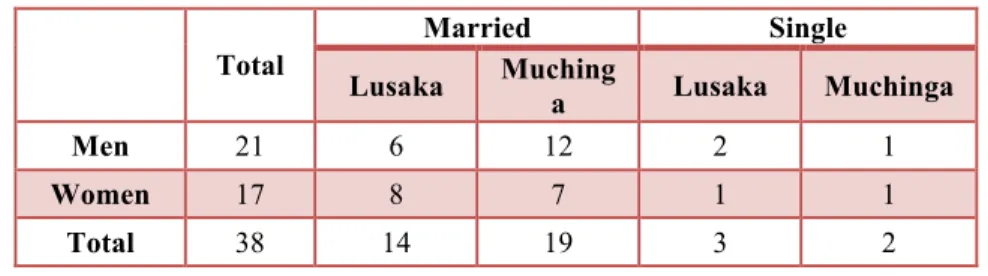
A total of 38 people, 21 men and 17 women, aged 17-76 (the average age being 40),
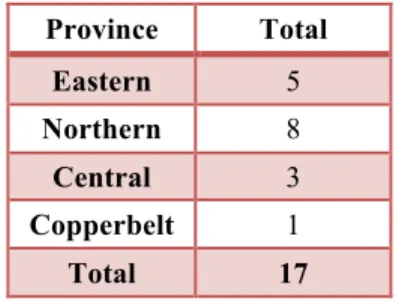
participated in the interview process. See Tables 1-3 for more demographic details. Seventeen participants were interviewed in three slums within the capital city Lusaka, and twenty-one in two villages in the mostly rural Muchinga province (see Map 1). Among the city dwellers, all participants were first-generation migrants. The rural respondents each had at least one family member living in an urban area. Table 3 indicates the provinces of origin of the migrant participants. I will briefly consider the migrants’ origins in the results section addressing family connections. I assume that migrants from Eastern and Central provinces are more prone to come back to their home regions to work on farms as the local geographies of these regions favor agricultural production, compared to migrants from Western and Northern provinces that have generally dry climates and poor farming soil4. Regrettably, I could not recruit a large enough sample from all provinces to be able to draw reliable comparisons, but I find it important to be generally aware of the different geographical backgrounds of the migrants.
Table 1: Gender ratio in the sample.
Men Women
Lusaka 8 9
Muchinga 13 8
Total 21 17
Table 2: Marital status ratio in the sample.
4 “Rural poverty in Zambia.” Rural Poverty Portal of the International Fund for Agricultural Development. Total
Married Single
Lusaka Muchinga Lusaka Muchinga
Men 21 6 12 2 1
Women 17 8 7 1 1
Table 3: Provinces of origin of Lusaka participants.
Recruiting participants
I utilized network and convenience sampling to recruit participants. These were the most practical sampling methods, as I was not personally acquainted with the residents of the Lusaka’s slums or the two villages in Muchinga province prior to my research. These non-probability sampling methods were appropriate, since the aim was to explore some of the ways that rural-urban migration plays a role in shaping Zambian families, rather than trying to make general conclusions about the impact of rural-urban migration in Zambia as a whole. The interviewees in Lusaka were found via networking through a community counseling organization in three slums, namely Kabanana, Chipata and Chaisa. Several of the participants were members of this counseling organization. The rest were family or friends of the organization’s workers. In the village areas, I recruited villagers while passing through two villages in the proximity of Mpika. The interviewees were not compensated for their participation in the study.
The disadvantage of both of these methods is the obvious chance of bias since the interviewees know each other at times (particularly in the villages), and they might not answer honestly. They may be second-guessing and answering according to what their friends have said in the interview. Moreover, there is an unequal selection probability implied by network sampling that might not apply accurately to the target population as a whole, as it might not reflect the range of characteristics in the target population.
Province Total
Eastern 5
Northern 8
Central 3
Copperbelt 1
Procedures
Due to potential illiteracy of many participants, especially in the rural areas, and to avoid stimulating a feeling of embarrassment, the consent document was read aloud to the participants. With all participants consent was acquired through oral agreement and recorded on an audio device. In the few cases where minors were involved, at least one parent was present to give oral consent for the participation of their child in the study. I changed the names of the participants and I do not state their hometown to protect the identity of informants. I kept written notes accompanying the interviews in a notebook.
In most cases, the interviews were conducted with one or two participants. There was one focus group that was spontaneously created in one of the villages as I started interviewing three community members outside of their huts; other villagers joined in to eventually form a group of 12 people.
provided the respondents with a more open and comfortable space for sharing their insights with an unknown researcher.
Interview Questions
The participants were interviewed about their experiences related to rural-urban migration and the family through a questionnaire containing ten open-ended questions such as Q5: “What changes did you notice in your lifestyle when you moved to the city?” (see Appendix A). Four questions addressed the frequency of rural-urban migration in the region/family of the participant, two questions inquired about the participants’ opinion on the general consequences of rural-urban migration, one question asked about the benefits of migration and one about the challenges of internal migration, while the last question aimed to shed light on the wider community perceptions of rural-urban migration. After answering the questions, the participants were invited to add other insights that they might have found relevant to the study.
Analysis
I have analyzed the gathered information by coding the interview transcripts for two main areas of interest: 1) rural-urban family connections, and 2) perspectives on rural versus urban child rearing. I identified these as the two most prevalent themes throughout the interviews.
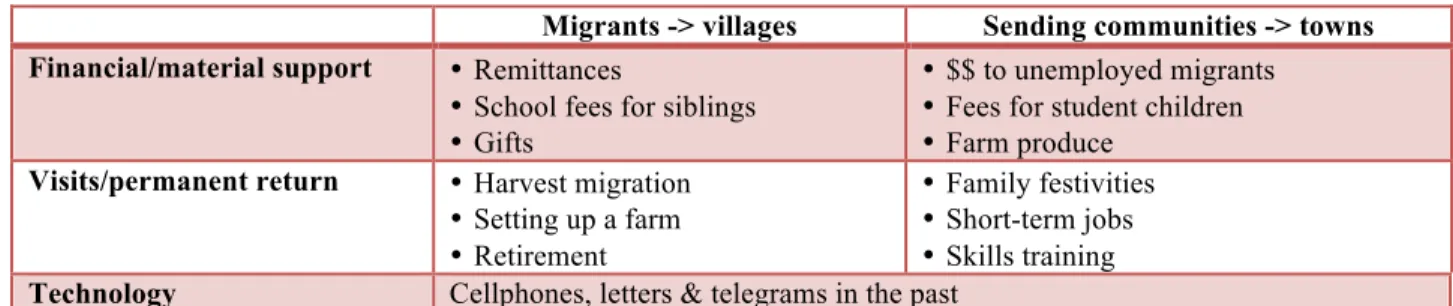
looked for similarities across narratives that address how the migrants maintain relationships with their home villages, and in stories dealing with ways sending communities keep in touch with their migrant relatives.
Table 5: Qualitative analysis of rural-urban connection strategies
Migrants -> villages Sending communities -> towns Financial/material support •Remittances
•School fees for siblings
•Gifts
•$$ to unemployed migrants •Fees for student children
•Farm produce Visits/permanent return •Harvest migration
•Setting up a farm •Retirement
•Family festivities •Short-term jobs •Skills training
Technology Cellphones, letters & telegrams in the past
The second area of examining the influence of migration on family processes focuses on
the perspectives of participants on child rearing in rural as compared to urban environments. I
prefer to use the term child rearing throughout the study as an alternative term to parenting,
since in the Zambian context the concept of a parent is a loose one. Parenting does not
necessarily mean that the caretaking of a child is assumed by their biological parents, as it is
often understood in Western circles. Zambian children are often raised by aunts, cousins or other
relatives. Hence using the term child rearing is more appropriate.
In this section, I will analyze the responses from both migrants and rural families to
examine how migration shapes the views on how young Zambians are and should be raised. I
divided the analysis into good childhood and bad childhood narratives, in which I further
distinguish the urban and the rural side of this divide. Among others, I will highlight the
narratives describing the role of formal schooling and informal cultural education in raising a
child, as well as the importance of community, to portray the opinions on child rearing in the city
Table 6: Perceptions of rural vs. urban child rearing
Urban childhood Rural childhood
Positive •Education widely available •No work in the fields •“Know their human rights”
•Good to know about parents’ tribal culture but not too applicable in the cities
•Help family through paid employment
•Respect for elders •Communal values •Better oversight
•Help in the fields
Negative •“Town manners” (immodesty, pornography, drugs)
•Homelessness, orphanhood •Lack of respect
•Illiteracy
•Early marriage/pregnancy
•Alcohol abuse, smoking
RESULTS
Migration can function as a force that enhances social connections (Fergusson 1999), disturbs them (Silver 2011, Wilson 1968), or reformulates them (Cherlyn 2013). I was interested to see how internal migration affects Zambian families in which one or more relatives became migrants. How did the family members’ relationships work across the long distances that now separated them? In this first section of my paper, I will show that migrants and their families implement practical adaptation strategies of “keeping in touch” that help them reassert their position within the family network (as a son, a grandparent etc.), while retaining and oftentimes enhancing their mutual relationships. In the second section, I will focus on child rearing as another important aspect of family functioning that can be influenced by migratory movements, particularly by comparing the perspectives on raising rural versus migrants’ children.
1) Maintaining family bonds between migrants and sending communities
Direct financial support and other material help
challenging for those not earning personal income; the state does not distribute welfare to widows, the handicapped or the elderly, and retired workers rarely obtain pensions from their former employers. Being reliant on other family members is the principle means of subsistence for the most vulnerable. Nevertheless, even those who get to work and earn income sometimes receive support from other relatives. A similar support dynamic exists between migrants and their rural families through a web of remittances, school fees and other material assistance, creating a vibrant arena in which family relationships are played out and redefined.
"It needs a bit of wisdom and understanding from our parents, you see, because being their children, when we grow up they also expect something from us. Now it becomes a challenge for you if you are not working or you are not involved in any type of profitable business. If you are not in any type of business then I think it will be something bad for you because you won’t have any means to help them. So it will be a very big burden for you to try to find means and ways of helping them. That can be a very traumatizing situation… Yes, even right now I’m still having it. The way I feel, I have not yet fulfilled the way I should do towards my parents. I want to help them more, but where to find that which will help me to ease those burdens which they have? The problem, okay, even if, yes, I’m helping them, but myself I’m not fully convinced to say I have really helped them.”
Financial transfers flow in both ways, however. Villagers offer financial support to the family members who recently moved to town, to help them get up on their own feet. Paul explained that he receives money from the village during good harvests when the rural relatives may have surplus from crop sales and sometimes have “more money that me!” If a migrant becomes unemployed, the rural family sends temporary financial help while he or she seeks a new job. Family members seem to help each other regardless of who migrates and who stays behind, but rather based on who is in a more precarious financial situation. The capacity of helping one’s family materially seems to be playing out in the way relationships between migrants and their families are perceived. Being able to materially support the family is seen as both a responsibility and a privilege, and it represents perhaps the most efficient tool for entertaining family bonds.
Education is highly valued in Zambia, perhaps for its general inaccessibility to the rural population as well as for its promise to make one professionally successful. By paying school fees, relatives are investing in the children’s and their own future security. This effort to provide access to education is not contained to the parents but extends to older siblings and other relatives who are able to provide material help to send a child to school (see below in good urban childhood). It expresses a commitment of the adult relatives to the children living in towns far away, and helps maintain an indirect yet significant relationship between them.
to his home community in terms of monetary assistance. Yet he adopts strategies very similar the other earning migrants and supports his rural relatives materially whenever he can.
Daliso’s story suggests that the relationships between urbanites and villagers are not always “give-and-take” and that their depth cannot be measured simply in material terms. There are other aspects beyond the provision of material help that maintain the relationships between migrants and their sending communities. Kinship support is traditionally important in the Zambian society, and despite scientific predictions that urbanites would lose their attachment to the village communities, the narratives of the interviewed migrants suggest that this theory does not apply to their situation.
The following section addresses some of the most frequent non-material behaviors that the families use to keep in touch with their migrant relatives.
Between villages and cities: Visits and permanent return
Circular migration
In the focus group interview with villagers in Muchinga province, one participant generally supported the migration of locals to the cities, but he was cautious: “They can shift from here to town, but these fields, don't forget about the fields." He feared that the young
villagers would leave the village for good, forgetting the way of life they left behind, particularly
subsistence farming. Many rural families lose their strongest labor to employ in the family fields
as their children move to the cities. Interestingly, many young adults that I have interviewed in
town are circular migrants who return home several times a year to help tend the family plot and
assist in harvest times. Dorcas (27), originally from Eastern province but living in Lusaka, goes
home every October to help on her relatives’ farm for a few days to then return to town. Edna (48) lives in town and employs people on her family’s farm in Central province to tend the land. Sometimes she goes to the village herself to supervise the harvesters. Migrants adopt these and similar techniques that enable them to stay attached to the “home soil” and directly contribute to the family’s subsistence by helping to tend the land. They are also able to support the relatives with additional income from selling the harvested crops in the city.
Not all migrants return to the village to help in agricultural production. Bertha (in her early 40s) is a circular migrant who doesn’t farm. She grew up in Western province but currently
lives with her relatives in Lusaka. She travels to the neighboring Tanzania three to four times a
year and buys clothes to resell in Lusaka and in her home village. I was told that this is a popular
coping strategy among many women who are widows or who are too old to work in official jobs.
They resell goods smuggled from Zimbabwe and Tanzania in their home villages to contribute to
the household with some “side money”. As argued above, being able to provide materially can
members traditionally visit each other to attend various family gatherings. Peter (56) returns to
his home province three to four times a year, especially to see the older relatives who can’t travel
to Lusaka, as well as for family celebrations. Zambians travel back and forth between the village
and the city for relatives’ funerals, weddings, baby births, matebeto or so-called kitchen parties
that serve as engagement ceremonies etc. Sending children who grow up in the city to their home village or the village of their parents to visit elderly relatives over the holidays is also not uncommon (see the section on childhood below). Rural relatives come to the city to visit their migrant family members sometimes for months at once, helping with the household upkeep and childcare, or to find seasonal work in town. By taking the time to visit and sometimes serve the family living at long distances, relatives can reaffirm their position in the family network and enhance the existing family relationships.
Permanent return to the village
Some rural-urban migrants favor returning to the village for good, a trend that seems to
be common across ages but that is perhaps influenced by the material conditions in the province
of origin. Migrants from the fertile Eastern, Central and Southern provinces seem to be keener on
returning to set up a farm or retire in the village than those from other provinces that are poorer
in terms of natural resources, although the sample is too small to draw more general conclusions
(see Table 3 in Methods above).
Those who plan on returning might be emitting a clear signal of personal attachment to
the region of origin and hence indicate strong family bonds. However, some migrants might be
choosing to return to the village for practical reasons, such as that life in town is expensive, or
that farming back home would yield more profits than working in town. As Tamara explained,
have maize, then you put [it] in the storage room… Rather than here [in town], starting from toe up to head is money.” Migrants who do not prosper in town are often encouraged by the family to return to the village; they represent a burden to the relatives who have to support them financially, and the migrants themselves cannot contribute to the needs of the rural family.
Consequently, family relationships are strained. Adam (40), a villager from Muchinga province,
talked about his brother and his family who moved to a town in the Copperbelt province and
ended up living in poverty:
"There is no employment in towns, so even those people who are going to towns they are [poor]. They don’t send money to the family and that is a negative impact on the family. The family members are suffering like that. […] My brother went to [stay with] a family member in town. Now they are just suffering there […] And [we] are asking him to come back here so that he starts a garden, so that he can sustain the life of the family and to educate the young ones. […] It’s better to just stay here.”
Many others who want to return to the villages do so due to agricultural development in
their provinces, particularly through the increased use of fertilizers and machinery, which
enhance productivity and make farming more attractive. Some participants claimed that people
do relatively well in farming, sometimes even better than urbanites in terms of living standards
(although this varies considerably by province, with the dry Western Province often labeled as a
poor one where few migrants return permanently). This includes the younger generation. Paul
and Mark live in Lusaka and both in their twenties, but they are planning to go back to their
villages in Eastern province to start farms as soon as they have enough resources: "That is my homeland. I would go for good… I don't like Lusaka" (Mark, 27). Dorcas (27) comes from Southern province with lots of rainfall and fertile soil, so she sees her farming prospects as
bright: "I wanna come back and work for my people there, for my area". There are also
with skills they acquired in town. The villagers favor the return of especially young and
middle-aged people because of the “new ideas” they bring: “When those people [migrants] come back to
the villages, they bring new development, how the country is growing up, because in the villages
it’s very difficult to identify some new ideas." (Thomas, 76). Godfrey (43) advises the young
people to plan ahead when considering a future in the village, so that they do not return poor and
burden the community: “The early bird catches the worm.” If you don’t do things while you are still having enough time, you are still having enough energy, […] then what will happen when you don’t have enough time, enough energy?” In the same vein, a 33-year-old villager Frederick warned about the young migrants who return to the villages empty-handed: “Those people who come from the town they usually come here with nothing, so there is no benefit for the community. So us, as a community, who are living in the village, we are the same ones who start feeding the one who comes from the town, so there is no benefit for us.”
To not leave out the older generation of rural-urban migrants, it is vital to mention that
several older respondents talked about the plans for retirement in the village. Thomas (76)
described how old miners who had been working in the Copperbelt region come back to their
home villages to retire. Peter (56) explained that people who are too old (“don’t have strong
power”) for employment in town choose to spend their old age in the village: “I will go to the
village because here [in Lusaka] I don’t have strong power to work now. Just go there [to the
village], maybe I can have something, little money, to go there [and farm], if God wills, to stay
there. My grandchildren, they can push me.” As Peter pointed out, the existence of reliable
family ties with rural relatives when retiring in the village is crucial. Migrants like Daniel (64)
without rural relatives find it impossible to resettle in their home regions, in addition to factors
could have gone back to the village and started farming, yeah, but now it is too late. I’m old. If I go to the farm shall I be able to cultivate the land? No. And I don’t have the capital so there is no way I can go back and start farming… I don’t have relatives. […] So even if I went back I will have to fend for myself."
Returning back to the “homeland” or to one’s “people” seems to be an important factor
when deciding on migrating back to the village. Giving back to the home community is
important to the young generation even after having spent time in town which, as literature
supposes, may severe relationships with the extended family. The willingness itself to make the
transition back to the village may symbolize to the rural relatives an attachment that the urban migrants nurture for their community of origin.
“Cushioning” new migrant relatives: Providing shelter and facilitating job search
Job searching and networking by urbanites on behalf of a new migrant relative is also frequent. Back in the day, Daniel (64) found jobs for his relatives when he had a high-ranking job as a police officer. However, according to his bitter experience, gratitude from the family is not always guaranteed. Despite being a retired man, his younger brothers aren’t supporting him; he ended up living in the slums of Lusaka.
“Most of my relatives are here in Lusaka, because when I started work here, the younger brothers, cousins, they started following me. At the time there was no problem in finding them jobs. I was once very popular in Lusaka. It was a question of picking the phone and then my relative got employed. So whoever got employed then he also assisted those who were coming behind him, so as a result we find that we are almost, each and every one of us on my side, is within Lusaka, and there is none at the village. [...] One was an immigration officer and even served as an immigration attaché in the Democratic Republic of Congo. The other one had a good post at a water and sewage company. The other one used to work for Zambia Airways. He was an engineer there. […] Normally in an African cultural point of view, when you are assisting some people, relatives, what do you expect in turn? You also expect something, you know, like you grow old like this you can no longer fend for yourself, so it’s better for those you are assisting to assist you as well. But that has never happened [to me], unfortunately."
Daliso provides skills training for his younger brother who was “visiting” from the village for a few months: "I tried to empower him so that he becomes self-reliant. So far he knows how to drive; he is a driver, because that’s the thing I could manage because he is not so far in his education, so what he can only manage, it’s only brick laying, carpentry.”
Technology keeping families in touch
increase in the availability of network coverage across Zambia combined with the influx of cheap “Chinese phones” in recent years enables families to remain in contact via voice calls and texting. Despite the relatively high costs of cellphone services, people spend considerable sums of money on purchasing “airtime” and often own several SIM cards to be able to call relatives subscribed to different network providers. This trend is common in both urban and rural areas. It is a running joke, allegedly inspired by a tradition of the Bemba tribe, that people in certain remote rural areas name their children after different cellphone manufacturers and network providers to commemorate the introduction of telephone signal into the area. The availability of long-distance calls in villages that do not have existing landlines to link them with far away relatives is revolutionary to many communities. The use of technology particularly in the villages of Zambia is a dynamic and constantly developing area that deserves further academic attention.
The “black sheep” of migration: moving to escape the family.
I will finally mention several narratives describing rural-urban family relationships that did not fit the generally prevalent stories of mutual support between migrants and their families. Contrastingly, these interviews outlined stories about individuals who migrated to town not to support their family but to gain physical and emotional distance from their relatives as a result of persecution or discrimination. And although this theme was only addressed by a few of participants, it is useful to be considered as an alternative use of migration in the context of family relationships.
Several people mentioned that older village women who are accused of witchcraft are
sometimes chased away from their homes to find refuge in towns. The accusations may stem
from the inability of a woman to conceive a child, a husband’s sudden death, if she is diagnosed
relatives or friends in town, but they occasionally end up homeless as well. Tamara talked about
people who leave their home village due to family quarrels over land, often after the death of a
parent. Similarly, Daliso (35) compared his prospects of retiring in the village to living on a
remote farm away from the pressures of village relationships: "Because what I can be doing in the village is sit still that side but in the farm no one will be making noises about whatever you are doing. […] There’s too much jealousy when you cultivate and maybe have more food than your friends."
Other respondents mentioned that homosexuality, largely frowned upon in the villages, is
another reason why migrants choose to leave their homes and decrease contact with the rural
family. Paul thinks that homosexuality is practiced in towns because "rich people are coming looking for guys", and poor young migrants may chose to become gay prostitutes to earn additional income. It may be, however, that rural residents who are sexually attracted to people
of the same sex choose to move to urban areas where opinions about sexual orientations are more
liberal and oversight is minimal, and where they may feel less discrimination. Related to the
decreased amount of oversight in towns as compared to the village communities, participants like
Thomas (76) claimed that youngsters migrate to towns to enjoy life without responsibilities and
parental supervision: "Because of their bad behavior in the villages, they rush to go to the town where they can move anyhow... [There they have] freedom of movement compared to the village. So now I think we should do something as parents, that the child shouldn’t leave the rural area, you see, or go into the town where there is nothing."
family bonds.
---
So far, I have analyzed how migration has shaped the practices by which families maintain long-distance relationships with their migrant relatives. The accounts of participants show that in the majority of cases migration does not serve as a counter-force to family cohesion but that it represents a tool that can enhance family unity through various material and symbolic strategies of expressing mutual support and interdependence. The culturally deeply rooted kinship solidarity seems to persist despite the increased physical and class distance of Zambian migrants and their families. Migrants and relatives take advantage of new practices aimed at sustaining their family relationships that had been unavailable prior to when migration started happening. Some of these strategies are the distribution of remittances, paying school fees for children’s education in the cities or “cushioning” of new migrant relatives. Of course, several examples describing how migration can be used to cut family ties show that migrants do not always choose to stay in touch with their families.
2) Raising the next generation: Perspectives on rural versus urban child rearing.
“The good rural child”
The rural culture in Zambia has traditionally prized communal values as crucial in the upbringing of a child, similarly to the rest of the continent and much of the world’s rural communities. Growing up in a close-knit circle of relatives and friends makes it relatively easy to transmit ideas and beliefs onto the younger generations, who subsequently pass them onto their own offspring as a cultural legacy of the community, clan or tribe. Unsurprisingly, the participants (migrants and villagers alike) have placed the transmission of communal values among the top benefits of growing up in the village. They were specifically asked to contrast the urban and rural experiences of child rearing. In most cases, the city was presented as a crowded, impersonal and individualistic space that often imprinted itself onto children’s values. In stark contrast, Edna (48) described how unity and the care for others are some of the values village children grow up with:
“Where I come from, in the village, the children there, they are taught to regard everyone as a relative, other than here in town you’ll find that maybe it will just be […] the neighbor there. I won’t pay much attention to […] getting closer to that family here in town. We isolate each other. But in the village there is nothing like that. Even in nearby villages, when children can visit the other village, they always regard those people as being one. They have respect for everyone. […] That’s the most important thing children are taught in our culture where I come from. They are taught that at school, at church, even at their house. When it comes to funerals, when the other village, there is a funeral there, they come together and support each other in terms of food, material support, spiritual support, and financial support. Yeah. In the village people there are very cooperative.”
the next house they are playing music, and drinking heavily, making a lot of noise, while these others are mourning” (Daniel, 64).
Furthermore, the village community reportedly provides more oversight of how the child is being raised, potentially controlling child delinquency and preventing abuse by relatives: “Here in the city if you find someone who is being beaten, we might do nothing. We just pass by. You just go like that. But in the village you find that every thirty minutes your relative must pass where you are on the road” (Tamara, 50). Informally, several female friends in Lusaka talked to me about the increasing prevalence of sexual abuse of girls by relatives in towns. Although this subject certainly - and acutely - requires more research, the seeming increase in abuse among urban children could be due to the decreased amount of “oversight” that similar relationships are subject to from the close-knit family in the village. Nevertheless, opinions vary and Daliso (35) thinks that the cities are actually better at controlling abuse and social deviance, as the access to the police for victims is more available than in the villages, and the risk of being caught violating the law and jailed is greater than in the rural areas.
“The good urban child”
classes; each class has a teacher” (Edward, 42). As mentioned above, Thomas (76), himself a retired teacher pointed out that some children who have been educated in the cities return to the village as adults, giving back to the sending community by becoming teachers, nurses and other skilled professionals. The idea of education for children is attractive to Zambians, as it represents long-term benefits for the families and communities who invest in the child’s schooling. Often times, the children schooled in the city who have become self-sufficient pay for their younger siblings’ education. Daniel (64) explained that he made the decision to sponsor his siblings’ schooling by himself: “I said, ’Daddy, you better rest. It is now my time to support my younger brothers and sisters,” and I did just that… We were only five. So I used to support those younger
brothers and sisters until they got educated, and some even went to the colleges, and my father
and mom were quite happy.” In the same vein, Edna (48) was taken to town when she was seven
by her oldest brother who started teaching in Lusaka: “They [the parents] were happy because
they knew that if I went with my brother, education would be easier for me.” Young adult
migrants who get educated in towns are hence instrumental in facilitating their sibling’s
education, and they can supplement the parents by making an investment in the child’s (and the
family’s) future. All in all, migration in the context of childhood appears to be a welcomed component when pursuing education, as access to better quality schools is supposedly greater in towns. In the realm of education, the urban children are largely seen as beneficiaries, and they are often expected to invest in the schooling of “the next one in line” once they become independent earners.
“The problematic rural child”
Just as the easier access to education in cities is deemed an advantage for migrant families and their children, the lack of educational opportunities in the rural areas is seen as the prime cause for “social ills” such as illiteracy, early marriage or abuse among the village children. Daliso (35), whose children grew up in town, described the negative social consequences poor literacy causes in the villages:
“There’s no plan […] for your children. Especially, how will my children be in the future? There’s no intention. You might take your children to school but there’s that limited education that let’s them just know how to write, how to read, that’s all. But to say that these children will grow up furthering their education, they don’t believe in that. So that’s why I find that at the age of maybe twelve, thirteen, fourteen, somebody, he’s already married. She’s married. So to me it was something difficult because I said if I also rely on this issue which means my children will be doomed also. […] Normally, children who are growing [in] the village, most of things they don’t know, especially about human rights. [...] they don’t know anything, because all the time they are being abused in terms of hard work, so you can’t express yourself or maybe your freedom to express that, ‘No, I can’t do this’, you have that right to say like that. Or in early marriage. You’ll find that they want to go to school and [the parents] say: 'No. You are grown up. You have to get married'. So whether you like it or not they have to make sure that you are married. So here, children who grow up from here, they are better because we have TVs, what, and so they see a lot of things. Also we take them to school to know things.”
work but his children all go for work to cultivate maize.” He explained that work teaches the young discipline, loyalty and a sense of responsibility towards the family. Unemployed youths are automatically at risk of acquiring “bad manners” and becoming a problem for the community.
“The problematic urban child”
Yet again, lack of education was seen as one of the main factors contributing to children’s misbehavior, even among migrant children growing up in town. The reasoning was similar to that of describing problematic youths in the villages: "Now those children which you have [in town], they are not educated. Now, what will happen to them, your children, who are not educated? They are not able to find a job. What happens to them? They will end up being thieves now, criminals, you see?” (Godfrey, 43). Growing up without education in urban areas inhibits access to well-paid jobs in the future, leading to misbehavior among the youths and not being able to support the family. The structural conditions related to the occasional absence of schooling for migrants’ children were the key cause in explaining urban child delinquency.
Furthermore, as the functional nature of cities makes people more disconnected, orphans are frequently abandoned and left to fend for themselves, becoming street children. One respondent compared this trend to the situation facing village orphans who can rely on a family safety net and at least engage in subsistence farming for survival: "If that father dies in the mines (referring to the fathers in urban mining areas) those children become miserable and they don't even work anymore just to mend the street. But in the village, if the father died, the father knows how to cultivate, the son knows how to cultivate, all of them, they know. So it doesn't make a difference [that the father dies]. The orphanage, the begging of things, there is no such a thing" (focus group participant).
much freedom when it comes to dressing. Most people here, they’re half naked, you know, such dressing, but you won’t find it in the village. There is that difference, and also manners.” On a similar note, Richard (26), a villager who was visiting in Lusaka at the time of the interview, explained: "Children that grow up here [in town], they are more advanced in terms of science and technology and knowing their rights, but if you talk of discipline and culture, they are behind [the rural kids].” The responses show that migration to towns occasionally threatens children with what is perceived (mostly by the rural participants) as negative cultural influences as a result of coming into contact with the urban lifestyle.
“The parents’ child”
responsibility: “It is the way they are brought up by their parents. If you are fond of telling them stories about the village like, ‘Oh, there are snakes! They will bite you!’ and like that, children won’t accept to go to the village. But if you tell them the good about the village, it’s better they know about the village life in case the parents die the relatives most of the time they’ll find in the village. If they don’t know village life, where are they going to go if you die? So it’s better if they know [village life]. That’s much better." To these participants, the way children are raised is influenced by the style of parenting rather than their living environment (urban vs. rural). Migration itself is not seen as having as much of an impact on the children or the parents.
DISCUSSION
There are several prominent strategies by which migrants seem to be entertaining family bonds long-distance. Direct financial support and other material help are utilized as primary tools to “keep in touch” and enhance family solidarity. These practices include transfers of remittances from urban to rural relatives, financial aid sent by the villagers to recent migrants or those “struggling” in the city (due to unemployment etc.), payment of school fees or in-kind transfers of commodities. Both the rural communities and urban migrants perceive supporting the family materially as their duty and a distinction, and these connections create perhaps the most efficient instrument for entertaining family bonds. On the flip side, those who cannot succeed in town are discouraged from migrating, as they become a burden to the family rather than its support. These tendencies seem to be consistent across ages, genders and occupations.
Visits are another way in which migrants maintain relationships with their rural relatives. Some urban dwellers frequent the village a few times a year to help tend the fields during harvest times. In this way, they contribute to the family’s subsistence and are able to sell the produce in the city to support the relatives with additional income. Sending children who grow up in the city to “their home village” to visit elderly relatives over the holidays is another common practice. Rural relatives come to the city to “visit” their migrant family members sometimes for months at once, helping with upkeep or childcare, or finding seasonal work in town. Many urbanites plan to permanently return to their home village either to retire or in the case of the younger generation to start farms. The willingness to visit or make a permanent transition to the village may convey to the rural relatives that the migrants are still attached to their community of origin and ultimately strengthen the family ties.
I have shown that the families of Zambian migrants adopt a diverse array of reciprocal strategies that enable them to nurture their relationships. Hence, migration does not seem to jeopardize family bonds but in fact offers new strategies of keeping in touch and strengthening mutual attachment. This is an enlightening revelation, as much prior literature on migration suggests that physical distance between migrants and their families weakens family ties. It seems that in Zambia, the persisting culture of kinship support allows family members to adapt to the reality of migration without taking a major toll on their intra-familial relationships. This finding may be generalizable onto other societies in Central-Southern Africa that retain a strong degree of kinship identity, even in urban areas.
Secondly, I focused on the different ways “good” and “bad” childhood was described by both villagers and urban migrants, along with corresponding parenting practices. The ensuing narratives classifying deviant and exemplary child rearing seem similar across the rural-urban divide. Many respondents claimed that the environment has a great impact on the way children grow up, most often referring to the contrast in the availability of education between the village and the city. Children of urban migrants supposedly benefit from better education in towns, thus having brighter future prospects of employment security and of becoming a support to the family.
knowledge of the rural dress code, traditional gestures or tribal history, but they are acknowledged as largely irrelevant to day-to-day life in the city.
Preparing the child for the role of giving back to the family was deemed important by all participants. This is through expecting the grown-up children in towns to finance their siblings’ education or to support the family with remittances. In the villages, “good” children are expected to do well in school to “bring development” to the village, or to help in subsistence farming if they are dropouts.
“Bad” or deviant children are often seen as a consequence of the environment they are exposed to rather than as a result of bad parenting, although irresponsible parenting was mentioned in a few cases. In the minds of most respondents, the urban areas bring a harmful exposure to pornography, alcohol, disease (HIV/AIDS), homelessness and crime. In the villages, early marriage, teenage pregnancy and dropping out of school are what characterizes “problem children”, and these are largely accredited to the low quality of education and a lack of rural employment opportunities for the youth.
In a nutshell, I have found that migration is not a disruptive force to the Zambian family, but that relatives adapt to it by creating effective channels of mutual support within their kinship networks. Furthermore, I have discovered that urban childhood is not seen as negatively impacted by migration; the participants were aware of both favorable and damaging conditions for the child’s growing up that occur in rural-urban contexts. Additionally, the children of both migrants and villagers are raised with similar cultural values, although the urban parents find some of the customs only partly relevant. There is a potential risk that some of the cultural heritage will be lost, as it may not apply to city living. However, the relatively high frequency of contact with rural relatives requires migrant children to be “culturally literate” even when living in the city and hence carry the knowledge of traditional customs into their adulthood, potentially even teaching them to their own children.
Future improvements